14 Summer Shade Garden Ideas for Hot Climates
Summer shade gardens in hot climates provide essential cool refuges where plants thrive despite intense heat while creating comfortable outdoor spaces for human enjoyment during scorching months.

The challenge lies in maximizing limited shade areas, selecting plants that tolerate both shade and residual heat, and creating garden designs that remain beautiful when sun-loving specimens would wither. Strategic shade garden development transforms problematic dim areas beneath trees, along north-facing walls, or under structures into lush productive zones that actually outperform sunny locations during peak summer heat.
These shade gardens prove invaluable in hot climates where every degree of temperature reduction matters and where shade-tolerant plants often look fresher and more vibrant than their sun-stressed counterparts struggling in brutal direct light. These 14 summer shade garden ideas demonstrate diverse approaches specifically tailored for hot climate conditions where shade becomes a precious resource rather than a gardening limitation.
1. Layered Tropical Foliage
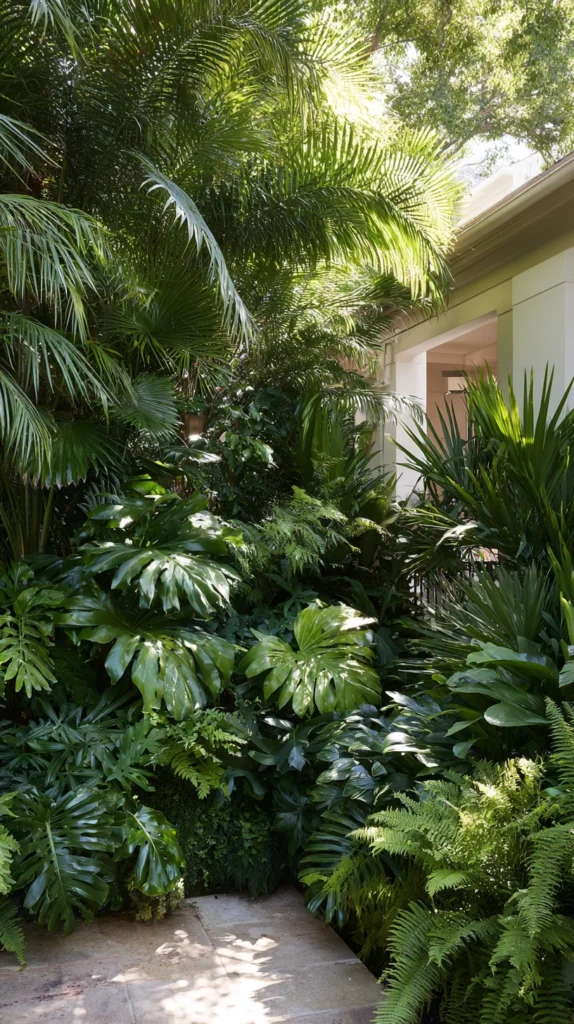
Create lush jungle atmospheres using shade-tolerant tropical plants featuring dramatic foliage in varied textures and colors thriving in the humid shade hot climates often provide. Plant large-leafed specimens like elephant ears, caladiums, or colocasia creating bold statements while their substantial foliage provides additional ground shading cooling soil beneath.
Add ferns, hostas adapted for heat, and shade-tolerant groundcovers creating complete layered plantings that mimic rainforest understories. The abundant foliage creates cool micro-climates while the tropical aesthetic feels appropriate for hot climate gardens despite being positioned in shaded rather than sunny locations.
2. Container Shade Garden
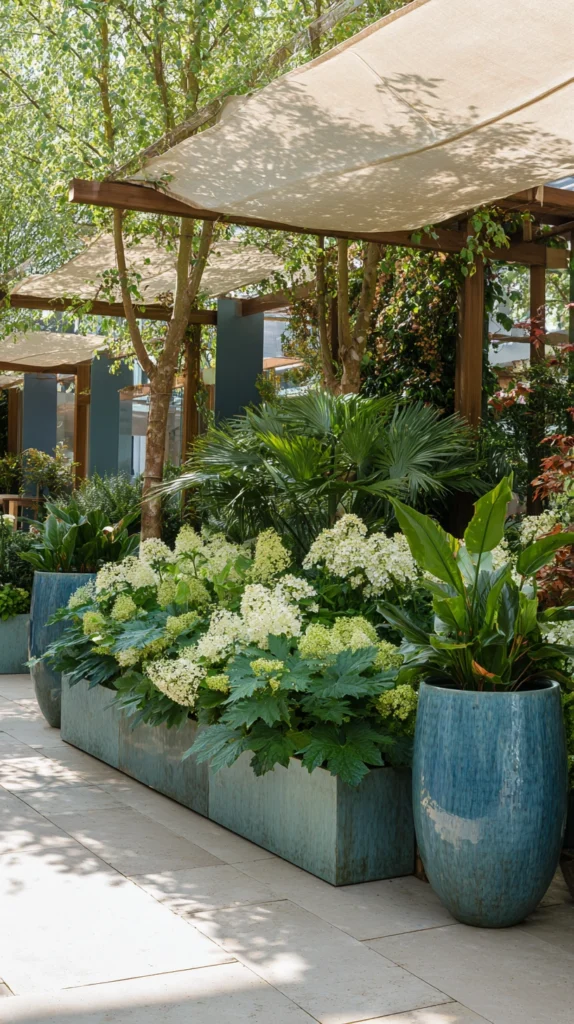
Develop portable shade gardens using containers that can be repositioned following shade patterns throughout the day maximizing the limited shade hot climate gardens provide. Choose heat-tolerant shade plants like caladiums, coleus, begonias, or impatiens filling containers positioned beneath trees, on shaded patios, or along north-facing walls.
Group containers in odd numbers varying heights and sizes creating dimensional arrangements while the mobility allows moving plants into optimal positions as seasons change sun angles. The container approach allows shade gardening even when in-ground options are limited by tree roots or poor soil conditions.
3. Edible Shade Gardening
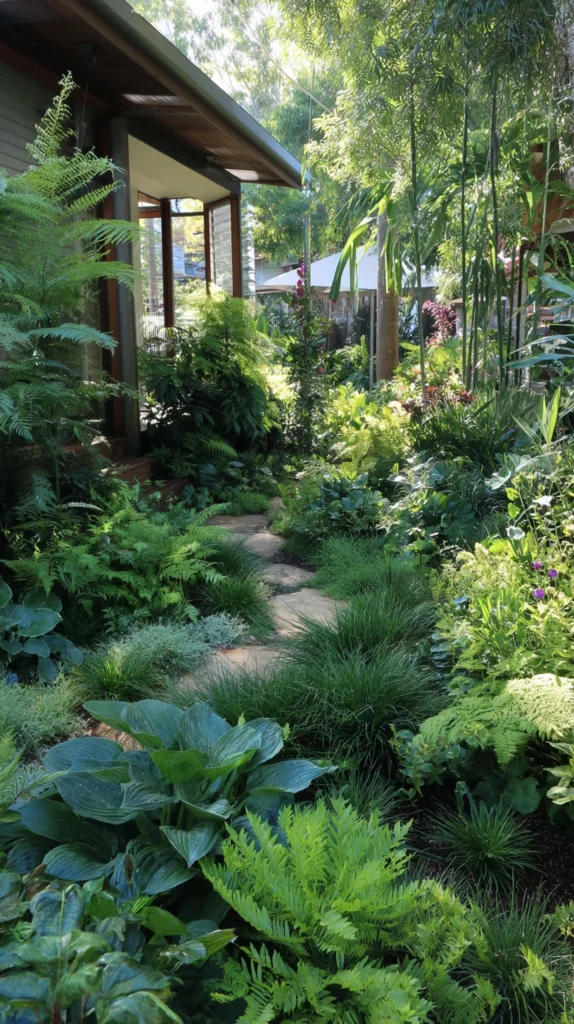
Grow heat-sensitive vegetables and herbs in shaded areas where they perform better than in scorching direct sun that causes bolting, bitterness, and rapid decline. Plant lettuce, spinach, arugula, and other greens in shade where they remain productive through summer months when sun-grown crops fail.
Include shade-tolerant herbs like mint, parsley, and cilantro that appreciate afternoon shade protection in hot climates. The productive shade gardens provide fresh harvests during periods when sunny vegetable gardens struggle making shade areas valuable garden real estate.
4. Fern Collection Display
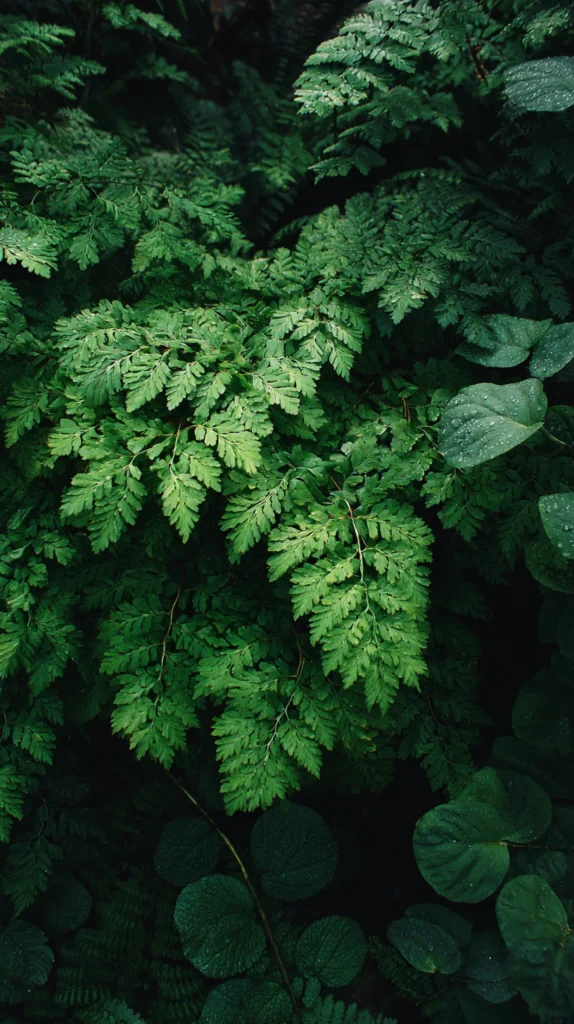
Showcase diverse fern varieties creating textured green tapestries that remain lush despite summer heat when positioned in adequately shaded locations with proper moisture. Choose heat-tolerant ferns including southern shield fern, autumn fern, or holly fern that thrive in hot climates when protected from direct sun.
Plant in groups creating substantial displays while their varied frond shapes and colors add textural interest despite the predominantly green palette. Add organic matter to soil improving moisture retention ensuring ferns receive adequate water during hot dry periods when their shade locations may not receive supplemental irrigation.
5. Dry Shade Solutions
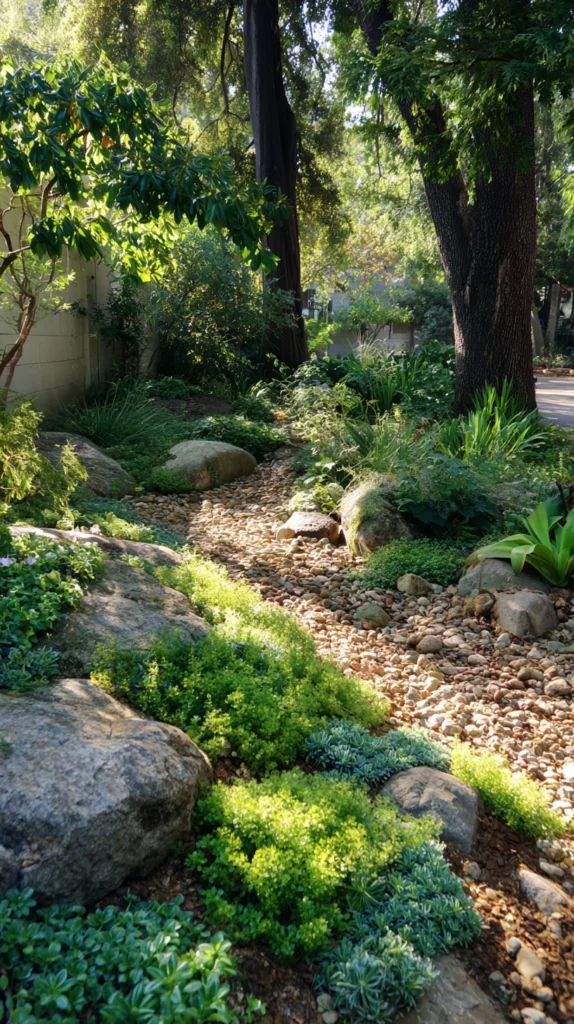
Address challenging dry shade beneath mature trees using drought-tolerant shade plants that survive with minimal water once established in root-competitive environments. Choose tough groundcovers like liriope, mondo grass, or cast iron plant that tolerate both shade and drought conditions mature tree roots create.
Amend soil generously with compost before planting improving initial establishment while understanding that ongoing watering may be limited by tree root competition. The specialized plantings prove that even the most challenging dry shade areas can support attractive plantings when appropriate species are selected.
6. Shade Structure Gardens
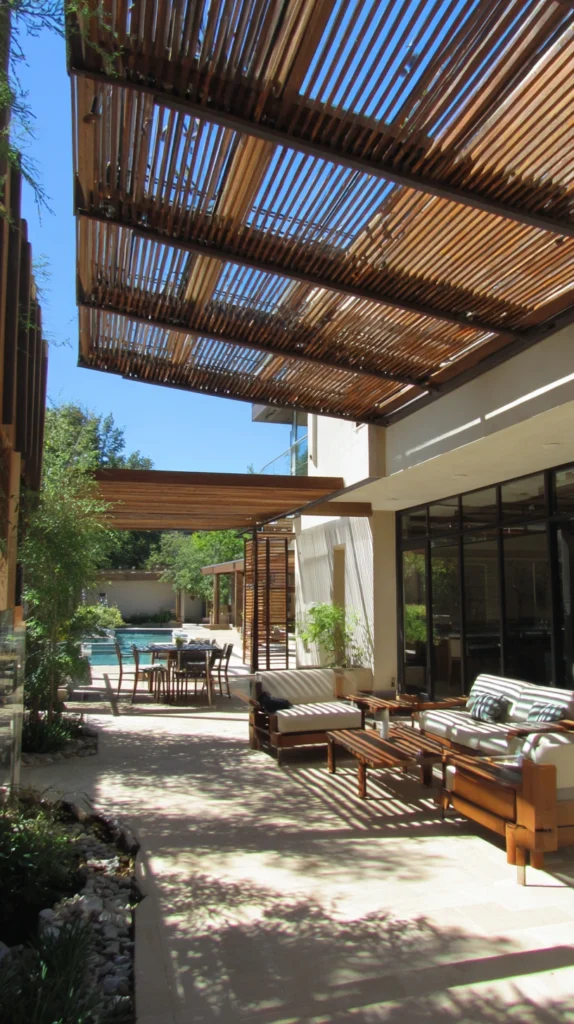
Create artificial shade using pergolas, shade sails, or arbors allowing shade gardening in locations lacking natural tree canopy while the structures provide architectural interest. Build pergolas over patios or pathways then plant beneath with shade-lovers, install shade cloth reducing light intensity, or train vines over structures creating living shade.
Position structures blocking intense afternoon sun while allowing gentler morning light creating the dappled shade conditions many plants prefer. The controlled shade allows gardening in previously unusable full-sun locations while the structures add vertical architectural elements.
7. Caladium Color Explosions
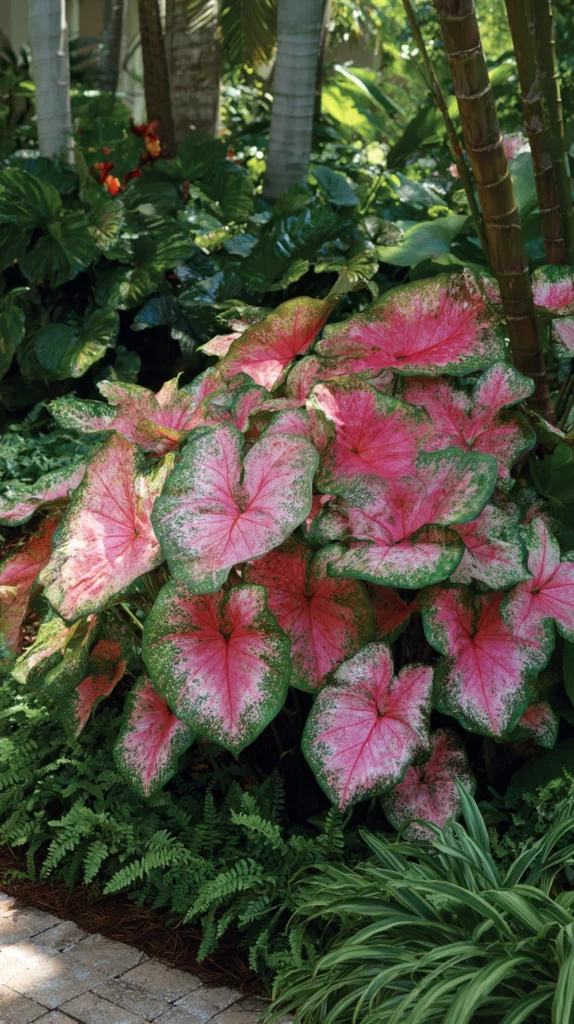
Introduce vibrant summer color through caladiums offering dramatic foliage in combinations of white, pink, red, and green thriving in shade where flowering plants often struggle. Choose varieties in colors coordinating with your palette planting generously for substantial impact rather than scattered individual specimens.
Dig and store tubers after first frost in climates with occasional freezes or treat as annuals in their northern range accepting their seasonal nature. The bold foliage provides the color impact flowers usually deliver making shade gardens as vibrant as their sunny counterparts despite limited flowering options.
8. Woodland Garden Aesthetic
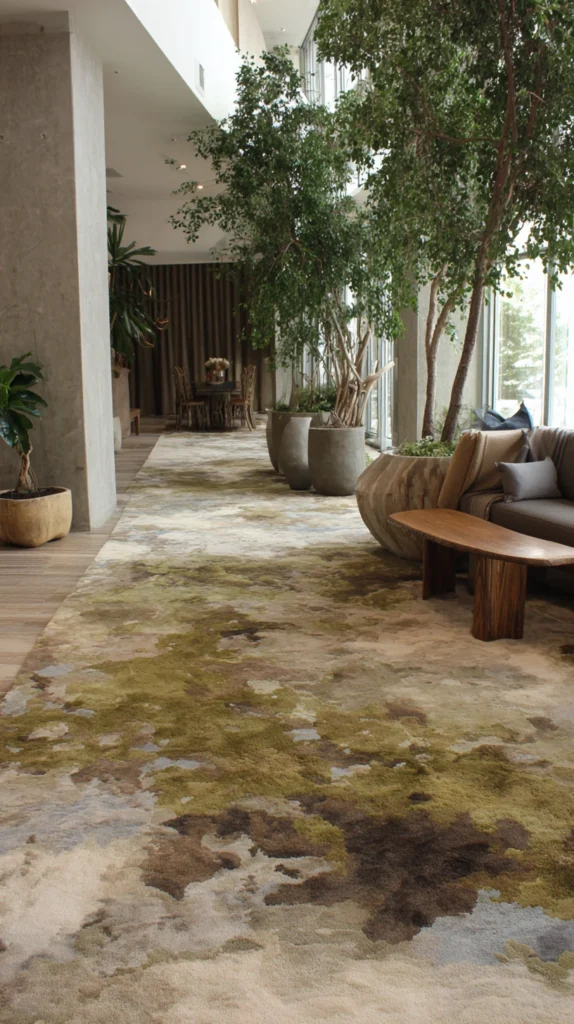
Design naturalistic plantings mimicking forest understories using native shade plants, leaf litter mulch, and organic flowing layouts creating low-maintenance gardens suited to hot climate shade conditions. Choose native woodland plants adapted to local conditions ensuring they thrive with minimal intervention once established.
Allow leaf litter to remain creating natural mulch that conserves moisture, moderates soil temperature, and provides habitat for beneficial organisms. The naturalistic approach reduces maintenance while the native plants support local wildlife and demonstrate ecological gardening principles.
9. Hosta Heat-Tolerant Selections
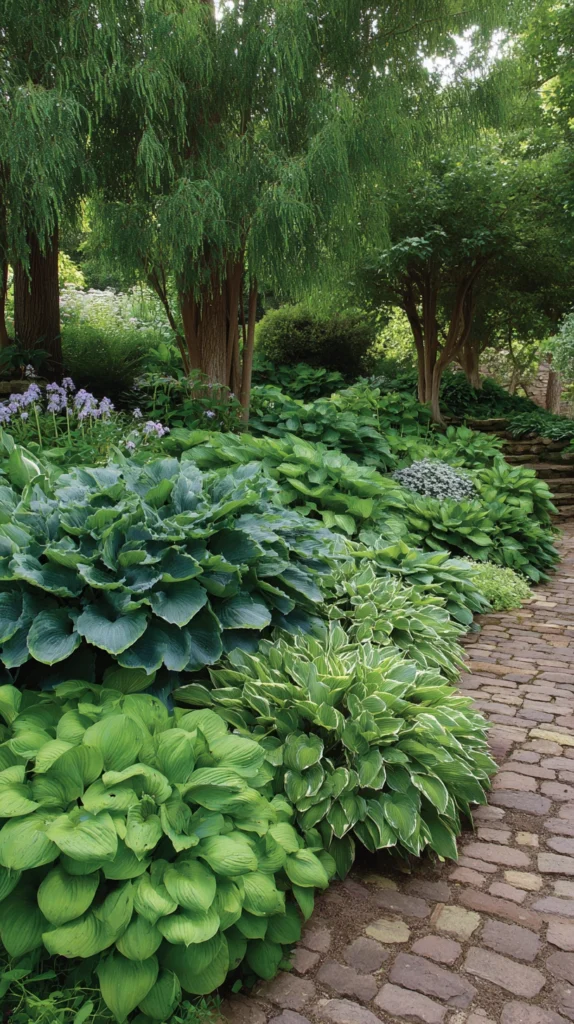
Incorporate hostas choosing heat-tolerant varieties that maintain foliage quality despite high temperatures when adequate shade and moisture are provided. Select thick-leaved varieties like ‘Sum and Substance’ or fragrant plantain lilies that tolerate heat better than thin-leaved types prone to scorching.
Provide afternoon shade protection and consistent moisture ensuring plants remain hydrated despite ambient heat. The varied foliage colors from blue to gold to variegated patterns add diversity while the mounding forms create structure in shade gardens.
10. Water Feature Cooling
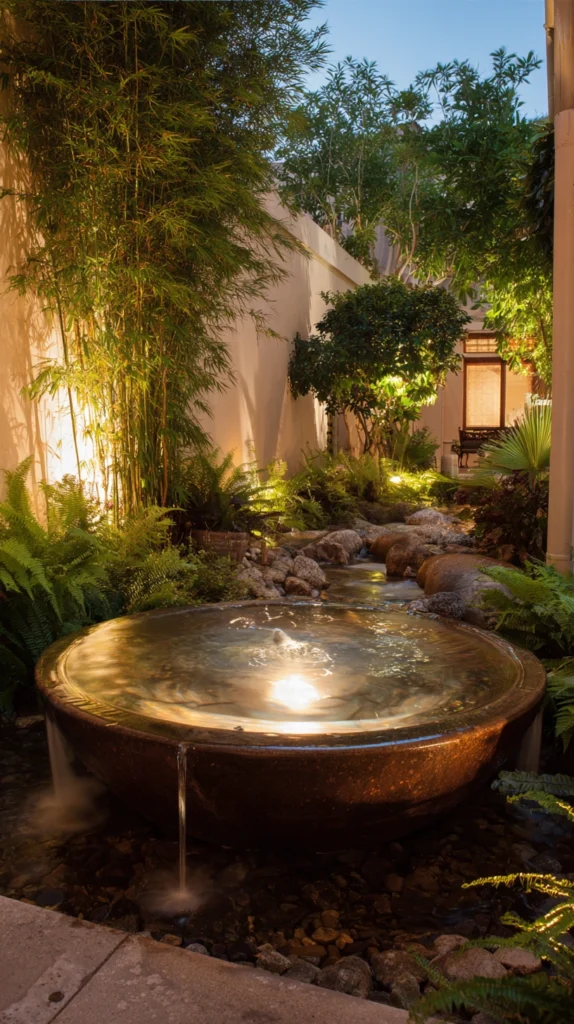
Install fountains, small ponds, or water features in shade gardens creating cooling effects through evaporation while the sound of moving water psychologically enhances the cool atmosphere. Position water features where they can be appreciated from seating areas while surrounding plantings benefit from increased humidity water creates.
Include aquatic plants like water lilies or lotus that thrive in shade or partial sun creating complete water gardens. The moving water adds negative ions creating refreshing atmospheres while the reflective surfaces add light to shaded areas.
11. Impatiens and Begonia Beds
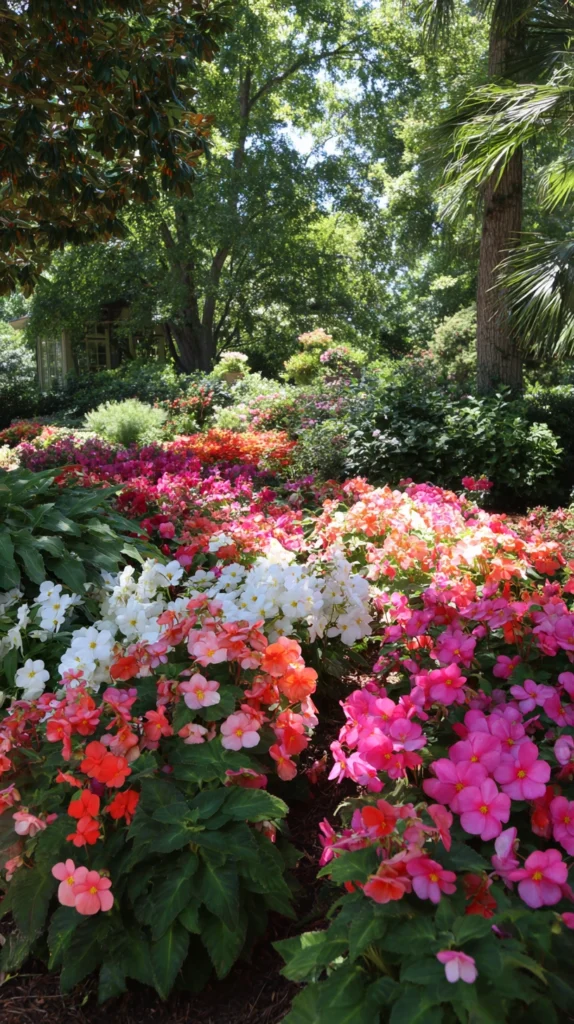
Create continuous summer color using shade-loving annuals like impatiens and begonias that bloom prolifically despite shade when consistent moisture is maintained. Plant generously creating substantial drifts of single colors rather than scattered mixed plantings for greater impact.
Deadhead regularly maintaining continuous bloom while adequate watering ensures plants remain hydrated despite summer heat. The reliable flowering provides the cheerful color that makes gardens inviting and beautiful despite being positioned in locations where sun-loving flowers cannot survive.
12. Hydrangea Shade Borders
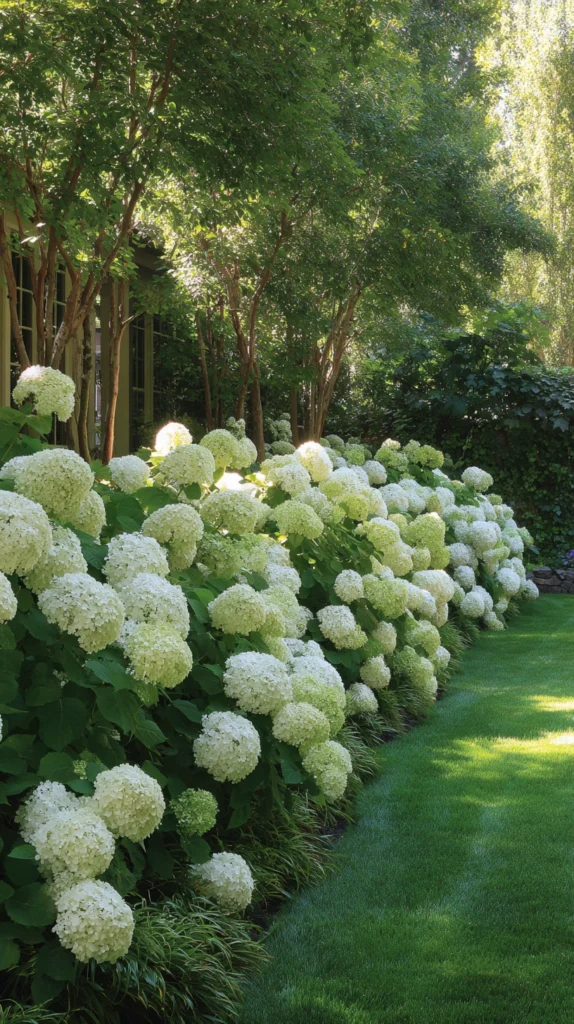
Establish substantial shrub borders using hydrangeas that appreciate afternoon shade in hot climates producing abundant flowers while their large leaves remain attractive throughout summer. Choose varieties suited to your specific climate ensuring they tolerate heat when adequate moisture and shade protection are provided.
Plant in amended soil rich in organic matter ensuring moisture retention while regular watering maintains plant health during hot periods. The substantial shrubs provide structure and seasonal flowers creating focal points in shade gardens where flowering options may be otherwise limited.
13. Coleus Foliage Tapestries
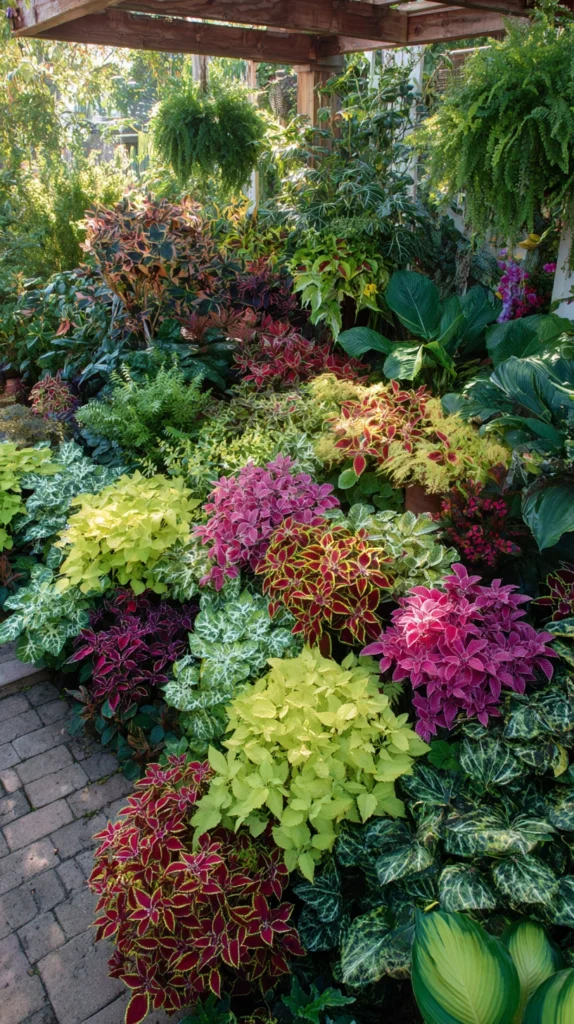
Design colorful plantings using coleus in varied patterns and colors creating living tapestries that rival flowers in visual impact while thriving in shade with minimal care. Choose colors in coordinating families creating cohesive presentations or contrast bold combinations for dramatic effect depending on aesthetic preferences.
Pinch growing tips regularly maintaining compact bushy forms while removing flower spikes directs energy into foliage production. The incredible variety available ensures you’ll find colors complementing any palette while the shade tolerance and heat resistance make coleus ideal for hot climate shade gardens.
14. Moss and Groundcover Carpets
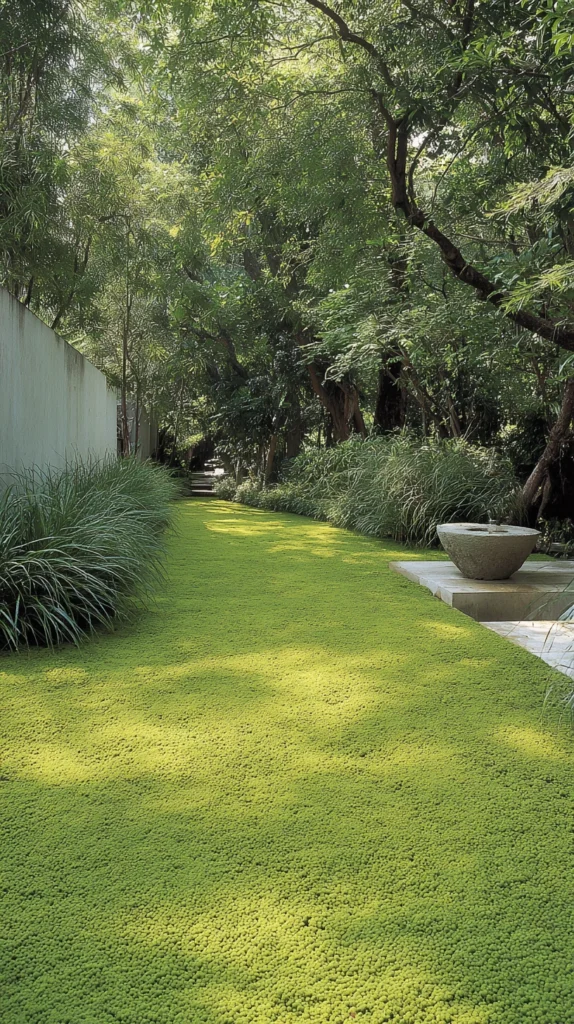
Establish low-maintenance ground layers using shade-tolerant groundcovers or moss creating living carpets that eliminate lawn maintenance in shaded areas where grass struggles. Transplant moss from other garden areas encouraging establishment in consistently moist shade, or use groundcovers like ajuga, pachysandra, or sweet woodruff creating green carpets.
The low-growing plants eliminate mowing while their shade tolerance ensures they thrive where turfgrass fails. Add stepping stones creating pathways through groundcover carpets allowing garden access without compacting living surfaces.
Successfully creating summer shade gardens in hot climates requires understanding that shade combined with heat creates unique growing conditions different from either cool shade or hot sun individually.
Select plants specifically tolerant of both conditions rather than assuming any shade plant will succeed. Improve soil with generous organic matter amendments ensuring moisture retention during hot periods when evaporation rates are extreme. Mulch adequately maintaining soil moisture and moderating temperatures while the organic mulch breaks down improving soil structure over time.
Water consistently especially during establishment ensuring plants develop adequate root systems to access available moisture during stress periods. Monitor plant performance replacing species that struggle despite adequate care with alternatives better suited to your specific conditions.
Most importantly, embrace shade as valuable garden resource in hot climates rather than viewing it as limitation, recognizing that cool shaded areas often support more diverse beautiful plantings than harsh sunny locations where only the toughest xerophytes survive.