15 Moon Garden Ideas for Night-Blooming Plants
A moon garden is one of the most poetic and most distinctive garden styles available to any gardener willing to think beyond the conventional assumption that a garden exists primarily for daytime enjoyment.
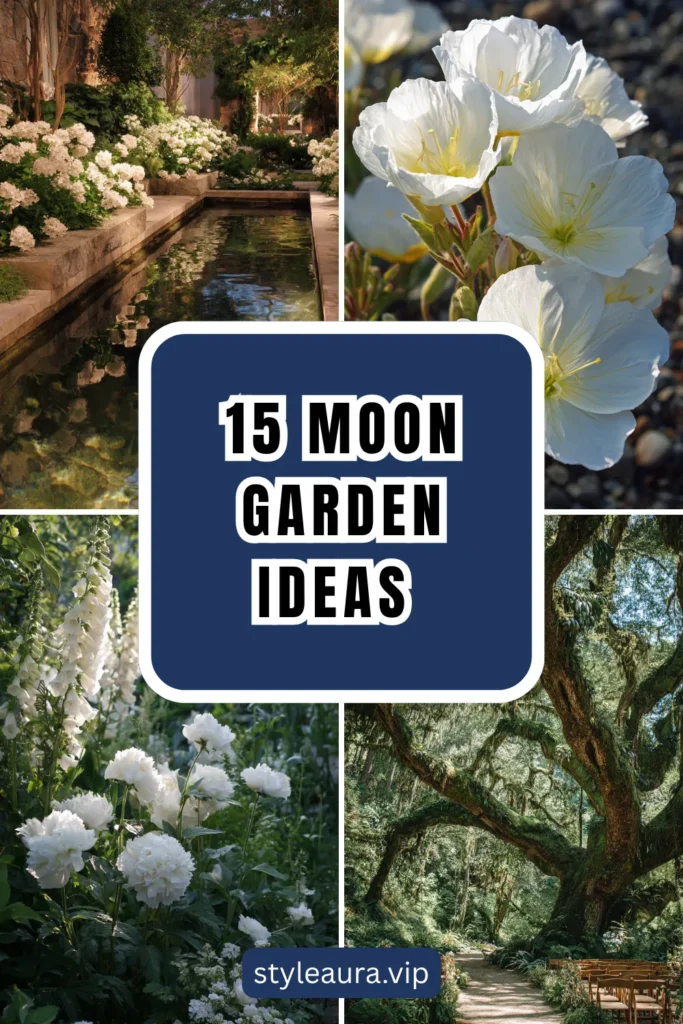
A moon garden is designed specifically for the evening and the night. planted with white, cream, and pale silver-toned flowers and foliage that catch and amplify the moonlight, and with night-blooming and night-fragrant species that release their most extraordinary scents after dark.
The moon garden invites a different relationship with the outdoor space. one of stillness, of heightened sensory awareness, and of the particular contemplative pleasure that a garden experienced in the quiet of the evening can provide. Here are 15 moon garden ideas for night-blooming plants that are beautiful, practical, and genuinely inspiring.
1. Choose White and Pale Flowers as the Foundation
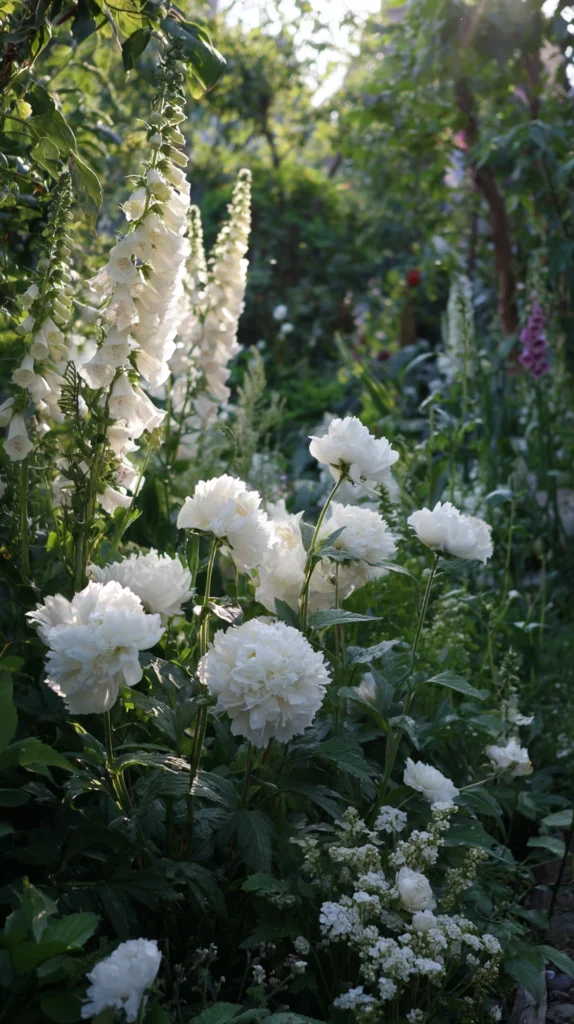
The foundation of any moon garden is a planting palette restricted to white, cream, and the palest possible tones of every flower species chosen. White flowers are unique in their ability to reflect and amplify available light, glowing with a luminous, almost phosphorescent quality in moonlight and low evening light that colored flowers, which absorb rather than reflect light, entirely lack.
White roses, white peonies, white cosmos, white Japanese anemones, white foxgloves, and white alliums all contribute this luminous quality to the moon garden and should form the backbone of the planting across every season of the year.
Choose flowers with varying heights, forms, and textures within the white palette for a planting of genuine visual complexity and seasonal depth.
The restriction of the color palette to white and cream focuses the eye on form, texture, and the movement of individual plants in the evening breeze rather than on color contrast, creating a garden experience of unusual visual subtlety and refinement.
2. Plant White Moonflower Vine
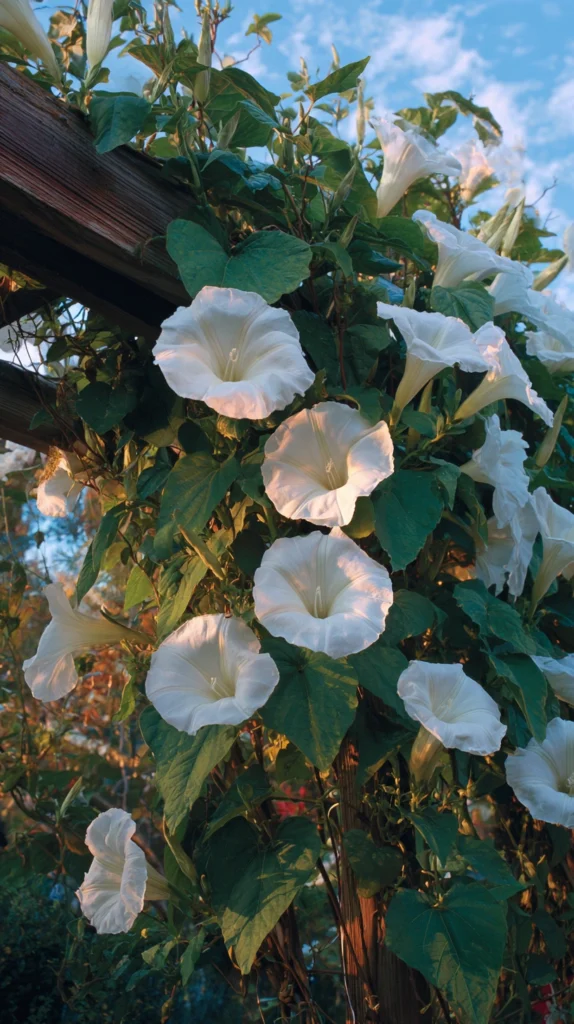
The moonflower vine is perhaps the most appropriately named plant in the entire horticultural world. Its large, pure white, sweetly fragrant flowers remain closed throughout the day and open dramatically in the late afternoon and evening, releasing a powerful, intoxicating fragrance that fills the garden with scent from dusk until dawn.
Train moonflower vines up a trellis, a pergola, an arbor, or a fence adjacent to the primary seating area of the moon garden where its evening opening and its extraordinary fragrance can be experienced at the closest possible range and with the most immediate sensory impact.
3. Include Night-Blooming Jasmine
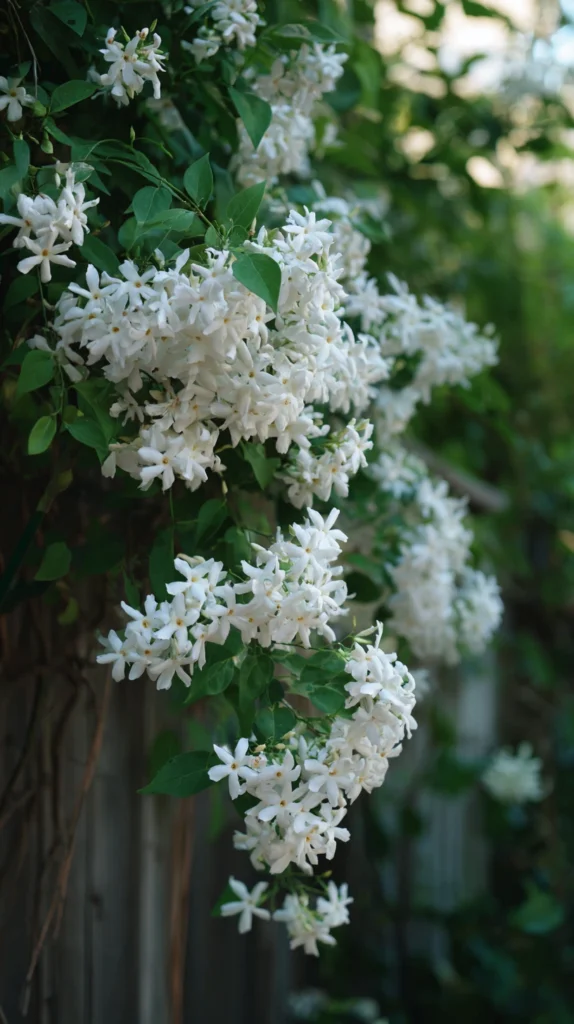
Night-blooming jasmine is one of the most powerfully fragrant plants available for a moon garden and one of the most effective for creating the sensory atmosphere of evening scent that defines the style at its most evocative.
Its small, tubular white flowers are modest in visual scale but extraordinary in fragrance, releasing a sweetly exotic, tropical scent in the evening air that carries across a considerable distance and transforms the entire atmosphere of the garden after dark.
Plant night-blooming jasmine in a sheltered, warm position near the garden seating area where its fragrance can be enjoyed at the closest range throughout the evening season.
4. Use White Nicotiana for Evening Fragrance
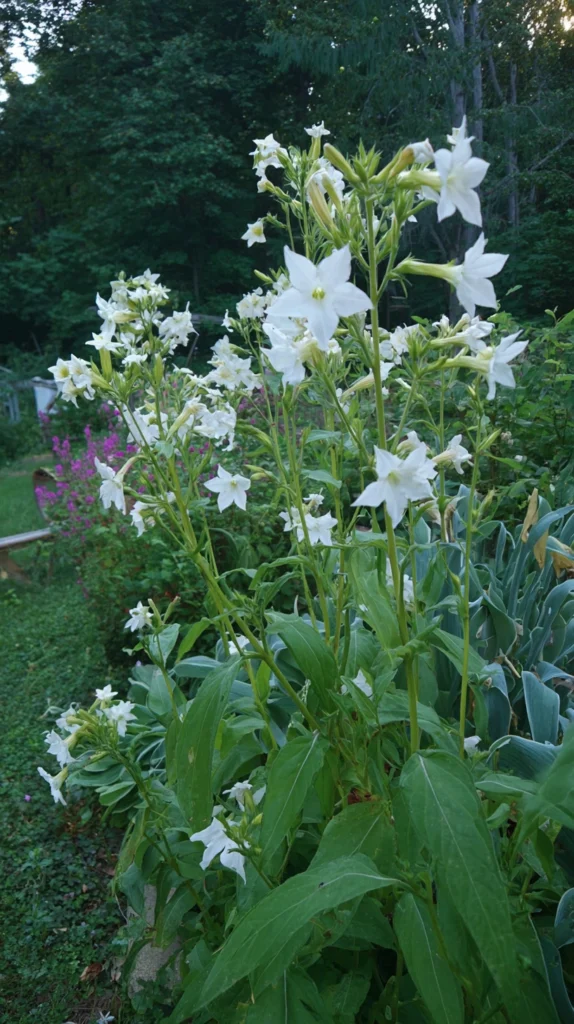
White nicotiana. the flowering tobacco plant. is one of the most reliably fragrant and most easily grown evening-scented annuals available for a moon garden.
Its pure white, star-shaped flowers are held on tall, graceful stems above sticky, slightly textured foliage and they release a sweet, vanilla-tinged fragrance in the evening air that is strongest on warm, still evenings when the scent accumulates around the plant without dispersal by the wind.
Grow white nicotiana in generous drifts within the moon garden border for a fragrant contribution that fills the evening garden from midsummer to the first frosts of autumn.
5. Plant White Evening Primrose
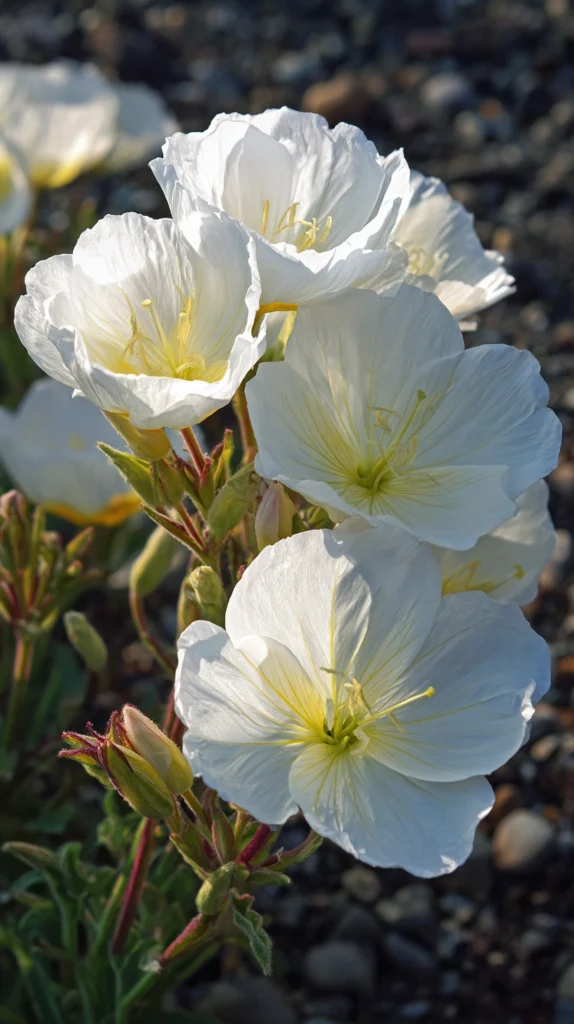
White evening primrose is one of the most characteristically moon garden plants available, its large, pure white flowers opening visibly and rapidly at dusk in a display that is genuinely fascinating to watch in real time.
The flowers last only a single night, closing and fading by the following morning, but new buds open each evening throughout the plant’s long flowering season, creating a continuous nightly display of freshly opened blooms.
Position white evening primrose at the edge of the moon garden border where its nightly opening display can be observed easily from the garden seating area.
6. Add Silver and Grey Foliage Plants
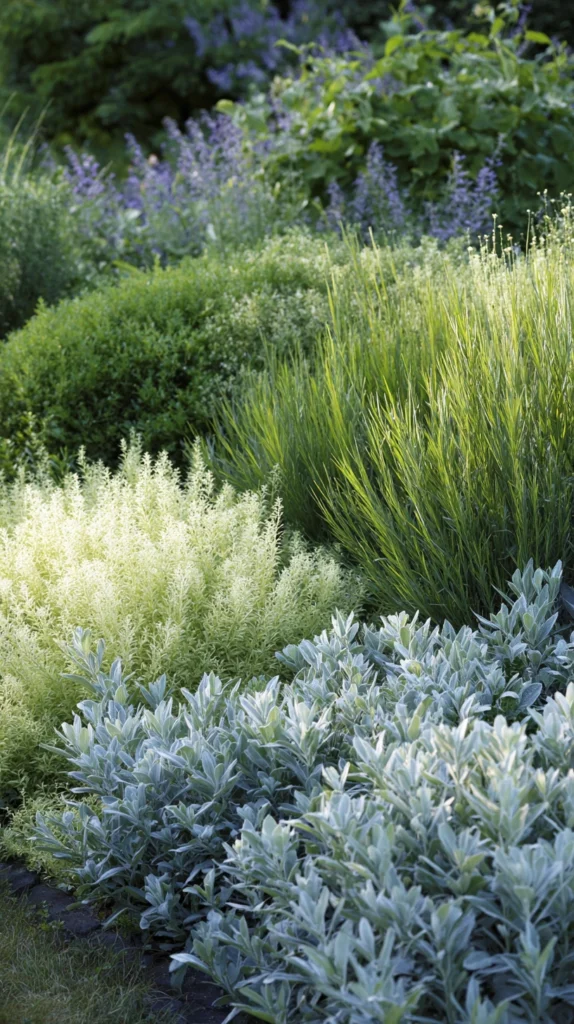
Silver and grey foliage plants. artemisia, stachys byzantina, lavender, and senecio. contribute the same light-reflecting quality to the moon garden as white flowers but provide this quality continuously throughout the growing season rather than only during the flowering period.
The silver and grey tones of these foliage plants create a visual rhythm and a textural interest throughout the moon garden that prevents the planting from feeling flat or uninteresting between the flowering periods of the white-flowered species. The soft, felted texture of stachys byzantina and artemisia catches and holds evening light in a particularly beautiful way.
7. Include White Roses
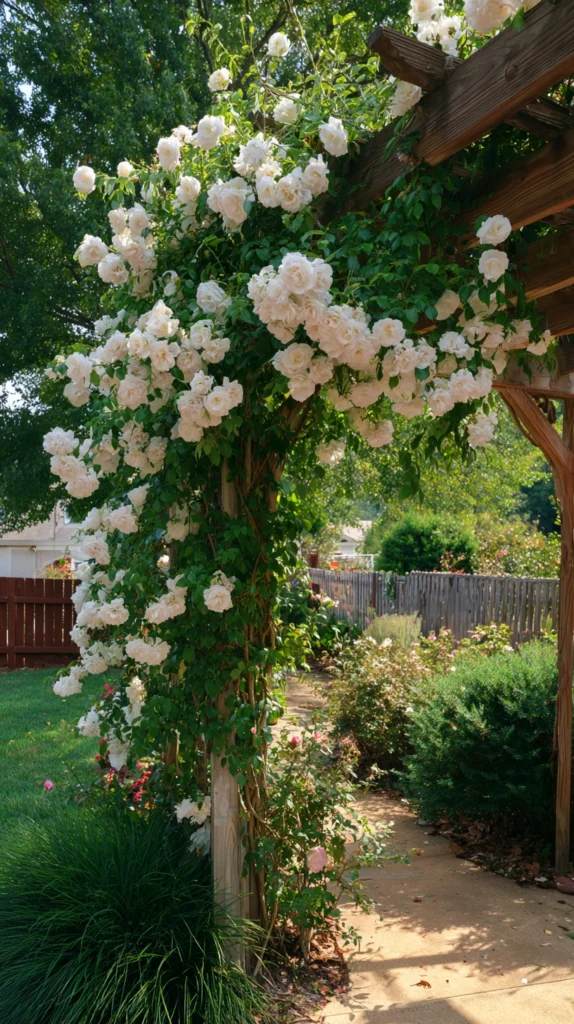
White roses are the most classically beautiful and most widely planted moon garden flowers available, combining the luminous white flower quality that the style requires with a fragrance that is at its most intense in the cool of the evening. Choose varieties specifically for their evening fragrance.
Rosa ‘Iceberg’, Rosa ‘Madame Hardy’, and Rosa ‘Winchester Cathedral’ are among the most reliably fragrant white roses available for a moon garden planting. Train climbing white roses over an arch or pergola at the entrance to the moon garden for a fragrant, luminous overhead canopy of white blooms through the summer months.
8. Design a Seating Area Within the Garden
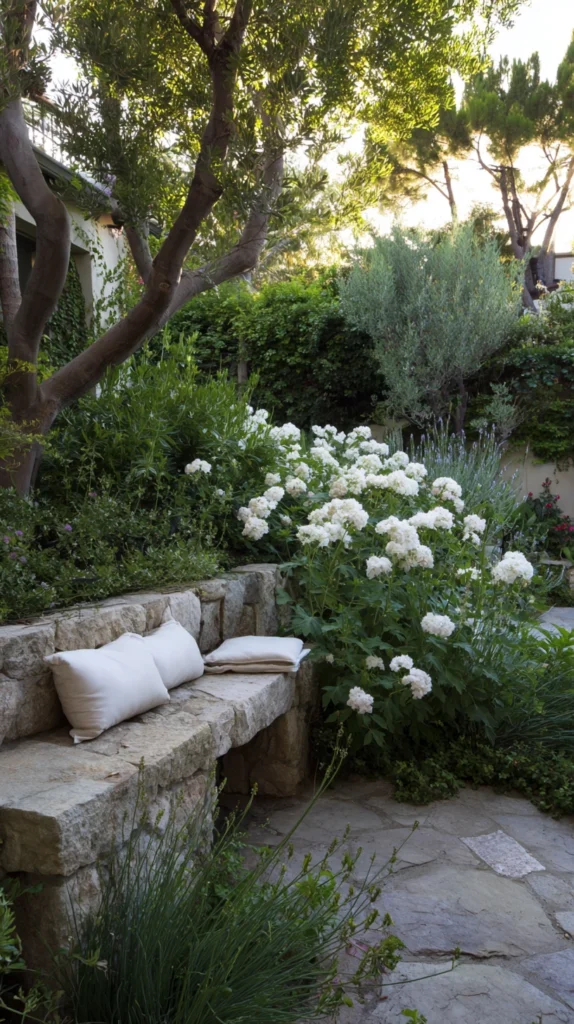
A dedicated seating area positioned at the heart of the moon garden creates the human-scaled space from which the garden can be experienced as its designer intended. a place to sit in the evening, to allow the fragrances to accumulate around you, to watch the night-blooming flowers open, and to feel the particular quality of stillness and sensory richness that a well-planted moon garden creates after dark.
Choose seating materials that are comfortable and weather-resistant. a stone bench with a cushion, a teak armchair, or a simple wooden seat. and position the seating where it is surrounded by the most fragrant and most luminous plants in the garden.
9. Use White Phlox for Summer Fragrance
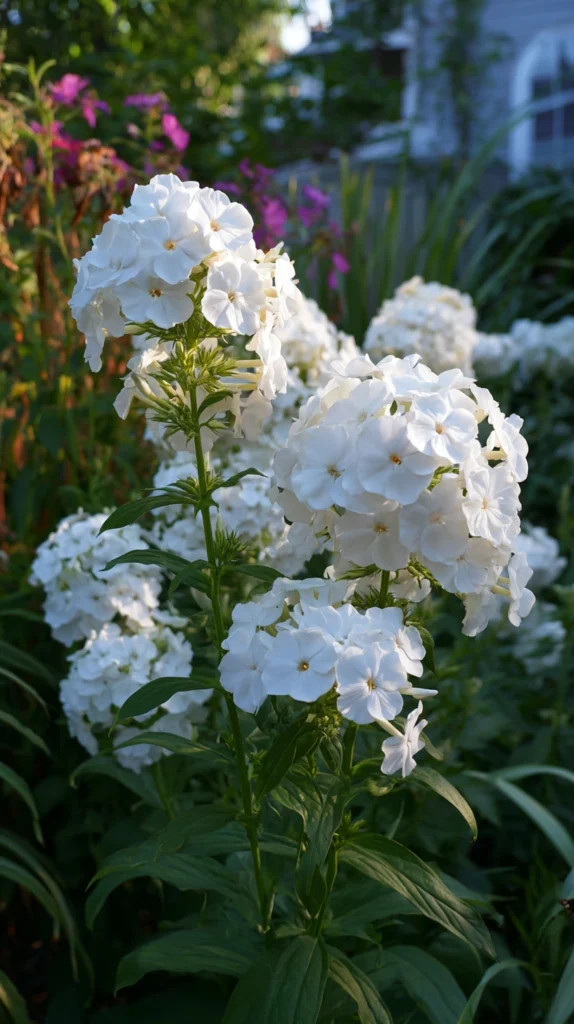
White garden phlox is one of the most generously fragrant and most visually stunning white perennials available for a moon garden. Its large, domed flower heads of pure white blooms are held at mid-height on sturdy stems above deep green foliage and they release a sweet, slightly spicy fragrance in the evening air that is among the most distinctive and most evocative summer garden scents available.
Plant white phlox in generous drifts at the middle tier of the moon garden border for a mid-summer fragrance contribution that coincides with the peak of the moon garden’s visual display.
10. Plant White Wisteria on a Pergola
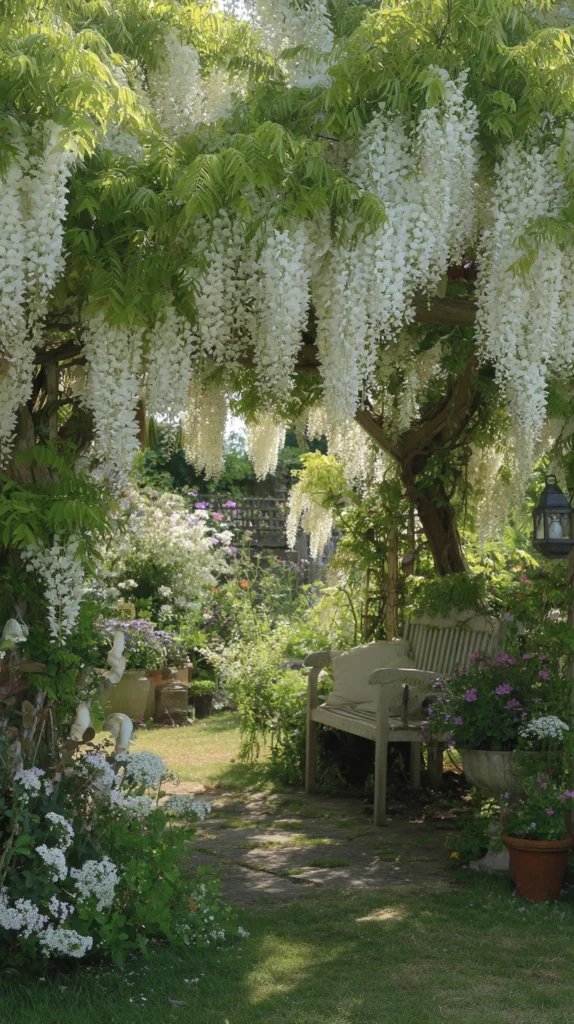
White wisteria trained over a pergola or an arbor within the moon garden creates a seasonal overhead canopy of extraordinary fragrant beauty. The long, pendulous racemes of white wisteria flowers have a luminous, slightly translucent quality in evening light that is genuinely spectacular, and their fragrance.
Sweet, slightly musky, and entirely unmistakable, fills the air beneath the pergola with a heady, intoxicating scent that transforms the experience of sitting in the garden on a warm May evening into something genuinely unforgettable. Wisteria is a vigorous, long-lived climber that rewards patient establishment with decades of extraordinary spring flowering.
11. Include White Cosmos for Airy Movement
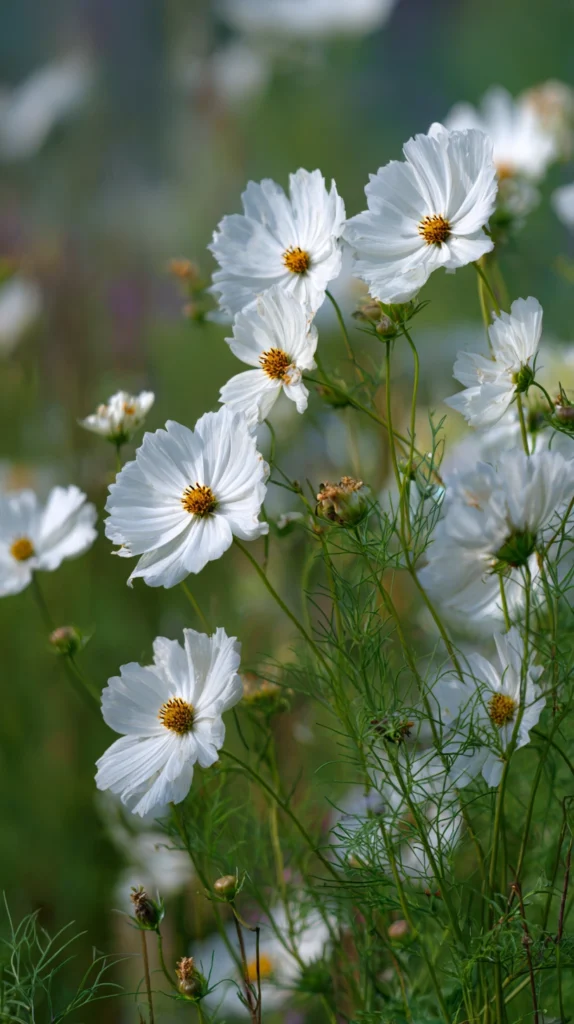
White cosmos is one of the most beautiful and most movement-rich annual plants available for a moon garden. Its large, single white daisy flowers are held on extremely fine, delicate stems that move in the slightest breeze, creating a constant, gently animated quality within the border that makes the moon garden feel alive and in motion even on very still evenings.
The white flowers of cosmos catch moonlight with exceptional clarity and appear to float above the surrounding planting in low light conditions, creating the particular luminous, hovering quality that makes a well-planted moon garden so visually magical after dark.
12. Add a Water Feature for Moonlight Reflection
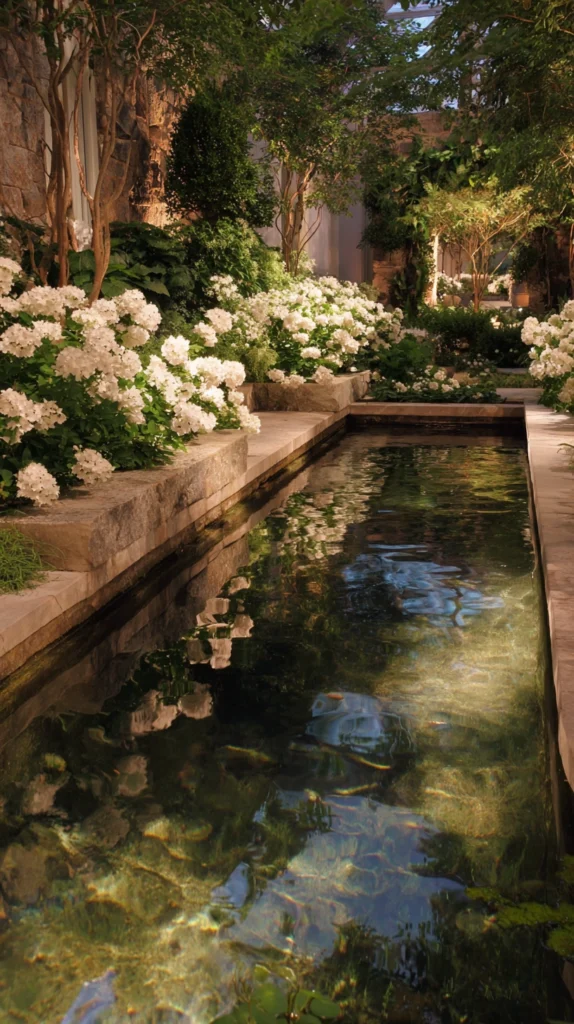
A water feature within the moon garden. a simple reflecting pool, a still garden pond, or a formal stone basin filled with water. adds a dimension of reflective light to the evening garden that amplifies and multiplies the available moonlight and the surrounding white planting in the most beautiful and most atmospherically powerful way.
A still water surface in a moon garden on a clear night reflects the moon itself, the surrounding white flowers, and the night sky above them in a single, shimmering, constantly shifting image that is one of the most extraordinary visual experiences available in any garden style at any time of year.
13. Use White Tulips for Spring Impact
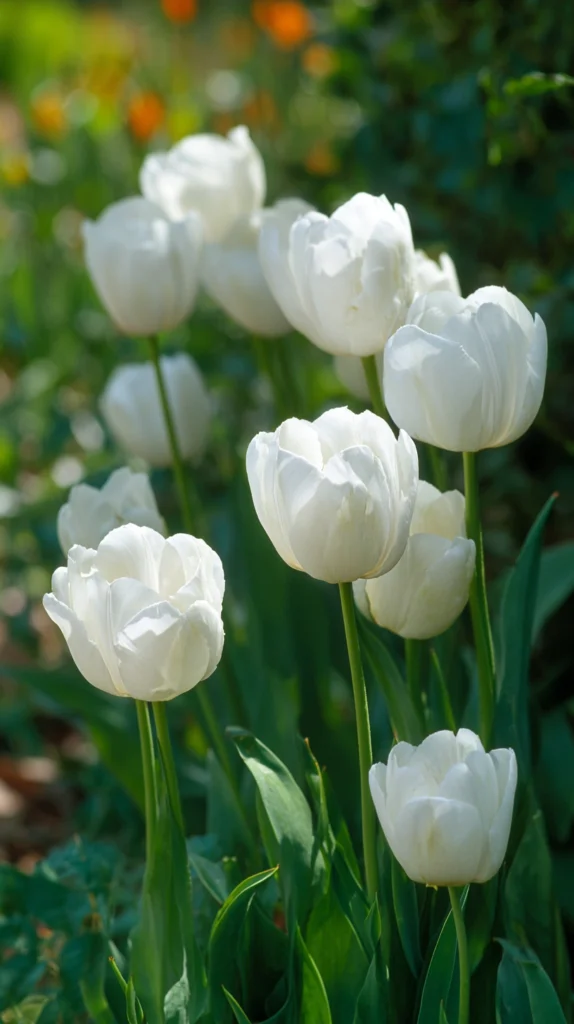
White tulips planted in generous quantities throughout the moon garden create the most luminous and most visually impactful spring bulb display available, their smooth, waxy petals reflecting evening light with a clarity and intensity that few other spring flowers can match.
Choose late-flowering white tulip varieties, ‘White Triumphator’, ‘Purissima’, or ‘Maureen’,that extend the spring bulb season as far as possible into the warmer months before the summer perennials and annuals take over the seasonal display. Plant tulip bulbs in layers beneath the established perennials of the moon garden border for a spring display that emerges through the base of the existing planting without disturbing it.
14. Create Paths of Light-Colored Gravel
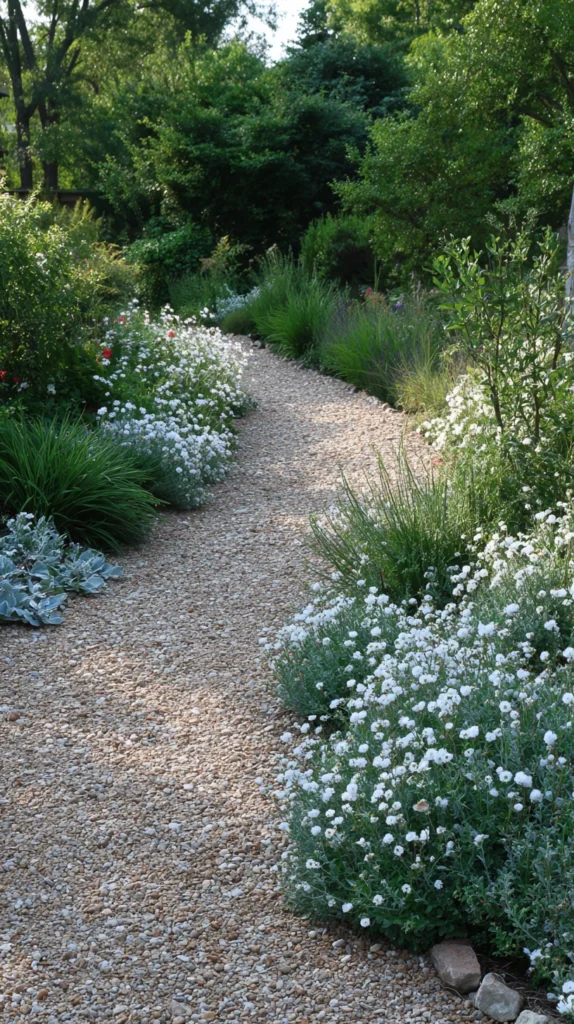
Light-colored gravel paths within the moon garden. pale limestone, white granite, or silver-grey pea gravel. serve a functional purpose in safely navigating the garden after dark and a visual purpose in creating the light-reflecting ground plane that completes the moon garden’s distinctive luminous aesthetic.
The pale gravel reflects available moonlight and ambient light across the garden floor, illuminating the path surface naturally and creating the impression of the garden glowing from within rather than simply reflecting light from above. Edge the gravel paths with low-growing white flowers or silver-leaved ground cover for a path that contributes to the moon garden planting as well as to its circulation.
15. Add Garden Lighting for Moonless Nights
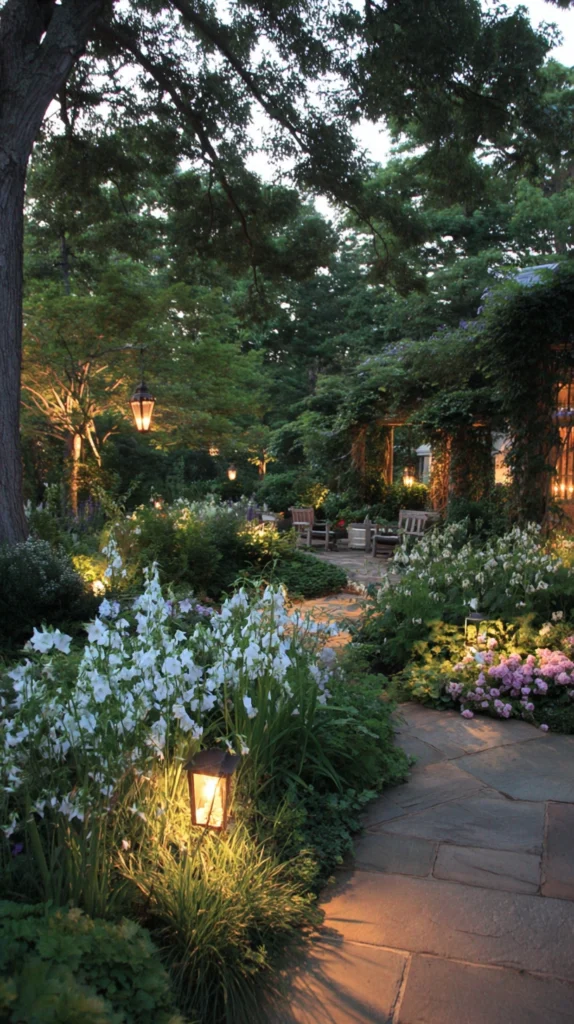
Even the most beautifully planted moon garden benefits from a degree of artificial lighting for the moonless nights and overcast evenings when natural light is insufficient to reveal the garden at its best. Choose warm-toned, low-level LED lighting that mimics the quality of moonlight rather than the harsh, cool white of floodlighting that would destroy the moon garden’s atmosphere.
Uplights at the base of white-flowering specimen plants, soft path lights along the gravel paths, and a single warm lantern within the seating area create a lighting scheme that enhances rather than competes with the natural luminosity of the moon garden’s white planting.
The Moon Garden as an Evening Practice
A moon garden is an invitation to experience the garden in a completely different way. to be present in the outdoor space at the time of day when most people have gone indoors, to notice the fragrance that darkness amplifies, to watch the flowers that only open for the night, and to find in the quiet of the evening garden a quality of peace and sensory richness that the busy, bright hours of the day rarely provide.
Plant it with care, tend it with patience, and visit it as often as possible after dark. The moon garden rewards the gardener who comes to it in the evening with experiences of extraordinary beauty that the daytime garden can never offer.