13 Garden Seating Ideas You’ll Never Want to Leave
There is a particular quality to a garden seat that has been genuinely thought about. Not the plastic chair dragged out from the garage when someone needs somewhere to sit, not the sun lounger that has been there so long it has become part of the lawn, but a seat that was chosen for a specific spot, positioned with the light and the view in mind, and given enough comfort to make two hours feel like twenty minutes.
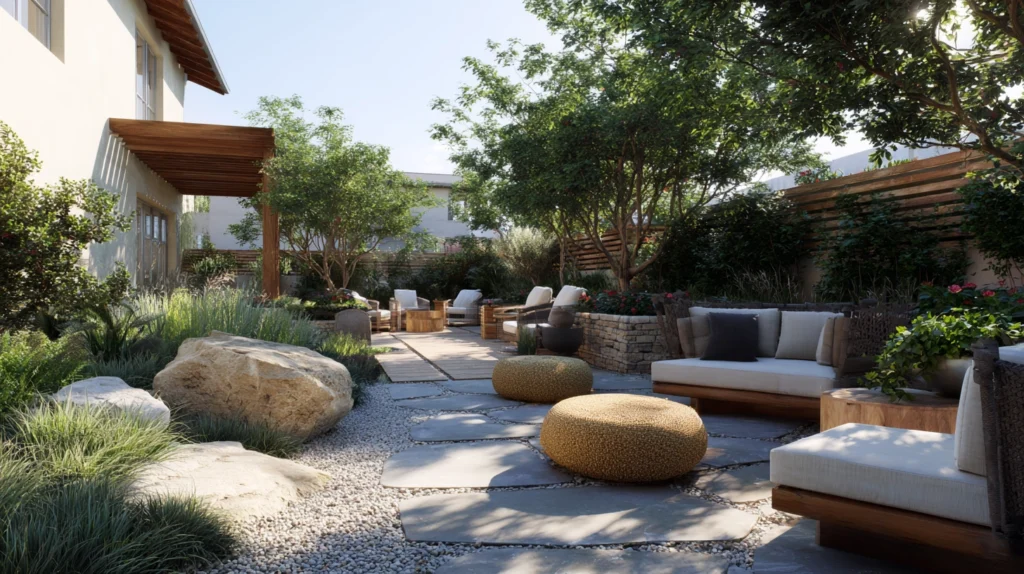
That quality is not expensive to achieve. It is simply the result of treating the garden as a room — a room with weather and birds and the smell of whatever is currently flowering — and giving its seating the same consideration that would be given to a sofa in a living room.
The thirteen ideas below cover every format and every scale of garden seating, from a single reading chair in a quiet corner to a full outdoor dining arrangement that accommodates a crowd. Each one covers what you will need, what it will cost, and a practical tip to make it genuinely comfortable rather than merely beautiful.
1. The Rattan Loveseat With All-Weather Cushions
Budget: $150 – $800
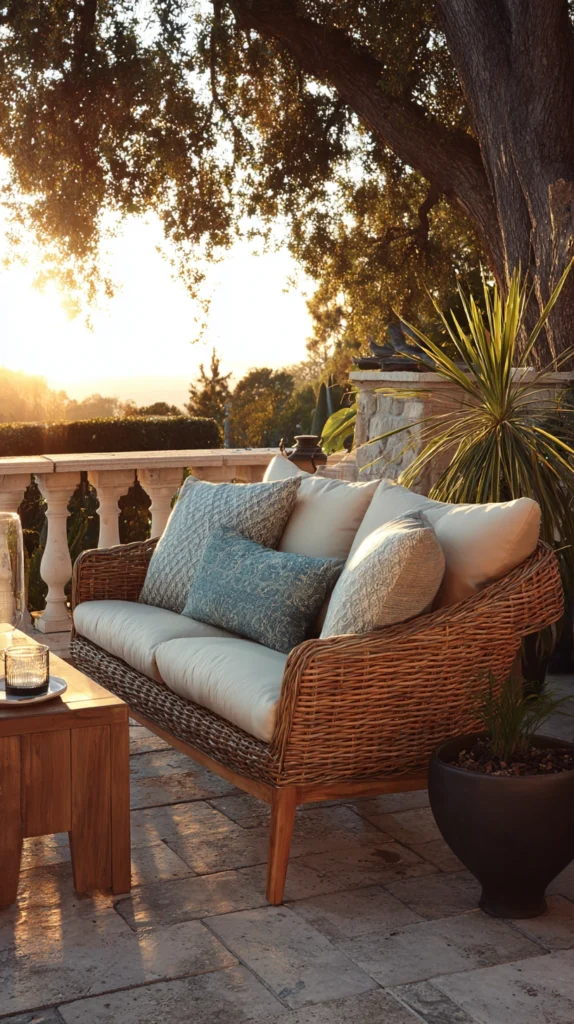
A two-seater rattan loveseat — positioned to face the best view the garden offers, whether that is a flower border, a tree, a water feature, or simply the open lawn — is the garden’s equivalent of the living room sofa. It is a seat for two people who want to be together in the garden rather than simply occupying the same outdoor space, and that distinction in intention produces a completely different quality of sitting. The rattan frame weathers slowly and beautifully. The all-weather cushions stay out through summer and come in for winter.
Synthetic rattan loveseats in a natural or dark espresso weave cost $150 – $500. All-weather cushions in outdoor-grade fabric — fade-resistant, quick-drying, and able to withstand a passing shower without permanent damage — run $40 – $150 for a loveseat pair. A small side table to hold drinks beside the loveseat adds $20 – $60 and completes the arrangement into a destination rather than simply a seat.
Decor tip: Position the loveseat at a slight angle to the house rather than directly facing it. A seat that faces the house invites the occupants to look at walls and windows. A seat angled toward the garden — toward the planting, the lawn, the sky — produces a completely different experience of the same space and makes the garden feel considerably larger than it is.
2. The Hammock Between Two Trees
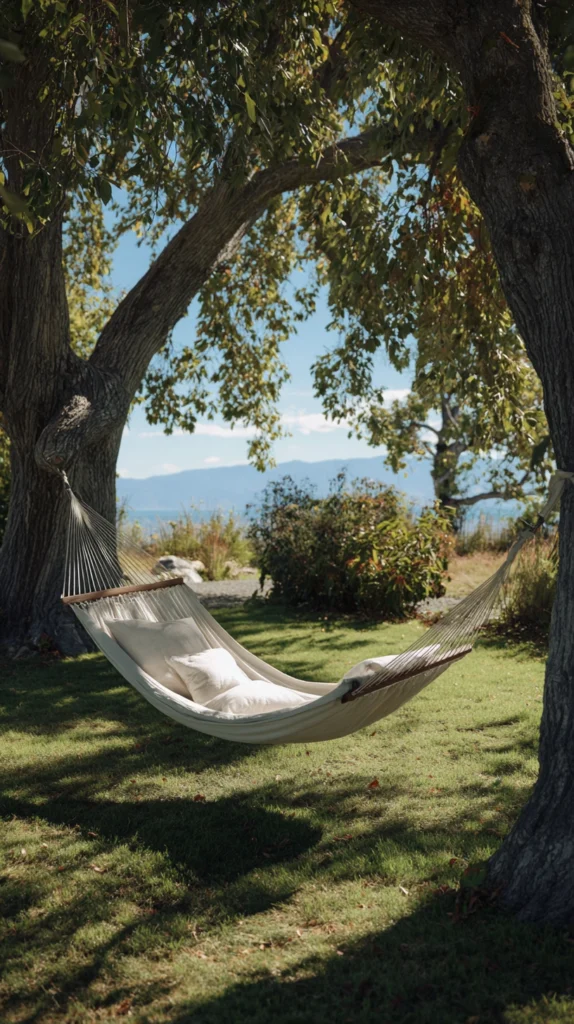
Budget: $40 – $200
A hammock strung between two mature trees at the right tension is one of the most reliably pleasant seats available in any garden, and it costs less than almost any other option on this list. The experience of lying in a hammock in a garden — the gentle sway, the canopy of leaves overhead, the particular way the ground seems distant and irrelevant — is genuinely irreplaceable and genuinely free once the hammock itself has been purchased. No other garden seat produces the same quality of rest.
A quality cotton rope hammock costs $40 – $100. Hammock tree straps — wide webbing straps that protect the tree bark and allow precise height adjustment — run $10 – $25 and are considerably more practical than knotted rope directly around the trunk. A hammock with spreader bars at each end hangs flat and is easier to get in and out of. A gathered end hammock cocoons the body more completely and is marginally more comfortable for long occupancy once the technique of entry and exit has been mastered.
Decor tip: Hang the hammock lower than instinct suggests — approximately 45 centimetres from the ground at the centre point when occupied. A hammock hung too high is difficult to enter without a step, difficult to exit without inelegance, and produces a anxiety-inducing sense of height when occupying it. A hammock hung low feels safe, is entered naturally, and exits without ceremony. The hanging height is the single most important variable in hammock comfort.
3. The Outdoor Daybed With a Canopy
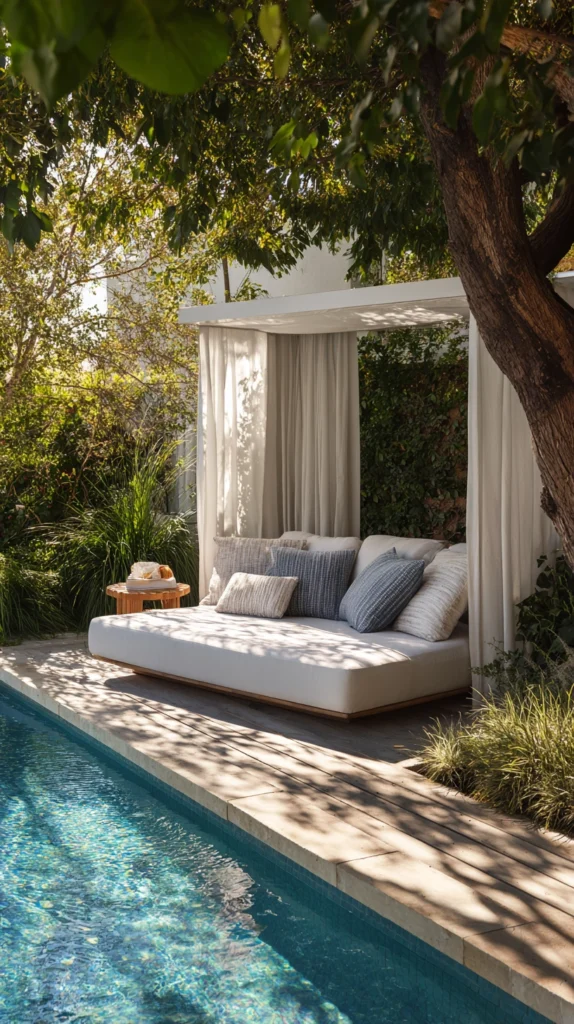
Budget: $200 – $1500
An outdoor daybed — a full-length lounging surface wide enough to lie across — with a fabric canopy or a draped sail above it is the garden’s most indulgent seating option and one of the most used once installed. The canopy is not optional: a daybed in full sun is usable for approximately ninety minutes on a summer day before the heat becomes prohibitive. The same daybed under a sail or a fabric drape provides dappled shade that extends its usability to the full day.
Rattan or teak outdoor daybeds cost $200 – $800. A separate shade sail — triangular or square — costs $30 – $100 and attaches to existing posts, fence posts, or wall fixings. A fabric canopy on a freestanding frame runs $80 – $300 and requires no wall or post fixings. All-weather cushions for the daybed surface add $60 – $200 depending on size. The total investment for a fully canopied daybed sits at $290 – $1100 and produces the single most used seat in the garden on any warm afternoon.
Decor tip: Angle the shade sail so that it provides maximum coverage at the time of day the daybed will be most used — typically between 11am and 3pm, when the sun is at its highest. A shade sail positioned without reference to solar angle provides coverage in the morning and none in the afternoon, which is the reverse of what most garden daybeds require.
4. The Built-In Bench Around a Firepit
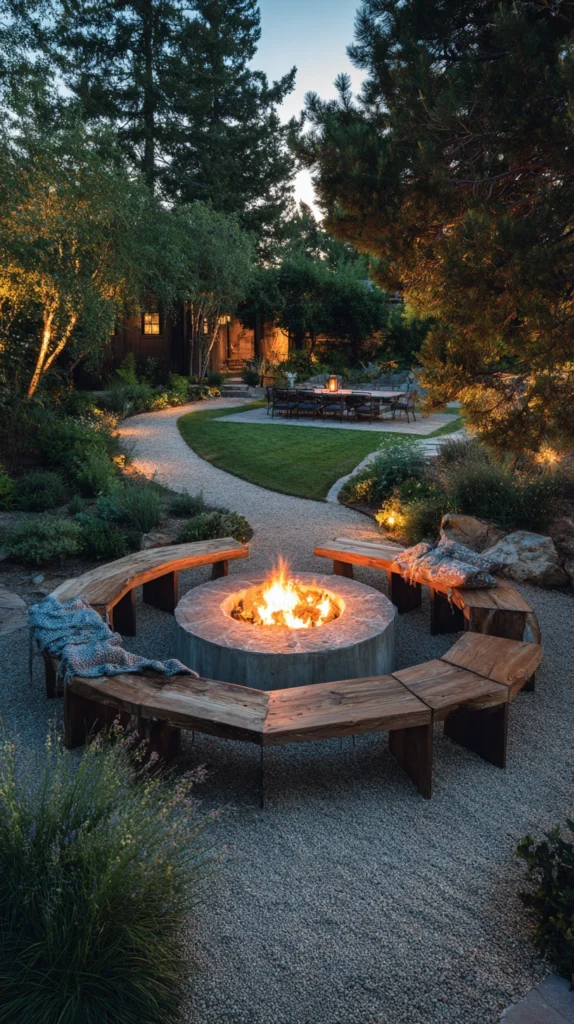
Budget: $200 – $2000
A firepit with built-in bench seating around it — whether timber-decked benches on a raised platform, stone or brick built seating walls, or simple railway sleeper benches set at the right distance for warmth — creates the garden’s most socially complete seating arrangement. Everyone faces the centre. Everyone is equidistant from the warmth. The fire provides the lighting. The arrangement produces conversations that go later into the evening than any other garden format.
A portable steel firepit costs $40 – $150. Railway sleeper bench seating — two sleepers per bench, one as the seat and one as the back, fixed to short timber legs — costs $30 – $80 per bench in materials. A circular arrangement of four benches around a central firepit creates seating for eight to twelve people for under $400 in total. Cushions cut to the bench dimensions from outdoor foam — $20 – $50 per bench — add comfort that transforms the seating from spartan to genuinely comfortable.
Decor tip: Set the benches at a distance of 1.2 to 1.5 metres from the edge of the firepit rather than closer. A bench positioned within a metre of an open fire is uncomfortably warm on the front and cold on the back — a combination that drives people to stand rather than sit. The 1.2 metre distance provides warmth without heat, allows people to lean back comfortably, and produces the quality of sustained sitting that a firepit gathering requires.
5. The Swing Seat Suspended From a Frame
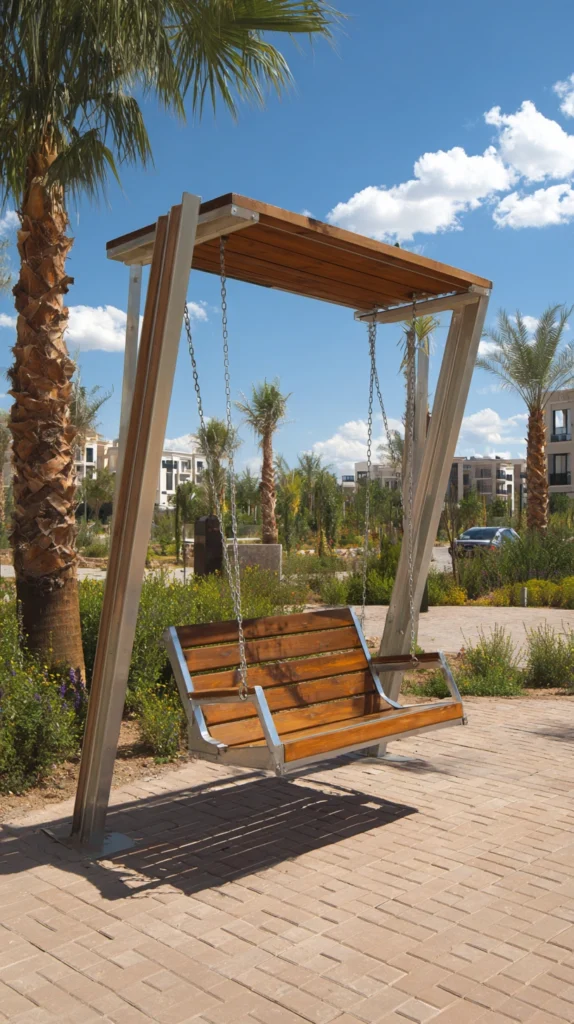
Budget: $80 – $500
A garden swing seat — a two-person bench suspended from a freestanding timber or metal A-frame — is the garden seating option most consistently associated with genuine pleasure. The movement is gentle enough to be soothing rather than stimulating, the position is upright enough to hold a conversation or read a book, and the A-frame structure makes it independent of any existing garden feature, which means it can be positioned wherever the best spot is rather than wherever there happens to be a structural anchor.
Freestanding swing seat sets — frame and bench included — cost $80 – $300 for timber versions and $150 – $500 for powder-coated steel frames with more durable longevity. Replacement cushions in outdoor fabric run $30 – $80 if the supplied cushions are insufficient. A weatherproof cover — $20 – $50 — protects the frame and cushions through the seasons and extends the maintenance interval significantly.
Decor tip: Anchor the A-frame legs with ground stakes or concrete weights even if the manufacturer’s instructions suggest the frame weight alone is sufficient. An unanchored swing seat frame rocks forward under the momentum of the swing on soft ground, which produces a subtle but persistent unease in the occupant. Anchored legs remove this entirely and allow the swing to be used with genuine relaxation rather than subconscious monitoring of the frame’s stability.
6. The Wicker Egg Chair in a Garden Corner
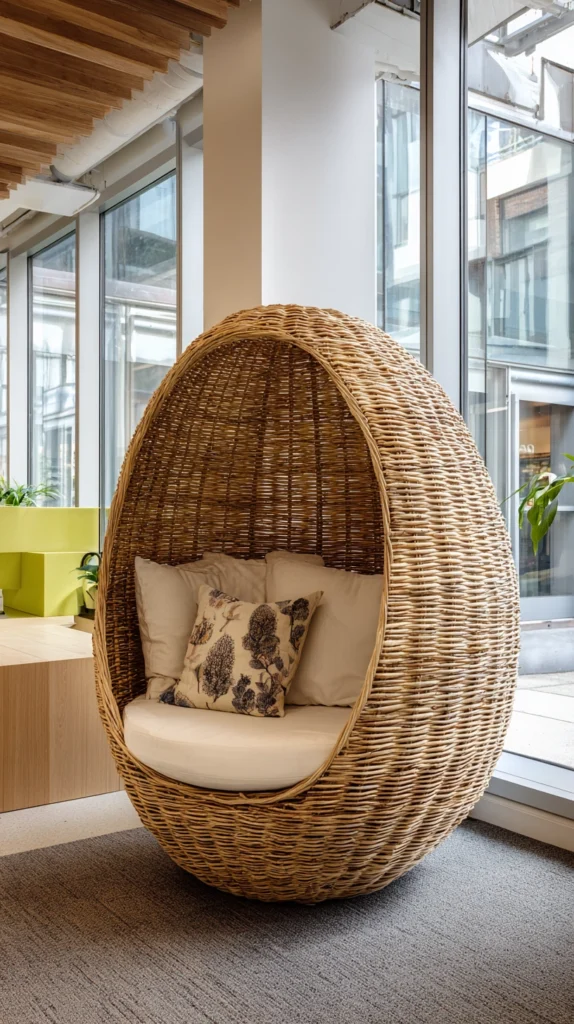
Budget: $100 – $600
A hanging egg chair — suspended from a freestanding frame or a ceiling beam on a covered terrace — is the garden’s most photographed seat and, for single occupancy, one of its most comfortable. The enclosing shape produces a sense of shelter and privacy even in an open garden, the hanging position absorbs movement naturally, and the visual impact of a good egg chair in the right garden corner is immediate and significant. It is a seat that announces itself without apology and delivers on the promise.
Freestanding wicker or rattan egg chairs with a frame cost $150 – $500. Hanging versions designed for a ceiling beam or pergola structure run $100 – $350 for the chair alone. A thick seat cushion in outdoor fabric — included with most retail versions but worth upgrading if the supplied cushion is insufficient — costs $40 – $100. A sheepskin or woven throw draped over the back of the egg chair adds texture and warmth for cooler evenings at $30 – $80.
Decor tip: Position the egg chair so that the opening faces slightly away from the main house or the main area of garden activity. An egg chair that opens toward the house puts the occupant on display to anyone looking out from inside. An egg chair angled slightly away gives the occupant a genuine sense of retreat and privacy — which is precisely the quality that makes the form so appealing in the first place.
7. The Dining Table and Bench Combination
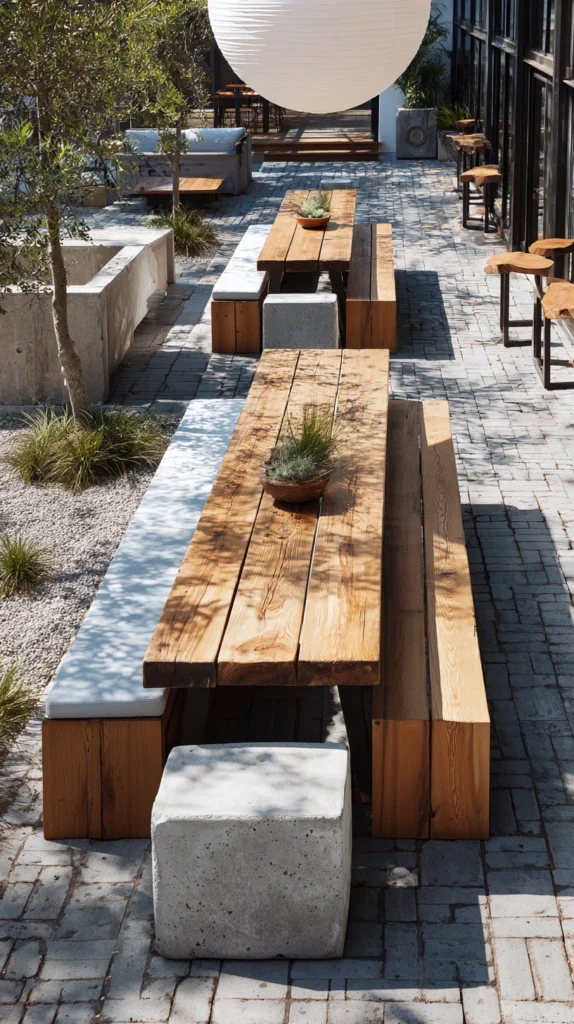
Budget: $200 – $2000
An outdoor dining table with bench seating rather than individual chairs produces a garden dining experience that is fundamentally different in character from the chair version. Benches accommodate more people than an equivalent number of chairs, they allow the seating arrangement to be flexible as guest numbers change, and they produce a communal quality of sitting — slightly closer together, slightly less formally positioned — that suits outdoor dining rather better than the separated formality of individual chairs.
A solid teak or acacia outdoor dining table costs $200 – $800. Matching bench seats run $80 – $200 each — a six-seater table typically requires two benches. Concrete or corten steel table and bench combinations — more contemporary in aesthetic and effectively indestructible — cost $400 – $2000 for a full set. Weather-resistant seat pads for the benches add $20 – $50 per bench and are the difference between a bench that is sat on willingly and one that is tolerated.
Decor tip: Choose a table length that allows 60 centimetres of bench space per person rather than the 45 centimetres that many manufacturers use as their standard. Outdoor dining at 45 centimetres per person feels crowded in a way that indoor dining at the same spacing does not — because outdoor clothing, outdoor movement, and the general looseness of outdoor behaviour requires more lateral space than a formal dining room demands.
8. The Sunken Fire Pit Lounge
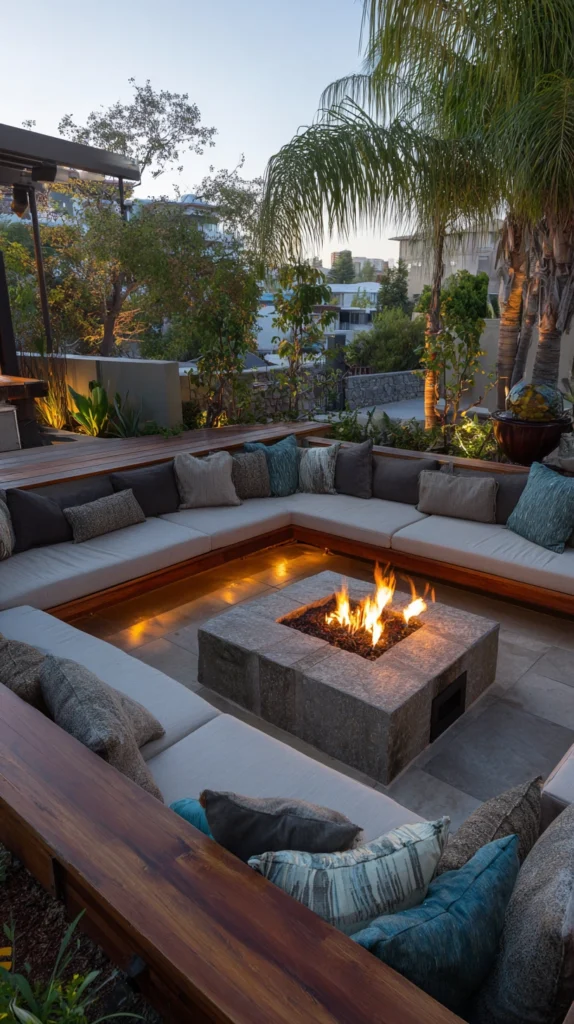
Budget: $500 – $5000
A sunken seating area — a lowered section of the garden with bench seating built into the retaining walls and a central fire pit — is the most architecturally ambitious idea on this list and the one with the highest return on investment in terms of daily garden use. The sunken position provides natural wind shelter, creates an immediate sense of enclosure and intimacy, and produces a social dynamic — everyone looking inward and downward rather than outward and upward — that flat seating arrangements cannot replicate.
A simple sunken area with railway sleeper retaining walls and compacted gravel base costs $500 – $2000 in materials for a DIY approach on an average garden. A professionally built version with stone or brick retaining walls, a poured concrete base, and an integrated firepit runs $2000 – $5000 depending on size and material specification. The investment is significant but the result is a permanent garden feature that adds measurable value to the property as well as incalculable value to everyday outdoor life.
Decor tip: Waterproof the base of a sunken seating area before adding the surface finish. A sunken area is by definition a low point in the garden’s drainage system, and without a waterproof membrane beneath the surface material it will collect standing water after rain and remain unusable for days after each shower. A basic waterproof membrane costs $20 – $50 per square metre and is the most important element of the build that is least visible once the project is complete.
9. The Treehouse Platform Seat
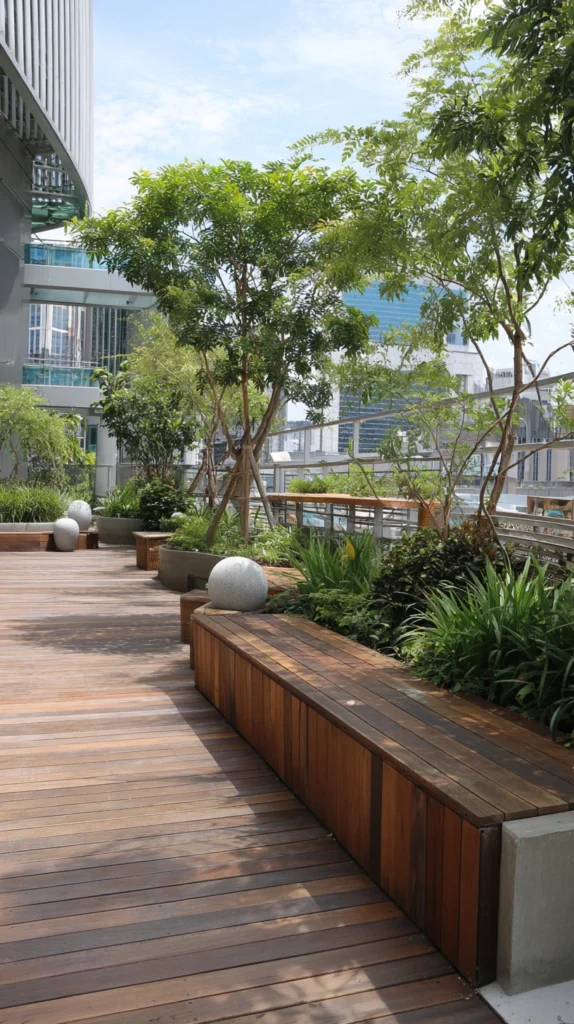
Budget: $200 – $5000
A platform seat in a mature tree — even a simple decked platform at two metres of height with a basic railing and a comfortable seat — produces a garden experience that no ground-level seating can replicate. The view, the sound, the sense of being above the normal level of things, and the particular quality of sitting in a tree rather than under one — these are experiences available only from this format, and they are as compelling for adults as they are for children.
A basic timber platform with a ladder access and simple railing costs $200 – $800 in materials for a competent DIY build in a suitable mature tree. A more fully developed treehouse platform with weatherproof decking, a built-in bench, and a rope or chain access runs $800 – $3000. A professionally built version with structural engineering for larger trees — $2000 – $5000 — is the appropriate approach for any platform intended for adult regular use where the structural integrity of the tree attachment is the primary safety consideration.
Decor tip: Install a small pulley and rope system from the platform to the ground — the kind used in genuine treehouses — with a basket that can be raised and lowered with drinks, books, and food. The pulley system costs $15 – $30 in rope and hardware and is one of those small details that makes the platform feel like a genuinely designed space rather than a plank in a tree.
10. The Curved Garden Bench Around a Tree
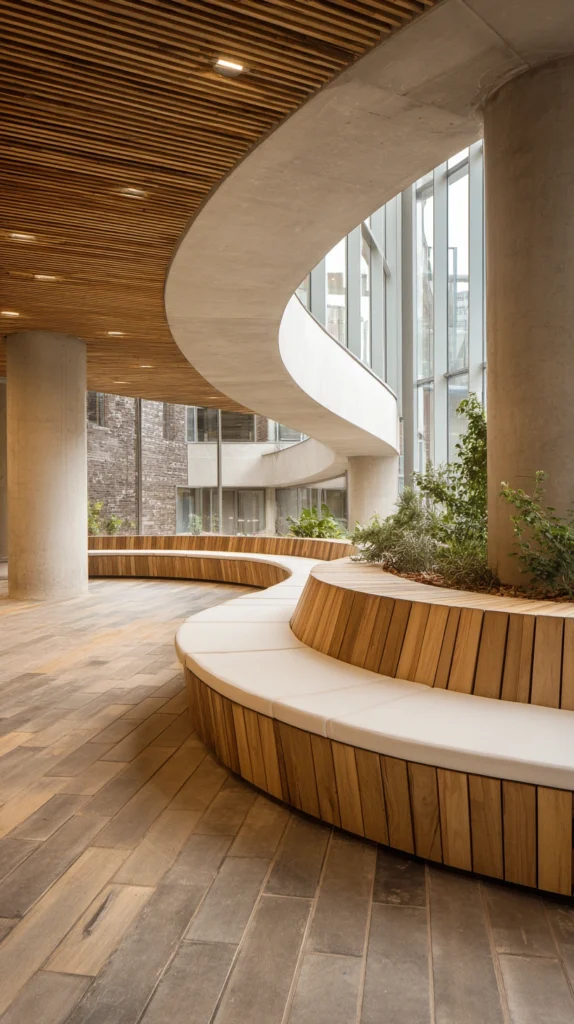
Budget: $80 – $600
A curved bench that wraps around the base of a mature tree — the tree trunk as the centre of the seating circle, the bench extending around it at sitting height — is both a piece of garden furniture and a response to the garden’s existing architecture. It acknowledges the tree as the focal point it already is, provides seating that faces every direction simultaneously, and creates a social arrangement — people sitting in a circle with the tree at the centre — that is both ancient in character and immediately appropriate.
Pre-formed curved garden bench sections in pressure-treated timber cost $80 – $200 for a full circle around a standard trunk. Cast iron curved benches run $150 – $400. A four-section kit that bolts together around the tree and adjusts to trunk diameter costs $100 – $250 and requires no cutting or custom fabrication. The bench should leave at least 30 centimetres of clearance from the trunk to allow the tree’s root system to continue expanding without physical restriction from the bench structure.
Decor tip: Sand and re-oil a timber tree bench annually at the beginning of the season rather than waiting until the wood shows visible weathering. Timber treated before it shows distress requires a single light coat of exterior oil and one hour of work. Timber left until it is visibly grayed and dried requires sanding, two coats, and considerably more time. Prevention is faster, cheaper, and produces a better result than restoration.
11. The Pergola Dining and Lounging Zone
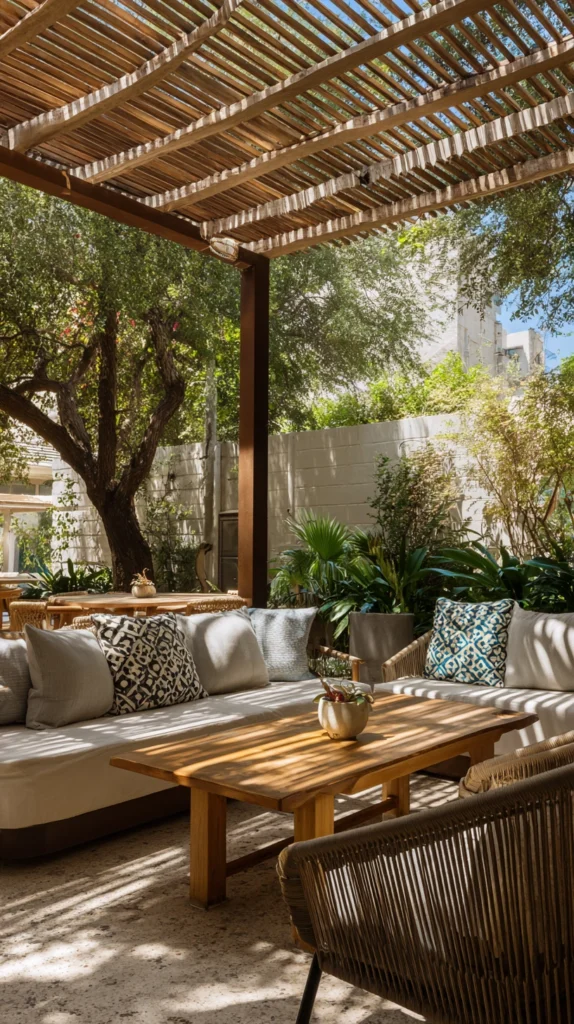
Budget: $300 – $5000
A pergola — a timber or metal overhead structure that defines an outdoor room without enclosing it — produces the most complete outdoor seating environment available to a domestic garden. The overhead structure provides partial shade, creates a sense of enclosure that makes the space feel like a room rather than a section of lawn, and provides a structure from which lighting, climbing plants, fabric drapes, and hanging lanterns can all be suspended. A garden with a pergola has an outdoor room. A garden without one has outdoor furniture.
A freestanding timber pergola kit in pressure-treated pine costs $300 – $800 for a standard 3×3 metre size. A larger 4×6 metre version runs $600 – $1500. A custom-built hardwood pergola — iroko, oak, or teak — costs $2000 – $5000 installed and lasts indefinitely with minimal maintenance. Seating beneath the pergola — a dining set, a lounge arrangement, or a combination of both — is a separate cost but benefits from the overhead structure in a way that the same furniture positioned on open lawn does not.
Decor tip: Train a fast-growing climbing plant — wisteria, climbing rose, jasmine, or Virginia creeper — onto the pergola structure from the first season. The plants take two to three years to provide meaningful coverage, which means delaying planting delays the most beautiful version of the pergola by the same period. Plant at installation, train consistently in the first two seasons, and the pergola becomes significantly more beautiful each year rather than remaining static once the structure is complete.
12. The Reading Nook With a Single Chair
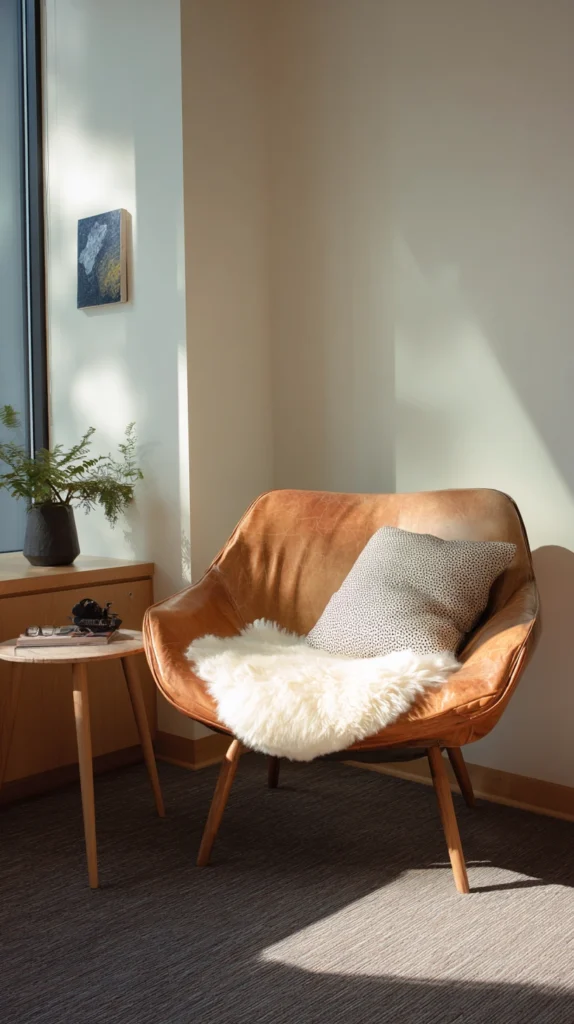
Budget: $60 – $400
A single garden chair positioned in the right spot — which is to say, in a specific spot that was chosen for a specific quality of light, a specific view, or a specific degree of shade — and given one small side table, one outdoor cushion, and one footstool, becomes a reading nook. The distinction between a chair in a garden and a reading nook is almost entirely in the deliberateness of the positioning and the provision of the small comforts that make staying for two hours possible rather than merely tolerable.
A quality outdoor armchair in rattan, teak, or powder-coated aluminium costs $80 – $300. A small side table at the right height for a drink and a book runs $20 – $60. A footstool — matching the chair or in a contrasting material — adds $30 – $100. An outdoor cushion thick enough to genuinely pad the seat rather than merely decorate it runs $30 – $80. The total investment for a properly equipped single reading seat sits at $160 – $540 — modest for a piece of the garden that will be used daily through summer.
Decor tip: Choose the location of the reading nook by sitting in a temporary chair in several candidate spots at the time of day the nook will be most used, and spending fifteen minutes in each before deciding. The right spot for a reading nook is discovered by sitting in it rather than by looking at the garden from the house and imagining it. Fifteen minutes of testing produces a decision that a year of occupation will confirm was correct.
13. The Outdoor Sofa and Coffee Table Lounge
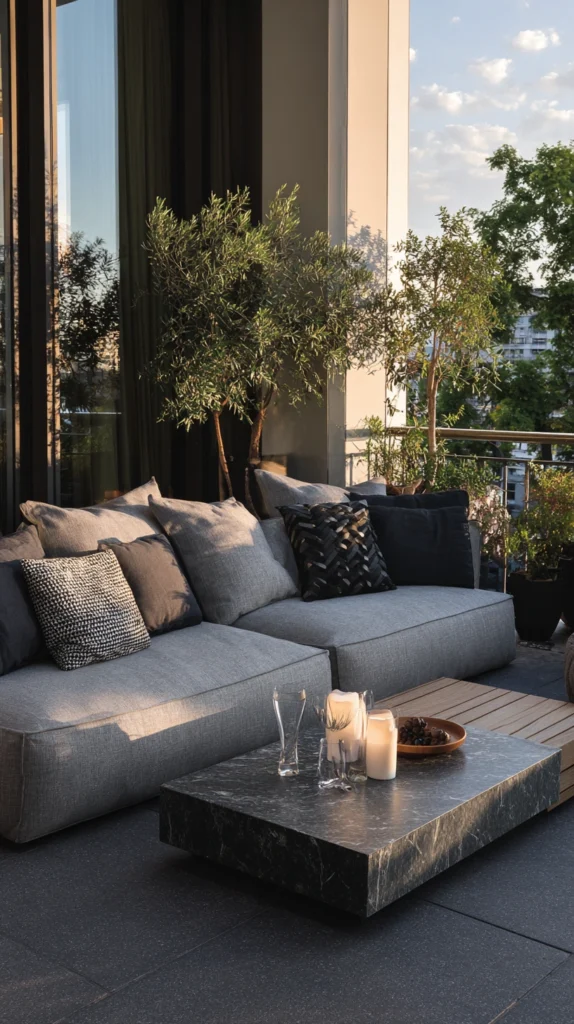
Budget: $300 – $3000
A full outdoor sofa arrangement — a corner sofa or a two-sofa facing arrangement with a low coffee table at the centre, all in all-weather materials — is the garden’s most socially complete seating option for groups. It reproduces the living room arrangement in the outdoor space and produces the same quality of extended, comfortable group conversation that a good living room sofa arrangement produces inside. People sit in it and stay sitting. That is the measure of good seating, and an outdoor sofa arrangement that achieves it is worth every element of its cost.
Modular outdoor corner sofa sets in synthetic rattan with all-weather cushions cost $300 – $1000. Higher quality versions in genuine rattan or powder-coated aluminium with Sunbrella fabric cushions run $800 – $3000. A low outdoor coffee table in teak, concrete, or corten steel adds $80 – $400. A weatherproof cover — $40 – $100 — protects the cushions through the seasons and is the single most cost-effective maintenance investment available for an outdoor sofa set of any price point.
Decor tip: Store the cushions indoors overnight rather than leaving them on the sofa regardless of whether rain is forecast. Outdoor cushions left outside every night absorb ambient moisture even without rain, developing a persistent dampness that leads to mould in the cushion core within a single season. Cushions brought inside each evening and returned each morning last three to four times longer than cushions left exposed — a ten-second daily habit with a significant financial return.
Whatever combination of these thirteen ideas finds its way into the garden, the principle that holds all of them together is the same one that holds any well-designed room together: the seating should be chosen for the space it will occupy, positioned for the experience it will provide, and equipped with enough comfort to make leaving it a genuine decision rather than an inevitability.
A garden that has been given its seating with this level of thought becomes a place people move toward rather than through — a destination rather than a corridor between the inside and the outside world. Give the garden a seat worth staying in. Everything else that matters about outdoor living follows naturally from there.