15 Old Logs and Stumps Ideas for Your Garden
The old log and the garden stump are two of the most consistently undervalued materials available to the creative gardener. Most people who encounter a fallen tree, a rotting log, or an old tree stump in their garden see a problem requiring removal.
The gardener with genuine creative vision sees something entirely different. They see the raw material of some of the most characterful, most ecologically valuable, and most naturally beautiful garden features available at any budget.
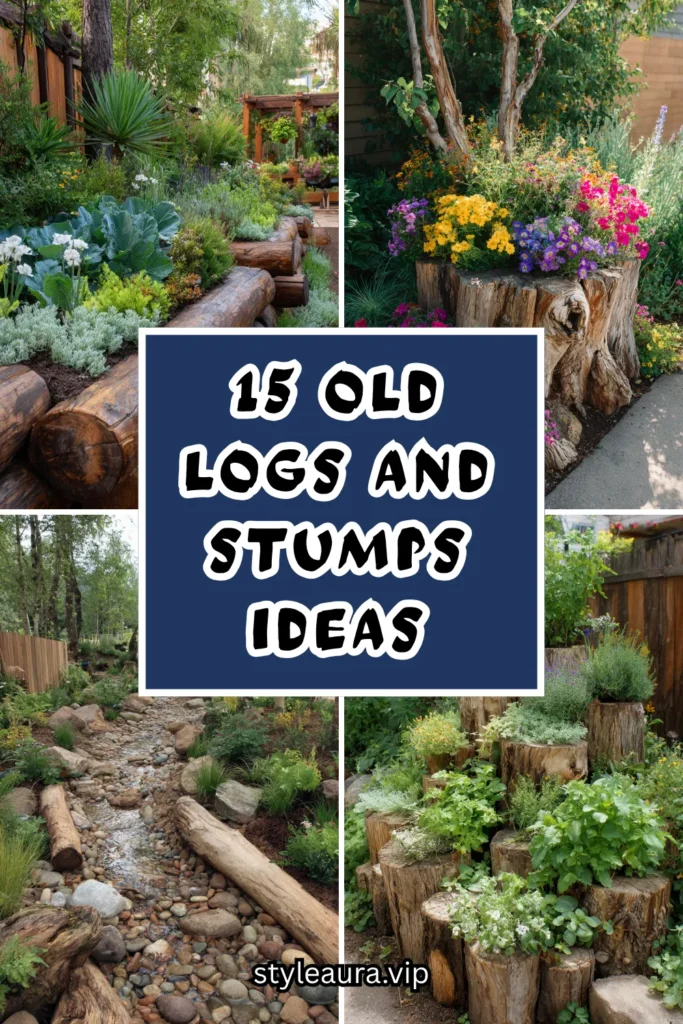
The aged timber of the old log carries within its surface the specific quality of material that has been shaped by decades of growth and years of weathering, and this quality of natural patina and organic form creates the garden feature of authentic character that no manufactured product can replicate. Here are fifteen ideas for using old logs and stumps in the garden with the creative intelligence they deserve.
1. A Stump Planter for Seasonal Color
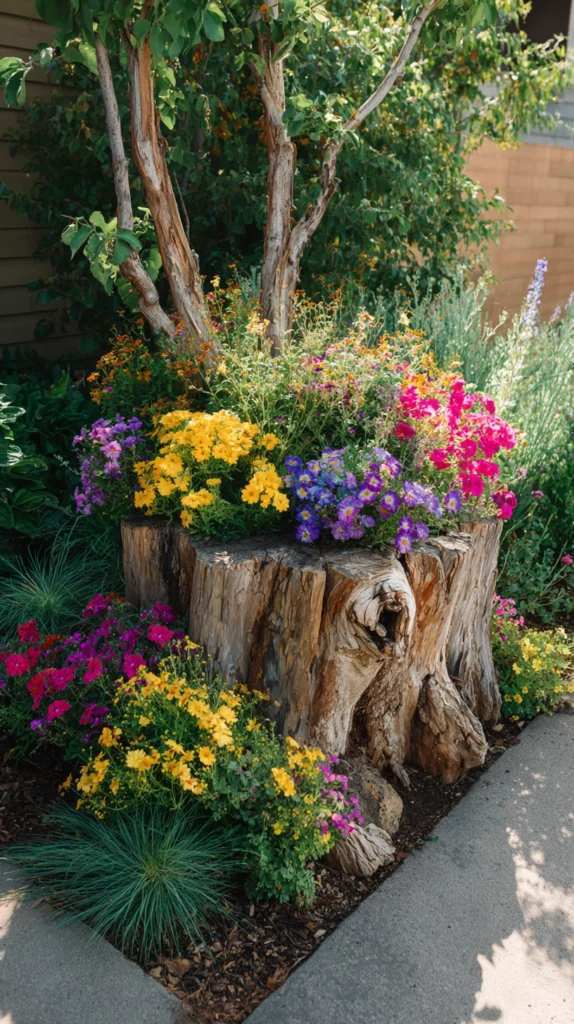
A tree stump whose center has been hollowed out using a chisel and a drill creates the garden’s most naturally integrated planter. The hollowed stump filled with quality potting mix and planted with seasonal flowers creates the planting feature that appears to have grown from the stump itself rather than been placed upon it.
Drill several drainage holes through the stump’s base before filling with potting mix to prevent the waterlogging that the enclosed timber vessel creates without adequate drainage provision. The drainage holes also accelerate the stump’s natural decomposition, gradually creating the more generously sized planting cavity that the established stump planter develops over successive seasons.
2. A Log Slice Stepping Stone Path
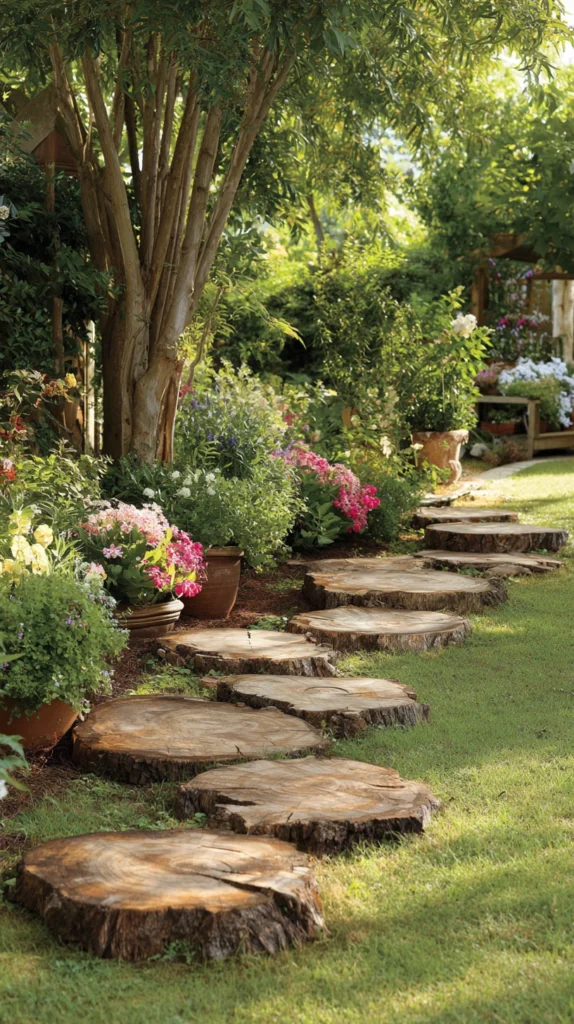
Log slices of consistent thickness, cut from a large diameter timber with a chainsaw or a handsaw and treated with an outdoor preservative, create the garden path of most naturally warm and most organically beautiful character. The circular wood grain of the log’s cross-section creates each stepping stone’s individual surface pattern of complete natural uniqueness.
Set each log slice into the ground at a depth that places its upper surface flush with the surrounding lawn or garden bed surface, creating the seamless path whose stones appear to be emerging from the ground rather than placed upon it. Pack sharp sand or compacted gravel beneath each slice for the stable, level foundation that prevents the individual stones from rocking underfoot.
3. A Wildlife Habitat Log Pile
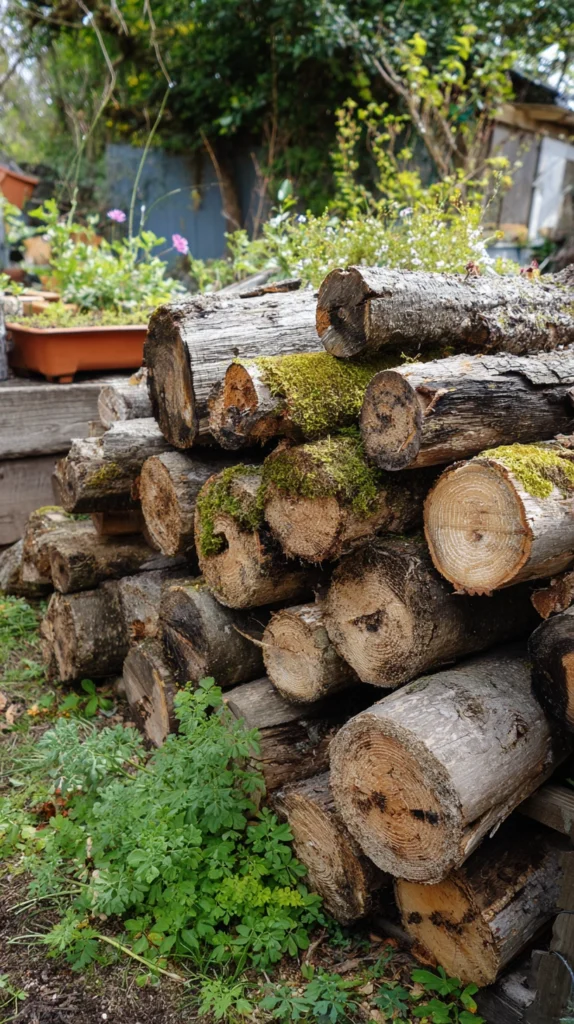
A deliberately constructed pile of logs of varied diameter and varied states of decomposition creates the garden’s single most ecologically valuable wildlife habitat feature. The log pile’s varied timber condition, from the recently fallen to the deeply rotted, creates the habitat diversity that supports an extraordinary range of garden wildlife including beetles, centipedes, hedgehogs, and the various fungi and mosses of the decomposing woodland floor.
Position the log pile in the garden’s quietest, most sheltered corner where the wildlife that inhabits it is least disturbed by the household’s daily activity. A log pile in the full sun position creates a different habitat from the log pile in the deep shade, and the combination of both positions within the garden creates the maximum habitat diversity for the widest range of beneficiary species.
4. A Stump Side Table
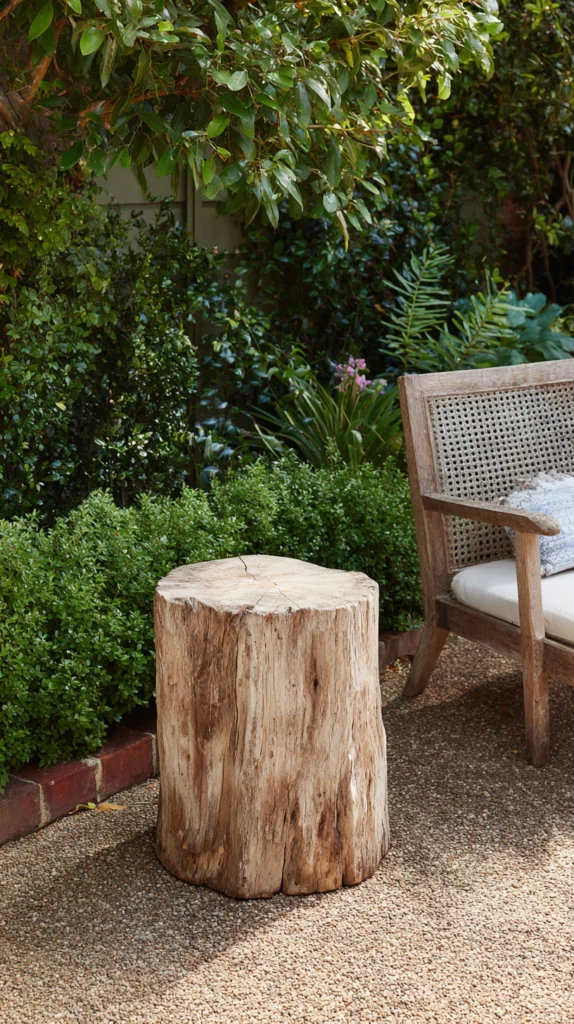
A flat-topped tree stump of appropriate height positioned beside the garden seating area creates the outdoor side table of most genuine natural character. The stump’s specific height should be approximately forty-five centimeters for the comfortable side table function beside the standard outdoor chair or lounger.
Sand the stump’s upper surface to a smooth, splinter-free finish and treat it with a penetrating outdoor timber oil that protects the surface from the moisture that the outdoor environment creates without the plastic film quality of the varnished surface.
The oiled stump side table’s warm, natural appearance relates to the garden’s organic material character with a naturalness that the manufactured outdoor table cannot approach.
5. A Log Border Edging
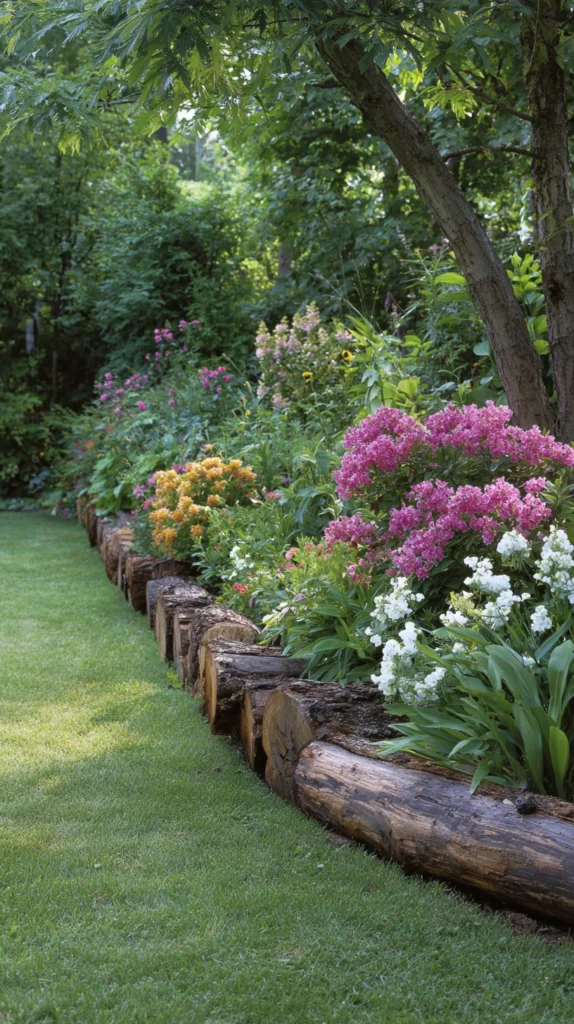
Logs of consistent diameter arranged end-to-end along the garden border’s edge, half buried in the soil with their upper curve creating the continuous rounded profile of the border’s defining boundary, create the most naturally warm and most organically appropriate border edging available in the garden’s material vocabulary. The log edging’s gentle curves suit the informal cottage garden and the naturalistic garden border with complete material authenticity.
Choose logs of a durable timber species for the edging application, as the ground contact and the constant moisture of the border edge creates the conditions that accelerate timber decay most rapidly. Oak, sweet chestnut, and larch are among the most naturally durable species for the ground contact application without chemical preservative treatment.
6. A Carved Stump Sculpture
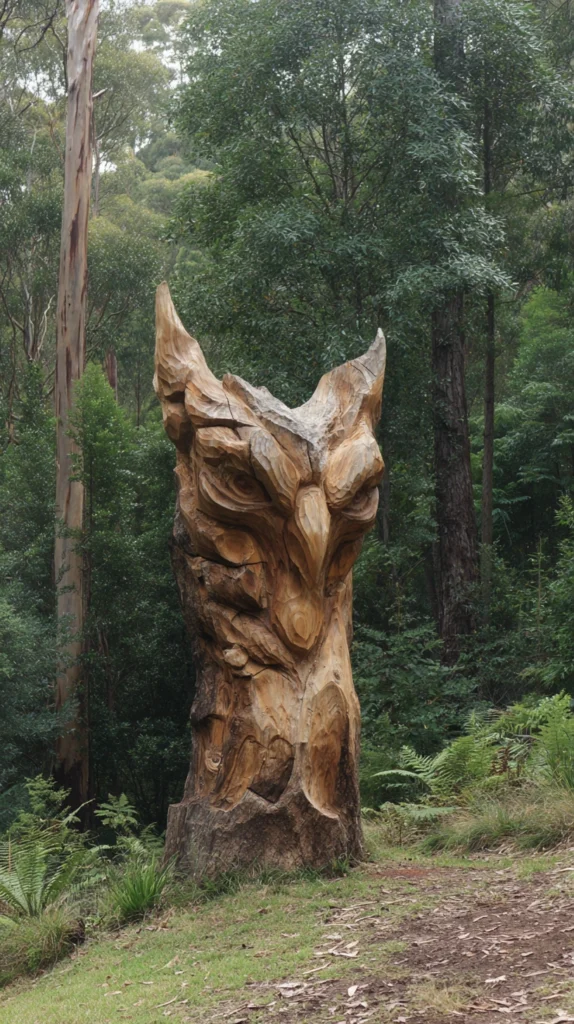
A tree stump of significant diameter and adequate height carved into a simple sculptural form creates the garden’s most dramatically personal and most uniquely original focal point. Simple relief carving of a woodland creature, a geometric pattern, or an abstract organic form creates the garden sculpture of genuine artistic character within the stump’s existing natural form.
Use sharp chisels and gouges of appropriate profile for the specific carving design, working with the timber’s grain direction to prevent the splitting and the tearing that working against the grain creates.
Seal the finished carved surface with a penetrating timber oil that emphasizes the carving’s depth and shadow quality while protecting the carved detail from the moisture that accelerates surface weathering.
7. A Log Raised Bed Wall
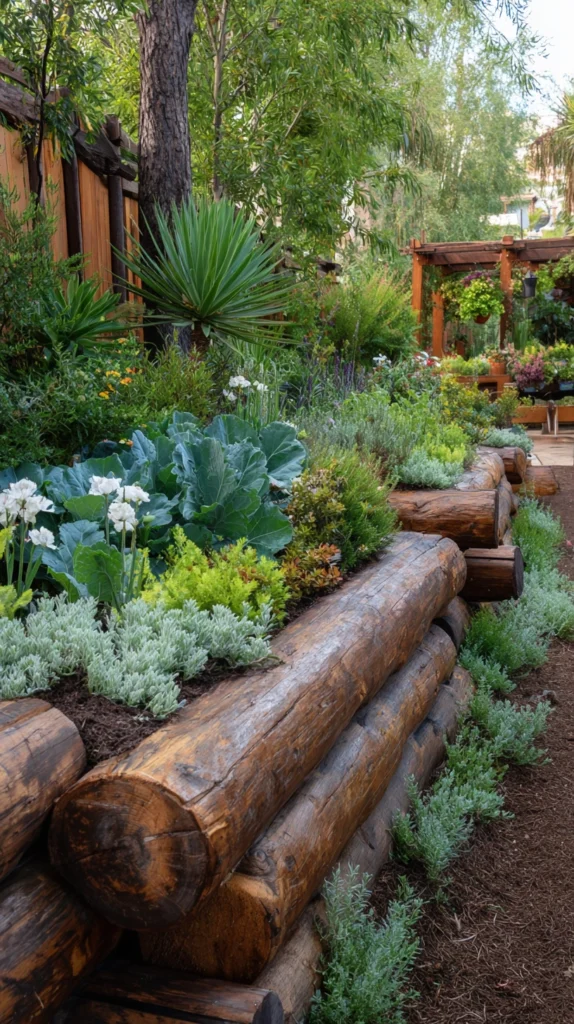
Logs of large diameter stacked horizontally to create the retaining wall of a raised planting bed create the most naturally warm and most organically textured raised bed construction available in the garden. The stacked log wall’s varied timber surface and its irregular organic form create the raised bed of most genuine rustic character.
Stack the logs with their ends aligned at the raised bed’s corners, alternating the direction of each successive course in the log cabin construction technique that creates the structural interlocking of the corner joint. Backfill the raised bed’s interior with quality topsoil and compost mix to a depth that provides the plant root volume required for the specific planting the raised bed will accommodate.
8. A Fairy Garden Stump Feature
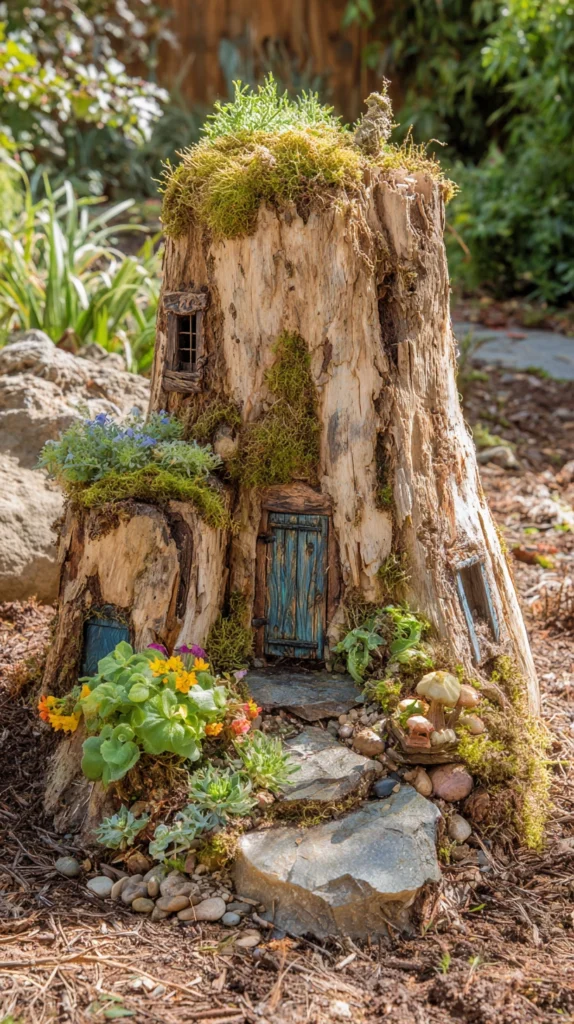
A small tree stump or a large log section decorated with the miniature elements of the fairy garden tradition creates the garden’s most enchanting feature for the younger garden visitor. Tiny doors fixed to the stump’s side, miniature windows cut into the bark, and small planted mosses and ferns at the stump’s base create the complete fairy home of genuine childhood magic.
Use waterproof miniature accessories of appropriate weather resistance for the outdoor fairy garden application. The miniature furniture, the tiny pots, and the small decorative elements of the fairy garden should be secured to the stump surface with waterproof adhesive to prevent the displacement that wind and rain creates in the unsecured arrangement.
9. A Log Bench for Garden Seating
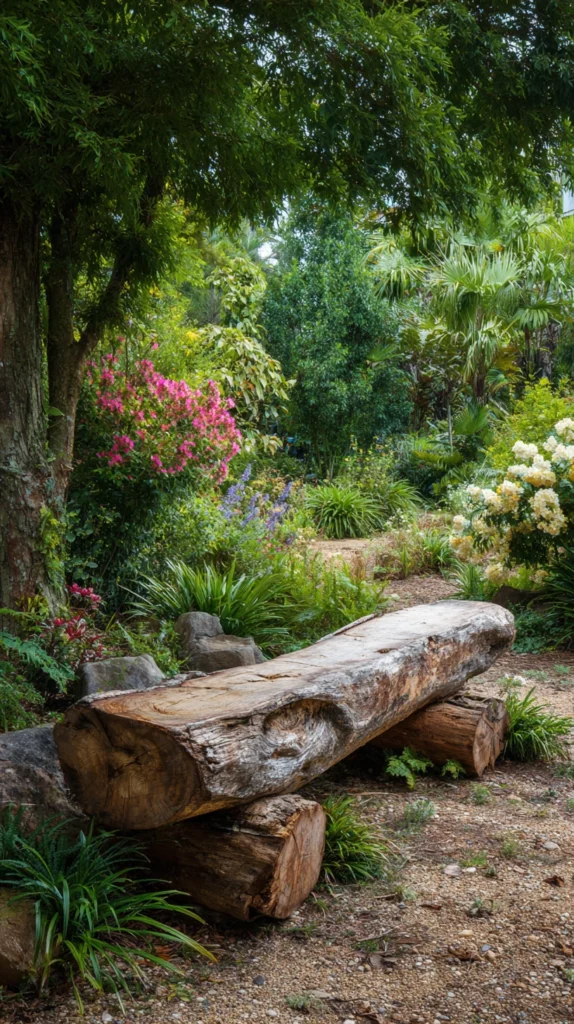
A large diameter log cut to bench height and positioned horizontally on two shorter log sections creates the garden seating of most genuinely rustic character and most completely natural material composition. The log bench’s specific quality is the authentic, unmanufactured quality of its construction that no commercially produced outdoor bench can replicate.
Flatten the log bench’s upper surface with a hand plane or a belt sander to create the comfortable seating surface that the completely round log cannot provide. The flattened surface provides the stable seating position while the log’s natural round form at the sides and the back communicates the bench’s natural material origins with complete authenticity.
10. A Stump and Log Herb Spiral
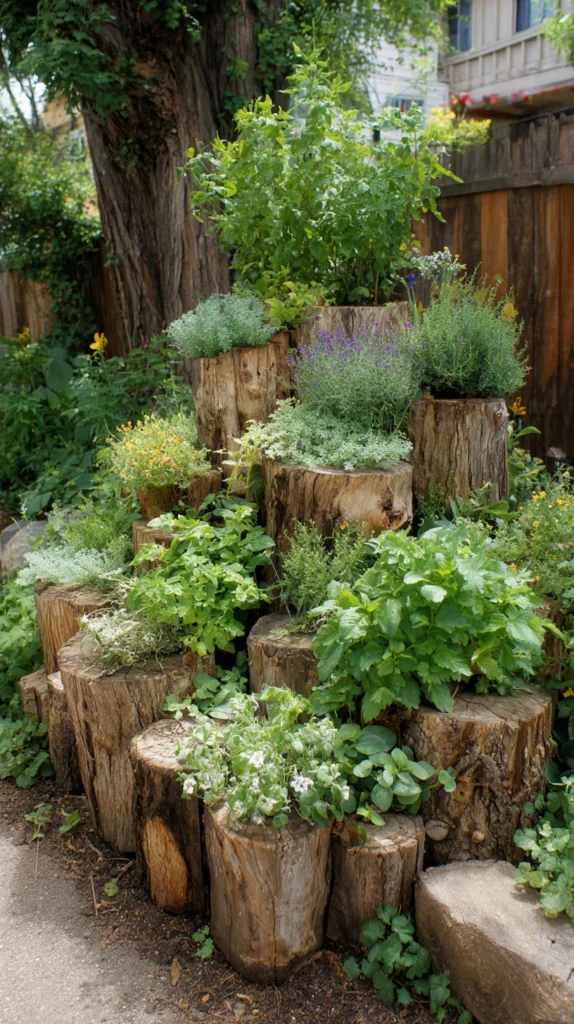
A herb spiral constructed from stacked logs and stumps of varied sizes, their arrangement creating the ascending spiral form of the productive herb garden feature in the most naturally organic and most material-appropriate construction, creates the kitchen garden’s most ecologically integrated productive feature. The timber’s gradual decomposition enriches the surrounding soil with organic matter throughout the herb spiral’s productive life.
Plant the herb spiral’s varied levels with the appropriate herbs for each position’s specific growing conditions. Drought-tolerant herbs at the spiral’s highest, driest, warmest point. Moisture-preferring herbs at the spiral’s base where the water naturally collects. This vertical gradient of growing conditions creates the herb spiral’s most productive and most botanically appropriate planting organization.
11. A Log Slice Wall Art
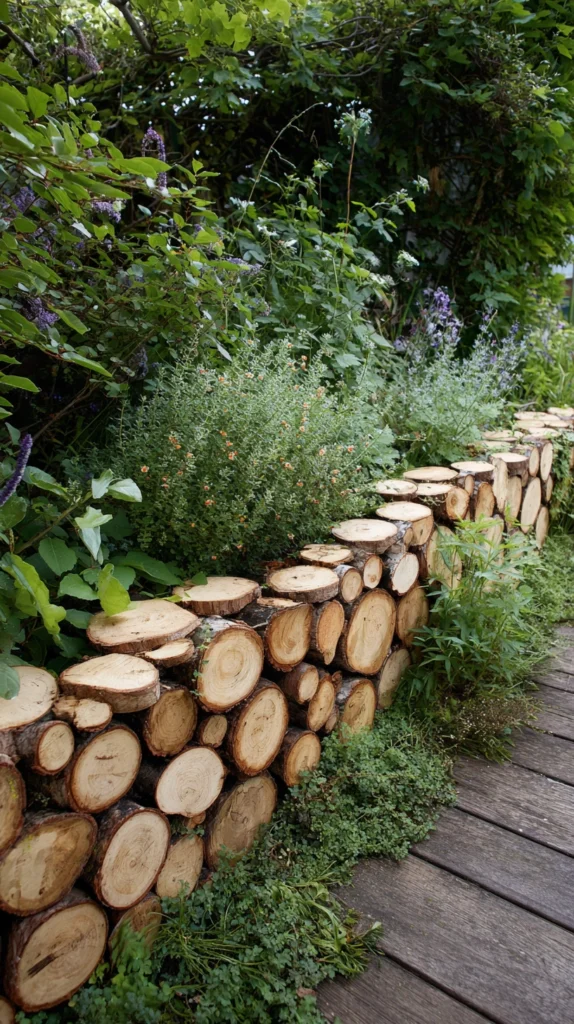
Log slices of varied diameter arranged in a composed pattern on a garden wall or fence, fixed with appropriate exterior fixings and treated with a clear outdoor varnish that emphasizes the natural grain pattern of the cross-section, create the garden wall art of most organic character and most naturally warm material quality.
Arrange the log slices in a composition that varies the diameter, the timber species, and the grain pattern of adjacent pieces, creating the wall art whose visual interest comes from the natural variation of the material rather than from any applied decorative treatment.
The composition’s beauty is entirely dependent on the quality of the material selection and the thoughtfulness of the arrangement rather than the skill of the artistic hand.
12. A Decomposing Log Moss Garden
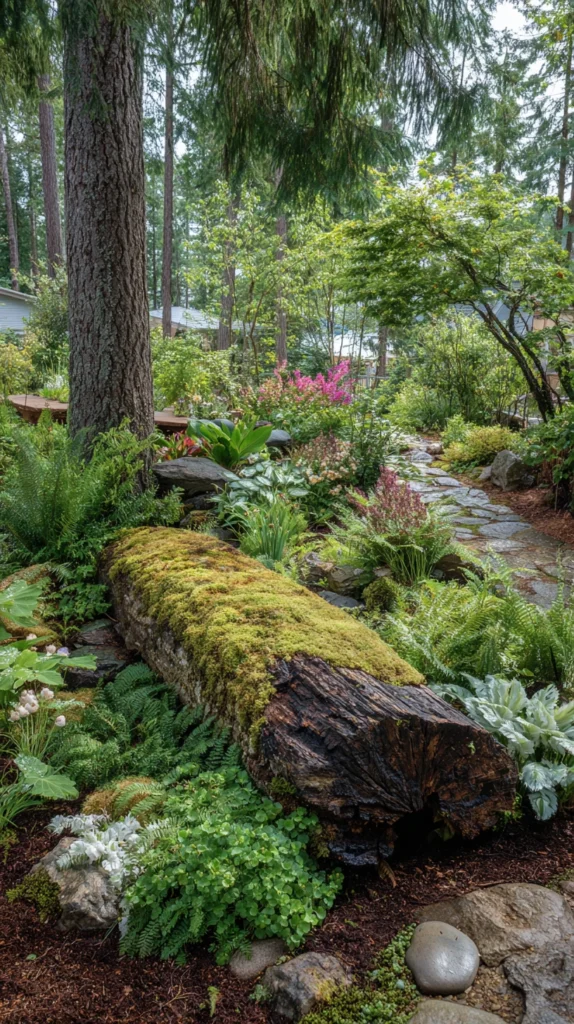
A large decomposing log, its surface already colonized by the early stages of the moss and fungi succession that the rotting timber naturally supports, positioned in a shaded garden corner and encouraged to develop its natural moss covering through regular misting, creates the garden’s most quietly beautiful and most ecologically complete natural feature.
Accelerate the moss establishment by applying a slurry of yogurt and collected moss to the log’s moist surface. The yogurt’s acidic, nutrient-rich medium creates the ideal establishment environment for the moss spores, and the regular misting of the inoculated surface creates the consistent moisture that the establishing moss colony requires for its initial rooting into the log’s decomposing surface.
13. A Log Slice Garden Clock
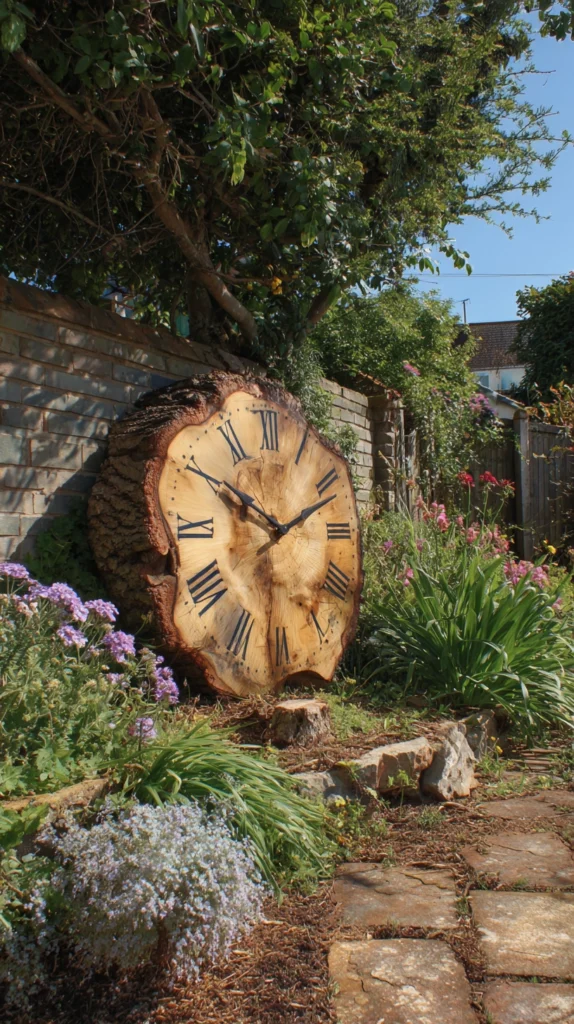
A large, smooth log slice of consistent thickness, its surface sanded to a clean, smooth finish and painted with clock numerals in a bold exterior paint, creates the garden’s most whimsical and most uniquely original decorative feature. A simple clock mechanism of outdoor specification fixed at the log slice’s center creates the functional timepiece of complete natural character.
Choose a log slice of the largest available diameter for the clock face application, as the clock’s legibility from the garden’s primary seating position depends on the numeral size that the log’s diameter accommodates. A minimum diameter of forty centimeters creates the clock face of adequate legibility from the typical garden viewing distance of three to five meters.
14. A Log and Stone Dry Stream Feature
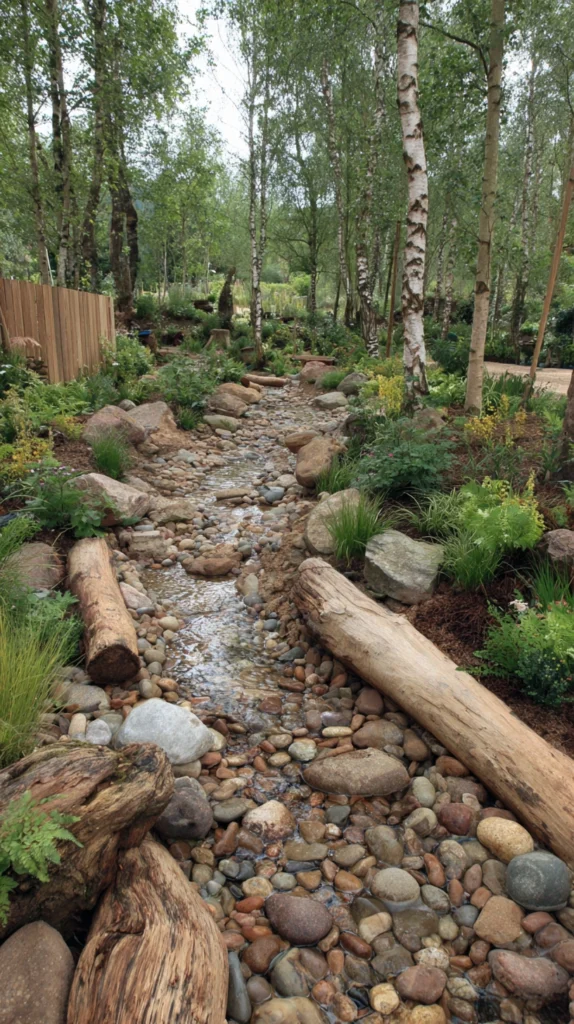
Logs positioned alongside and partially within a dry stream bed of rounded river pebbles create the naturalistic stream feature of most complete ecological authenticity. The log’s presence beside the stream replicates the fallen timber of the natural woodland stream, creating the habitat feature of most accurate natural reference and most genuinely convincing landscape character.
Position the logs at varied angles to the stream’s course, some parallel to the flow direction and some crossing it at various angles, replicating the random deposition of the natural stream’s fallen timber rather than the regular, geometric arrangement that the human hand instinctively creates and that the natural landscape never produces.
15. Design the Log and Stump Garden as a Natural System
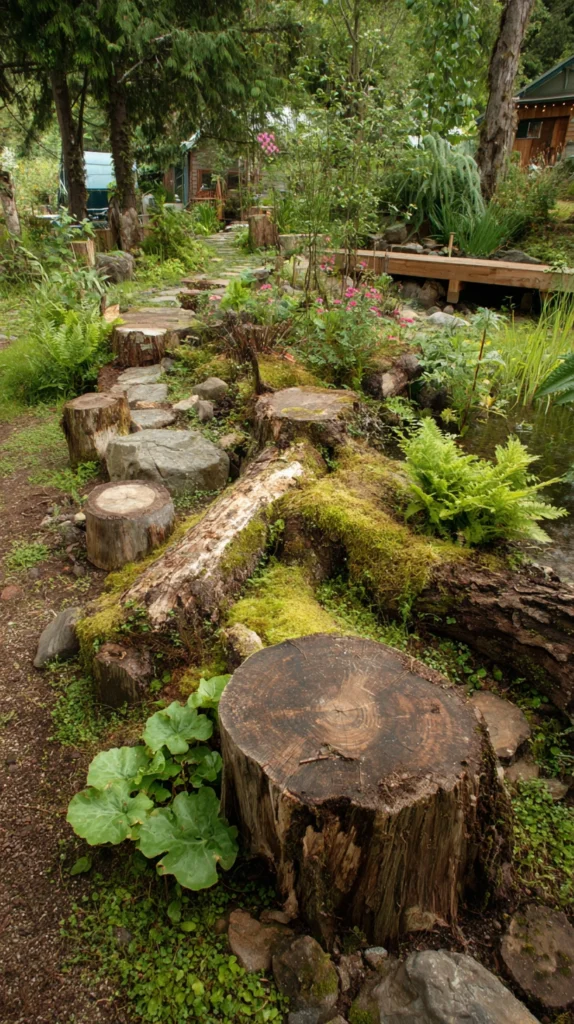
The final and most important principle of using old logs and stumps in the garden is the commitment to designing their use as part of a coherent natural system rather than as isolated decorative features placed without consideration of their relationship to each other and to the garden’s broader ecological character.
The log pile that supports the hedgehog, the decomposing stump that feeds the beetle, the moss-covered log that creates the frog habitat, and the log slice path that provides the basking surface for the garden’s reptile visitors all function as components of the single, interconnected ecological system of the garden’s living community.
Designing the log and stump features as the deliberate construction of this ecological system, rather than as individual decorative decisions, creates the garden of complete biological richness whose specific quality of teeming, living natural abundance is the most genuinely beautiful and most permanently rewarding garden character available to the creative and ecologically minded home gardener.