15 Edging Ideas Around Trees for a Polished Landscape
Tree edging creates polished, finished landscapes by defining the boundary between lawn and tree base while protecting roots from mower damage, preventing grass encroachment, and creating dedicated planting beds for shade-loving plants or mulch.
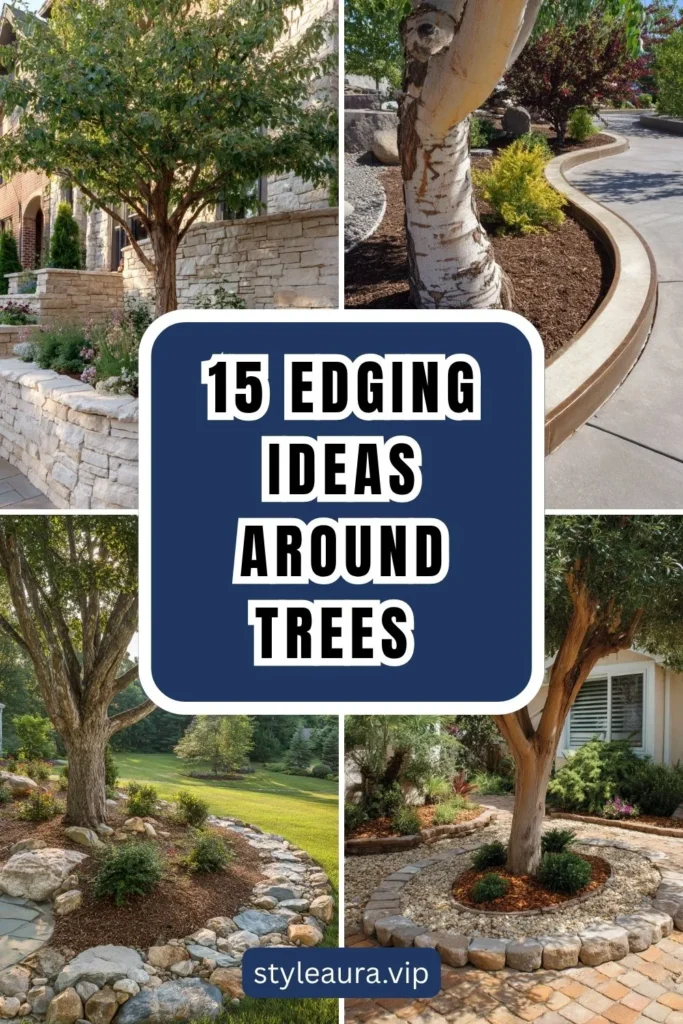
The right edging solution combines practical function with aesthetic appeal, complementing your landscape style while making maintenance easier and protecting valuable trees. Proper edging installation prevents lawn equipment from damaging bark and surface roots while creating visual definition that makes individual trees appear more intentional and cared for.
These 15 edging ideas around trees showcase materials, installation methods, and design approaches ranging from natural and organic to formal and structured, each creating distinctive looks while serving the essential protective and organizational functions tree edging provides.
1. Natural Stone Border
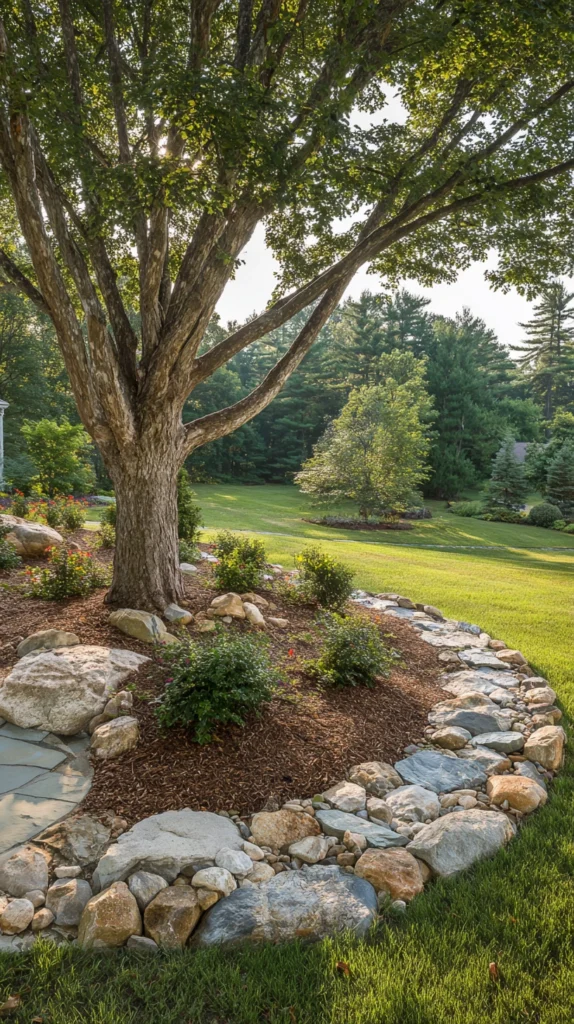
Create organic, timeless edging using natural fieldstone, river rock, or flat flagstone arranged around tree bases in single or double layers, defining planting beds. Choose stones in colors and textures complementing your home and existing landscape, whether that’s warm limestone, cool gray granite, or multicolored river rock.
Stack stones without mortar for informal cottage gardens or set them carefully with minimal gaps for neater formal appearances. The irregular natural shapes create softness around trees while the durable material withstands weather, mowing equipment contact, and decades of use without deterioration or replacement.
2. Brick Edging in Patterns
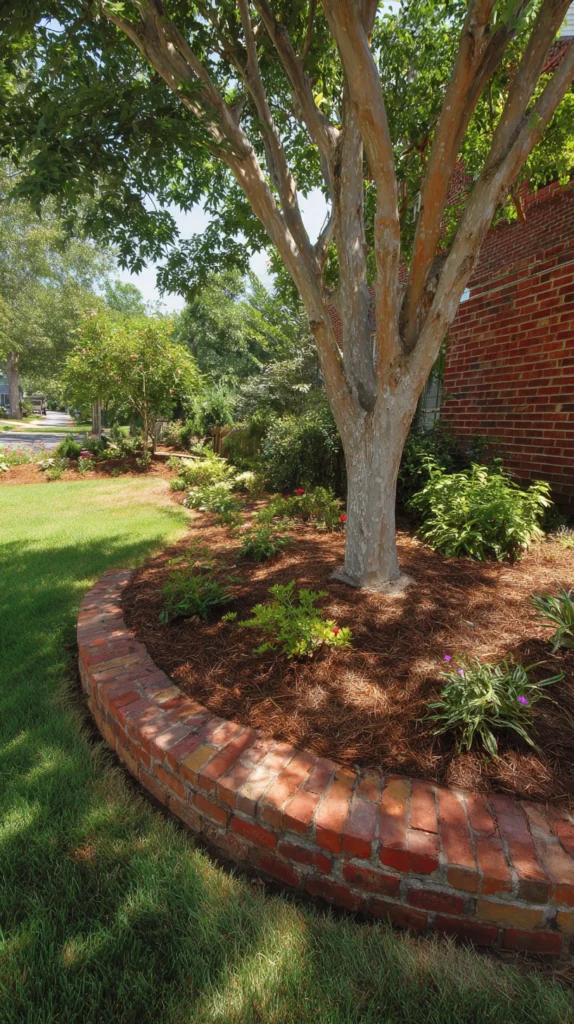
Install traditional brick edging using various laying patterns like soldier course standing upright, sailor course laying flat, or angled diagonal patterns, creating classic formal edges.
Choose bricks matching your home’s exterior, coordinating with hardscaping elements, or selecting contrasting colors to create deliberate visual statements. Set bricks in sand for easy adjustment and good drainage, or mortar them permanently for enduring stability requiring no maintenance.
The uniform rectangular shapes create clean geometric edges perfect for formal landscapes, while the traditional material adds timeless character that never appears dated or trendy.
3. Metal Landscape Edging
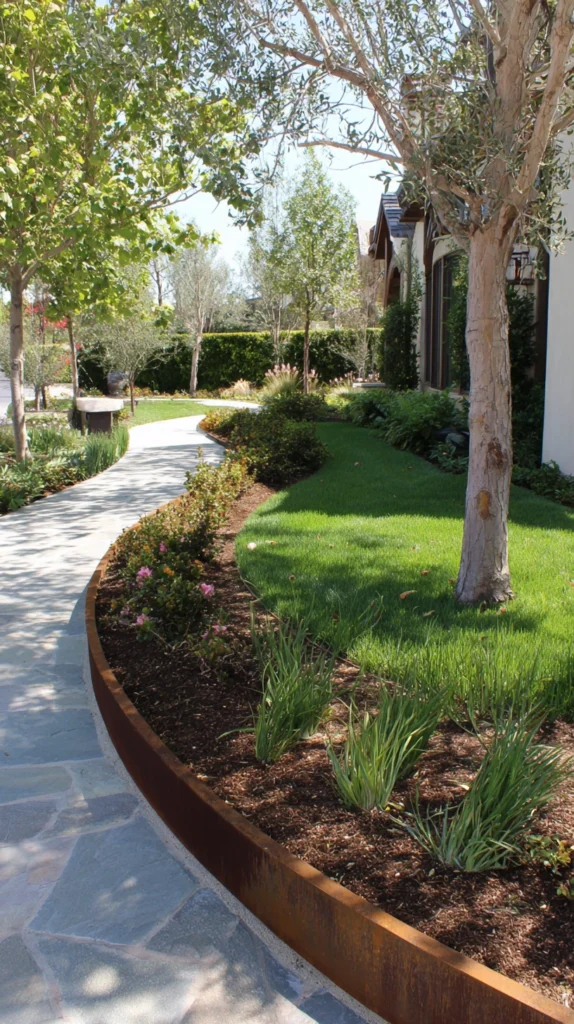
Create crisp, modern edges using steel, aluminum, or corten steel landscape edging strips that bend smoothly around tree bases, forming precise circles or organic curves. Install edging several inches deep, securing it with stakes while the thin profile remains nearly invisible above ground, creating definition without visual bulk.
Choose raw steel that develops rust patina for industrial aesthetics, powder-coated aluminum in black or bronze for contemporary looks, or corten steel intentionally weathering to rich rust colors. The flexible material accommodates trees of any size, while the clean lines suit modern and traditional landscapes equally well.
4. Decorative Concrete Curbing
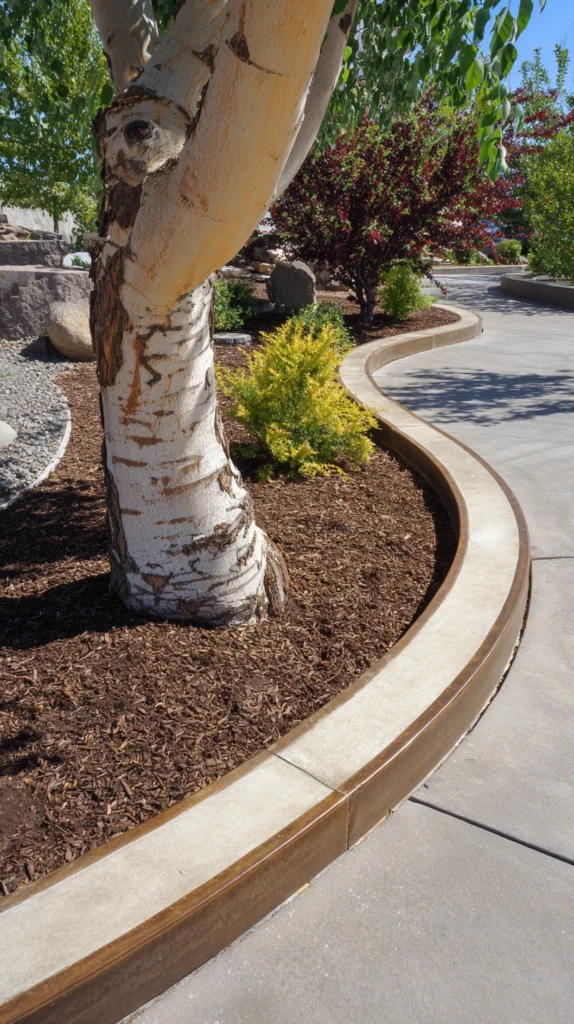
Pour continuous concrete curbing in custom shapes and colors, creating permanent edging that flows smoothly around trees in perfect circles or organic forms. Choose from stamped concrete mimicking stone or brick, smooth troweled finishes in various colors, or exposed aggregate revealing decorative stones within the concrete mix.
The monolithic curbing eliminates gaps where weeds can emerge, while the substantial presence creates strong definition, making tree beds appear intentional and designed. Hire professionals for installation, ensuring proper techniques, reinforcement, and finishing, creating curbing lasting decades without cracking or settling.
5. Wood Round Edging
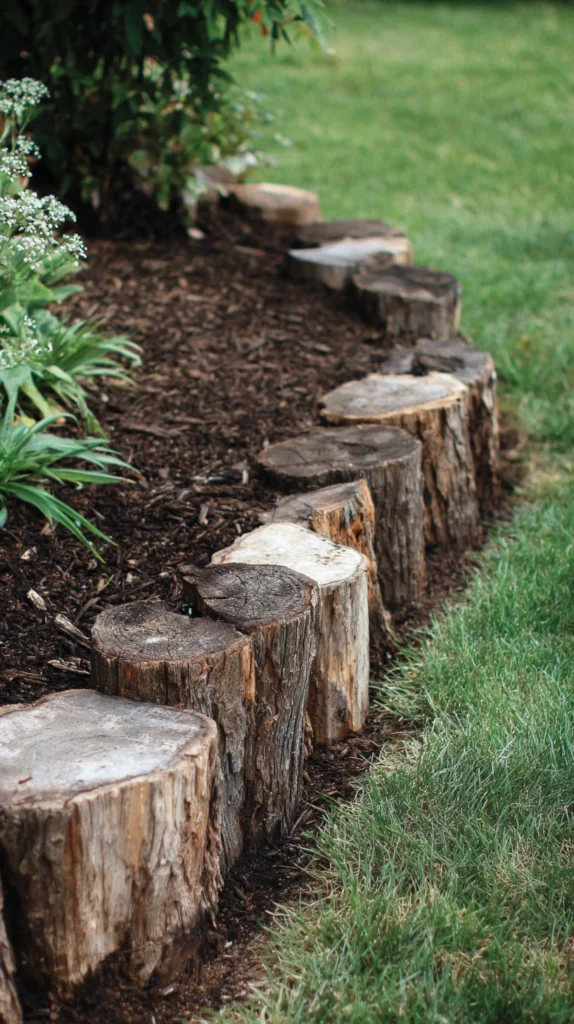
Arrange pressure-treated or naturally rot-resistant wood rounds standing upright around tree perimeters, creating rustic cottage-style edges with organic appeal. Cut rounds from logs in 4-6 inch diameters, varying heights slightly, creating irregular, natural-looking borders rather than perfectly uniform lines.
Set rounds directly in soil or partially bury them for stability while leaving varying heights exposed, creating textural interest. The wood weathers to silvery gray, developing character over time, though eventual replacement becomes necessary as wood decomposes, unlike permanent stone or metal options.
6. River Rock Mulch Ring
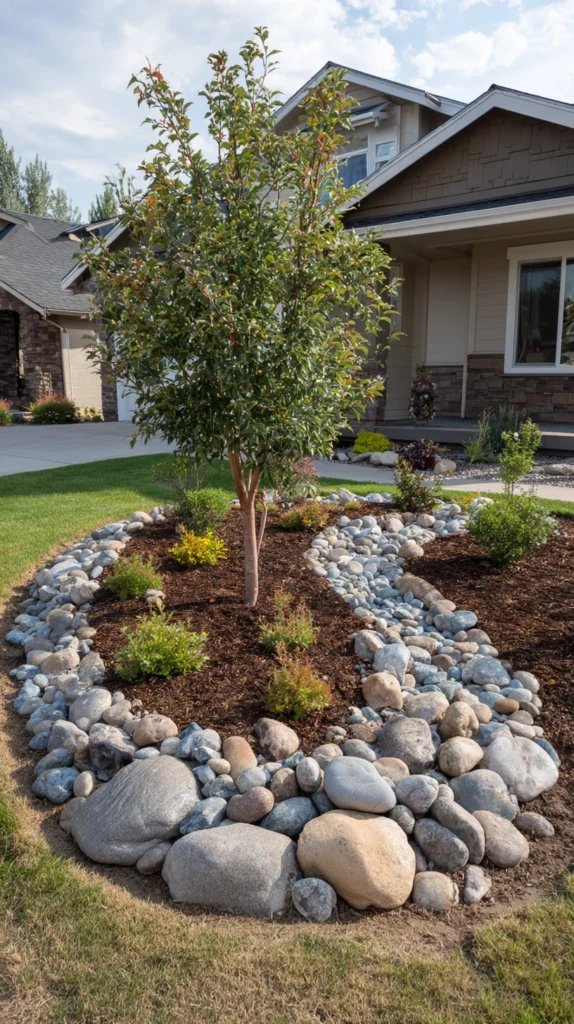
Create natural, informal edging using larger river rocks or cobbles forming the outer ring containing mulch or smaller decorative stone within the tree bed. Choose rocks in 4-8 inch diameters providing substantial presence without requiring excessive quantities or creating heavy material handling during installation.
Arrange rocks in single layers, allowing some irregularity and gaps, creating organic appearances rather than rigid geometric precision. The rock ring contains mulch, preventing spread onto lawns while providing clear mowing edges that equipment can approach without damaging tree bark.
7. Plastic or Rubber Edging
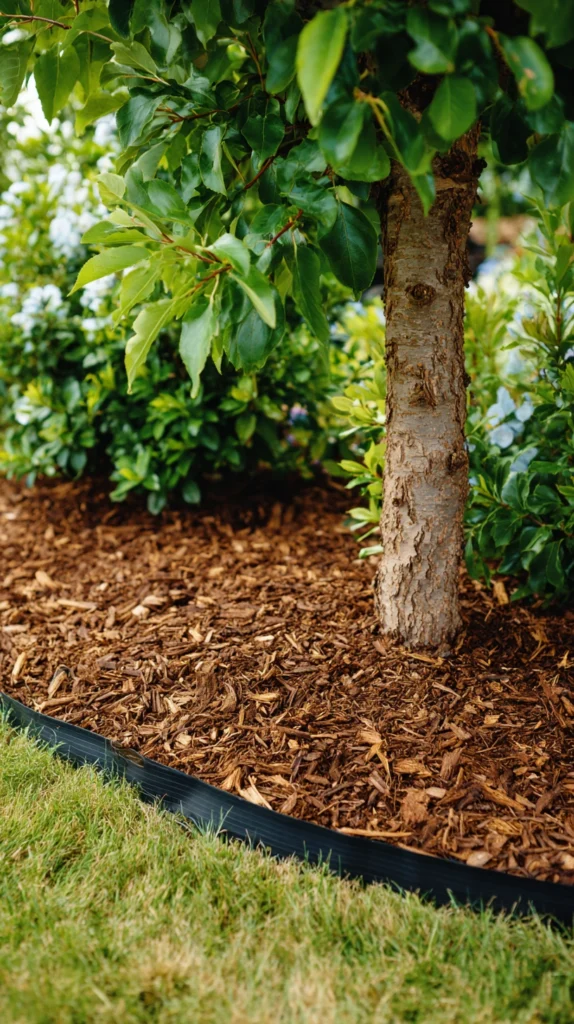
Install flexible plastic or recycled rubber edging products offering economical solutions that bend easily around trees while providing functional barriers between lawn and beds. Choose commercial-grade products with substantial thickness and UV stabilization rather than thin, flimsy versions that become brittle and fail quickly.
Pound edging into soil using stakes or integrated spikes, securing it several inches deep, while minimal height remains visible above ground. The affordability and ease of installation make these materials practical for large properties or temporary solutions though they lack the aesthetic appeal of natural materials.
8. Stacked Stone Wall
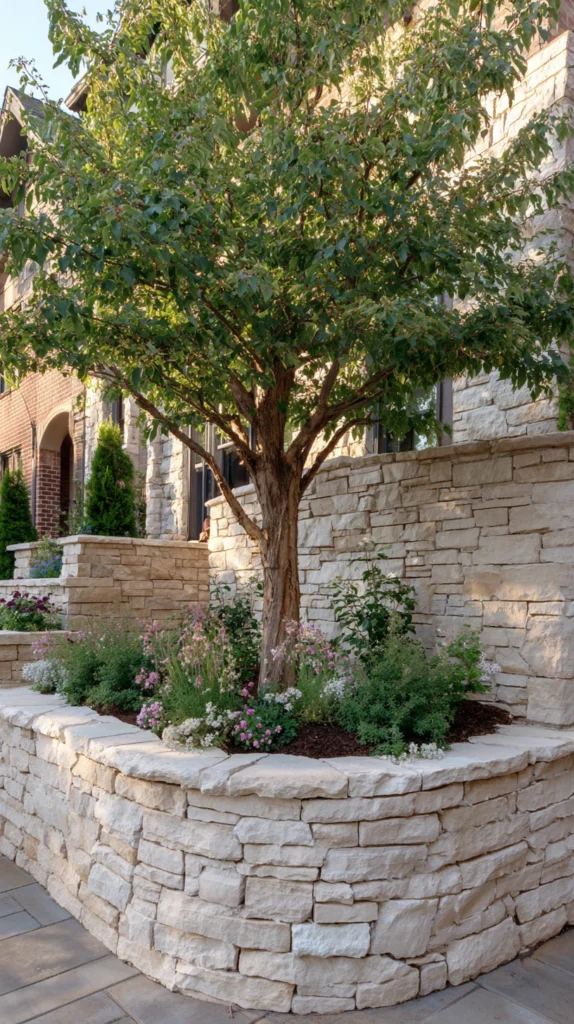
Build low stacked stone walls 6-18 inches tall around tree bases creating raised bed edging with substantial presence and architectural interest. Use flat fieldstone, limestone, or manufactured wall stone stacking without mortar for natural dry-stack walls or mortaring for permanent structures.
Design walls following tree circumference in perfect circles or incorporating gentle curves and irregularities for more natural appearances. The raised design creates definition while the wall height accommodates deeper mulch layers or more substantial plantings within the protected tree bed.
9. Decorative Fencing Borders
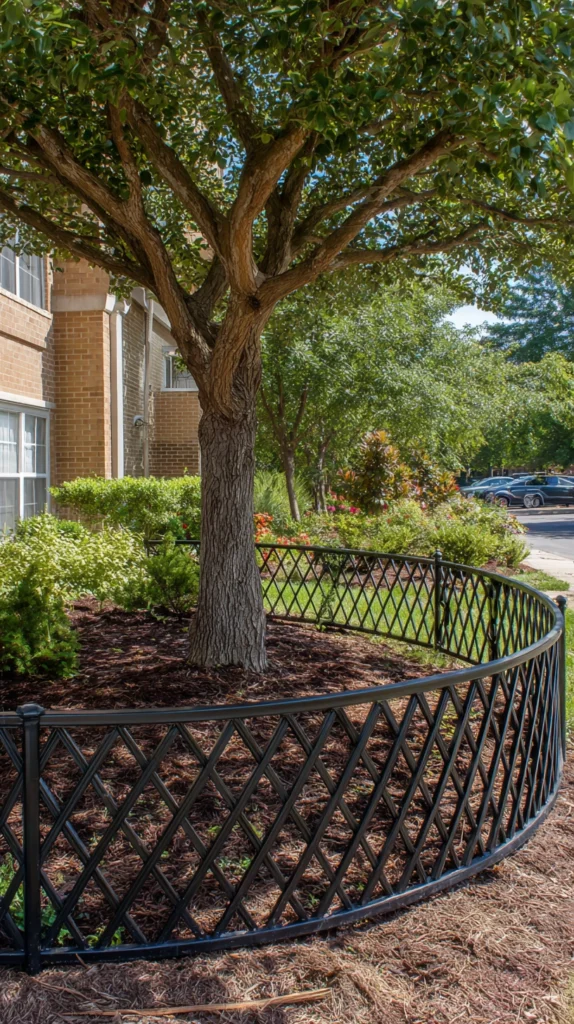
Install low decorative fencing sections forming ornamental borders around trees using materials like wrought iron, vinyl picket fencing, or decorative metal panels creating charming cottage or formal aesthetics. Choose fencing in colors coordinating with home exterior and landscape elements while heights remain low enough allowing visibility over the fence to tree trunks and beds.
Secure fencing with ground stakes or buried posts ensuring stability despite lawn maintenance equipment contact and weather exposure. The vertical elements add dimensional interest while the open designs allow air circulation and don’t create dark enclosed spaces around tree bases.
10. Mulch Volcano Alternative
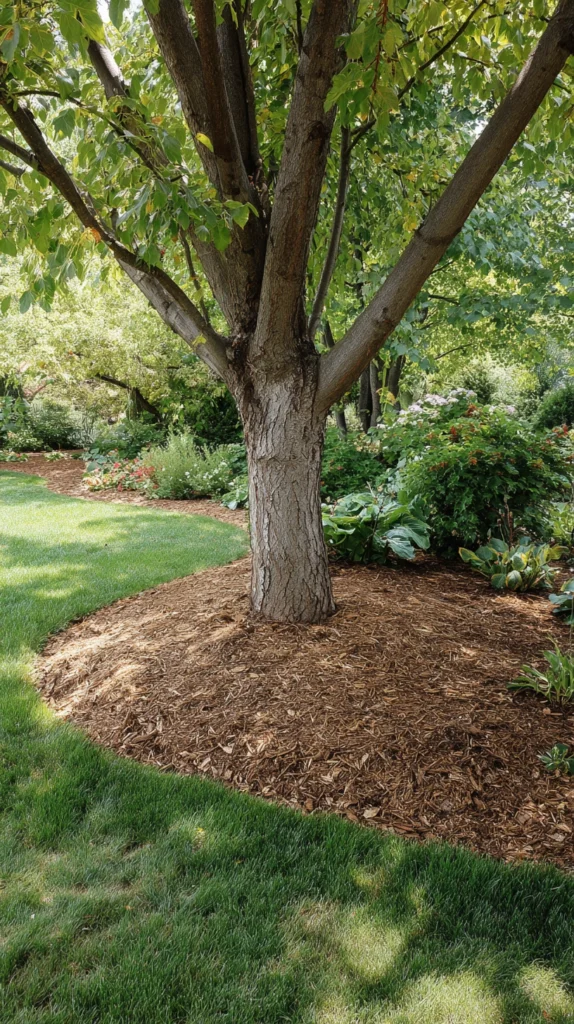
Create properly designed mulch beds with gradual slopes rather than volcano piles, using edging to contain mulch at appropriate depths away from tree trunks, preventing rot and pest problems. Maintain mulch depth at 2-4 inches throughout the bed while keeping material pulled back from the trunk, leaving several inches of bare soil, preventing moisture accumulation.
Use edging to create circular or organic-shaped beds with the trunk positioned off-center rather than exactly centered, creating more natural, informal appearances. The proper mulch application promotes tree health, while edging maintains neat boundaries and prevents mulch migration.
11. Gabion Ring Design
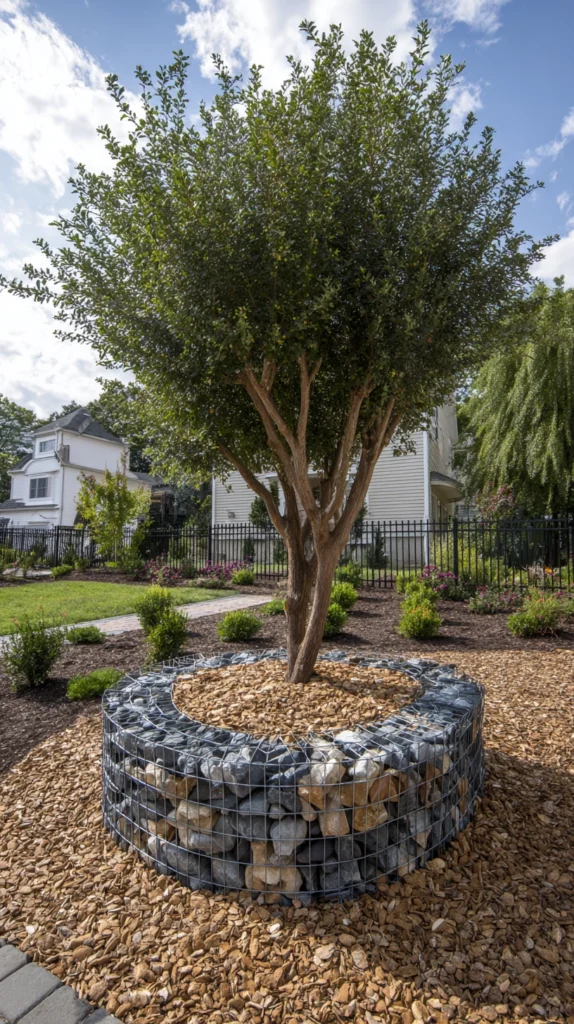
Construct small gabion baskets filled with decorative stone forming contemporary edging with industrial aesthetics and substantial visual presence around featured specimen trees. Use wire mesh baskets in heights from 6-18 inches, filling with coordinating stone colors, creating modern, structured edges.
The three-dimensional basket design creates textural interest while the contained stone provides weight and permanence, preventing shifting or displacement. This dramatic option suits contemporary landscapes featuring architectural plants and modern hardscaping rather than traditional cottage or woodland gardens.
12. Living Plant Border
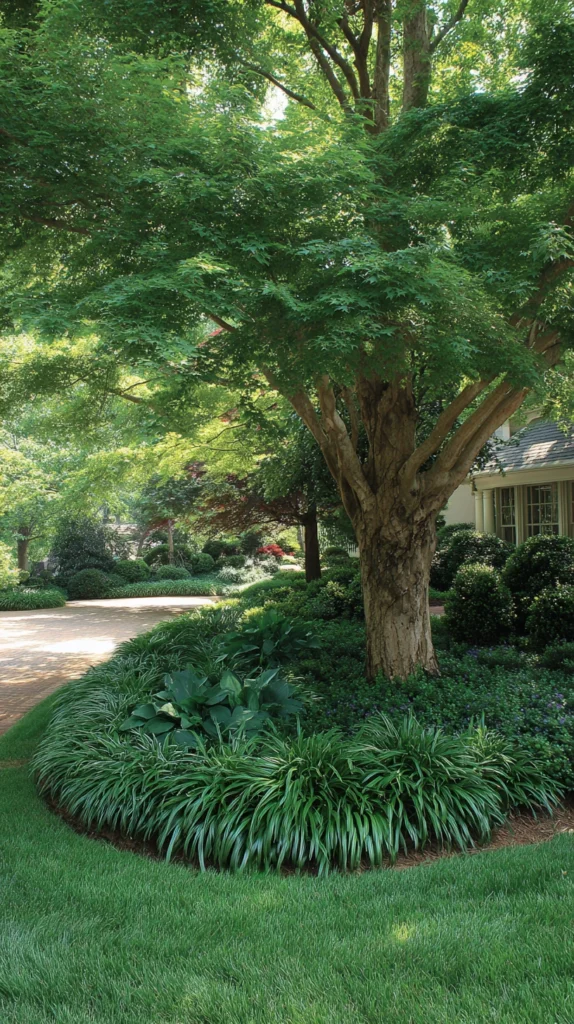
Create edging using low-growing perennials, groundcovers, or compact shrubs forming living borders that blend tree beds into surrounding landscapes without hard material edges.
Choose shade-tolerant plants like liriope, mondo grass, or pachysandra forming neat mounding borders that define spaces through living material rather than stone or metal. Maintain plant borders through occasional trimming, keeping them compact and defined rather than allowing sprawling growth that defeats the edging purpose.
The living edges soften landscapes while requiring more maintenance than permanent material edging, but offering seasonal interest and organic beauty.
13. Tumbled Glass Edge
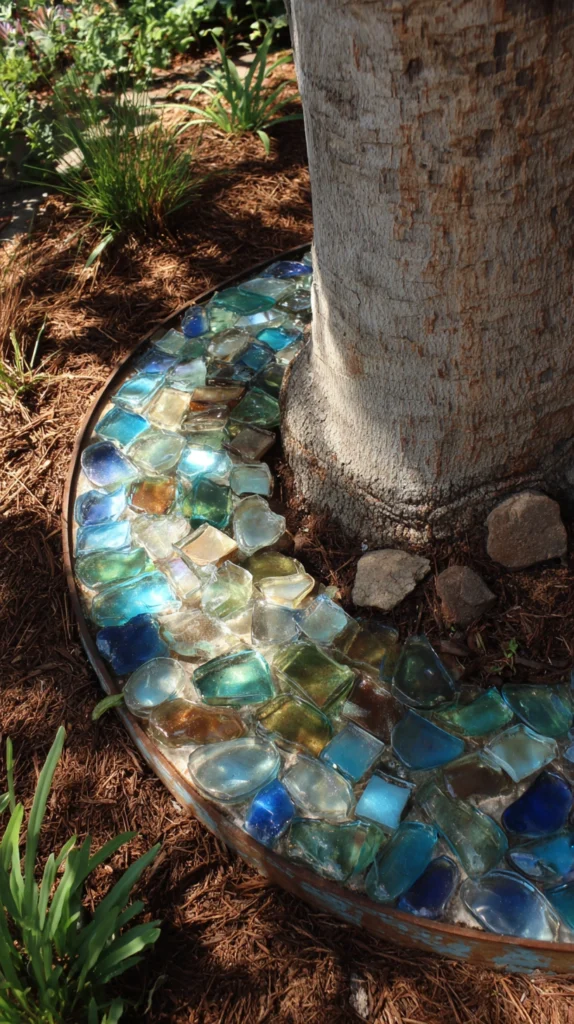
Use recycled tumbled glass in cobalt blue, amber, green, or clear, creating colorful contemporary edging with eco-friendly credentials and unique visual appeal. Arrange glass pieces in single or multiple layers containing mulch or smaller decorative stones within tree beds, while the glass creates sparkling edges.
The smooth tumbled surfaces eliminate sharp edges, making the material safe around trees, while sunlight creates beautiful effects through translucent pieces. This unconventional option suits contemporary landscapes and gardeners seeking unique solutions, making design statements while incorporating recycled materials.
14. Railroad Tie Timbers
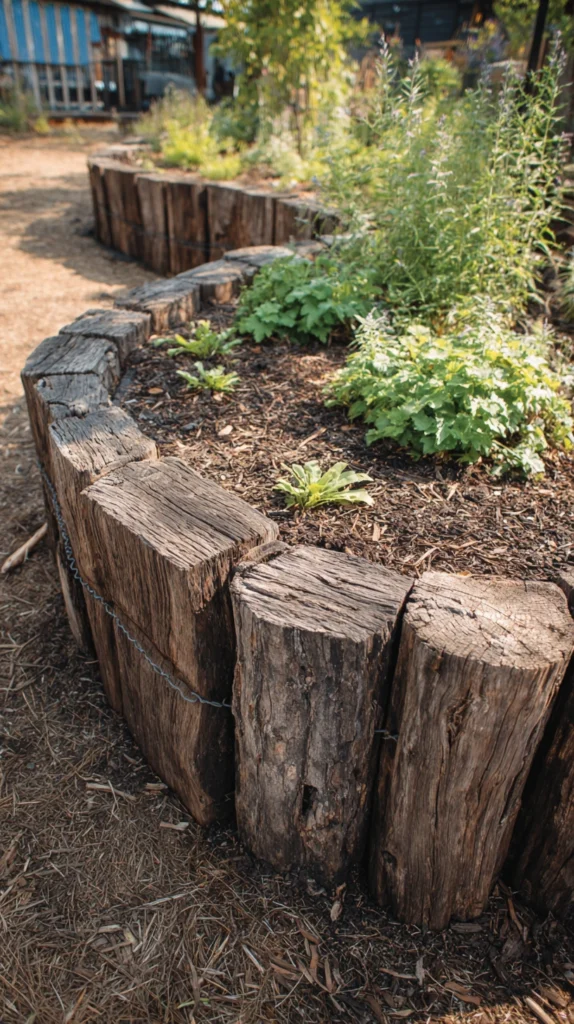
Install landscape timbers or railroad ties arranged in circles, hexagons, or organic shapes, creating substantial rustic edging with presence and durability lasting many years. Secure timbers with rebar driven through pre-drilled holes, anchoring them firmly in place, preventing shifting despite lawn maintenance and weather.
Stack timbers in multiple layers for raised bed effects or use single layers for minimal definition, depending on desired prominence and bed depth. Choose newer landscape timbers rather than creosote-treated railroad ties if chemical concerns exist, particularly around edible landscapes or areas frequented by children and pets.
15. Decorative Pavers Border
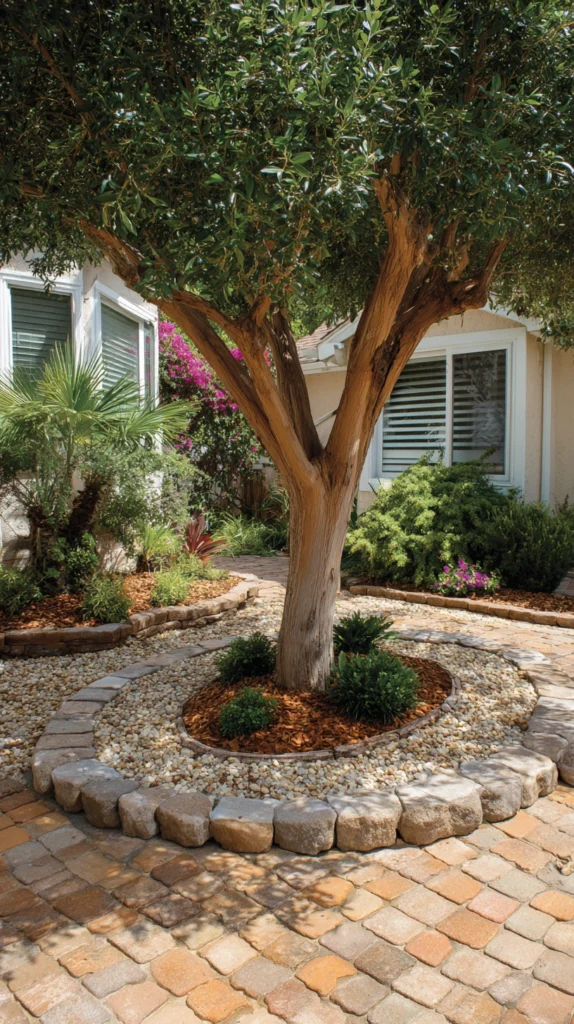
Lay decorative concrete pavers, clay pavers, or manufactured stone pavers in single rows, creating defined edges with colors, patterns, and textures complementing existing hardscaping.
Choose pavers matching walkways, patios, or the home exterior for a cohesive landscape design rather than introducing competing materials and colors. Set pavers in sand, allowing adjustment and good drainage, or mortar them for permanent installation requiring no maintenance or resetting.
The substantial individual units create a strong definition, while the variety of available colors, shapes, and textures allows complete customization, matching any landscape style.
Installing Tree Edging Successfully
Properly installing tree edging requires removing grass and weeds from the planned bed area, creating clean edges, and preventing future competition with tree roots. Dig trenches accommodating edging depth plus base materials if using stone or brick, ensuring proper installation and stability.
Avoid damaging surface roots during installation, working carefully and adjusting edging placement if large roots prevent intended paths. Create beds extending to at least the tree canopy’s drip line where possible, providing adequate mulched area protecting roots and preventing mower encroachment.
Maintain proper mulch depth throughout the bed, refreshing annually as material decomposes while keeping mulch pulled away from tree trunks, preventing decay and pest problems. Inspect edging periodically, resetting stones, adjusting metal strips, or replacing deteriorated materials, maintaining neat appearances and functional boundaries.
Most importantly, remember that tree edging serves protective purposes beyond aesthetics, creating barriers preventing damage to valuable trees while making landscapes appear more polished, intentional, and professionally maintained.