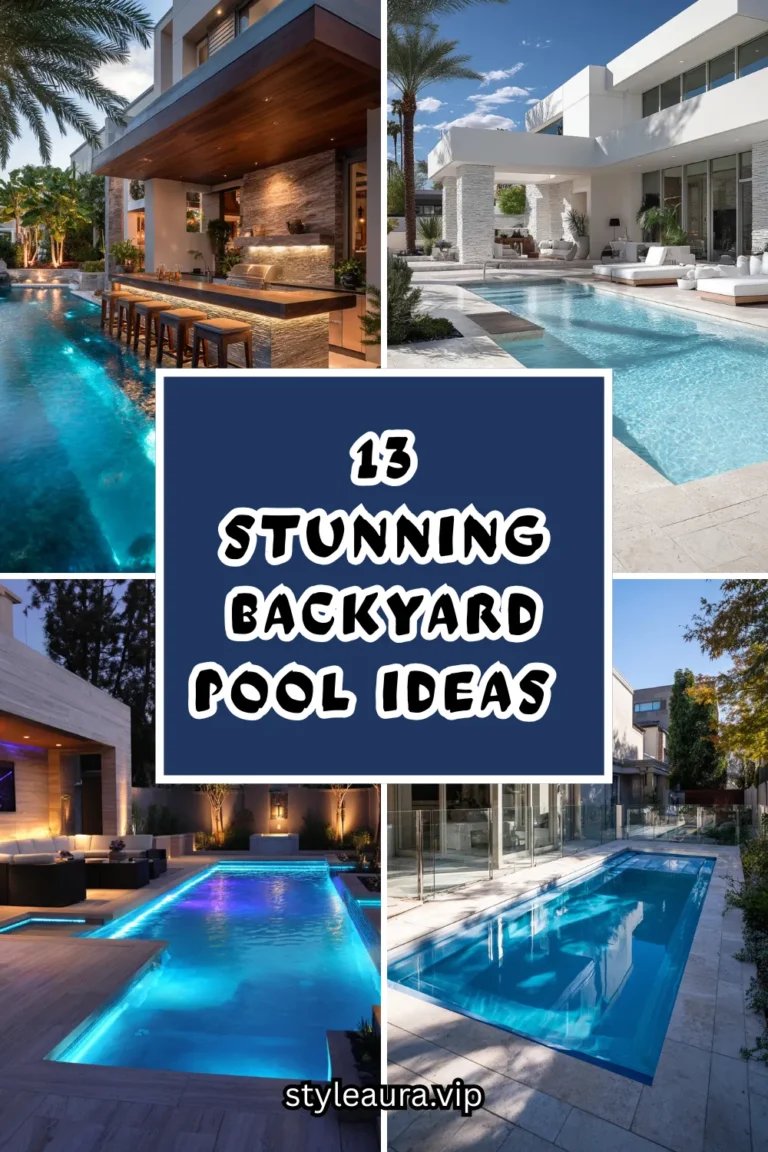
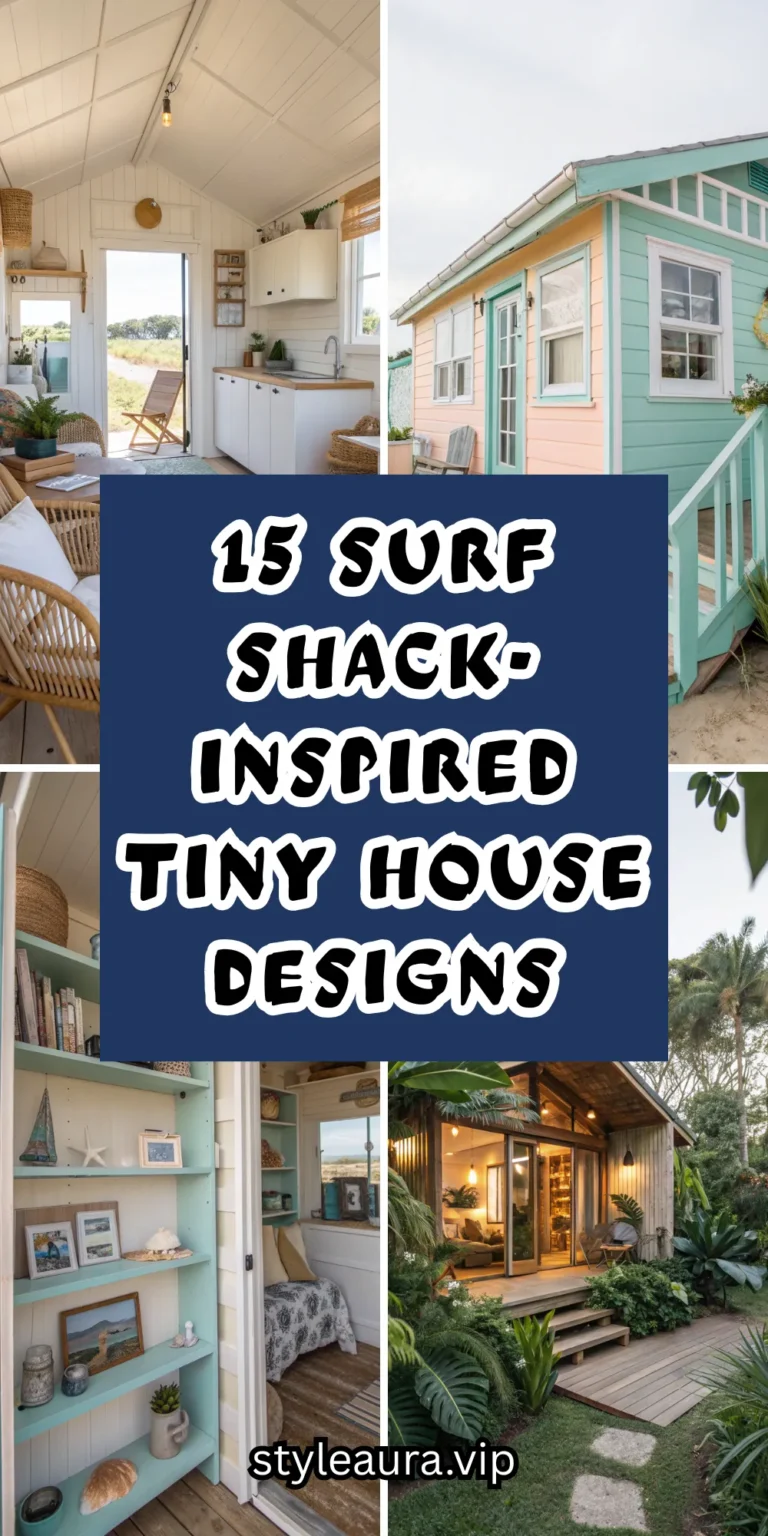
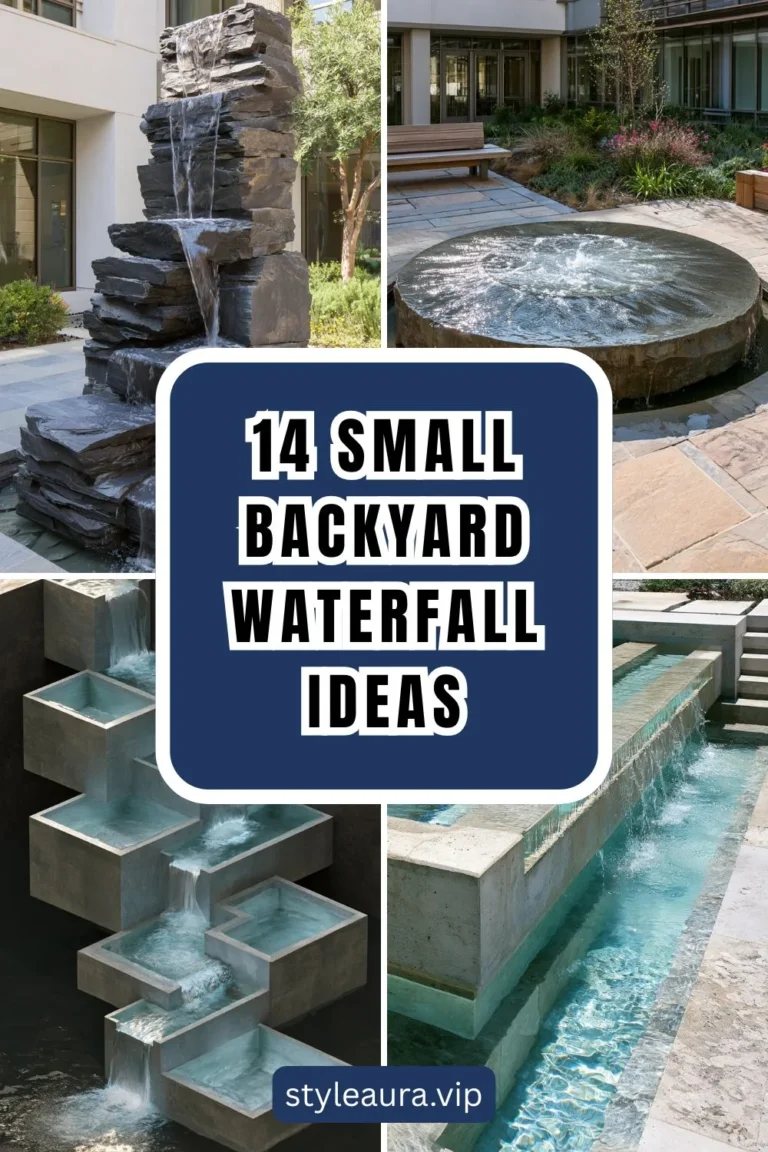
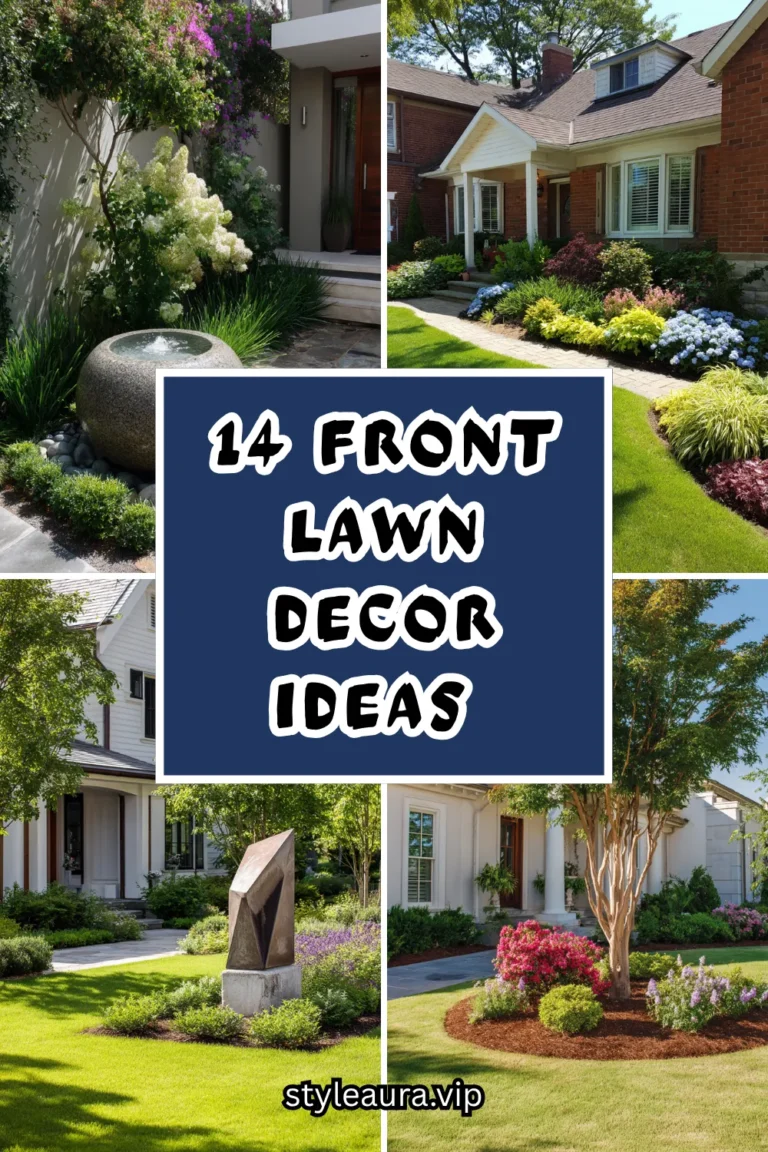
15 Modern Backyard Waterfall Ideas That Look Like a Luxury Resort
There is a particular quality that moving water brings to an outdoor space that no other single element replicates. It is not merely visual — though a well-designed waterfall is one of the most genuinely beautiful objects a backyard can contain.
It is sonic, and thermal, and the particular quality of ambient humidity that living near water produces, and the way that a constant, gentle sound of falling water makes the traffic and the neighbours and the general noise of the world outside the fence recede to a distance from which it no longer matters.
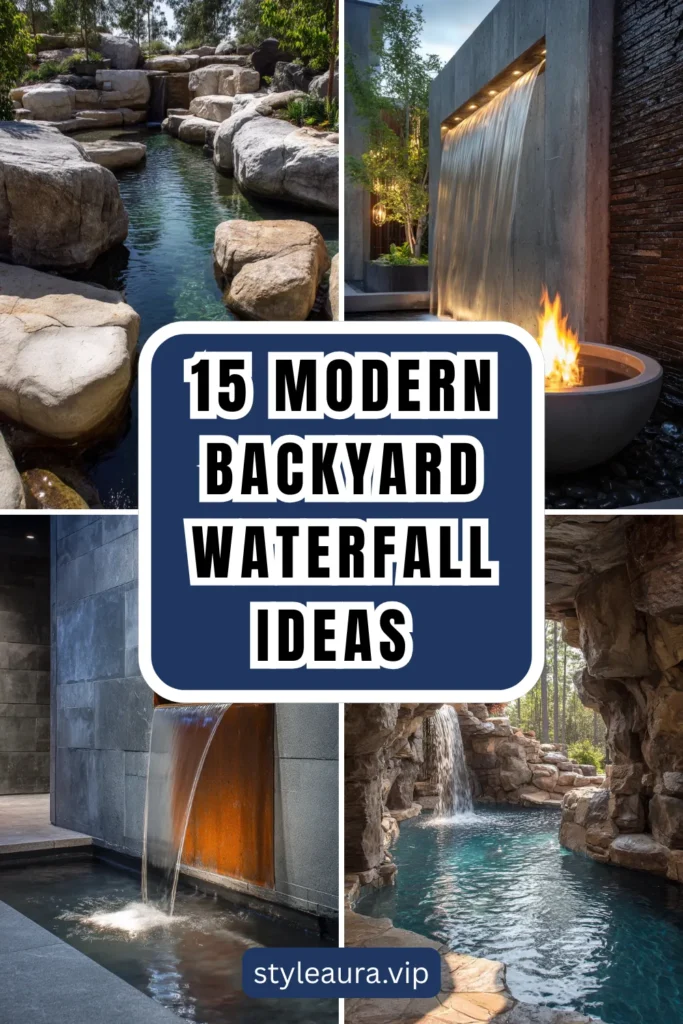
A backyard waterfall done with genuine design intention — with the right stone, the right fall height, the right relationship to the pool or the pond or the planted border it flows into — is an installation that transforms the garden from a pleasant outdoor space into something that genuinely justifies the word retreat. It costs more than a garden bench and less than a renovation, and it produces a quality of daily life that both those things together cannot approach.
The fifteen ideas below cover every scale, every style, and every budget for a modern backyard waterfall — from a single wall-mounted spout to a full resort-style cascade.
1. The Corten Steel Sheet Waterfall
Budget: $500 – $5000
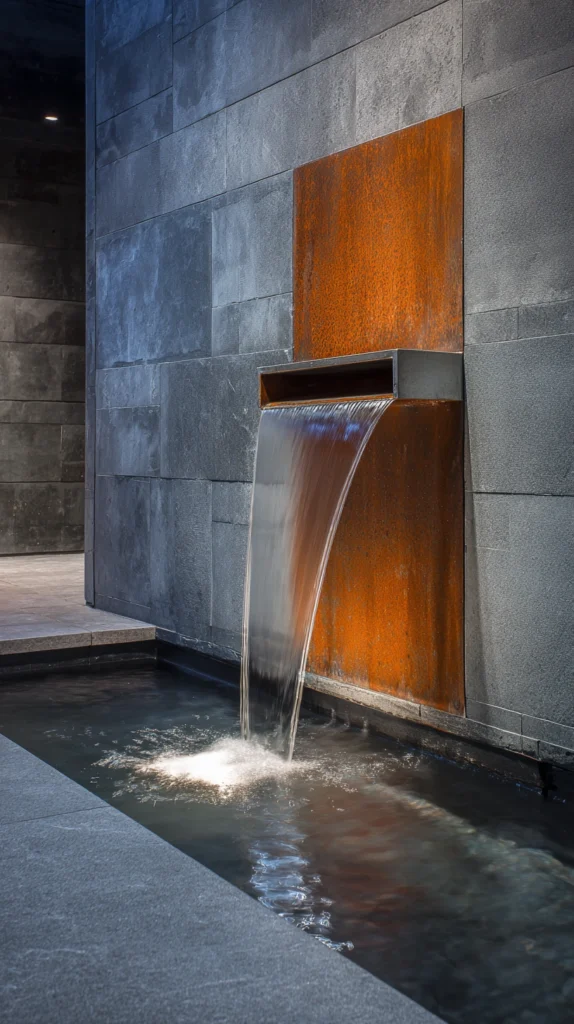
A corten steel waterfall — a wide, flat sheet of weathering steel from which water flows in an even, glassy curtain into a basin or pond below — is the most specifically contemporary and the most architecturally precise waterfall available for a modern backyard. The warm, iron-rust patina of the corten steel develops over the first season of outdoor exposure and then stabilises, producing a surface that reads as simultaneously industrial and deeply natural.
A corten steel waterfall panel in a standard width — 1.2 to 1.8 metres — costs $300 – $1500 for the fabricated panel. A submersible recirculating pump — $80 – $300 depending on flow rate and lift height. A basin or pond to receive the falling water — $200 – $1000 for a formed or poured concrete basin. Professional installation — $300 – $800 for the plumbing and electrical work.
Styling tip: Position the corten steel waterfall against a backdrop of dark planting — black-leaved phormium, dark-foliaged bamboo, or a clipped yew hedge — so that the warm rust tone of the steel reads against the deepest possible background. A corten panel against a pale rendered wall loses its tonal distinction. Against a dark planted background, the warm orange-brown reads with its full warmth and its full visual authority.
2. The Natural Stone Cascade
Budget: $1000 – $15000
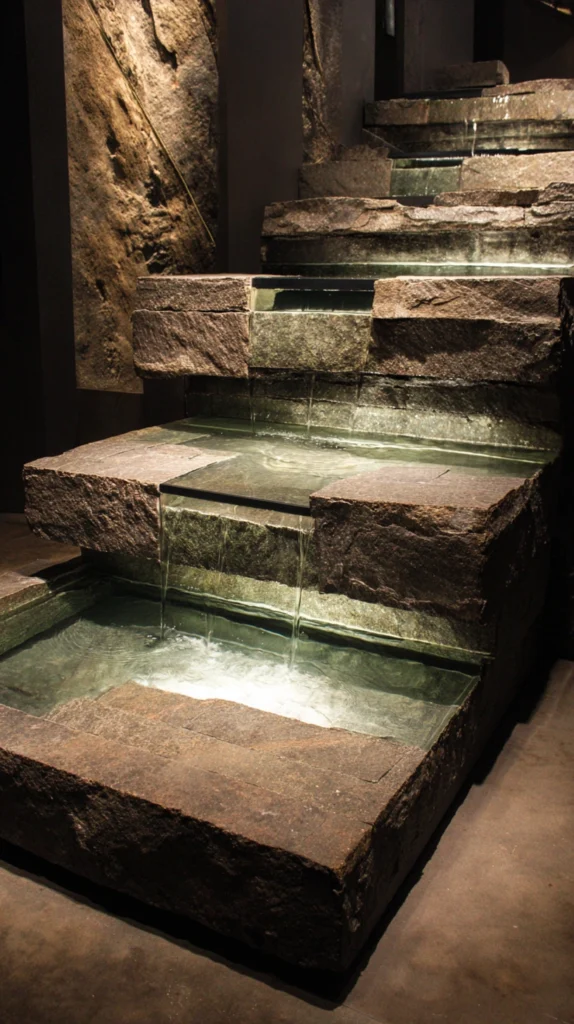
A natural stone cascade — a series of flat stone ledges descending in steps, with water flowing from one level to the next in a controlled, glassy sheet before reaching the pool or pond at the base — is the backyard waterfall that most convincingly replicates the experience of a natural landscape feature. The sound it produces, the movement of the water across stone, and the moss and lichen that develop on the stone surface over time all contribute to a feature that improves with age rather than declining.
Irregular natural stone — bluestone, sandstone, granite, or slate — costs $50 – $200 per square metre in material. A professionally designed and installed natural stone cascade costs $3000 – $15000 for a standard backyard scale. A DIY version using purchased stone, a liner, and a recirculating pump sits at $1000 – $4000 in materials for a competent approach.
Styling tip: Plant the margins of the natural stone cascade with moisture-loving plants — ferns, mosses, creeping thyme, and ajuga — that colonise the edges of the water feature naturally and blur the boundary between the constructed stone and the surrounding garden. A stone cascade with clean, unplanted edges reads as an installation. The same cascade with planted margins reads as a landscape feature that the garden grew around.
3. The Pool Edge Infinity Overflow
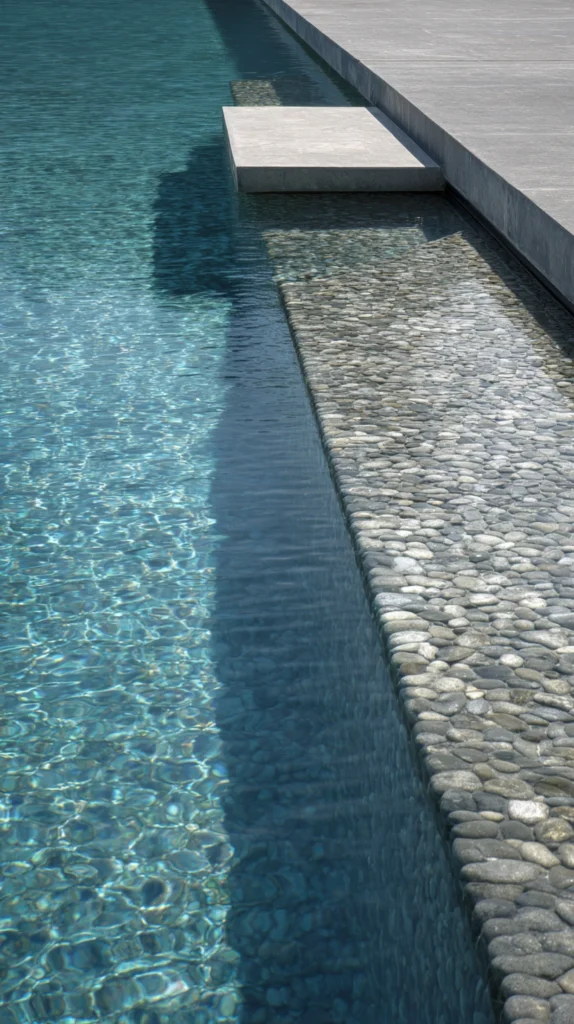
Budget: $3000 – $20000
A pool edge overflow — where the water level at one edge of the pool reaches the coping and flows over the edge in a continuous sheet into a catch basin below, creating the visual impression of water extending to the horizon — is the backyard waterfall feature most directly associated with luxury resort design. It is the most architecturally integrated of all waterfall formats because it is not added to the pool but built into its fundamental structure.
An infinity edge pool with an overflow feature requires design and construction at the pool build stage — retrofitting an existing standard pool is not practically achievable. A new infinity edge pool with overflow basin costs $20000 – $80000 depending on size, material, and location. The overflow waterfall element itself — the engineering of the edge detail and the catch basin — adds $3000 – $8000 to the pool construction cost.
Styling tip: Specify the pool coping material in a colour that is close to the water colour in the catch basin — so that the visual transition from pool surface to overflow to basin appears seamless. A dark stone coping beside blue-tinted pool water produces a colour contrast at the overflow edge that interrupts the visual continuity of the infinity effect. A pale grey or blue-grey coping in the same tonal range as the water allows the overflow to read as a genuine extension of the water surface.
4. The Blade or Sheet Water Wall
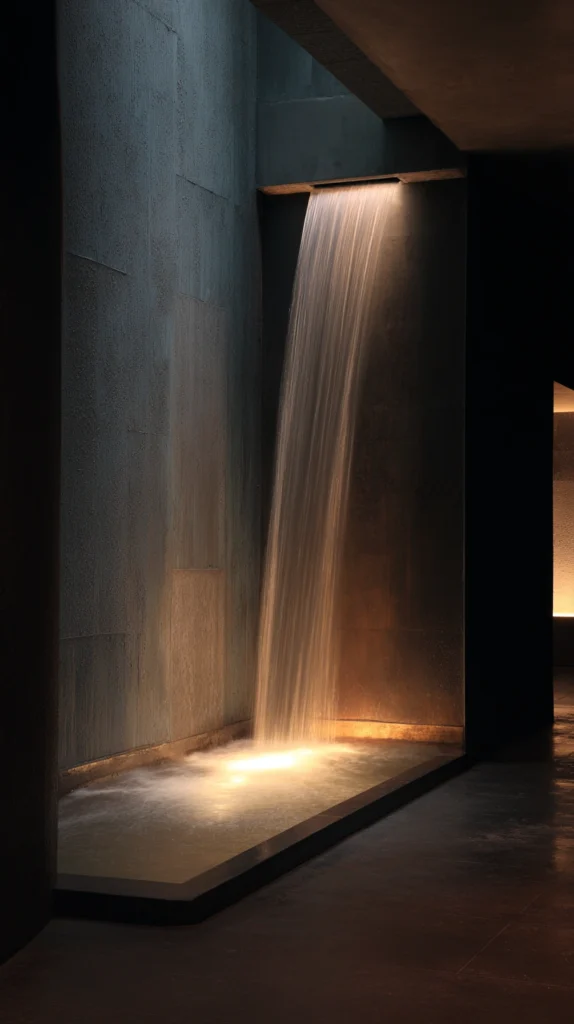
Budget: $1000 – $8000
A water wall — a flat, vertical surface from which water flows in a wide, unbroken sheet — is the most contemporary and the most specifically architectural waterfall format available for a backyard setting. In its simplest form it is a rendered concrete or stone wall with a water delivery channel at the top and a basin at the base. In its most refined form it is a glass or stainless steel panel through which the water flows as a perfectly even, glassy curtain.
A rendered concrete water wall in a standard garden scale — 1.5 metres wide by 1.2 metres high — costs $1500 – $4000 professionally constructed. A stainless steel blade waterfall panel — $500 – $2000 for the fabricated element. A glass water wall panel — $800 – $3000. A recirculating pump appropriate for the wall’s flow rate — $100 – $400. A basin or trough below the wall — $200 – $600.
Styling tip: Light the water wall from below the water surface in the basin rather than from above. An underwater LED light pointing upward through the falling water sheet produces a luminous, gently animated effect as the water disturbs the light beneath it. An overhead light on the same water wall produces a flat, even illumination that reveals the water without animating it — which is significantly less beautiful and significantly less specifically resort-like.
5. The Raised Pool Waterfall Feature
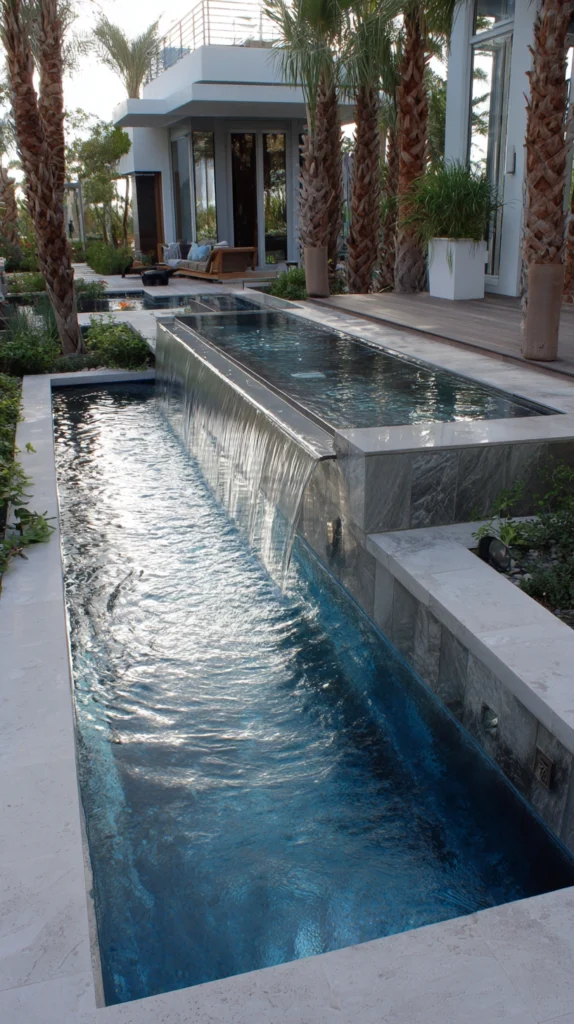
Budget: $2000 – $15000
A raised pool — a pool or water feature elevated 30 to 60 centimetres above the surrounding paving, with water overflowing the raised edge into a lower pool or a catch channel at ground level — produces a waterfall feature that is integrated into the water feature’s structure rather than added as a separate element. The raised pool’s overflow is the waterfall, and the simplicity of this relationship between structure and water movement produces a feature of genuine architectural elegance.
A raised pool in a standard garden scale — 2 by 3 metres by 60 centimetres high — costs $3000 – $12000 in a rendered concrete or stone finish. A smaller raised trough — 1 by 2 metres — costs $1500 – $5000. The overflow edge can be a continuous lip that allows water to fall from all sides simultaneously — the most dramatic version — or a single edge overflow that directs the fall to one specific side.
Styling tip: Specify the interior of the raised pool in a dark grey or black finish rather than a standard white or pale blue. A dark pool interior reflects the surrounding garden, the sky, and the overhead planting rather than producing an opaque coloured surface — and the reflective quality of a dark-lined raised pool adds a mirror dimension to the water feature that a pale-lined pool cannot provide.
6. The Japanese-Inspired Bamboo Spout
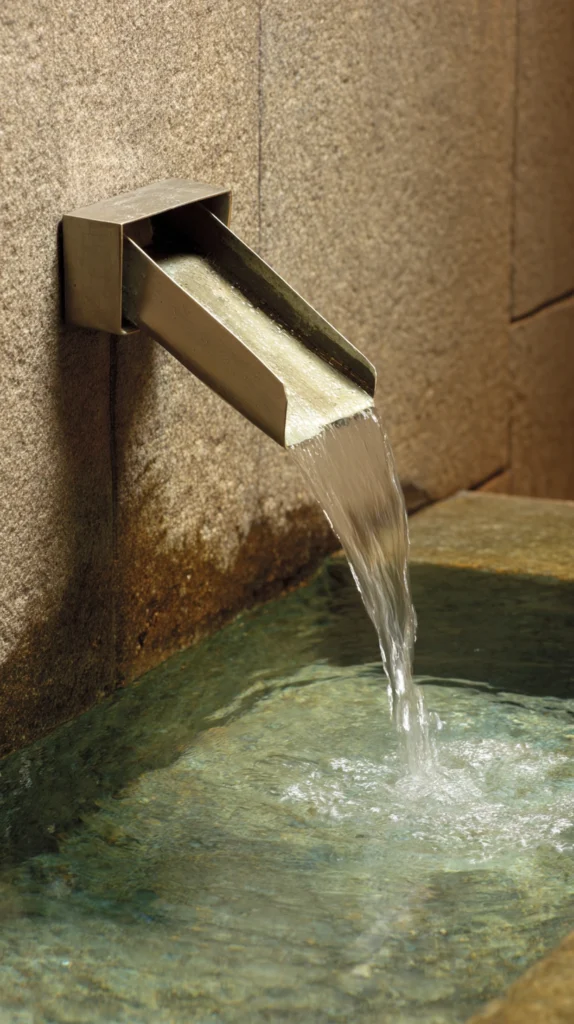
Budget: $100 – $800
A bamboo spout waterfall — a length of bamboo pipe mounted at an angle that delivers water in a controlled arc into a stone basin or a traditional Japanese tsukubai basin below — is the most meditative and the most specifically Japanese-garden-influenced waterfall format available for a domestic backyard. The sound of the bamboo spout delivering water to the stone basin is one of the most deliberately beautiful sounds in garden design — specific, rhythmic, and productive of an immediate quality of stillness in anyone near it.
A bamboo spout — a length of bamboo fitted with a copper or brass pipe insert — costs $20 – $80 in materials. A stone or ceramic basin to receive the water — $50 – $300. A recirculating pump and reservoir hidden below the basin — $60 – $200. A surrounding arrangement of moss, fern, and smooth river stones — $30 – $80 in planting and materials.
Styling tip: Position the bamboo spout so that the arc of falling water falls precisely into the centre of the stone basin rather than at an angle across its rim. The arc from spout tip to basin centre should be smooth and consistent — produced by adjusting the spout angle and the water flow rate until the falling stream follows a clean parabolic path. A perfectly centred fall produces a basin that fills with a perfectly symmetrical ripple pattern — which is the specific, meditative quality the Japanese waterfall format is designed to create.
7. The Modern Millstone Water Feature
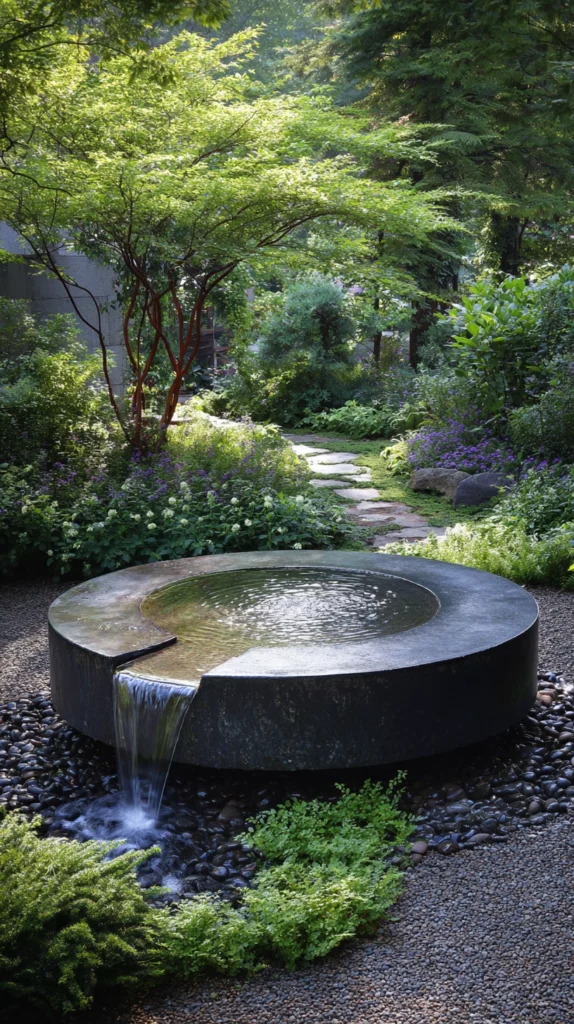
Budget: $300 – $2000
A millstone water feature — a large circular stone disc through which water wells up from the centre and flows across the surface in all directions before falling over the edge into a pebble reservoir below — is a compact, self-contained waterfall format that works in the smallest backyard spaces and requires no excavation, no liner, and no basin construction beyond the pebble reservoir that contains the recirculating system.
A genuine millstone — sourced from a reclamation yard or a specialist stone supplier — costs $200 – $600 depending on size and provenance. A purpose-made granite or reconstituted stone disc — $100 – $400. A pebble reservoir kit including the reservoir box, the pump, and the pump cover — $80 – $200 from a garden water feature supplier. A bag of smooth river pebbles for the reservoir surface — $20 – $50.
Styling tip: Choose pebbles for the millstone reservoir in a single, consistent colour and size rather than a mixed pebble assortment. A reservoir of uniformly sized smooth grey pebbles reads as designed — the deliberate choice of a single material producing a clean, considered base that the millstone sits within. A mixed pebble assortment reads as a random selection — undermining the simplicity and the precision that the millstone water feature format requires to perform at its most elegant.
8. The Rock Pool and Boulder Waterfall
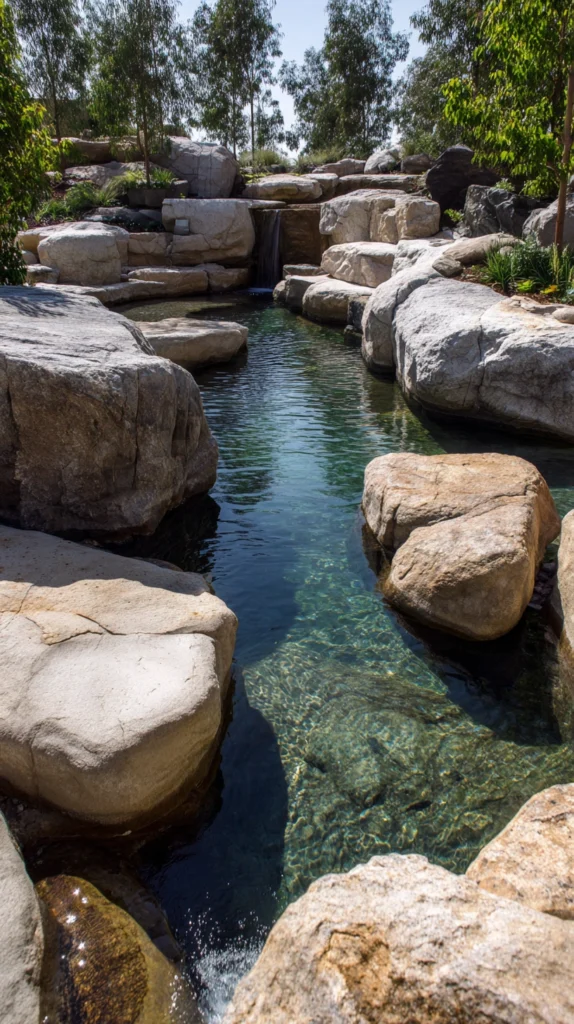
Budget: $2000 – $20000
A boulder waterfall — large natural boulders arranged at graduated heights, with water pumped to the highest boulder and allowed to flow down through the natural channels and gaps between the rocks into a pool at the base — is the most naturalistic and the most ambitious backyard waterfall available at a residential scale. When executed well it reads not as a constructed water feature but as a piece of landscape that happened to exist in exactly that location.
Large natural boulders in granite, basalt, or sandstone — $100 – $400 each depending on size and weight. A boulder waterfall and pool system professionally designed and installed — $5000 – $20000 depending on scale and complexity. A DIY approach using a liner, a pump, and boulders sourced from a local landscaping supplier — $2000 – $6000 in materials for a competent weekend project.
Styling tip: Plant the boulder waterfall margins with the specific plants that grow naturally beside water in the local landscape — species native to the region that would naturally colonise a streamside or a rock pool edge. Native moisture-loving plants beside a boulder waterfall produce an installation that reads as contextually specific to the landscape it is set within. Non-native tropical plants beside the same boulders produce an installation that reads as a themed garden feature — which is a different and less enduringly beautiful outcome.
9. The Concrete Trough Waterfall
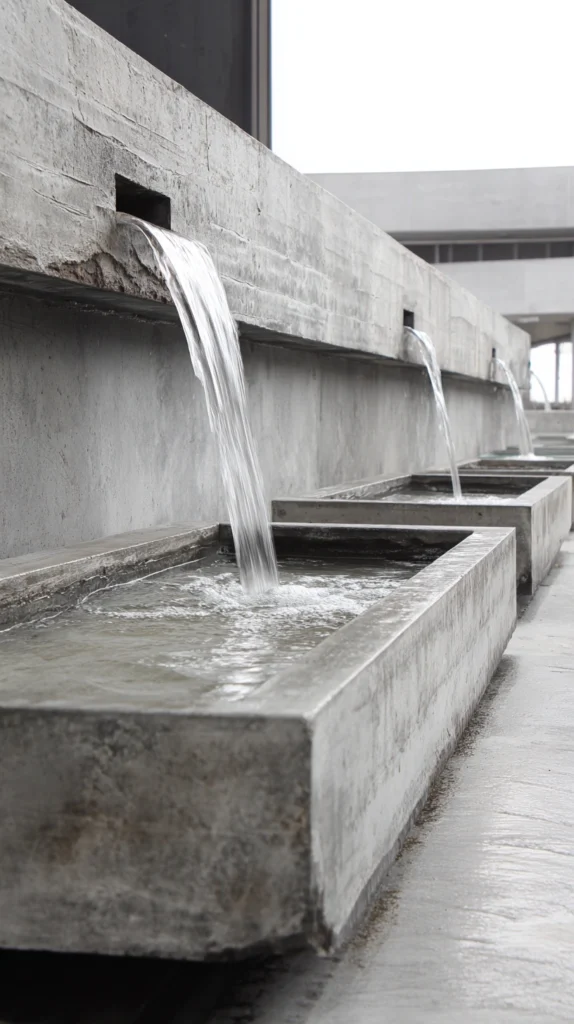
Budget: $500 – $5000
A concrete trough waterfall — a series of poured concrete troughs at descending heights, each overflowing in a sheet into the trough below, producing a stepped, controlled cascade in a material that reads as simultaneously industrial and deeply refined — is the most architecturally contemporary of all the natural-material waterfall formats. In a garden of clean lines and deliberate geometry, a concrete trough cascade is not a water feature. It is a structural element that happens to contain water.
Poured concrete troughs in a standard backyard scale — 60 centimetres wide by 30 centimetres deep — cost $200 – $600 each constructed in situ. A three-trough cascade costs $600 – $2000 in concrete materials plus $200 – $600 for the pump and the plumbing. A professional concrete and waterproofing contractor charges $500 – $1500 for a standard cascade installation.
Styling tip: Seal all concrete waterfall surfaces with a penetrating waterproofing sealant rated for continuous water contact before filling the system. Unsealed concrete in a waterfall application absorbs water, develops efflorescence — the white mineral deposits that appear on the surface of wet concrete — and requires resealing within one to two seasons. A correctly sealed concrete surface maintains its clean, uniformly grey appearance indefinitely with minimal maintenance.
10. The Pondless Waterfall System
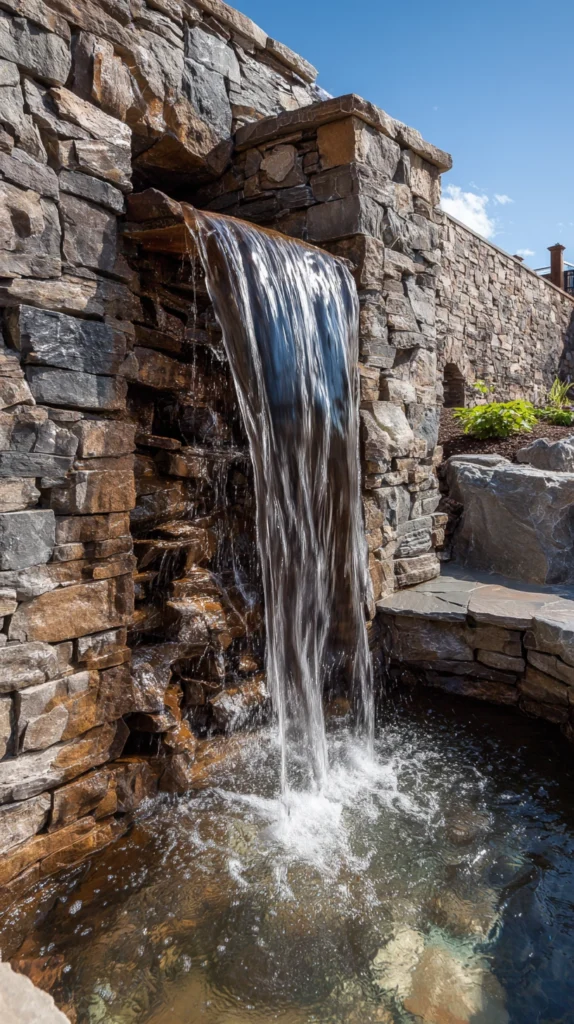
Budget: $500 – $5000
A pondless waterfall — a waterfall that flows into a reservoir of gravel and pebbles rather than into an open pond, with the water recirculated from beneath the gravel surface — is the most practical and the most maintenance-efficient backyard waterfall format available. It produces all the visual and sonic qualities of a full waterfall and pond system without the open water that constitutes a drowning risk for small children and a mosquito breeding ground in warm weather.
A pondless waterfall kit — including the reservoir basin, the pump, the pump vault, the liner, and the delivery pipe — costs $200 – $600 for a standard residential scale. Natural stone for the waterfall structure — $200 – $800 depending on type and quantity. Professional installation of a pondless system — $500 – $2000 for a standard garden scale. DIY installation — a full weekend project with a comprehensive kit.
Styling tip: Cover the pondless reservoir surface with large, flat stepping stones rather than a uniform pebble surface — so that the reservoir area reads as a usable, walkable surface of the garden rather than a gravel pit. Flat stepping stones across the pondless reservoir allow the garden’s flow of movement to continue across the water feature area, integrating the waterfall into the garden’s spatial organisation rather than creating a zone that must be walked around.
11. The Swimming Pool Grotto Waterfall
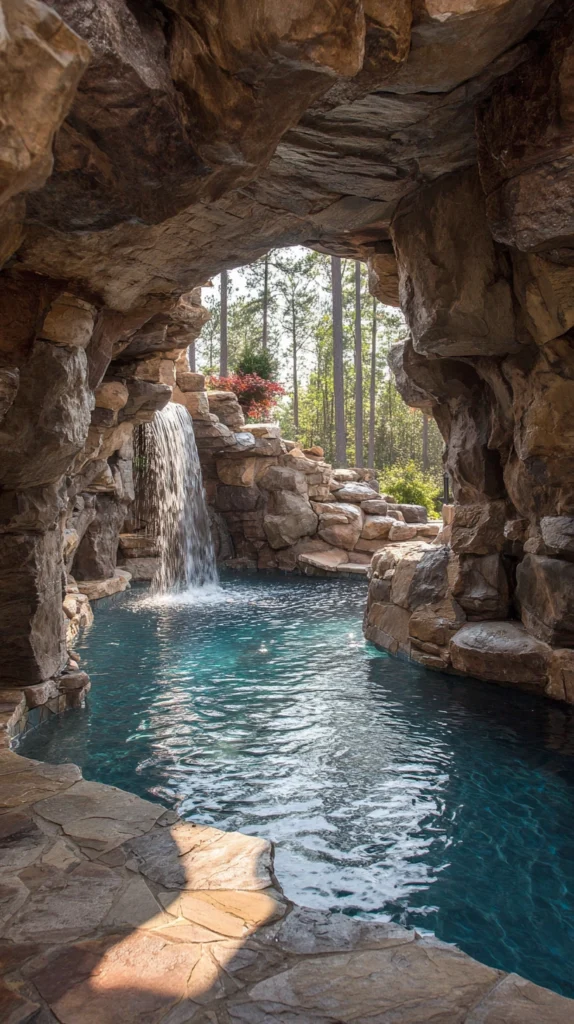
Budget: $3000 – $25000
A grotto waterfall — a rock formation beside or at the end of a swimming pool from which water falls in a naturalistic cascade, with the rock structure large enough to create a sheltered zone beneath or beside the fall — is the most resort-like and the most experientially complete backyard waterfall available. Swimming beneath a rock grotto waterfall in your own backyard is one of the most specifically luxurious domestic experiences it is possible to design and build.
A grotto waterfall at the end of an existing pool — constructed from natural stone, artificial rock panels, or shotcrete formed rock — costs $5000 – $20000 professionally designed and built. An artificial rock grotto system — lightweight panels that read as natural rock from a distance — costs $3000 – $12000 installed. A natural stone grotto — the most beautiful and the most genuinely resort-like version — costs $8000 – $25000 for a pool-scale installation.
Styling tip: Incorporate a small seating shelf or a sun ledge within the pool immediately below the grotto waterfall — a shallow submerged platform where swimmers can sit while the water falls around them. A pool seat beneath a waterfall is one of the most specifically pleasurable backyard experiences available to anyone who has the pool and the waterfall to create it, and the seat itself costs nothing additional if specified at the time of the pool construction or the grotto installation.
12. The Linear Water Rill and Fall
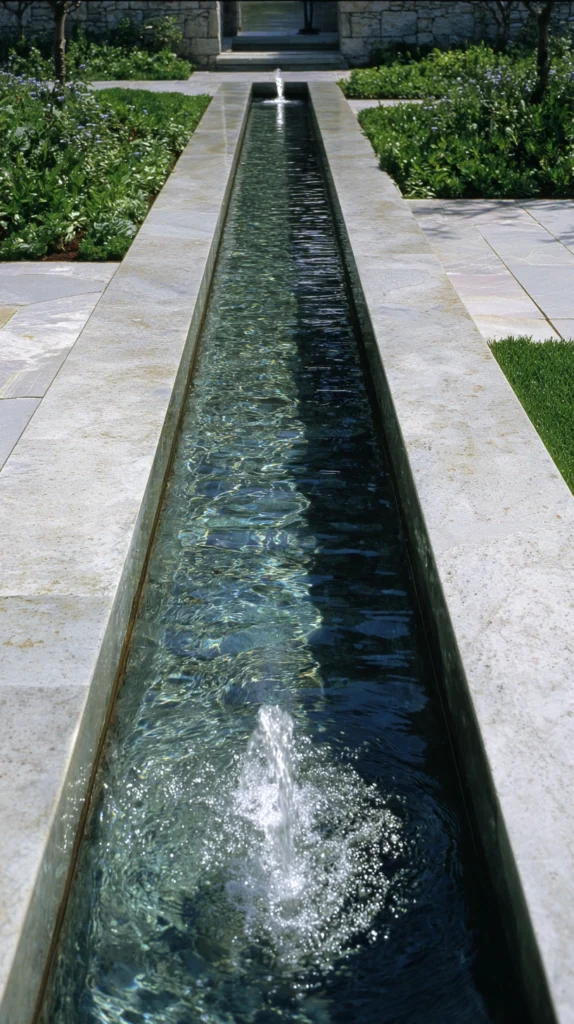
Budget: $1000 – $8000
A linear water rill — a narrow, precise channel of water running through the garden from one level to a lower one, where it falls as a thin sheet into a collection basin — is the most formally geometric and the most specifically modernist waterfall format available for a contemporary backyard. The rill is a design object as much as a water feature, and in a garden of deliberate lines and considered geometry it reinforces the garden’s spatial organisation rather than interrupting it.
A narrow rill in a smooth render or natural stone finish — 20 to 30 centimetres wide — costs $200 – $600 per linear metre professionally constructed. A 5-metre rill with a 60-centimetre fall at one end costs $1000 – $3500 in materials and labour. A pump and plumbing system to recirculate the water — $150 – $500 depending on the rill’s length and the fall height.
Styling tip: Run the rill along the primary axis of the garden — the central sight line from the house to the garden’s far boundary — rather than across it or diagonally through it. A rill on the garden’s primary axis reinforces the spatial organisation of the garden and draws the eye along its full length, making the garden appear longer and more deliberately designed. A diagonal or cross-axis rill introduces a spatial complexity that requires significantly more confident design resolution to succeed.
13. The Wall-Mounted Spout Garden
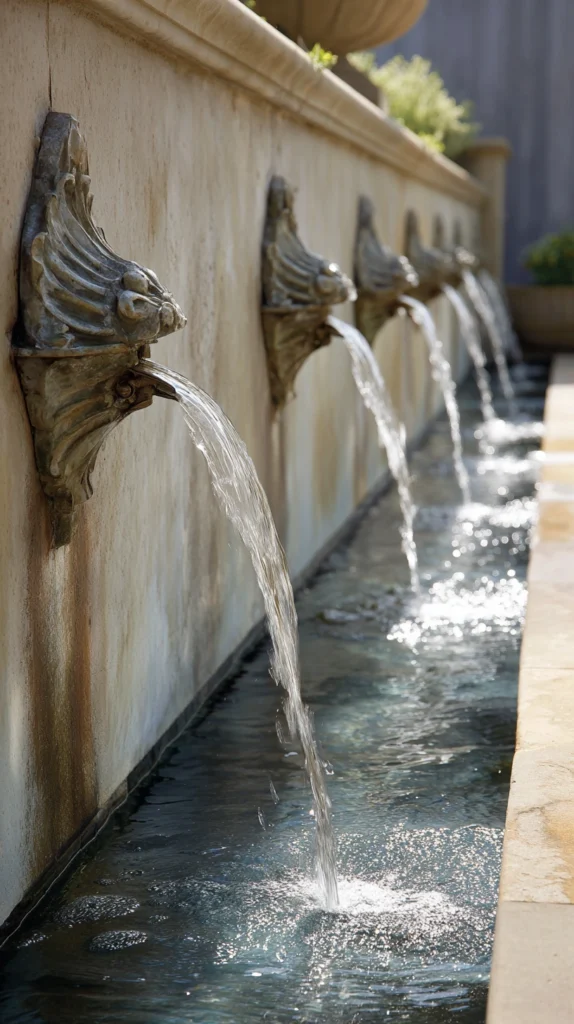
Budget: $200 – $3000
A wall-mounted spout garden — a series of lion’s head, mask, or geometric spout fittings mounted on a rendered or stone wall at different heights, each delivering a controlled arc of water into a trough or a pool below — is the most classically Italian in its references and the most specifically beautiful of all the formal waterfall formats. Multiple spouts at different heights on the same wall produce an installation that is architectural in scale and musical in its combined sound.
A single cast iron or stone wall spout — $30 – $120 from a garden supplier. A set of three at different heights — $90 – $360. A rendered garden wall as the mounting surface — existing at no additional cost if already present. A stone or concrete trough below the spouts — $100 – $400. A recirculating pump for each spout or a single pump with a manifold to feed all spouts simultaneously — $80 – $300.
Styling tip: Space the wall-mounted spouts at intervals that produce a musical rather than a chaotic combined sound when all are running simultaneously. Spouts positioned too close together produce an overlapping sound that reads as a single source. Spouts positioned at intervals of 40 to 60 centimetres apart produce distinct, overlapping arcs and a combined sound of genuine complexity and pleasantness — each individual spout audible within the collective sound of all of them running together.
14. The Modern Fire and Water Feature
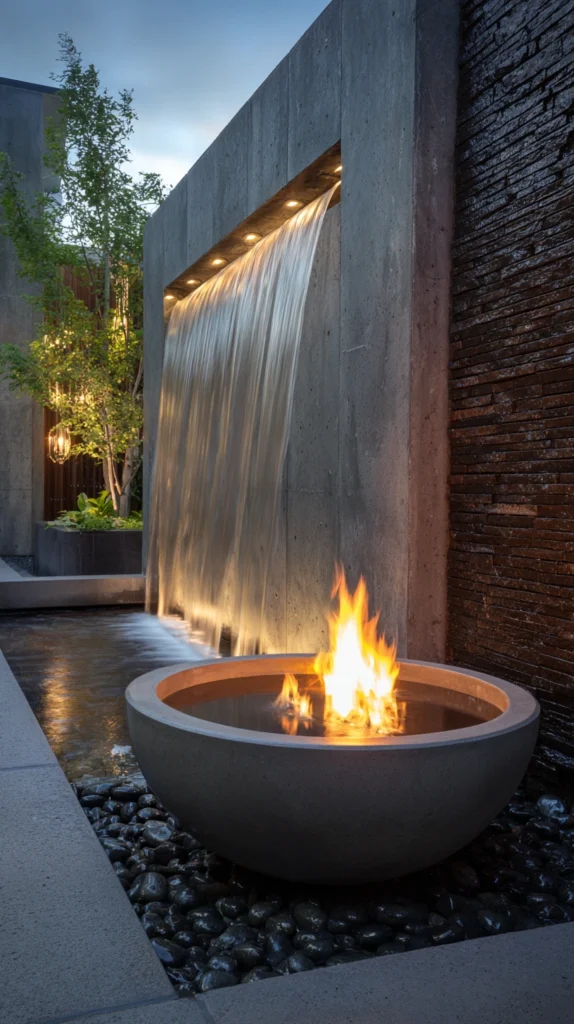
Budget: $1000 – $8000
A fire and water combination — a waterfall element beside or integrated with a fire bowl or a bioethanol fire feature — produces the most dramatically sensory and the most specifically resort-like backyard installation available at a residential scale. The combination of fire and moving water in the same outdoor space creates a quality of atmosphere that neither element produces alone, and the visual of flame beside falling water is one of the most compelling and most specifically beautiful backyard experiences available.
A freestanding bioethanol fire bowl — $200 – $600. A separate waterfall feature beside it — $500 – $2000 depending on the format chosen. An integrated fire and water feature in a fabricated steel or concrete form — $1000 – $5000 professionally made. All three options produce the fire and water combination — the choice between them is a matter of budget, permanence, and the level of integration desired between the two elements.
Styling tip: Position the fire and water feature at the social heart of the outdoor space — at the centre of the seating arrangement or at the focal point of the primary outdoor room — rather than at the garden’s perimeter. A fire and water feature at the perimeter of the garden is a view. The same feature at the centre of the outdoor seating arrangement is an experience — and the quality of an outdoor evening spent around fire and water at close proximity is categorically different from the quality of an evening spent observing fire and water from a distance.
15. The Resort-Style Pool Waterfall Suite
Budget: $5000 – $50000
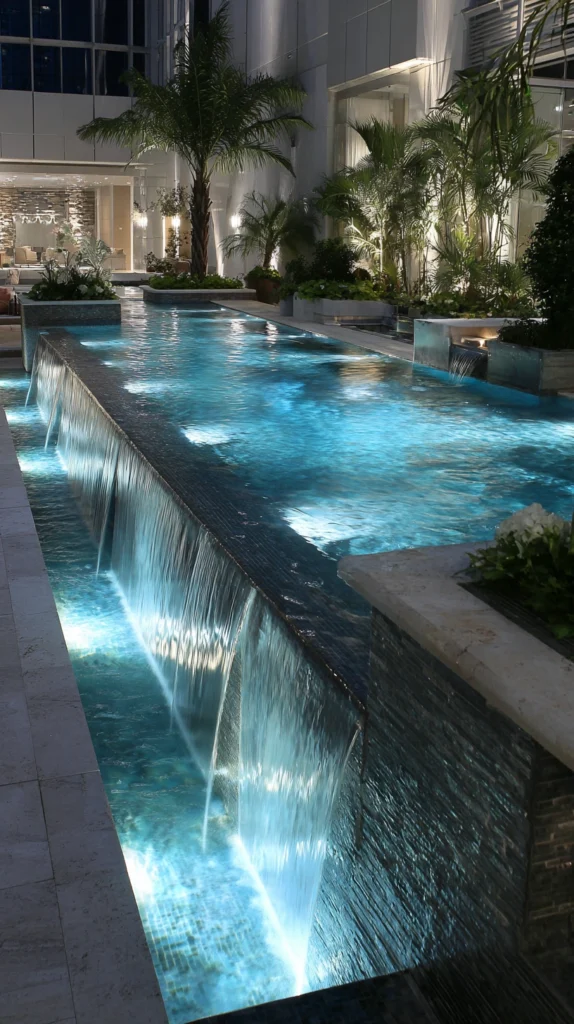
The resort-style pool waterfall suite — a pool with an infinity overflow edge on one side, a boulder grotto waterfall at the opposite end, a blade waterfall feature on one pool wall, underwater lighting throughout, a sun shelf beneath the grotto, and lush tropical planting surrounding the entire water feature complex — is the backyard waterfall at its most completely realised and its most specifically resort-like. It is not a water feature. It is a water environment.
Infinity edge pool construction: $20000 – $60000. Grotto waterfall addition: $5000 – $20000. Blade waterfall feature: $1000 – $5000. Underwater and perimeter lighting: $2000 – $8000. Tropical planting scheme: $2000 – $10000. Total resort-style pool waterfall suite: $30000 – $103000 — the cost of a backyard that has been designed with the same ambition, the same quality of materials, and the same commitment to the quality of the water experience that the best resort pools anywhere in the world are built to deliver.
Styling tip: Engage a landscape architect rather than a pool contractor as the primary designer of a resort-style pool waterfall suite. A pool contractor designs excellent pools. A landscape architect designs the relationship between the pool, the waterfall, the planting, the paving, and the spatial organisation of the entire outdoor space — producing a suite that reads as a designed environment rather than a collection of excellent individual elements that happen to share the same backyard.
Whatever combination of these fifteen ideas finds its way into the backyard, the principle beneath all of them is the same one that makes any water feature genuinely successful: the water should move in a way that is beautiful to watch, produce a sound that is beautiful to hear, and be integrated into the garden’s spatial organisation with enough thought that it reads as the garden’s natural focal point rather than an installation that arrived and was placed.
Water in a garden does not merely decorate. It animates. It changes the quality of every hour spent near it, the quality of the sound environment around it, and the quality of the light that falls across it and is scattered by it into the surrounding surfaces and plants.
Give it the space it deserves. Give it the stone, the design, and the setting that a material this beautiful and this powerful has always earned.
Then sit beside it and listen to what an afternoon sounds like when the most beautiful noise in the world is the only one that matters.