15 Tropical Patio Design Ideas for a Vacation Vibe
There is a specific quality of ease that arrives with a genuinely tropical outdoor space — the particular combination of lush greenery at every level, warm materials underfoot, the sound of water nearby, the filtered quality of light coming through a dense overhead canopy, and the sense that the rest of the world has been gently but completely excluded by the vegetation, the warmth, and the generous abundance of a space designed around pleasure rather than practicality.
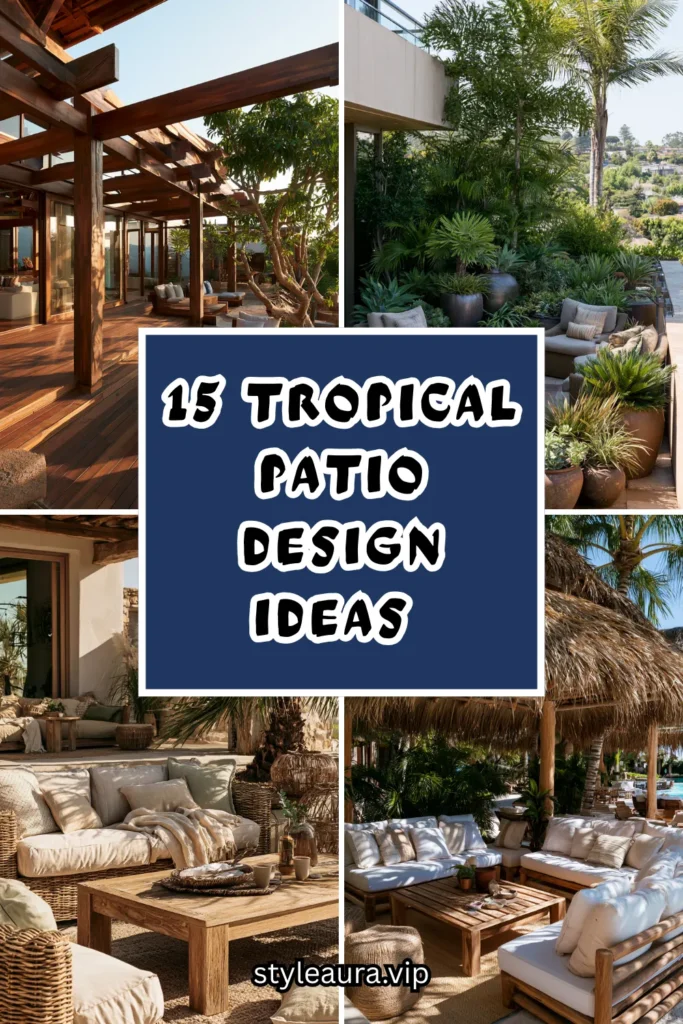
It is the feeling that resort designers spend considerable budgets and considerable expertise attempting to manufacture, and that residential patios — with the right plant choices, the right material decisions, and the right structural interventions — can achieve with surprising completeness at a fraction of the cost and with the additional, irreplaceable quality of being immediately outside the back door rather than at the end of a flight.
The tropical patio works because it engages all the senses simultaneously — the visual richness of dense, layered planting, the acoustic pleasure of moving water and rustling large-leafed plants, the tactile warmth of natural materials underfoot and overhead, the fragrance of tropical flowers on warm evening air. These fifteen ideas demonstrate exactly how to build that complete sensory experience into a residential patio at a range of scales, budgets, and climates.
1. Create a Layered Tropical Planting Scheme
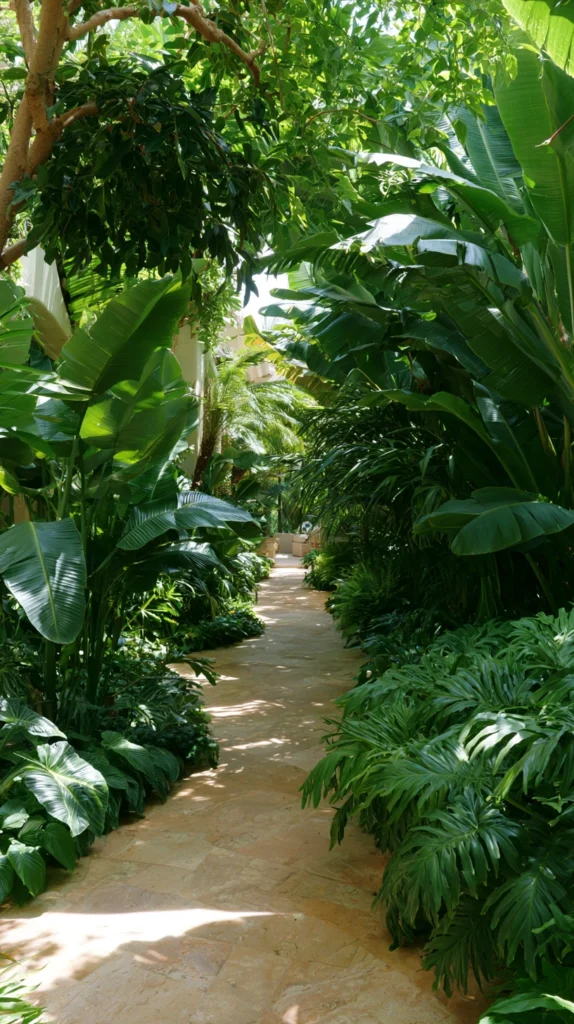
The single most important decision in a tropical patio design is the planting — specifically, the creation of a genuinely layered botanical composition that fills every vertical level from ground to overhead canopy with living green material of varying scale, texture, and character. Plant large-leafed architectural specimens at the back — banana plants, tree ferns, gingers, or cannas — to create the canopy layer.
Fill the middle with bold tropical perennials — heliconias, bird of paradise, bromeliads, and philodendrons — and carpet the ground level with low tropical groundcovers that eliminate visible soil entirely. The layered planting creates the feeling of genuine tropical immersion rather than a garden with some tropical plants in it, which is the distinction that separates a genuinely vacation-feeling patio from one that merely gestures toward the aesthetic.
2. Install a Natural Stone or Terracotta Tile Floor
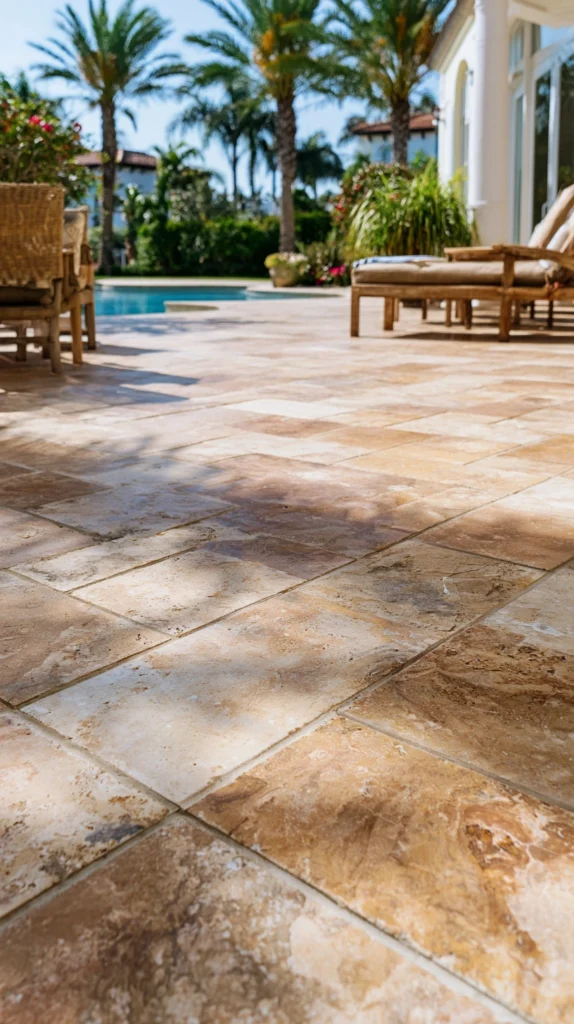
The floor surface of a tropical patio should feel warm, natural, and slightly informal — the antithesis of the precision-laid porcelain tile that suits a contemporary minimalist outdoor space but that reads as too controlled and too cold for the relaxed, organic character that the tropical aesthetic requires.
Natural stone in a warm honey or buff tone — travertine, sandstone, or local limestone — laid in a slightly irregular pattern with natural variation in surface colour and texture creates the organic floor quality that complements dense tropical planting beautifully. Large Saltillo terracotta tiles work equally well, their warm, earthy tone connecting the floor to the broader tropical colour palette of green, terracotta, and warm wood that defines the aesthetic most completely.
3. Build a Thatched or Palm-Frond Shade Structure
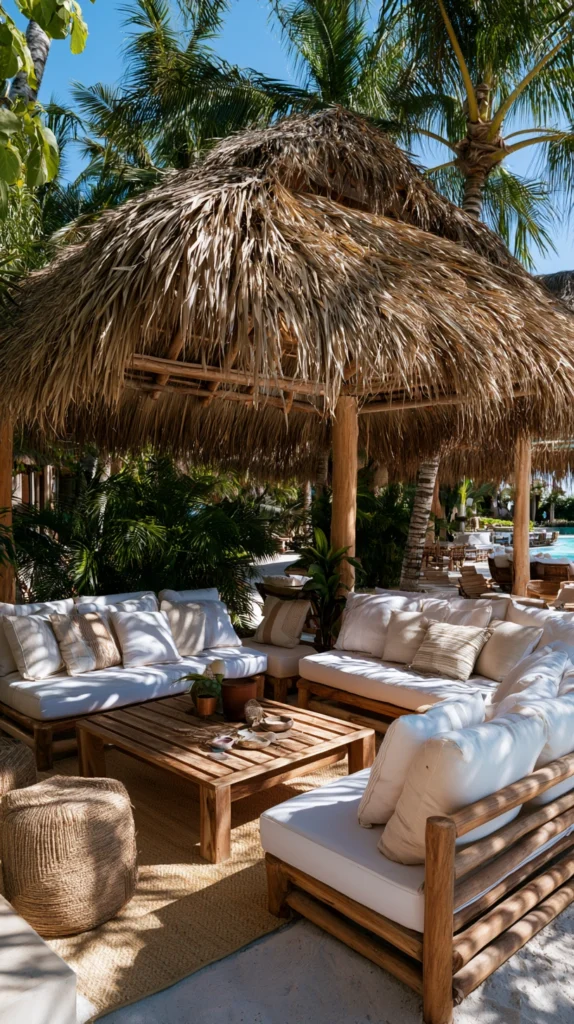
A thatched roof structure — whether a traditional palapa built from genuine palm fronds over a timber post frame, or a contemporary interpretation using a commercial thatch product over a steel structure — creates the overhead element most immediately and most powerfully associated with the tropical resort experience, transforming the area beneath it from a patio into something that reads unmistakably as a destination.
The thatch provides generous, soft shade that filters light rather than blocking it, creating the dappled, warm quality of light beneath a natural canopy that canvas or polycarbonate roofing panels cannot replicate. The underside of a well-made thatched structure is also one of the most beautiful interior ceiling surfaces available — the organic texture, the warm colour variation, and the quality of craftsmanship visible in the weaving and layering of the thatch create an overhead surface of genuine character.
4. Incorporate a Water Feature With Tropical Planting
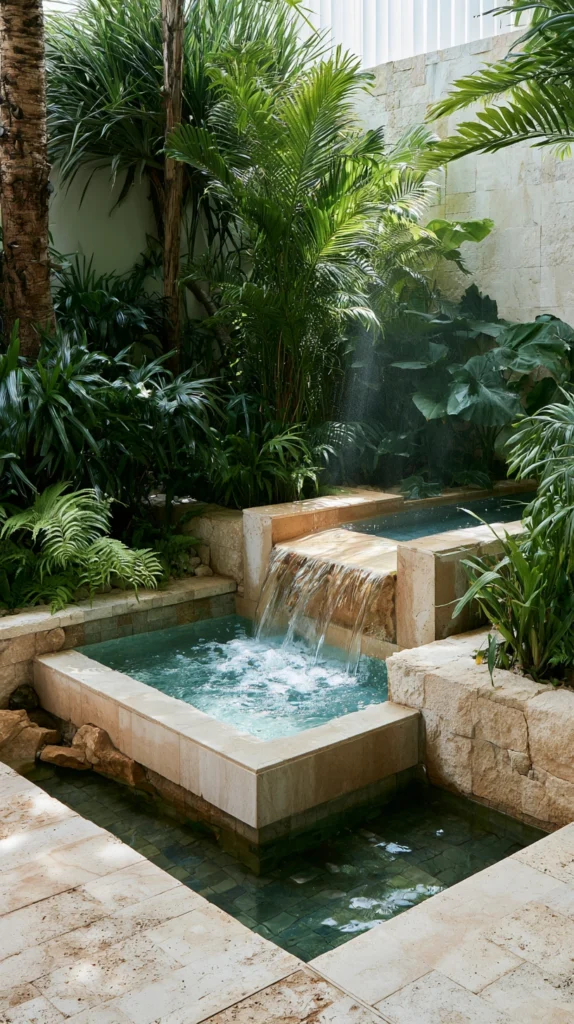
Moving water is the acoustic signature of the tropical environment — the sound that, more than any other single sensory element, communicates to the nervous system that it is in a place of warmth, abundance, and ease — and a water feature positioned within the tropical patio planting scheme delivers this quality continuously and effortlessly once installed.
A small recirculating stream running through the planted border, a simple cascade falling from a raised planting bed into a basin below, or a larger pond planted with tropical water plants including lotus, water hyacinth, and papyrus: each of these water features serves the acoustic function while simultaneously providing a visual element of extraordinary beauty and a growing environment for the aquatic tropical plants that complete the botanical composition. Position the water feature within earshot of the primary seating area rather than at the garden’s far end where its acoustic contribution is lost.
5. Choose Rattan and Teak Furniture for Authentic Material Character
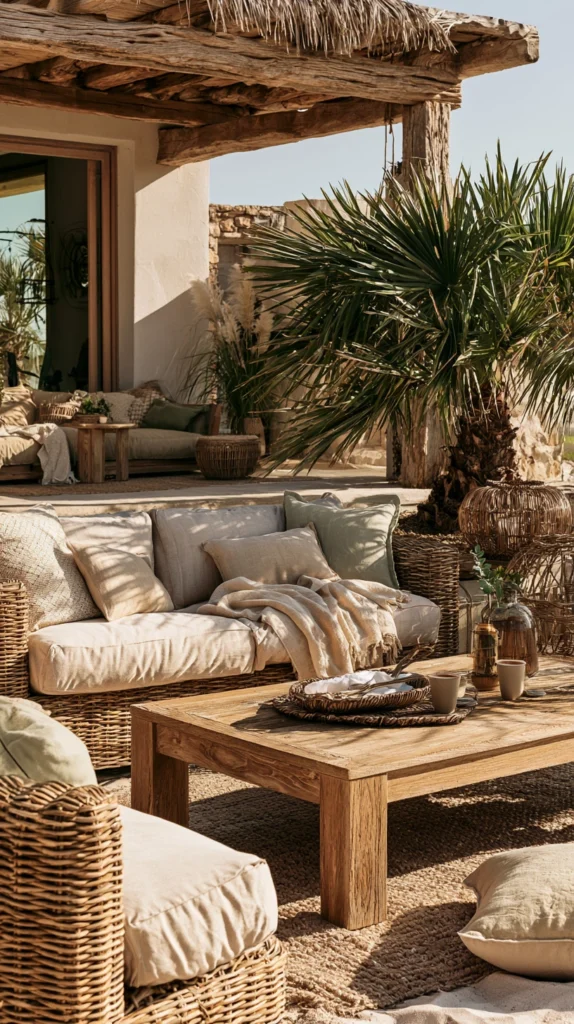
The furniture of a tropical patio should be made from materials that belong to the tropical design tradition naturally — rattan, teak, bamboo, and the other natural materials that have furnished tropical outdoor spaces for generations and that develop their most beautiful character through exposure to warmth, humidity, and the particular conditions of a tropical outdoor environment.
Deep-seated rattan sofas with thick cushions in outdoor canvas or water-resistant linen in natural, white, or warm terracotta tones, a teak dining table weathering naturally to its characteristic silver-grey surface, a pair of rattan loungers beside the pool or beside the planting border: this furniture reads as genuinely tropical in a way that powder-coated aluminium outdoor furniture, however good its quality, cannot quite manage. Invest in genuine rattan and genuine teak rather than synthetic alternatives — both materials improve with age in a way that manufactured substitutes do not.
6. Add a Plunge Pool or Dipping Pool
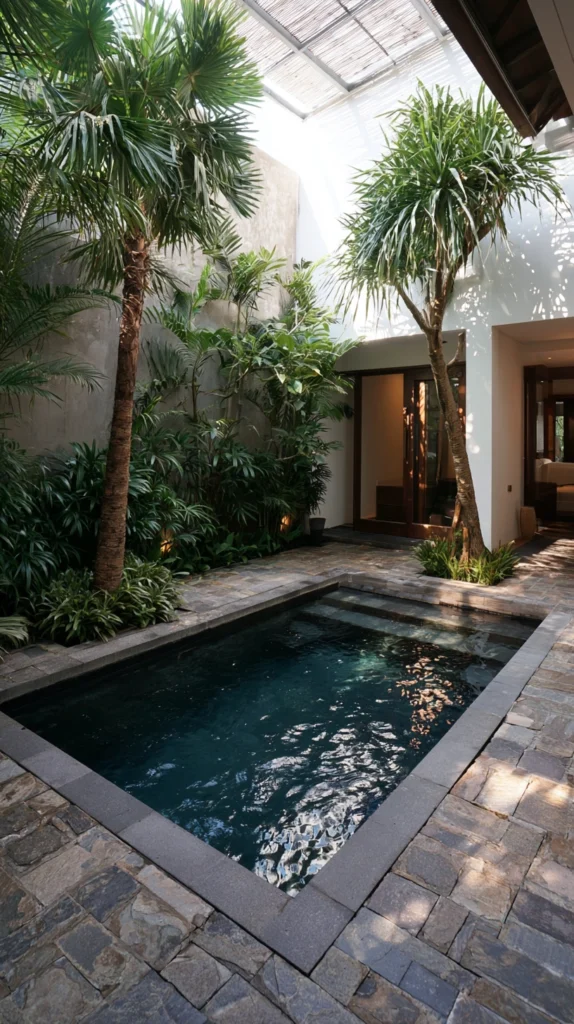
A small plunge pool — a compact water body too small for lap swimming but perfectly sized for cooling immersion on a warm afternoon, positioned within the tropical planting scheme so it is surrounded on at least three sides by lush vegetation — is the tropical patio addition that most completely transforms the outdoor space from a beautiful garden into a genuinely resort-quality retreat.
The plunge pool does not require the footprint or the engineering investment of a full swimming pool — a fibreglass shell of three metres by two metres, finished in a deep grey or charcoal plaster and surrounded by the tropical planting scheme on three sides with a timber or stone deck on the fourth for entry, creates a bathing experience of extraordinary quality and privacy.
Surround with large-leafed tropical plants that overhang the pool edge slightly, install underwater lighting for evening use, and the plunge pool becomes the most used and most photographed feature of the entire outdoor space.
7. Use Bamboo as a Structural and Screening Material
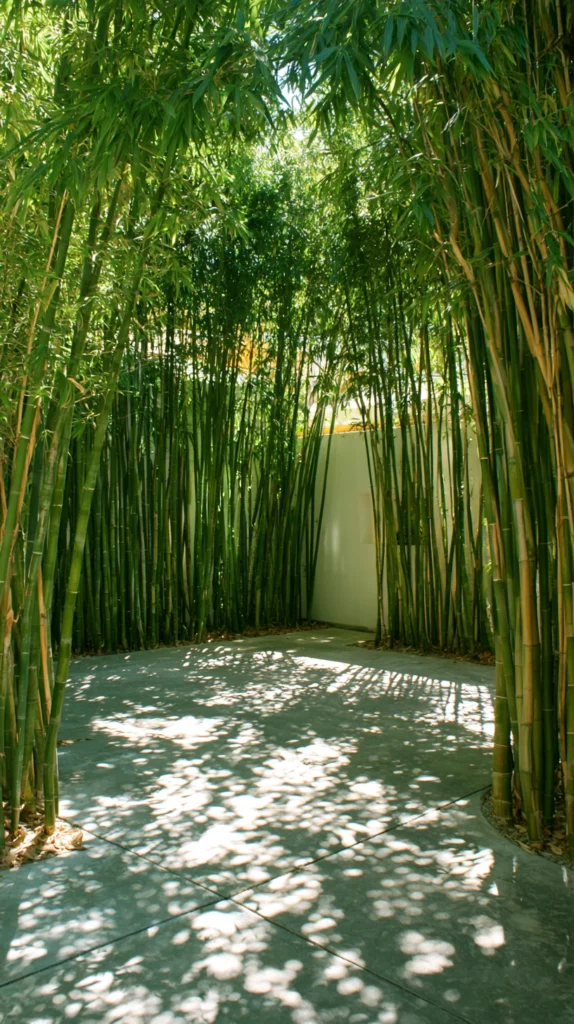
Bamboo — its rapid growth, its extraordinary height potential, its dense evergreen foliage, and its deeply tropical visual character — is the most effective and most authentic screening material available for a tropical patio design, creating complete visual enclosure from neighbouring properties within two to three growing seasons while simultaneously being one of the most visually beautiful plants available in the tropical design palette.
Use running bamboo varieties in contained root barriers to prevent invasive spread, plant at one metre centres for rapid screening density, and allow the canes to develop to their full height of six to eight metres for the genuinely immersive, enclosed-canopy quality that makes a tropical patio feel like a private garden rather than an exposed outdoor space.
The sound of wind through bamboo canes — that gentle, slightly percussive rustling that is one of the most universally calming sounds in the natural world — is an additional benefit that no manufactured screening material can replicate.
8. Install Outdoor Shower Surrounded by Tropical Planting
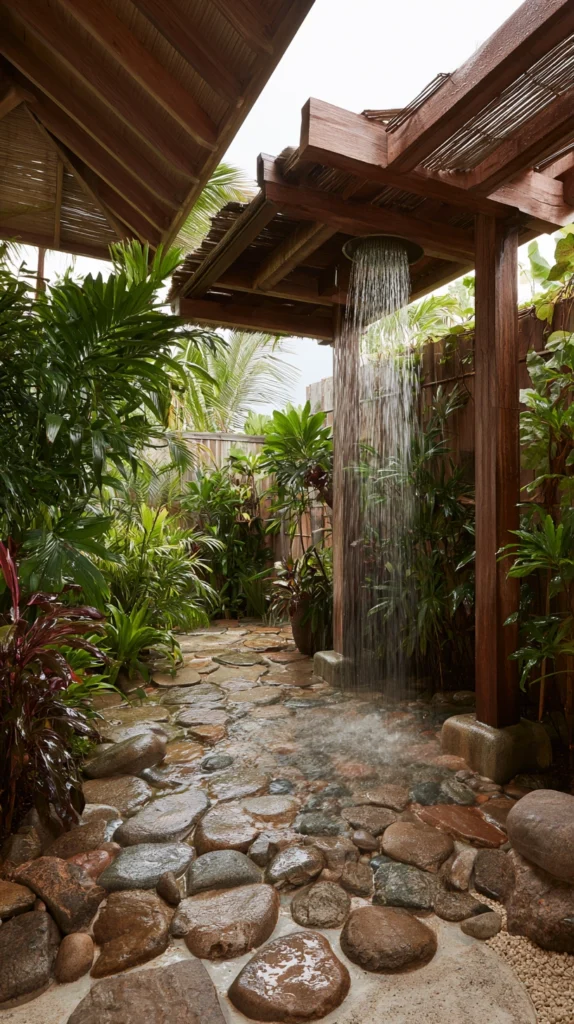
An outdoor shower positioned within the tropical planting scheme — its shower head emerging from or mounted on a structure of bamboo, timber, or natural stone, its drainage disappearing into a gravel bed planted with moisture-tolerant tropical groundcovers, its three sides enclosed by the surrounding vegetation — is the tropical patio feature that most completely delivers the resort shower experience at home.
The sensation of showering outdoors in warm air, surrounded by lush tropical planting, with only open sky above and the sound of water and wind through large leaves around: this is an experience of such genuine sensory pleasure that it makes the standard indoor bathroom shower feel impoverished by comparison, and it costs a fraction of almost any other resort-quality outdoor feature. Install a quality rainfall head at generous height, provide a simple timber or stone platform underfoot, and surround with the fastest-growing tropical screening plants for privacy within the shortest possible time.
9. Hang Tropical Outdoor Textiles and Hammocks
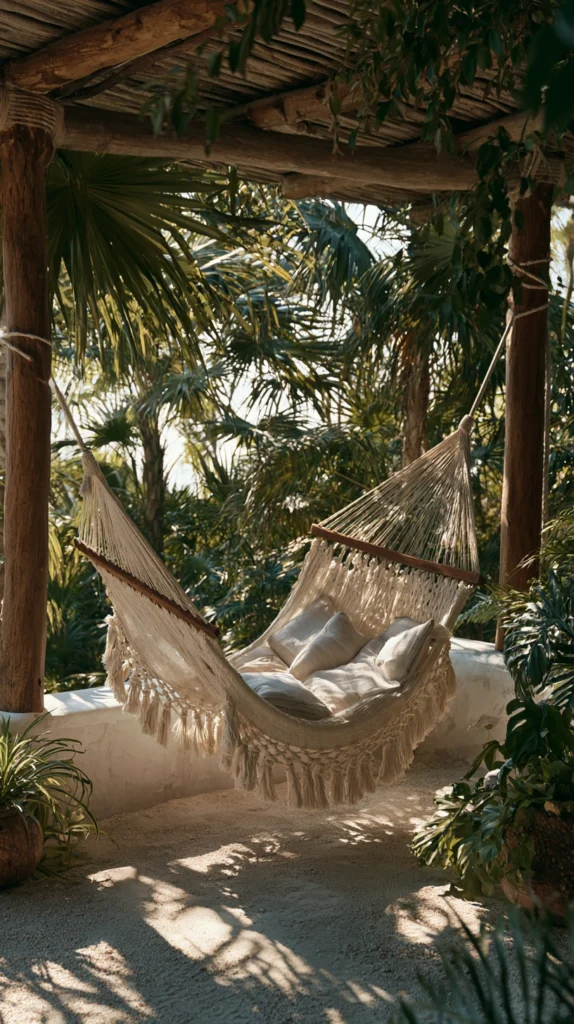
The textiles of a tropical patio — the cushion fabrics, the hammock materials, the outdoor throws draped over rattan furniture arms, the curtains hanging from the thatch structure’s perimeter posts — should be chosen for their connection to the tropical colour palette and their evocation of the particular visual warmth of resort and island textile traditions.
Deep botanical green, warm terracotta, rich saffron yellow, and the deep turquoise of tropical water: these are the colours that work most completely within the tropical patio’s broader design language, used on cushion covers, hammock fabric, and the outdoor textiles that soften the furniture and the structure simultaneously.
A rope hammock strung between two timber posts within the planted border — positioned in dappled shade, hung at the correct height for comfortable entry and exit — is the tropical patio’s single most used and most genuinely pleasurable feature, the piece of furniture that most immediately and most completely communicates the quality of unhurried vacation living that the entire design is working to create.
10. Incorporate Tropical Potted Plants at Every Scale
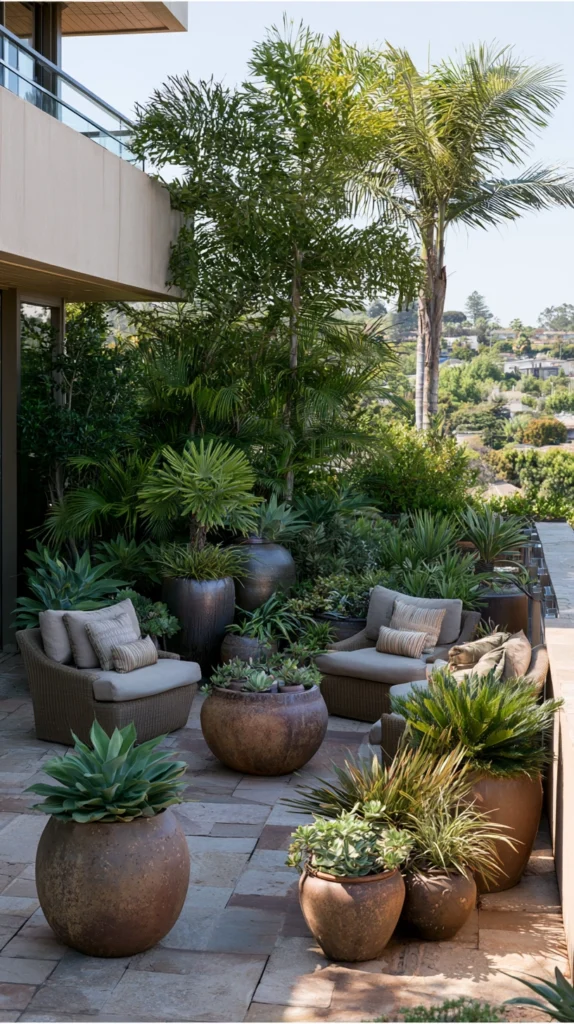
A tropical patio design that confines its planting to the ground-level border misses half the visual richness available to the scheme — the terracotta pot, the large ceramic planter, and the hanging basket bring tropical planting into the patio’s furniture zone, its overhead structure, and its floor surface in a way that integrates the botanical and the architectural elements of the design far more completely than border planting alone achieves.
Large terracotta pots of bird of paradise, traveller’s palm, or large-leafed philodendron positioned at the corners of the seating area frame the furniture zone with living botanical material.
Smaller pots of tropical herbs — lemongrass, Thai basil, kaffir lime — on the dining table connect the botanical theme to the culinary experience of the outdoor space. Hanging baskets of trailing tropical plants — string of pearls, tradescantia, pothos — from the overhead structure create a cascading canopy of green that drops the ceiling of the outdoor room to a more intimate, more enclosed level.
11. Add Fire Features for Evening Atmosphere
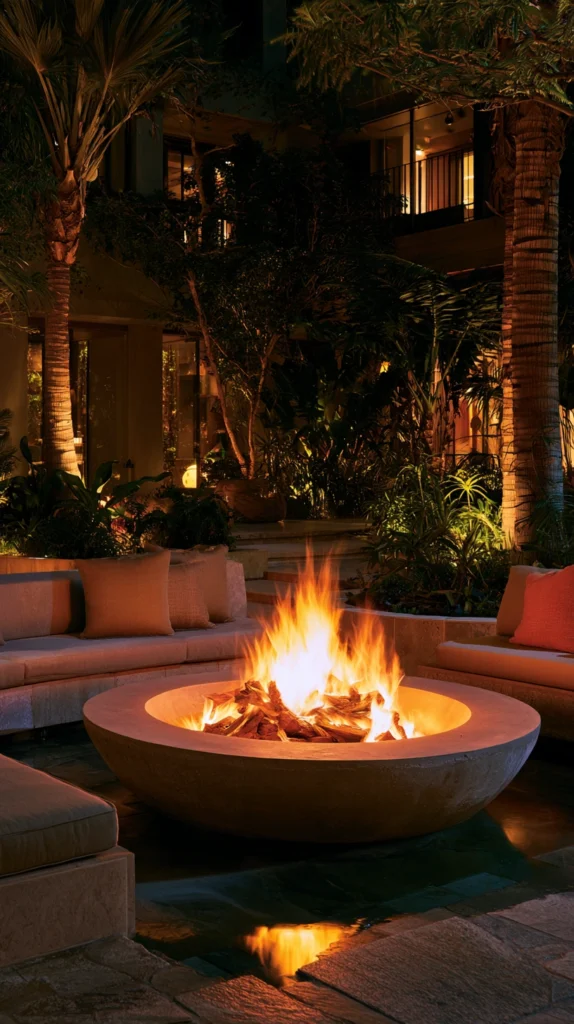
The transition from tropical afternoon to tropical evening is the moment when fire becomes essential — when the warm glow of a flame or a cluster of flames transforms the botanical richness of the tropical patio into something genuinely magical, the orange and amber of firelight playing against the deep greens of the surrounding planting in a colour contrast of extraordinary beauty.
Tiki-style torch flames positioned at intervals around the patio perimeter connect directly to the tropical aesthetic tradition while providing warm, flickering light at exactly the height that makes outdoor faces look their most beautiful. A central fire bowl or raised fire table provides the gathering point that every great outdoor space needs for its evening phase — the element around which seating naturally organises itself, conversation deepens, and the tropical evening becomes the experience it promises to be.
12. Design a Tropical Outdoor Bar and Drinks Station
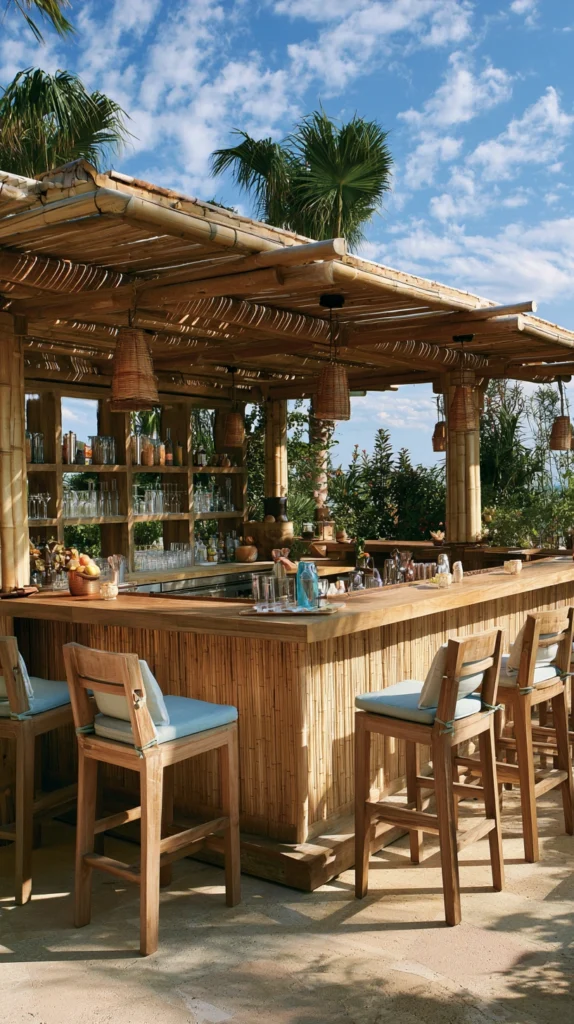
A tropical outdoor bar — bamboo-clad or teak-surfaced, with a grass-roof canopy above, a collection of tropical glassware and a small refrigerator for cold drinks below — creates the functional and atmospheric centrepiece of the tropical patio’s social life, the point from which every long tropical afternoon and every warm tropical evening is provisioned.
The tropical bar aesthetic — the slightly informal, abundantly stocked, generously proportioned drinks station that communicates genuine hospitality and genuine commitment to outdoor leisure — is achievable within a relatively modest budget using bamboo cladding, a simple timber counter, and the careful styling of the surface with tropical-themed glassware, fresh fruit, and the particular combination of casual abundance and genuine quality that defines resort hospitality at its best.
Add a chalkboard menu on the bamboo wall beside the counter and the bar station completes its transformation from outdoor drinks area to the tropical resort feature it is genuinely designed to be.
13. Install Warm Ambient Lighting Throughout the Planting
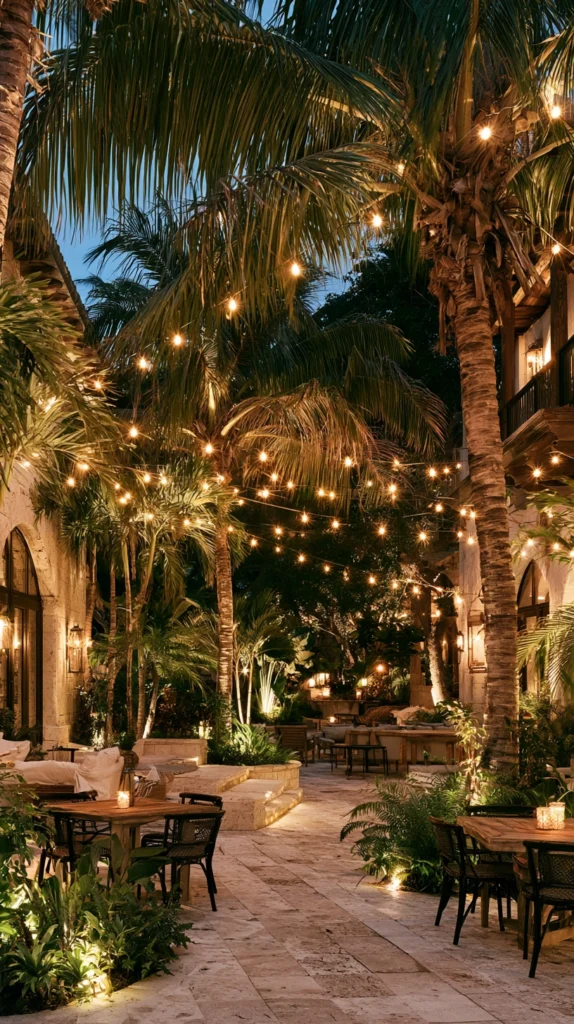
The tropical patio after dark depends entirely on its lighting for the quality of atmosphere it creates — and the lighting scheme that serves the tropical aesthetic most beautifully is warm, low, multidirectional, and layered through the planting rather than positioned above it. Solar-powered pathway lights at ground level create warm pools of light on the patio surface.
Uplighters positioned at the base of the large structural plants — the banana, the tree fern, the bamboo — cast warm light upward through the foliage, creating the extraordinary effect of internally illuminated tropical vegetation that makes the night-time tropical garden so distinctive and so beautiful.
String lights woven through the overhead canopy or hung from the thatch structure above add the warm overhead ambient layer that completes the lighting composition and creates the resort-evening atmosphere that makes a tropical patio genuinely irresistible after sunset.
14. Use Natural Timber for Every Built Element
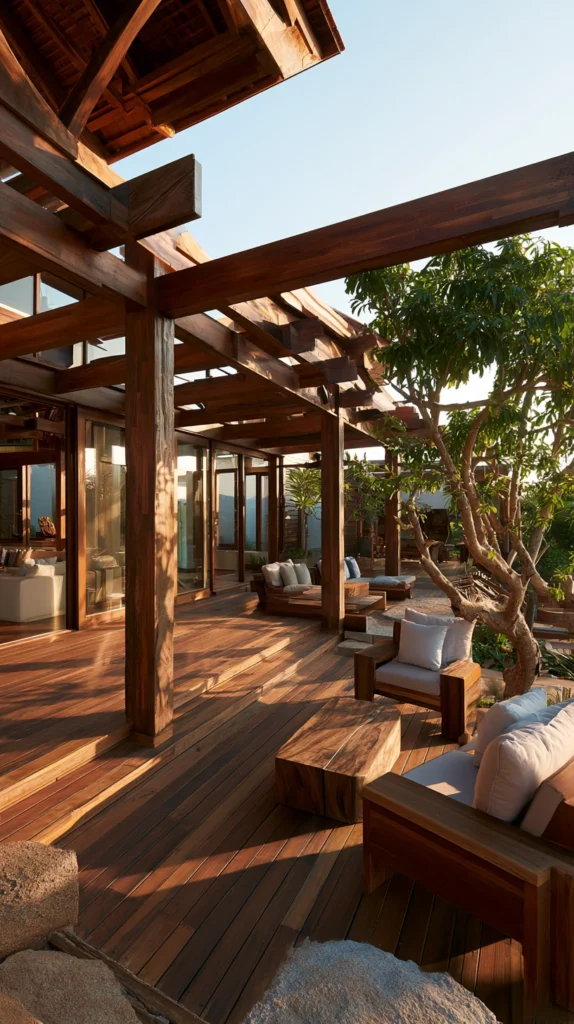
Every built element of the tropical patio — the pergola posts, the decking surface, the built-in bench seating, the bar counter, the planters — should be constructed in natural timber rather than manufactured alternatives, because the warmth, the texture, and the organic quality of natural wood connects to the tropical aesthetic’s fundamental character in a way that no composite, aluminium, or synthetic material can replicate regardless of its quality or its durability credentials.
Teak is the classic tropical timber choice — its natural oil content provides exceptional weather resistance, its warm honey tone developing to a beautiful silver-grey with outdoor exposure, and its association with tropical boat-building, colonial furniture, and resort design giving it an inherent authenticity in this aesthetic context that no other timber species quite matches. Where teak is outside the budget, hardwood alternatives including iroko, balau, and ipe provide comparable durability and comparable aesthetic quality at lower cost.
15. Create a Dedicated Relaxation Zone Separate From the Dining Area
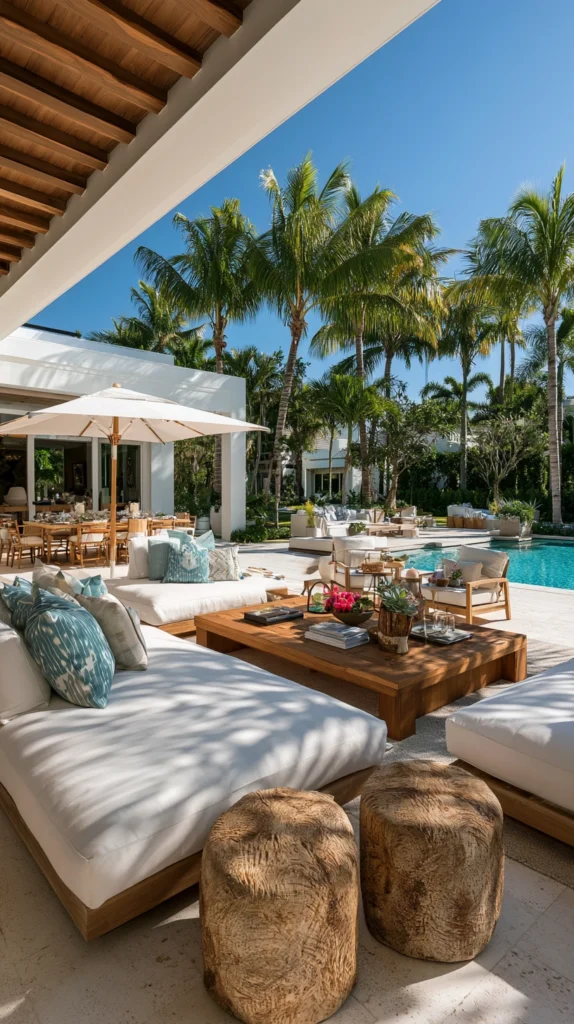
The tropical patio that functions most completely as a vacation-feeling space is the one that explicitly separates the different activities of outdoor life into dedicated zones rather than collapsing them all into a single multipurpose space that serves every function adequately but none of them completely.
A dining zone — table, chairs, outdoor kitchen — positioned in the patio’s most accessible and most practically oriented area. A relaxation zone — deep sofas, rattan loungers, the hammock, the fire bowl — positioned within the most densely planted area where the botanical immersion and the acoustic quality of water and wind through vegetation is most complete.
The separation of these zones gives the tropical patio its resort quality most directly and most convincingly — because the resort experience is fundamentally about having different spaces for different states of being, and the residential patio that provides this quality of differentiation delivers the vacation feeling most completely.
Final Thoughts: Building a Tropical Patio That Delivers Every Day
The tropical patio that genuinely feels like a vacation every time the back door is opened is built on the density and the generosity of its planting — everything else in the design, from the thatched structure to the plunge pool to the rattan furniture, amplifies and extends the botanical immersion that the planting creates but cannot substitute for it.
Invest in the planting first, plant generously and at scale rather than waiting for small plants to establish, and build the structural and furniture elements in the materials that belong to the tropical design tradition most honestly and most completely.
The tropical patio that is genuinely, lushly, abundantly planted is the one that delivers the vacation feeling most completely — because it is the one that most completely excludes the ordinary world beyond its planted boundaries and replaces it with something genuinely, sensorially extraordinary.