15 Beautiful Blue Nursery Ideas for Baby Boys That Go Beyond Basic Baby Blue
There is a version of the blue nursery that almost designs itself — pale sky blue walls, white cot, alphabet prints, a rug with clouds on it. It is perfectly pleasant and entirely forgettable, and the baby for whom it was created will have outgrown it in temperament, if not in size, within about eighteen months. The nursery that lasts — that feels genuinely considered, that parents enjoy spending time in as much as the child — is the one that was designed with the same seriousness given to any other room in the house, using blue as a serious colour rather than a default one.
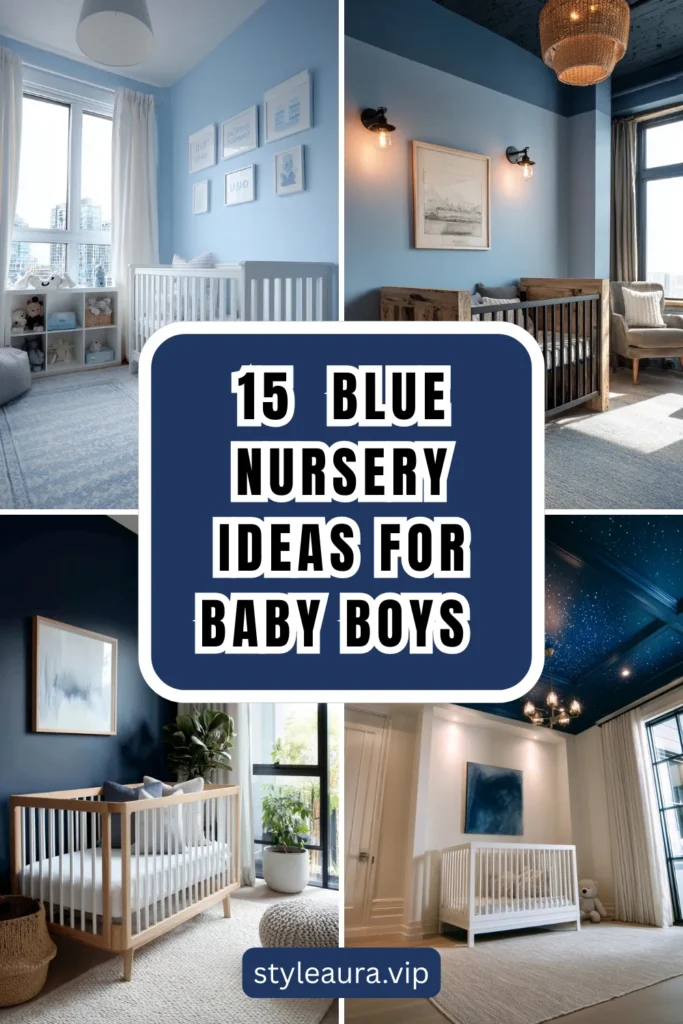
Blue has an extraordinary range. It encompasses the near-white of a winter sky and the near-black of deep water; the warm, dusty blue of faded denim and the sharp, clear blue of a summer morning; the grey-inflected tones of slate and the botanical blue-green of eucalyptus. A nursery built around any one of these blues, chosen and applied with intention, reads as a designed room rather than a decorated one. A designed room is a room that serves the child who grows in it rather than simply providing the expected visual signals of babyhood.
Each idea below is a specific approach to one element of the blue nursery for a baby boy. Each includes what you will need, what it will cost, and a practical tip to make it work as well as it deserves.
1. The Navy and Natural Timber Nursery
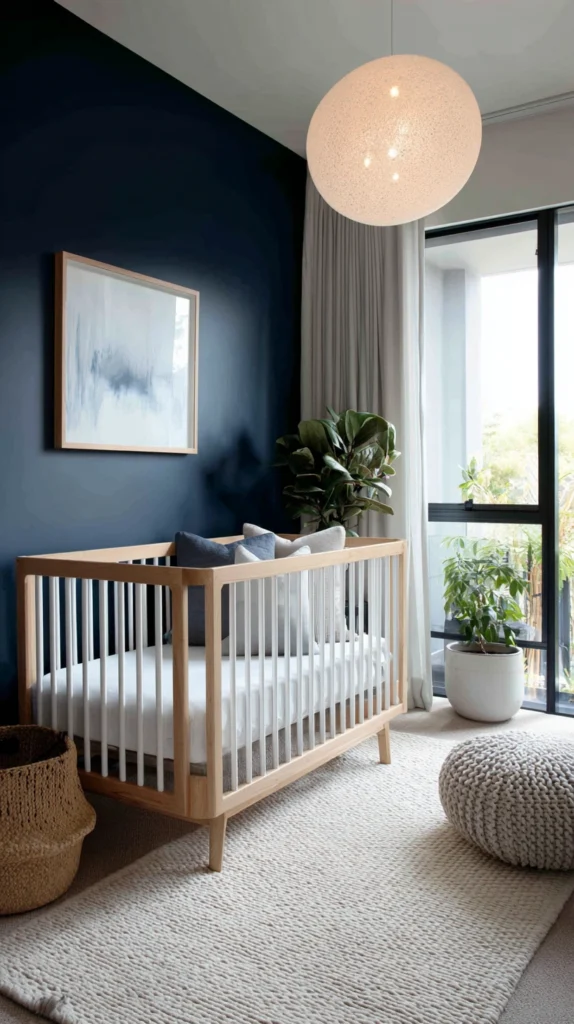
Budget: $400 – $2,000
A nursery built around deep navy — not the pale blue of standard baby rooms but the genuine near-dark blue of a night sky, a sailor’s uniform, a vintage atlas cover — combined with natural timber in warm honey and oak tones creates a room of genuine sophistication that will suit a toddler as well as a newborn and a school-age child as well as a toddler. Navy is the most adult and most versatile of all the blues, and it does not require the room to be dark — a single navy wall behind the cot anchors the space while the remaining walls in white or warm cream keep it bright and open.
Navy paint for the feature wall behind the cot costs $30–$80 per 2.5-litre tin — one tin covers the wall with two coats. Natural timber furniture — cot, chest of drawers, wardrobe — costs $400–$1,500 for a coordinated nursery set. The warmth of the timber against the depth of the navy produces the contrast that makes both materials read better than either does in isolation.
Style tip: Paint the ceiling white rather than navy even when applying the navy to all four walls. A navy ceiling in a nursery creates an enclosed, cavern-like quality that suits an adult bedroom and is unsuitable for a room that needs to feel safe and open for a young child. The white ceiling maintains the brightness of the room at its highest point while the walls provide the navy depth at the occupied level.
2. The Coastal Blue and White Stripe
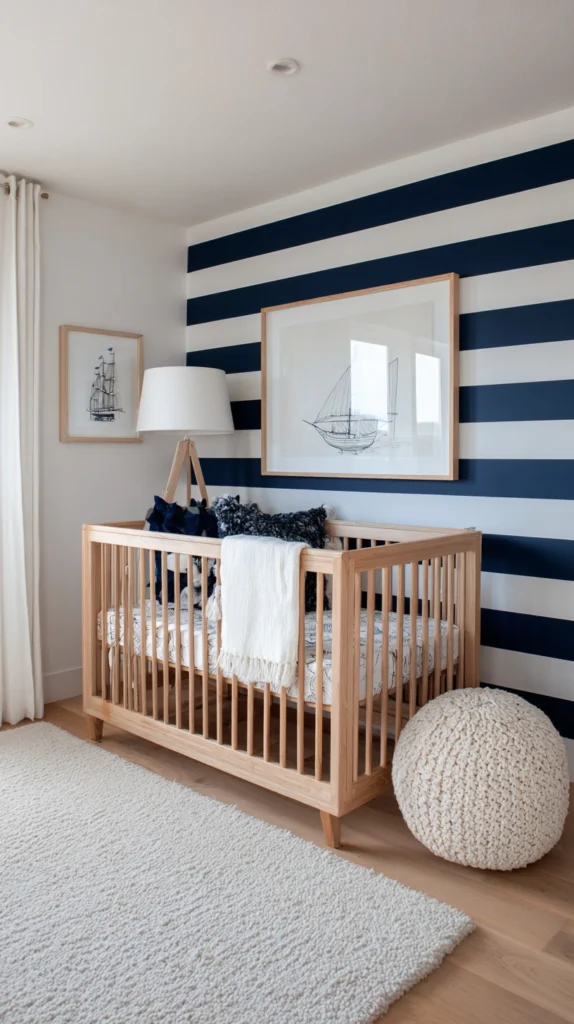
Budget: $200 – $800
A nursery in the classic coastal palette of navy or French blue and white — with the stripe pattern expressed through wall treatment, textiles, or a combination of both — creates one of the most timeless and most consistently pleasing blue nursery aesthetics available. The horizontal stripe, borrowed from maritime tradition, communicates adventure, the outdoors, and the wider world beyond the nursery door without being nursery-specific in a way that the child will outgrow quickly.
A striped wallpaper in navy and white for a feature wall costs $40–$120 per roll — one to two rolls for a cot wall. A painted stripe achieved with painter’s tape and a white and blue paint costs $20–$60 in paint for a full room treatment. Striped bedding in navy and white runs $40–$120 for a nursery set. Keep the stripes horizontal rather than vertical — horizontal stripes read as coastal and relaxed; vertical stripes read as formal and pattern-heavy in a small room.
Style tip: Use one width of stripe throughout the room rather than mixing wide and narrow stripes at different scales. A room where the wall stripe and the bedding stripe are at the same scale reads as a considered palette; a room where the wall has wide stripes and the bedding has narrow stripes and the rug has its own stripe width reads as a collection of independently chosen stripe patterns that have not been coordinated.
3. The Dusty Blue Boho Nursery
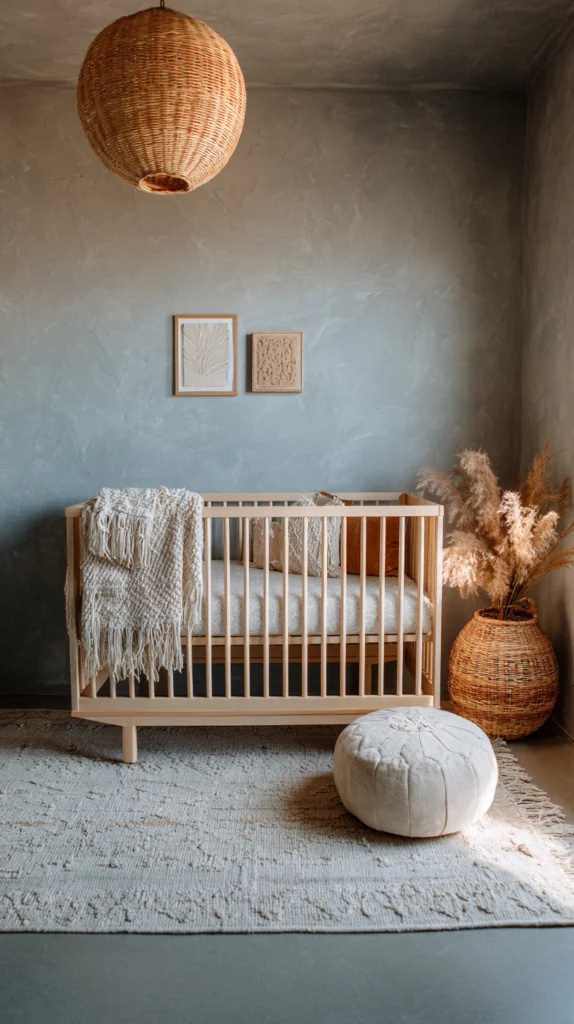
Budget: $300 – $1,200
A nursery in dusty, grey-inflected blue — the tone that sits between steel blue and slate, that reads as faded and worn rather than fresh and new — combined with natural rattan furniture, macramé wall hangings, dried botanical displays, and woven textiles creates the most contemporary and most warm-feeling of all the blue nursery approaches. The boho aesthetic suits a nursery specifically because its combination of natural materials and relaxed styling creates a room that feels genuinely comfortable rather than designed for a catalogue photograph.
Dusty blue paint for the walls costs $30–$80 per tin. A rattan Moses basket or rattan cot runs $80–$300. A macramé wall hanging costs $40–$120. Dried pampas grass in a ceramic vase runs $15–$40. The dusty blue boho nursery gathers its character from the accumulated texture of the materials rather than from a single design statement, and it improves as more woven, natural, and botanical elements are added.
Style tip: Choose furniture in natural, undyed rattan and timber rather than painted white. The boho nursery’s warmth comes from the contrast between the cool dusty blue and the warm natural material tones — pale timber, honey rattan, cream cotton — and replacing that warmth with painted white furniture shifts the room from boho toward a more conventional blue and white scheme that loses the specific quality of the dusty blue aesthetic.
4. The Midnight Blue Celestial Nursery
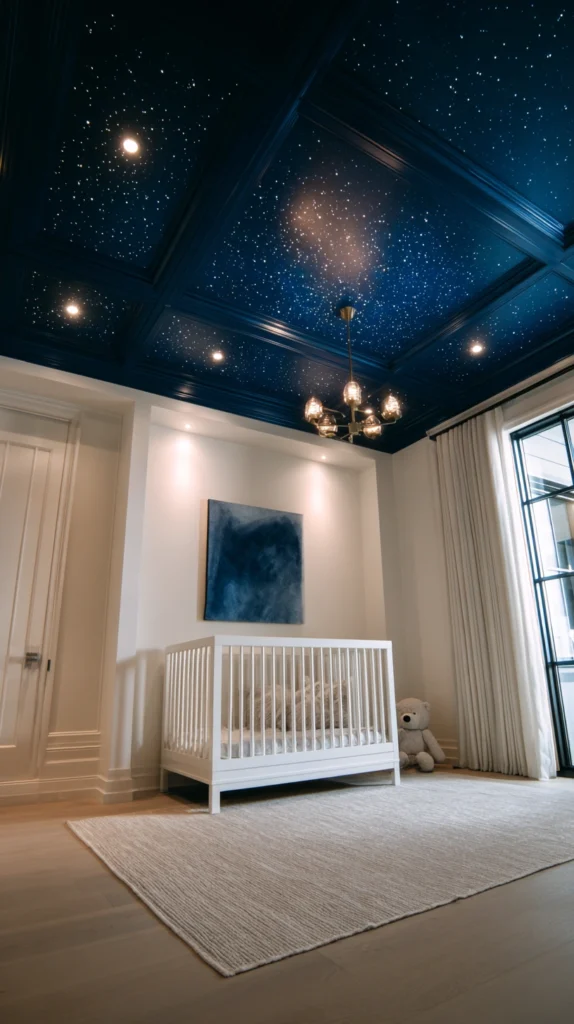
Budget: $300 – $1,500
A nursery ceiling painted in midnight blue or deep navy and decorated with gold or silver star and moon decals — or with hand-painted constellations — creates the most immersive and most specifically celestial nursery environment. The midnight blue ceiling above a white or pale grey room gives the sleeping child a sky overhead rather than a plain surface, and the celestial theme grows with the child from the magical sky of early childhood to the genuine astronomical interest of later years.
Midnight blue ceiling paint costs $30–$80 per tin. Gold metallic star decals cost $15–$40 for a full celestial set. Hand-painted constellations using a gold paint pen ($5–$10) and a free star map printout create a personalised astronomical ceiling at minimal cost. Moon phase wall prints to complement the ceiling run $20–$60 framed.
Style tip: Apply the midnight blue to the ceiling only rather than extending it to the walls unless the room is large enough to absorb a very dark colour on both planes. A dark ceiling above light walls creates a specific quality of sitting under a night sky in daylight surroundings; dark walls and dark ceiling together create an enclosure that suits an adult’s desire for drama more than a child’s need for a safe, open environment.
5. The Pale Blue Scandi Nursery
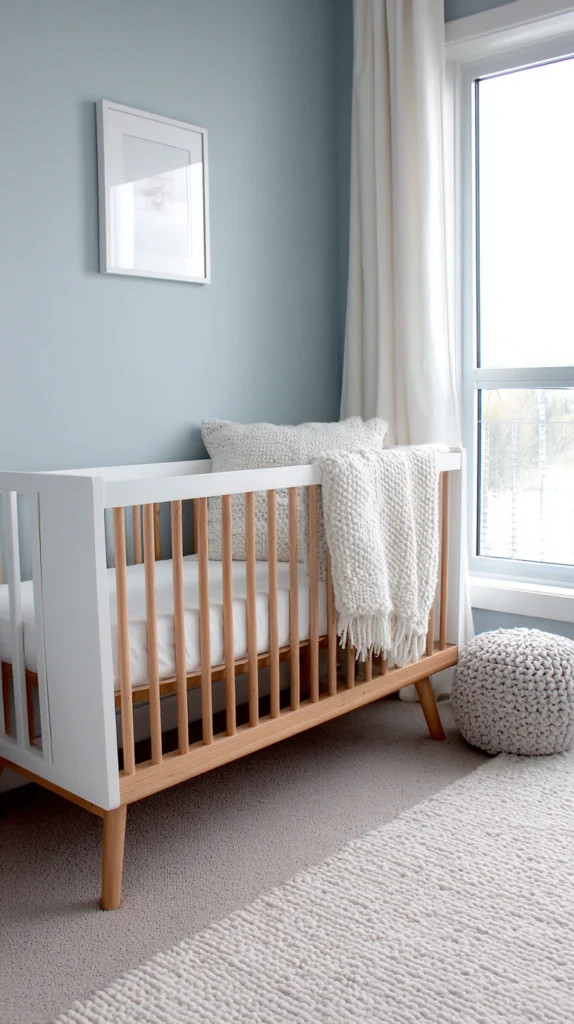
Budget: $300 – $1,200
A nursery in the specific pale blue of Scandinavian interior design — the cool, grey-toned blue that reads as winter sky and frozen water — combined with white-painted timber furniture, natural wood accents, simple geometric textiles, and the restrained aesthetic of Nordic design creates a nursery of considerable calm and considerable longevity. The Scandi aesthetic ages well precisely because it is not nursery-specific — its simplicity, its quality of material, and its restraint of decoration suit a child of any age.
Pale Scandi blue paint costs $25–$60 per tin. White-painted timber nursery furniture runs $300–$1,000 for a basic set. Simple geometric textiles in blue, white, and natural cotton cost $20–$60 per piece. A single wooden mobile above the cot costs $30–$80. The Scandi nursery communicates its quality through restraint — every additional element should be assessed against the question of whether it adds to the room’s calm or disturbs it.
Style tip: Choose wooden toys and natural material accessories over plastic equivalents throughout the Scandi nursery. A wooden rattle, a linen soft toy, a birch wood mobile — these materials are visually consistent with the Scandi aesthetic in a way that primary-coloured plastic toys are not. The material consistency of the room is the detail that gives the Scandi nursery its particular quality of being a considered environment rather than an assembled one.
6. The Blue and Gold Luxe Nursery
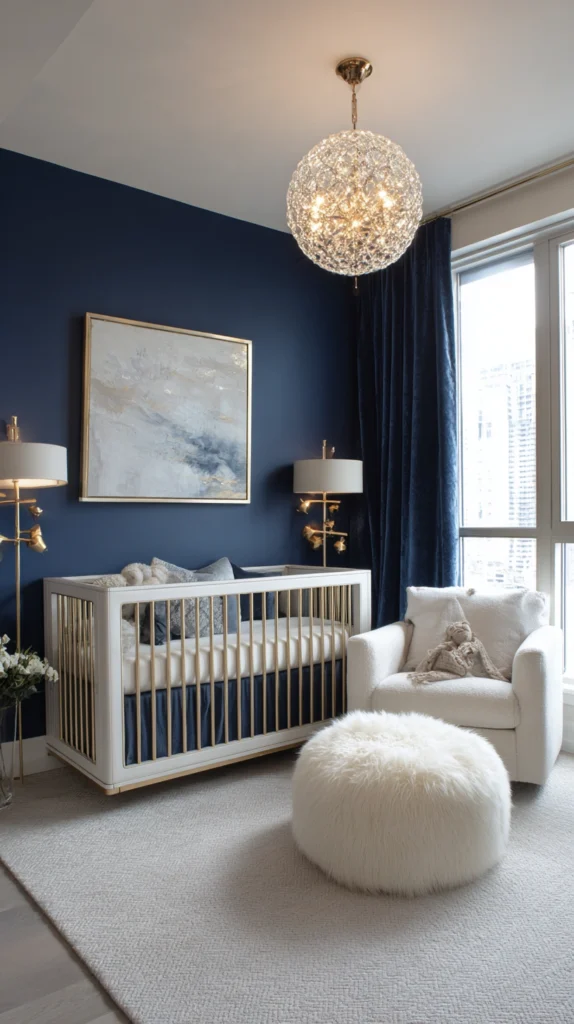
Budget: $500 – $3,000
A nursery in a rich, warm blue — sapphire, cobalt, or French blue — combined with gold hardware, gold-framed mirrors, velvet textiles, and statement lighting creates the most opulent and most grown-up of all the blue nursery aesthetics. The blue and gold combination is one of the most classically beautiful colour pairings in interior design, and in a nursery context it creates a room that feels genuinely special — a room that was designed with full commitment rather than with the cautious half-investment that many nurseries receive.
Deep blue paint for the walls costs $30–$80 per tin. Gold cabinet hardware for the nursery furniture runs $3–$8 per handle — replacing the standard hardware on a white or timber chest of drawers transforms it at minimal cost. A gold-framed mirror costs $40–$150. Velvet curtains in the blue tone run $60–$200 per panel. The gold accents need to be consistent in finish — all brushed gold, or all polished gold — rather than mixed with brass or chrome.
Style tip: Keep the floor and the ceiling in neutral tones — white ceiling, natural timber floor, or a pale cream rug — even when the walls are in a rich, saturated blue. A saturated blue on all surfaces including the floor and ceiling produces a room that reads as a statement; the same blue on the walls against neutral floor and ceiling produces a room that reads as considered. The restraint of the neutrals is what gives the wall colour its full impact.
7. The Blue and Woodland Nursery
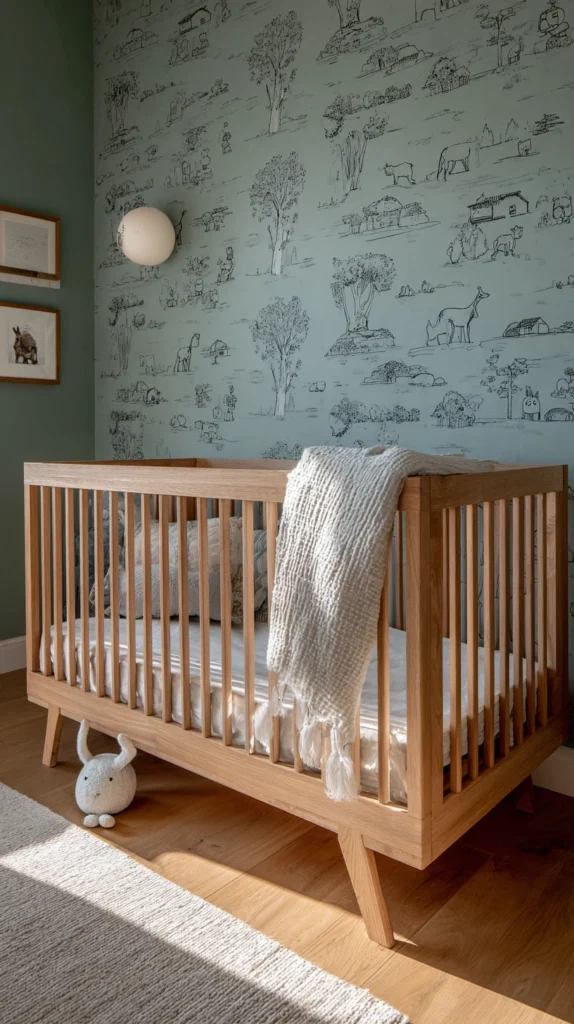
Budget: $300 – $1,500
A nursery in a soft, moss-inflected blue — the blue-green that sits between teal and duck egg — combined with woodland animal illustrations, natural timber, and botanical elements creates one of the most warm and most visually rich nursery environments. The woodland theme has an enduring quality that purely abstract or geometric nursery designs lack — the animals, the trees, the natural world references grow with the child from the earliest visual engagement through to the developed interest in the natural world that follows.
Woodland blue-green paint costs $25–$60 per tin. Woodland animal wall prints in simple illustration style cost $10–$30 each. A woodland mobile with felt animals runs $30–$80. Natural timber furniture suits the woodland theme specifically — the grain and warmth of timber relates to the tree and forest references of the woodland theme in a way that white-painted furniture does not.
Style tip: Choose woodland animal illustrations in a consistent artistic style — all in the same illustrative approach, all at the same level of realism or abstraction — rather than mixing different artistic treatments on the same wall. A gallery of woodland prints in consistent illustration style reads as a designed collection; the same prints in four different artistic styles read as individually purchased without reference to each other.
8. The Blue and Linen Minimalist Nursery
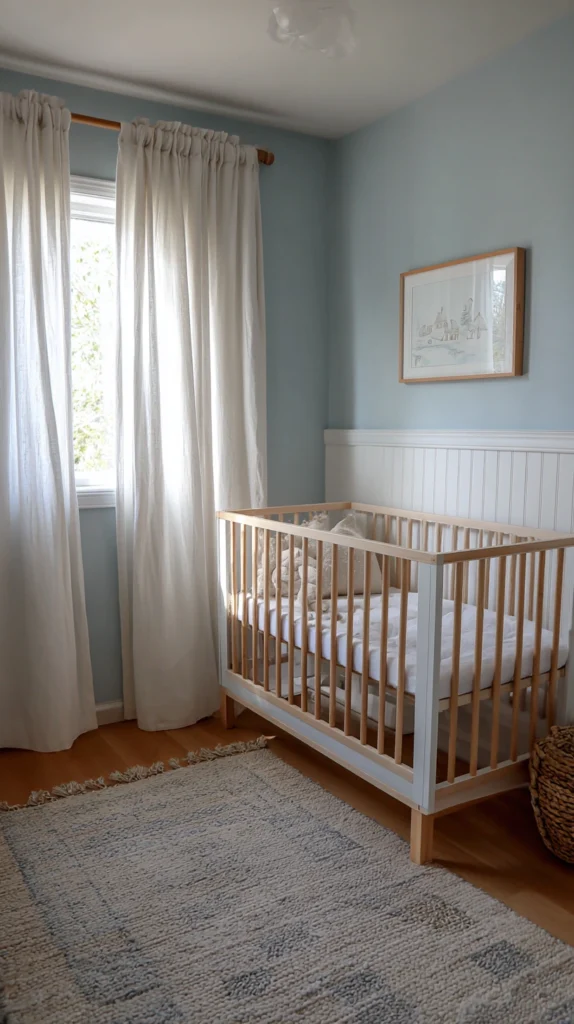
Budget: $400 – $1,500
A nursery in the palest, most restrained blue — the blue that is closer to white than to any definable colour, that reads as a memory of blue rather than as blue itself — combined with natural linen, raw timber, and the minimal material palette of a genuinely considered interior creates the nursery aesthetic most likely to be genuinely loved by parents who find conventional nursery design overwhelming. The minimal blue nursery does not compromise on quality to achieve its restraint; it achieves the restraint through quality.
The palest blue paint costs $25–$60 per tin. Natural linen curtains cost $30–$80 per panel. A raw timber cot in an unfinished or lightly oiled finish runs $300–$800. One significant artwork — a large botanical print, a single simple typographic piece — costs $30–$100 framed. The minimal nursery succeeds by limiting the number of decorative elements to those that are genuinely considered rather than filling the space to the expected level.
Style tip: Invest the minimalist nursery’s budget in the quality of the single significant pieces rather than distributing it across many modest pieces. One genuinely beautiful cot, one genuinely considered artwork, one quality textile: the minimal nursery with three excellent things is always better than the same budget distributed across fifteen average ones. The restraint in quantity is what gives each quality piece the space to be seen and appreciated.
9. The Blue and Red Classic Nursery
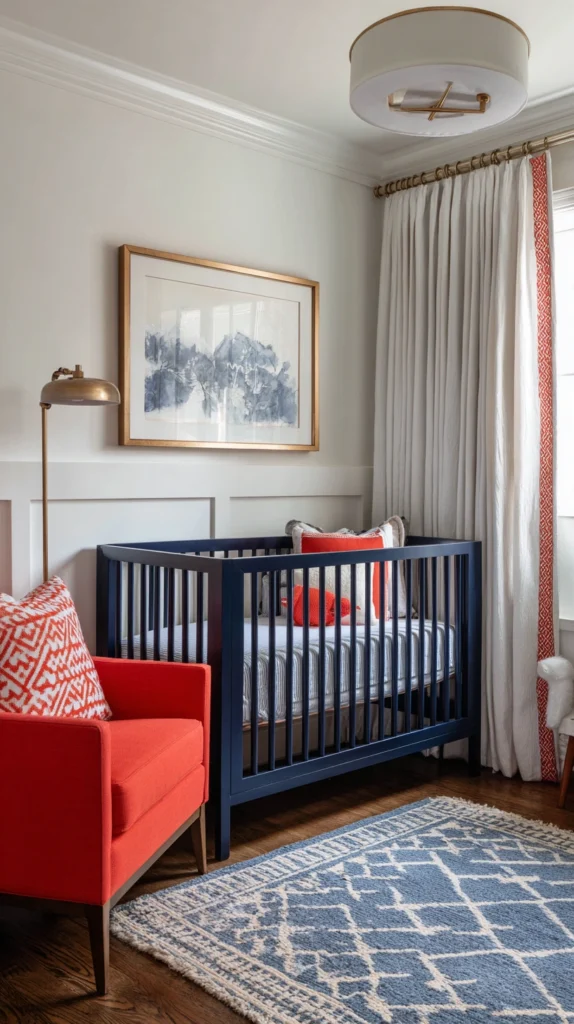
Budget: $300 – $1,200
A nursery in a classic navy or French blue combined with red accents — not the bright primary red of a toy box but the deeper, warmer red of vintage fire engines, classic racing cars, and the traditional colour vocabulary of a boy’s room — creates the most specifically and most confidently gendered of all the blue nursery approaches. The blue and red combination has a graphic quality and a visual energy that softer palettes lack, and it suits a room that will grow from a nursery into a toddler’s room into a young child’s bedroom without requiring redecoration.
Navy blue paint for the walls or ceiling costs $30–$80 per tin. Red accent cushions or textile cost $15–$40 each. A vintage-style toy — a red wooden train, a red rocking horse — functions as both a decorative element and a future play object. Red and navy bedding runs $40–$120 for a nursery set. The accent colour should be red rather than any other warm colour — orange and yellow shift the combination away from the classic graphic quality that makes the blue and red work.
Style tip: Introduce the red at the accessories and textile level rather than at the wall level. A navy-walled room with red accessories reads as a navy room with red accents — the blue is dominant and the red punctuates it. A room with both a navy wall and a red wall has two focal points competing for the same attention, and the competition undermines both colours. The hierarchy — blue dominant, red accent — is the design decision that makes the combination work.
10. The Denim Blue Industrial Nursery
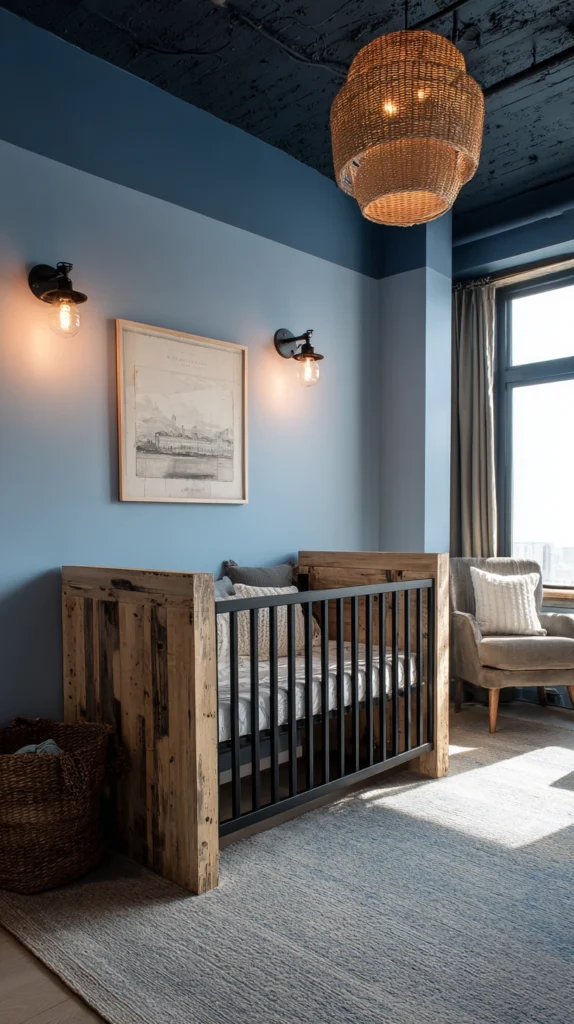
Budget: $300 – $1,200
A nursery in the warm, slightly faded blue of worn denim — not grey, not navy, but the specific mid-blue of denim at its most characteristic — combined with natural wood, metal accents, and the slightly rougher material palette of an industrial aesthetic creates a nursery for parents who find the standard soft-and-sweet nursery vocabulary unconvincing. The denim blue industrial nursery is warm enough for a baby’s room and considered enough to remain appealing through the childhood years that follow.
Denim blue paint costs $25–$60 per tin. Metal pipe shelving — simple steel pipes with timber shelves — costs $80–$200 for a standard nursery shelf run. Industrial-style lighting in a brushed steel or matte black finish runs $40–$150. Natural timber furniture is the right material combination for the industrial blue — raw, visible grain timber beside warm denim blue creates the specific quality of a room that is warm and considered rather than cold and utilitarian.
Style tip: Soften the industrial elements with quality textiles — a good linen curtain, a wool throw at the end of the change table, a cotton knit blanket in the cot. The industrial nursery risks reading as cold if the hard material elements are not balanced by soft textile warmth, and the specific function of a nursery — a room for a sleeping, feeding, and comforted baby — requires the textile softness that the industrial palette alone does not provide.
11. The Blue and Green Botanical Nursery
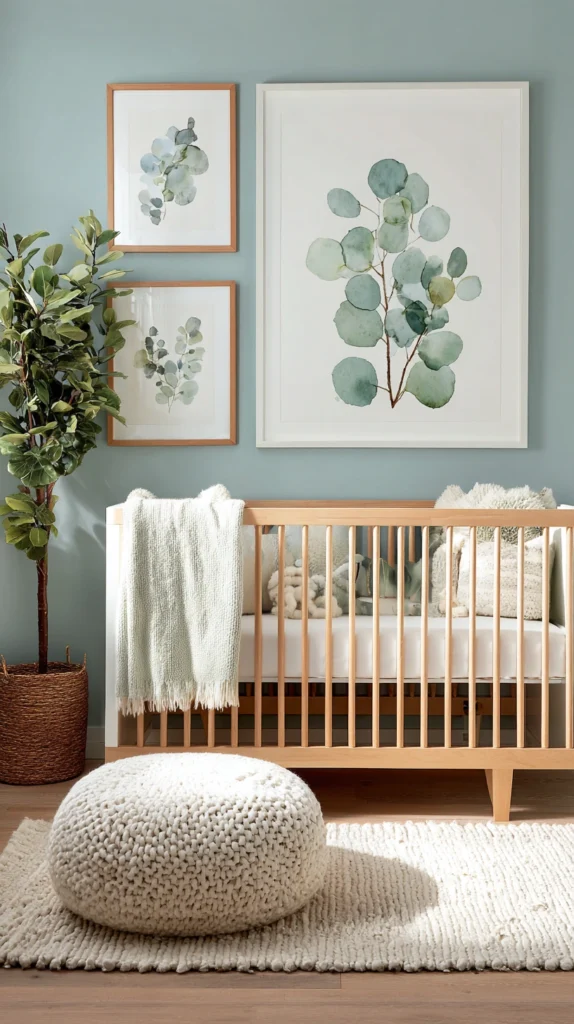
Budget: $300 – $1,200
A nursery in a rich botanical blue — the blue of a tropical sky seen through dense canopy, warm and vivid rather than cool and pale — combined with botanical illustration prints, living plants, and the green of real foliage creates the most lush and most visually complex of all the blue nursery approaches. The botanical nursery specifically benefits from the presence of real plants rather than illustrated ones — a monstera in a corner of the room, a trailing pothos on a shelf, a peace lily on the windowsill — which give the room the living quality that botanical illustration references without providing.
Botanical blue paint costs $30–$80 per tin. Large-format botanical illustration prints run $15–$60 each. A monstera plant for the room corner costs $20–$60. Trailing pothos plants cost $8–$20. The botanical nursery requires the most maintenance of all the nurseries on this list — living plants need consistent watering and occasional repotting — but it provides the most genuinely alive and most constantly changing room environment.
Style tip: Choose plants specifically for their safety in a child’s room — non-toxic species only, positioned out of reach of a mobile child. Monstera, pothos, spider plant, and peace lily are all non-toxic and all thrive in the indirect light of a bedroom. Remove any plants with small leaves or small fruits — the defining quality of any plant inappropriate for a child’s room — from the room before the baby becomes mobile.
12. The Blue and Cloud Nursery
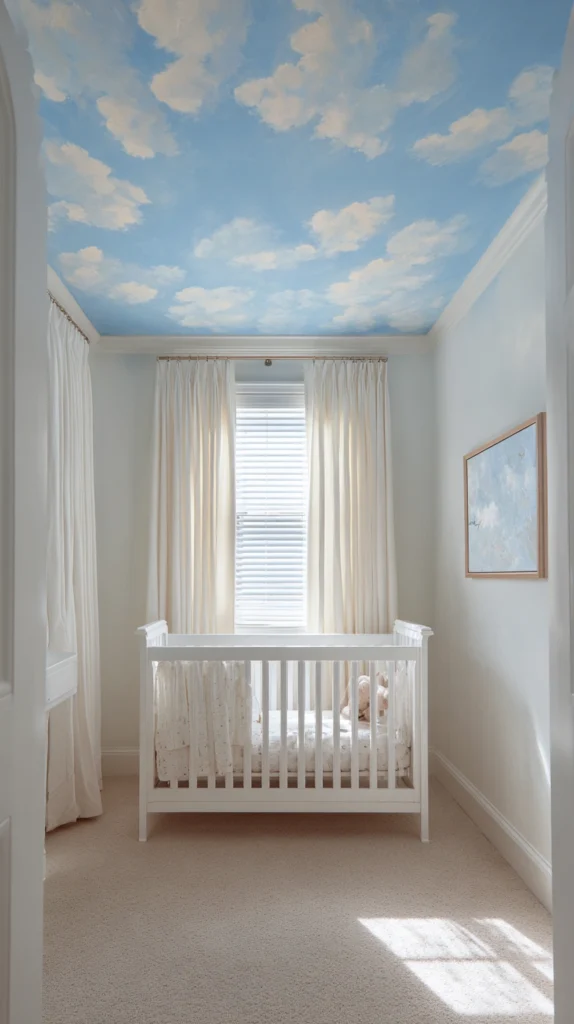
Budget: $200 – $800
A nursery ceiling painted in a pale sky blue with hand-painted or wallpaper-applied clouds creates the most universally beloved and most literally sky-evoking of all the blue nursery ceilings. The cloud ceiling is one of the oldest nursery conceits and one of the most enduring because it is genuinely beautiful in a way that more complex or more thematic ceiling treatments are not — a baby looking up from the cot sees a sky, which is the oldest and most universally comforting view available to any person lying on their back.
Sky blue ceiling paint costs $25–$60 per tin. White chalk paint for hand-painted clouds costs $8–$15. Cloud wallpaper panels for the ceiling cost $30–$80 per panel — two panels cover a standard nursery ceiling area. A cloud mobile above the cot runs $20–$60. Paint the clouds in the slightly warm white of real cloud rather than pure brilliant white — pure white clouds on a pale blue ceiling read as graphic; slightly warm white clouds read as meteorologically accurate.
Style tip: Paint clouds of genuinely varied sizes rather than repeating a single cloud template across the ceiling. Real clouds are always varied — enormous billowing cumulus beside small wisps, dense white masses beside thin transparent streaks — and a ceiling that replicates this variation reads as a sky; one with identically sized, regularly spaced cloud shapes reads as a cloud pattern applied to a ceiling.
13. The Blue and Yellow Sunny Nursery
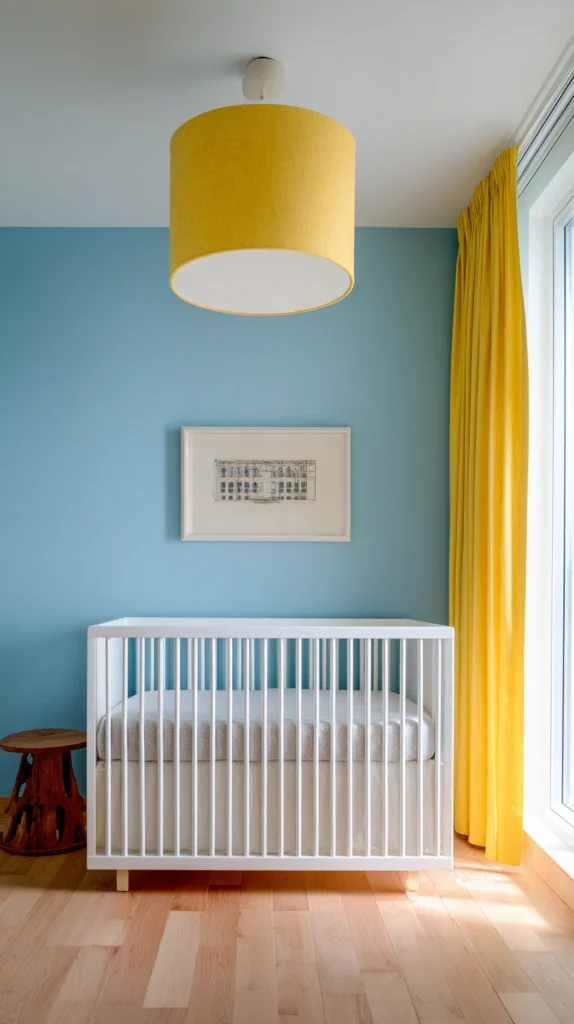
Budget: $250 – $1,000
A nursery in a bright, clear blue — sky blue or cornflower blue — combined with warm yellow accents creates the most cheerful and most visually energetic of all the blue nursery combinations. Blue and yellow is the colour combination of summer skies and sunflowers, of optimism and morning light, and in a nursery context it creates a room that feels genuinely sunny — a room that makes the sleep-deprived parent feel slightly better simply by being in it.
Sky blue paint for the walls costs $25–$60 per tin. Yellow accent cushions and textiles run $15–$40 each. A yellow floor lamp — the most effective single accent piece in a blue and yellow nursery — costs $40–$120. Yellow and blue bunting above the cot costs $15–$30. The yellow accent should be warm and saturated rather than pale — a mustard yellow reads as sophisticated but loses the sunny quality; a clear, warm yellow retains the colour combination’s characteristic cheerfulness.
Style tip: Distribute the yellow accents in multiple positions around the room rather than concentrating them in one zone. Yellow that appears only in the textile area reads as a textile choice; yellow that appears in the lamp, the prints, the cushions, and a plant pot reads as a considered accent colour that was chosen for the room. The distribution of the accent colour is the decision that makes it a palette rather than a detail.
14. The Blue Grey Transitional Nursery
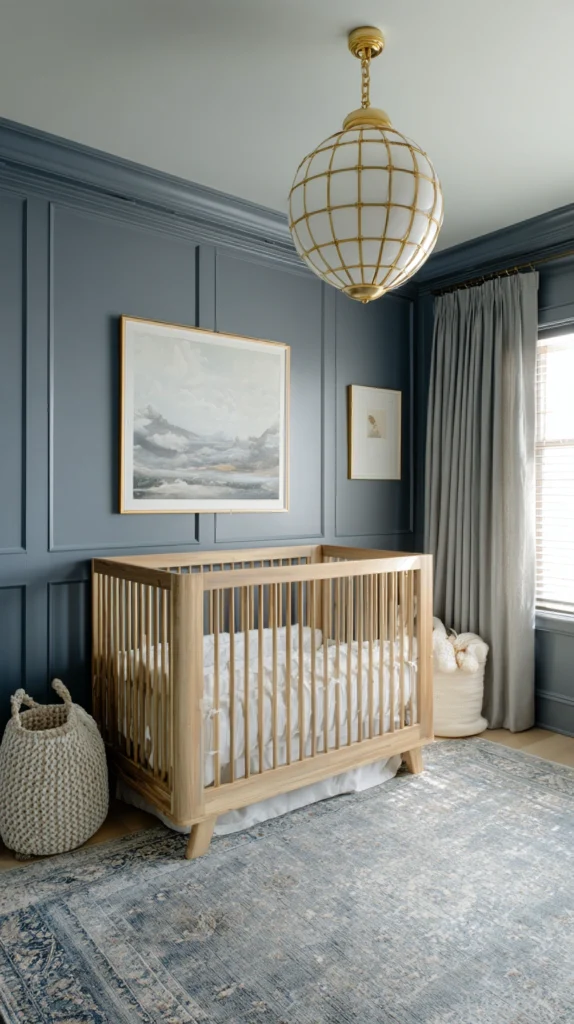
Budget: $300 – $1,200
A nursery in blue-grey — the specific tone that sits between the coolness of blue and the neutrality of grey, that reads as either depending on the light quality and the hour — creates the most versatile and most future-proof of all the blue nurseries. A blue-grey room requires no repainting when the baby becomes a toddler, when the toddler becomes a child, or when the child becomes a teenager — the colour grows with its occupant because it was never specifically a baby colour to begin with.
Blue-grey paint costs $25–$60 per tin. The transitional nursery succeeds because it chooses quality over cuteness at every decision — a cot that converts to a toddler bed rather than a cot that will be replaced, a chest of drawers that suits a teenager rather than one with animal handles, artwork that is interesting rather than infantile. The furniture investment made for the transitional nursery is made once rather than made and remade at each developmental stage.
Style tip: Choose nursery furniture in a natural timber finish rather than white for the transitional nursery. White painted furniture suits the nursery stage perfectly and suits subsequent stages less and less convincingly. Natural timber furniture suits every age from birth to adulthood and develops a character and a patina over the years that makes it more rather than less suited to each subsequent occupant of the room.
15. The Blue and White Personalised Nursery
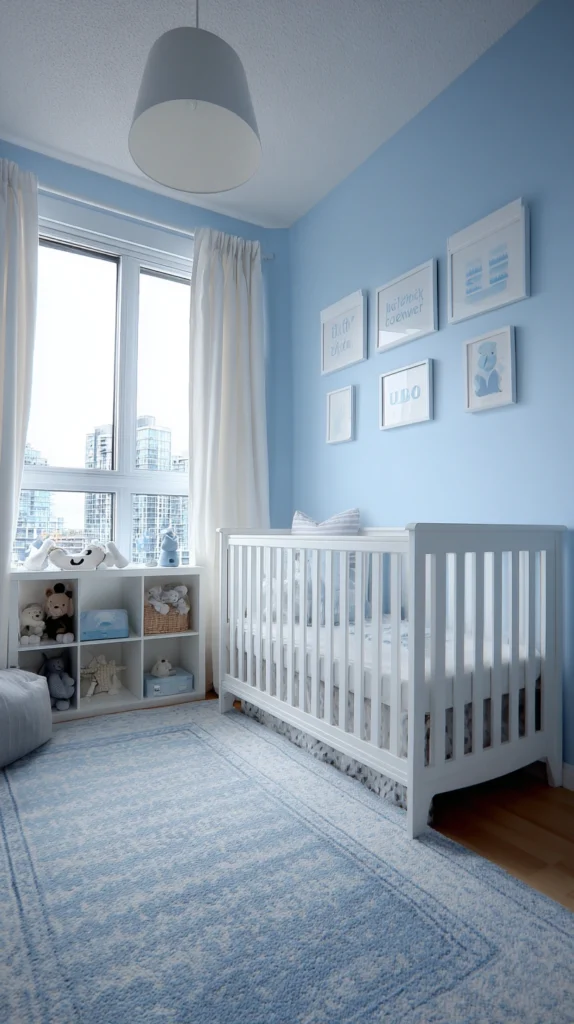
Budget: $200 – $1,000
A nursery in a classic, clean blue and white — the combination that is simultaneously the oldest and most reliable of all nursery palettes — elevated from the generic through the addition of genuinely personalised elements: the child’s name in a considered typographic treatment, a map of the place where the family lives, a custom illustration of something specific to the family, a collection of objects that belonged to the parents’ own childhood. The blue and white nursery is the canvas; the personalisation is the painting.
Classic blue paint costs $25–$60 per tin. A custom name print in a quality typographic design runs $20–$60. A personalised star map of the night sky on the date of the child’s birth costs $30–$80 framed. A family illustration in a commissioned style runs $80–$300. The personalised blue and white nursery is not more expensive than a generic one — it is more thoughtful, and the thought is the cost rather than the money.
Style tip: Choose personalised elements that are about the family and the child rather than about the nursery as a category. A print of the child’s name above the cot is a nursery decoration; a print of the view from the hospital window on the night of the birth is a family document. The personalised nursery that contains genuine family meaning rather than purchased personalisation is the nursery that the child, eventually grown, will want to be told about — and the stories the room contains are worth more than any individual element within it.
The blue nursery that lasts — that the child grows into rather than out of, that the parents look forward to being in rather than enduring through the night feeds — is the one that was designed with the same intention that any other room in the house deserves. Blue chosen seriously, materials chosen for their quality and their longevity, personalisation added through genuine family meaning rather than purchased novelty.
Begin with the blue. Choose it for the specific quality of the light in the room, the warmth of the furniture being placed in it, and the atmosphere that the parents want the child to sleep in. Everything else follows from the blue — the materials that suit it, the textiles that complement it, the personalisation that makes it specific to the child who will grow in it. The nursery that begins with a serious colour decision is the nursery that ends as a genuinely considered room.