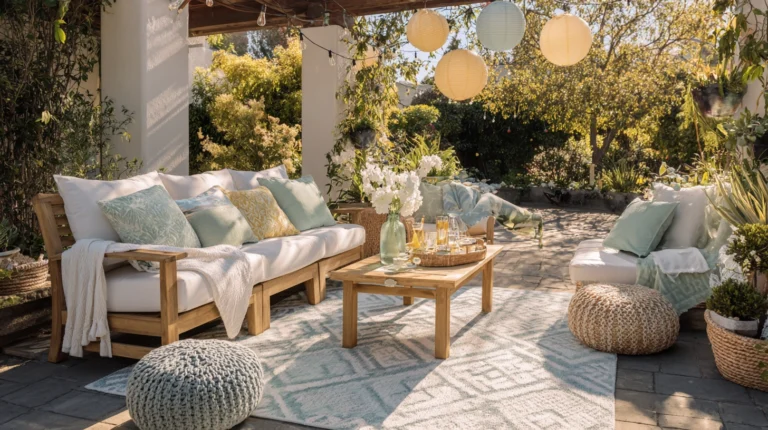
14 Luxury Mansion Backyard Ideas That Redefine Outdoor Living
A truly luxury backyard reads less like a collection of individual features and more like a fully considered extension of the home itself, with each element built to feel permanent, high-quality, and genuinely used rather than purely decorative. These are the kinds of projects that typically require professional design and installation, but understanding what actually goes into them helps homeowners plan a phased, realistic approach toward that end result.
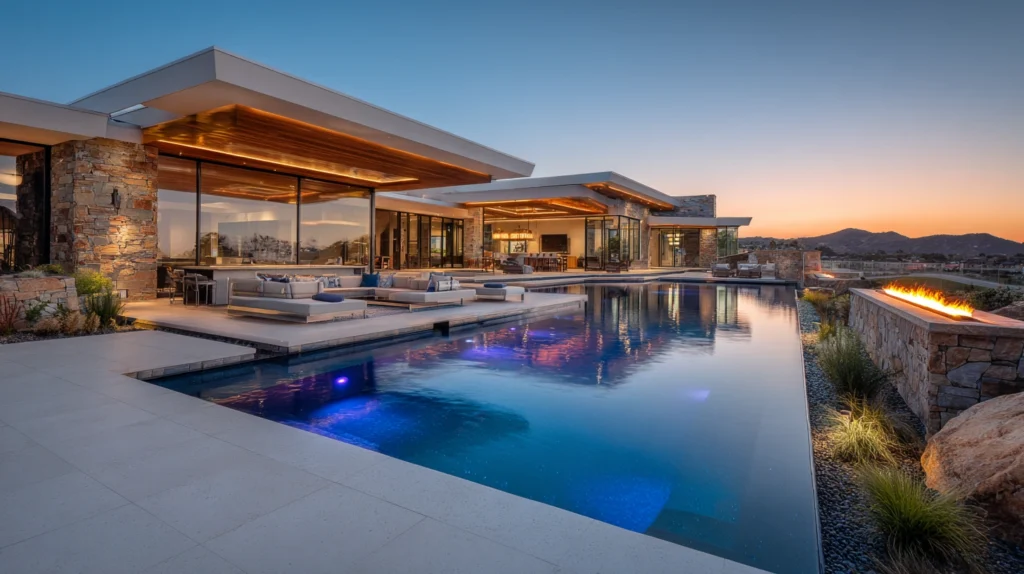
Below are 14 luxury backyard ideas, from statement architectural features to smaller high-end finishing touches, with real numbers on scale and investment so the space can be planned in stages that fit an actual budget and timeline.
Planning a Luxury Backyard in Phases
High-impact starting points:
- Hardscaping and structural elements (these anchor everything added later)
- Lighting design, which transforms even a partially finished space
- One true statement feature (a pool, an outdoor kitchen, or a pavilion)
Typically added in later phases:
- Specialty features like outdoor showers, fire features, or a wine cellar
- Detailed landscaping and mature plantings
- Smaller luxury touches (art, custom furniture, specialty lighting)
1. Install an Infinity-Edge or Vanishing-Edge Pool
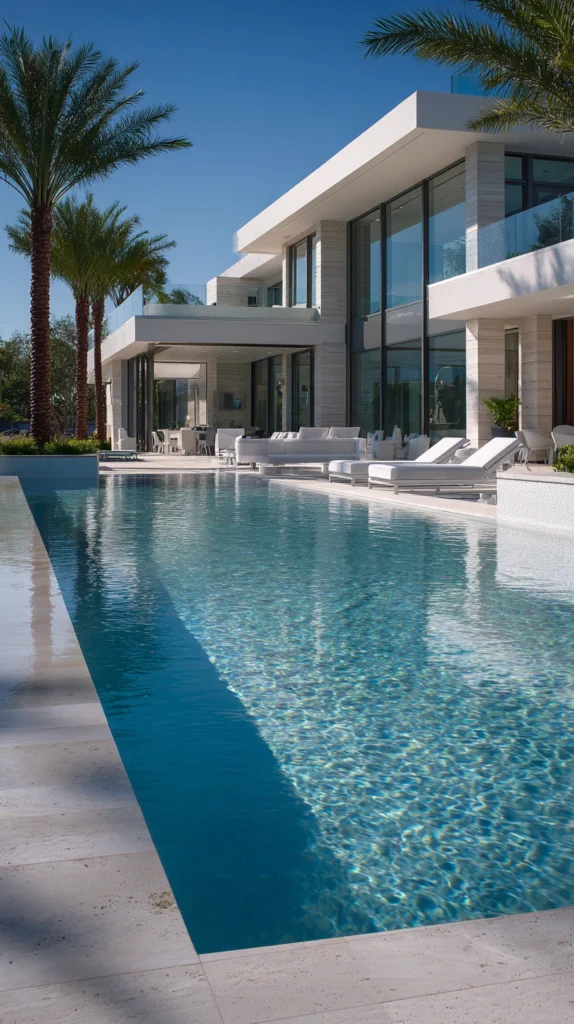
An infinity-edge pool, where water appears to spill seamlessly into the horizon or a lower catch basin, is one of the most recognizable hallmarks of high-end outdoor design, particularly on properties with a view worth framing. Standard residential infinity pools run 30×15 to 40×20 feet, though the effect can be scaled to smaller footprints with the right site conditions.
Budget: $80,000-200,000+ for a full infinity-edge pool installation, varying enormously based on size, site grading requirements, and finish materials. This design requires a lower catch basin and additional structural engineering beyond a standard pool, which is a significant part of why the cost runs substantially higher than a conventional in-ground pool.
Positioning the vanishing edge to align with the property’s best sightline — a distant tree line, water, or skyline — is what actually makes this feature work visually, so a qualified pool designer typically does a full site survey before finalizing the pool’s orientation and edge placement. This is one of the biggest single investments on this list, but it also tends to be the defining centerpiece around which the rest of a luxury backyard’s layout gets planned.
2. Build a Fully Equipped Outdoor Kitchen and Dining Pavilion
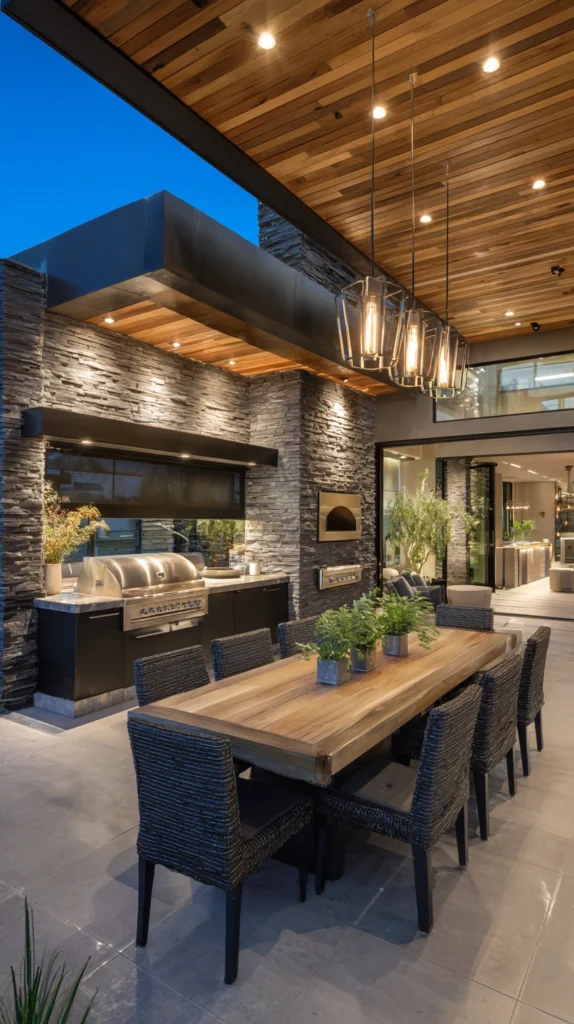
A covered pavilion housing a complete outdoor kitchen — grill, pizza oven, refrigeration, sink, and a full dining area — extends genuine entertaining capability outdoors at the same level of function as an indoor kitchen. Standard luxury outdoor kitchen pavilions run 20×30 feet or larger, accommodating both the cooking area and a dining table for 10-12 guests.
Budget: $40,000-120,000 for a full pavilion structure with high-end kitchen appliances and finishes, depending on materials (stone versus stucco, a full roof structure versus an open-air pergola) and the specific appliance package chosen. Choosing appliances specifically rated for outdoor use, rather than adapting indoor-rated equipment, is essential both for safety and for the equipment’s longevity in an exposed environment.
This structure typically becomes the true social hub of a luxury backyard, and positioning it with clear sightlines to the pool and any additional lounge areas keeps the whole outdoor space feeling connected rather than divided into disconnected zones. This is a good anchor project to prioritize early in a phased backyard plan, since a well-built pavilion structure supports and organizes many of the other ideas on this list around it.
3. Add a Regulation or Custom Sport Court
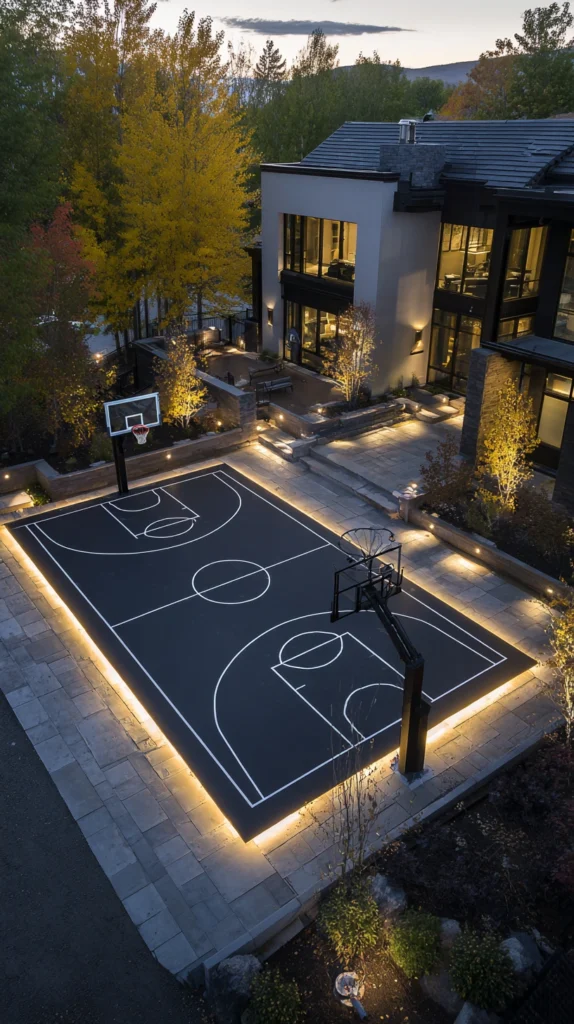
A dedicated sport court — tennis, pickleball, or a half basketball court — adds genuine recreational function to a larger property and has become an increasingly popular feature specifically for households with active families or frequent entertaining. Standard tennis courts run 60×120 feet including surrounding clearance, while a pickleball court fits in a considerably smaller 30×60 foot footprint.
Budget: $40,000-80,000 for a full tennis court including surfacing, fencing, and lighting, or $25,000-50,000 for a smaller pickleball or multi-sport court. Choosing a cushioned acrylic surface over standard asphalt, while a moderate additional cost, significantly improves both playability and joint comfort for regular use.
Adding court lighting as part of the initial build, rather than retrofitting it later, is considerably more cost-effective and allows the court to be used well into the evening. This is one of the more space-intensive additions on this list, requiring a genuinely large property to accommodate without overwhelming the rest of the yard’s usable space.
4. Build a Freestanding Guest House or Pool House
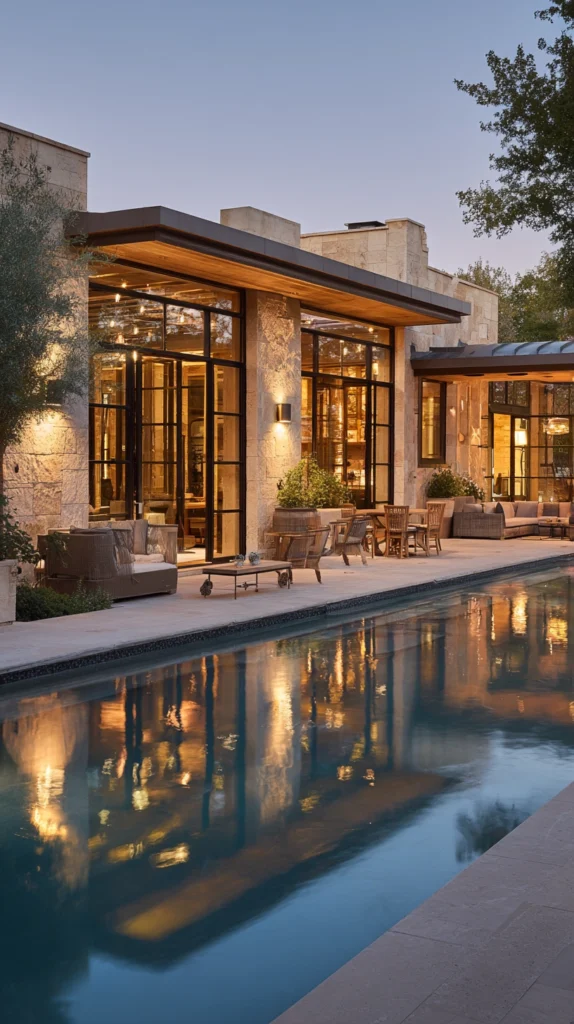
A fully finished guest house or pool house, complete with a bathroom, small kitchenette, and comfortable living space, extends a property’s genuine hospitality capacity while also serving as a practical changing and storage space for pool and outdoor activities. Standard pool houses run 400-800 sq ft, sized for a small living area, bathroom, and storage.
Budget: $150,000-400,000+ for a fully finished guest house or pool house, varying enormously based on size, finish level, and whether full plumbing and electrical are being run to a previously undeveloped part of the property. This is one of the largest single investments on this list, effectively representing a small additional structure requiring its own permitting and construction process.
Positioning this structure with a clear architectural relationship to the main house — matching rooflines, siding, or window styles — keeps the whole property feeling cohesively designed rather than like a mismatched addition. This feature works particularly well positioned near the pool, serving double duty as both changing facilities and overflow entertaining or guest space.
5. Add a Custom Fire Feature as a Central Gathering Point
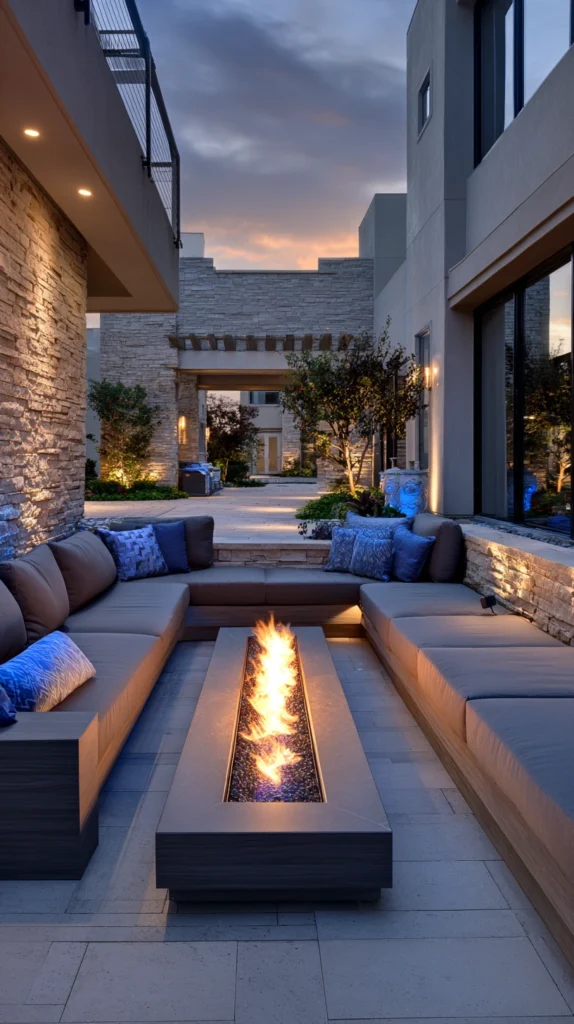
A built-in fire feature — whether a large stone fire pit, a linear gas fireplace, or a dramatic fire-and-water combination feature — serves as a genuine architectural centerpiece rather than a simple portable fire pit. Standard custom fire features run 6-10 feet across, sized to serve as a true gathering centerpiece for a lounge area.
Budget: $8,000-25,000 for a custom-built fire feature with quality stone or tile facing and a proper gas line installation, varying based on size, material, and design complexity. A linear, minimalist fire trough style has become particularly popular in higher-end outdoor design, often paired with a reflecting pool or water feature for a striking fire-and-water visual effect.
This feature typically anchors a secondary lounge area distinct from the main pool and kitchen zones, giving the property multiple distinct gathering points rather than concentrating all outdoor activity in one central spot. Professional installation is essential here, given the gas line work and the safety clearances required around any built-in fire feature.
6. Create a Sunken or Elevated Lounge Area
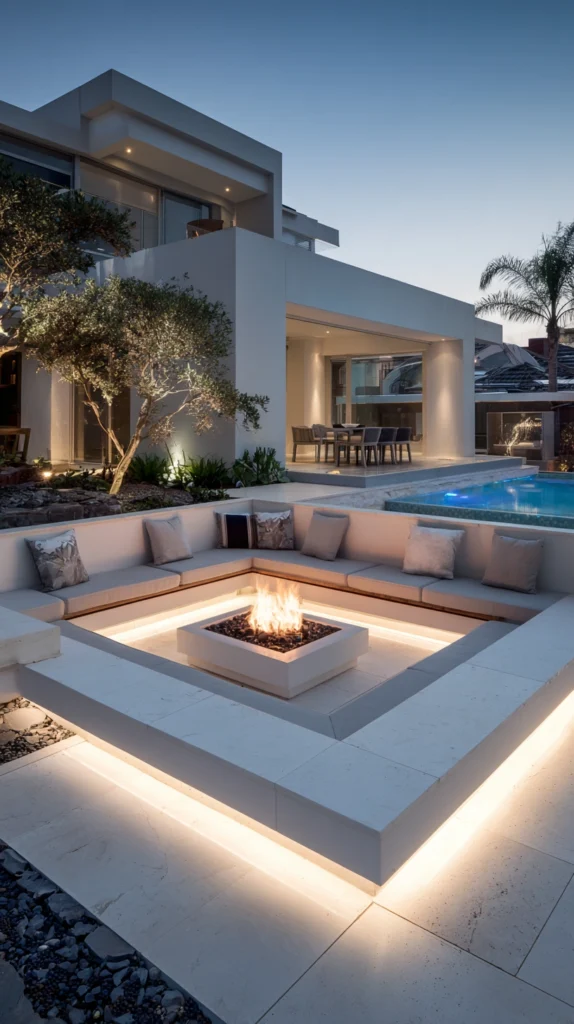
A sunken conversation pit or an elevated lounge deck adds genuine architectural dimension to a backyard, breaking up what might otherwise be a single flat plane across the whole property. Standard sunken lounge areas run 12×16 to 16×20 feet, sized for substantial built-in or freestanding seating around a central feature like a fire pit.
Budget: $15,000-40,000 for a sunken lounge area including excavation, retaining walls, and built-in seating, or $10,000-30,000 for an elevated deck lounge depending on height and material choices. This kind of dimensional change requires more structural planning than a flat patio addition, typically involving retaining wall engineering for a sunken design or proper footings and support for an elevated one.
This feature creates a genuinely distinct, intimate zone within a larger property, offering a different spatial experience than the open, flat areas typically used for dining and pool lounging. Built-in seating around the perimeter of a sunken lounge, upholstered in weather-resistant fabric, maximizes both comfort and the sense of permanence central to true luxury outdoor design.
7. Add Comprehensive Landscape Lighting Design
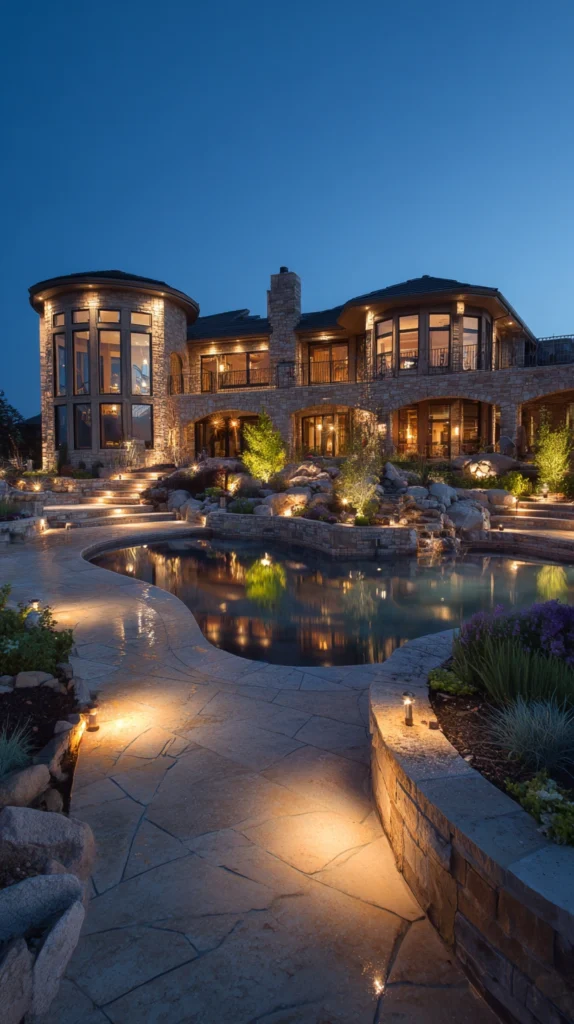
Rather than a handful of individual fixtures, a fully designed landscape lighting plan — uplighting on mature trees, path lighting, underwater pool lighting, and architectural lighting on the home’s exterior — transforms how the entire property functions and looks after dark. Standard comprehensive lighting designs for a larger property use 40-80 individual fixtures across the full landscape.
Budget: $15,000-50,000 for a full professional landscape lighting design and installation, varying significantly based on property size and the complexity of the lighting plan. Hiring a lighting designer specifically, rather than a general landscaper, typically produces a more sophisticated result, since lighting design is its own specialized discipline within outdoor design.
This is one of the highest-value investments on this list relative to its visual impact, since a well-lit property looks genuinely finished and luxurious even in areas where the underlying landscaping itself is still relatively simple. Smart lighting controls, allowing different zones and scenes to be programmed and adjusted from a phone app, are increasingly standard in higher-end lighting installations and well worth the modest additional cost.
8. Build a Drink Cellar or Tasting Room With Outdoor Access
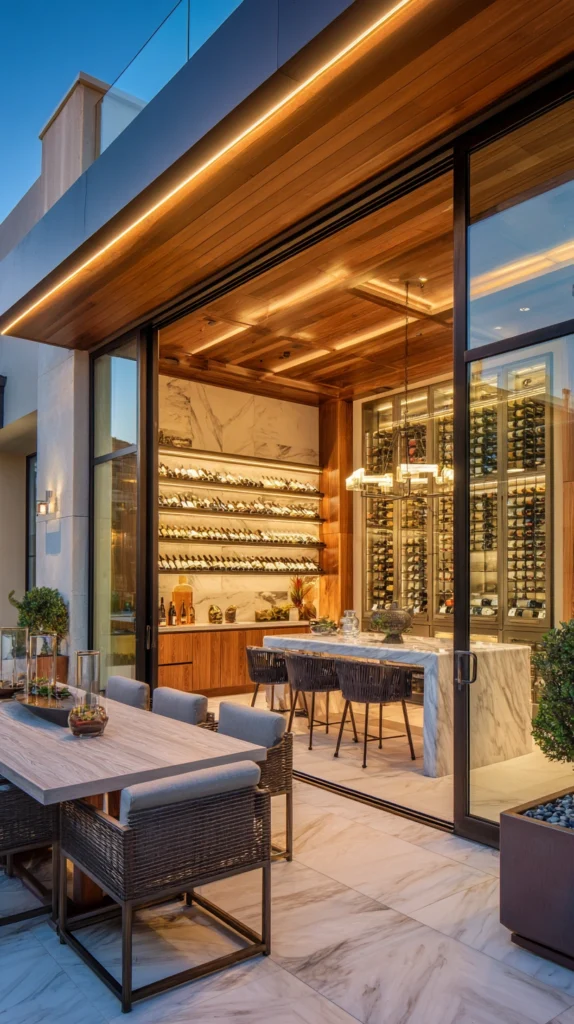
A dedicated drink cellar or tasting room, built with direct access to the outdoor entertaining areas, adds a genuinely distinctive luxury feature that also supports the kind of extended, sophisticated entertaining associated with a true luxury property. Standard drink cellars or tasting rooms run 200-400 sq ft, sized for both storage capacity and a small tasting table.
Budget: $50,000-150,000 for a fully built drink cellar with proper climate control, storage racking, and finish materials, varying based on size and storage capacity. Proper climate control is essential to this feature functioning correctly, requiring dedicated cooling and humidity systems separate from the home’s standard HVAC.
Positioning this space with a connection to the outdoor kitchen or dining pavilion allows it to function as a genuine extension of outdoor entertaining rather than an isolated indoor feature disconnected from the rest of the property’s flow. This is one of the more specialized additions on this list, appealing specifically to households with an established interest in wine collecting and entertaining around it.
9. Add a Reflecting Pool or Water Garden Feature
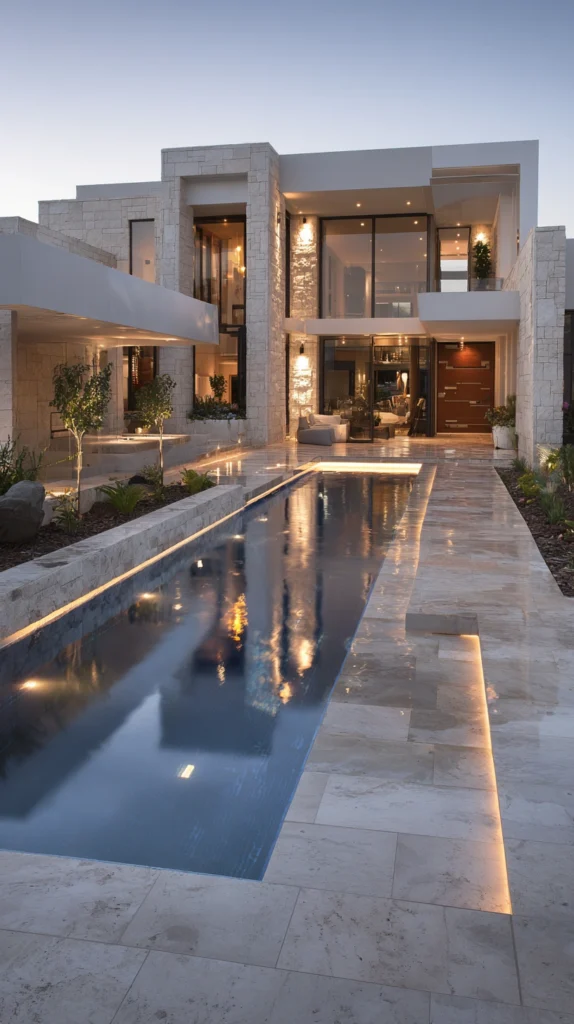
A shallow reflecting pool, distinct from a swimming pool, adds a serene, architectural water feature that reflects the sky and surrounding landscaping, a technique borrowed from high-end architectural and garden design. Standard reflecting pools run 15×30 to 20×40 feet and only a few inches deep, since their purpose is visual rather than functional swimming space.
Budget: $20,000-60,000 for a quality reflecting pool with proper waterproofing and edge detailing, depending on size and finish materials. Dark-toned pool floor materials, like black granite or dark tile, maximize the mirror-like reflective quality that makes this feature so visually striking, particularly at dusk or under landscape lighting.
This feature works particularly well positioned near the main house or a formal entry, serving as an architectural transition element between the built structure and the more active recreational areas of the property. This is a purely aesthetic, non-recreational feature, so it’s generally added as one element among several rather than serving as a property’s primary outdoor investment.
10. Build an Outdoor Spa or Meditation Garden
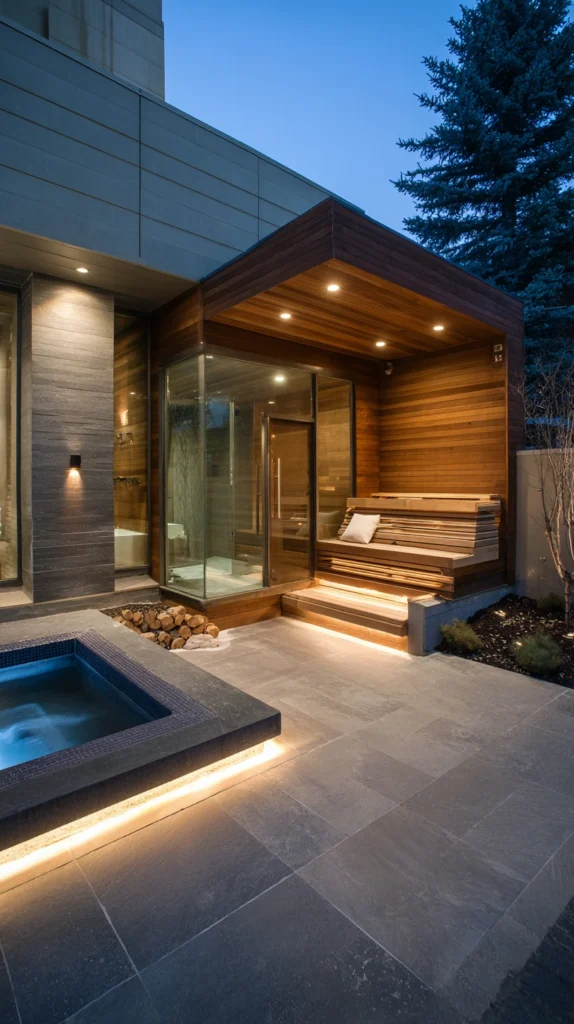
A dedicated wellness zone — an outdoor spa with a sauna and cold plunge, or a quiet meditation garden with a defined path and specific plantings — reflects the growing emphasis on genuine wellness amenities in high-end residential design. Standard outdoor spa zones run 15×20 to 20×30 feet, sized for a sauna structure, a cold plunge or small pool, and adjacent lounging space.
Budget: $30,000-80,000 for a full outdoor sauna and cold plunge setup, or $10,000-25,000 for a more purely landscaped meditation garden without built structural elements. Choosing a cedar or hemlock sauna structure, both naturally moisture-resistant woods, is standard for outdoor sauna construction given the material’s durability in a consistently humid, heated environment.
This is one of the more personally reflective additions on this list, best planned around the specific household’s actual wellness habits and interests rather than added purely as a generic luxury feature. Positioning this zone with some privacy screening, whether through landscaping or an architectural fence element, supports the intended quiet, restorative purpose of the space.
11. Add a Formal Garden With Boxwood Hedging and Structured Beds
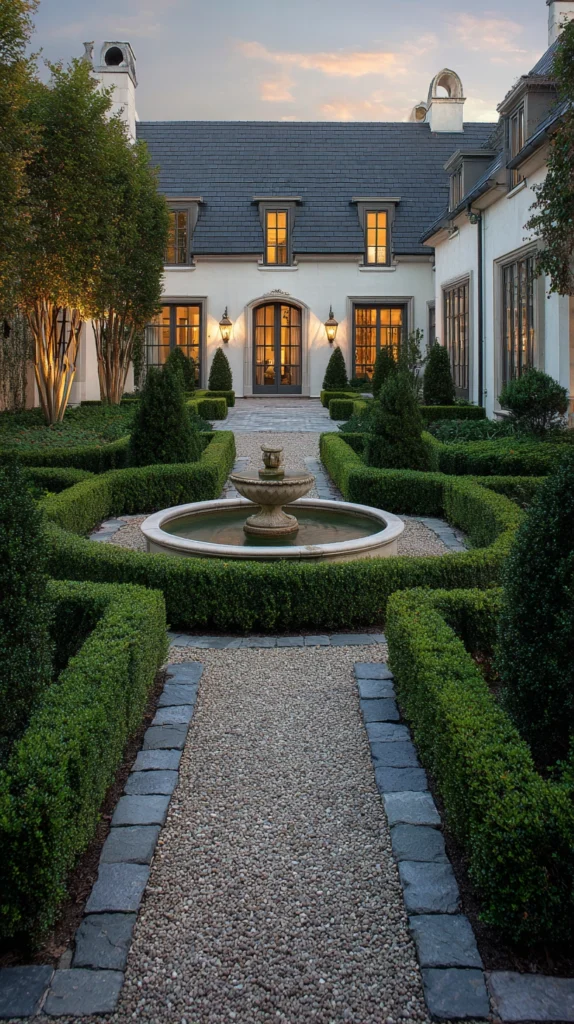
A formally landscaped garden, using clipped boxwood hedging, symmetrical beds, and structured pathways, brings the kind of classical, estate-style landscaping associated with historic luxury properties. Standard formal garden sections run 30×40 feet or larger, sized to accommodate a genuinely structured, symmetrical layout.
Budget: $25,000-75,000 for a full formal garden installation including mature boxwood, structured beds, and defined pathways, varying significantly based on the maturity of the plants chosen at installation and the complexity of the layout. Choosing more mature, established boxwood specimens rather than small starter plants costs considerably more upfront but delivers an immediately finished, established look rather than requiring years of growth to fill in.
This feature works well as a visual complement to a more modern pool or pavilion elsewhere on the property, providing a classical, structured counterpoint to more contemporary architectural features. Ongoing professional maintenance is a genuine consideration with this style of landscaping, since formal hedging requires regular precise trimming to maintain its clean, structured appearance.
12. Create a Motor Court or Grand Arrival Sequence
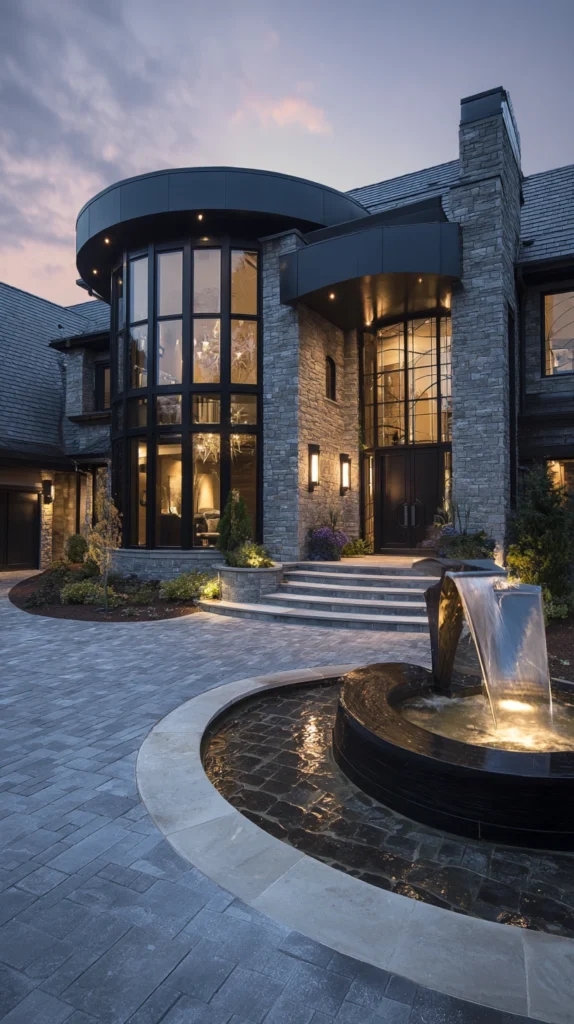
For properties with significant drive and entry space, a designed motor court — featuring a fountain, formal plantings, and high-quality paving — creates a genuinely grand first impression before guests even reach the front door. Standard motor courts run 40×60 feet or larger, sized to accommodate multiple parked vehicles alongside the central design feature.
Budget: $60,000-200,000 for a full motor court redesign including paving, a central fountain, and formal landscaping, varying enormously based on the court’s size and the paving material chosen (natural stone typically costs significantly more than stamped concrete or pavers). A central fountain or statuary piece, positioned as the court’s focal point, is what most distinguishes a true motor court from a standard expanded driveway.
This is one of the more architecturally significant investments on this list, since it shapes a visitor’s very first impression of the property before they experience any of the backyard features described elsewhere. Coordinating this design with a landscape architect who also has input on the property’s overall entry sequence produces a more cohesive result than treating the motor court as an isolated paving project.
13. Add a Custom Putting Green or Golf Simulator Structure
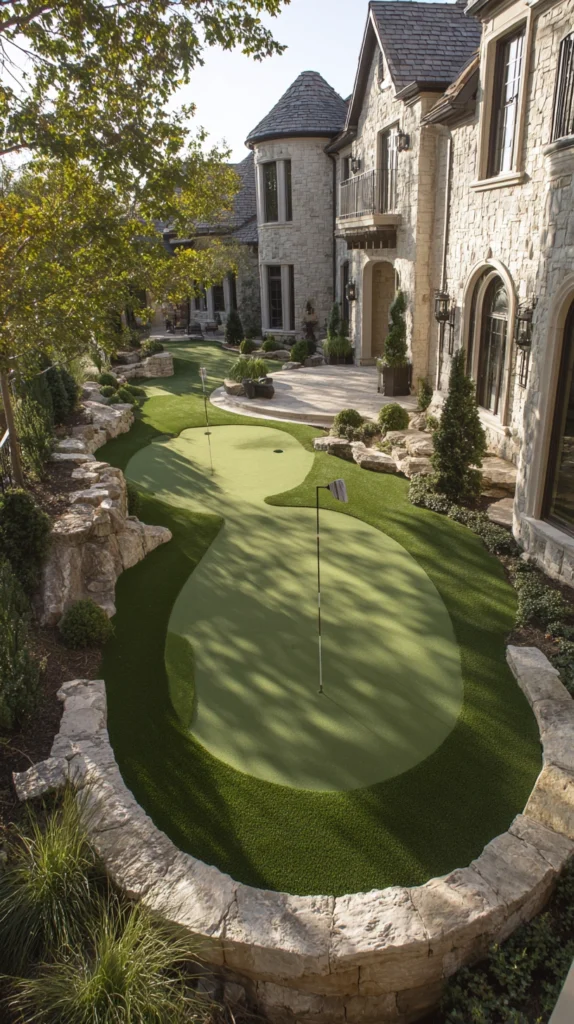
A professionally installed synthetic putting green, or a fully enclosed golf simulator structure, appeals specifically to golf-focused households wanting genuine practice capability at home. Standard residential putting greens run 800-2,000 sq ft, while a golf simulator structure typically needs a dedicated 15×20 foot enclosed space.
Budget: $15-25 per sq ft for a quality synthetic putting green, or roughly $20,000-50,000 for an 800-2,000 sq ft installation, or $40,000-100,000+ for a fully enclosed, climate-controlled golf simulator structure with high-end projection and sensor technology. Professional putting green installation includes contoured grading to create genuine breaks and slopes, which is what separates a quality installation from a flat, unchallenging synthetic surface.
This is one of the more specialized, hobby-specific additions on this list, best suited to households with a genuine, regular golf practice, since the investment is significant relative to how often a more casual golfer might actually use the feature. Positioning either feature with some visual integration into the broader landscape design, rather than as an isolated utilitarian addition, keeps it feeling like a natural part of the property rather than a bolted-on amenity.
14. Build a Covered Bridge or Water Crossing Feature
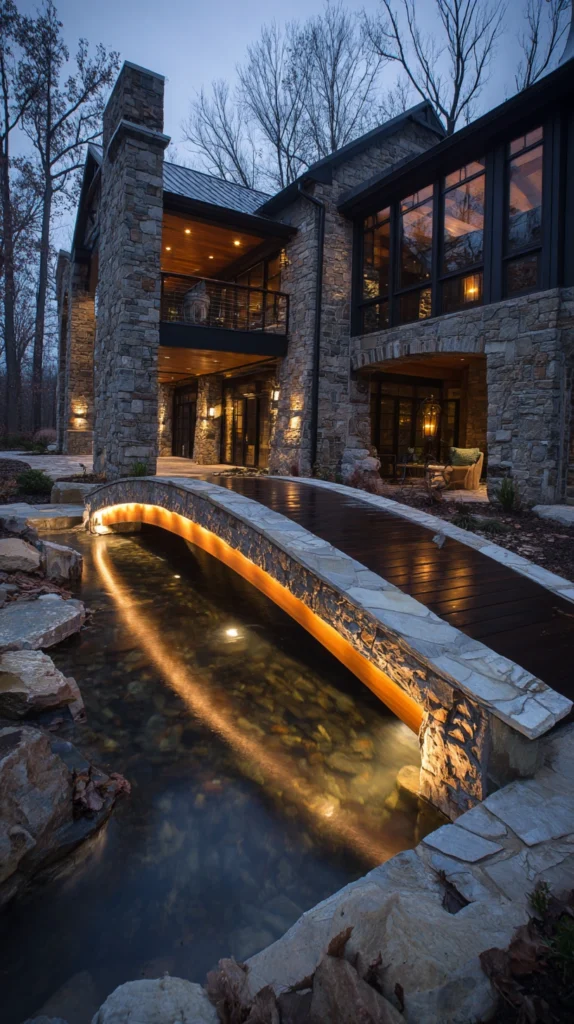
For larger properties with a natural water feature, stream, or even a purely decorative water element, a custom-designed bridge or crossing adds a genuinely memorable architectural moment connecting different areas of the landscape. Standard decorative bridges run 8-15 feet long, sized to cross a modest water feature or a designed dry creek bed.
Budget: $15,000-50,000 for a custom-built bridge structure, varying based on material (wood, stone, or a combination) and length. This feature works best when it serves a genuine functional purpose, connecting two distinct areas of the property, rather than existing purely as an isolated decorative object without a clear practical crossing to make.
This is one of the more site-specific additions on this list, requiring a property with the natural or designed topography to genuinely support this kind of feature rather than feeling forced into a flat, straightforward yard. When done well, a bridge crossing becomes one of the most photographed and memorable individual features on a larger luxury property, offering both a functional path and a distinct architectural statement.
Quick Reference Investment Guide
Under $50,000: Comprehensive lighting design, a custom fire feature, a sunken lounge area, or a putting green.
$50,000-150,000: A pool house, a wine cellar, an outdoor spa zone, or a formal garden installation.
$150,000+: An infinity pool, a full outdoor kitchen pavilion, a sport court, a guest house, or a motor court redesign.
Success Indicators
- Each zone feels intentional and connected to the others, not scattered
- Materials and architectural details echo the main house’s existing style
- The space supports genuine daily and entertaining use, not just visual display
- Lighting extends the property’s usability well into the evening
- The overall design reflects the household’s actual interests and habits, not generic luxury tropes
Remember
Plan the full vision with a landscape architect before starting any individual project, even if construction happens in phases over several years, prioritize structural and lighting foundations early, since these support and elevate everything added later, choose one true statement feature (a pool, a pavilion, a sport court) to anchor the property rather than spreading the budget evenly across many smaller additions, ensure architectural consistency between any new structures and the existing home, and remember that genuine luxury in outdoor design comes through in material quality and thoughtful planning as much as in the scale of any individual feature.