14 Cozy Lighting Ideas for Fall Bedrooms
My bedroom ran on one ceiling fixture and a single nightstand lamp for years, the same setup year-round, which meant the room never actually shifted moods between a bright summer morning and a dark, cold November evening.
A bedroom specifically benefits from light planned around two very different needs, falling asleep and waking up, in a way a living room doesn’t have to consider as carefully, and fall is when that mismatch becomes most obvious.

Here’s what actually changed how my bedroom feels once the clocks shift and the evenings get longer, with the specific bulb temperatures, placements, and products that made the difference.
1. Swap Every Bulb to 2700K or Lower
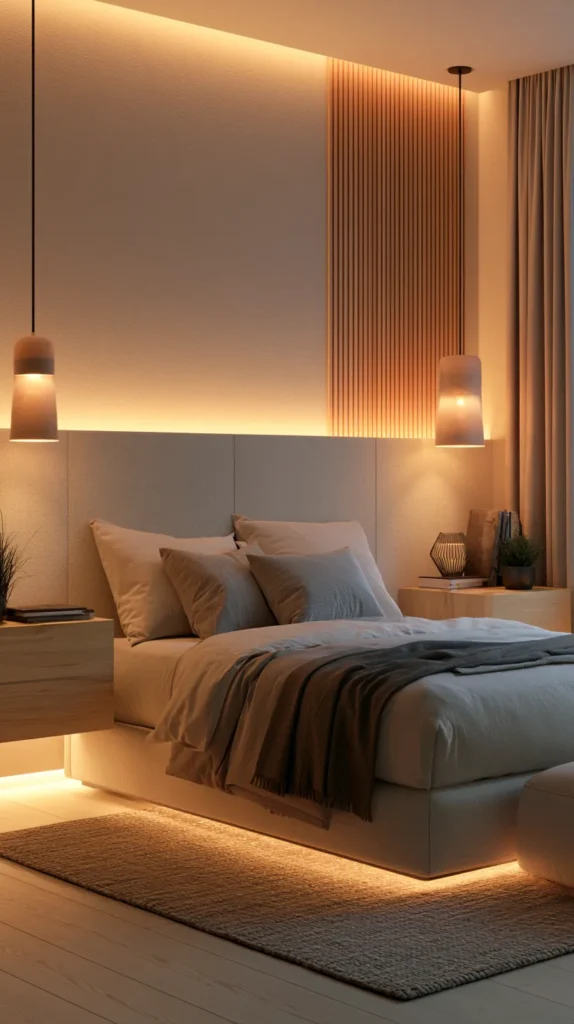
Bulb temperature affects mood more than almost any fixture choice. Most bedrooms still run on whatever bulb came in the lamp’s box, often a 3000K or higher “daylight” bulb that reads as alert and slightly clinical rather than restful.
Dropping every bulb in the room to 2700K, or even 2200K for the warmest possible glow, shifts the entire room’s character before you change a single fixture or piece of furniture.
Budget: $20-35 to replace every bulb in a standard bedroom with warm LED equivalents.
Replace every bulb in the room at the same time rather than gradually, since one leftover cool-toned bulb among several warm ones is immediately noticeable and undercuts the whole effect.
2. Add a Dimmer Switch to the Overhead Fixture
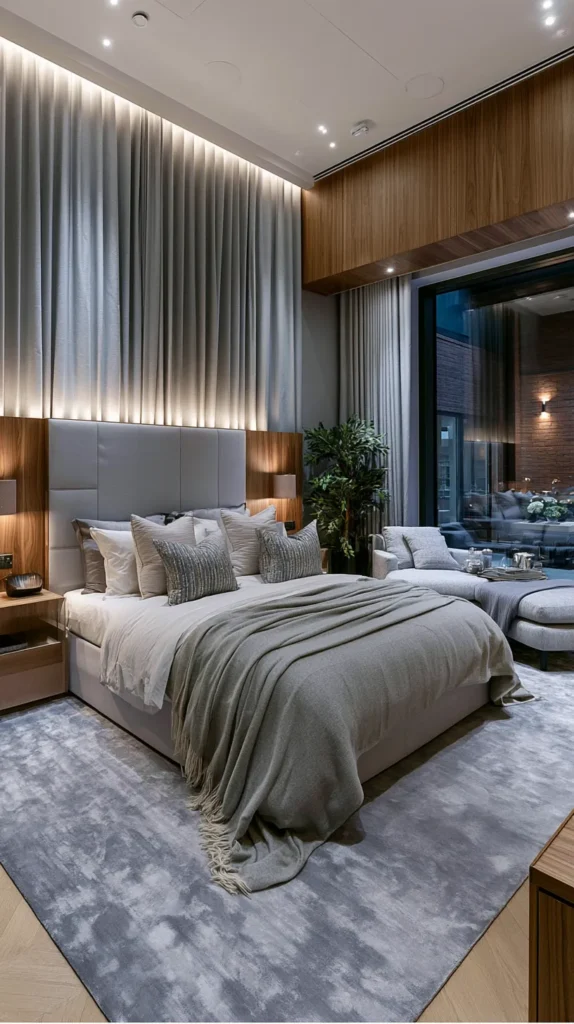
A dimmer turns one fixture into two: bright enough for getting dressed in the morning, and low enough for winding down at night. This single hardware change does more for a bedroom’s flexibility than buying an additional lamp.
Standard single-pole dimmers are a straightforward swap for most existing switches, though always confirm your bulbs are dimmer-compatible first, since not every LED bulb dims smoothly.
Budget: $15-30 for the dimmer switch itself, plus installation if you’re not doing it yourself.
Test the dimmer’s lowest setting after installation specifically, since some lower-cost dimmers flicker or cut off entirely before reaching a truly low, ambient light level.
3. Position a Reading Lamp at Shoulder Height When Sitting Up in Bed
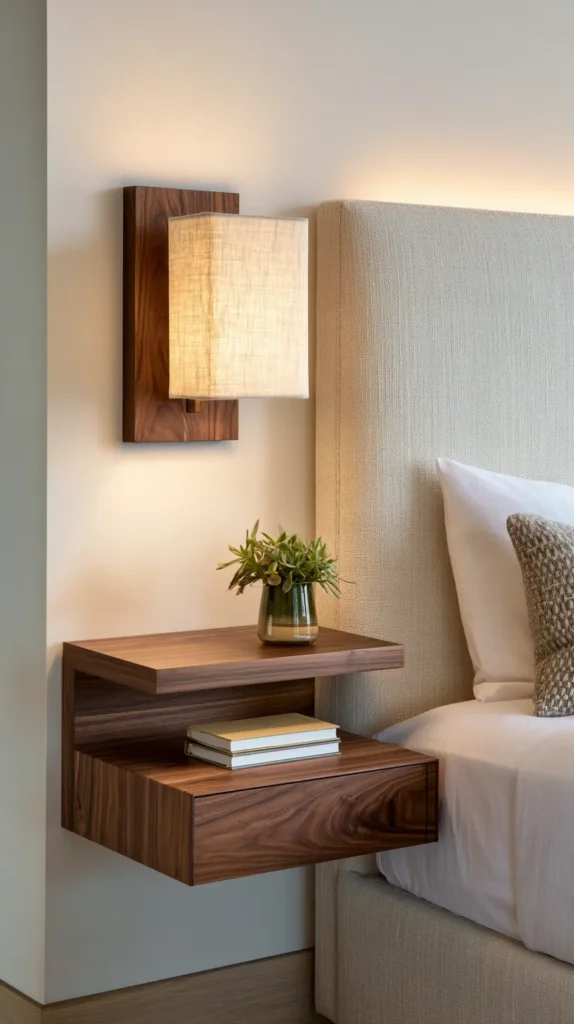
A nightstand lamp sized for general ambiance is often too short or too tall for actual reading once you’re sitting upright against a pillow. The shade’s bottom edge should land roughly level with your shoulder when sitting up in bed, generally around 20 to 24 inches above the nightstand surface depending on the bed’s height.
Budget: $40-80 for a properly sized table lamp, or $15-25 for an adjustable clip-on reading light if the nightstand has no room to spare.
Sit in your actual bed with a book before buying a lamp if possible, or measure from the mattress top to your shoulder while seated, and match the lamp’s total height, base plus shade, to that measurement.
4. Use a Smart Bulb Set to a Sunrise and Sunset Schedule
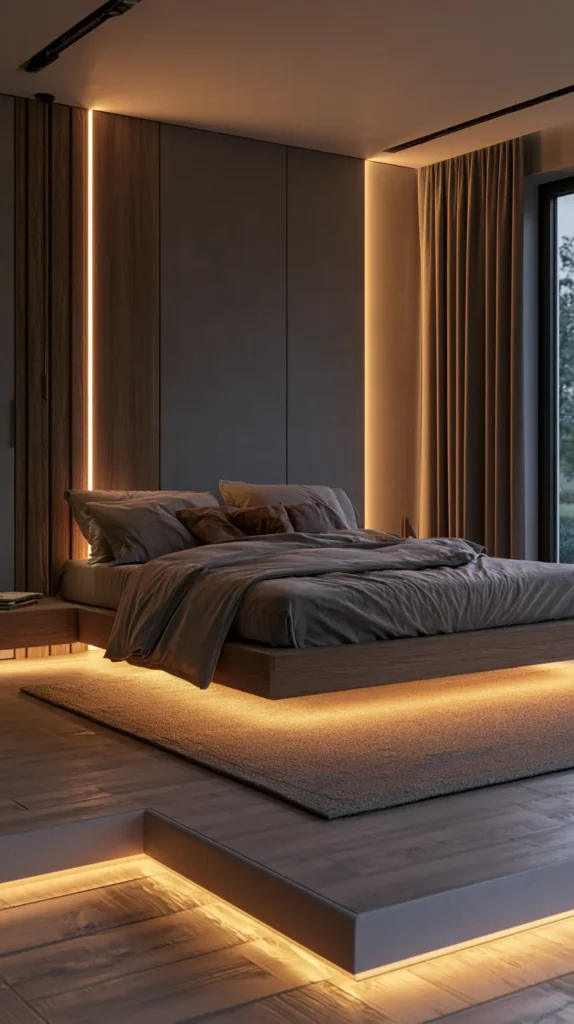
A smart bulb programmed to dim slowly starting around 8 or 9pm, then brighten gradually in the fifteen minutes before your alarm, mimics natural daylight patterns that fall’s shorter days otherwise disrupt, which can meaningfully ease the transition into and out of sleep.
Budget: $15-25 per smart bulb, with most bedrooms needing two to three bulbs across the main fixtures.
Set the sunrise schedule to begin gradually rather than switching on at full brightness instantly, generally a 10 to 15 minute gradual brightening works better for waking up gently than an abrupt full-power start.
5. Add a Salt Lamp or Himalayan Crystal Lamp on a Low Dresser
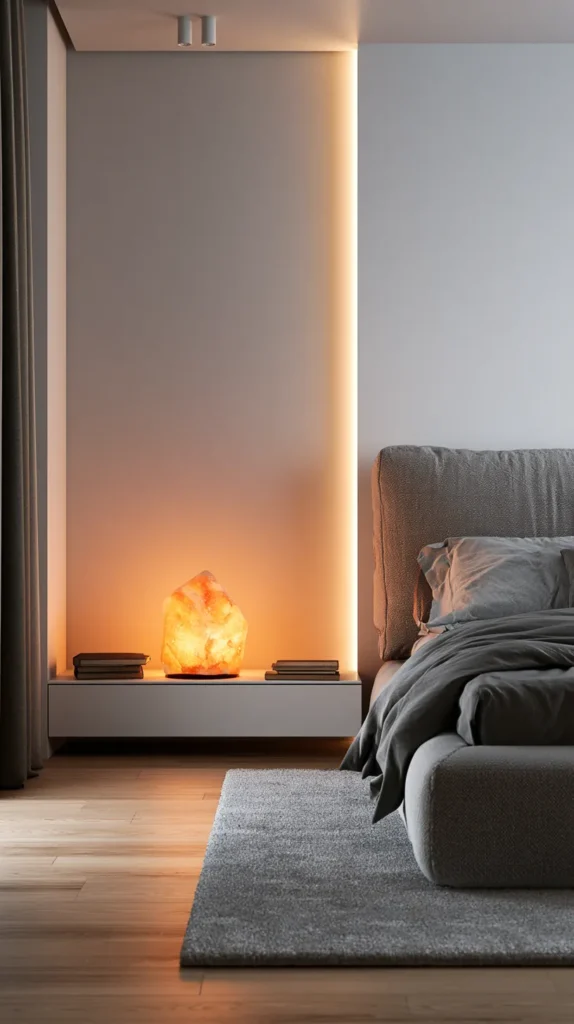
A salt lamp’s naturally warm, uneven glow works well as a low-level night light left on continuously, providing just enough illumination to avoid total darkness without the brightness of a typical lamp.
These lamps put out relatively low light, generally equivalent to a 15-watt bulb, so they suit ambiance rather than any task lighting purpose.
Budget: $25-45 for a quality salt or crystal lamp.
Place it somewhere it won’t get knocked over easily, since the salt material itself is more fragile than a standard lamp base and can crack if dropped even a short distance.
6. Add a Plug-In Wall Sconce Beside the Bed Instead of a Table Lamp
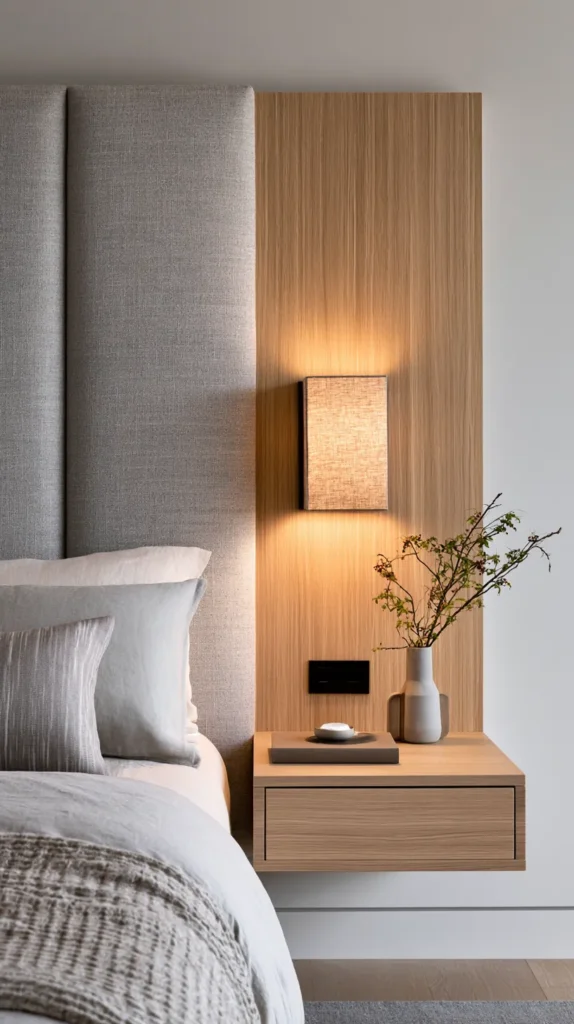
A plug-in sconce, mounted on the wall directly beside the bed, frees up the entire nightstand surface for a book, a glass of water, or a candle, while still providing the same reading light a table lamp would.
Standard mounting height for a bedside sconce runs about 28 to 30 inches above the top of the mattress, positioning the light source close to shoulder height once you’re sitting up.
Budget: $35-60 per sconce for a plug-in model, avoiding the cost of hardwiring into the wall.
Use a cord cover channel, sold separately at most hardware stores, to run the visible cord down to the outlet in a straight, intentional line rather than letting it dangle loosely against the wall.
7. Hang Warm String Lights Along a Headboard or Canopy Frame
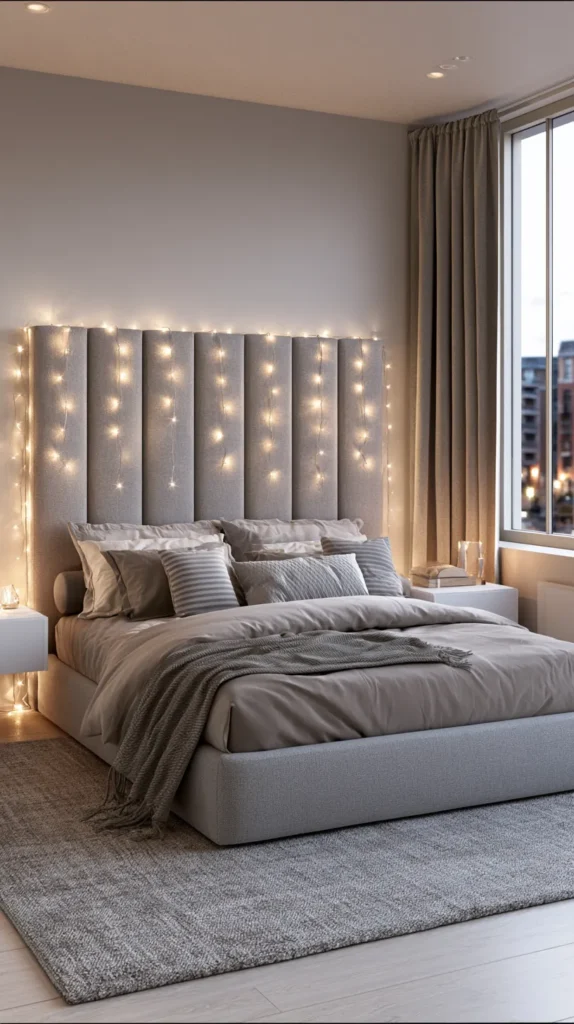
A short strand of warm white string lights, run along the top of a headboard or a canopy bed frame, adds a soft secondary light source that works well for general ambiance without the brightness of a lamp.
For a standard queen headboard around 60 inches wide, a 10 to 15 foot strand provides enough length to drape with a bit of slack rather than pulling tight and straight.
Budget: $15-25 for a warm white LED string light strand.
Choose battery-powered or USB-powered lights with a built-in timer specifically for this placement, so they switch off automatically rather than needing to be manually turned off each night from across the room.
8. Use a Tabletop Flame-Effect Lantern as a Bedside Night Light
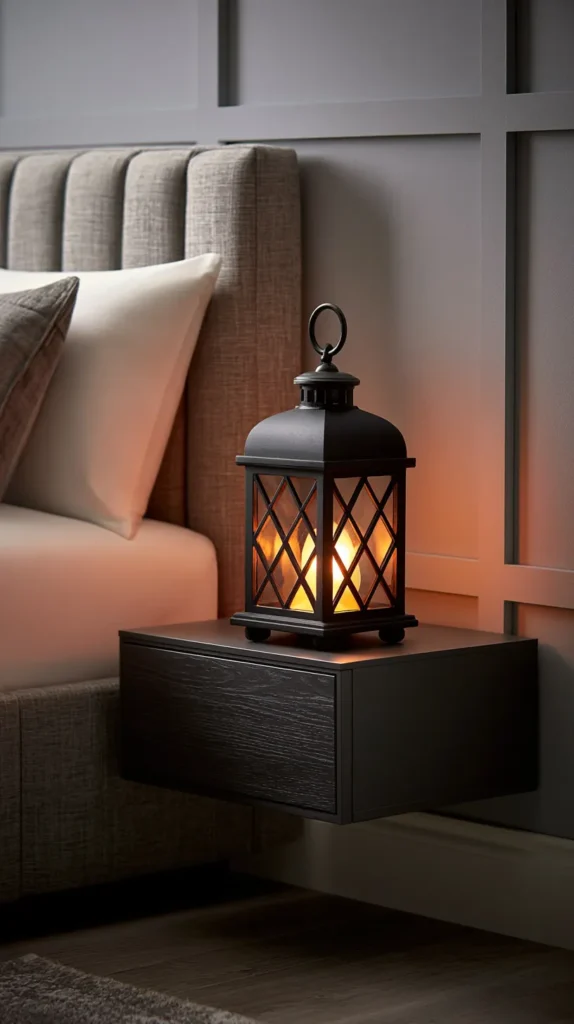
A small flame-effect LED lantern, kept on the nightstand, provides the flickering, candle-like quality real flame offers without any fire risk in a room where it might be left running while you sleep or read unattended.
Budget: $20-35 for a quality flame-effect lantern.
Choose a model with an automatic shutoff timer, generally a 4 to 6 hour option, so it doesn’t need to run all night if you fall asleep before turning it off manually.
9. Add an Amber or Smoked Glass Shade to an Existing Lamp
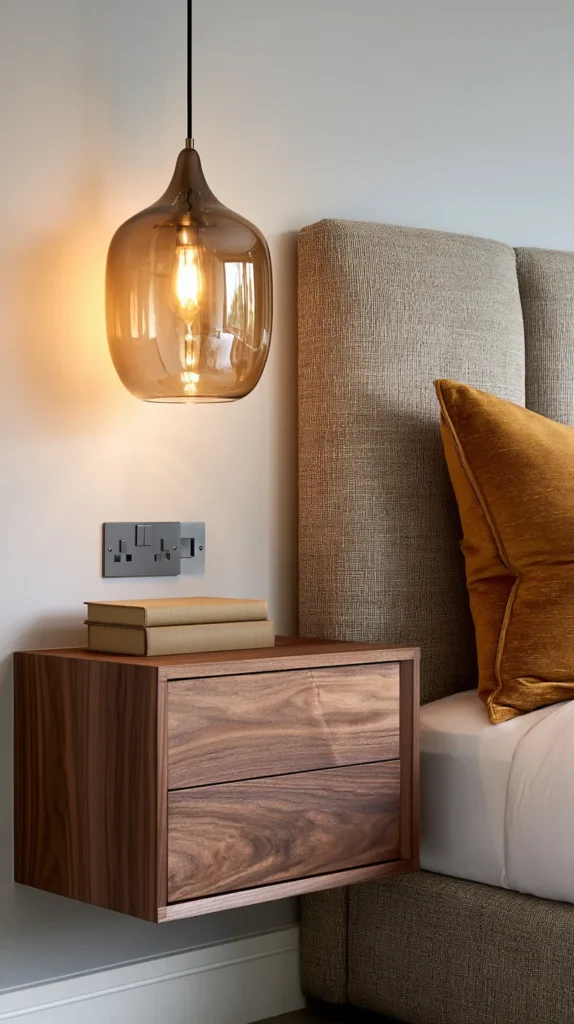
If replacing a whole lamp isn’t necessary, swapping just the shade for one in amber or smoked glass tints the light itself warmer, adding a layer of seasonal coziness without buying an entirely new fixture.
Most standard lamp shades use a universal harp and finial fitting, so check your lamp’s existing hardware before ordering a replacement shade to confirm compatibility.
Budget: $20-40 for a quality amber or smoked glass lamp shade.
Measure your existing shade’s height and both diameters, top and bottom, before ordering a replacement, since an ill-fitting shade can look noticeably off-proportion even in the right color.
10. Position a Floor Lamp in the Room’s Darkest Corner
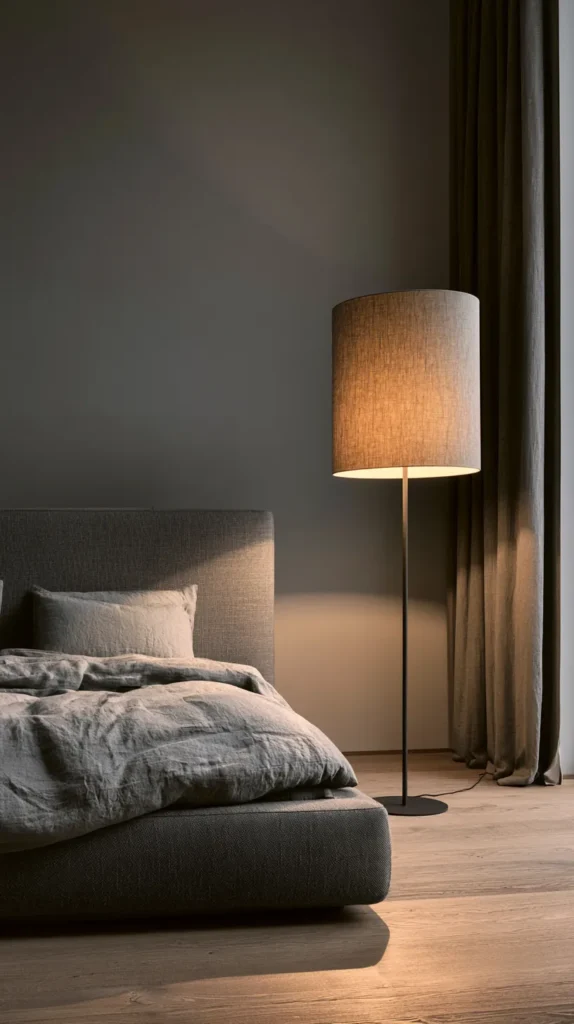
Most bedrooms have one corner that stays dim regardless of the main overhead fixture or a bedside lamp, often near a closet or a chair that otherwise goes unused after dark. A floor lamp positioned specifically there balances the room’s overall light distribution rather than leaving one whole section in shadow.
Budget: $50-90 for a quality floor lamp with a warm-toned shade.
Choose a lamp with a dimmable bulb and a low-end range specifically for this placement, since this corner lamp typically needs to run lower than your main reading light to avoid competing with it.
11. Add a Battery Candle Cluster on a Dresser Tray
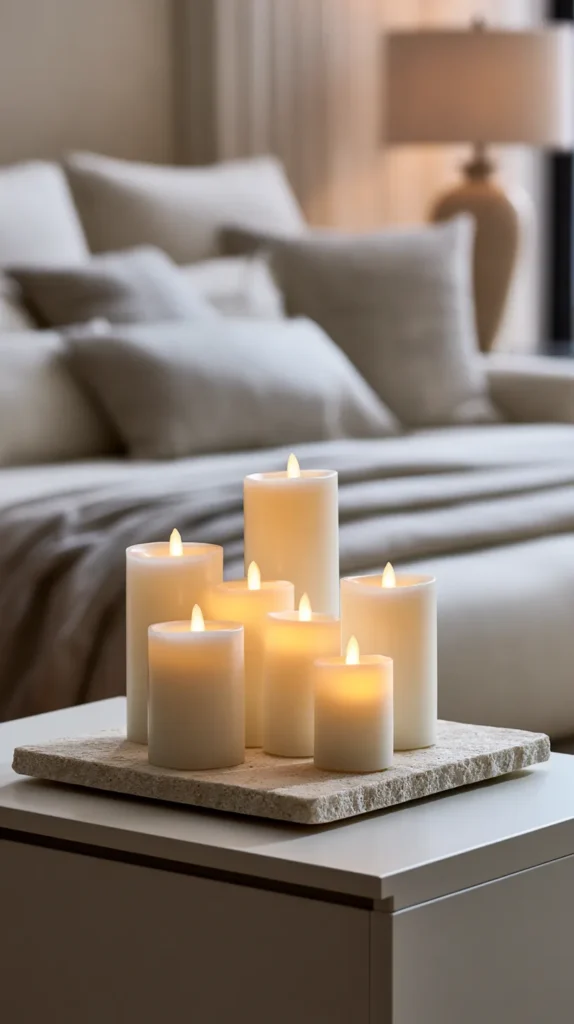
A small cluster of three to four flameless candles, grouped on a simple tray, adds the flicker and warmth real candlelight provides without needing supervision, which matters in a room people fall asleep in regularly.
Budget: $20-30 for a cluster of quality flameless candles and a small tray.
Vary the candle heights within the cluster, generally a 4, 6, and 8 inch grouping, since uniform heights read as less natural and more like a uniform product display.
12. Use a Picture Light Above Art Specifically for Bedroom Use
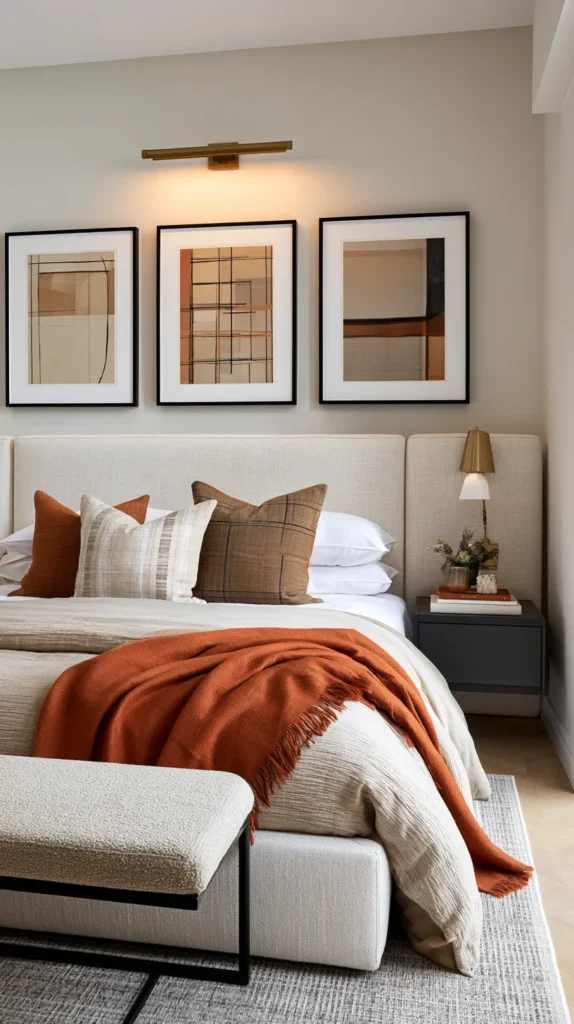
A small picture light, mounted directly above a framed print or painting, adds a focused, warm light source at a height most other bedroom lighting doesn’t reach, filling the visual gap between a low lamp and a high overhead fixture.
Budget: $30-50 for a battery or plug-in picture light.
Angle the light slightly downward rather than straight out from the wall, which avoids glare on the art’s surface and casts a softer wash of light into the room below it.
13. Choose a Pendant Light Over Each Nightstand Instead of Table Lamps
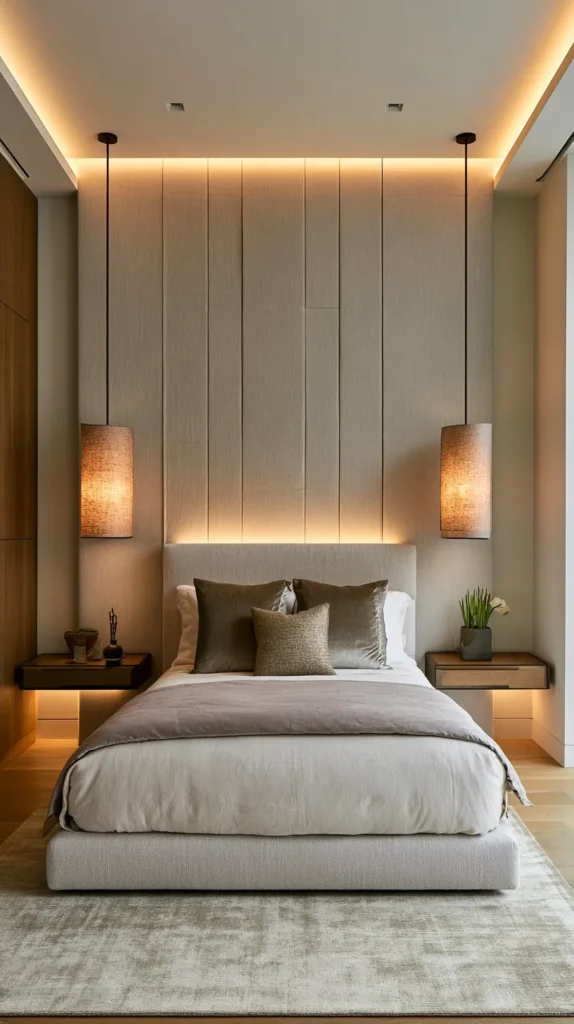
Hanging a small pendant above each nightstand, rather than using table lamps, frees up surface space the same way a wall sconce does, while adding a more architectural, intentional-looking light source than a swing-arm sconce alone.
Standard hanging height for a bedside pendant runs about 24 to 30 inches above the nightstand surface, positioning the bulb at roughly the same shoulder height target used for table lamps and sconces.
Budget: $50-90 per pendant fixture, plus installation if the room isn’t already wired for hanging fixtures at the bedside.
Choose pendants with a fabric or frosted glass shade rather than exposed bulb styles, since an exposed bulb at eye level when sitting up can create glare that a covered shade avoids.
14. Combine Several of These Into One Fully Layered Bedroom Lighting Plan
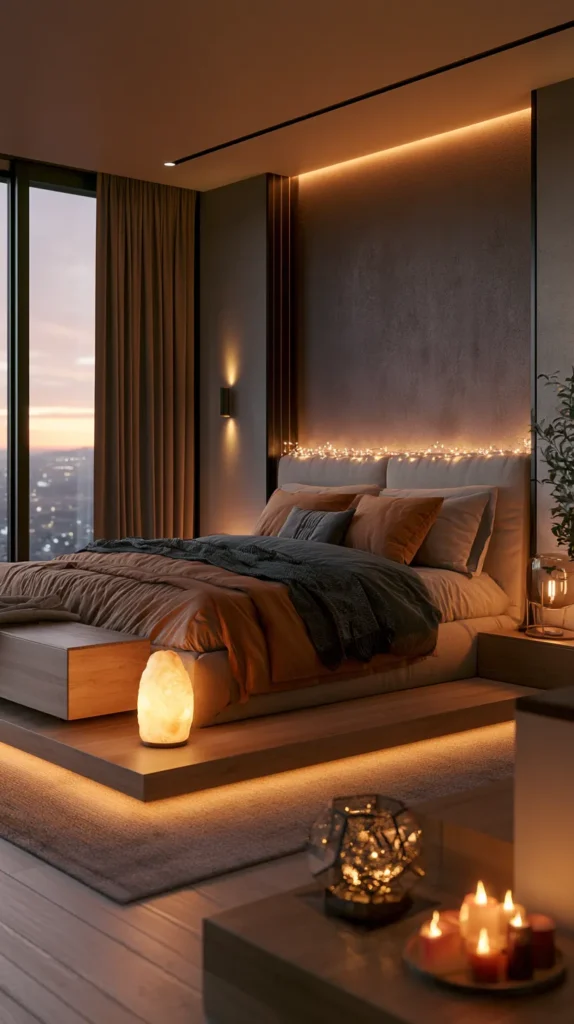
Bringing together a dimmer on the overhead fixture, a properly positioned reading lamp, warm string lights, and one flame-effect or battery candle source creates the same kind of layered lighting a living room benefits from, scaled specifically to a bedroom’s two core needs: genuine task light for reading, and low, warm ambient light for actually falling asleep.
Budget: $150-300 to combine most of the ideas above into one complete bedroom lighting overhaul.
Address the overhead fixture and main reading lamp first, since these handle the room’s two most functional lighting needs, then add the smaller ambient layers, string lights, candles, a salt lamp, once the functional foundation is in place.
Choosing Your Approach
For the fastest, lowest-cost change: the bulb swap to 2700K (idea 1) and a dimmer switch (idea 2) shift the whole room’s mood for under $50 combined.
For better actual reading comfort: prioritize the properly positioned reading lamp (idea 3) or bedside sconce (idea 6), measured specifically against your own bed height.
For the coziest full result: combine several ideas using idea 14’s approach, handling function first and ambiance second.
A bedroom’s lighting needs to do two very different jobs well, helping you read or get dressed, and helping you actually wind down and sleep, and most bedrooms only ever plan for the first one. Fall is the season that makes the gap most obvious, since the room gets dark hours before bedtime actually arrives.