14 Glass Decor Ideas That Reflect Light Beautifully
Glass is the only decorating material that is defined entirely by its relationship with light. Stone has texture, timber has grain, ceramic has glaze — but glass has light itself, and its entire decorative value comes from what it does when light passes through it, reflects off it, or is scattered by it.
A single piece of glass in a sunlit window can throw patterns of colour and movement across an entire room. A collection of glass vessels on a shelf can turn ordinary afternoon light into something that feels genuinely extraordinary.
Summer is the season when glass decor reaches its fullest potential. The long days, the strong light, and the particular quality of sunlight in the morning and late afternoon hours create the conditions in which glass performs at its most spectacular — refracting, reflecting, and scattering light in ways that the weaker, lower light of winter months cannot produce with the same intensity or beauty.
The ideas below cover every room, every scale, and every budget, each one exploring a different way to use glass as a decorating material that works with light rather than simply occupying space.
1. The Coloured Glass Windowsill Collection
Budget: $20 – $120
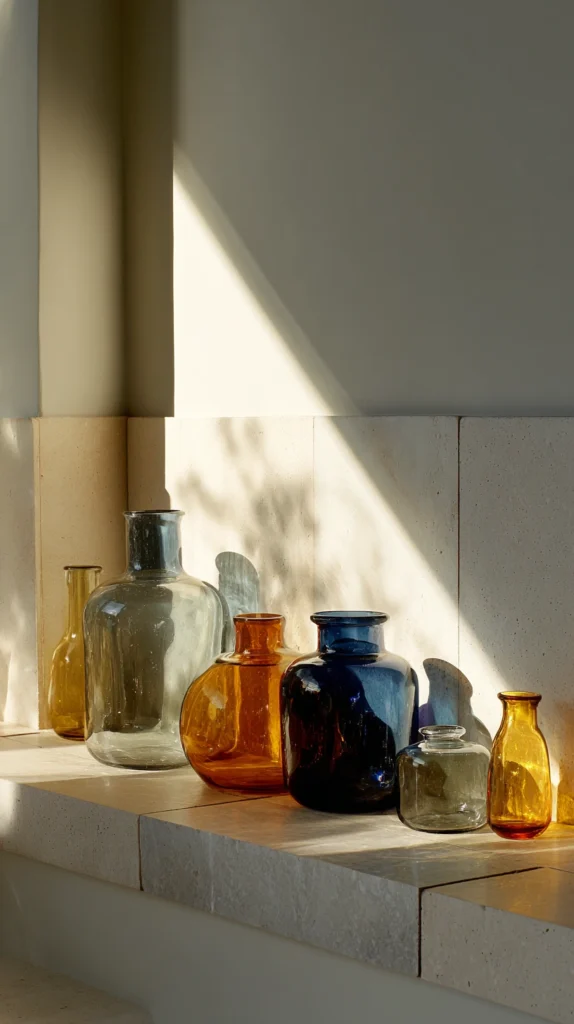
A collection of coloured glass vessels — amber, cobalt blue, deep green, ruby red, pale aqua — arranged on a sunny windowsill is one of the most immediately beautiful and most affordable glass decor ideas available. When morning or afternoon sunlight passes through coloured glass, it throws pools and shafts of coloured light across the surrounding surfaces — across the wall, across the floor, across the objects nearby — in a way that transforms the entire character of the space for as long as the sun is at the right angle.
Source coloured glass vessels from charity shops, antique markets, and vintage dealers rather than from homeware retailers — genuinely old coloured glass has a depth and irregularity of colour that modern reproductions rarely replicate. Vintage apothecary bottles, coloured glass vases, antique glass decanters, and art glass pieces all contribute different colour tones and different light qualities to the collection, and the variety of forms creates visual interest beyond what the colour alone provides.
Styling tip: Arrange coloured glass vessels in a windowsill collection by height rather than by colour — the tallest pieces at the back, medium pieces in the middle, small pieces at the front. A height-organised arrangement allows every piece to be seen clearly and creates depth within the collection. A colour-organised arrangement groups the colours into blocks that prevent the light-scattering effect from reaching its full potential across the full width of the windowsill.
2. The Glass Pendant Light
Budget: $60 – $400
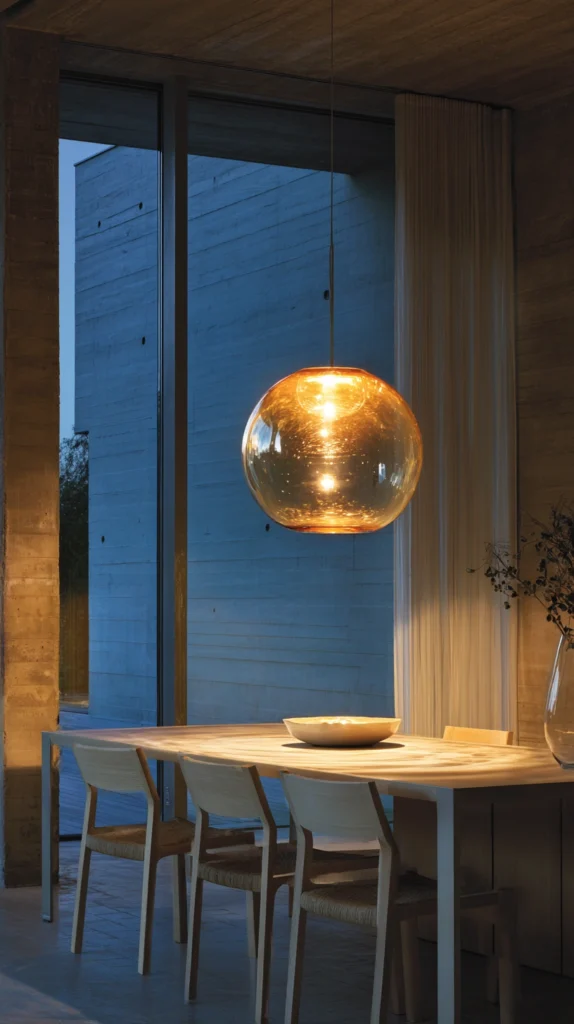
A glass pendant light — a single large blown glass globe, a cluster of glass pendants at varying heights, or an amber glass shade over a dining table — is one of the most light-responsive ceiling fixtures available in interior design. The glass shade refracts the light source within it, scatters it at the angle of the glass surface, and creates a halo of warm, coloured light around the fitting that a ceramic or metal shade simply cannot produce. In the evening, a glass pendant light becomes both a light source and a decorative object simultaneously — luminous, warm, and genuinely beautiful.
Mouth-blown glass pendants in amber, smoke grey, clear, or pale sage cost $60–$200 each and have an organic, irregular quality — slight variations in wall thickness, small air bubbles visible in the glass, a subtle colour variation across the surface — that machine-produced glass pendants lack entirely. The irregularity is not a defect; it is the quality that makes the light through hand-blown glass so beautiful and so unlike the light through any manufactured alternative.
Styling tip: Position a glass pendant light where its light output falls on a surface that will reflect and scatter it — above a pale stone dining table, above a light timber floor, above a white marble kitchen island. The surface beneath a glass pendant is as important as the pendant itself — a dark surface absorbs the scattered light, while a pale, reflective surface bounces it back upward and outward through the space in a way that multiplies the pendant’s decorative impact significantly.
3. The Stained Glass Panel or Suncatcher
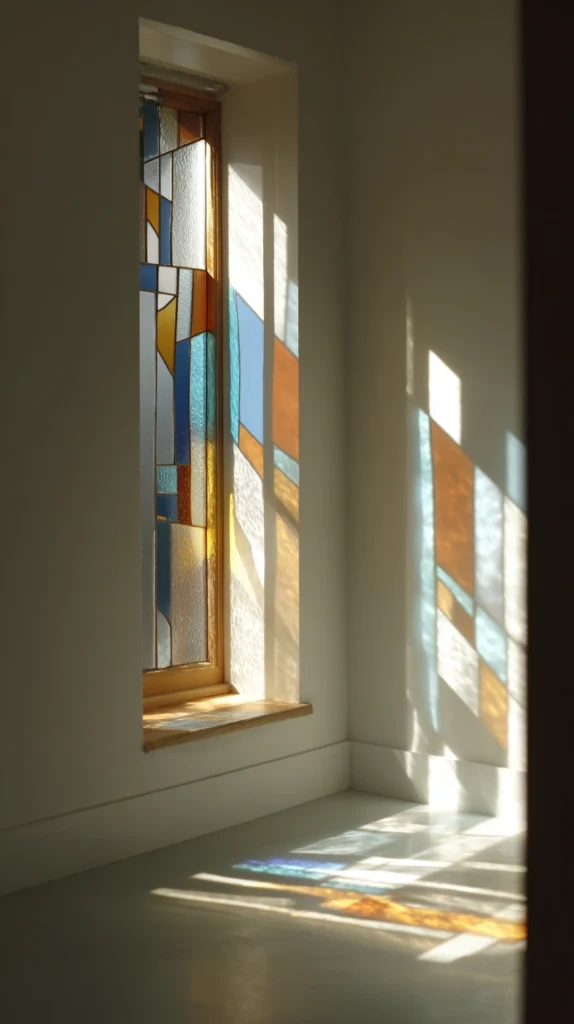
Budget: $20 – $200
A stained glass panel hung in a window — either a full custom-made leaded panel or a simple suncatcher of coloured glass pieces — casts coloured light into the room in patterns and colours that shift and move with the changing angle of the sun throughout the day. The effect is most dramatic in a south or west-facing window where direct sunlight falls for several hours — the coloured pools of light that a stained glass panel throws onto white walls and pale floors create a display of natural colour that no paint or textile can replicate.
Simple stained glass suncatchers cost $15–$40 from craft suppliers and independent makers. Custom-made leaded stained glass panels cost $100–$500 depending on size and complexity and can be commissioned from local glass artists through art school contacts or independent studio websites. A single panel in a bathroom window, where the frosted glass already creates diffused light conditions, creates an extraordinarily atmospheric effect.
Styling tip: Hang a stained glass panel or suncatcher in a window where it will receive direct rather than diffuse sunlight for the best light-scattering effect. A stained glass piece in a north-facing window or in a heavily shaded position shows its colours when viewed against the light but does not cast coloured light into the room. Direct sunlight is what activates the full decorative potential of coloured glass and produces the moving, scattered light patterns that make stained glass so extraordinary.
4. The Glass Vase Collection
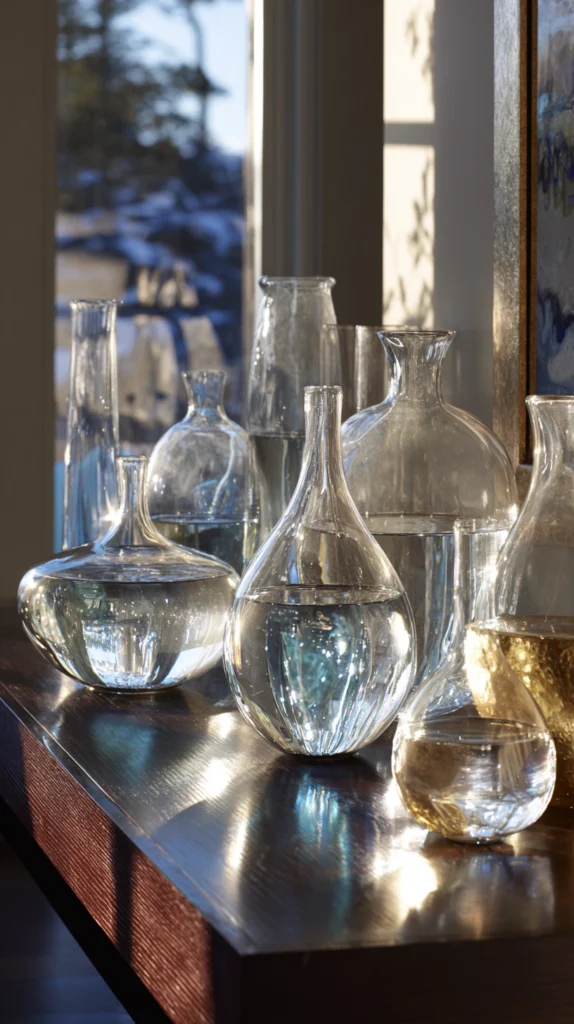
Budget: $30 – $200
A collection of glass vases in a range of forms — tall cylindrical, round bulbous, narrow-necked, wide-mouthed, fluted, faceted — grouped on a shelf, a windowsill, or a dining table creates a display that is as much about light as it is about form. Clear glass vases contain light within the water they hold, refract it through the curved or faceted glass walls, and scatter it onto the surfaces they sit on in a constantly shifting pattern that changes as the light source moves through the day.
Mix clear glass with lightly tinted glass — pale amber, soft green, light smoke — within the collection for a range of light qualities and colour tones that complements the variety of forms. Some vases filled with water and a single stem, some filled with water alone, some empty — the varying water levels create different refractive qualities and different densities of light within each vessel.
Styling tip: Place a glass vase collection on a surface that has a reflective quality beneath it — a mirrored tray, a polished stone surface, a lacquered tray — so the light scattered downward through the glass bases is caught and reflected back upward through the collection rather than being absorbed by a matte surface. The reflective base doubles the apparent luminosity of the collection and creates upward-scattered light that makes the overall arrangement appear to glow from beneath.
5. The Decorative Glass Bowl
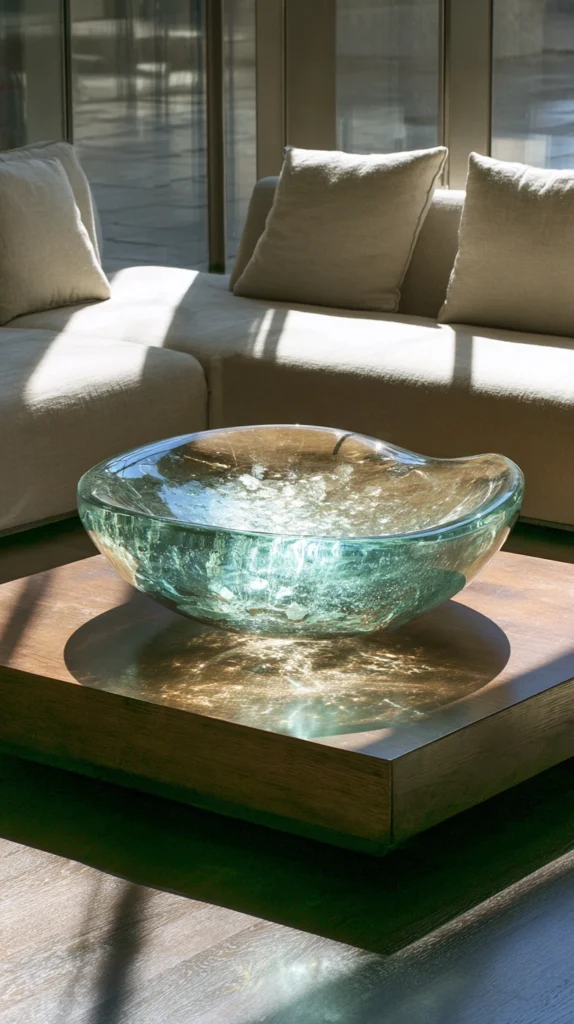
Budget: $25 – $180
A large, beautiful glass bowl — clear, frosted, coloured, hand-blown with trapped air bubbles, pressed glass with geometric patterning — used as a standalone decorative object on a coffee table, a console, or a dining table centrepiece creates a focal point whose entire beauty comes from the way it interacts with available light. An empty glass bowl in direct sun is one of the most beautiful decorating objects available at any price — the light passes through the walls, refracts at the base, and creates a pool of concentrated brightness directly beneath the bowl that moves with the sun.
Hand-blown glass bowls with deliberate inclusions — trapped air bubbles, coloured glass threads, metallic leaf fragments suspended in the glass — cost $40–$150 and create light effects of extraordinary complexity. The inclusions catch the light at different depths within the glass wall, creating a three-dimensional scattering effect that flat-walled clear glass cannot replicate. The bowl appears to contain light rather than simply transmitting it.
Styling tip: Rotate a glass bowl slightly toward the primary light source in the room — tilting it so the curved base catches the sun or the lamp light at its most direct angle. A small adjustment in the orientation of a glass bowl can make the difference between a piece that simply looks decorative and one that actively scatters light across the surrounding surfaces. Glass rewards attentive positioning more than almost any other decorating material.
6. The Glass Terrarium
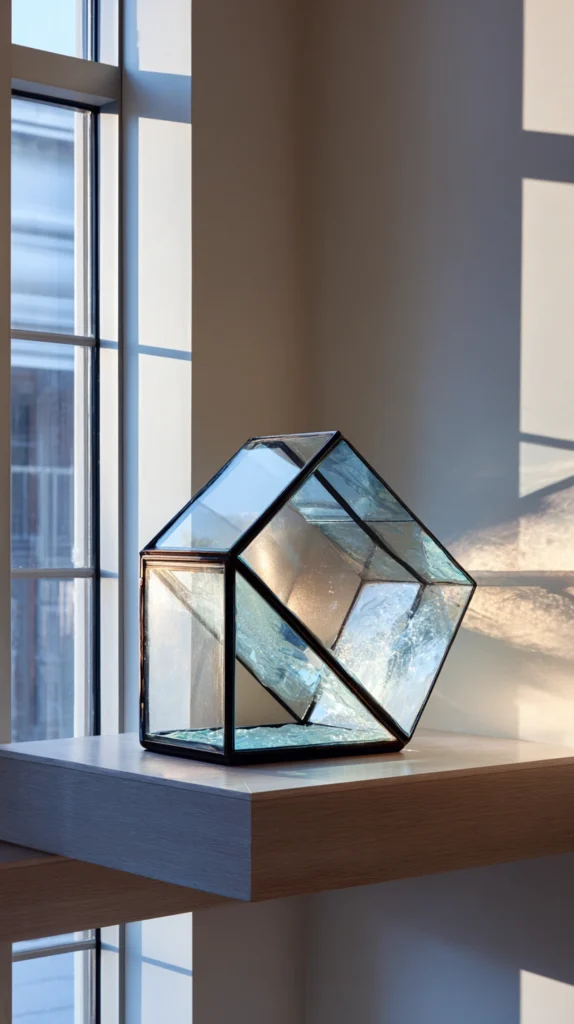
Budget: $30 – $200
A glass terrarium — a geometric glass container planted with ferns, mosses, succulents, or air plants — creates a decorating object that combines the light-refracting qualities of glass with the living quality of plants in a single, self-contained piece. The angled glass panels of a geometric terrarium refract light at multiple angles simultaneously, creating a complex, prismatic light effect around the terrarium that changes completely as the viewing angle or the light source changes.
Geometric glass terrariums in brass-framed or black metal-framed designs cost $30–$80 for a quality piece suitable for small plant arrangements. Large Wardian cases — the Victorian glass cabinet-terrariums originally used for fern cultivation — cost $80–$200 and create a focal point of extraordinary visual richness when planted with shade-loving ferns, selaginellas, and mosses in a layered arrangement.
Styling tip: Clean the glass panels of a terrarium thoroughly before positioning it as a display piece — fingerprints and smudges on terrarium glass are immediately visible and significantly reduce the clarity and the light-refracting quality of the panels. Use a glass cleaner and a lint-free cloth on all interior and exterior surfaces before final positioning. A perfectly clean glass terrarium refracts and transmits light with a clarity that slightly smudged panels entirely fail to achieve.
7. The Venetian Glass Mirror
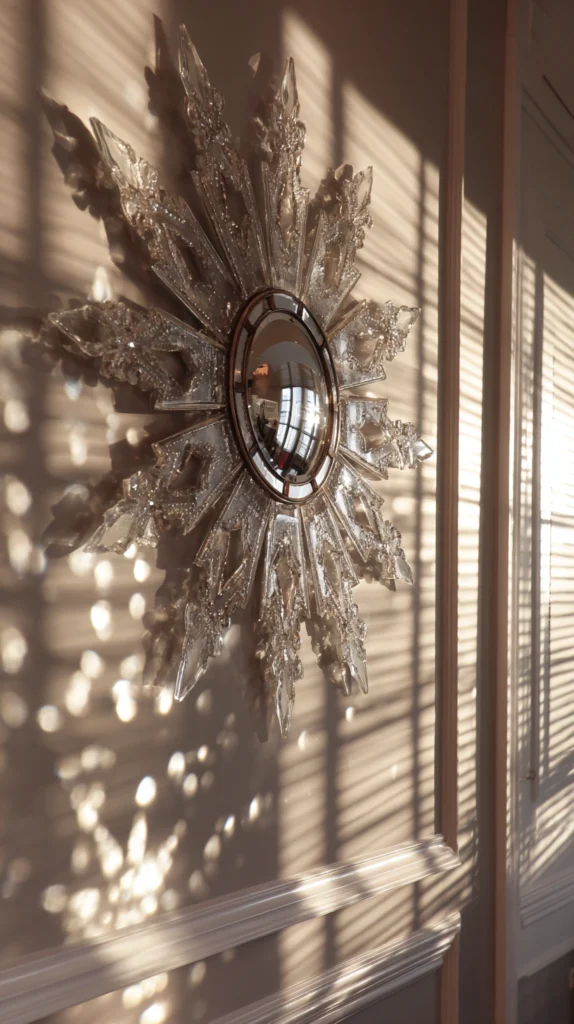
Budget: $100 – $800
A Venetian mirror — the etched, bevelled, and elaborately decorated glass mirror associated with the centuries-old glassmaking tradition of Murano — is among the most light-responsive decorative objects available in interior design. The etched and bevelled glass surfaces scatter and refract light at multiple angles across the room, creating fine lines and points of brightness on walls and ceilings that move with the changing light throughout the day. In a room that receives strong summer sunlight, a Venetian mirror fills the space with a quality of scattered, dancing light that no other single object can produce.
The decorative etching on a Venetian mirror — floral motifs, geometric borders, scrolling arabesques — catches the light differently from the plain mirror centre, creating a constantly shifting play of bright and dark areas across the mirror surface that flat mirrors entirely lack. The mirror is at its most spectacular in strong, raking light — early morning or late afternoon sunlight hitting it at an oblique angle rather than perpendicularly.
Styling tip: Hang a Venetian mirror on a wall that receives direct or near-direct sunlight at some point during the day rather than on a wall in permanent shade. The etched glass details that define the Venetian mirror’s decorative character are largely invisible in low light — the mirror needs strong light to perform at its best, and a shaded position wastes the quality that makes these pieces so extraordinary.
8. The Glass Candleholder Collection
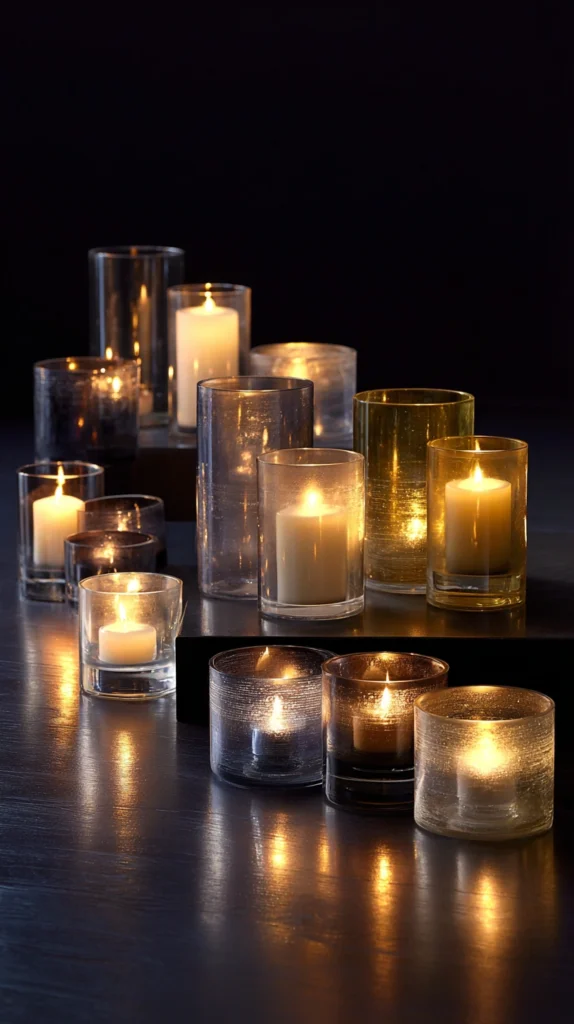
Budget: $20 – $100
A collection of glass candleholders — hurricane lanterns, pillar holder cylinders, tealight glasses in varying heights, faceted glass votive holders — creates a display that is equally beautiful in daylight and in candlelight but produces entirely different effects in each. In daylight, the glass forms catch and scatter ambient light in complex patterns. In candlelight, the flame within each glass vessel creates a warm, luminous glow that the glass amplifies and distributes into the surrounding space in a way that solid candleholders cannot.
Faceted glass votives scatter candlelight in multiple directions simultaneously — the cut facets act as miniature prisms, creating a complex, moving pattern of light across nearby surfaces. Coloured glass hurricane lanterns tint the candlelight within them, casting a warm amber, ruby, or cobalt glow that transforms the character of the table or shelf they sit on. Both effects are at their most beautiful when the surrounding room is dim and the candle is the primary light source.
Styling tip: Vary the height of glass candleholders within a grouped arrangement — some tall hurricane lanterns, some medium pillar holders, some low tealight glasses — to create a layered, three-dimensional display that produces light at different heights simultaneously. A collection of glass candleholders all at the same height creates a flat, even light quality. Varying heights create a dramatic, layered distribution of candlelight that fills the space vertically as well as horizontally.
9. The Glass Shelf Display
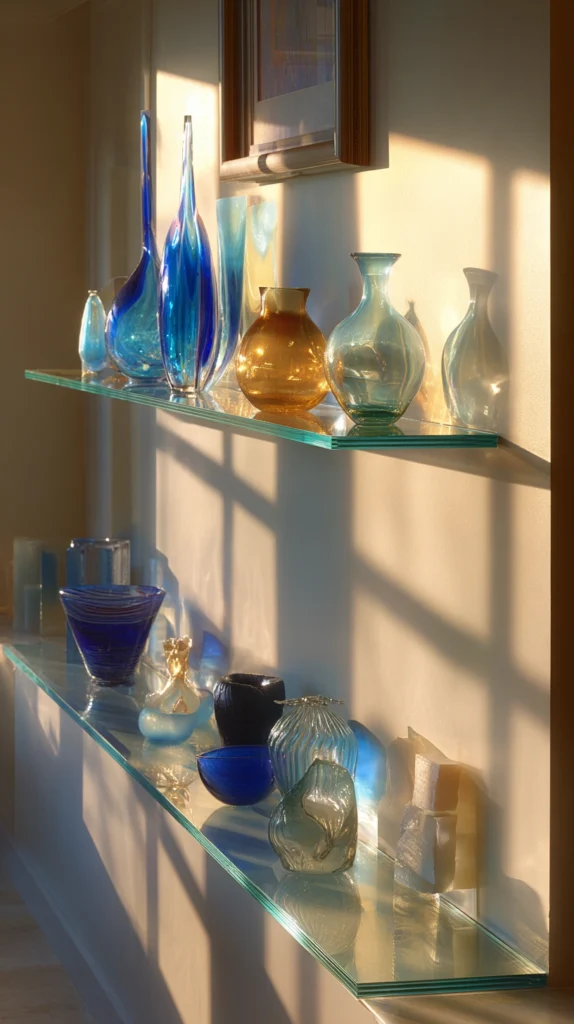
Budget: $60 – $300
A glass shelf — either a frameless glass panel fixed directly to the wall with chrome or brass brackets, or a glass-fronted display cabinet — creates a display surface that adds no visual weight of its own and allows the objects placed on it to appear to float in space. Objects on a glass shelf are seen against the wall behind them with complete clarity, separated from the horizontal surface below by the transparency of the shelf, and lit from above and below simultaneously in a way that solid shelves cannot achieve.
Position glass shelves across a window for the most spectacular effect — objects placed on a glass shelf in a window are backlit by the daylight behind them, creating a luminous halo effect around each piece and transforming even simple glass and ceramic objects into pieces of unexpected beauty. A bathroom window with a glass shelf across it, holding a collection of glass bottles and small plants, is one of the most beautiful small interior moments available at very low cost.
Styling tip: Limit the objects on a glass shelf to pieces with their own visual interest at all angles — glass vessels, ceramic pieces with interesting glazes, small sculptures, plants — rather than purely functional objects. Everything on a glass shelf is visible from below, above, and through the shelf itself, which means the underside of objects matters as much as the top surface. Flat-bottomed, featureless objects look less interesting on a glass shelf than on a solid surface; sculptural, three-dimensional pieces reveal more of their character from the multiple viewing angles a glass shelf provides.
10. The Pressed Glass Decorative Pieces
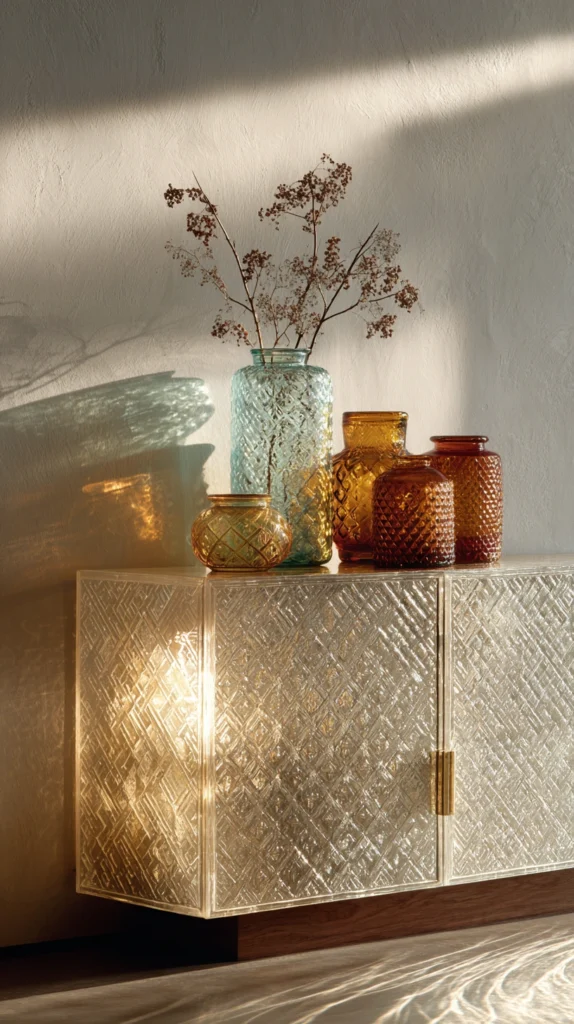
Budget: $15 – $80
Pressed glass — the moulded, patterned glass produced from the late nineteenth century onward in diamond, hobnail, daisy, swirl, and geometric patterns — is among the most light-responsive and most affordable glass available to the decorator. The raised surface patterns of pressed glass catch and scatter light in complex ways at every viewing angle, creating a constantly changing play of brightness and reflection across the glass surface that smooth-walled glass entirely lacks. Vintage pressed glass pieces are available from charity shops and antique markets at $2–$20 per piece.
A collection of pressed glass pieces — a cake stand, a jug, several tumblers, a fruit bowl, a butter dish — grouped on a kitchen dresser, a bathroom shelf, or a dining room sideboard creates a display of extraordinary light-catching richness from materials that cost a fraction of contemporary glass art pieces. The pattern variety across different pressed glass pieces — each with its own raised motif — creates visual complexity within a consistent material that unified collections of smooth glass cannot provide.
Styling tip: Mix pressed glass pieces from different eras and different pattern families within a collection rather than restricting the display to pieces from a single pattern series. The variety of pattern motifs across a mixed pressed glass collection creates visual richness and the impression of something gathered over time — a curated collection rather than a purchased set. Restrict the collection to clear glass only for maximum light-scattering effect, or introduce pale coloured pressed glass — pale green, pink blush, soft amber — for a collection with colour as well as pattern complexity.
11. The Glass Outdoor Lanterns
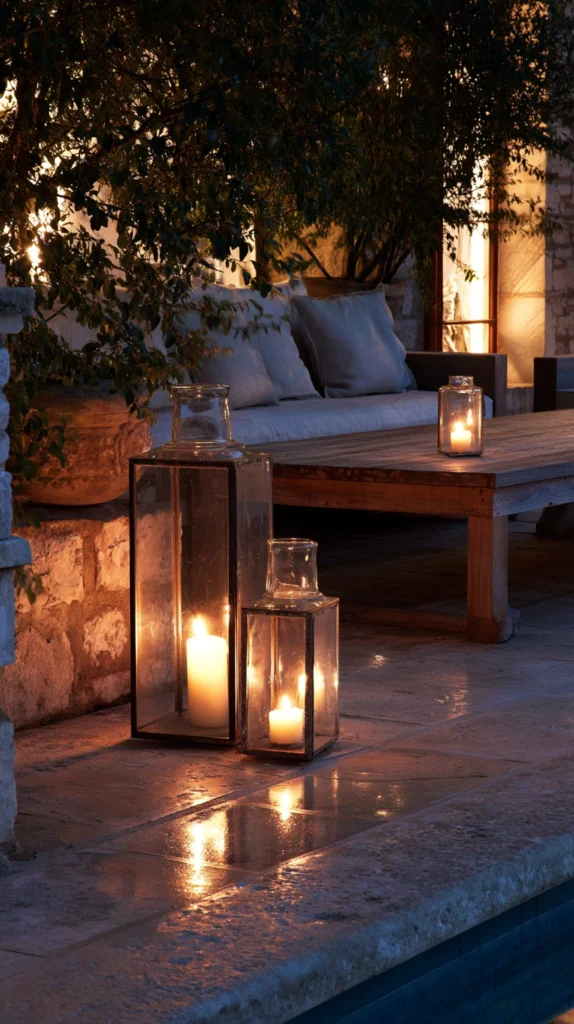
Budget: $30 – $200
Glass lanterns placed on a garden table, along a garden path, or clustered on an outdoor surface create a light-reflecting display in the garden that extends the beauty of glass decor into the outdoor space. In daylight, glass lanterns catch and scatter sunlight. At dusk and after dark, the candle or LED flame within each lantern creates a warm, intimate glow that the glass walls amplify and distribute into the surrounding darkness. On a summer evening, a table set with glass lanterns is one of the most atmospheric outdoor experiences available.
Large format glass hurricane lanterns with brass or antique bronze fittings cost $20–$60 each and weather well in outdoor conditions. Hanging glass lanterns suspended from a pergola or tree branch at varying heights create a tiered light display overhead. Small glass tealight holders scattered across an outdoor table surface create a scattered, intimate candlelight effect that suits outdoor summer dining better than any other single lighting choice.
Styling tip: Protect candles within outdoor glass lanterns from wind by choosing lanterns with a base opening small enough to shelter the flame from direct breeze while still allowing the air circulation the candle needs to burn. A candle in a well-designed glass lantern on a breezy summer evening burns steadily and beautifully; a candle in a poorly designed or open lantern extinguishes repeatedly and creates frustration rather than atmosphere.
12. The Glass Tile Backsplash
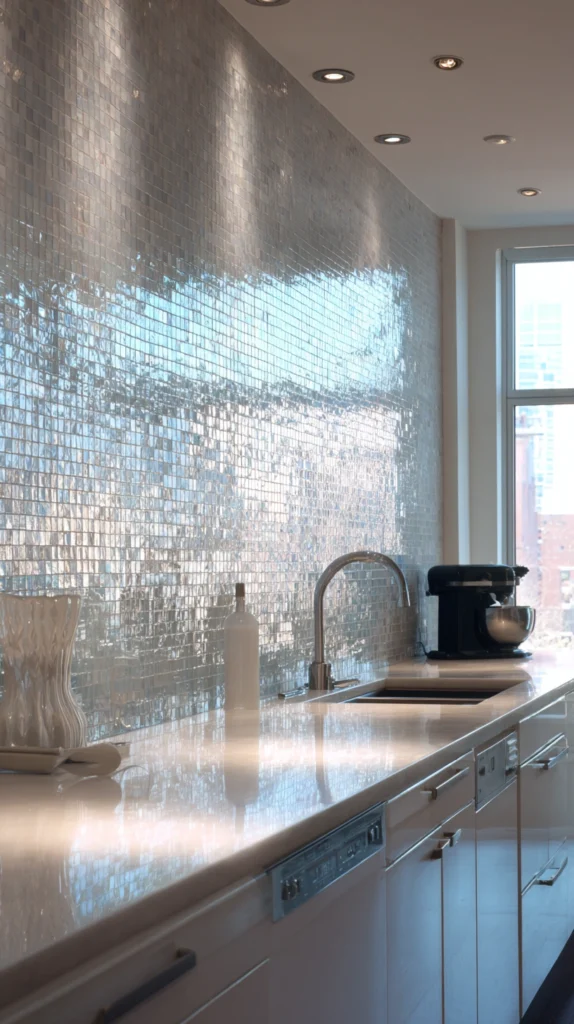
Budget: $80 – $500
A kitchen or bathroom backsplash tiled in glass mosaic or large-format glass tiles creates a wall surface of extraordinary luminosity and depth. Glass tiles do not simply reflect light from their surface — they refract it through the body of the tile, scatter it from the grout joints, and create a quality of light on the wall that ceramic tiles, however glossy, cannot replicate. A glass tile backsplash in a kitchen catches the morning light and scatters it across the ceiling and adjacent walls in a way that makes the room feel significantly larger and significantly brighter.
Glass mosaic tiles in iridescent finishes — tiles that change colour as the viewing angle changes, shifting between blue and green, or between amber and gold — cost $15–$40 per square metre and create a backsplash with a constantly changing light quality as the viewer moves through the kitchen. Large-format clear or tinted glass tiles cost $20–$60 per square metre and create a more uniform reflective surface with greater visual simplicity.
Styling tip: Use a white or pale grout in a glass tile backsplash rather than a colour-matched grout. Pale grout maximises the apparent brightness of the glass tile surface by reflecting light through the joint lines rather than absorbing it. Dark grout between glass tiles reduces the overall luminosity of the installation and works against the light-enhancing quality that is the primary reason to choose glass tiles over ceramic alternatives.
13. The Glass Art Sculpture
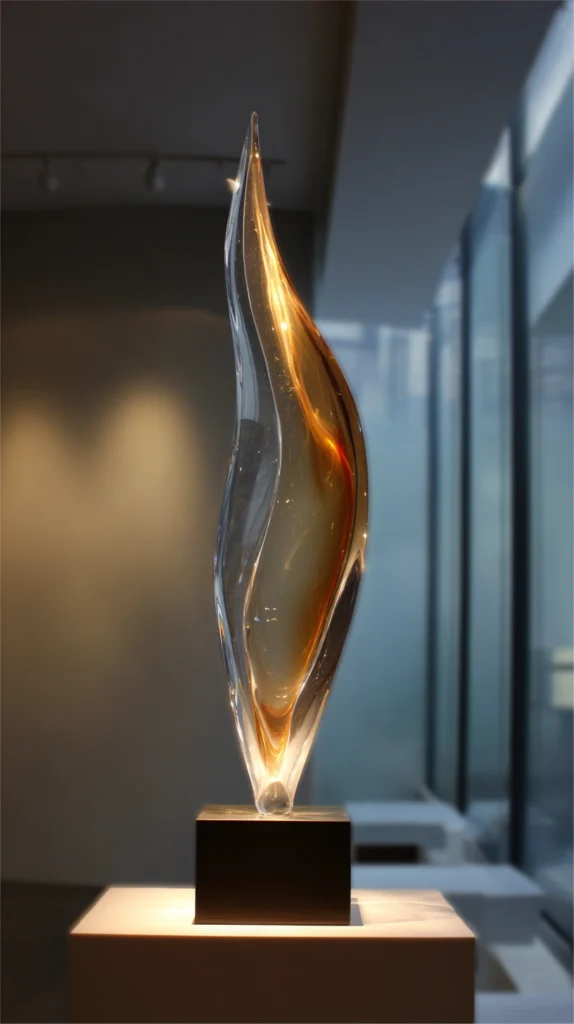
Budget: $60 – $600
A single piece of glass art — a blown glass sculpture, a cast glass object, a fused glass wall panel, or a glass and metal kinetic piece — used as the primary decorative object in a room creates a focal point of extraordinary visual richness that no other single decorating element can match for the complexity and beauty of its interaction with light. Glass art moves through a spectrum of appearance from almost invisible to brilliantly luminous depending on the angle of the light, the time of day, and the viewing position — making it an object of endlessly renewable visual interest.
Studio glass art from established glass artists costs $200–$600 for a significant piece. Student and emerging artist glass works from art school degree shows and graduate exhibitions cost $60–$200 and offer pieces of genuine quality and originality at significantly lower prices than established gallery pieces. Fused glass panels designed for wall mounting cost $80–$300 and create a permanent wall feature of light-responsive colour that changes character completely between natural and artificial light conditions.
Styling tip: Place a glass art sculpture on a surface where it receives light from two different directions simultaneously — from a window on one side and from a lamp or reflective surface on the other. Glass lit from a single direction shows one set of qualities — colour, transmission, shadow — while glass lit from multiple directions reveals a completely different and more complex set of optical qualities simultaneously. The two-direction lighting reveals the full character of the piece and produces the most visually extraordinary effect.
14. The Glass and Candle Centrepiece
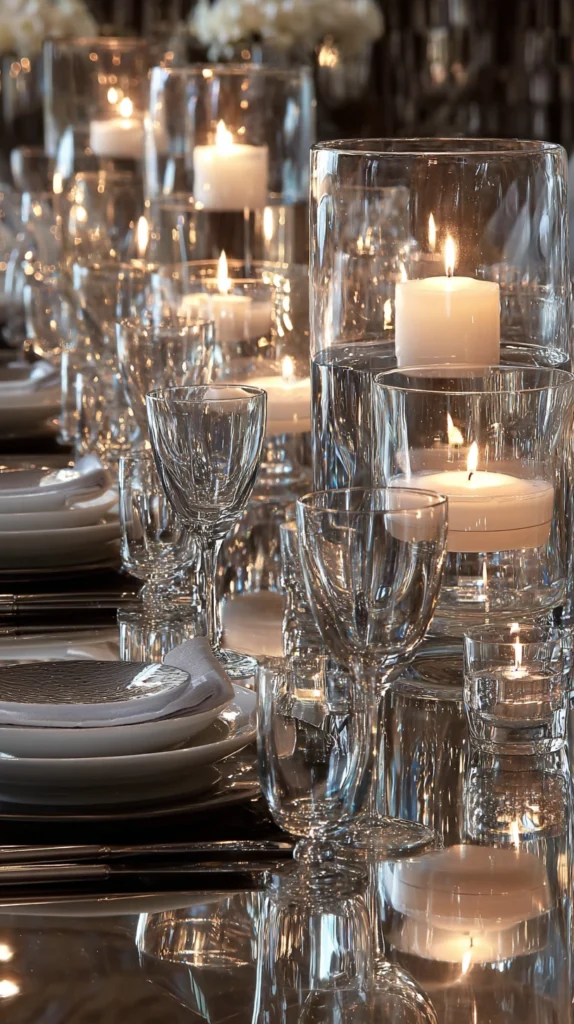
Budget: $25 – $120
A table centrepiece composed entirely of glass and candlelight — varying height glass vessels filled with water, floating candles, glass votive holders with tealights, a glass bowl with a floating flower and a candle — creates a display that uses the refractive and reflective properties of glass and water simultaneously to scatter and multiply the candlelight in every direction. The effect on a dining table on a summer evening — the warmth of the candles, the moving water surface, the scattered light reaching every face at the table — is one of the most beautiful and most intimate table atmospheres available at any cost.
Assemble the centrepiece from existing glass objects in the home — drinking glasses, a large glass bowl, glass candle holders — combined with purchased floating candles ($3–$8 for a pack) and a few flowers or petals from the garden. The materials cost almost nothing; the effect of the assembled centrepiece, lit in a dimly lit room with no other competition for the eye, is extraordinary.
Styling tip: Add a few drops of food colouring to the water in glass vessels used in a candlelit centrepiece — just enough to tint the water very faintly rather than colour it strongly. A faint blue, green, or amber tint in the water creates a slight colour in the refracted candlelight that moves across the table surface, adding a quality of atmospheric colour to the light display that clear water alone cannot achieve. The tint should be subtle enough to be noticed only when the candles are lit — invisible in daylight, magical in candlelight.
Glass, more than any other decorating material, asks to be seen in the right light. A piece of glass in the wrong position — in a permanently shaded corner, on a north-facing shelf, behind a curtain that blocks the sun — gives almost nothing. The same piece moved to catch the light it was made to interact with gives everything — colour, movement, brilliance, and a quality of presence that makes the simplest vessel feel like something extraordinary. Position every piece of glass in your home with the light in mind, and the light will do the rest.