15 Fall Garden Party Outdoor Setup Ideas
Most outdoor party setups get planned around a single summer template — a few tables in the shade, a cooler of drinks, string lights for when it gets dark around nine. That template works because summer does most of the hosting work on its own: warm air, long daylight, minimal planning required beyond food and a guest list.
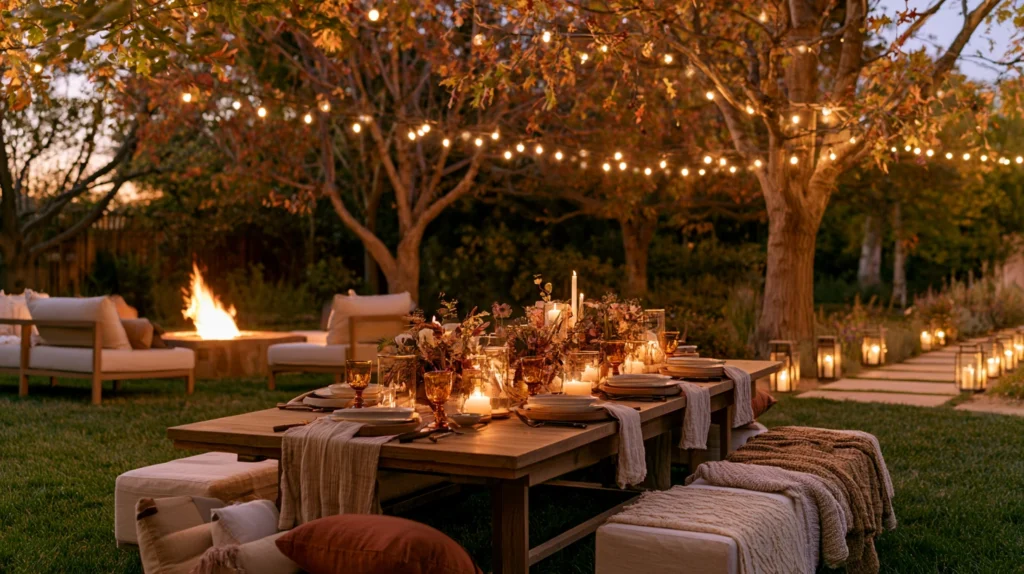
That same template falls apart for a fall gathering. The sun sets hours earlier, the temperature drops fast once it does, and the garden itself looks completely different than it did in July. A fall garden party that simply borrows the summer setup ends with guests cold, half the party happening in the dark nobody planned for, and a table that looks like it’s decorated for the wrong season.
A fall garden party setup isn’t a smaller or later version of a summer one. It’s a different event entirely — one built around an early sunset, real temperature planning, and a seasonal palette that actually matches what’s blooming, ripening, and changing color outside. Get those pieces right, and a fall garden party can feel more atmospheric and more memorable than the same gathering would have in peak summer.
Here are 15 ideas for setting up a fall garden party that’s actually built for the season, not just held during it.
Why a Fall Garden Party Plays by Different Rules Than a Summer One
The rules are not the same for every season of outdoor entertaining:
Summer Garden Party Advantages:
- Long daylight means the entire event can happen without any real lighting plan
- Mild evening temperatures require no warmth planning beyond maybe a light breeze concern
- A simple table and chair setup is often enough, since the season itself carries the atmosphere
The summer party comparison: the season does the hosting
Fall Garden Party Advantages and Realities:
- The sun sets early enough that a significant part of most gatherings happens after dark
- Temperature can drop noticeably between the party’s start and its later hours, requiring real planning for guest comfort
- The garden’s own color and bloom palette has shifted, meaning decor needs to work with what’s actually growing rather than what worked in June
The key insight:
- A summer garden party rewards simple, minimal setup, since daylight and warmth are a given
- A fall garden party rewards real planning around light, temperature, and the season’s actual palette
- These are different hosting problems, not the same party simply moved a few months later on the calendar
The Timing and Comfort Reality
The most important planning consideration for a fall garden party:
The daylight window:
- Know the actual sunset time for the event date before finalizing anything, since fall’s sunset moves noticeably earlier even week to week
- Plan for at least the final third of most fall evening gatherings to happen in the dark, and design lighting accordingly rather than as an afterthought
- Know this — it governs the lighting and warmth decisions on this list more than any other single factor
The “temperature drop” calculation:
- A fall afternoon that starts comfortably can drop 15–20 degrees by the time the party reaches its later hours
- Plan warmth layers — blankets, heaters, a fire feature — for the coldest expected hour of the gathering, not the mild hour guests arrive in
- Work backward from the latest hour anyone is expected to still be outside, and make sure the warmth plan covers that hour specifically
Most fall garden party setups build in layers, not all at once:
- The structural layout — table placement, seating, the overall flow of the space — gets planned first, since it’s hardest to adjust once guests arrive
- The comfort and lighting systems come next, since they determine how late and how comfortably the party can actually run
- The smallest styling touches — centerpieces, place cards, a photo vignette — come last, once the bigger structural and comfort decisions are settled
1. The Long Communal Table (The Centerpiece of Most Garden Gatherings)
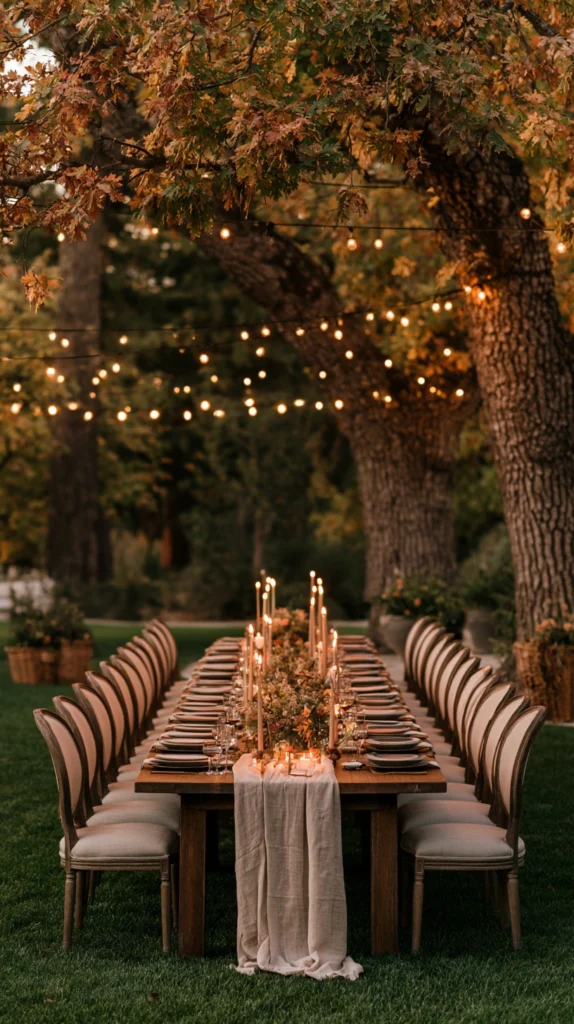
A single long table, or several tables pushed together into one continuous run, seating the full guest list along its length — the layout most associated with a true garden party feel, prioritizing connection and a shared table over scattered smaller groupings.
Why a single long table changes the whole feel of the gathering
- The communal, harvest-table atmosphere it creates: a long shared table reads immediately as a harvest or garden-party gathering, distinct from the more casual scattered seating of a typical backyard barbecue
- The conversation flow it naturally encourages: a single table keeps the whole guest list within talking distance of each other, rather than splitting the group across several smaller, more isolated tables
- The styling canvas it provides: one long table gives the rest of this list’s tablescape ideas a single, continuous surface to work with, rather than needing to be repeated and coordinated across multiple separate tables
The options
- A single long rented banquet table, sized to the full guest count
- Several smaller tables pushed end to end, using a continuous tablecloth to visually unify them into one run
- A farm-style table setup, using actual picnic or trestle tables for a more rustic feel
- A U-shaped or T-shaped configuration, for a larger guest list that a single straight run can’t accommodate**
The practical execution
- Confirm the table’s full length fits the available outdoor space with enough clearance on all sides for chairs to be pulled out comfortably
- Use a continuous tablecloth or runner across multiple pushed-together tables to disguise the seams between them
- Plan the table’s orientation relative to the sunset, positioning it so guests aren’t facing directly into low evening sun during the meal’s early hours
Cost breakdown
- Table rental, per table: $15–35
- Continuous tablecloth or runner for a long table: $30–80
- Total: $45–300+, depending on guest count and table source
The single long table set beneath the trees: the layout most responsible for a garden party actually feeling like a garden party.
2. The Layered Fall Tablescape (A Centerpiece Built From the Season’s Actual Palette)
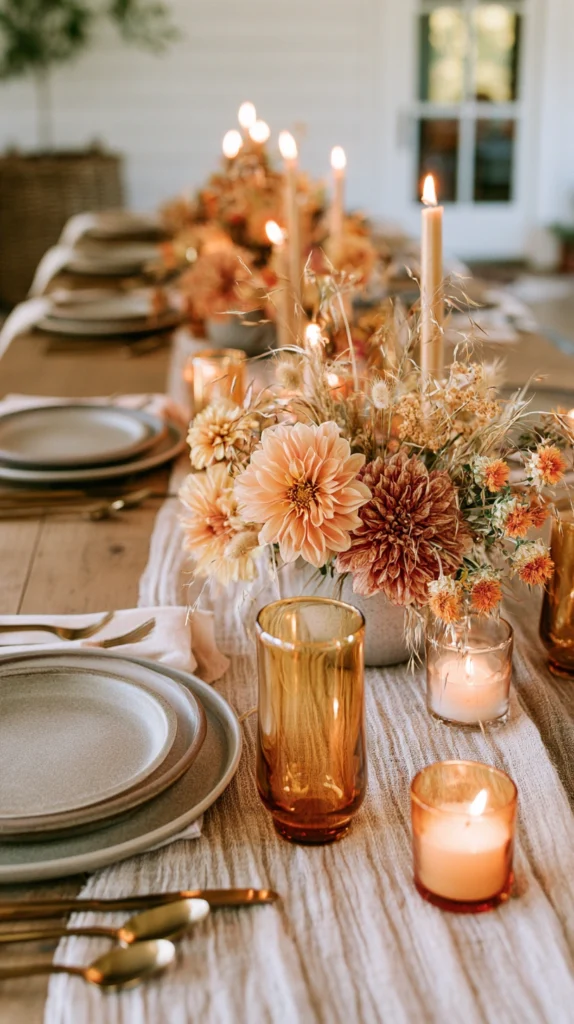
A table runner, a low centerpiece of seasonal blooms and foliage, and scattered smaller accents — the styling layer that dresses the long table from Idea #1 in a palette that actually reflects what’s growing and changing color outside in fall.
Why the tablescape needs to specifically reflect the season, not just any color scheme
- The seasonal authenticity it provides: a tablescape built from dahlias, chrysanthemums, and seed pods reads as genuinely fall in a way a generic floral arrangement borrowed from a summer wedding wouldn’t
- The texture variety fall foliage offers: turning leaves, dried grasses, and late-season blooms together create more visual texture than a single flower type alone could provide
- The cohesive thread it gives the whole table: a consistent tablescape style ties together place settings, centerpieces, and any additional decor into one unified visual story down the table’s full length
The options
- A low, garden-style centerpiece, mixing dahlias, mums, and trailing greenery along the table’s center
- A series of smaller arrangements, spaced at intervals rather than one continuous centerpiece, for easier conversation across the table
- A foraged centerpiece, using branches, dried grasses, and seed pods alongside or instead of cut flowers
- A mix of candles and florals, alternating along the table’s length for both color and the warm light covered further in Idea #6**
The practical execution
- Keep centerpieces low enough that seated guests can see and talk across the table without obstruction
- Choose flowers and foliage genuinely in season locally, both for cost and for the most authentic look
- Source from a local flower farm or farmers market specifically for fall varieties, rather than a generic florist order that might default to whatever’s available year-round
Cost breakdown
- Florals and greenery for a long table runner: $80–250
- Total: $80–250, depending on table length and guest count
3. The Overhead String Light Canopy (Lighting for the Hours After Sunset)
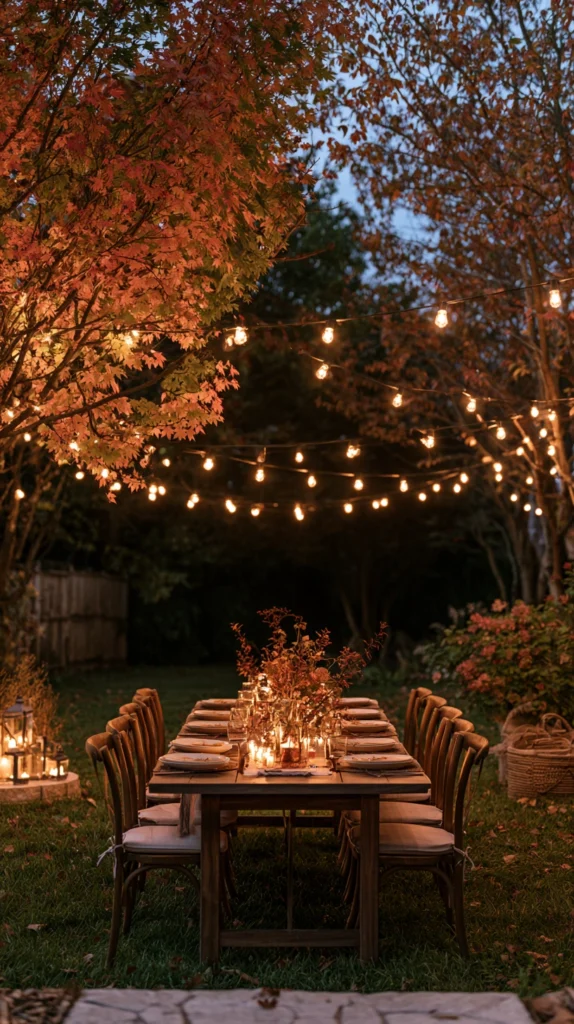
Warm white string lights, strung overhead across the entire party area — between trees, posts, or a temporary frame — the lighting layer most responsible for keeping a fall garden party genuinely usable once the sun sets partway through the event.
Why this is the single most important lighting decision for a fall party specifically
- The early-sunset reality it directly addresses: with a significant portion of most fall gatherings happening after dark, overhead lighting isn’t an optional atmospheric touch, it’s the primary source of usable light for a meaningful stretch of the party
- The room-defining effect it creates outdoors: string lights overhead mark the boundaries of the party space the same way a ceiling defines an indoor room, giving the gathering a clear sense of contained space even in an open garden
- The reliable, low-cost coverage it provides over a large area: relative to other lighting options, string lights cover the most total square footage for the lowest cost, making them the practical backbone of an outdoor party lighting plan
The options
- Warm white LED string lights, strung between existing trees if the garden has them
- String lights on temporary poles or a rented frame, for a garden without natural anchor points
- A double layer, crisscrossing the party area from multiple directions for fuller, more even coverage
- Edison-style bulb string lights, for a more substantial, decorative look over a smaller, more concentrated party area**
The practical execution
- Test the full lighting setup after dark before the event, since gaps in coverage are far easier to spot at night than during a daytime check
- String from at least three points where possible, rather than a single straight line, for fuller overhead coverage across the table and seating area
- Use outdoor-rated, weatherproof connections throughout, especially important for an event where the lighting needs to perform reliably on a single specific evening
Cost breakdown
- String light sets, enough to cover a full party area: $60–180
- Rental poles or frame, if needed: $50–150
- Total: $60–330, depending on the garden’s existing structure
4. The Lounge and Lawn Seating Area (A Spot Beyond the Main Table for Lingering)
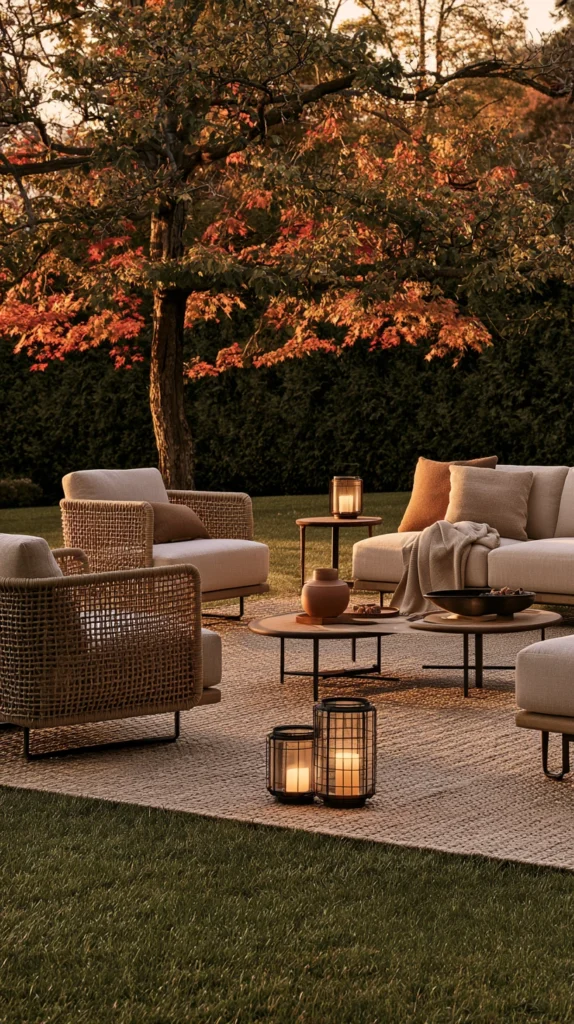
A separate, more casual seating area — low chairs, floor cushions, or a few small sofas — positioned apart from the main dining table, giving guests somewhere to migrate to after the meal.
Why a second seating zone matters beyond the dining table
- The natural flow it creates for a longer gathering: a party that holds guests for several hours benefits from at least one shift in setting, moving from a formal dining table to a more relaxed lounge area as the evening progresses
- The conversation variety it enables: a lounge area breaks the group into smaller, shifting conversation clusters, distinct from the more fixed seating arrangement of a single long table
- The cozy, fall-appropriate atmosphere it reinforces: low seating with cushions and throws specifically suits the season’s general mood of slowing down and gathering close, more than additional formal dining chairs would
The options
- Low rattan or wicker chairs, arranged in a loose circle or cluster
- Floor cushions and poufs, for a more relaxed, ground-level seating option
- A few small sofas or loveseats, rented or borrowed, for the most substantial lounge feel
- A mix of seating heights, combining chairs, poufs, and a low table for variety**
The practical execution
- Position the lounge area within reach of the warmth sources covered in Idea #12, since this is where guests are likely to linger longest into the evening’s coldest hours
- Add the blanket station from Idea #8 directly adjacent to this seating zone, since it’s the spot most likely to need it
- Lay a rug or ground cover beneath the seating, both for comfort and to define the lounge area’s boundaries within the larger garden
Cost breakdown
- Rental low seating, per piece: $20–50
- Floor cushions, a set: $60–150
- Total: $80–400+, depending on seating type and quantity
5. The Seasonal Drink Station (A Self-Serve Bar Built Around Fall Flavors)
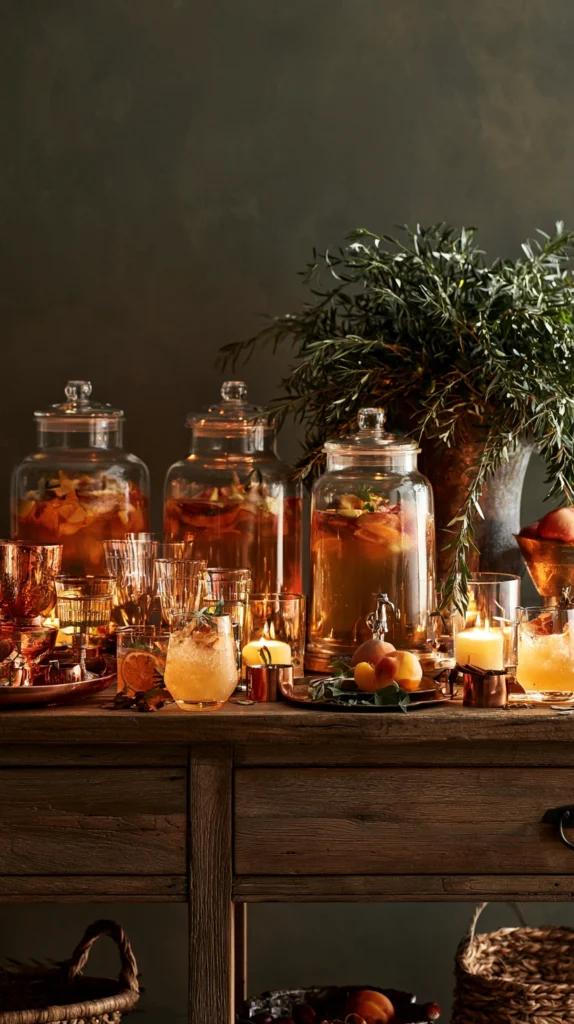
A dedicated drink station — a bar cart, a styled table, or a simple drinks display — stocked with cider, warm cocktails, and a few fall-specific garnishes, positioned somewhere guests can serve themselves throughout the event.
Why the drink station deserves its own dedicated planning
- The repeated-use value it provides: unlike most decor at a party, a drink station gets visited by every guest multiple times throughout the event, making it one of the highest-traffic, highest-impact setups on the whole property
- The seasonal flavor opportunity it offers: a station built around cider, spiced cocktails, and warm drinks signals the season as directly as any visual decor choice, engaging taste alongside sight
- The self-serve convenience it provides for the host: a well-stocked station reduces how much active serving the host needs to do throughout the event, freeing more time to actually enjoy the gathering
The options
- A bar cart, stocked with cider, a few spirits, and garnish for fall-themed cocktails
- A large insulated dispenser of mulled cider or wine, kept warm throughout the event
- A simple drinks table, with labeled pitchers and a stack of glasses
- A hot and cold split station, offering both chilled and warm beverage options side by side**
The practical execution
- Position the station somewhere central but not directly blocking the main flow of foot traffic between the table and lounge area
- Keep an insulated container topped off throughout the event for any warm beverage, since a lukewarm cider undercuts the whole point of offering one
- Provide simple, legible labels for each drink option, both for clarity and as a small additional styling touch
Cost breakdown
- Cider, spirits, and garnish for a full event: $60–150
- Bar cart or table setup, if not already on hand: $40–150
- Total: $100–300
6. The Grazing Table or Food Display (A Visual Centerpiece That Doubles as the Meal)
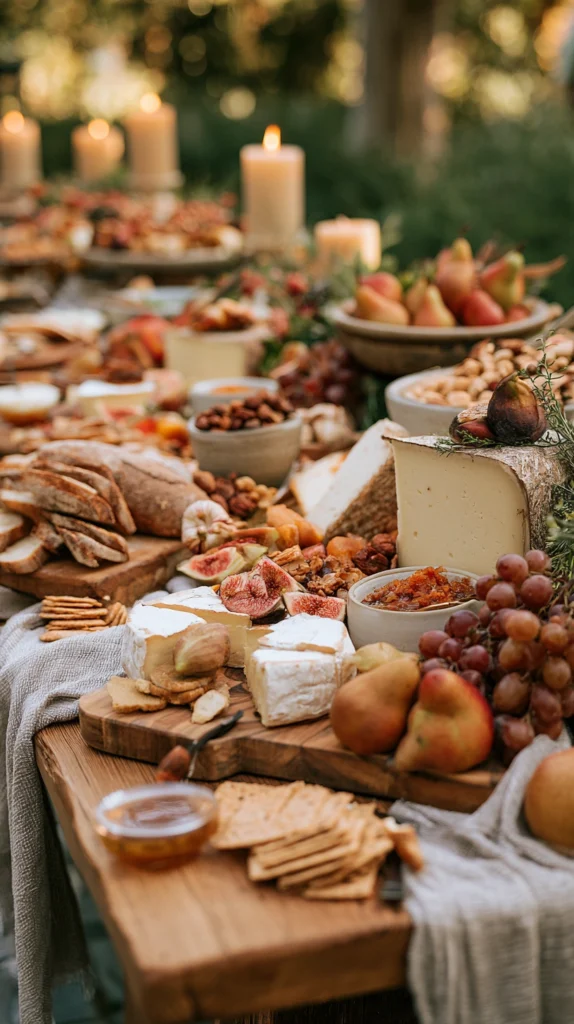
A long, abundantly arranged spread of cheeses, fruits, breads, and seasonal produce, displayed directly on the table or a dedicated food station — the food presentation style that turns the meal itself into one of the party’s main visual features.
Why a grazing-style display fits a fall garden party particularly well
- The harvest-abundance aesthetic it naturally creates: a generously layered spread of seasonal produce, cheese, and bread visually echoes the same harvest themes covered throughout fall garden and kitchen styling
- The lower-pressure serving format it offers: unlike a formally plated meal, a grazing table allows guests to serve themselves at their own pace throughout the event, reducing the timing pressure on the host
- The textural variety it adds to the overall table styling: figs, grapes, nuts, and cheese rounds bring color and shape variation that complements, rather than competes with, the floral tablescape from Idea #2
The options
- A full-length grazing table, running the length of the main dining table or a separate dedicated surface
- A smaller grazing board, for a more modest gathering, positioned as a starter or accompaniment rather than the full meal
- A seasonal produce-forward spread, emphasizing figs, pears, grapes, and squash alongside cheese and bread
- A grazing table paired with a few hot dishes served separately, balancing the cold display with warm food appropriate to cooler weather**
The practical execution
- Build the display directly on the table itself, on top of butcher paper or a board, rather than using individual serving plates that break up the visual continuity
- Layer ingredients by height and color, the same composition principle used in any well-styled vignette, rather than spreading everything at a single flat level
- Refresh and restock throughout the event, since a grazing table gets visibly picked over faster than a plated meal and needs occasional tidying to keep looking abundant
Cost breakdown
- Cheese, fruit, bread, and accompaniments for a full grazing spread: $100–300, depending on guest count
- Total: $100–300
7. The Fire Pit as the Evening’s Gathering Anchor (Warmth and a Focal Point Together)
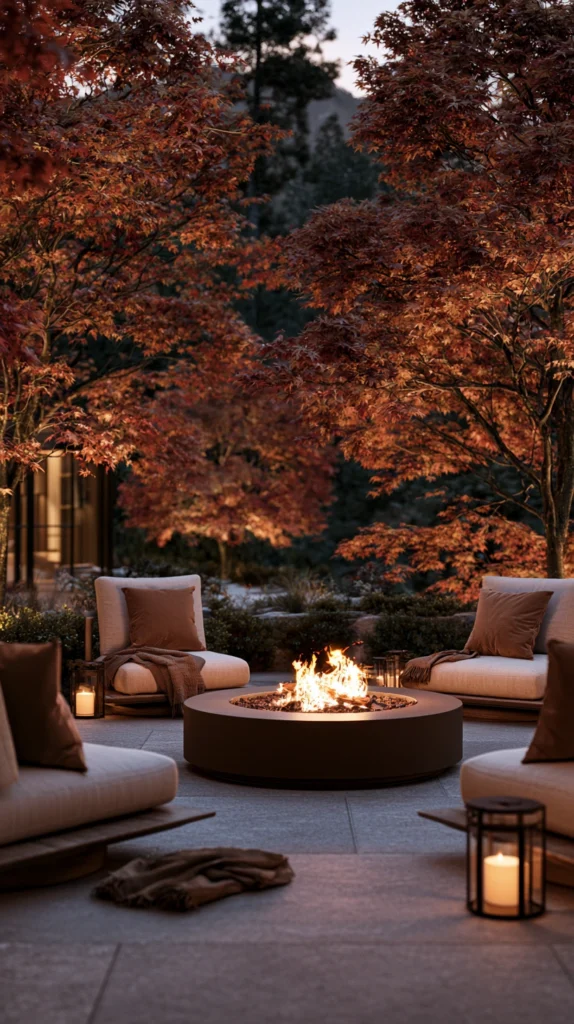
A fire pit, positioned at the center of or adjacent to the lounge area from Idea #4, functioning as both the evening’s primary warmth source and its natural gathering point once the meal has finished.
Why a fire pit does more work at a fall party than almost any other single feature
- The dual-function value it provides: a fire pit delivers both genuine warmth and a strong visual and social focal point simultaneously, doing more for the evening’s later hours than any single decor choice could on its own
- The natural draw it creates: guests gather around a lit fire instinctively, which means this feature does real work organizing where people actually congregate once the formal dining portion of the evening winds down
- The extension of the party’s usable hours it provides: a fire pit, more than any other single addition, allows a fall garden party to comfortably run later into the evening than it otherwise could
The options
- A rented or borrowed portable fire pit, positioned centrally within the lounge seating area
- Several smaller fire bowls, distributed for a larger guest list rather than one single large pit
- A fire pit paired with a s’mores or roasting station, adding an interactive element to the gathering’s later hours
- A more substantial built-in fire feature, if the garden already includes one as part of its permanent landscaping**
The practical execution
- Check local fire ordinances and any seasonal burn restrictions specific to the event date before relying on an open flame as part of the party plan
- Position seating around the fire with at least one gap left open for tending the fire and adding wood throughout the evening
- Keep a stack of extra firewood visibly nearby, both for practicality and because it reads as part of the evening’s overall styling
Cost breakdown
- Portable fire pit rental: $40–100
- Firewood for the evening: $20–40
- Total: $60–140
8. The Blanket and Throw Station (Solving the Evening’s Temperature Drop Directly)
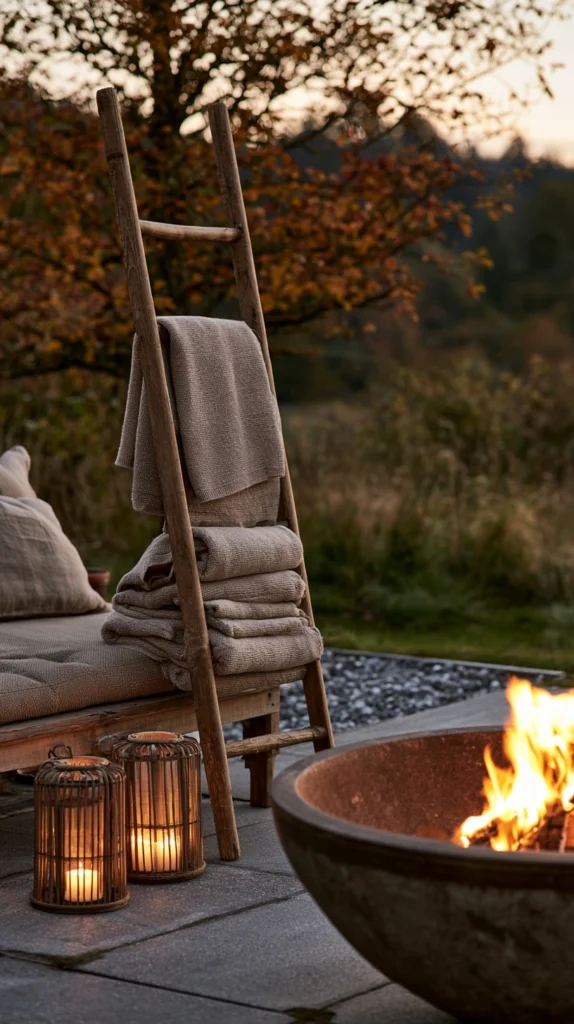
A basket or styled stack of throw blankets, positioned near the lounge seating and fire pit, giving guests immediate access to warmth as the evening’s temperature drops.
Why a dedicated blanket station matters more than relying on guests to bring their own
- The temperature-drop problem it solves directly: a fall evening that starts mild can turn genuinely cold by its later hours, and a visible, accessible blanket supply means guests don’t need to leave early simply because they got cold
- The styled, intentional presentation it allows: rather than a single blanket draped awkwardly over a chair, a full basket or stack reads as a deliberate, hospitable touch that was planned for in advance
- The low individual cost relative to how directly it extends the party’s comfortable duration: this is one of the more affordable items on the whole list, and it does as much as almost anything else to keep guests comfortably outside later into the evening
The options
- A large basket of folded throw blankets, positioned beside the lounge seating
- Individual throws pre-draped over each lounge chair, ready before guests even arrive
- A mix of wool and chunky knit options, offering different weights for varying comfort preferences
- Blankets in a coordinated color palette, tying this functional addition into the event’s overall styling**
The practical execution
- Position within easy, obvious reach of the lounge and fire pit areas, rather than tucked somewhere guests would need to search for
- Choose materials that can handle outdoor use and a wash afterward, rather than anything too delicate for an actual party setting
- Provide enough blankets for a meaningful portion of the full guest list, rather than just a token few that run out quickly
Cost breakdown
- Throw blankets, a set of 8–10: $150–300
- Basket for display: $20–45
- Total: $170–345
9. The Fall Floral and Foliage Arrangements (Color Beyond Just the Main Table)
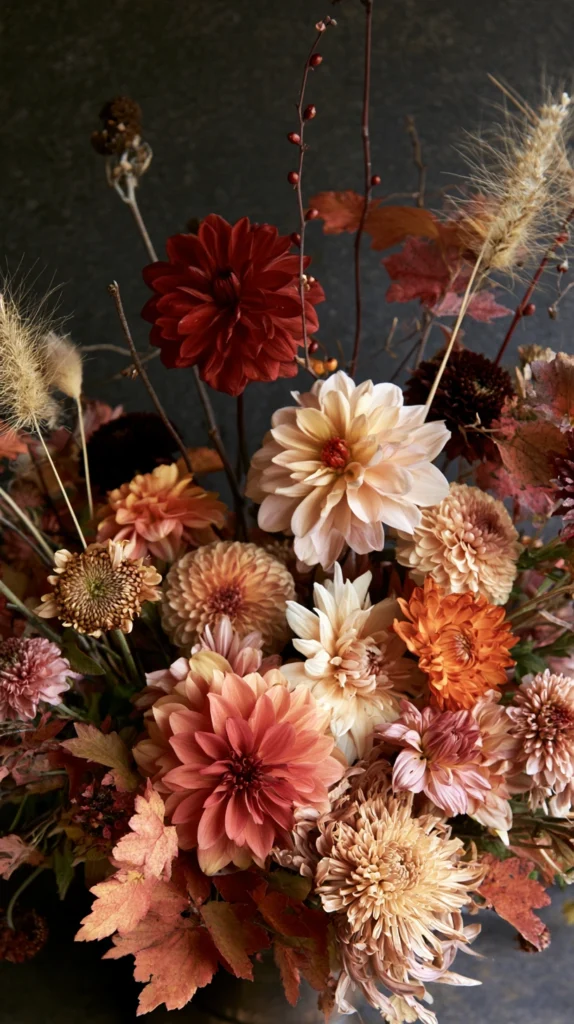
Additional floral and foliage arrangements, placed throughout the party space beyond just the main table centerpiece — at the entrance, the drink station, and the lounge area — extending the seasonal color story across the entire setup.
Why florals belong in more than one spot at the gathering
- The full-space cohesion it creates: a single beautiful centerpiece on the main table can feel disconnected if the rest of the party space has no coordinating color or floral element at all
- The fall-specific palette opportunity it offers throughout the space: dahlias, mums, and turning foliage can be repeated in smaller arrangements at the entrance and bar, reinforcing the same seasonal story established at the table
- The wayfinding and atmosphere function smaller arrangements provide: a floral marker at the entrance signals arrival, while one at the drink station draws the eye and adds polish to a spot guests visit repeatedly throughout the evening
The options
- Small arrangements at the entrance, welcoming guests with the same palette used at the main table
- A floral garland or swag at the drink station, tying that high-traffic spot into the overall styling
- Loose, foraged branches and grasses scattered throughout the lounge area, for a lower-cost, more casual version of this idea
- A floral arch or installation at the entrance, for a more elevated, statement-making version of the same concept**
The practical execution
- Repeat the same flower and foliage varieties used in the main tablescape, rather than introducing entirely new colors or textures at each additional spot
- Scale smaller arrangements appropriately to their location, keeping entrance and bar pieces more modest than the main table’s centerpiece
- Source all florals together as a single order where possible, both for cost efficiency and to ensure consistency across every arrangement
Cost breakdown
- Smaller arrangements for 2–3 additional spots: $50–150
- Total: $50–150
10. The Place Card and Menu Display (A Small Detail That Elevates the Whole Table)
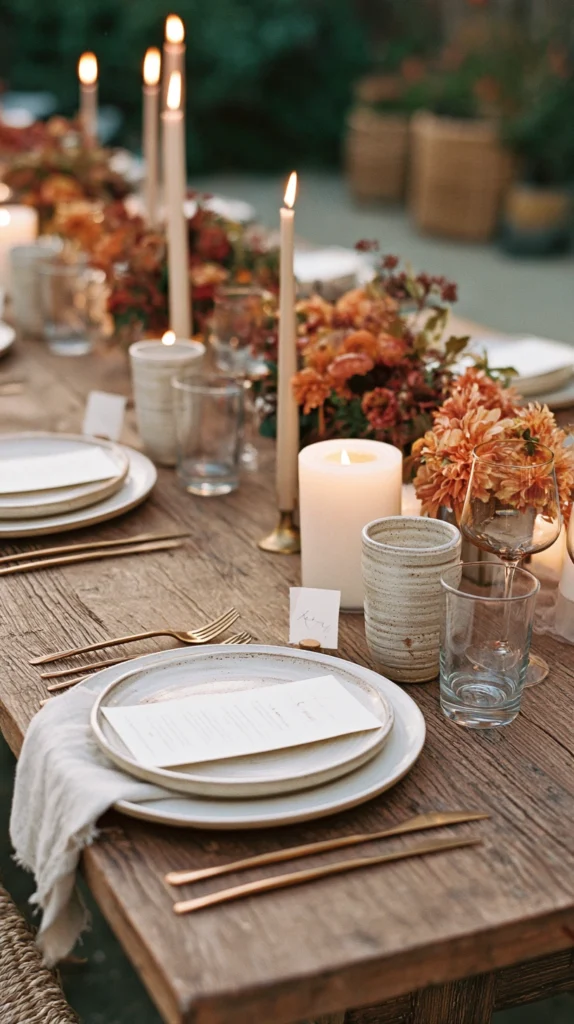
Individual place cards marking each guest’s seat, paired with a simple printed or handwritten menu — the detail that turns a casual long table into something that reads as genuinely planned and hosted.
Why this small paper detail carries real weight at the table
- The intentionality it signals: place cards communicate that the seating, and the evening as a whole, was thought through in advance, rather than left to whoever happens to sit down first
- The conversation-easing function place cards provide: thoughtfully assigned seating can help mix guest groups who might not otherwise end up talking to each other, a small hosting detail with real social value
- The anticipation a printed menu builds: seeing what’s actually being served adds a small sense of occasion to the meal, similar to how a menu functions at a restaurant
The options
- Simple handwritten place cards, on plain cardstock or small leaves for a more foraged, natural touch
- A printed menu, listing the evening’s dishes and drinks in a simple, elegant format
- A single shared menu board, rather than individual printed menus, displayed near the food or drink station
- Place cards incorporating a small natural element, like a mini gourd or a sprig of foliage, tying the detail into the broader seasonal styling**
The practical execution
- Finalize the guest list and seating arrangement with enough lead time to actually produce place cards before the event
- Weight place cards or secure them against wind, given how exposed an outdoor table setting is compared to an indoor one
- Keep the menu’s wording simple and legible, prioritizing clarity over elaborate script that’s harder to read at a glance
Cost breakdown
- Place card materials and printing: $15–40
- Printed menus, for a full guest list: $20–50
- Total: $35–90
11. The Weather-Protection Tent or Canopy (A Backup Plan Built In From the Start)
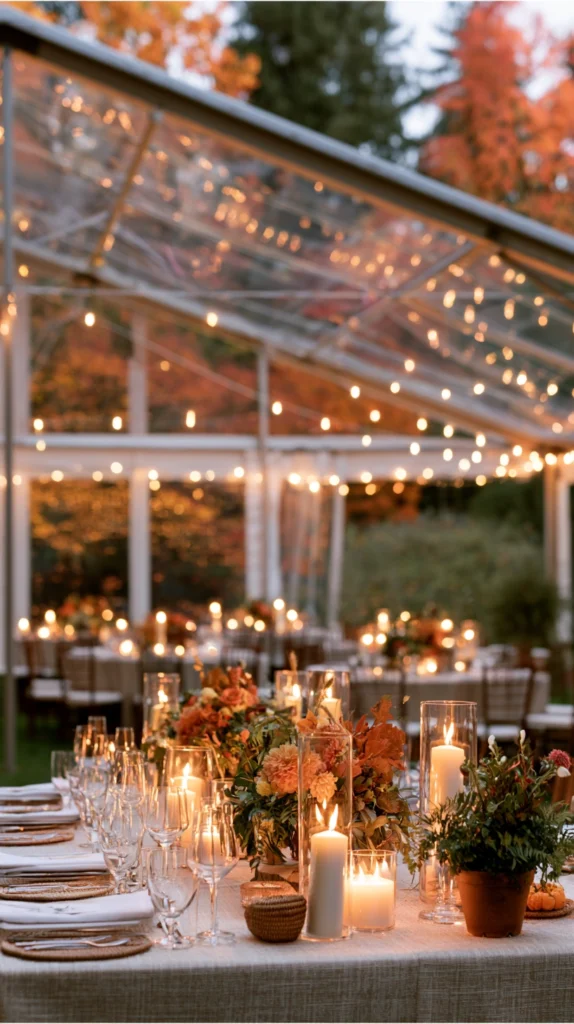
A simple open-sided tent or canopy, positioned over all or part of the party area — the practical addition that protects the gathering from an unexpected fall shower or unexpected wind without requiring the whole event to move indoors.
Why fall specifically calls for a backup weather plan
- The increased weather unpredictability fall brings: compared to a typical stable summer forecast, fall weather shifts more rapidly and less predictably, making some level of protection a genuinely practical addition rather than an unnecessary precaution
- The event-saving function it serves: a tent or canopy means a light rain shower doesn’t have to end an otherwise successful outdoor gathering early or force a chaotic last-minute move indoors
- The styling opportunity it still offers despite its primarily functional purpose: a tent can be dressed with the same string lights, florals, and linens used elsewhere in the setup, rather than reading as a purely utilitarian addition
The options
- An open-sided pole tent, covering the main dining table specifically
- A smaller pop-up canopy, for partial coverage over a portion of the party area
- A clear-top tent, allowing visibility of the sky and any string lights strung above it while still providing rain protection
- A tent positioned over the food and drink stations specifically, prioritizing protection for the areas most affected by weather rather than the entire footprint**
The practical execution
- Reserve or rent well in advance of the event date, since tent rental availability is often limited during peak fall entertaining season
- Confirm the tent’s sides can be added quickly if wind becomes an issue, even if the primary setup is open-sided
- Style the tent’s interior with the same string lights and florals used in the rest of the party, rather than letting it read as a separate, purely functional structure
Cost breakdown
- Pop-up canopy rental: $50–150
- Larger pole tent rental: $200–600+
- Total: $50–600+, depending on size and guest count
12. The Heater Station Distribution (Warmth Spread Throughout, Not Concentrated in One Spot)
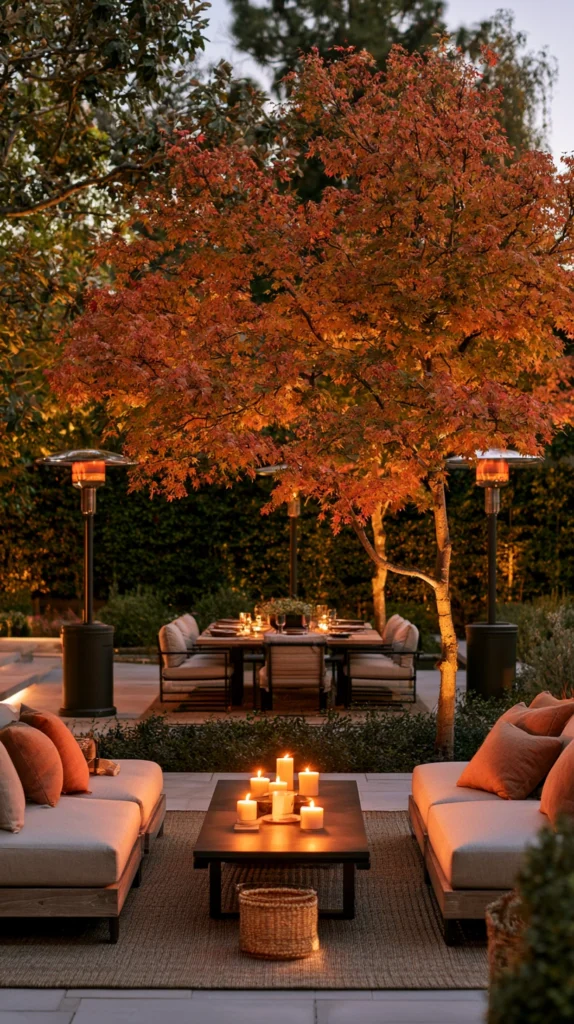
Several portable patio heaters, distributed strategically throughout the seating and gathering areas — the warmth system that extends comfortable coverage beyond what a single fire pit alone can reach.
Why warmth needs to be distributed, not just centralized
- The coverage gap a single fire pit leaves: even a well-built fire pit only radiates genuinely usable warmth within a limited radius, and a larger party with seating spread across more of the garden needs additional heat sources to keep every area comfortable
- The flexibility distributed heaters provide over a single fixed fire feature: heaters can be repositioned throughout the event as guest clusters shift and the party’s actual usage pattern becomes clear
- The all-guest comfort it ensures, rather than concentrating warmth only around the fire pit: distributing heat sources means guests at the dining table, the drink station, and the lounge area all have reasonable access to warmth, not just whoever claims a seat closest to the fire
The options
- Freestanding propane patio heaters, positioned at the edges of the main seating and dining areas
- Tabletop heaters, for the dining table specifically, supplementing the larger standing units elsewhere
- Electric infrared heaters, for any covered or tented area where an open flame isn’t appropriate
- A mix of heater types, matched to each specific zone’s needs and any tent or canopy constraints**
The practical execution
- Position heaters to cover the areas farthest from the fire pit, rather than duplicating warmth already provided by the central fire feature
- Confirm any electric heater used is rated for outdoor or covered-patio use specifically, particularly important under a tent or canopy
- Test the full heating setup the day before the event if possible, confirming fuel levels and proper function rather than discovering an issue mid-party
Cost breakdown
- Freestanding propane heater rental, per unit: $40–80
- Tabletop heater rental, per unit: $20–40
- Total: $100–400+, depending on how many units the space requires
13. The Entrance and Pathway Decor (Setting the Tone Before Guests Reach the Party)
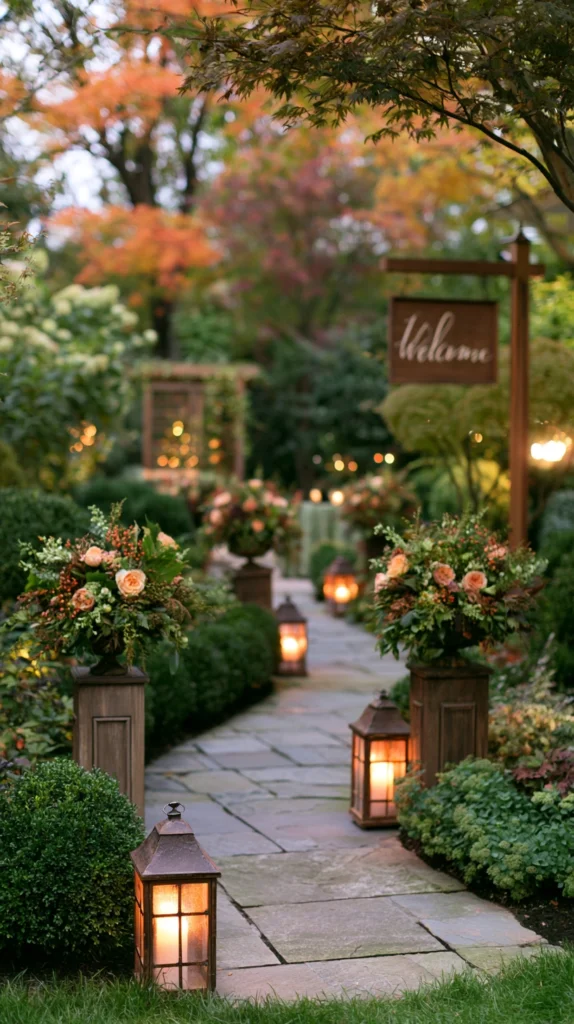
A decorated entrance — a small floral arrangement, a sign, or a lit pathway — guiding guests from the arrival point to the main party area, establishing the evening’s tone before anyone reaches the table itself.
Why the entrance deserves deliberate planning, not just a sign pointing the way
- The first-impression timing it controls: the entrance is the very first thing any guest experiences, setting expectations for the rest of the evening before they’ve seen the table, the lounge, or any other element of the setup
- The wayfinding function it serves practically: especially in a larger garden, a clearly marked and lit path helps guests find their way to the actual gathering without confusion, particularly important once it’s dark
- The anticipation it builds along the way: a thoughtfully lit and decorated path extends the sense of occasion across the full walk to the party, rather than concentrating all the atmosphere at the destination alone
The options
- A small floral or foliage arrangement at the entry point, marking the start of the path
- Lantern-lined pathway lighting, guiding guests from the arrival area to the main party space
- A simple welcome sign, with the event’s name or a seasonal greeting
- A floral or greenery arch at the entrance, for a more elevated, photo-worthy welcome moment**
The practical execution
- Light the path generously enough that no stretch is left dark, particularly important for guests unfamiliar with the property’s specific layout
- Position any entrance florals or signage where they won’t be missed, directly along the most obvious walking route rather than off to one side
- Test the full entrance experience after dark, walking it the way an arriving guest actually would
Cost breakdown
- Pathway lanterns or lights: $30–80
- Entrance floral arrangement: $30–70
- Total: $60–150
14. The Styled Photo Vignette (A Dedicated Spot for the Evening’s Photos)
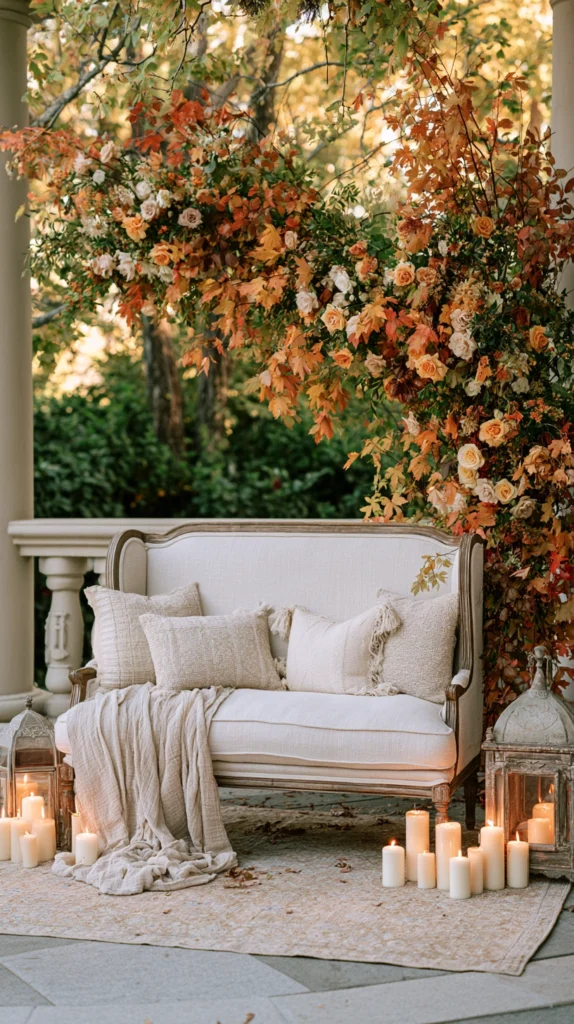
A small, deliberately styled corner of the party — a floral backdrop, a vintage chair, a few seasonal props — set up specifically as a spot for guests to take photos throughout the evening.
Why a dedicated photo spot earns its own setup
- The natural gathering point it becomes: guests consistently seek out a clearly styled, photogenic corner at any gathering, and providing one intentionally means that activity happens somewhere considered rather than awkwardly improvised against a random wall or fence
- The lasting documentation value it provides: unlike most of the evening’s atmosphere, photos taken at a styled vignette become the lasting record of the event, making this one of the highest-return styling investments relative to how long it actually gets used
- The flexible scale it allows: this idea works as a simple arrangement of pumpkins and a single chair, or as a more elaborate floral backdrop, scaling to whatever budget and effort the rest of the event supports
The options
- A floral or foliage backdrop, mounted on a simple frame or hung from an existing structure
- A vintage chair or bench, styled with cushions and a seasonal throw, positioned against an attractive natural backdrop like a garden wall or a stand of trees
- A small table with seasonal props, pumpkins, dried flowers, candles, for a more casual photo corner
- A lit archway, combining the entrance idea from Idea #13 with a dedicated photo function if positioned thoughtfully**
The practical execution
- Position in a spot with good natural framing already, like an attractive section of garden, a doorway, or a stand of trees, rather than trying to create the entire backdrop from scratch
- Light the spot adequately for evening photos, since this area needs to function for guests taking photos well after sunset
- Keep the vignette simple enough to maintain throughout the event, since props can shift or fall out of place as guests interact with the space
Cost breakdown
- Floral or foliage backdrop materials: $40–120
- Styled chair or seating piece, props: $20–60
- Total: $60–180
15. The Guest Favor and Send-Off Station (A Small Closing Touch as the Evening Ends)
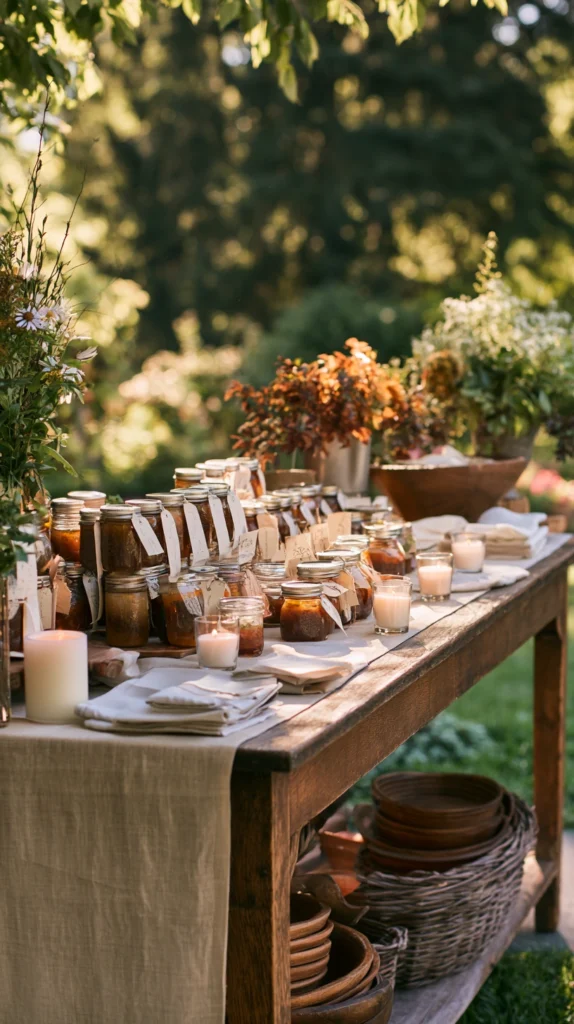
A small table near the exit, offering guests a simple seasonal favor — a jar of preserves, a small potted herb, a bundle of dried flowers — as they leave, closing out the evening with one final hospitable gesture.
Why a send-off detail matters even after the party’s main events are over
- The lasting impression it leaves: the very last thing a guest experiences before heading home tends to be remembered disproportionately well, making this small final gesture worth real consideration despite its modest scale
- The take-home connection to the evening it provides: a favor tied to the event’s actual theme or styling, like a small jar of something seasonal, extends the gathering’s atmosphere into each guest’s home afterward
- The low individual cost relative to the goodwill it generates: this is typically one of the more affordable items on the whole list per guest, while consistently being one of the most appreciated and remembered details of the evening
The options
- Small jars of homemade or local preserves, labeled simply with the event’s date or a short note
- A small potted herb or succulent, tying back to the garden theme of the gathering itself
- A bundle of dried flowers from the event’s own florals, repurposing the centerpiece materials into a guest takeaway
- A simple printed recipe card, for a dish served at the party, paired with a small jar of one key ingredient**
The practical execution
- Position the station clearly near the exit or gathering departure point, rather than somewhere guests might miss on their way out
- Prepare enough favors for the full guest list with a small buffer, accounting for any plus-ones or last-minute additions
- Keep the favor simple and genuinely tied to the evening’s theme, rather than a generic gift that doesn’t connect back to anything guests actually experienced
Cost breakdown
- Small jars or favors, per guest: $3–8
- A full favor station for a moderate guest list: $40–120
- Total: $40–120
The small jar of preserves handed off at the door: the last impression of the evening, and often the detail guests mention first when thanking the host the next day.
The Fall Garden Party Roadmap
The work, sequenced:
Phase One (the structural layout, planned weeks ahead):
- The long communal table (#1)
- The lounge and lawn seating area (#4)
- The weather-protection tent or canopy (#11), reserved well in advance
Phase Two (the lighting and warmth systems):
- The overhead string light canopy (#3)
- The fire pit as the evening’s gathering anchor (#7)
- The heater station distribution (#12)
Phase Three (the food, drink, and tablescape):
- The layered fall tablescape (#2)
- The seasonal drink station (#5)
- The grazing table or food display (#6)
Phase Four (the finishing touches, the week of the event):
- The blanket and throw station (#8)
- The fall floral and foliage arrangements (#9)
- The place card and menu display (#10)
- The entrance and pathway decor (#13)
- The styled photo vignette (#14)
- The guest favor and send-off station (#15)
Getting Started This Weekend
The immediate-impact party planning step:
For an event still weeks out, the single most useful task to tackle first:
- Confirm the actual sunset time for the event date and work backward from it to plan the lighting and warmth systems (Ideas #3, #7, #12)
- Reserve any rented tent, tables, or heaters immediately, given how quickly fall event rental inventory books up
- Finalize the guest count, since it determines the scale of nearly every other item on this list
Total cost at this stage: largely planning time rather than money. The payoff: every other decision on this list becomes easier once the date, headcount, and weather backup plan are locked in.
The structural investment (the centerpiece decision):
The long communal table (Idea #1), paired with the overhead string light canopy (Idea #3), forms the backbone every other idea on this list arranges itself around. Once the table is placed and lit, the tablescape, the food display, and the seating all have a clear anchor to build outward from.
What a properly planned fall garden party provides that a borrowed summer setup can’t:
The comfort that lets the party actually run as long as planned:
- A lighting plan accounting for the early sunset from the very first hour of planning
- A distributed heating system keeping every seating zone comfortable, not just the area closest to the fire
- A blanket station solving the evening’s temperature drop before any guest needs to ask
The atmosphere that reflects the actual season outside:
- A tablescape built from dahlias, mums, and foliage genuinely in bloom that week
- A grazing table styled around the harvest abundance fall actually offers
- An entrance and photo vignette using real seasonal color rather than a borrowed summer palette
The hosting details that guests remember long after the evening ends:
- Place cards and a menu signaling the kind of care that turns a casual gathering into a real occasion
- A favor station sending guests home with a small, tangible piece of the evening
- A weather backup plan meaning an unexpected fall shower never has to end the party early
A fall garden party was never going to succeed by simply moving the summer playbook to a later month on the calendar. The gatherings that actually work are the ones planned around what fall specifically requires — earlier light, real warmth, and a palette that matches what’s actually growing outside that week. The string lights switched on as the sun finally sets are doing exactly the job they were planned for months in advance. The blanket pulled from the basket on the evening’s coldest hour is the reason nobody left the party early.