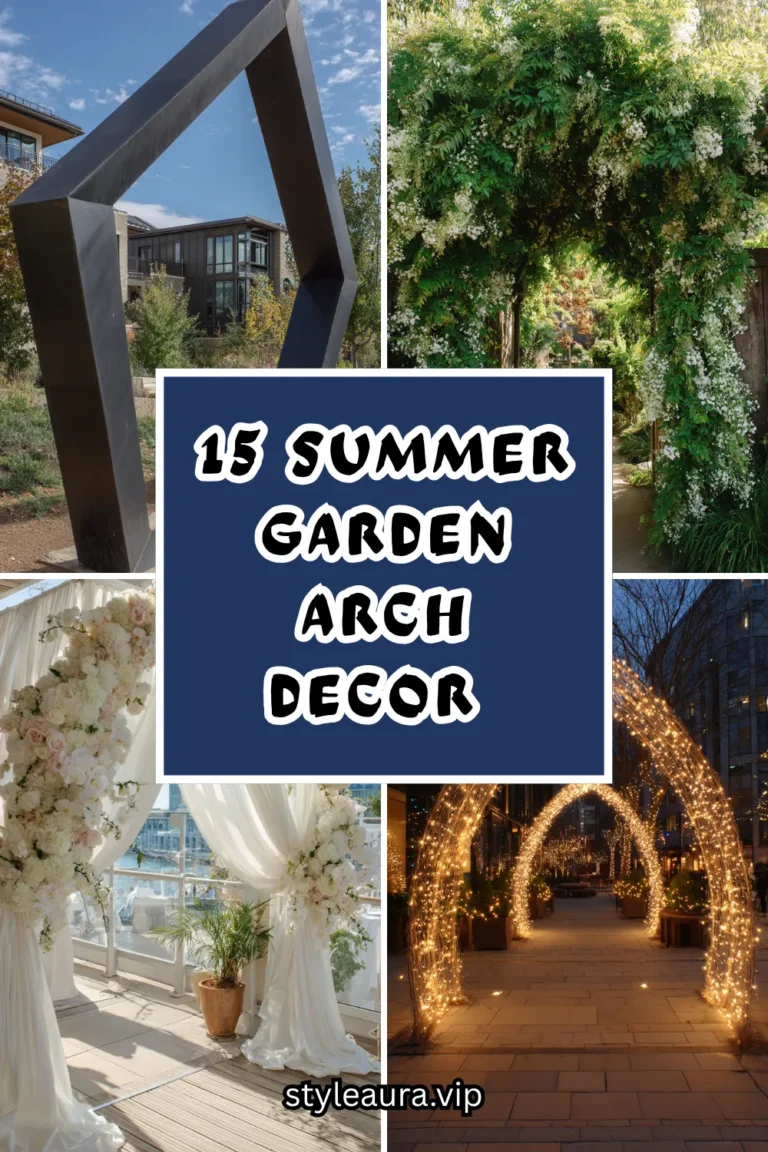
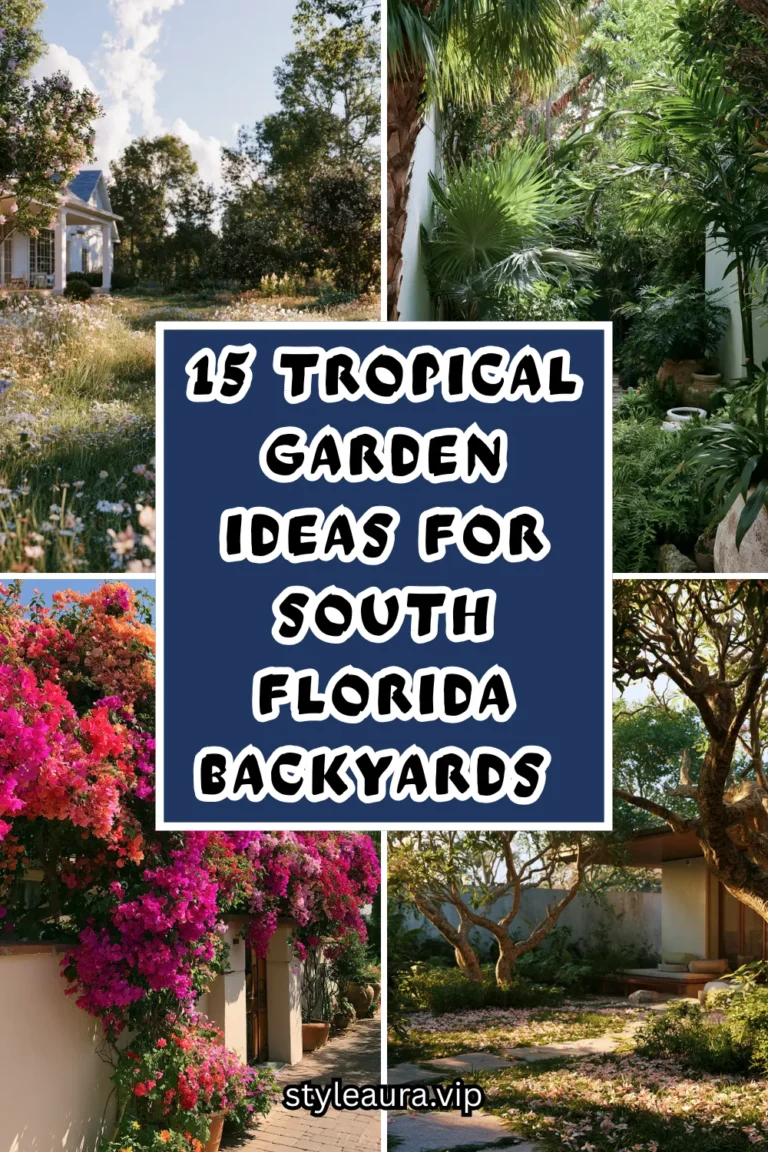
15 Small Trees for Front Yards with Non-Invasive Roots
Choosing a tree for a front yard is one of the most significant and most long-lasting garden decisions a homeowner can make.
A tree planted today will still be growing in twenty, thirty, or fifty years, and the qualities it brings to the front garden. its seasonal beauty, its architectural presence, and the specific character it creates in the landscape it inhabits will compound and deepen with every passing season.
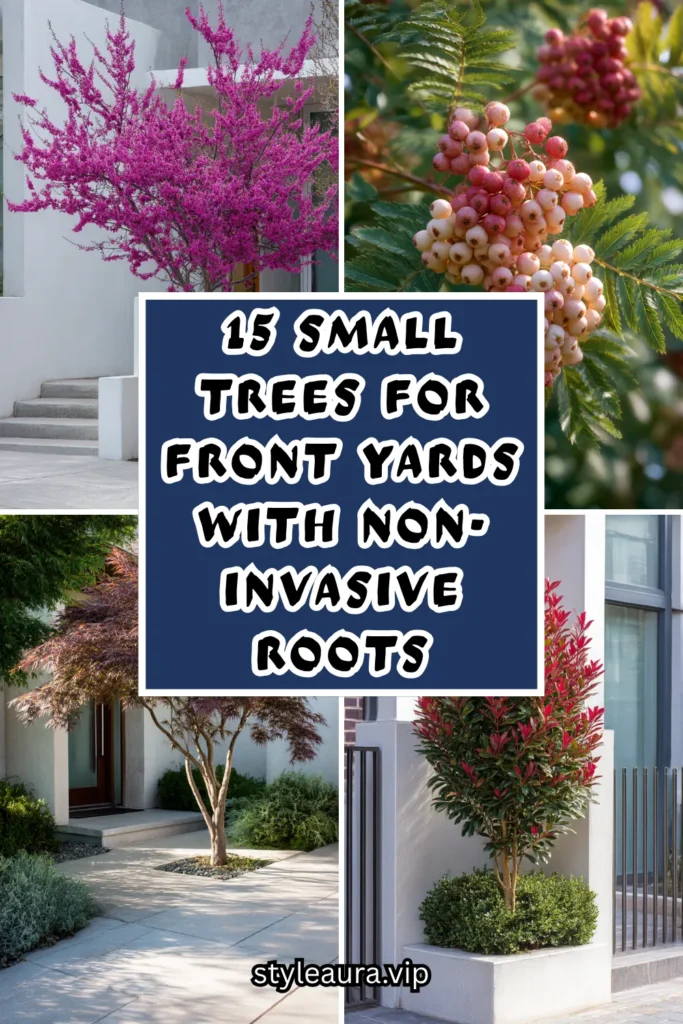
But the beauty of a front yard tree is only fully enjoyable when the tree has been chosen with genuine knowledge of its root system.
An invasive or aggressively spreading root system can damage drains, lift paving, undermine foundations, and create expensive structural problems that far outweigh the visual pleasure of the tree above ground. Here are 15 small trees for front yards with non-invasive roots that are beautiful, practical, and genuinely worth planting.
1. Japanese Maple (Acer Palmatum)
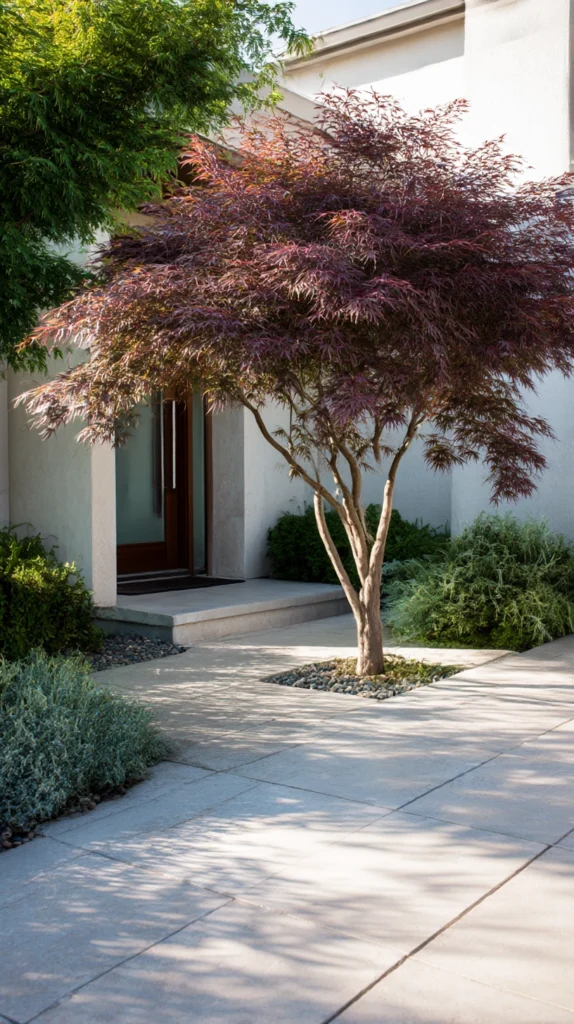
The Japanese maple is arguably the most beautiful small tree available for a front yard and one of the most reliably well-behaved in terms of root behavior. Its compact, fibrous root system stays close to the base of the tree and does not spread aggressively beyond the canopy edge, making it one of the safest choices available for a front yard with nearby paving, boundary walls, or drainage infrastructure.
Its extraordinary seasonal interest. delicate spring emergence in fresh green or burgundy, dense summer foliage, and the incandescent autumn color that makes it one of the most celebrated garden trees in the world. makes it a front yard specimen of exceptional and enduring beauty.
2. Amelanchier (Serviceberry)
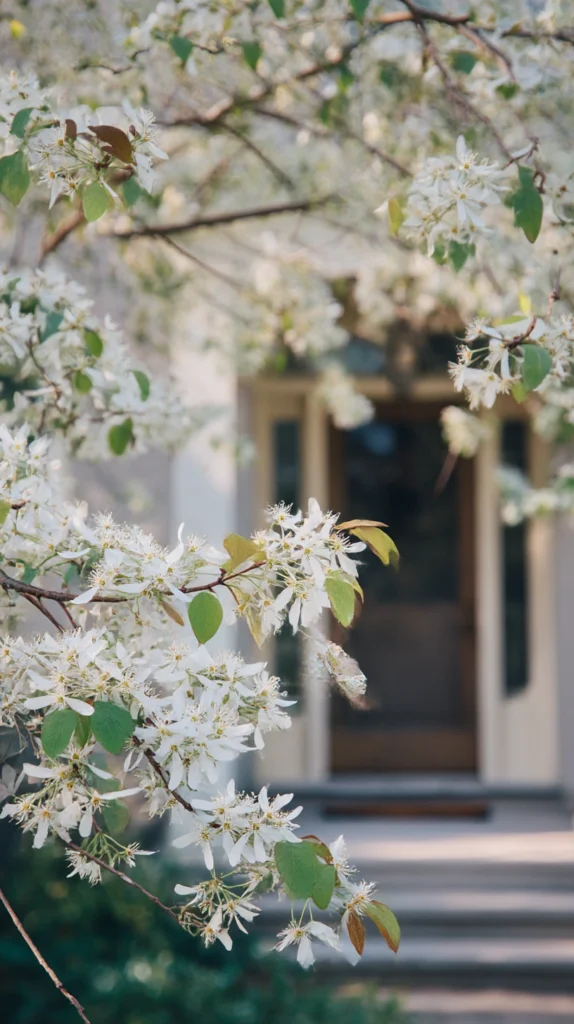
Amelanchier is one of the most generously beautiful and most comprehensively four-season small trees available for a front yard, offering a breathtaking display of white spring blossom, attractive summer foliage, exceptional autumn color, and a graceful multi-stem winter form of considerable sculptural authority.
Its root system is compact, fibrous, and non-invasive, making it genuinely safe to plant within a few meters of paving, walls, and foundations. The multi-stem form of amelanchier creates one of the most naturally elegant and most genuinely distinctive front yard tree silhouettes available.
3. Magnolia Stellata (Star Magnolia)
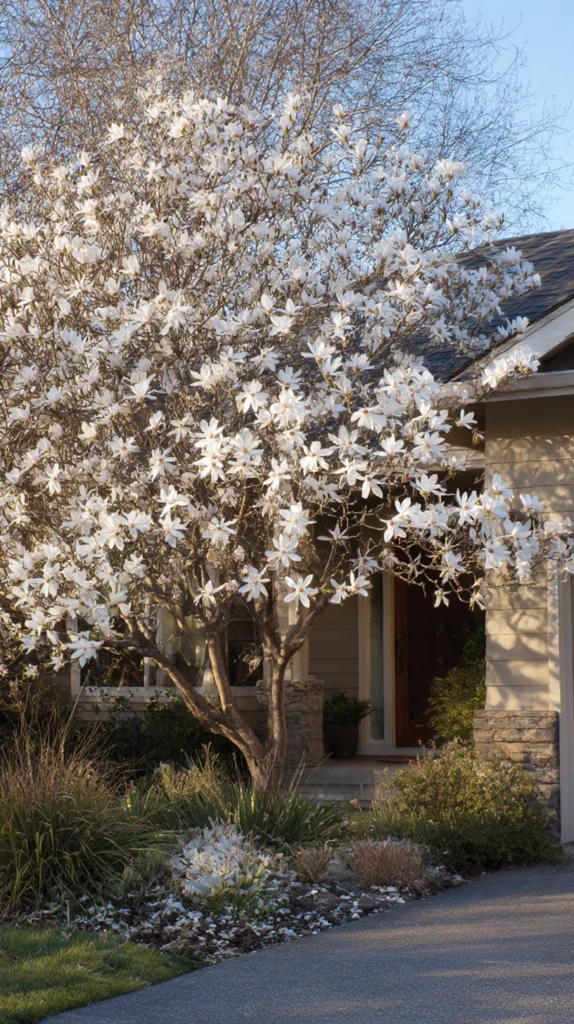
The star magnolia is one of the most spectacular early-flowering small trees available, its large, pure white, multi-petalled star flowers opening on bare stems in late winter and early spring before any foliage appears, creating a front yard display of extraordinary beauty and considerable seasonal generosity at the moment when the winter garden most needs it.
Its root system is fleshy and relatively compact, spreading slowly and staying close to the surface without the aggressive lateral spread that makes larger magnolia species unsuitable for front yard positions near hard landscaping.
4. Crabapple (Malus)
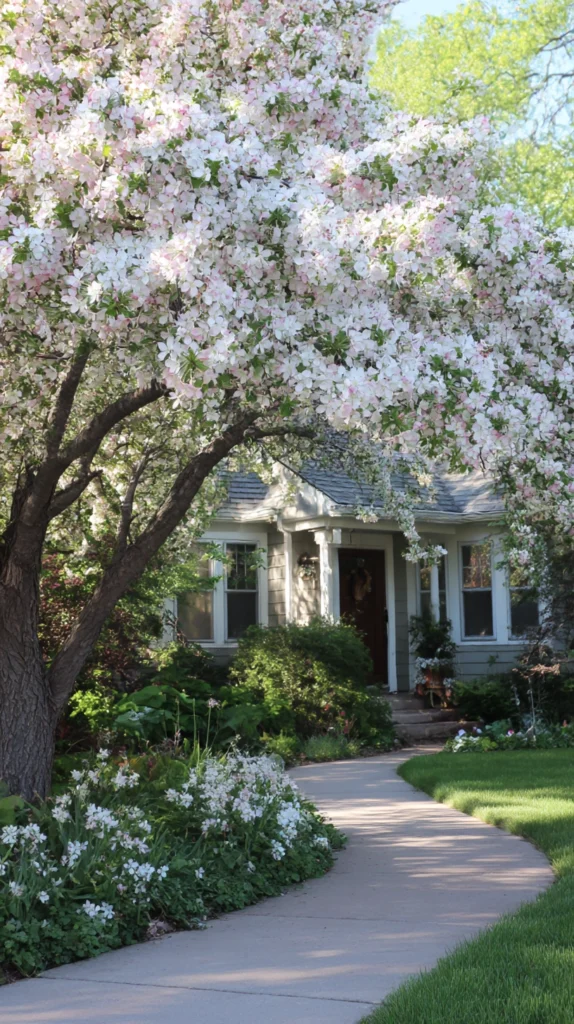
Ornamental crabapple trees are among the most flower-rich and most ecologically generous small trees available for a front yard, their clouds of white or pink blossom in spring followed by attractive foliage through summer and a generous crop of small, jewel-colored fruits in autumn that provide a valuable food source for birds and other wildlife through the cooler months.
Crabapple root systems are compact and well-behaved relative to the tree’s size, making them a reliably safe choice for front yard positions with nearby paving or boundaries. Choose a modern disease-resistant variety for the most consistently healthy and most visually attractive result through every season.
5. Betula Pendula Youngii (Young’s Weeping Birch)
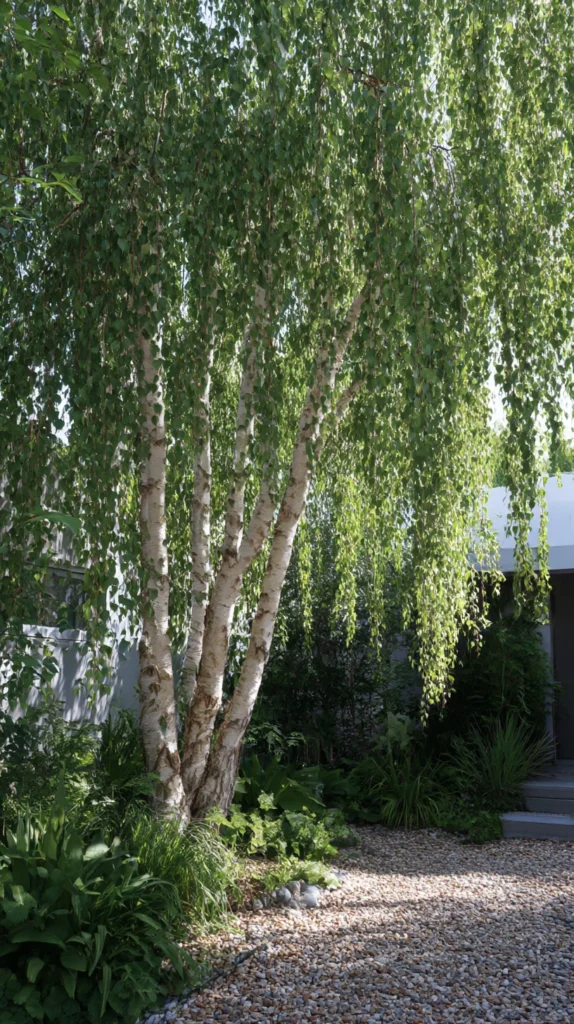
Young’s weeping birch is one of the most graceful and most immediately recognizable small ornamental trees available, its pendulous branches creating a mushroom-shaped weeping canopy of considerable elegance and genuinely distinctive character.
The white bark of the young’s weeping birch has the same extraordinary visual quality as the full-sized silver birch from which it derives. creating a stem of genuine winter beauty.
While the tree’s compact, non-invasive root system and its limited ultimate size make it a genuinely safe and genuinely practical choice for a front yard position. It creates one of the most immediately recognizable and most personally distinctive front yard tree silhouettes available.
6. Cercis Siliquastrum (Judas Tree)
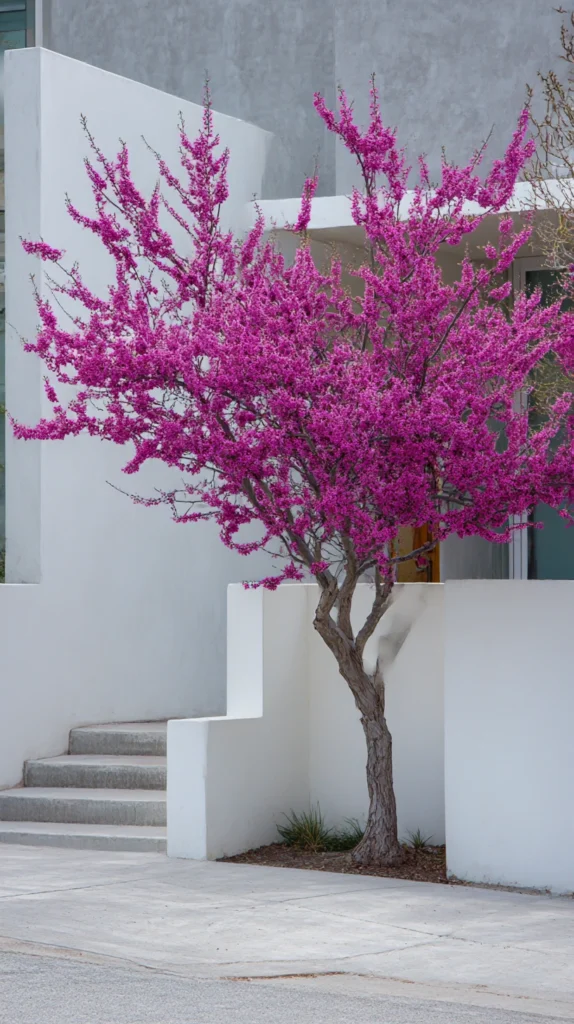
The Judas tree is one of the most architecturally distinctive and most unexpectedly beautiful small trees available for a front yard, its clusters of vivid rose-pink flowers appearing directly from the old wood of the trunk and branches in spring before the leaves emerge, creating one of the most extraordinary and most memorable early-season flowering displays of any garden tree.
Its root system is compact and non-aggressive, its ultimate size is modest and manageable, and its architectural form. with the characteristic rounded, glaucous leaves and attractive seed pod decoration through summer and autumn. creates a front yard specimen of genuine year-round interest and considerable visual character.
7. Prunus Kojo-No-Mai (Twisted Flowering Cherry)
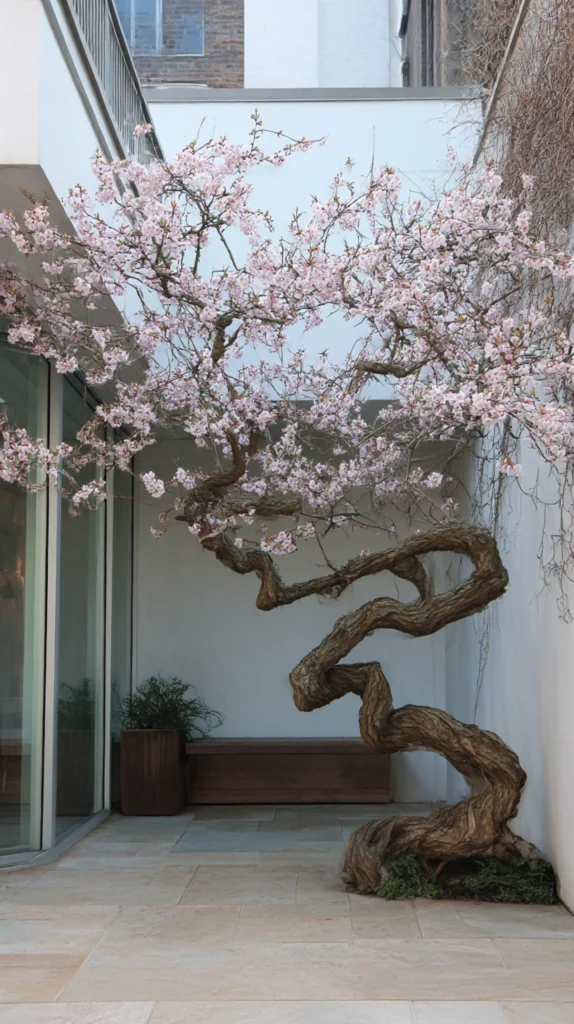
Prunus Kojo-No-Mai is a truly extraordinary small flowering cherry whose distinctive zigzag branching habit creates a sculptural, almost calligraphic winter form of considerable Japanese garden beauty, followed by a generous and exquisitely delicate display of pale pink blossom in spring and attractive autumn leaf color in warm copper and orange tones.
Its root system is compact, fibrous, and genuinely non-invasive, making it one of the safest ornamental cherry varieties available for a front yard position. The tree’s unusual branch structure creates a front yard specimen of genuine individual character and considerable botanical curiosity that rewards close attention at every season of the year.
8. Cornus Florida (Flowering Dogwood)
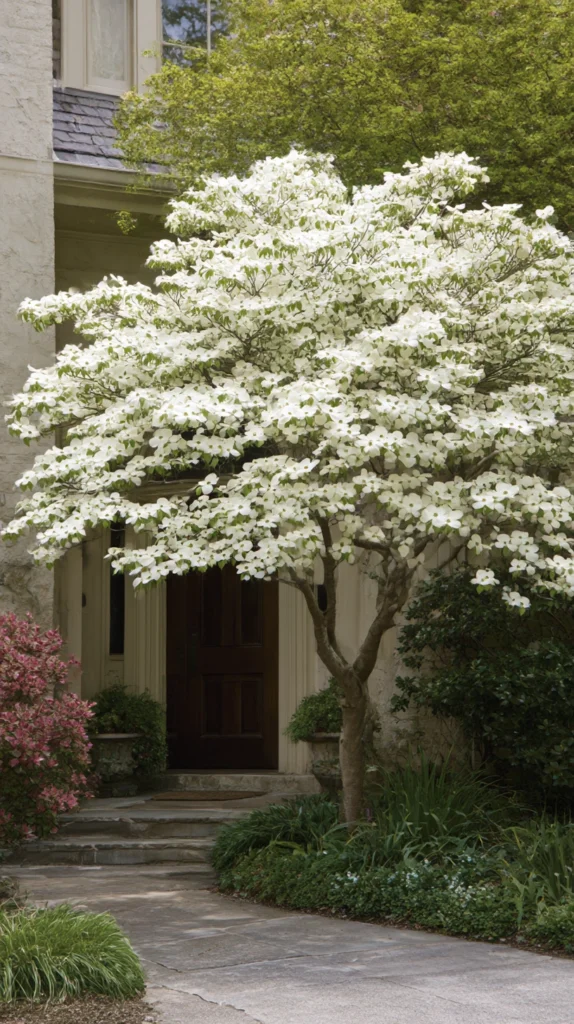
The flowering dogwood is one of the most comprehensively beautiful small trees available for a front yard, its large, creamy white or pink bracts creating an extraordinary spring flower display, its attractive summer foliage creating a clean, rounded canopy, and its brilliant scarlet autumn color combined with attractive red berries creating one of the most generously seasonal small tree displays available.
The root system of the flowering dogwood is compact, shallow, and well-behaved, spreading gradually but without the aggressive lateral root growth that creates problems with adjacent hard landscaping and foundations.
9. Sorbus Vilmorinii (Vilmorin’s Rowan)
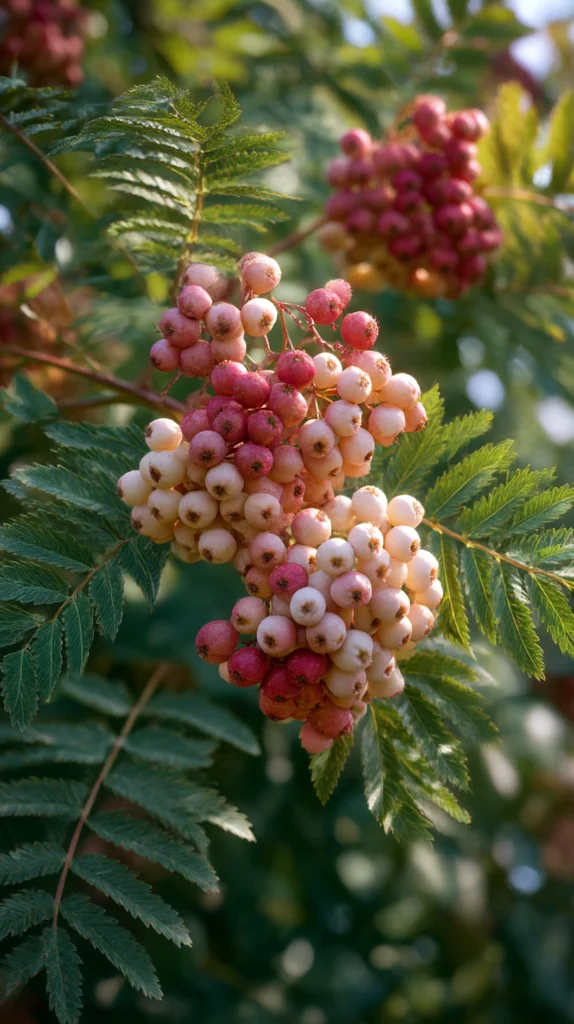
Vilmorin’s rowan is one of the most elegantly beautiful and most comprehensively four-season small trees available for a front yard, its delicate, finely divided pinnate foliage creating an almost fern-like quality of considerable botanical refinement, followed by clusters of deep red berries in autumn that gradually fade through pink to white as the season progresses.
Its root system is fibrous and compact, its ultimate size is genuinely small and manageable, and its combination of refined foliage and extraordinary fruit display creates a front yard specimen of remarkable botanical distinction and considerable seasonal generosity.
10. Lagerstroemia (Crape Myrtle)
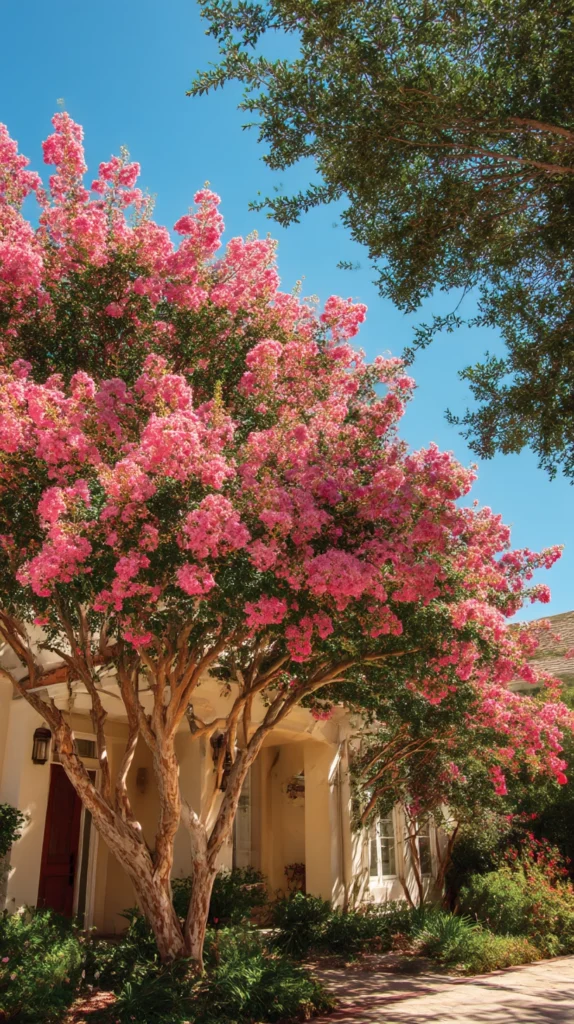
The crape myrtle is one of the most spectacularly flowering small trees available for front yards in warm and temperate climates, its masses of crinkled flowers in brilliant white, pink, red, or purple creating an extraordinary summer and autumn display of vibrant color and genuine floral abundance.
Its root system is compact and non-invasive, its mottled, peeling bark creates a beautiful winter architectural feature of considerable interest, and its tolerance of urban conditions, heat, and drought make it one of the most reliably performing and most practically intelligent small tree choices available for a front yard in a warm climate.
11. Styrax Japonicus (Japanese Snowbell)
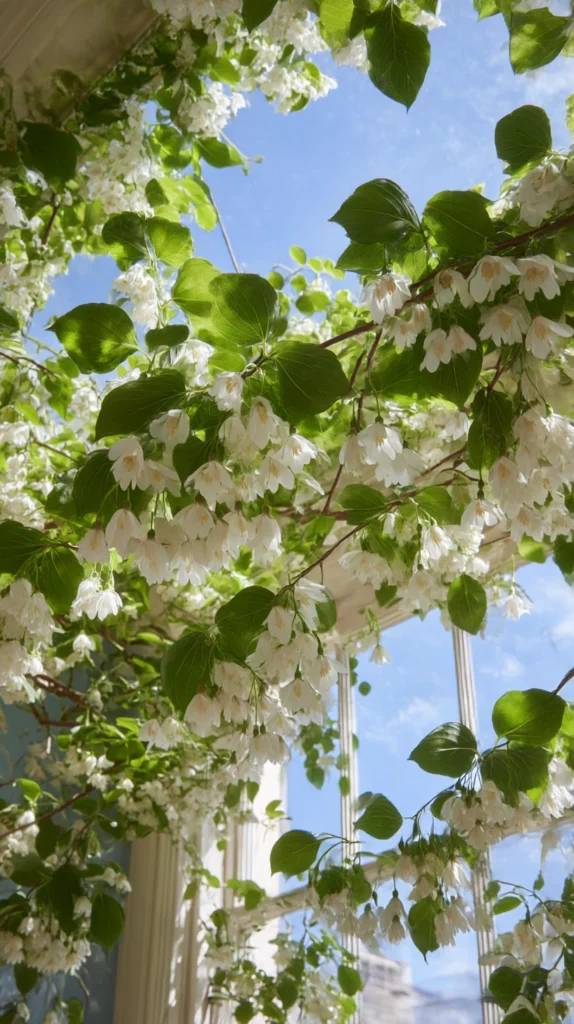
The Japanese snowbell is one of the most refined and most botanically elegant small trees available, its masses of pendant, pure white, bell-shaped flowers hanging from the undersides of the branches in late spring and creating an extraordinary display that is most beautifully appreciated from below, looking up through the canopy of hanging white bells against the blue of the early summer sky.
Its root system is compact and non-invasive, its horizontal branching habit creates a graceful, tiered architectural form of genuine distinction, and its attractive yellow autumn color provides a final seasonal gesture of considerable warmth before the winter dormancy.
12. Cotinus Coggygria (Smoke Bush)
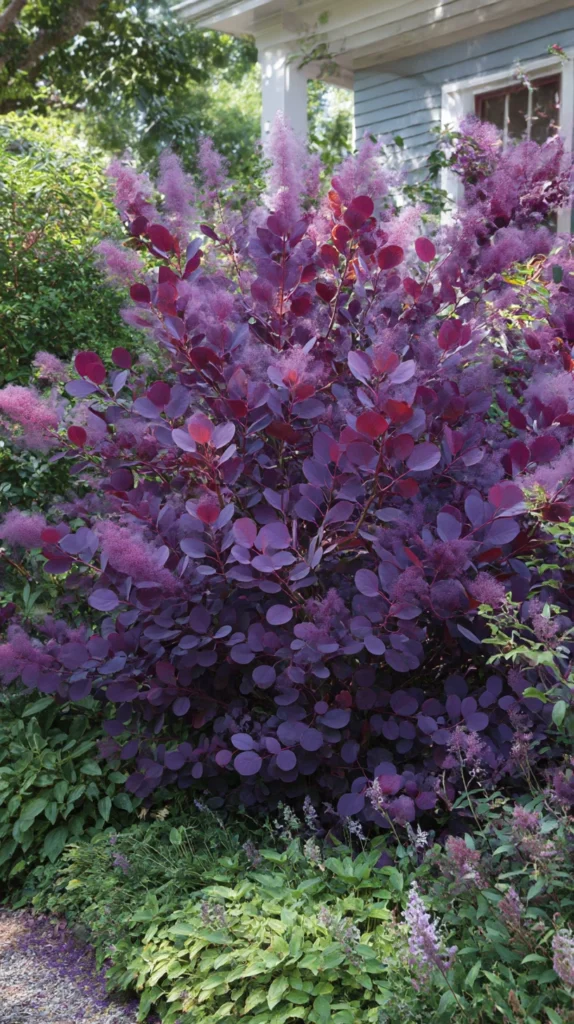
While frequently grown as a large shrub, the smoke bush can be trained as a small standard tree of extraordinary foliage beauty and considerable garden character.
Its deep purple, rounded leaves create one of the most dramatically beautiful foliage effects available in any small garden plant, and its billowing clouds of feathery, smoke-like inflorescences in summer give the tree its memorable common name and its most extraordinary and most photographed seasonal moment.
Its root system is compact and non-invasive, making it genuinely safe for front yard positions near paving and boundaries.
13. Photinia Red Robin (Standard Form)
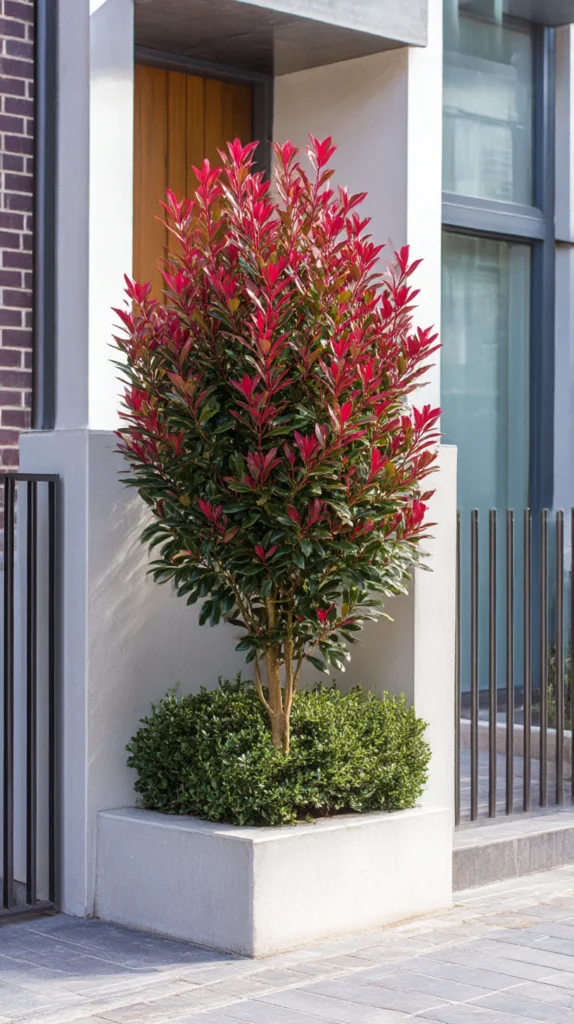
A Photinia Red Robin trained as a standard small tree creates a front yard specimen of considerable year-round interest, its brilliant scarlet new growth appearing in vivid flushes through spring and summer and creating one of the most vibrant and most immediately eye-catching foliage displays available in any small garden tree.
Its compact, non-invasive root system and its tolerance of urban conditions, pollution, and a wide range of soil types make it one of the most practically reliable and most consistently performing small tree choices for a challenging front yard position.
14. Prunus Lusitanica (Portugal Laurel) Standard
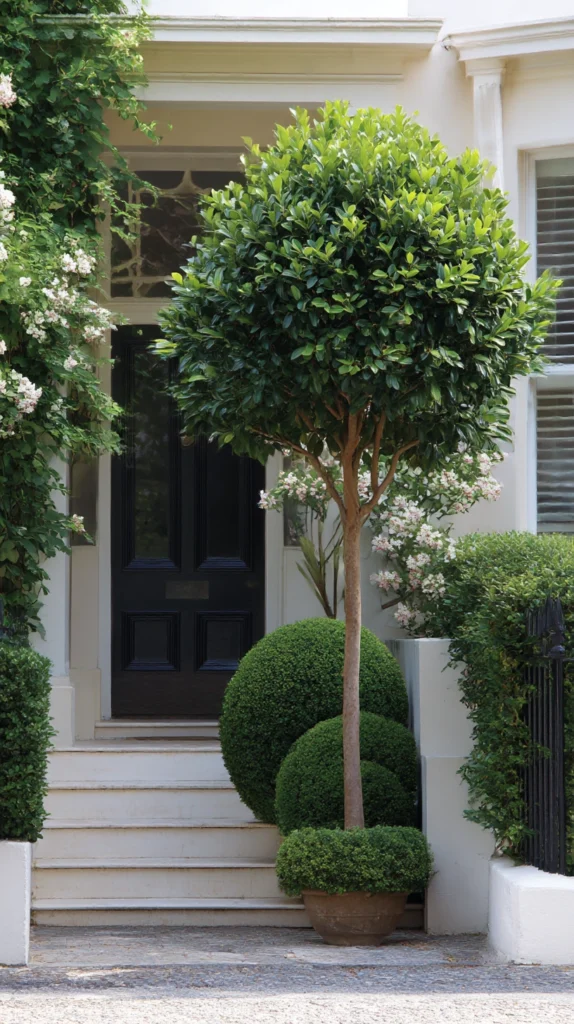
A Portugal laurel trained as a standard small tree creates a front yard specimen of considerable classical elegance and year-round evergreen presence. Its dark, glossy leaves create a formal, architectural canopy of genuine visual quality, and its fragrant white flower spikes in early summer provide a seasonal flowering moment of considerable charm.
The Portugal laurel is one of the most adaptable and most reliably healthy evergreen trees available for a front yard position and its compact, non-invasive root system makes it genuinely safe in positions near paving, walls, and drainage.
15. Acer Griseum (Paperbark Maple)
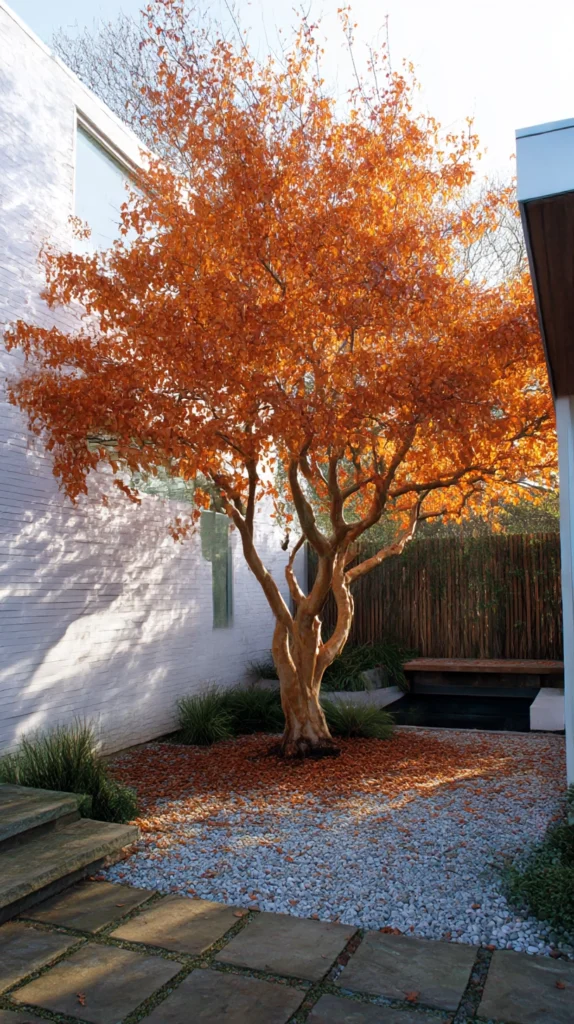
The paperbark maple is the most extraordinary small tree available for a front yard when the quality of the trunk and winter beauty of the tree are the primary design consideration.
Its cinnamon-colored, perpetually peeling bark creates a front yard focal point of quite remarkable and quite distinctive beauty that makes the tree genuinely extraordinary at every season and absolutely unforgettable in winter when the peeling bark is the tree’s sole display and its quality is fully revealed without the distraction of foliage.
Its root system is compact and fibrous, its ultimate size is genuinely small, and its combination of bark beauty, attractive pinnate foliage, and reliable autumn color creates a front yard specimen of genuine multi-season excellence.
The Right Tree in the Right Place
A small tree chosen with genuine knowledge of its root system, its ultimate size, and its specific seasonal qualities and planted in a front yard position that allows it to develop its full and extraordinary individual character is one of the most generous, most lasting, and most genuinely beautiful garden investments available to any homeowner.
Choose wisely, plant carefully, and tend it with consistent care, and the right front yard tree will reward that investment with beauty, character, and genuine landscape presence for every season of every year that follows its planting.