7 Bedroom Ceiling Ideas for a Dramatic Overhead Look
The ceiling is the one surface in a bedroom you look at the longest, lying in bed every single night, and it’s almost always the one surface nobody bothers decorating at all.
Most bedroom ceilings stay a flat, forgettable white by default, simply because painting overhead feels like more effort than it’s worth.
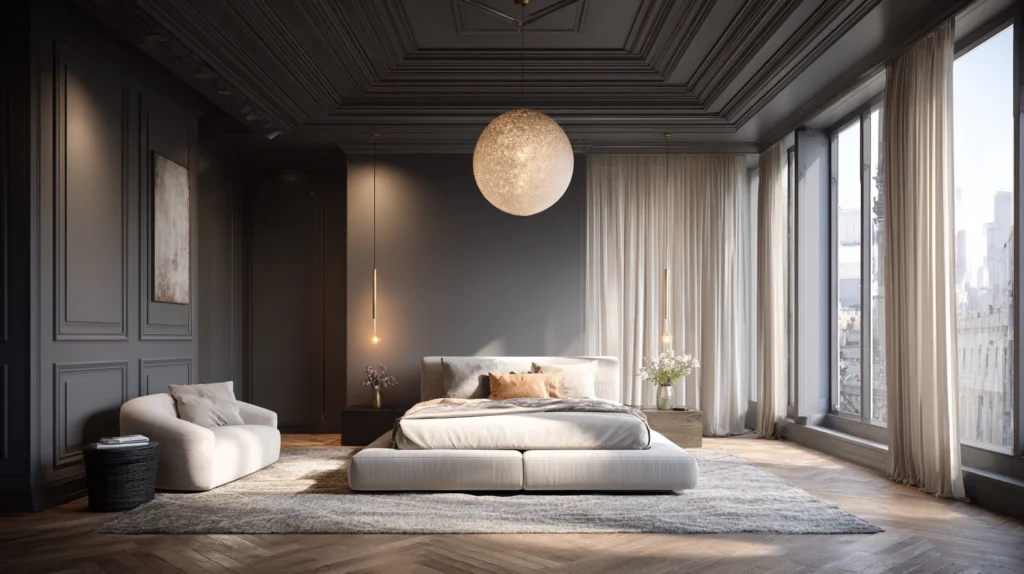
A genuinely styled ceiling changes that completely, giving a bedroom a sense of drama that walls and furniture alone can’t achieve.
Here are 7 ways to turn a bedroom ceiling into an actual design feature, not just an afterthought painted white because that’s what ceilings are supposed to be.
Every one of these can be layered into an existing bedroom without touching the walls or furniture at all.
Quick Reference: Matching a Ceiling Treatment to Your Bedroom
| Ceiling Height | Best Treatment | Why It Works |
| Standard 8 feet | Same-color-as-walls paint | Blurs the boundary, makes the room feel taller |
| 9 feet or more | Deep color or wallpaper | Enough height to support real drama |
| Sloped or dormer | Follow the slope with paint or wood | Reinforces the room’s unique architecture |
| Low ceiling under 8 feet | Light color, avoid heavy treatments | Keeps the room from feeling compressed |
1. A Deep, Saturated Color Overhead
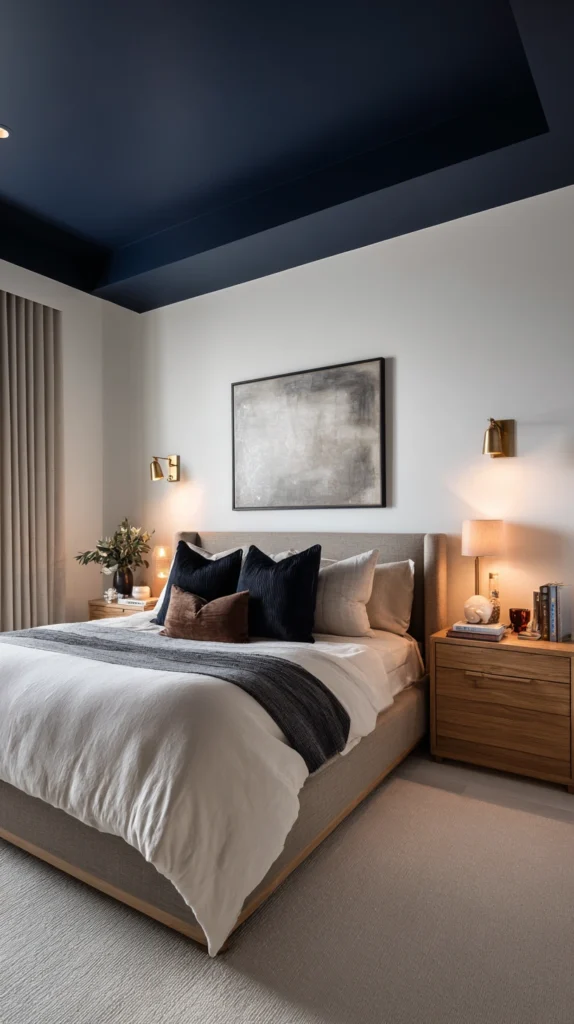
Painting the ceiling in a genuinely dark, saturated color, deep navy, forest green, or near-black, rather than the standard white.
This creates an enveloping, cocoon-like feeling that’s particularly well suited to a bedroom meant for rest rather than bright daytime activity.
I painted my bedroom ceiling a deep navy, and lying in bed now feels like being wrapped in the room rather than simply lying beneath a blank white surface.
Budget tip: A ceiling typically requires less paint than a full wall, making this one of the more affordable ways to introduce serious color drama into a bedroom.
A few things worth knowing:
- Use a flat or matte finish specifically overhead, since a glossy finish creates glare from bedside lamps and overhead fixtures
- Cut in carefully where the ceiling meets the walls, since unevenness is more visible overhead than at eye level
- Reserve this treatment for a room with adequate ceiling height, since a dark ceiling in a genuinely low room can feel oppressive rather than dramatic
This is one of the highest-impact, lowest-cost changes on this entire list, since paint alone does most of the work.
I added a second lamp after living with the finished ceiling for a few weeks.
The navy absorbed more light than I expected once night fell, and a bit more warm lamp light balanced that without needing to touch the ceiling again.
2. Wallpaper for Genuine Pattern Overhead
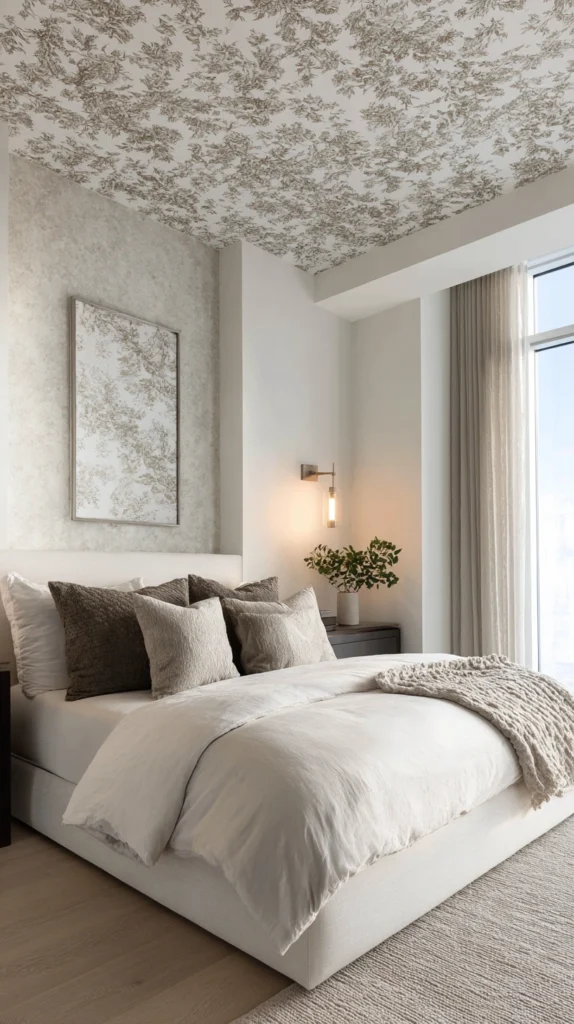
Applying wallpaper directly to the ceiling, rather than a wall, bringing pattern and texture to a surface most bedrooms leave completely bare.
This delivers a considerably more unexpected, memorable effect than the same wallpaper applied to a standard wall.
I papered my bedroom ceiling in a soft botanical print, and looking up now means seeing something genuinely beautiful rather than a flat, forgettable white surface.
Budget tip: A ceiling typically needs less wallpaper than a full wall, since most bedroom ceilings have less total surface area than a standard wall.
A few things worth knowing:
- Confirm professional installation specifically, since papering overhead is considerably more difficult than a standard wall application
- Choose a lighter-weight paper specifically for ceiling use, since heavier stock is more prone to sagging overhead over time
- Choose a pattern that reads well from below, since a design intended to be viewed straight-on doesn’t always translate the same way overhead
A papered ceiling is one of the more unexpected, memorable choices available, transforming a surface most people never think to decorate at all.
My installer recommended starting the pattern from the window wall inward.
That single planning decision meant any slight pattern mismatch landed above the closet rather than directly above the bed where it would have been most noticeable.
3. Exposed or Added Wood Beams
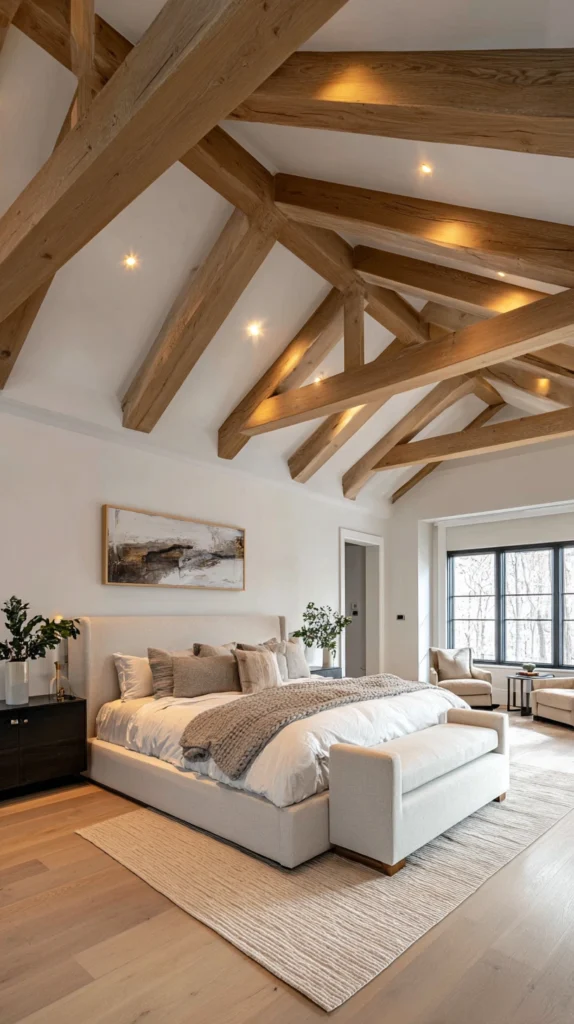
Genuine structural beams left exposed, or decorative beams added specifically for visual effect, bringing real architectural texture overhead.
This works particularly well in a bedroom already leaning toward a farmhouse, cottage, or rustic aesthetic.
I stained my bedroom’s existing structural beams a deep walnut tone, considerably darker than their original color, to match the room’s overall moodier palette.
Budget tip: If your ceiling doesn’t have structural beams, lightweight faux beam moldings can be installed purely decoratively for a fraction of the cost of real structural timber.
A few things worth knowing:
- Clean beams thoroughly before staining, since years of dust can prevent even absorption of any new finish
- Choose a matte or low-sheen topcoat rather than a glossy finish, which tends to look more authentic on aged or rustic wood
- This treatment adds genuine architectural weight to a ceiling, working especially well in a room with adequate height to support it
Exposed or added beams bring a level of textural depth that paint or wallpaper alone can’t fully replicate.
I tested my stain color on a hidden section near the closet first.
The old wood absorbed the first stain I tried far more unevenly than a fresh board would have, and the test patch saved me from staining the whole ceiling in a blotchy, inconsistent tone.
4. A Canopy or Draped Fabric Overhead
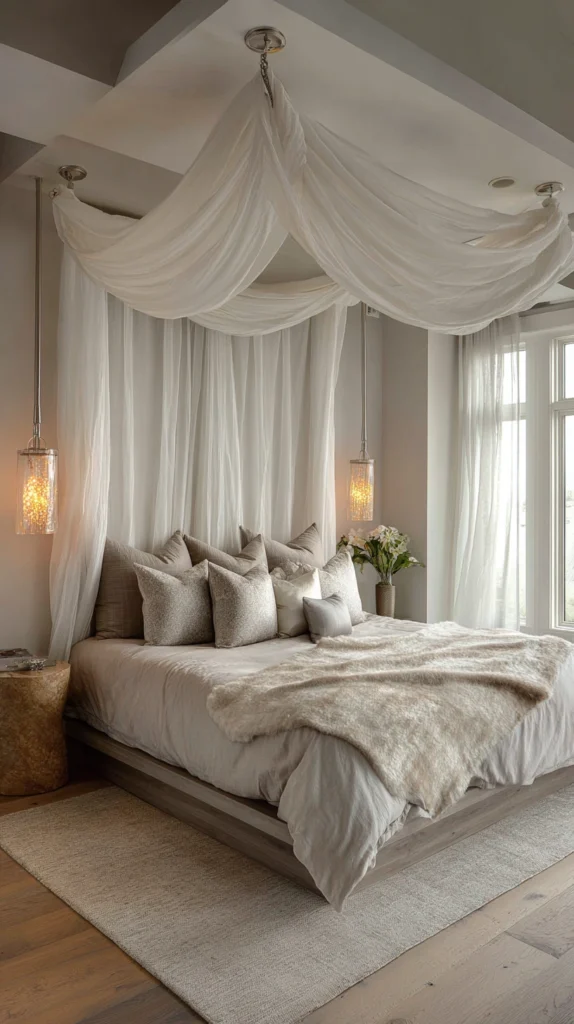
Fabric draped from a central point or multiple points on the ceiling, creating a soft, tent-like canopy effect above the bed specifically.
This brings genuine romance and softness, an effect closer to a four-poster bed’s enclosed feeling without requiring the actual bed frame.
I hung sheer fabric from a simple ceiling-mounted ring directly above my bed, and the soft draping creates an intimate, enclosed feeling that a bare ceiling never offered.
Style tip: Choose a lightweight, breathable fabric specifically for this application, since a heavier material can look overly formal or feel oppressive hanging so close overhead.
A few things worth knowing:
- Confirm the ceiling mount is secured into a genuine structural point, not just drywall alone, since fabric drapes add real weight over time
- Choose a fabric color that complements rather than clashes with your existing bedding and wall color
- This treatment works particularly well in a room with genuinely high ceilings, giving the draped fabric room to fall naturally rather than feeling cramped
A draped canopy brings a soft, romantic quality that few other ceiling treatments on this list can match.
I swapped my original mounting hook for a heavier-duty one after the first month.
The fabric held more weight once it was fully hemmed and lined than the original lightweight hardware was actually rated to support.
5. A Bold Geometric Ceiling Medallion or Molding Pattern
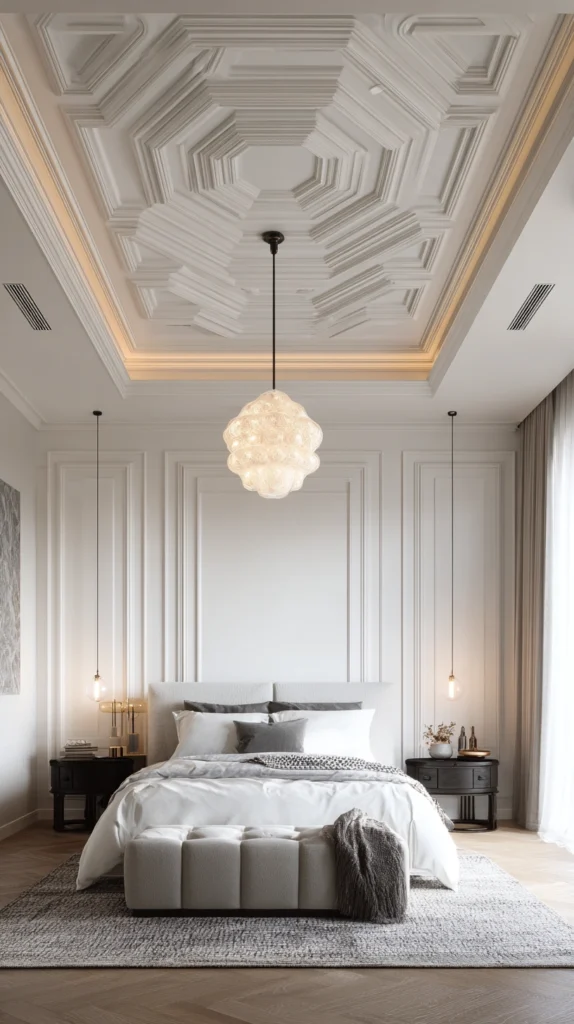
Applying decorative molding directly to the ceiling in a deliberate geometric pattern, rather than the standard plain, unadorned surface.
This brings architectural detail and dimension without requiring paint or wallpaper’s full color commitment.
I applied a simple geometric molding pattern to my bedroom ceiling, painted the same white as the ceiling itself, letting shadow and light reveal the pattern rather than relying on color contrast.
Budget tip: Lightweight polyurethane molding costs considerably less than genuine plaster or wood detailing, while still delivering real dimensional texture overhead.
A few things worth knowing:
- Plan the geometric pattern carefully on paper before installation, since ceiling molding is difficult to reposition once adhered
- Choose a lightweight material specifically for ceiling application, given the difficulty of securely mounting anything heavy overhead
- Consider adding a single central medallion as a simpler alternative if a full geometric pattern feels like too large a project
Molding detail brings genuine architectural interest to a ceiling using texture and shadow rather than requiring bold color or pattern.
I sketched my pattern to scale on graph paper before ordering any material.
That step revealed my first design would have left an awkward, uneven gap near one corner, which was far easier to fix on paper than after pieces were already cut and adhered.
6. Following a Sloped Ceiling’s Natural Lines
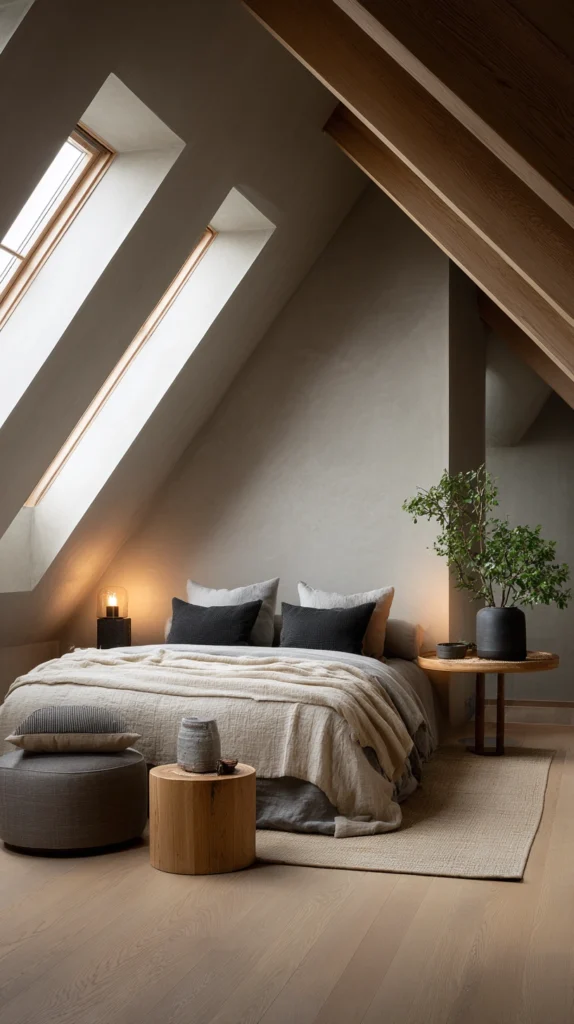
Rather than fighting an already sloped or dormered ceiling, using paint, wood, or wallpaper specifically to follow and emphasize its natural architectural lines.
This works with a room’s existing quirky architecture rather than trying to disguise or flatten it.
I painted my attic bedroom’s sloped ceiling the same deep color as the walls, letting the paint follow the slope’s actual angles rather than stopping at an arbitrary flat line.
Style tip: Choose a single continuous color or material running from wall to ceiling along the slope, rather than a visible break, to make the architecture feel intentional rather than like an afterthought.
A few things worth knowing:
- This treatment often makes a sloped ceiling feel more deliberate and considered, rather than simply an architectural limitation to work around
- Wood paneling following the slope’s exact angles brings genuine warmth to what’s often a challenging, awkward space
- This approach suits an attic conversion or older home with genuine architectural character particularly well
Working with a sloped ceiling’s natural lines, rather than against them, usually produces a considerably more successful result than trying to make an irregular ceiling look standard.
I painted a small test section where the slope meets the flat ceiling first.
Seeing how the color behaved right at that transition line convinced me to carry the color slightly further onto the flat section than I’d originally planned, for a cleaner overall break.
7. Statement Lighting as the Ceiling’s Focal Point
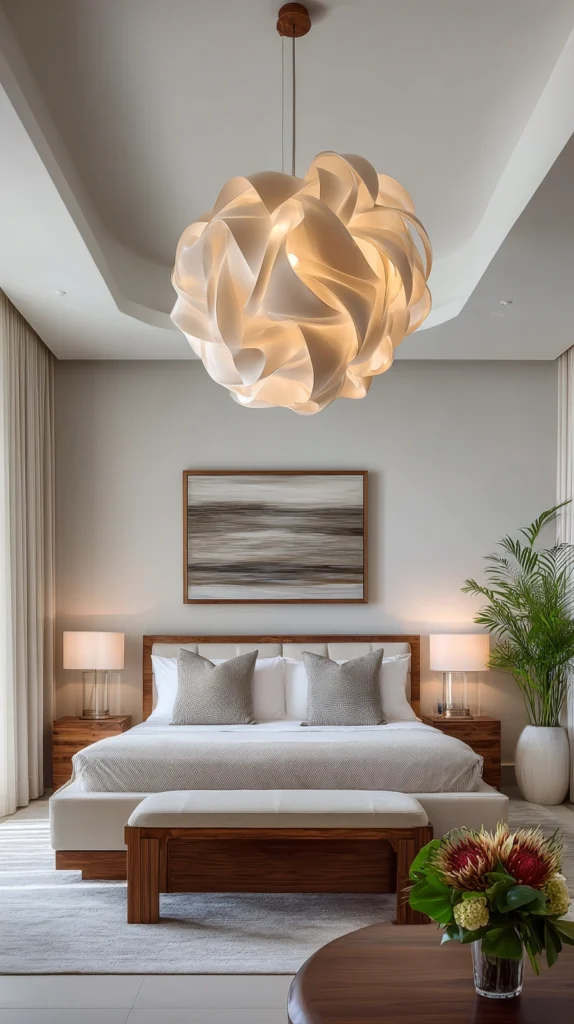
Rather than treating the ceiling surface itself, using a dramatic light fixture, a sculptural chandelier or an oversized pendant, as the ceiling’s clear focal point.
This adds genuine drama overhead without requiring any paint, wallpaper, or structural changes to the ceiling itself.
I installed a large sculptural pendant light above my bed, and it draws the eye upward in a way that transforms the whole ceiling’s presence without touching the surface at all.
Budget tip: A single statement fixture is often less expensive than a full ceiling treatment like wallpaper or added molding, delivering real visual impact for a comparatively modest investment.
A few things worth knowing:
- Choose a fixture with a genuinely sculptural quality, since a standard flush-mount light won’t deliver the same dramatic effect
- Confirm your ceiling height can comfortably accommodate the fixture’s drop without it hanging too low over the bed
- This is the easiest treatment on this entire list to change again later, since a fixture swap requires far less effort than repainting or repapering an entire ceiling
Statement lighting delivers ceiling drama without any of the commitment or labor that painting, papering, or adding molding overhead requires.
I hung mine slightly off-center from the bed’s exact midpoint at first, and it read as a mistake rather than a deliberate choice until I recentered it properly over a weekend.
Small positioning errors like that are easy to overlook when a fixture is the only real change being made, since there’s no surrounding pattern or color to distract from an off-center placement.
Adjusting Lighting Once the Ceiling Goes Dark
Any dark, saturated, or heavily textured ceiling treatment changes how much light a bedroom actually reflects back into the space.
| Treatment | Light Impact | Adjustment Worth Making |
| Dark paint | Absorbs significantly more light | Add a second warm lamp source |
| Wallpaper | Slightly reduces reflected light | Usually minor, rarely needs adjustment |
| Exposed beams | Minimal impact on overall light | Little adjustment typically needed |
| Draped fabric | Softens and diffuses light | Consider uplighting beneath the canopy |
A white ceiling bounces a surprising amount of ambient light back down into a room, more than most people realize until that ceiling suddenly goes dark instead.
I underestimated this with my own navy ceiling, and the room read as noticeably dimmer in the evening until I added a second table lamp specifically to compensate.
Style tip: Plan for at least one additional warm light source whenever committing to a genuinely dark ceiling treatment, rather than waiting to notice the room feels dimmer after the fact.
The Easiest Change to Start With
Painting the ceiling the same deep color as an existing accent wall costs the least and requires the least new material, making it the simplest way to test dramatic overhead color before committing to anything more elaborate.
A Few Details Worth Confirming Before You Commit
- Ceiling height, since several of these treatments need genuine vertical room to read as dramatic rather than oppressive
- Structural mounting points for anything with real weight, like a canopy or a substantial light fixture
- Whether your specific ceiling material can support paint, wallpaper, or molding without extensive prep work first
- How the treatment will affect the room’s overall light levels, and whether existing lamps and fixtures need adjusting to compensate
Why Some Dramatic Ceilings Still Feel Off
A bold ceiling treatment applied without considering the room’s actual height, existing color palette, or furniture below can end up feeling disconnected rather than intentional. The most successful dramatic ceilings typically relate to at least one other element already in the room, a wall color, a wood tone, a metal finish, rather than existing as a completely isolated decision made in a vacuum.
Before committing to any of these treatments permanently, it’s worth living with a small painted sample or a temporary fabric test for at least a few days. A ceiling behaves differently under morning light, midday light, and evening lamp light than any single glance at a paint chip can predict, and the extra few days of observation tend to prevent the most common regrets people have after finishing this kind of project.