13 Small Bedroom Decor Ideas to Transform a Tight Space Into a Cozy Retreat
Small bedrooms have a reputation they do not deserve.
The assumption is that a small bedroom is a compromised bedroom. That size determines quality. That the person with a ten-square-metre bedroom is by definition sleeping and waking in a less satisfying space than the person with twice the floor area.
This assumption ignores the specific quality that smallness creates when it is worked with rather than against.
A small bedroom, designed for its actual dimensions rather than apologising for them, is a bedroom of extraordinary intimacy and warmth. The walls are close. The ceiling is present rather than remote. The bed fills the space without being dwarfed by it. The room holds the person who sleeps in it rather than merely containing them.

This is not the consolation prize version of a bedroom. It is a specific, genuine quality that large bedrooms cannot produce. The monastic cell. The ship’s cabin. The hotel room that feels like a considered private world rather than a large hotel room that happens to be occupied.
The small bedroom’s potential is realised by decisions that work with its scale rather than trying to make it seem like something it is not.
Here are 13 ideas that make those decisions.
Why Small Bedrooms Deserve a Different Design Approach
Most small bedroom advice tries to make small bedrooms appear larger.
Pale colours to open the space. Mirrors to double the visual depth. Furniture scaled down to leave more floor area visible. The constant effort to disguise the bedroom’s actual dimensions rather than to embrace them.
This approach rarely produces a genuinely satisfying result. The small bedroom made to look larger is still small. The pale colours, the mirrors, and the carefully scaled furniture create an impression rather than a reality. The person who lives in the room knows it is small regardless of the visual strategies applied. And the warmth and intimacy that the small bedroom’s genuine character offers is sacrificed in the pursuit of the illusion of space.
The better approach is to design the small bedroom for what it actually is. To use its closeness as a quality rather than a limitation. To let the bed dominate the space because the bed is what the room is for. To use darker, warmer tones that make the room feel more like a sheltered space than an enlarged one.
The small bedroom designed for its actual character is always more satisfying to live in than the small bedroom designed to appear larger than it is.
1. Let the Bed Fill the Space Without Apology
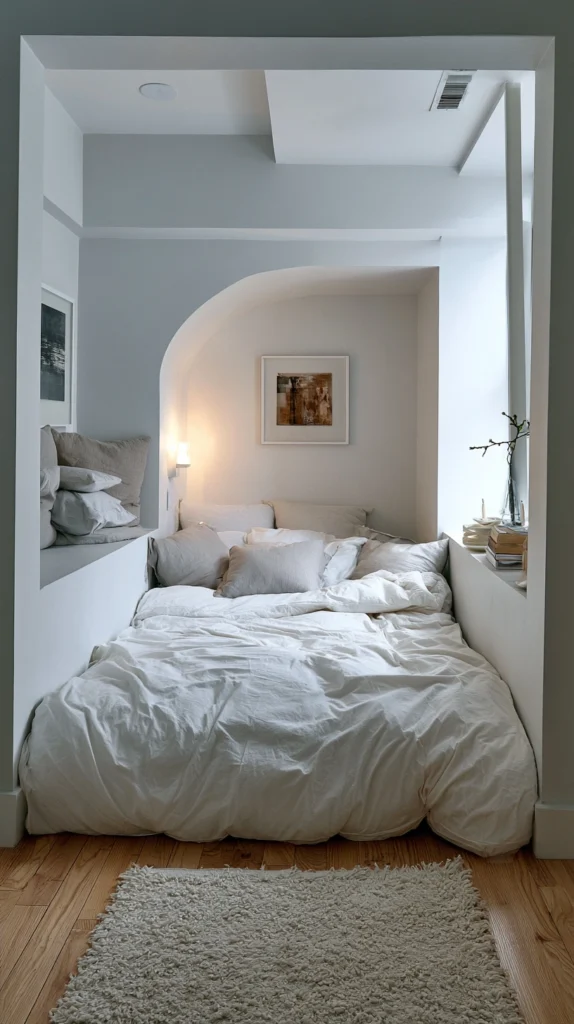
The most common mistake in a small bedroom is choosing a smaller bed to leave more floor space.
The floor space gained by using a single bed in a room that could hold a double, or a double in a room that could hold a queen, is rarely significant in absolute terms. The visual and practical difference between a bed that fits comfortably in its room and a bed that is visually correct for the space is significant.
A bed that fills the room, that sits close to the walls on either side, that dominates the space in the way that a bed should dominate a bedroom, creates a room that is unapologetically what it is. A place for sleeping. A room whose primary purpose is served completely and without compromise.
The bed close to the walls creates the specific coziness that small bedrooms offer uniquely. Reaching out from either side in the morning and feeling the wall nearby. The enclosed quality of being near the boundaries of the room rather than floating in its centre. These are qualities specific to the close-fitting bed in the small room.
Use the full available bed size that the room can hold while allowing passage on at least one side and the foot of the bed. Prioritise the bed’s scale over any other consideration in the room’s furniture selection.
Why allowing the bed to fill the space is the most important small bedroom decision:
- The bed is the room’s entire purpose and should be scaled to fulfil that purpose completely
- A larger bed in a small room creates the coziness of close walls rather than the claustrophobia of insufficient space
- The floor space sacrificed by a larger bed is rarely significant in absolute terms but the comfort gain is real
- A well-proportioned bed in a small room looks designed rather than compromised
- The room built around the bed’s scale reads as intentional rather than apologetic
- Bedding on a correctly scaled bed looks generous and inviting rather than lost in excess space
2. Build Up the Walls With Tall Headboard or Wall Treatment
The small bedroom’s walls are closer than in a larger room. This proximity is an opportunity.
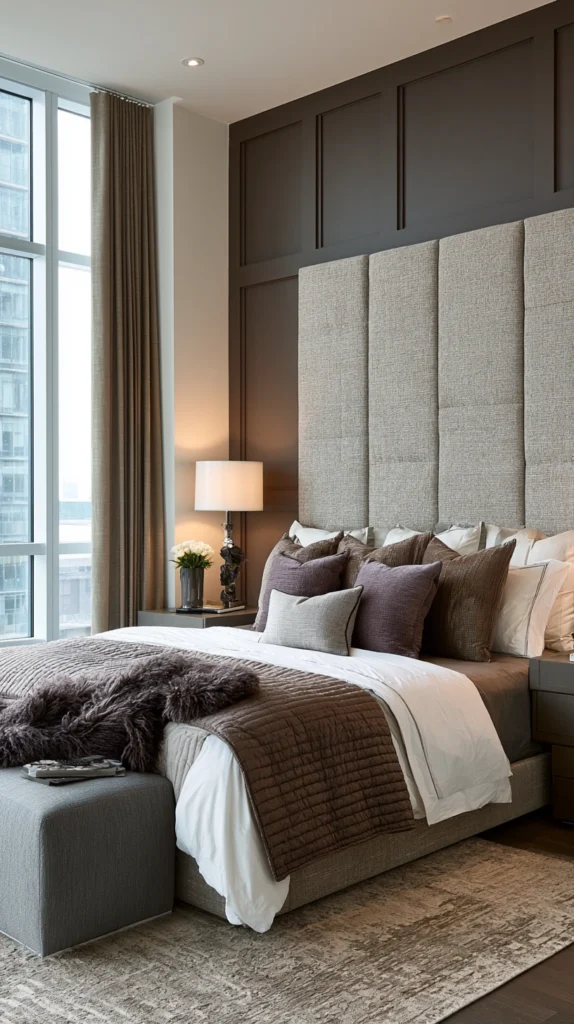
A tall headboard that reaches toward the ceiling creates a sense of vertical scale that makes the room feel taller without making it appear larger. The eye travels upward along the headboard and the room expands in its vertical dimension even as its horizontal dimensions remain intimate.
A full wall treatment behind the bed, paint in a deep tone, wallpaper in a pattern, panelling in a natural timber, turns the wall closest to the person sleeping into a deliberate and beautiful surface rather than a background that happens to be nearby.
In a large bedroom the headboard wall is one of four walls and the eye is drawn to it from a distance. In a small bedroom the headboard wall is also the surface the sleeper faces and the surface closest to them at rest. It is the most intimate surface in the room and the one that most directly shapes the daily experience of being in the bedroom.
Treat this wall as the room’s primary design decision. A deep blue or forest green. A botanical wallpaper that wraps the occupant. A timber panelled wall in a warm natural tone. The wall that is most present in the small bedroom should be the wall that is most considered.
3. Use a Dark or Warm Colour That Creates Enclosure
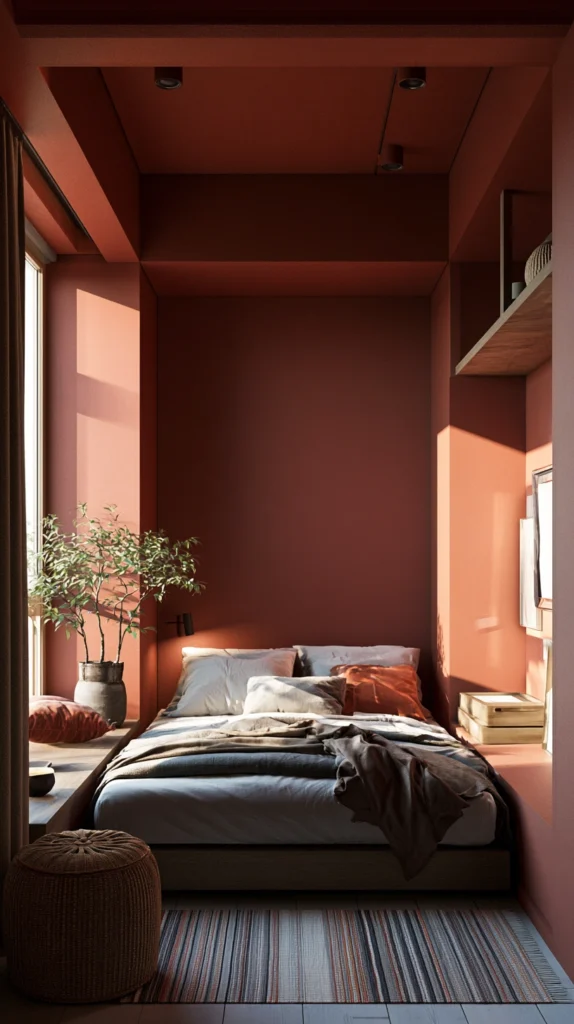
The pale colour in a small bedroom makes the room feel blank and slightly cold.
The advice to use pale colours in small rooms to make them appear larger is advice calibrated for the goal of appearing larger. If the goal is instead to create warmth, intimacy, and the specific pleasure of a small room that feels genuinely cozy, dark or warm colours are significantly more effective.
A deep, warm colour in a small bedroom, forest green, warm charcoal, deep dusty blue, warm terracotta, creates the sense of enclosure that makes a small room feel like a shelter rather than a limitation. The walls close in with warmth rather than with oppression.
This works because colour has thermal associations that our brains process immediately. Warm colours feel warm. Dark tones feel sheltered. A small bedroom in a warm, dark colour feels like a cave in the best sense of the word. A protected, warm, entirely private space that the person in it inhabits completely.
Paint all four walls and the ceiling in the same tone for the most complete enveloping effect. The ceiling at the same colour as the walls removes the visual interruption that a contrasting ceiling creates. In a small room this removal of the contrast between wall and ceiling is more effective than in a large room because the ceiling is closer and more present.
4. Mount Everything on the Walls to Free the Floor
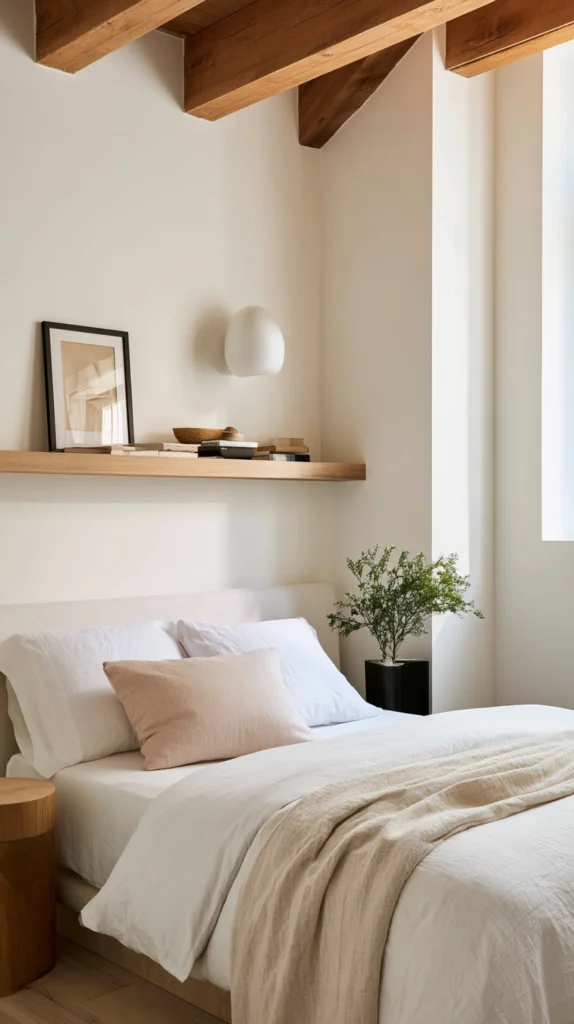
In a small bedroom every square centimetre of floor area is visible and therefore every object on the floor contributes to the perceived density of the space.
Bedside tables on the floor. A dresser taking floor space. A bench at the foot of the bed on the floor. Each of these floor-standing pieces adds to the visual complexity at floor level and reduces the floor area that the eye can rest on.
Wall-mounted alternatives for every piece of furniture that can be wall-mounted change this completely.
Wall-mounted bedside shelves in place of bedside tables. A floating shelf in place of a dresser if storage needs can be managed in built-in wardrobe solutions. A fold-down wall-mounted desk that disappears when not in use. A floating television mount rather than a television unit.
The floor cleared of all furniture except the bed creates a visual simplicity at floor level that makes the room feel considerably more spacious than the same room with the same amount of floor area but multiple pieces of floor-standing furniture.
The wall-mounted approach also creates the specific quality of furniture that appears to float rather than stand. Bedside shelves without visible supports. A floating vanity shelf with only the bracket visible. These floating forms are visually lighter than their floor-standing equivalents and contribute less to the sense of visual density in the room.
5. Install Built-In Storage That Disappears Into the Walls
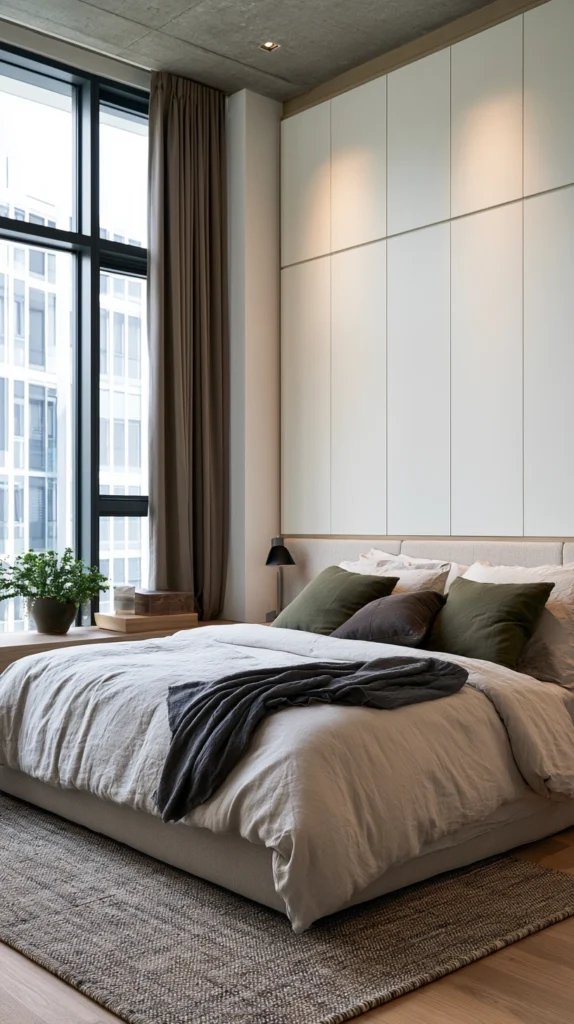
The small bedroom cannot afford the visual weight of freestanding wardrobes and chests of drawers occupying significant floor area and asserting their presence as objects in the space.
Built-in storage that fills an alcove precisely, that fits between two walls as if it was always there, that has doors flush with the surrounding wall surface, disappears into the room’s architecture in a way that freestanding furniture cannot.
A wardrobe built into the alcove beside the chimney breast uses space that was not otherwise usable and creates storage that appears to be part of the wall rather than placed against it. The doors in the same paint colour as the surrounding walls make the wardrobe invisible when closed.
A run of built-in floor-to-ceiling storage across one full wall in a small bedroom creates substantial storage capacity while reading as an architectural surface rather than furniture. The wall with the built-in storage looks like a wall. The wall without it also looks like a wall. From across the room the storage is not visible as a separate object.
This architectural integration of storage is the most effective single decision for creating the sense of spaciousness in a small bedroom. The room’s floor area is not reduced by the storage. The storage is in the walls.
6. Use Layers of Texture in a Limited Palette
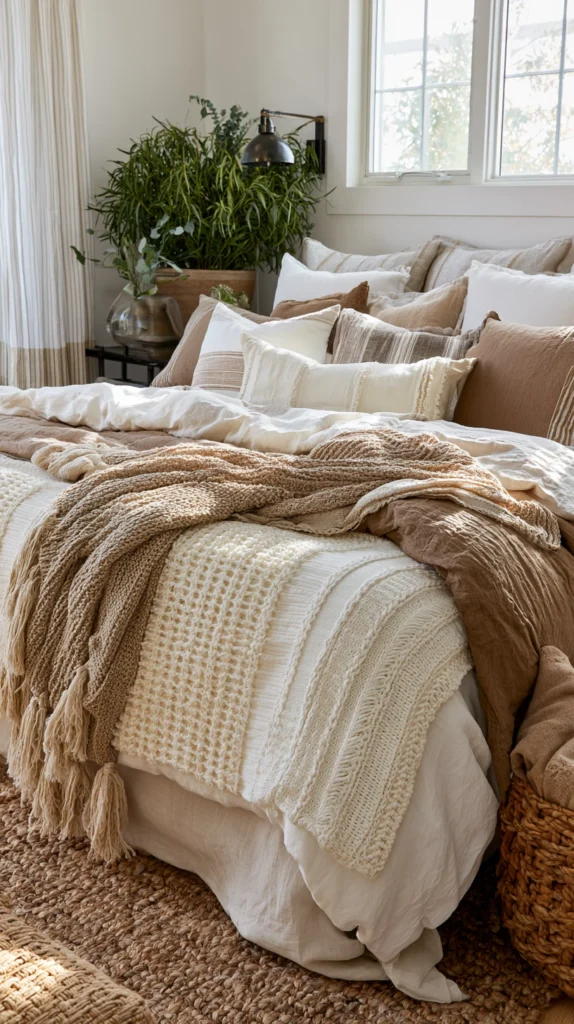
The small bedroom cannot accommodate a wide colour palette without feeling visually busy.
What it can accommodate, and what provides the richness and warmth that makes a small bedroom genuinely inviting, is significant variation in texture within a limited colour range.
Cream linen sheets. A waffle cotton blanket in warm oatmeal. A chunky knit throw in the same natural tone. Velvet cushions in a warm neutral. A wool rug in a similar but slightly deeper tone. All of these elements are within the same warm neutral palette and all of them create different visual and tactile textures.
The textural richness within the limited palette creates visual complexity that the eye reads as warmth and depth rather than as busyness. The room feels full of interesting surfaces without feeling full of competing colours or competing visual elements.
This texture-within-palette approach is specifically suited to small bedrooms because it creates the warmth and richness that makes the close walls pleasant rather than constraining, without adding the visual noise that would make a small room feel overwhelmed.
7. Add a Mirror That Reflects the Room’s Best Angle
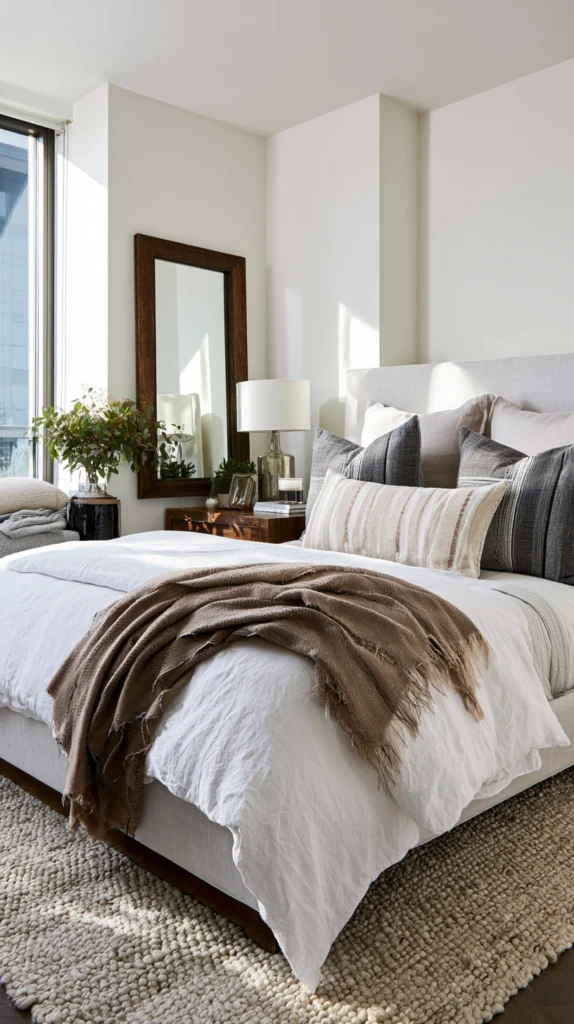
The mirror in a small bedroom should be positioned specifically to reflect the most beautiful aspect of the room rather than simply to add reflected depth.
A mirror that reflects the window creates a second source of natural light in the room. In a small bedroom where the window may be the only natural light source, a mirror that bounces that light into the room’s darker corners improves both the practical light quality and the sense of the room being connected to the outside world.
A mirror that reflects the headboard wall with its warm colour or its botanical wallpaper creates a second version of the room’s most considered surface. The room appears to continue beyond the mirror in a direction that shows its best rather than its most challenging aspect.
Position matters more than size for the mirror in a small bedroom. A mirror that reflects a blank wall or the back of the bedroom door adds less value than a small mirror precisely positioned to catch and reflect the window light. Consider what the mirror will show before deciding where to place it.
8. Choose a Rug That Frames the Bed Rather Than Fills the Floor
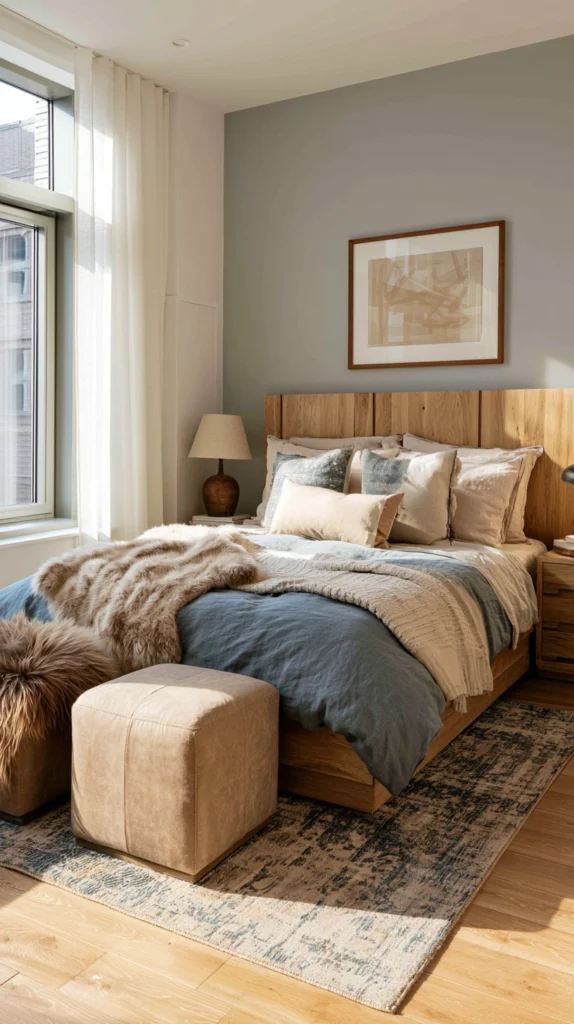
The rug in a small bedroom should be sized for the bed rather than for the floor.
A rug that extends the full width of the room feels like wall-to-wall carpet without the commitment. A rug that extends to the edges of the floor without reaching the walls looks slightly too small for the room it is in.
The correctly sized rug for a small bedroom extends approximately sixty centimetres beyond each side of the bed and sixty centimetres beyond the foot of the bed. This size creates a visual frame around the bed that defines the sleeping area as a specific zone. The floor beyond the rug’s edges is bare and the bed sits within its own defined territory.
This framing effect is the same principle that makes area rugs effective in any room. The rug defines the zone it covers. In a small bedroom the zone it covers is the bed and its immediate surrounds, which is the entire functional zone of the room.
A rug that is slightly too large for this framing function, that extends to the bedside table legs or to the wardrobe door, loses the defined frame quality and becomes simply a floor covering.
9. Create a Bedside Setup That Is Compact and Complete
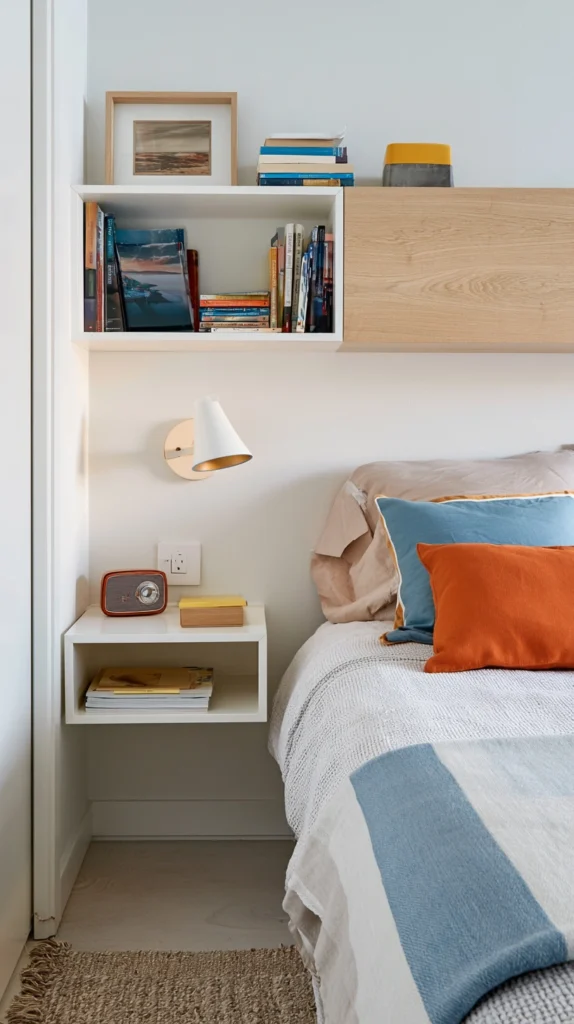
The bedside table in a small bedroom is often the element that consumes the most floor space for the least visual and practical return.
A standard bedside table of forty-five by forty-five centimetres and fifty centimetres height takes a significant proportion of the floor area beside a bed in a small room. Its surface holds a lamp, a phone, and perhaps a glass of water. Its drawer or shelf holds a book and a phone charger. These functions do not require a forty-five centimetre square floor footprint.
A wall-mounted bedside shelf of twenty-five by twenty-five centimetres holds the same items in half the surface area with no floor footprint. A clamp-mounted reading light attached to the headboard and a small floating shelf replace the floor-standing table and lamp entirely.
The bedside setup should be as compact as the bedside functions actually require. A place for the phone to charge. A place for the glass of water. A reading light positioned for comfortable reading. A place for the book. These four functions can be achieved in less floor and wall space than any standard bedside table occupies.
10. Hang Curtains at Ceiling Height Regardless of Window Position
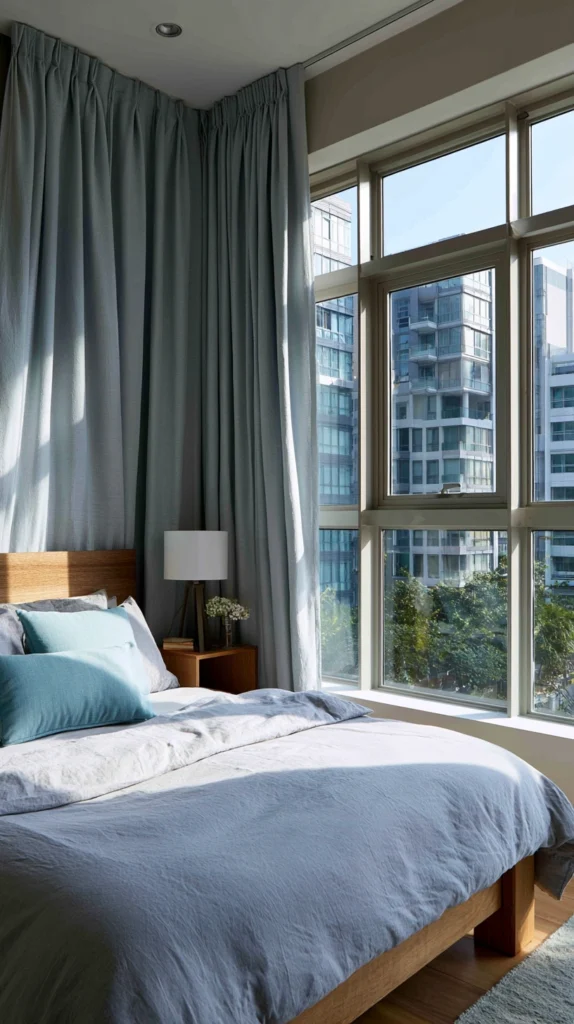
The curtain in a small bedroom hung at the window’s actual height creates a curtain that frames the window. The curtain hung at ceiling height creates a curtain that creates the impression of a taller wall.
The difference in the visual height of the room between these two curtain positions is significant and easily achieved. The curtain rail or pole mounted at ceiling height, or as close to it as the hardware allows, with curtains that fall to the floor, creates a vertical element that draws the eye upward and makes the room feel taller than its actual ceiling height.
This is the specific advantage of the high-hung curtain in a small room. The curtain creates a vertical dimension that the room’s actual dimensions do not provide. The eye reads the curtain as the room’s height indicator rather than the actual ceiling and the room appears taller.
The curtain fabric should be a simple, unfussy fabric in a single colour or a quiet pattern. In a small room an elaborate curtain pattern adds visual complexity that makes the room feel busier. A simple linen or a muted stripe in a warm tone suits most small bedroom palettes.
11. Add a Single Strong Piece of Art That Does Not Need Space to Work
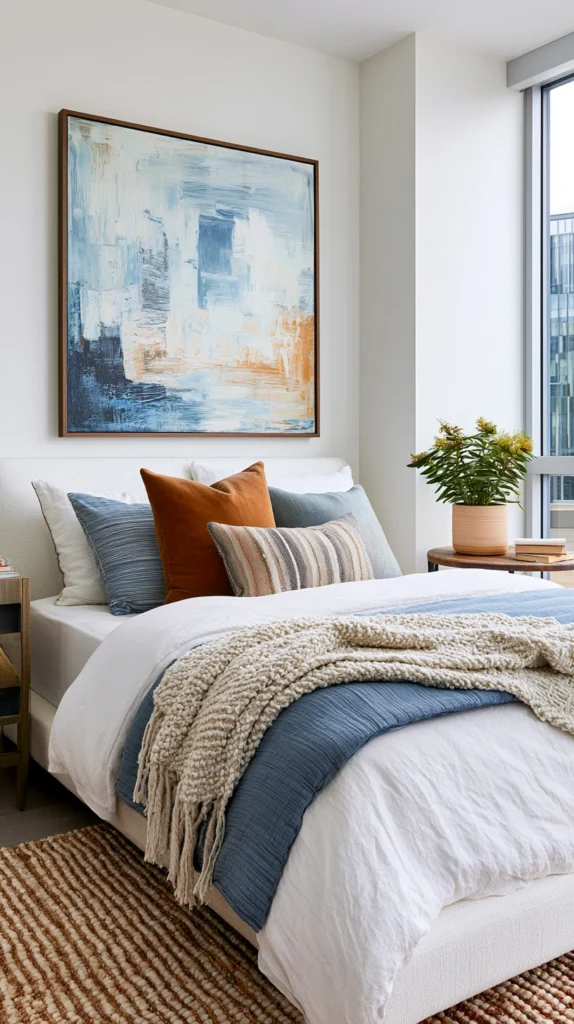
Artwork in a small bedroom should be chosen for its quality rather than its quantity.
A collection of multiple small artworks distributed across the walls of a small bedroom creates visual complexity at every turn. The eye has multiple points of interest competing with each other across a small space and the room feels busier rather than more interesting.
A single strong piece of art, one painting or print of sufficient size and quality to hold the wall it is on, creates a specific focal point without visual complexity. The eye arrives at the piece, rests there, and returns to it. The rest of the walls are calmer for having only one major visual event.
The piece should be sized for the wall it occupies. A small print on a large wall looks lost. A piece that fills the wall comfortably, that extends to within twenty to thirty centimetres of the ceiling above it and the furniture or window below it, commands the wall in a way that smaller art does not.
The content of the art should suit the bedroom’s purpose. Something calming and beautiful rather than challenging or agitating. The bedroom is a room for rest and the art in it should serve that quality.
12. Use Under-Bed Storage to Remove Items From the Room
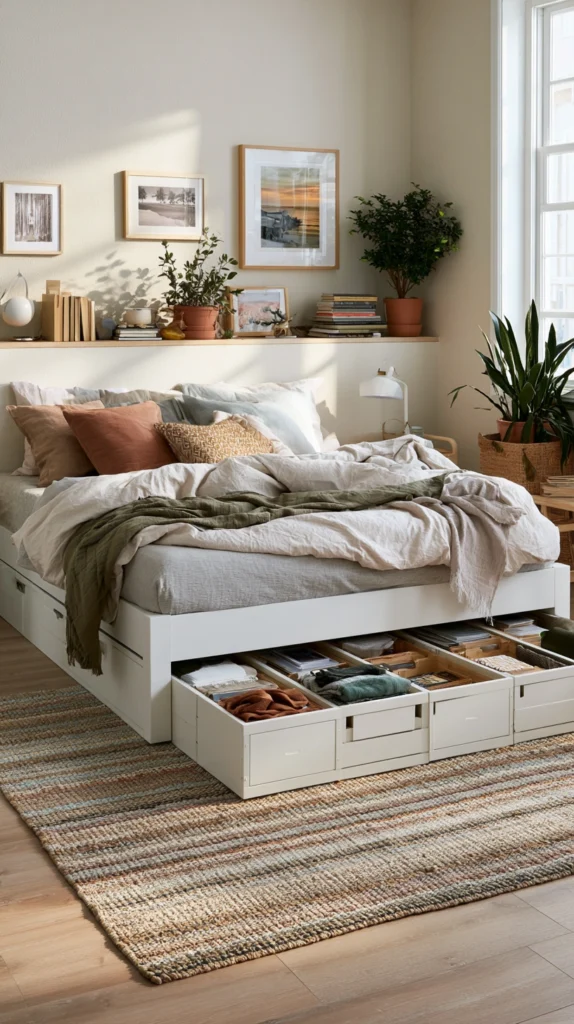
The under-bed space in a small bedroom is the storage zone that allows the room itself to be clutter-free.
Every item stored under the bed is an item that does not need to be in the room’s visible space. The seasonal clothing in vacuum bags under the bed. The spare bedding in a flat storage case under the bed. The books already read but not yet donated. Under the bed rather than in the room.
This principle allows the room’s storage needs to be met without those needs being visible in the room. The bedroom looks uncluttered. The under-bed storage is out of sight and therefore out of the room’s visual experience entirely.
Under-bed storage requires a bed frame with sufficient ground clearance to allow storage containers of useful depth. Standard storage containers of fifteen to twenty centimetres depth fit under most standard bed frames with adequate clearance. Rolling storage boxes on castors are the most accessible under-bed storage because they can be retrieved without lifting or sliding.
The under-bed storage should be organised. A labelled container for each category of stored item. A system for what goes in and what comes out seasonally. Unorganised under-bed storage is storage that becomes a black hole where items are placed and never found again.
13. Let the Bedroom Be Only a Bedroom
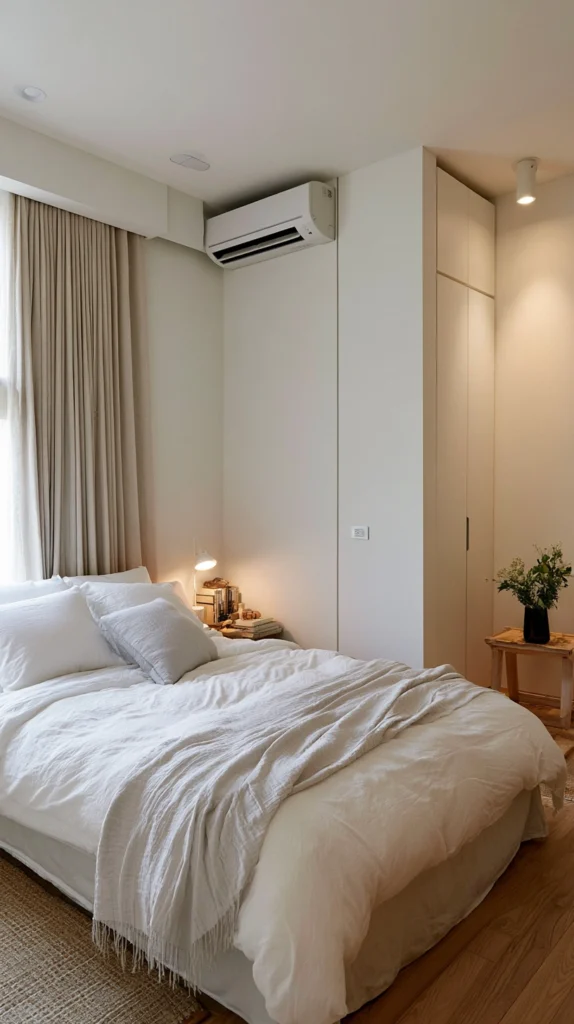
The small bedroom that is asked to function as a bedroom and a home office and a dressing room and a reading room and a yoga space fails at all of these functions simultaneously.
The desk squeezed into the corner. The yoga mat rolled beside the wardrobe. The dressing table pressed against the foot of the bed. Each additional function added to a small bedroom adds furniture, visual complexity, and a functional compromise that reduces the room’s effectiveness at every task including its primary one.
The small bedroom that is only a bedroom is the small bedroom that does everything it is designed to do completely well.
This means the desk in another room even if that requires more creative solutions to the working-from-home situation. It means the dressing table in the hallway or the bathroom rather than in the bedroom. It means accepting that the bedroom is a sleeping room and that this clarity of purpose is what makes it a good sleeping room rather than a mediocre version of several rooms simultaneously.
The freedom this gives the small bedroom is significant. Every piece of furniture in the room serves the sleeping and resting function. Every design decision serves the comfort and warmth of the sleeping experience. Nothing competes with the bed’s dominance because nothing else needs to be in the room.
The bedroom that is only a bedroom is the small bedroom at its best.
How to Approach a Small Bedroom Makeover
Start by removing rather than adding.
Most small bedrooms are made worse by what is in them rather than improved by what could be added. A full edit of the room, removing everything that does not serve the sleeping function directly, is almost always the most impactful first step.
The exercise equipment that has been in the corner for six months. The pile of books that need better storage. The desk that has no better location but makes the room feel like an office. The chair that no one sits in. Remove these things, even temporarily, before deciding what design additions the room needs.
After the edit the room reveals its actual dimensions and its actual quality. A small bedroom with only a bed, a rug, and a bedside lamp in it is often genuinely beautiful in a spare, clean way that suggests the direction for the rest of the design decisions.
Then build from that spare foundation by adding warmth, texture, and the storage solutions that keep the room from accumulating what was removed.
Common Mistakes in Small Bedroom Decor
Choosing a bed that is too small. The floor space gained by a smaller bed is rarely worth the comfort and scale compromise. Use the full bed size the room can accommodate.
Using too many pale colours to create the illusion of space. Pale colours create a cold, blank quality in a small bedroom. Warmth and depth come from richer tones and textures, not from the appearance of additional space.
Adding multiple light sources at ceiling height. In a small bedroom overhead lighting makes the room feel like a function space rather than a resting one. Layer lighting at low and mid height and reduce the prominence of overhead fittings.
Hanging art at the standard eye-level height. In a small bedroom the art hung at a fixed eye-level height on every wall creates a consistent horizontal line that emphasises the room’s limited width. Vary the height of art placements and consider going larger with fewer pieces.
Filling every corner with furniture. The corner of a small bedroom with a chair in it that no one uses creates visual complexity without function. If furniture in the corner is not used it should not be there.
Treating the room as a storage solution. The small bedroom that is asked to store everything that does not fit elsewhere becomes a storage room with a bed in it. Keep storage in the room to what the room genuinely requires and find other solutions for what does not belong there.
Quick Summary
- Let the bed fill the available space at its maximum practical size rather than choosing a smaller bed to preserve floor area
- Treat the headboard wall as the room’s primary design surface with deep colour, wallpaper, or timber panelling
- Use dark or warm colours that create enclosure and warmth rather than pale colours that create a cold impression of space
- Mount bedside furniture, lighting, and shelving on the wall to clear the floor of every object except the bed
- Install built-in storage in alcoves and across full walls so storage disappears into the room’s architecture
- Use layers of different textures within a limited warm neutral palette to create richness without visual complexity
- Position a mirror to reflect the window or the room’s most beautiful surface rather than simply adding depth
- Size the rug to frame the bed rather than fill the floor, extending approximately sixty centimetres on each side and at the foot
- Replace floor-standing bedside tables with wall-mounted shelves and clamp lights to minimise the floor footprint beside the bed
- Hang curtains from ceiling height to floor regardless of window position to create the impression of greater room height
- Choose one strong piece of art of appropriate scale rather than multiple smaller pieces that create visual complexity
- Use under-bed storage to meet the room’s storage needs without those needs being visible in the room
- Let the bedroom be only a bedroom and remove functions that belong elsewhere to preserve the room’s clarity of purpose
The small bedroom does not need to look bigger.
It needs to look right for what it is.
The room that embraces its dimensions, that uses its closeness as warmth rather than apologising for it as constraint, that asks only to be a bedroom and does that completely, is the room worth waking up in.
Size is not the measure of a good bedroom.
The measure of a good bedroom is how well it makes you feel when you are in it.
Small is more than sufficient for that.