Into the Woods: 14 Woodland Nursery Ideas for a Nature-Inspired Baby Room
There is a nursery theme that belongs to no particular trend cycle and requires no particular cultural moment to feel right.
The woodland nursery — trees and foxes and owls and the particular warm green of a forest in summer — has been a beloved nursery aesthetic for decades and shows no signs of dating because it draws its visual language from the natural world rather than from fashion. A fox on a nursery wall is not a passing reference. It is a creature that has existed in its current beautiful form for considerably longer than any design movement.
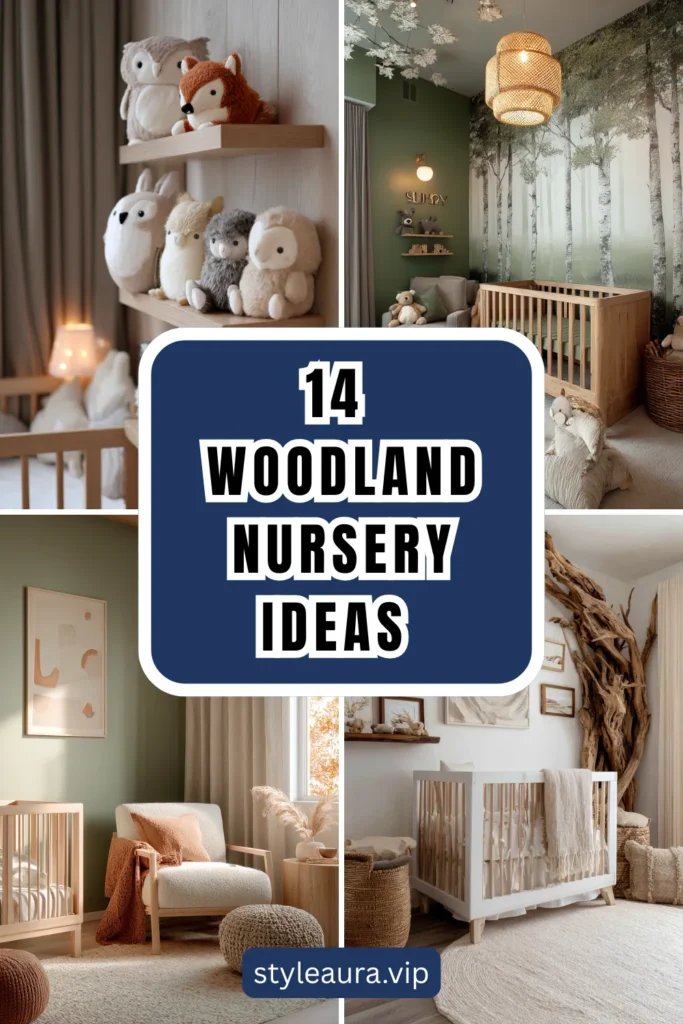
A woodland nursery done with genuine thought and real materials — hand-painted murals rather than vinyl stickers, genuine timber furniture rather than printed wood-effect laminate, living plants rather than plastic leaves — is one of the most warm and most enduring nursery aesthetics available. It creates a room that a child grows into rather than out of, that improves with age, and that the parent genuinely loves spending time in at every hour of the day and night.
The fourteen ideas below cover every element of the woodland nursery from the walls to the finishing details.
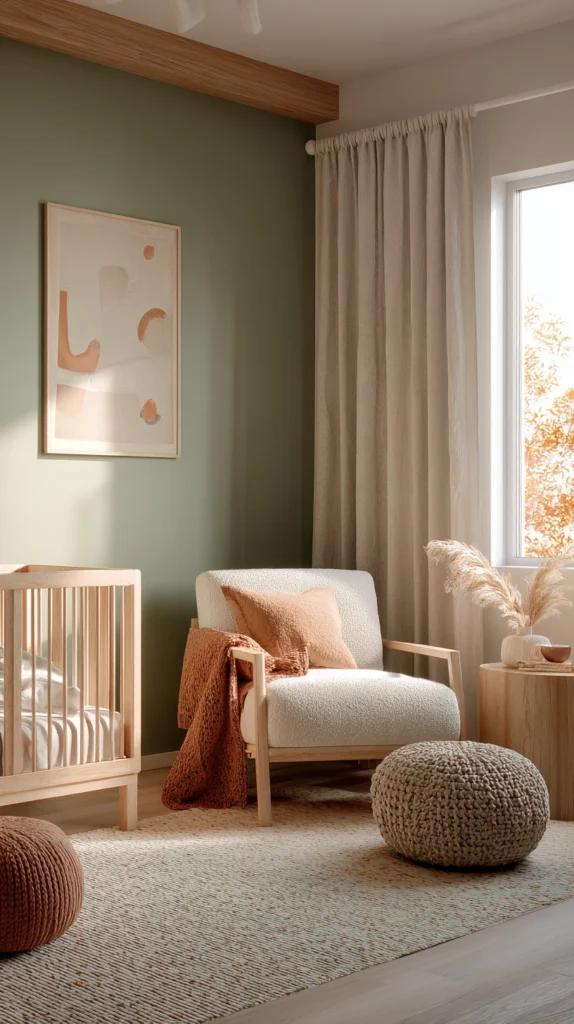
1. The Woodland Green and Earth-Tone Palette
Budget: $30 – $150
The woodland nursery palette runs in warm forest green, terracotta, sandy ochre, mushroom brown, and the undyed natural tone of raw linen — the colours of the forest floor, the bark, the moss, and the particular warm light that filters through a deciduous canopy in late afternoon. It is a palette that is immediately and instinctively warm and that reads as genuinely connected to the natural world rather than to a nursery product range.
A quality forest green or warm sage paint costs $20 – $50 per litre. A standard nursery feature wall requires one to one and a half litres for two coats. The remaining walls in a warm white — with a yellow rather than a blue undertone — maintain the room’s sense of light and airiness while the green wall anchors the woodland palette. Terracotta and sandy ochre in the soft furnishings reinforce the forest floor quality of the scheme.
Decor tip: Choose a green with a yellow or brown undertone rather than a blue one for the woodland nursery. A warm green reads as forest and foliage — alive and grounded. A cool, blue-toned green reads as sea or sky — beautiful but belonging to a different natural world entirely. The undertone is the single most important decision in the green paint choice and the one most easily missed when selecting from a paint card in a shop.
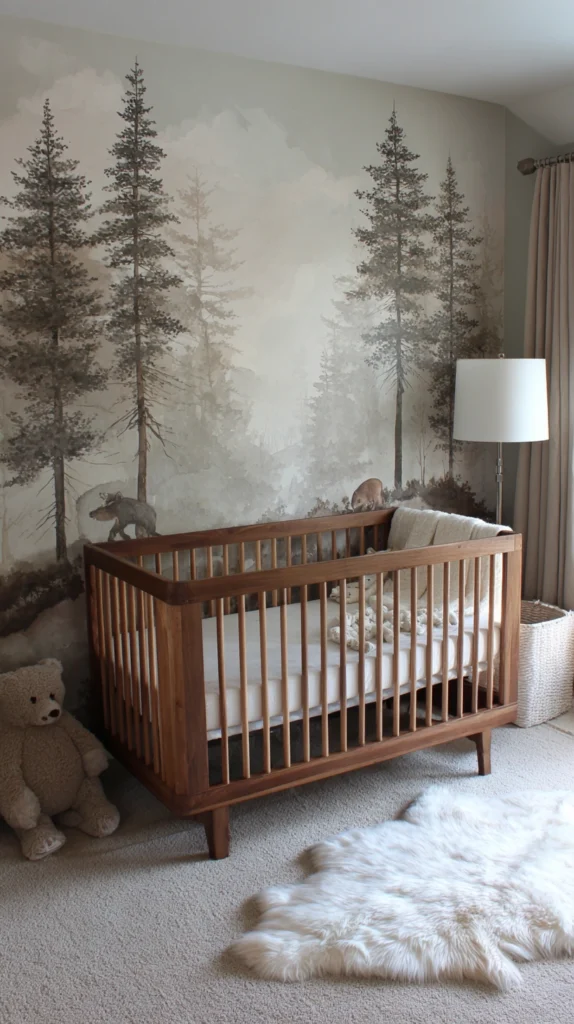
2. The Forest Mural Feature Wall
Budget: $60 – $800
A hand-painted forest mural on the feature wall behind the cot — tall slim trees in warm brown, a woodland floor of ferns and mushrooms, small animals peering from behind the trunks, and a canopy of leaves filtering light from above — is the woodland nursery’s most spectacular and most immersive decorating decision. A well-executed mural transforms the room into a genuine woodland environment rather than a room decorated with woodland motifs.
A local mural artist charges $150 – $600 for a standard nursery feature wall depending on complexity and detail. A DIY mural using a projector to trace the basic tree outlines onto the wall — then painted freehand with interior paint and small brushes — costs $30 – $80 in materials and produces a genuinely beautiful result regardless of the painter’s formal art training.
Decor tip: Sketch the mural composition on paper before any paint touches the wall — mapping the position of each tree trunk, the animals within the scene, and the distribution of foliage across the upper third of the wall. A mural begun without a composition plan tends to fill the wall unevenly. A rough planning sketch takes twenty minutes and prevents hours of repainting to correct a composition that drifted from the intended arrangement during the painting process.
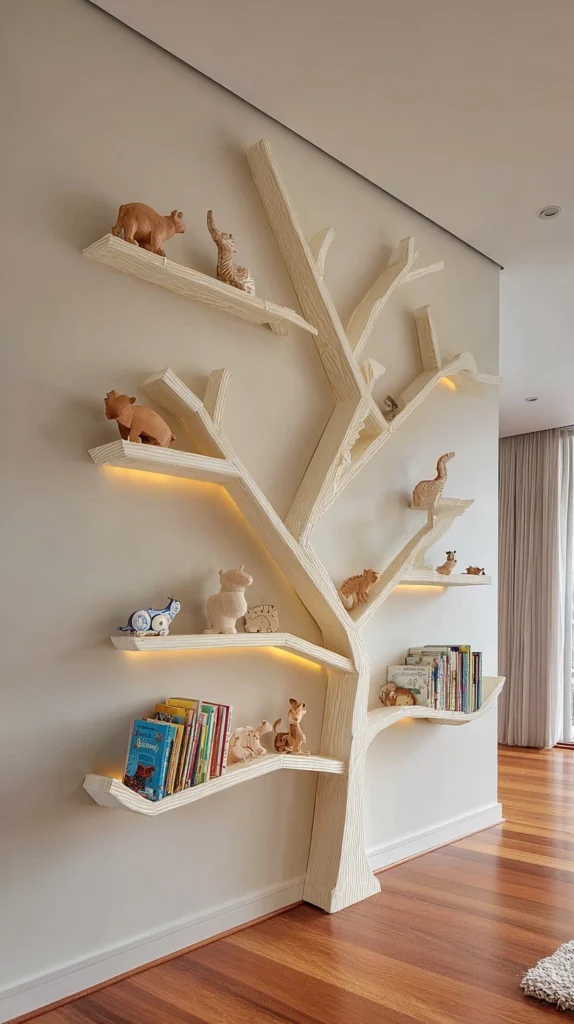
3. The Tree Trunk Bookshelf
Budget: $40 – $300
A bookshelf designed to resemble a tree trunk — either a purchased novelty shelf in a natural timber with branch-shaped shelving arms, or a standard floating shelf arrangement with a painted tree trunk illustration extending from the shelves down the wall — is the woodland nursery’s most cleverly functional decorative element. It is simultaneously a display surface and a visual feature.
A tree-shaped wooden bookshelf from a children’s furniture supplier costs $60 – $200 depending on size and timber quality. A standard floating shelf arrangement with a painted tree trunk on the wall below and between the shelves — using the same paint as the mural — costs $30 – $80 in shelf materials plus the paint already used for the mural. The objects on the shelves — woodland animal soft toys, small ceramic mushrooms, stacked board books — cost $20 – $60 in total.
Decor tip: Install the tree trunk bookshelf at the child’s eventual eye height — approximately 90 centimetres from the floor — rather than at adult-convenient height. A shelf the child can reach independently and examine freely becomes an object of daily interest and daily discovery. A shelf installed at adult height is a display for parents and visitors that the child can only observe from below.
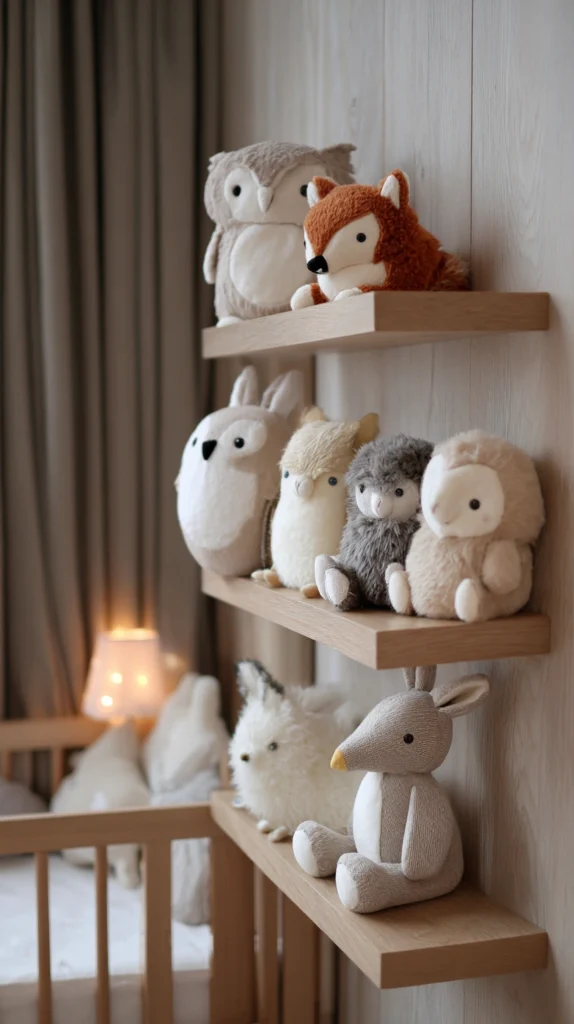
4. The Woodland Animal Soft Toy Collection
Budget: $30 – $200
A curated collection of woodland animal soft toys — a fox, an owl, a rabbit, a hedgehog, a deer, and a small bear — displayed on the nursery shelf or arranged in the cot corner brings the animal world of the woodland theme to the room’s most tactile and most personally meaningful decorative layer. These are the animals that will be named, carried, loved, and eventually remembered.
Quality woodland animal soft toys cost $8 – $30 each depending on size and brand. A collection of six animals — one per shelf position or arranged as a group — sits at $48 – $180 in total. Handmade soft toys from independent makers are consistently more characterful and more beautiful than mass-produced equivalents and cost comparably to premium high-street alternatives.
Decor tip: Choose soft toys in the muted, natural tones of the woodland palette — the warm orange of a fox, the grey-brown of a rabbit, the tawny brown of an owl — rather than brightly coloured toy versions of the same animals. A woodland animal in its natural colours reads as a creature from the actual woodland. The same animal in bright primary colours reads as a child’s toy that happens to have the shape of a woodland creature — a subtle but significant distinction in a room working toward genuine natural authenticity.
5. The Natural Timber Furniture Collection
Budget: $200 – $2000
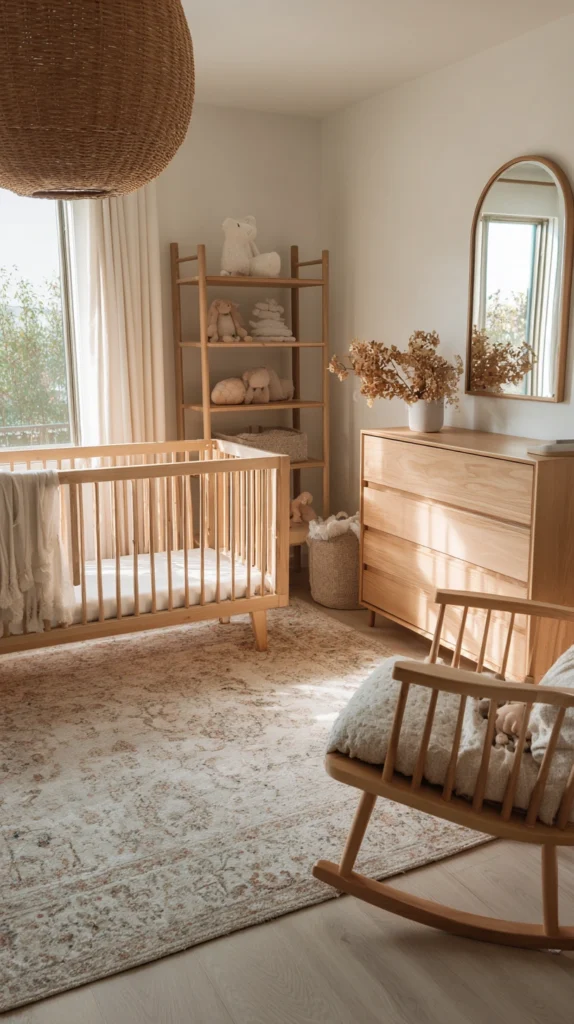
Furniture in the woodland nursery works best in natural, warm-toned timber — honey pine, light oak, or a warm beech — rather than in white-painted wood or dark-stained equivalents. Natural timber in a woodland nursery reads as a material from the forest — which it literally is — and creates a visual continuity between the room’s decorative theme and its functional furnishings that white or dark furniture cannot achieve.
A natural timber cot in pine or beech costs $150 – $500. A natural oak or pine changing table — $150 – $400. A nursing chair in a warm natural timber with a linen cushion — $150 – $400. A natural timber bookshelf — $60 – $200. The furniture palette across the woodland nursery should maintain a consistent warm timber tone throughout — avoiding the visual inconsistency of mixed light and dark pieces in the same small room.
Decor tip: Oil or wax all natural timber nursery furniture before use rather than leaving it raw or painted. A natural oil finish — linseed or Danish oil — deepens the timber’s colour, reveals its grain, and protects it from the moisture and physical contact of a nursery environment without the opacity of paint or the plasticity of varnish. The oiled timber surface reads as genuinely natural — which is the quality the woodland nursery is working toward at every surface level.
6. The Mushroom and Fern Motif Details
Budget: $15 – $80
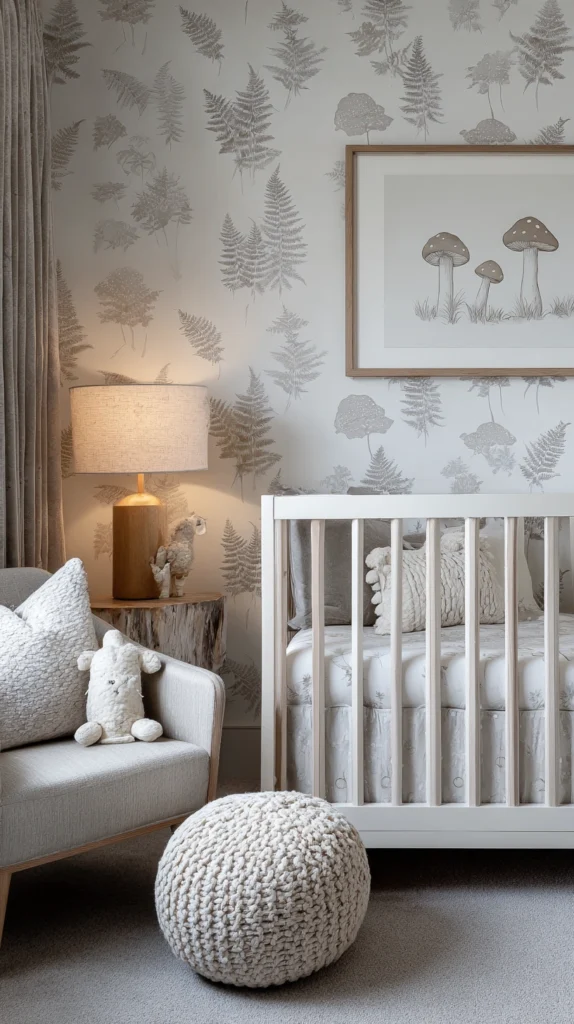
Mushroom and fern motifs — in wall art, in textile prints, in ceramic accessories, and in small decorative objects — are the woodland nursery’s most specific and most charming detail layer. They communicate the particular ecology of a forest floor — the shade-loving, moisture-dependent world beneath the trees — in a way that the trees and animals above them cannot do alone.
Small ceramic mushroom ornaments cost $5 – $15 each. A set of three in varying sizes — $15 – $40. A fern-print muslin swaddle blanket — $15 – $35. A mushroom-print wallpaper border — $10 – $30 for a standard room length. A watercolour fern print in a natural timber frame — $15 – $40 framed. Total mushroom and fern detail investment: $55 – $145 for the decorative layer that gives the woodland nursery its most specific and most botanical character.
Decor tip: Group the mushroom and fern details at the lower third of the nursery’s wall and shelf space — the height at which a forest floor exists relative to the eye of a standing adult. Details placed low on the wall and low on the shelves reference the correct ecological position of the forest floor elements they represent, which produces a room that reads as genuinely considered in its spatial organisation rather than simply decorated with woodland motifs at any available height.
7. The Woodland Nursery Textile Layer
Budget: $40 – $200
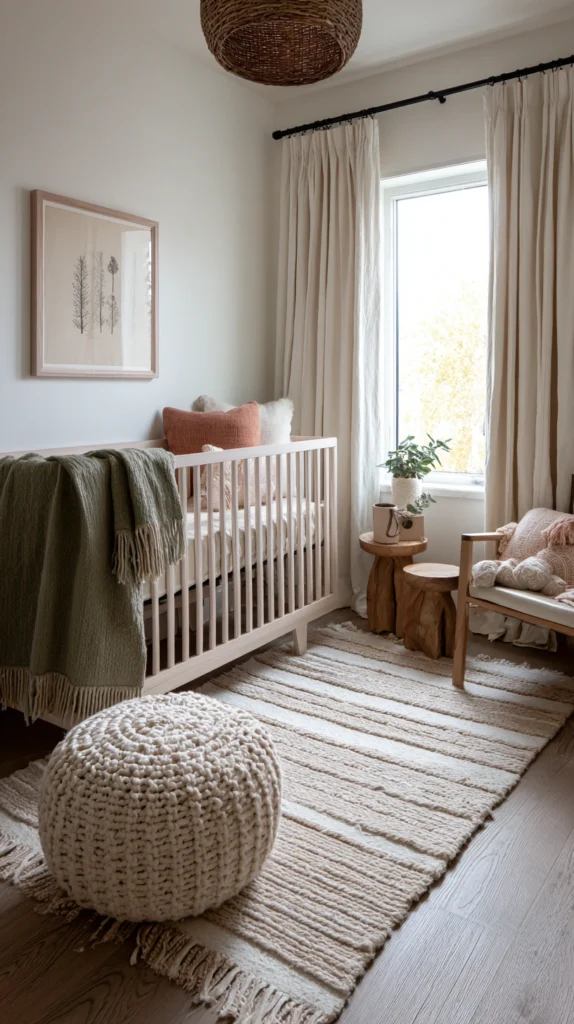
The textile layer of the woodland nursery — the nursing chair cushion, the window curtain, the floor rug, and the throw blanket — should be built in the warm earthy tones and natural materials of the woodland palette. Undyed linen, organic cotton in warm naturals, and wool in forest tones all belong to this palette and all contribute to the room’s material warmth at the level of touch.
A linen curtain panel in a warm natural or soft green — $25 – $60 per panel. A forest green or terracotta nursing chair cushion — $25 – $60. A jute or cotton rug in a warm earthy tone — $40 – $100. A muslin or linen throw in a warm natural — $20 – $50. Total woodland textile investment: $110 – $270 for a room that is warm and natural at every surface the hand touches.
Decor tip: Include at least one textile with a woodland animal or botanical print — a fox-print muslin, a fern-print cushion cover, a leaf-print cot sheet — within the collection. A textile print in a room built predominantly on solid tones adds the specific woodland motif at the material level and ties the room’s decorative theme to its functional objects in the most intimate and most used textiles in the space.
8. The Living Plant Woodland Corner
Budget: $30 – $150
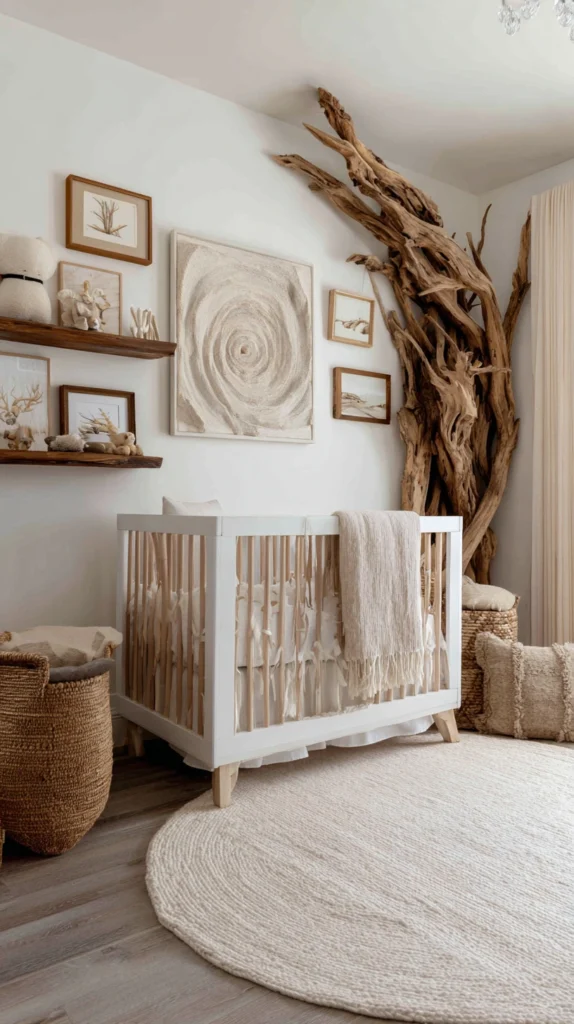
A corner of the woodland nursery given over to genuinely living plants — a large fern in a terracotta pot, a trailing ivy on a high shelf, a small moss ball on a piece of driftwood, and an air plant on a piece of bark — makes the woodland theme genuinely real rather than merely illustrated. The forest cannot be brought indoors entirely, but a corner of living plants brings more of it than any printed or painted equivalent.
A large Boston fern or maidenhair fern in a terracotta pot — $15 – $40 depending on size. A trailing ivy — $8 – $20. An air plant on a piece of bark or driftwood — $5 – $15 for the plant and $3 – $10 for the bark. A small moss ball — $5 – $15 from a florist or garden centre. Total living plant investment: $36 – $100 for a corner that actively improves the air quality of the room while making the woodland theme genuinely three-dimensional.
Decor tip: Choose ferns and ivy over tropical plants for the woodland nursery. Tropical plants — monstera, pothos, and rubber plant — are beautiful and appropriate in many nursery themes but belong visually to a jungle or tropical aesthetic rather than a woodland one. Ferns, ivy, and moss belong specifically and unmistakably to the woodland world and produce a corner that reads as genuinely coherent with the room’s wider decorative theme.
9. The Canopy of Fabric Leaves
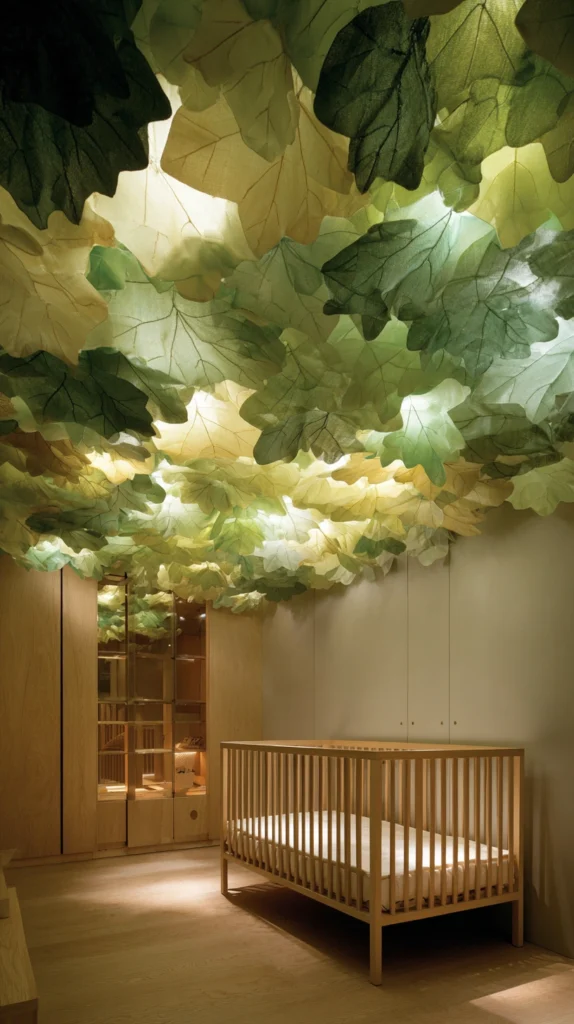
Budget: $20 – $100
A ceiling installation of fabric or felt leaf shapes — large green felt leaves in varying sizes suspended from the ceiling at different heights on clear fishing line — creates the impression of a forest canopy overhead and is the woodland nursery’s most immersive and most dramatic ceiling treatment available at any price point. It gives the infant the most appropriate and the most genuinely beautiful surface to look at from the cot.
Large felt leaf shapes cut from green felt fabric cost almost nothing in materials — green felt runs $3 – $8 per metre and one metre provides leaves for a generous canopy. Clear fishing line — $3 – $8 per reel. Adhesive ceiling hooks — $5 – $10 for a pack. A mix of oak, maple, and fern leaf shapes at three or four sizes produces a canopy that reads as a genuine mixed woodland rather than a single repeated leaf template.
Decor tip: Vary the shade of green across the leaf canopy — some leaves in a deep forest green, some in a lighter sage, and some in a warm yellow-green — to produce the colour variation of a real forest canopy where different species and different ages of leaf create a naturally varied overhead colour palette. A canopy of uniformly identical green leaves reads as decorative. A canopy of varied green tones reads as genuinely naturalistic.
10. The Woodland Animal Mobile
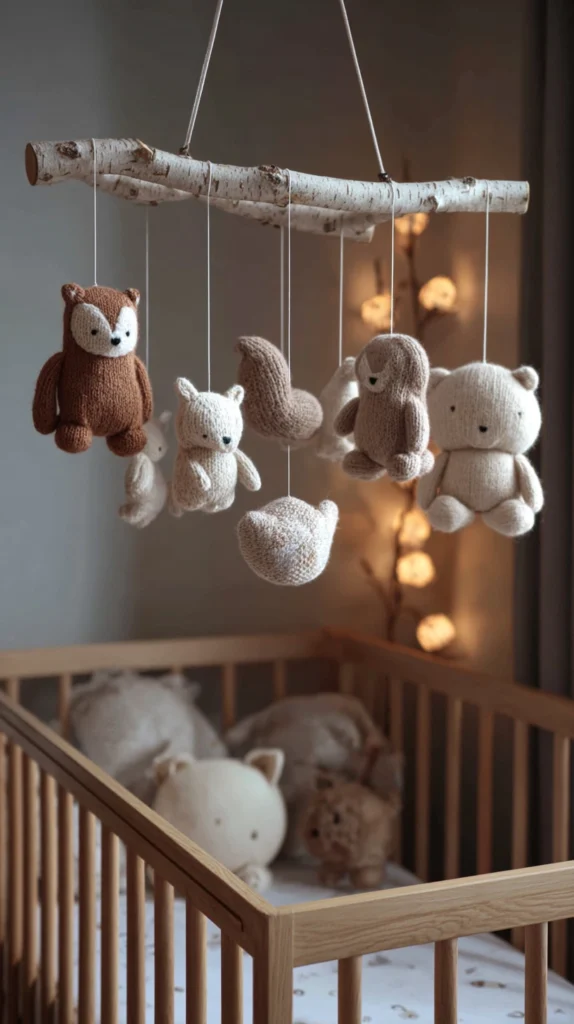
Budget: $20 – $120
A mobile above the cot — felt or wooden woodland animals in fox, owl, deer, rabbit, and hedgehog shapes, suspended at varying heights from a natural branch or a brass arm — is the woodland nursery’s most iconic and most immediately recognisable element. It provides the visual stimulation the newborn needs during awake periods and the decorative moment that the cot position requires.
A handmade felt woodland animal mobile costs $25 – $80 from independent craft makers. A wooden version in natural laser-cut animal silhouettes — $30 – $100. A DIY version using a natural branch collected from the garden — suspended horizontally from two lengths of twine attached to a ceiling hook — with felt animals attached costs $10 – $20 in felt and stuffing materials and produces a result that is both beautiful and genuinely personal.
Decor tip: Use a natural branch rather than a wooden dowel as the mobile arm for a woodland nursery. A genuine branch — with its slight irregularities, its natural taper, and the particular warmth of real bark — reads as a piece of the woodland brought into the room. A smooth, uniform wooden dowel reads as a craft supply. The natural branch costs nothing if gathered from the garden and communicates the woodland theme more directly than any purchased alternative.
11. The Woodland Nursery Shelf Display
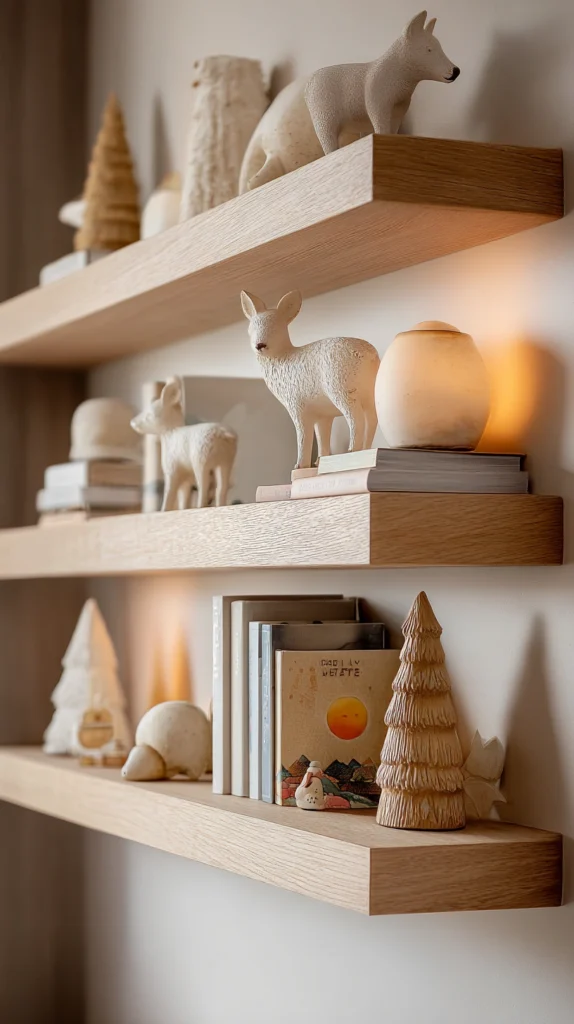
Budget: $30 – $200
Open timber shelves in the woodland nursery — styled with a combination of woodland animal soft toys, terracotta plant pots, stacked board books with complementary spines, ceramic mushroom ornaments, and small pieces of natural material — give the room its most personal and most visually layered surface. The shelf is the woodland nursery’s most concentrated expression of its aesthetic at the object level.
Floating timber shelves in a natural or warm-stained finish cost $20 – $60 each installed. A pair of shelves — one at adult display height and one lower for board books — costs $40 – $120 in timber and fixings. The objects on the shelves — toys, plants, ceramics, natural materials, books — cost $30 – $80 in total for a fully styled pair.
Decor tip: Include at least one genuine natural object on the woodland nursery shelf — a smooth river stone, a piece of driftwood, a dried seed head, a section of lichen-covered bark — alongside the purchased decorative objects. A genuine natural object among the ceramics and soft toys is the shelf’s most honest and most woodland-appropriate element, and it costs nothing if gathered personally from a walk. Its presence communicates that the woodland theme extends beyond the decorative into a genuine relationship with the natural world.
12. The Warm Lighting Scheme
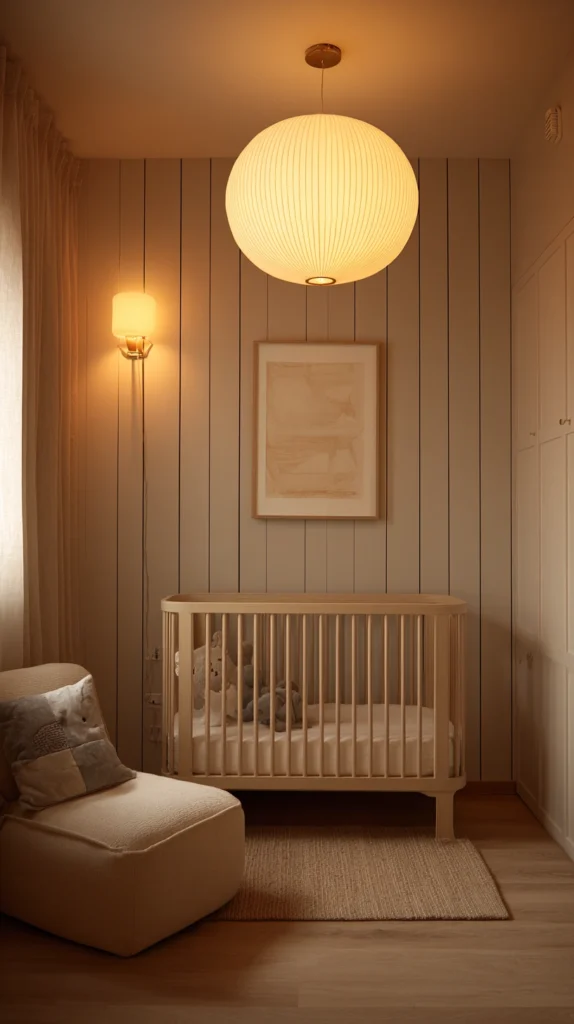
Budget: $30 – $200
The lighting of the woodland nursery — warm, layered, and responsive to the full range of hours at which the room is used — is as important as any painted or decorated surface. A warm amber nightlight in the shape of a woodland animal, a rattan pendant lampshade that filters light to a dappled quality, and a dimmer switch on the main fitting produce a lighting environment that suits the woodland aesthetic and the practical requirements of the room simultaneously.
A ceramic fox or mushroom nightlight — $15 – $35. A rattan or woven pendant lampshade — $25 – $80 — filters the overhead light to a warm, dappled quality that suggests light through a forest canopy. A dimmer switch on the main light — $15 – $30 installed. String fairy lights in warm amber along the leaf canopy edge — $10 – $20. Total woodland lighting investment: $65 – $165 for a room correctly lit at every hour.
Decor tip: Choose a rattan or woven lampshade for the woodland nursery’s main pendant rather than a plain fabric or plastic shade. The woven material of a rattan shade casts a dappled pattern of light and shadow on the ceiling and walls that is unique to woven materials and that reads as light filtering through tree branches — the most thematically appropriate and the most naturally beautiful quality of light available for a woodland-themed room.
13. The Personalised Woodland Name Sign
Budget: $20 – $100
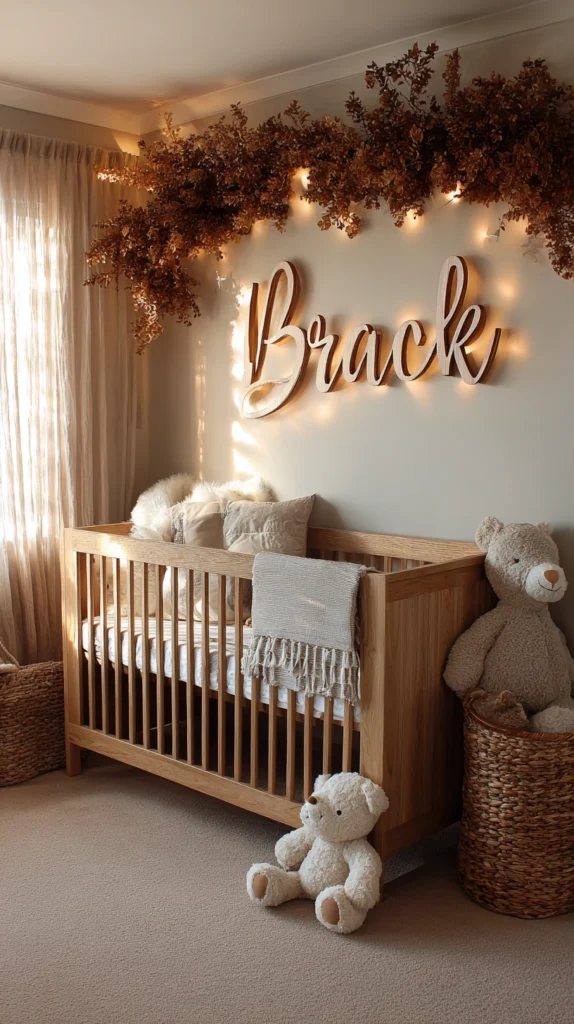
The child’s name installed in the woodland nursery — wooden letters in a natural or warm-stained finish mounted on the wall above the cot, a name banner in natural cotton macramé with woodland detail, or a custom woodland-themed name sign with animal illustrations — gives the room its most personal element and makes it unmistakably the specific child’s rather than a beautifully decorated generic nursery.
Wooden name letters in a natural timber or warm-stained finish — $3 – $8 per letter. A macramé name banner with woodland animal details from an independent maker — $30 – $80. A custom name sign with a hand-illustrated fox or owl beside the child’s name — $20 – $60 from an online maker. Any of the three installed above the cot or on the shelf gives the nursery its final and most personal decorating statement.
Decor tip: Choose name letters in a natural or warm timber finish rather than white-painted for the woodland nursery. White letters on a green or dark wall read as a strong contrast that draws the eye immediately to the name above all other elements in the room. Natural timber letters on the same wall read as part of the room’s material palette — the name present and beautiful without dominating every other decorating decision in the space.
14. The Fully Committed Woodland Nursery
Budget: $400 – $2500
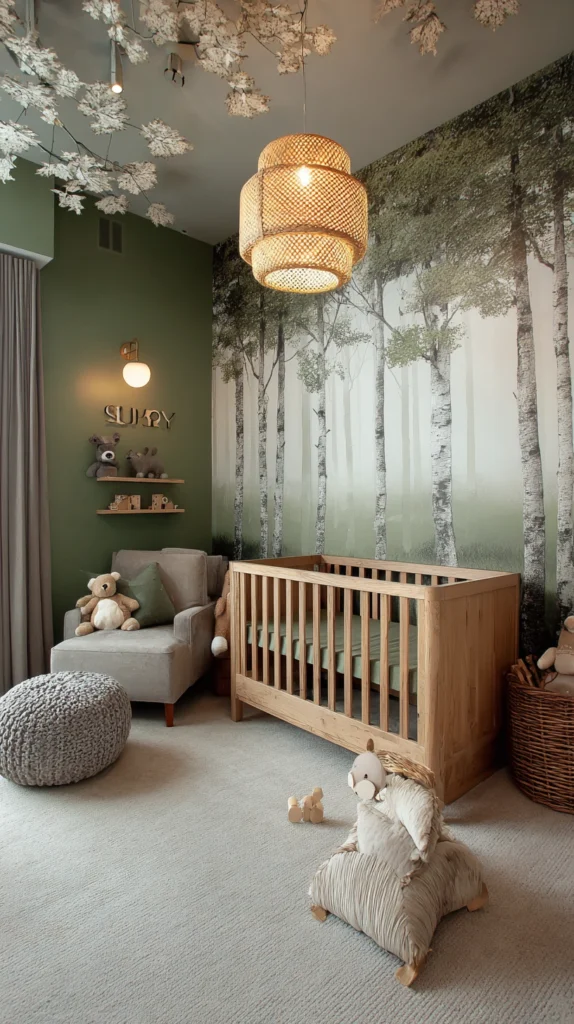
The fully committed woodland nursery — forest green feature wall with a hand-painted tree mural, a ceiling of hanging felt leaves in three shades of green, a wooden mobile of felt animals above a natural timber cot, natural oak changing table and nursing chair, a tree trunk bookshelf holding woodland soft toys and ceramic mushrooms, terracotta pots of ferns and trailing ivy in the corner, a jute rug on the floor, linen curtains filtering the daylight, a rattan pendant lampshade overhead, a fox nightlight on the shelf, and the child’s name in natural timber letters above the cot — is a room that a child can grow into across the first several years of life without requiring significant redecoration.
Paint and mural: $50 – $130. Leaf canopy: $11 – $26. Mobile: $20 – $100. Furniture: $460 – $1300. Soft toys: $48 – $180. Plants: $36 – $100. Textiles: $110 – $270. Shelf and objects: $70 – $200. Lighting: $65 – $165. Name sign: $20 – $80. Total fully committed woodland nursery: $890 – $2551 — the cost of a room made with genuine care and genuine commitment to the natural world it references.
Decor tip: Design the woodland nursery with the toddler stage in mind as well as the newborn stage. The tree mural, the natural timber furniture, the forest green walls, and the woodland animal toys all remain entirely appropriate for a child of three or four — the room does not require complete redecoration when the infant becomes a toddler. The only elements that will change are the mobile — retired once the child can reach it — and the cot, which converts to a toddler bed. Everything else grows with the child, which is both an aesthetic and a practical advantage that themes built around infant-specific motifs cannot offer.
Whatever combination of these fourteen ideas finds its way into the nursery, the principle beneath all of them is the same one that the woodland itself has always operated on — that warmth, growth, and the particular beauty of living things in their natural state are the most enduring and the most genuinely comforting qualities a room can possess.
A woodland nursery is not a decorated room. It is a place where a child begins to understand that the natural world is beautiful, that animals are worth knowing, and that a forest — even one painted on a wall and planted in terracotta pots — is one of the best places a person can find themselves at the beginning of a life.
Make it warm. Make it genuinely natural. Make it the kind of room that a child will remember not as a decoration but as a world — small, safe, and entirely their own.