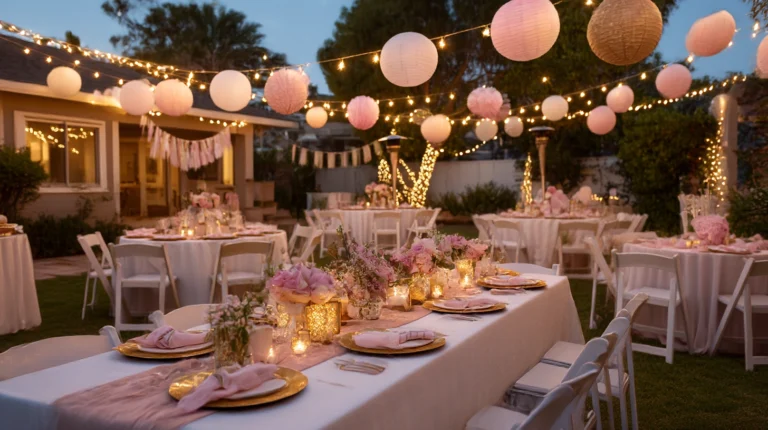
13 Garden Party Decoration Ideas for a Magical Outdoor Event
A garden already does half the work of decorating a garden party. The mistake most people make is competing with that instead of building on it.
The ideas that actually work lean into what’s already growing, add just enough structure and light to guide the eye after dark, and resist the urge to cover every surface. Here are 13 that do exactly that, each with the real detail needed to pull it off.
1. A Floating Candle Display in a Water Feature
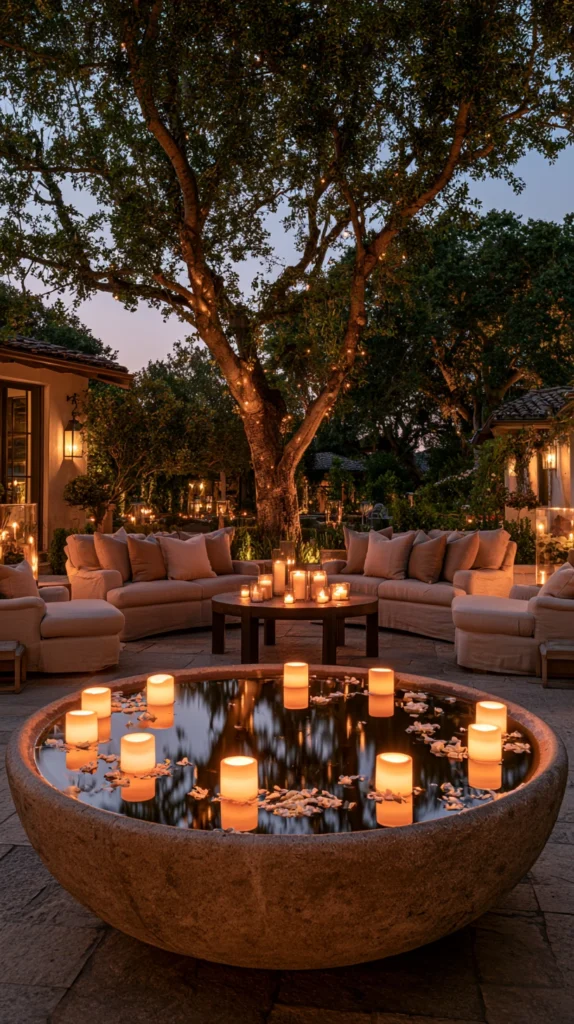
If your garden has a fountain, birdbath, or even a large shallow bowl, floating candles turn it into an evening focal point almost instantly.
The full setup:
- Use flat, wide floating candles rather than tall tapers, which tip over in even mild water movement
- Space candles 3–4 inches apart so they can drift slightly without clustering into one mass
- Add a few loose flower petals or small greenery leaves floating alongside the candles for texture
- If using a fountain with moving water, turn the pump off for the display, since flowing water extinguishes floating candles within minutes
- Refresh candles every 2–3 hours for an evening event, since floating wicks burn down faster than standard candles due to water contact
Sizing for different features: A standard birdbath holds 4–6 candles comfortably. A larger garden pond or fountain basin can hold 15–20 spaced across the surface for a fuller effect without looking sparse.
Cost: $15–$30 for a bag of 20–30 floating candles, reusable across several events if stored dry.
2. Lanterns Hung at Varying Heights Along a Path
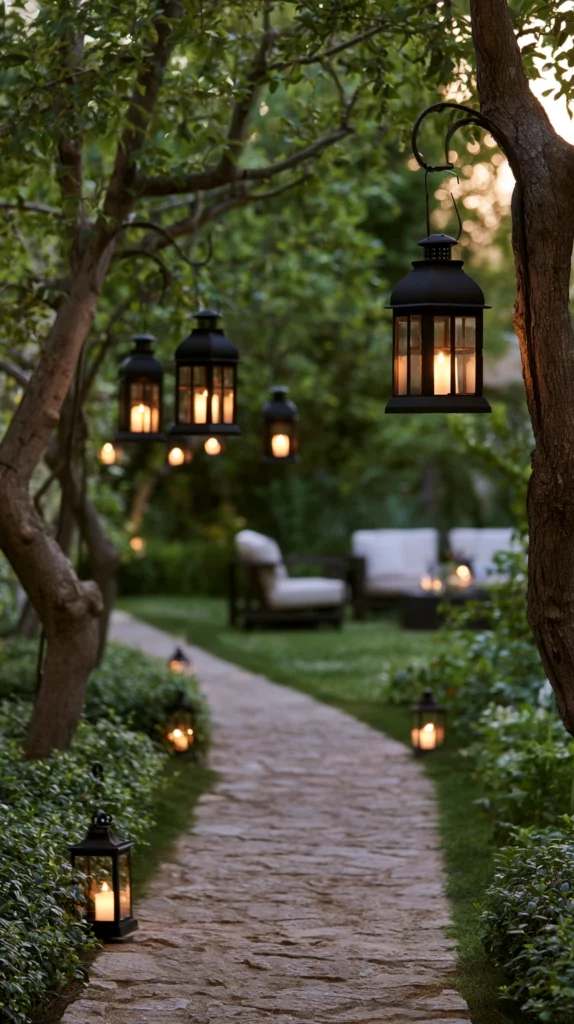
A single row of lanterns at one uniform height reads as functional lighting. Varying the height turns the same lanterns into an actual design element.
The full setup:
- Use a mix of shepherd’s hooks in three different heights, roughly 18, 30, and 42 inches, alternating along the path
- Choose lanterns in a consistent material and finish, like aged brass or matte black, even if the shapes vary slightly
- Space hooks 4–5 feet apart, close enough to create a continuous glow but not so close they compete visually
- Use battery-operated flameless candles inside if the path runs through dry grass or near overhanging branches, since open flame near dry vegetation is a genuine fire risk
- Angle a few lanterns to sit slightly off the path’s centerline rather than in a perfectly straight row, echoing the natural, slightly wild feeling a garden setting already has
Timing for setup: Install hooks and lanterns the morning of the event, then do a final light test at dusk to confirm even coverage before guests arrive.
Cost: $8–$15 per lantern and hook set, needing roughly 8–12 for a standard garden path.
3. A Living Centerpiece Using Potted Plants Already in Bloom
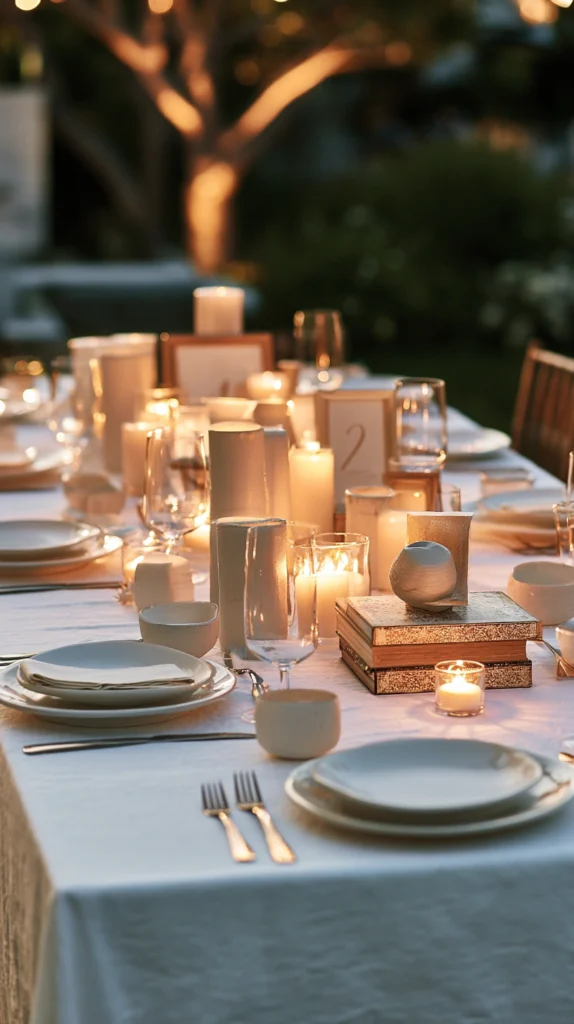
Instead of cut flowers that wilt over a long event, potted plants already in bloom double as centerpieces and can be replanted afterward.
The full setup:
- Choose plants already flowering at the time of the party, like potted geraniums, petunias, or dahlias depending on season
- Group 3–5 pots of varying heights on each table rather than a single centered pot
- Wrap plain plastic nursery pots in burlap, linen, or a coordinating fabric to hide the utilitarian container
- Water pots the morning of the event, not the night before, so soil doesn’t oversaturate and drip during the party
- Send a pot home with a guest or two as a favor, or replant the full collection into garden beds after the event for lasting value
Why this beats cut flowers specifically: A potted arrangement holds its full appearance for the entire event regardless of heat, while cut flowers in warm outdoor conditions can visibly wilt within just a few hours.
Cost: $6–$15 per potted plant depending on variety and size, reusable as garden plantings afterward.
4. A Vintage Table Setting Using Mismatched China
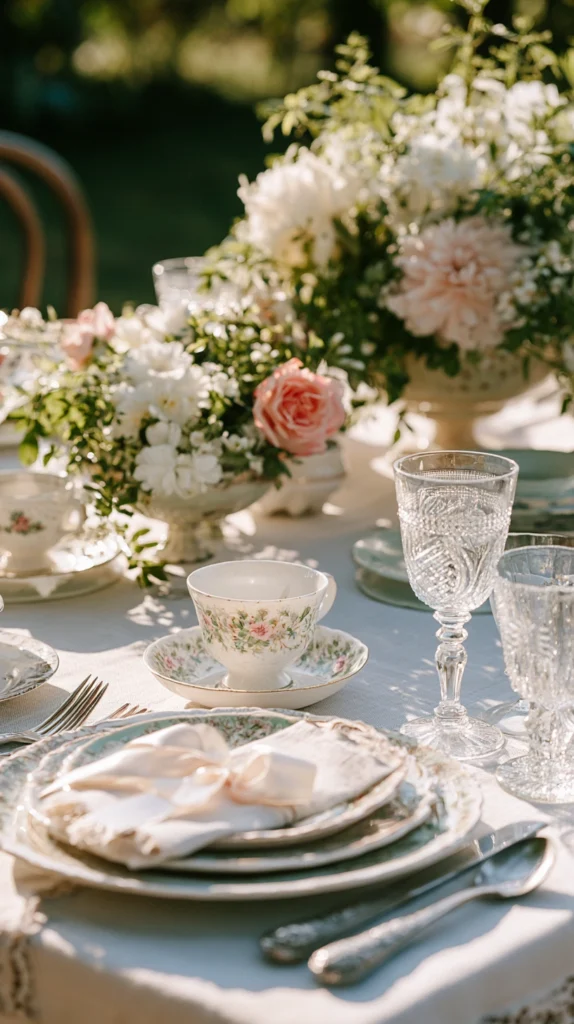
Garden parties pair naturally with a collected, slightly vintage table aesthetic, since the informal setting doesn’t call for a fully matched formal service.
The full setup:
- Source mismatched china plates, cups, and saucers from thrift stores or family pieces, grouping loosely by color family rather than pattern
- Use one consistent element, like the same tablecloth or the same glassware, to visually tie the mismatched pieces together
- Add vintage-style linen napkins tied with twine or ribbon at each setting
- Place settings slightly asymmetrically rather than perfectly aligned, which suits the relaxed garden setting better than a rigid formal layout
- Store and label pieces by table after the event if planning to reuse the same collection for future gatherings
Sourcing timeline: Start collecting mismatched pieces at least a month ahead, since building a full set for a large guest count takes longer than a single thrift trip typically allows.
Cost: $2–$6 per piece secondhand, reusable indefinitely once assembled.
5. A Flower Crown or Boutonniere Station for Guests
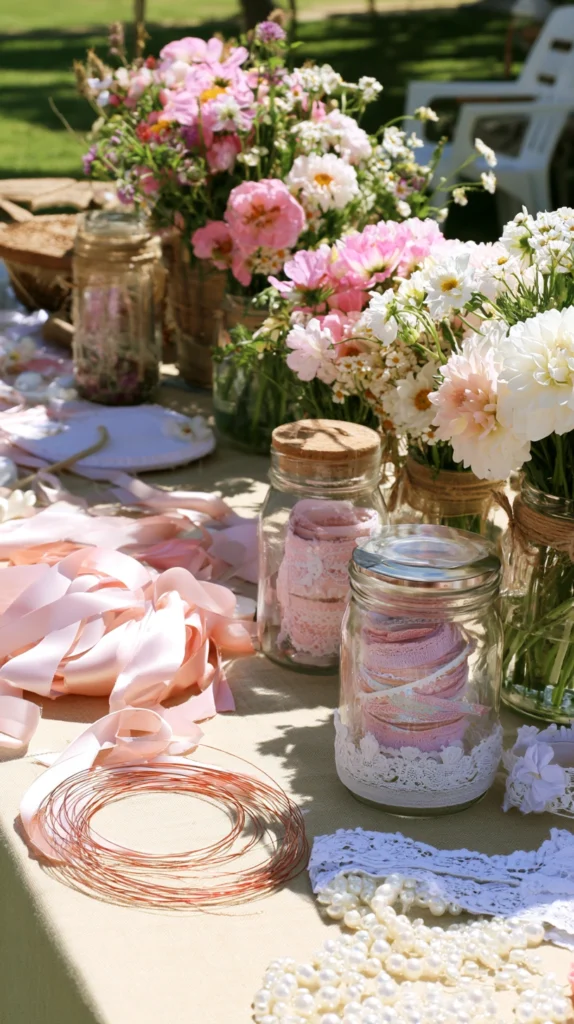
An interactive station where guests can build their own small flower accessory adds an activity element that pure decor alone doesn’t provide.
The full setup:
- Stock a small table with flexible wire or elastic bands as the base, alongside a selection of small flowers and greenery sprigs
- Choose sturdy, easy-to-work-with flowers like baby’s breath, small daisies, or eucalyptus, which hold up well without floral wire experience
- Provide simple floral tape for guests unfamiliar with attaching stems
- Include a small mirror nearby so guests can check their finished piece
- Position the station somewhere shaded, since flowers wilt faster in direct sun and the station may see steady use throughout the event
Guest count planning: Budget roughly 3–4 stems per guest if crowns are the primary activity, fewer if offering smaller boutonnieres instead.
Cost: $3–$6 per guest in flower and material costs.
6. String Lights Woven Through Existing Trees and Structures
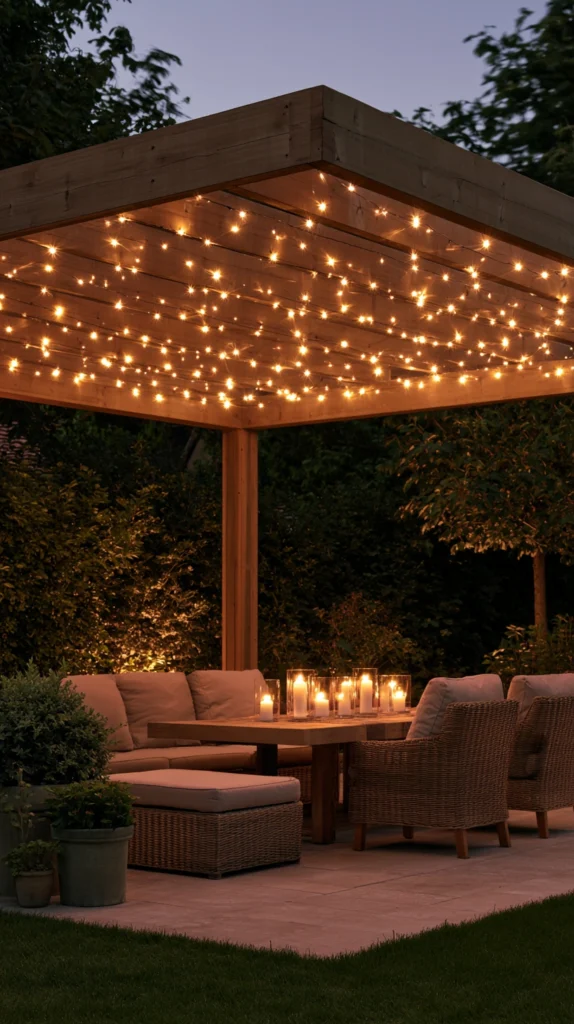
Rather than a separate lighting structure, weaving string lights directly through existing garden trees and trellises creates a more integrated, magical effect.
The full setup:
- Start from the trunk and wind lights upward and outward along major branches, rather than draping loosely over the top
- Use warm white bulbs specifically, since cool white reads as harsh against natural greenery
- Layer a second string at a lower height through any nearby shrubs or trellis structures for depth
- Test the full lighting setup at dusk a day or two before the event, since tree canopy can create unexpected dark patches that aren’t obvious during daytime setup
- Secure any extension cords running across grass with cord covers or by burying them shallowly, both for safety and to keep the display looking clean
Power planning: Confirm outdoor outlet locations and total wattage needs before purchasing lights, since a garden setting often has fewer accessible outlets than an indoor venue.
Cost: $10–$20 per 100-foot string, typically needing 3–5 strings for a mid-size garden area.
7. A Dessert Display Styled to Look Grown, Not Bought
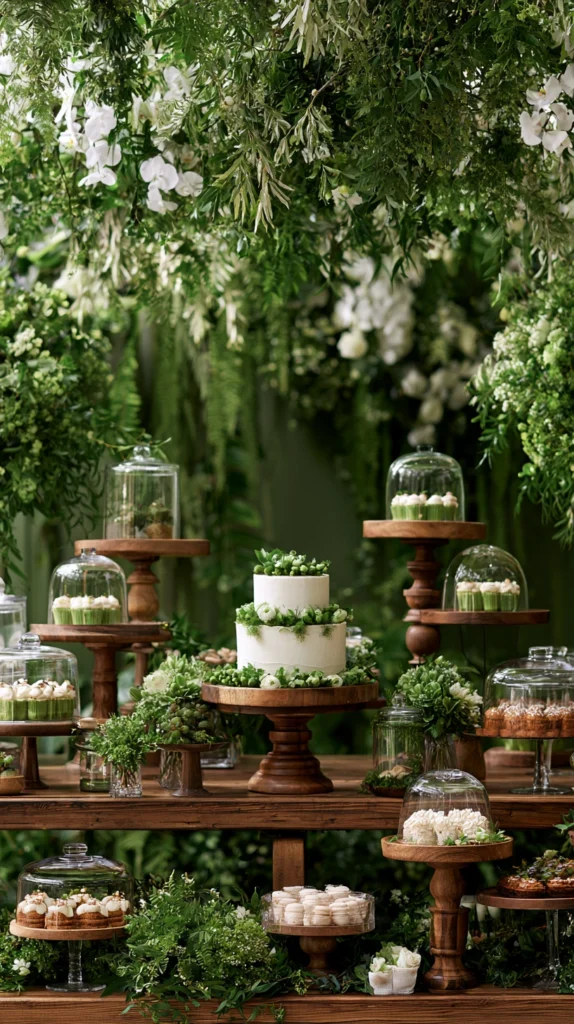
Styling dessert presentation around the garden theme, rather than a standard flat table of plated sweets, ties the food directly into the event’s overall atmosphere.
The full setup:
- Build height using tree stumps, wood crates, or a tiered stand disguised with moss or greenery
- Tuck edible flowers, like pansies or nasturtiums, directly onto desserts for a garden-grown look
- Use terracotta pots, lined with parchment or a liner, as serving vessels for items like trifle or fruit salad
- Label each dessert with small handwritten wood or slate tags rather than printed cards, which suits the natural material palette better
- Position the display in partial shade to prevent frosting or cream-based desserts from softening too quickly in direct sun
Height variation specifics: Aim for at least three distinct height levels across the display, spaced closely enough that the eye reads it as one cohesive arrangement rather than scattered separate stations.
Cost: $20–$50 for styling materials, separate from the dessert ingredients themselves.
8. A Wildflower Meadow Table Runner
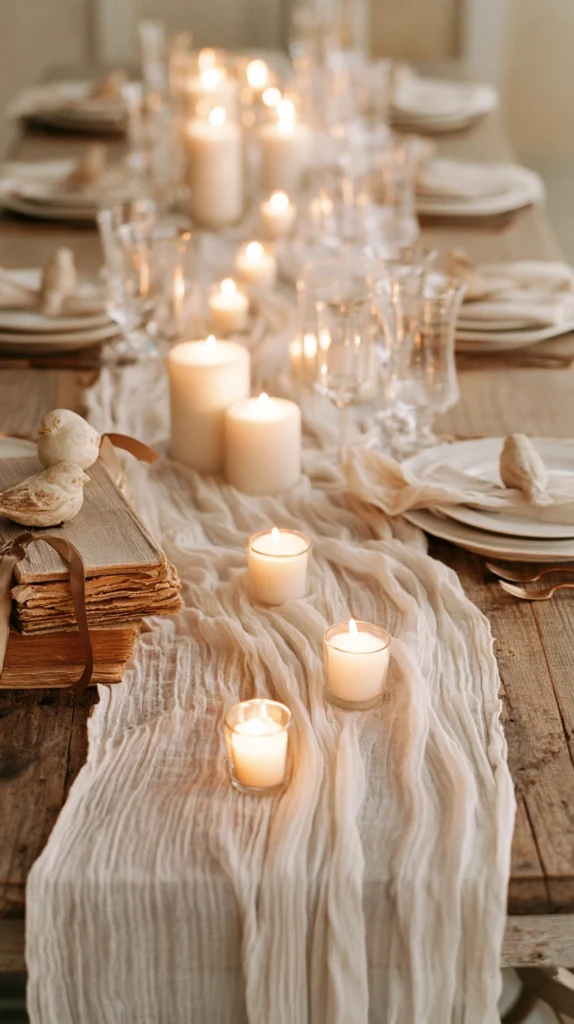
Instead of a formal floral centerpiece, a loose, wild-looking runner of mixed flowers and grasses down the table’s center evokes an actual meadow rather than a styled arrangement.
The full setup:
- Lay a base of greenery, like ferns or long grasses, directly down the table’s centerline
- Tuck in loose wildflowers, real or high-quality faux, without any formal structure or floral foam
- Vary flower heights and let some stems cross over each other naturally rather than aligning everything the same direction
- Keep the runner narrow, generally under 10 inches wide, so place settings on either side still have adequate room
- Source wildflowers from a local farm or grow your own in the weeks leading up to the event for the most authentic, unstyled look
Why loose beats structured here specifically: A wildflower meadow runner is one of the few centerpiece styles where visible imperfection is the actual goal, unlike most tablescaping where precision reads as more elevated.
Cost: $8–$15 per linear foot of table, varying by flower sourcing.
9. A Garden Swing or Hammock Photo Moment
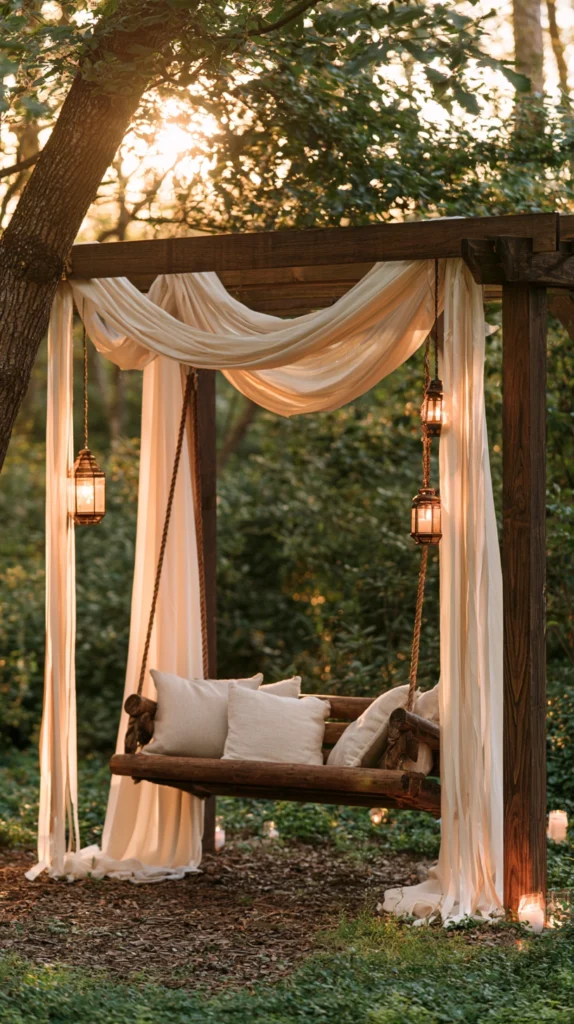
A styled swing or hammock gives guests a distinct, memorable photo spot that ties directly into the garden setting rather than a generic backdrop brought in from elsewhere.
The full setup:
- Use an existing garden swing, or hang a simple wood board swing from a sturdy tree branch specifically for the event
- Style with a few draped textiles, like a linen throw or ribbon streamers, without overloading the swing itself
- Position surrounded by existing garden greenery rather than adding artificial backdrop elements
- Add a small sign nearby inviting guests to take photos, since an unstated photo spot often goes unused
- Test the swing’s weight capacity and branch stability well ahead of the event if it wasn’t a permanent existing fixture
Safety note specific to this idea: Confirm the branch or structure can hold adult weight repeatedly throughout the event, not just briefly, since a swing that sees steady guest use all day needs more structural confidence than a one-time test.
Cost: $0 if using an existing swing, $30–$60 if building a simple one specifically for the event.
10. A Herb and Citrus Garnish Bar for Drinks
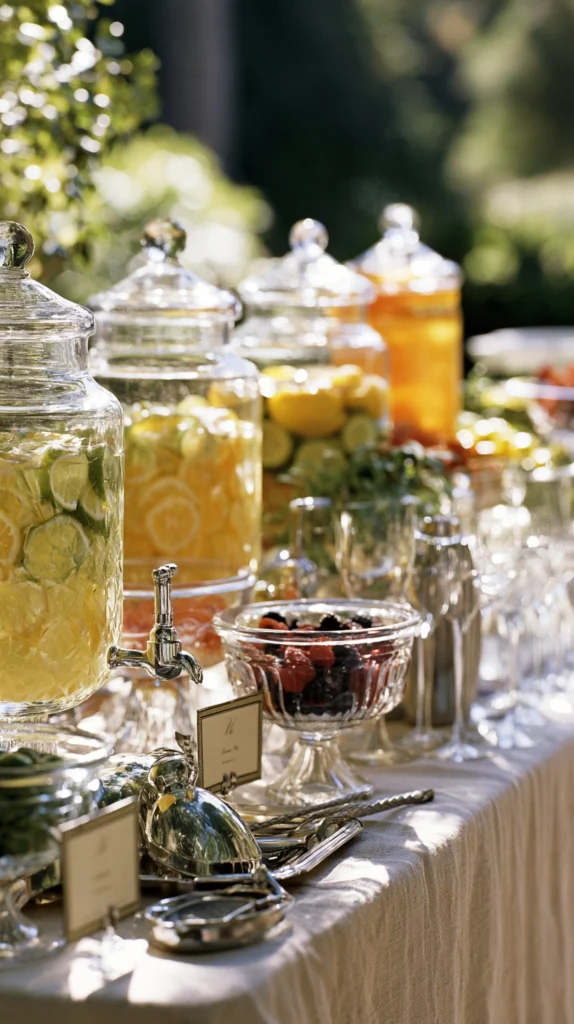
A self-serve garnish station using fresh herbs and citrus grown or sourced specifically for the event ties the drink experience directly into the garden setting.
The full setup:
- Offer 4–6 garnish options: mint, basil, rosemary, lemon and lime slices, edible flowers, and a few berries
- Use small labeled dishes or jars for each option, arranged on a tray or small table near the main drink station
- Include simple garnish tools, like small tongs or a muddler, for guests unfamiliar with building their own drink additions
- Source herbs directly from the garden the morning of the event if available, since same-day picked herbs hold their aroma and appearance far better than anything bought days ahead
- Position near, but not directly at, the main bar to avoid a bottleneck during peak drink-serving times
Quantity planning: Budget roughly 2–3 garnish pieces per guest across the full event, adjusting upward for a longer, all-day gathering.
Cost: $15–$30 total for a full garnish bar serving 30–50 guests, especially low-cost if herbs are home-grown.
11. A Butterfly or Pollinator-Friendly Planting Display
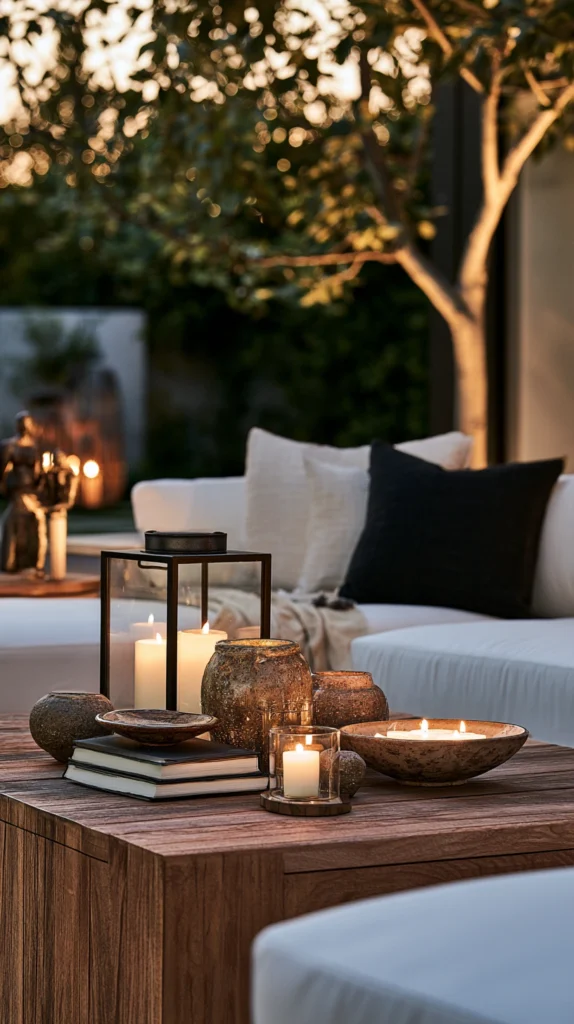
Incorporating live pollinator-friendly plants as a decorative display element adds genuine movement and life to the party beyond static decor.
The full setup:
- Plant or display potted pollinator-friendly flowers like coneflowers, milkweed, or lavender near seating areas
- Position away from high foot-traffic paths, since bees and butterflies are more active around undisturbed plantings
- Add a small educational sign if guests might be curious what’s specifically attracting the visible pollinator activity
- Time planting or placement so blooms are at their peak on the event date, checking bloom windows for your specific region and plant varieties
- Avoid pairing with strong perfume-based candles or diffusers nearby, since competing scents can disrupt natural pollinator activity
Why this adds something static decor can’t: Live, active pollinators moving through a display create a genuinely dynamic visual element that no artificial decoration can replicate, and many guests find it a memorable, talked-about detail afterward.
Cost: $5–$12 per potted pollinator plant, reusable as permanent garden plantings after the event.
12. A Vintage Ladder Bar or Drink Display
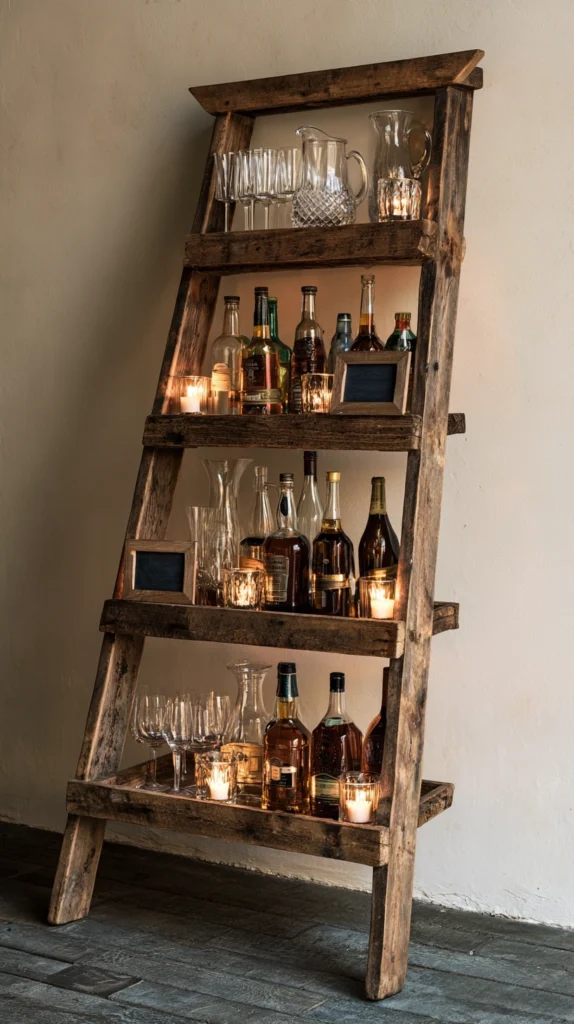
A repurposed wooden ladder, leaned against a wall or fence, creates tiered display space for drinks without needing a purpose-built bar structure.
The full setup:
- Source a wood ladder from a salvage yard, thrift store, or family garage, choosing one with visible age and character
- Lean securely against a sturdy wall, fence, or support structure, testing stability before loading with drinks
- Use each rung to display a different drink option, with glasses, garnishes, or bottles arranged along the rung’s width
- Add a small chalkboard sign at the base listing the available options
- Weight the ladder’s base or secure it if the event includes any wind exposure, since a loaded ladder becomes top-heavy
Rung capacity: Each rung typically holds 4–6 glasses or 2–3 bottles comfortably, so a standard 6-foot ladder with 5 rungs can display a fairly complete drink station.
Cost: $10–$25 if sourced secondhand, essentially free if already owned or borrowed.
13. A Sunset-Timed Lighting Transition
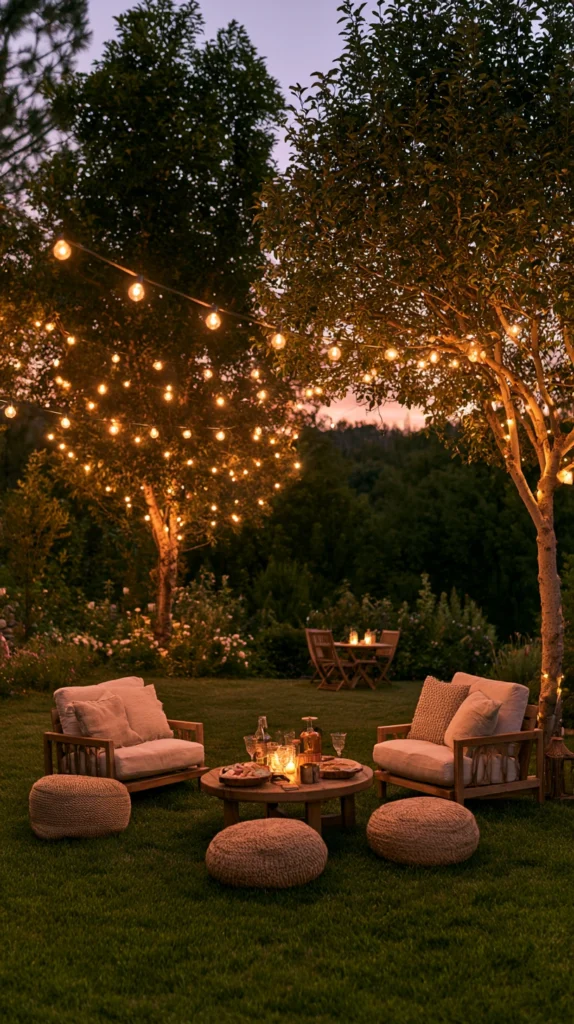
Rather than turning on all lighting at once, timing different lighting elements to activate as natural light fades creates a genuinely magical, gradual transition through the event.
The full setup:
- Set string lights and lanterns on timers calibrated to your specific sunset time, checking your exact date and location rather than a general estimate
- Stagger activation: pathway lighting first, ambient string lights next, then candles and smaller accent lighting last as it gets fully dark
- Test the full staggered sequence the evening before if possible, since actual sunset timing and your lighting setup’s visibility can differ from expectations
- Assign someone specifically to manually light any open-flame candles at the right moment, since not everything can run on a timer
- Consider a brief announcement or cue to guests as the lighting transition begins, drawing attention to the shift rather than letting it pass unnoticed
Why the staggered approach matters specifically: A garden party that goes from full daylight to every light blazing at once loses the gradual, magical quality that timing the transition creates, where the space visibly transforms as guests experience it in real time.
Cost: $15–$30 for basic outdoor timers, layered onto whatever lighting purchases are made for other ideas on this list.
A garden party’s magic comes from working with what’s already there, the plants, the natural light, the existing structure, rather than importing an entirely separate decor scheme on top of it. Each idea above works precisely because it extends something the garden was already doing, just with a bit more intention and timing behind it.