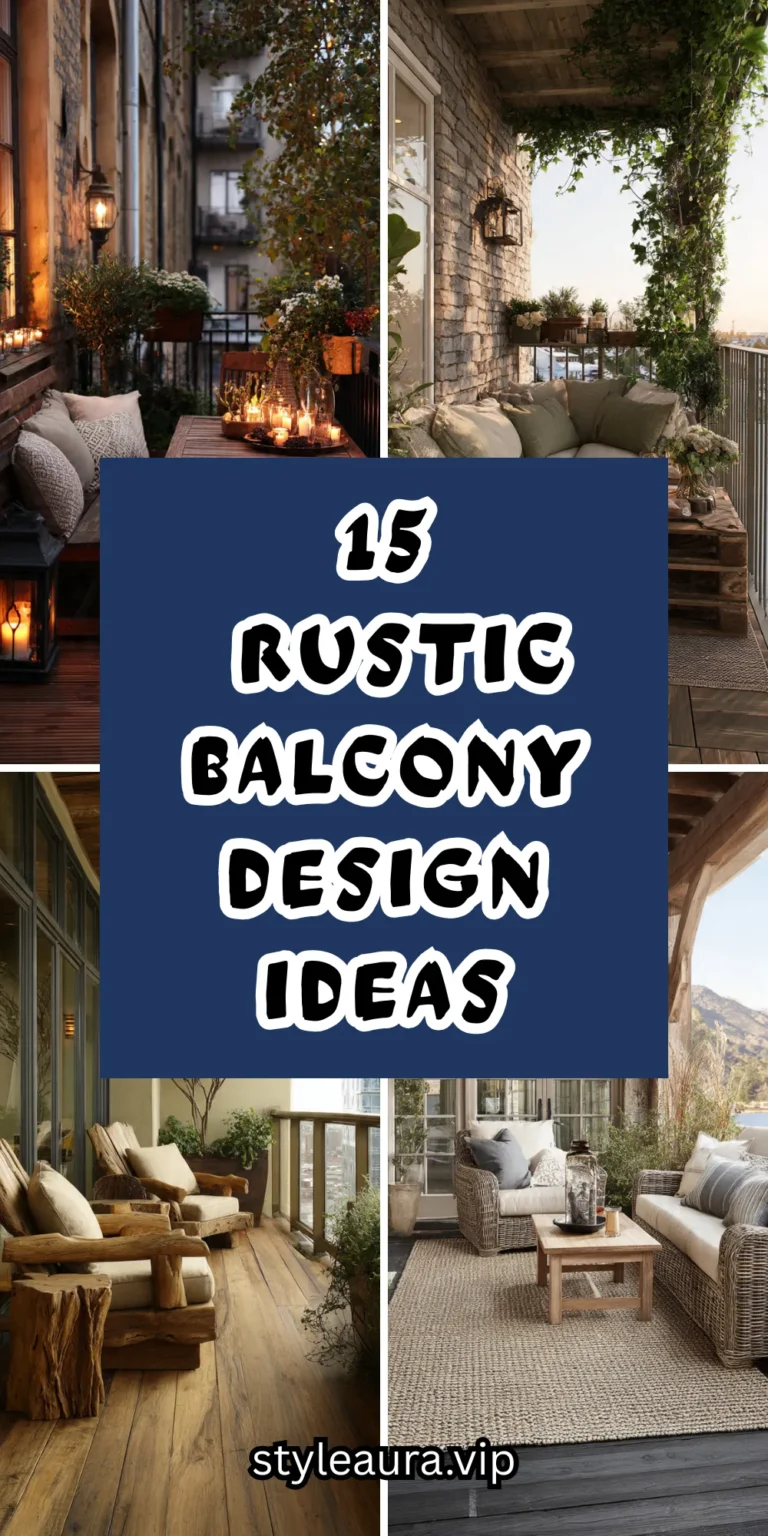
13 Seattle Entryway Ideas That Actually Handle the Rain Boots and the Chaos
Seattle entryways have a problem that entryways in most other cities simply do not.
The rain.
Not occasional rain. Not polite rain that arrives on specific days and leaves you enough dry windows to manage your life around. The sustained, persistent, quietly relentless Pacific Northwest rain that runs from October through May and treats your entryway like an enemy it has been fighting for six months straight.
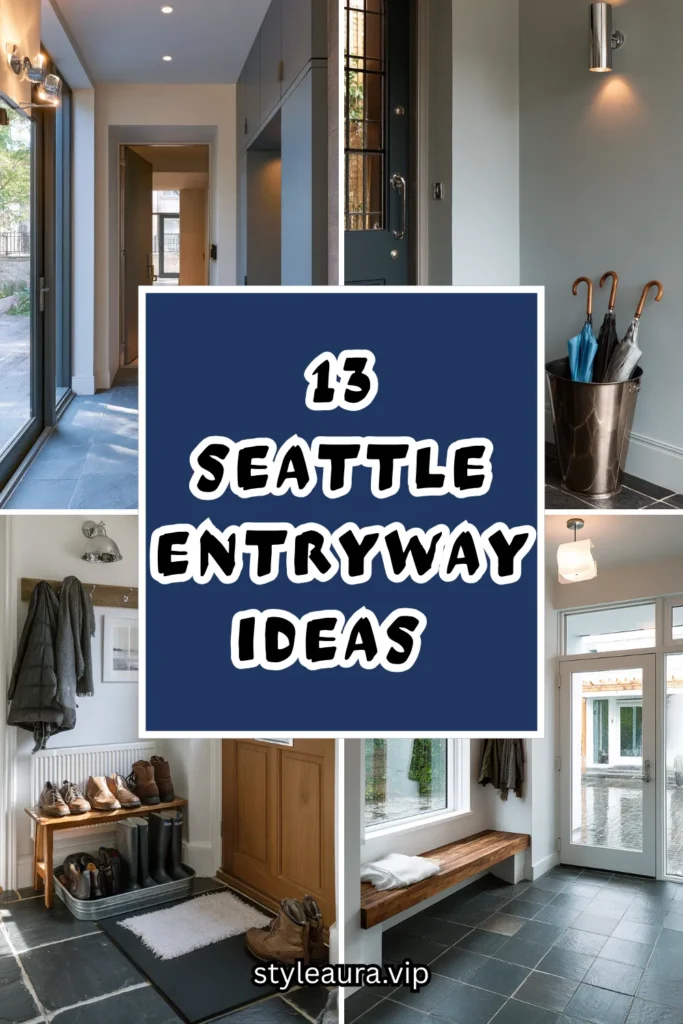
Wet boots. Damp coats. Dripping umbrellas. Rain-soaked bags. The dog shaking off in the doorway. All of it arriving at once every single time anyone comes home.
Most entryway design advice ignores this reality entirely. It talks about console tables and statement mirrors and decorative baskets. Things that look beautiful in a Phoenix entryway or a Miami foyer and disintegrate within one Seattle winter.
A Seattle entryway needs to be designed for what actually happens here. For the chaos, the moisture, the layered waterproofs, the seven pairs of rain boots that belong to a household of four people.
Here are 13 ideas that start with that reality and build something genuinely beautiful from it.
Why Seattle Entryways Need a Completely Different Approach
An entryway in most cities is primarily a transitional space.
You pass through it briefly on the way in and out. It handles a coat and a bag and not much else. The design challenge is mostly about making a good first impression.
A Seattle entryway is an active management zone.
It is where the outdoor life and the indoor life negotiate their relationship every single day for two hundred days of rain per year. Get that negotiation wrong and the chaos spreads. Wet boots end up by the sofa. Damp jackets get thrown over chairs. Puddles form in the kitchen. The entire house becomes an extension of the muddy, wet outdoors because the entryway failed to contain it.
Get it right and the rest of the house stays genuinely dry, clean, and sane. The entryway absorbs the chaos so the rooms beyond it do not have to.
That is the design brief. Everything else follows from it.
1. A Waterproof Boot Tray That Works as Hard as It Looks
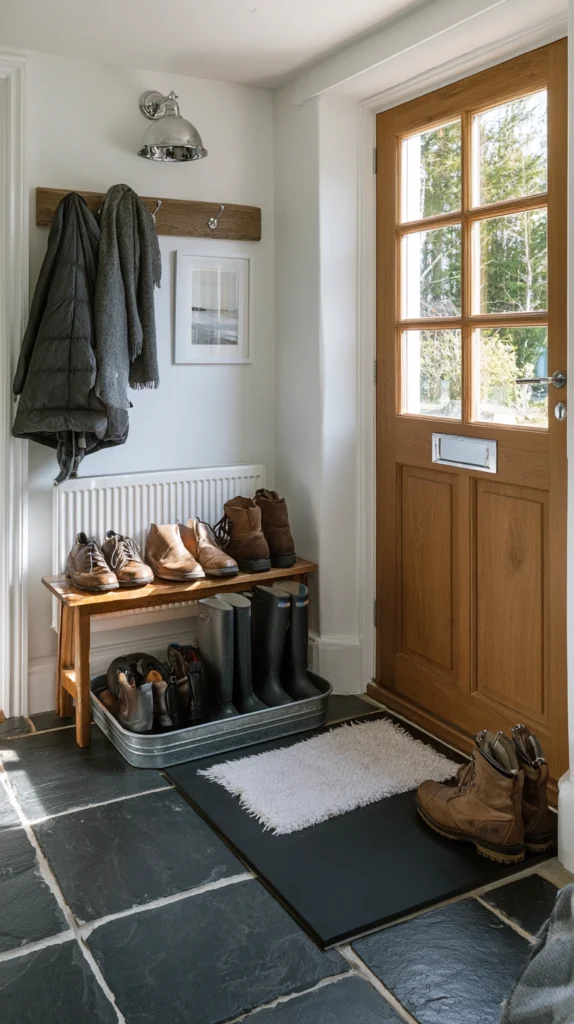
The boot tray is the most important single object in a Seattle entryway.
Not the most glamorous. Not the most expensive. The most important.
Without a proper boot tray, wet boots go directly onto whatever floor surface your entryway has. The water spreads. The mud tracks. The floor stains. Every arrival becomes a cleaning event.
With the right boot tray everything is contained. Wet boots go in. The water drips into the tray. The floor stays dry. The house stays clean.
The boot tray most Seattle households need is larger than they think. A family of four, each with rain boots, hiking boots, and trail runners that rotate through wet weather use, needs a tray that handles at least eight to ten pairs simultaneously. Standard boot trays hold two or three pairs and are perpetually overwhelmed.
A galvanised steel utility tray from a farm supply store, typically used for livestock feeding, is the boot tray solution that actually works for a Seattle household. Large enough to hold every wet pair at once. Deep enough to catch significant water. Durable enough to last indefinitely. And in a dark galvanised finish, genuinely attractive in a utilitarian, honest way.
Place it on a mat beneath for additional water absorption and to protect the floor below. A rubber-backed outdoor mat under the galvanised tray catches any overflow and prevents the tray itself from marking the floor.
What makes a great Seattle boot tray setup:
- Galvanised steel or heavy-duty rubber tray large enough for all household footwear
- Deep sides of at least three to four centimetres to contain significant water accumulation
- A rubber-backed mat underneath to protect the floor and catch any overflow
- Positioned directly at the door so wet boots never travel any further into the house
- Additional boot scraper at the exterior door for removing mud before entry
2. A Dedicated Wet Coat Zone Separate From Dry Coats
This is the distinction most Seattle entryways never make and the one that changes everything.
Wet coats and dry coats cannot share the same hooks without the wet ones making the dry ones damp. They cannot share the same enclosed cupboard without creating a dark, humid environment where mildew develops faster than you would believe possible.
Wet coats need their own dedicated zone. Open to air circulation. Away from the dry coats stored elsewhere.
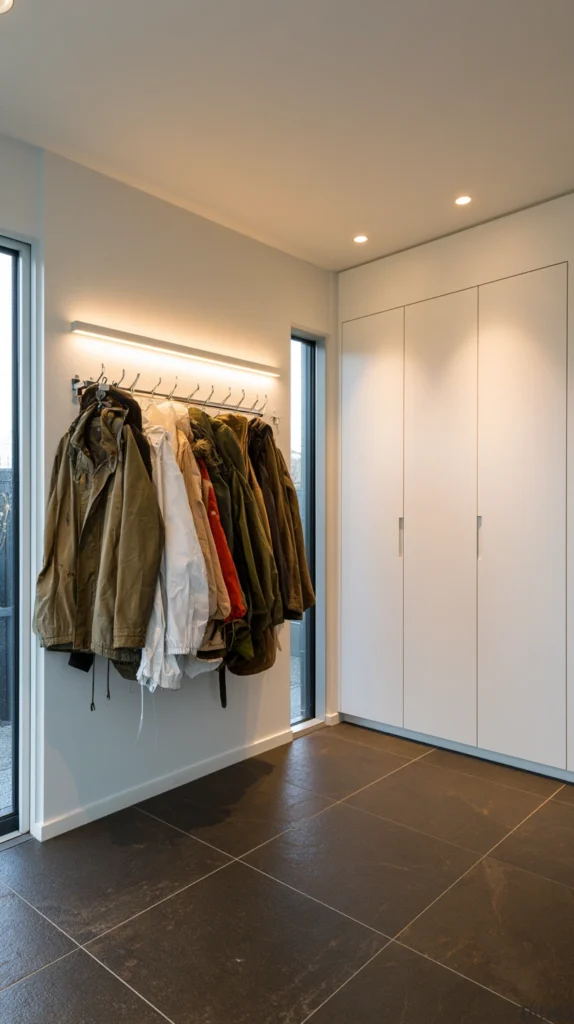
A simple open hook rail near the door, in a position where any dripping does not damage walls or flooring below, is the wet coat zone. This is where the soaking Gore-Tex jacket goes directly after cycling in October rain. Where the dog’s wet towel hangs after a trail run in November. Where everything that arrived wet is hung to dry before it moves anywhere else.
The dry coats, the wool coats and blazers and the things that actually need protecting, live in a separate enclosed space or on hooks further from the door. They never touch anything that arrived wet.
This single distinction, wet zone versus dry zone, eliminates the damp-coat problem that most Seattle households live with permanently.
3. A Bench With Integrated Boot Storage and Drainage
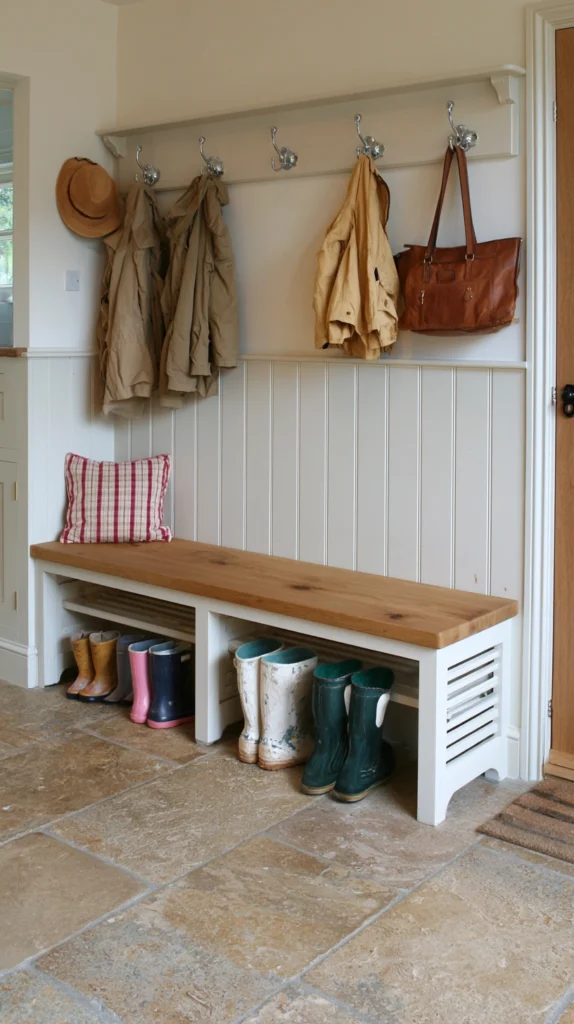
Sitting down to put on and take off boots is not a luxury in Seattle.
It is a daily necessity repeated twice a day for six months of the year. A boot that has been soaked in a puddle comes off very differently from a dry boot. You need to sit. You need both hands. You need somewhere for the boot to go that is not the floor of your living space.
A bench with integrated boot storage beneath it handles all of this simultaneously.
The bench seat gives you somewhere to sit while you wrestle a soaked boot off. The storage compartments underneath give the wet boots a dedicated place that is not the floor. And if the bench is designed with ventilation, open slats or mesh rather than solid panels, air circulation keeps the boot storage from becoming a dark, damp, odorous cave.
Build the bench from materials that handle moisture without damage. Solid timber with a proper exterior grade oil finish. Powder-coated steel. Teak or similar naturally water-resistant hardwood. Never painted MDF, which absorbs moisture at the edges and swells and degrades within a single Seattle winter.
The boot storage beneath the bench should be generous. A drawer that holds four pairs. A cubby per family member. An open shelf wide enough for the largest boots in the house. Size it for the actual footwear situation of the actual household, not an idealised version of it.
4. Tile or Stone Flooring That Extends From Outside to Inside
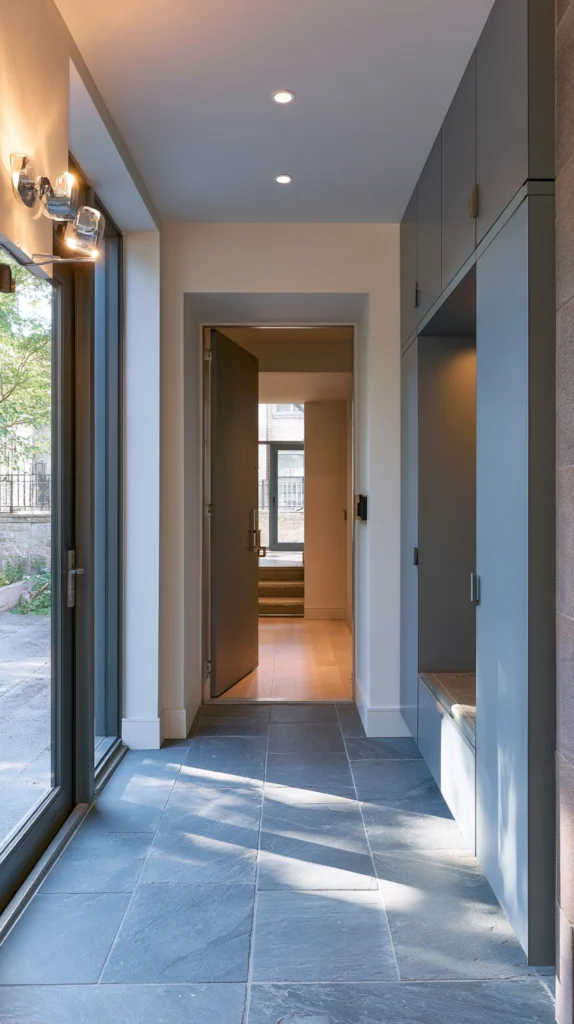
The entryway floor takes more punishment in a Seattle home than any other floor in the house.
Wet boots. Muddy paws. Dripping umbrellas. Tracked water and soil from every arrival across every month of the year. The floor needs to handle all of this without staining, without warping, without requiring constant mopping to look acceptable.
The correct flooring for a Seattle entryway is tile or natural stone that extends seamlessly from outside to inside.
When the floor material is continuous from the exterior threshold into the entryway interior, there is no transition point to collect dirt and moisture. The wet and muddy part simply extends into the house and is cleaned as a single surface. No vulnerable timber floor at the interior edge that swells when wet. No carpet that stains and smells within one rainy season.
Choose large format tiles in a stone or slate effect. Thirty by sixty centimetres or larger. The fewer grout lines, the less maintenance. A non-slip textured finish on the tiles is essential for safety when boots arrive soaked in water.
Dark or mid-tone tiles forgive the evidence of daily Seattle life far more than pale tiles. The mud, the water marks, the paw prints, all of it shows dramatically less on a dark slate or charcoal stone effect tile than on pale grey or cream.
5. A Built-In Mudroom Wall With Everything in One Place
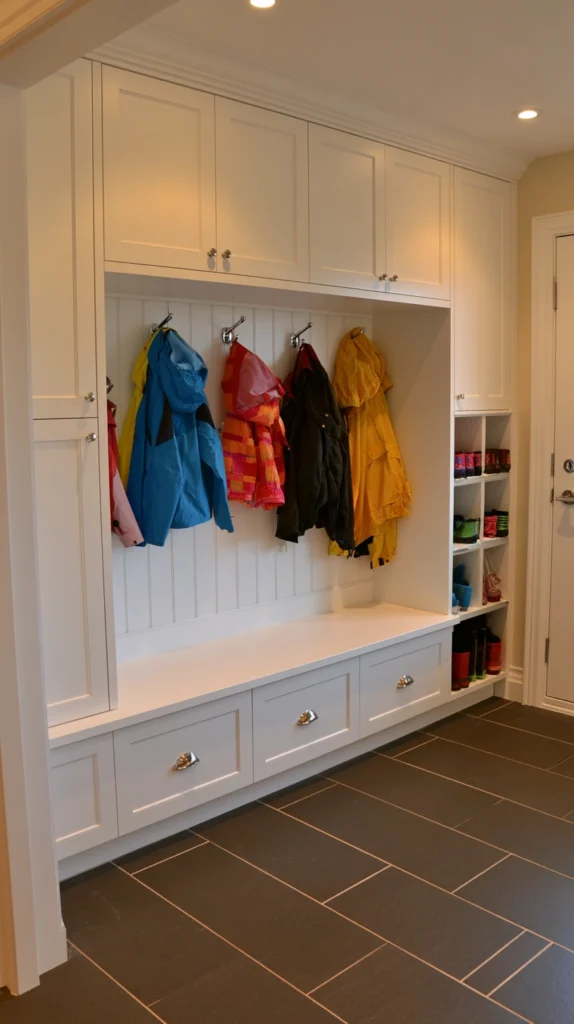
The mudroom wall is the entryway design concept that Seattle homes need more than any other.
A single wall, built out with hooks, cubbies, shelves, a bench, and cabinetry, that handles every element of the arrival and departure process in one contained, organised, intentional space.
From top to bottom: upper closed cabinetry for seasonal items and spare gear. Open hooks at adult height for coats. Open hooks at child height below those. A bench across the full width at the right height for sitting. Boot cubbies beneath the bench, one per household member. A shelf above the hooks for hats, helmets, and bags.
Everything assigned. Everything contained. Every member of the household has their column of space. Their hooks, their cubby, their shelf. Nobody’s wet gear touches anyone else’s dry gear.
The visual effect of a well-designed mudroom wall is transformative. It turns an entryway from a place where chaos accumulates into a place where chaos is immediately absorbed and organised. The rest of the house beyond it stays sane because this wall did its job.
In a Seattle home this wall is worth more per square metre than almost any other design investment. The daily quality of life improvement it provides is immediate and cumulative.
6. A Drying Cabinet for Truly Soaked Gear
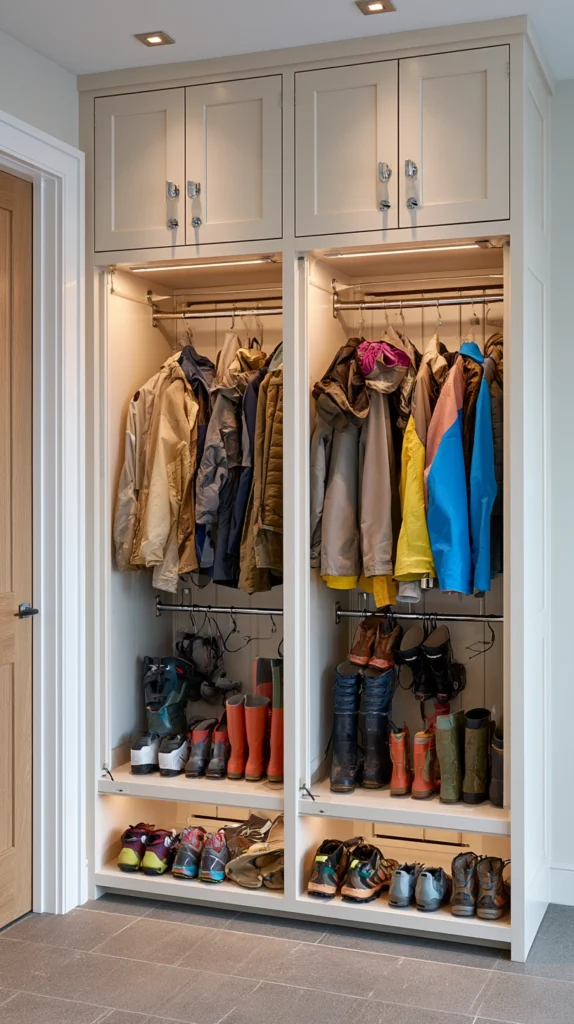
There is wet and there is truly soaked.
A Gore-Tex jacket that has cycled through an hour of heavy November rain is not wet the way a lightly rained-on jacket is wet. It is saturated. It needs real drying time in real air circulation to dry properly before it goes back into service.
A drying cabinet, a ventilated cupboard with good air flow and ideally a low-level heat source, transforms the drying situation completely.
Ski boot dryers, purpose-built drying rooms in outdoor gear shops, and Scandinavian drying cabinets all work on the same principle. Controlled airflow over wet gear dries it safely and completely within a few hours rather than the twelve to twenty-four hours that gear draped over radiators or hooks in a still room requires.
For a Seattle household a simple drying cabinet can be built from any ventilated cupboard with a small fan drawing air through from below or from the side. Add a low-wattage heated rod or a dedicated boot dryer inside and the cabinet handles even the worst Saturday trail run kit dry overnight and ready for Sunday.
In a Seattle entryway this is not a luxury. It is the difference between gear that is ready to use and gear that has developed a persistent smell.
7. Hooks That Are Actually Sized for Seattle Outerwear
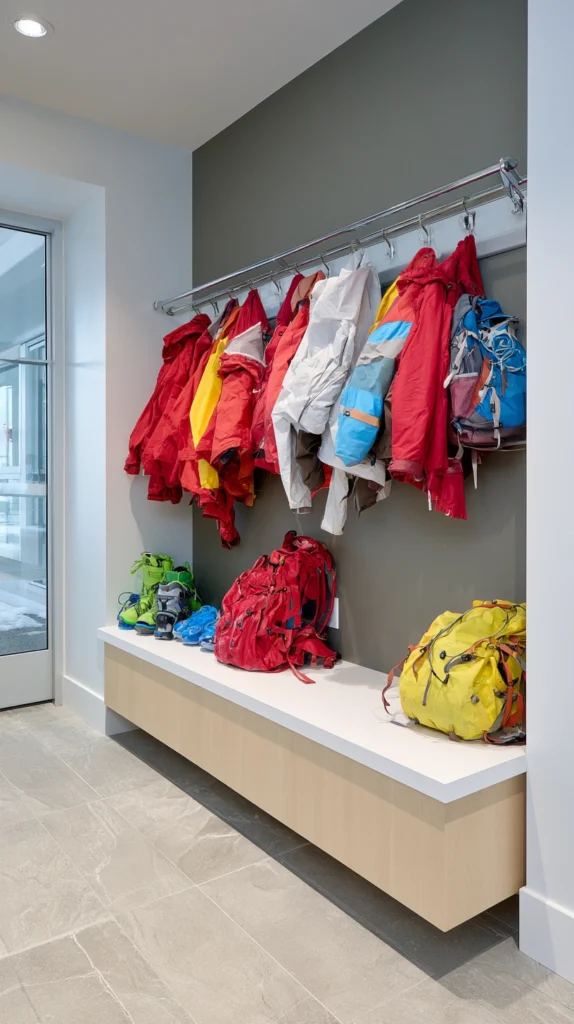
Standard decorative hooks are designed for a dry climate coat.
A wool coat. A light jacket. A thin cardigan on a hook on the way out for an evening.
A Seattle coat is a different object entirely.
Gore-Tex rain jackets are bulky. They have hoods. They have integrated packs and pockets. They sit on a hook in a way that takes up double the space of a standard coat and slides off a narrow decorative hook constantly.
Use hooks designed for actual outdoor gear. The kind used in proper mudrooms, ski chalets, and outdoor gear shops. Heavy-duty hooks in a large size, deep enough to hold a bulky jacket without it slipping. Spaced far enough apart that two saturated jackets can hang simultaneously without pressing against each other and preventing either from drying.
The hook spacing is as important as the hook size. Six inches between hooks works for dry indoor clothing. Twelve inches minimum for Seattle outdoor gear that needs air circulation to dry.
Install more hooks than seem necessary. A household of four that cycles in the rain needs a minimum of twelve hooks in the wet zone. Two Gore-Tex jackets each, plus two cycling jackets, plus the overflow. Plan for what actually hangs there rather than what would look neat in a catalogue.
8. An Umbrella Station That Contains the Drip
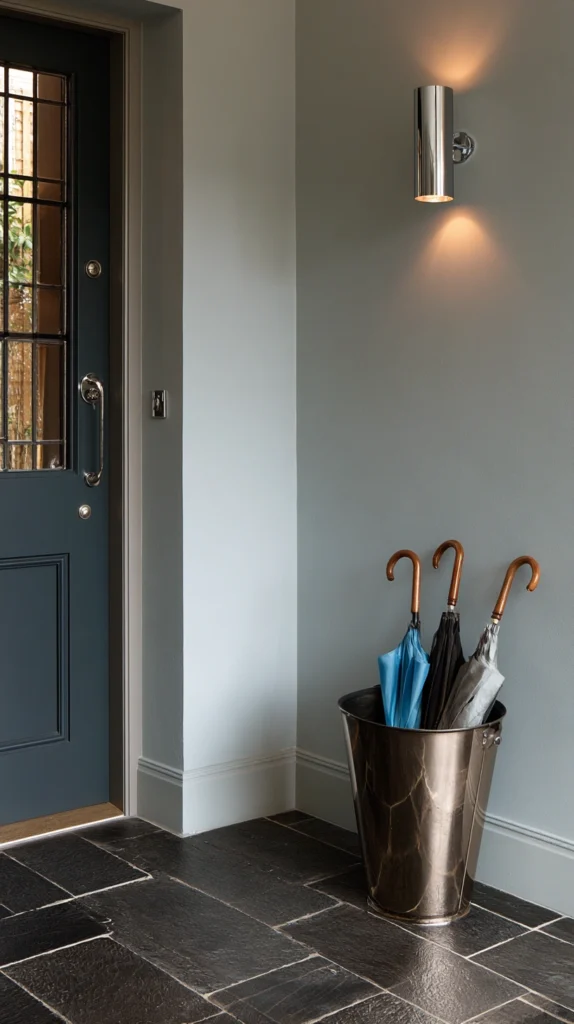
The wet umbrella is a small problem that causes disproportionate damage.
An umbrella brought inside soaking wet and leaned against a wall, placed in a boot tray, or dropped in a corner leaves a spreading puddle and a wet mark on whatever it touches.
An umbrella stand is the solution and it is worth choosing properly.
A purpose-designed umbrella stand with a drip tray at the base contains the water from a wet umbrella completely. The umbrella goes in, the water drips into the tray, the floor stays dry. Simple and effective when the right stand is in the right place.
For a Seattle household with four or more umbrellas in regular use, a stand that holds a minimum of six umbrellas is the right size. Most decorative umbrella stands hold two or three and create a rotation problem in a household with multiple members arriving simultaneously on a wet day.
A galvanised metal umbrella stand with a removable drip tray insert is both functional and attractive in the utilitarian, honest way that suits a Seattle entryway. A large ceramic umbrella stand in a bold colour makes the umbrella storage a decorative feature rather than a purely functional one.
Position the stand immediately inside the door so umbrellas never travel further into the house than the first step inside.
9. A Dog Station for the Pacific Northwest Dog Owner
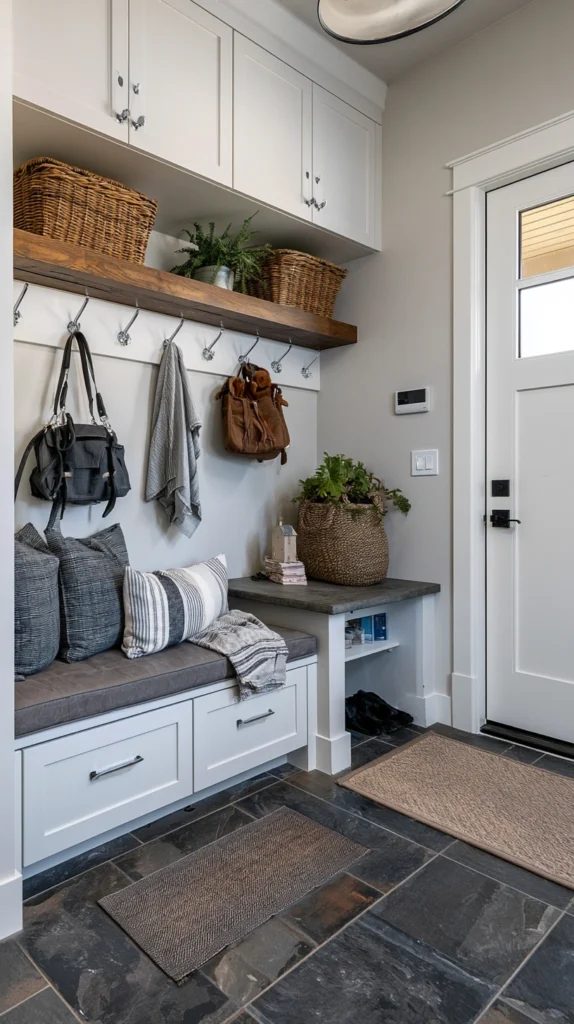
Seattle is one of the most dog-friendly cities in America.
And Pacific Northwest dogs live an outdoor life that no other American city’s dogs quite match. Trail runs. Beach walks. Muddy winter hikes in the Cascades foothills. Swimming in lakes. The Seattle dog arrives home with a level of mud and moisture that a dog in a drier city never approaches.
A dedicated dog station in the Seattle entryway is not optional for households with dogs.
At minimum: a towel hook at dog height within arm’s reach of the door. A waterproof mat or tray where the dog stands while being dried. A hook for the lead. A shelf or basket for the harness and accessories.
The best Seattle dog stations also include a low shelf with a container of dog treats for post-drying reward, which makes the drying process significantly less reluctant on the dog’s part. A wall-mounted hook for the dog’s collar at the right height to put on and take off without bending.
If the budget and space allow, a small built-in dog wash station with a hand shower, non-slip base, and tiled walls is the definitive solution. Not for daily use necessarily, but for the Cougar Mountain trail run aftermath on a November Saturday when the mud is serious and the regular towelling approach is simply not going to be enough.
10. A Dedicated Gear Wall for Cycling, Hiking, and Outdoor Kit
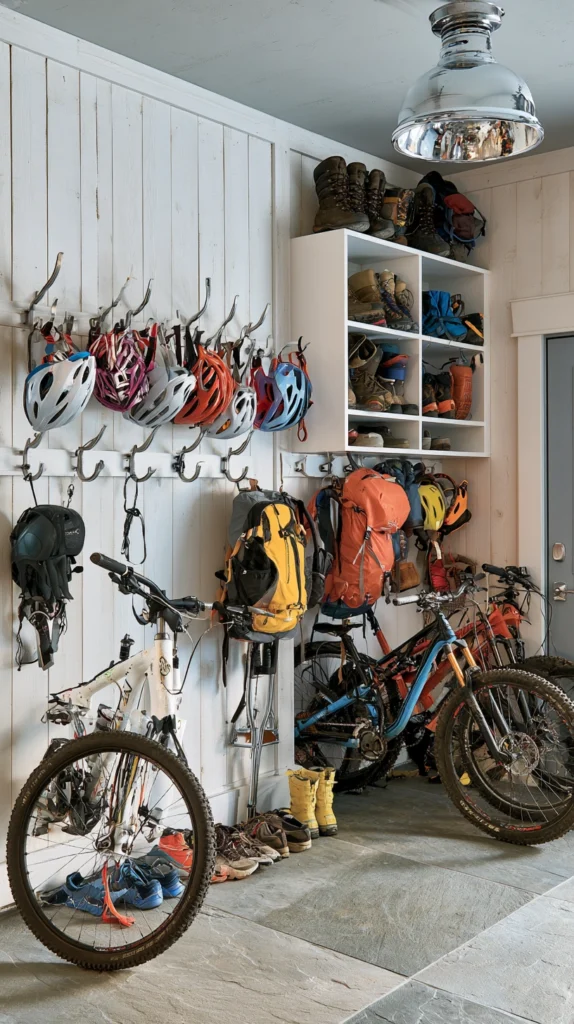
Seattle households carry an unusual amount of outdoor gear relative to the size of their homes.
Bikes and cycling gear. Hiking boots and trail running shoes. Backpacks and hydration vests. Helmets, gloves, and base layers. The active outdoor life of a typical Seattle household generates a volume of specialised equipment that generic entryway design simply does not account for.
A dedicated gear wall in the entryway takes this reality seriously.
Bike hooks mounted to the wall or ceiling at the correct height to hang bikes completely clear of the floor. Helmet hooks at eye level. Cycling shoe hooks. A shelf for the Garmin, the lights, and the cycling computer.
Below the bike storage: the hiking gear. Poles in a tall narrow bin. Boots on a ventilated rack. Hydration packs hanging from large hooks. Gaiters and trail gloves in a labelled basket.
This gear wall is the entryway solution for the household where the outdoor life is the primary life. Where the kit is not occasional equipment but daily tools that need to be accessible, organised, and dry.
A gear wall built properly communicates something about who lives in the house and what they value. It is organisation as identity. The entryway says this is a house where people go outside.
11. Dark, Moody Paint or Wallpaper That Hides the Evidence
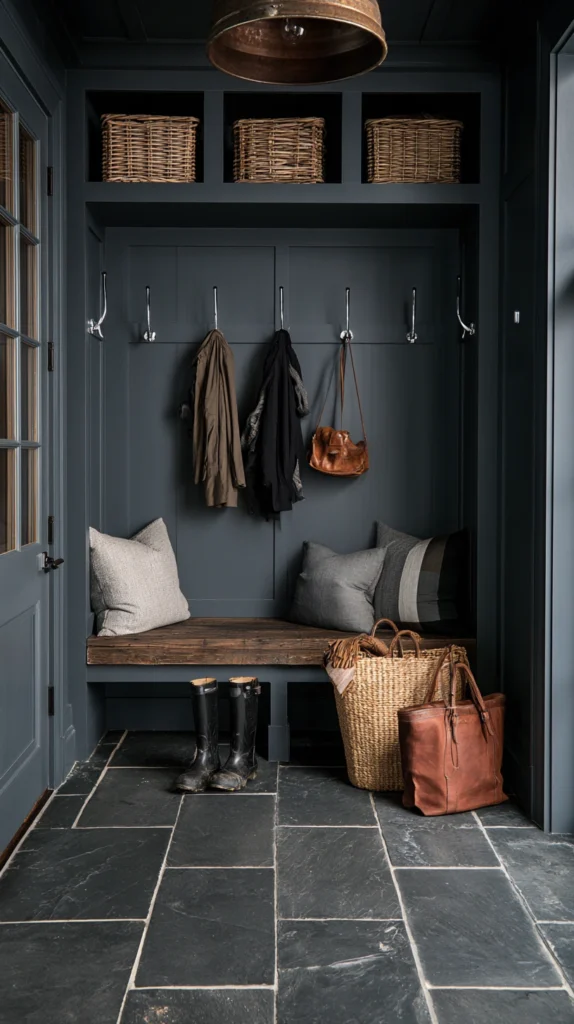
Everything in a Seattle entryway gets touched with damp hands.
The walls get brushed by wet shoulders. The doorframe gets pushed by muddy fingers. The corner gets scuffed by a boot held at the wrong angle.
A pale entryway in a Seattle home is a constant maintenance burden. Every mark shows. Every touch is visible. The wall is perpetually in need of wiping.
A dark entryway is the answer.
Deep charcoal or near-black paint on the walls hides almost everything. Muddy fingerprints are invisible. Water marks blend in. Scuffs and knocks disappear into the dark surface. The wall looks clean and considered even after a week of wet arrivals that would have the pale version looking filthy.
Alternatively, a dark, heavily patterned wallpaper absorbs all of it. A dark botanical, a dark geometric, a moody dark grasscloth effect. The pattern disguises the evidence of daily life in the same way that a dark wall colour does, but with additional texture and visual interest.
The practical and aesthetic case for dark walls in a Seattle entryway is stronger than in almost any other application. The darkness hides what happens here. And what happens here in a Seattle winter is considerable.
12. Radiant or Underfloor Heat in the Entry Zone
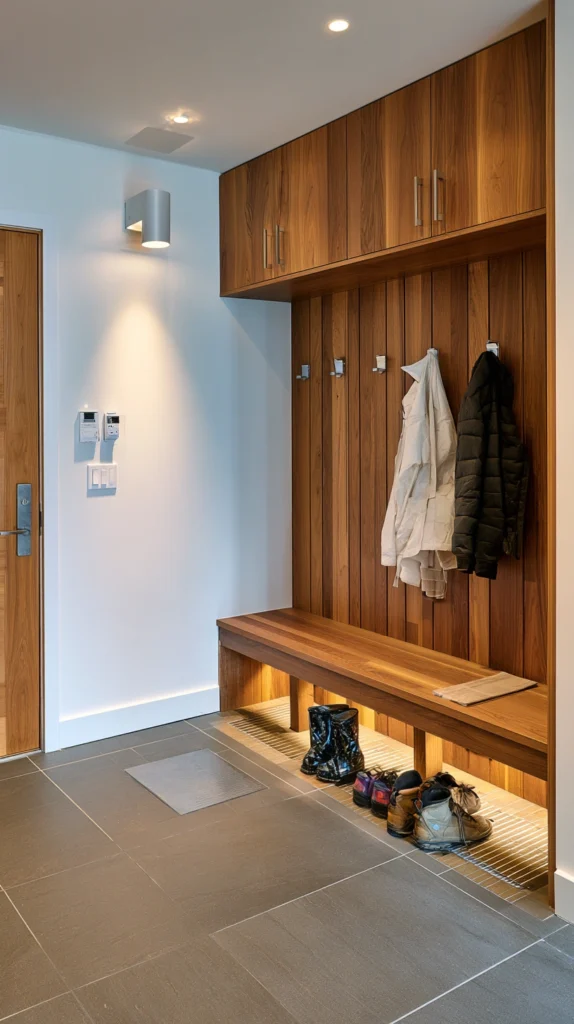
A warm entryway changes the experience of arriving home on a cold, wet day.
Not dramatically warm. Not the kind of warmth that makes taking off a wet coat feel unpleasant. Just warm enough that the floor is not cold beneath wet-socked feet. Warm enough that the entry zone feels like a room in the house rather than an extension of the cold outside.
Underfloor heating beneath tile is the most effective solution. The tile conducts and radiates heat gently from below, warming the floor surface to a comfortable temperature that helps dry wet boots and wet floors faster while making the space physically comfortable.
In an entryway where renovation is underway this is a relatively modest addition to the floor installation cost. The electrical underfloor heating mat goes beneath the tile during installation and the thermostat is set to maintain a gentle warmth in the entry zone.
It also helps dry the floor itself after wet arrivals. A heated tile floor dries faster than an unheated one. The entry zone recovers from each wet arrival more quickly and is ready for the next one.
In a Seattle winter this warmth underfoot is one of the small luxuries that makes a significant difference to the daily experience of living in this climate.
13. A View Into the Garden That Makes Arriving Home Worth It
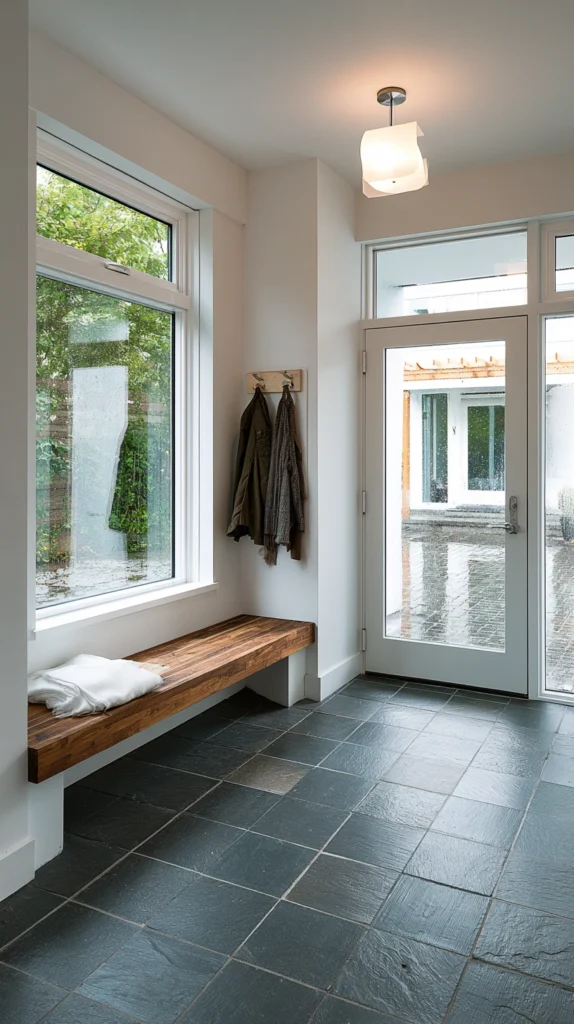
The entryway is the first room you see when you come home.
It shapes every homecoming. Every arrival. Every moment of transition from the grey, wet outside to the warm, dry inside.
Most Seattle entryways look inward. Toward the house. Toward the next room.
The best Seattle entryways also look outward. A window beside the door. A glass panel in the door itself. A narrow window in the hallway wall that frames a specific view of the garden or the street outside.
This outward view changes what the entryway feels like. You arrive home and before you have even taken off your boots you can see the garden. The rain on the plants. The grey sky over the neighbour’s Douglas fir. The specific light of a Seattle afternoon in November.
The view makes the arrival feel like a conscious choice to come inside rather than an escape from the outside. You can see where you just came from. You can appreciate the warmth and shelter you are stepping into because you can still see the weather you just left.
In a Pacific Northwest home, where the relationship between inside and outside is the central design question, an entryway that frames a view of the outside from within the inside is the most honest expression of that relationship.
It says the rain is not something to hide from. It is just where you live.
And home is where you come back to when you are done being in it.
How to Prioritise a Seattle Entryway Renovation
Most Seattle entryways need more than one thing.
Often they need several things simultaneously and the budget does not allow for everything at once.
Start with the floor. The floor takes the most damage and is the hardest to fix retroactively if the wrong choice is made. Get the tile or stone floor in place first and every subsequent addition is built on the right foundation.
Then the wet coat zone. A simple hook rail costs almost nothing and immediately reduces the chaos of arriving wet. This is the highest-impact change for the lowest possible investment.
The bench and boot storage comes next. This is the investment that most dramatically changes the daily experience of the entryway. Sitting down to take off boots. Knowing exactly where each pair lives. The transition from chaotic to organised happens here more than anywhere else.
Build the full mudroom wall or gear wall when the budget allows. These are bigger investments but they are also the ones that completely transform the space from a functional corridor into something that genuinely works for the specific outdoor life of the household.
Common Mistakes in Seattle Entryway Design
Choosing flooring that cannot handle sustained moisture. Timber floors in a Seattle entryway swell, warp, and discolour. Laminate degrades. Only tile, stone, or quality sheet vinyl handles what happens in a Seattle entryway without requiring constant maintenance or eventual replacement.
Providing too few hooks. The minimum number of hooks in a Seattle entryway is always more than feels right at the time of installation. A hook rail that looks generous on a dry day in July is perpetually overwhelmed from October to May.
Not separating the wet zone from the dry zone. Wet and dry coats in the same space makes both worse. This is the most important functional distinction in a Seattle entryway and the most consistently ignored.
Ignoring ventilation. An entryway with no air circulation and wet gear hanging in it develops a persistent damp smell that is very difficult to eliminate once it establishes. Ensure the entry zone has either natural ventilation from a window or mechanical ventilation from an extractor.
Making it too precious. An entryway in Seattle is a working space. Beautiful materials that cannot handle daily wet and muddy use will not stay beautiful. Choose materials that improve with honest use or at least resist damage from it.
Forgetting the transition objects. The keys, the dog lead, the cycling gloves, the AirPods. The small objects of daily life that need to be findable on the way out the door every single day. A dedicated small shelf or bowl for these items prevents the three-minute search on the way to work.
Building for a dry day. Design the entryway for the worst arrival of the year. The November trail run. The cycling commute home in a storm. If the entryway handles that, every other arrival is easy.
Quick Summary
- A galvanised steel boot tray large enough for all household footwear simultaneously is the most important single object in a Seattle entryway
- Separating the wet coat zone from the dry coat zone prevents damp spreading to everything stored together
- A bench with ventilated boot storage beneath handles the daily boot-removal ritual properly
- Large format tile or stone flooring extending from outside to inside handles sustained moisture without warping
- A full mudroom wall with assigned spaces per household member absorbs and organises arrival chaos completely
- A ventilated drying cabinet dries truly soaked gear safely and without smell overnight
- Use large, heavy-duty hooks spaced at least twelve inches apart to accommodate bulky Pacific Northwest outerwear
- A proper umbrella stand with a drip tray directly inside the door contains umbrella water on the floor
- A dedicated dog station with towel hooks, a drying mat, and lead storage handles the Pacific Northwest dog properly
- A gear wall with bike hooks, helmet storage, and organised hiking equipment suits the active Seattle household
- Dark paint or moody wallpaper hides the evidence of daily wet arrivals better than anything pale
- Underfloor heating beneath tile makes the entry zone warm underfoot and dries floors faster after wet arrivals
- A window or glass panel that frames a garden or outside view makes every homecoming feel like a conscious arrival
- Start renovation with the floor, then the wet coat zone, then the bench and boot storage
- Always design for the worst arrival of the year, not the easiest one
- Build for the actual outdoor life of the household, not an idealised or tidier version of it
A Seattle entryway that works is not the same as an entryway that looks good in photographs.
It is the one that makes the chaos stop at the door.
The one where the rain boots go in the tray and the wet jacket goes on its hook and the soaked dog gets dried on its mat and then everything else beyond that first room is warm and dry and untouched by the weather outside.
That is the Seattle entryway worth building.
Not the one on Pinterest. The one that makes November feel manageable.