12 Graduation Party Themes That Aren’t Basic
There is a version of the graduation party that happens everywhere, every year, without variation. The mortarboard balloons. The “Congrats Grad” banner in block letters across a folding table. The sheet cake with blue icing spelling out the graduate’s name in a font last seen on a 2003 Microsoft Word document.
The colour palette of the school, applied without interpretation to every surface. It is not a bad party. It is simply not a memorable one — and a milestone that took years of sustained effort to reach deserves something more considered than a decoration kit from a party supply store.
The twelve themes below are built on the premise that a graduation party should reflect the graduate rather than the occasion. Each one has a clear aesthetic identity, a practical execution plan, and a tip to make it feel genuinely designed rather than pulled from a template. The occasions are identical. The parties are not.
1. The Golden Hour Garden Party
Budget: $100 – $500
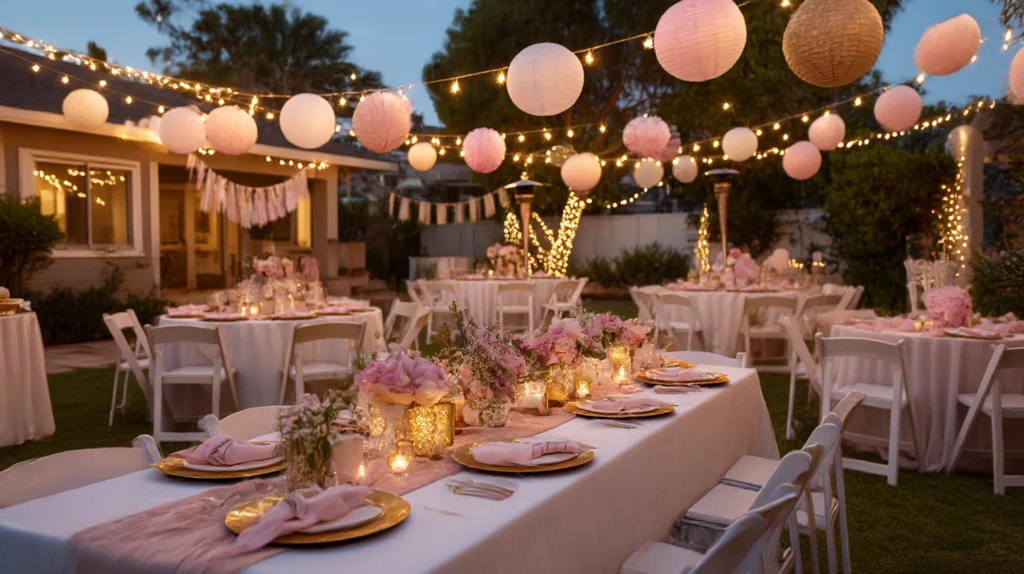
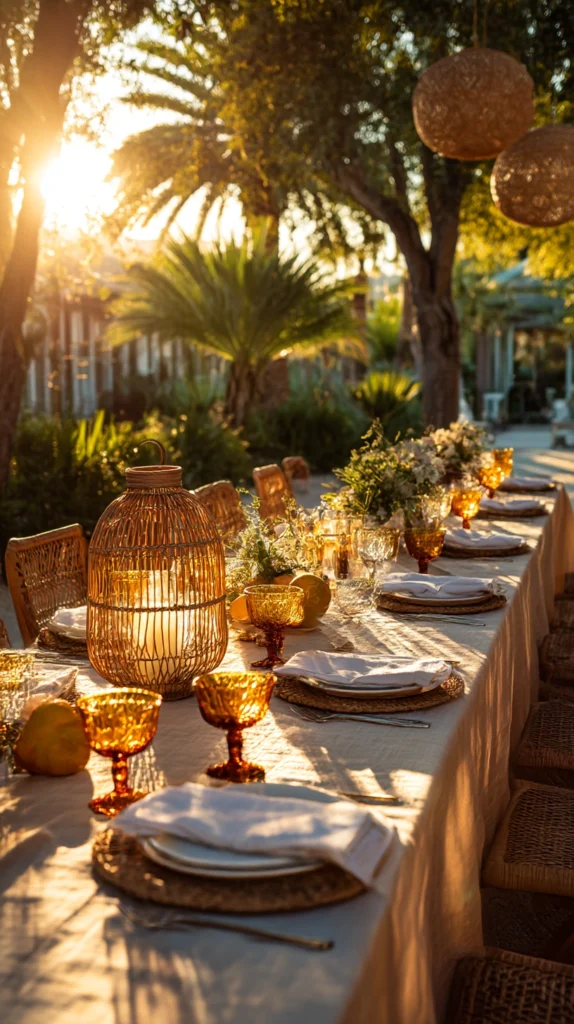
Everything in this theme runs on warm amber, burnished gold, terracotta, and the faded dusty tones of late afternoon light. It is the aesthetic of the magic hour — long shadows, glowing surfaces, the particular warmth of a sun that is close to the horizon but has not yet gone. Applied to a graduation garden party, it produces a celebration that feels simultaneously celebratory and reflective, which is precisely the emotional register that a graduation occupies.
The colour palette runs from champagne gold through warm amber to deep terracotta and burnt sienna. Table linens in undyed linen with a gold-edged border cost $20 – $60. Terracotta pot centrepieces planted with golden marigolds, dried wheat stalks, and trailing greenery run $15 – $40 per table.
Rattan lanterns with amber glass inserts — $15 – $40 each — define the perimeter of the space as the evening light fades. A signature cocktail built around passionfruit, orange, and prosecco arrives in champagne coupes rather than standard glassware and photographs exactly as well as it tastes.
Party tip: Schedule the party to begin two hours before golden hour for your location and date — the point at which the light begins its warm shift. The ambient atmosphere the theme is trying to create is produced freely by the sun for approximately 45 minutes every evening, and building the party timeline around that window means nature does the most important styling work without any effort or expense from the host.
2. The Black Tie Backyard
Budget: $150 – $800
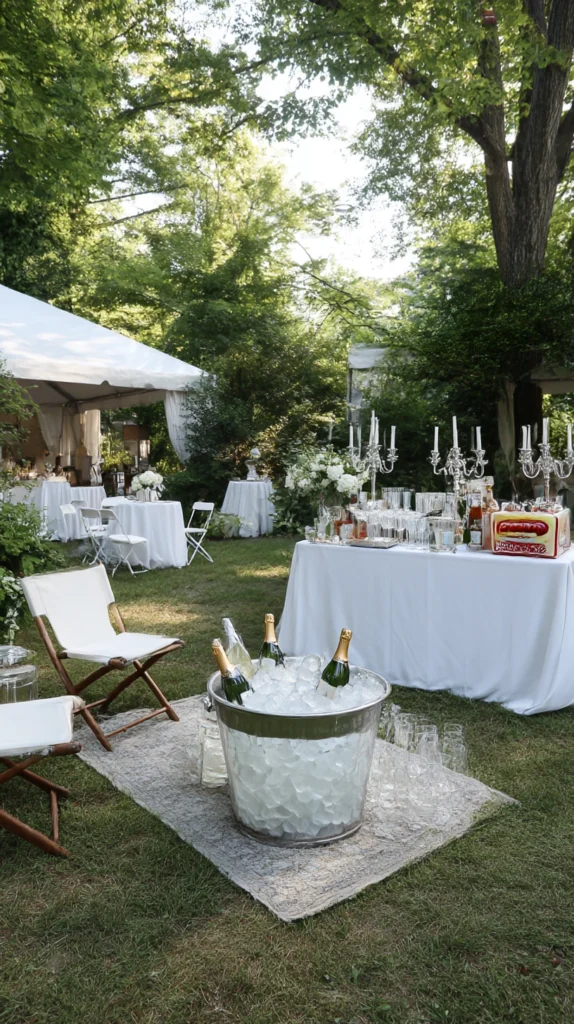
The deliberate contrast of formal dress code and casual outdoor setting is the entire premise of this theme, and it works because the tension between the two is both funny and genuinely chic. Guests arrive in black tie. The setting is the back garden. The food is served on proper china. The chairs are folding. The flowers are sculptural and architectural. The bar is a wheelbarrow filled with ice and champagne bottles. Everything is simultaneously very fancy and entirely unpretentious.
White linen tablecloths and cloth napkins hired from a local event supplier cost $5 – $15 per table setting. A candelabra centrepiece — real or LED — runs $20 – $60 per table. Matching charger plates in gold or silver add $3 – $8 each. The bar requires only a clean wheelbarrow, a bag of ice, and whatever is being served — the wheelbarrow is the joke and the statement simultaneously. A handwritten dress code card included with the invitation — “Black Tie. Backyard. Both.” — sets the tone with three words and no further explanation required.
Party tip: Provide one deliberately un-fancy food element — a hot dog station, a chip van, a tray of sliders — alongside the formal place settings. The contrast between white linen napkins and a self-assembled hot dog is the theme in microcosm and will be the most photographed moment of the evening. The juxtaposition is the point. Lean into it rather than resolving it.
3. The Studio Art Exhibition
Budget: $80 – $400
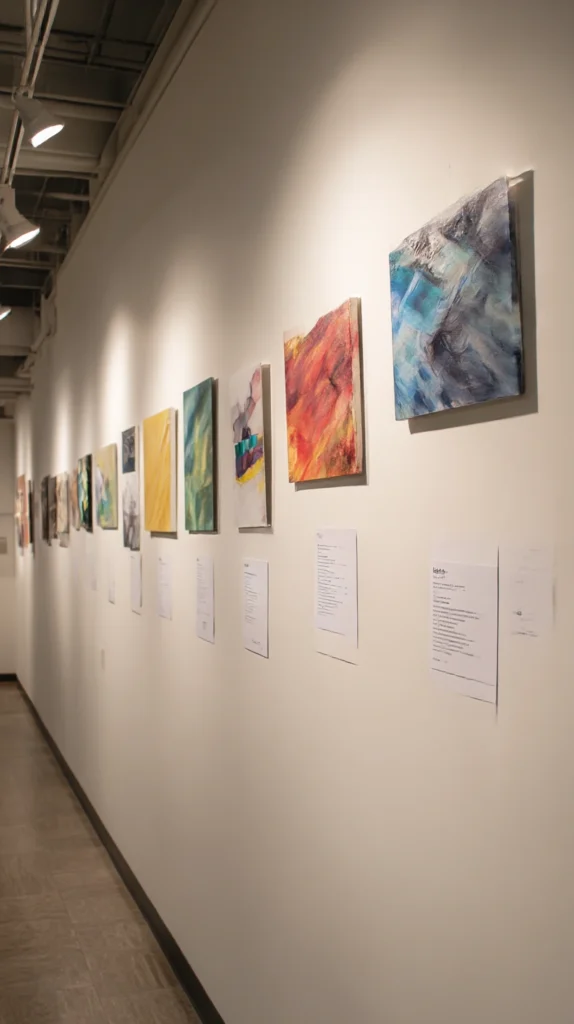
If the graduate has made anything over the course of their education — visual art, photography, graphic design, ceramics, textiles — this theme turns the graduation party into a private view of their work. The space is hung as a gallery. The food and drink are minimal and elegant in the way that gallery opening refreshments always are. The guests move through the space looking at work rather than simply standing in it talking, which produces a completely different quality of gathering.
White walls or a white fabric backdrop for displaying work costs nothing if the space already has pale walls. Temporary picture hanging strips rated for the weight of the pieces run $10 – $30 for a pack. Professional-looking artwork labels — white card with the piece title, medium, and year in a clean sans-serif font — cost nothing to print at home and add immediate gallery credibility to the display. Wine and sparkling water in simple glassware, a single cheese board, and soft background music complete the opening night atmosphere for $40 – $100.
Party tip: Ask three or four guests — close friends, family members, a favourite teacher — to prepare a brief spoken response to one piece of work each. Timed for midway through the party, these short informal talks give the evening a structure and a focus that transforms it from a party held in a gallery into an actual private view event. The graduate hears their work spoken about seriously and specifically, which is a more meaningful graduation gift than almost anything that could be purchased.
4. The Around the World Feast
Budget: $100 – $600
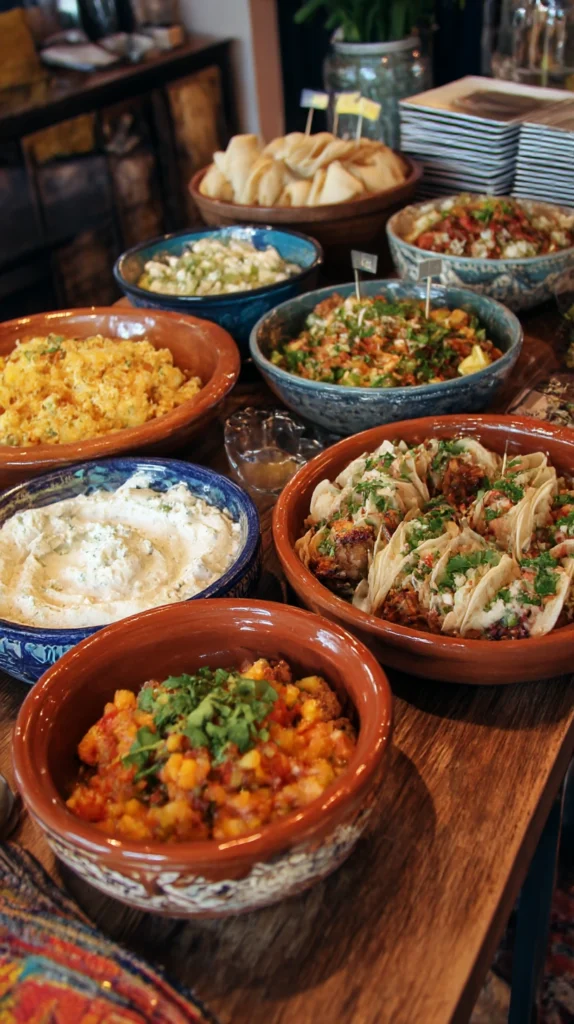
If the graduate is heading somewhere — a gap year, a university in another city, a move abroad, a career that will take them travelling — this theme turns the departure into the celebration. Each table or station represents a different country or region: a mezze spread for the Mediterranean table, dumplings and bao for the Asia table, jerk chicken and plantain for the Caribbean station, tacos and agua fresca for the Latin America corner. The food is the destination. The graduate is leaving. The party sends them off in the right direction.
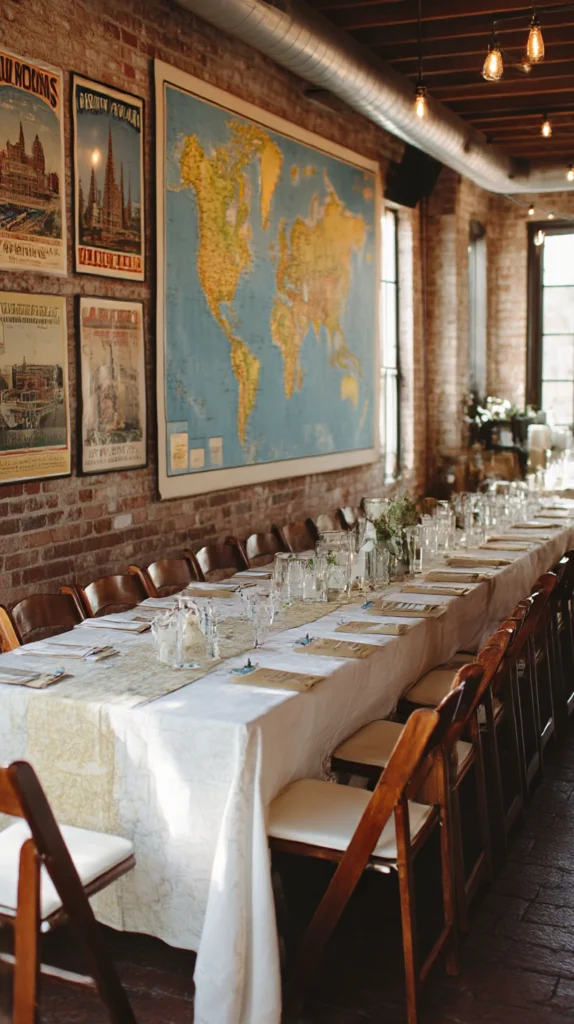
Each food station costs $30 – $100 depending on dishes chosen and guest numbers. A simple map print — A0 size from a print shop for $15 – $30 — as a backdrop or table centrepiece ties the theme together visually. Small flag picks in the dishes of each station add $5 – $10 per table. A passport-style menu card for each guest — printed and folded at home for under $10 total — lists the stations and the dishes and gives the guest something to keep.
Party tip: Assign a different country or region to any guest who wants to contribute a dish rather than asking everyone to bring something generic. A guest assigned Thailand brings a Thai dish. A guest assigned Morocco brings something Moroccan. The host coordinates the regions so that the overall spread covers a genuine geographic range, and the collaborative cooking becomes part of the celebration rather than a logistical imposition.
5. The Decades Party
Budget: $80 – $400
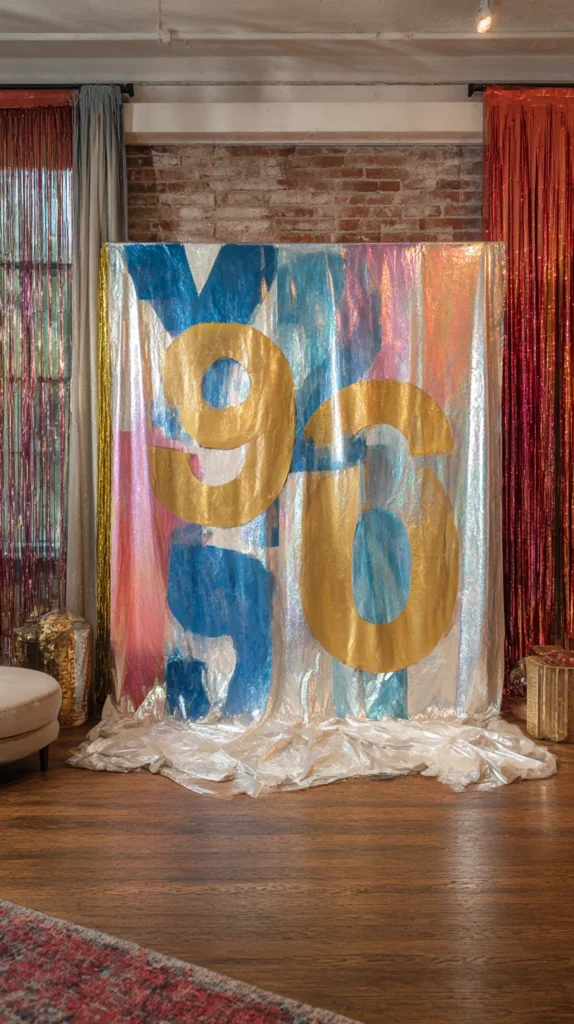
The graduate was born in a specific year. That year belongs to a decade with a specific aesthetic — music, fashion, film, design, and cultural reference points that are theirs by birthright. A party that celebrates the decade of the graduate’s birth is one that could not be held for anyone else born in a different year, which makes it immediately and specifically personal. A child of the early 2000s gets a Y2K party. A child of the mid-nineties gets a Britpop and grunge aesthetic. A child of the late nineties gets frosted tips and platform shoes as the reference palette.
Decade-specific decorations — retro colour palettes, era-appropriate typography on signage, music playlists built from the charts of the birth year — cost almost nothing to research and implement. A fancy dress suggestion asking guests to come as their favourite reference from the decade runs $0 to suggest and varies per guest to execute. A decade-specific photo booth backdrop built around the aesthetic of the era costs $20 – $60 in printed or hand-made elements.
Party tip: Build the playlist from the actual charts of the graduate’s birth year and the years immediately following, rather than general decade-themed playlists. A playlist drawn from the specific 12 months of the graduate’s birth is a detail that guests notice and comment on, and it gives the music a precision and specificity that a general decade playlist cannot match.
6. The Literary Salon
Budget: $60 – $300
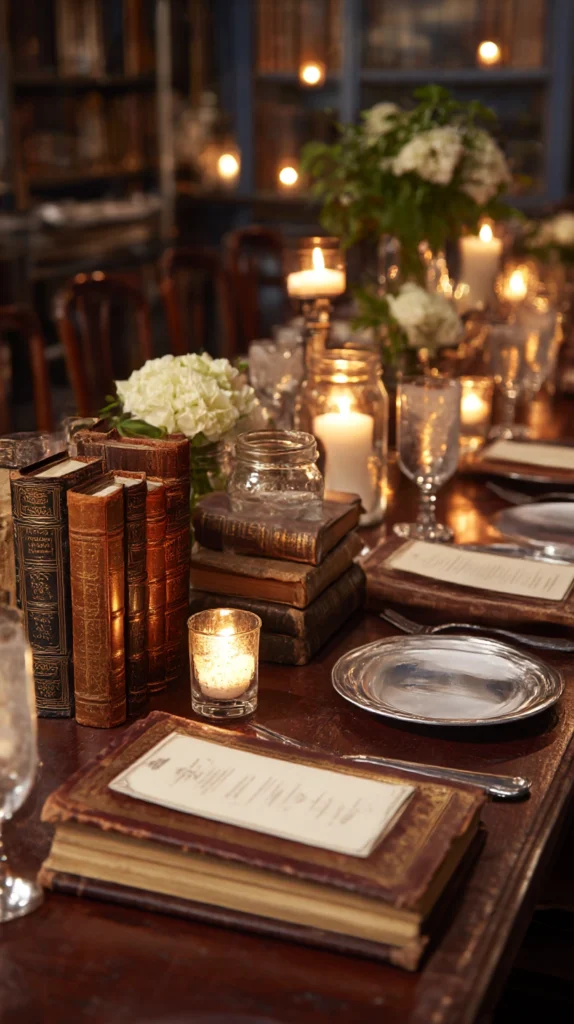
If the graduate is a reader — or if they studied literature, humanities, languages, or any field with a strong textual culture — a literary salon theme transforms the graduation party into an evening of conversation, ideas, and aesthetic references drawn from the books and writers that shaped the years being celebrated. The decor runs to stacked vintage books, candles in apothecary jars, botanical prints in simple frames, and a colour palette of deep ink blue, aged parchment, and forest green.
Vintage books from charity shops cost $1 – $3 each and are used as centrepiece stacks, place card holders, and decorative objects throughout the space. A drinks menu written in the style of a literary quote — attributed to the graduate rather than any actual author — costs nothing to write and immediately establishes the tone of the evening. Name cards placed in split book spines at each seat run under $10 in total and will be the most remarked-upon detail on the table.
Party tip: Include a reading as part of the evening — a short passage chosen by the graduate from a book that mattered to them during the years being celebrated, read aloud by the graduate themselves or by a guest who knows the work well. Three to five minutes of a well-chosen passage read in a room of people who are there specifically to celebrate the reader is a moment that no decoration or food can produce and no guest will forget.
7. The Rooftop Sunset Soirée
Budget: $120 – $600
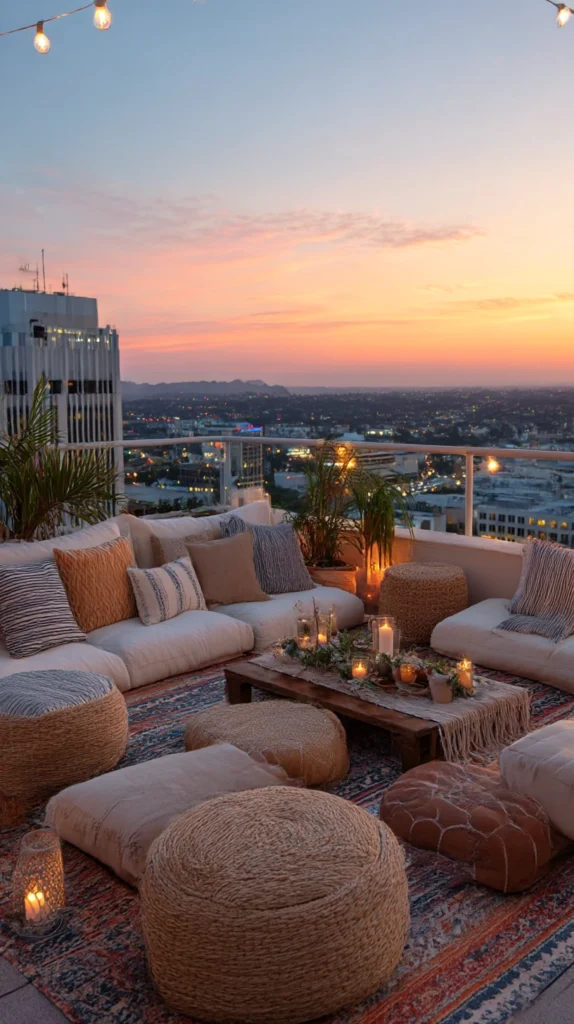
The rooftop or elevated terrace version of a graduation party operates entirely on the energy of its location. The city or landscape laid out below, the sky doing something different every ten minutes as the sun moves, the sense of being above the usual level of things — all of this communicates celebration without a single balloon. The decoration is almost unnecessary when the setting is working. Which means the focus falls entirely on the details: the drinks, the food, the music, and the quality of the assembled company.
Floor cushions and low poufs for seating cost $20 – $60 each. Portable bluetooth speakers in a weatherproof format run $40 – $120. String lights along the perimeter — $20 – $60 for a generous run — become essential as the evening progresses and the sky darkens. A simple grazing spread rather than a full seated dinner suits the rooftop format — portable, self-service, and eaten standing or from low seating without the formality of a dining arrangement.
Party tip: Check the weather forecast for the week preceding the party and have a contingency plan for one level below the rooftop — a room with the doors open onto a balcony or terrace — that provides shelter without entirely abandoning the elevated setting. A rooftop party rained off with no backup plan produces a memorable evening for the wrong reasons.
8. The Botanical Garden Party
Budget: $80 – $500
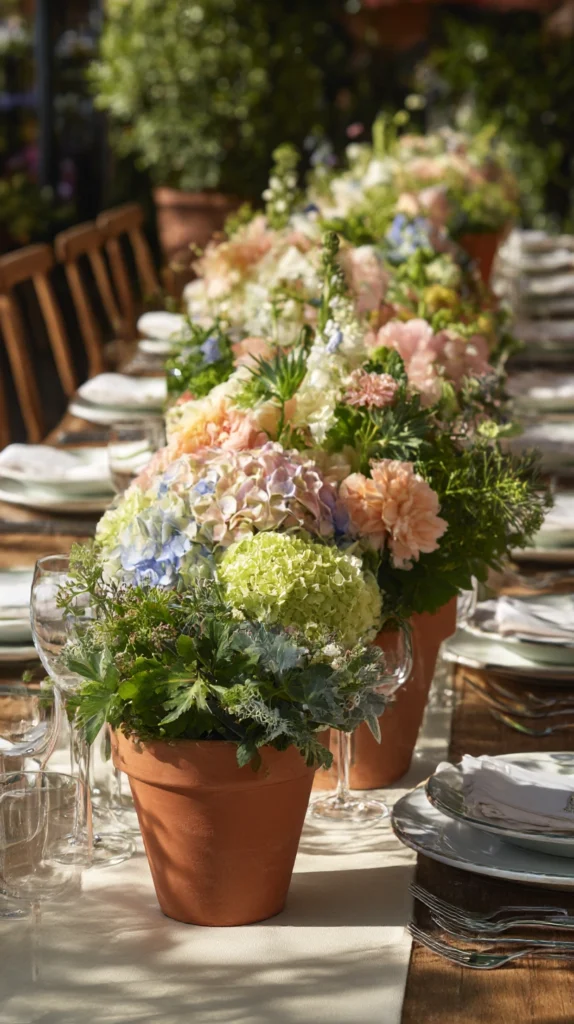
Flowers, foliage, and living plant material as the dominant decorative language of the party — covering tables, lining pathways, hanging from overhead structures, filling every vessel from terracotta pots to glass bottles — produces a celebration that looks simultaneously abundant and effortless. The botanical garden party has no single colour palette because the plants provide the colour, and nature’s palette is always coherent. The host simply sources enough plant material and arranges it generously, and the setting does the rest.
Seasonal flowers from a wholesale flower market — significantly cheaper than retail florists for party quantities — cost $40 – $120 for a generous supply. Foliage branches — eucalyptus, fern, olive, and trailing ivy — add $20 – $50. Simple vessels to hold the arrangements — terracotta pots, glass jars, ceramic pitchers, and wine bottles — cost nothing if sourced from existing kitchen and garden stock. The guiding principle is generosity: more flowers, more foliage, more vessels than instinct suggests.
Party tip: Cut all flowers and condition them in deep water for 24 hours before the party rather than arranging them immediately after purchase. Conditioned flowers open correctly, last significantly longer, and are far easier to arrange than flowers cut and placed directly. A flower that has had 24 hours in deep cool water arrives at the party at its best rather than in the process of recovering from transport.
9. The Neon and Retro Diner
Budget: $80 – $400
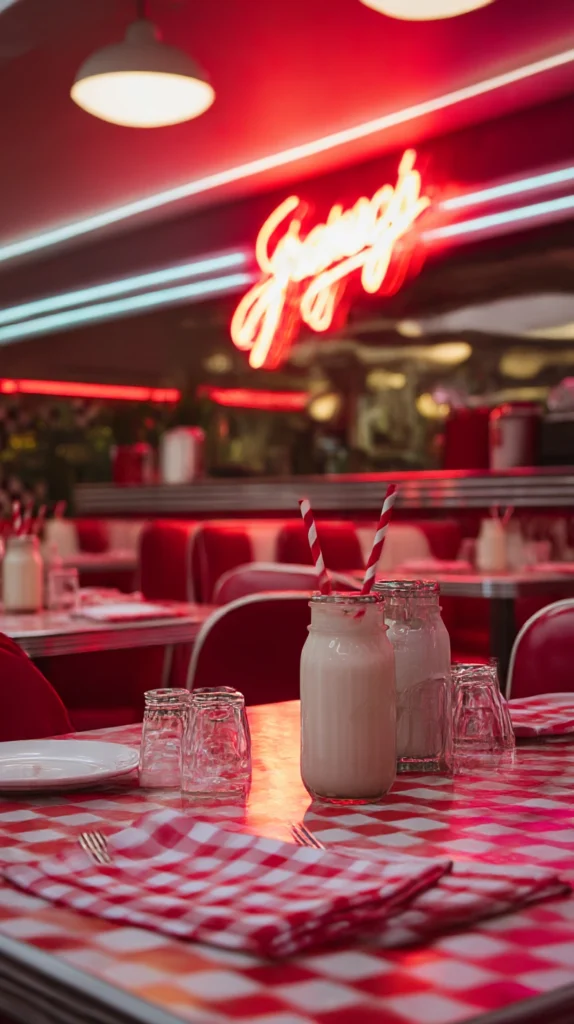
A graduation party built around the aesthetic of the American diner — red and white chequerboard, chrome accents, neon signage, milkshakes in tall glasses, burgers served in wax paper, a jukebox playlist of rock and roll and soul — is a theme that works because it is both visually complete and genuinely fun to be inside. The aesthetic is strong enough to carry the entire event without additional decoration, and the food format — burgers, fries, shakes, pie — is universally enjoyed across any guest list age range.
Red and white chequerboard paper or vinyl tablecloths cost $8 – $20 per table. Tall milkshake glasses — $15 – $40 for a set — serve both milkshakes and cocktails in the correct visual format. A custom neon-style sign with the graduate’s name — LED neon available online for $30 – $80 — provides the centrepiece installation and the most photographed element of the evening. A curated jukebox playlist on a bluetooth speaker running from a tablet with album art displayed is the finishing detail that costs nothing and completes the atmosphere entirely.
Party tip: Serve the milkshakes in the tall glasses with paper straws and an over-the-top garnish — a full cookie on the rim, a tower of whipped cream, a sparkler for the graduate’s first serve — at a specific moment in the party rather than as a continuous self-service offering. A milkshake moment, announced and served ceremonially to all guests simultaneously, creates a shared experience that a self-service station cannot replicate.
10. The Travel and Adventure Send-Off
Budget: $80 – $400
Where the Around the World Feast celebrates geography through food, the Travel and Adventure theme celebrates the spirit of departure itself — maps, luggage tags, compass roses, vintage travel posters, and the visual language of journeys undertaken and journeys ahead. It is particularly suited to graduates who are moving on to something geographically significant — a university far from home, a year abroad, a career that begins in a different city — and it frames the graduation not as an ending but as an embarkation.
Vintage travel posters — reproductions printed at A2 size from public domain sources for $5 – $15 each — cover the walls and establish the aesthetic immediately. Luggage tags as place cards cost $8 – $20 for a pack of 50 and are personalised with each guest’s name and a handwritten destination. A large world map as a centrepiece — $10 – $30 printed and mounted — allows guests to mark places they have been or places they want to go with map pins during the party, creating an interactive installation that develops throughout the evening.
Party tip: Give the graduate a personalised travel journal at the party — a quality blank notebook with their name and the date embossed or printed on the cover, and the first page filled with a handwritten message from the host — as the event’s signature gift. Ask all guests to contribute a written entry during the party: a travel recommendation, an address, a piece of advice for the journey ahead. The journal leaves the party full rather than empty, which is a significantly more meaningful object to carry into the next chapter.
11. The Wellness and Self-Care Celebration
Budget: $80 – $500
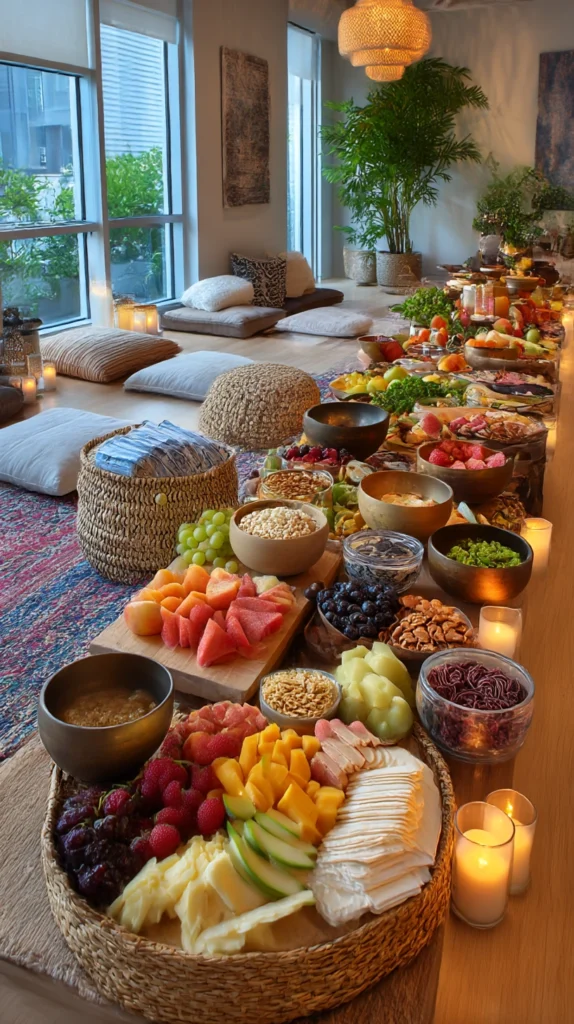
A graduation is not only a celebration of what was achieved — it is a recognition of what it cost. The years of work, the pressure, the late nights, the anxiety, and the sustained effort that a qualification demands deserve acknowledgement alongside the achievement itself. A party themed around rest, restoration, and genuine pleasure — herbal drinks, beautiful food, a sound bath or meditation session, face masks laid out for guests, candles, soft music, and no expectations — gives the graduate exactly what they most need after years of sustained output.
A grazing table of healthy, beautiful food — seasonal fruits, dips, grain salads, and botanical drinks — costs $60 – $150 for 20 guests. Face masks and eye masks laid in a basket for guests to take and use during the party run $20 – $50 for a generous supply. A sound bowl session or a short guided meditation facilitated by a guest who practises — or a recorded session played through a good speaker — costs nothing to organise and produces twenty minutes of genuine collective calm that no other party element provides.
Party tip: Create a specific no-phone window of 30 minutes during the party — announced in advance, with phones placed in a basket — during which the sound session or meditation takes place. A gathering that puts phones down together for a shared quiet experience creates a quality of presence and connection that photographed celebrations rarely achieve, and the graduate emerges from that 30 minutes feeling celebrated in a register that goes deeper than a camera flash.
12. The Night Market Celebration
Budget: $100 – $600
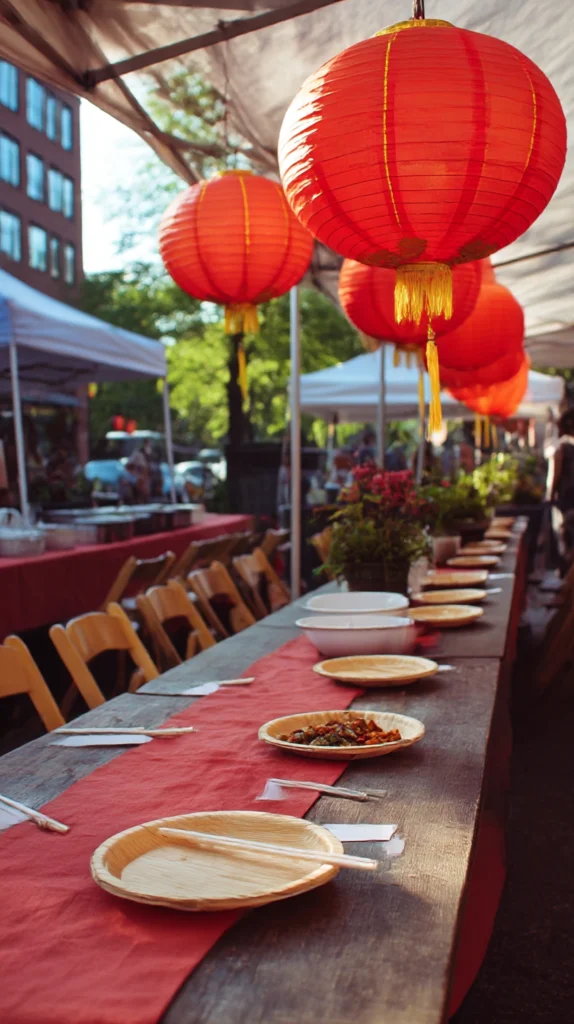
The night market — the Asian street food format of small stalls, paper lanterns, low lighting, and food served in small portions designed for sharing and moving rather than sitting and finishing — is one of the most social and most generous party formats available. Guests move continuously, try everything, talk to everyone, and eat more than they planned to. The informal, ambulatory structure removes the social anxiety of assigned seating and the logistical complexity of a plated dinner simultaneously.
Paper lanterns in red, gold, and warm amber — $3 – $8 each — hung at varying heights across the party space establish the aesthetic immediately and cost almost nothing for a generous display. Each food station requires only a trestle table, a tablecloth, a printed menu sign, and the food itself — $30 – $80 per station depending on dishes. Bamboo serving plates and chopsticks — $15 – $30 for a party quantity — reinforce the format and photograph beautifully under warm lantern light.
Party tip: Assign a stall holder to each food station — a family member, a close friend, a willing guest — who is responsible for serving from that station throughout the evening. A hosted stall with a person behind it produces a completely different social dynamic from a self-service table.
Guests approach, conversation happens naturally around the food, and the stall holder becomes a character in the evening rather than a bystander. The social architecture of the night market format depends entirely on this human element — without it, it is simply a buffet.
Whatever theme makes the final cut, the principle that separates a memorable graduation party from a generic one is the same every time: specificity to the graduate, commitment to the aesthetic, and the willingness to edit out anything that does not serve both.
A party that knows what it is, and holds that identity consistently across every element from the invitation to the final song, always outperforms a party assembled from good individual ideas that never cohere into a single thing.
Choose the theme that fits the graduate rather than the one that fits the budget or the venue. Then commit to it completely, execute the details with care, and let the person at the centre of it feel genuinely seen — which is the only thing a graduation party actually needs to achieve.