14 Fall Lighting Ideas for a Warm and Cozy Living Room
My living room ran on one overhead fixture for years. Same flat, even light at noon and at nine at night, same harsh wash whether it was July or November. Tried adding one warm-toned lamp once. Sat in the corner doing its best against an overhead light that overpowered it completely.
Then I stopped adding single lamps and started building complete lighting layers — overhead, ambient, and accent light all working together at the right temperature. The living room finally feels different after sunset than it does at noon, and different in October than in June.

Why Overhead-Only Lighting Resists Feeling Cozy
The flatness problem:
What single-source overhead light does:
- Washes the entire room in one even, shadowless light
- Reads as functional and bright, never as enveloping
- Erases the shadow and depth a room needs to feel intimate
- Resists the layered quality of a genuinely cozy room
The layering principle:
- Multiple light sources at different heights create depth that one overhead fixture cannot
- Warm-toned bulbs throughout shift the entire emotional register of a room
- This is the opposite goal from bright, even illumination, and living rooms benefit from that shift after dark
- A single warm lamp against an otherwise bright overhead fixture still reads as a bright room with one warm object in it
My revelation: A cozy fall living room is a complete lighting system, not one warm lamp added to an otherwise bright room. Overhead, table, floor, and accent light all need to agree on warmth before the mood actually arrives.
1. Warm Amber Bulbs Throughout the Room
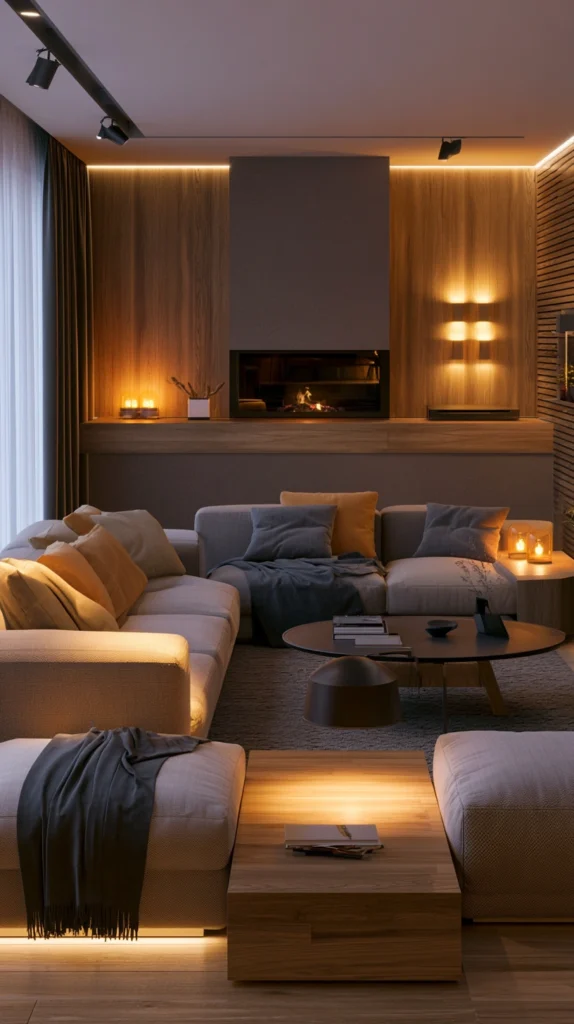
Replacing every bulb in the living room with warm amber-toned bulbs in the 2200-2700K range.
Why bulb temperature matters more than fixture choice
The foundation-first principle:
- The most beautifully designed lamp still reads as cold and clinical under a daylight-temperature bulb
- Bulb temperature is the single underlying factor that determines whether a room feels warm or sterile
- This is the first and most important change to make before any other lighting idea on this list will fully succeed
Best bulb choices
- 2200K bulbs for the warmest, most candle-like glow
- 2700K bulbs for a slightly more versatile warm white
- Dimmable LED bulbs in either temperature to allow further adjustment
Budget: $4-12 per bulb for warm LED options
My bulb swap result
Replacing every bulb in my living room with 2400K warm LEDs before changing a single fixture made an immediate, dramatic difference, the room felt cozier that same evening without spending more than forty dollars.
Bulb Temperature Tips
Check existing fixtures for dimmer compatibility:
- Not all warm LED bulbs dim smoothly on older dimmer switches
- Confirm compatibility before buying a full set, or budget for a compatible dimmer switch as part of the project
2. A Cluster of Table Lamps at Varying Heights
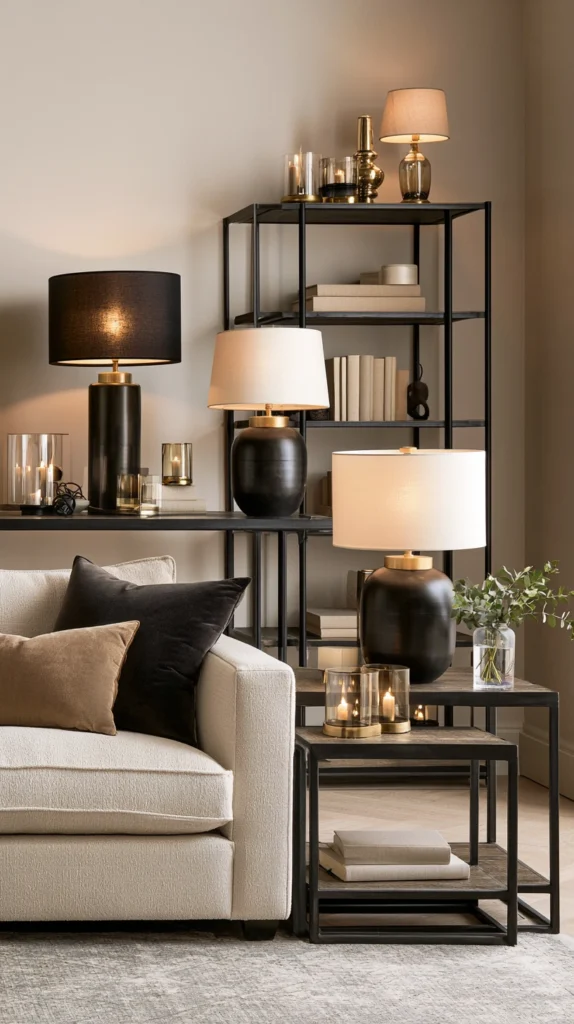
Several table lamps placed throughout the room at different heights rather than one central source.
Why height variation creates depth
The shadow-and-pool principle:
- Light pooling at different heights throughout a room creates visual depth that flat overhead light cannot
- A taller lamp on a console and a shorter one on a side table create distinct pools of warmth rather than one even wash
- This variation is what makes a room feel layered and intentional rather than simply lit
Best lamp placement
- A taller lamp on a console table or bookshelf
- A medium lamp on each end table flanking the sofa
- A shorter accent lamp on a low side table or windowsill
Budget pick: ceramic or wood base table lamps, $30-70 each Splurge: brass or hand-thrown ceramic lamp bases, $100-250 each
My table lamp result
Adding three table lamps at three different heights around the room replaced the flat overhead glow with distinct warm pools of light, and the room now has visual depth even with the main fixture off entirely.
Table Lamp Tips
Use the main overhead fixture sparingly:
- Once table lamps establish the room’s primary warmth, the overhead fixture becomes a daytime or task tool rather than the evening default
- Reserve overhead light for cleaning or bright daytime needs
3. A Floor Lamp Beside the Reading Chair
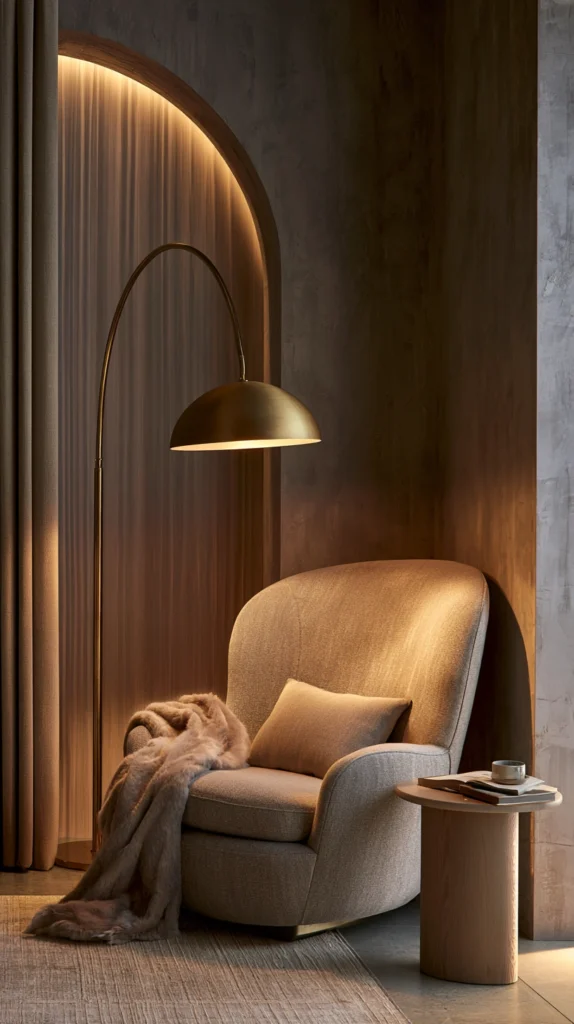
A single well-placed floor lamp positioned specifically to support a reading or seating spot.
Why a dedicated reading light matters
The function-meets-mood principle:
- A reading chair without adequate light nearby goes unused regardless of how comfortable it is
- A floor lamp positioned at shoulder height beside the chair makes the spot genuinely usable after dark
- This single addition often transforms an underused corner into the most-occupied seat in the room
Best floor lamp styles
- An arc lamp that extends over the chair without requiring a side table
- A simple pole lamp with an adjustable shade angle
- A tripod floor lamp for a more textural, sculptural presence
Budget pick: a basic pole floor lamp, $50-100 Splurge: a brass arc lamp with a fabric shade, $200-450
My reading lamp result
Adding an arc floor lamp beside my previously underused armchair turned that corner into where I spend most evenings now, the warm light at the right height made the chair function the way it was always meant to.
Floor Lamp Tips
Position the light source above eye level when seated:
- A lamp positioned too low casts light upward and can create glare
- Shoulder height when seated, with the shade angled slightly downward, is generally the most comfortable position
4. A Dimmer Switch on the Main Overhead Fixture
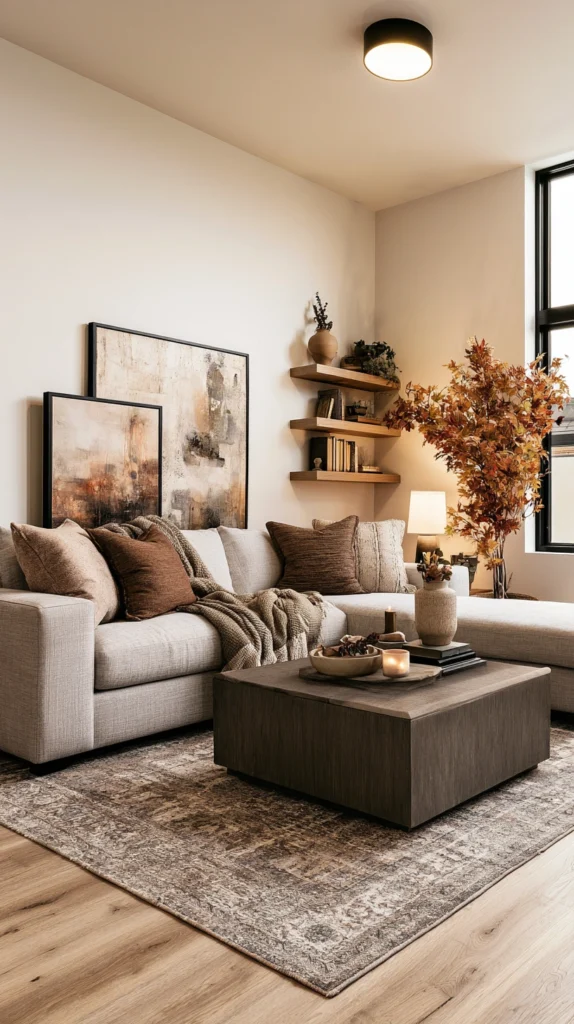
Adding a dimmer to the existing ceiling fixture rather than relying on it at full brightness or not at all.
Why a dimmer changes the room more than a new fixture would
The flexibility-without-replacement principle:
- Most overhead fixtures are not the problem; running them at full brightness every evening is
- A dimmer allows the same fixture to provide bright task light during the day and a soft glow in the evening
- This is one of the lowest-cost changes on this list relative to its impact
What to know before installing
- Confirm the bulbs in use are dimmable before installing a dimmer switch
- A standard dimmer works for most LED and incandescent bulbs, but some LEDs require a compatible dimmer model specifically
Budget: $15-40 for the dimmer switch itself, plus installation if not done independently
My dimmer result
Installing a simple dimmer on the main overhead fixture meant the same light that felt sterile at full brightness became soft and warm at thirty percent, all without buying a single new lamp.
Dimmer Tips
Pair with warm bulbs for the best result:
- A dimmer on a cool-toned bulb still produces a dim, cool light, not necessarily a cozy one
- Combining a dimmer with the warm bulb swap from idea 1 produces a significantly better result than either change alone
5. Flickering or Flame-Effect Candles Clustered Together
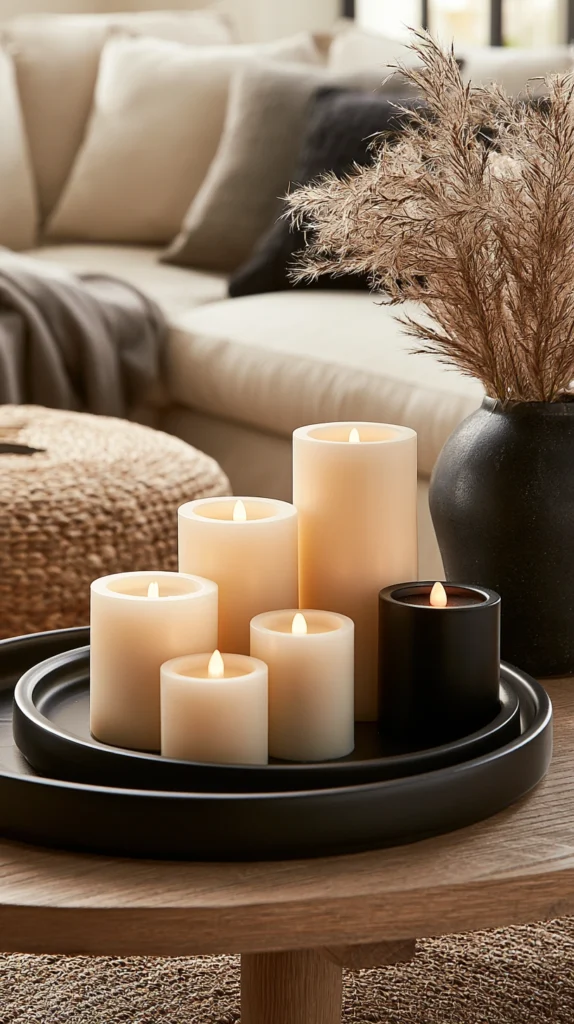
Real or LED flame-effect candles grouped in clusters rather than scattered as single pieces.
Why clustering candles matters more than the candles themselves
The grouping-over-scattering principle:
- A single candle on a mantel provides minimal light and minimal visual impact
- A cluster of varying heights creates a genuine light source with movement and warmth
- This same grouping logic that applies to lamp placement applies equally to candles
Best candle clustering locations
- A grouped cluster on the coffee table at varying heights
- A row of pillar candles along the mantel
- A cluster in a fireplace hearth not currently in use for fire
Budget pick: LED flame-effect candles, $15-40 for a cluster set Splurge: real soy or beeswax pillar candles in varying heights, $60-150 for a full cluster
My candle cluster result
Grouping five LED flame candles at varying heights on the coffee table added genuine flickering warmth to evening gatherings, and the movement of the flicker does something static lamp light alone cannot.
Candle Cluster Tips
Choose LED for unattended rooms:
- Real candles require attention that a frequently unattended living room may not get
- LED flame-effect candles provide most of the visual warmth without the fire risk of leaving real flame unattended
6. A Pendant Light Over the Coffee Table or Reading Nook
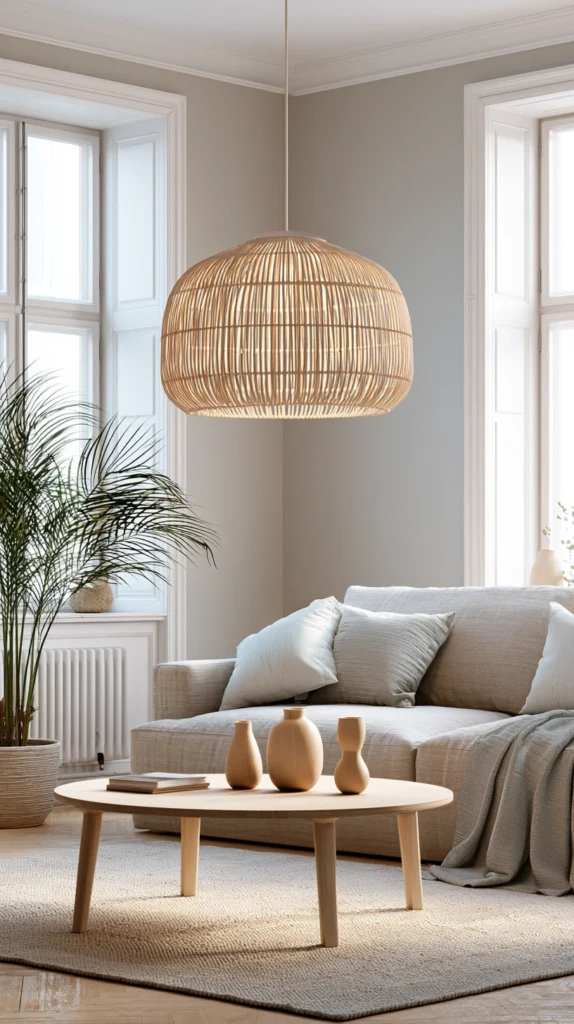
A single hanging pendant fixture positioned over a specific area rather than centered in the room.
Why an off-center pendant adds intention
The zone-lighting principle:
- A centrally hung overhead fixture lights the entire room evenly, with no specific focus
- A pendant positioned over a coffee table or reading nook creates a defined zone of warmth within the larger room
- This zone-based approach mirrors how restaurants and well-designed interiors use light to create distinct areas within one open space
Best pendant styles for warmth
- A fabric or paper shade that diffuses light softly
- An amber or smoked glass pendant that tints the light itself
- A woven rattan pendant for added texture alongside the warmth
Budget pick: a basic fabric shade pendant, $40-90 Splurge: a hand-blown amber glass pendant, $150-400
My pendant result
Adding a small woven pendant directly over my coffee table created a defined, warm zone at the center of seating, and the rest of the room now reads as surrounding that warm core rather than competing with it.
Pendant Light Tips
Hang at a height that avoids eye-level glare:
- A pendant hung too low at seated eye level creates glare rather than ambiance
- Generally 28 to 34 inches above the table surface works well for most ceiling heights
7. String Lights Along a Bookshelf or Mantel
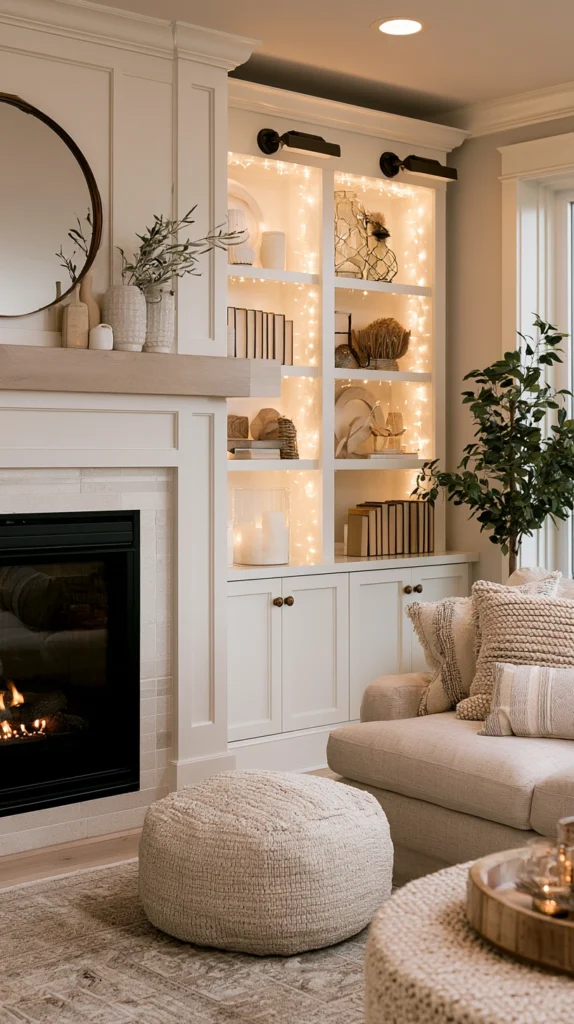
Warm white string lights woven along open shelving, a mantel edge, or behind a piece of furniture.
Why string lights work beyond their seasonal reputation
The subtle-glow principle:
- String lights are often associated with temporary holiday decor, but a warm white strand used year-round reads as ambient lighting rather than decoration
- Woven through books or along a mantel edge, the light source itself becomes nearly invisible while the glow remains
- This is one of the most affordable ways to add a layer of soft, warm light to an existing shelf or mantel
Best placement
- Woven through the back row of a bookshelf, mostly hidden from direct view
- Along the top edge of a mantel, tucked behind any objects displayed there
- Behind a media console or low furniture piece, casting an upward glow
Budget: $15-35 for a quality warm white LED strand
My string light result
Tucking a warm white strand along the back of my bookshelf, mostly hidden behind the books themselves, added a soft glow that reads as ambient lighting rather than as visible string lights at all.
String Light Tips
Choose warm white specifically, not cool white or multicolor:
- Cool white string lights undercut the warmth this entire approach depends on
- Confirm the listed color temperature before purchasing, since “white” alone is not a reliable description
8. A Statement Table Lamp With an Amber or Linen Shade
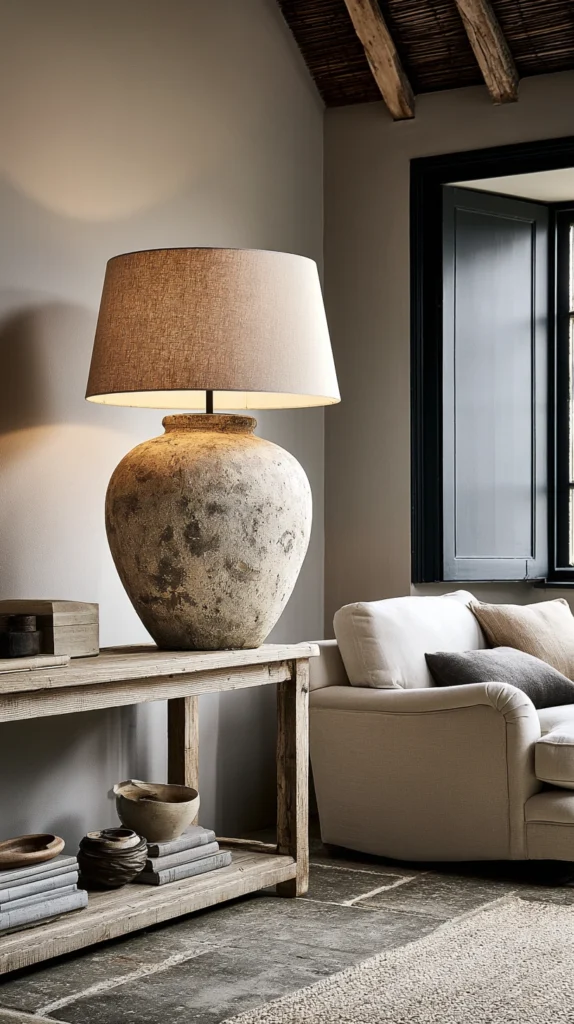
One larger, more decorative table lamp used as a focal point rather than purely functional task lighting.
Why one statement piece earns its place
The anchor-lamp principle:
- Several small, purely functional lamps can light a room without giving it any visual personality
- One larger, more sculptural lamp provides both light and a design anchor the eye returns to
- This single piece often becomes the room’s signature detail, the way a piece of art might
Best statement lamp choices
- A ceramic base in a warm glaze with a linen drum shade
- A sculptural wood or stone base with an amber glass shade
- A vintage or vintage-style lamp with significant visual presence
Budget pick: a ceramic statement lamp, $80-150 Splurge: a hand-thrown or vintage sculptural lamp, $250-600
My statement lamp result
A single large ceramic lamp with a linen shade on my console table became the piece every guest asks about, and the warm light through the linen shade specifically has a softness no other lamp in the room matches.
Statement Lamp Tips
Give it room to be seen:
- A statement lamp crowded by other objects loses its visual impact
- Keep the surrounding surface relatively clear so the lamp itself remains the focal point
9. Firelight or a Faux Fireplace Glow
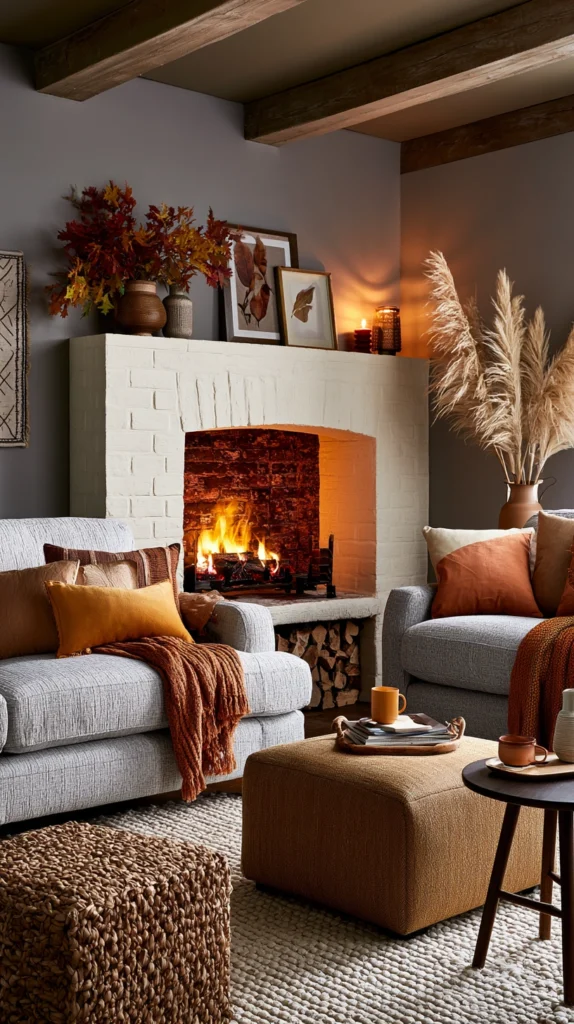
A working fireplace, electric insert, or a flame-effect device used as both a light source and a focal point.
Why firelight specifically achieves something other light cannot
The movement-and-color principle:
- Firelight flickers and shifts in color temperature constantly, unlike any static bulb
- This movement activates a room’s coziness in a way fixed lighting alone cannot replicate
- Even a modest electric insert with a realistic flame effect provides a meaningful share of this benefit
Best options by budget
- A real wood-burning or gas fireplace, if already present in the room
- An electric fireplace insert with adjustable flame effect and heat settings
- A smaller flame-effect lantern or device as a more affordable substitute
Budget pick: a tabletop flame-effect lantern, $30-70 Splurge: an electric fireplace insert, $300-1,200
My fireplace glow result
Adding a small electric insert to an unused fireplace opening brought genuine flickering light and warmth back into the room’s focal point, and evenings now center around that glow the way they likely did when the fireplace was originally built to be used.
Firelight Tips
Match the flame color temperature to the rest of the room:
- Some electric inserts default to a cooler blue-white flame effect setting
- Adjust to the warmest available flame color setting to match the rest of the room’s lighting
10. Wall Sconces Flanking Art or a Mirror
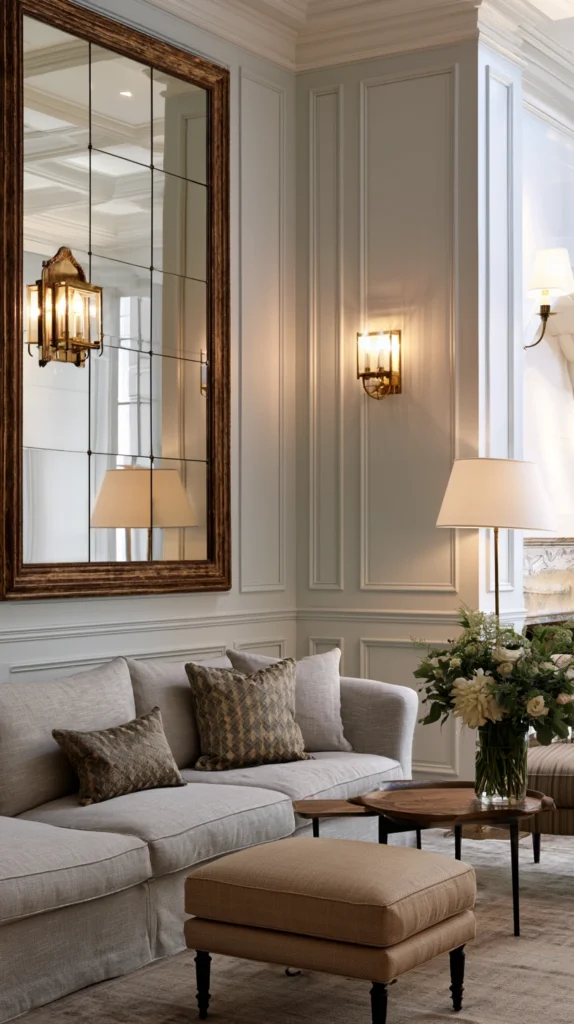
A pair of wall-mounted sconces positioned symmetrically around a piece of art, a mirror, or the fireplace.
Why sconces add a layer floor and table lamps cannot
The vertical-source principle:
- Table and floor lamps both originate from roughly the same lower height range
- Wall sconces introduce light from a higher, fixed point, adding a layer of dimension the other sources cannot provide alone
- Positioned symmetrically, sconces also reinforce a sense of intentional design around a focal point
Best sconce styles for warmth
- Brass or bronze sconces with a fabric or glass shade
- A swing-arm sconce style for slightly more flexible direction
- Warm frosted glass shades that diffuse the light gently
Budget pick: basic plug-in wall sconces, $35-70 each Splurge: hardwired brass sconces with a glass shade, $120-280 each
My sconce result
Adding two brass sconces flanking the mirror above my console introduced a layer of light at a height nothing else in the room reaches, and the symmetry alone makes that wall feel considerably more finished.
Sconce Tips
Consider plug-in versions if hardwiring is not an option:
- Plug-in sconces with a cord cover offer most of the visual effect without an electrician
- This is a practical compromise for rented spaces or rooms without existing wall wiring
11. A Salt or Himalayan Crystal Lamp for Ambient Warmth
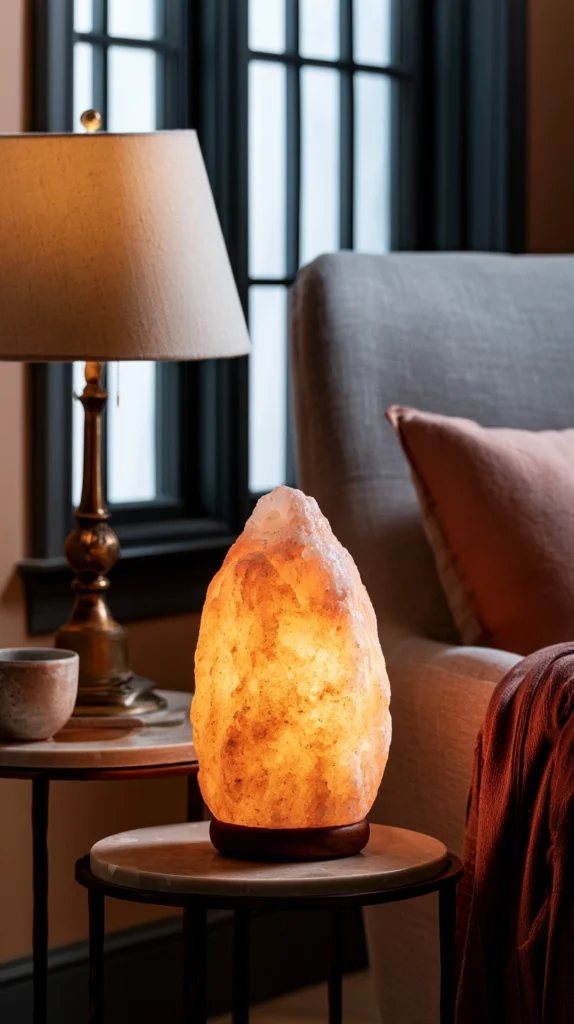
A small lamp made from salt crystal or similarly translucent warm-toned stone, used as a low, ambient accent light.
Why this specific lamp type suits a cozy room
The diffused-glow principle:
- Salt and crystal lamps emit a naturally warm, slightly uneven glow through the material itself
- This diffusion creates a softer, more atmospheric light than most standard shades achieve
- The low light output also makes it well suited as an always-on ambient piece rather than a primary light source
Best placement
- On a low side table where its modest glow does not need to compete with brighter sources
- In a smaller nook or corner where ambient presence matters more than functional brightness
Budget: $25-60 for a quality salt or crystal lamp
My crystal lamp result
A small salt crystal lamp left on continuously in the corner of my living room provides just enough warm ambient glow to keep the room from ever feeling fully dark, even with every other light off.
Crystal Lamp Tips
Treat it as ambient, not functional, light:
- This lamp type does not provide enough output for reading or task use
- Pair it with at least one brighter source nearby for any space expected to support actual activity
12. Uplighting Behind Plants or Furniture
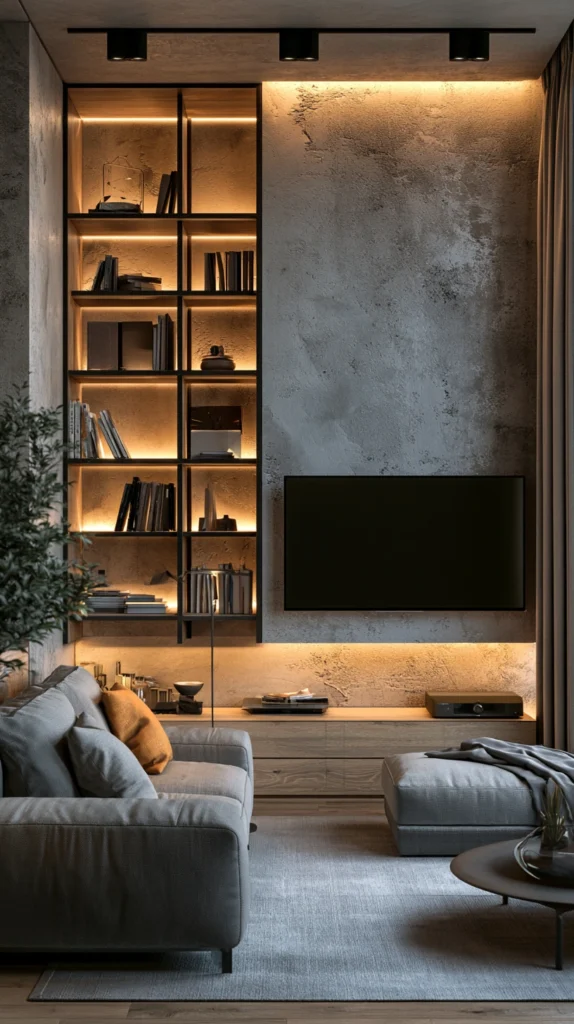
Small uplights placed behind a large plant, bookshelf, or piece of furniture to cast warm light and shadow upward.
Why uplighting adds drama without adding visible fixtures
The hidden-source principle:
- An uplight tucked behind an object remains invisible while its effect is highly visible
- Light cast upward through plant leaves or along a textured surface creates shadow patterns that flat, even lighting cannot
- This technique borrows directly from professional interior and event lighting design
Best objects to uplight
- A large leafy plant, casting dramatic leaf shadows on the ceiling and wall
- A textured woven or wood piece, emphasizing its surface detail
- The back of a bookshelf, creating a warm glow behind the books themselves
Budget: $15-30 per small puck-style uplight
My uplighting result
Tucking a small warm-toned uplight behind my largest plant casts leaf shadows across the ceiling each evening, and the effect draws more comments than almost anything else added to the room.
Uplighting Tips
Use warm-temperature uplights specifically:
- A cool-toned uplight undercuts the cozy effect the rest of the room is built around
- Match the uplight’s temperature to the same 2200-2700K range used throughout the rest of the room
13. A Lantern-Style Lamp for a Rustic Glow
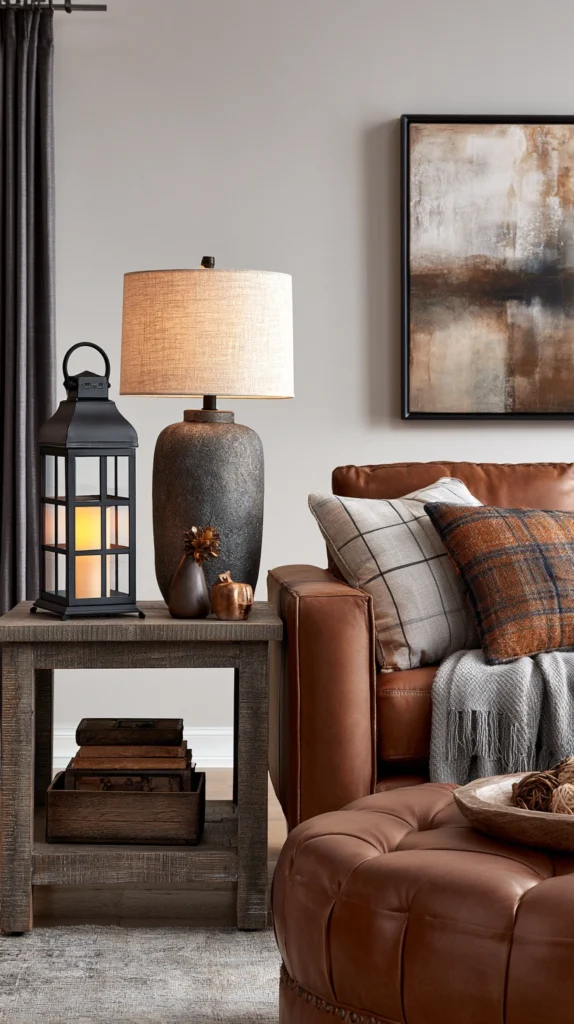
A lamp styled after a traditional lantern, either electric or housing a real candle, used as a textural accent light.
Why lantern styling fits a fall-leaning room
The rustic-warmth principle:
- A lantern carries an immediate visual association with autumn evenings and outdoor gatherings
- Bringing that form indoors as a light source connects the room’s lighting to the season more directly than a standard lamp shape
- The metal and glass construction typical of lanterns also introduces texture variety among the room’s lighting sources
Best lantern lamp options
- A metal-framed glass lantern with a flame-effect bulb inside
- A real candle lantern for occasional use on a mantel or coffee table
- An electric lantern-style table lamp for daily ambient use
Budget pick: an electric lantern-style table lamp, $35-75 Splurge: an aged metal and glass lantern with a flame-effect bulb, $90-200
My lantern lamp result
A small electric lantern on my coffee table, fitted with a flicker-effect bulb, brings a rustic, seasonal warmth to the room that none of my other more modern lamp shapes provide on their own.
Lantern Lamp Tips
Balance one rustic piece against more modern lighting elsewhere:
- A room with too many lantern-style pieces can tip into theme decor rather than genuine seasonal warmth
- One or two lantern lamps alongside other lamp styles maintains the intended balance
14. A Fully Layered Lighting Plan Combining Every Source Type
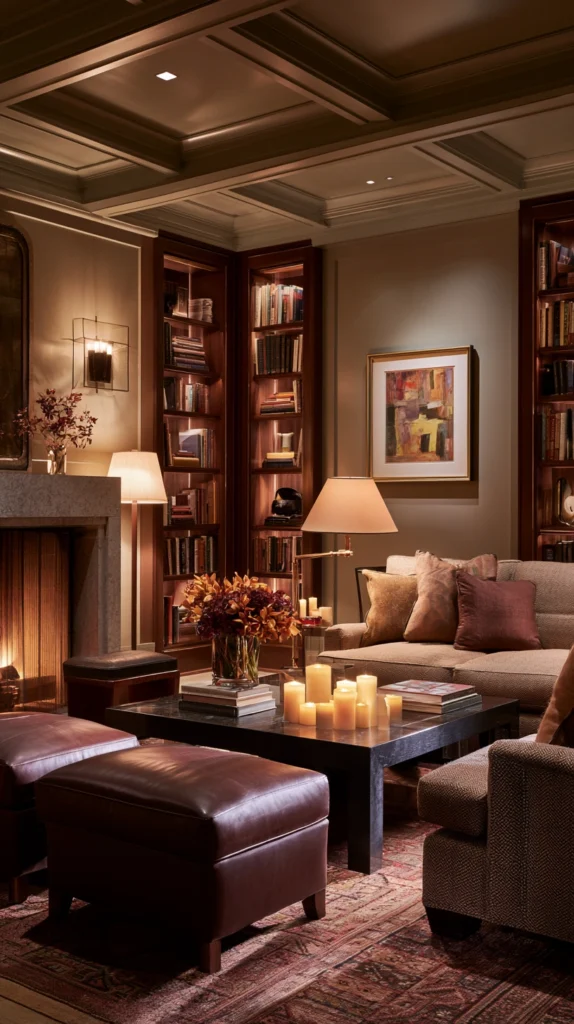
Combining overhead dimming, table lamps, floor lamps, candles, and accent lighting into one complete evening lighting system.
Why combining every layer outperforms any single source
The complete-system philosophy:
- Several of the lighting types on this list (dimmed overhead, table lamps, floor lamps, candlelight, accent uplighting) share enough warmth and temperature consistency to combine successfully
- Rather than relying on one source, this approach layers every type together for maximum depth and flexibility
- This is the most complete and most adaptable lighting setup on this list, suited to a full evening living room transformation
How the combination works together
Dimmed overhead light (the adjustable base layer):
- Provides flexible brightness for daytime tasks, dimmed low or off in the evening
Table and floor lamps (the primary evening layer):
- Establish the main pools of warm light at varying heights throughout the room
Candlelight and lanterns (the flickering accent layer):
- Add movement and a softer, more intimate glow to coffee tables and mantels
Uplighting and string lights (the hidden depth layer):
- Cast warm light into corners and behind furniture that the other layers do not reach
Building the full layered plan
- Start with the bulb and dimmer foundation from ideas 1 and 4
- Add table and floor lamps at varying heights throughout the room
- Layer in candlelight or a lantern lamp for movement
- Finish with hidden accent lighting behind plants or shelving
Budget: $300-700 for a full layered lighting overhaul across all sources
My fully layered result
Combining a dimmed overhead fixture, three table and floor lamps, a cluster of flame-effect candles, and hidden uplighting behind my bookshelf turned the same living room into a space that feels completely different switch by switch, depending on the exact mood of the evening.
Full Layered Plan Tips
Control sources independently where possible:
- Plugging different lamp groups into separate smart outlets or switches allows quick mood changes without manually adjusting each lamp
- This small investment in control flexibility makes the full layered system significantly easier to use night to night
Choosing Your Lighting Approach
By commitment level:
- Lower commitment: warm bulb swap (idea 1), candle clustering (idea 5)
- Full room commitment: dimmer installation (idea 4), fully layered plan (idea 14)
By room function:
- Reading or task-focused corner: floor lamp beside the chair (idea 3)
- Gathering and conversation areas: pendant over the coffee table (idea 6), candle clustering (idea 5)
By budget level:
- Lower budget: warm bulbs (idea 1), string lights (idea 7), crystal lamp (idea 11)
- Moderate budget: table lamps (idea 2), wall sconces (idea 10), lantern lamp (idea 13)
- Higher budget: statement lamp (idea 8), electric fireplace insert (idea 9), fully layered plan (idea 14)
The non-negotiable rules across every option:
Always:
- Match bulb temperature across every fixture in the room to avoid a visually inconsistent mix of warm and cool light
- Layer light at multiple heights rather than relying on a single overhead source
- Test any new lighting addition in the evening specifically, since daytime natural light can mask how warm or cool a fixture actually reads
Never:
- Rely on a single bright overhead fixture as the only light source in the evening
- Mix cool white and warm white bulbs within the same visible space
- Assume one warm lamp can compensate for an otherwise cold or overly bright room
Remember: a cozy fall living room depends on every light source agreeing on warmth and working together at different heights, not on one lamp added to an otherwise bright room, and the right combination will make the same space feel different by the hour and different by the season.