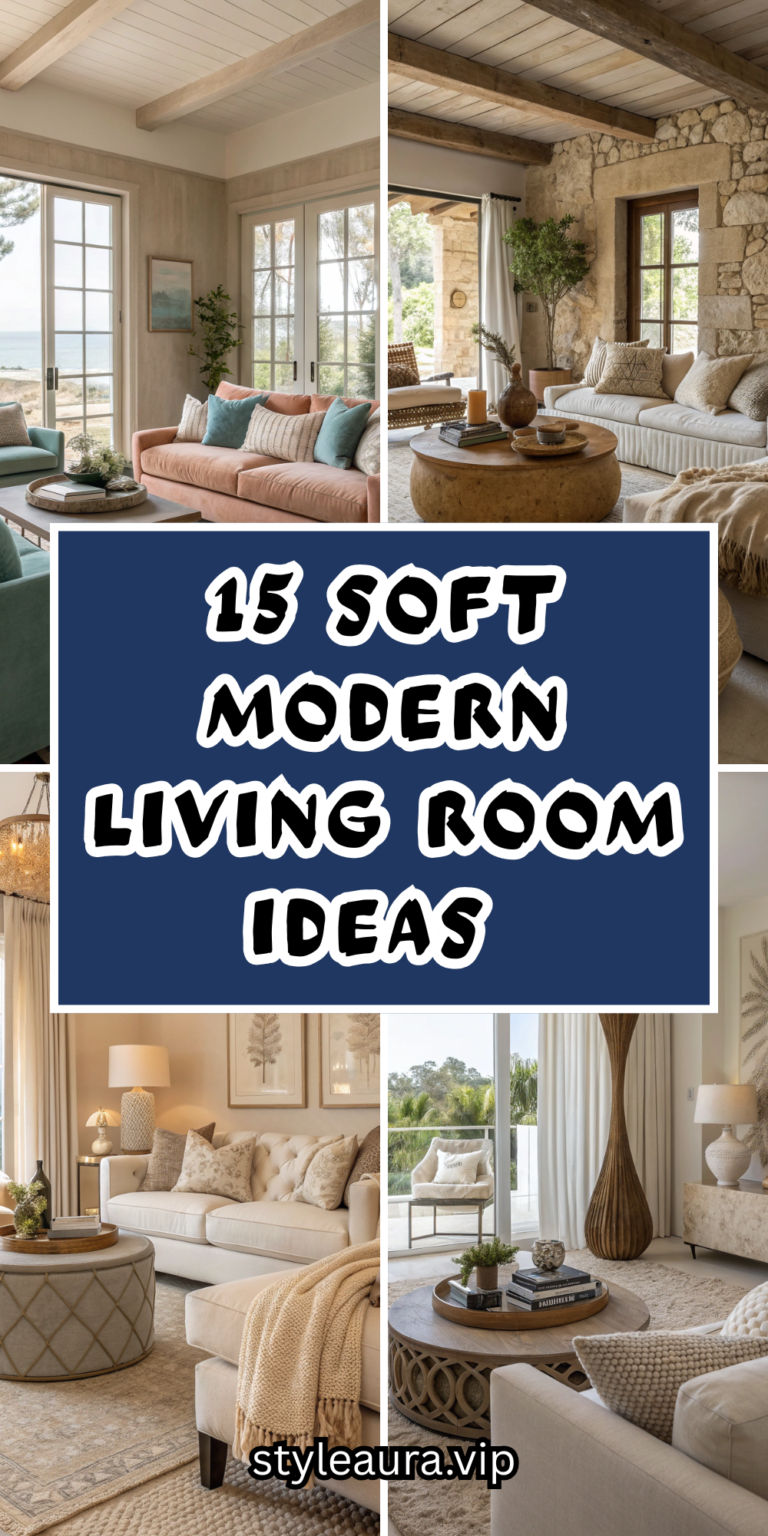
14 Mushroom Brown Interior Ideas for an Earthy Aesthetic
There is a brown that does not try to be terracotta and does not try to be beige and does not apologise for being neither. Mushroom brown sits at the intersection of grey and warm brown and the particular muted quality of organic things in their most honest state — the underside of a field mushroom, the bark of a beech tree in winter, the colour of dry earth in a landscape that has learned to be beautiful without requiring rain.
It is a colour of quiet authority and it communicates, in every room it inhabits, that the person who chose it has made a considered decision rather than a safe one.
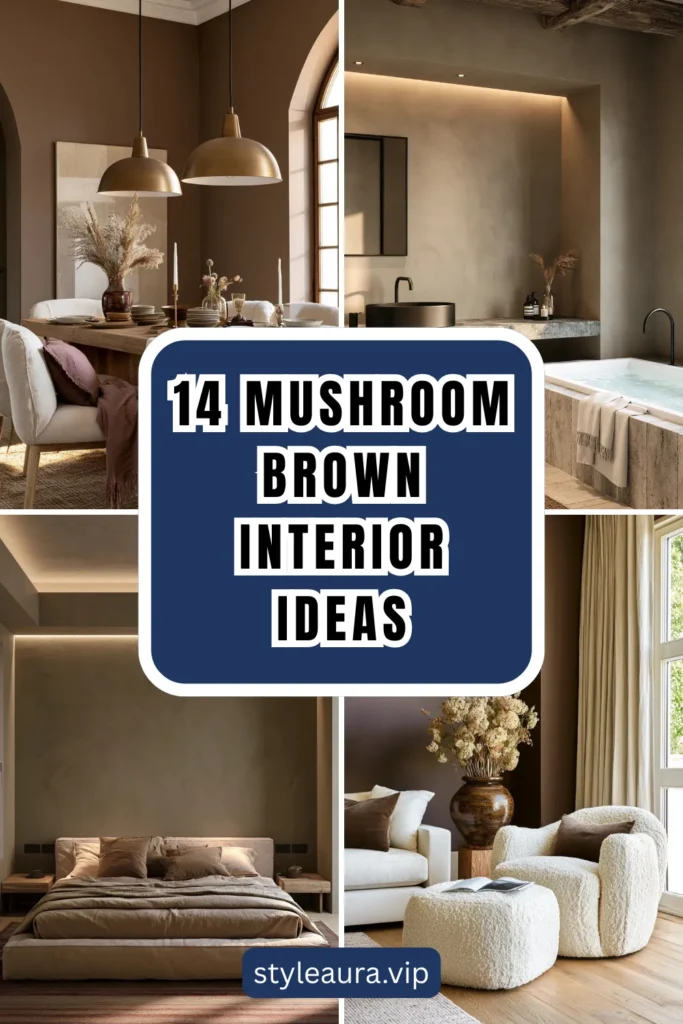
Mushroom brown is the warm neutral that performs everything that grey promised and never quite delivered. It has warmth where grey has coolness, depth where greige has flatness, and the particular quality of a colour that looks better in lamplight than in a showroom — which is the definitive test of a colour that belongs in a real home rather than a styled photograph.
The fourteen ideas below cover every application of mushroom brown in the interior — from a single painted wall to a fully committed room scheme — and each one is built on the principle that mushroom brown works best when it is treated as the foundational warm neutral it genuinely is.
1. The Mushroom Brown Living Room Walls
Budget: $60 – $300
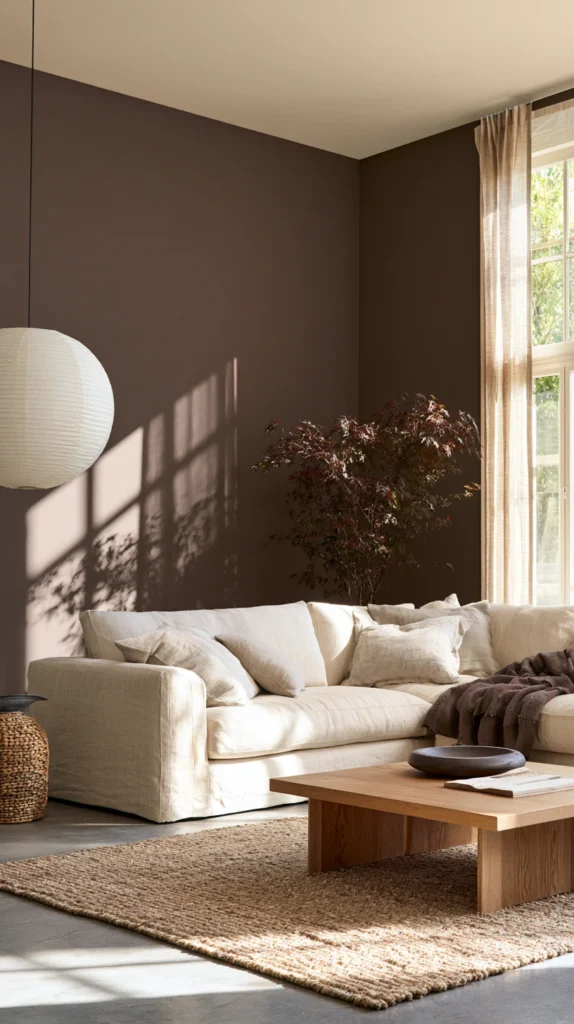
A living room painted in mushroom brown on all four walls — ceiling one tone lighter, woodwork in a warm ivory — is the room that most immediately and most completely demonstrates what this colour can do. It produces a quality of warmth and envelopment that no grey or greige equivalent approaches, and it makes every piece of furniture and every textile placed within it look better than it did against a cooler background.
A quality mushroom brown paint in a flat or eggshell finish costs $20 – $50 per litre. A standard living room requires three to four litres for two coats — $60 – $200 in quality paint. A ceiling one shade lighter — a barely-there warm mushroom white — costs one additional litre at $15 – $30 and prevents the room from reading as enclosed despite the warm, medium-depth wall colour.
Decor tip: Choose a mushroom brown with a grey rather than a pink undertone for a living room application. A grey-toned mushroom reads as sophisticated and resolved in artificial evening light. A pink-toned mushroom can shift toward blush under warm bulbs — which is a different and less versatile colour relationship with the room’s furnishings. The grey undertone is what makes mushroom brown work as a warm neutral rather than as an earthy accent.
2. The Mushroom Brown Bedroom
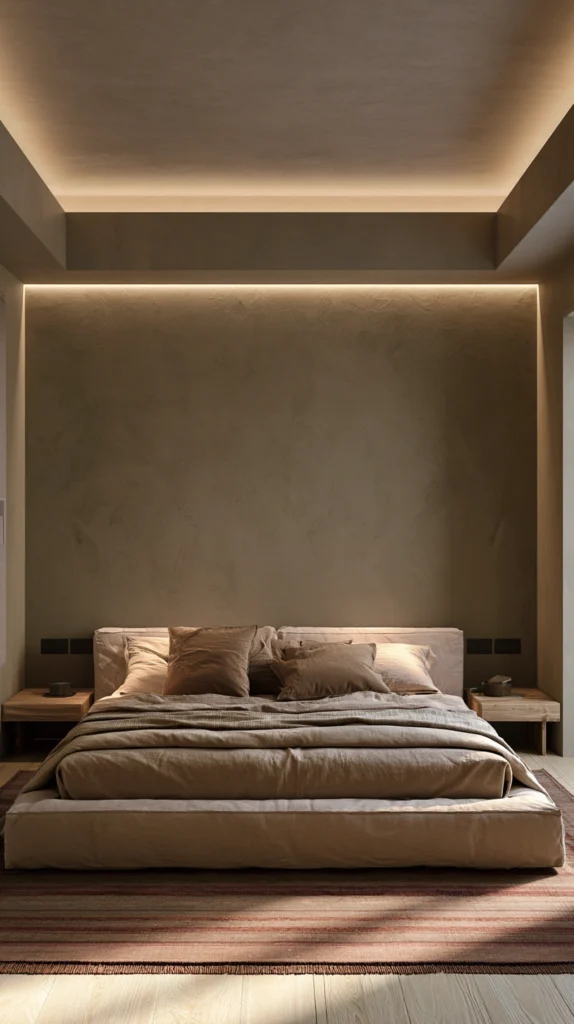
Budget: $40 – $300
A mushroom brown bedroom — whether a single feature wall or a full four-wall application — produces a sleeping environment that is genuinely, physiologically calming in a way that more saturated or cooler bedroom colours are not. The particular quality of warmth without stimulation that mushroom brown delivers makes it one of the most specifically appropriate bedroom colours available.
A feature wall in mushroom brown requires one to one and a half litres — $20 – $50 in quality paint. A full room application requires three to four litres — $60 – $150. White or cream bedlinen against mushroom brown walls reads as luminous and warm — the pale bedding making the walls appear richer and the walls making the bedding appear more specifically beautiful than it would against a white or grey background.
Decor tip: Use a flat or dead-matt finish on mushroom brown bedroom walls rather than any sheen. Matt finishes on warm neutrals absorb light and produce the deep, velvety quality that makes mushroom brown genuinely beautiful. A satin or eggshell finish on the same colour can read as slightly plastic under the warm artificial light that a bedroom uses most — which works against the quality of warmth the colour is there to create.
3. The Mushroom Brown Kitchen
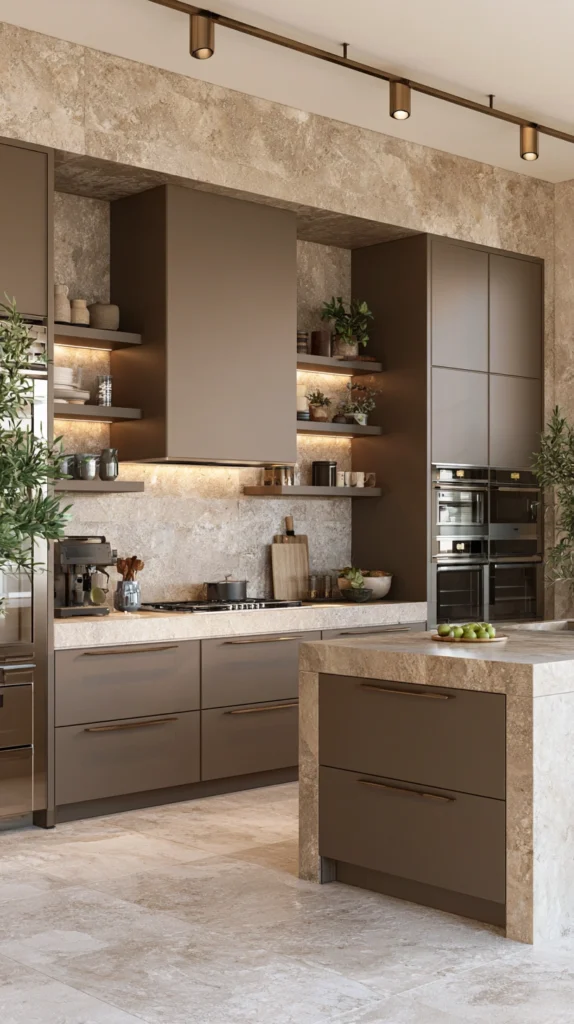
Budget: $80 – $2000
Mushroom brown kitchen cabinetry — painted in a warm, slightly grey-toned brown that belongs to the same material family as raw timber and unpolished stone — is the kitchen colour choice that produces the most genuinely natural and the most specifically earthy cooking environment. It belongs with timber worktops, stone splashbacks, and brass hardware in a way that references the kitchen’s connection to the materials of the natural world.
Repainting existing kitchen cabinetry in mushroom brown costs $80 – $200 in chalk paint and specialist kitchen paint materials. A professional repaint — $500 – $1500 depending on the number of doors. New cabinetry in a factory-sprayed mushroom brown — significantly more expensive but producing a depth and durability of finish that brush application cannot match.
Decor tip: Pair mushroom brown cabinetry with a worktop in a warm natural stone — honed limestone, an undyed concrete composite, or a warm-veined marble — rather than a cool white stone or a bright engineered quartz. The cool brightness of white engineered quartz beside mushroom brown cabinetry produces a contrast that pulls against the warm, earthy quality the colour is working toward. Warm natural stone beside the same cabinetry reads as a material conversation between two honest, earth-derived surfaces.
4. The Mushroom Brown Hallway
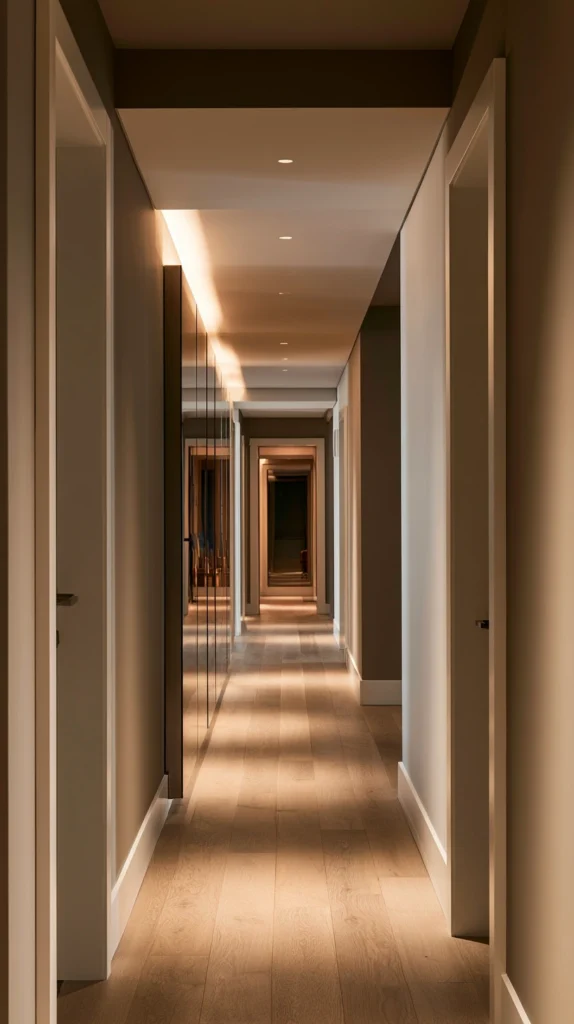
Budget: $40 – $200
A mushroom brown hallway — the first interior colour encountered on entering the home — communicates warmth and a quiet confidence before any other room has been seen. It is the colour that says the home within has been thought about from the outside in, and it produces an immediate and involuntary sense of welcome in every person who crosses the threshold.
A 2.5-litre tin of mushroom brown covers a standard hallway in two coats — $25 – $60. Warm ivory woodwork in an eggshell finish — $15 – $30 per litre — provides the contrast that gives the mushroom brown its definition and prevents a narrow hallway from reading as heavy. A natural jute or seagrass runner — $25 – $60 — grounds the warm walls with an equally warm and natural floor material.
Decor tip: Install a large mirror in the mushroom brown hallway — particularly in a narrow one without natural light — to reflect both the warmth of the colour and any available light back into the space. A mirror in a warm-toned hallway doubles the visual warmth of the colour and prevents the medium-depth tone from making a narrow space feel darker than it is. The reflected mushroom brown reads as depth rather than darkness.
5. The Mushroom Brown Bathroom
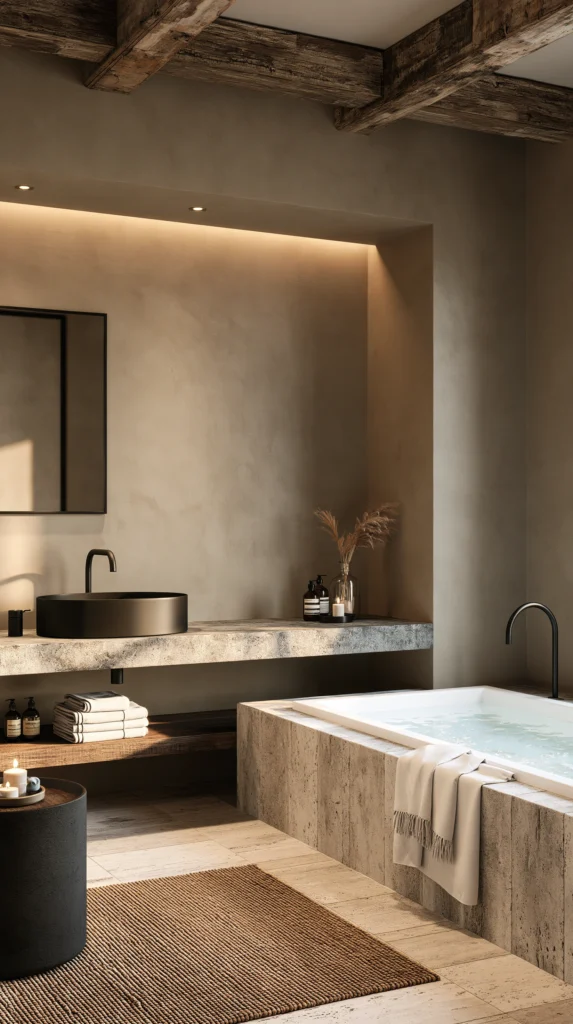
Budget: $30 – $200
A mushroom brown bathroom — particularly a cloakroom or a small bathroom where the colour wraps all four walls in close proximity — produces a bathing environment that feels genuinely connected to the natural world in a way that white tile and chrome fixtures do not attempt. The pairing of mushroom brown with natural stone, warm timber, and matte black fixtures is the most resolved and the most specifically beautiful bathroom material combination available.
Bathroom-specification moisture-resistant paint in mushroom brown costs $20 – $50 per litre. A standard bathroom requires one to two litres. Matte black taps and fittings — the material choice that most specifically complements mushroom brown in a bathroom context — add $100 – $400 for a standard bathroom’s fixtures if replacement is planned.
Decor tip: Add a large, genuinely healthy plant to a mushroom brown bathroom — a fern, a peace lily, or a trailing pothos — to reinforce the connection between the colour and the living natural world it references. A mushroom brown bathroom without plants is a colour that refers to nature. The same bathroom with one or two genuinely thriving plants is a space that contains nature, and the difference between the two is immediately and instinctively felt by anyone who enters the room.
6. The Mushroom Brown Home Office
Budget: $30 – $200
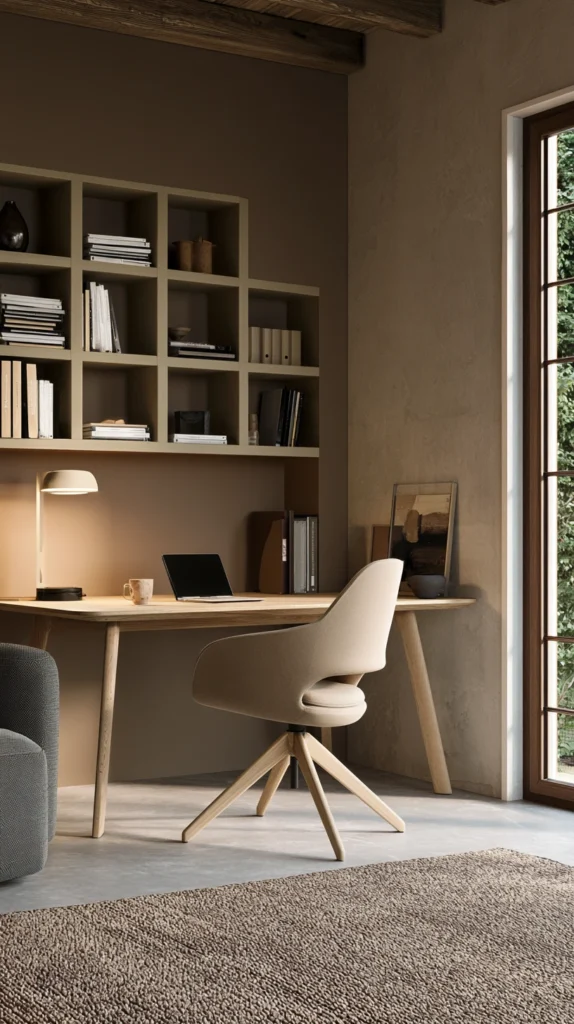
A mushroom brown home office challenges the convention that work spaces require the energising clarity of white or the focused calm of grey — and produces a genuinely different argument. Mushroom brown in a workspace communicates a quality of grounded, unhurried focus that neither white nor grey can approach, and it makes the hours spent at a desk in a mushroom brown room feel like hours spent in a space that was designed for the quality of thinking that deserves quality work.
Paint for a home office costs $30 – $80 for a standard room. A mushroom brown office wall as a video call backdrop — positioned behind the desk chair — produces one of the most professional and most distinctive backgrounds available for remote working, communicating warmth, seriousness, and a considered aesthetic sensibility simultaneously.
Decor tip: Pair mushroom brown home office walls with warm timber desk furniture rather than white-painted or black-lacquered pieces. White furniture against mushroom brown walls produces a colour temperature conflict — the coolness of the painted white pulling against the warmth of the mushroom. Warm oak or walnut furniture in the same warm colour register as the walls creates a workspace that reads as cohesively designed from every surface to every object within it.
7. The Mushroom Brown Feature Wall With Natural Materials
Budget: $40 – $300
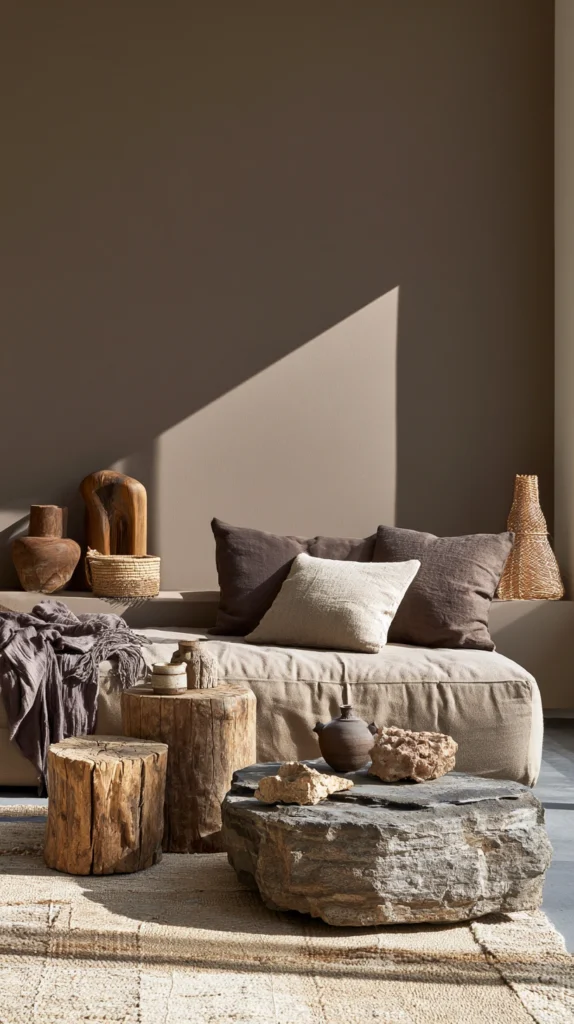
A single mushroom brown feature wall — behind the sofa, behind the bed, or on the chimney breast — paired with a deliberate arrangement of natural materials in front of it produces the earthy aesthetic at its most concentrated and its most specifically beautiful. The mushroom brown wall is the background that makes every natural material placed in front of it read with its full warmth and its full material honesty.
A feature wall in mushroom brown requires one to one and a half litres — $20 – $50. A rattan pendant lampshade beside the wall — $25 – $80. A terracotta plant pot with a large plant — $15 – $50. A woven seagrass basket — $15 – $40. A wooden bowl on the coffee table — $25 – $80. A linen cushion in a complementary warm natural — $20 – $50. Total feature wall and natural material arrangement: $120 – $350.
Decor tip: Place at least one rough-textured natural material within the mushroom brown feature wall arrangement — a piece of raw driftwood, a rough-cast terracotta pot, an unpolished stone — alongside the smoother natural materials. The juxtaposition of rough and smooth textures within the same warm palette produces a surface arrangement that rewards close looking in a way that uniformly smooth natural materials alongside a mushroom brown wall cannot achieve.
8. The Mushroom Brown and Cream Pairing
Budget: $50 – $400
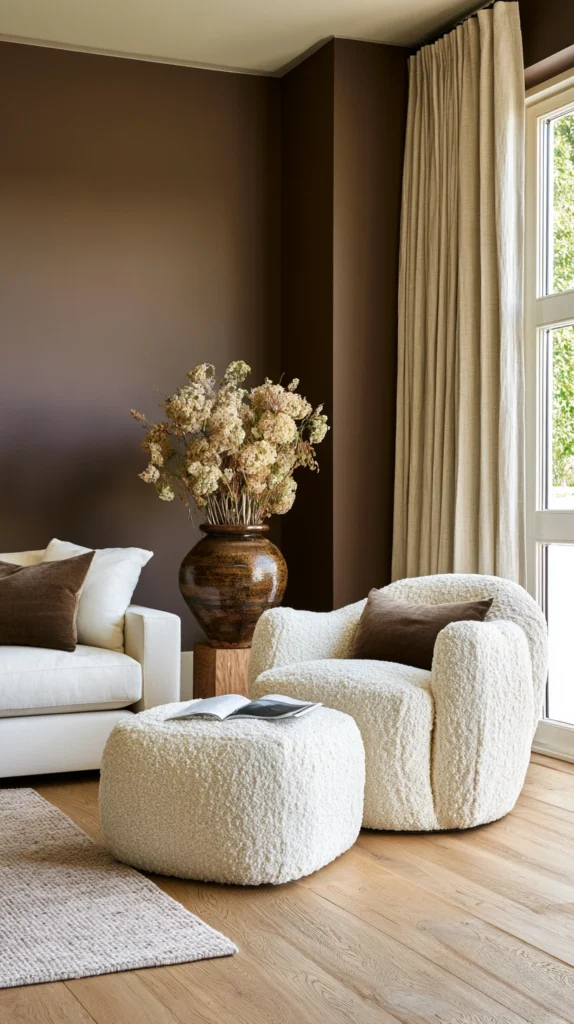
Mushroom brown and cream — the warm brown and the warm near-white that belong to the same earthy, organic palette — is the most naturally harmonious colour combination available to an interior that is working toward a genuinely warm, genuinely grounded aesthetic. The two colours are in permanent productive relationship because they belong to the same colour temperature and the same material world — the colour of soil and the colour of bone, of bark and of undyed linen.
Mushroom brown walls with cream upholstery — a cream linen sofa, cream cotton armchairs — reads as warm, considered, and entirely resolved. Mushroom brown cushions on a cream sofa reads as the more restrained version of the same combination at a smaller scale. Natural timber floors between the two — the third material that completes the palette — cost whatever the flooring budget allows and contribute a warmth and an honesty that no synthetic floor covering at the same price can replicate.
Decor tip: Add a textured cream textile — a bouclé, a ribbed cotton, or a woven linen — rather than a smooth cream fabric as the primary soft furnishing beside mushroom brown walls. A textured cream catches the lamplight and produces a surface that reads as warm and tactile rather than flat and neutral. Textured cream beside mushroom brown is the combination of two materials that each improve in the light and the presence of the other.
9. The Mushroom Brown Furniture Piece
Budget: $30 – $200
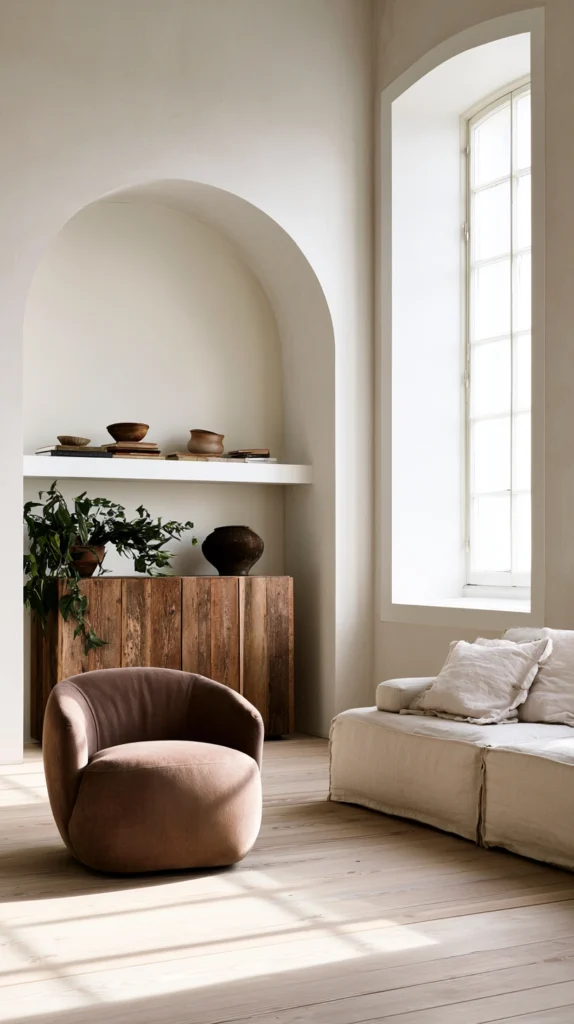
A single piece of furniture painted or upholstered in mushroom brown — a chest of drawers in a neutral bedroom, a velvet armchair in a cream living room, a bookcase in a white home office — introduces the colour at the object level without any wall commitment and allows its behaviour in the specific light of the specific room to be assessed before a larger decision is made.
A chalk or furniture paint in mushroom brown costs $15 – $40 for a 500ml tin — sufficient for a chest of drawers or a small bookcase. A mushroom brown velvet armchair — $150 – $500. A mushroom brown ceramic lamp base — $25 – $70. Any of these introduces the colour at a scale that is immediately impactful and entirely reversible — the most honest and the most practical way to discover how mushroom brown performs in a specific room before committing to its walls.
Decor tip: Position the mushroom brown furniture piece against the room’s lightest wall rather than its darkest one. A mushroom brown chest of drawers against a white wall reads as a warm material placed within a light, airy setting — the contrast makes the colour’s warmth immediately apparent. The same piece against a dark wall loses its tonal definition and reads as simply dark rather than specifically warm and specifically earthy.
10. The Mushroom Brown Textile Layer
Budget: $40 – $250
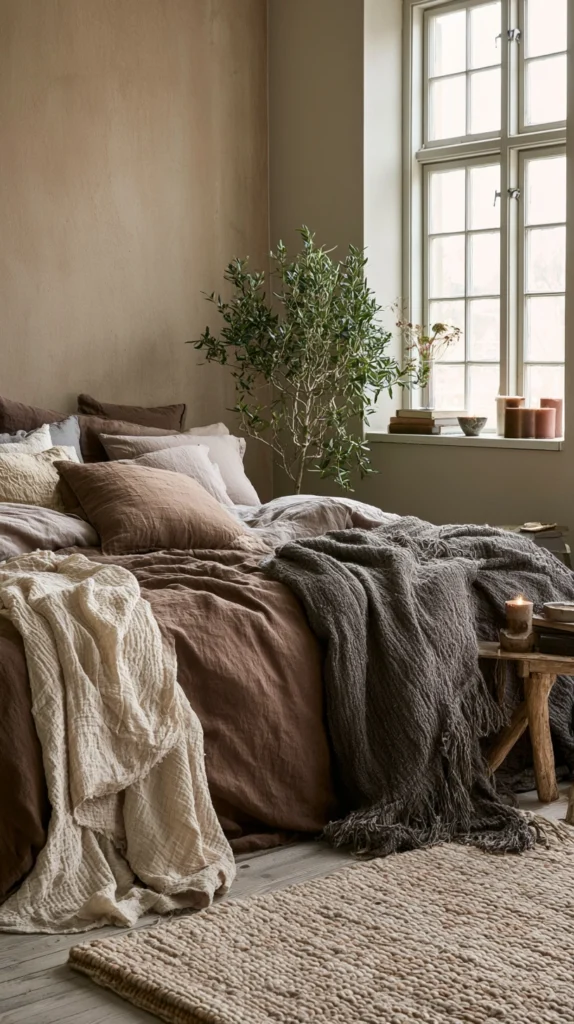
A room refreshed with mushroom brown through its textiles — a velvet throw, a bouclé cushion, a linen bedroom duvet cover, or a woven blanket in the warmest possible mushroom tone — introduces the colour in its most reversible and most seasonally flexible form. The textile version of mushroom brown is warmer and more varied in tone than its painted equivalent because natural fabric absorbs and reflects light differently from a flat wall surface.
A mushroom brown velvet throw — $40 – $100. A bouclé cushion in a warm mushroom tone — $25 – $60. A linen duvet cover in a warm mushroom or taupe — $50 – $120. A woven wool or cotton blanket in the earthy palette — $40 – $100. The textile introduction of mushroom brown to any neutral interior produces an immediate and significant shift in the room’s warmth without touching a single painted surface.
Decor tip: Combine mushroom brown textiles in at least two different fabric weights and textures — a heavy velvet and a lightweight linen, or a chunky knit and a fine woven cotton — within the same arrangement. Mushroom brown in a heavy velvet reads as deeply warm and luxurious. The same colour in a fine linen reads as warm but light and airy. The combination of both weights in the same room produces a colour that reads as rich and multidimensional rather than uniformly heavy.
11. The Mushroom Brown and Warm Brass Story
Budget: $50 – $400
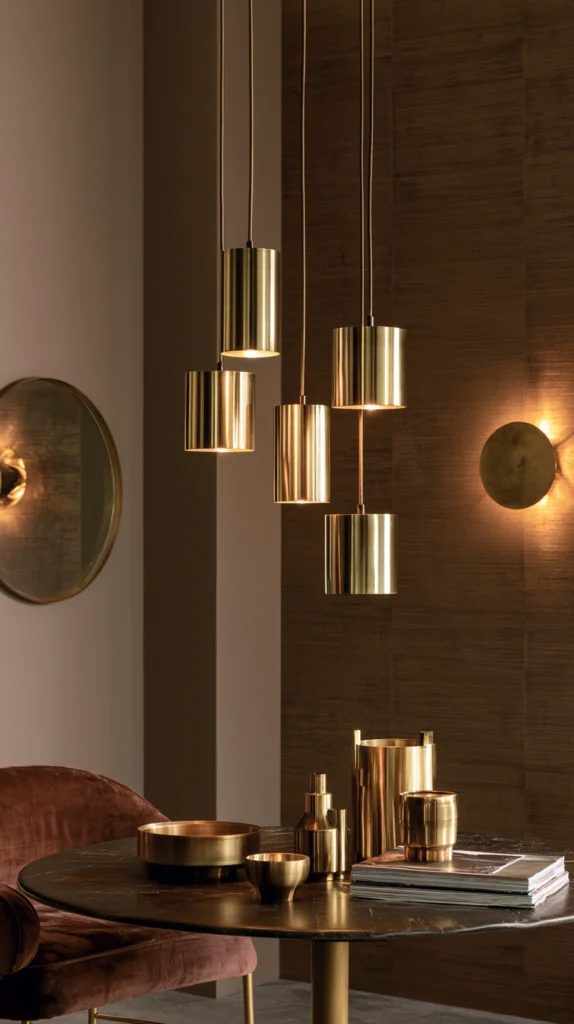
Mushroom brown and warm brass — the earthy warmth of the brown and the golden warmth of aged metal — is one of the most naturally sympathetic material combinations available in interior design. The two materials belong to the same warm, earth-derived colour family and their combination produces a room that reads as genuinely considered at the material level rather than simply decorated at the surface level.
Brass picture frames on mushroom brown walls — $10 – $30 each. A brass floor lamp beside a mushroom brown sofa — $40 – $120. Brass cabinet hardware on mushroom brown kitchen cabinetry — $5 – $15 per handle. A brass candlestick cluster on a mushroom brown painted sideboard — $15 – $40 each. The warm brass material story distributed across the mushroom brown interior costs $80 – $250 in total for a material language that reads as consistent, considered, and genuinely beautiful.
Decor tip: Use aged or unlacquered brass throughout the mushroom brown interior rather than polished lacquered gold. Polished brass beside mushroom brown can read as slightly too bright — the high shine of the metal pulling against the matte, organic quality of the colour. Aged brass, with its warm patina and its suggestion of genuine use over time, is in exactly the same material register as a good mushroom brown paint — honest, warm, and entirely without pretension.
12. The Mushroom Brown and Living Green
Budget: $30 – $200
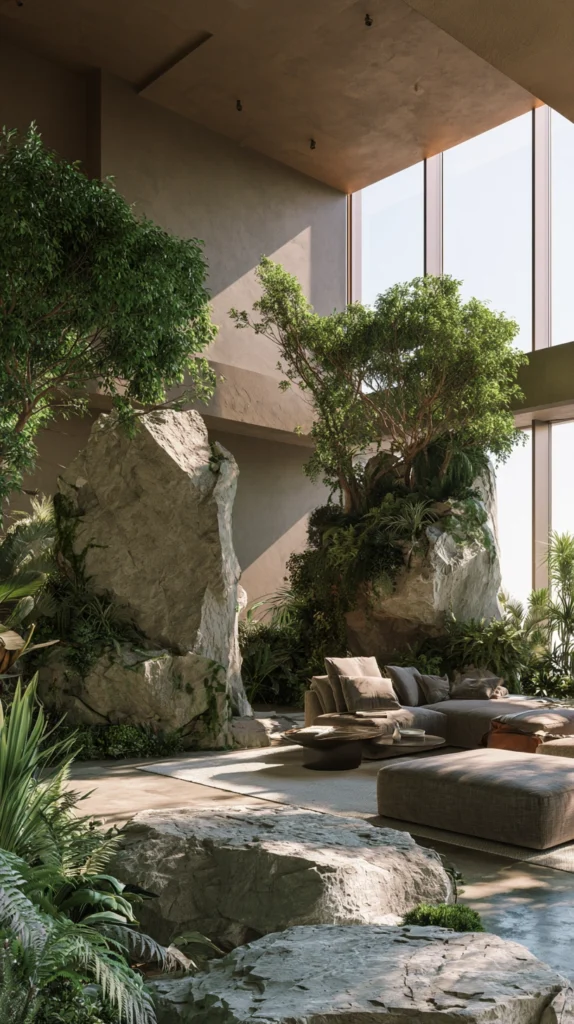
A mushroom brown interior with genuinely large and genuinely healthy green plants — a large monstera in the corner, a trailing pothos on the shelf, a small rubber plant on the side table — is the room that most directly and most honestly communicates the earthy aesthetic the colour is working toward. The deep, vital green of growing plants beside the warm, muted brown of mushroom walls is one of the most naturally resonant colour relationships in any domestic interior.
A large monstera deliciosa in a terracotta or ceramic pot — $30 – $80. A trailing pothos — $8 – $20. A small rubber plant — $15 – $40. All in terracotta or warm ceramic pots rather than white or pale ceramic — which would read as cool interruptions within the warm palette. Total plant investment for a well-planted mushroom brown room: $53 – $140 for living material that actively improves the room’s air quality and its earthy aesthetic simultaneously.
Decor tip: Choose plants with large, broad leaves — monstera, rubber plant, fiddle leaf fig, or bird of paradise — rather than fine-leaved or delicate species for a mushroom brown interior. Large-leaved plants beside mushroom brown walls produce a tropical, abundantly organic quality that fine-leaved plants cannot match at scale. The combination of large green leaf forms against a warm brown background is one of the most direct and most beautiful expressions of the natural world available within four painted walls.
13. The Mushroom Brown Dining Room
Budget: $60 – $400
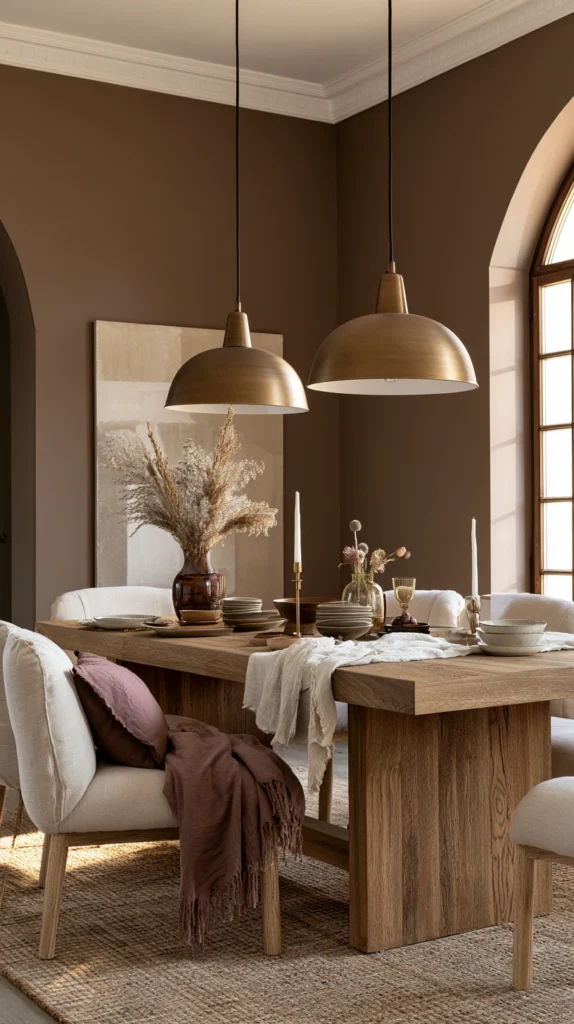
A mushroom brown dining room — walls in a warm, medium-depth mushroom tone, a pendant light in aged brass or warm rattan above the table, and a table dressed in warm linen with natural ceramic tableware — produces one of the most convivial and most genuinely hospitable dining environments available in a domestic interior. The colour makes the food on the table look better, makes the wine look warmer, and makes the people sitting around the table look well — three qualities a dining room colour should always pursue.
Paint for a standard dining room — $30 – $80 for two coats. A rattan or brass pendant above the table — $30 – $100. A linen tablecloth in a warm ivory or natural undyed tone — $20 – $50. Natural ceramic plates and bowls — $5 – $20 each. A botanical centrepiece in a terracotta vase — $15 – $40. Total dining room mushroom brown scheme: $100 – $290 in paint and styling for a room that produces a genuinely different quality of dinner from its cooler and more neutral alternatives.
Decor tip: Dim the dining room lighting in a mushroom brown room to 40 to 50 percent brightness for evening meals. Mushroom brown under full artificial brightness can read as flat and slightly heavy in a small dining room. The same colour at half brightness reads as deeply warm and enveloping — the quality of a room that makes dinner feel like an occasion and an occasion feel like the thing that the evening was always heading toward.
14. The Fully Committed Mushroom Brown Interior
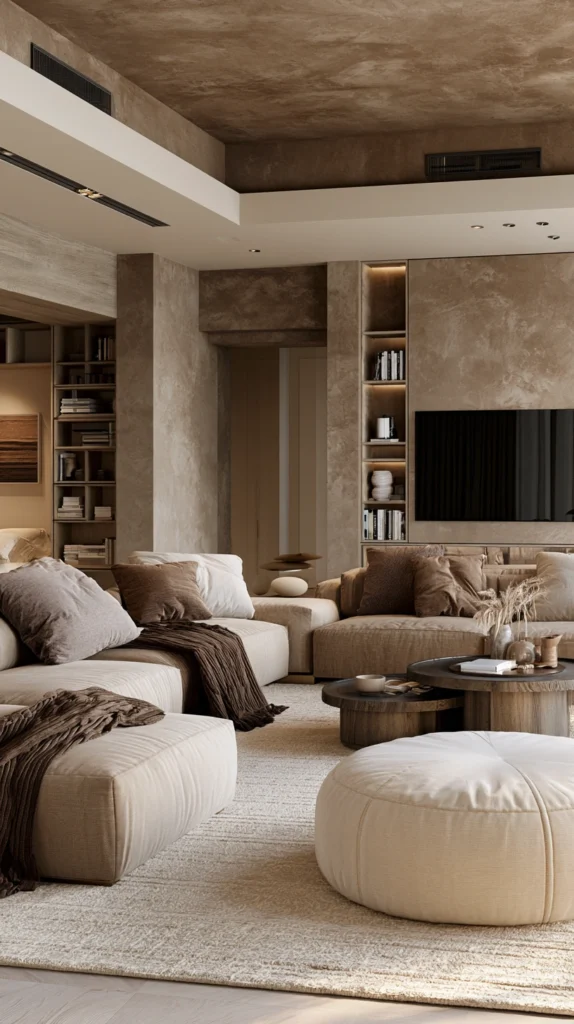
Budget: $200 – $2000
The fully committed mushroom brown interior — walls in a warm mushroom flat finish, ceiling one tone lighter, warm ivory woodwork, natural timber furniture, cream and warm linen upholstery, aged brass hardware throughout, a large plant in a terracotta pot in every room, woven natural material accessories, and no cool or synthetic material anywhere in the scheme — is the room that most completely and most honestly expresses the earthy aesthetic that the colour promises and consistently delivers.
Paint for all walls and ceiling: $60 – $200. Natural timber furniture pieces: $200 – $800. Linen and cream soft furnishings: $100 – $400. Aged brass hardware and lighting: $80 – $250. Plants and terracotta pots: $53 – $140. Natural material accessories — rugs, baskets, wooden bowls: $80 – $250. Total fully committed mushroom brown interior: $573 – $2040 — the cost of a room built from the inside out on a single material and colour principle that never contradicts itself.
Decor tip: Introduce one element of unexpected lightness into the fully committed mushroom brown scheme — a single large mirror, a white ceramic vase, a pale linen curtain that allows daylight to enter the room as a bright note within the warm palette. A room of uniformly warm and muted tones can read as slightly airless without a single element that lifts the palette and allows the eye to rest. One deliberately lighter element within the mushroom brown scheme is not a compromise of the earthy aesthetic. It is the detail that makes the earthy aesthetic feel like a room rather than a palette.
Mushroom brown is not a colour that announces itself in the way that a bold colour announces itself. It does not arrive demanding to be noticed and admired. It arrives, and within a few minutes of being in a room painted with it, the person sitting in that room begins to feel that something is specifically right about the space — warmer than expected, more settled than most rooms, and impossible to feel neutral about in the particular way that neutral colours, for all their safety, consistently fail to produce.
Choose the shade with the right undertone for the room’s light — greyer for rooms with warm afternoon sun, warmer for north-facing rooms that need all the warmth they can receive. Test it generously before committing. Layer it with the natural materials it calls for — the timber, the rattan, the linen, the terracotta — and give it the plants it deserves.
A mushroom brown room with warm materials, warm light, and genuinely healthy green plants is one of the most beautiful and most specifically liveable domestic environments a home can contain. It does not photograph as dramatically as a bolder colour. It lives more beautifully than almost any of them.
That is what the best warm neutrals always do. And mushroom brown is, in every light and in every season, the best of them.