13 Fall Window Treatment Ideas to Warm Up Any Living Room
My living room windows stayed dressed in the same light linen panels through every season for years. Same airy, breezy look whether it was July or November, same cold draft slipping past them once the temperature dropped.
Tried adding a single heavier curtain to one window once. Sat oddly against the lighter panels on the other windows, half-finished rather than seasonal. Then I stopped swapping single panels and started treating every window in the room as part of one coordinated, weightier system. The living room finally feels like it belongs to fall instead of looking stuck in summer.

Why Lightweight Summer Curtains Resist Feeling Cozy
The airy-curtain problem:
What lightweight window treatments do:
- Let in maximum light and air, ideal for warm months but exposing in cooler ones
- Read as breezy and casual, never as warm or enveloping
- Do little to block the draft a single-pane or older window lets through once it gets cold
- Resist the layered, substantial quality a room needs to feel genuinely cozy
The weight-and-layering principle:
- Heavier fabric, added lining, and layered treatments change both how a room looks and how warm it actually stays
- Every window in the room benefits from shifting together, not just the most visible one
- This is the opposite goal from the breezy, light-maximizing curtain choice, and most living rooms benefit from that shift each fall
- A single heavy curtain added to one window while others stay light still looks unfinished, not seasonal
My revelation: A fall window treatment plan is a coordinated, weightier system across every window in the room, not one heavy curtain swapped in on a single pane. Fabric, lining, and layering all need to shift together before the room actually feels like the season has changed.
1. Heavyweight Linen Curtains in a Warm Neutral
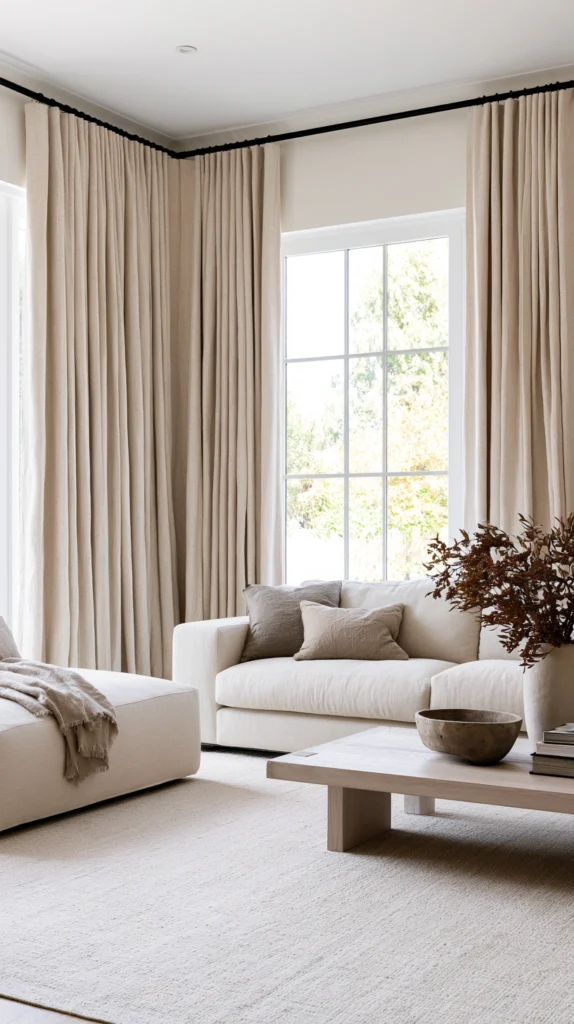
Substantial linen curtain panels in oat, cognac, or warm taupe, replacing lighter summer linen or cotton.
Why linen still works in fall, just heavier
The weight-not-material principle:
- Linen does not need to be abandoned for fall; a heavier weight of the same fiber achieves a seasonal shift without changing the room’s overall material language
- A warm neutral tone (oat, cognac, taupe) reads as substantially cozier than the cooler whites or pale grays common in summer linen
- This is one of the lowest-risk seasonal swaps, since heavier linen still suits a living room year-round rather than looking out of place by spring
Best heavyweight linen choices
- A 100% heavyweight linen panel, generally listed at a higher gsm than standard linen
- A linen-cotton blend for slightly more structure and drape
Budget pick: heavyweight linen panels from a mid-range retailer, $40-80 per panel Splurge: custom-made heavyweight linen drapes, $150-350 per panel
My heavyweight linen result
Replacing the pale, lightweight linen panels in my living room with a heavier oat-toned linen made the windows feel substantially warmer without losing the relaxed, natural quality the room had all summer.
Heavyweight Linen Tips
Check the listed weight before buying:
- Linen weight varies significantly between retailers even when labeled similarly
- A weight in the 200-260 gsm range generally provides the substantial fall feeling this idea depends on
2. Thermal-Lined Curtains for Actual Warmth
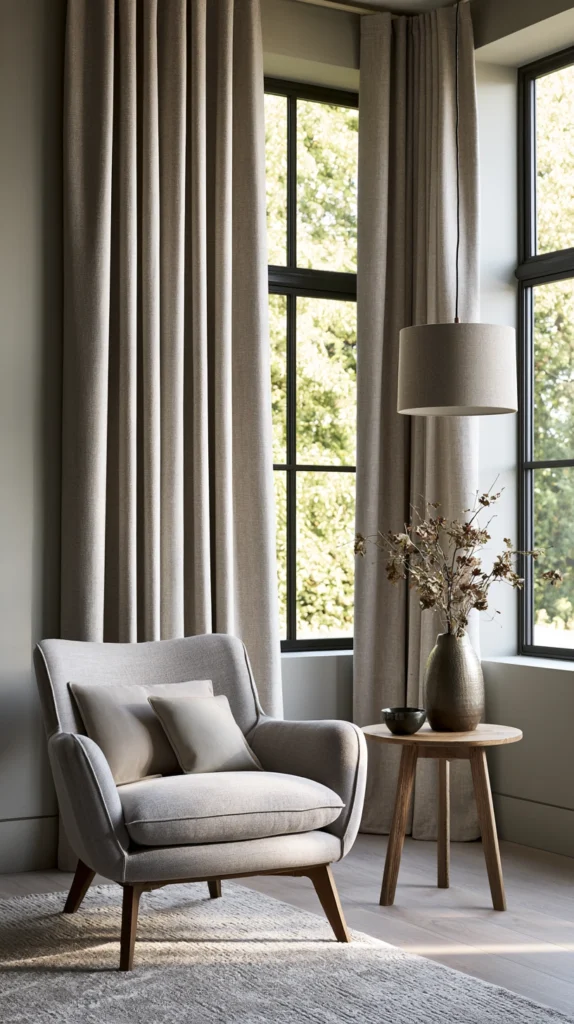
Curtains with a thermal or blackout lining sewn in, chosen specifically to reduce heat loss through the glass.
Why lining matters as much as the visible fabric
The function-behind-the-look principle:
- A beautiful heavy curtain without proper lining still allows significant heat loss through the window at night
- Thermal lining addresses the room’s actual temperature, not just its appearance, which matters more in a living room used through the evening
- This upgrade pays for itself over a full season in reduced heating reliance, beyond the visual benefit alone
Best thermal-lined options
- Curtains sold specifically as “thermal” or “energy-saving,” with the lining built in
- A separate thermal liner added behind existing favorite curtains, for a lower-cost alternative to replacing them entirely
Budget pick: a separate clip-on thermal liner, $20-40 per window Splurge: fully lined thermal curtain panels, $80-180 per panel
My thermal lining result
Adding thermal liners behind my existing curtains, rather than replacing the curtains themselves, noticeably reduced the draft near my largest window and cost far less than buying entirely new lined panels.
Thermal Lining Tips
Measure for a liner sized to the existing curtain rod:
- Most clip-on liners are designed to share the same rod as the primary curtain
- Confirm the rod’s weight capacity before adding a second layer of fabric
3. Layered Sheers Beneath Heavier Drapes
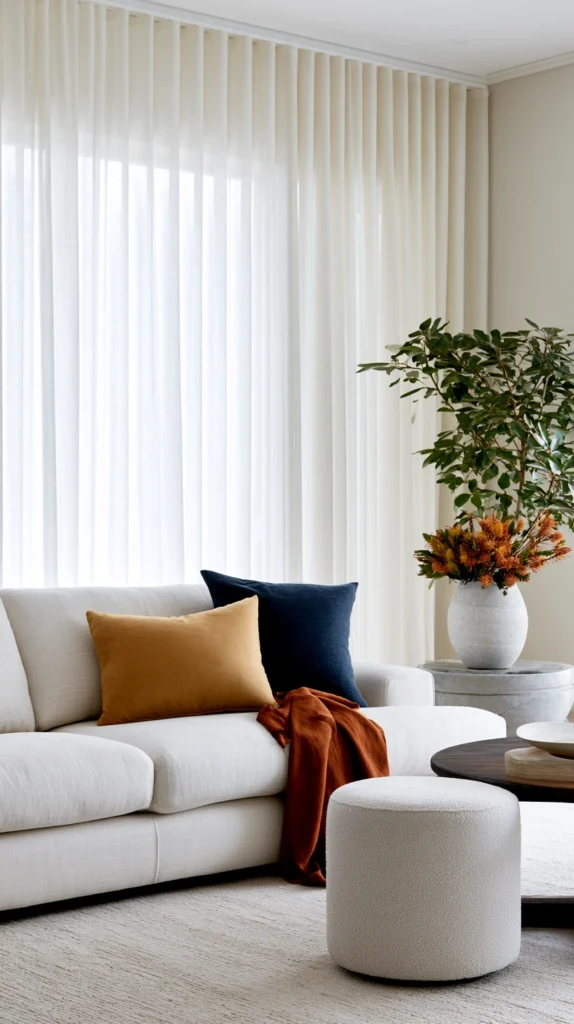
A sheer panel hung closest to the glass, with a heavier drape layered in front, combining daytime softness with evening warmth.
Why layering two treatments outperforms choosing just one
The day-and-night flexibility principle:
- A sheer alone provides privacy and softness but no real warmth or light control
- A heavy drape alone, kept closed constantly, blocks all the natural light a living room benefits from during the day
- Layering both allows the sheer to stay closed during the day for soft light, while the heavier drape closes only in the evening for warmth and a more intimate feeling
Best layering combinations
- A simple voile or linen sheer paired with a heavyweight linen or velvet drape
- Matching rod hardware in a warm metal finish for both layers, to keep the combination feeling intentional rather than mismatched
Budget: $60-150 combined for a basic sheer and drape pairing per window
My layered curtain result
Adding a simple linen sheer behind my heavier rust-toned drapes means the room stays softly lit and private during the day, then becomes noticeably warmer and more enclosed once the heavier layer closes in the evening.
Layered Curtain Tips
Use a double curtain rod or two separate rods:
- A proper double rod keeps both layers functioning independently rather than tangled together
- This small hardware investment makes the daily layering process far easier to actually use
4. Velvet Drapes for Maximum Drama and Warmth
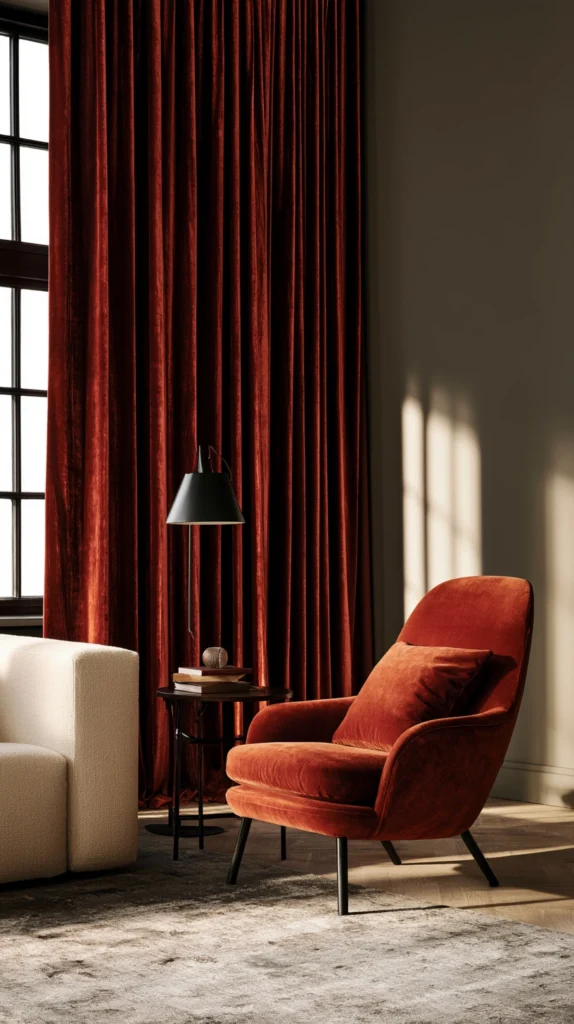
Full-length velvet curtain panels in a deep, warm tone, used as a more dramatic seasonal statement than linen or cotton.
Why velvet specifically suits a fall living room
The texture-and-density principle:
- Velvet’s dense pile both looks and functions warmer than nearly any other common curtain fabric
- The fabric’s light-catching texture adds visual richness that flat linen or cotton cannot replicate
- This makes velvet one of the most effective single fabric choices for a dramatic seasonal shift in a living room
Best velvet colors for fall
- Burgundy, rust, hunter green, or deep chocolate brown
- A slightly lower-pile velvet blend for easier maintenance than a true heavy velvet
Budget pick: velvet-blend curtain panels, $50-100 per panel Splurge: full velvet drapes in a rich jewel tone, $150-400 per panel
My velvet drape result
Hanging a single pair of burgundy velvet drapes on my largest living room window, while leaving the smaller windows in lighter linen, gave the room one dramatic anchor point without requiring a full velvet overhaul throughout.
Velvet Drape Tips
Vacuum gently on a low setting rather than washing:
- Most velvet curtains are not machine washable
- A handheld vacuum on the lowest setting, brushed gently in the direction of the pile, keeps velvet looking fresh without damaging the texture
5. A Warm Wood Cornice Box Above the Window
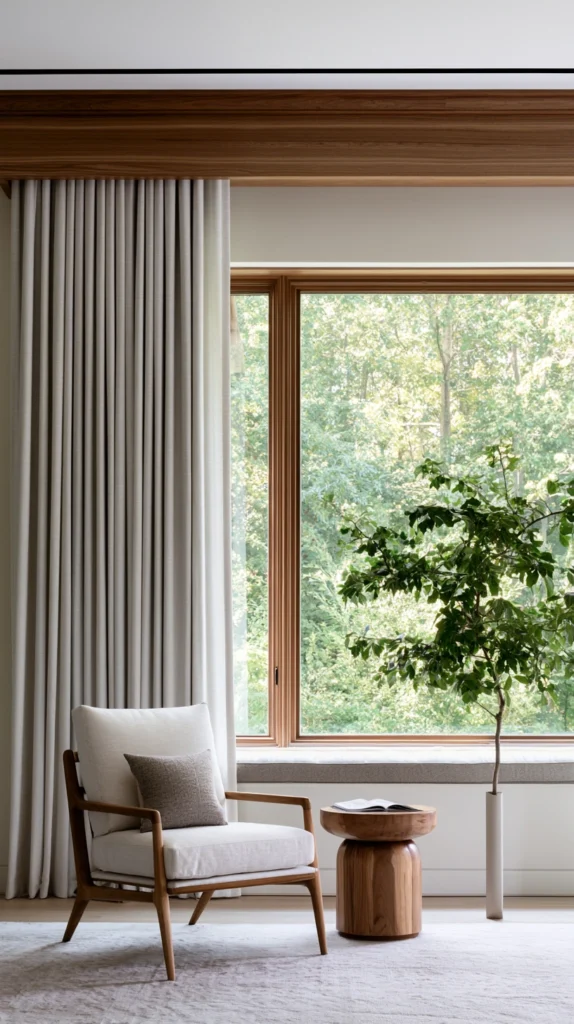
A simple wood cornice or valance box mounted above the window frame, adding a finished, furniture-like top treatment.
Why a cornice changes the window’s whole proportion
The architectural-finish principle:
- A bare curtain rod, however nice the fabric below it, can look slightly unfinished at the top of the window
- A wood cornice box adds a defined, furniture-like edge that makes the whole window treatment look more intentional and complete
- Painted or stained in a warm tone, the cornice also introduces another warm material into the room beyond just the fabric
Best cornice styles
- A simple stained wood box, mounted directly above the curtain rod
- A painted cornice in a warm tone matching nearby trim or furniture
Budget pick: a basic DIY wood cornice, $30-70 in materials Splurge: a custom-built and upholstered cornice box, $150-400 per window
My cornice box result
Adding a simple stained wood cornice above my living room’s largest window gave the whole treatment a finished, built-in look that the bare curtain rod alone had never achieved, even with the same curtains hanging below it.
Cornice Box Tips
Mount slightly wider than the window frame:
- A cornice mounted exactly to the window’s width can look slightly cramped
- Extending it a few inches beyond the frame on each side generally produces a more balanced, finished proportion
6. A Woven Wood or Bamboo Roman Shade
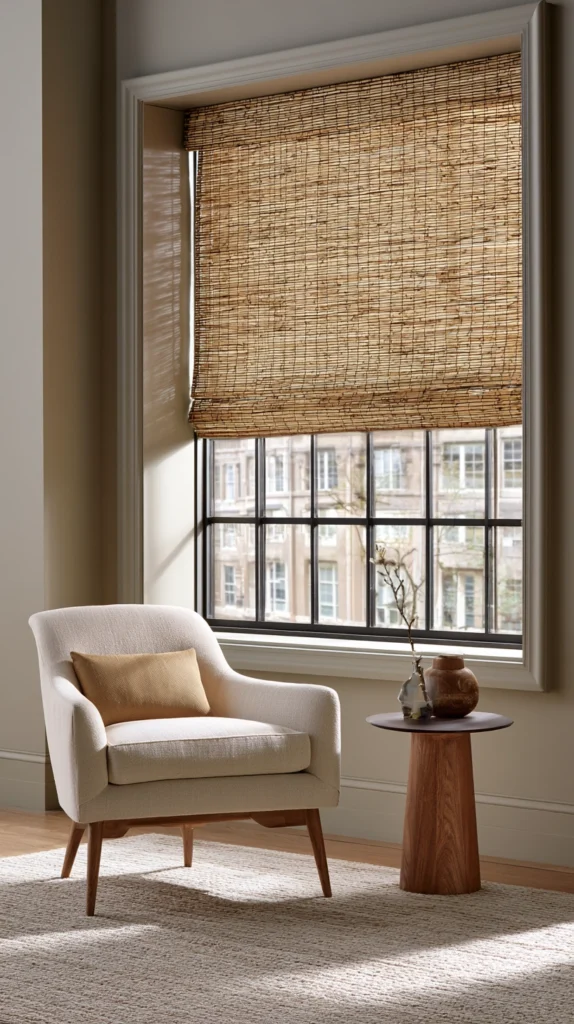
A textured woven wood or bamboo roman shade, used either alone or layered beneath curtain panels.
Why woven texture adds warmth without heavy fabric
The texture-over-weight principle:
- Not every room or budget calls for full heavy drapes
- A woven wood shade introduces a natural, warm texture at the window without the cost or bulk of a full curtain treatment
- This option also suits a room that wants to retain more daytime light control flexibility than heavy drapes typically allow
Best woven shade styles
- A light-filtering woven wood shade for daytime privacy with some light passage
- A blackout-lined woven shade for bedrooms or media-focused living rooms needing more light control
Budget pick: basic woven shades from a major retailer, $40-90 per window Splurge: custom-fitted woven wood shades, $150-350 per window
My woven shade result
Installing a simple woven bamboo shade on my smaller living room window added warmth and texture without the bulk of a full curtain, and it pairs nicely with the heavier velvet drapes on the room’s larger window without competing for attention.
Woven Shade Tips
Choose cordless or motorized options where safety is a concern:
- Standard corded shades can pose a safety risk in homes with small children or pets
- Cordless or motorized versions cost slightly more but remove this concern entirely
7. A Warm Metal Curtain Rod and Ring Set
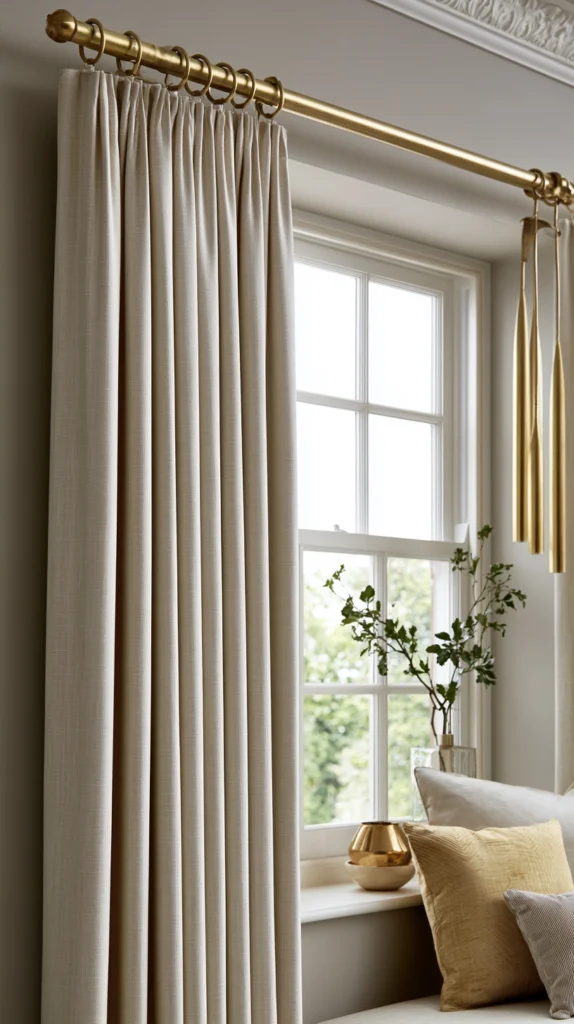
Upgrading from a basic curtain rod to one in a warm brass, bronze, or aged gold finish, paired with matching rings.
Why hardware deserves the same attention as fabric
The overlooked-detail principle:
- Curtain rods are functional hardware that often goes unconsidered once the fabric itself is chosen
- A warm metal finish ties directly into the same brass and bronze accents commonly used elsewhere in fall styling
- This relatively small hardware swap can meaningfully upgrade the entire window treatment’s finished look
Best warm metal finishes
- Brushed or antique brass for the warmest, most classic finish
- Aged bronze or matte gold for a slightly more subdued alternative
Budget pick: a basic brass-finish rod and ring set, $25-50 per window Splurge: a solid brass rod with decorative finials, $80-200 per window
My curtain rod result
Swapping a plain black curtain rod for a brushed brass version with matching rings changed how finished the entire window treatment looked, even though the curtains themselves stayed exactly the same.
Curtain Rod Tips
Match the finish to other metal accents already in the room:
- A new brass rod beside otherwise chrome or matte black hardware throughout the room can look disconnected
- Choosing a finish that echoes at least one other metal element nearby keeps the room feeling cohesive
8. Tieback Cords or Tassels in a Warm Tone
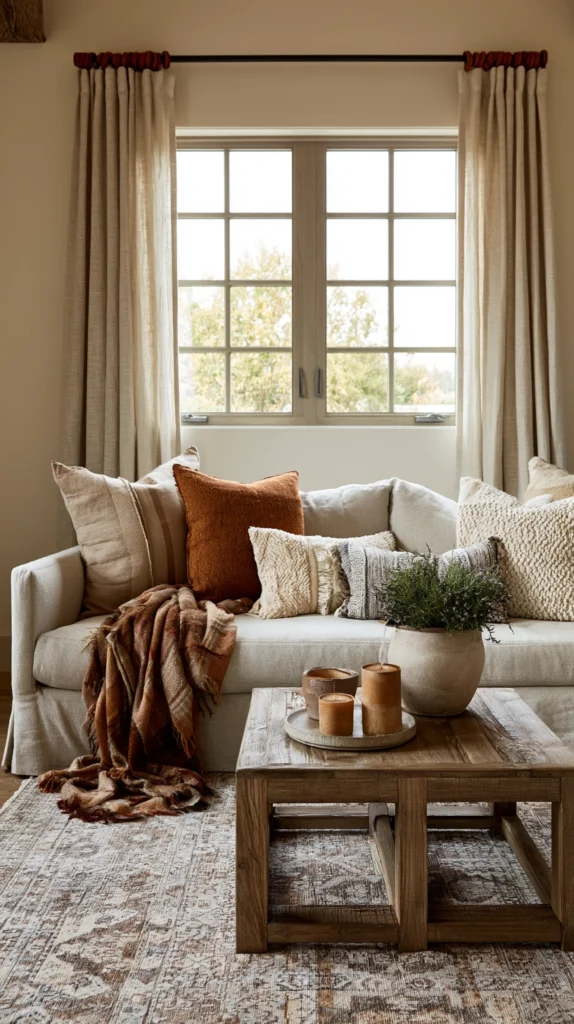
Decorative tiebacks added to hold curtains open during the day, in a warm rope, tassel, or leather material.
Why a simple tieback adds more than expected
The small-detail-big-effect principle:
- A curtain left to hang loosely on either side of a window misses an easy opportunity for additional styling detail
- A warm rope or tassel tieback adds a small but noticeable decorative moment at a very low cost
- This detail also keeps curtains pulled neatly open during the day, improving both function and appearance
Best tieback materials
- A simple twisted rope tieback in a warm tone
- A tasseled tieback for a more traditional, layered look
- A leather strap tieback for a cleaner, more modern alternative
Budget: $10-25 per pair of tiebacks
My tieback result
Adding a simple cognac leather tieback to each curtain panel gave the windows a small finished detail during the day that they had been missing, and it took only a few minutes to install.
Tieback Tips
Position at roughly one-third of the curtain’s height from the floor:
- A tieback positioned too high or too low can look slightly awkward
- Roughly a third of the way up from the floor generally produces the most flattering curtain drape
9. A Box-Pleat Valance in a Coordinating Fabric
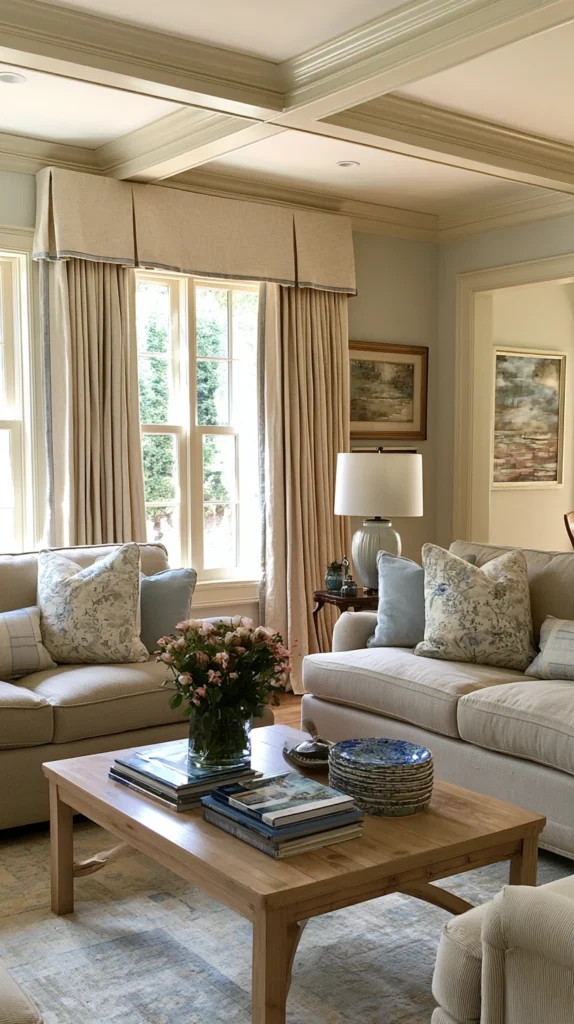
A structured box-pleat valance mounted above the curtain rod, adding a tailored, finished top edge.
Why a tailored valance differs from a soft cornice
The structure-versus-softness distinction:
- A wood cornice (idea 5) provides a hard architectural edge
- A fabric box-pleat valance provides a softer, more tailored finish while still adding the same sense of completion at the top of the window
- This option suits a slightly more traditional or formal living room style better than the cleaner lines of a wood cornice
Best valance fabric choices
- A solid warm linen or velvet matching the curtains below
- A subtle pattern in warm tones for a slightly more detailed look
Budget pick: a simple pre-made box-pleat valance, $30-60 per window Splurge: a custom-tailored valance in matching fabric, $100-250 per window
My box-pleat valance result
Adding a simple rust-toned linen valance above my curtains gave the windows a tailored, finished look that suits the room’s slightly more traditional furniture better than the cleaner cornice style would have.
Box-Pleat Valance Tips
Match the valance fabric to the curtain, not just the color family:
- A valance in a noticeably different fabric texture than the curtain below can look mismatched despite a similar color
- Using the same fabric for both, even if the curtain is a heavier weight, keeps the full treatment feeling unified
10. A Single Statement Window With Pattern
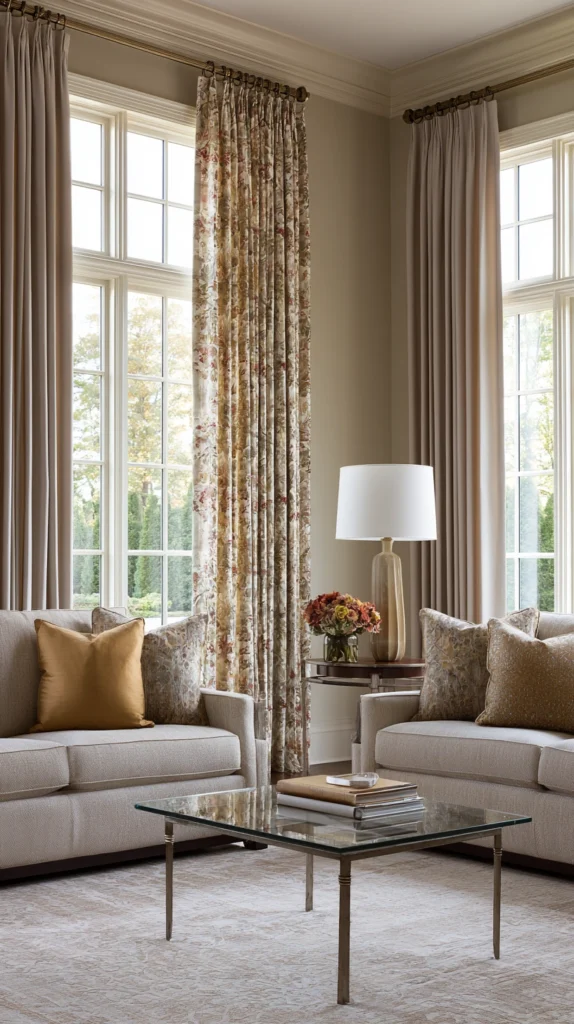
Choosing one window in the room, often the largest or most prominent, for a patterned curtain while keeping the rest in solid warm neutrals.
Why one patterned window can work better than several
The focal-point-not-repetition principle:
- Patterned curtains on every window in a room can compete with each other and overwhelm the space
- Selecting one window, generally the most prominent, for the only patterned treatment in the room creates a clear focal point instead
- The remaining solid-neutral windows then support that one statement rather than competing with it
Best pattern choices for a single statement window
- A botanical or autumn leaf print in warm, muted tones
- A subtle plaid or check in burgundy and cream
Budget: $50-120 for a patterned curtain panel pair at the chosen window
My statement window result
Choosing only my living room’s largest bay window for a muted botanical print, while keeping the two smaller windows in solid rust linen, gave the room a clear focal point without any of the visual competition a fully patterned room would have created.
Statement Window Tips
Choose the room’s most architecturally prominent window for the pattern:
- A bay window, a window with an interesting frame, or simply the largest window in the room generally makes the best candidate
- This ensures the pattern reinforces an already-notable feature rather than competing with the room’s other focal points
11. Café Curtains for a Cozier, Partial Coverage
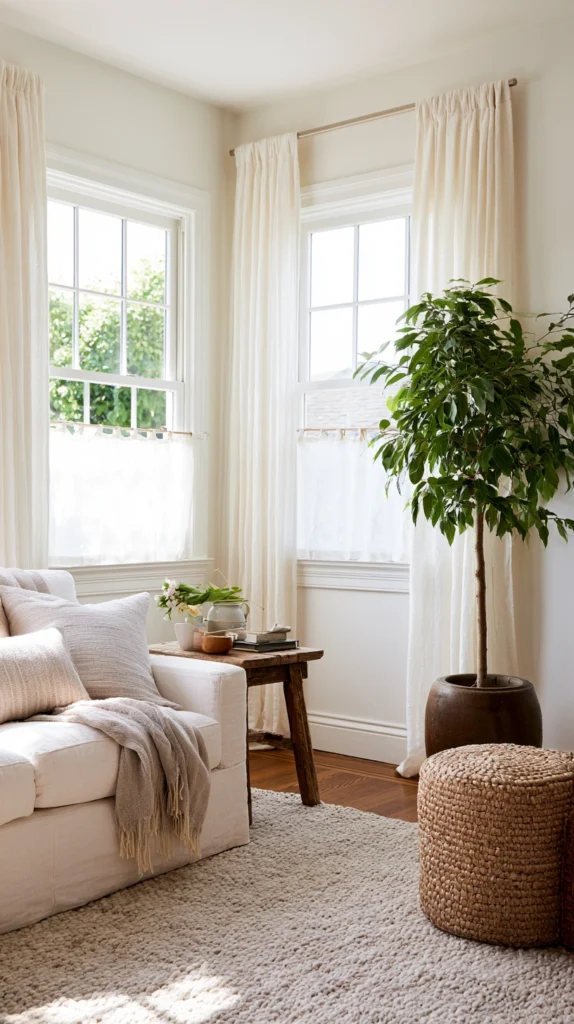
Shorter curtains covering only the lower half of the window, often used in a kitchen-adjacent living space or a window with a desirable view above.
Why partial coverage suits certain living room windows specifically
The privacy-without-full-blockage principle:
- A living room window with a pleasant upper view, or one near a kitchen or dining area, may not need or want full floor-length coverage
- Café curtains provide privacy at eye level while preserving the upper portion of the window for light and view
- This option also uses notably less fabric than a full curtain, making it one of the more affordable choices on this list
Best café curtain fabrics
- A simple gingham or plaid in warm autumn tones
- A solid linen for a cleaner, more understated version
Budget: $25-50 per window for most café curtain options
My café curtain result
Adding a simple rust gingham café curtain to the lower half of my living room window that faces the side yard preserved the pleasant tree view above while still providing the privacy that window had been missing.
Café Curtain Tips
Mount on a simple tension rod for the easiest installation:
- A tension rod fitted inside the window frame avoids any drilling
- This makes café curtains one of the easiest treatments on this list to install without professional help
12. Curtains With a Contrasting Trim or Border
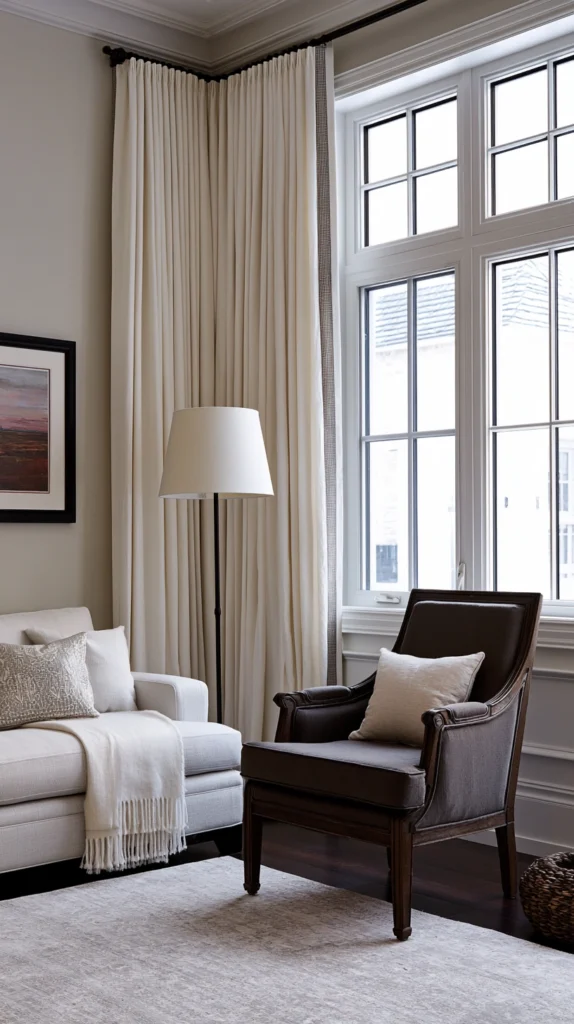
Solid curtain panels finished with a contrasting fabric trim along the leading edge or bottom hem, adding detail without full pattern.
Why a trim provides detail without the risk of full pattern
The controlled-detail principle:
- A full patterned curtain throughout a room can be a bigger commitment than some spaces call for
- A contrasting trim along just the edge or hem adds a similar layer of visual interest in a smaller, more controlled dose
- This works particularly well alongside the single-statement-window approach in idea 10, adding subtle detail to the remaining solid curtains
Best trim choices
- A contrasting velvet or linen band in a deeper tone than the main curtain fabric
- A decorative braid or tape trim in a warm metallic thread
Budget pick: iron-on or sew-on trim tape added to existing curtains, $10-25 per window Splurge: custom-made curtains with a built-in contrast border, $100-250 per panel
My contrast trim result
Adding a simple deep rust velvet trim along the bottom hem of my solid oat linen curtains gave them a custom, tailored look for a fraction of the cost of fully custom drapes.
Contrast Trim Tips
Choose a trim color already present elsewhere in the room:
- A trim that echoes another color in the room’s existing palette, such as a pillow or rug, ties the window treatment into the rest of the space more convincingly
- This small consistency check prevents the trim from looking like an arbitrary addition
13. A Fully Coordinated Multi-Window System
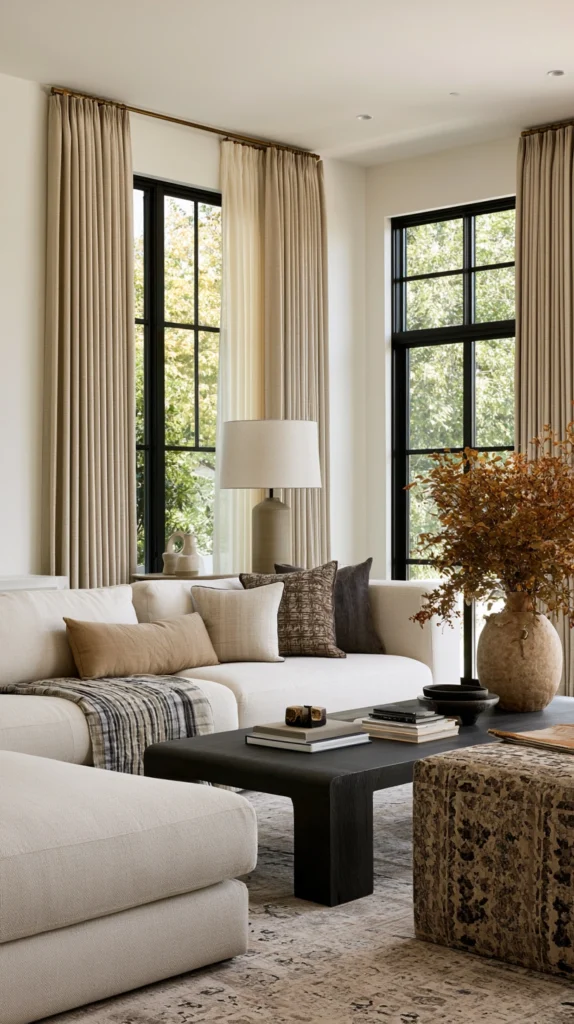
Combining heavyweight fabric, thermal lining, layered sheers, warm hardware, and one statement pattern window into one complete room-wide treatment.
Why coordinating every window outperforms treating them individually
The whole-room philosophy:
- Several of the approaches on this list (heavyweight fabric, thermal lining, layered sheers, warm hardware, a single pattern accent) combine successfully when applied consistently across every window in the room
- Rather than choosing one treatment type for the whole room, this approach layers the right combination for each window while keeping materials and hardware consistent throughout
- This is the most complete and most cohesive version of a fall window refresh, suited to a full living room transformation
How the combination works together
Heavyweight fabric and lining (the warmth foundation):
- Applied consistently across every window for both function and a unified base look
Layered sheers (the daytime flexibility layer):
- Added behind the heavier curtains on the windows used most during daylight hours
Warm hardware (the unifying detail):
- The same rod and ring finish used throughout, regardless of which fabric treatment is on each window
One statement pattern window (the focal point):
- Reserved for the room’s most prominent window, as established in idea 10
Building the full coordinated system
- Choose one warm hardware finish and apply it to every window first
- Select a base heavyweight fabric and color for most windows, with thermal lining throughout
- Add sheers behind the windows most used during the day
- Reserve a pattern or velvet statement treatment for the single most prominent window only
Budget: $400-1,200 for a full coordinated multi-window system, depending on room size and fabric choices
My fully coordinated result
Applying the same brushed brass hardware to every window, lining all of my curtains for warmth, layering sheers behind the two most-used windows, and reserving a botanical pattern for the largest bay window turned a room of mismatched, leftover curtains into one cohesive, clearly fall-ready space.
Full System Tips
Sequence the project by hardware and lining first:
- Hardware and lining decisions affect every other choice and are more difficult to change later
- Settling these foundational elements before choosing final fabric colors or patterns avoids costly mismatches partway through the project
Choosing Your Window Treatment Approach
By commitment level:
- Lower commitment: tieback cords (idea 8), café curtains (idea 11), contrast trim (idea 12)
- Full room commitment: velvet drapes (idea 4), fully coordinated multi-window system (idea 13)
By room priority:
- Warmth and energy efficiency: thermal-lined curtains (idea 2), heavyweight linen (idea 1)
- Style and finished appearance: wood cornice box (idea 5), warm metal rod (idea 7), box-pleat valance (idea 9)
By budget level:
- Lower budget: tiebacks (idea 8), café curtains (idea 11), contrast trim (idea 12)
- Moderate budget: heavyweight linen (idea 1), woven wood shade (idea 6), warm metal rod (idea 7)
- Higher budget: velvet drapes (idea 4), wood cornice (idea 5), fully coordinated system (idea 13)
The non-negotiable rules across every option:
Always:
- Coordinate hardware finish across every window in the room, regardless of which fabric treatment is used on each
- Measure each window individually rather than assuming uniform sizing throughout the room
- Choose lining or thermal backing for any window treatment expected to help with actual cold-weather comfort
Never:
- Leave one window in heavy fall fabric while others remain in clearly summer-weight panels with no coordinating element between them
- Assume a single pattern works equally well repeated across every window in the room
- Skip checking cord safety on any corded shade in a home with small children or pets
Remember: a fall window treatment plan depends on every window in the room shifting together in weight, warmth, and hardware, not on one heavy curtain swapped onto a single pane, and the most finished living rooms treat their windows as one coordinated system rather than several separate decisions.