15 Fall Wall Art and Gallery Wall Ideas for a Warmer Home
My walls stayed mostly bare for years, a few mismatched frames hung wherever there happened to be a nail already in the wall. Same scattered, accidental arrangement through every season. Tried adding one large framed print once. Sat alone on an otherwise empty wall looking more like a gap-filler than a design choice.
Then I stopped hanging single pieces and started building complete wall compositions — frame finish, spacing, and subject matter all working together toward one warm, cohesive feeling. The walls finally became part of the room’s design instead of just where things happened to hang.
Why Scattered Frames Resist Feeling Like a Finished Wall
The randomness problem:
What accidental wall arrangements do:
- Mix frame finishes and sizes with no underlying plan
- Read as collected over time rather than composed with intention
- Leave large gaps of bare wall beside small, isolated frames
- Resist the layered, gallery-like quality of a genuinely considered wall
The composition principle:
- A cohesive gallery wall ties frame finish, spacing, and subject matter together into one visual statement
- Warm-toned mats, frames, and imagery shift a wall’s entire emotional register the way warm paint shifts a room
- This is the opposite goal from scattered, mismatched hanging, and most walls benefit from that intentional shift
- A single great print on an otherwise bare wall still reads as one nice object, not a finished composition
My revelation: A fall gallery wall is a complete composition of frame, spacing, and subject, not one framed print hung in isolation. Every piece needs to relate to the others before the wall actually feels finished.
1. A Botanical Print Gallery Wall
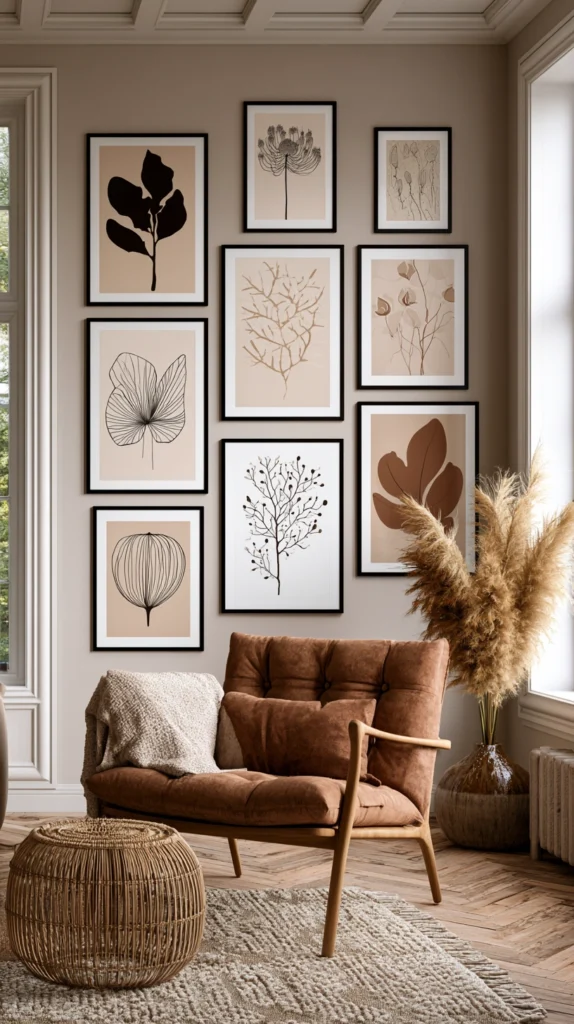
A cluster of framed botanical illustrations, ideally featuring autumn leaves, branches, or seed pods, arranged in a tight grid.
Why botanical prints suit a fall gallery wall specifically
The seasonal-reference principle:
- Botanical illustrations carry an immediate connection to the natural world without leaning into anything overtly seasonal or themed
- Autumn-specific botanicals (oak leaves, acorns, dried branches) reinforce the season subtly rather than obviously
- A tight grid of these prints creates a collected, naturalist-study feeling that suits almost any room style
Best sourcing for botanical prints
- Vintage botanical illustration reprints, widely available as affordable prints
- A matched set of new botanical prints sold specifically as a gallery collection
- Pressed or scanned leaves from an actual fall walk, framed simply
Budget pick: printable botanical art purchased as digital downloads, $5-15 per print plus framing Splurge: framed vintage botanical reprints from a specialty print shop, $40-90 each
My botanical gallery result
A grid of nine small botanical prints, each in a matching thin black frame, filled what had been a completely bare hallway wall and gave the space a calm, naturalist feeling that changes slightly as I rotate in new seasonal leaves each year.
Botanical Gallery Tips
Keep frame finish consistent across the entire grid:
- Mixing several different frame finishes within a tight botanical grid undermines the collected, intentional look
- One consistent frame color, repeated across every piece, is what makes a grid like this read as planned rather than accumulated
2. A Warm Abstract Art Cluster
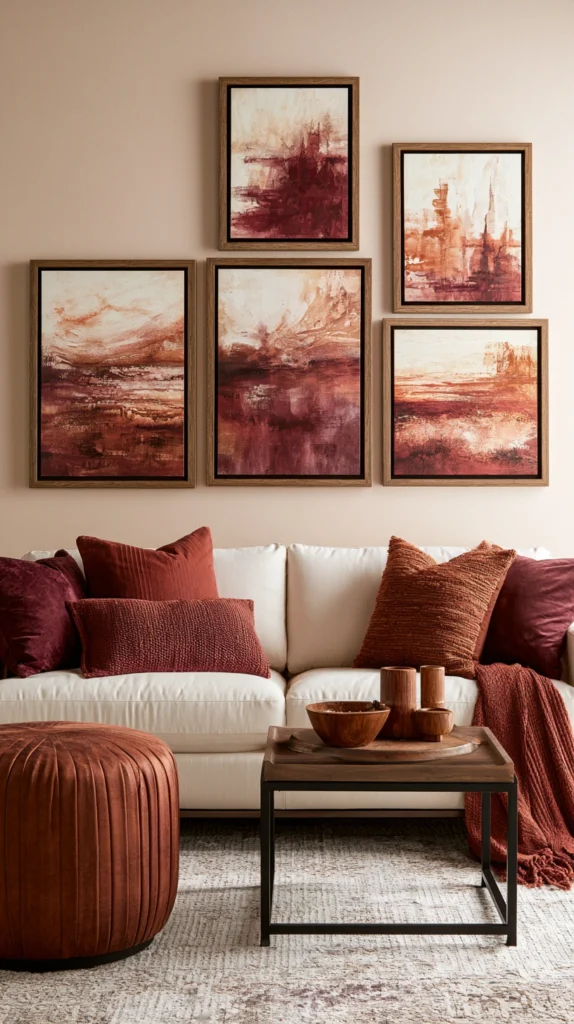
A small grouping of abstract paintings or prints in warm tones (rust, ochre, burgundy, deep brown) hung together.
Why warm abstracts work as a group rather than individually
The color-cohesion principle:
- A single abstract piece can feel disconnected from the rest of a room without a clear color thread
- Grouping several abstracts that share a consistent warm palette creates cohesion even when the individual compositions differ
- This approach allows for genuine variety in style while still reading as one intentional collection
Best ways to build the cluster
- Mix two or three different abstract styles, unified only by color palette
- Vary frame sizes slightly while keeping finish consistent
- Include at least one larger anchor piece among smaller supporting pieces
Budget pick: printable abstract art, $10-25 per print plus framing Splurge: original small-scale abstract paintings from independent artists, $80-300 each
My abstract cluster result
Three abstract prints in rust, ochre, and deep brown, hung together above my sofa in matching oak frames, created a focal point that ties directly into the room’s existing warm palette without feeling like a matched set bought off one shelf.
Abstract Cluster Tips
Choose one dominant piece to anchor the group:
- A cluster with no clear visual hierarchy can feel directionless
- Identify the largest or boldest piece first and arrange supporting pieces around it
3. A Vintage Landscape Painting Display
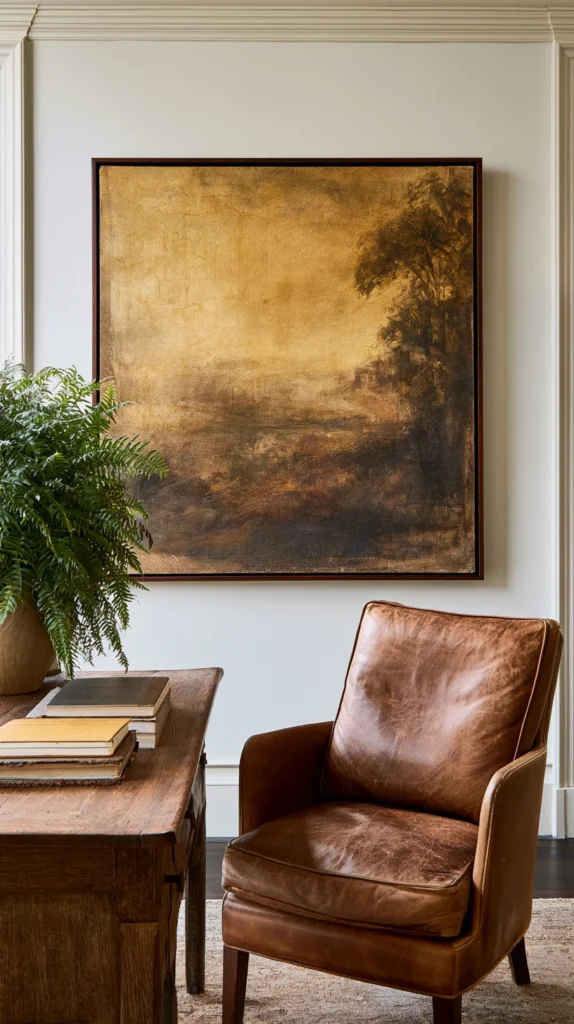
One or several secondhand oil or acrylic landscape paintings, particularly those depicting autumn scenes or warm-toned countryside.
Why vintage landscapes carry instant warmth
The found-history principle:
- A vintage painting carries a sense of age and history that new art often cannot replicate immediately
- Landscapes specifically, especially those with warm autumnal coloring, connect directly to the season without any literal seasonal imagery
- Sourcing secondhand also keeps this option more affordable than commissioning or buying new original art
Where to find vintage landscapes
- Estate sales and thrift stores, often significantly underpriced
- Online secondhand marketplaces, searching specifically for autumn or countryside scenes
- Antique shops, where pricing reflects more curation but higher confidence in quality
Budget: $15-60 for most secondhand landscape paintings found through estate sales or thrift stores
My vintage landscape result
A single small oil painting of a golden countryside scene, found at an estate sale for twelve dollars, became the warmest and most complimented piece of art in my entire living room, the slightly aged varnish and warm palette doing more work than any new print I had previously tried.
Vintage Landscape Tips
Do not over-clean an aged painting:
- A slightly yellowed varnish or visible craquelure often adds to the warmth and character rather than detracting from it
- Reserve professional cleaning only for paintings with genuine damage, not simply natural age
4. A Mixed-Media Texture Wall
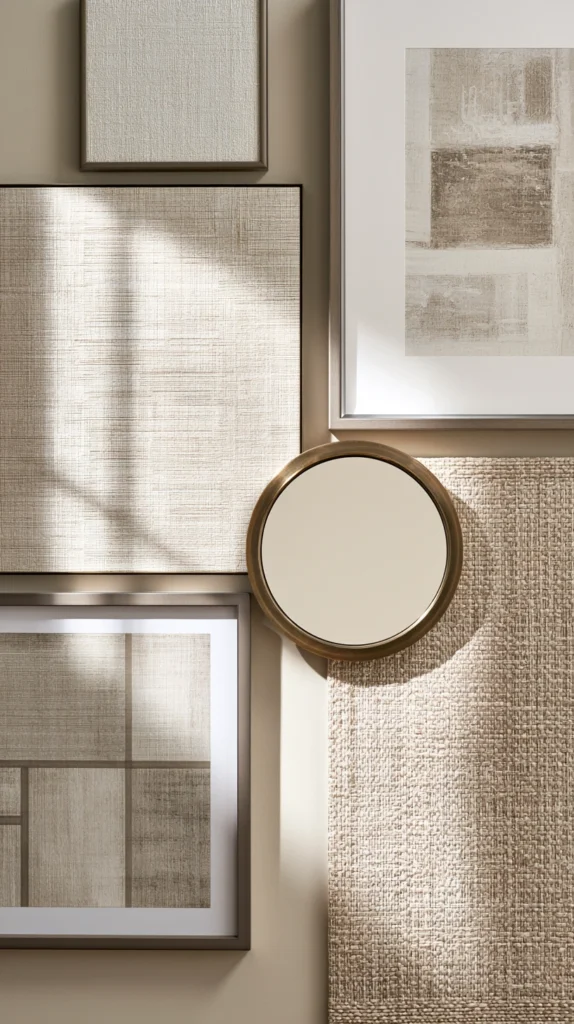
A gallery wall combining framed prints with woven textile pieces, small mirrors, and dimensional objects rather than flat art alone.
Why mixing media adds depth a flat gallery wall lacks
The dimensional-interest principle:
- A wall composed only of flat framed prints, however well chosen, remains visually two-dimensional
- Adding a woven wall hanging, a small mirror, or a dimensional object introduces texture and shadow that flat art cannot
- This mix creates a wall that reads as collected and layered, much like the botanical and abstract groupings benefit from variety within consistency
What to include in the mix
- One or two flat framed prints as anchors
- A small woven or macrame wall hanging for texture
- A small round or irregular-shaped mirror to add dimension and reflect light
Budget pick: thrift-sourced mirror and a basic woven hanging, $30-70 combined Splurge: a handwoven textile piece from an independent maker plus a vintage mirror, $150-350 combined
My mixed-media result
Combining two framed prints with a small woven wall hanging and a round brass-framed mirror created far more visual depth than any of those pieces achieved on their own, the texture and reflected light doing work that flat art alone could not.
Mixed-Media Tips
Keep a consistent warm material thread:
- Brass, wood, or rattan repeated across the different media types ties the variety together
- Without a repeated material, a mixed wall can start to feel cluttered rather than curated
5. A Salon-Style Floor-to-Ceiling Wall
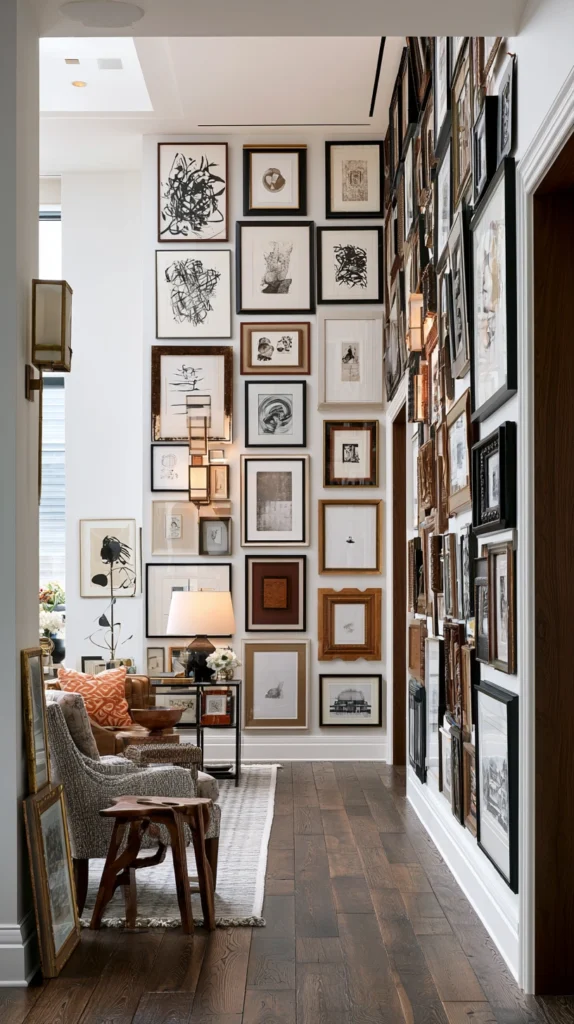
A densely packed wall covering a large surface from near the floor to near the ceiling, mixing frame sizes and finishes deliberately.
Why salon-style density reads as intentional rather than chaotic
The deliberate-abundance principle:
- A salon wall depends on its density to read as a considered collection rather than a haphazard pile
- This style intentionally breaks the spacing rules of a more minimal gallery wall, replacing them with a different kind of order based on balance and rhythm
- Done correctly, this is one of the most dramatic and most photographed wall treatments available
Building a salon wall
- Start with the largest pieces first, placing them at eye level and key visual anchor points
- Fill outward and around with progressively smaller pieces
- Vary frame finish more freely than other gallery styles, while still keeping at least some repeated finishes throughout for cohesion
Budget: highly variable, $100-500 depending on how many existing frames and prints can be incorporated
My salon wall result
Filling an entire stairwell wall with over twenty pieces of varying size, frame, and subject took an entire weekend to arrange correctly, but the density and rhythm created something far more dramatic than any single piece or small cluster could have achieved.
Salon Wall Tips
Lay pieces out on the floor before hanging anything:
- Arranging the full composition on the floor first allows adjustments without repeated nail holes
- Photograph the floor layout before transferring it to the wall, to use as a hanging reference
6. A Single Oversized Statement Piece
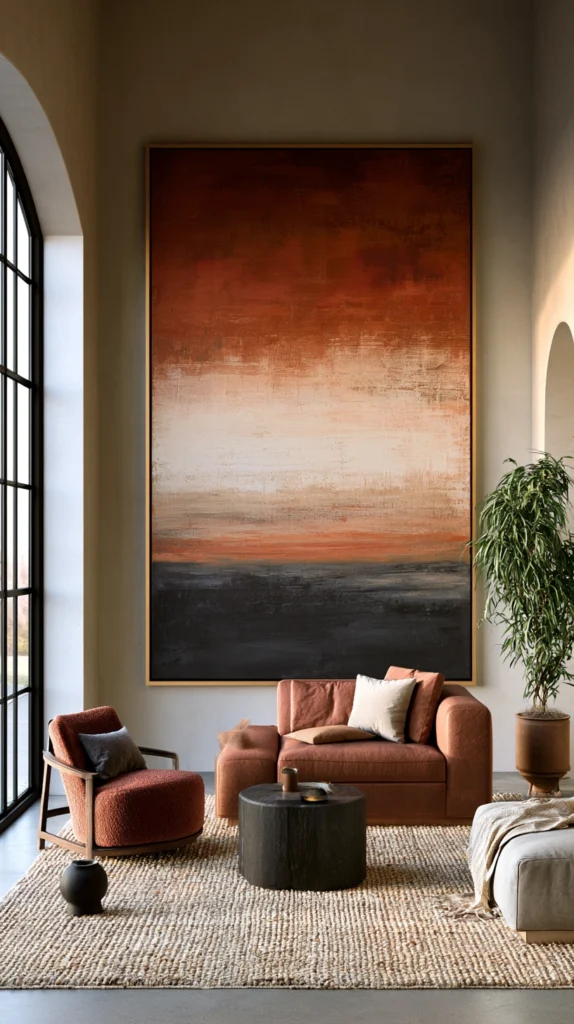
One large-scale painting, print, or tapestry used alone on a wall, rather than a grouping of smaller pieces.
Why one large piece can outperform a full gallery wall
The scale-as-statement principle:
- A wall does not always need multiple pieces to feel finished; sometimes one piece at the correct scale accomplishes the same goal
- An oversized piece commands a room’s attention in a way a gallery wall achieves through quantity instead
- This approach particularly suits a room that already has other detailed elements competing for visual attention
Best subjects for an oversized single piece
- A large abstract painting in warm, autumnal tones
- An oversized vintage-style botanical or landscape print
- A large woven tapestry for added texture at scale
Budget pick: an oversized canvas print, $80-200 Splurge: a commissioned large-scale original painting, $500-2,000
My oversized piece result
Replacing what had been four smaller, scattered frames with one large abstract canvas in warm rust tones gave my living room wall a clear focal point, and the room now feels considerably calmer despite having less total wall coverage than before.
Oversized Piece Tips
Size to roughly two-thirds the width of the furniture below it:
- A large piece hung above a sofa or console generally looks most balanced at about 60 to 75 percent of that furniture’s width
- A piece significantly narrower or wider than this range can look unintentional
7. A Grid of Matching Frames With Rotating Seasonal Art
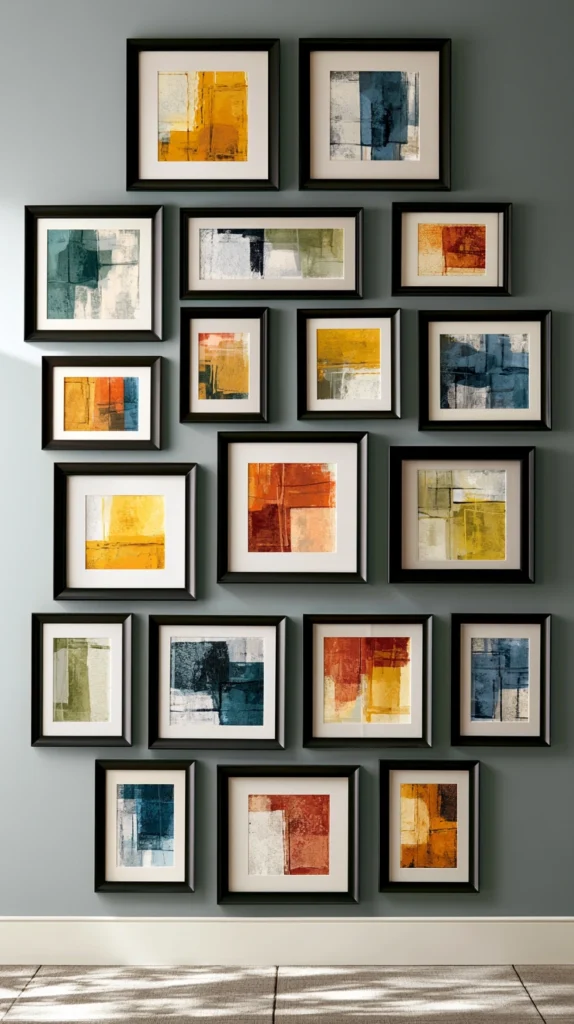
An evenly spaced grid of identical frames, designed so the art inside can be swapped out as the seasons change.
Why a rotating system suits seasonal decorating specifically
The reusable-structure principle:
- Buying entirely new framed art each season is costly and ultimately wasteful
- A fixed grid of matching frames allows the structure to stay constant while only the printed art inside changes
- This system pays for itself across multiple seasons of use, unlike single-season decorative purchases
Setting up the rotating grid
- Choose a consistent frame size and finish for the entire grid
- Print or source art sized specifically to fit, ideally in a format that is easy to reprint or replace each season
- Keep a small archive of past prints to rotate back in during future years
Budget: $60-150 for the initial frame grid; $5-15 per print for each seasonal refresh
My rotating grid result
A grid of six identical thin-frame pieces above my console now holds warm autumn botanical prints through fall and switches to different seasonal art through the rest of the year, and the structure itself never needs to be touched again.
Rotating Grid Tips
Standardize the print size from the start:
- Choosing one consistent paper size for all rotating art prevents the need to special-order mats or frames each season
- A common size like 8×10 or 11×14 keeps future sourcing simple
8. A Cluster of Small Round and Oval Frames
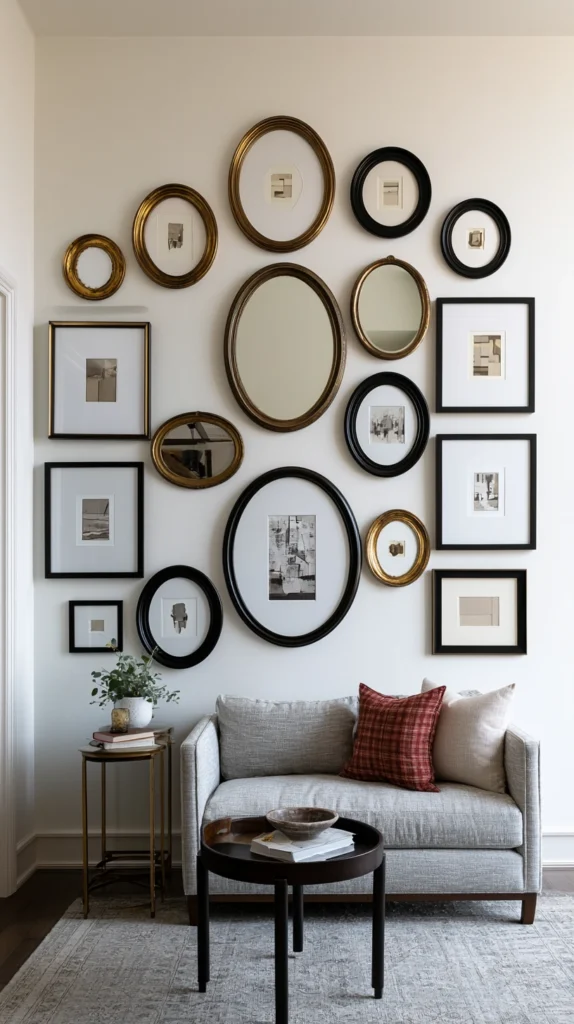
Several small round or oval frames grouped together, breaking from the standard rectangular gallery wall format.
Why shape variety adds interest to a gallery grouping
The departure-from-grid principle:
- Most gallery walls default to rectangular frames in a grid, which can feel slightly predictable
- Round and oval frames introduce a softer, more antique-feeling silhouette that stands out within a room of mostly rectangular furniture and art
- A cluster of these shapes specifically suits smaller botanical prints, portraits, or close-up nature photography
Best subjects for round and oval frames
- Close-up botanical or fungi photography
- Small vintage portrait prints
- Pressed leaves or dried florals displayed under glass
Budget pick: basic round frames from a craft store, $8-18 each Splurge: antique oval frames sourced secondhand, $30-80 each
My round frame cluster result
Five small round frames, each holding a different close-up botanical photograph, grouped loosely on a narrow hallway wall, gave the space a softer and more unexpected feeling than the rectangular grids found throughout the rest of the house.
Round Frame Tips
Vary the exact sizes slightly within the cluster:
- A cluster of identically sized round frames can look more like a uniform set than an organic grouping
- Slight size variation within the same general shape keeps the cluster feeling collected rather than purchased as a matched kit
9. A Layered Leaning Display on a Shelf or Mantel
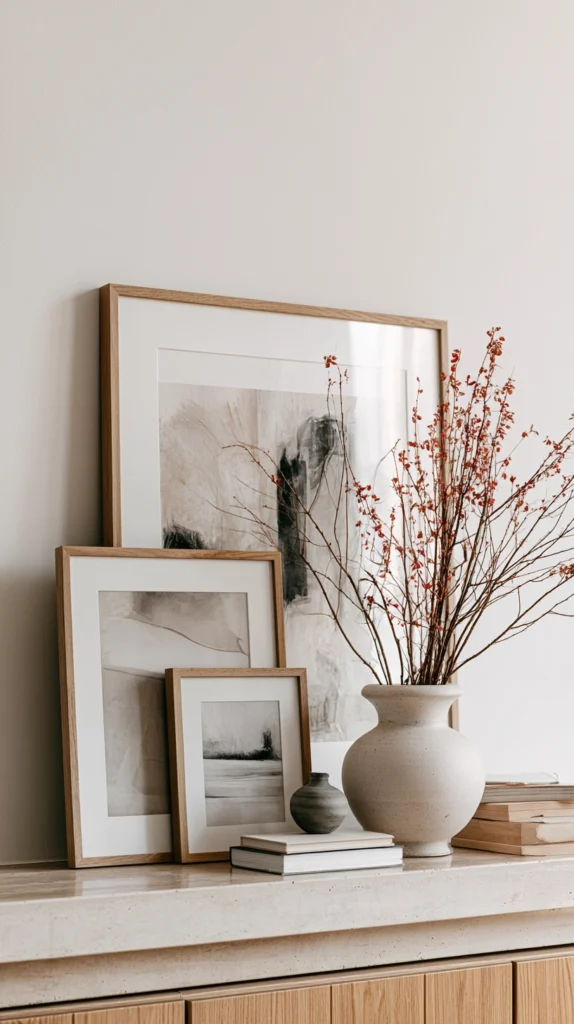
Framed art leaned against the wall on a mantel, shelf, or floor ledge rather than hung directly with hardware.
Why leaning art suits a more casual, layered look
The flexibility-without-commitment principle:
- Leaning art requires no nail holes and can be rearranged or swapped instantly
- Overlapping several leaned pieces at slightly different depths creates a layered, collected look that hung art cannot replicate as easily
- This approach particularly suits renters or anyone who prefers to update their art arrangement frequently
Building a leaning display
- Place the largest piece at the back, leaning fully against the wall
- Layer one or two smaller pieces slightly in front, overlapping the larger piece’s edge
- Add one small object (a candle, a small plant, a dried branch) in front of the smallest piece for additional depth
Budget: highly variable, often using existing art at no additional cost beyond a shelf or ledge
My leaning display result
Leaning three overlapping frames of varying size on my mantel, with a small dried branch tucked in front, created a layered display that I have rearranged at least four times this year without a single new nail hole.
Leaning Display Tips
Secure pieces against tipping if children or pets are present:
- Leaned art is more prone to shifting or falling than hung art
- A small amount of removable adhesive or a discreet ledge lip can prevent unwanted movement without sacrificing the flexibility of the leaning format
10. A Wall of Pressed Botanicals Under Glass
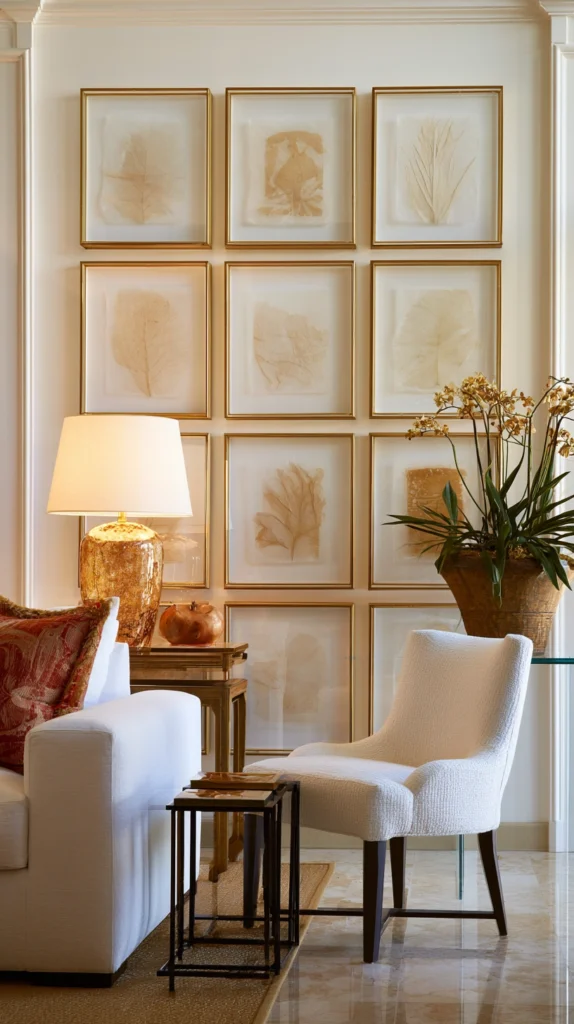
Real pressed leaves, ferns, or flowers, framed individually under glass and grouped into a gallery wall.
Why pressed botanicals carry a unique authenticity
The real-material principle:
- A printed botanical illustration represents nature; a pressed leaf under glass is the actual material
- This distinction gives pressed botanical frames a quiet, tactile authenticity that printed art cannot fully replicate
- Sourcing the leaves directly from a fall walk also makes this one of the most personally meaningful options on this list
How to press and frame botanicals
- Press leaves or flowers flat between heavy books for one to two weeks before framing
- Use a simple float-mount or glass-front frame to display the pressed material directly
- Replace and refresh annually, since pressed botanicals fade and become brittle over time
Budget: $10-25 per frame if pressing materials gathered for free; $200+ for materials and supplies for a full wall
My pressed botanical result
A grid of eight pressed oak and maple leaves, gathered on a single fall walk and framed simply under glass, has become the wall I am most attached to in the entire house, knowing exactly where and when each leaf was collected.
Pressed Botanical Tips
Use acid-free materials throughout:
- Standard paper and cardboard backing can yellow or damage pressed botanicals over time
- Acid-free mat board and backing significantly extend the life of the pressed material
11. A Typography or Quote Print Accent
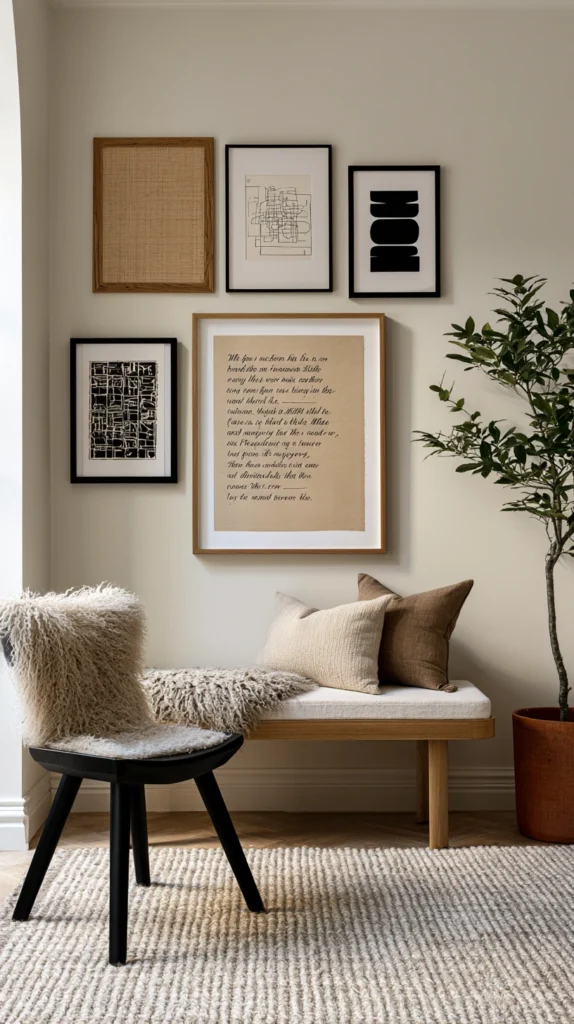
A single framed print featuring a short phrase, line of poetry, or quote, used as one element within a broader gallery wall.
Why a typography piece works best as a supporting element
The restraint-in-text principle:
- A wall composed entirely of text-based art can feel more like a motivational poster collection than a considered gallery
- One well-chosen typography piece, included among visual art rather than standing alone, adds a layer of meaning without dominating the wall
- This single piece often becomes the personal, specific detail that ties an otherwise visual gallery wall to the people who live in the room
Choosing the right text
- A short line from a favorite poem or book, kept brief enough to read at a glance
- A meaningful date, place name, or phrase specific to the household
- Avoid generic motivational phrasing in favor of something more specific and personal
Budget: $20-50 for a custom-printed typography piece in a matching frame
My typography accent result
A small framed line from a favorite poem, included among four botanical prints on my gallery wall, gives the otherwise purely visual wall one quiet, personal detail that guests often ask about specifically.
Typography Accent Tips
Limit it to one piece per wall:
- More than one text-based piece within the same gallery wall starts to compete for the viewer’s attention
- One thoughtfully chosen quote does more than several scattered throughout
12. A Warm-Toned Photography Series
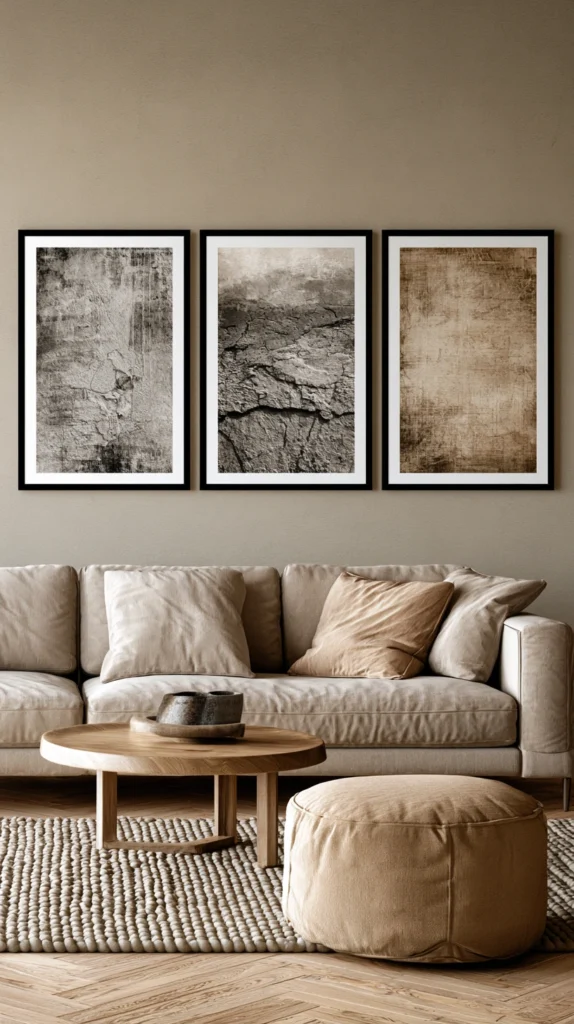
A set of three to five photographs, ideally in warm, muted tones, hung in a simple horizontal row.
Why a photography series suits a clean, modern gallery approach
The simplicity-through-repetition principle:
- A horizontal row of similarly toned and similarly sized photographs creates an immediate sense of order and intention
- This format suits a more modern or minimalist room better than the denser salon or mixed-media approaches
- Warm tones specifically (sepia, amber-toned black and white, golden hour photography) connect the series to a fall feeling without any literal seasonal imagery
Best photography subject matter
- Golden hour landscape or nature photography
- Sepia-toned architectural or street photography
- Warm-toned macro photography of natural textures (bark, leaves, stone)
Budget pick: printable photography prints, $8-20 per print plus framing Splurge: limited-edition fine art photography prints, $100-400 each
My photography series result
Five small golden-hour landscape photographs, hung in a simple horizontal row above my sofa in matching thin black frames, gave the wall a clean, considered look that fits the room’s more minimal furniture better than a denser gallery arrangement would have.
Photography Series Tips
Keep spacing perfectly even:
- A photography row depends on its precision; uneven spacing undermines the clean, ordered effect this format is built around
- Measure and mark spacing before hanging rather than estimating by eye
13. A Vintage Botanical and Insect Specimen Combination
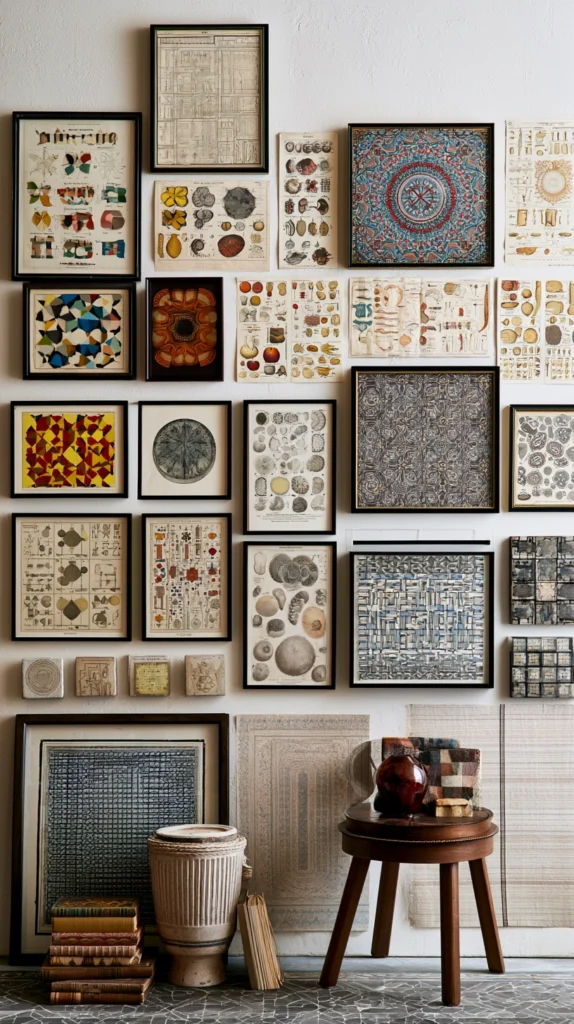
Framed botanical prints paired with framed insect or natural history specimens, evoking a Victorian curiosity-cabinet feeling.
Why this pairing adds a slightly more eccentric, collected character
The curiosity-cabinet principle:
- Botanical prints alone read as calm and naturalist
- Adding insect or natural history specimen prints introduces a slightly more eccentric, collected character reminiscent of historic curiosity cabinets
- This combination suits a room already leaning toward vintage or maximalist styling particularly well
Best specimen subjects to include
- Vintage moth or butterfly illustrations
- Beetle or insect specimen prints, real or illustrated
- Fossil or shell illustrations as a related alternative
Budget pick: printable vintage specimen illustrations, $5-15 per print plus framing Splurge: real framed insect specimens from a specialty supplier, $40-150 each
My specimen combination result
Mixing four botanical prints with three vintage moth illustrations on the same wall created a slightly more unusual, curiosity-cabinet feeling that distinguishes the room from the more common all-botanical gallery walls I had seen elsewhere.
Specimen Combination Tips
Maintain a consistent ratio between the two subjects:
- Roughly two-thirds botanical to one-third specimen generally keeps the wall feeling botanical-forward rather than tipping into a purely insect-focused display
- Adjust this ratio based on which subject the room’s overall style leans toward more strongly
14. A Tonal Black and White Gallery With Warm Frames
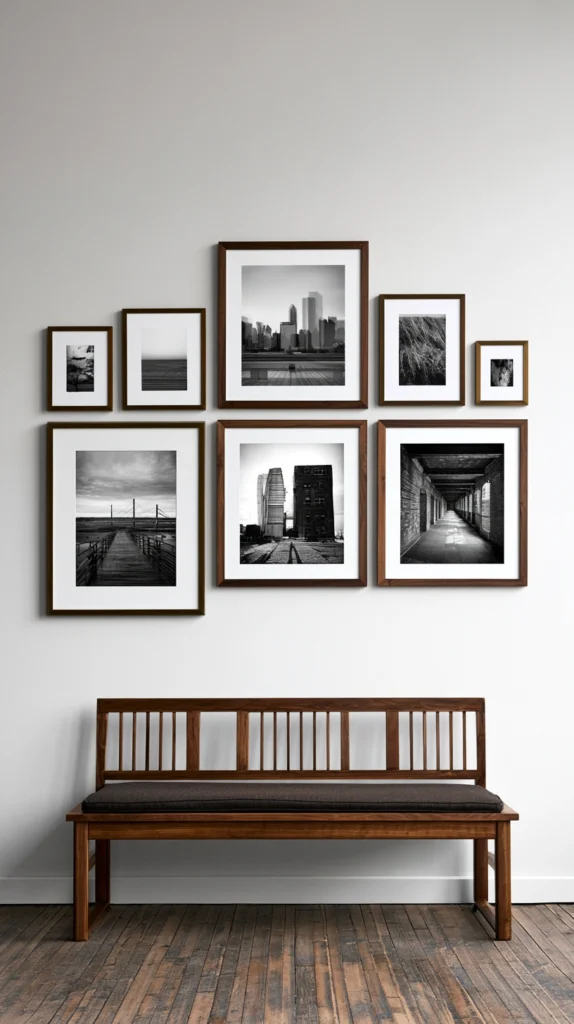
Black and white photography or prints, unified not by color but by warm wood or brass frames around every piece.
Why warm frames can carry the warmth even with cool-toned art
The frame-as-warmth-source principle:
- Not every fall gallery wall needs literally warm-colored art; the frame itself can carry the seasonal warmth instead
- Black and white photography paired consistently with warm wood or brass frames achieves a sophisticated, timeless look while still feeling connected to a warm room
- This is a particularly good option for a room where the art itself needs to stay more neutral for other design reasons
Building this gallery wall
- Choose black and white photography or line art as the consistent subject matter
- Frame every piece in the same warm wood tone or brass finish, with no exceptions
- Vary the photography subjects freely, since the frame consistency is doing the unifying work
Budget pick: printable black and white photography, $8-15 per print; basic wood frames, $10-20 each Splurge: fine art black and white prints in solid brass frames, $300-700 for a full wall
My tonal gallery result
A wall of six black and white nature photographs, every single one in the same warm walnut frame, achieves a surprisingly warm feeling despite containing no color at all, proving the frame choice alone can carry the seasonal warmth.
Tonal Gallery Tips
Resist the urge to introduce a second frame finish:
- Even one frame in a different wood tone or metal finish disrupts the unifying effect this specific approach depends on
- Total consistency in frame choice is the single rule that makes this format work
15. A Fully Curated Mixed Gallery Combining Every Element
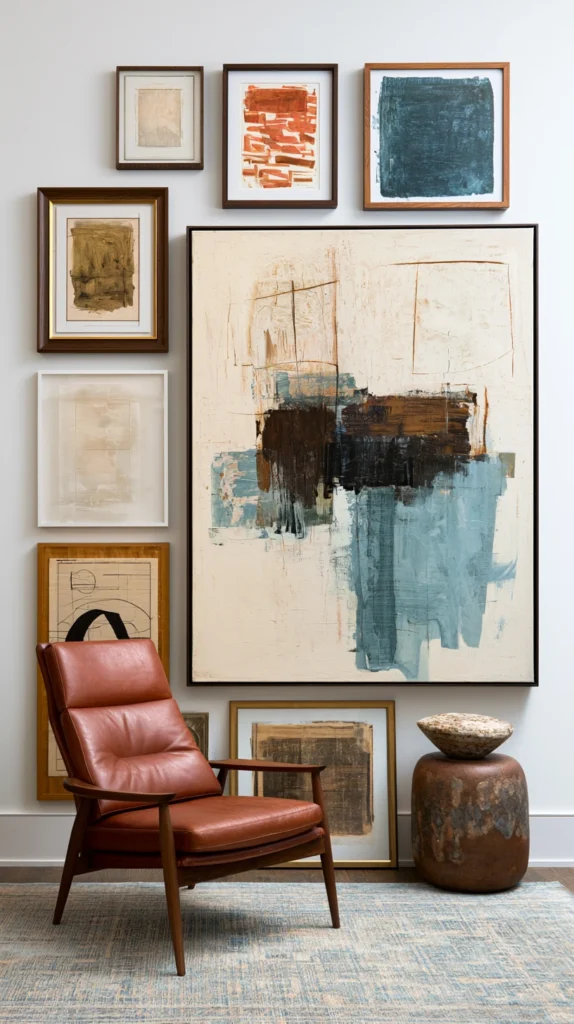
Combining botanical prints, an abstract anchor piece, pressed leaves, and a personal typography accent into one complete gallery wall.
Why combining elements outperforms any single approach alone
The complete-composition philosophy:
- Several of the gallery approaches on this list (botanical prints, abstract pieces, pressed material, personal text) share enough warmth and intention to combine successfully
- Rather than choosing one single gallery style, this approach layers multiple elements together into one cohesive composition
- This is the most advanced and most personal wall on this list, suited to a room ready for its defining feature
How the combination works together
Botanical and pressed pieces (the naturalist foundation):
- Provide the bulk of the wall’s content and its connection to the season
An abstract or oversized piece (the anchor):
- Establishes scale and a clear focal point among the smaller surrounding pieces
A typography accent (the personal layer):
- Adds the one specific, meaningful detail unique to the household
Consistent frame finish (the unifying thread):
- Ties every other element together despite their differing subjects
Building the full curated wall
- Select one larger anchor piece and place it first, slightly off-center
- Surround it with botanical and pressed pieces at varying smaller sizes
- Add one typography piece among the visual art, not standing alone
- Confirm every frame shares the same finish before finalizing placement
Budget: $200-600 for a fully curated wall combining new prints, framing, and at least one larger anchor piece
My fully curated wall result
Combining a large rust-toned abstract anchor, six botanical and pressed leaf prints, and one small typography piece with a meaningful quote, all in matching walnut frames, created the single most complimented wall in my home, and it took an entire weekend of floor layout adjustments before a single nail went into the wall.
Fully Curated Wall Tips
Lay the entire composition out on the floor first:
- This rule matters even more here than with the salon wall in idea 5, given the variety of subjects being combined
- Photograph the final floor arrangement before transferring it to the wall as a hanging reference
Choosing Your Gallery Wall Approach
By commitment level:
- Lower commitment: leaning shelf display (idea 9), single oversized piece (idea 6)
- Full wall commitment: salon-style wall (idea 5), fully curated mixed gallery (idea 15)
By room style:
- Minimalist or modern rooms: warm-toned photography series (idea 12), tonal black and white gallery (idea 14)
- Vintage or maximalist rooms: specimen combination (idea 13), salon-style wall (idea 5)
By budget level:
- Lower budget: pressed botanicals (idea 10), printable botanical grid (idea 1)
- Moderate budget: abstract cluster (idea 2), round frame cluster (idea 8), rotating seasonal grid (idea 7)
- Higher budget: vintage landscape painting (idea 3), fully curated mixed gallery (idea 15)
The non-negotiable rules across every option:
Always:
- Lay out any multi-piece arrangement on the floor before committing to nail holes
- Keep at least one consistent element (frame finish, spacing, or color palette) tying the full wall together
- Size a single statement piece relative to the furniture below it rather than guessing
Never:
- Mix more than one frame finish within a tight, repeating grid format
- Include more than one dominant typography piece within the same wall
- Assume a single great print can substitute for a full composition on a large bare wall
Remember: a fall gallery wall depends on every piece relating to the others through frame, spacing, or subject, not on any single great print hung in isolation, and the most personal walls usually combine more than one of these approaches rather than relying on just one.