15 Coffee Table Arrangement Ideas
The coffee table is one of the most visible and most frequently noticed surfaces in any living room, and how it is styled communicates more about the design intelligence and personal taste of the household than almost any other single surface in the home.

A beautifully arranged coffee table can elevate an ordinary living room into something that feels genuinely considered and genuinely personal, while a poorly styled or cluttered coffee table can undermine even the most beautifully furnished room surrounding it.
The art of coffee table arrangement is not difficult, but it does require an understanding of a few fundamental principles of scale, balance, variety, and restraint that transform a random collection of objects into a genuinely beautiful composition. Here are 15 coffee table arrangement ideas that are modern, practical, and genuinely inspiring.
1. The Classic Tray Arrangement

A tray placed on the coffee table surface is the single most useful organizational tool available for coffee table styling because it creates an instant visual boundary that contains a group of objects within a defined area and unifies them into a single cohesive composition.
Place a rectangular or round tray in a material that suits the room’s aesthetic. a natural rattan tray for an organic, warm living room, a lacquered wooden tray for a more formal, considered space. a simple metal tray for a contemporary or industrial aesthetic. Within the tray, group three to five objects of varying heights and a single small plant or floral element for a composition that is simultaneously organized and visually rich.
2. The Rule of Three
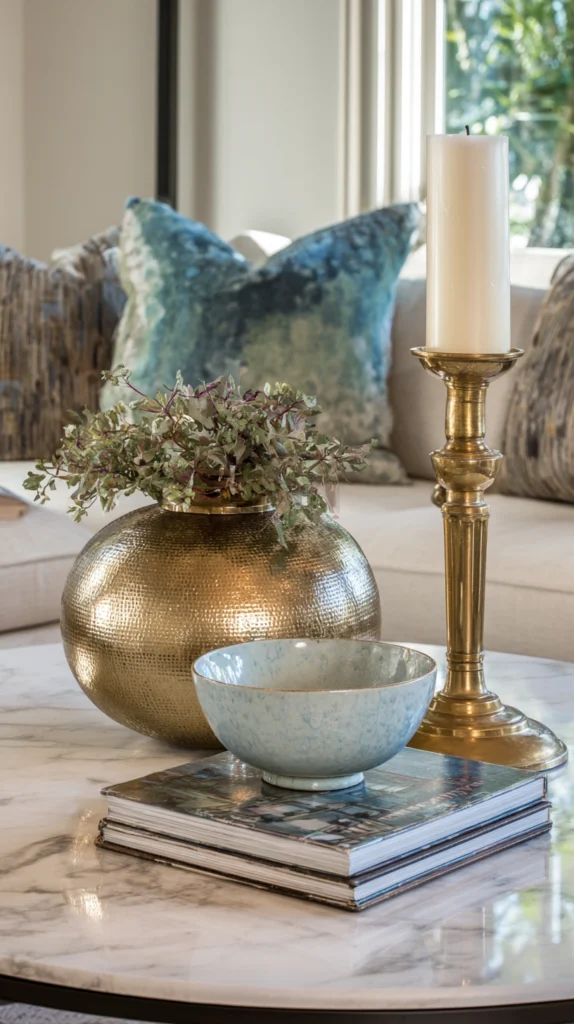
The rule of three is the most fundamental and most widely applied principle in decorative arrangement, and it applies with particular force to coffee table styling. Groups of three objects are instinctively more visually satisfying than groups of two or four because the odd number prevents the eye from dividing the group into equal halves and keeps the composition dynamic and interesting.
Three objects of varying heights, forms, and textures. a tall candle holder, a medium ceramic bowl, and a low stack of books. create a triangular visual composition that the eye travels around with pleasure rather than reading as a static, symmetrical pair.
3. Stack Books as a Foundation
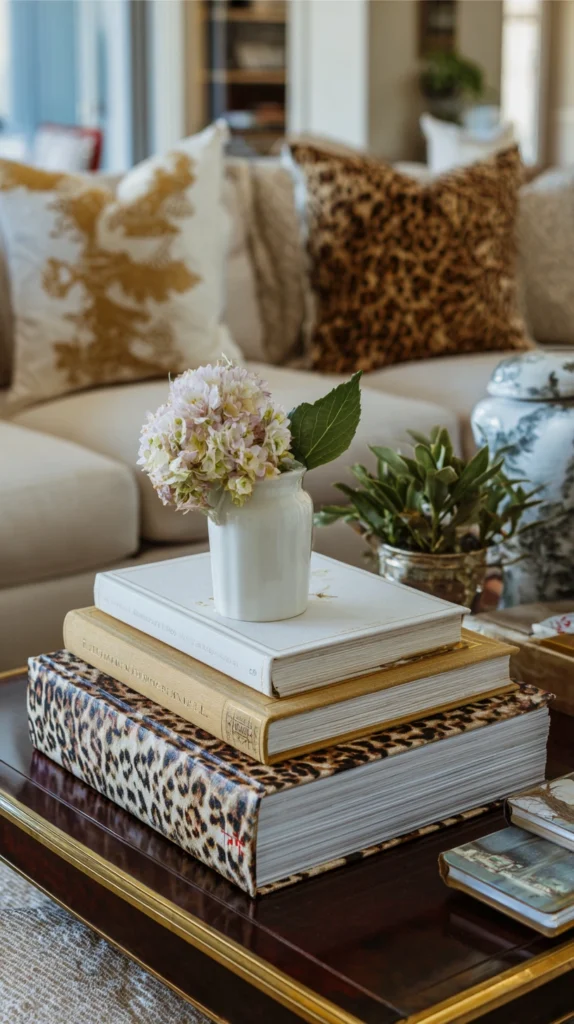
A small stack of two or three beautiful books is one of the most versatile and most design-intelligent elements available for a coffee table arrangement. The stacked books create a horizontal plane at a slightly elevated level that functions as a plinth for additional objects placed on top of them. a small vase, a decorative object, or a candle. and their spines contribute color, texture, and the suggestion of intellectual life and cultural curiosity to the composition.
Choose books with beautiful covers or remove their dust jackets to reveal the solid color boards beneath for the most visually considered result.
4. Incorporate Fresh or Dried Flowers
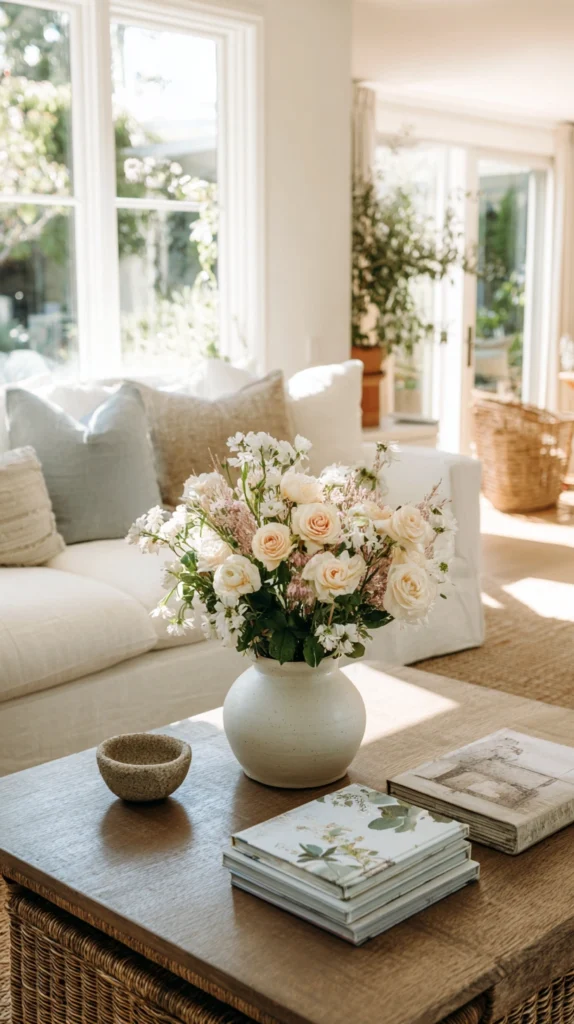
Fresh or dried botanical elements are perhaps the single most impactful addition available to any coffee table arrangement. A small bud vase with a single stem of seasonal blossom, a low arrangement of garden roses in a simple ceramic vessel, or a dried arrangement of pampas grass and eucalyptus in a slim glass vase all introduce the living, organic warmth and natural beauty that no manufactured object can fully replicate.
Choose flowers or botanicals in a color that coordinates with the room’s palette and replace fresh flowers regularly to maintain the vitality and freshness of the arrangement through the season.
5. Use a Single Statement Object
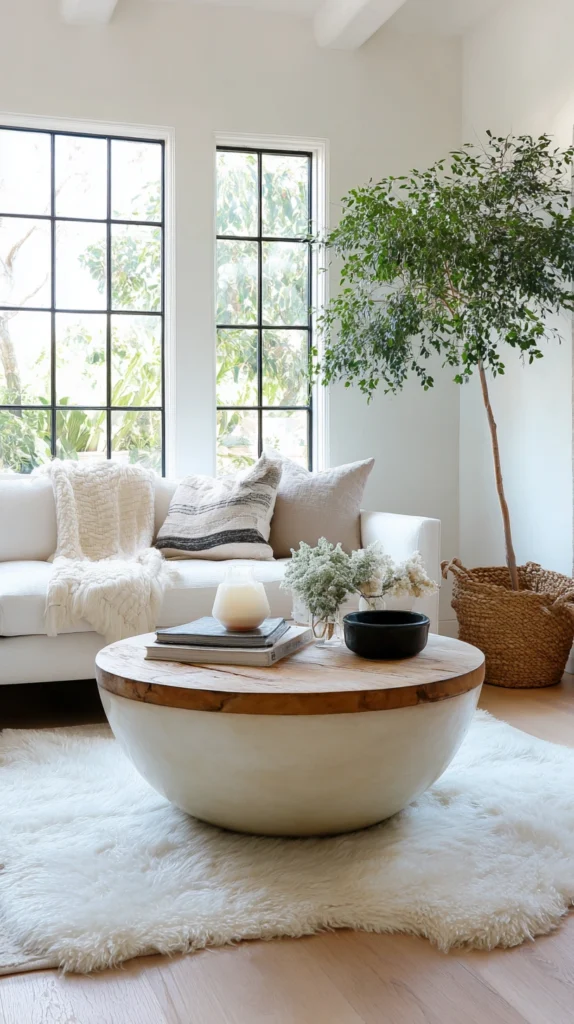
A single, large, beautifully chosen object placed at the center of the coffee table as the sole arrangement creates a composition of maximum simplicity and maximum visual confidence.
A large ceramic bowl of extraordinary form and glaze, a significant piece of natural stone or crystal, a sculptural wooden object, or a genuinely beautiful oversized candle in a decorative vessel all have sufficient visual presence to anchor the coffee table as a single statement without requiring any supporting objects.
This approach suits minimalist, Japandi, and contemporary interiors where restraint and the quality of individual objects are the primary design values.
6. Create Height Variation
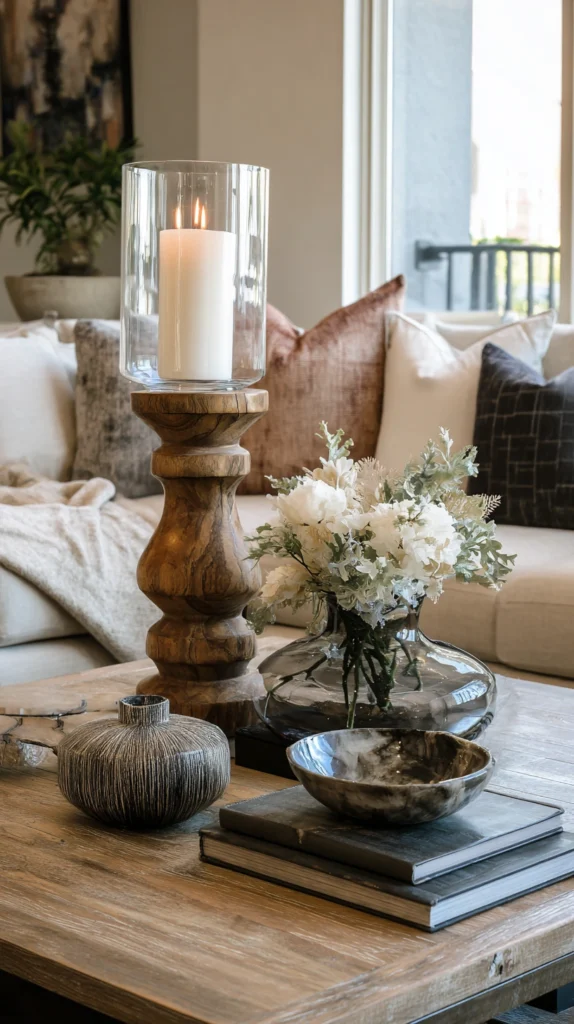
One of the most common mistakes in coffee table arrangement is placing all objects at a similar height, creating a flat, visually uninteresting arrangement that lacks the dynamic quality of varied levels.
Creating deliberate height variation. a tall object, a medium object, and a low object within the same composition. gives the arrangement a three-dimensional quality that engages the eye from multiple viewing angles and creates a sense of visual movement that a flat arrangement cannot provide.
The tallest element should be no higher than approximately one third of the coffee table’s longest dimension for a proportion that feels balanced and appropriate to the scale of the surface.
7. Use Natural Materials for Organic Warmth
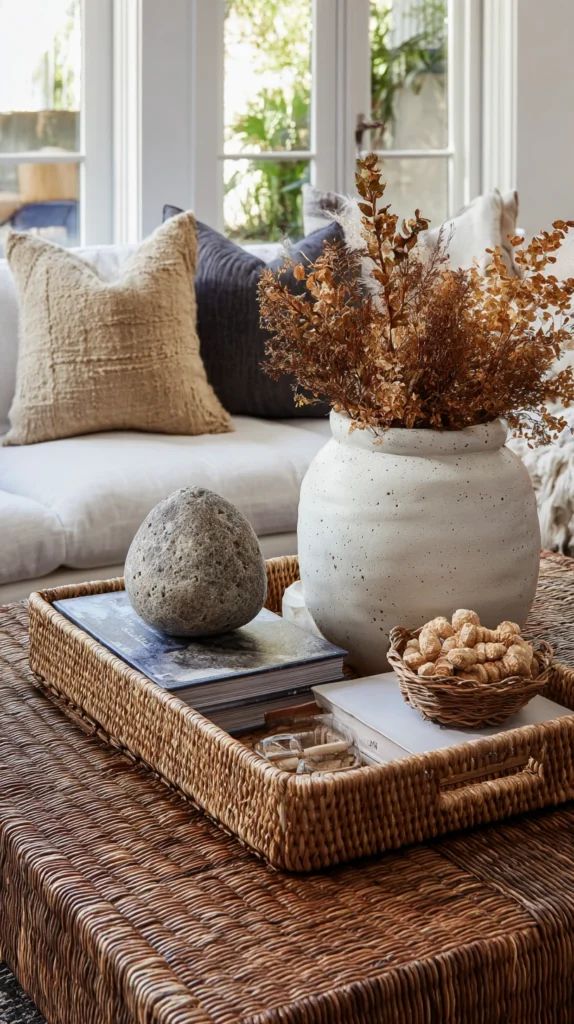
An arrangement built primarily from natural materials. a wooden tray, a stone object, a ceramic vessel, a woven basket, a dried botanical element. creates a coffee table composition of extraordinary organic warmth and tactile richness that manufactured and synthetic objects cannot replicate.
The variation in texture between different natural materials. the smooth coolness of stone against the rough warmth of woven rattan, the matte earthiness of unglazed ceramic against the organic grain of natural timber. creates visual and tactile interest within the arrangement that keeps it feeling alive and genuinely beautiful rather than static and decorative.
8. Arrange by Color Palette
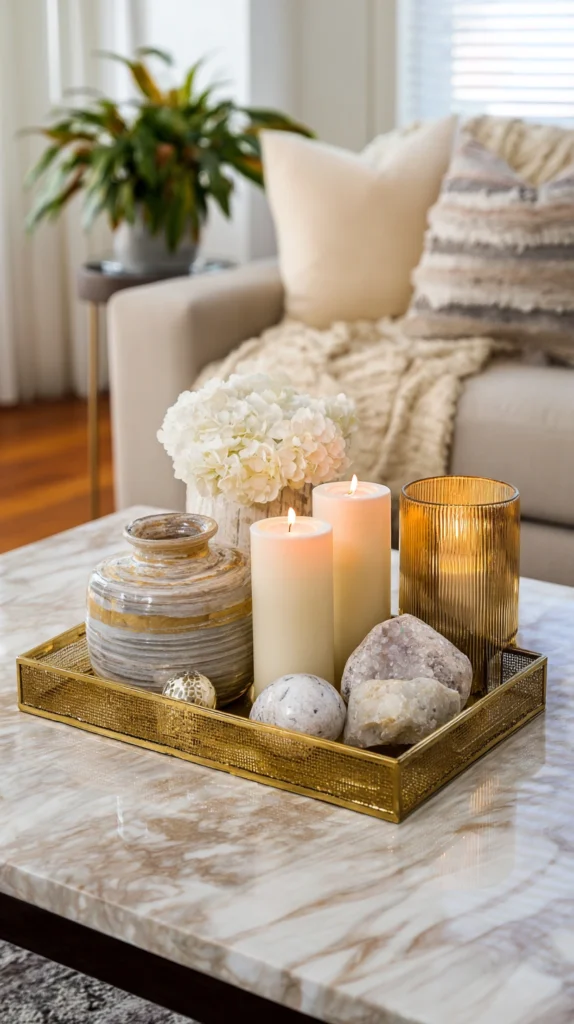
Restricting the objects in a coffee table arrangement to a single, carefully chosen color palette creates a composition of considerable visual coherence and design sophistication. An arrangement of objects in varying tones of warm white, natural cream, and soft gold creates a monochromatic composition that is simultaneously restrained and genuinely beautiful.
A palette of deep green, warm terracotta, and natural cream creates an earthier, more botanical arrangement. Whatever palette is chosen, the discipline of keeping every object within it creates an arrangement that reads as a deliberate, considered composition rather than a random collection of available objects.
9. Include a Scented Candle
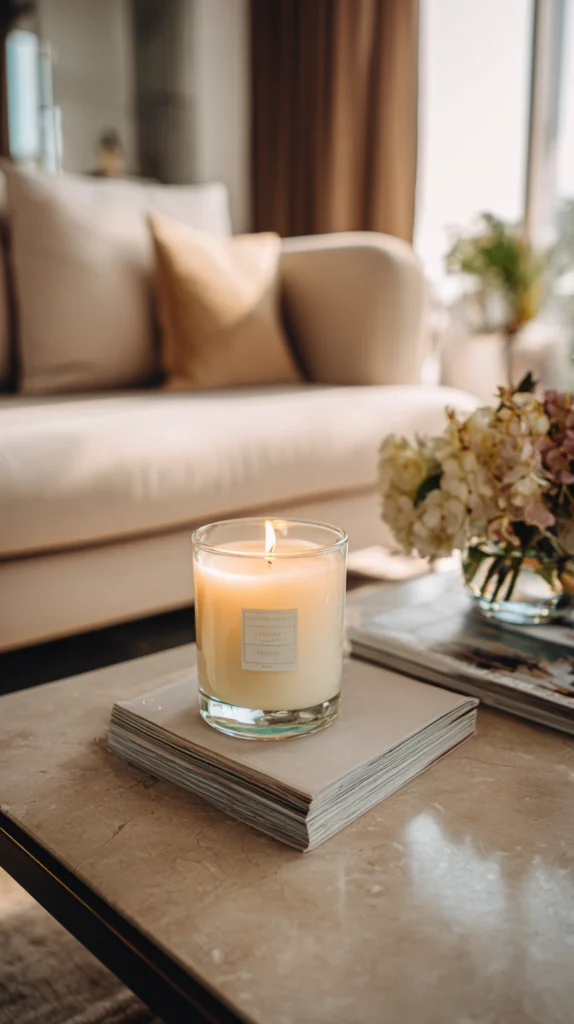
A beautifully packaged scented candle is one of the most practical and most sensory additions available to a coffee table arrangement. It contributes visual warmth through the quality of its vessel and its label, it creates a soft, flickering light at table level when lit, and it introduces fragrance to the room that adds an invisible but profoundly atmospheric dimension to the living space.
Choose a candle in a vessel that suits the arrangement’s aesthetic. a simple white ceramic pot, a glass vessel with a minimal label, or an artisan tin. and select a fragrance that complements the room’s overall atmosphere.
10. Use a Bowl for Collected Objects
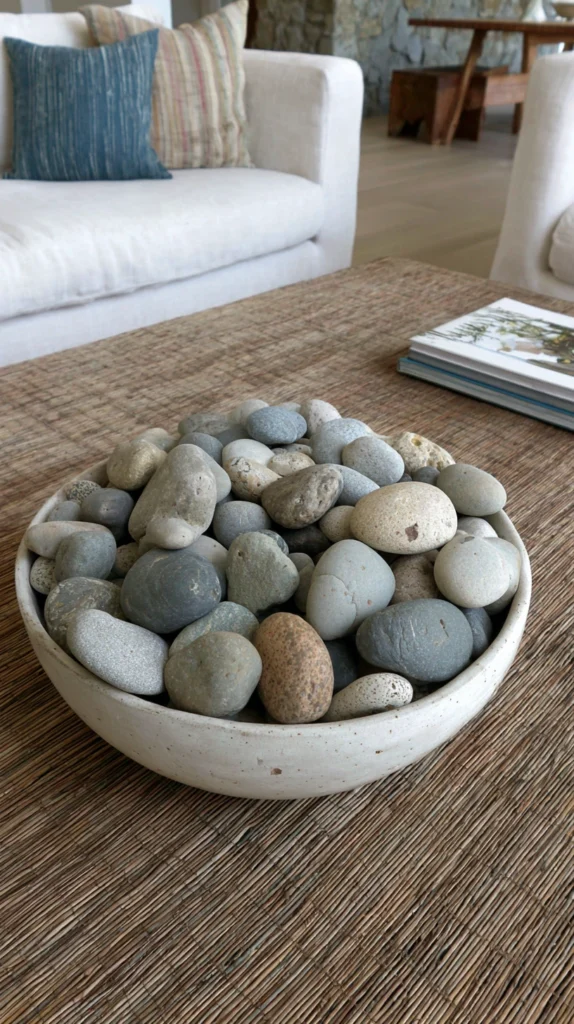
A beautiful bowl placed on the coffee table and filled with a collection of small, related objects. smooth river pebbles in varying grey tones, a selection of sea glass in aquamarine and white, a collection of dried seed pods and botanical specimens, or a handful of beautiful polished stones. creates a coffee table arrangement of considerable natural beauty and collected, personal character.
The bowl contains the objects within a defined visual boundary while allowing their individual qualities of color, texture, and form to be appreciated collectively and individually. This approach suits naturalistic, organic, and eclectic interiors where the beauty of collected natural objects is celebrated as a design value.
11. Layer with a Runner or Cloth
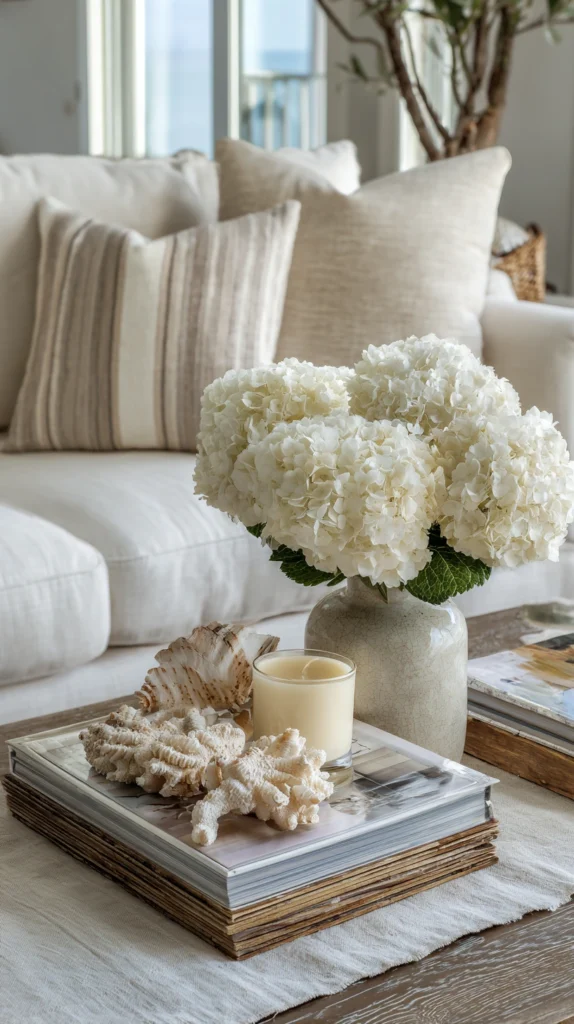
A simple textile element. a short linen runner along the length of the coffee table, a folded piece of fabric in a beautiful texture beneath a tray, or a small woven mat under a significant object. adds a layer of soft material warmth to the coffee table arrangement that hard objects alone cannot provide.
The textile introduces a different material register into the composition, softening the hard surfaces of ceramic, metal, and glass with the warmth and flexibility of fabric. Choose a textile in a natural fiber. linen, cotton, or a woven seagrass mat. that coordinates with the room’s soft furnishings for a cohesive, considered result.
12. Incorporate Personal Objects
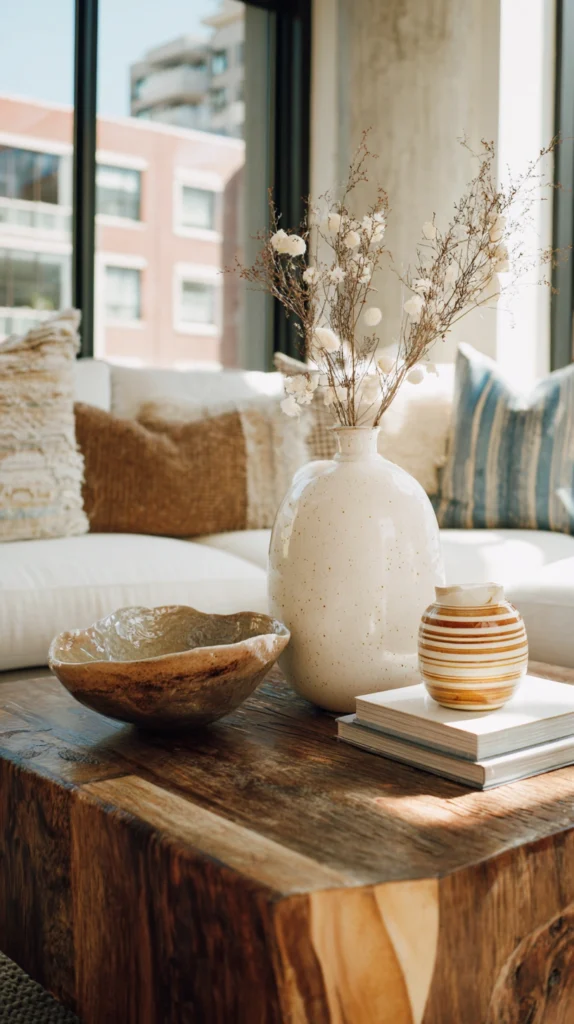
The most genuinely interesting and most personally meaningful coffee table arrangements include at least one object with a specific personal connection. a piece of travel pottery, a book by a significant author, a small sculpture by a local artist, or a natural specimen collected on a meaningful walk.
The personal object gives the arrangement a story and a humanity that generic decorative objects cannot provide, and it creates a natural conversation point for guests who notice and ask about it. Personal objects make a coffee table arrangement feel genuinely inhabited and genuinely lived in rather than showroom-staged and artificially perfect.
13. Edit Ruthlessly and Regularly
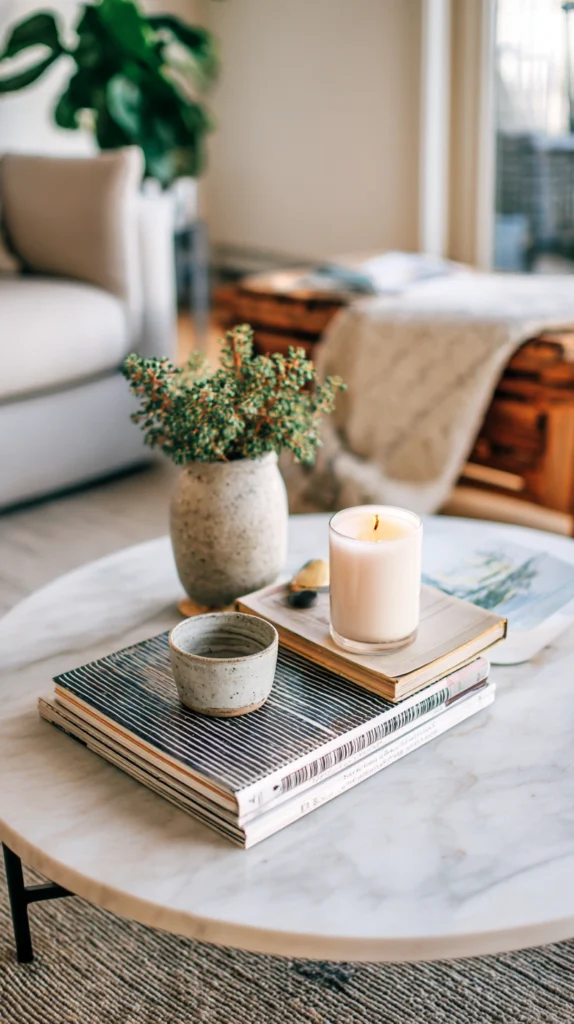
One of the most important principles of coffee table arrangement is the discipline of regular editing. removing objects that no longer contribute to the composition and resisting the temptation to add new objects without removing something else.
A coffee table accumulates objects over time, a remote control here, a magazine there, a glass not yet taken to the kitchen, a small object placed down temporarily and never moved. and this accumulation quickly destroys the considered quality of even the most beautifully arranged composition. Dedicate a few minutes each week to restoring the arrangement to its intended simplicity and intentionality.
14. Arrange for the Season
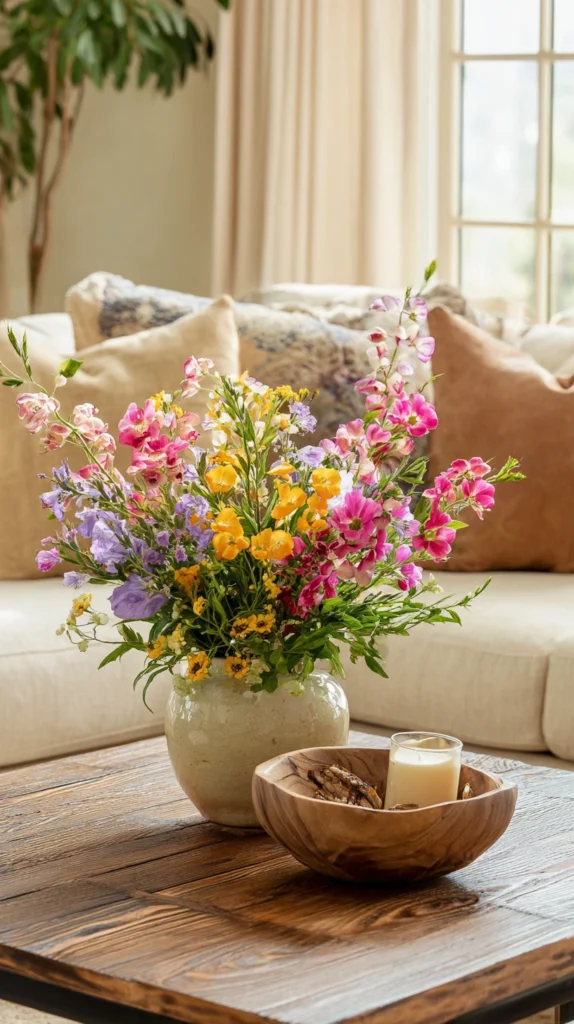
A coffee table arrangement that changes with the seasons creates a living room that stays connected to the natural world outside and signals a level of decorative care and seasonal awareness that a static, permanent arrangement cannot convey.
Spring wildflowers in a simple ceramic vase, summer herbs in terracotta pots, autumn seed heads and dried leaves in a warm bowl, and winter branches with white berries and candlelight all create seasonal coffee table arrangements of genuine beauty and genuine appropriateness. Changing the arrangement four times a year is one of the most low-cost and most impactful decorating interventions available to any homeowner.
15. Trust Restraint Over Abundance
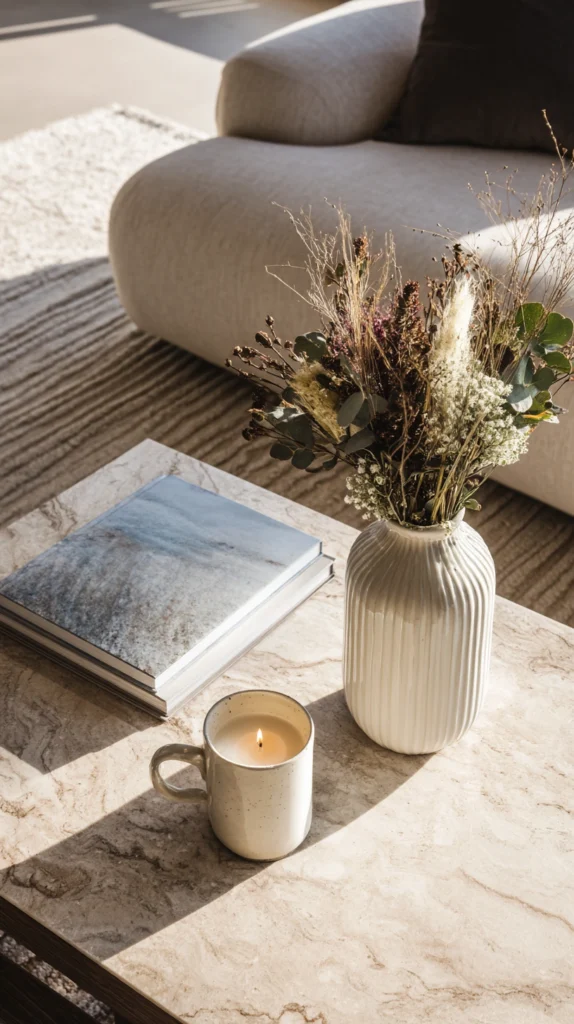
The final and most important coffee table arrangement principle is restraint. The instinct to fill every available surface of the coffee table with objects, plants, books, and decorative accessories produces an arrangement that looks busy, anxious, and visually exhausting rather than calm, considered, and beautiful.
The most genuinely beautiful coffee table arrangements are those that contain fewer, better-chosen objects with deliberate space between them that allows each individual piece to be appreciated clearly. Empty space on a coffee table is not a failure of decoration. It is an intentional design decision that gives the objects within the arrangement room to breathe, to be seen, and to communicate the quiet confidence of a room that knows exactly what it is.
The Coffee Table as a Design Conversation
A beautifully arranged coffee table tells the story of the room it inhabits and the people who live within it. Every object chosen for its surface is a small act of self-expression, every grouping a small act of design thinking, and the cumulative effect of those choices is a living room that feels not just decorated but genuinely and personally inhabited.
Arrange it with care, edit it with discipline, and change it with the seasons, and the coffee table will reward that attention with a quality of daily beauty that the room genuinely deserves.