14 Old Money Bedroom Ideas That Feel Inherited, Not Bought
Old money style isn’t about looking expensive — it’s about looking like nothing was purchased with this specific room in mind at all. The furniture looks collected across generations, the colors are muted rather than trendy, and nothing matches too perfectly. It’s a look built on restraint and quality rather than obvious spending.
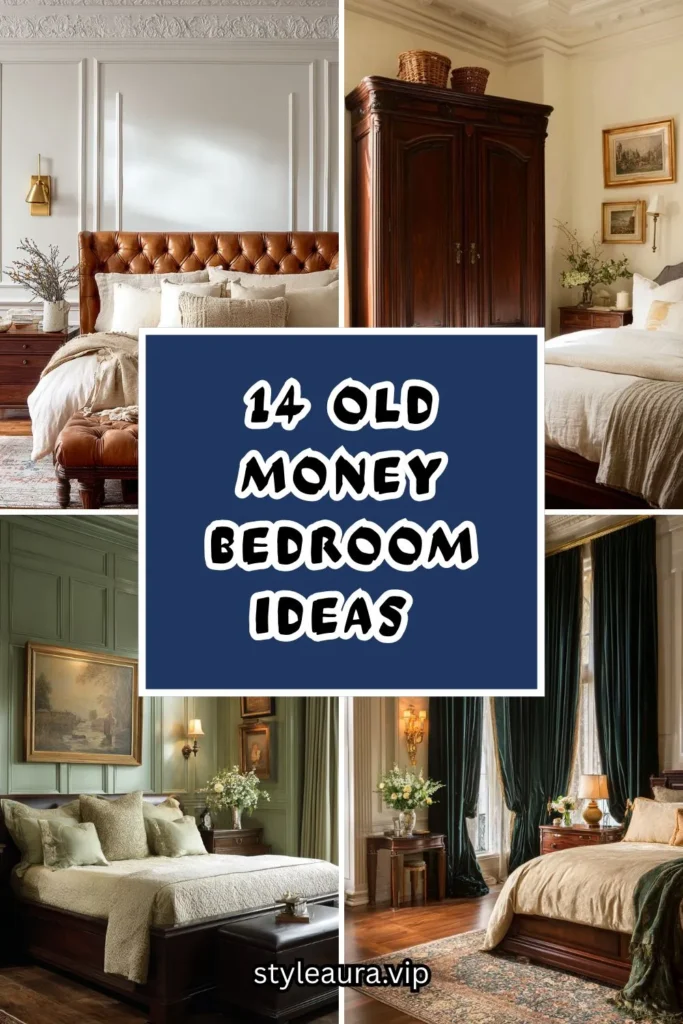
Below are 14 ways to bring old money style into a bedroom, from furniture choices to small styling details, with real numbers on dimensions, material cost, and budget so the room reads as inherited rather than assembled from a single catalog.
Old Money Color Palette
Core neutrals:
- Cream, ivory, soft camel
- Reads timeless rather than trendy
- Works as walls, bedding, or upholstery
- Never bright white or stark black
Traditional accent colors:
- Hunter green, navy, burgundy
- Reads classic and grounded
- Best in smaller doses (trim, pillows, art)
- Avoid saturated or neon versions of these tones
Metal and wood tones:
- Brass, bronze, dark mahogany or walnut
- Never polished chrome or bright gold
- Patina and slight wear are a feature, not a flaw
- Consistency across the room matters more than matching exactly
1. Choose an Antique or Vintage Wood Bed Frame
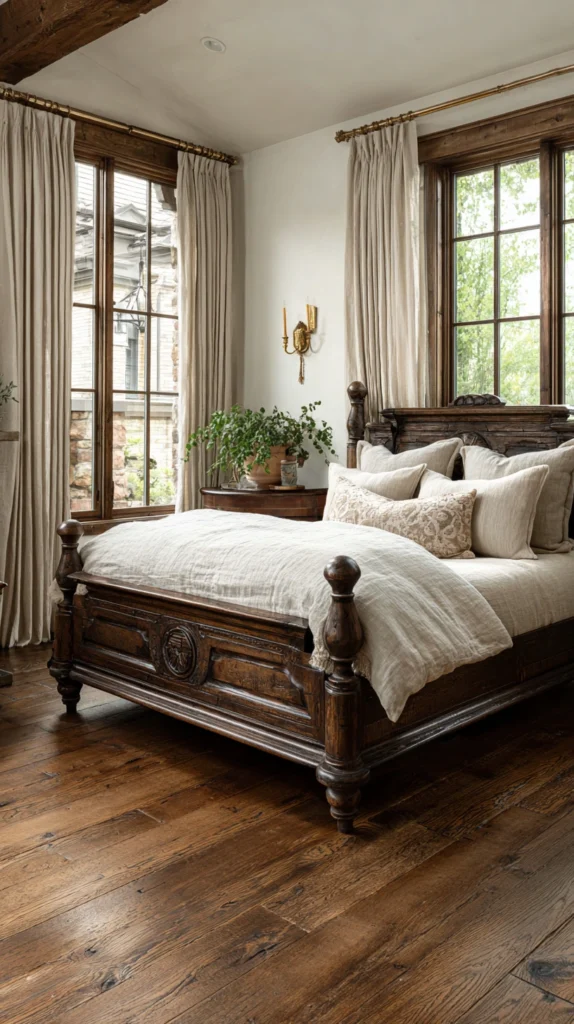
A solid wood bed frame with some age to it, whether a genuine antique or a well-made vintage reproduction, anchors the room in a way new furniture rarely achieves. Standard queen bed frames run 60-65 inches wide, and antique frames often run slightly narrower than modern standard sizing, so measuring carefully against your mattress size matters here.
Budget: $300-900 for a quality antique or vintage wood frame, sourced through estate sales, antique dealers, or secondhand marketplaces. Mahogany, cherry, and walnut frames are among the most common and most in keeping with the traditional old money aesthetic.
A frame with some visible wear — a slightly worn finish, small scuffs, original brass hardware with a bit of tarnish — is more convincing than one in flawless condition, since genuine inherited furniture rarely looks brand new. If the frame needs minor repair, having a furniture restorer address structural issues while leaving the surface patina intact preserves the character that makes the piece feel authentic.
Avoid overly ornate or heavily carved frames unless they match a specific historical style you’re deliberately referencing, since simpler, cleaner lines tend to read as more genuinely old rather than reproduction-heavy.
2. Layer in Chintz or Traditional Floral Fabric
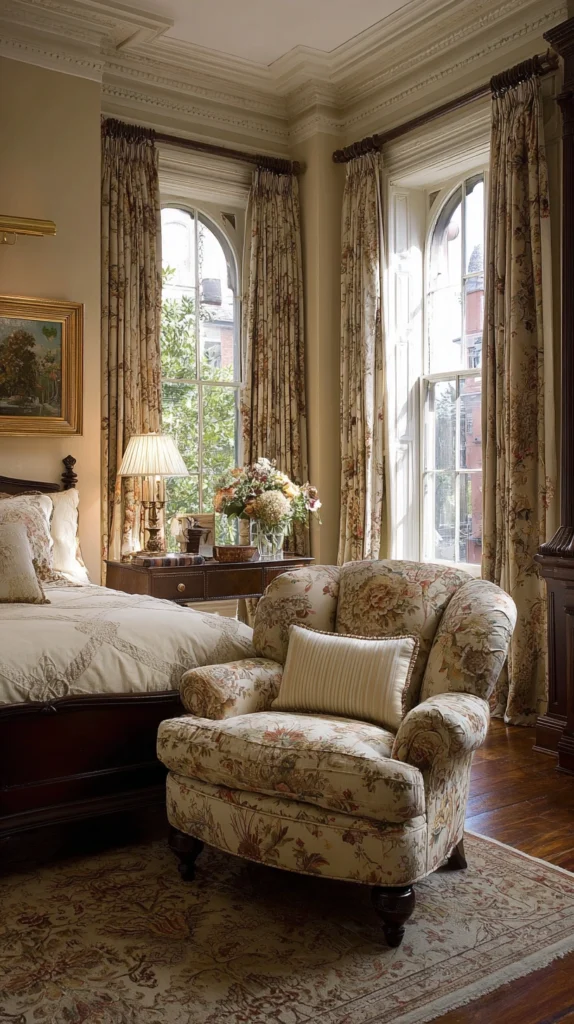
A chintz or small-scale traditional floral fabric, used on a chair, headboard, or set of curtains, brings the slightly formal, English-country character associated with old money interiors. Standard chintz fabric runs $30-60 per yard for a quality cotton print.
Budget: $150-400 for reupholstering a single accent chair in chintz, or $200-500 for a set of floor-length curtains in the same fabric. Committing to just one or two chintz pieces, rather than covering multiple surfaces in the same print, keeps the room from feeling like a themed showroom.
Choosing a muted, slightly faded-looking print over a bright, saturated one matters significantly here, since old money style favors colors that look like they’ve had decades to soften rather than fresh-off-the-shelf saturation. Pairing the chintz piece with solid, more neutral surfaces elsewhere in the room lets the pattern serve as a focal point rather than competing with other busy elements.
This fabric choice works particularly well on a single accent chair positioned near a window, evoking the traditional reading nook found in many older family homes.
3. Add a Freestanding Wardrobe or Armoire
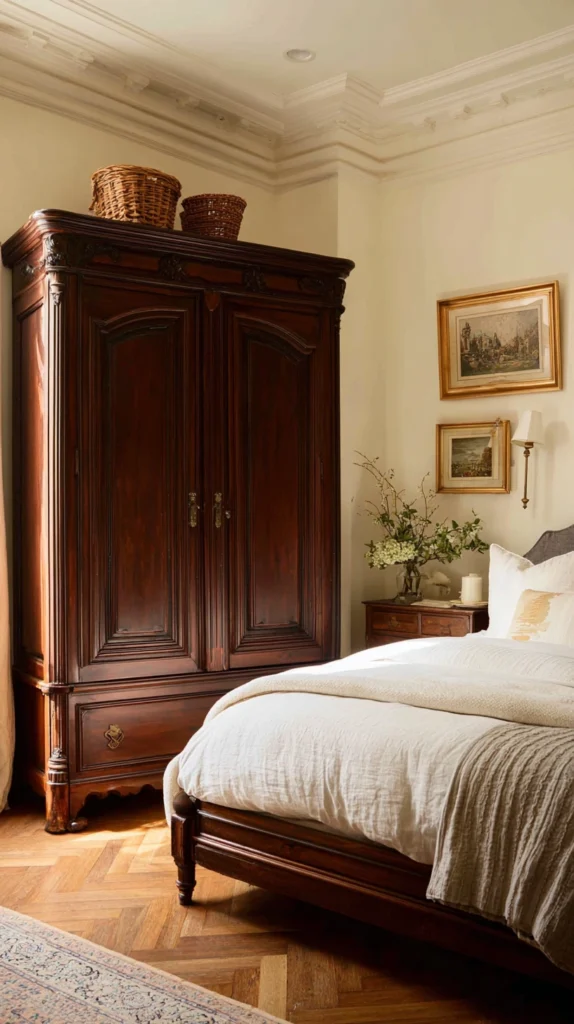
A tall wood wardrobe or armoire, used instead of (or in addition to) built-in closet space, adds both function and the kind of substantial furniture piece associated with older homes built before walk-in closets were standard. Standard armoires run 40-60 inches wide and 70-90 inches tall.
Budget: $400-1,200 for a quality antique or vintage wardrobe, depending on size, wood type, and condition. Mahogany and walnut pieces with original brass hardware tend to command higher prices than simpler pine versions, though both fit the aesthetic depending on the room’s overall formality.
Because armoires are large, heavy pieces, arranging local pickup or professional delivery is worth planning for when purchasing secondhand, since many sellers won’t ship furniture this size. Positioning the armoire against a solid wall with enough clearance for the doors to open fully (typically an additional 24-30 inches of clearance) prevents the piece from feeling cramped in the room.
A slightly mismatched wood tone between the armoire and the bed frame is actually more in keeping with the “collected over generations” feeling than a fully matched bedroom set would be.
4. Use a Persian or Oriental Rug
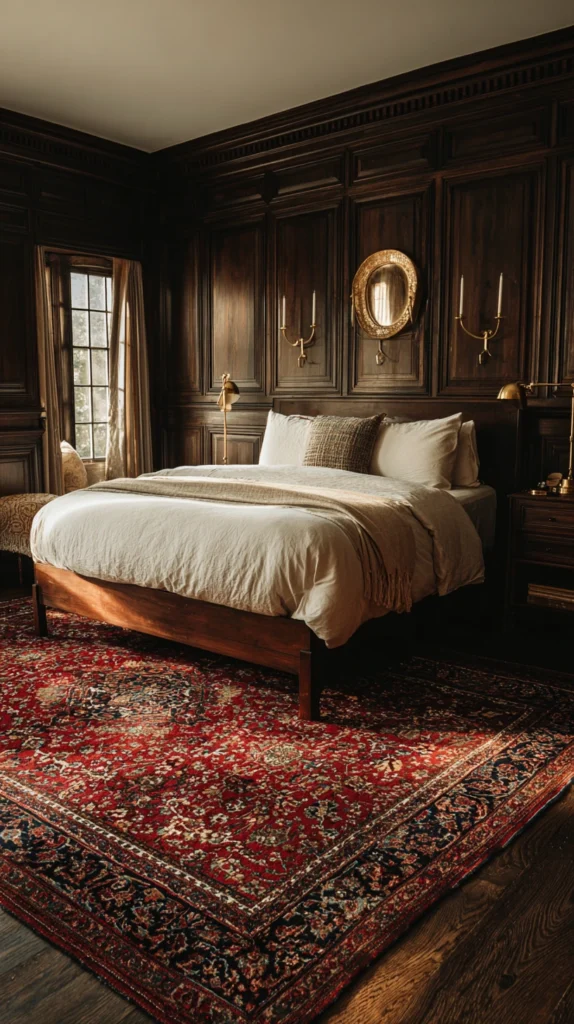
A genuine or high-quality reproduction Persian or Oriental rug is one of the most recognizable old money staples, bringing pattern, color, and a sense of history to the floor. Standard bedroom rugs run 8×10 or 9×12 feet, sized to extend well beyond the edges of the bed frame.
Budget: $300-1,500 for a quality wool rug, with genuine antique or semi-antique pieces commanding significantly more depending on age, origin, and condition. A well-made new reproduction in a traditional pattern is a more budget-friendly way to achieve a similar look without the cost of an authentic antique.
Layering a smaller Persian rug over wall-to-wall carpet, rather than trying to replace existing flooring, is a practical way to introduce this element in a rental or a room where a full flooring change isn’t feasible. Choosing deeper, more muted colors (burgundy, navy, forest green) over brighter jewel tones keeps the rug feeling appropriately aged rather than freshly dyed.
A rug with some visible wear, particularly at the edges or in high-traffic areas, is actually a point in its favor for this aesthetic, since it suggests genuine age and use rather than a recent purchase.
5. Add Brass or Bronze Hardware Throughout
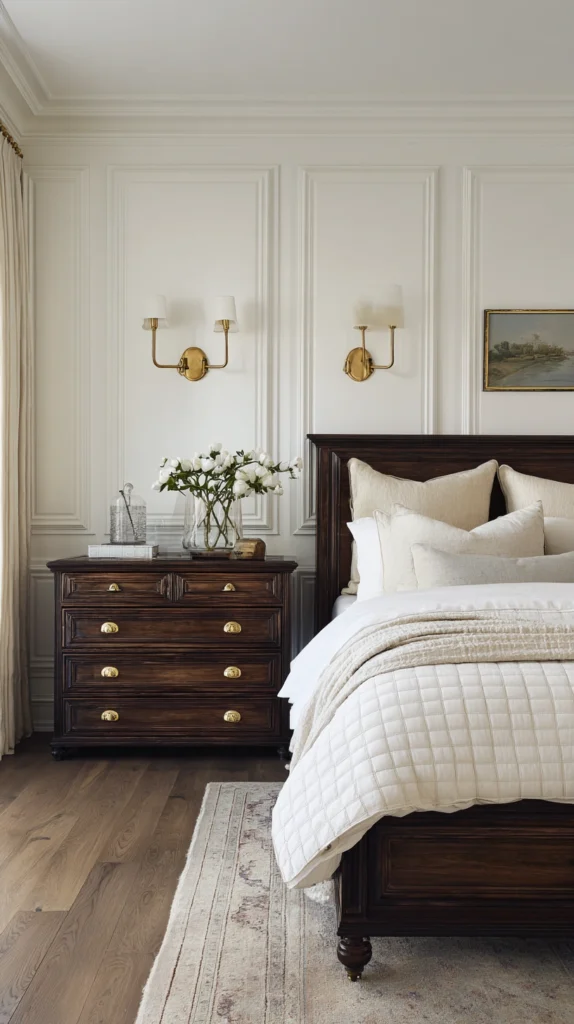
Aged, unlacquered brass hardware on dressers, nightstands, and door handles reinforces the warm, slightly tarnished metal tones central to old money style. This includes drawer pulls, doorknobs, and even curtain rods throughout the room.
Budget: $80-200 for a full hardware swap across a dresser and pair of nightstands, depending on the quality and style of pulls chosen. Unlacquered brass, which will continue to develop natural patina over time, is worth the investment over a lacquered finish that stays artificially shiny.
Sourcing secondhand hardware from architectural salvage shops often provides genuinely aged brass at a lower cost than new reproduction pieces, and the existing patina saves years of natural aging. Keeping all the metal tones in the room consistent, rather than mixing brass with chrome or nickel, is essential to maintaining the cohesive, old-world look this style depends on.
Avoiding polished, bright brass in favor of a duller, slightly aged finish is what separates this look from a more contemporary brass trend that reads as new rather than inherited.
6. Display Leather-Bound Books as Decor
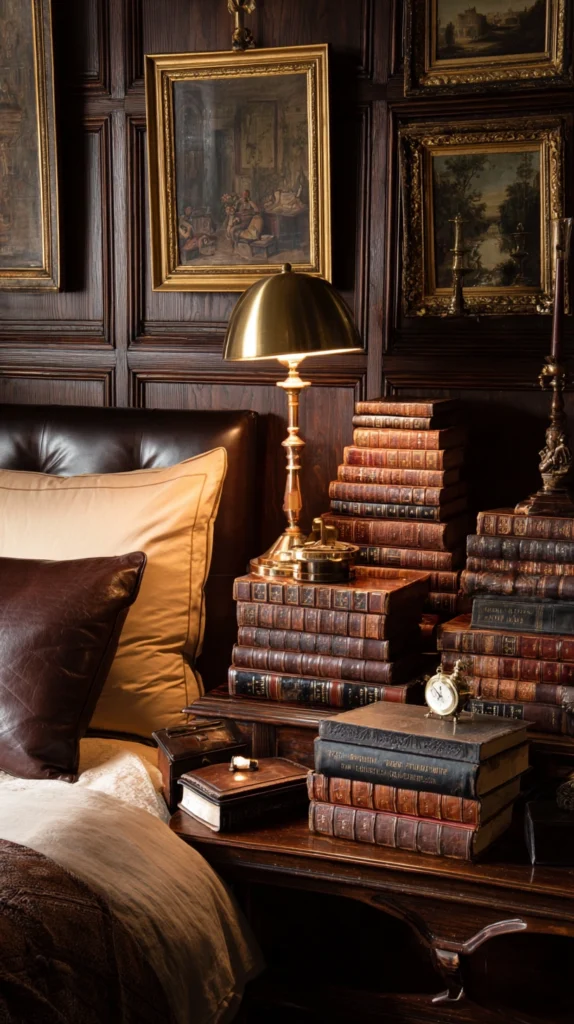
A small collection of leather-bound or cloth-bound books, whether on a nightstand, a shelf, or stacked on a bench at the foot of the bed, suggests an intellectual, well-established household rather than a room styled purely for appearance. Standard hardcover books run 6-9 inches tall, easy to incorporate into almost any surface in the room.
Budget: $5-25 per book if sourcing secondhand from used bookstores or estate sales, making this one of the more affordable ways to build genuine old money character into the room over time. Building a small collection gradually, rather than buying a large matched set of decorative-only books, keeps the look feeling authentic rather than staged.
Choosing books with worn, slightly faded spines over pristine new editions matches the aesthetic more convincingly, and older editions of classic literature are often the most affordable and widely available option at secondhand shops. Stacking 2-3 books horizontally with a small object (a paperweight, a small framed photo) on top is a classic styling technique that works well on a nightstand or dresser.
This is one of the lowest-cost ways on this list to add authentic-feeling character, since the books can be genuinely read and enjoyed rather than serving as purely decorative props.
7. Add a Tufted Chesterfield-Style Bench
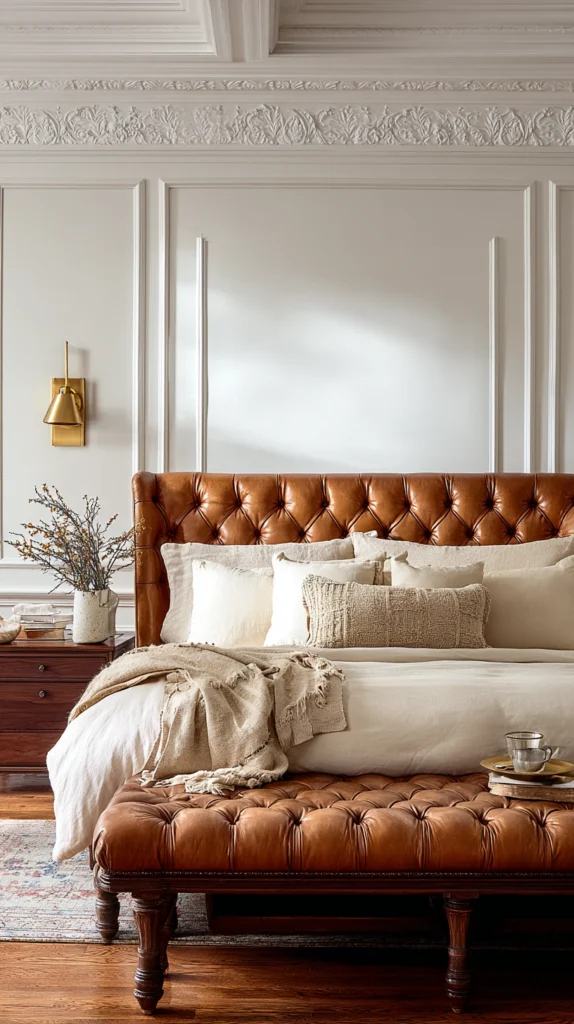
A leather or velvet tufted bench at the foot of the bed brings both function (a spot to sit while dressing) and the traditional English furniture silhouette associated with old money interiors. Standard bedroom benches run 40-50 inches wide, sized to fit most of the width of a queen or king bed frame.
Budget: $250-600 for a quality tufted bench in leather or velvet, depending on size and material. A slightly worn, cognac-colored leather bench reads more authentically aged than a bright or heavily distressed version.
Positioning the bench with a few inches of clearance from the bed frame allows enough space to actually sit and put on shoes without feeling cramped against the bedding. Pairing a leather bench with a wool or cashmere throw draped over one arm adds a layer of texture and suggests a room that’s actually lived in rather than staged purely for photographs.
This is one of the more functional additions on this list, offering genuine daily use in addition to its role in completing the room’s overall look.
8. Use Monogrammed or Embroidered Linens
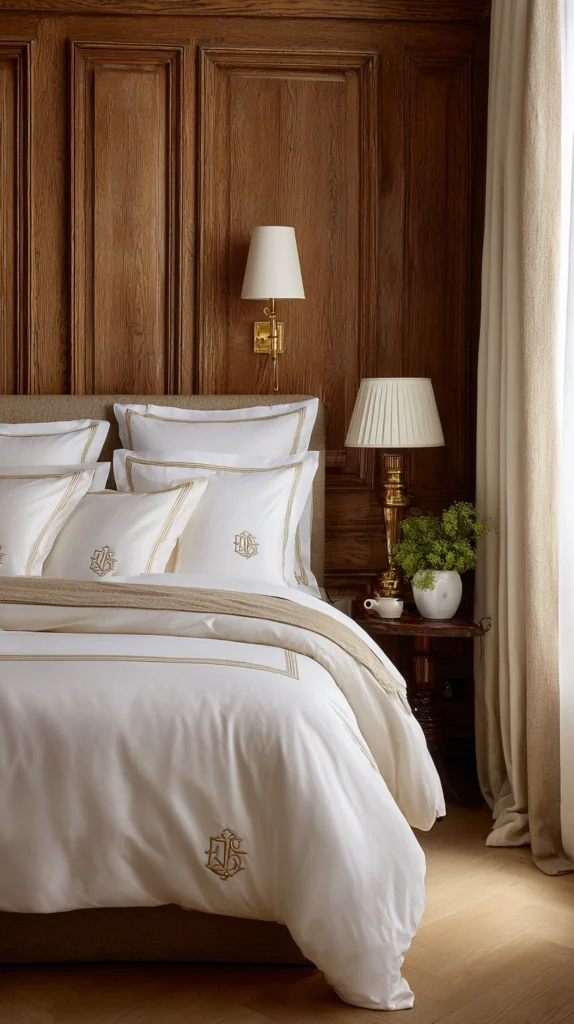
Monogrammed pillowcases, a monogrammed robe draped over a chair, or embroidered hand towels suggest a household with a long-established sense of personal identity and tradition. Standard monogram sizing runs 1-2 inches tall on pillowcases and linens.
Budget: $40-120 for a set of monogrammed pillowcases, depending on fabric quality and embroidery detail. Cotton percale or a linen blend holds embroidery more crisply than very soft, worn-in jersey fabric.
Choosing a classic serif font for the monogram, rather than a modern or overly decorative script, matches the traditional aesthetic more convincingly and tends to age better stylistically over time. This detail works particularly well paired with simple, solid-colored bedding, since the embroidery itself becomes the primary decorative element rather than competing with a patterned duvet.
This is a subtle detail that many guests may not consciously notice, but it contributes meaningfully to the overall sense that the room belongs to someone with an established, particular sense of personal history.
9. Add an Antique or Vintage Mirror
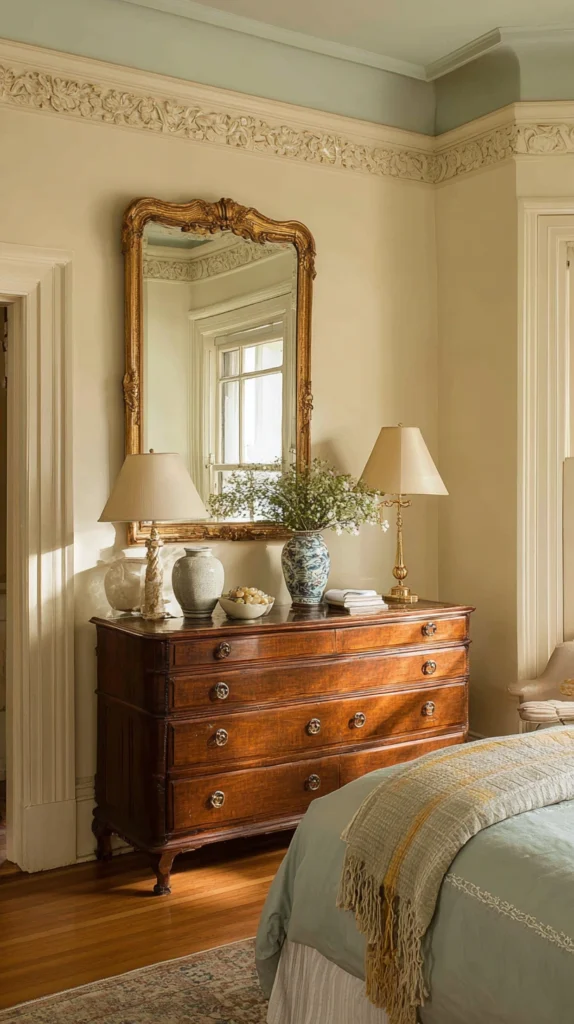
An aged, slightly foxed mirror in a wood or gilt frame brings both function and a genuine sense of history to a bedroom, particularly when hung above a dresser or vanity. Standard bedroom mirrors run 24-36 inches wide for a dresser-top mirror, or larger for a full-length floor version.
Budget: $80-350 depending on size, frame material, and whether the mirror shows authentic age-related foxing (the dark spotting that develops on old mirror backing). A mirror with some visible age in the glass itself, rather than a perfectly clear modern mirror in an “antiqued” frame, delivers a more convincing result.
Sourcing a genuinely old mirror through an antique shop or estate sale often costs less than a new mirror manufactured to mimic the same aged look, since new “antiqued” mirror glass is a more specialized and costly manufacturing process. Hanging the mirror at a slight tilt, angled down a few degrees from vertical, is a traditional placement technique for a dresser-top mirror that also improves its practical reflection angle.
A gilt or carved wood frame with some worn gold leaf is particularly in keeping with this aesthetic, especially when paired with the brass hardware used elsewhere in the room.
10. Choose Muted, Traditional Wall Colors
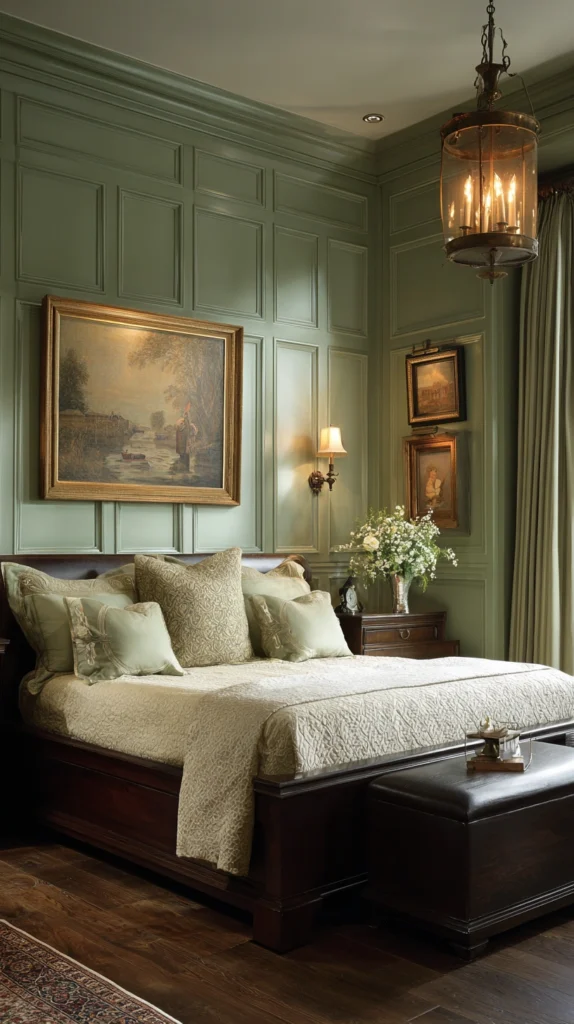
Soft, slightly dusty colors — sage green, warm cream, dusty blue, or a muted burgundy — read as considered and long-standing rather than trend-driven. A standard 10×12 bedroom wall (about 120 sq ft) needs roughly one gallon of paint per coat.
Budget: $50-80 for one gallon of quality paint in a traditional, muted tone. Avoiding anything overly bright, neon, or highly saturated is essential here, since old money style favors colors that look like they could have been chosen decades ago and still feel appropriate today.
A classic technique in this style is painting the trim, moldings, and sometimes the ceiling in a slightly different shade of the same base color, rather than a stark contrasting white, which creates a more layered, traditional look than a typical modern paint scheme. This tonal approach is more commonly seen in older, formally decorated homes than the high-contrast color blocking popular in more contemporary design trends.
Testing paint swatches under both natural and lamp light over a few days helps confirm the color reads as intended, since muted tones can shift more noticeably under different lighting than bold, saturated colors would.
11. Add a Writing Desk With a Leather Blotter
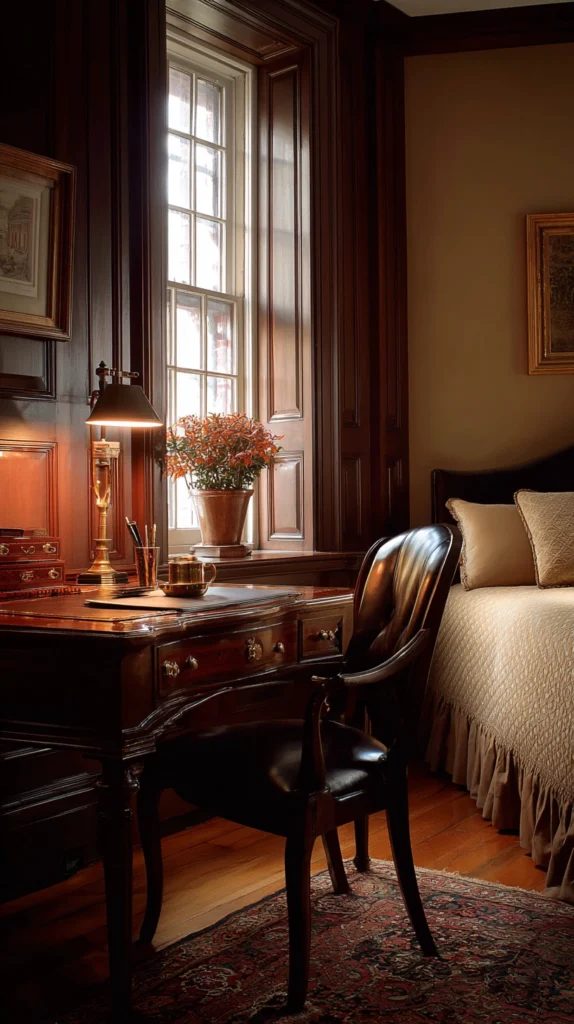
A small wood writing desk, ideally with some age and character, paired with a leather desk blotter and a simple brass desk lamp, suggests a bedroom belonging to someone who reads, writes letters, and keeps a personal study space. Standard writing desks run 36-48 inches wide, small enough to fit in a bedroom corner without overwhelming the space.
Budget: $200-600 for a quality vintage or antique writing desk, plus $30-60 for a leather blotter and $60-150 for a brass desk lamp. A rolltop or slant-front desk style is particularly traditional, though a simple flat writing table works just as well if space is limited.
Positioning the desk near a window, if possible, provides natural light for reading or writing and reinforces the sense that the space gets genuine daily use rather than serving purely as decor. Adding a small stack of stationery, a fountain pen, or a leather-bound journal on the desk surface completes the vignette without requiring significant additional cost.
This is one of the more functional pieces on this list, offering an actual workspace in addition to its contribution to the room’s overall character.
12. Use Velvet or Wool Curtains in a Traditional Color
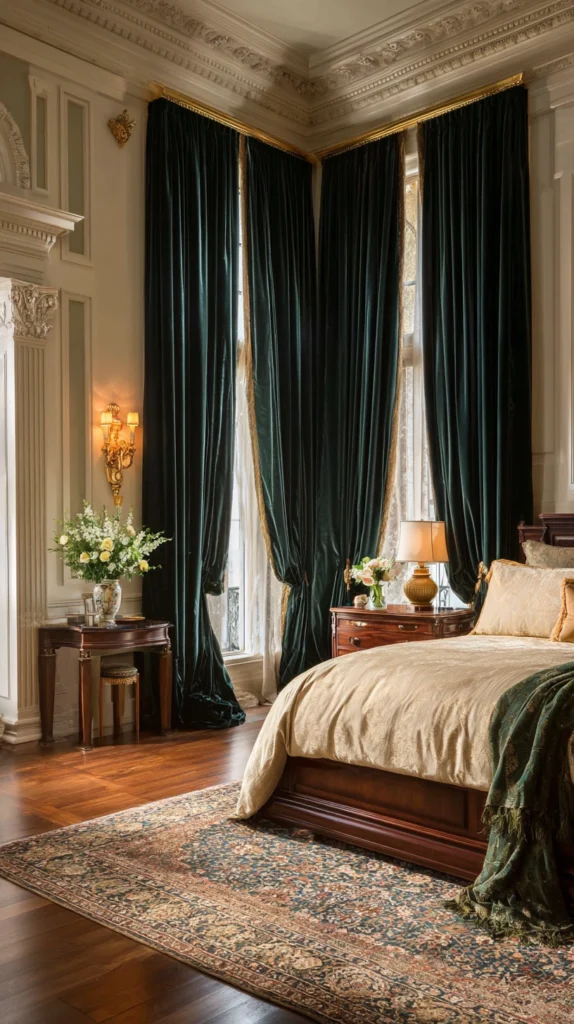
Heavy, floor-length curtains in a deep velvet or wool in navy, hunter green, or burgundy bring both warmth and formality to a bedroom’s windows. Standard curtain panels should extend from just above the window frame to the floor, sized to 1.5-2x the window width per pair for a properly gathered look.
Budget: $150-400 for a quality velvet or wool curtain pair, depending on window size and fabric weight. Heavier fabrics hold their shape and drape more convincingly than lightweight cotton or polyester, which is an important distinction for this particular aesthetic.
Adding simple brass curtain rings and a matching brass rod ties this element back to the hardware used elsewhere in the room, reinforcing the consistent metal tone that holds the whole look together. A traditional pleated header style, rather than simple grommets, is more in keeping with the formal, tailored look associated with old money interiors.
These curtains also provide genuinely better light blocking and insulation than lighter fabric options, adding practical value alongside the visual impact.
13. Display a Collection of Framed Family-Style Photos
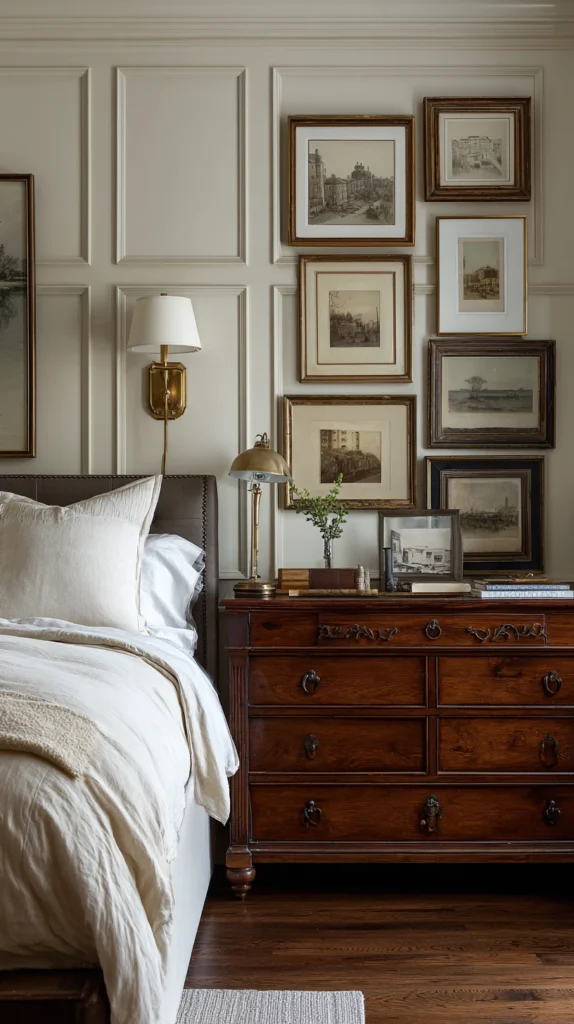
A grouping of framed photos in mismatched antique or vintage-style frames, whether genuine family photos or simply well-chosen vintage-style portraits, suggests generational continuity within the room. Plan for a grouping of 5-8 frames in varying sizes across a dresser top or a small gallery wall.
Budget: $60-150 for a set of mismatched vintage or vintage-style frames, sourced from antique shops, estate sales, or secondhand marketplaces. Silver, brass, and dark wood frames in varying styles read as more authentically collected than a matched set purchased all at once.
If using actual family photos, choosing a mix of black-and-white and color images from different decades reinforces the sense of a collection built up naturally over time rather than curated for a single decorating project. For those without a personal photo archive to draw from, vintage-style photography (found through antique shops or print reproductions) can achieve a similar visual effect.
Arranging the frames in a slightly irregular, asymmetrical cluster rather than a perfectly even grid contributes to the sense that the collection grew naturally rather than being installed all at once.
14. Add a Cashmere or Wool Throw Blanket
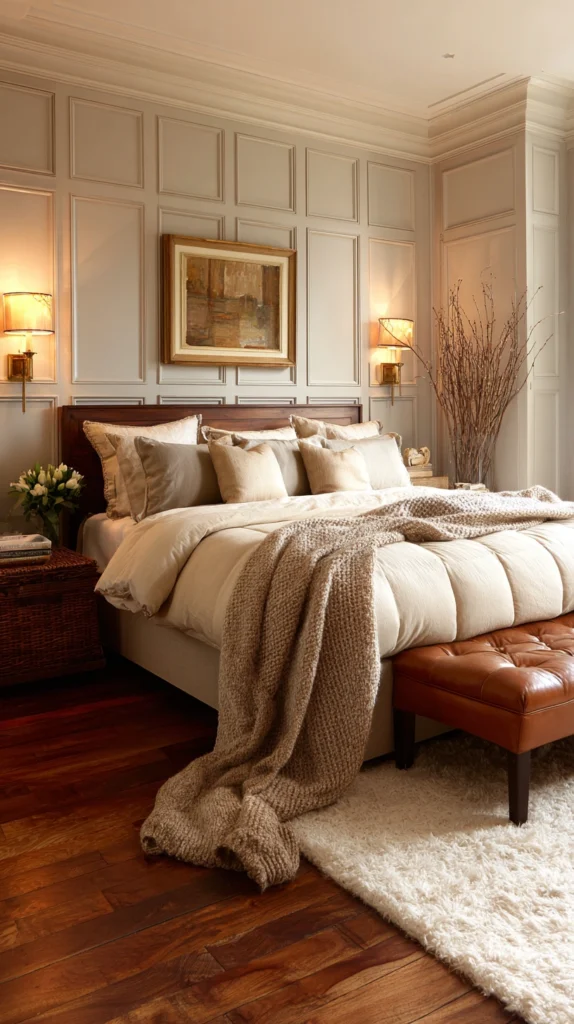
A high-quality cashmere or wool throw, draped over the foot of the bed or an accent chair, adds texture and a sense of understated luxury without any loud branding or obvious display of cost. Standard throw blankets run 50×60 inches, sized to drape naturally without overwhelming the furniture piece it’s placed on.
Budget: $80-250 for a quality cashmere or wool-blend throw, with pure cashmere costing more than a wool or cashmere-blend option, though the blended versions are often difficult to distinguish visually once styled in the room. Choosing a solid, muted color (camel, cream, charcoal) rather than a bold pattern keeps the piece understated in keeping with the overall aesthetic.
Draping the throw in a loose, slightly asymmetrical fold rather than perfectly squared corners looks more natural and less like a styled photo shoot. This is one of the smaller investments on this list, but the tactile quality of a genuine cashmere or wool blend is immediately apparent and contributes meaningfully to the room’s sense of quiet, understated quality.
This piece works well alongside the leather bench described earlier in this list, layering texture at the foot of the bed in a way that feels intentional but not overly staged.
Quick Start Shopping List
This weekend, under $150:
- Two or three secondhand leather-bound books: $30
- A vintage-style picture frame or two: $30
- A small brass or bronze decorative object: $40
- A muted-tone throw pillow cover: $30
Budget-Friendly Version
Lowest-cost ways to start:
- Secondhand books and vintage frames from thrift stores
- A single chintz or traditional floral accent pillow
- Vintage hardware swaps on existing furniture
- A layered smaller rug over existing carpet or flooring
Where to Find Old Money Pieces
Estate sales are consistently one of the best sources for genuinely aged furniture, books, mirrors, and small decorative objects, often priced well below what similar pieces command in antique shops.
Antique malls and architectural salvage yards are particularly good sources for hardware, mirrors, and smaller furniture pieces, since vendors specialize in exactly this kind of collected, aged inventory.
Secondhand bookstores are the most affordable and reliable source for the leather-bound and hardcover books central to this aesthetic, often selling for a small fraction of their original cover price.
Local auction houses, including smaller regional ones, frequently sell furniture and decorative items at prices well below retail, particularly for pieces that aren’t from a widely recognized maker or period.
Success Indicators
- Room feels collected over time, not purchased in a single trip
- Metal tones and wood finishes feel consistent throughout
- At least a few pieces show genuine, visible age or wear
- Guests describe the room as “timeless” rather than “trendy”
- Nothing in the room looks like it was bought specifically to match everything else
Remember
Prioritize genuine secondhand and antique pieces over new furniture styled to look old, since authentic wear and patina are difficult to convincingly fake, keep the color palette muted and traditional rather than bold or trend-driven, maintain consistency in metal tones (brass or bronze) throughout the room rather than mixing several different finishes, embrace some visible imperfection and mismatch in furniture and objects rather than seeking a fully coordinated set, and treat this as a room built gradually over months or years rather than one that needs to be finished in a single shopping trip.