13 Moroccan Living Room Ideas for an Exotic Cozy Vibe
The floor cushions changed how my living room got used more than any single furniture piece I have bought since. Not the new sofa. Not the area rug. Not the lighting or the artwork or the rearranged seating.
The low, layered seating itself.
Because sitting close to the ground, surrounded by pattern and warm lamplight, did something a standard sofa-and-armchair arrangement never quite managed. Before it: a living room arranged the way every other living room on the street was arranged, technically comfortable but visually indistinct. After it: a room that felt like its own destination, rich with color and texture, guests lingering on cushions long after they would have left a more conventional seating arrangement.
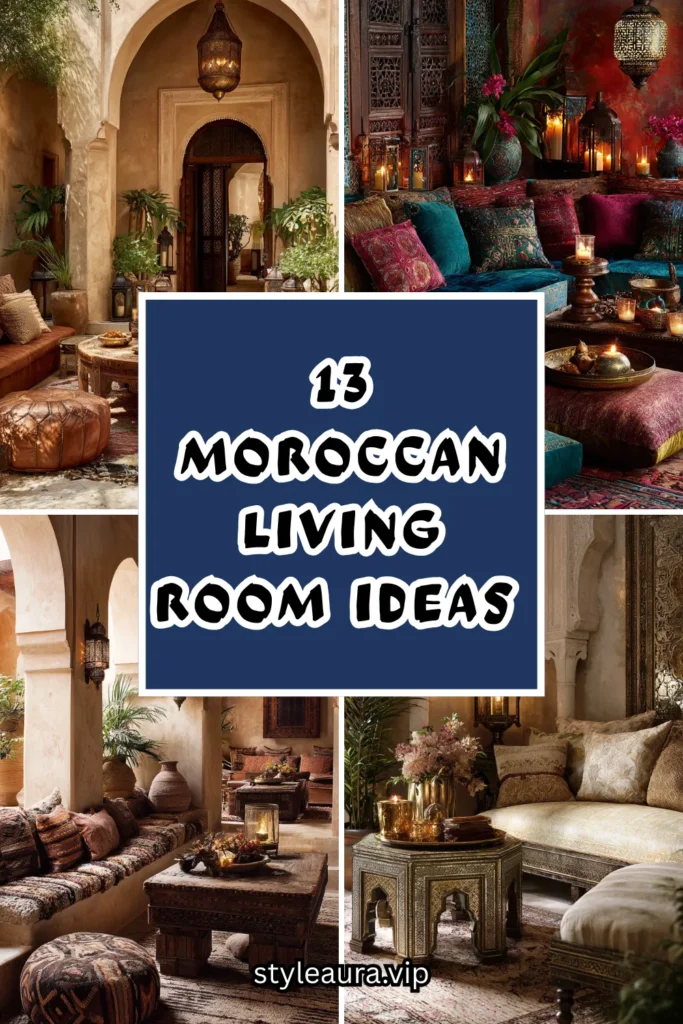
A Moroccan-inspired living room is not a themed room built from souvenir shop purchases. It is a genuine design tradition, built from specific materials — hand-knotted rugs, carved wood, hammered metal, richly patterned textiles, and warm, layered lighting — that together create an atmosphere distinctly different from a typical Western living room’s usual restraint. The room: no longer following a familiar formula, but building its own genuinely exotic, cozy character.
Here are 13 Moroccan living room ideas for an exotic cozy vibe — from the simplest textile layer to the most fully immersive room — built on that understanding.
Why Moroccan Design Creates Genuine Coziness Rather Than Just Exotic Flair
The layering principle
Moroccan interior tradition depends heavily on genuine material layering — rugs upon rugs, cushions in varied patterns, multiple light sources at different heights — rather than the more restrained, single-layer approach common in much Western design.
The low-seating comfort case
Without low, layered seating:
A room arranged entirely around standard-height furniture, functional but offering only one specific way to sit and gather.
The room: comfortable in a familiar, conventional way, without the more relaxed, communal feeling low seating naturally encourages.
With low, layered seating:
Floor cushions, low poufs, and a low table, encouraging a more relaxed, communal way of gathering, genuinely different from a standard sofa-and-coffee-table arrangement.
The room: fostering longer, more relaxed gatherings, the physical posture itself shifting how people settle in and stay.
The pattern confidence
Moroccan design embraces bold, saturated pattern and color far more confidently than much contemporary Western design, and that confidence, applied thoughtfully, is central to the aesthetic’s genuine warmth rather than a purely decorative choice.
The craft authenticity
Genuine hand-knotted rugs, hand-carved wood, and hammered metal carry real craft history and texture that mass-produced, machine-made reproductions cannot fully replicate, worth prioritizing wherever the budget allows for the most authentic and durable result.
The Five Materials That Define Moroccan Design
Before styling any specific element:
Hand-knotted rugs and textiles
Berber rugs, kilims, and richly patterned textiles, layered rather than used singly.
The foundation most other elements are built upon.
Provides both pattern and genuine tactile warmth underfoot.
Carved and inlaid wood
Low tables, screens, and doors, often featuring geometric carving or mother-of-pearl inlay.
Adds craft-driven detail and warm material tone.
Works at both furniture and small-object scale.
Hammered and pierced metal
Brass and copper lanterns, trays, and small accents, often featuring pierced or engraved patterns.
Provides the room’s characteristic warm glow once lit.
The single most recognizable material signifier of the aesthetic.
Rich, saturated textiles
Jewel-toned velvet, embroidered fabric, and patterned cushion covers.
Adds color and softness in genuine abundance rather than restraint.
Layered rather than used as a single accent.
Warm, layered lighting
Pierced metal lanterns, low table lamps, and candles, providing light at multiple heights.
Essential to the aesthetic’s characteristic warm, dappled glow.
Transforms the same room dramatically between daytime and evening use.
1. The Layered Berber Rug Foundation
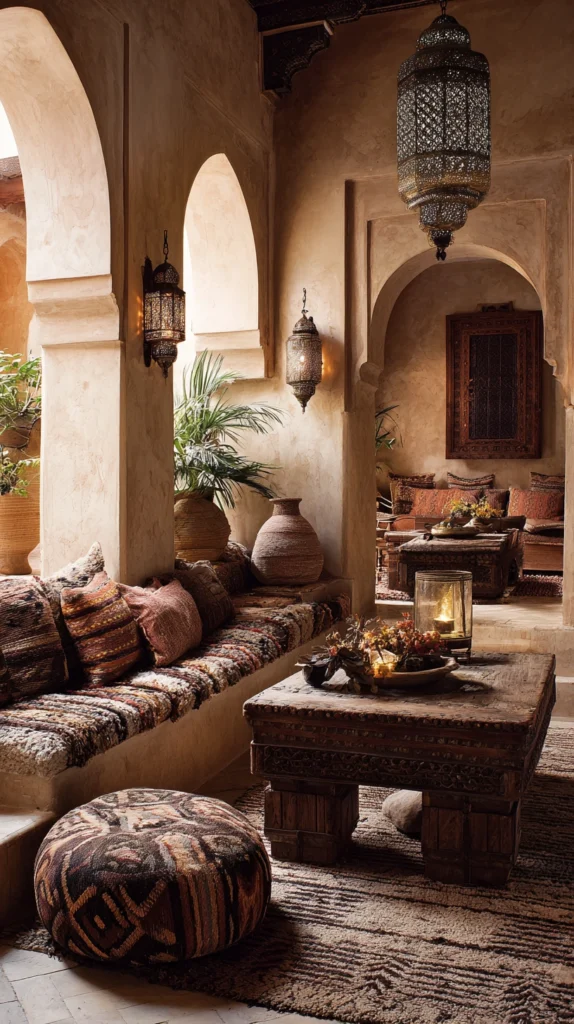
Two or more Berber or kilim rugs, layered atop each other, forming the room’s textural and visual foundation before any furniture is arranged.
Why layered rugs are the single most important starting point
In genuine Moroccan interior tradition, rugs are rarely used singly — layering different patterns, weaves, and pile heights creates the room’s foundational richness, a principle worth establishing before any other design decision.
The base rug
A larger, flatter kilim or a plain-woven rug, spanning the seating area’s full footprint, providing the foundational layer beneath everything else.
The top layer
A smaller, more richly patterned Berber rug, in the room’s central seating zone, adding pile texture and pattern atop the flatter base layer.
The pattern relationship
Geometric Berber patterns in warm earth tones — rust, cream, black — paired with a simpler kilim in a complementary but less busy pattern, avoiding two equally dense patterns competing directly.
The material authenticity
Genuine hand-knotted or hand-woven rugs, sourced from a specialty importer or a reputable secondhand market, offering both authentic craft quality and durability well beyond a machine-made reproduction.
The overall effect
A floor with genuine depth and richness, establishing the room’s material foundation before any furniture or lighting decisions are made.
Cost breakdown: Base kilim rug: $150–400 Berber accent rug: $200–600 Total: $350–1,000
2. The Low Floor Cushion Seating Arrangement
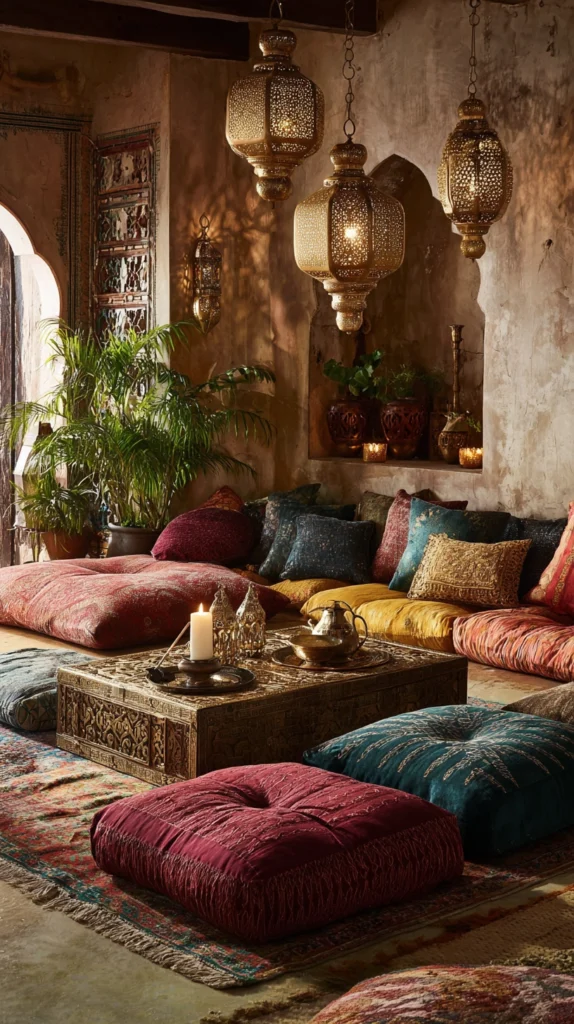
Floor cushions and low poufs arranged around a small central table, replacing or supplementing a standard sofa-and-armchair configuration for genuinely low, communal seating.
Why low seating changes the room’s entire social dynamic
Floor-level seating naturally encourages a more relaxed, communal way of gathering, guests settling in for longer, more casual conversation than a room arranged entirely around upright, formal furniture typically invites.
The cushions
Large floor cushions in rich, varied patterns and jewel tones, arranged in a loose circle or along the room’s perimeter rather than lined up uniformly.
The poufs
Leather or embroidered poufs, providing a slightly more supportive, mid-height seating option among the lower floor cushions, adding variety in both height and material.
The central table
A low, carved wood table at the seating arrangement’s center, sized appropriately for drinks and food shared among the floor-level seating.
The mixed pattern approach
Cushions in genuinely varied patterns and colors, rather than a single matched set, echoing the same collected, layered quality central to the broader aesthetic.
The overall effect
A seating arrangement that fundamentally changes how the room gets used, encouraging a longer, more relaxed style of gathering distinct from a standard upright furniture arrangement.
Cost breakdown: Floor cushions (6–8): $120–250 Poufs (2–3): $80–200 Low carved table: $150–400 Total: $350–850
3. The Hammered Brass Lantern Lighting
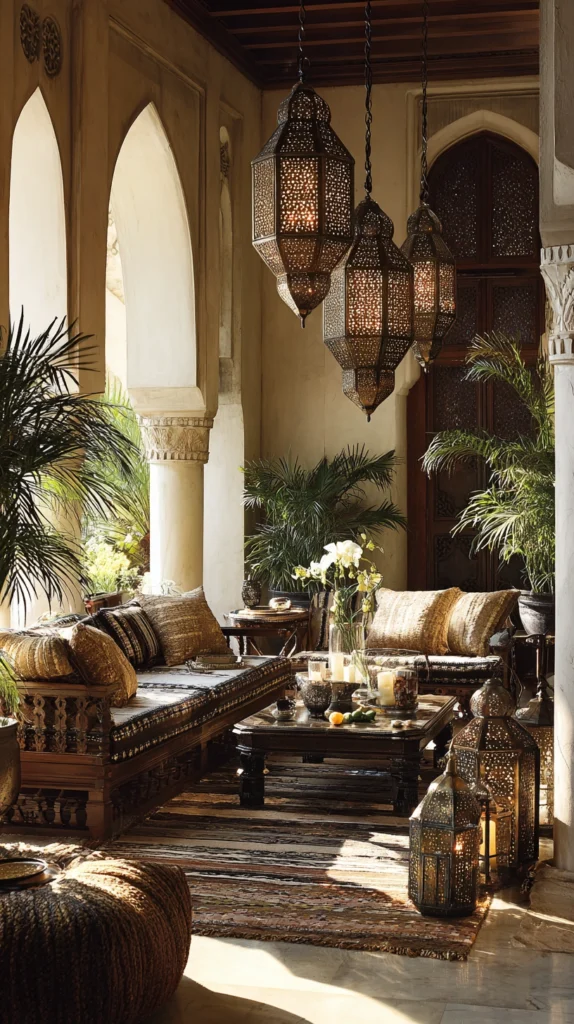
A collection of pierced or hammered brass lanterns, hung at varying heights or clustered on side tables, providing the room’s characteristic warm, dappled light.
Why pierced metal lighting is the aesthetic’s most recognizable single element
The specific quality of light cast through a pierced brass lantern — dappled, warm, and full of shifting shadow patterns — is arguably the single most immediately recognizable visual signature of Moroccan-inspired interior design.
The lantern selection
A mix of hanging and table lanterns, in varying sizes, each featuring genuine pierced metalwork rather than a plain, unadorned shade.
The hanging arrangement
Multiple lanterns hung at different heights, rather than a single central fixture, creating the same varied, rhythmic lighting pattern relevant to any well-considered lighting layer.
The bulb warmth
Warm, low-wattage bulbs, essential to achieving the lanterns’ full dappled, glowing effect rather than a bulb bright enough to wash out the pierced pattern’s shadow play.
The material authenticity
Genuine hand-hammered and hand-pierced brass or copper, offering both authentic craft quality and a richer, more varied light pattern than a machine-stamped reproduction.
The overall effect
The room’s characteristic warm, dappled evening glow, arguably the single most important lighting decision for genuinely capturing this specific aesthetic.
Cost breakdown: Brass lanterns (4–6, mixed sizes): $100–300 Total: $100–300
4. The Carved Wood Screen or Room Divider
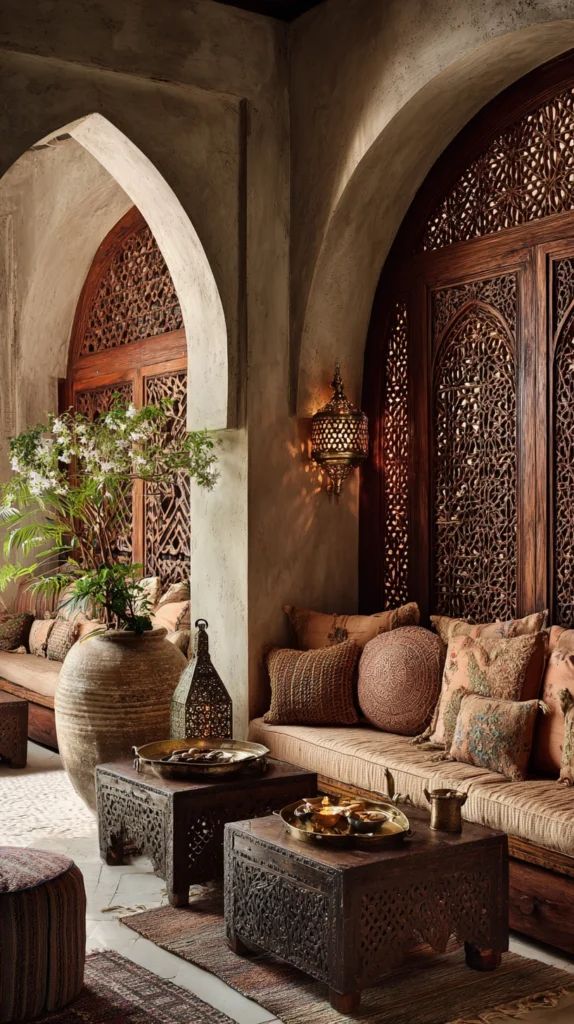
A carved wood screen, featuring traditional geometric patterning, used to partially divide the living room or provide a decorative backdrop for seating.
Why a carved screen adds architectural detail without requiring structural changes
A genuine carved wood screen introduces real craft-driven architectural interest — the same geometric patterning found in traditional Moroccan tilework and plasterwork — without requiring any actual construction or wall modification.
The screen
A folding or fixed wood screen, featuring carved geometric patterns, positioned either as a room divider or as a decorative backdrop behind a specific seating area.
The placement
Behind the low seating arrangement, providing a textured, patterned backdrop, or used functionally to divide a larger open-concept space into a more defined living room zone.
The wood tone
A rich, dark wood — walnut or a deep-stained cedar — providing genuine visual weight and warmth, consistent with the aesthetic’s broader material palette.
The lighting interaction
Positioned where a nearby lamp or lantern casts light through or across the carved pattern, adding shadow and texture particularly effective during evening use.
The overall effect
A room with genuine architectural detail and craft quality, the carved screen providing both function and considerable visual richness.
Cost breakdown: Carved wood screen: $200–600 Total: $200–600
5. The Jewel-Toned Velvet and Embroidered Cushion Layer
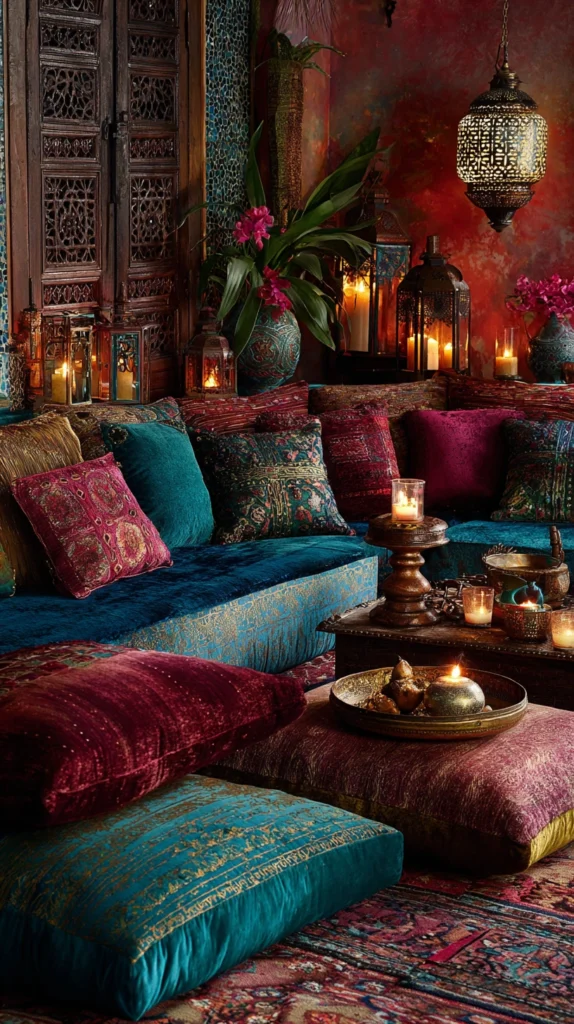
Cushions in deep jewel tones — emerald, sapphire, ruby — combined with embroidered or metallic-threaded fabric, layered generously across the seating.
Why abundant, richly colored textiles are central to the aesthetic’s warmth
Moroccan interior tradition embraces color and pattern with a confidence much contemporary Western design avoids, and that abundance — rather than a single restrained accent color — is central to the room’s genuine sense of richness and warmth.
The cushion selection
A mix of solid jewel-toned velvet and embroidered or metallic-threaded patterned fabric, layered in genuine quantity rather than one or two token accent cushions.
The color palette
Deep emerald, sapphire, ruby, and amethyst, chosen for saturation and richness rather than the more muted, restrained tones common in many contemporary color palettes.
The pattern mixing
Solid velvet cushions paired with embroidered or geometrically patterned ones, avoiding a uniform, matched cushion set in favor of genuine textural and pattern variety.
The quantity principle
More cushions than a typical Western living room might use, since abundance itself is part of what distinguishes this aesthetic’s approach to textile layering from a more restrained styling philosophy.
The overall effect
Seating that reads as genuinely rich and inviting, the abundant color and pattern doing considerable work toward the room’s overall warm, exotic atmosphere.
Cost breakdown: Velvet and embroidered cushions (10–14): $150–350 Total: $150–350
6. The Hammered Metal Tray Table
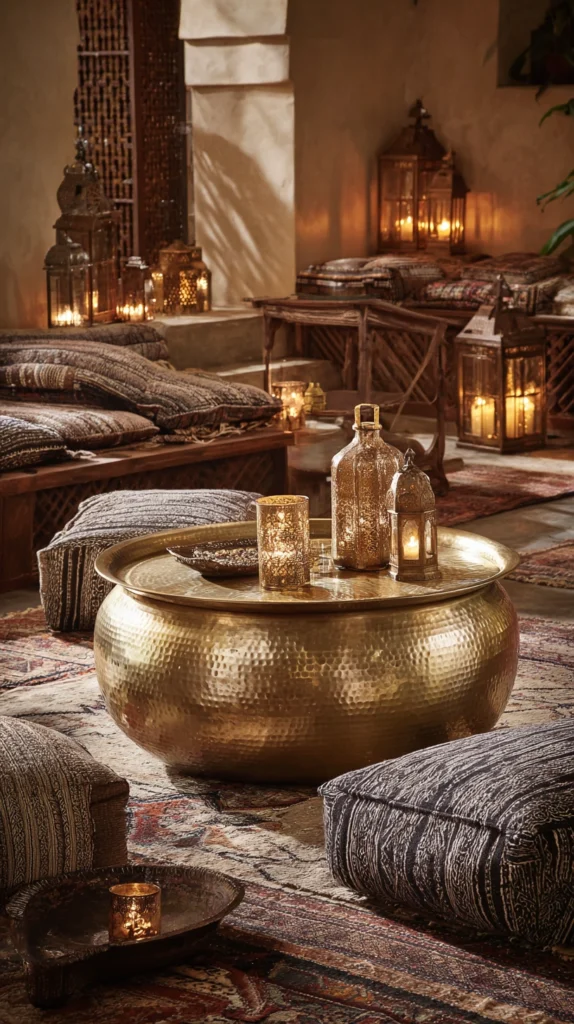
A large hammered brass or silver tray, mounted on a folding wood stand, functioning as the room’s central coffee table.
Why a tray table suits the aesthetic’s traditional tea and gathering culture
The hammered metal tray table has genuine roots in Moroccan hospitality tradition, historically used for serving mint tea to gathered guests, making it one of the most functionally and historically authentic furniture choices available for this specific room.
The tray
A large, hammered or engraved brass or silver-toned tray, featuring traditional geometric or floral engraving, functioning as the table’s actual surface.
The stand
A folding wood stand, often itself featuring carved or turned detail, supporting the tray at a low, floor-seating-appropriate height.
The functional use
Genuinely used for serving tea or drinks to gathered guests, reinforcing the piece’s traditional hospitality function rather than treating it purely as decoration.
The styling
A tea set, small glasses, and a scattering of dried mint or other traditional accents, styled atop the tray when not in active serving use.
The overall effect
A central table that connects directly to the aesthetic’s genuine cultural and hospitality tradition, rather than a generic low table serving a similar function without that specific connection.
Cost breakdown: Hammered brass or silver tray with stand: $100–300 Total: $100–300
7. The Geometric Tile-Inspired Accent Wall
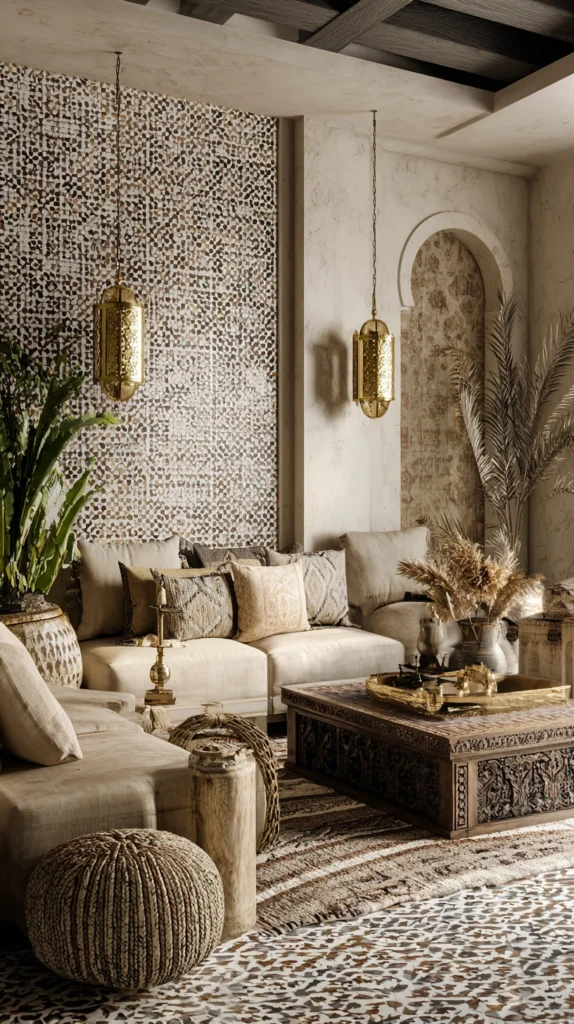
A single wall finished in geometric zellige-style tile, or a wallpaper reproducing the same traditional Moroccan tile pattern, providing the room’s most architecturally striking single feature.
Why zellige-inspired tile carries genuine cultural and craft significance
Traditional Moroccan zellige tilework, with its distinctive small geometric pieces arranged into elaborate patterns, represents centuries of specific craft tradition, and even a reproduced or wallpaper version brings real visual authenticity to the room.
The tile option
Genuine zellige tile, in its traditional small, hand-cut geometric pieces, applied to a single accent wall or as a fireplace surround, for the most authentic and durable result.
The wallpaper option
A high-quality wallpaper reproducing the zellige pattern, offering a considerably lower-cost and lower-effort alternative while still providing genuine visual impact.
The color palette
Traditional cobalt blue, emerald green, or a warm terracotta, chosen for both authenticity and complementary relationship to the room’s broader color scheme.
The placement
A single wall, rather than the full room, allowing the pattern’s intricate detail to register clearly as a considered feature rather than overwhelming the space.
The overall effect
A wall with genuine craft authenticity and cultural connection, providing the room’s most architecturally significant single design statement.
Cost breakdown: Genuine zellige tile (one wall): $600–1,800 Or reproduction wallpaper: $100–300 Total: $100–1,800 depending on approach
8. The Draped Fabric Ceiling Treatment
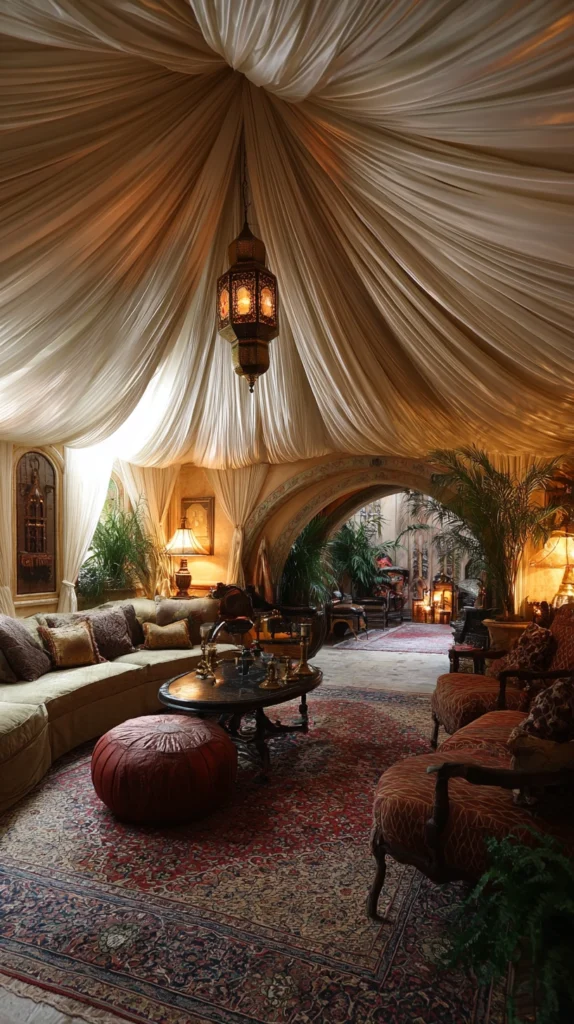
Fabric draped across the ceiling, gathered at a central point, creating a tent-like canopy effect reminiscent of traditional Moroccan caidal tents.
Why a draped ceiling adds genuine drama and softens the room’s architecture
Traditional caidal tents, used for gatherings and hospitality, feature elaborately draped and patterned fabric ceilings, and recreating even a simplified version of this effect adds genuine drama and softness that a flat, plain ceiling does not provide.
The fabric
Lightweight patterned fabric or sheer material, in colors complementing the room’s broader palette, draped from the ceiling’s center point outward toward the walls.
The gathering point
A central medallion or a simple decorative anchor at the ceiling’s midpoint, where the draped fabric panels converge, similar to a traditional tent’s central pole.
The mounting
Small hooks or a track system installed at the ceiling’s perimeter, providing secure anchor points for the draped fabric’s outer edges.
The lighting integration
A pendant lantern positioned at the draping’s central gathering point, combining the ceiling treatment with the room’s broader lighting scheme.
The overall effect
A room with genuine architectural drama overhead, the draped fabric transforming a standard flat ceiling into something considerably more evocative of the aesthetic’s traditional gathering-tent origins.
Cost breakdown: Fabric (sufficient yardage for ceiling draping): $60–150 Mounting hardware: $30–70 Total: $90–220
9. The Mother-of-Pearl Inlaid Furniture Accent
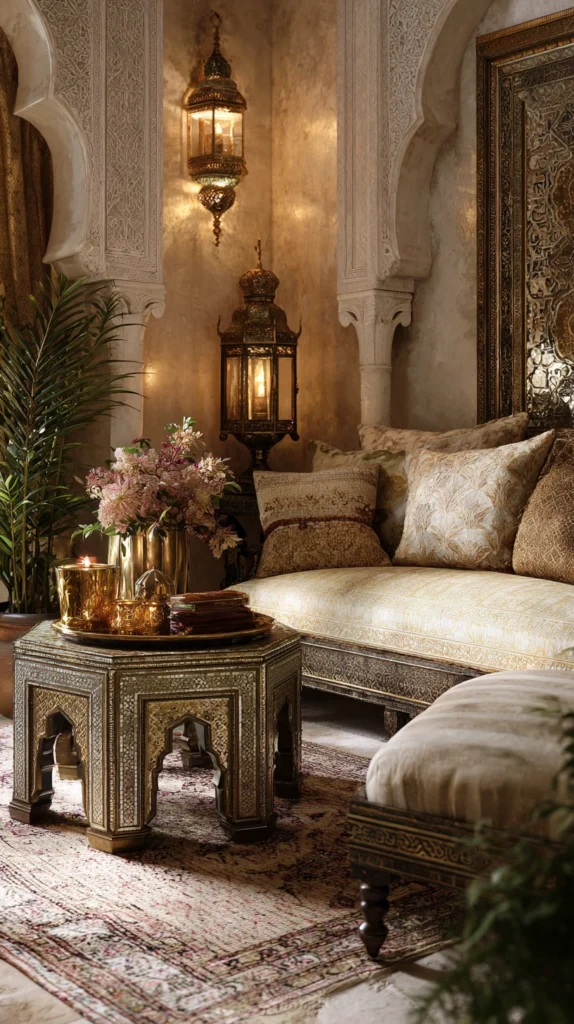
A single substantial furniture piece — a side table, a chest, or a mirror frame — featuring genuine mother-of-pearl or bone inlay in traditional geometric patterns.
Why one inlaid piece can anchor the room’s craft authenticity
Mother-of-pearl and bone inlay represent a specific, labor-intensive traditional craft, and a single genuine piece brings considerable authenticity and visual interest, functioning almost as a piece of wearable art within the room’s furniture.
The piece selection
A small side table, a decorative chest, or a mirror frame, featuring inlaid geometric patterning in mother-of-pearl, bone, or a similar material against a dark wood base.
The placement
Positioned prominently, near the seating area or as a focal piece against a wall, allowing the intricate inlay work to be appreciated up close.
The material authenticity
Genuine inlay work, sourced from a specialty importer or a reputable craft retailer, offering real durability and detail that a printed or applied reproduction pattern cannot fully replicate.
The lighting
Positioned where nearby lamp or lantern light catches the inlay’s reflective quality, since mother-of-pearl specifically depends on light interaction for its full visual effect.
The overall effect
A single furniture piece functioning almost as a work of art, bringing genuine craft authenticity and intricate detail to the room.
Cost breakdown: Mother-of-pearl inlaid side table or mirror: $150–500 Total: $150–500
10. The Layered Candle and Lantern Floor Display
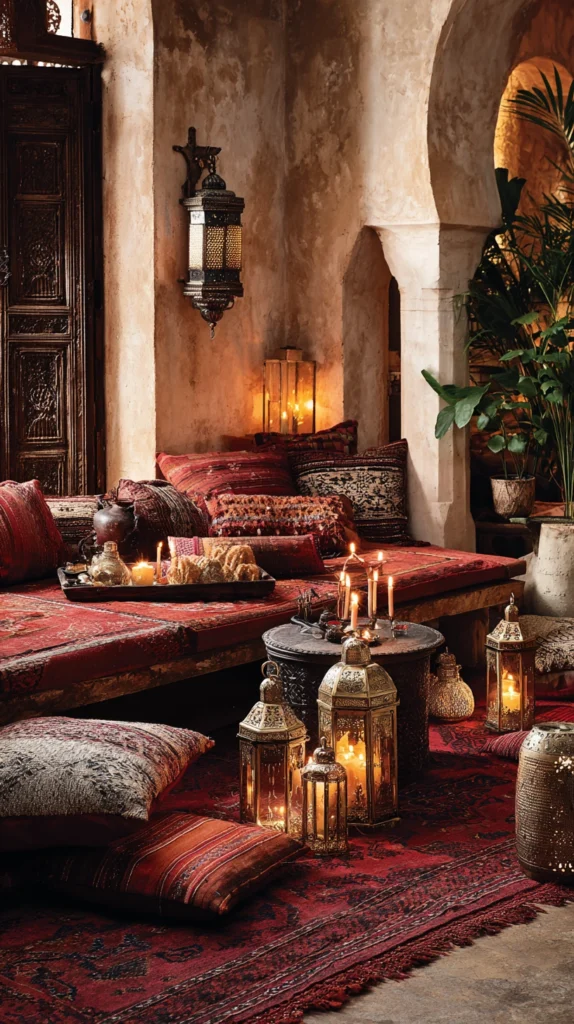
A cluster of candles and small lanterns arranged directly on the floor, at varying heights, providing an additional layer of warm, low-level lighting beyond the room’s primary fixtures.
Why floor-level lighting adds a dimension overhead fixtures alone do not provide
Most lighting plans focus entirely on ceiling or table-height fixtures. A cluster of candles and small lanterns at floor level adds a genuinely different lighting plane, particularly effective in a room already featuring low, floor-oriented seating.
The candle and lantern mix
Small pierced metal lanterns and pillar candles of varying heights, clustered in a corner or along the edge of the low seating arrangement.
The height variation
Genuine height variation within the cluster, from very low votives to slightly taller lanterns, echoing the same rhythmic principle relevant to any well-composed grouping.
The safety consideration
Positioned with adequate clearance from cushions, rugs, and any trailing fabric, a genuine fire safety concern given the floor-level placement’s proximity to soft furnishings.
The evening emphasis
Particularly effective for evening gatherings, when the floor-level warm light complements the room’s low seating and creates an intimate, gathered atmosphere.
The overall effect
An additional lighting layer specifically suited to the room’s low-seating arrangement, reinforcing the intimate, floor-oriented gathering style central to this aesthetic.
Cost breakdown: Small lanterns and candles (6–8): $40–90 Total: $40–90
11. The Leather Pouf and Ottoman Cluster
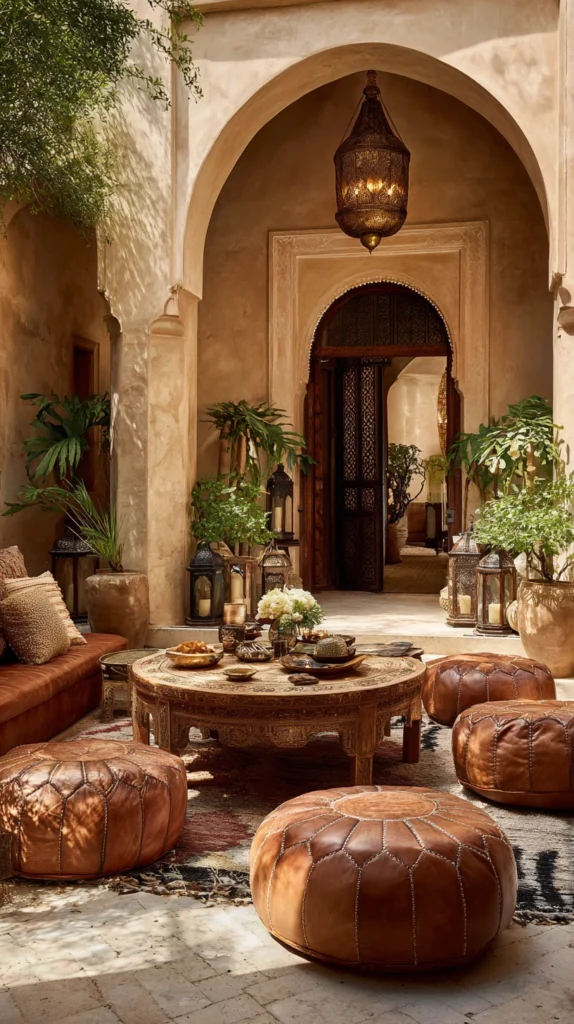
Genuine leather poufs, often featuring hand-stitched detail, clustered as flexible additional seating or footrests around the room’s main seating arrangement.
Why leather poufs are a specifically traditional and genuinely functional furniture choice
Hand-stitched leather poufs have deep roots in Moroccan furniture tradition, and their genuinely flexible function — extra seating, a footrest, or a small side table — makes them one of the most practical pieces on this entire list.
The pouf selection
Genuine leather poufs, in natural tan, deep brown, or a dyed jewel tone, featuring visible hand-stitching detail rather than a machine-seamed synthetic reproduction.
The cluster arrangement
Several poufs grouped together rather than a single isolated piece, providing flexible seating that can be rearranged easily depending on the specific gathering’s size.
The dual function
Serving equally well as additional seating, a footrest for someone in a nearby chair, or a small surface for a drink, offering genuine flexibility beyond a single fixed use.
The material authenticity
Genuine leather, offering both authentic craft quality and considerably better durability than a vinyl or synthetic alternative, particularly valuable given the poufs’ likely heavy daily use.
The overall effect
Flexible, genuinely useful additional seating, the poufs’ traditional craft and material authenticity adding real character alongside their practical function.
Cost breakdown: Leather poufs (3–4): $150–350 Total: $150–350
12. The Vintage Moroccan Textile Wall Hanging
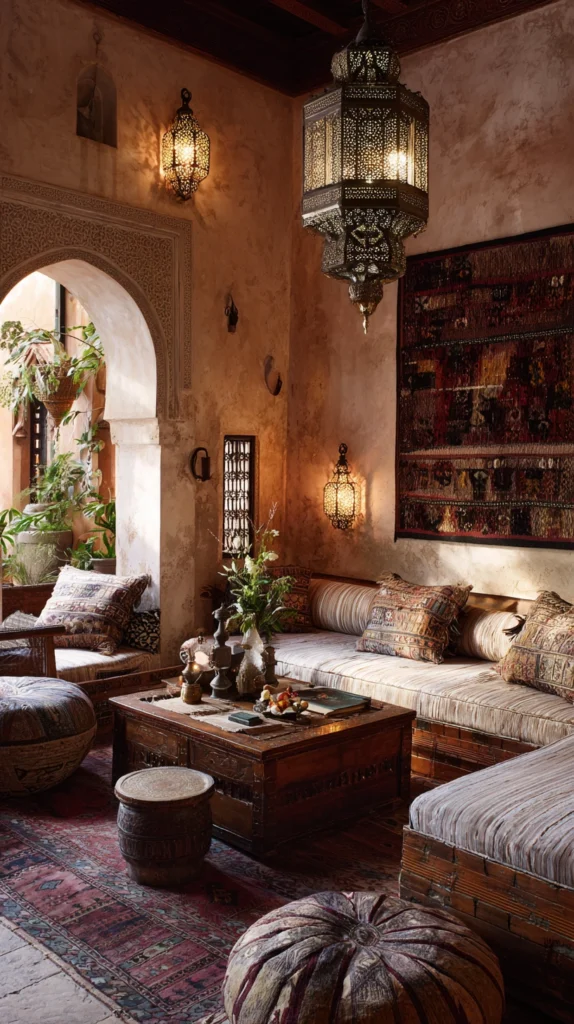
A large vintage or antique textile — a wedding blanket, a traditional rug fragment, or an embroidered panel — hung as wall art, providing genuine historic and cultural texture.
Why a genuine antique textile adds a dimension new reproductions cannot replicate
A vintage piece carries real historic weight and individual character — the specific irregularities and wear of hand-production — that a new, machine-made reproduction, however well designed, cannot fully replicate.
The textile sourcing
Antique markets, specialty importers, or reputable secondhand dealers specifically sourcing vintage Moroccan textiles, chosen for genuine age and craft quality.
The hanging method
A simple wood dowel or a discreet mounting rod, allowing the textile to hang with its natural weight and drape rather than stretched flat and taut.
The placement
Positioned as a genuine focal point, ideally on a wall large enough to display the piece at a meaningful scale rather than cramped into an undersized space.
The care consideration
Vintage textiles benefiting from being kept out of direct, prolonged sunlight, which can fade or degrade older fabric over time, worth considering when choosing the specific wall for display.
The overall effect
A wall feature with genuine historic and cultural authenticity, adding a layer of real craft history that new reproduction textiles cannot fully provide.
Cost breakdown: Vintage Moroccan textile: $150–500 Mounting hardware: $20–50 Total: $170–550
13. The Complete Moroccan Living Room (The Fully Immersive Exotic Retreat)
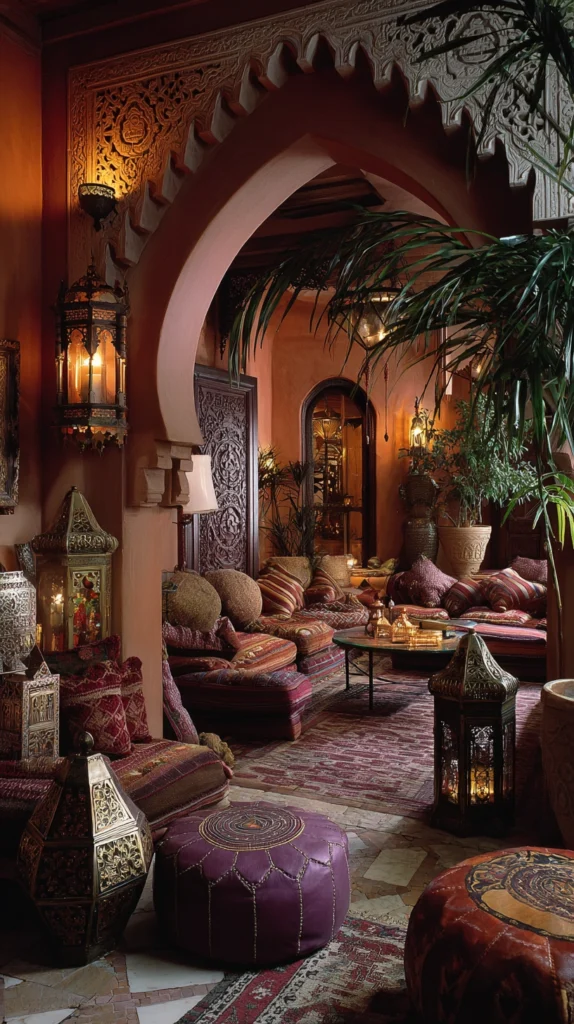
A complete room combining several of the approaches above — layered rugs, low seating, brass lanterns, rich textiles, and genuine craft pieces — treating the space as one fully realized atmosphere rather than a single imported object placed within an otherwise conventional room.
What separates the complete room from a single Moroccan lantern on an otherwise ordinary shelf
A single brass lantern in an otherwise standard living room: a nice accent. A complete Moroccan living room: every material layer — floor, seating, lighting, textiles, and craft objects — working together as one immersive, genuinely different atmosphere from a conventional Western living room.
The elements of the complete Moroccan living room
The floor
Layered Berber and kilim rugs, providing the room’s foundational texture and pattern.
The seating
Low floor cushions and poufs, arranged around a hammered metal tray table, encouraging relaxed, communal gathering.
The lighting
A collection of pierced brass lanterns at varying heights, supplemented by floor-level candles, providing the room’s characteristic warm, dappled glow.
The textiles
Abundant jewel-toned velvet and embroidered cushions, layered generously rather than sparingly.
The craft pieces
At least one genuine inlaid furniture piece and a vintage textile wall hanging, anchoring the room in authentic craft tradition.
The architectural detail
A carved wood screen or a zellige-inspired accent wall, adding genuine dimensional and cultural richness.
The complete design in action
An evening gathering:
Guests arriving: Settling onto floor cushions and poufs, the lanterns already glowing warmly overhead and at floor level.
Throughout the evening: Tea served from the hammered brass tray table, conversation unfolding in the relaxed, low-seated style the room’s whole arrangement encourages.
Later in the evening: The layered rugs, rich cushions, and dappled lantern light combining into an atmosphere genuinely distinct from a conventional living room, guests lingering considerably longer than a standard seating arrangement might invite.
The complete Moroccan living room: not a themed room decorated with a few imported objects, but a genuinely immersive atmosphere built from real material tradition, craft, and a fundamentally different approach to gathering and comfort.
Cost breakdown for the complete room: Assuming a starting point of an empty living room: Layered rugs: $350–1,000 Low seating (cushions, poufs, tray table): $450–1,150 Brass lantern lighting: $100–300 Textile layer (cushions): $150–350 Craft accent pieces (inlaid furniture, vintage textile): $320–1,050 Total: $1,370–3,850
Phased over two or three seasons:
Season one ($500–1,200): Layered rugs and the core low seating arrangement
Season two ($400–900): Brass lantern lighting and the textile cushion layer
Season three ($400–1,700): Genuine craft pieces — inlaid furniture, a vintage textile, or a carved screen or tiled accent wall
The complete Moroccan living room: not a weekend project but a genuinely different, richly layered atmosphere built with intention and authentic material choices over time.
The Question Before Any Moroccan Living Room Decision
Before choosing a single element:
What is the primary quality wanted from this room?
If the answer is: a fundamentally different, more communal way of gathering — start with the low floor cushion seating arrangement.
If the answer is: the room’s characteristic warm, atmospheric lighting — the hammered brass lantern collection.
If the answer is: genuine craft authenticity and cultural connection — the mother-of-pearl inlaid piece or the vintage textile wall hanging.
If the answer is: the simplest, lowest-cost entry point — the layered cushion and textile approach, requiring no major furniture changes at all.
The design follows the specific quality the household most wants from the room, more than any single Moroccan-inspired decorating checklist. Every idea on this list contributes a different piece of the aesthetic’s overall richness. The question is which particular element matters most as a starting point for this specific room.
The single layer of richly patterned cushions atop an existing sofa: still introduces genuine warmth and color. The complete room, built from layered rugs, low seating, lanterns, and genuine craft pieces: an atmosphere entirely distinct from a conventional living room, cozy and exotic in equal measure.
That distinct atmosphere: the whole point of building a genuinely Moroccan-inspired room rather than simply adding a few imported accents.
Getting Started This Weekend
The immediate Moroccan living room solution:
Layer a second rug or a textile runner over the existing floor covering.
The single foundational change every other element in this aesthetic builds upon.
Add richly patterned, jewel-toned cushions to whatever seating already exists.
Immediate color and texture, without requiring any new furniture purchase.
Swap one lamp for a pierced metal lantern.
The change most responsible for shifting the room’s overall evening atmosphere.
Light several candles at floor level for one evening and see how the room’s mood shifts.
The rest of the design: the elaboration of this moment.
The layer: the beginning. The Moroccan living room: what gets gathered, lit, and settled into around it.