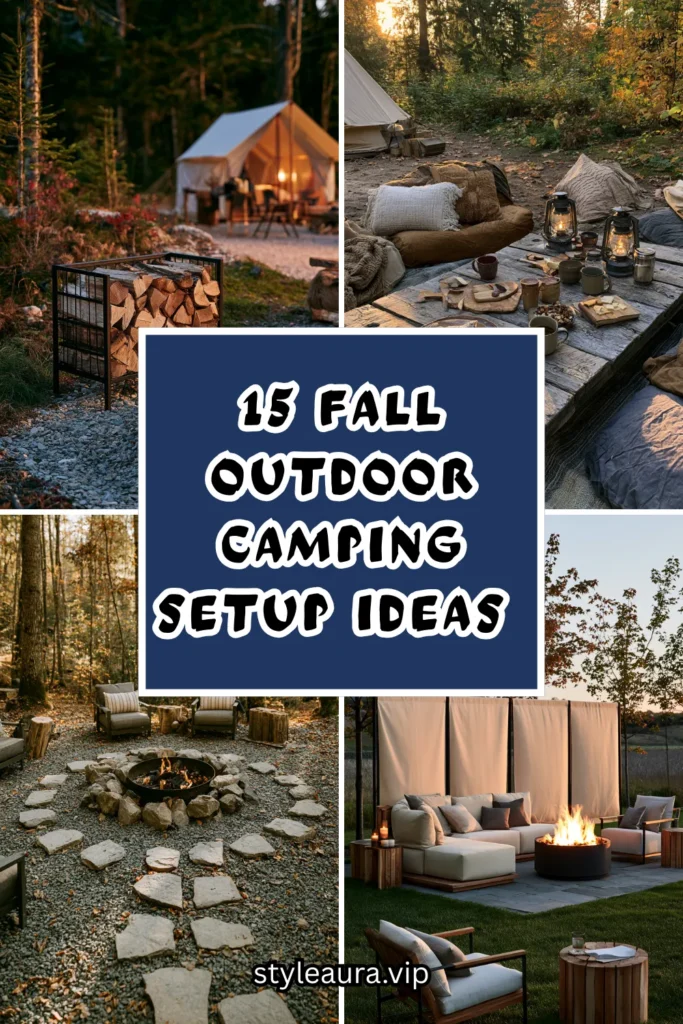
15 Fall Camping Setup Ideas to Build Around the Fire
My campfire setup amounted to whatever logs happened to be stacked nearby and two folding chairs pulled up close enough to feel the heat, year after year. The fire itself was always the point of the trip, but nothing around it ever got the same consideration as the flame. Tried adding one nicer chair once.
It sat there beside the same mismatched folding chairs and bare dirt ring, a single upgraded object in an otherwise unconsidered setup. Then I stopped upgrading single pieces and started building the whole area around the fire deliberately, seating, ground, supplies, and a few small rituals all working together. The fire finally feels like the center of an actual considered gathering space, not just a flame surrounded by whatever chairs were already in the car.
Why One Upgraded Piece Resists Transforming a Fire Setup
The single-upgrade problem:
What one nicer chair or accessory does beside an otherwise unchanged fire area:
- Sits among mismatched seating and unaddressed ground conditions that stay exactly the same
- Reads as one nicer object rather than a genuinely considered gathering space
- Leaves supply organization, seating comfort, and small rituals completely unaddressed
- Resists the layered, complete feeling a true fireside setup achieves
The whole-area principle:
- A genuinely good fire setup treats seating, ground, supplies, and warmth as one connected system
- Every choice should account for how people actually gather and move around an active fire, not just how one chair looks
- This is a different scope than upgrading a single object, and most campfire areas reward that fuller approach
- A single nice chair, with everything else about the fire area unchanged, still reads as one upgrade, not a complete setup
My revelation: A real fall campfire setup treats seating, ground, supplies, and ritual as one connected system, not one upgraded chair beside an otherwise unconsidered fire ring. Everything around the flame deserves the same attention as the flame itself.
1. A Defined Gravel or Paver Base Around the Fire Ring
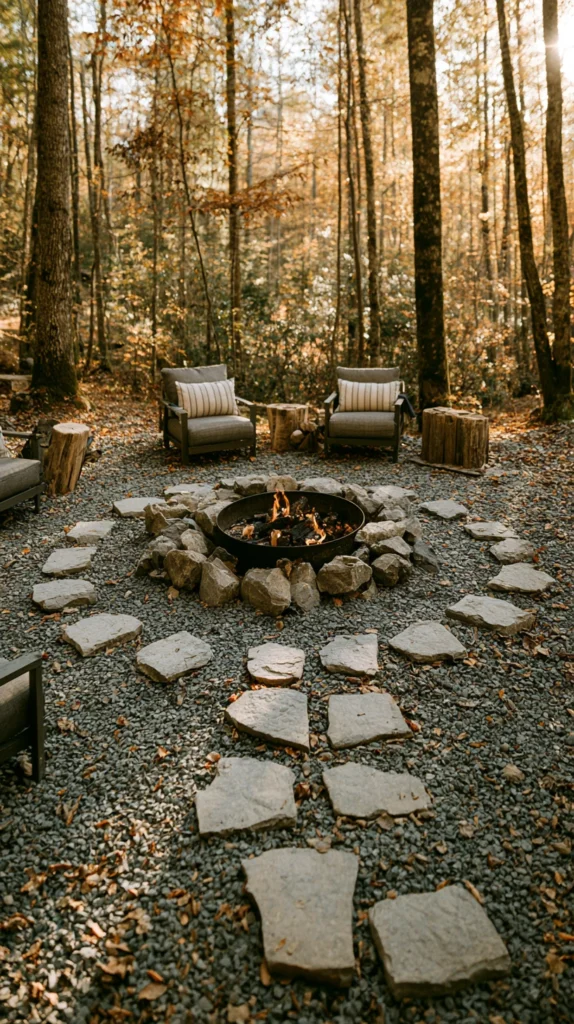
A small area of gravel or flat pavers, laid specifically around the fire ring’s perimeter, replacing bare dirt or grass.
Why ground treatment is the foundation of the whole setup
The stable-footing-first principle:
- Bare dirt or grass around a fire ring becomes uneven, muddy, or simply messy with repeated use across a season
- A defined gravel or paver base provides stable, consistent footing for chairs and foot traffic regardless of recent weather
- This single change does more to make the fire area feel like an intentional gathering spot than almost any object placed on top of it
Best ground treatment choices
- A simple layer of crushed gravel, extending several feet beyond the fire ring itself
- Flat stepping pavers, spaced for natural seating positions around the ring
Budget pick: a few bags of crushed gravel for a small defined area, $40-90 Splurge: professionally laid pavers in a wider radius, $300-700
My gravel base result
Laying a simple ring of crushed gravel around my fire pit gave every chair a stable, level spot to sit regardless of recent rain, solving a problem that had bothered every single gathering for years before finally addressing the ground itself.
Gravel Base Tips
Extend the gravel slightly beyond where chairs typically sit:
- A gravel area sized exactly to the fire ring’s edge can leave chair legs straddling gravel and uneven ground
- Extending the treated area a few feet further in every direction accommodates the actual seating footprint more completely
2. A Semi-Circle of Mismatched-but-Coordinated Seating
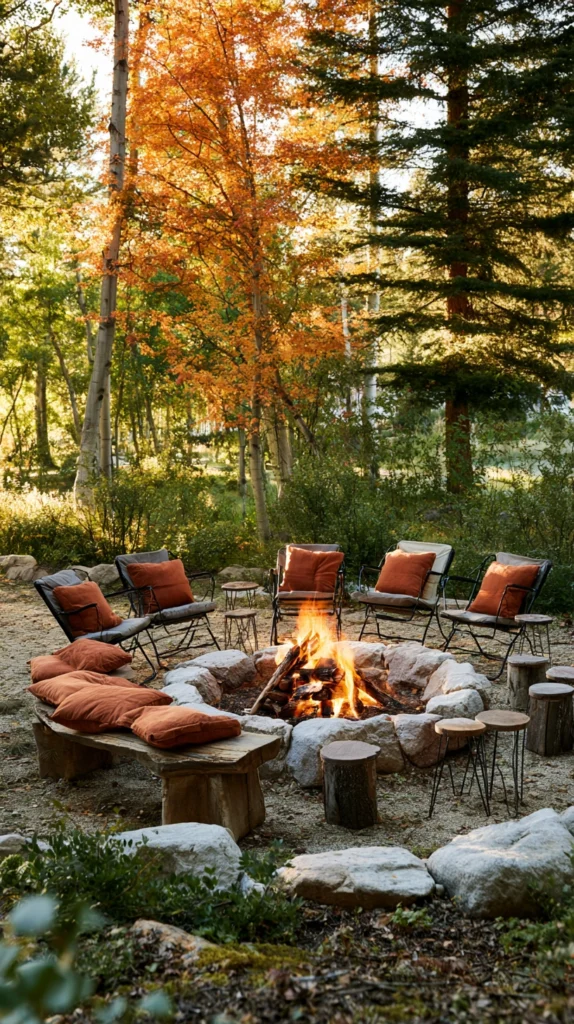
A deliberate semi-circle arrangement of seating, varying in type, a few folding chairs, a bench, a couple of stools, but coordinated through a consistent color or cushion choice.
Why coordinated variety beats either a uniform set or true mismatch
The considered-variety-principle:
- A fire area entirely matched to one chair type can feel sparse if the group size varies, while a genuinely random mismatch looks unplanned
- Choosing different seating types but tying them together with a consistent cushion color or fabric achieves both flexibility and a coordinated look
- This approach also accommodates a wider range of group sizes than a fixed matched set alone
Best coordinated seating approaches
- A mix of folding chairs and a low bench, all fitted with the same rust or plaid cushion fabric
- Stools and chairs at varying heights, unified through one consistent accent color
Budget: $80-200 for a mix of seating types plus coordinating cushions
My coordinated seating result
Mixing folding chairs, a small bench, and two stools around my fire pit, all topped with the same rust plaid cushions, created a setup that looks intentional despite the variety, and it flexes easily between a quiet two-person evening and a full group gathering.
Coordinated Seating Tips
Keep the unifying element simple and repeatable:
- A single consistent fabric or color, rather than several coordinating but distinct patterns, ties mismatched seating together more reliably
- This also makes it easier to add one more piece later without disrupting the established look
3. A Dedicated Firewood Storage Rack Beside the Pit

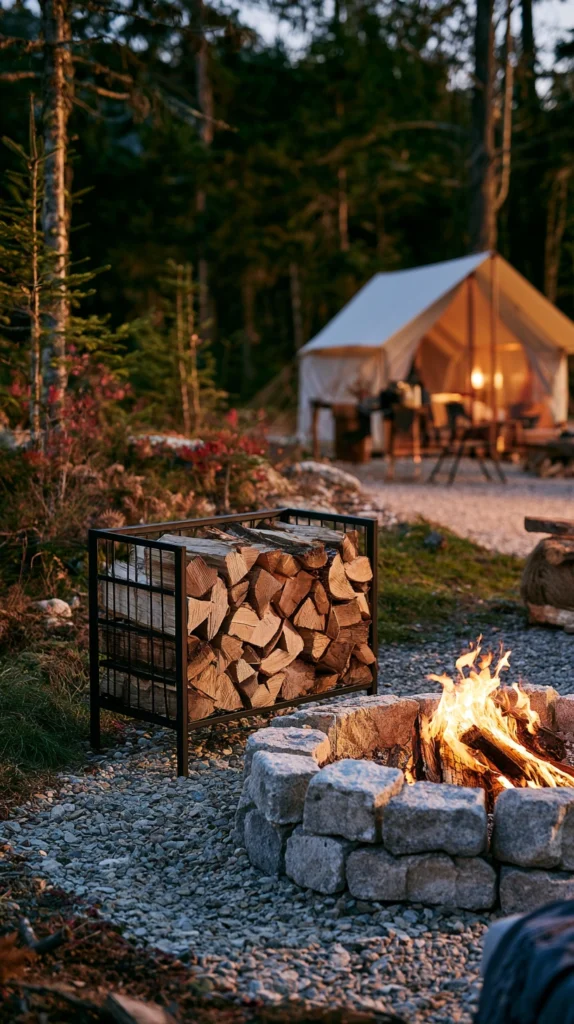
A simple wood or metal firewood rack, positioned within easy reach of the fire pit, replacing a loose pile on the ground.
Why organized firewood storage matters beyond just tidiness
The dry-and-accessible principle:
- Firewood stacked loosely on the ground absorbs ground moisture and becomes harder to burn efficiently
- A rack keeps wood elevated and better ventilated, while also keeping it within easy reach during an active fire rather than requiring a walk back to the car or a tent
- This addition also visually anchors the fire area, giving it a clear sense of being an established, ongoing setup rather than something assembled fresh each time
Best firewood rack choices
- A simple folding metal firewood rack, easy to pack and transport
- A small log holder with a canvas cover, providing some weather protection between uses
Budget: $30-60 for a basic portable firewood rack
My firewood rack result
Adding a simple folding metal rack beside my fire pit keeps wood dry and within arm’s reach during the evening, and the rack itself gives the whole area a settled, established feeling rather than looking like supplies scattered fresh each night.
Firewood Rack Tips
Position the rack a safe distance from the actual flame:
- Firewood storage placed too close to an active fire creates an unnecessary risk
- Following standard fire safety clearance distances when positioning the rack keeps the convenience without compromising safety
4. A Small Side Table for Drinks and Snacks Near Each Seat
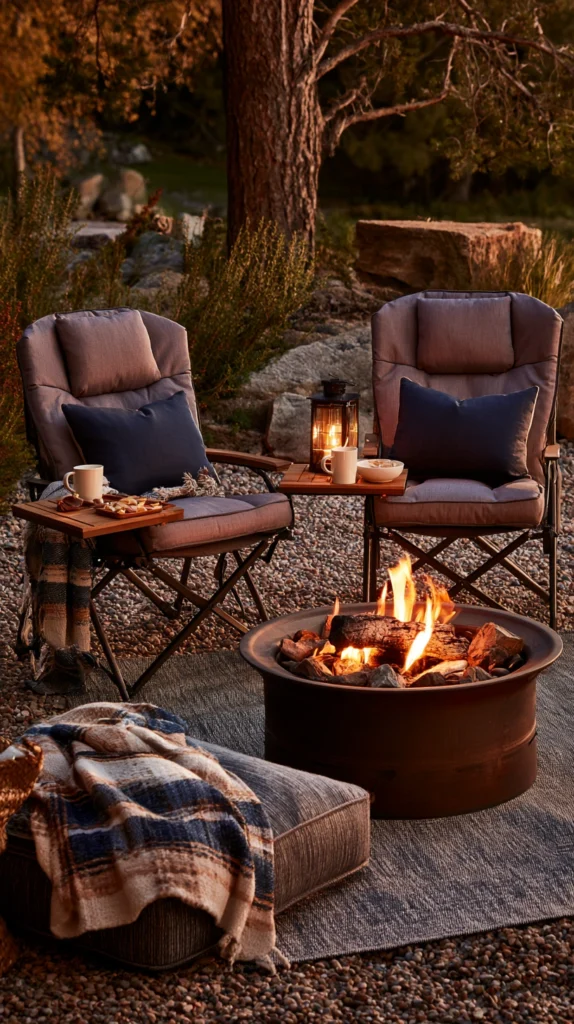
Compact folding side tables, placed beside or between seating positions around the fire, rather than relying on laps or the ground.
Why surfaces matter as much as seating itself
The within-reach-surface-principle:
- Drinks and snacks set on the ground near an active fire risk spills, dirt, or simply being forgotten and stepped on
- A small side table beside or between chairs gives every seat a designated, elevated surface
- This addition is particularly valuable for a longer evening gathering, where people settle in rather than just passing through briefly
Best side table choices
- Lightweight folding tables, one for every two seating positions
- A small shared table positioned centrally if the group prefers a communal surface over individual ones
Budget: $15-30 per folding side table
My side table result
Adding three small folding tables spaced between my fire pit seating means drinks and snacks finally have a proper spot, eliminating the recurring problem of cups tipped over in the dirt that had plagued every previous gathering.
Side Table Tips
Choose tables with a textured, non-slip top surface:
- A smooth table surface can let cups slide more easily on slightly uneven ground
- A textured or grooved top provides better grip for cups and plates set down casually
5. A Roasting Stick and S’mores Supply Station
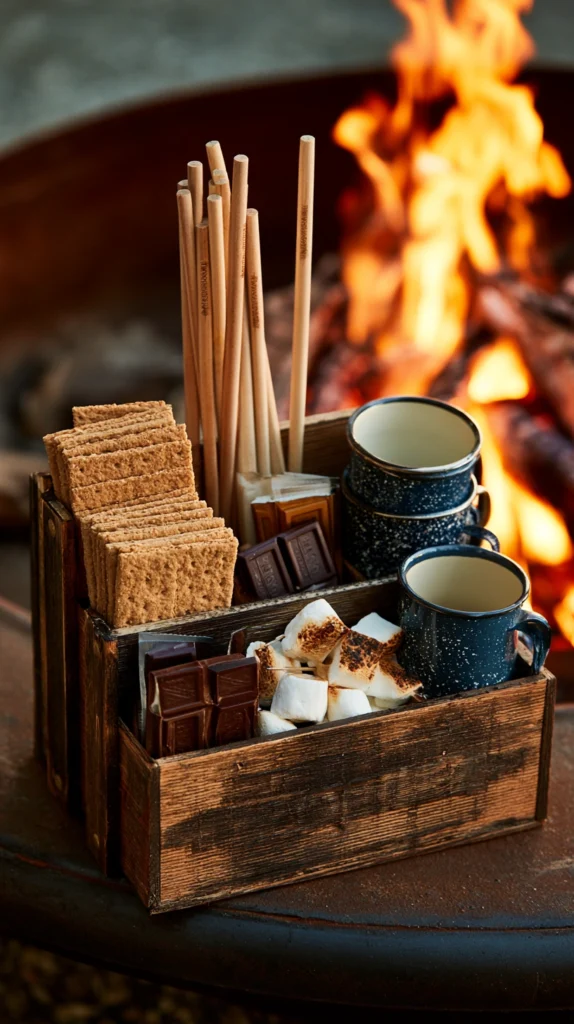
A small, organized station holding roasting sticks, marshmallows, and other s’mores supplies, kept specifically near the fire rather than scattered across a cooler or tent.
Why a dedicated station improves both function and ritual
The ready-to-go-ritual principle:
- S’mores supplies scattered across multiple bags or containers create unnecessary friction right when the group is ready to actually use them
- A small dedicated station, a basket or caddy holding everything needed, makes this a smooth, low-friction ritual rather than a scavenger hunt through gear
- This addition also serves as a small visual marker that the fire area is genuinely set up for use, not just a flame with nothing else nearby
Best supply station setups
- A small basket holding roasting sticks, marshmallows, chocolate, and graham crackers together
- A set of dedicated, reusable metal roasting sticks rather than disposable ones
Budget: $20-40 for a basket and a set of reusable roasting sticks
My supply station result
Keeping a single basket stocked with roasting sticks and s’mores ingredients right beside my fire pit means the ritual starts the moment someone reaches for it, rather than after several minutes of digging through coolers and bags.
Supply Station Tips
Restock the basket before each trip, not mid-trip:
- Running out of a key ingredient partway through a gathering interrupts the ritual considerably more than having to plan ahead once
- A quick inventory check before departure ensures the station is genuinely ready upon arrival
6. A Low Coffee-Table-Style Surface at the Center
A low, sturdy table positioned at the center of the seating arrangement, used for shared snacks, a lantern, or a board game during quieter evenings.
Why a central surface changes how the group gathers
The shared-center-principle:
- Individual side tables address personal drinks and snacks, but a fire circle often benefits from one additional shared surface at its center as well
- This central table can hold a shared snack bowl, a lantern, or even a card game, becoming a secondary focal point alongside the fire itself
- This single addition often shifts a fire gathering from simply watching the flame to actively interacting around a shared center
Best central table choices
- A low, sturdy folding table, set back a safe distance from direct flame
- A wide, flat tree stump or stone slab if a natural, semi-permanent option suits the specific site
Budget: $25-50 for a low folding center table
My central table result
Adding one low table at the center of my fire seating circle, just outside the fire’s direct heat, gave the group a shared spot for snacks and a deck of cards, and evenings around the fire now involve more interaction than the simple flame-watching that used to be the default.
Central Table Tips
Confirm clearance from the fire ring before finalizing placement:
- A central table positioned too close to the actual flame risks heat damage or a safety concern
- Checking the fire ring’s recommended safety clearance before placing any furniture at the center is an essential first step
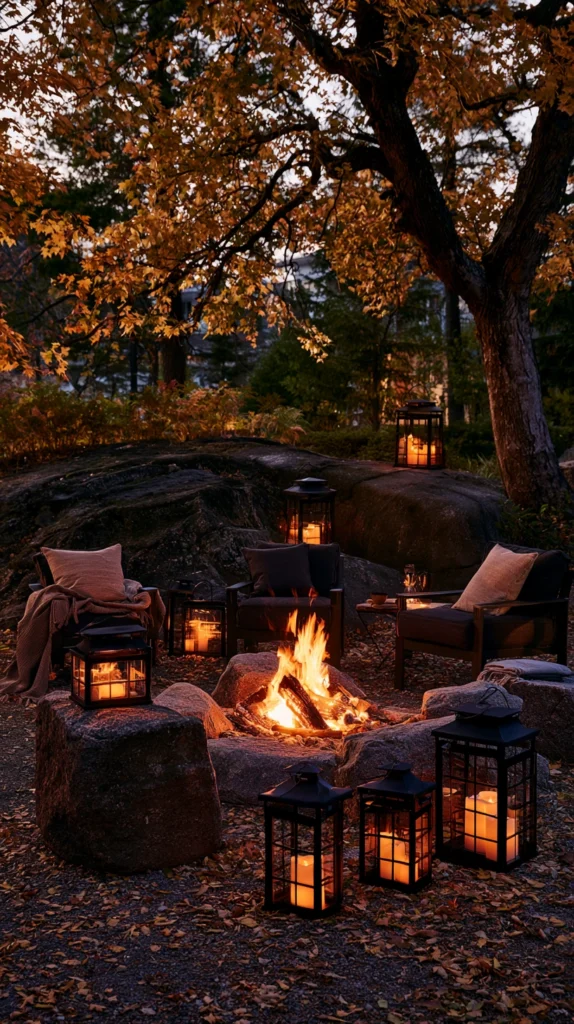
7. A Wind-Resistant Lantern Cluster for Ambient Light Beyond the Flame
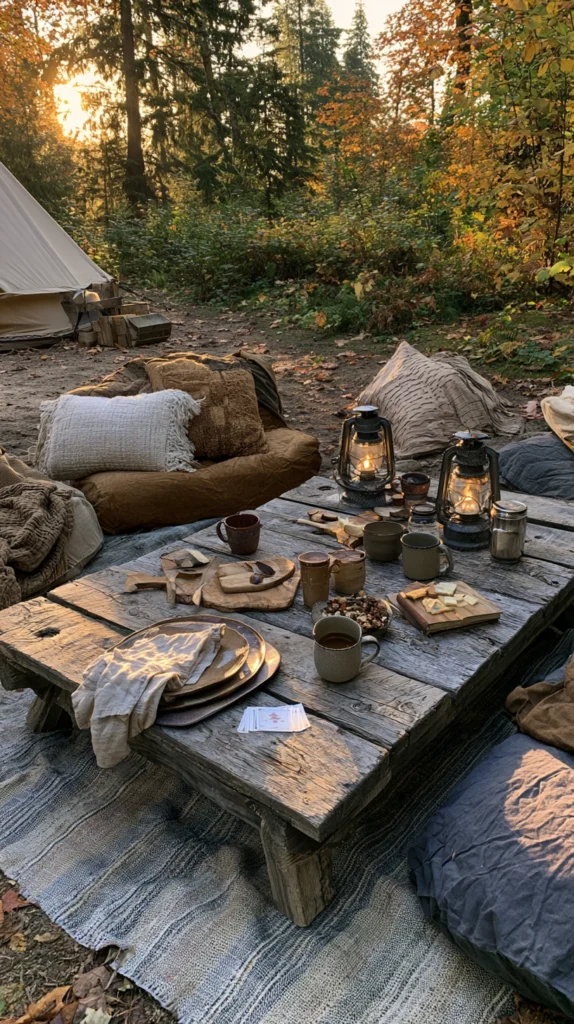
A small cluster of wind-resistant lanterns, positioned around the seating area, supplementing the fire’s light once flames die down to embers.
Why supplemental light matters even with an active fire
The ember-stage-lighting-gap principle:
- A fire provides strong light while actively burning but dims considerably once it settles into embers later in the evening
- A small cluster of lanterns fills this gap, keeping the area lit and usable through the later, quieter part of the evening
- Wind-resistant designs specifically handle the breeze common at most outdoor fire settings better than an open flame candle would
Best lantern cluster choices
- Battery or solar-powered LED lanterns with a flame-effect flicker
- A mix of heights, some on the ground and some hung from a nearby branch or stand
Budget: $30-60 for a small cluster of three to four wind-resistant lanterns
My lantern cluster result
Adding a small cluster of battery-powered flame-effect lanterns around my seating area kept the space comfortably lit once my fire settled into embers later in the evening, extending how long everyone wanted to stay out rather than retreating once the flame dimmed.
Lantern Cluster Tips
Position lanterns at varying heights rather than all at ground level:
- Lanterns clustered only on the ground create a flatter, less dynamic light pattern
- Mixing ground-level and slightly elevated lanterns, hung or placed on a small stand, creates more visual depth
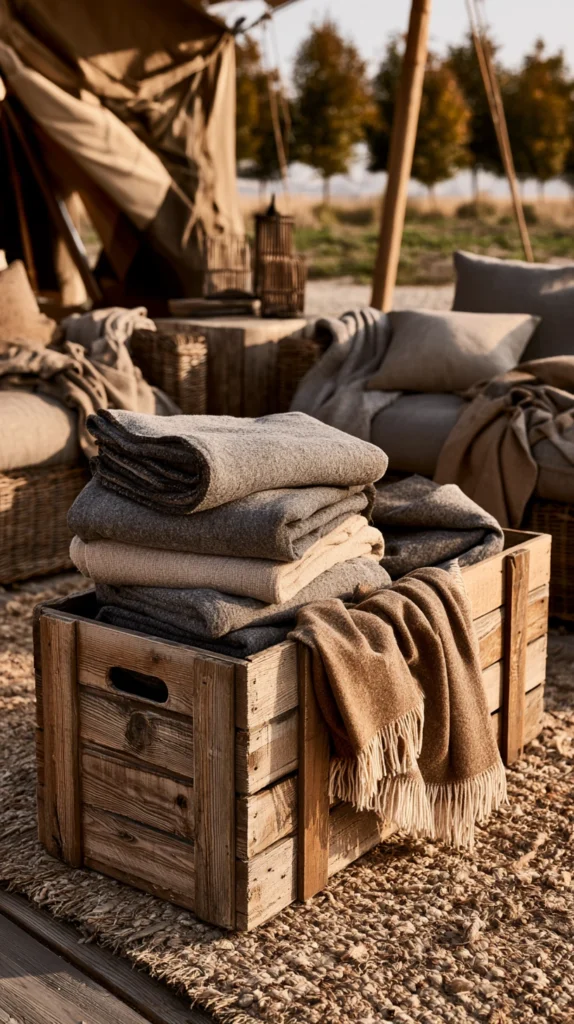
8. A Small Wool Blanket Basket for Shared Warmth
A basket or large bin, kept beside the seating area, stocked with several wool or fleece blankets available for anyone who gets chilly during the evening.
Why shared blankets solve a recurring late-evening problem
The communal-warmth-supply principle:
- Individual guests rarely bring exactly the right amount of warm layering for an entire evening, especially as temperatures drop after dark
- A shared basket of blankets, immediately accessible beside the seating, solves this without anyone needing to walk back to a tent or vehicle
- This addition also adds a layer of visual coziness to the fire area itself, beyond its purely practical function
Best blanket basket setups
- A large woven basket holding four to six folded wool or fleece blankets
- Blankets in a consistent warm color palette, tying visually into the rest of the coordinated seating
Budget: $60-130 for a basket and several quality blankets
My blanket basket result
Keeping a basket of folded wool blankets beside my fire seating means nobody has to leave the group or simply tough out the cold once the evening temperature drops, and the basket itself adds a cozy visual detail to the whole setup.
Blanket Basket Tips
Air out and check blankets for dampness before storing them away:
- A blanket returned to the basket while still slightly damp from dew or condensation can develop a musty smell over a season
- A quick check and air-out before folding blankets back into storage keeps them fresher for the next use
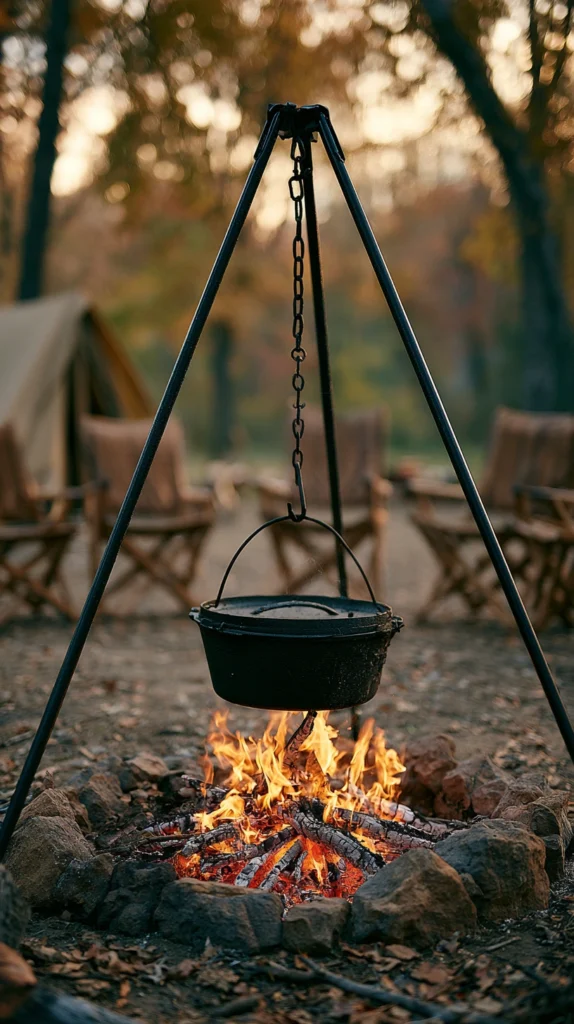
9. A Tripod Cooking Rig for Dutch Oven Meals Over the Fire
A simple metal tripod with an adjustable hook, positioned over the fire specifically for hanging a Dutch oven or pot at a controlled height.
Why a proper cooking rig changes what the fire can actually do
The fire-as-kitchen-principle:
- A fire used only for warmth and roasting marshmallows misses one of its most useful traditional functions, actual cooking
- A tripod rig with an adjustable hook allows precise control over a pot’s height above the flame, something balancing a pot directly on logs cannot achieve reliably
- This addition turns the fire into a genuine cooking tool, supporting heartier fall meals like stew or chili cooked directly over the flame
Best tripod rig choices
- A simple folding steel tripod with an adjustable chain or hook
- A rig rated for the specific weight of a filled Dutch oven, not just a lighter pot
Budget: $40-80 for a basic adjustable tripod cooking rig
My tripod rig result
Setting up a simple adjustable tripod over my fire let me cook a full pot of chili at a controlled height above the flame, turning the fire into an actual cooking tool rather than just a source of warmth and roasted marshmallows.
Tripod Rig Tips
Test the rig’s stability with an empty pot before adding a full load:
- A tripod that wobbles or shifts under an empty pot will perform considerably worse once filled with a heavy, hot meal
- Confirming stability empty first prevents a dangerous shift once the pot is actually in use
10. A Small Dedicated Kindling and Fire-Starting Kit
A compact, weatherproof kit containing kindling, matches or a reliable lighter, and fire starter, kept specifically with the fire setup rather than scattered through general camping supplies.
Why a dedicated starting kit removes a recurring point of friction
The reliable-ignition-principle:
- Searching through general supplies for dry kindling or a working lighter at the exact moment a fire needs to be started creates unnecessary frustration
- A dedicated kit, checked and restocked before each trip, ensures these essentials are always exactly where expected
- This is one of the lowest-cost, highest-relief additions on this entire list, addressing a problem that happens at the very start of every single fire
Best kindling kit contents
- A small waterproof container holding dry kindling, waterproof matches, and a backup lighter
- Commercial fire starter cubes or strips for additional reliability in damp conditions
Budget: $15-30 to assemble a dedicated kindling and starting kit
My kindling kit result
Keeping one small waterproof container with dry kindling, matches, and fire starter cubes specifically for the fire pit has eliminated the frustrating search through general gear that used to happen at the start of nearly every single fire.
Kindling Kit Tips
Restock the kit immediately after each trip, not before the next one:
- Restocking right after use, while the gap is still obvious, is more reliable than trying to remember what is missing weeks later
- This habit ensures the kit is always genuinely ready the next time it gets pulled out
11. A Small Privacy or Windbreak Screen on the Exposed Side
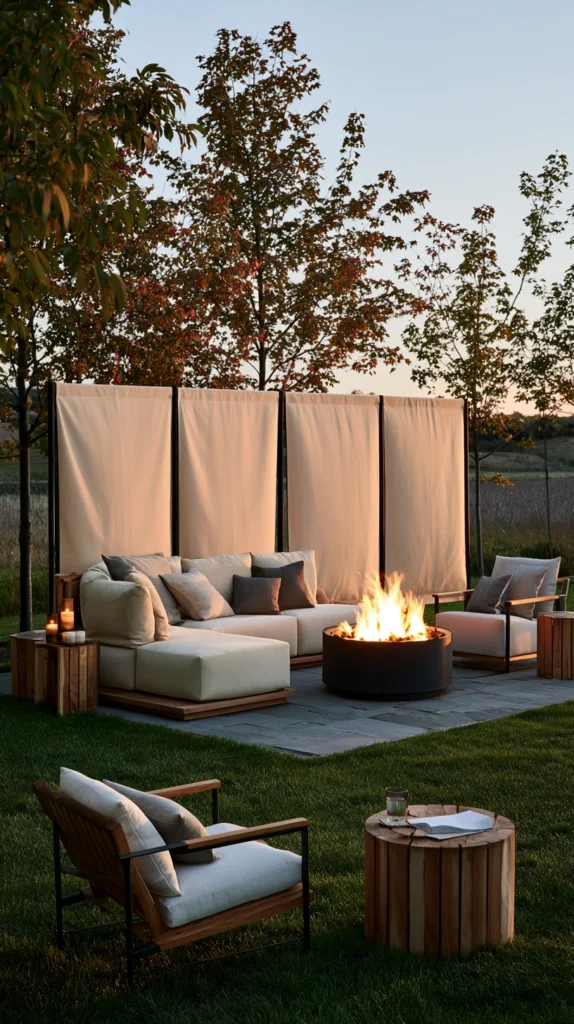
A simple portable windbreak or privacy screen, positioned on whichever side of the fire area faces prevailing wind or an exposed neighboring site.
Why a windbreak addresses both comfort and fire performance
The dual-function-screen-principle:
- Wind affects both how comfortable people feel sitting near the fire and how the fire itself burns, often inconsistently or with excessive smoke drift
- A simple screen positioned on the exposed side blocks much of this wind, improving comfort and fire behavior simultaneously
- This addition can also provide a degree of privacy from a neighboring campsite, a secondary benefit beyond the wind protection itself
Best windbreak screen choices
- A portable canvas windbreak on stakes, positioned upwind of the seating area
- A woven reed or bamboo screen for a more natural material look
Budget: $30-60 for a portable windbreak screen
My windbreak result
Positioning a simple canvas windbreak on the side of my fire area that faced the prevailing evening wind noticeably improved both how comfortable the seating felt and how steadily the fire itself burned, solving two problems with one addition.
Windbreak Tips
Position the screen far enough from the fire to avoid any heat or ember contact:
- A windbreak placed too close to the flame risks scorching or catching from a stray ember
- Maintaining a generous safety distance, well beyond standard seating clearance, keeps the screen both effective and safe
12. A Small Cast Iron Cocoa or Cider Warming Station
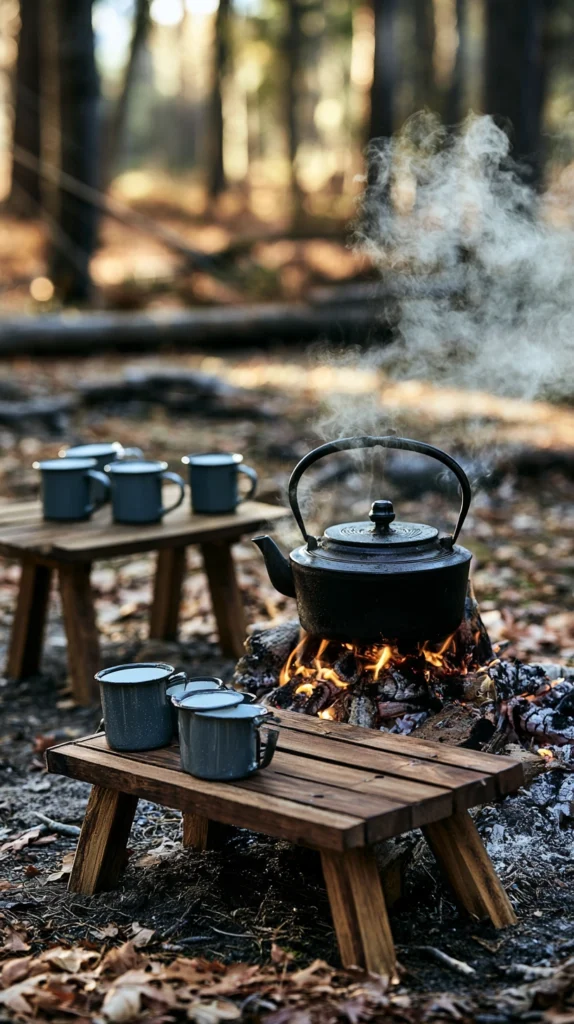
A small cast iron pot or kettle, kept warming gently at the fire’s edge, providing a continuously available warm drink throughout the evening.
Why a continuously warm drink differs from one made on demand
The always-available-principle:
- Making individual cups of cocoa or cider on demand throughout an evening interrupts the gathering repeatedly
- A pot kept gently warming at the fire’s edge throughout the evening allows anyone to serve themselves whenever they want, without anyone needing to manage the process repeatedly
- This addition also adds a pleasant, ambient scent to the fire area throughout the evening, beyond the drink itself
Best warming station setups
- A small cast iron pot of cider, kept at the fire’s edge rather than directly in the flame
- A set of simple mugs and a ladle kept nearby for easy self-service
Budget: $25-50 for a small cast iron pot and a set of mugs
My cocoa station result
Keeping a small cast iron pot of cider warming gently at the edge of my fire throughout the evening means everyone serves themselves whenever they want a cup, and the scent of warm cider and spices has become as much a part of the evening as the fire itself.
Warming Station Tips
Position the pot at the fire’s edge, not directly in the flame:
- A pot placed directly in active flame can scorch the contents or boil over unpredictably
- Keeping it at the edge, where ambient heat provides gentle, steady warmth, produces a better and safer result
13. A Star or Constellation Viewing Spot Just Beyond the Fire’s Glow
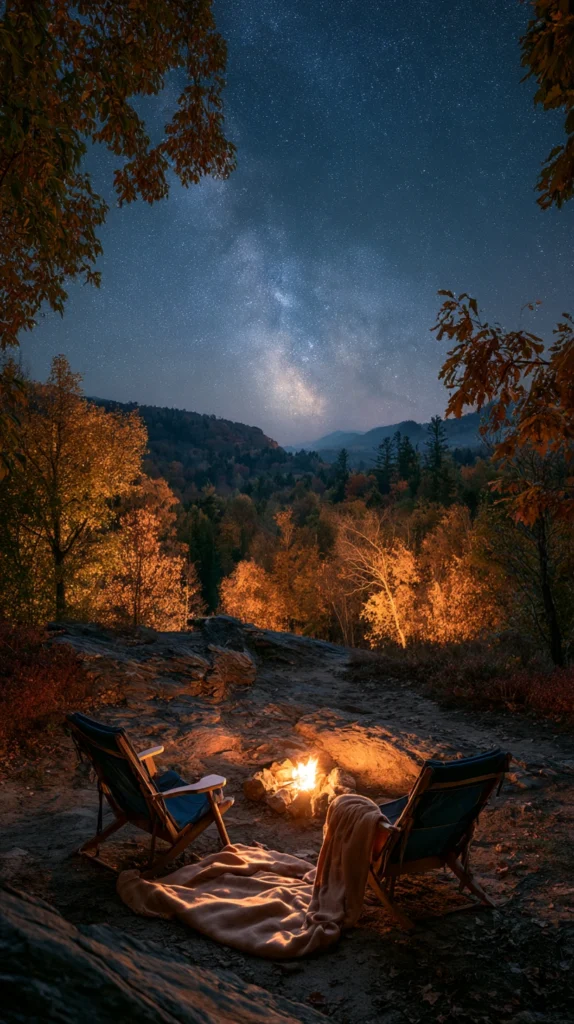
A second, smaller seating spot, positioned just beyond the fire’s direct light, dedicated specifically to stargazing once eyes adjust to the darkness.
Why a second spot serves a purpose the fire area itself cannot
The light-pollution-awareness-principle:
- The fire’s own light, while essential for warmth and the main gathering, actively works against night sky visibility for anyone wanting to see stars clearly
- A second, smaller seating spot positioned just outside that direct glow allows eyes to properly adjust to the darkness
- This addition gives a fall camping trip, often associated with clearer, crisper night skies, a dedicated way to take advantage of that specific seasonal benefit
Best stargazing spot setups
- A simple blanket or two folding chairs, positioned a short distance from the fire’s direct light
- A star chart or basic constellation guide, kept on hand for identifying what is visible
Budget: $10-25 for a simple star chart or guide, using existing chairs or a blanket already on hand
My stargazing spot result
Setting up two chairs just beyond my fire’s direct glow, specifically for stargazing once the group’s eyes adjust to the darkness, has become one of the most appreciated small additions to our fall camping trips, giving the clear autumn sky the dedicated attention it deserves.
Stargazing Spot Tips
Allow at least ten minutes for eyes to adjust before expecting full visibility:
- Eyes accustomed to firelight take a genuine adjustment period before night vision fully kicks in
- Setting this expectation beforehand prevents disappointment from checking the sky too soon after leaving the fire’s light
14. A Simple Fire-Safety Station With Water and a Shovel
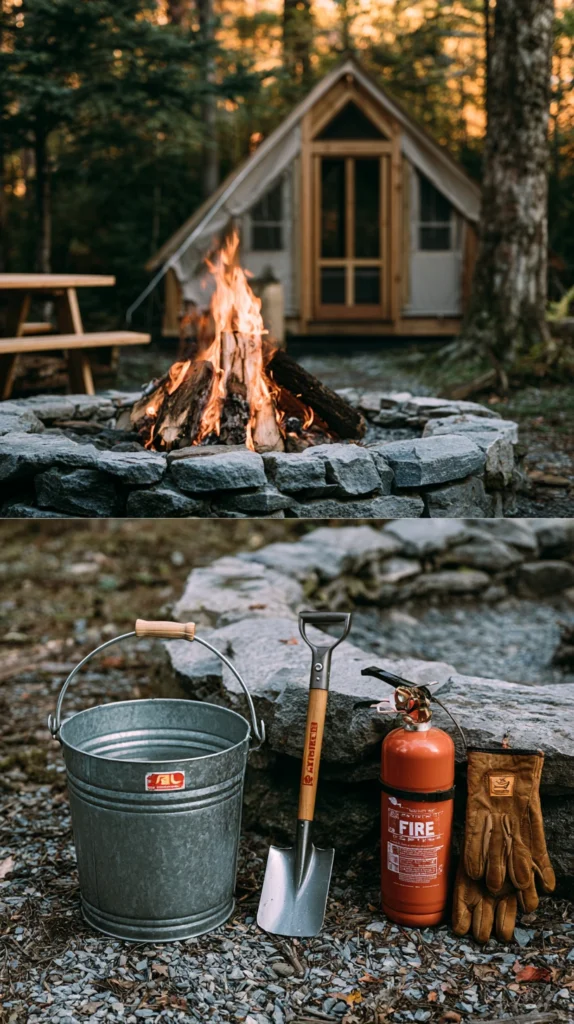
A small, clearly designated station near the fire holding a bucket of water, a shovel, and basic fire safety supplies, kept ready throughout the gathering.
Why visible safety supplies matter as much as any comfort addition
The preparedness-as-part-of-setup-principle:
- A genuinely complete fire setup includes safety measures as a core component, not an afterthought handled only if something goes wrong
- A clearly designated station with water and a shovel, kept consistently in the same spot, ensures these essentials are immediately available if ever needed
- This addition also models good practice for anyone newer to fire safety, reinforcing the kind of attentive setup the whole gathering benefits from
Best safety station setups
- A dedicated bucket, filled with water, positioned a few feet from the fire ring
- A small camping shovel, kept beside the bucket for smothering or spreading embers if needed
Budget: $15-25 for a dedicated bucket and small shovel
My safety station result
Keeping a filled water bucket and a small shovel in the same designated spot beside my fire every single trip has become such a consistent habit that it now feels like a core part of the setup itself, not an extra step tacked on as an afterthought.
Safety Station Tips
Refill and reposition the bucket at the start of each new fire, not just once per trip:
- Water can evaporate or be used gradually throughout a longer stay
- Checking and refilling the bucket each time a new fire is started ensures the safety measure stays genuinely ready
15. A Fully Combined Fireside Gathering System
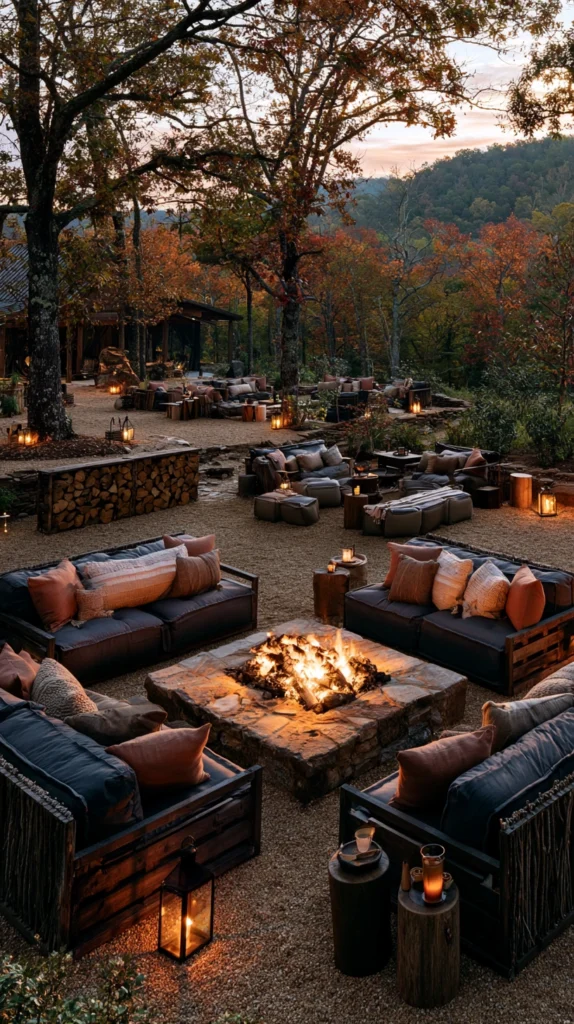
Combining a defined ground base, coordinated seating, organized firewood and supplies, supplemental lighting, and a designated safety station into one complete fall campfire setup.
Why combining every element outperforms any single upgrade
The complete-fireside-philosophy:
- Several of the ideas on this list (ground treatment, seating, organized supplies, supplemental lighting, safety preparation) address genuinely different aspects of what makes a fire area function well as a complete gathering space
- Relying on just one upgrade improves one specific aspect but leaves the rest of the setup exactly as unconsidered as before
- This is the most complete and most genuinely transformative version of a fall campfire setup on this list, suited to anyone who treats the fire as the actual center of their camping trip
How the combination works together
The ground base and seating (the physical foundation):
- Provide stable, comfortable footing and gathering space regardless of weather or group size
Organized firewood, kindling, and supplies (the function layer):
- Remove the recurring friction points that interrupt an otherwise pleasant evening
Supplemental lighting and a warming station (the atmosphere layer):
- Extend the evening’s comfort and usability well past the fire’s peak burn
A safety station (the essential-preparedness layer):
- Ensures the whole setup remains genuinely safe, not just comfortable and well organized
Building the full combined system
- Start with the ground treatment and seating arrangement, since these establish the physical space
- Add organized firewood storage and a dedicated kindling kit
- Include supplemental lighting and a warming drink station for the evening’s later hours
- Finish with a clearly designated safety station, checked and refreshed at the start of every fire
Budget: $300-700 for a fully combined fireside system, covering most of the ideas on this list
My fully combined result
Combining a gravel base, coordinated mismatched seating, a firewood rack, a lantern cluster, a cider warming station, and a dedicated safety bucket turned my fire area from a flame surrounded by whatever was in the car into the genuine center of every camping trip, the spot everyone gravitates toward and stays at far longer than they used to.
Full System Tips
Build the system gradually across more than one trip if needed:
- This combination does not need to be assembled all at once
- Adding one or two elements each trip still results in the same fully considered fireside setup over time, while spreading out both the cost and the effort involved
Choosing Your Fireside Setup Approach
By group size:
- Smaller, quieter gatherings: stargazing spot (idea 13), warming station (idea 12), central low table (idea 6)
- Larger group gatherings: coordinated mismatched seating (idea 2), s’mores supply station (idea 5), blanket basket (idea 8)
By campsite conditions:
- Windy or exposed sites: windbreak screen (idea 11), wind-resistant lantern cluster (idea 7)
- Uneven or muddy ground: gravel or paver base (idea 1)
By budget level:
- Lower budget: kindling kit (idea 10), safety station (idea 14), s’mores supply basket (idea 5)
- Moderate budget: firewood rack (idea 3), side tables (idea 4), blanket basket (idea 8)
- Higher budget: gravel base (idea 1), tripod cooking rig (idea 9), fully combined system (idea 15)
The non-negotiable rules across every option:
Always:
- Keep a designated water source and shovel near every fire, checked and refreshed at the start of each burn
- Maintain proper safety clearance between the flame and any furniture, firewood storage, or windbreak
- Check local fire restrictions before building any fire, regardless of how well the surrounding setup has been planned
Never:
- Position a windbreak, firewood rack, or seating closer to the flame than standard safety clearance allows
- Leave a fire, however small or contained, unattended without confirming it is fully extinguished first
- Assume a setup that worked at one campsite will translate identically to a different site’s ground, wind, and space conditions without reassessment
Remember: a real fall campfire setup treats seating, ground, supplies, and safety as one connected system, not a single upgraded chair beside an otherwise unconsidered fire ring, and the gatherings people remember most fondly are usually built around a fire area considered as carefully as the flame itself.