15 Designs for a Two-Level Deck
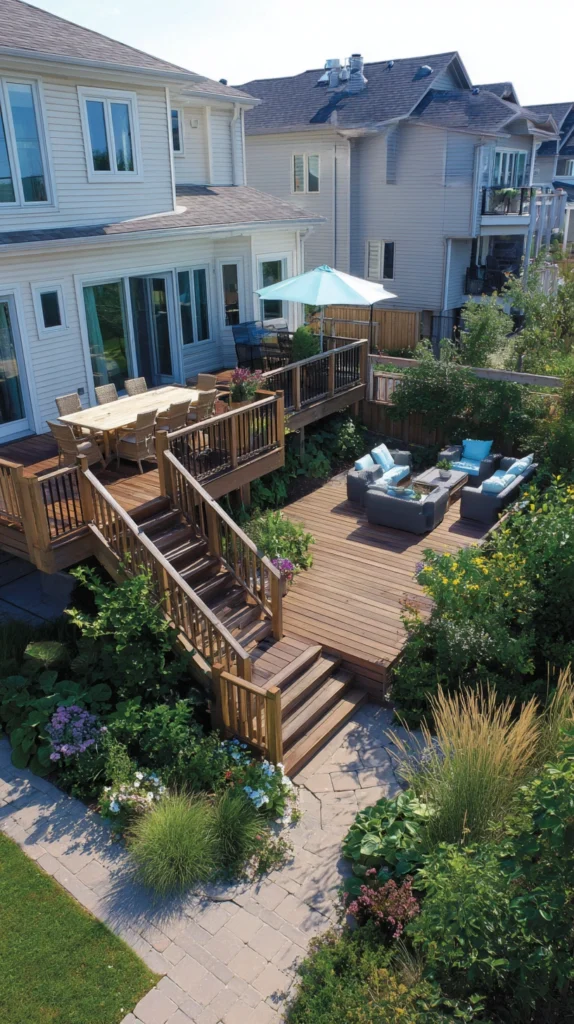
The two-level deck is one of the most spatially intelligent and most practically rewarding outdoor structures available to the domestic property.
Where the single-level deck creates one outdoor room, the two-level deck creates two distinct outdoor spaces connected by the specific spatial relationship of the level change, allowing different functions, different atmospheres, and different relationships to the surrounding garden to coexist within a single unified outdoor structure. The upper level’s elevation creates the overview, the privacy, and the specific quality of the raised outdoor room.
The lower level’s ground connection creates the garden access, the informal character, and the spatial generosity of the outdoor space that flows naturally into the surrounding landscape. Here are fifteen designs for the two-level deck that maximize the structure’s extraordinary spatial potential.
1. The Classic Upper Dining and Lower Lounging Deck
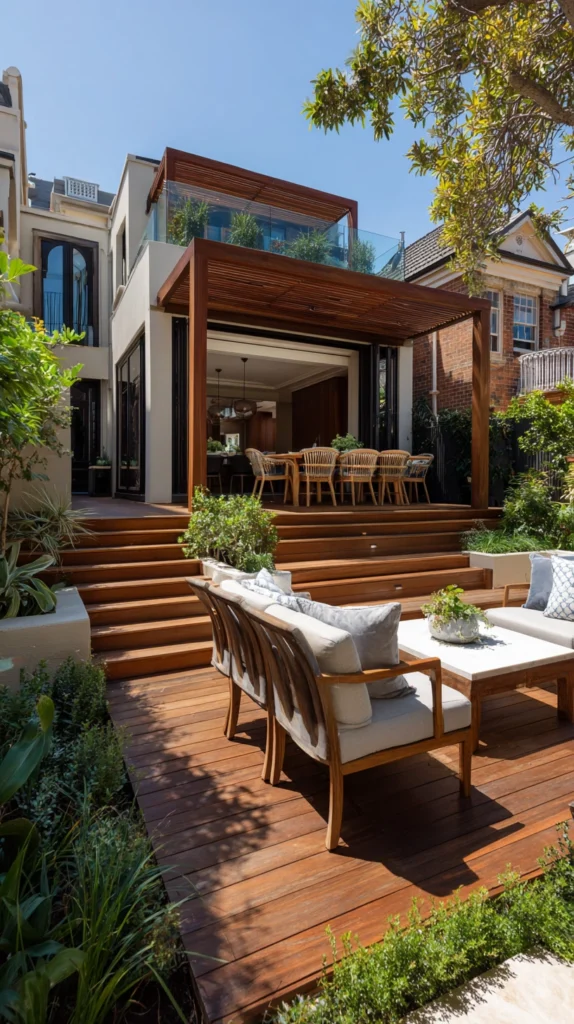
The most intuitive two-level deck organization places the dining function at the upper level, adjacent to the kitchen door, and the lounging function at the lower level, closer to the garden. The upper dining level’s proximity to the kitchen creates the practical efficiency of the short journey between food preparation and outdoor dining.
The lower lounging level’s garden proximity creates the relaxed, nature-connected quality that the informal seating function most naturally benefits from.
Connect the two levels with a staircase of generous width positioned at the deck’s side rather than its center, preserving the full floor area of both levels for furniture without the circulation interruption of the centrally placed stair.
2. The Wraparound Two-Level Design
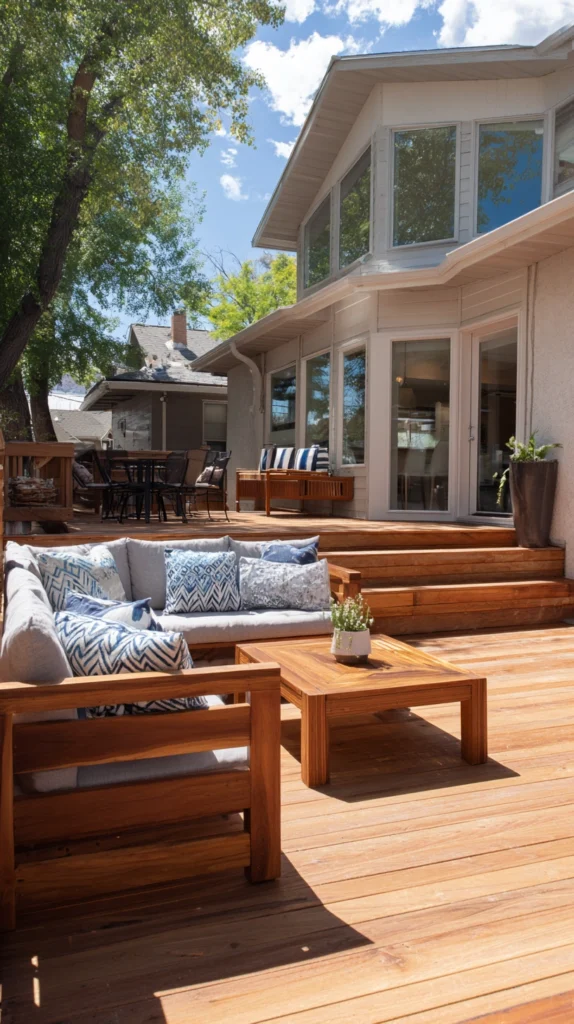
A two-level deck that wraps around two or three sides of the home’s corner position creates the outdoor living provision of most generous spatial coverage and most complete relationship with the home’s interior. The upper level wraps the primary living spaces. The lower level extends into the garden at the corner where the two upper level sections meet.
The wraparound design’s specific quality is the varied orientation of the different deck sections, creating outdoor spaces that receive the morning light on one face and the afternoon light on the other, maximizing the deck’s usable hours through the full day’s changing light conditions.
3. The Hillside Deck with Lower Grade Connection
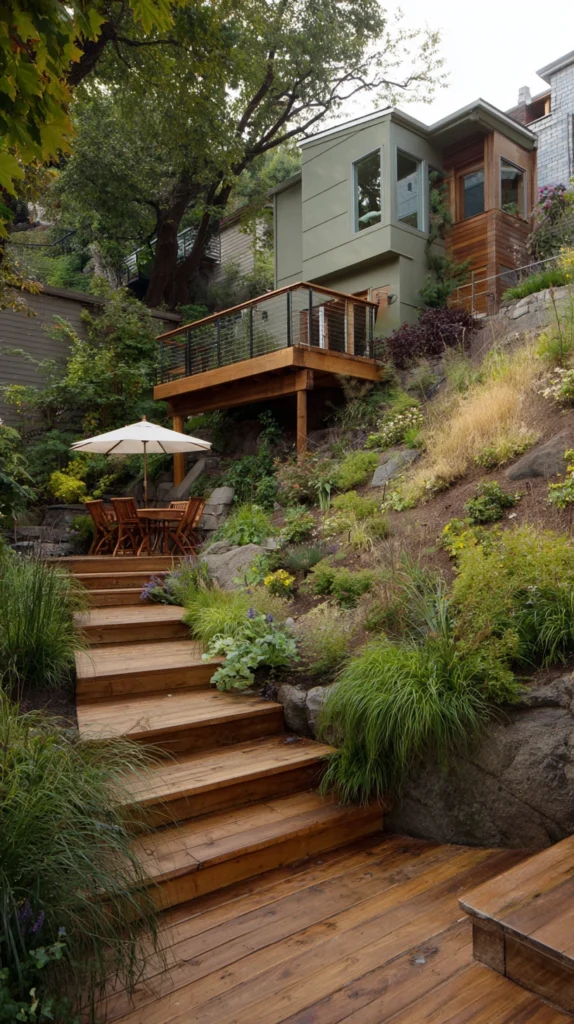
A two-level deck on a sloped site, its upper level at the home’s floor level and its lower level connecting to the garden at the natural grade below, creates the most architecturally elegant solution to the challenge of the sloped backyard whose gradient makes direct ground-level outdoor access from the home impossible without significant earthworks.
The two-level deck bridges the slope with the grace of a designed structure rather than the compromise of the retaining wall and the fill.
The lower level’s connection to the garden creates the specific quality of the hillside deck at its most practically complete, its stepped form following the site’s natural topography rather than fighting it.
4. The Pool Deck with Upper Sun Terrace
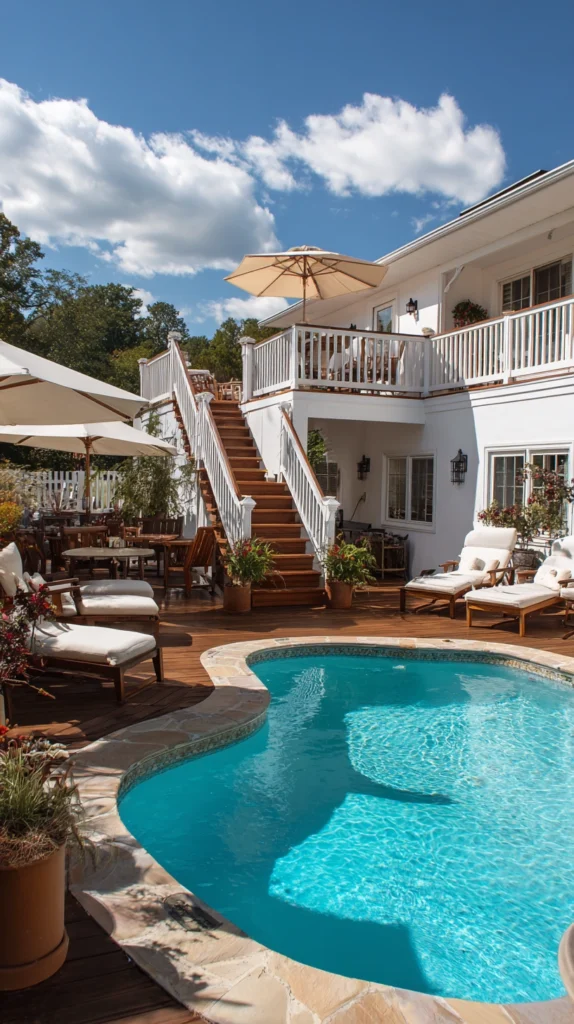
A two-level deck adjacent to an above-ground or semi-inground pool, its lower level creating the poolside deck at the water’s edge and its upper level creating the elevated sun terrace above, creates the outdoor entertaining structure of most resort-like quality and most complete recreational provision.
The upper terrace’s elevation creates the overview of the pool below and the privacy from the surrounding garden that the poolside relaxation most benefits from.
Design the staircase between the pool deck and the upper terrace as a visual feature of the overall composition, using open timber treads that allow the poolside light and the water’s reflections to pass through the stair structure without the visual obstruction of the solid riser.
5. The Pergola-Covered Upper Deck
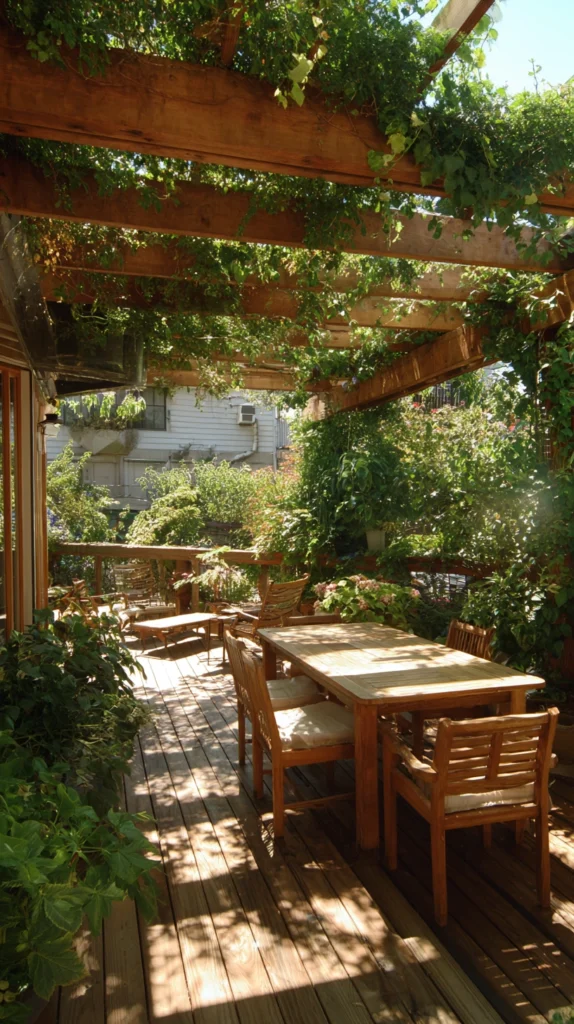
A two-level deck whose upper level is covered by a pergola structure creates the outdoor room of most complete weather protection and most architectural definition. The pergola’s overhead coverage defines the upper level as an enclosed outdoor room while the lower level remains open to the sky, creating the two distinct atmospheric conditions of the sheltered and the exposed within the single deck structure.
Train climbing plants over the pergola for the seasonal development of a living overhead canopy that creates the dappled shade of the natural garden structure rather than the uniform shade of the built roof.
6. The L-Shaped Two-Level Design
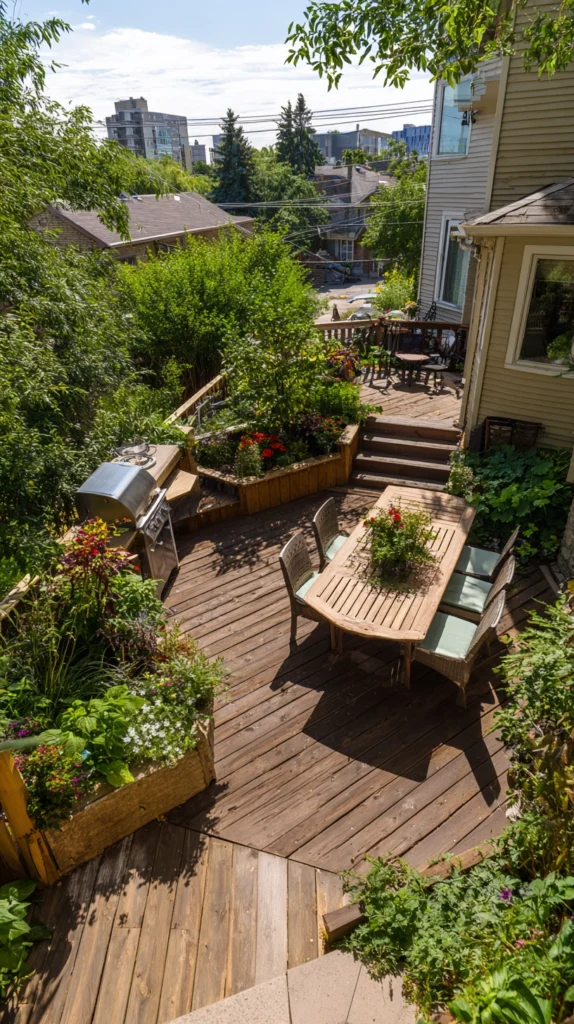
An L-shaped two-level deck, its two arms meeting at a corner and each arm at a different level, creates the outdoor living structure of most dynamic spatial form and most complete zone definition.
The L-shape’s inner corner creates the naturally sheltered outdoor room of the deck’s most intimate zone, and the two arms’ different levels create the functional distinction of the dining and the lounging areas without the requirement for walls or screens.
The L-shaped deck’s inner corner is the ideal position for the outdoor kitchen or the built-in barbecue station, positioned at the junction of the two levels where it serves both the dining arm and the lounging arm with equal ease.
7. The Floating Lower Deck
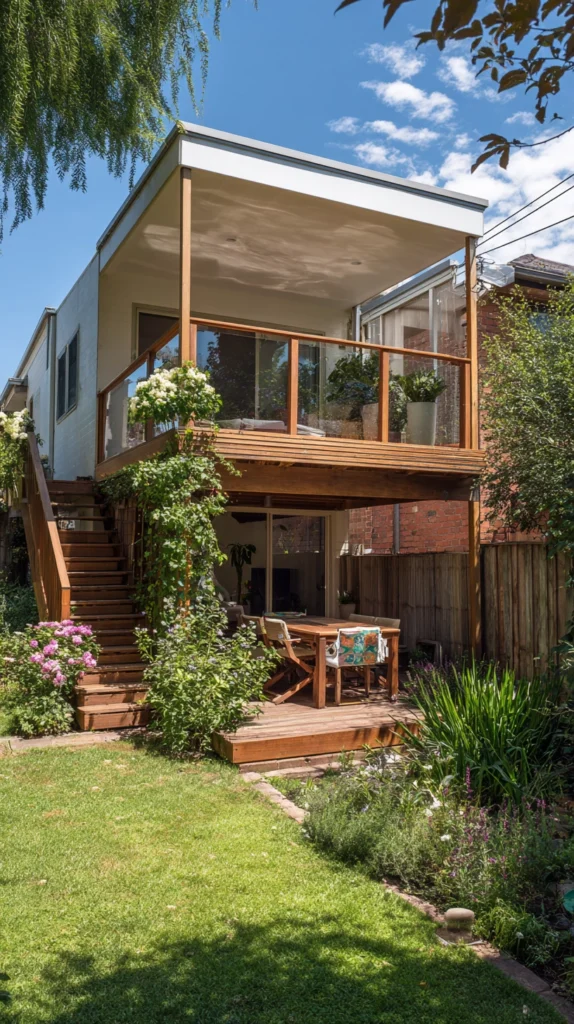
A two-level deck whose lower level extends beyond the upper level’s footprint to create a larger ground-level platform that appears to float above the garden’s ground plane creates the most spatially generous and most dramatically contemporary two-level deck design. The lower level’s extension beyond the upper structure creates the covered outdoor space beneath the upper deck’s overhang.
Use the covered space beneath the upper deck’s overhang for the outdoor storage of garden furniture, cushions, and the various accessories of outdoor living whose weather protection the covered underspace naturally provides without any additional dedicated storage structure.
8. The Curved Edge Two-Level Deck
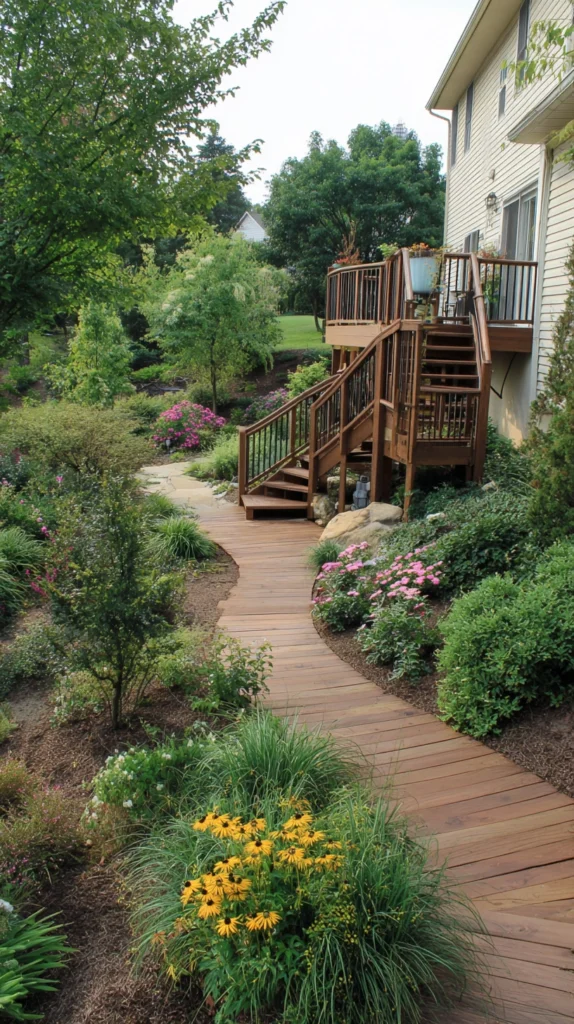
A two-level deck with curved rather than rectilinear edges creates the outdoor structure of the most organic and naturalistic form. The curved edge’s specific quality is its compatibility with the informal garden’s flowing planting borders and its resistance to the geometric precision that the rectilinear deck imposes on the surrounding landscape.
Construct the curved edge from decking boards cut to the radius curve of the design, or use composite decking material of adequate flexibility to follow the curve’s radius without the individual board cutting that the solid timber alternative requires. The composite material’s consistent flexibility creates the smooth, continuous curve of most elegant finished quality.
9. The Built-In Seating Two-Level Deck
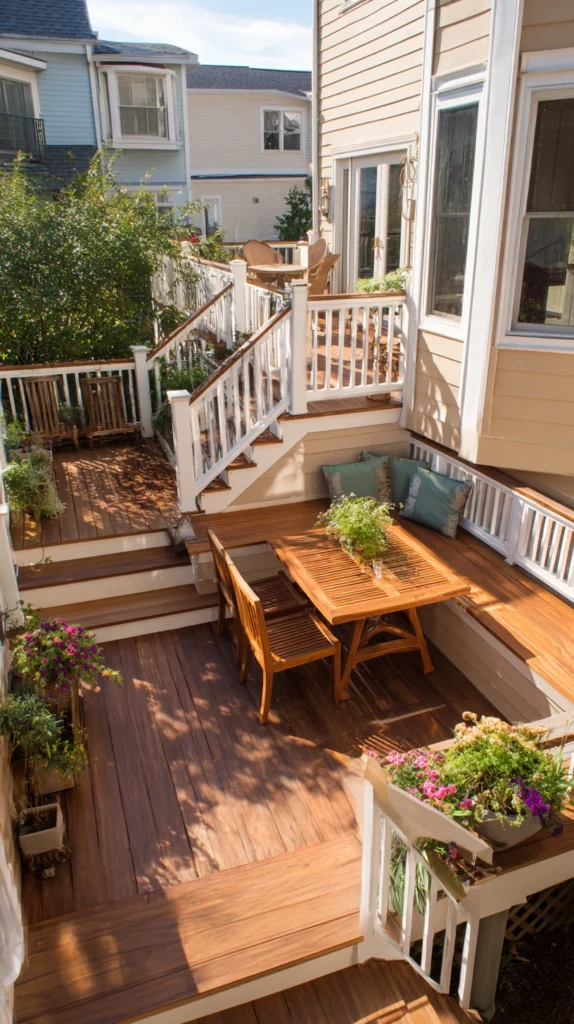
A two-level deck with built-in bench seating along the upper level’s perimeter edge and the staircase’s sides creates the outdoor structure of most complete spatial efficiency. The built-in seating eliminates the floor area that freestanding chairs occupy while creating the continuous perimeter seating of most generous capacity and most integrated visual quality.
The bench seat’s timber surface should be at forty-five centimeters height for comfortable adult seating. The seat depth of forty to fifty centimeters creates the comfortable seating position for both the conversational upright position and the relaxed reclined position that the outdoor seating environment most naturally accommodates.
10. The Hot Tub Upper Deck
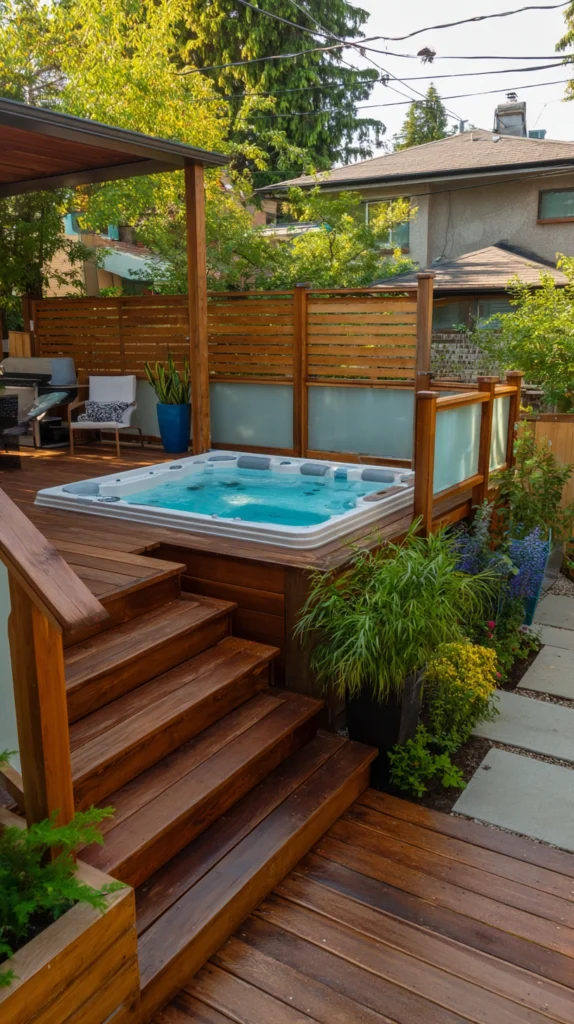
A two-level deck whose upper level is specifically designed to accommodate a hot tub, its structural specification reinforced for the hot tub’s significant combined weight of water, shell, and occupants, creates the outdoor wellness facility of most practical excellence and most complete privacy. The upper level’s elevation creates the specific privacy from neighboring viewpoints that the hot tub’s intimate use requires.
Surround the upper hot tub deck with privacy screening of appropriate height, using timber batten screens, planting trellises, or a combination of built and planted elements that create the visual enclosure without the claustrophobic quality of the full solid wall.
11. The Children’s Play Lower Deck
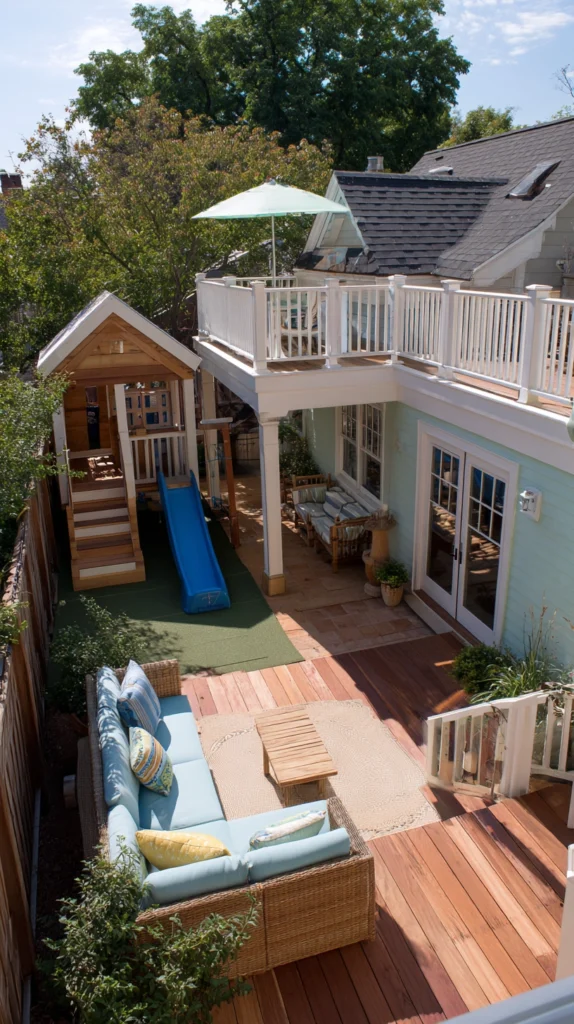
A two-level deck whose lower level is specifically designed for children’s play, its surface of softer composite decking or rubber mat insets creating the safer play surface, and its lower elevation creating the supervision sightline from the upper adult level, creates the family deck of most complete intergenerational design intelligence.
Position a simple built-in sandpit, a water play table, or a small climbing structure within the lower play deck’s footprint, creating the dedicated play infrastructure that keeps children engaged within the deck’s boundaries while adults relax on the upper level with the direct supervision sightline that the level change creates.
12. The Outdoor Kitchen Upper Deck
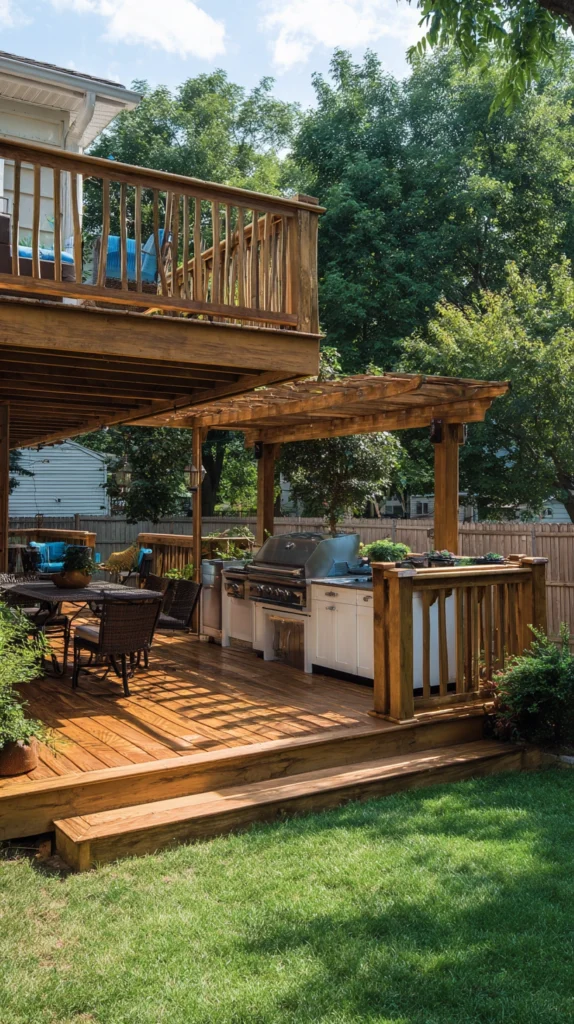
A two-level deck whose upper level is fully equipped as an outdoor kitchen, with a built-in barbecue, a preparation counter, an outdoor sink connected to the water supply, and the overhead shelter of a pergola or a roof structure that protects the cooking function from rain, creates the outdoor entertaining structure of most complete culinary provision and most genuinely functional outdoor cooking environment.
The outdoor kitchen’s plumbing and electrical connections should be installed by qualified tradespeople before the deck structure is completed, routing the services through the deck’s substructure rather than as surface-mounted pipes and cables that the finished deck’s visual quality cannot absorb without significant aesthetic compromise.
13. The Minimalist Floating Two-Level Deck
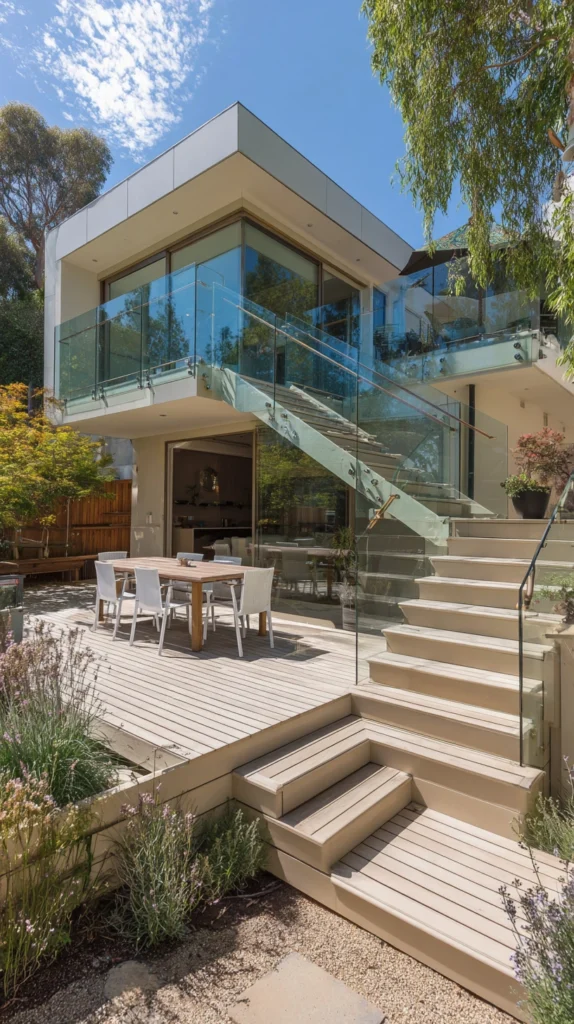
A two-level deck of most restrained material palette and most architecturally minimal design, its two levels connected by a frameless glass balustrade staircase of steel and glass construction, creates the outdoor structure of most contemporary architectural quality.
The minimal deck’s beauty is entirely dependent on the material quality and the precision of the construction rather than on decorative detail or planting embellishment.
Choose the decking material for its specific visual quality under the outdoor light conditions of the deck’s orientation. A pale, fine-grained composite in a warm stone tone creates the minimal deck’s most complete visual refinement for the south-facing outdoor space where the material’s color and texture are visible at their most detailed and most subtly varied.
14. The Terraced Garden Two-Level Deck
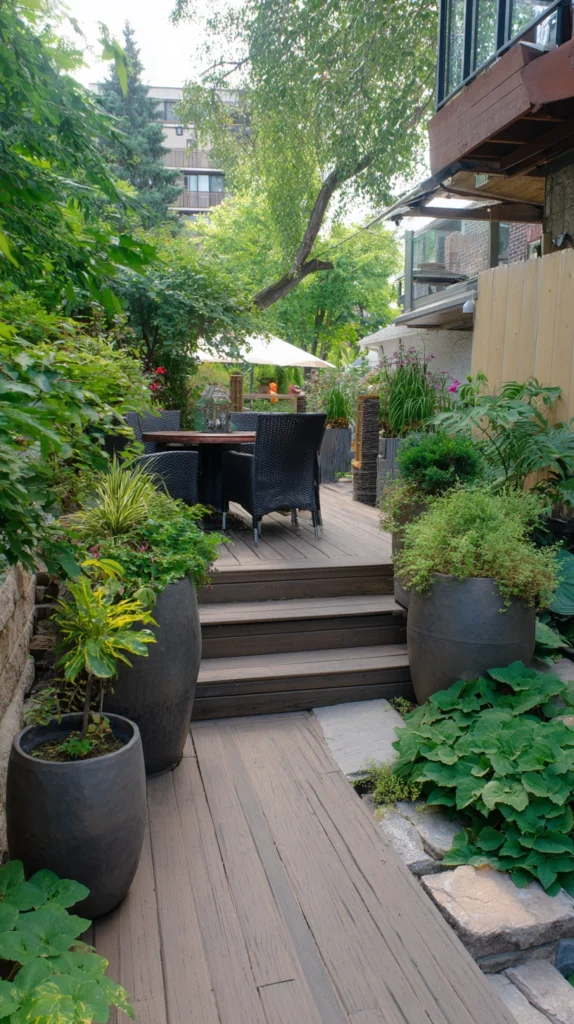
A two-level deck integrated into a terraced garden design, each deck level corresponding to a specific garden terrace and connecting to the garden’s planting at its outer edge, creates the outdoor structure of most complete integration between the built deck and the surrounding planted garden. The deck and the garden terrace share the level change’s logic, creating the unified outdoor landscape of most coherent design vocabulary.
Plant generous containers at each deck level’s outer edge, their planting chosen to create the visual transition between the deck’s built character and the garden’s planted character with the specific warmth of living plant material at the boundary between the two worlds.
15. Design the Two-Level Deck for the Life You Will Live on It
The most important two-level deck design principle is the commitment to designing the structure for the specific outdoor life of the specific household rather than the generic deck of the architectural visualization whose specific users and specific lifestyle have not been genuinely considered in the design’s development.
The two-level deck designed for the household that cooks outdoors, entertains frequently, and values the garden connection above all other outdoor qualities creates a fundamentally different structure from the deck designed for the household that sunbathes, swims, and requires the maximum privacy from neighboring properties.
Both decks can be equally well designed. Only the deck designed for the specific life of the specific household it serves will be genuinely excellent for the people who step onto it every day.