14 Cozy Bathroom Towel Styling Ideas for Autumn
Bathroom towels are the easiest seasonal swap in the house. They’re inexpensive, they store flat, and they change how a bathroom feels more than almost any other single update.

In autumn, most bathrooms are one towel swap away from feeling genuinely seasonal. The right fabric, fold, and color combination — displayed the right way — turns a functional bathroom into a space that feels warm and considered rather than utilitarian.
These fourteen ideas cover folding techniques, display methods, color pairings, fabric choices, and small additions that make towel styling feel intentional rather than improvised.
1. Fold Towels in the Spa Roll for a Boutique Display
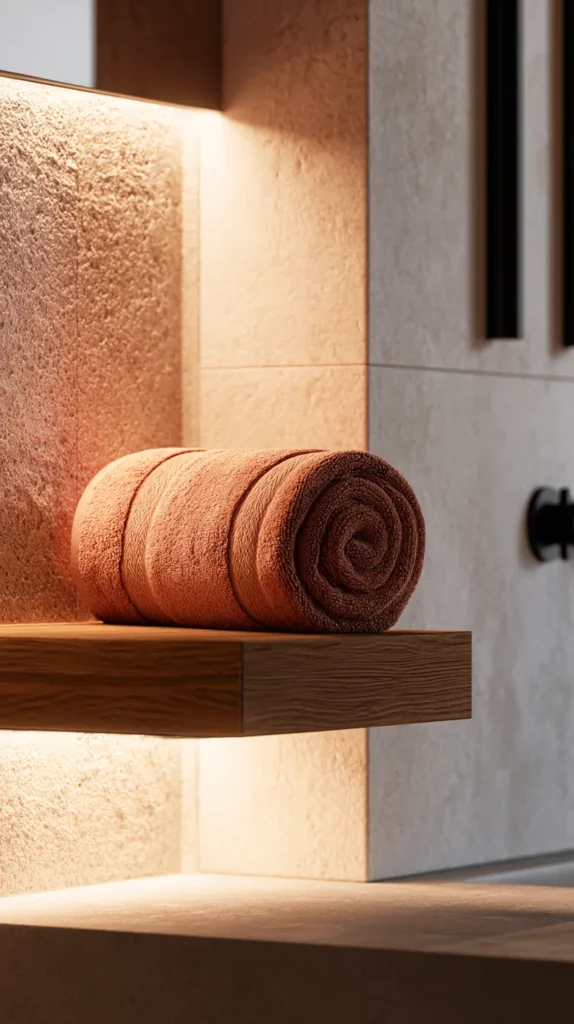
The spa roll is the most space-efficient and visually polished towel fold for autumn display. It shows the towel’s color and texture from the end rather than the face, which creates a clean, cylindrical display that works in baskets, on shelves, or stacked on a counter.
Lay the towel flat, fold in the two long sides so they meet at the center, then roll tightly from one short end to the other. The finished roll should hold its shape without an elastic band.
For autumn, roll towels in terracotta, rust, caramel, and warm cream and display them grouped by color or in a gradient sequence. Three rolls stood upright in a low basket looks boutique. Five rolls stacked horizontally on an open shelf looks like a linen display in a high-end bathroom store.
This fold works best with cotton and bamboo towels. Waffle-weave towels roll too loosely and don’t hold the cylindrical shape.
Tip: Roll from the hemmed end toward the unhemmed end. The hemmed end at the outside of the roll creates a cleaner finish that stays tight longer than rolling with the hem on the inside.
Budget: $0 — technique only
2. Layer Two Towels of Different Weights on the Same Bar
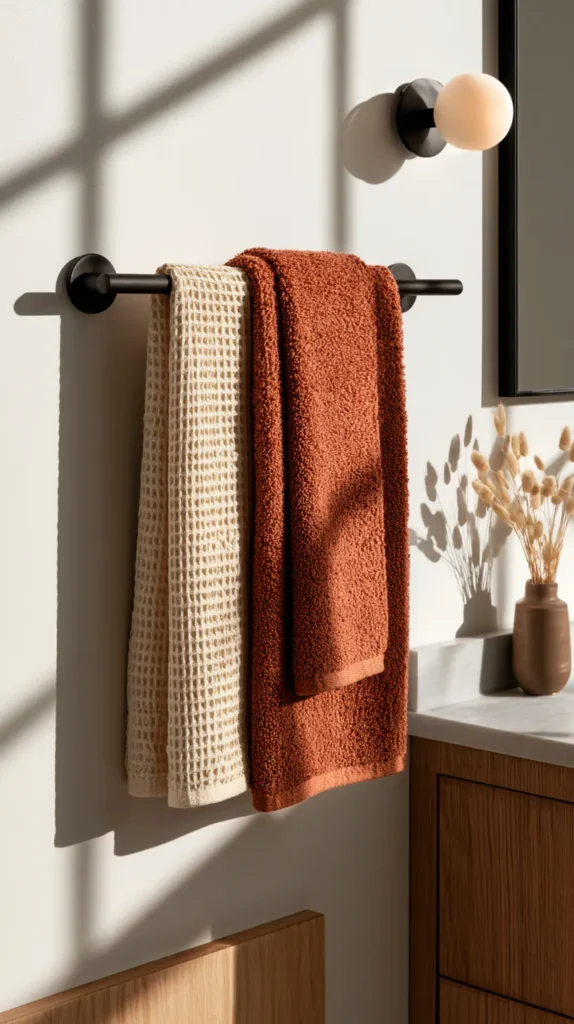
A single towel on a towel bar looks functional. Two towels layered in different weights look styled.
The combination that works best: a thinner waffle-weave or linen towel draped on the bar first, then a standard terry towel folded in thirds and hung over it so the front half of the waffle-weave shows beneath. The texture contrast between the two fabrics is what makes the arrangement read as intentional.
For autumn, use the waffle-weave in a warm neutral — natural oat, ivory, or warm cream — and the terry towel in a deeper fall tone: rust, terracotta, or cinnamon. The neutral waffle-weave frames the colored terry and makes the fall tone feel deliberate rather than isolated.
This works on single bar, double bar, and towel ring configurations with minor adjustments to how the upper towel is folded.
Tip: Make sure the layered towels hang at the same length at the bottom. Uneven hemlines in a layered display look careless rather than styled — fold the upper towel to match the lower towel’s hanging length before draping.
Budget: $15–$40 for a waffle-weave hand towel to pair with an existing terry
3. Display Rolled Towels in a Wooden Crate
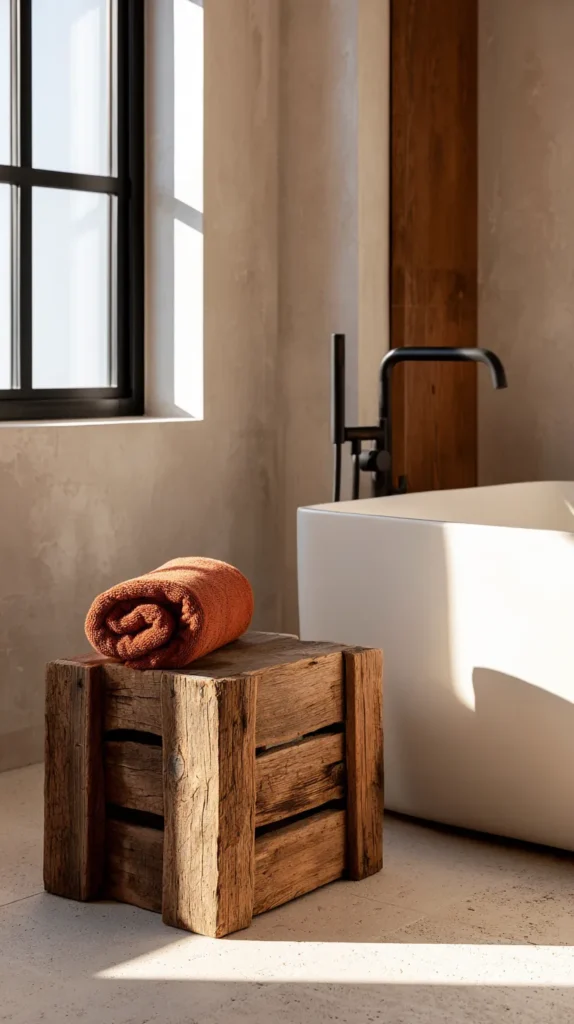
A wooden crate used as a towel storage and display unit adds warm organic material to a bathroom counter or floor space that wire or plastic organizers never achieve.
Place the crate on the bathroom floor beside the tub or against an open wall, or on the vanity counter if space allows. Fill with spa-rolled towels in autumn tones — rust, burnt orange, caramel, warm cream — stood upright so the rolled ends face outward.
A standard wooden wine crate (often free from wine shops or $5–$10 at craft stores) holds four to six rolled hand towels comfortably. A larger slatted wood crate from IKEA or a home store holds bath towels in a floor display.
Line the interior base of the crate with a small linen napkin or a square of burlap before placing the towels. This covers the raw wood interior and gives the arrangement a finished base.
Tip: Sand the interior of any raw wood crate lightly before using it for towels. Splinters and rough wood edges snag towel fabric and eventually cause pulls in the weave — a quick pass with 120-grit sandpaper on the interior prevents this.
Budget: $5–$20 for the crate
4. Use a Ladder Rack for a Casual Autumn Display
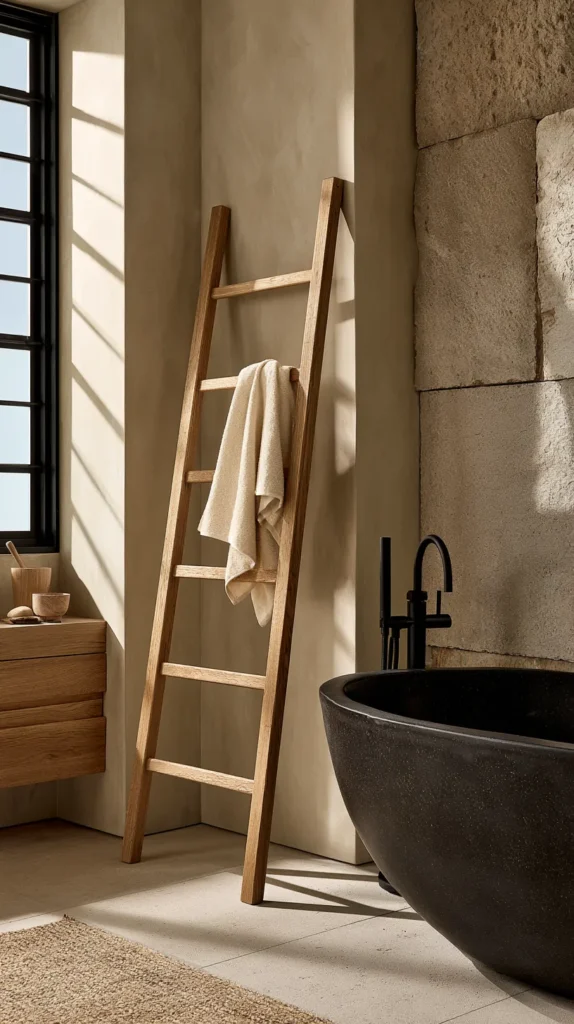
A wooden ladder towel rack leans against the wall and holds multiple towels at different heights — the most visually layered towel display available without wall mounting.
Each rung holds a different towel. For autumn, graduate the color from lightest at the top rung to darkest at the bottom: warm cream at the top, caramel in the middle, rust or terracotta at the bottom. The gradient reads downward the same way autumn light reads — warm at the top, deeper and richer toward the ground.
Add a small autumn detail on the top rung alongside the towel: a eucalyptus sprig tucked behind the towel, a dried cotton stem, or a small piece of pampas grass. These natural additions at eye height draw attention to the display without requiring any additional furniture.
A wooden ladder towel rack runs $25–$55 at Target, IKEA, or Amazon in 3-rung and 5-rung versions.
Tip: Lean the ladder at a slightly steeper angle than feels natural — around 75 degrees from the floor rather than 60. A steeper angle prevents the ladder from pulling away from the wall under the weight of multiple towels and keeps the display stable throughout the day.
Budget: $25–$55
5. Add a Velvet or Grosgrain Ribbon Accent to Guest Towels
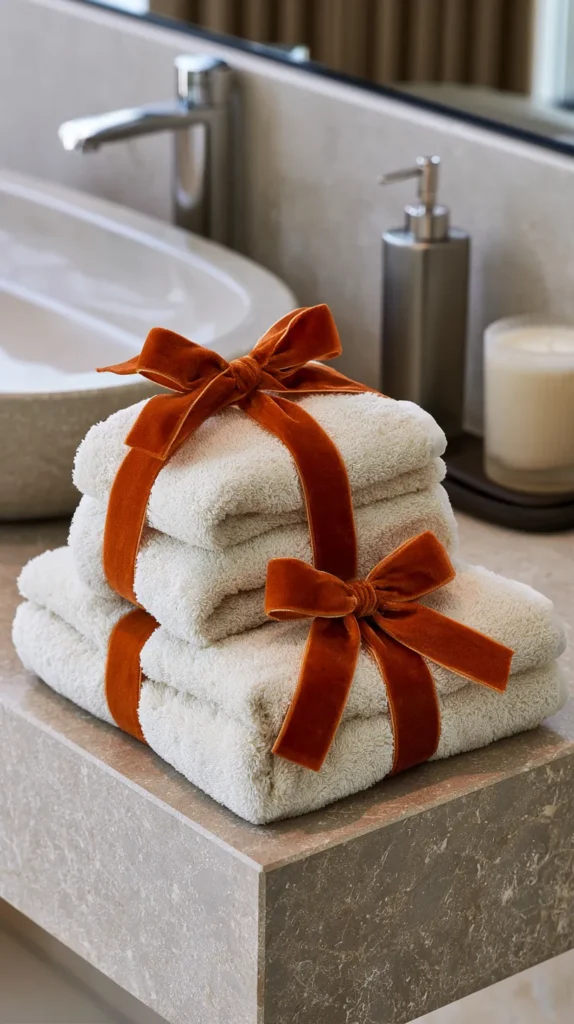
A ribbon accent tied around a folded guest towel takes three minutes and changes the towel from a bathroom item to a hospitality gesture.
Fold the hand towel in thirds lengthwise, then in thirds again to create a compact rectangle. Cut a 14–16-inch length of velvet ribbon in burnt orange, deep burgundy, or forest green. Wrap it around the center of the folded towel, tie in a simple knot or a small bow at the front, and trim the ends at an angle to prevent fraying.
Stack two or three ribbon-wrapped towels on a guest tray or beside the sink. The ribbon accent signals that these towels are designated for guest use — clearer than a separate towel bar and more hospitable than a bathroom with no obvious guest provision.
For autumn specifically, velvet ribbon in burnt orange or rust reads as seasonal without being explicitly Halloween or Thanksgiving themed.
Tip: Use pinking shears to cut the ribbon ends rather than straight scissors. The zigzag cut prevents the cut end from unraveling and adds a small handcraft detail that reads as deliberately finished rather than cut in a hurry.
Budget: $3–$8 for ribbon to accent a set of four
6. Choose Waffle-Weave Towels for Autumn Texture
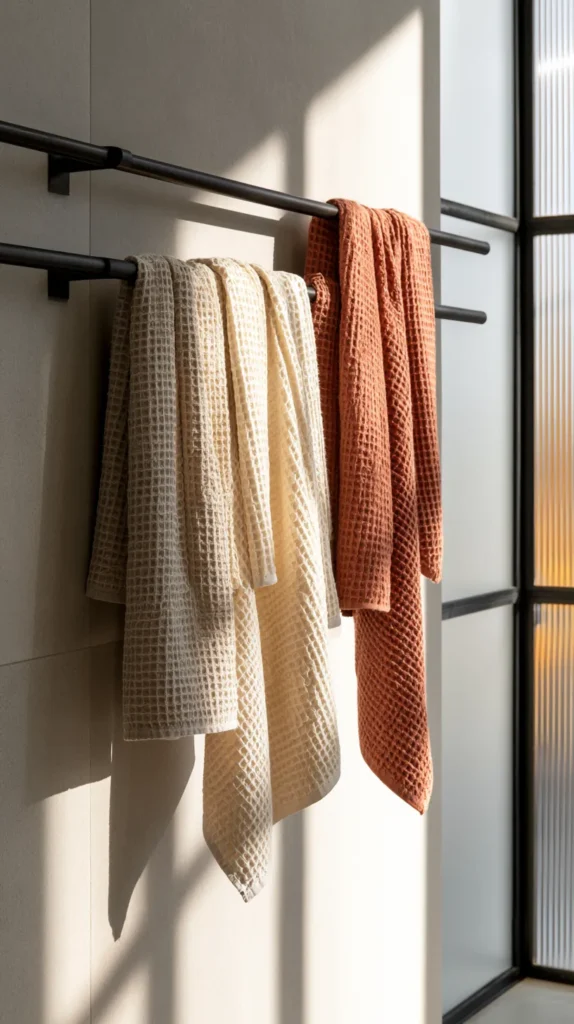
Waffle-weave towels have a textured grid surface that standard terry doesn’t. In autumn, that texture adds warmth in the same way that a chunky knit throw adds warmth to a sofa — not through temperature but through visual association.
The grid pattern on waffle-weave also catches light differently from terry. In low autumn light — the warm, angled light of October mornings — waffle-weave creates subtle shadow in the recessed squares of the grid, which makes the towel look more three-dimensional and considered on a towel bar than a flat terry surface does.
For autumn palette, waffle-weave works particularly well in natural oat, warm cream, and terracotta. These tones in waffle-weave look artisanal rather than retail — closer to something from a Scandinavian linen shop than a department store.
Waffle-weave hand towels run $8–$18 each. Bath towels run $18–$35. Parachute, Coyuchi, and Amazon Basics all carry reliable options.
Tip: Wash waffle-weave towels without fabric softener. Fabric softener coats the cotton fibers and reduces absorbency — particularly noticeable in waffle-weave because the grid structure relies on exposed fiber surface area for absorption.
Budget: $18–$55 for a hand and bath towel set
7. Try the Fan Fold for a Formal Autumn Display
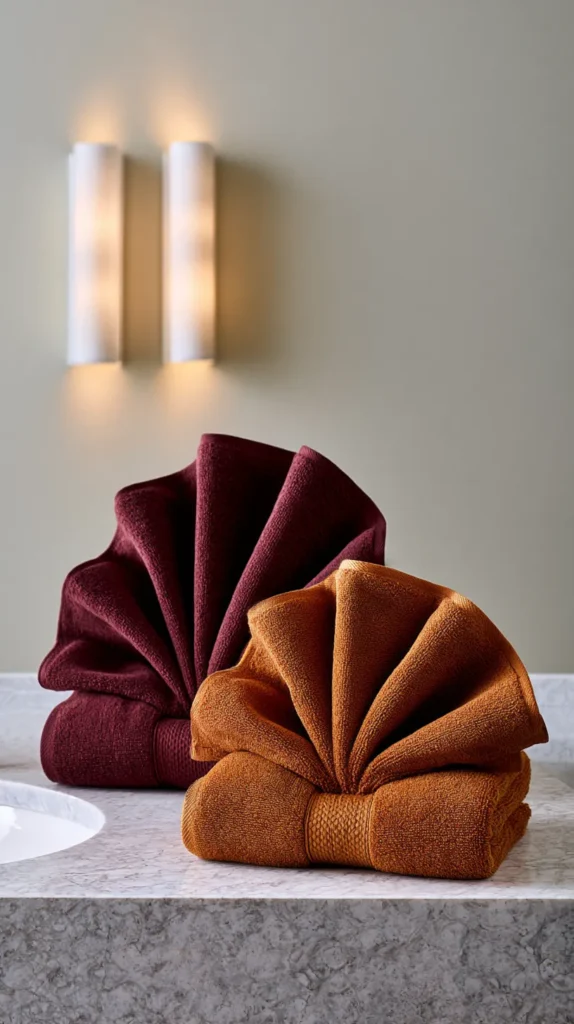
The fan fold is the most decorative towel fold and the one most associated with hotel and spa styling. It works particularly well in guest bathrooms during autumn because it turns a practical item into a display piece.
Fold the towel in half lengthwise, then accordion-pleat the folded towel in even folds approximately 1.5 inches wide from one short end to the other. Stand the pleated towel upright on a flat surface — the accordion structure holds itself without support — and fan the top edge open slightly to create the spread. Place on a towel tray, a bathroom shelf, or a counter beside the sink.
For autumn, use the fan fold on a towel in a deep fall tone — burgundy, dark rust, or warm brown — so the pleats create a gradient of light and shadow in the color. The fold works best with medium-weight terry or cotton rather than very thin or very thick fabrics, which either collapse or resist the pleating.
Tip: Steam the finished fan fold lightly with a garment steamer or hold it briefly over a kettle of hot water. The heat relaxes the fabric and allows the pleats to set in their position, which keeps the fan shape intact for 2–3 days rather than slowly collapsing.
Budget: $0 — technique only
8. Create a Color-Graduated Towel Stack
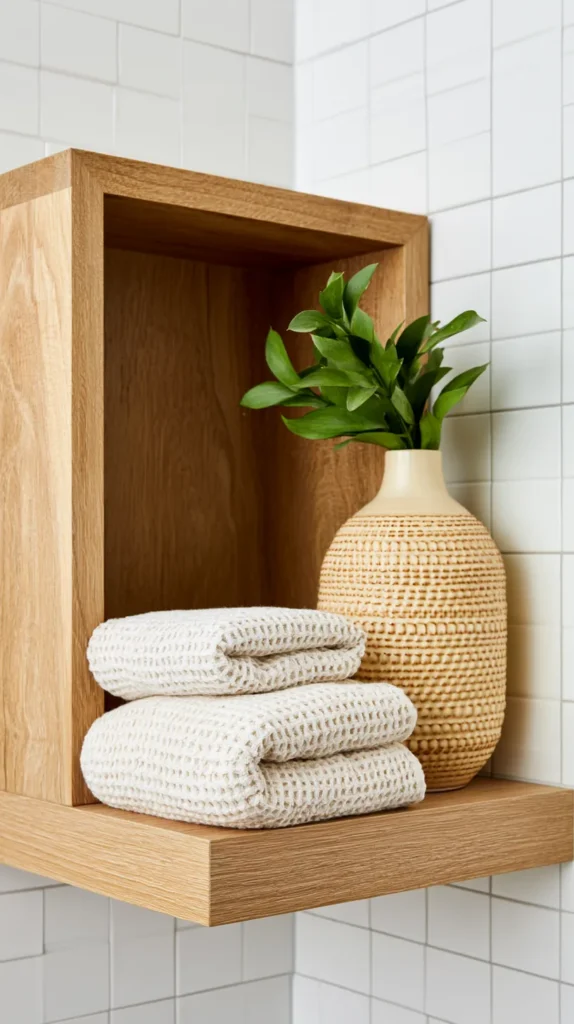
A stack of folded towels in a graduated color sequence — from lightest at the top to darkest at the bottom, or the reverse — is one of the most visually resolved towel displays for an open shelf or vanity counter.
The graduation works because it imposes an organizing principle on what would otherwise be a random stack of colored towels. The eye reads the sequence as intentional immediately, even without understanding why.
For autumn, a five-towel gradient might run: warm cream, pale caramel, mid rust, deep terracotta, chocolate brown. Or a three-towel version: ivory, burnt orange, burgundy. The number of towels matters less than the consistency of the gradient direction.
Fold each towel the same way — thirds lengthwise, then thirds again to create a flat rectangle — and stack with the folded edge facing outward so the smooth face of each fold is visible from the front.
Tip: Place the heaviest towel at the bottom regardless of where it falls in the color gradient. A lighter towel at the base creates an unstable stack that lists to one side over time. Structural stability is the priority; color sequence adjusts around it.
Budget: $25–$60 for an autumn towel set in graduated tones
9. Hang Towels with a Leather Loop or Wooden Ring
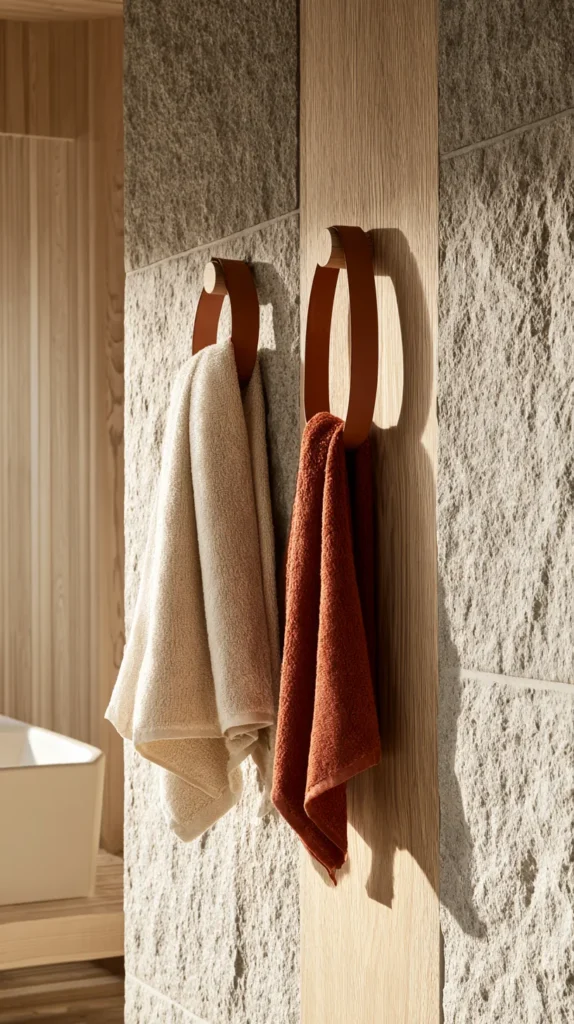
The hardware used to hang towels affects the overall look of a bathroom as much as the towels themselves.
Replacing a standard chrome towel bar ring with a leather strap loop or a wooden ring instantly shifts the bathroom toward a warmer, more organic aesthetic. Leather loops — the kind used in Scandinavian bathroom styling — hold a rolled towel through a loop of thick leather attached to a wall hook or a wooden rod. The natural leather tone pairs directly with autumn’s warm brown and rust palette.
Wooden rings and driftwood branches mounted horizontally between two wall hooks serve the same function as a towel bar but in a material that reads as warm and natural rather than industrial.
Leather towel loops are available on Etsy in the $12–$25 range for a set of two. Wooden wall-mounted towel holders run $18–$40.
Tip: Condition leather towel loops with a small amount of leather conditioner twice a year to prevent cracking in bathroom humidity. Bathroom moisture cycles — steam from showers, dry air between uses — stress leather more than most surfaces.
Budget: $12–$40 for alternative hanging hardware
10. Tuck a Dried Botanical Into the Towel Fold
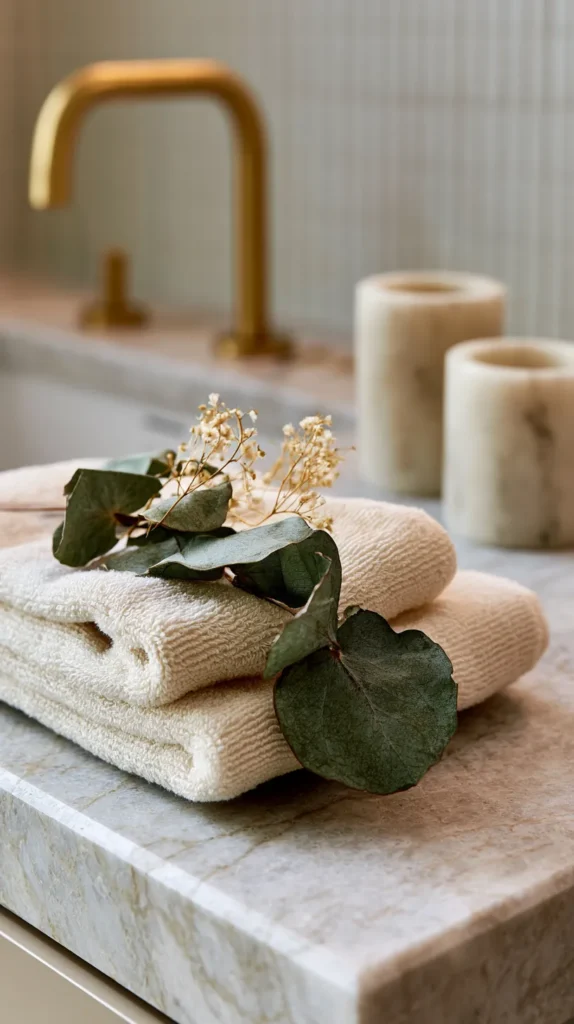
A single dried stem or botanical element tucked into the fold of a displayed towel bridges the gap between a functional item and a seasonal display piece.
A small bundle of dried lavender, a eucalyptus sprig, a dried rosemary branch, or a single dried rose tucked into the outer fold of a stacked or rolled towel adds natural color and texture that no towel alone provides. The botanical element signals that someone thought about the bathroom rather than just maintaining it.
For autumn specifically, dried orange slices tucked into the fold of a light-toned towel add a distinctly seasonal element that reads as crafted rather than purchased. Dried cotton stems, wheat stalks, and small dried pumpkin vines all work in the same way.
Replace the botanical every 1–2 weeks as dried elements fade and lose their scent and visual freshness.
Tip: Avoid fresh botanicals tucked directly into towels — moisture from the stem transfers to the fabric and can leave a stain. Use only fully dried botanicals in direct contact with towel fabric, or wrap the stem end in a small piece of tissue paper before tucking.
Budget: $4–$12 for a bundle of dried botanicals
11. Use a Tray to Define the Guest Towel Zone
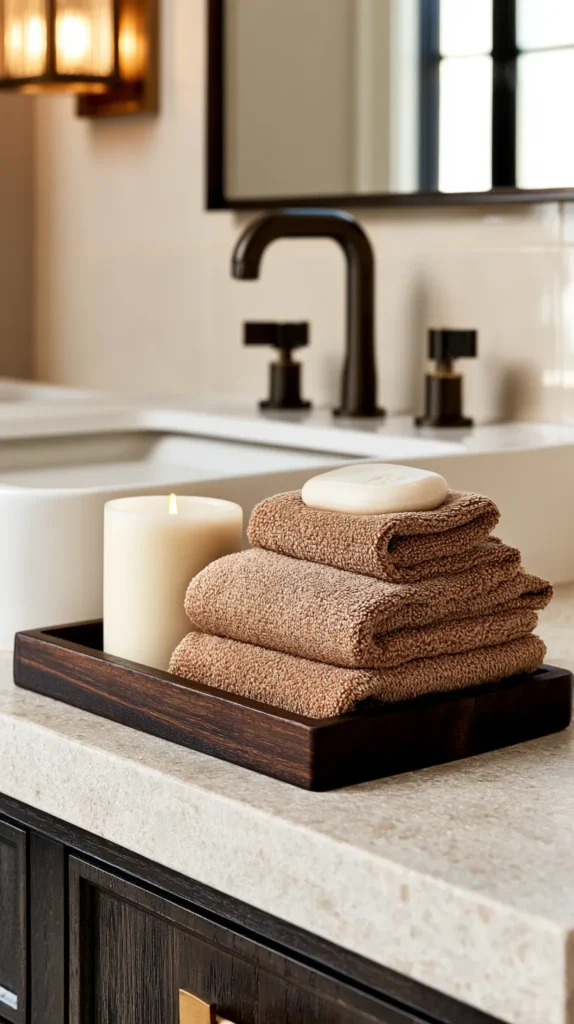
A tray beside the sink that holds folded guest towels does two things: it creates a clear designated zone for guest use, and it elevates the towel display into a considered vignette rather than a stack left on the counter.
For autumn, choose a tray in a warm material — dark acacia wood, matte terracotta ceramic, woven seagrass, or aged brass. Place two or three folded hand towels in the tray, stacked or fanned. Add one small seasonal accent beside the towels within the tray: a small candle, a decorative soap dish, a sprig of dried eucalyptus.
Keep the total number of items in the tray to four or fewer. A tray that holds only towels looks sparse. A tray overloaded with accessories looks cluttered. Three towels and one small accent object is usually the right balance for most standard hand towel tray sizes.
Tip: Line the tray with a small linen cocktail napkin before placing the towels. The napkin softens the tray surface, prevents the towels from sliding, and adds a layer of natural textile that lifts the whole display.
Budget: $12–$30 for the tray
12. Match Towel Color to One Other Bathroom Element
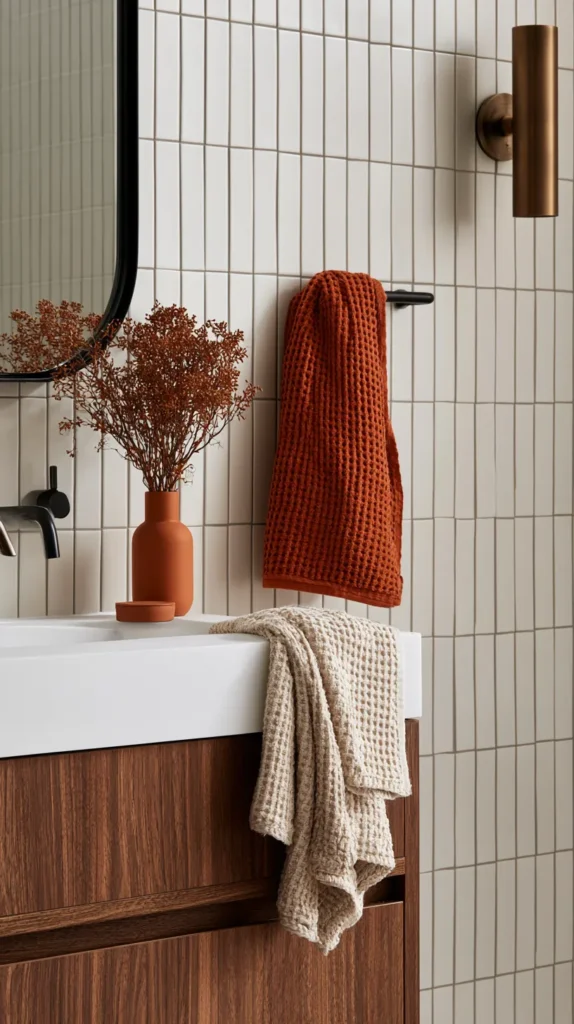
Autumn towels that relate to something else already in the bathroom look chosen. Autumn towels that exist in isolation look placed.
The connection doesn’t need to be a perfect color match — it can be a tone relationship. Rust towels beside a warm terracotta soap dispenser. Caramel waffle-weave beside a honey-oak vanity shelf. Burgundy hand towels beside a dark walnut mirror frame. Each pairing creates a visual thread that ties the towels into the room rather than making them feel like seasonal additions dropped into an unchanged space.
Identify one existing element in the bathroom — the vanity, the mirror frame, the wall color, the soap dispenser — and choose autumn towels that share its temperature and tone rather than contrasting with everything present.
This approach also means autumn towel styling doesn’t require changing anything else in the bathroom. The towels do the seasonal work; everything else stays.
Tip: Hold a potential towel purchase beside the element you’re trying to relate it to before buying. Color relationships that seem obvious online or in a store often read differently in the specific light conditions of a particular bathroom.
Budget: $0 — this is a selection principle
13. Create a Stacked Display with a Pumpkin or Gourd Accent
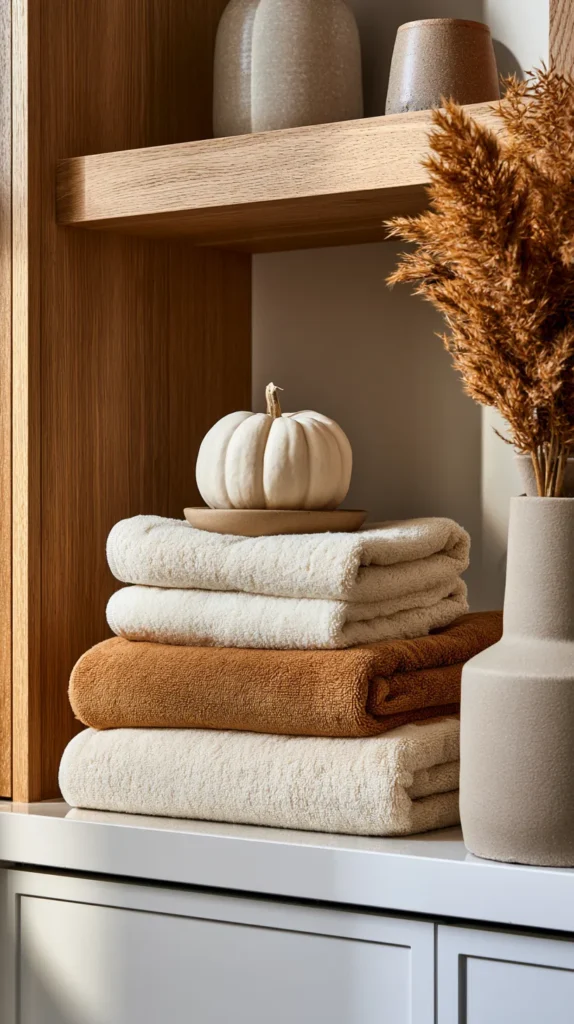
A small decorative pumpkin or gourd placed on top of a stacked towel display is one of the most straightforward autumn bathroom styling moves — and one that consistently reads as more intentional than it has any right to.
The pumpkin or gourd sits on the top towel of the stack and anchors the display vertically. Without it, a towel stack looks like towels waiting to be used. With it, the stack becomes a deliberate autumn arrangement.
Use a small white or buff pumpkin (2–3 inches) rather than a bright orange one — it relates to towels in cream, caramel, or warm white without the color reading as Halloween decor. A small Cinderella pumpkin (the flat, ribbed variety) in any pale tone reads as sculptural rather than seasonal.
Place the pumpkin on a small ceramic dish or a piece of bark rather than directly on the top towel to prevent moisture transfer from the base of the pumpkin.
Tip: Rub a small amount of petroleum jelly on the stem and base of a real mini pumpkin before placing it in the bathroom. The jelly slows the drying-out process that causes pumpkins to shrink and collapse — extending the display life from 1–2 weeks to 3–4 weeks in a humid bathroom environment.
Budget: $2–$6 for a mini pumpkin
14. Refresh the Whole Display Monthly Rather Than Once a Season
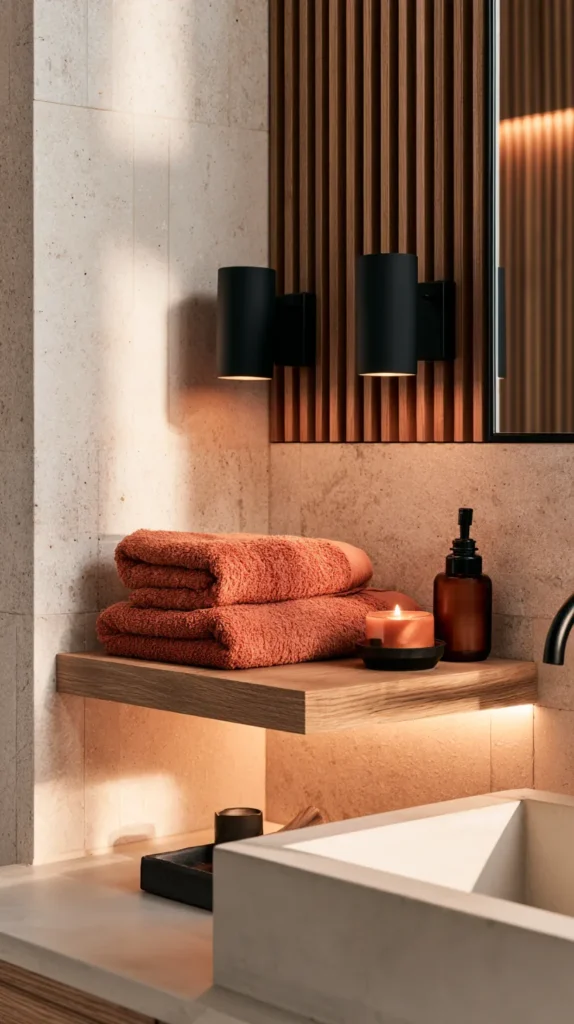
A bathroom towel display set up in September and left unchanged through November stops feeling seasonal by mid-October. The eye adapts to what’s consistently present and stops registering it.
Monthly refreshes don’t require new purchases. Moving rolled towels from a basket to the ladder rack, changing the ribbon accent color, swapping the dried botanical for a different variety, reversing the color gradient in the stack — each small change resets the visual familiarity and makes the autumn styling feel current rather than set-and-forgotten.
The most effective monthly change is replacing the botanical element and the fresh or seasonal accent objects. Towels themselves can stay — the change in their arrangement and the objects around them is sufficient to make the display feel new.
Track what you’ve tried with a phone photo after each refresh. Over a full autumn season, this builds a record of which combinations worked and which felt forced — useful reference the following year.
Tip: Do the refresh on the first of each month rather than waiting until the display starts to look tired. A proactive refresh takes 10 minutes. Rebuilding a display that has visibly degraded takes significantly longer and feels like a chore rather than a small seasonal ritual.
Budget: $0 — time and rearrangement only
Final Thoughts
Autumn bathroom towel styling works when the towels feel like part of the room rather than a seasonal overlay on top of it.
The most effective combinations share a color relationship with something already in the bathroom, use at least two different textures, and include one natural element — a dried botanical, a small pumpkin, a wooden crate — that connects the display to the actual season outside.
Start with the fold technique and one fall-toned towel. The display method determines how much the towel color is visible, and the fold is what turns a functional item into something worth looking at.