13 Dreamy Fall Candle Displays for the Ultimate Cozy Bathroom
A bathroom with candles in fall feels completely different from one without them.
The combination of low warm light, enclosed space, and autumn scent creates something that overhead lighting and seasonal towels alone never quite achieve. It’s the sensory shift that makes a bath feel like a ritual rather than a routine.
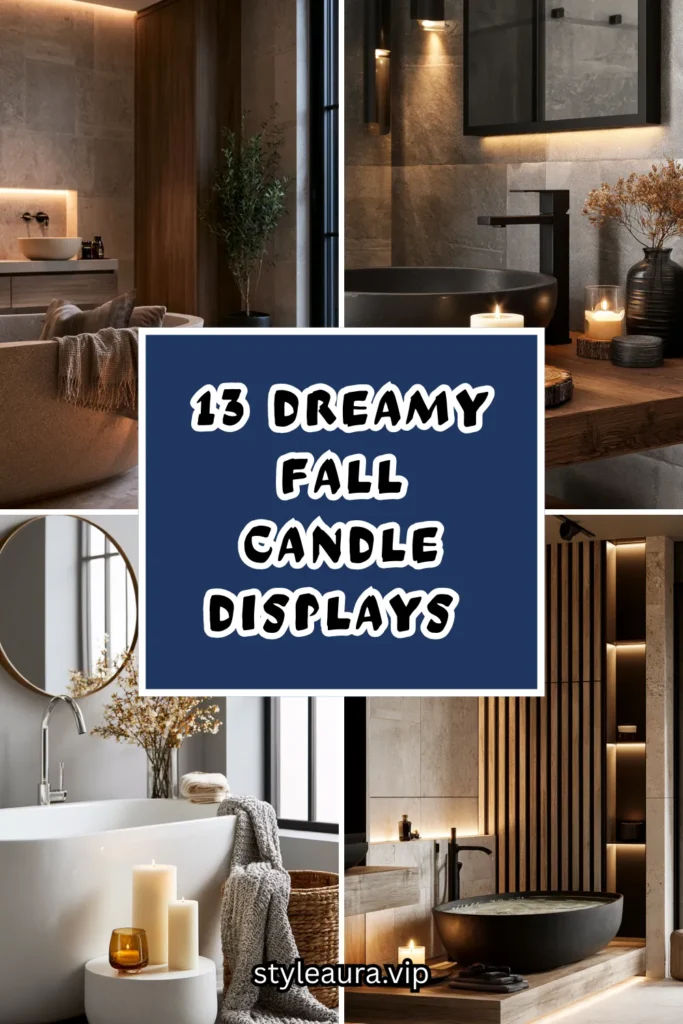
The challenge is doing it safely and doing it well. Both matter. A beautiful display that creates a fire hazard isn’t worth building, and a safe arrangement that looks haphazard defeats the purpose.
These thirteen ideas cover surface placement, vessel choice, scent selection, safe burning practices, and the specific display arrangements that read as dreamy rather than generic.
1. Build a Bathtub Ledge Display Around Three Heights
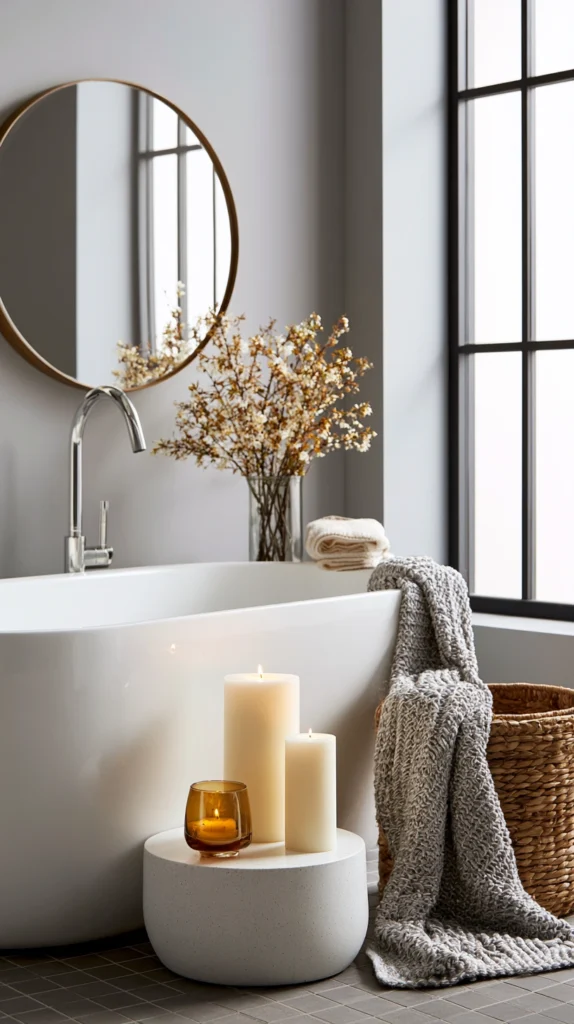
The bathtub ledge is the most natural candle display surface in any bathroom. It’s stable, heat-resistant in most cases, and positioned at a height where candlelight reflects off the water surface during a bath.
The arrangement principle that works best on a ledge is three distinct heights — tall, medium, and low — grouped together rather than spread across the full ledge length.
Use a tall pillar candle (6–8 inches) as the back anchor, a medium jar candle (4–5 inches) in front of it, and one or two small votives or tea lights at the base level. The tallest element goes furthest from the water’s edge; the lowest closest.
For fall, choose candles in warm cream, beeswax yellow, or deep rust rather than white. White candles in a fall display read as wintery rather than autumnal.
Keep the display within a 10–12-inch zone of the ledge rather than spreading it across the full length. A concentrated grouping looks curated; dispersed candles look placed without intention.
Tip: Place a small ceramic tray or a piece of slate under the grouping to catch wax drips. Bathtub ledge materials — tile, acrylic, cast iron enamel — can stain from wax pooling and are difficult to clean once the wax has set and cooled.
Budget: $15–$40 for a complete ledge display
2. Create a Mirrored Tray Display for the Vanity
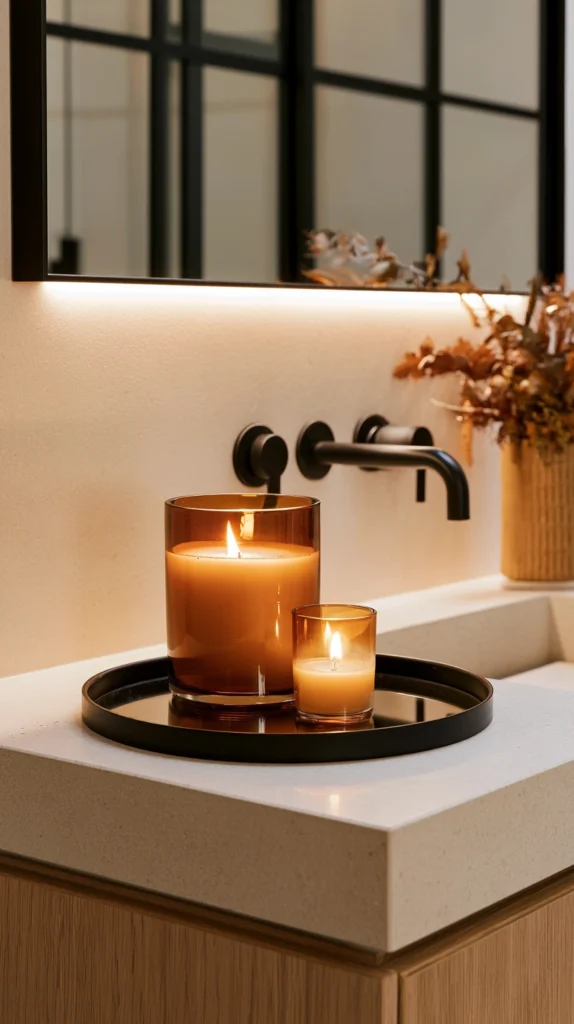
A mirrored tray on the vanity counter doubles every candle placed on it. The reflection adds depth and multiplies the warm light in a way that a wood or ceramic tray doesn’t.
For fall, this doubling effect works particularly well with amber glass candles — the reflected amber glow from both the candle and its mirror image creates a warm pool of light on the vanity surface that changes the entire feel of the bathroom at night.
Use three candles on a mirrored tray: one larger jar candle in the center-back, two smaller votives at the front corners. The triangular arrangement looks balanced from every angle — straight-on, from the side, and in the mirror reflection above the vanity.
Wipe the mirrored tray surface before each use. Wax residue, water spots, and product buildup from the vanity surface dim the reflection and reduce the doubling effect significantly.
Tip: Choose a mirrored tray with a slight lip edge — at least 1/4 inch — rather than a completely flat mirrored surface. The lip prevents candle holders from sliding on the smooth glass surface when the bathroom door creates air movement.
Budget: $18–$45 for the tray plus candles
3. Use Amber Glass Vessels for Fall-Specific Warmth
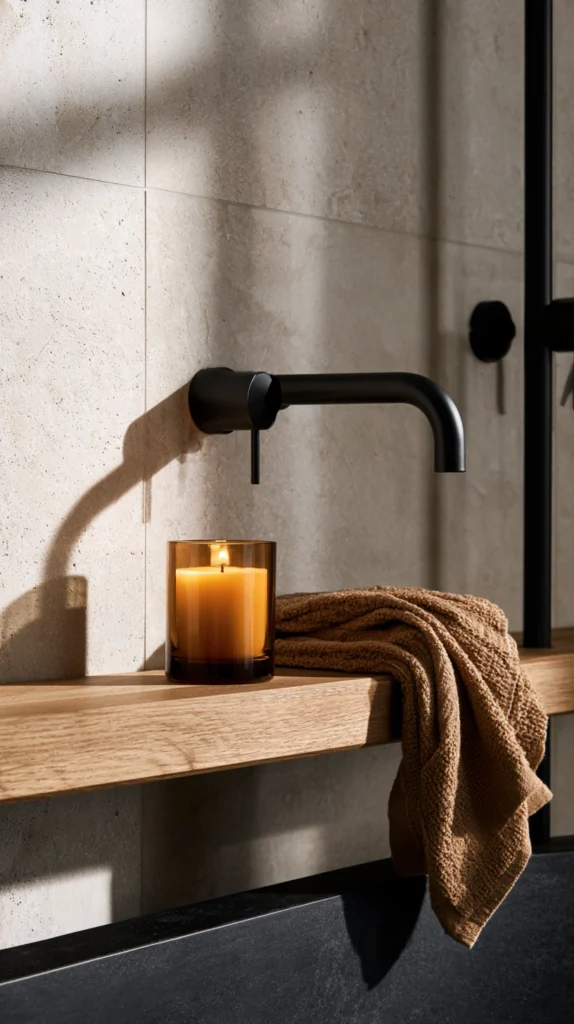
The vessel color is as important as the candle inside it. Clear glass transmits light directly. Amber glass filters it, adding a layer of warm orange-brown tone to every bit of light that passes through.
In fall bathroom lighting — which is already low and warm from overhead dimming or lamplight — amber glass candle holders amplify the seasonal quality of the light in a way that no other vessel material does.
Amber glass votives, apothecary jars with lids, and amber tumbler glasses all work as candle vessels. Pour your own candles into them using soy wax and a fall fragrance oil, or use LED tea lights inside amber glass holders for a zero-maintenance version.
The effect is most visible when the bathroom overhead light is off or dimmed and the amber candles are the primary light source. In that context, the entire bathroom takes on a warm, golden quality that clear glass votives simply don’t produce.
Tip: Collect amber glass from other sources before buying dedicated candle vessels. Amber pharmacy bottles, old jam jars with amber glass, and vintage apothecary bottles all make excellent candle holders and are often free or available for cents at thrift stores.
Budget: $8–$20 for a set of amber glass vessels
4. Display Pillar Candles on Wooden Slice Risers
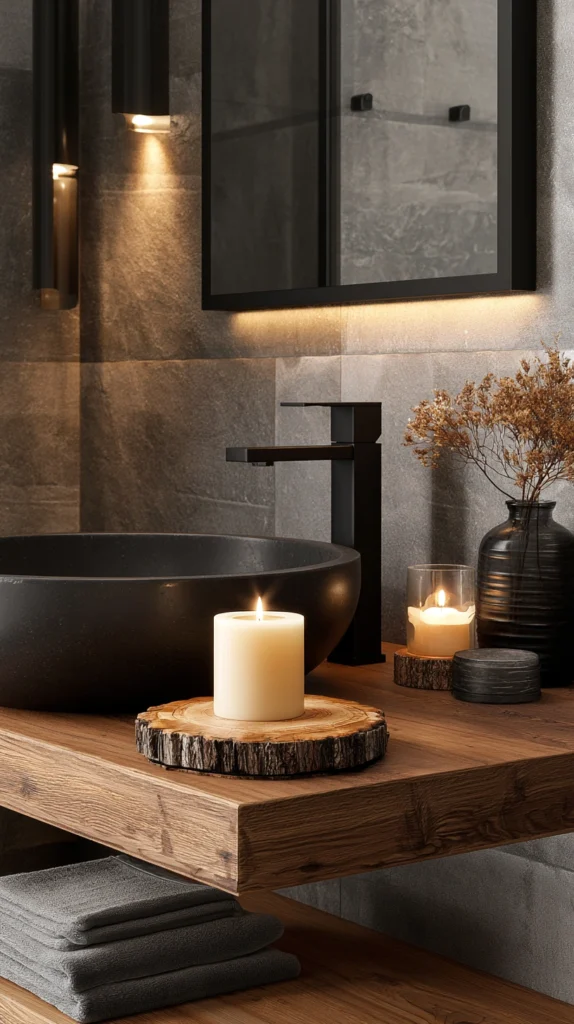
Wooden cross-section slices — the kind cut from a branch or small log and sanded smooth — serve as natural risers that add height variation to a flat bathroom surface without a formal riser or candlestick.
In fall, the raw wood grain and natural edge of a slice connects the candle display to the season in a way that ceramic or metal risers don’t. Each slice is unique, which prevents the display from looking manufactured.
Use slices in two or three different diameters — a 4-inch slice under a large pillar, a 2-inch slice under a medium pillar, and a 1-inch slice under a small votive. The varied diameters create a natural-looking composition without requiring a matching set.
Birch slices are the most widely available and least expensive. They run $8–$15 for a bag of mixed sizes on Amazon or Etsy. Sand the top surface smooth before use and apply a coat of polyurethane to prevent moisture absorption in a bathroom environment.
Tip: Seal the bottom of wooden slices with a thin coat of clear silicone or a self-adhesive felt pad. Bare wood on a damp bathroom surface will absorb moisture from condensation and eventually warp or mold under the flat base.
Budget: $8–$18 for a set of birch slices
5. Build a Windowsill Candle Row for Evening Atmosphere
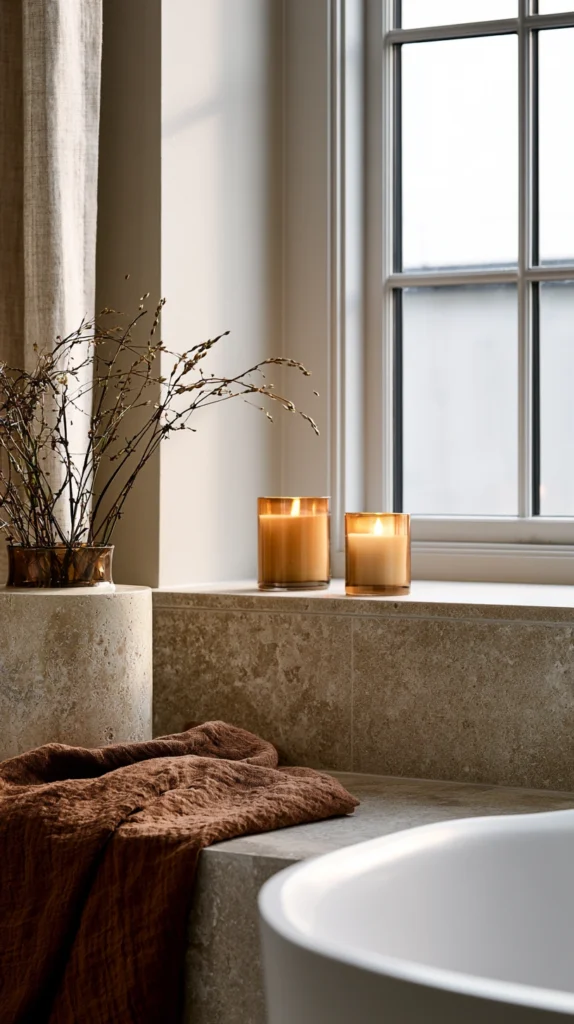
A bathroom windowsill holds candles at a height that creates a different quality of light than counter or ledge placement — the light projects inward and downward into the room rather than upward, which adds a depth that lower placements don’t.
For fall, a row of three to five votives or tea lights along the windowsill creates a gentle line of warm light that glows from inside when seen from the exterior and bathes the bathroom in soft amber from within.
Keep candles at least 6 inches from any window treatment — curtains, blinds, or fabric valances can catch from the heat of a nearby flame even without direct contact. If the windowsill is narrow (under 3 inches deep), use only LED tea lights rather than real flames.
Use vessels that won’t be knocked by window opening — wide, low vessels with a heavy base are more stable on a narrow sill than tall, narrow ones. Squat glass votives and small ceramic tea light holders both work well.
Tip: Group windowsill candles in odd numbers — three or five rather than two or four. Odd-number groupings read as more dynamic and natural than even-number arrangements, which tend to look symmetrical in a way that feels deliberate rather than discovered.
Budget: $10–$25 for a set of windowsill votives
6. Create a Floor-Level Lantern Display Beside the Tub
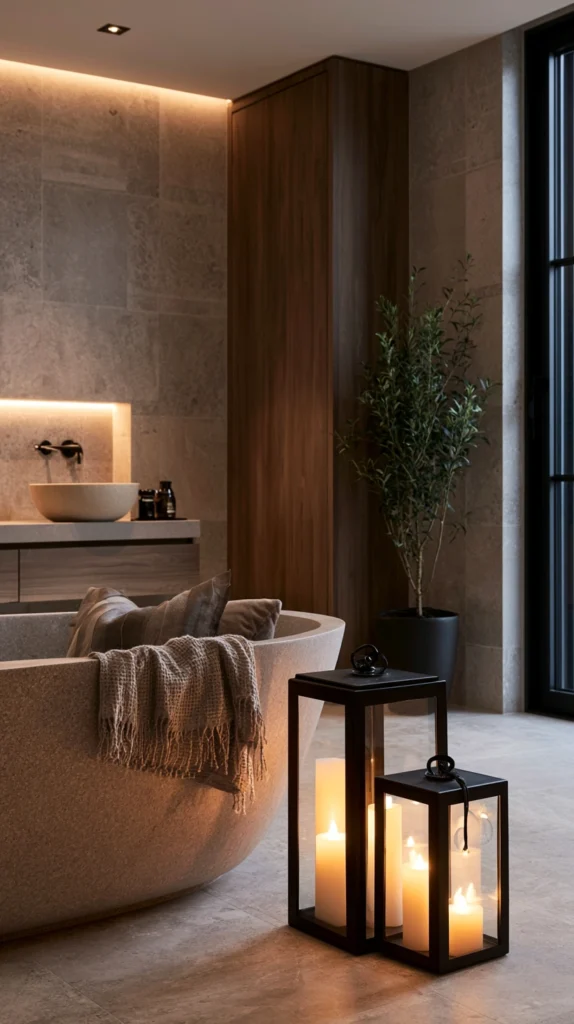
Floor-level candlelight in a bathroom is unusual enough to feel intentional and intimate in a way that surface-level or wall-level light rarely achieves.
A lantern or two placed directly on the bathroom floor beside a freestanding tub — or grouped in the corner nearest to the tub — creates a low-angle warm light that travels upward along the wall and casts long soft shadows across the ceiling.
For fall, choose lanterns in matte black, aged brass, or dark bronze. These finishes absorb rather than reflect the surrounding light, which makes the candle flame inside the lantern appear brighter and more concentrated by contrast.
Use LED pillar candles inside floor lanterns rather than real flames. At floor level, a lantern can be kicked, stepped on during a bath exit, or contact a bath mat — all scenarios where a real flame inside creates a genuine fire risk.
Lanterns in fall-appropriate finishes run $20–$45 at HomeGoods, Target, and At Home. A battery-operated LED pillar candle runs $8–$15.
Tip: Place floor lanterns on a small natural fiber mat — jute or sisal — rather than directly on tile. The mat prevents the lantern base from scratching the tile surface and adds a layer of warm texture at floor level that connects the lantern to the overall fall palette.
Budget: $28–$60 per lantern display
7. Layer Candles at Three Separate Heights Across the Room
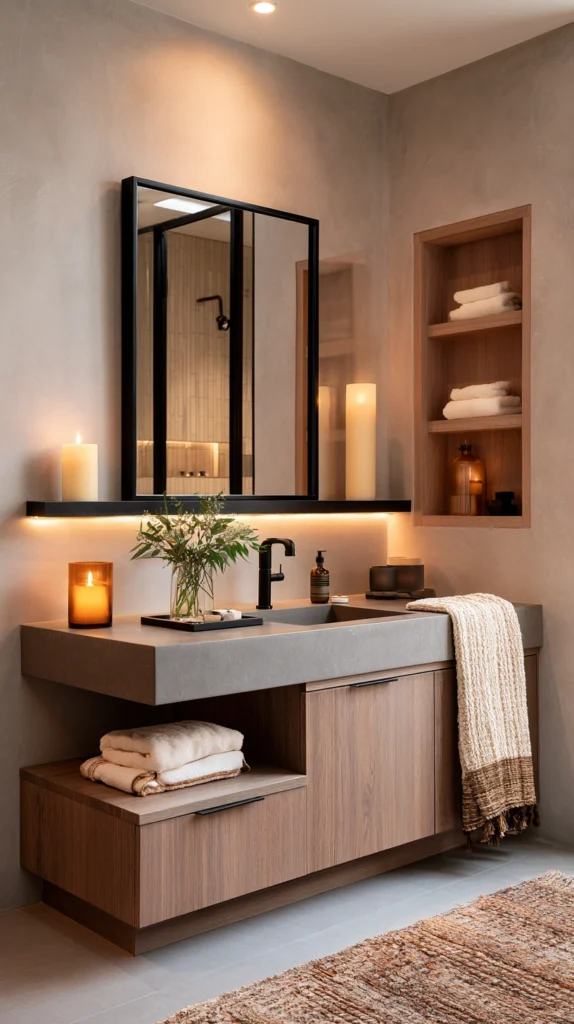
A bathroom with candles at only one height — all on the vanity, or all on the tub ledge — has a flat lighting quality.
Layering candles at three distinct heights across the room creates something closer to a professional lighting design: a floor-level lantern, a mid-height vanity or shelf display, and a taller windowsill or cabinet-top arrangement. Each level fills in the lighting of the room at a different angle and distance.
The three-height approach is what separates a candle display that looks like fall decor from one that genuinely transforms the room’s atmosphere. Each height adds a new shadow plane and a new source of reflected light on surrounding surfaces.
For fall, use candles in a consistent color palette across all three heights — cream and amber across the floor, vanity, and windowsill read as a cohesive lighting design. Mixed colors at different heights look like an accident.
Tip: Introduce the three-height display gradually rather than setting it all up at once. Place the mid-height display first and observe the room with it for a week before adding the floor and high levels. This allows you to adjust the overall intensity before the full display is in place.
Budget: $30–$75 for a complete three-height setup
8. Use Beeswax Candles for the Most Natural Fall Scent
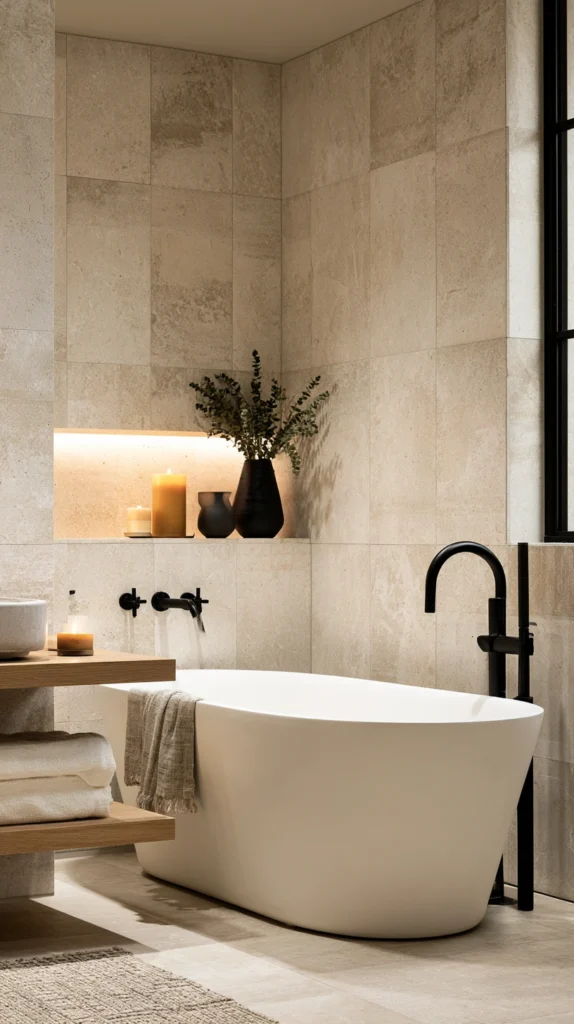
Most scented candles for fall use synthetic fragrance oils that smell accurate but burn with a quality that doesn’t match the natural materials they reference.
Beeswax candles are the exception. They burn with a faint natural honey scent that requires no added fragrance and no synthetic carriers. In a small bathroom, that understated natural warmth is often more effective than a heavily scented soy or paraffin candle.
Beeswax also burns significantly longer than soy or paraffin at the same diameter — a 3-inch beeswax pillar candle burns approximately 30 hours longer than an equivalent paraffin candle. It burns cleaner too, producing minimal soot and no black residue on bathroom walls or ceilings.
The color of natural beeswax — warm golden amber — is a fall palette in itself. Even without any fragrance or styling, a cluster of natural beeswax pillars on a bathroom surface looks deliberately seasonal.
Raw beeswax pillar candles run $15–$30 each from specialty candle makers. Smaller beeswax votives run $4–$8 each.
Tip: Roll beeswax sheet candles as an alternative to purchasing finished pillars. Beeswax sheets (available in natural golden and dyed colors for $10–$20 per sheet) roll into pillar candles in minutes without any melting or pouring, making them the most accessible candle-making project for bathroom displays.
Budget: $15–$40 for a beeswax display set
9. Arrange Candles with Natural Fall Objects
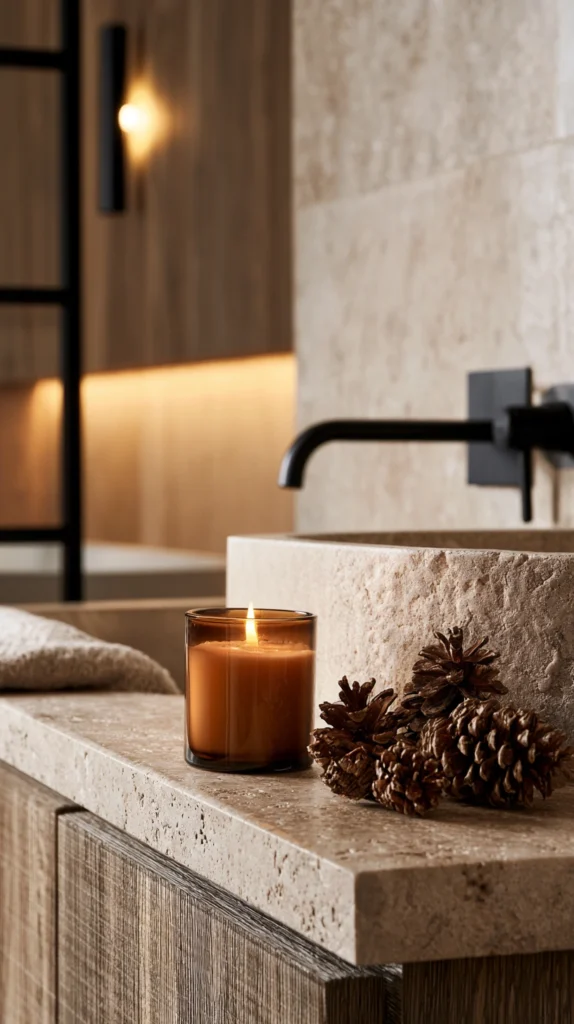
A candle display that includes only candles looks like a product arrangement. One that includes natural fall objects alongside the candles looks like it belongs to the season.
Pinecones, smooth river stones, small gourds, dried orange slices, cinnamon sticks, acorns, and dried seed pods all work as companion objects in a fall candle display. They fill the space between candles, add textural contrast at the same height level, and ground the display in actual autumn materials.
The ratio that works best: two parts candle to one part natural object. A display of three candles with one or two natural elements reads as a candle display with seasonal accents. Equal parts candles and objects starts to look more like a nature tableaux than a candle display.
Arrange natural objects at the base level of the display — around the candle bases rather than beside or above them. This keeps the candle flames visible and the natural objects safely below the heat zone.
Tip: Bake pinecones at 200°F for 30 minutes and microwave acorns for 2 minutes before using them indoors. Both steps eliminate any insects or larvae that inhabit these materials when collected outdoors — an easy step to overlook that matters significantly for items sitting on a bathroom surface for weeks.
Budget: $0 for foraged elements, $5–$15 for purchased naturals
10. Pour DIY Fall Candles in Apothecary Jars
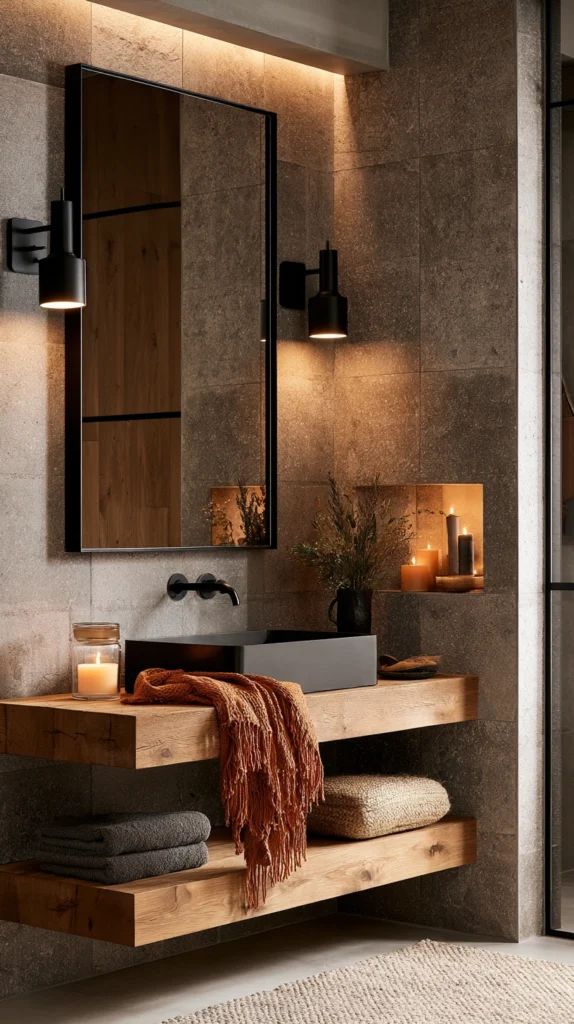
Pouring your own candles into apothecary jars gives control over scent, color, burn quality, and vessel choice that no purchased candle provides — and the result looks significantly more bespoke than anything in the same price range at retail.
For a fall bathroom candle, use a soy wax blend (IGI 464 or Golden Brands 464 are both reliable options for container candles, available on Amazon for $15–$25 per 5-lb bag). Melt the wax to 185°F, add fragrance oil at 10% of the wax weight (1 oz fragrance per 10 oz wax), add liquid candle dye in amber or rust if desired, and pour at 135°F into a pre-warmed apothecary jar with a centered cotton wick.
Fall fragrance combinations that work particularly well in a bathroom context: cedarwood and vanilla, amber and sandalwood, cinnamon and clove with a drop of orange, or tobacco and black pepper. These are earthy and warm rather than sweet, which sustains well through an hour-long bath without becoming cloying.
A 5-lb bag of soy wax, a fragrance oil, wicks, and four apothecary jars costs $30–$45 total and produces 8–10 candles.
Tip: Pour a second thin top layer of wax after the first pour cools completely. Soy wax sinks and tunnels as it cools, creating a concave surface. A second pour at the same temperature levels the top and produces a finished-looking candle surface rather than a sunken center.
Budget: $30–$45 for materials producing 8–10 candles
11. Use a Cloche or Glass Dome for a Display Piece
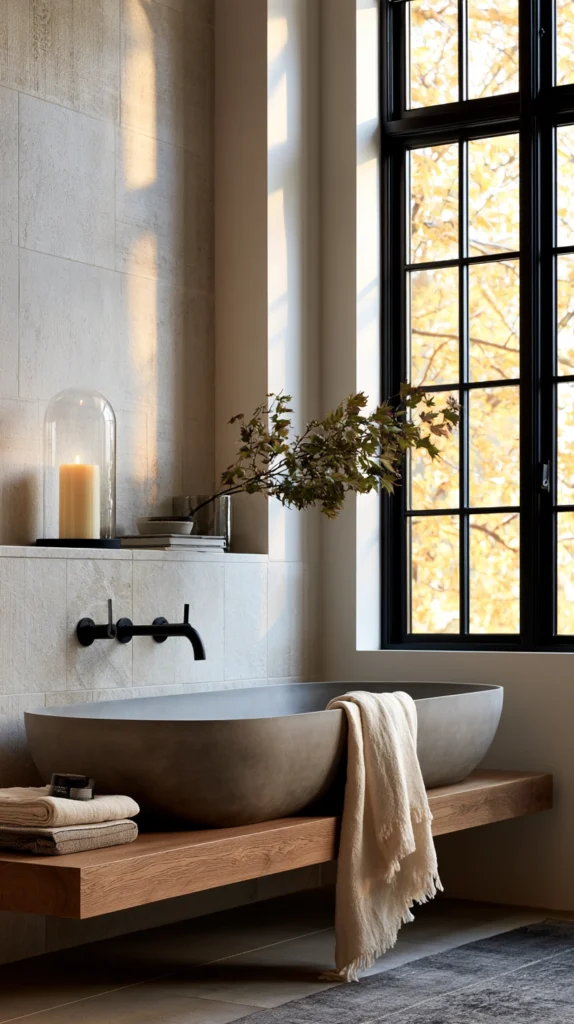
A glass cloche — a bell-shaped glass cover used in botanical displays — turns a single candle into a display object that looks deliberately styled rather than simply placed.
Inside a cloche, a pillar candle surrounded by dried fall botanicals (eucalyptus, dried orange slices, cinnamon sticks) becomes a contained vignette that reads as a decorative object first and a candle second. The glass dome makes the arrangement visible from every angle while keeping the dried elements contained and dust-free.
For bathroom use, keep the cloche display on a stable, flat surface away from direct water splash. A closed cloche with a burning candle inside creates a chimney effect that accelerates burning and can overheat the glass — always remove the dome before lighting.
Glass cloches run $15–$35 at craft stores, HomeGoods, and Amazon in sizes ranging from 6 to 12 inches tall.
Tip: Add a small piece of oakmoss or preserved reindeer moss at the base of the candle inside the cloche. The moss fills the base space naturally, adds organic texture and color, and eliminates the bare-looking gap between the candle base and the cloche edge.
Budget: $20–$40 for cloche plus materials
12. Light Only During Baths and Turn Off Completely After
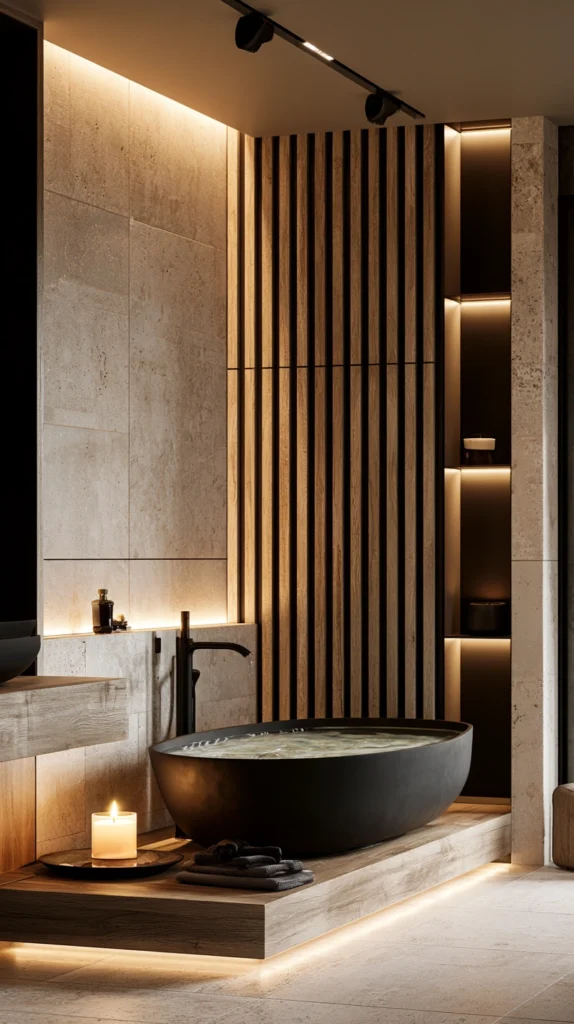
Candle display quality and candle safety both depend on burning practice as much as arrangement.
The most common mistake with bathroom candle displays is treating them as ambient decor to be lit occasionally and left burning for extended or unattended periods. Candles in an unoccupied bathroom — or left burning after you leave — are the leading cause of bathroom candle-related fires.
The sustainable practice for a fall bathroom candle display: light the display 5–10 minutes before a bath begins, burn throughout the bath, extinguish completely when leaving the bathroom. This creates a ritual connection between the candle display and the bath itself, and eliminates the risk of unattended burning entirely.
This practice also extends the life of the candles significantly. Candles burned in 45–90 minute sessions rather than for hours at a time develop better wax pools and burn more evenly, which improves the appearance and scent throw of the candle over its full life.
Tip: Use a candle snuffer rather than blowing candles out. Blowing sends a trail of wax-scented smoke across the bathroom that lingers for 20–30 minutes and leaves a faint soot deposit on nearby surfaces over time. A snuffer extinguishes the flame with no smoke at all.
Budget: $5–$12 for a candle snuffer
13. Match the Candle Scent to the Entire Bathroom Atmosphere
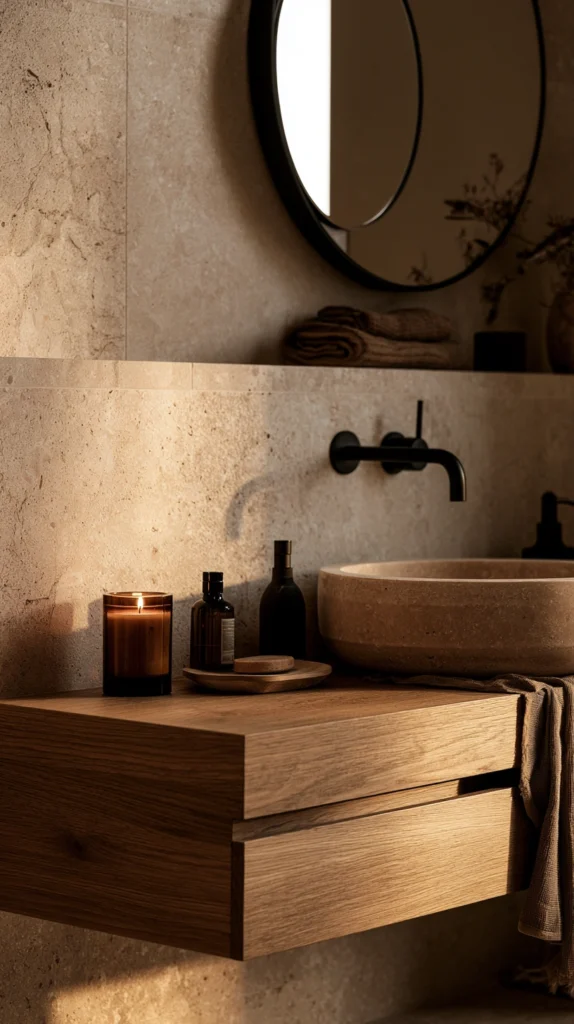
The final element that separates a genuinely dreamy fall candle display from one that merely looks good is scent alignment — choosing fragrance that works with the other sensory elements in the bathroom rather than competing with them.
In a bathroom that uses cedar bath products, a cedar-forward candle reinforces rather than clashes. In a bathroom with eucalyptus towel botanicals, an eucalyptus and pine candle extends the natural scent story already present. Fragrance that fights with the soap, shampoo, or cleaning products in the bathroom creates a confused olfactory environment that undermines the cozy atmosphere regardless of how good the visual display looks.
For fall, the scents that work across the widest range of bathroom product environments: amber, sandalwood, cedarwood, and vanilla. These are warm, dry, and low-conflict — they sit underneath most product scents rather than competing with them.
Avoid highly sweet or food-adjacent fall scents in a bathroom context — pumpkin spice, apple cider, and caramel tend to conflict with personal care product fragrances and become unpleasant rather than inviting after the first 20 minutes.
Tip: Test a new candle scent in the bathroom before buying multiple. Light a single candle, run the shower briefly to activate the steam and ambient bathroom scents, and assess whether the candle fragrance sits well in that environment. A 5-minute test prevents buying a full display set in a scent that doesn’t work in the space.
Budget: $0 — this is a selection principle
Final Thoughts
A fall candle display in the bathroom works because the space is already intimate and enclosed — conditions that amplify everything candles do well.
Warm light, contained scent, and reflection from tile and water surfaces all intensify in a bathroom compared to a larger room. A display that would be modest in a living room becomes immersive in a bathroom.
Start with the bathtub ledge and three candles at different heights. Add one natural element at the base level. Light five minutes before the bath begins and extinguish when you leave. That sequence alone — before any additional displays are added — produces the cozy fall atmosphere this kind of arrangement is built for.