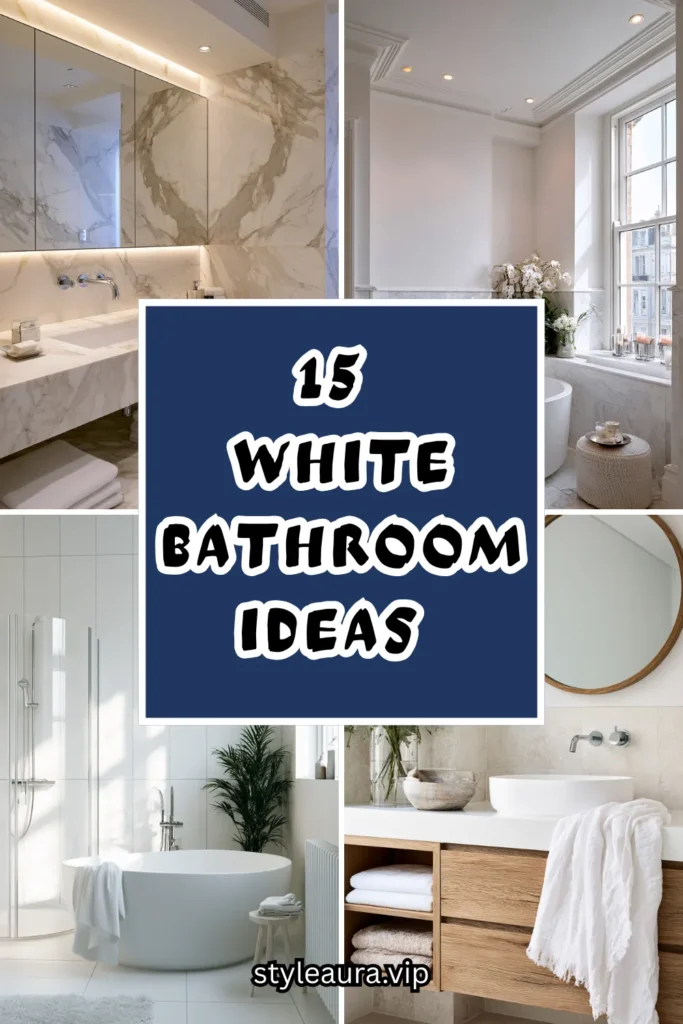
15 White Bathroom Ideas That Feel Bright and Luxurious
White is the bathroom colour that contains every other bathroom colour within it — the neutral that is not neutral at all but a surface of extraordinary complexity and sensitivity, a colour that shifts from warm to cool, from luminous to flat, from expansive to clinical depending entirely on the specific white chosen, the materials it is applied to, the light it receives, and the quality of the surfaces and objects placed alongside it.
The white bathroom done poorly — cold, flat, featureless, lit from overhead with a single fixture and furnished with standard fittings of no particular quality — is the most depressingly institutional domestic space achievable without actually being in an institution.
The white bathroom done properly is something else entirely — a space of genuine luminosity, warmth, and material sophistication that justifies its colour’s enduring dominance in bathroom design with absolute completeness.
The difference between these two outcomes is not the white — it is every decision made around it, about it, and in relationship to it. These fifteen ideas demonstrate exactly how to make the white bathroom feel genuinely bright, genuinely luxurious, and genuinely worth the commitment to a palette that demands intelligence and rewards it completely.
1. Choose the Right White for the Room’s Light Conditions
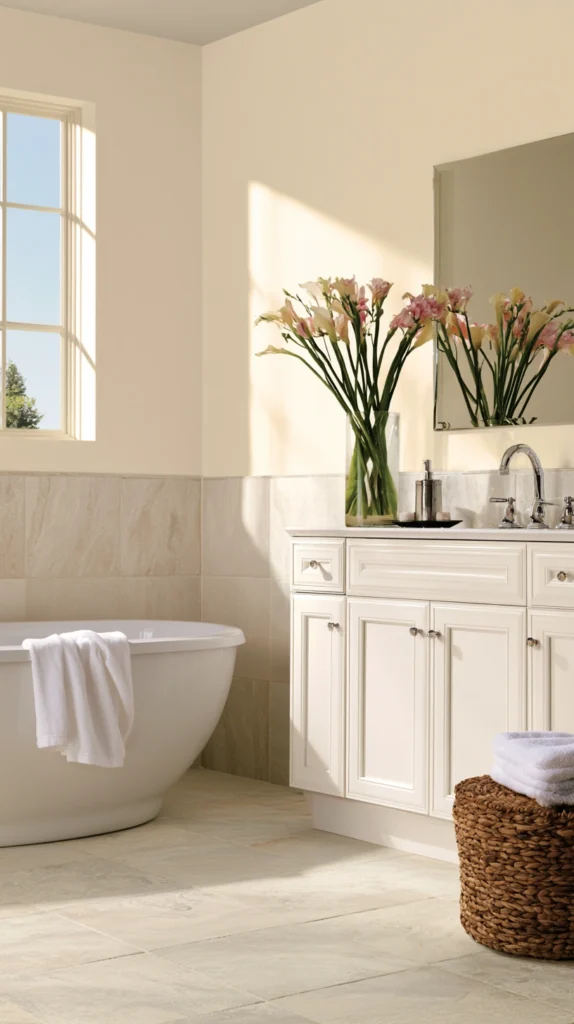
The foundational decision in any white bathroom is not which white tile to use or which white paint to specify but which quality of white — warm or cool, chalky or bright, slightly cream or slightly grey — is correct for the specific light conditions of the specific bathroom being designed.
A bathroom with abundant natural light can handle a cooler, slightly grey-toned white without reading as cold — the natural light warms the surface sufficiently. A bathroom that relies primarily or exclusively on artificial light needs a white with a warm undertone — cream, the faintest yellow, or the very palest blush — to prevent the artificial light from rendering the cool white surfaces as flat and clinical.
Test the intended white on the actual walls of the actual bathroom under the actual light conditions before committing to full application, and test multiple whites simultaneously — the difference between a warm white and a cool white in the same light conditions is the difference between the bathroom feeling luxurious and it feeling like a changing room.
2. Use Large Format Tiles to Maximise the Sense of Space
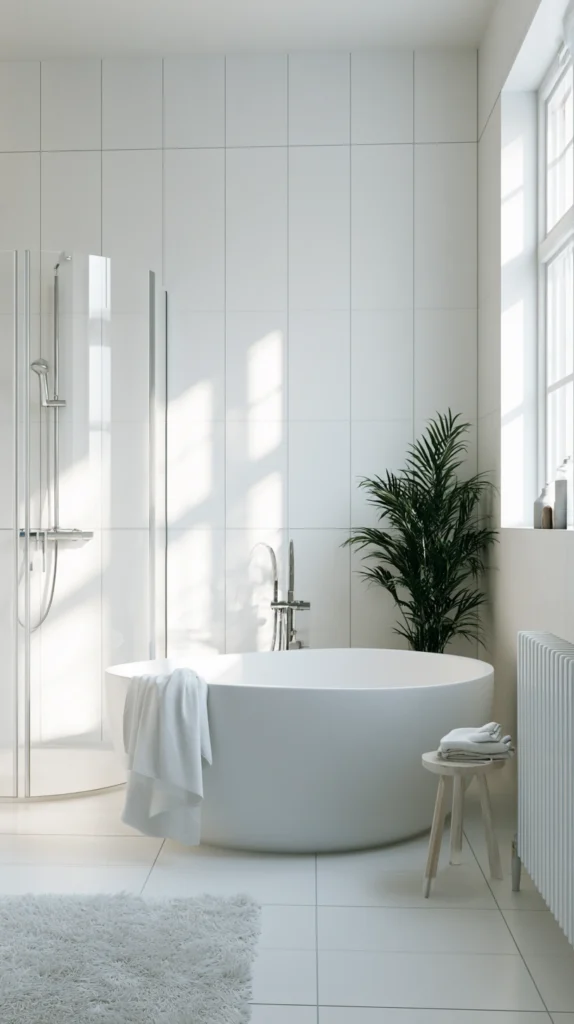
Large format tiles in white — 600 by 600 millimetres minimum, ideally larger — create a bathroom surface of genuine visual expansion that small format tiles, however beautifully chosen, cannot replicate.
The fewer the grout lines visible on any given surface, the more continuous, more expansive, and more spatially generous that surface reads — and the white bathroom with large format tiles on both the floor and the walls creates an almost seamless white envelope in which the room’s actual dimensions feel significantly more generous than they are.
Choose a rectified tile with minimal calibration tolerances for the tightest possible grout joints, and specify the grout in a tone that is as close as possible to the tile colour — the near-invisible grout line between large white tiles is the detail that pushes a white bathroom from merely well-tiled to genuinely luxurious. Install tiles at a consistent module from floor to ceiling on all walls to eliminate the complexity of cut tiles at the ceiling line that small format tiles make unavoidable.
3. Install a Freestanding Bath as the Centrepiece
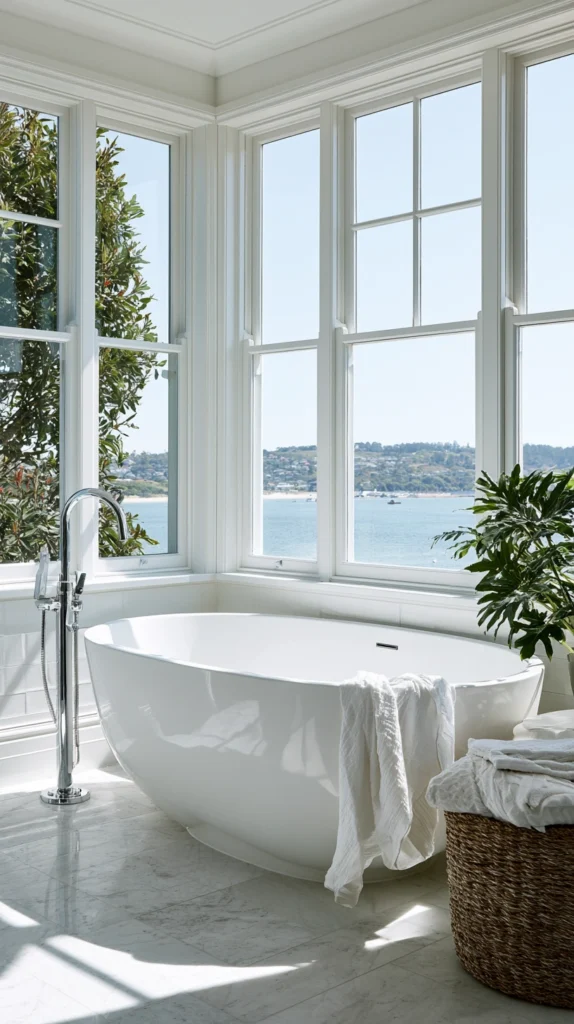
A freestanding bath positioned as the primary visual feature of a white bathroom — whether a classic roll-top in brilliant white, a sculptural stone resin form in matte white, or a simple oval freestanding bath with a minimal profile — reads against the white surround of a well-designed bathroom as a composed sculptural object of considerable presence and considerable luxury.
The white freestanding bath in a white bathroom creates the particular quality of tonal composition that fashion photographers and interior designers understand as simultaneously the most restrained and the most powerful aesthetic arrangement available — the monochromatic composition where the interest comes entirely from form, texture, and material quality rather than colour contrast.
Position it to receive the best natural light the bathroom offers, allow generous floor space around it on all sides, and install a quality floor-mounted or wall-mounted tap in an unlacquered brass or matte black finish that provides the single warm material accent the composition requires.
4. Add Warmth Through Natural Timber Accents
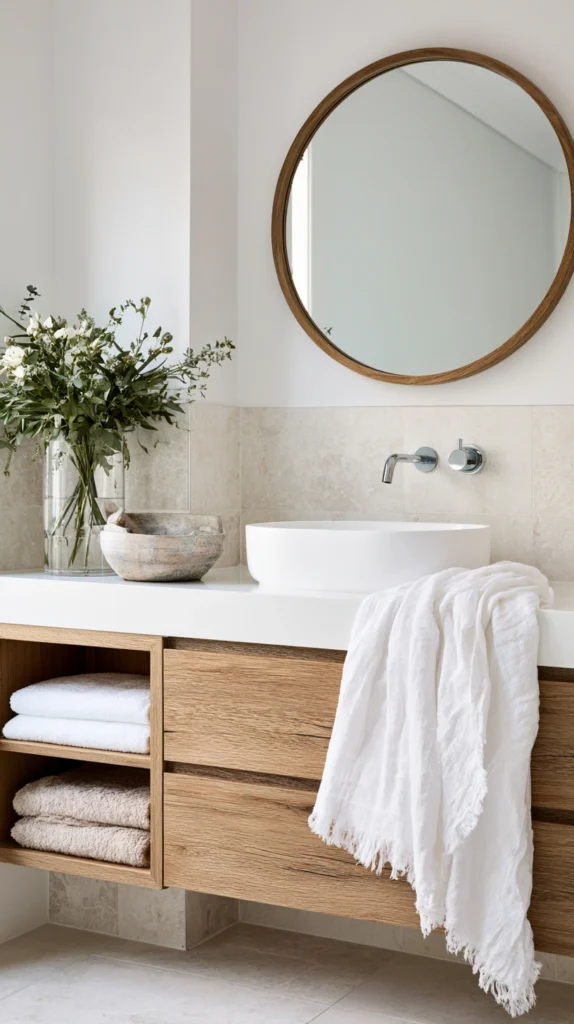
The white bathroom that contains no warm material accent is the white bathroom most at risk of the cold, clinical quality that gives the palette its reputation for difficulty — and natural timber, in the specific warm tones of oak, walnut, or cedar, is the material that most effectively and most beautifully introduces the warmth the white bathroom requires without introducing colour complexity or visual competition that contradicts the palette’s essential character.
A timber vanity cabinet beneath a white ceramic basin, a teak shower mat on the white tile floor, a natural oak mirror frame against the white wall, a simple timber shelf carrying white folded towels, and a single ceramic object: each of these timber introductions warms the white bathroom by exactly the degree required and in exactly the right material language.
The ratio is important — too much timber and the bathroom loses its white character, too little and the white reads as cold. One or two significant timber elements against a comprehensive white surround is the balance that delivers both the warmth and the luminosity simultaneously.
5. Choose Unlacquered Brass Hardware Throughout
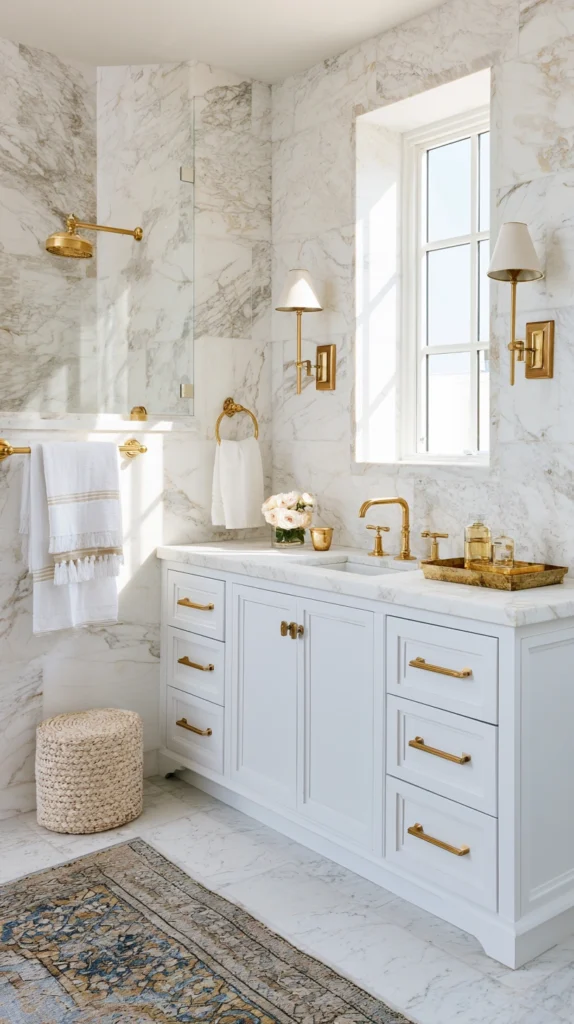
The hardware finish in a white bathroom — the tap, the shower fitting, the towel bars, the toilet roll holder, the door handle — is the detail that most directly and most consistently determines whether the overall space reads as genuinely luxurious or simply clean, and unlacquered brass is the hardware finish that contributes most warmth, most material character, and most genuine luxury to the white bathroom palette.
The warm gold tone of unlacquered brass against white surfaces creates the same composition quality as gold lettering on white paper — a classic, warm, genuinely beautiful material contrast that reads as expensive regardless of the actual cost of the fittings.
The unlacquered finish develops a natural patina over time in the bathroom’s humid environment, darkening slightly at the points of most frequent contact and developing the warm, aged character that lacquered brass permanently prevents. Specify consistently — every hardware element in the same finish, the same profile family, the same level of detailing — for the cohesive quality that transforms individual fittings into a unified material statement.
6. Install a Large Format Mirror With a Warm Frame
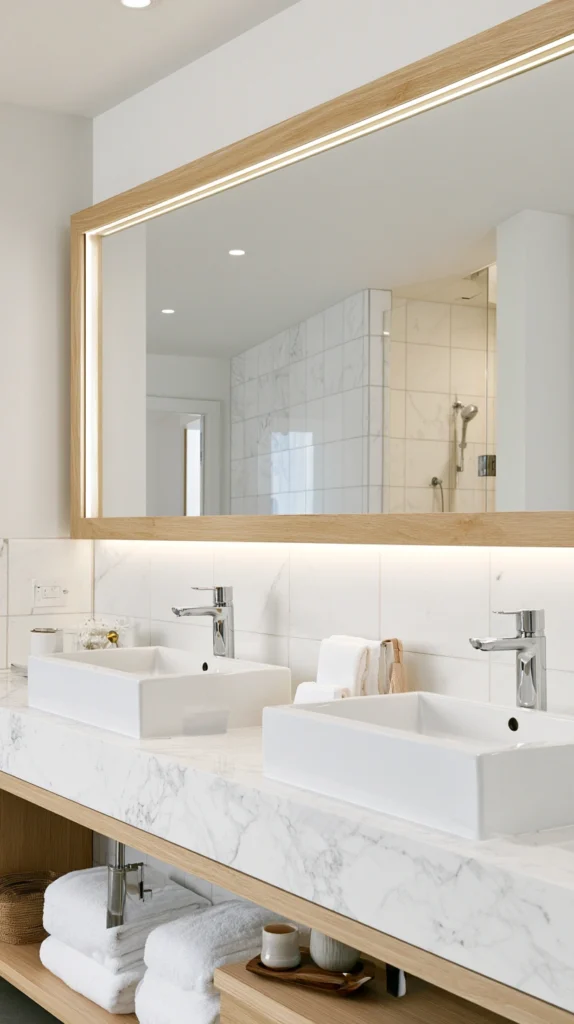
A large mirror — generous enough to reflect a significant portion of the bathroom’s white surfaces and natural or artificial light back into the space, creating the sense of doubled depth and doubled luminosity that is the most powerful spatial tool available in a bathroom without structural intervention — framed in a warm natural material that provides the visual anchor and the material warmth the white bathroom requires without introducing a colour that competes with the palette’s essential purity.
A wide frame in pale natural oak, in aged brass, in a simple plaster profile, or in a warm-toned timber of any species: the frame provides the boundary that makes the mirror read as a designed element rather than a utility fitting, and its material warmth creates the visual rest point that the white bathroom’s comprehensive palette makes necessary.
Install the mirror as large as the wall above the vanity will accommodate — the mirror that fills the space from the countertop to the ceiling is always more beautiful and more spatially effective than the mirror that is sized conservatively.
7. Use Textured White Tiles for Visual Interest Without Colour
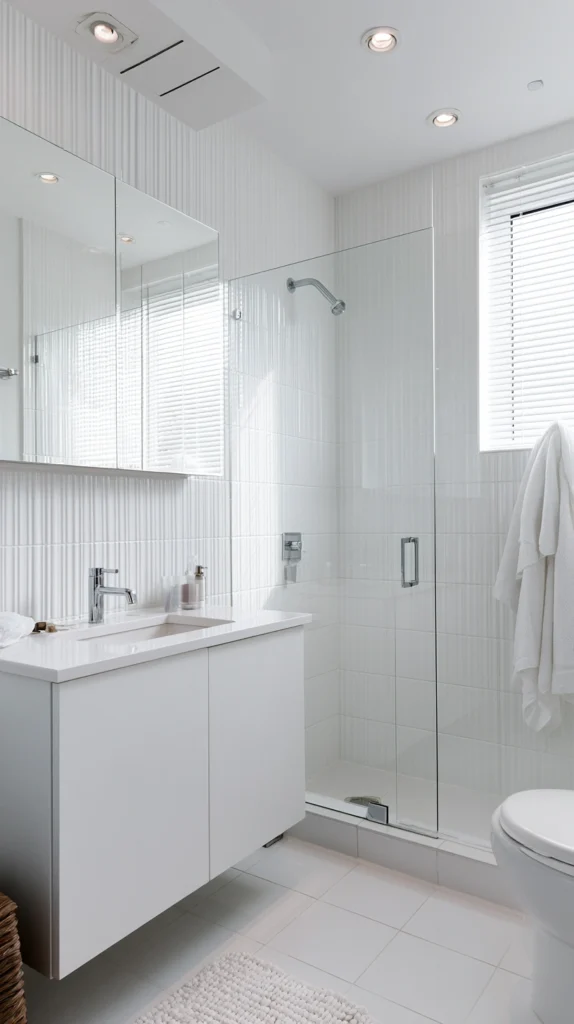
A white bathroom that relies exclusively on smooth, flat-surface tiles for every surface is a white bathroom where the only visual interest available is the form of the fittings and the quality of the light — a limited palette that requires exceptional quality in both to prevent the space from reading as simply blank rather than luxuriously pure. T
extured white tiles — ribbed, fluted, handmade, tumbled, or relief-patterned in any of the extraordinary range of three-dimensional surface formats now available — create visual interest through surface variation rather than colour variation, maintaining the white bathroom’s essential tonal unity while introducing the tactile richness and the play of light across relief surfaces that makes the room’s primary material genuinely beautiful to look at from every angle and in every light condition.
Use textured tiles as a feature surface — the shower wall, the primary wall behind the bath, the basin splashback — and keep the surrounding surfaces in a simpler flat tile that allows the textured surface to read clearly as the designed feature it is.
8. Layer White Towels and Linens in Quality Cotton and Linen
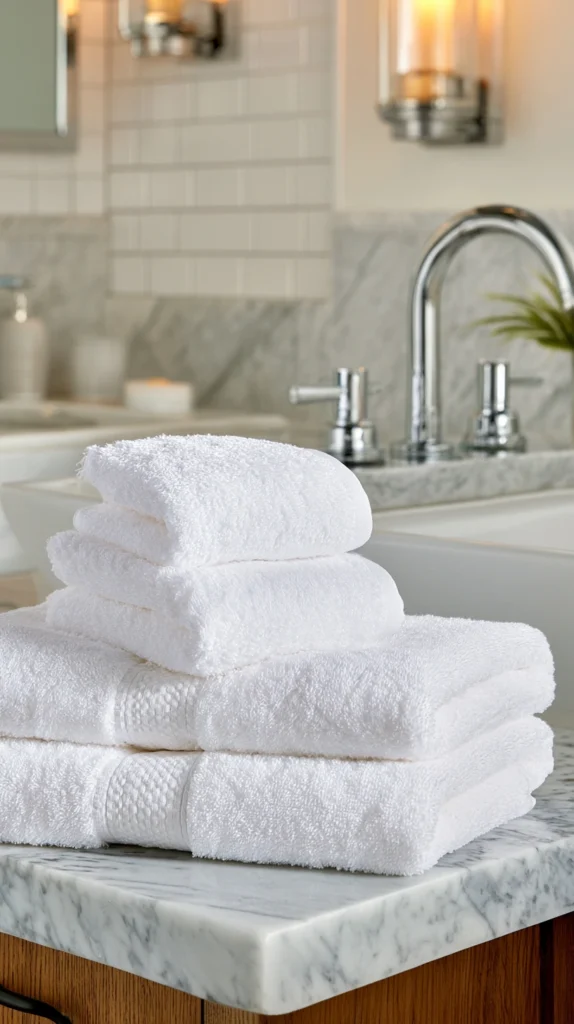
The towels and linens in a white bathroom are not purely functional objects — they are the primary textile contribution to the room’s visual composition, and the quality, the weight, and the arrangement of those white towels on their rail or their shelf is one of the most important and most immediately visible quality indicators in the entire space.
Thick, heavy, genuinely luxurious cotton towels in brilliant or warm white — the kind with a weight that communicates genuine quality at the moment of first contact — folded with precision and stacked or hung with care create the hotel bathroom quality that makes a white bathroom feel genuinely luxurious rather than simply clean.
Add a white waffle-weave hand towel beside the basin, a white linen bath mat on the floor, and a rolled cotton face towel in a ceramic vessel on the shelf — the consistent white textile scheme, in varied textures and weights, creates the white bathroom’s most immediate and most powerful luxury signal.
9. Incorporate Marble for Material Elevation
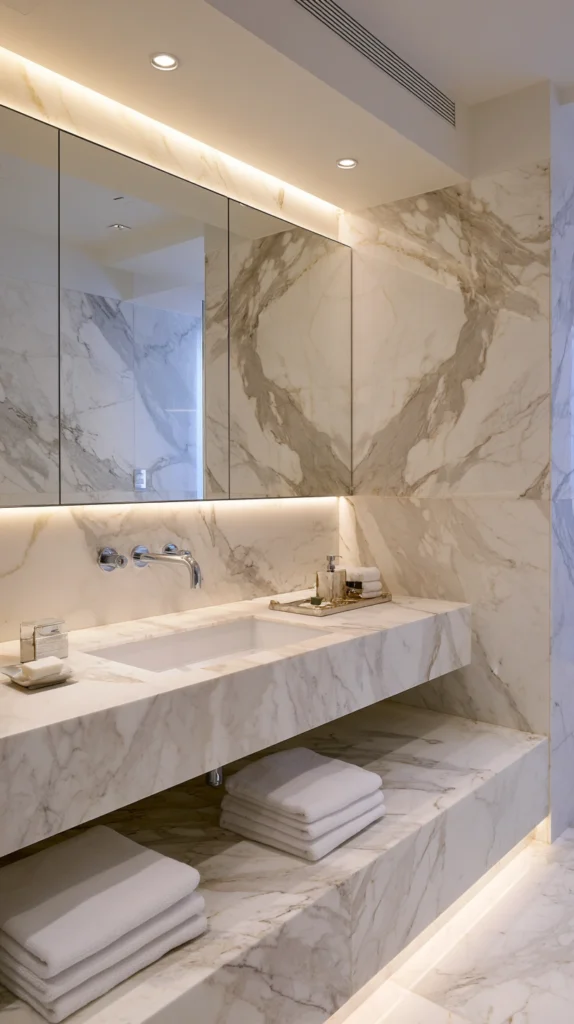
Marble — Calacatta, Statuario, Arabescato, or any of the white-ground marble varieties whose veining moves through the stone in patterns of extraordinary organic beauty — is the material that elevates the white bathroom from simply well-designed to genuinely extraordinary, its combination of white ground and warm grey or gold veining providing the tonal variation and the material richness that no manufactured surface, however excellent, can replicate with the same quality of authentic geological beauty.
A marble vanity countertop, a marble shelf, or a marble feature panel in the shower creates the luxury material moment that anchors the white bathroom’s quality at the highest level available to the palette. The full marble bathroom — every surface in continuous matching slab — is the apex expression of this idea, its material continuity creating a bathroom of almost overwhelming material presence and beauty.
The partial marble bathroom — one slab surface, consistently detailed — is the more accessible and equally beautiful version that delivers the same quality of material luxury in a more measured, more composed arrangement.
10. Install Proper Face-Level Lighting on Either Side of the Mirror
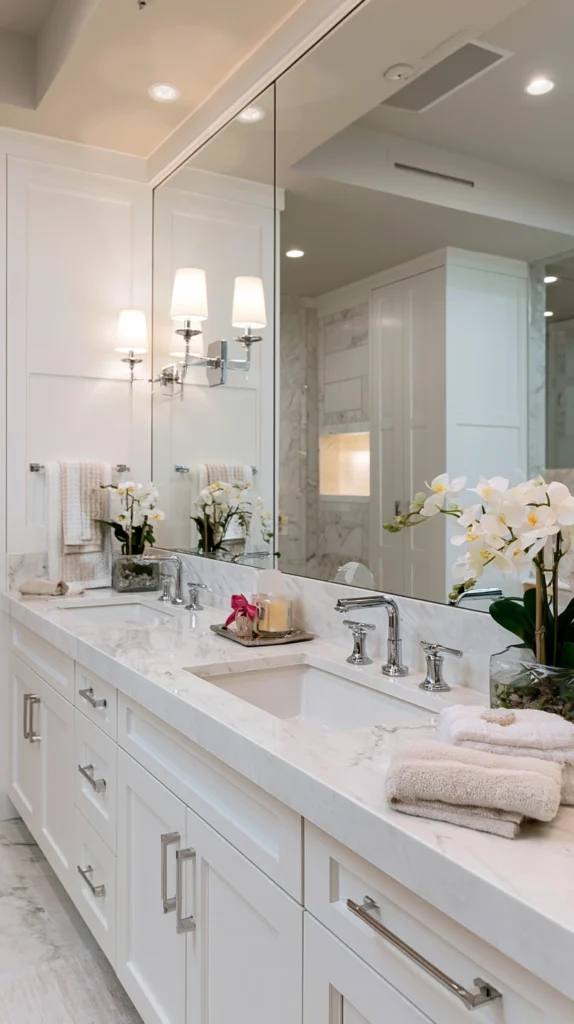
The white bathroom lit exclusively from overhead is the white bathroom that looks worst — the overhead light casting downward shadows on the face that make every reflection harsher and less accurate than reality, while the white surfaces around it read as flat and shadowless in a way that eliminates the depth and the material quality they possess in more considered lighting conditions.
Wall-mounted sconces on either side of the mirror at face level — providing the even, bidirectional illumination that professional makeup studios use as their standard because it most accurately represents how a face appears in natural light — transform the white bathroom’s lighting quality from institutional to genuinely flattering, from accurate to beautiful.
In a white bathroom, the quality of face-level lighting is the quality of the room’s primary experience, because the mirror and its surroundings are the surface most consistently engaged with and most directly experienced — getting the light right at that specific location is the lighting decision with the most direct and most consistent daily return.
11. Add a Single Architectural Plant in a Simple White Pot
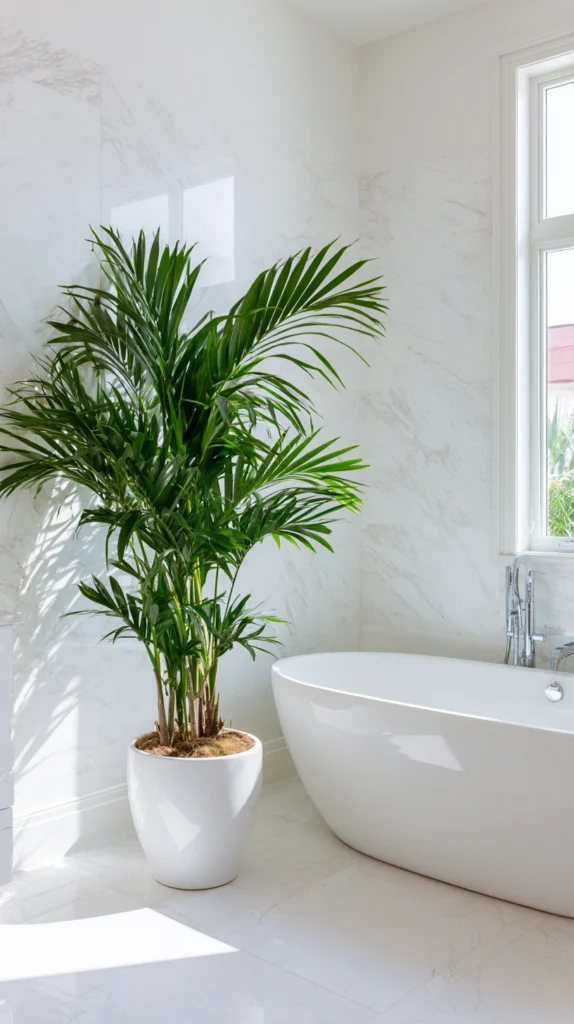
A single plant — a tall, architecturally significant specimen in a simple matte white ceramic pot — positioned in the corner of the white bathroom where it receives sufficient light, contributes the organic vitality and natural colour contrast that makes the white bathroom feel genuinely alive rather than statically pristine.
The white bathroom that contains no living material risks the quality of a showroom — beautiful but uninhabited, perfect but not warm — and a single well-chosen plant in a white pot that reads as part of the room’s white material palette rather than a contrasting element resolves this risk completely.
A cast iron plant for low-light conditions, a white bird of paradise for bathrooms with generous natural light, a simple pothos in a trailing arrangement on a high shelf for the bathroom where floor space is at a premium: the plant choice depends on the light, the scale depends on the room, but the principle is consistent — one significant plant, one simple white pot, positioned with genuine design intention rather than placed wherever the floor space happened to allow.
12. Use Integrated Niches for Clutter-Free Storage
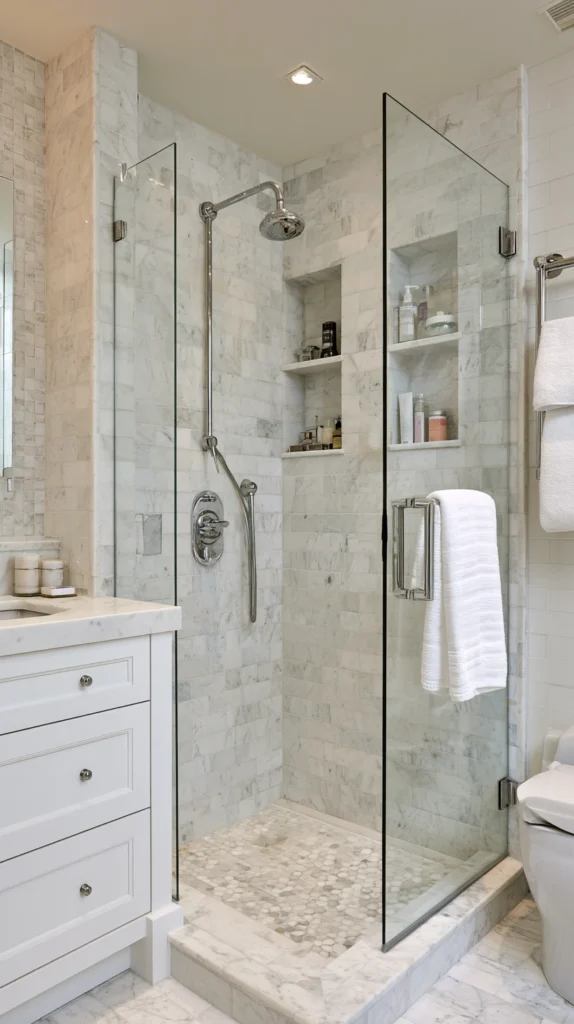
The white bathroom that maintains its visual purity — that looks clean, calm, and composed rather than cluttered with the bottles, the tubes, and the accumulated miscellany of daily grooming — does so not by having less grooming equipment than other bathrooms but by storing that equipment in integrated niches, recessed shelves, and concealed cabinets that remove it from visible surfaces without eliminating its accessibility.
A recessed niche in the shower wall — tiled to match the surrounding shower tiles, its depth sufficient to hold the everyday showering products in a single organised row — eliminates the shelf or the caddy that conventional shower product storage requires and creates a surface of perfect continuity interrupted only by the neatly arranged products within the niche.
A recessed medicine cabinet behind the mirror, its door flush with the wall surface, stores the bathroom’s daily products completely behind a surface that reads as simply a mirror from the outside.
13. Design the Shower as a Statement Glass Enclosure
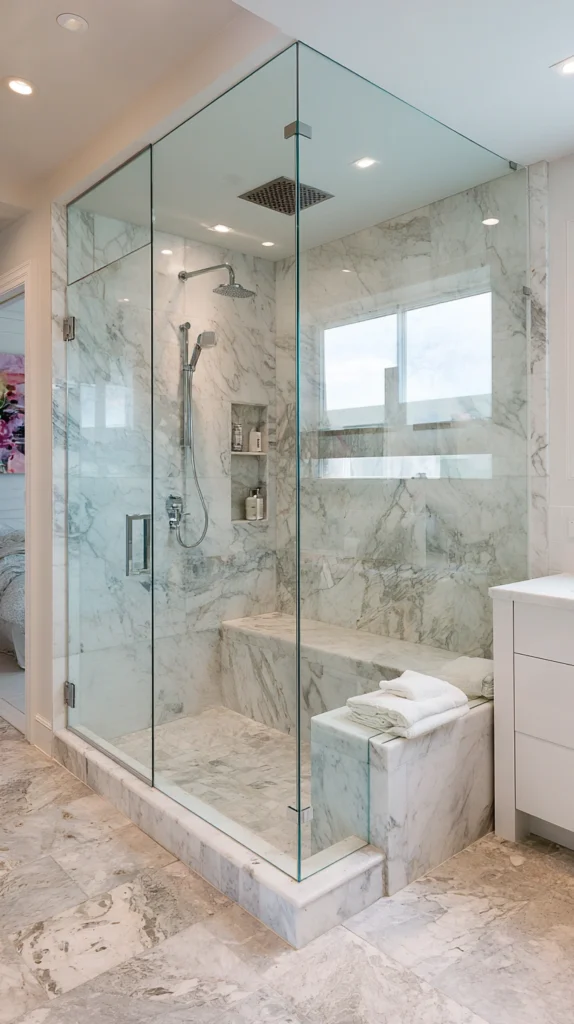
A shower enclosure with frameless or minimal-profile glass panels — the glass allowing the white shower interior to be fully visible from the bathroom, the tiled surfaces and the quality of the shower’s material specification contributing to the room’s overall visual composition rather than being hidden behind an opaque curtain or a framed screen — creates a white bathroom of genuine spatial generosity and genuine visual depth.
The frameless glass shower screen is the detail that makes the difference between a white bathroom that feels like a large, light-filled room and a white bathroom that feels like a series of smaller zones defined by their screening and their opaque boundaries.
The glass allows the eye to travel through the bathroom’s full depth from any position, creating the impression of a continuous, unified white space in which the tile, the light, and the material quality can be read across rather than interrupted by partitions.
Use minimal metalwork — the thinnest possible glass-to-glass hinges, the simplest possible fixing profiles in the bathroom’s primary hardware finish — to maintain the frameless quality that makes the enclosure spatially effective.
14. Treat the Ceiling as a Fifth Surface
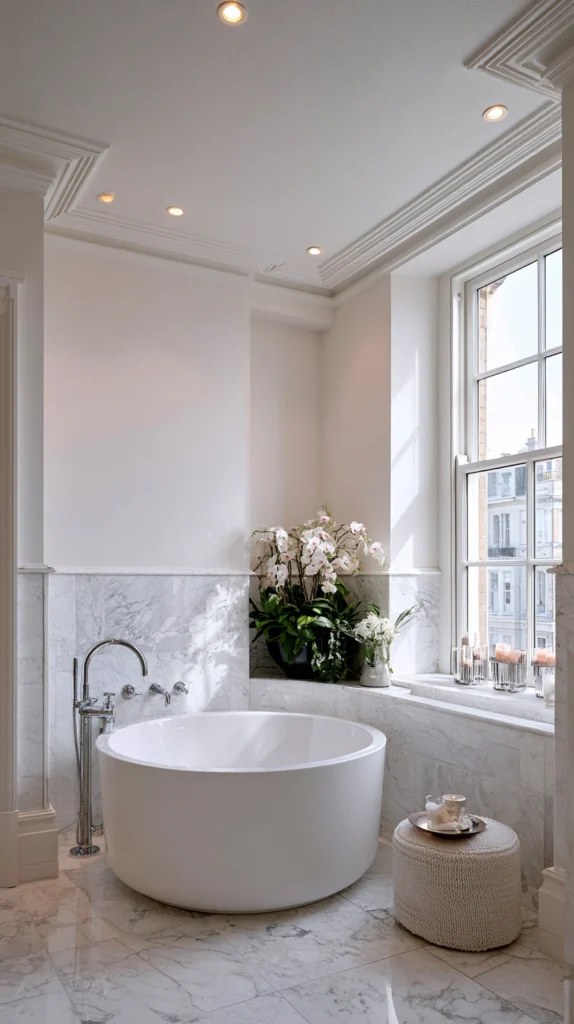
The white bathroom that applies genuine design intention to its ceiling — the fifth surface that most bathrooms treat as simply the top of the room, painted in the same white as the walls and fitted with a standard recessed fixture — is the white bathroom that feels most completely and most deliberately designed in every spatial dimension rather than only in the four surfaces at eye level.
A tongue-and-groove timber ceiling painted in the bathroom’s warm white provides a surface of genuine textural interest and organic warmth overhead. A plaster or Venetian plaster ceiling in the same warm white tone as the walls creates the seamless white envelope that makes the room feel like a single composed space rather than a box with a lid.
A simple but genuinely beautiful pendant light or a series of recessed fixtures with quality warm-toned bulbs, specified with the same care and the same quality standard as every other element in the bathroom, completes the ceiling as a designed surface rather than an afterthought.
15. Keep Every Surface Edited to Its Most Beautiful Minimum
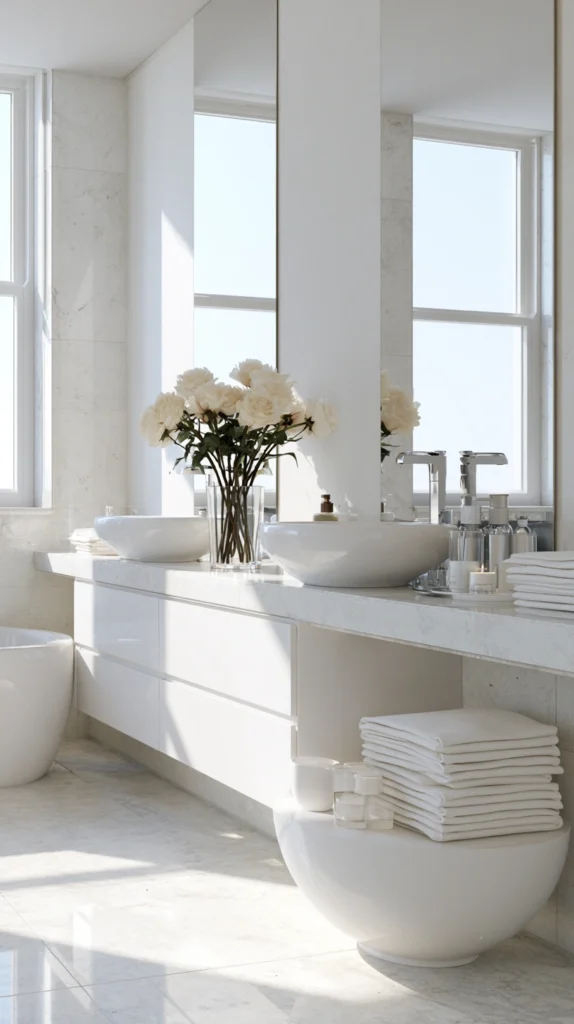
The white bathroom maintains its brightness and its luxury quality through the discipline of continuous editing — the removal of every product, object, and surface element that does not contribute genuine beauty or genuine function, the reduction of every visible surface to the minimum that makes it feel composed rather than bare.
Three products on the shower niche shelf rather than twelve. Two bottles on the vanity counter rather than six. Towels folded once and hung straight rather than accumulated in a pile.
The white bathroom that is genuinely edited — maintained at a standard of visual simplicity that requires daily discipline and delivers daily beauty — is genuinely brighter, genuinely more luxurious, and genuinely more restorative to be in than the same bathroom cluttered with the accumulated evidence of daily use that most bathrooms gradually become without consistent editorial intervention.
Final Thoughts: Committing to White With Confidence and Intelligence
The white bathroom that genuinely feels bright and luxurious is the one designed with a clear understanding that white is not a simple choice but a demanding one — a palette that requires the correct specific white for the specific light conditions, the warmth of natural materials and unlacquered hardware to prevent clinical coldness, the texture of quality surfaces to provide visual interest without colour, and the discipline of consistent editing to maintain the visual purity that makes the white bathroom genuinely extraordinary rather than simply clean.
Commit to the warm white, invest in the material quality, specify the hardware with consistency and care, light the mirror with warmth and accuracy, and maintain every surface at the editorial standard the palette demands. The white bathroom that earns its luxurious quality is not the most expensive bathroom — it is the most considered one, and the consideration it embodies is visible in every surface, every material junction, and every carefully placed object within it.