15 LA Laundry Room Ideas That Are Shockingly Aesthetic for a Room Nobody Talks About
Los Angeles has a particular relationship with spaces that other cities would leave functional and unremarkable — an instinct, bred from decades of design culture, film industry visual intelligence, and the specific aesthetic confidence of a city that takes beauty seriously in every corner of domestic life, to treat every room as an opportunity rather than an obligation.
The laundry room is the domestic space most consistently denied this treatment everywhere else — the room where the brief begins and ends, with housing the appliances, where design intention is considered unnecessary because the door is usually closed and the room exists purely to serve a function. In Los Angeles, that logic does not quite hold.
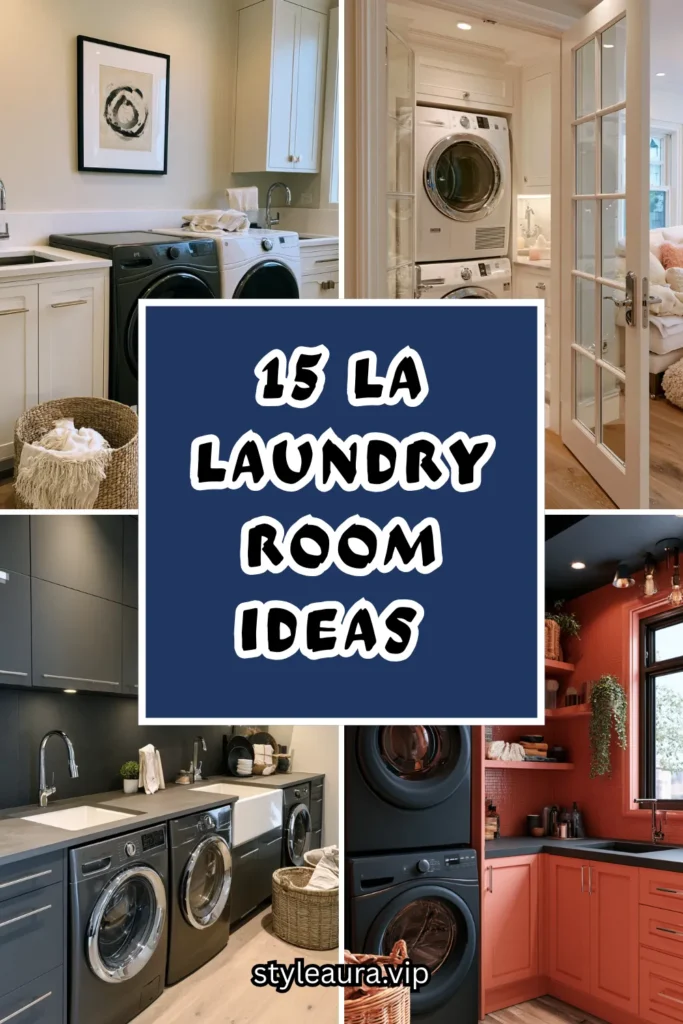
The LA laundry room is the room that surprises you — the space behind the utility door that opens to reveal something genuinely considered, genuinely beautiful, and genuinely worth talking about.
These fifteen ideas demonstrate exactly how to bring that Los Angeles design intelligence to the laundry room — a space that, when treated with genuine aesthetic ambition, repays the investment with the daily pleasure of inhabiting a room that is as beautiful to be in as any other in the house.
1. Install Handmade Zellige Tile on the Backsplash
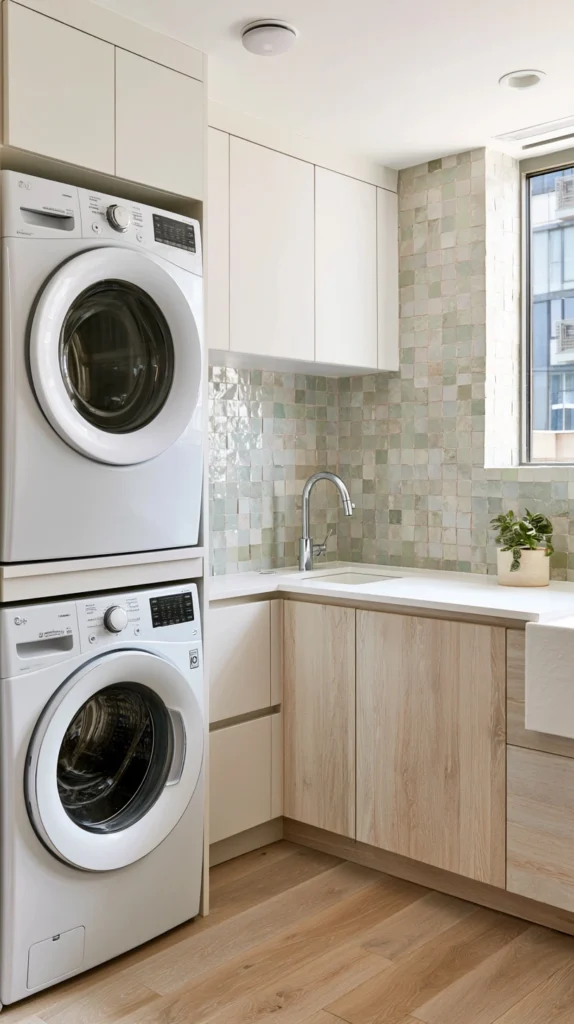
The zellige tile backsplash — its hand-applied glaze in warm white, dusty sage, or the particular terracotta tone that Los Angeles interiors use with such consistent confidence — installed above the machines and behind the sink creates the laundry room’s most immediate and most powerful aesthetic transformation, converting the utility wall behind the appliances from a painted surface of no particular quality into a craft-made surface of genuine visual richness and genuine material character.
The zellige’s characteristic slightly irregular surface catches the laundry room’s light differently through the day, creating a visual dynamism that flat tiles categorically cannot achieve, and its association with the craft traditions that Los Angeles’s design culture values so highly makes it the backsplash choice that most immediately communicates genuine aesthetic intention in the room. Install in a simple stacked pattern, use a warm putty grout in a tone that complements the tile’s base colour, and allow the material’s inherent beauty to be the entire design.
2. Paint the Walls in a Deep, Confident Colour
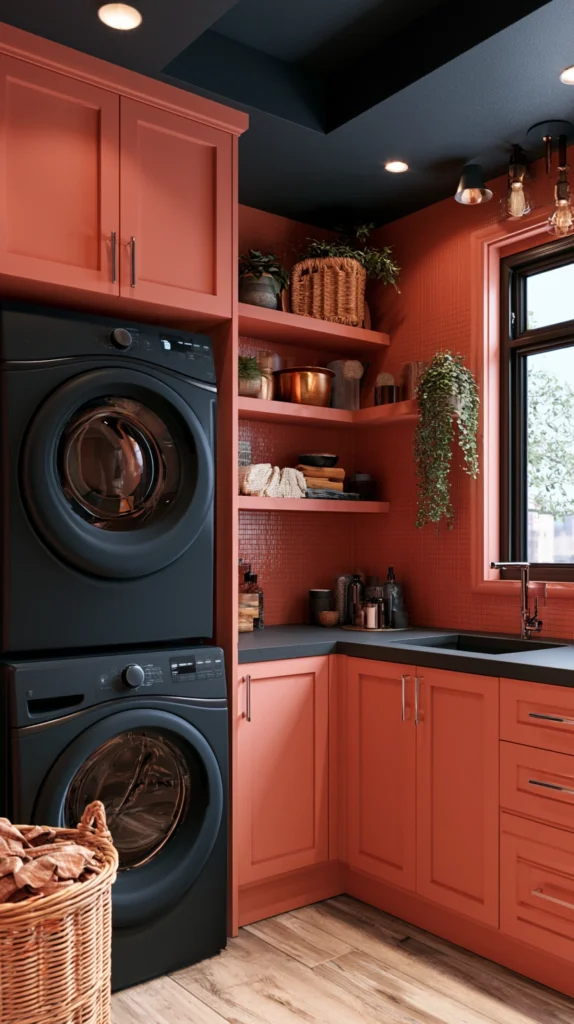
The laundry room painted in a deep, saturated colour — the specific design decision that transforms the room most dramatically and most immediately for the least financial investment — is the Los Angeles laundry room’s single most impactful aesthetic intervention, converting a white utility space into a genuinely designed room of considerable atmosphere and considerable personality.
Terracotta, dusty sage, deep navy, warm charcoal, or the rich forest green that appears so consistently in Los Angeles’s most admired residential interiors: any of these colours applied to every wall surface of the laundry room — including the ceiling — creates the colour-drenched intimacy that makes a small utility space feel deliberately designed rather than accidentally small.
The small laundry room is the ideal candidate for a depth of colour that might overwhelm a larger room — its limited dimensions allow the saturated tone to create atmosphere rather than claustrophobia.
3. Choose Appliances in Matte Black or Coloured Finishes
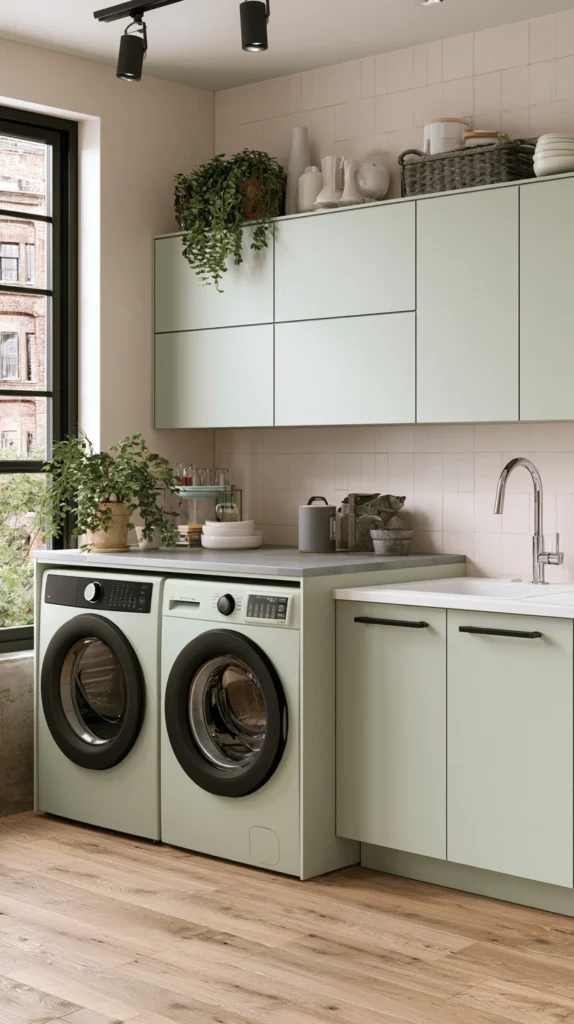
The appliances in an LA laundry room are not necessarily white — the matte black washing machine and dryer that several premium appliance manufacturers now offer as standard specifications read as genuinely designed objects rather than purely functional equipment, their dark finish connecting to the broader dark-toned palette that Los Angeles interiors employ with particular confidence and skill.
Alternatively, a coloured appliance — the sage green or dusty blue washing machine and dryer combinations available from select European manufacturers — treats the laundry room’s primary objects as the design statement the room deserves rather than the utility specification most laundry rooms default to. Either choice requires more financial investment than standard white appliances, but in a room where the machines are the dominant visual presence, the aesthetic quality of that presence is the room’s most important design decision.
4. Install Open Shelving in Natural Timber
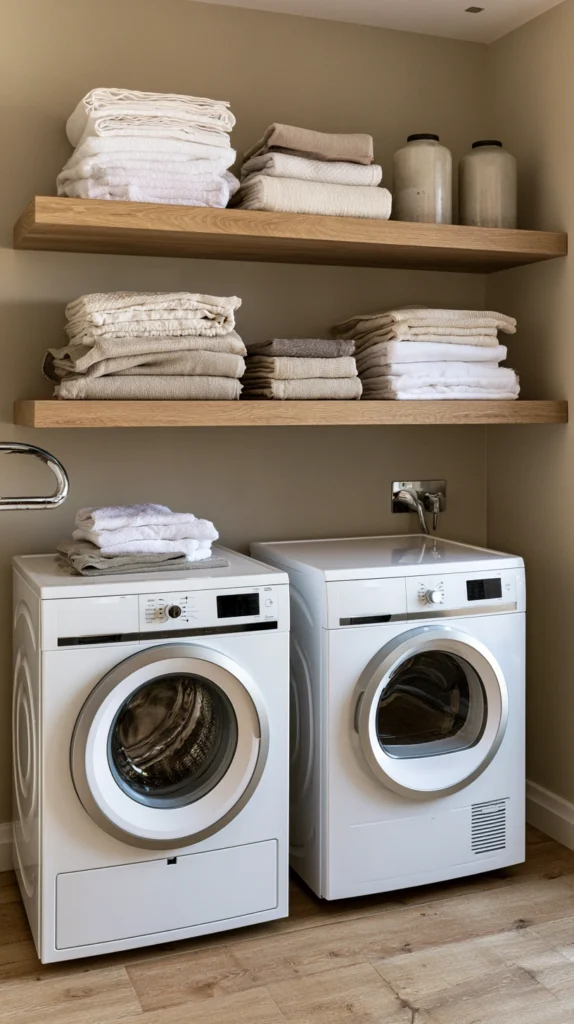
Open shelving in natural white oak, walnut, or a lightly oiled pale timber — positioned above the machines, beside them, or along the laundry room’s primary wall — creates the LA laundry room’s most characteristic and most consistently beautiful storage solution, its warm natural material connecting the utility space to the broader design language of the Los Angeles home that values natural materials, honest craft, and the particular warmth of genuinely beautiful wood in every room it enters.
Decant laundry supplies into consistent ceramic or glass vessels and arrange on the open shelves with the same editorial care applied to the open kitchen shelving in the same house — the bottles of detergent transferred into ceramic dispensers, the dryer sheets stored in a simple timber box, the fabric softener decanted into a quality glass vessel — and the open laundry shelf reads as a composed, curated display rather than a storage solution.
5. Add a Utility Sink in a Quality Material
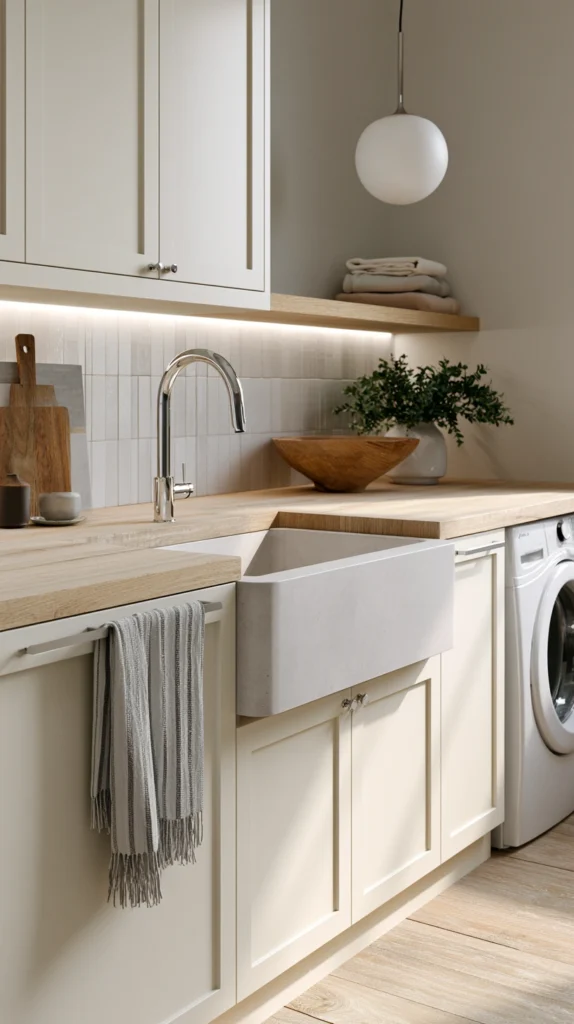
A utility sink in the laundry room — not the standard white plastic utility tub that most laundry room installations default to, but a quality fireclay Belfast sink, a concrete basin, or a simple white ceramic vessel sink mounted on a timber vanity unit — elevates the room’s material standard to a level consistent with a genuinely designed interior space rather than a purely functional utility room.
The utility sink in a quality material performs its practical functions of hand-washing, pre-soaking, and general utility use with identical effectiveness to a standard plastic tub while contributing to the room’s visual quality in a way that the plastic tub entirely fails to do. A fireclay Belfast sink in the laundry room is the same sink that appears in the finest farmhouse kitchens and brings the same quality of material authority to the laundry room that it brings to those kitchens.
6. Hang Artwork in the Laundry Room
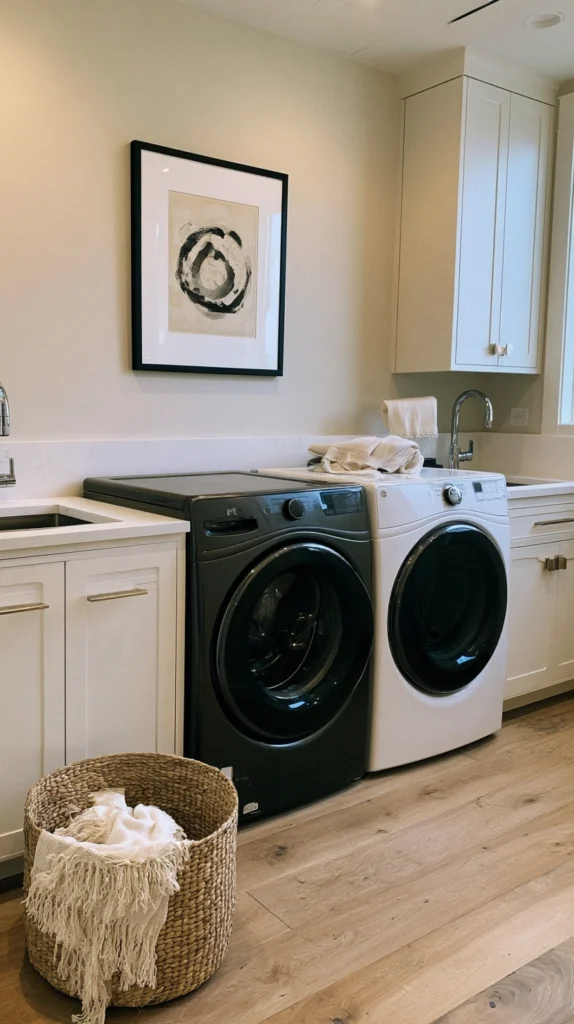
A single, well-chosen piece of artwork — a framed print, a small original painting, a quality photographic image — hung on the laundry room wall at the correct height and in a frame that connects to the room’s palette and material language is the design decision that most powerfully communicates the aesthetic intention of the entire space, because it is the decision that requires the most confidence and the most deliberate commitment to treating the laundry room as a genuinely designed room rather than a utility space where design intention stops at the door.
The artwork in the laundry room is noticed and remembered by every person who uses the space, and its presence transforms the experience of doing laundry from a purely functional task to one performed within a room of genuine visual quality and genuine aesthetic intention. Choose something that makes you genuinely happy to look at rather than something that merely fills the wall.
7. Install Patterned Floor Tile
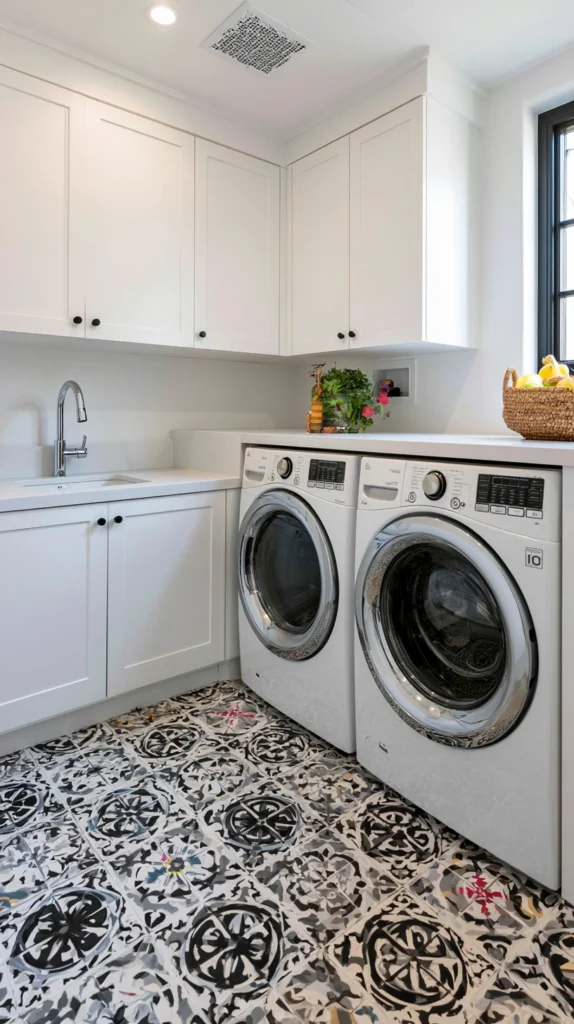
A patterned floor tile — encaustic cement tile in a geometric pattern, a bold Moroccan-inspired repeat, or the graphic black and white checkerboard of classic California laundry room tradition — creates the laundry room’s most theatrical and most immediately striking aesthetic transformation, treating the floor as the room’s primary decorative surface in the same way that the statement floor works in an entry hall or a powder room.
The patterned floor tile in a laundry room has an additional practical advantage — its pattern conceals the dirt, the lint, and the general debris of laundry activity more effectively than a plain floor surface, making the room look clean and considered even immediately after heavy use. Choose a pattern in a scale that suits the room’s dimensions and a colour palette that connects to the wall colour for the most coherent overall design.
8. Create a Folding Station With a Beautiful Surface
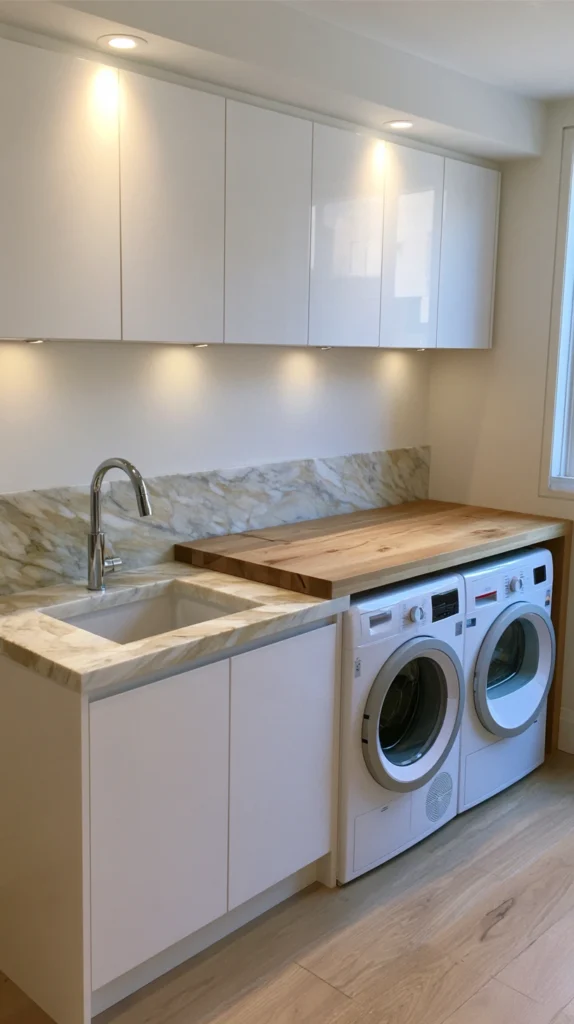
A dedicated folding surface — a length of marble, honed limestone, butcher block timber, or a quality laminate in a stone-effect finish — installed above the machines at a comfortable standing working height creates both the practical infrastructure the laundry room requires for its primary post-washing function and the material surface of genuine visual quality that distinguishes the designed laundry room from the functional one.
The folding surface material is the laundry room’s countertop — the surface most seen, most touched, and most present in the daily experience of using the room — and it deserves the same quality of material specification that the kitchen countertop receives in a house where the kitchen is designed with genuine ambition. A slab of honed Calacatta marble above two stacked appliances, in a deep sage or terracotta painted room, is a laundry room moment of genuine Los Angeles luxury.
9. Use Vintage or Antique Lighting Fixtures
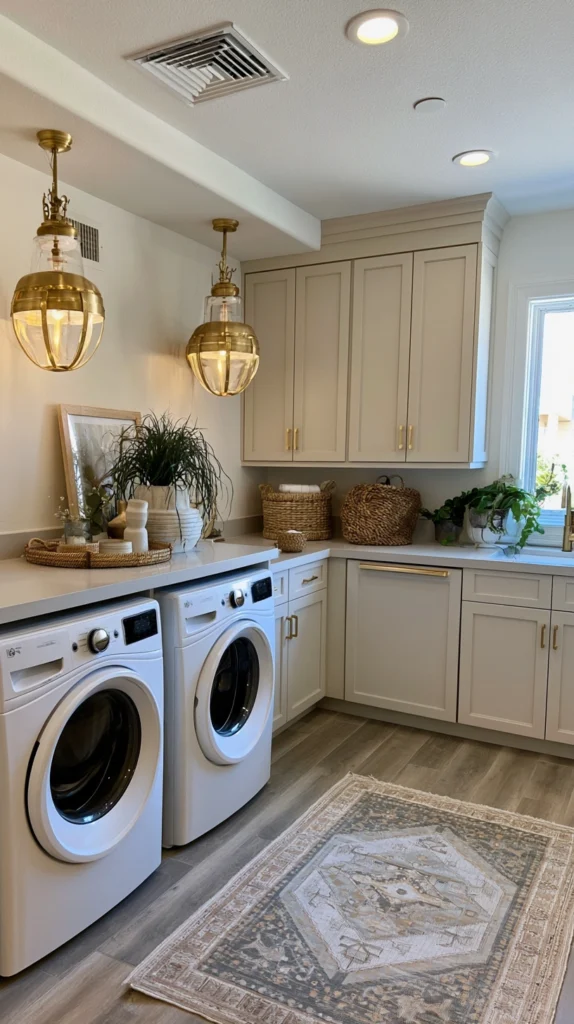
A vintage or antique light fixture — a small brass pendant, a ceramic wall sconce in a warm earthy tone, a simple industrial bulkhead light in aged brass or unlacquered metal — installed in the laundry room rather than the standard builder-grade fluorescent or recessed fitting transforms the room’s lighting quality from institutional to genuinely residential and genuinely warm.
The laundry room lighting fixture is one of the least expensive and most immediately impactful single changes available to the space.
A quality vintage pendant or a pair of ceramic wall sconces costs less than a hundred dollars and changes the room’s atmosphere from a utility space to a genuinely inhabited one more completely than almost any other single intervention of comparable cost. Choose a warm bulb temperature — 2200K to 2700K — in whatever fixture is selected for the warm, amber quality of light that makes the room genuinely pleasant to spend time in.
10. Install a Rod or Rail for Air Drying as a Design Feature
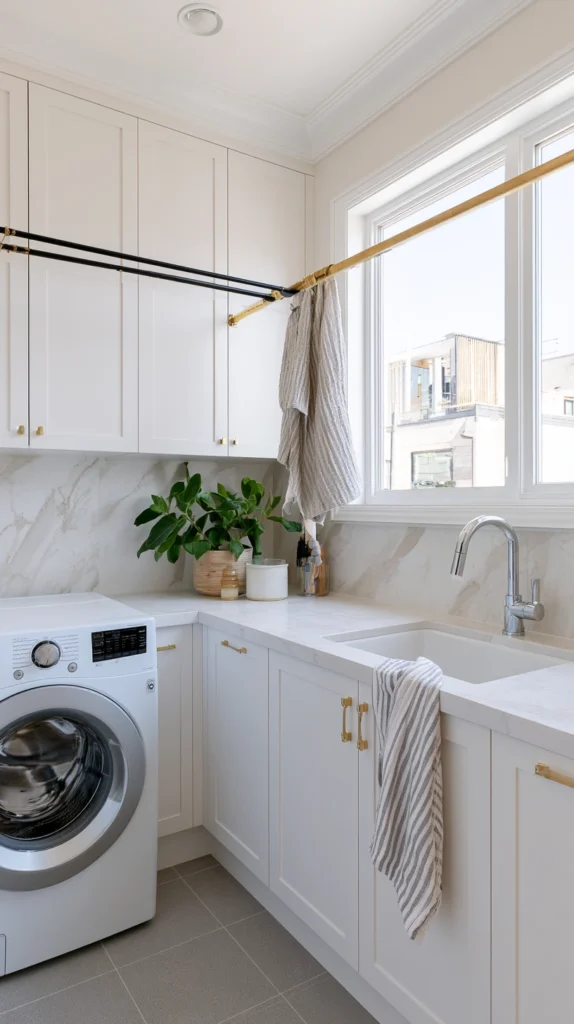
A wall-mounted or ceiling-hung drying rod — in unlacquered brass, matte black steel, or a simple timber dowel between two ceramic brackets — installed in the laundry room as a deliberate, beautifully specified fixture rather than a standard chrome towel bar from a hardware store creates the air-drying infrastructure the laundry room requires while reading as a considered design element rather than a practical afterthought.
The drying rod in a quality material and a quality finish, hung at the correct height for full-length garments and positioned where it is accessible without disrupting the room’s movement flow, is the laundry room feature that most directly serves the room’s daily function while contributing to its aesthetic quality simultaneously — and in a room where every element should earn its position through both beauty and function, the designed drying rod is the detail that achieves that dual standard most completely.
11. Add a Chalkboard or Handwritten Label System
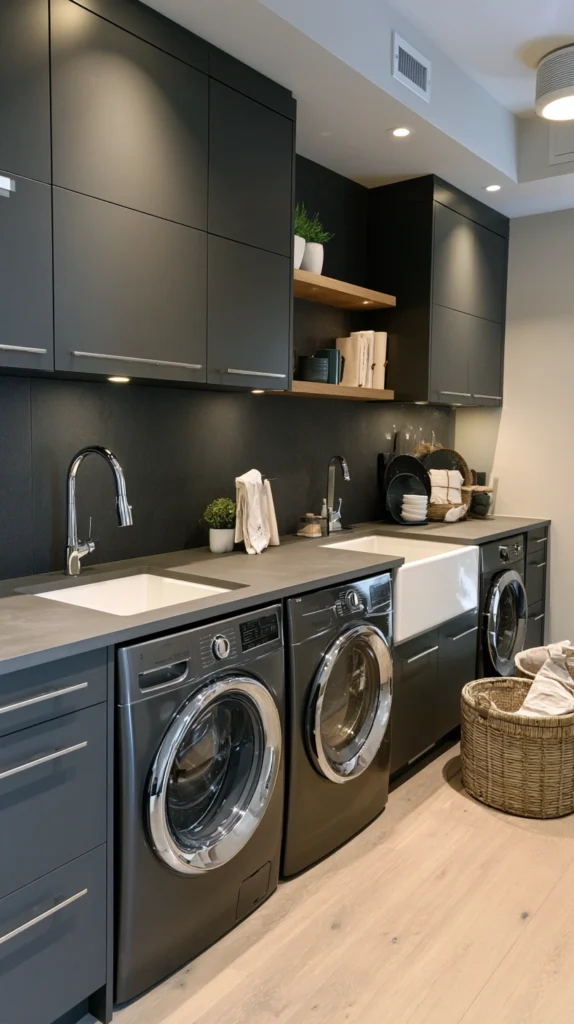
A chalkboard panel on one wall of the laundry room — used for care instructions, washing notes, household schedules, or simply as a surface for the small domestic communications that laundry rooms naturally host — creates a functional and visually characterful element that adds warmth, personality, and the quality of genuine household life to a space that can easily feel too polished and too considered if every surface is treated with the same aesthetic rigour.
Alternatively, a handwritten label system — ceramic or leather labels on every vessel, basket, and storage container in the room, written in a consistent hand in a consistent ink — creates the organised, curated quality that distinguishes a designed laundry room from a merely tidy one. Both approaches introduce the human, domestic quality that the laundry room’s perfect aesthetic can lack.
12. Use Wallpaper on One Wall
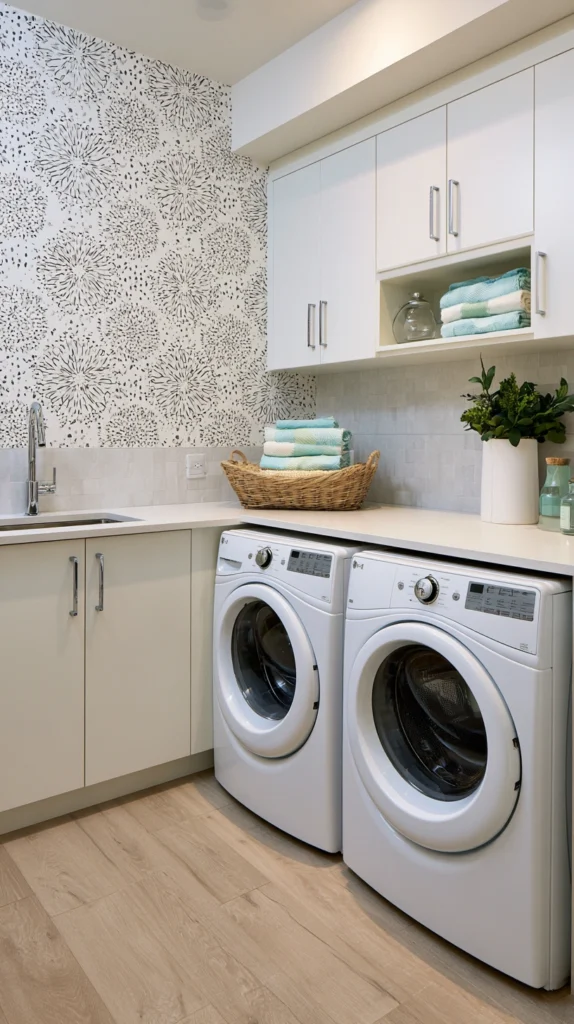
A wallpaper applied to one wall of the laundry room — a bold botanical, a graphic geometric, a hand-printed abstract in the room’s primary palette — creates the laundry room’s most surprising and most memorable aesthetic moment, the discovery of a beautifully wallpapered surface in a room where wallpaper is the last thing expected creating the specific quality of domestic delight that genuinely considered design in unexpected locations always produces.
Specify a moisture-resistant or vinyl-coated wallpaper appropriate for the laundry environment, apply to the wall most visible from the laundry room’s entry point for maximum impact on arrival, and choose a pattern that connects to the broader design language of the house while expressing its own specific personality within the laundry room’s more intimate scale.
13. Install Woven Baskets and Rattan Accessories
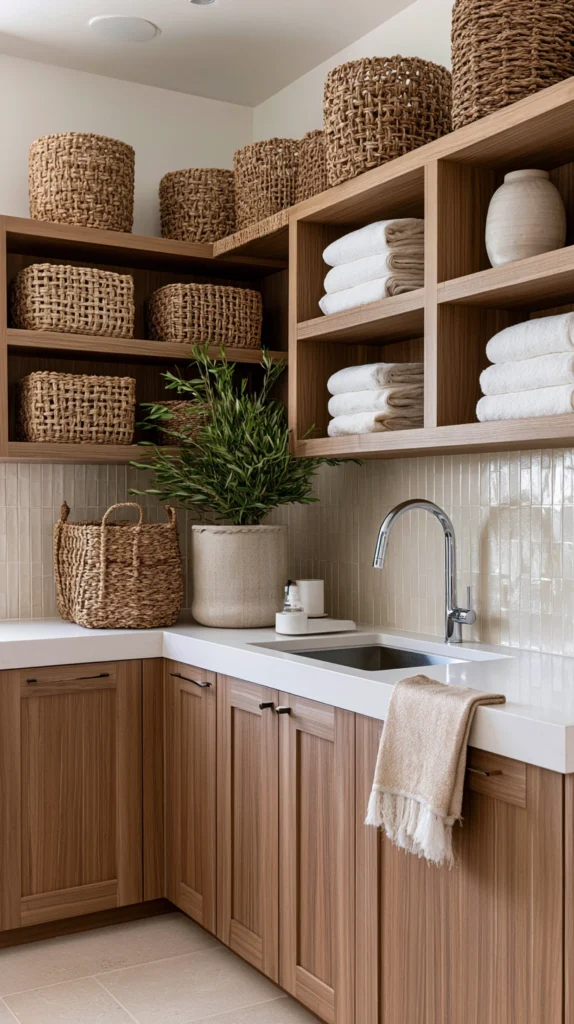
Woven baskets in natural rattan, seagrass, or water hyacinth — used for laundry sorting, for linen storage, and for the general organisational requirements of the laundry room — connect the space to the warm, natural material palette of Los Angeles interiors with an immediacy and a naturalness that manufactured plastic storage containers entirely lack.
The woven basket is simultaneously the most aesthetically appropriate and the most practically functional storage solution for the laundry room — its breathable construction allows stored textiles to remain fresh, its natural material warms the room’s visual character, and its variety of available sizes accommodates every laundry room storage requirement from a small hand towel basket to a generous linen storage hamper. Stack them on the open timber shelving in a consistent size and material for the most composed and most visually coherent arrangement.
14. Design the Door to the Laundry Room as a Feature
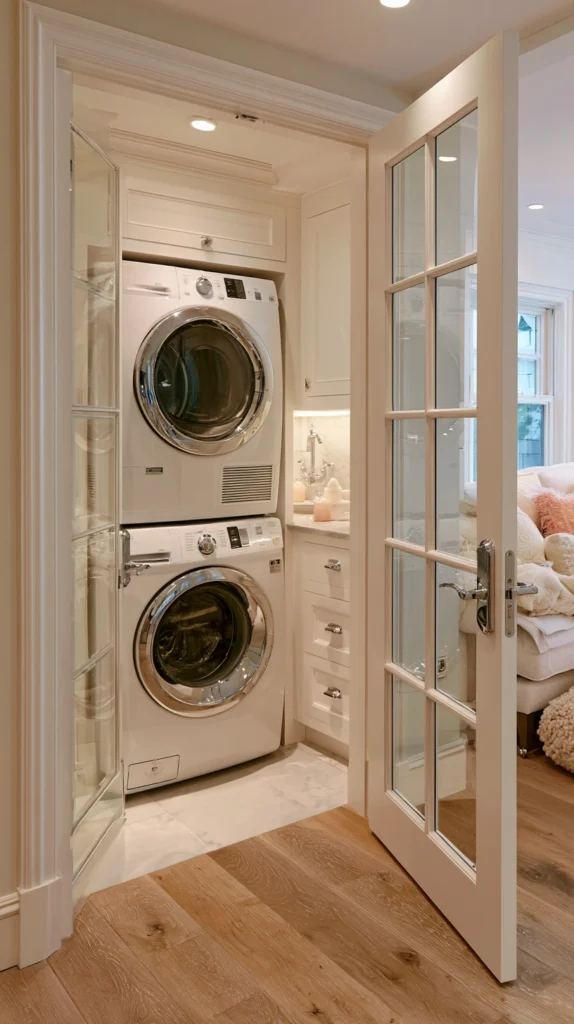
The door to the laundry room — typically a standard hollow-core flush panel in whatever finish the house uses for its utility spaces — is an opportunity for a design moment of considerable impact that most homes entirely miss. A shaker-profile door painted in the laundry room’s wall colour so it reads as part of the room’s envelope when open.
A glass-paned door that allows the room’s interior to be partially glimpsed from the adjacent space, turning the beautiful laundry room interior into a composed view rather than a hidden utility.
A curtain in a quality linen or canvas rather than a door, its fabric connecting to the room’s textile palette and its movement communicating the casual, lived-in quality of a room that is genuinely part of the house rather than separated from it by a utilitarian door. Any of these door treatments makes the laundry room’s presence in the house a design asset rather than a design problem.
15. Treat the Laundry Room as a Complete Room, Not a Utility Space
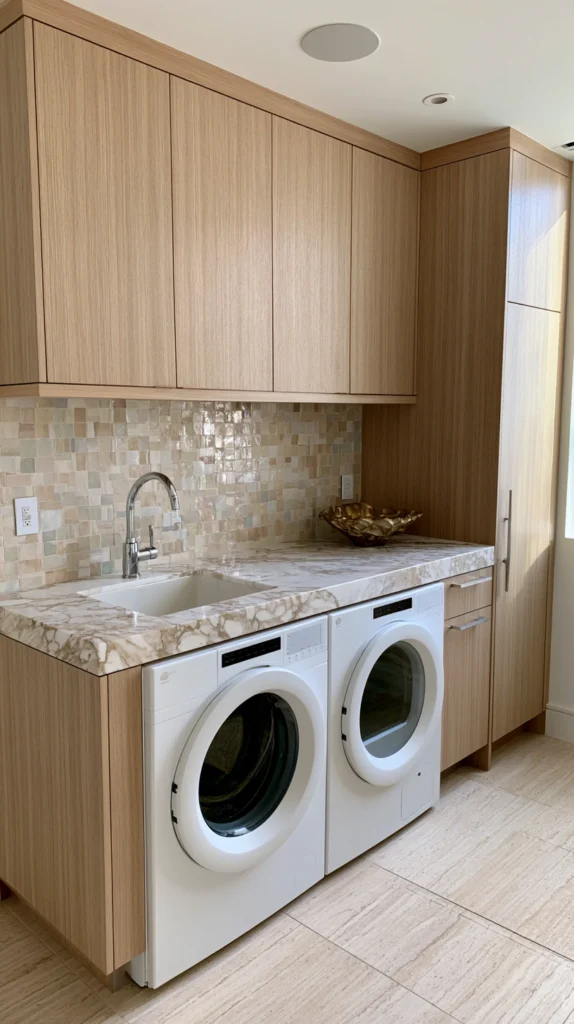
The foundational principle of the LA laundry room that is shockingly aesthetic is not a specific tile or a specific appliance or a specific wallpaper — it is the decision to treat the laundry room as a complete, fully designed room with the same standard of design intention, the same quality of material specification, and the same commitment to the daily experience of being in the space that every other room in the house receives.
This means finishing every surface rather than stopping at the cabinets. It means choosing every accessory rather than accepting the default. It means hanging the artwork, specifying the lighting, selecting the basket, choosing the grout colour, and deciding on the ceiling paint with the same deliberateness applied to the living room or the kitchen.
The laundry room done to this standard is not a utility room that happens to look good — it is a room, and the difference between those two things is the difference between a house that is beautiful everywhere and one that is beautiful almost everywhere.
Final Thoughts: The Laundry Room Nobody Can Stop Talking About
The LA laundry room that earns its reputation as the room nobody talks about until they see this one is built on the same principles as every other genuinely well-designed room in a genuinely well-designed Los Angeles home — honest materials, considered colour, quality lighting, deliberate organisation, and the specific confidence that comes from treating every room as though it matters.
It doesn’t matter. Every room where time is spent, every surface that is seen and touched in the daily routine of household life, every door that is opened, and every light that is switched on contribute to the cumulative quality of daily domestic experience. The genuinely beautiful laundry room makes doing laundry genuinely pleasant — and that, in the Los Angeles design philosophy that takes beauty seriously in every corner of every room, is exactly the point.