14 Ways to Turn a Sunroom Into a Cozy Autumn Retreat
My sunroom sat empty most of fall for years. Built for summer light and little else, it went cold and underused the moment the temperature dropped. Tried adding one knit throw to the wicker chair once. Sat there looking slightly out of place against the bright, summery furniture surrounding it.
Then I stopped adding single cozy objects and started building a complete autumn version of the room — textiles, warmth, and light all working together. The sunroom finally became the room I want to sit in through October and November, not just June.

Why Summer Sunrooms Resist Feeling Cozy in Fall
The bright-and-airy problem:
What summer-leaning sunrooms do:
- Stay built around light, breezy materials suited to warm months only
- Read as bright and open, never as enveloping or warm
- Leave large glass surfaces feeling cold and exposed once temperatures drop
- Resist the layered, warm quality a room needs once the season shifts
The seasonal layering principle:
- Heavier textiles, warmer lighting, and grounding furniture transform the same bright shell into an autumn retreat
- A sunroom built around glass needs deliberate warmth added back in once natural heat and light decrease
- This is a different goal from the airy summer version of the room, and most sunrooms benefit from that seasonal shift
- A single cozy throw added to otherwise summer-ready furniture still reads as a summer room with one warm object in it
My revelation: A cozy autumn sunroom is a complete seasonal layer over the existing structure, not one knit blanket added to summer furniture. Textiles, lighting, and warmth all need to shift together before the room actually feels like fall.
1. A Deep Wool or Sherpa Throw on Every Seat
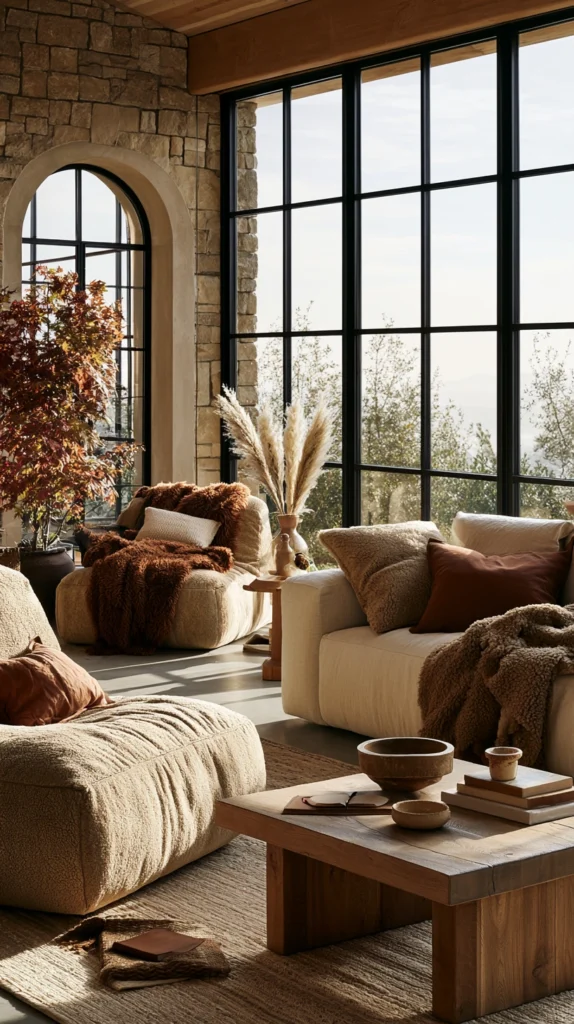
Heavy wool or sherpa throws draped over each chair and sofa in the sunroom, replacing any lightweight summer textiles.
Why the throw fabric matters more than the throw itself
The texture-shift principle:
- A thin cotton or linen throw, suited to a breezy summer evening, does little once the air actually turns cold
- Wool and sherpa specifically trap warmth and add visual weight that signals the season has changed
- This single swap across every seat does more to shift the room’s feeling than almost any other single change
Best throw choices
- Chunky knit wool throws in oat, rust, or deep green
- Sherpa-lined throws for maximum softness against bare skin
- A mix of textures across different seats, unified by a consistent warm color palette
Budget pick: basic knit throws from a home goods store, $20-40 each Splurge: chunky hand-knit wool throws, $80-180 each
My throw swap result
Replacing the thin cotton throws that lived in the sunroom all summer with heavy sherpa-lined versions in warm rust and oat tones made the room feel ready for fall the same afternoon, before a single other change was made.
Throw Tips
Store summer textiles out of sight once swapped:
- Leaving lightweight summer throws visible alongside the new heavier ones dilutes the seasonal shift
- A simple storage bin or closet swap keeps the room feeling fully committed to the season
2. A Small Wood-Burning or Electric Stove
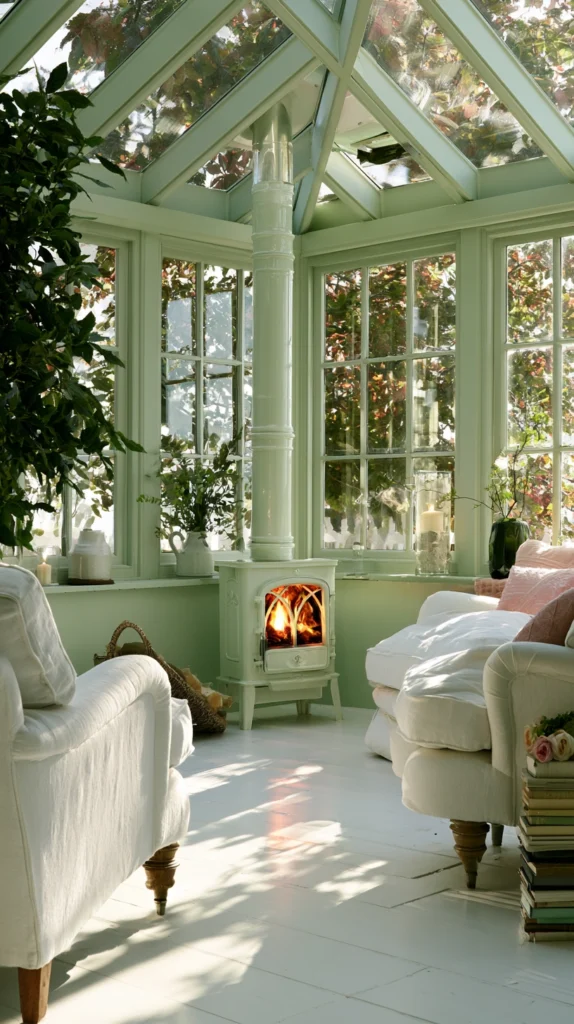
A compact stove, either a true wood-burning unit or an electric version with a realistic flame effect, added as a heat and light source.
Why a stove does more than any single lamp or throw
The dual-function principle:
- A sunroom’s glass walls lose heat quickly once outdoor temperatures drop, regardless of how many cozy textiles are added
- A stove provides genuine warmth alongside the flickering, ambient light that defines a cozy room
- This single addition often determines whether the sunroom remains usable through the coldest parts of fall or gets abandoned again
Best stove options by space and budget
- A small electric stove with a flame-effect display for spaces without venting options
- A compact wood-burning stove for a sunroom with appropriate venting and clearance
- A propane patio heater styled to resemble a stove, for partially enclosed sunrooms
Budget pick: a freestanding electric stove heater, $150-350 Splurge: a properly vented small wood-burning stove, $800-2,500 installed
My stove result
Adding a small electric stove with a realistic flame effect to the corner of my sunroom meant the room stayed genuinely warm and usable well into November, instead of becoming too cold to sit in past the first frost.
Stove Tips
Confirm any venting requirements before purchasing a wood-burning option:
- A true wood-burning stove generally requires proper venting and clearance from glass and combustible materials
- An electric option avoids this requirement entirely if venting is not feasible in the existing structure
3. Layered Rugs Over the Existing Floor
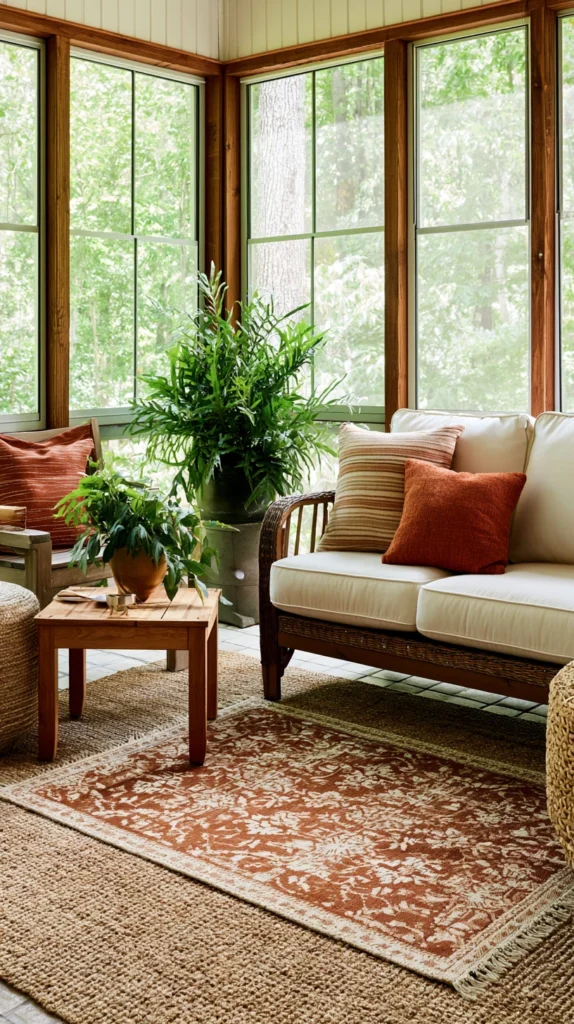
Two or more rugs layered on top of each other, adding warmth and softness underfoot in a room often finished with tile or hard flooring.
Why sunroom floors need extra textile attention
The cold-floor problem:
- Sunrooms are frequently finished in tile, stone, or another hard, easy-clean material suited to summer use
- These same floors feel notably cold underfoot once the weather turns, more so than carpeted rooms elsewhere in the house
- Layering rugs solves this directly while also adding pattern and warmth to the room’s overall look
Best layering combinations
- A larger jute or sisal rug as the base layer, with a smaller patterned wool rug on top
- A flatweave rug beneath a plush shag rug for maximum texture contrast
- Two rugs in complementary warm tones rather than competing patterns
Budget pick: a jute base rug plus a smaller accent rug, $80-180 combined Splurge: a wool base rug with a vintage-style overdyed accent rug, $300-600 combined
My layered rug result
Adding a natural jute rug topped with a smaller rust-and-cream patterned wool rug transformed the cold tile floor into the warmest-feeling surface in the room, and bare feet no longer avoid the sunroom once the weather cools.
Layered Rug Tips
Use a rug pad beneath the base layer:
- A rug pad prevents both layers from shifting on a smooth tile or stone floor
- This also adds a small amount of additional cushioning underfoot
4. Heavy Curtains or Roman Shades on the Glass Walls
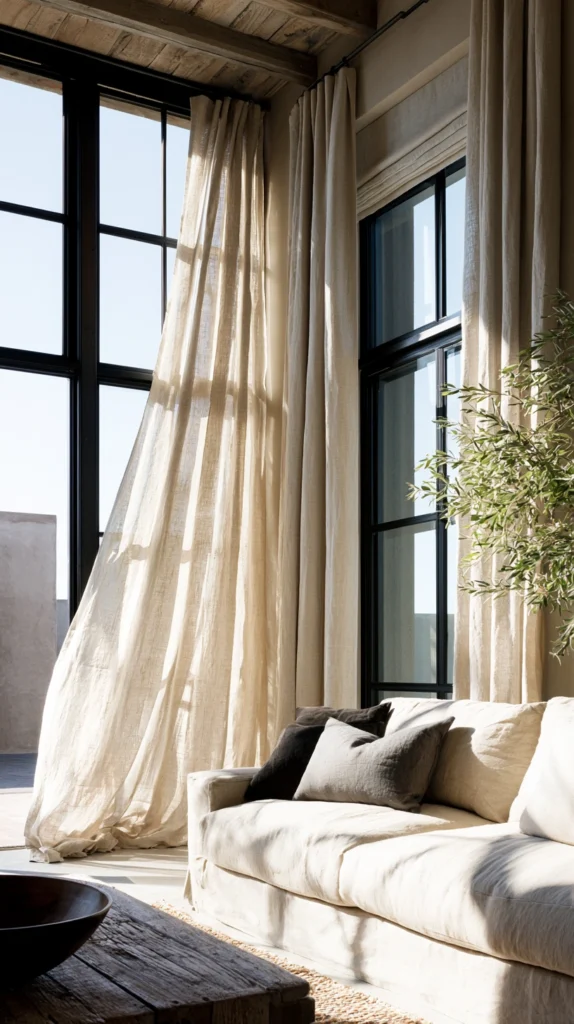
Substantial fabric window treatments added to a sunroom’s typically bare or minimally covered glass walls.
Why window treatments matter more here than in any other room
The glass-exposure principle:
- A sunroom’s defining feature, abundant glass, becomes a liability for warmth and coziness once the weather turns
- Heavy curtains or lined roman shades can be drawn in the evening specifically to reduce heat loss and create a more enclosed, intimate feeling
- During the day, the same treatments can remain open to preserve the room’s natural light advantage
Best fabric choices
- Heavyweight linen or wool-blend curtains with a thermal lining
- Lined roman shades in a warm solid color or subtle pattern
- Layered sheers beneath heavier curtains for daytime softness with evening warmth
Budget pick: basic lined curtain panels, $40-80 per panel Splurge: custom thermal-lined roman shades, $200-450 per window
My window treatment result
Adding thermal-lined curtains to the largest glass wall in my sunroom, left open during the day and drawn in the evening, noticeably reduced how quickly the room cooled after sunset and added a layer of visual warmth even before they are closed.
Window Treatment Tips
Choose a warm solid color over a busy pattern for large glass walls:
- A solid warm tone reads as intentional and calming across a large expanse of curtain
- A busy pattern repeated across multiple large panels can overwhelm a room already filled with natural light and views
5. A Reading Nook With an Oversized Chair and Blanket Basket
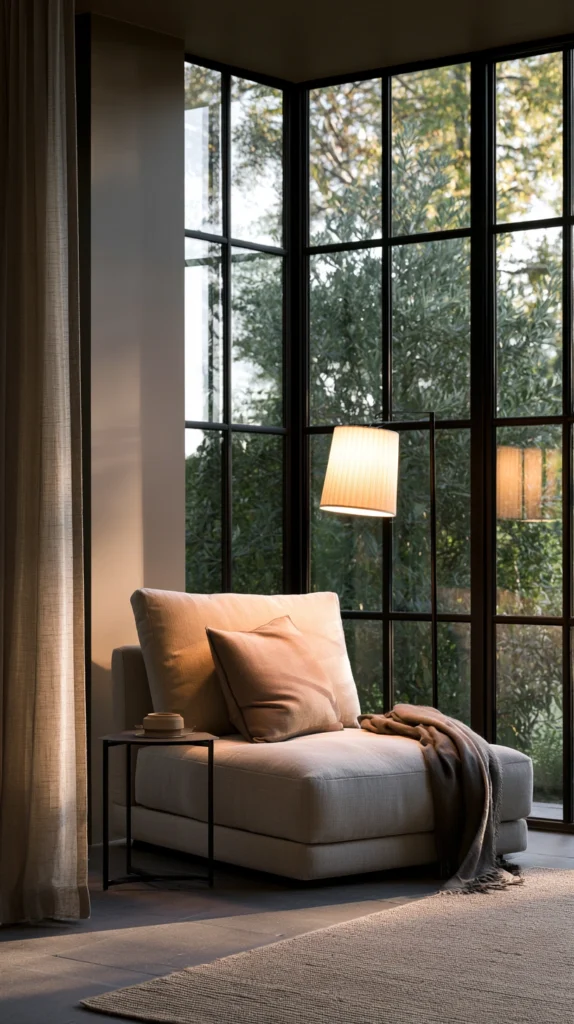
A dedicated corner built around one large, deep chair, a side table, and a basket of extra blankets.
Why a defined nook works better than scattered seating
The destination principle:
- A sunroom with evenly distributed seating throughout can feel like it has no specific place to settle in
- One clearly defined nook, built around the most comfortable chair in the room, gives the space an obvious destination
- This mirrors the same destination-seating logic that works in a garden or living room setting
Building the nook
- An oversized armchair or papasan chair as the anchor
- A small side table for a drink, a book, or a candle
- A basket of extra throws and a floor lamp positioned for reading light
Budget pick: a secondhand oversized chair plus a basic basket of throws, $100-250 total Splurge: a new deep-seated lounge chair with a coordinating ottoman, $400-900
My reading nook result
Anchoring one corner of the sunroom with a deep secondhand armchair, a small side table, and a basket of folded throws gave the room an obvious place to settle into, and that corner is now where I spend most fall mornings with coffee.
Reading Nook Tips
Position the chair to face the glass, not away from it:
- A sunroom’s main advantage is the view and light it offers
- Orienting the reading chair toward the glass keeps that advantage relevant even as the room’s purpose shifts toward coziness
6. Warm String Lights or a Hanging Pendant
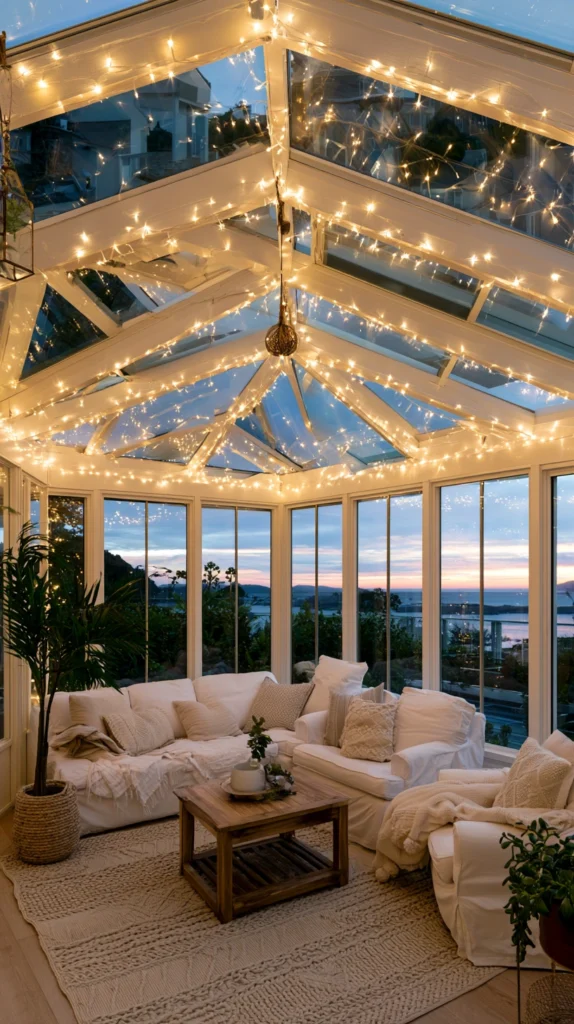
Soft warm-white string lights woven along the ceiling beams or window frames, or a single pendant added if wiring allows.
Why lighting needs deliberate attention in a glass-heavy room
The exposed-ceiling principle:
- Many sunrooms have minimal overhead lighting, relying instead on natural daylight that fades earlier in autumn
- String lights or a single warm pendant fill this gap without requiring major electrical work in most cases
- This added light also extends the room’s usable hours into the early evening, when it would otherwise go dark and unused
Best lighting placement
- String lights woven along exposed ceiling beams or around the window frame perimeter
- A single warm pendant if existing wiring supports it
- Battery-powered puck lights tucked into shelving if no wiring is available at all
Budget pick: warm white LED string lights, $20-40 Splurge: a hardwired pendant with a fabric or rattan shade, $120-300
My sunroom lighting result
Weaving warm white string lights along the exposed ceiling beams extended my sunroom’s usable hours well past sunset, and the soft glow against the dark glass at night became one of the coziest parts of using the room in fall.
Sunroom Lighting Tips
Avoid cool-toned string lights:
- Many string lights default to a cooler white temperature that undercuts the warm feeling this entire seasonal shift depends on
- Confirm the listed color temperature is warm white, generally 2700K or lower, before purchasing
7. A Tray of Hot Drink Essentials on Display
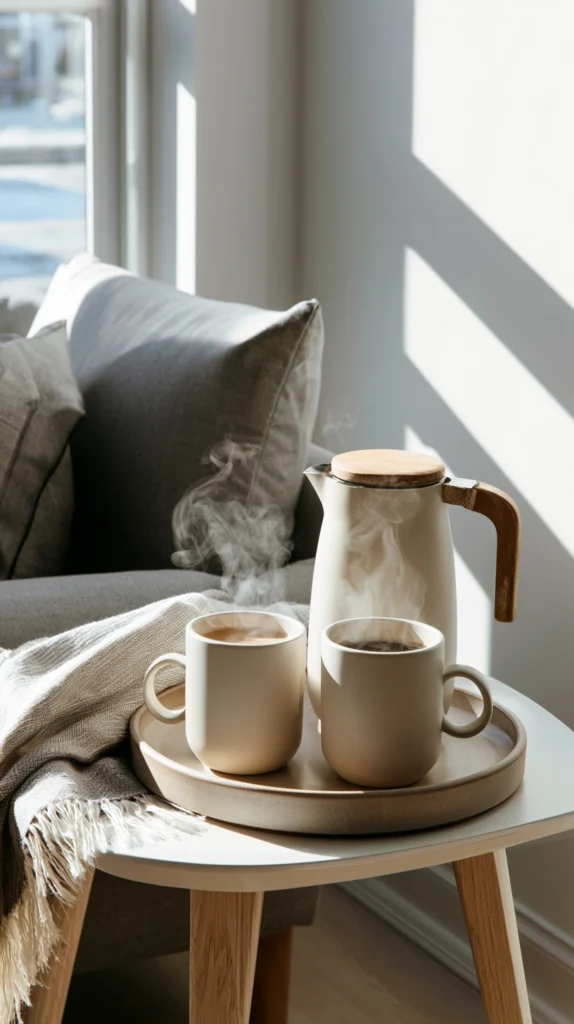
A styled tray holding mugs, a kettle or thermal carafe, and tea or cocoa supplies, kept on a side table or small bar cart.
Why a visible drink station reinforces the room’s seasonal use
The ritual-object principle:
- A visible, ready drink station signals the room is meant for slow mornings and warm drinks, reinforcing its autumn purpose
- This is a small, low-cost addition that does meaningful work in shifting how the room feels and how it gets used
- Having everything already in place removes the small friction that often keeps a seasonal ritual from actually happening
What to include on the tray
- A set of two or three coordinating mugs
- A thermal carafe or simple kettle
- A small tin of tea, cocoa, or coffee, plus a small jar of honey or sugar
Budget: $30-70 for mugs, a carafe, and basic drink supplies
My drink tray result
Keeping a small tray with two mugs, a thermal carafe, and a tin of tea on the side table in my sunroom means making and bringing a hot drink there takes no extra effort, and that small convenience is the reason I actually use the room daily through fall.
Drink Tray Tips
Refill the carafe the night before for the easiest mornings:
- Having warm water or pre-made tea ready first thing removes the last barrier to using the space
- This small habit makes the room’s morning use far more consistent
8. A Faux Fur or Sheepskin Accent on the Seating
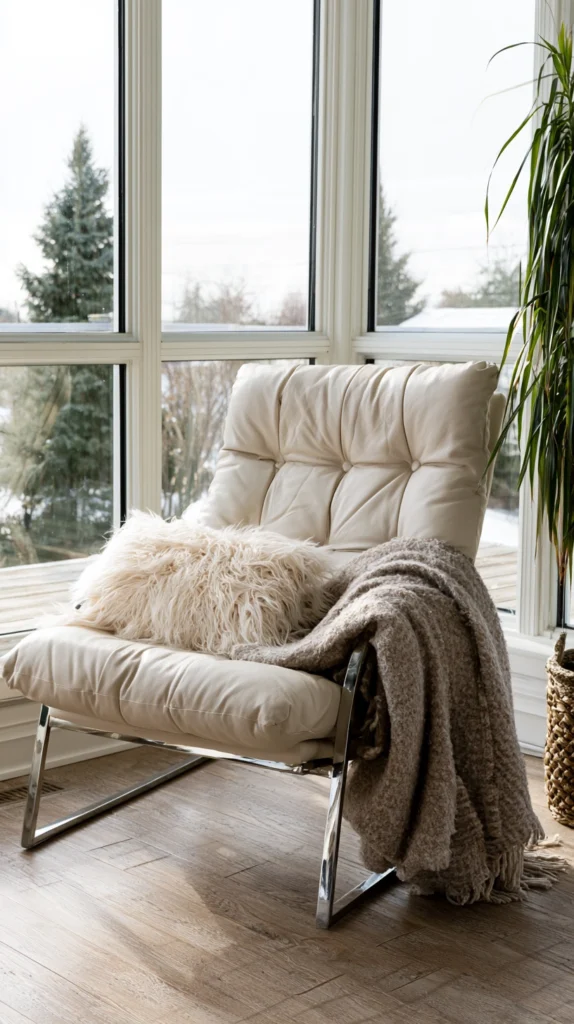
A sheepskin throw or faux fur accent draped over one or two key seats, adding a different texture than wool or knit alone.
Why fur-texture accents add a different kind of warmth
The textural-variety principle:
- Wool and knit throws provide warmth through weight and density
- Sheepskin and faux fur provide warmth through a different, plusher texture that invites touch
- Including both textures across the room’s seating creates more tactile variety than relying on one fabric type alone
Best placement
- Draped over the back or arm of the main reading chair
- Layered beneath a knit throw on a sofa for combined texture
- As a small accent on a footstool or ottoman
Budget pick: faux sheepskin throws, $25-50 each Splurge: genuine sheepskin throws, $90-180 each
My fur accent result
Draping a faux sheepskin over the arm of my reading chair, alongside the wool throw already there, added a textural contrast that makes the chair feel noticeably more inviting than either textile achieved alone.
Fur Accent Tips
Keep to one or two pieces per room:
- Faux fur and sheepskin are a strong textural statement, and too many pieces throughout the room can feel excessive rather than luxurious
- One or two well-placed accents generally achieve the intended effect without overwhelming the space
9. A Small Potted Herb or Fall Foliage Display
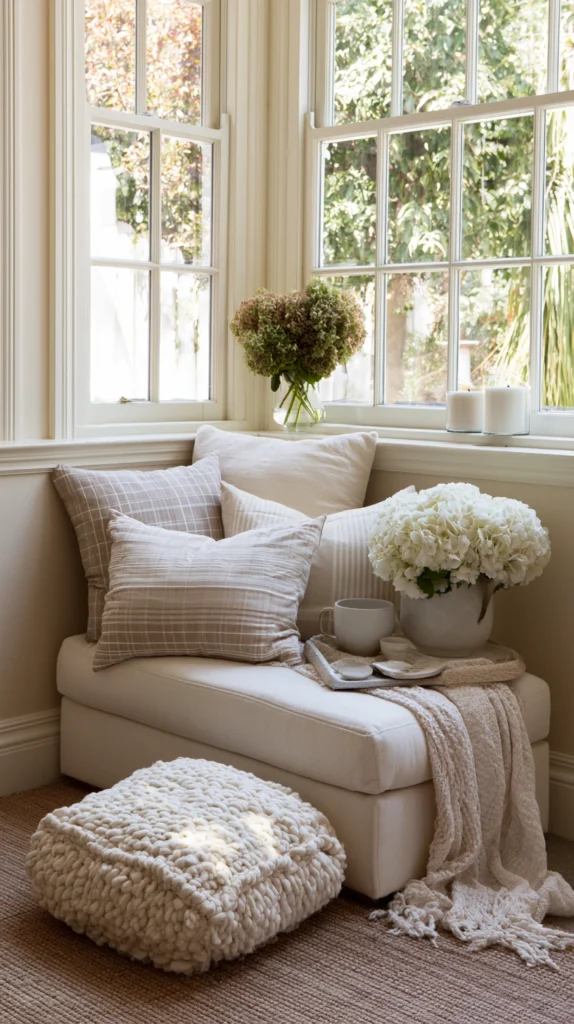
A grouping of potted plants suited to cooler temperatures, including herbs, ornamental kale, or branches with turning leaves.
Why plant choice needs to shift along with everything else
The seasonal-planting principle:
- Many sunroom plants are chosen for summer growing conditions and may struggle as light and temperature shift in fall
- Swapping in cooler-tolerant plants, along with seasonal foliage like branches with turning leaves, keeps the room’s greenery relevant to the actual season
- This swap also introduces warm, autumnal color through the plants themselves, not just through textiles
Best plants and foliage for fall sunrooms
- Ornamental kale or cabbage for color that holds well in cooler temperatures
- Potted rosemary, sage, or thyme for fragrance alongside greenery
- Cut branches with turning leaves, arranged in a simple vase
Budget: $20-50 for a small grouping of seasonal plants and cut branches
My fall foliage result
Swapping out a few summer annuals for a grouping of ornamental kale and a vase of branches with turning maple leaves kept the sunroom’s greenery feeling intentional and current rather than like leftover summer plants struggling through fall.
Foliage Tips
Check light and temperature tolerance before swapping:
- A sunroom’s light and temperature conditions change meaningfully between summer and fall
- Confirm any new plant addition can tolerate the room’s actual current conditions before committing to it
10. A Low Coffee Table With a Books-and-Candle Vignette
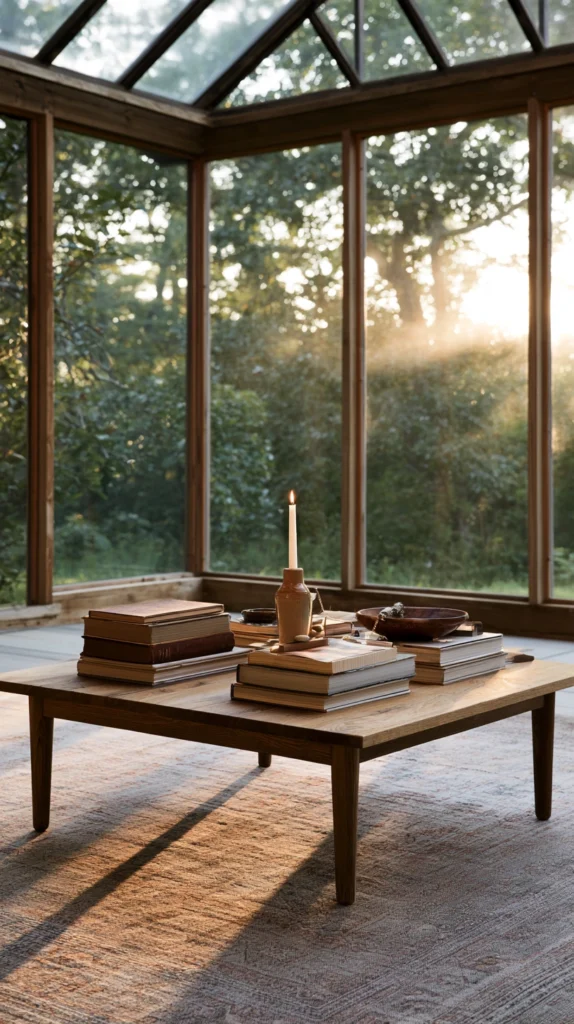
A small low table styled with a stack of books, a candle, and one or two small seasonal objects.
Why a styled surface matters even in a casual room
The grounding-detail principle:
- A sunroom built primarily around chairs and a view can lack a clear visual center at table height
- A low table styled with a few intentional objects gives the eye a grounding point among the surrounding furniture and glass
- This single styled surface often becomes the visual anchor for photos and casual daily use alike
What to include
- A small stack of two or three books, ideally with warm-toned covers
- A candle in a ceramic or glass holder
- One small natural object: a pinecone, a dried branch, a small gourd
Budget: $25-60 for a candle, a small stack of secondhand books, and a seasonal object
My coffee table vignette result
A small stack of warm-covered books, a candle, and a single dried branch on my low table gave the center of the sunroom a defined visual point, and it has become the first thing rearranged each time the season changes.
Vignette Tips
Refresh only the seasonal object, not the whole vignette:
- The books and candle holder can remain consistent across seasons
- Swapping just the natural object (a pinecone for fall, a flower in spring) keeps the vignette current without requiring a full restyle
11. A Wood or Cane Furniture Swap From Wicker
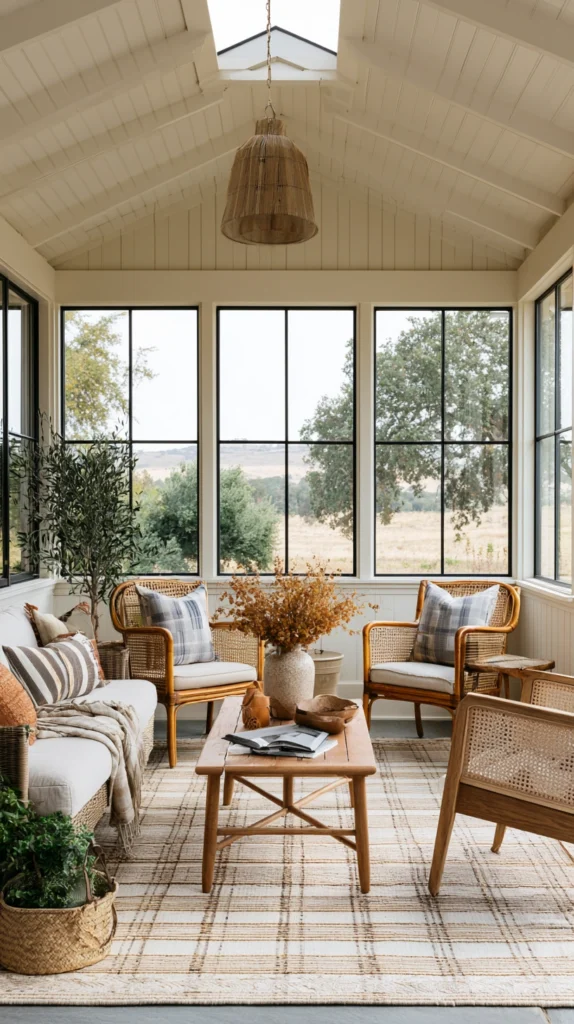
Replacing lightweight summer wicker furniture with heavier wood or cane pieces suited to a warmer, more grounded look.
Why furniture material shifts the room’s entire feeling
The material-weight principle:
- Light wicker furniture, ideal for a breezy summer room, can feel visually thin and cold once paired with heavier fall textiles
- Wood or cane furniture carries more visual weight and a warmer material tone that suits the season’s textiles better
- This is a more significant investment than most other ideas on this list but produces a correspondingly larger shift in the room’s feeling
Best furniture choices
- Solid wood frame chairs with cane backing for a balance of warmth and breathability
- Fully upholstered pieces in a warm fabric for maximum coziness
- A mix of one or two wood pieces alongside existing wicker, rather than a full replacement, for a lower-cost partial shift
Budget pick: a single cane-back accent chair added to existing furniture, $150-350 Splurge: a full wood and cane furniture set replacing wicker throughout, $1,200-3,000
My furniture swap result
Adding two cane-back wood chairs alongside my existing wicker pieces, rather than replacing everything at once, shifted the room’s overall feeling significantly while keeping the cost manageable, and the wicker now reads as a secondary texture rather than the room’s defining material.
Furniture Swap Tips
Start with one or two pieces before committing fully:
- A partial swap allows assessment of how the new material feels in the room before a larger investment
- This staged approach also spreads the cost across more than one season if needed
12. A Wool Blanket Ladder for Visible Storage
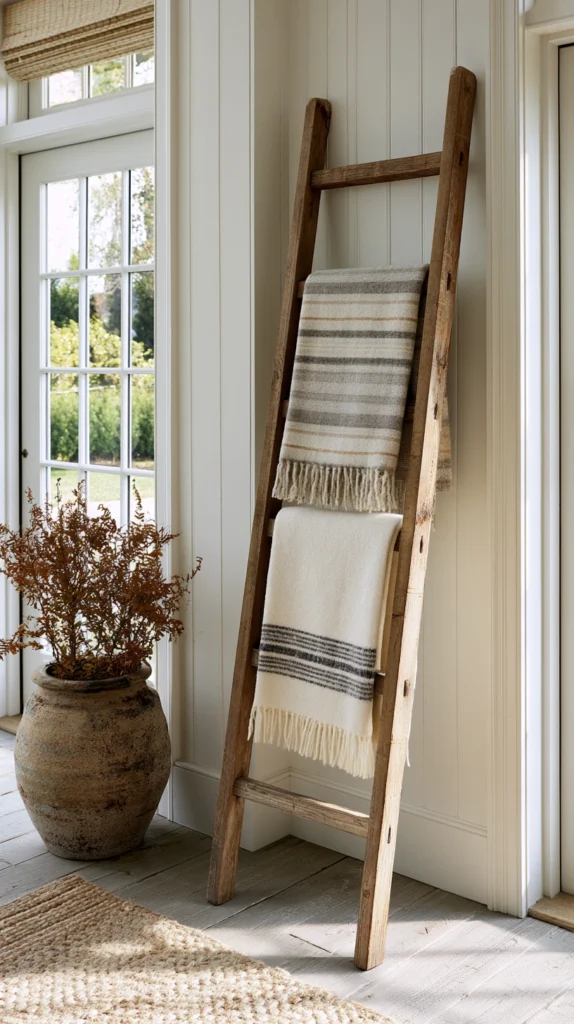
A simple wood ladder, leaned against the wall, holding several folded wool throws in place of a hidden storage basket.
Why visible storage can be more functional than hidden storage
The accessibility principle:
- Throws tucked away in a basket or closet are less likely to actually get used
- A blanket ladder keeps several throws visible and immediately accessible, encouraging actual use rather than just storage
- The ladder itself also adds a simple piece of warm wood furniture to the room without requiring much floor space
Best blanket ladder styles
- A simple unfinished or lightly stained wood ladder
- A ladder with a slight lean angle, allowing throws to drape naturally without sliding off
Budget: $30-70 for a basic wood blanket ladder
My blanket ladder result
A simple wood ladder leaned in the corner of my sunroom, holding three folded throws, means a blanket is always within reach the moment the room starts to feel chilly, and the throws actually get used far more than when they sat folded in a basket.
Blanket Ladder Tips
Fold throws loosely rather than tightly:
- A loosely folded throw drapes more naturally over the ladder rungs and looks less stiff
- Tightly folded throws can look more like stored laundry than styled decor
13. A Small Bistro Set for Two
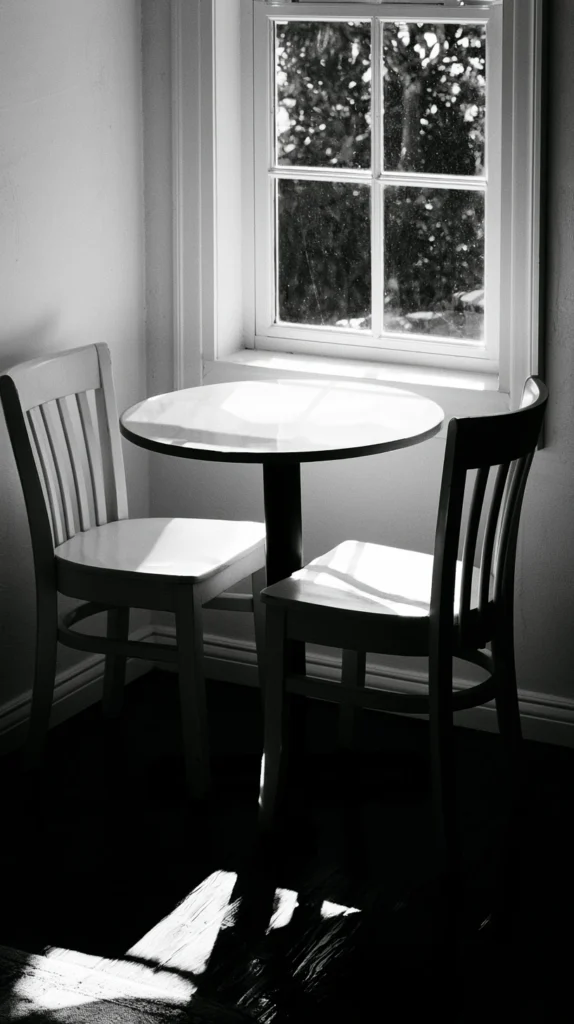
A compact two-person table and chair set, positioned to take advantage of the sunroom’s light and view for meals or coffee.
Why a dedicated table changes how the room gets used
The function-expansion principle:
- A sunroom filled only with lounge seating limits its use to sitting and reading
- Adding a small table expands the room’s function to include meals, games, or working with a laptop
- This single addition often increases how frequently the room gets used throughout the day, not just in the evening
Best bistro set styles
- A small round wood or metal table with two matching chairs
- A folding set if the room’s footprint is limited and flexibility matters
Budget pick: a basic metal bistro set, $100-200 Splurge: a solid wood table and chair set with cushioned seats, $350-700
My bistro set result
Adding a small round table and two chairs near the brightest window gave the sunroom a second function beyond lounging, and breakfast there on cool fall mornings has become a small daily ritual that did not exist before the table arrived.
Bistro Set Tips
Position for both light and warmth:
- Place the table near the window for natural light, but not directly in a draft if the glass is older or poorly insulated
- A small rug beneath the table can also help offset any residual cold from the floor
14. A Fully Layered Seasonal Transformation
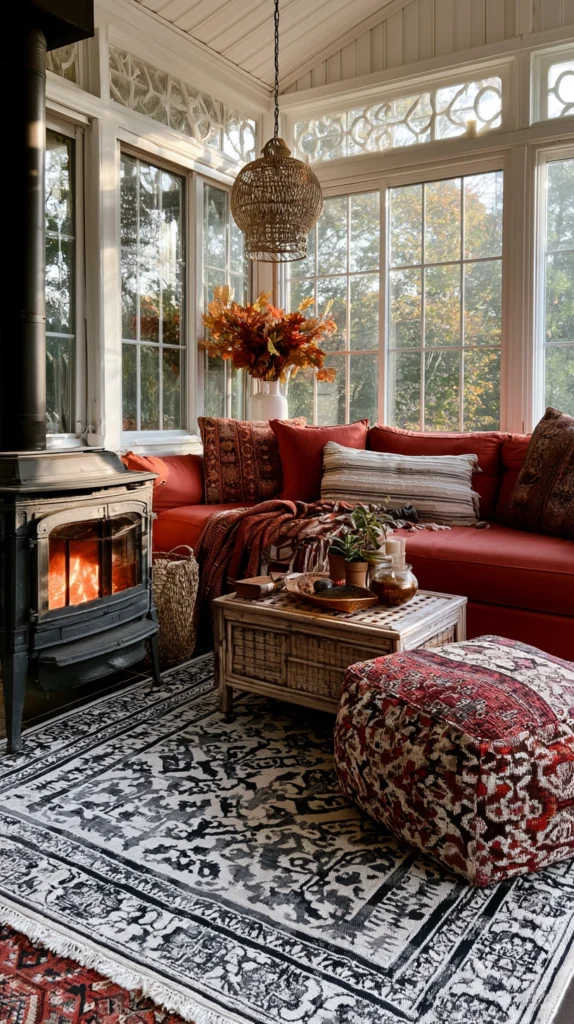
Combining heavy textiles, a heat source, layered rugs, warm lighting, and a defined nook into one complete autumn sunroom overhaul.
Why combining every element outperforms any single change
The complete-transformation philosophy:
- Several of the ideas on this list (heavy throws, a stove or heater, layered rugs, warm lighting, a defined nook) share enough warmth and intention to combine successfully
- Rather than relying on one seasonal change, this approach layers every element together for a complete shift from summer room to autumn retreat
- This is the most thorough and most successful version of the transformation, suited to a sunroom meant for genuine year-round use
How the combination works together
Heat source and window treatments (the warmth foundation):
- Address the room’s actual temperature, not just its appearance
Layered rugs and heavy textiles (the textural layer):
- Provide warmth and softness across every surface guests actually touch
Warm lighting (the evening-extension layer):
- Keeps the room usable and inviting past sunset
A defined nook (the destination layer):
- Gives the room an obvious place to settle into rather than scattered, undefined seating
Building the full transformation
- Start with the stove or heater and window treatments to address actual warmth
- Layer in rugs, throws, and a sheepskin accent across the seating
- Add warm lighting along the ceiling or through a pendant
- Finish with a defined reading nook and a styled low table
Budget: $600-2,000 for a complete seasonal sunroom transformation, depending on heating and furniture choices
My fully transformed result
Combining a small electric stove, thermal curtains, layered rugs, string lights, and a dedicated reading nook turned a room that previously sat empty from October through March into the space I use most consistently throughout the entire fall and winter.
Full Transformation Tips
Address temperature before styling:
- Heat source and window treatments matter more functionally than any textile or decor choice
- A beautifully styled room that remains genuinely too cold to sit in will not get used regardless of how it looks
Choosing Your Sunroom Approach
By commitment level:
- Lower commitment: throw swap (idea 1), coffee table vignette (idea 10)
- Full room commitment: stove or heater addition (idea 2), fully layered transformation (idea 14)
By primary use:
- Reading and lounging: defined reading nook (idea 5), blanket ladder (idea 12)
- Meals and daily use: small bistro set (idea 13), drink tray station (idea 7)
By budget level:
- Lower budget: throw swap (idea 1), string lights (idea 6), drink tray (idea 7)
- Moderate budget: layered rugs (idea 3), window treatments (idea 4), bistro set (idea 13)
- Higher budget: stove or heater (idea 2), furniture swap (idea 11), fully layered transformation (idea 14)
The non-negotiable rules across every option:
Always:
- Address actual room temperature before relying on styling alone to create coziness
- Use warm-toned lighting throughout, matching any string lights or pendants to the rest of the room’s warmth
- Swap out lightweight summer textiles fully rather than layering heavy throws over them
Never:
- Assume one heavy throw can compensate for an otherwise cold, under-heated room
- Leave summer-only plants in place once temperature and light conditions have genuinely shifted
- Skip a rug pad on smooth sunroom flooring when layering rugs for warmth
Remember: a cozy autumn sunroom depends on temperature, texture, and light all shifting together, not on one blanket added to an otherwise summer-ready room, and the rooms that get used all season are the ones where every element changes together rather than just one.