15 Small Laundry Room Makeover Ideas to Try This Fall
My laundry room stayed exactly as it was installed for years, the same layout, the same builder-grade fixtures, the same cramped feeling every time I squeezed past the dryer to reach the sink. Small enough that I assumed nothing could really be done with it beyond a coat of paint. Tried rearranging the few shelves I had once.
Helped marginally, but the room’s actual structural limitations, the layout, the fixtures, the flooring, stayed exactly the same underneath. Then I stopped treating the room as fixed and started looking at it the way I would any other small room worth renovating: layout, surfaces, fixtures, and finish all open to change. The laundry room finally feels like a real, considered space instead of a leftover utility closet I happen to also decorate.

Why Decor Alone Resists Transforming a Small Laundry Room
The surface-only problem:
What decor-only laundry refreshes do:
- Add color and style on top of a layout and set of fixtures that stay completely unchanged
- Improve how the room looks in photos without improving how it actually functions day to day
- Leave the room’s real limitations, awkward layout, poor lighting, insufficient counter space, untouched
- Resist the deeper, more lasting improvement a genuine makeover provides
The structural-first principle:
- A true makeover looks at layout, fixtures, and surfaces before considering paint or styling
- Small rooms benefit disproportionately from even modest structural changes, since every square foot matters more
- This is a different scope than a purely decorative refresh, and a small laundry room often has more room for this kind of change than people assume
- A beautifully styled room still functions poorly if the underlying layout or fixtures were never addressed
My revelation: A real laundry room makeover starts with layout, fixtures, and surfaces, not paint and decor alone. The function needs to improve before the styling gets to matter.
1. A Folding Counter Built Over the Machines
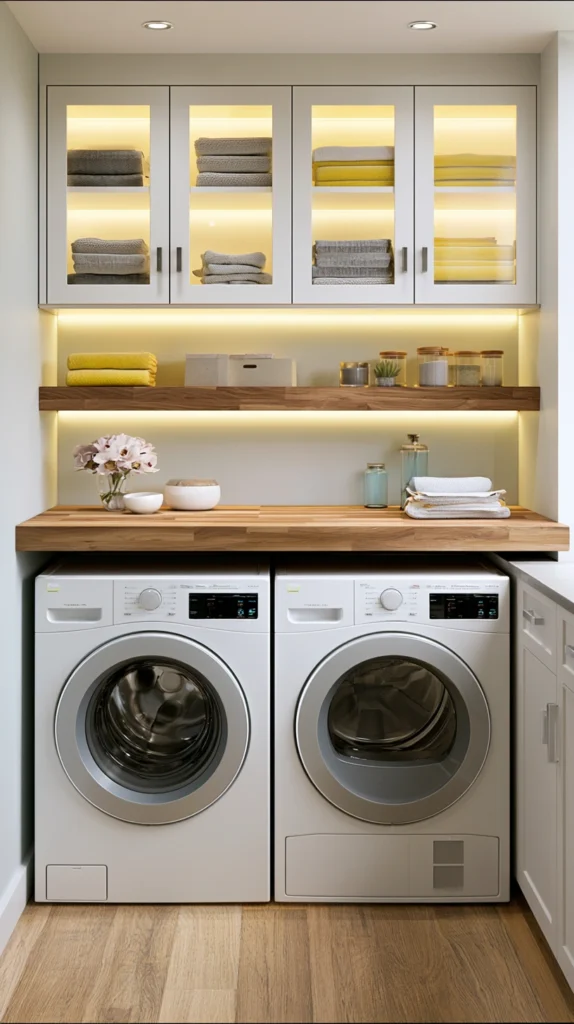
A custom or prefabricated counter installed directly above a stacked or side-by-side washer and dryer, creating usable surface space where there was none.
Why this single addition solves the most common small laundry room problem
The missing-surface principle:
- Most small laundry rooms have no dedicated folding surface at all, forcing laundry onto a bed, a kitchen counter, or the floor
- A counter built directly over the machines reclaims that wasted vertical space without requiring any additional floor footprint
- This is consistently one of the highest-impact functional changes available in a small laundry room
Best counter materials and approaches
- A simple laminate or butcher block counter cut to fit above stacked machines
- A prefabricated countertop kit designed specifically for over-appliance installation
- A custom stone or solid surface counter for a more finished, permanent result
Budget pick: a basic laminate counter cut to size, $80-180 Splurge: a custom stone or solid surface counter, $300-700
My folding counter result
Installing a simple butcher block counter above my stacked machines gave me genuine folding space for the first time since moving in, and laundry no longer migrates to the dining table the way it used to.
Folding Counter Tips
Confirm clearance above the machines before ordering:
- Some stacked units require specific clearance for venting or door swing
- Measure carefully and check the appliance manual before finalizing counter height
2. Swapping a Hinged Door for a Pocket or Sliding Door
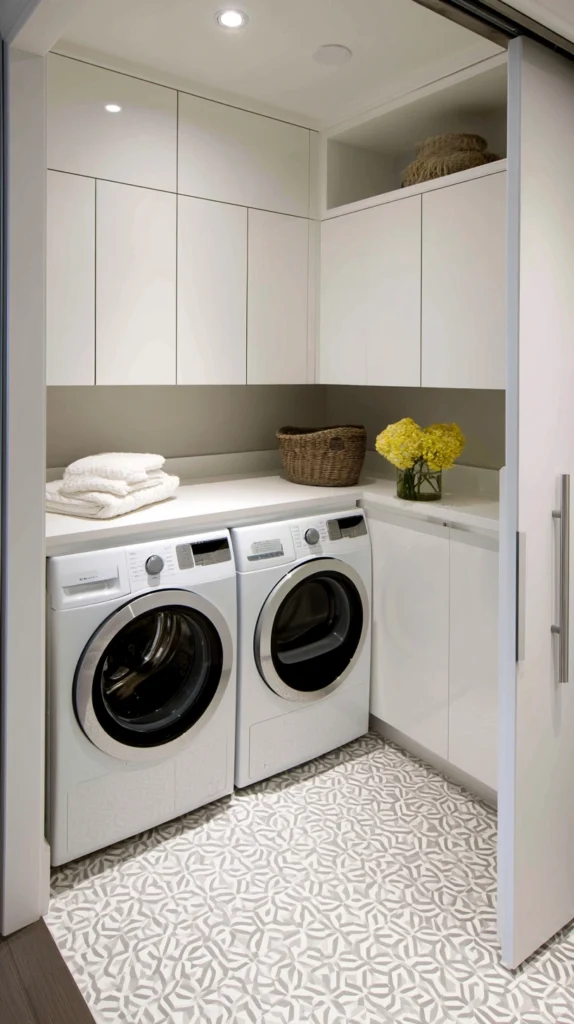
Replacing a standard swinging door with a pocket door or sliding barn-style door, reclaiming the floor space the swing previously required.
Why door type matters more in small rooms than almost anywhere else
The swing-radius principle:
- A standard hinged door requires a clear floor radius to open and close, space that is often precious in a small laundry room
- A pocket door slides into the wall, while a sliding barn door runs along the wall’s surface, both eliminating that swing radius entirely
- This single change can free up enough floor space for a stool, additional shelving, or simply easier movement through the room
Best door replacement options
- A pocket door for a cleaner, fully hidden solution, if wall framing allows
- A sliding barn-style door for a lower-cost, no-demolition alternative
Budget pick: a sliding barn door kit installed over the existing doorway, $150-350 Splurge: a true pocket door installation requiring wall modification, $600-1,500
My sliding door result
Replacing my laundry room’s swinging door with a simple sliding barn door kit reclaimed enough floor space for the small stool I had wanted to add, and the room finally feels like it has breathing room rather than constant obstruction.
Sliding Door Tips
Check wall space beside the doorway before choosing a sliding option:
- A sliding barn door needs clear wall space on at least one side to slide open fully
- Confirm this space is genuinely available before purchasing a sliding door kit
3. Replacing Harsh Fluorescent Lighting With a Warm Fixture
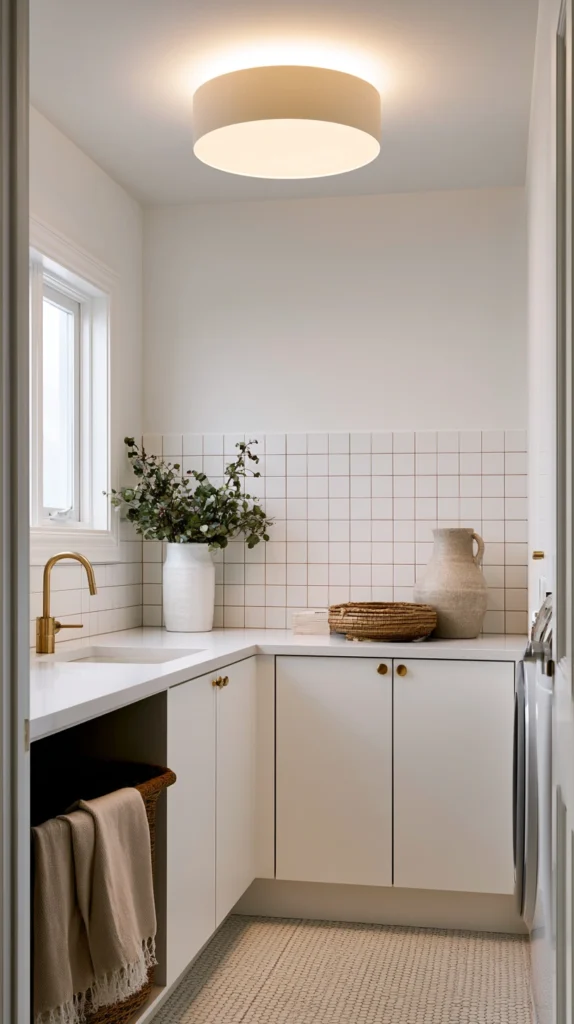
Swapping an outdated fluorescent tube fixture for a modern flush-mount or semi-flush fixture with warm bulbs.
Why lighting fixtures deserve a true replacement, not just a bulb swap
The fixture-and-bulb-together principle:
- Many older laundry rooms still rely on a single harsh fluorescent tube fixture, which casts an unflattering, cold light regardless of bulb choice
- Replacing the fixture itself, paired with a warm bulb, addresses both the quality and temperature of the room’s primary light source at once
- This single change often does more to shift a small room’s overall feeling than several smaller decorative additions combined
Best fixture replacement options
- A simple flush-mount LED fixture with a warm color temperature
- A semi-flush fixture with a fabric or glass shade for added style alongside the light upgrade
Budget pick: a basic flush-mount LED fixture, $30-70 Splurge: a semi-flush fixture with a decorative shade, $90-200
My lighting fixture result
Replacing the original fluorescent tube fixture with a simple warm-toned flush-mount LED changed the entire character of the room, the harsh blue-white cast that had always made the space feel clinical is finally gone.
Lighting Fixture Tips
Turn off power at the breaker before replacing any fixture:
- This is a basic but essential safety step for any electrical fixture swap
- If there is any uncertainty about wiring, hiring an electrician for this specific step is a reasonable and affordable safeguard
4. Adding a Utility Sink Where None Existed
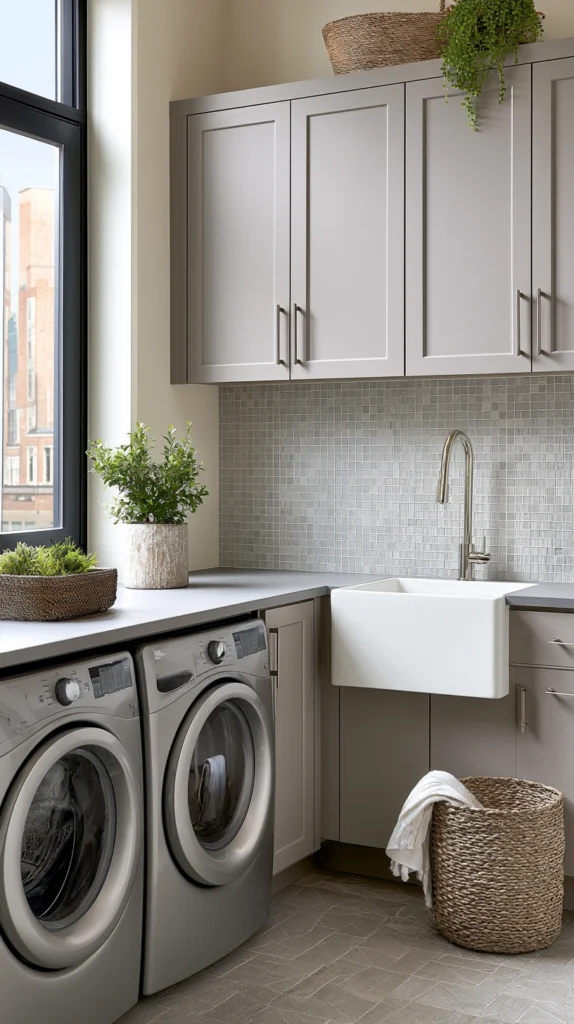
Installing a small utility sink, even a compact wall-mounted version, in a laundry room that previously had none.
Why a sink expands the room’s actual function significantly
The function-expansion principle:
- A laundry room without a sink limits handwashing, stain pretreatment, and general cleanup to whatever sink is available elsewhere in the house
- Even a small wall-mounted utility sink dramatically expands what the room can actually be used for
- This is a more significant plumbing project than most ideas on this list, but the functional payoff is correspondingly larger
Best small sink options
- A compact wall-mounted utility sink, requiring minimal floor footprint
- A small stainless steel drop-in sink set into a section of the new folding counter from idea 1
Budget pick: a basic wall-mounted utility sink with simple fixtures, $150-350 plus plumbing labor Splurge: a stainless or fireclay sink integrated into a custom counter, $400-900 plus plumbing labor
My utility sink result
Adding a small wall-mounted utility sink to a laundry room that had never had one meant stain pretreatment and handwashing delicates no longer required a trip to the kitchen, and the room’s function expanded considerably for a moderate plumbing investment.
Utility Sink Tips
Confirm existing plumbing access before committing to a location:
- Adding a sink where no plumbing currently exists is significantly more expensive than tapping into nearby existing lines
- A plumber can assess the most cost-effective location based on existing access before any final layout decisions are made
5. Swapping Vinyl Flooring for Patterned Tile
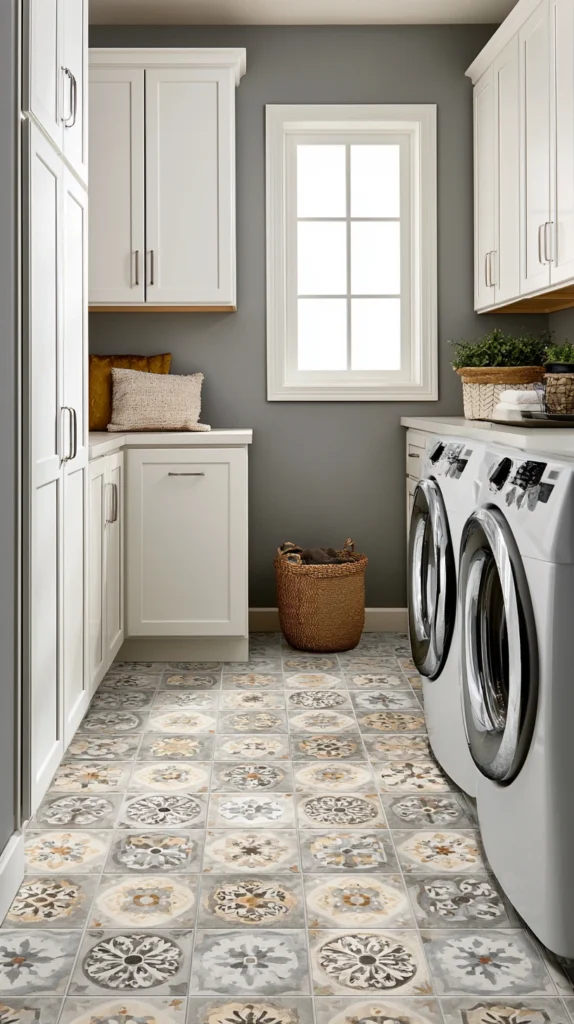
Replacing dated sheet vinyl or plain tile with a more durable, patterned tile suited to a small, frequently wet-prone room.
Why flooring is one of the most overlooked makeover opportunities
The underfoot-neglect principle:
- Laundry room flooring is often original to the house and rarely considered in a styling-only refresh
- Patterned tile, particularly in a smaller room, can be installed relatively affordably given the limited square footage involved
- This single surface change often has an outsized visual impact precisely because laundry room floors are so rarely addressed at all
Best tile choices for this application
- A classic black and white checkered or hex tile pattern
- A patterned encaustic-style tile in warm, muted fall tones
Budget pick: peel-and-stick vinyl tile in a patterned design, $80-200 for a small room Splurge: professionally installed ceramic or porcelain patterned tile, $400-900 for a small room
My patterned tile result
Replacing the plain beige vinyl that had been in my laundry room since before I moved in with a black and white checkered peel-and-stick tile transformed the room’s entire character for a fraction of the cost a full ceramic installation would have required.
Patterned Tile Tips
Ensure the existing subfloor is clean and level before installing peel-and-stick tile:
- Peel-and-stick tile adhesion depends heavily on a clean, smooth surface
- Taking the time to properly clean and level the subfloor prevents lifting or bubbling later
6. Building a Drying Rack Into an Underused Wall
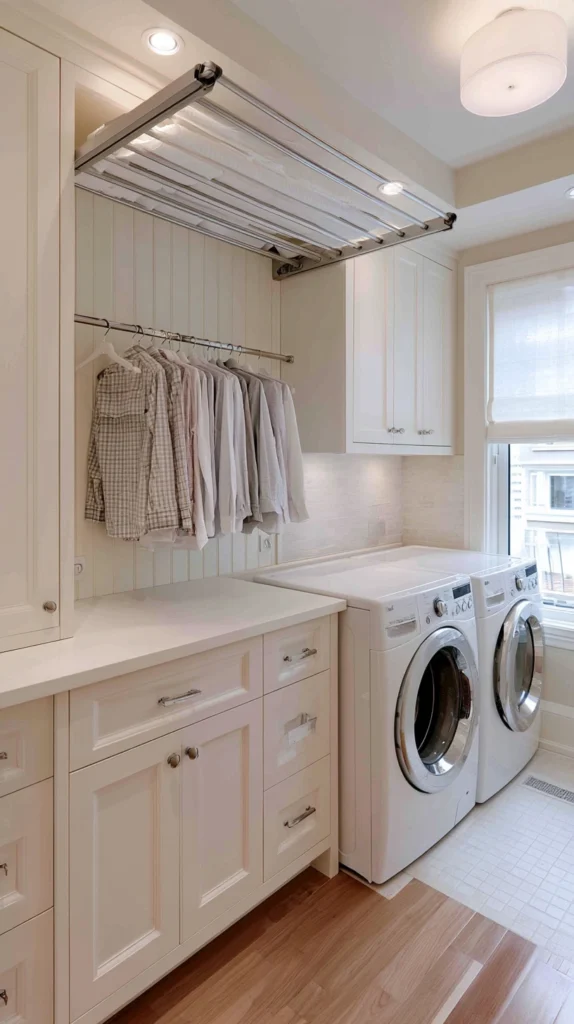
A fold-down or wall-mounted drying rack installed into an otherwise underused stretch of wall, eliminating the need for a freestanding rack.
Why a built-in drying solution solves a persistent small-room problem
The floor-space-reclamation principle:
- A freestanding drying rack takes up valuable floor space in a room that likely has very little to spare
- A wall-mounted, fold-down version provides the same drying function while folding flat against the wall when not needed
- This is a particularly valuable addition for households that air-dry delicates or other items regularly
Best wall-mounted drying options
- A simple fold-down wood or metal drying rack, mounted at an accessible height
- A retractable clothesline system installed between two wall-mounted hooks
Budget pick: a basic fold-down wall rack, $40-90 Splurge: a custom-built wood fold-down rack matching existing cabinetry, $150-350
My wall-mounted rack result
Installing a simple fold-down wood drying rack on the one underused wall beside my machines eliminated the freestanding rack that had been permanently blocking part of the room, and folding it flat when not in use gives back that floor space entirely.
Wall-Mounted Rack Tips
Mount at a height suited to the most frequently dried items:
- A rack mounted too high can be inconvenient for hanging items regularly
- Consider the typical height of whoever uses the room most often when choosing mounting height
7. Replacing Cabinet Fronts Instead of Full Cabinets

Swapping only the cabinet door fronts and hardware on existing laundry room cabinetry, rather than replacing the full cabinet boxes.
Why this approach achieves significant change at a fraction of full replacement cost
The reface-not-replace principle:
- Full cabinet replacement is one of the more expensive renovation choices available for any room, including a small laundry space
- Replacing just the door fronts and hardware, while keeping the existing cabinet boxes, achieves much of the same visual transformation at a significantly lower cost
- This approach also generates far less waste and disruption than a full cabinet tear-out
Best cabinet front replacement options
- New shaker-style door fronts in a fresh paint color
- Simple flat-panel fronts with new hardware for a more modern, streamlined look
Budget pick: painting existing cabinet fronts and swapping hardware, $60-150 in supplies Splurge: ordering new custom door fronts to fit existing boxes, $300-800
My cabinet front result
Painting my existing laundry room cabinet fronts a warm rust tone and swapping the dated hardware for simple brass pulls transformed the cabinetry’s entire look without the cost or mess of replacing the full cabinet boxes underneath.
Cabinet Front Tips
Remove doors and hardware before painting for a cleaner finish:
- Painting cabinet fronts in place often leads to drips, uneven coverage, and hardware getting in the way
- Removing doors to paint flat on a drop cloth, then reattaching once fully cured, produces a noticeably more professional result
8. Adding a Small Window Where None Exists
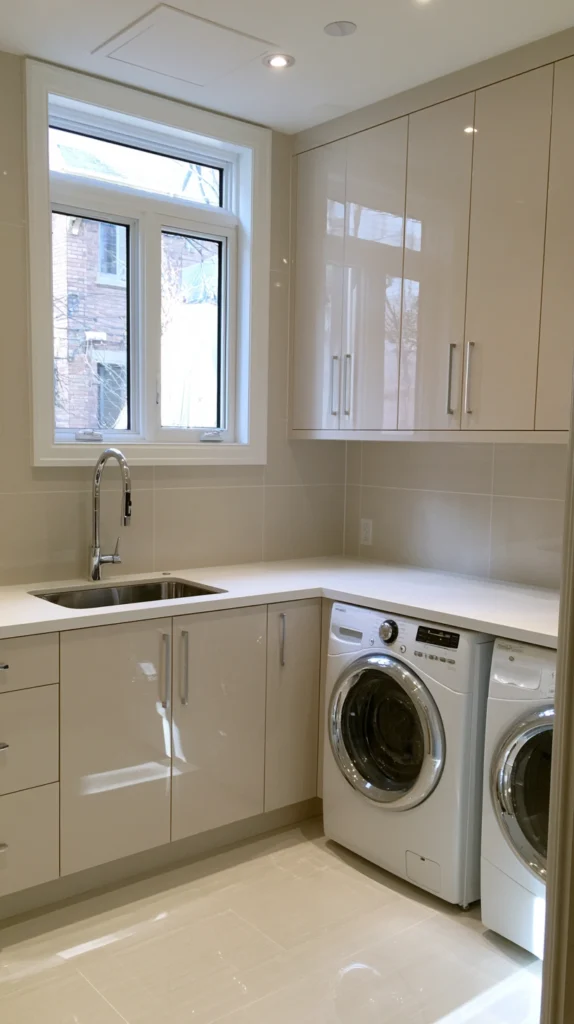
Installing a small window, even a narrow transom-style opening, into a laundry room that previously had no natural light source at all.
Why natural light changes more than just the room’s appearance
The daylight-function principle:
- A laundry room without any natural light source can feel disproportionately small and unpleasant regardless of styling
- Even a small, narrow window introduces daylight and a sense of connection to the outside that no amount of artificial lighting fully replicates
- This is among the more significant renovation choices on this list, generally requiring professional installation, but the impact on a small, light-starved room can be considerable
What to consider before adding a window
- Confirm the exterior wall is suitable for a new opening, structurally and in terms of what is on the other side
- A narrow transom window near the ceiling can provide light while preserving privacy and wall space below it
Budget: $800-2,500 depending on window size and the complexity of the wall opening, typically requiring professional installation
My new window result
Adding a small transom window near the ceiling of my previously windowless laundry room introduced natural light for the first time, and the room no longer feels like a sealed box regardless of what artificial lighting is in use.
New Window Tips
Consult a contractor about structural and code considerations first:
- Adding a new opening to an exterior wall involves structural and code considerations beyond simple aesthetics
- A contractor can confirm feasibility and proper installation before any final decisions are made
9. Installing a Stacked Washer and Dryer to Free Up Floor Space
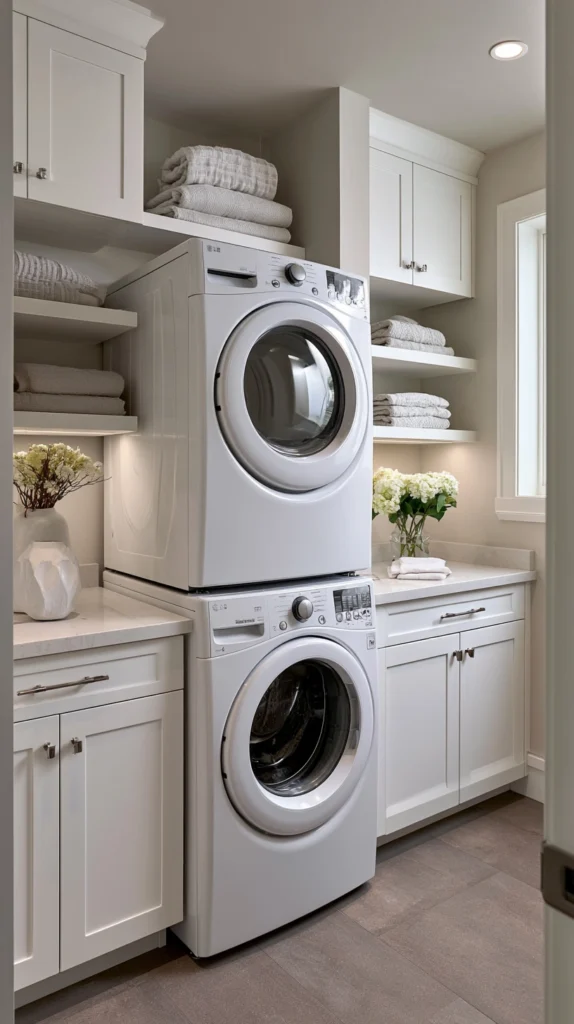
Switching from side-by-side machines to a stacked configuration, reclaiming floor space for storage, a counter, or simply easier movement.
Why this swap can transform a small room’s entire layout
The footprint-reduction principle:
- Side-by-side machines often occupy nearly the entire width of a small laundry room
- Stacking the same or compatible machines vertically can free up several feet of floor space previously unavailable for anything else
- This reclaimed space frequently becomes the room for a folding counter, a small sink, or simply enough clearance to move comfortably
What to confirm before stacking
- Whether existing machines are stackable, or whether new compatible units would be required
- Ceiling height clearance for the stacked configuration plus any planned counter or shelving above
Budget: $100-250 for a stacking kit if existing machines are compatible; $1,200-2,500 for new stackable units if a replacement is required
My stacked machine result
Switching from side-by-side to stacked machines freed up nearly three feet of floor space in my small laundry room, space that became room for the folding counter and small stool I had wanted to add but never had room for previously.
Stacked Machine Tips
Verify stacking compatibility before purchasing a stacking kit:
- Not all washer and dryer models are designed to be stacked, even from the same manufacturer
- Check the manufacturer’s specifications or consult an appliance retailer before assuming an existing set can be safely stacked
10. Adding a Pull-Out Ironing Board Drawer
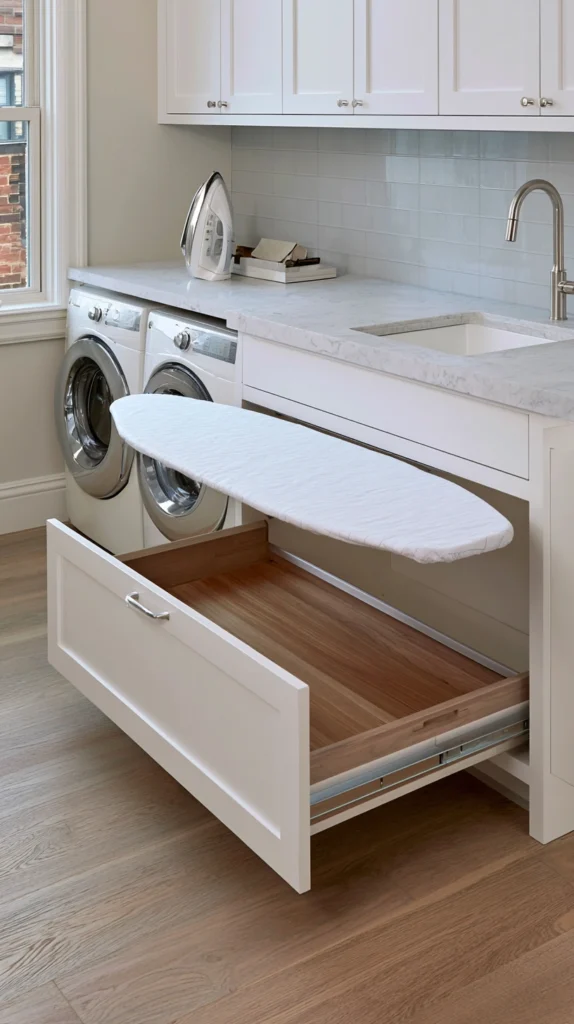
Installing a dedicated pull-out drawer or cabinet insert designed specifically to house a fold-flat ironing board.
Why a hidden ironing solution solves a persistent storage annoyance
The dedicated-storage principle:
- A standalone ironing board is awkward to store in most small laundry rooms, often ending up propped in a corner or in a hallway closet instead
- A pull-out drawer insert designed specifically for this purpose keeps the board fully out of sight until needed, then accessible in seconds
- This addition also typically includes a small storage compartment for the iron itself, consolidating two awkward-to-store items into one
Best pull-out ironing solutions
- A retrofit pull-out ironing board kit installed into an existing cabinet or drawer space
- A combined drawer system with both the ironing board and a small iron storage compartment
Budget: $80-200 for most pull-out ironing board drawer kits
My ironing drawer result
Installing a pull-out ironing board drawer into an existing lower cabinet eliminated the standalone board that had been propped in the hallway closet for years, and both the board and iron now have one clearly defined, hidden home.
Ironing Drawer Tips
Measure cabinet depth carefully before ordering a retrofit kit:
- Pull-out ironing board kits vary in required depth and clearance
- Confirm the existing cabinet’s interior dimensions match the kit’s requirements before purchasing
11. Replacing a Plastic Laundry Chute Door With a Wood Panel
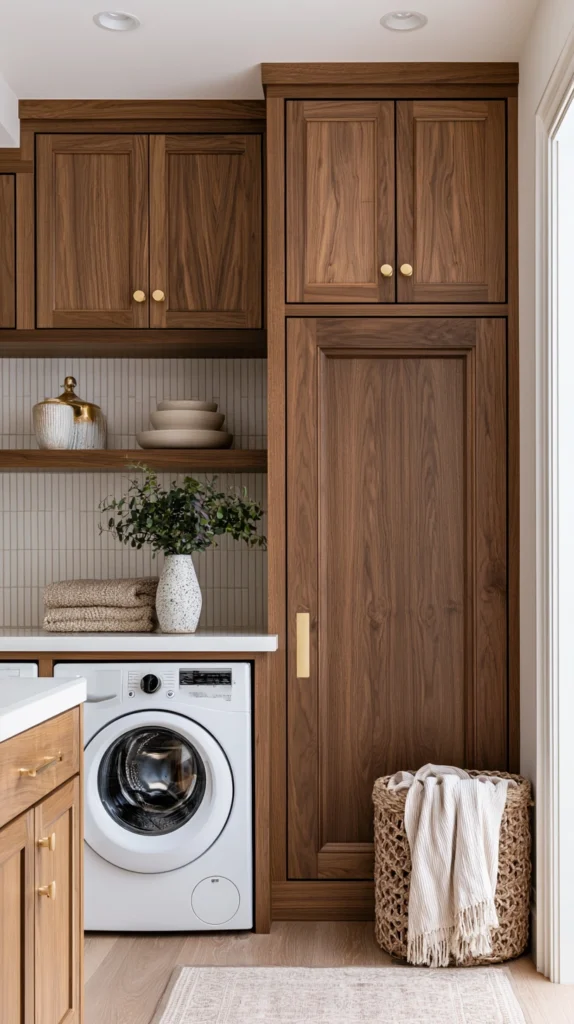
Updating a dated plastic or metal laundry chute access panel with a simple stained or painted wood panel matching the room’s other finishes.
Why this small detail matters more than its size suggests
The forgotten-fixture principle:
- A laundry chute door is a fixture most households stop noticing entirely, regardless of how dated or mismatched it has become
- A simple wood panel replacement, matched to the room’s cabinetry or trim, removes one more small visual inconsistency from an otherwise updated space
- This is one of the lowest-cost items on this entire list, given how small the actual material involved tends to be
Best replacement panel options
- A simple stained wood panel matching existing cabinetry
- A painted panel in the room’s accent color for a more deliberate design choice
Budget: $15-40 in materials for most laundry chute panel replacements
My chute panel result
Replacing the yellowed plastic laundry chute door with a simple stained wood panel matching my cabinet fronts removed a small detail I had stopped consciously noticing but that, once changed, made the whole wall look considerably more finished.
Chute Panel Tips
Confirm the chute mechanism still functions properly during replacement:
- Older laundry chutes can have worn or misaligned hardware
- Address any functional issues with the chute itself at the same time as the cosmetic panel replacement, since the area will already be accessible
12. Adding a Half Wall or Pony Wall for a Defined Mudroom Transition
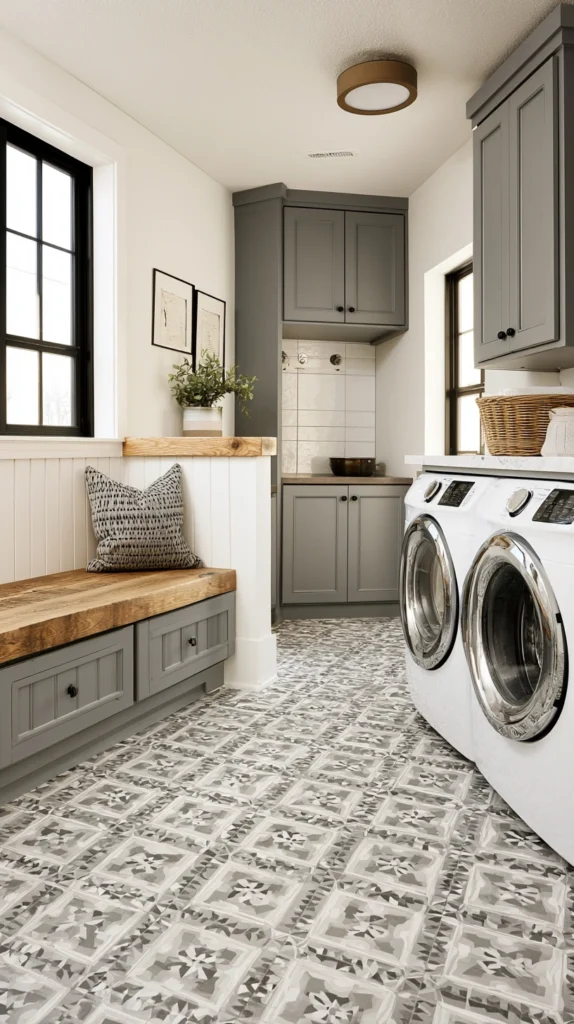
Installing a low half wall between a laundry room and an adjacent entry or mudroom area, creating a defined transition without a full wall or door.
Why a partial wall can improve flow in a combined space
The zone-definition-without-enclosure principle:
- Many small laundry rooms double as part of a mudroom or back entry, with no clear boundary between the two functions
- A half wall creates a sense of definition between the zones without fully enclosing either one or blocking light and sightlines
- This approach also creates a useful surface, the top of the half wall, for a small shelf, hooks, or a bench
Best half wall approaches
- A simple framed and drywalled pony wall, painted to coordinate with the room
- A half wall topped with a wood cap, functioning as a narrow shelf
Budget: $200-500 for a basic framed and finished half wall, depending on length and finish
My half wall result
Adding a simple half wall between my laundry area and the adjacent back entry created a clear sense of two distinct zones in what had been one undefined combined space, and the wood-capped top now holds a small basket for outgoing mail.
Half Wall Tips
Plan electrical and lighting needs before framing:
- A half wall can affect existing outlet or switch locations
- Confirm any electrical needs on either side of the planned wall before construction begins
13. Installing Open Shelving in Place of Upper Cabinets
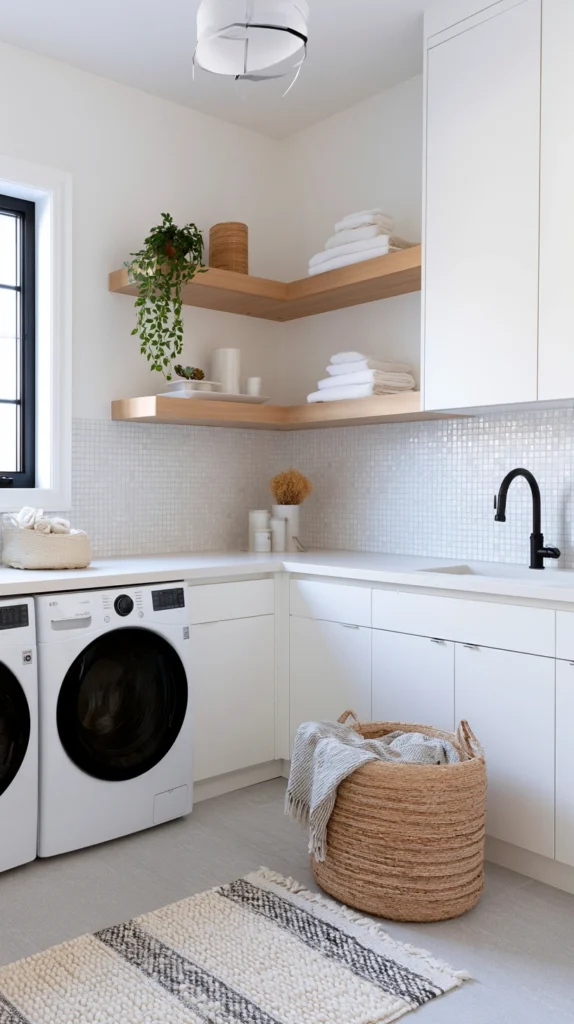
Removing dated upper cabinets and replacing them with simple open wood shelving, opening up the room visually while maintaining storage.
Why open shelving suits a small room’s visual needs
The visual-openness principle:
- Solid upper cabinets in a small room can make the space feel more enclosed and visually heavier than necessary
- Open shelving maintains storage function while allowing more light and sightline to pass through the room
- This swap also provides an opportunity to introduce the warm wood tones and styled bins covered in other parts of a fall refresh
Best open shelving approaches
- Simple wood brackets and boards, stained or painted to match the room’s palette
- A floating shelf system for a cleaner, more minimal look
Budget pick: basic wood shelving with simple brackets, $60-150 Splurge: custom floating shelves with hidden mounting hardware, $200-450
My open shelving result
Removing the dated, bulky upper cabinets in my laundry room and replacing them with simple stained wood open shelves made the small room feel noticeably more open and airy, while still providing the same amount of usable storage.
Open Shelving Tips
Anchor shelving securely into wall studs:
- Open shelving in a laundry room often holds heavier items like detergent jugs
- Confirm proper stud placement and use appropriately rated brackets to support that weight safely
14. Adding a Rolling Cart for Flexible Extra Workspace
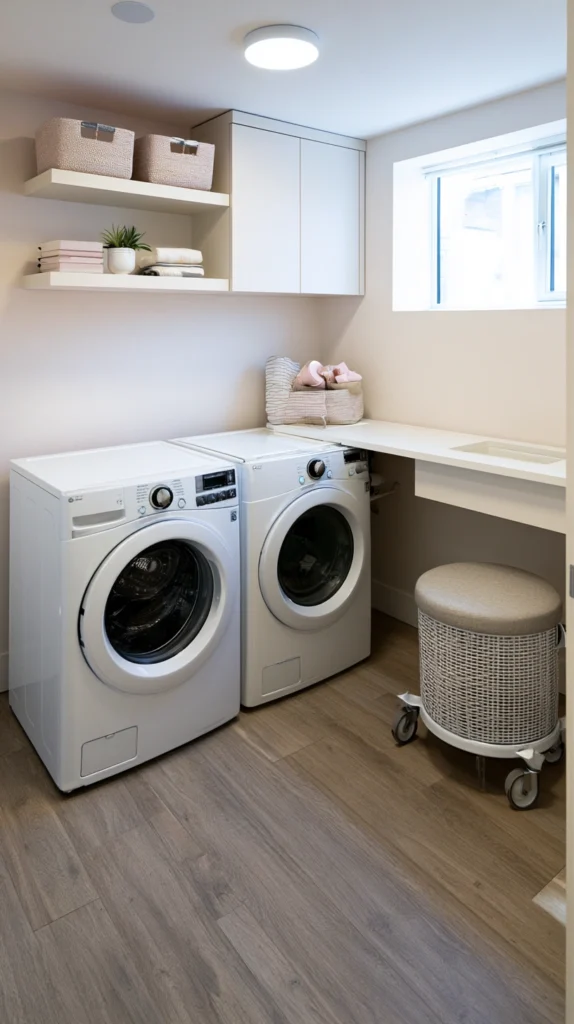
A slim rolling cart, sized to fit in a narrow gap beside the machines, providing additional surface space that can move out of the way when not needed.
Why a mobile solution suits a layout that cannot otherwise be changed
The flexibility-without-construction principle:
- Not every small laundry room has the space or budget for a built-in counter or structural change
- A slim rolling cart fits into narrow gaps unsuited to most fixed furniture, providing flexible surface space that simply rolls away when not in use
- This is one of the lowest-cost, lowest-commitment items on this list, suited to renters or anyone wanting flexibility over a permanent change
Best rolling cart options
- A slim metal rolling cart designed specifically for narrow gaps
- A small wood-topped cart with a lower shelf for additional storage
Budget: $40-100 for most slim rolling laundry carts
My rolling cart result
A slim metal rolling cart tucked into the narrow gap beside my dryer provides extra folding surface exactly when I need it, then rolls completely out of the main walkway the rest of the time.
Rolling Cart Tips
Measure the gap precisely, including any baseboard or trim depth:
- A cart that fits the open floor space but not the actual gap including trim will not slide in as expected
- Measure at the narrowest point of the intended gap, accounting for any baseboard protrusion
15. A Fully Combined Structural and Cosmetic Makeover
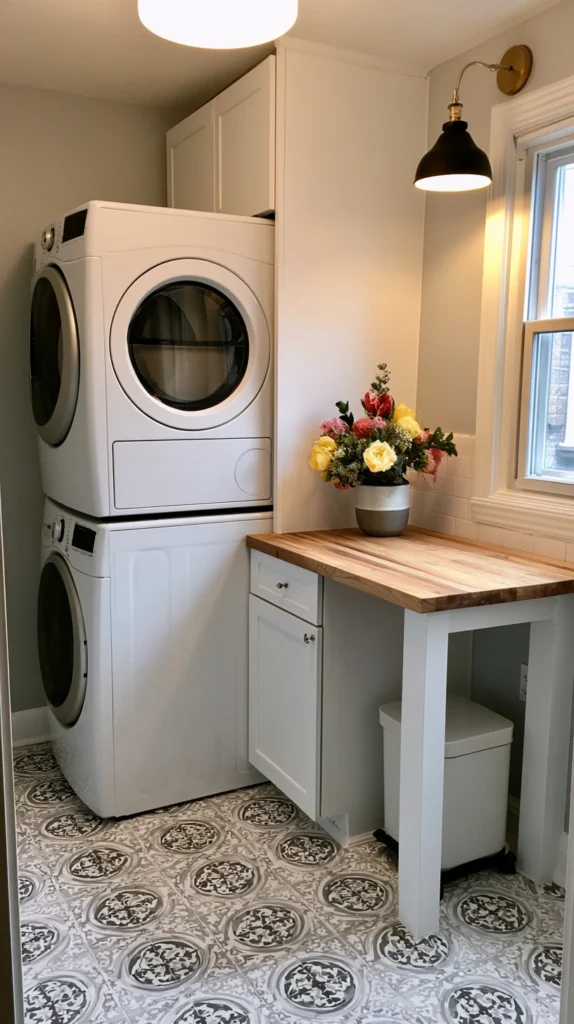
Combining a folding counter, updated lighting, new flooring, refaced cabinets, and one layout change into one complete small laundry room transformation.
Why combining structural and cosmetic change outperforms either alone
The complete-makeover philosophy:
- Several of the ideas on this list (a folding counter, updated lighting, new flooring, refaced cabinets, a layout change like stacking machines or a sliding door) address different aspects of the room’s function and appearance
- Cosmetic changes alone leave underlying functional problems unaddressed, while structural changes alone can leave a room that functions better but still looks dated
- Combining both categories produces the most complete and most satisfying small laundry room transformation available on this list
How the combination works together
The layout change (the spatial foundation):
- Stacking machines or swapping to a sliding door reclaims usable floor space first
The folding counter and lighting (the functional core):
- Address the two most commonly missing functional elements in a small laundry room
New flooring and refaced cabinets (the cosmetic finish):
- Bring the room’s surfaces up to the same standard as the rest of the home
One final styling layer (the personal finish):
- Paint, hardware, and small decor choices, informed by any of the other fall laundry room articles in this series
Building the full makeover
- Start with any layout change, such as stacking machines or swapping the door, since this affects every other decision
- Add the folding counter and updated lighting next, addressing core function
- Update flooring and cabinet fronts for a cosmetic refresh
- Finish with paint, hardware, and styling once the structural work is complete
Budget: $800-3,000 for a full combined makeover, depending on which structural elements are included
My fully combined result
Stacking my machines, adding a butcher block counter, replacing the harsh fluorescent fixture, installing peel-and-stick patterned tile, and refacing my cabinet fronts turned a room I used to rush through into a small space I am genuinely proud to show people, all completed gradually over about two months.
Full Makeover Tips
Sequence structural work before any final paint or styling:
- Layout, plumbing, electrical, and flooring work should happen before final paint colors or decor choices are finalized
- This sequencing avoids damaging or needing to redo cosmetic work during the more disruptive structural phase
Choosing Your Laundry Room Makeover Approach
By budget level:
- Lower budget: cabinet front swap (idea 7), chute panel replacement (idea 11), rolling cart (idea 14)
- Moderate budget: folding counter (idea 1), lighting fixture swap (idea 3), patterned flooring (idea 5)
- Higher budget: utility sink addition (idea 4), new window (idea 8), fully combined makeover (idea 15)
By primary frustration with the current room:
- No surface space: folding counter (idea 1), rolling cart (idea 14)
- Feels cramped or hard to move through: sliding door (idea 2), stacked machines (idea 9), half wall (idea 12)
- Feels dark or dated: lighting fixture swap (idea 3), new window (idea 8), open shelving (idea 13)
By renovation comfort level:
- Comfortable with moderate DIY: cabinet fronts (idea 7), open shelving (idea 13), chute panel (idea 11)
- Prefer professional installation: utility sink (idea 4), new window (idea 8), half wall (idea 12)
The non-negotiable rules across every option:
Always:
- Address layout and function before finalizing cosmetic choices like paint or decor
- Confirm structural, electrical, and plumbing feasibility with a professional before any major change
- Measure precisely, since small room margins leave little room for error
Never:
- Assume a purely decorative refresh will resolve a layout or function problem underneath it
- Skip safety steps like cutting power before electrical work or confirming wall studs before mounting heavy shelving
- Finalize paint or styling choices before structural work is fully complete, risking damage to fresh cosmetic finishes
Remember: a real small laundry room makeover starts with layout, fixtures, and surfaces, not paint and decor alone, and the rooms that feel most transformed are the ones where function improved first and styling followed, not the other way around.