15 Mini Home Gym Ideas
A mini home gym is one of the most practically valuable and most personally empowering investments a household can make in the long-term health, fitness, and wellbeing of the people who live within it. The barrier between the intention to exercise and the act of exercising is almost entirely logistical.
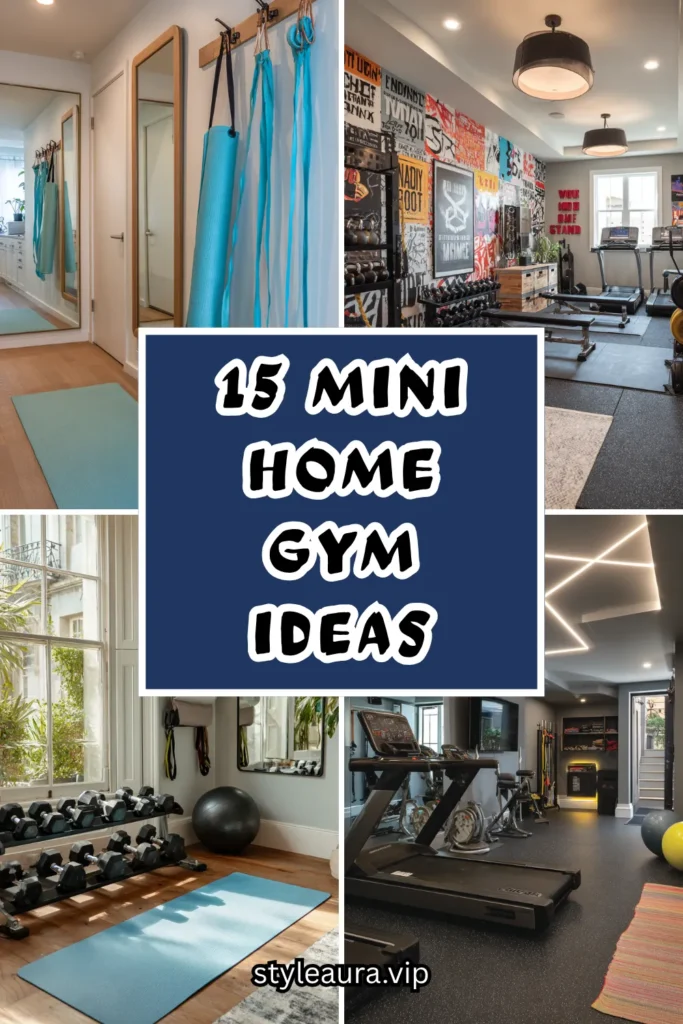
The drive to the gym, the membership cost, the waiting for equipment, and the time consumed by the entire process. A home gym eliminates every one of those barriers simultaneously, making exercise the path of least resistance rather than the path of most effort. Here are 15 mini home gym ideas that are modern, practical, and genuinely worth implementing.
1. Convert a Spare Bedroom
A spare bedroom converted into a dedicated home gym is one of the most straightforward and most complete mini home gym transformations available. The room already has four walls, a door for privacy, a ceiling for mounting equipment, and a floor that can be protected with rubber matting.
Clear the furniture, install rubber floor tiles for comfort and equipment protection, mount a mirror on one wall for form checking, add adequate lighting, and the spare bedroom becomes a fully functional home gym in a single weekend of focused work.
Choose the room’s layout based on the primary exercise activities it will support. a large central floor space for yoga, stretching, and bodyweight exercises. a wall-mounted rack for weights and resistance bands.
A corner position for a treadmill or stationary bike. The dedicated room format means the gym equipment is always set up, always accessible, and never required to share space with other household activities, which is the single most important factor in the consistent use of a home gym over the long term.
2. Use a Garage Space
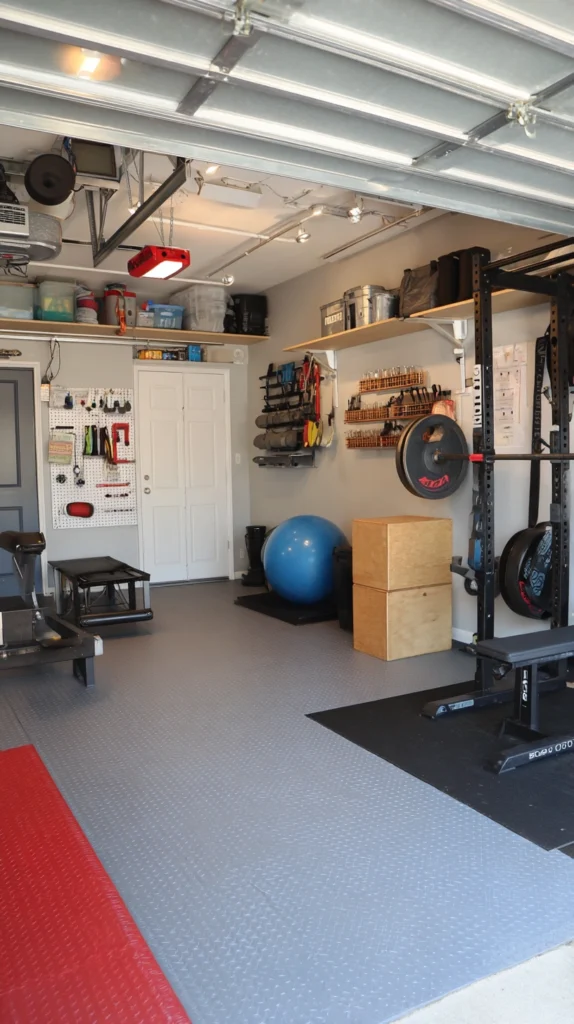
A garage conversion to a home gym is the most widely used and most practically suitable mini home gym format available for households with a garage that is not in full use for vehicle storage.
The garage’s concrete floor, its generous ceiling height, its separation from the main living areas of the house, and its natural tolerance for the noise, vibration, and occasional mess of serious exercise make it an ideal gym environment. Install rubber floor matting over the concrete to protect both the floor and the joints of the person exercising, add adequate lighting and ventilation, and the garage gym is ready for use.
The garage gym format also accommodates the larger and heavier equipment. a power rack, a barbell and weight plates, a pull-up bar, and a heavy bag. that a smaller indoor room conversion cannot comfortably house.
A wall-mounted fan for ventilation, a small Bluetooth speaker for music, and a simple pegboard for organizing resistance bands, jump ropes, and smaller accessories complete a garage gym that is as functional and as motivating as most commercial gym environments.
3. Create a Basement Home Gym
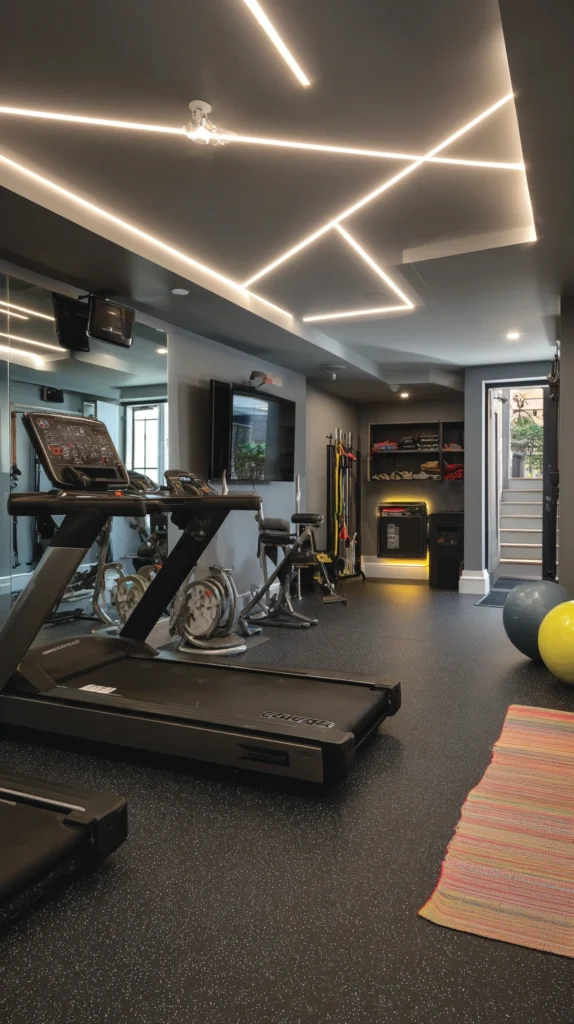
A basement home gym takes advantage of the most underused and most acoustically isolated area of the home to create a dedicated exercise space that generates minimal noise disturbance to the rest of the household and provides a naturally cool environment for intensive exercise.
The below-grade position of a basement means it stays cooler than above-grade rooms during summer, which is a significant comfort advantage for high-intensity exercise sessions. Address the natural moisture tendencies of basement spaces with adequate ventilation and a dehumidifier before installing any equipment or flooring.
Install bright, energizing lighting in the basement gym as the absence of natural light can make below-grade spaces feel oppressive and demotivating without adequate artificial illumination.
Choose cool white LEDs at a higher color temperature than those used in the living areas of the house for the most energizing and most flattering light quality for exercise. Add a wall-mounted mirror, rubber matting, and a motivating playlist through a good speaker system and the basement gym becomes one of the most consistently used and most genuinely effective home fitness environments available.
4. Transform a Garden Shed
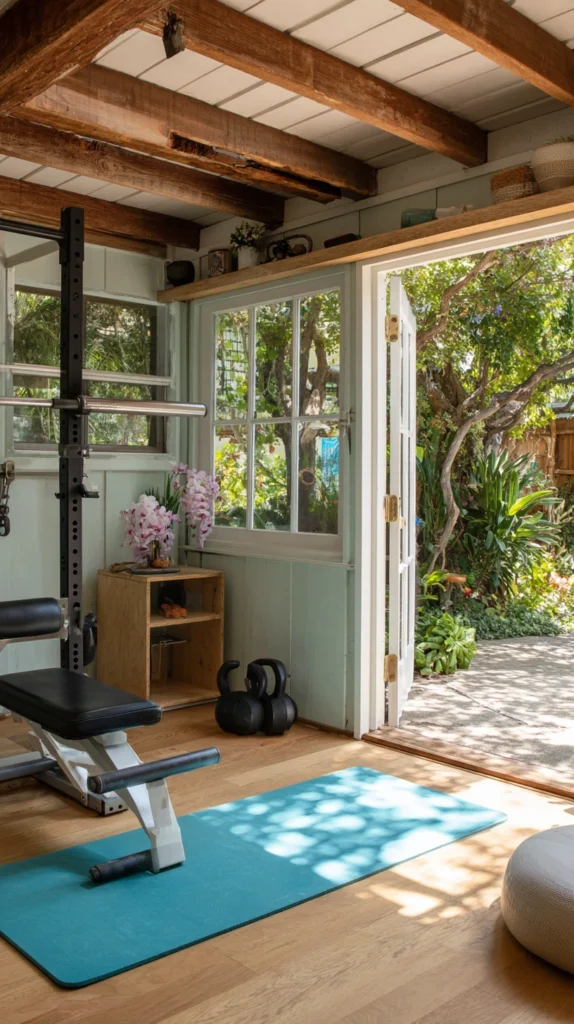
A garden shed converted into a mini home gym creates one of the most appealing and most psychologically rewarding exercise environments available.
The physical separation of the gym from the main house creates a genuine sense of going to the gym even when the commute is only the length of the garden, and the act of leaving the house and entering a dedicated exercise space creates a mental transition from home mode to workout mode that exercising within the house itself rarely achieves.
Insulate the shed walls, floor, and roof for year-round temperature comfort, install electricity for lighting and equipment power, and add rubber flooring for equipment protection.
A converted garden shed gym is most effective when it contains only the equipment needed for the primary exercise focus of its user. a yoga and pilates shed with a clean floor, a mirror, and storage for mats and props. a strength training shed with a compact power rack, a barbell, and a weight storage system. a cardio shed with a treadmill, a stationary bike, and adequate ventilation.
Focused, purpose-built shed gyms are almost always more used and more valued than those that attempt to accommodate every type of exercise in a limited space.
5. Set Up a Dedicated Corner in a Room
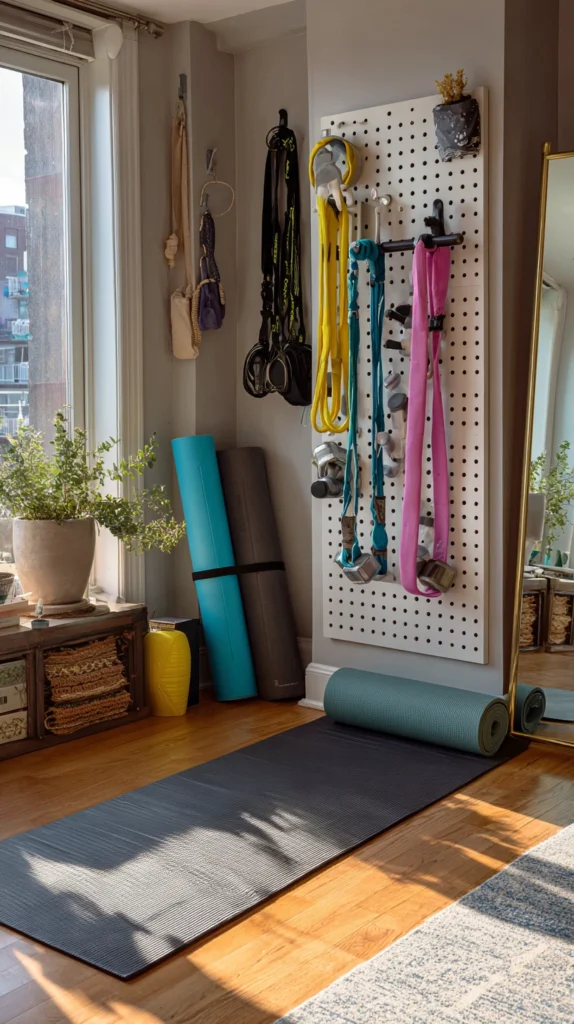
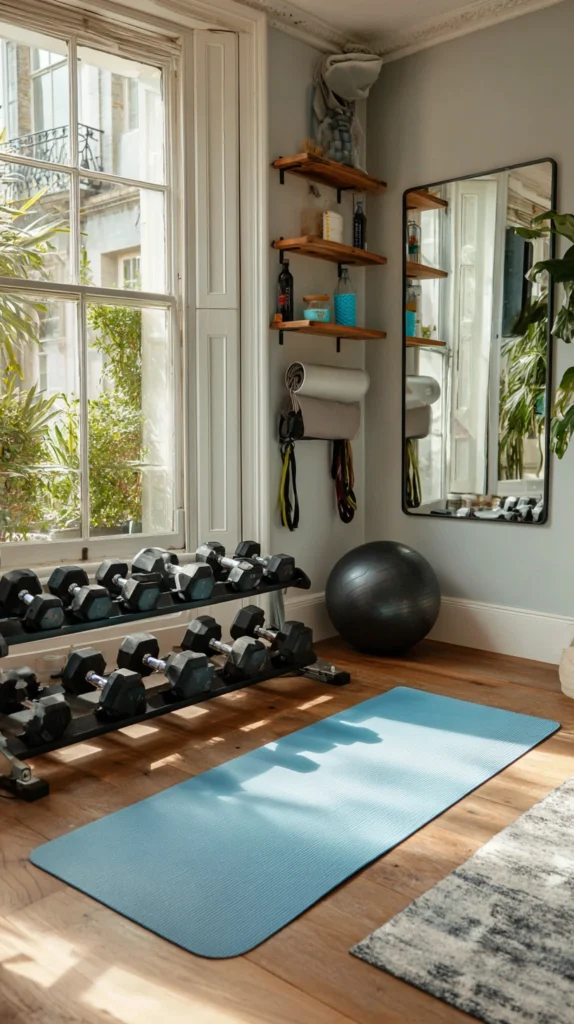
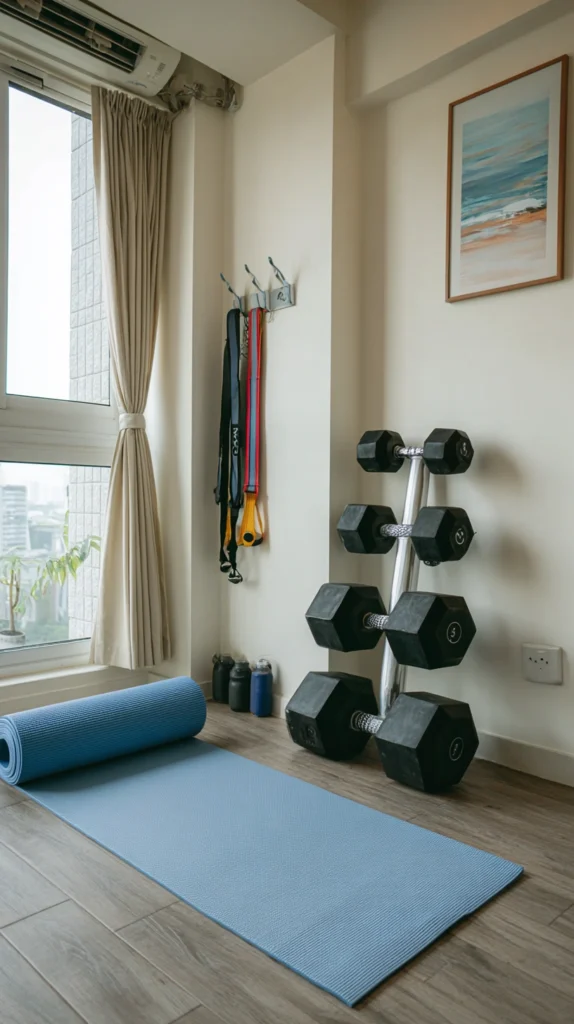
For households without a spare room, a garage, a basement, or a garden shed available for a dedicated gym conversion, designating a specific corner of an existing room as a permanent home gym area creates a committed exercise space without requiring a separate room. A corner of the living room, the bedroom, or a home office fitted with a rubber mat, a set of dumbbells on a compact storage rack, a resistance band set, and a wall-mounted mirror creates a functional mini home gym that is always set up and always ready for use without any preparation or rearrangement of the main room required.
The corner gym approach works best when the equipment is stored neatly and the gym area has a clearly defined boundary within the larger room. A compact dumbbell rack that keeps the weights organized and off the floor, a roll-out yoga mat that stores vertically against the wall when not in use, and a simple pegboard for hanging resistance bands and skipping ropes all contribute to a corner gym that is tidy, considered, and visually integrated into the room rather than an untidy collection of exercise equipment dumped in a corner.
6. Install a Wall-Mounted Folding Rack
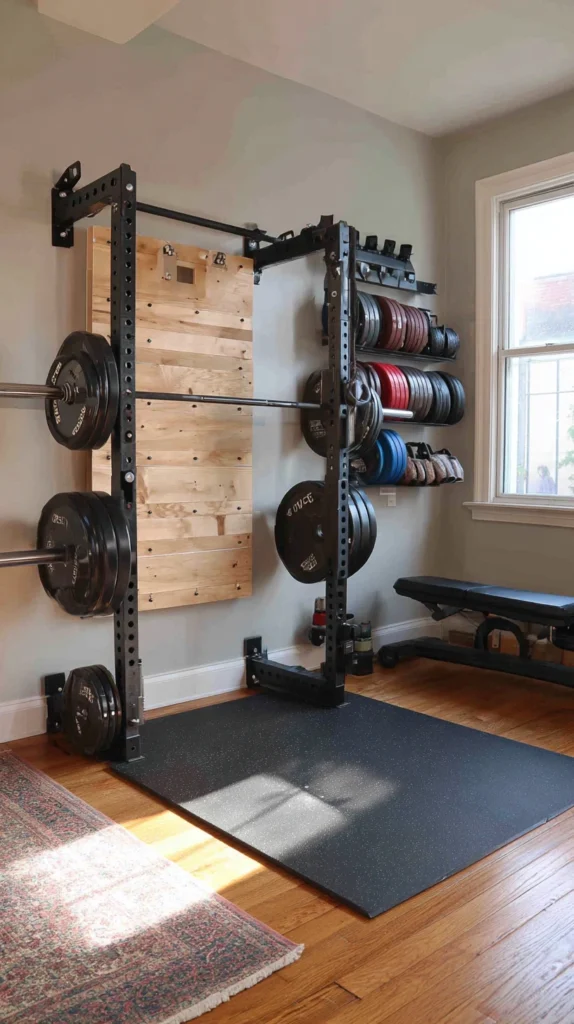
A wall-mounted folding power rack is one of the most space-efficient and most functionally generous pieces of home gym equipment available for a mini home gym in a limited space.
Mounted on a solid wall and folded flat when not in use, a wall-mounted rack takes up virtually no floor space in its stored position and unfolds to provide a full power rack with J-hooks for a barbell, safety arms for unassisted lifting, and pull-up bars at the top of the frame. This single piece of equipment enables squats, bench press, overhead press, pull-ups, and barbell rows in a fraction of the floor space that a freestanding power rack would require.
Specify a wall-mounted folding rack with the appropriate wall fixings for the wall construction material. structural studs for timber stud walls, chemical anchors for masonry walls, or a specialist fixing system for steel stud drywall construction.
The rack must be fixed with absolute structural integrity as the loads imposed by a barbell with heavy plates and the dynamic forces of intensive exercise are significant and must be safely managed by the wall fixing system throughout the rack’s working life.
7. Use Resistance Bands as a Primary Training Tool
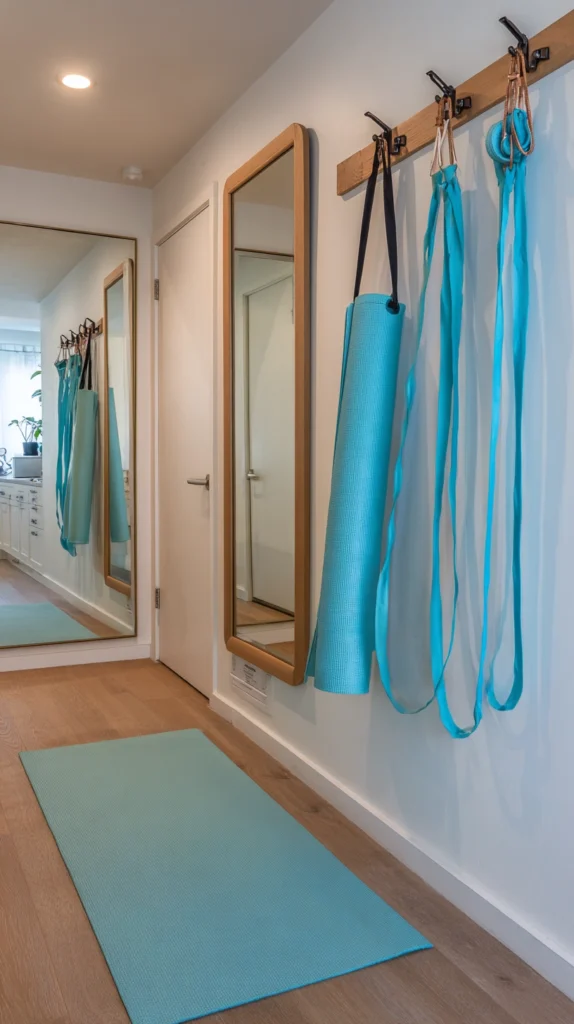
Resistance bands are the most space-efficient, most portable, and most versatile training tool available for a mini home gym with extremely limited space. A complete set of resistance bands in varying resistances. from light bands for mobility and rehabilitation work to heavy bands for genuine strength training resistance. occupies the space of a small bag and provides sufficient training variety and training load for a comprehensive full-body workout program.
Resistance bands can be anchored to a door frame with a simple door anchor accessory, wrapped around a sturdy table leg, or used freestanding for exercises that require no anchor point.
A resistance band workout program developed by a qualified personal trainer or sourced from a reputable fitness platform can provide a genuinely effective and genuinely progressive training stimulus for users at every fitness level from complete beginner to advanced athlete. The absence of the weight and bulk of traditional gym equipment makes resistance bands the ideal primary training tool for a mini home gym in a studio apartment, a small bedroom, or any other context where floor space is the primary limiting factor.
8. Add a Pull-Up Bar
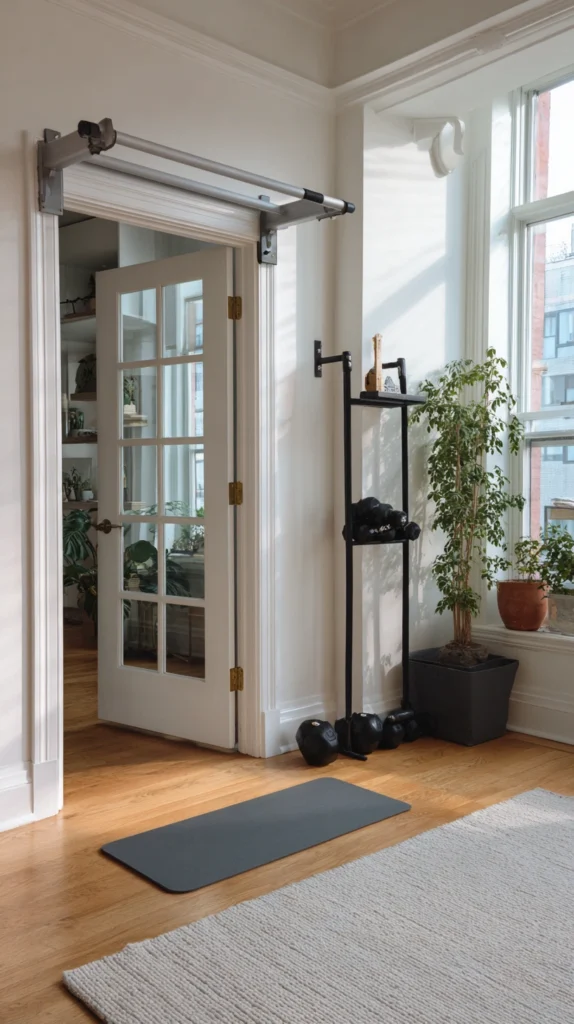
A pull-up bar is one of the most impactful and most cost-effective single pieces of equipment a mini home gym can contain. A doorframe pull-up bar that installs without tools and stores easily when not in use costs very little and enables pull-ups, chin-ups, hanging leg raises, and passive hanging stretches that train the back, the biceps, the core, and the shoulder girdle with a loading quality that resistance bands and dumbbells cannot fully replicate.
A wall-mounted pull-up bar of sufficient structural robustness enables additional exercises including inverted rows and ring training through gymnastics rings suspended from the bar.
9. Invest in Adjustable Dumbbells
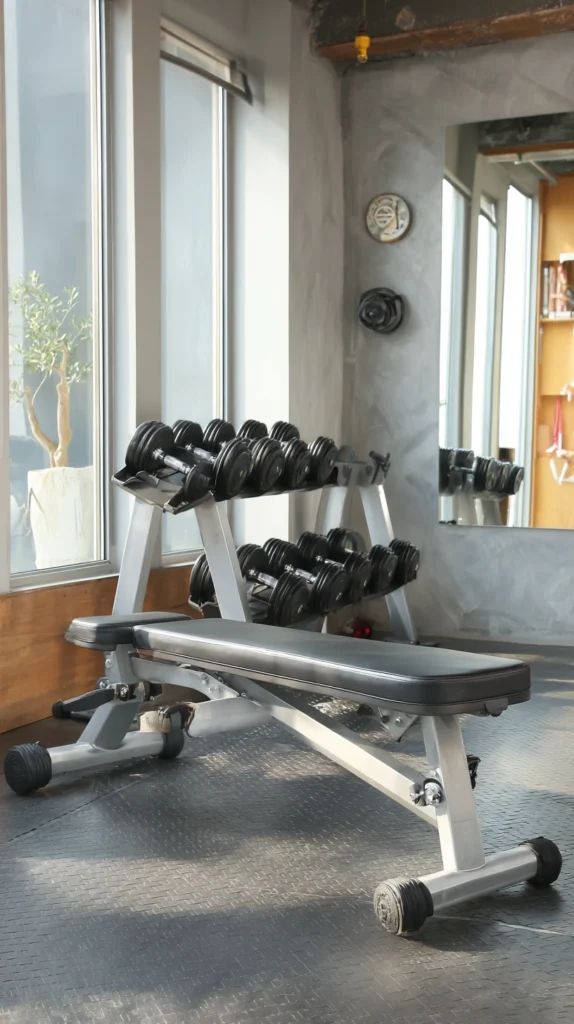
A set of adjustable dumbbells that replaces an entire rack of fixed-weight dumbbells in a compact, single-unit format is one of the most intelligent equipment investments a mini home gym can make.
Adjustable dumbbells ranging from 2.5kg to 32kg or more in a single pair of handles that adjust with a dial or a pin mechanism provide the full range of dumbbell training loads needed for a comprehensive strength and conditioning program in the footprint of a single pair of dumbbells. The space and cost saving relative to a full set of fixed-weight dumbbells is extraordinary.
10. Install Mirrored Walls
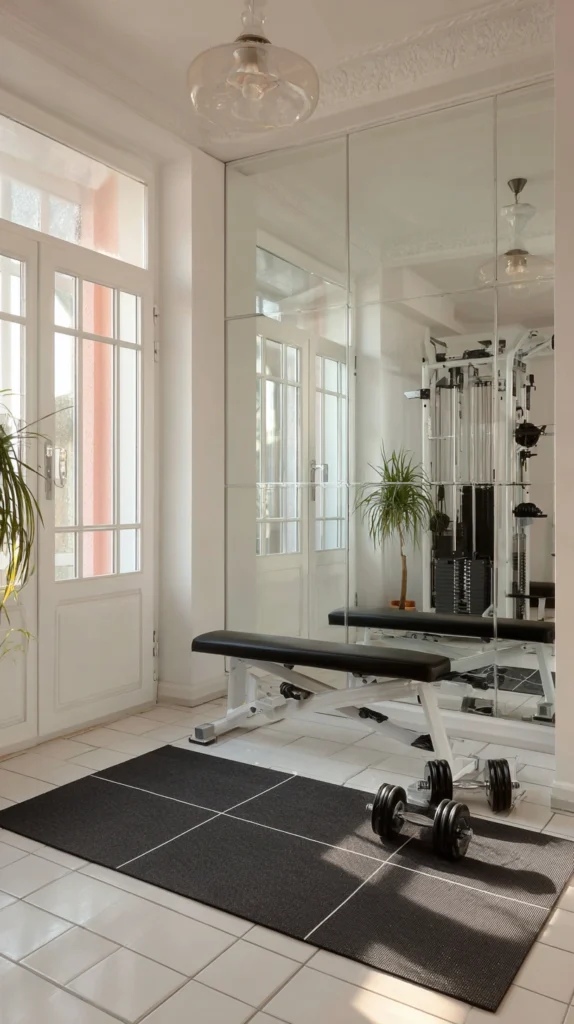
Mirrored walls in a mini home gym serve both a functional and a spatial purpose. Functionally, mirrors allow the exerciser to observe and correct their movement form during exercises where self-monitoring is important for both effectiveness and safety.
Spatially, full-length or wall-spanning mirrors visually double the apparent size of the gym space, making a small dedicated gym room feel significantly larger and more generous than its actual dimensions. Install mirrors on the wall facing the primary exercise positions within the gym for the most useful and most spatially impactful result.
11. Use Rubber Flooring Throughout
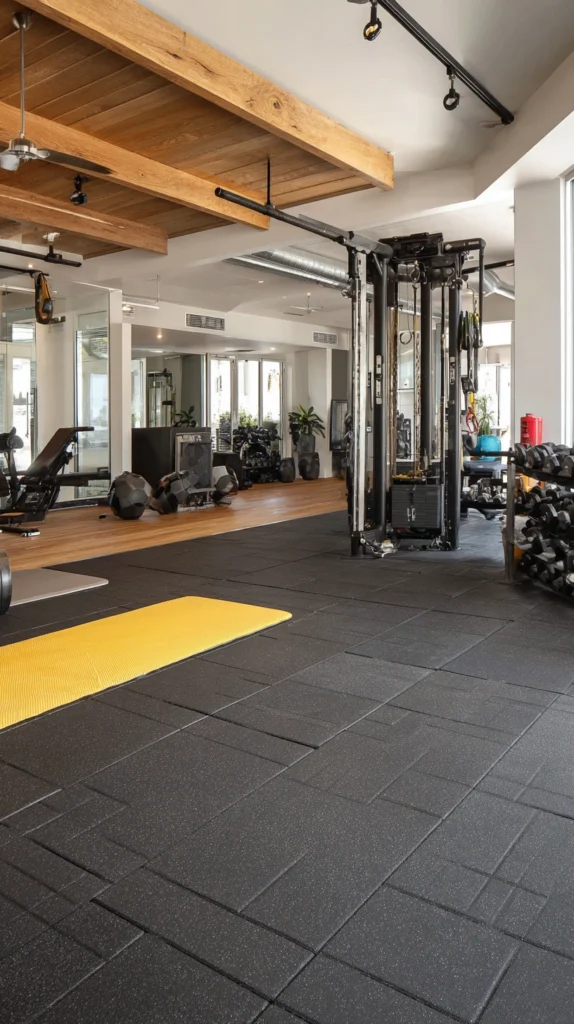
Rubber flooring is the single most important infrastructure investment a mini home gym can make. It protects the structural floor beneath it from the impact and abrasion of dropped weights and heavy equipment.
It protects the joints of the person exercising from the hard, unforgiving surface of concrete or timber beneath the rubber layer.
It reduces the noise and vibration of exercise equipment to the rooms below and beside the gym. and it creates a clean, defined, professional-looking gym surface that immediately distinguishes the space as a genuine exercise environment. Specify interlocking rubber tiles of at least 15mm thickness for a home gym that will be used for weight training and higher-impact activities.
12. Mount a Flat Screen TV or Tablet
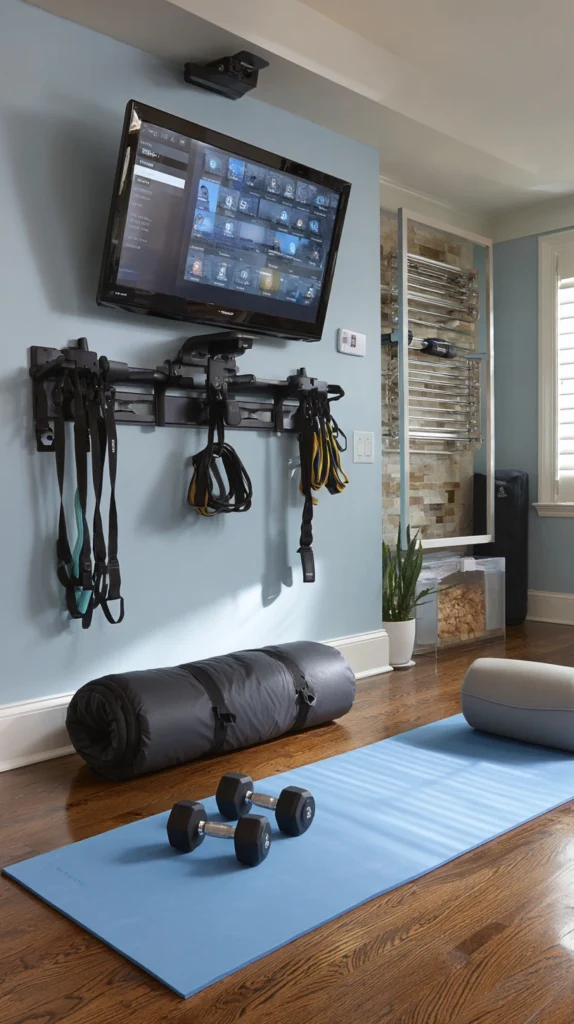
A flat screen television or a tablet mount on the gym wall provides the workout content. the training videos, the fitness classes, the motivating playlists. that makes solo home gym sessions more engaging, more structured, and more consistently completed than sessions carried out without any external content or guidance.
Choose a wall mount that positions the screen at a comfortable viewing height for the primary exercises performed in front of it and specify a mount with a swivel function that allows the screen to be angled toward different positions within the gym for exercises performed from varying directions.
13. Add Adequate Ventilation
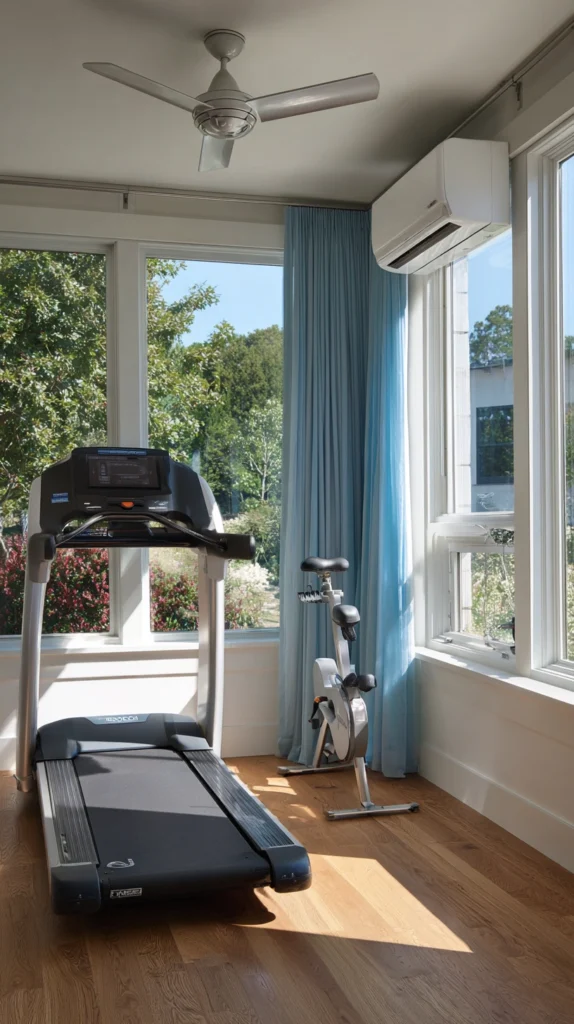
Adequate ventilation is one of the most practically important and most frequently overlooked elements of a mini home gym design. Exercise generates significant body heat and moisture that must be removed from the gym space to maintain a comfortable, hygienic, and safe exercise environment. An openable window in a dedicated gym room provides the most natural and most effective ventilation for spaces where natural airflow is available.
A ceiling or wall-mounted extractor fan provides mechanical ventilation for basement gyms and garage gyms where natural airflow is limited. A portable evaporative cooler provides both ventilation and cooling in warm climates where temperature management during intensive exercise is a primary concern.
14. Create a Motivating Environment
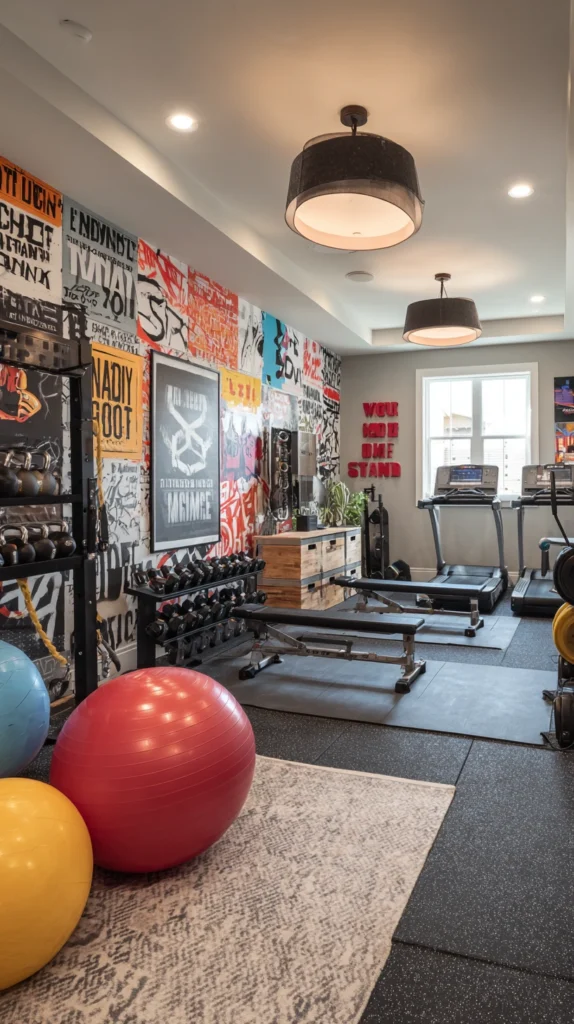
The motivating quality of the home gym environment is one of the most significant factors in the consistency with which it is used over the long term, and investing in the atmosphere of the space is as important as investing in the equipment within it.
A curated playlist played through a quality speaker system, a motivating quote or training goal posted on the wall, good lighting that is bright and energizing rather than dim and atmospheric, a clean and organized equipment storage system that makes the gym pleasant to enter and easy to use, and a personal touch.
A favourite piece of sports memorabilia, a training log on the wall, a progress tracking board. all contribute to a home gym that is genuinely motivating to enter and consistently rewarding to use.
15. Keep It Simple and Consistent
The final and most important mini home gym principle is simplicity and consistency. The most effective home gym is not the one with the most equipment, the most sophisticated technology, or the most impressive square footage. It is the one that is used consistently, maintained diligently, and equipped specifically for the training goals of the person who uses it. A simple, well-organized, thoughtfully equipped mini home gym used consistently every week will deliver better results over the long term than an elaborate, expensive, and impressively equipped gym that is used sporadically because it is too complex, too cluttered, or too intimidating to enter with genuine enthusiasm every day.
The Home Gym as a Lifestyle Investment
A mini home gym designed with clarity of purpose, equipped with the right tools for the specific user’s goals, and maintained as a genuinely motivating and genuinely pleasant space to exercise in is one of the most transformative lifestyle investments a household can make.
It removes the barriers between intention and action, between the desire to be fit and the daily practice of becoming so, and it returns that investment in better health, better energy, and better quality of daily life every single time it is used.