9 Bedroom Wallpaper Ideas for a Stunning Feature Wall
Open any wallpaper retailer’s site and the sheer number of patterns available becomes its own kind of paralysis, thousands of options, no clear sense of which ones actually work behind a bed versus which ones were designed for a completely different kind of room.
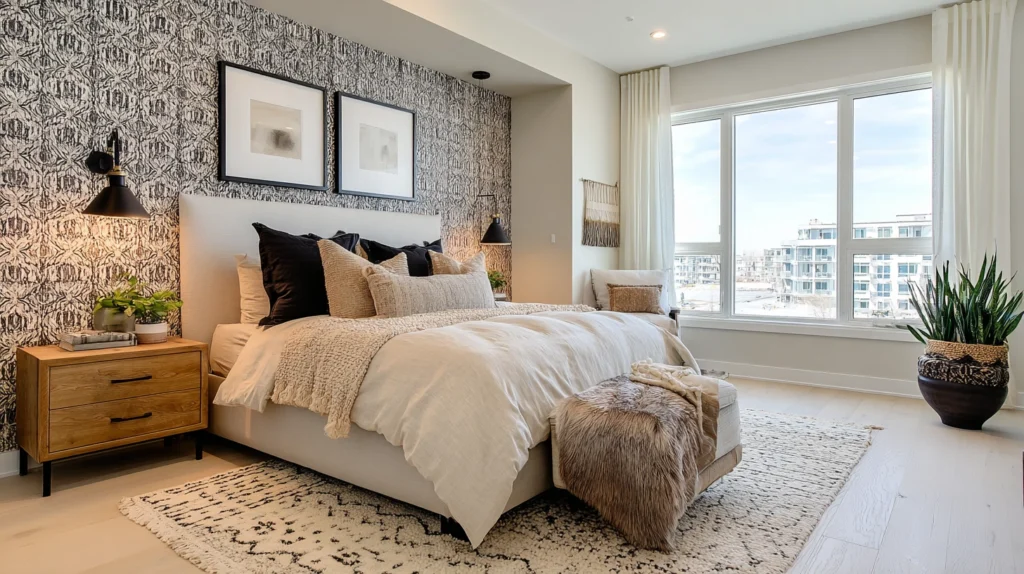
A feature wall behind a headboard has to do different work than wallpaper on, say, a powder room’s four walls. It’s viewed primarily from one angle, seen for hours at a time by the people sleeping in front of it, and it needs to read well both up close and from across the room.
Narrowing thousands of options down to what genuinely suits this specific wall, in this specific room, comes down to a handful of pattern and color principles, not endless scrolling.
Here are 9 wallpaper approaches that consistently deliver a genuinely stunning bedroom feature wall.
Why a bedroom feature wall has different requirements than wallpaper elsewhere in the house
The wall behind a bed gets viewed differently than one in a hallway or powder room.
- It’s seen for extended periods at close range, right before sleep and right after waking, meaning overly busy or jarring patterns can feel different at 11pm than they did in a showroom
- The wall typically gets partially obscured by a headboard and pillows, meaning pattern scale needs to work even when a portion of the design is covered
- Because the room’s primary function is rest, the wallpaper needs to support a calming atmosphere rather than working against it, even when the specific pattern itself is bold
Once you’re choosing based on these bedroom-specific requirements rather than a pattern’s appeal in isolation, the field narrows considerably.
1. A Large-Scale Botanical Print in Muted Tones
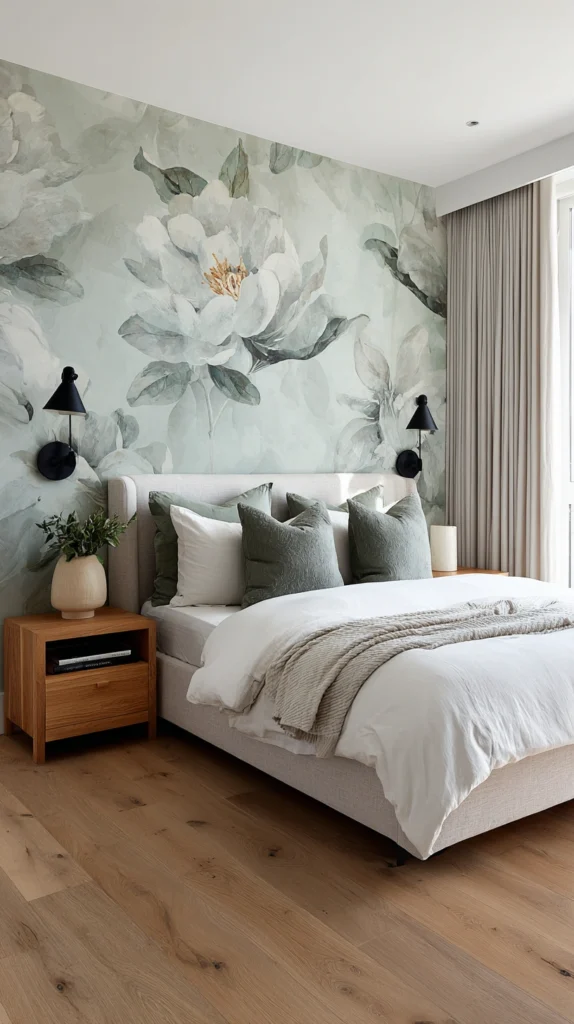
Bringing nature indoors without the intensity of bright, saturated florals.
Build it:
- A botanical pattern featuring oversized leaves, branches, or floral silhouettes, printed in soft sage, dusty blue, or muted terracotta rather than bright, high-contrast colors
- Applied to the single wall behind the headboard, with the remaining walls kept in a coordinating solid paint color
- Furniture and bedding kept simple and neutral, letting the wallpaper carry the room’s visual interest
Why muted botanical prints suit a bedroom specifically better than bright floral patterns:
- The larger scale reads as sophisticated and calming rather than busy, even when the pattern itself is quite detailed
- Muted, desaturated colors support a restful atmosphere in a way a bright, high-contrast floral typically doesn’t
- It photographs beautifully in both natural morning light and warmer evening lamp light, holding up well across the full range of lighting a bedroom actually experiences throughout the day
Why scale matters more here than color choice alone:
A small, densely repeated botanical print can feel busy and visually noisy at close range, exactly the viewing distance a headboard wall gets most often. Choosing a genuinely large-scale print, where individual leaves or branches are substantial rather than tightly repeated in a small motif, keeps the pattern feeling more like an art installation than a busy, overwhelming surface.
Cost breakdown: Botanical wallpaper runs $40 to $90 per roll, typically two to three rolls for a standard accent wall.
2. A Geometric Pattern in a Single Tonal Color Family
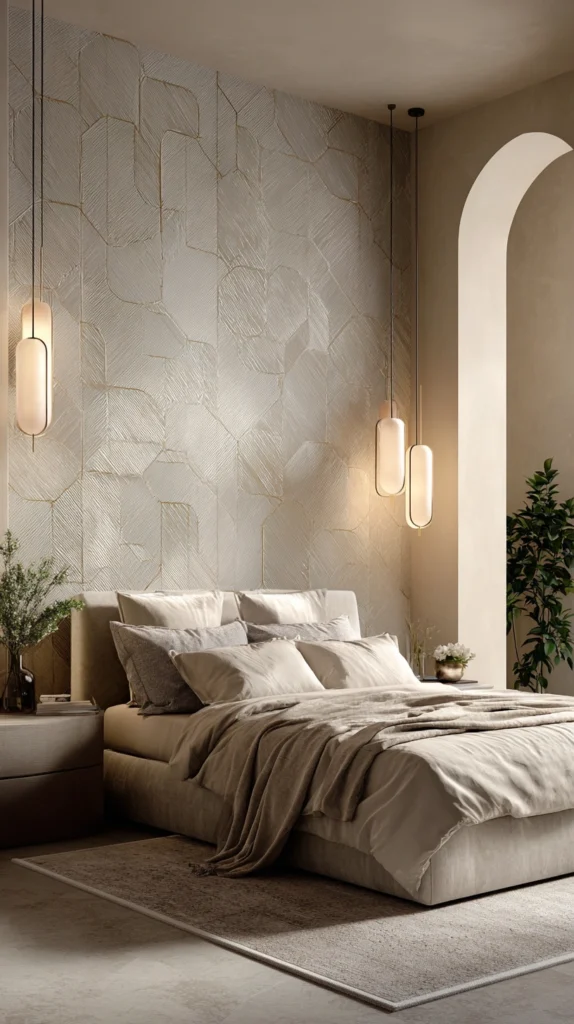
Adding structure and visual interest without introducing competing colors into the room.
Build it:
- A geometric pattern, like a hexagon, chevron, or Art Deco-inspired motif, printed in varying shades of a single color rather than multiple contrasting hues
- Metallic ink used sparingly within the pattern for subtle shine, catching light without overwhelming the design
- The rest of the room’s palette kept in complementary neutrals, allowing the tonal geometric pattern to remain the space’s clear focal point
Why a tonal geometric approach works particularly well behind a bed:
- Staying within one color family, even with a busy geometric shape, keeps the wall from competing visually with the room’s other colors and furnishings
- Geometric patterns add genuine architectural interest to a room, which can otherwise feel flat if all four walls are simply painted a solid color
- Subtle metallic accents catch ambient light throughout the day, adding a layer of visual interest without requiring bright, attention-grabbing color
Why choosing a single tonal family rather than a multicolor geometric pattern suits a restful room’s purpose better:
A geometric pattern printed in several contrasting colors can read as more energetic and visually stimulating, which works well in a home office or a child’s playroom but can work against a bedroom’s fundamental purpose as a place for rest. Keeping the pattern within one tonal family, varying only in shade and perhaps a touch of metallic sheen, delivers the same structural visual interest without introducing the kind of color contrast that can feel overstimulating right before sleep.
Cost breakdown: Tonal geometric wallpaper runs $35 to $80 per roll depending on metallic detailing.
3. A Dark, Moody Color With Subtle Texture
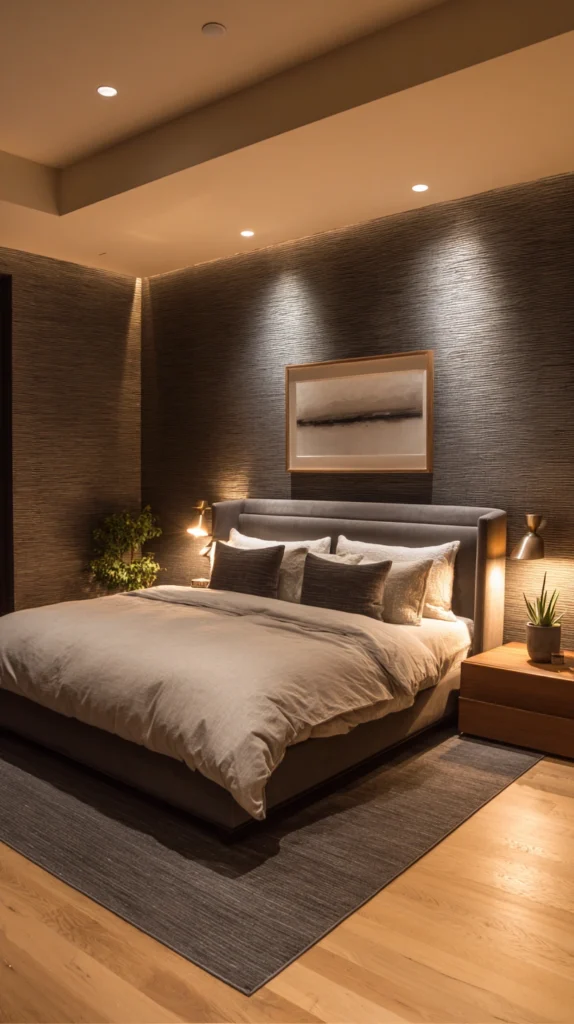
Creating genuine drama and coziness rather than relying on bold pattern alone.
Build it:
- A deep, richly textured wallpaper in a color like charcoal, deep emerald, or midnight blue, with a subtle grasscloth or linen-look texture rather than a bold printed pattern
- Applied to the headboard wall specifically, creating a cocoon-like, enveloping feeling around the bed
- Balanced with warm, layered lighting, since a dark wall absorbs more light than a pale one and benefits from thoughtful lamp placement
Why a dark, textured wallpaper suits a bedroom specifically, despite seeming like an unlikely choice for a small feature wall:
- Deep, moody colors genuinely support a restful atmosphere, often reading as more calming and enveloping than a bright white or pale neutral wall
- Subtle texture, rather than a bold graphic pattern, adds visual interest without requiring the eye to actively process a busy design right before sleep
- It creates a striking, hotel-like sense of drama that a single painted wall rarely achieves to the same degree
Why lighting planning deserves specific attention when choosing this particular wallpaper direction:
A dark, richly colored wall absorbs considerably more ambient light than a pale one, meaning a room that already has limited natural light or minimal additional lamp sources can end up feeling noticeably darker and more closed in than intended. Adding at least two warm-toned lamp sources, positioned to flank the bed, ensures the dark wall reads as cozy and enveloping rather than simply dim and underlit.
Cost breakdown: Textured dark wallpaper runs $50 to $120 per roll, reflecting the more specialized texture and material.
4. A Mural-Style Panoramic Scene
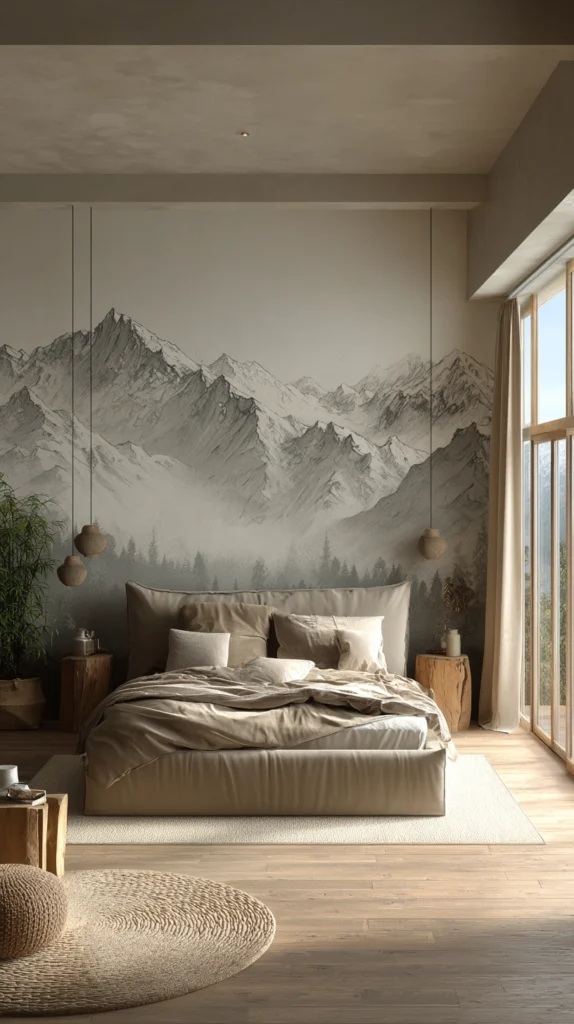
Using one continuous image rather than a repeating pattern.
Build it:
- A large-format mural panel, often sold as a coordinated multi-panel set, depicting a single continuous scene like a forest, a mountain landscape, or an abstract cloudscape
- Installed to align seamlessly across the wall’s full width, with panels matched carefully at the seams
- The remaining room kept deliberately simple, since the mural itself functions as the space’s primary art piece
Why a mural delivers a different kind of visual impact than a repeating wallpaper pattern:
- It creates a genuine sense of depth and immersion, more akin to a window or a piece of large-scale art than a repeated decorative surface
- Because there’s no repeating pattern to potentially feel busy or overwhelming at close range, a well-chosen mural scene can read as calming even when its content, like a detailed landscape, is visually rich
- It gives the bedroom a genuinely unique, non-repeatable feature, since most mural designs aren’t as commonly seen in other homes as a standard repeating wallpaper pattern might be
Why precise measurement before ordering matters more for a mural than for standard repeating wallpaper:
A mural is typically sold as a fixed set of panels sized to a specific wall dimension, meaning an inaccurate measurement can result in panels that don’t align properly or leave an awkward gap at the wall’s edge. Measuring the wall’s exact height and width, accounting for any outlets, switches, or trim that might affect the panel layout, and confirming those measurements against the specific product’s panel dimensions before ordering prevents a frustrating installation mismatch.
Cost breakdown: A mural panel set runs $150 to $400 depending on the wall’s size and the mural’s complexity.
5. A Grasscloth or Natural Fiber Texture in a Neutral Tone
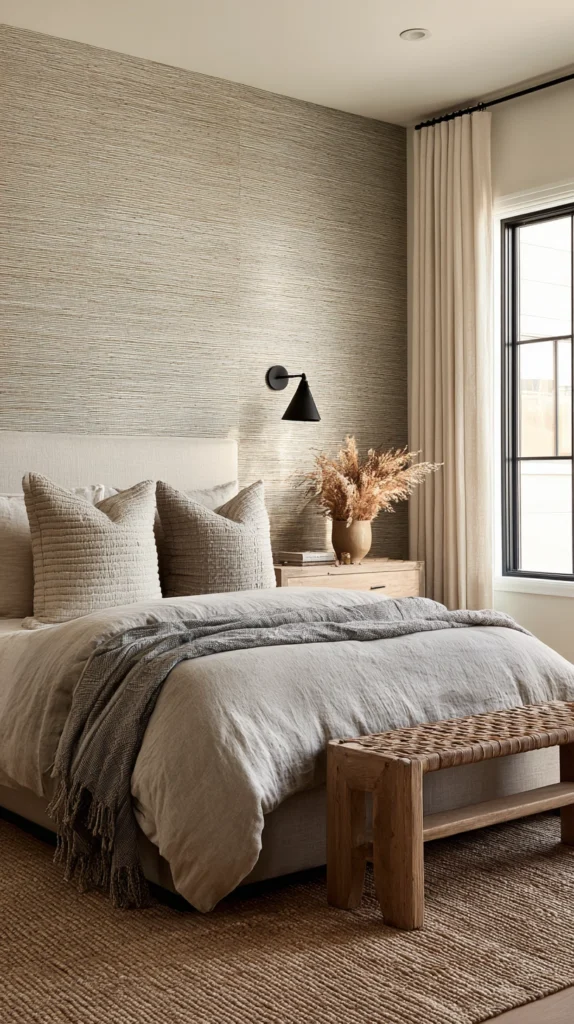
Adding organic texture without any printed pattern at all.
Build it:
- Genuine grasscloth or a natural fiber-look wallpaper, in a warm neutral tone like sand, oatmeal, or soft taupe
- Applied to the headboard wall, allowing the material’s natural texture and slight irregularity to be the primary visual interest
- Paired with warm wood furniture and natural fiber textiles elsewhere in the room, reinforcing an overall organic, grounded aesthetic
Why natural texture alone can create a genuinely stunning feature wall without needing a printed pattern:
- The subtle irregularity inherent to real grasscloth material adds depth and visual interest that a flat, printed surface can’t fully replicate
- Neutral tones keep the wall feeling calm and restful, suiting the bedroom’s fundamental purpose better than a bold pattern might
- It suits a wide range of bedroom styles, from coastal to organic modern to traditional, since texture rather than a specific pattern motif is doing the visual work
Why genuine grasscloth requires slightly different installation care than standard printed wallpaper:
Real grasscloth is more delicate during installation than standard vinyl or paper wallpaper, since the natural fibers can be damaged by excess adhesive or improper smoothing techniques, and any seams tend to be more visible than with a printed pattern that can help disguise them. Working with an installer experienced specifically with grasscloth, or researching the material’s particular handling requirements carefully before attempting a DIY installation, helps avoid a costly material waste or a visibly flawed final result.
Cost breakdown: Genuine grasscloth wallpaper runs $60 to $150 per roll, reflecting the natural material’s higher cost compared to standard printed paper.
6. A Bold Stripe in Two Complementary Tones
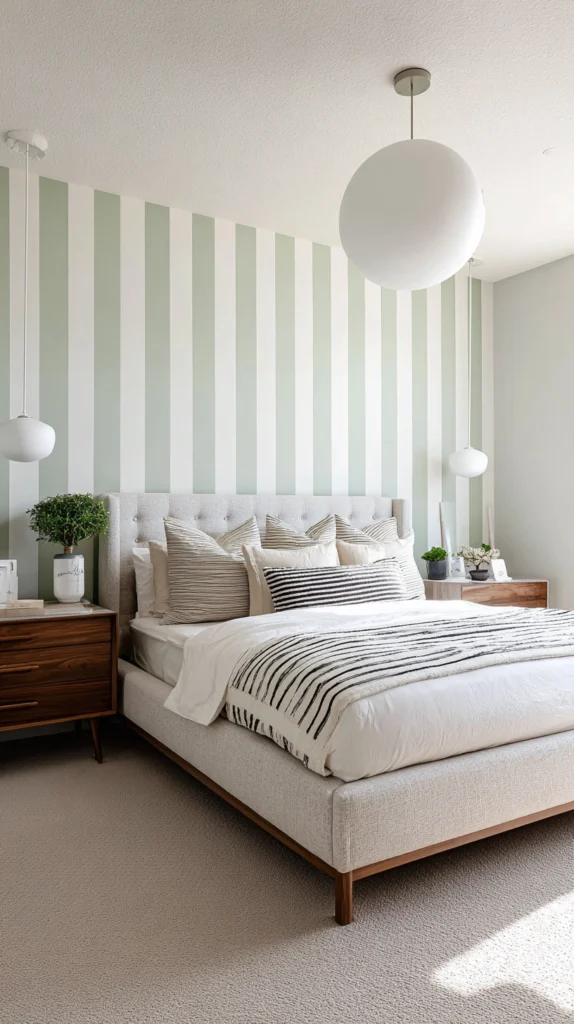
Using a classic pattern reimagined with a softer, more current color pairing.
Build it:
- Vertical or horizontal stripes in two tones from the same general color family, like two shades of blush or two shades of sage, rather than a high-contrast stripe combination
- Applied to the full headboard wall, with stripe width chosen based on the room’s ceiling height and overall proportions
- Simple, solid-colored bedding used to let the striped wall remain the room’s primary visual statement
Why a softer stripe combination suits a bedroom better than a traditional bold, high-contrast stripe:
- Two tones from the same color family create visual structure and rhythm without the more jarring, high-energy effect a stark black-and-white or heavily contrasting stripe combination can produce
- Vertical stripes specifically can make a room with lower ceilings feel taller, while horizontal stripes can make a narrow room feel wider, giving this pattern genuine functional benefit beyond pure decoration
- It’s a classic, enduring pattern style that tends to feel less trend-driven than some more specific decorative motifs, extending its likely visual lifespan in the room
Why stripe width and orientation deserve consideration based on the room’s specific proportions:
Wide stripes in a small room can feel overwhelming, while very narrow stripes across a large wall can create an almost vibrating visual effect that’s uncomfortable to look at for extended periods, exactly the kind of prolonged viewing a headboard wall receives. Choosing a stripe width proportional to the room’s actual size, and orienting the stripes vertically or horizontally based on whether height or width is the room’s more limiting dimension, ensures the pattern serves the space rather than working against its existing proportions.
Cost breakdown: Striped wallpaper in a tonal color combination runs $35 to $75 per roll.
7. A Peel-and-Stick Pattern for a Fully Reversible Feature Wall
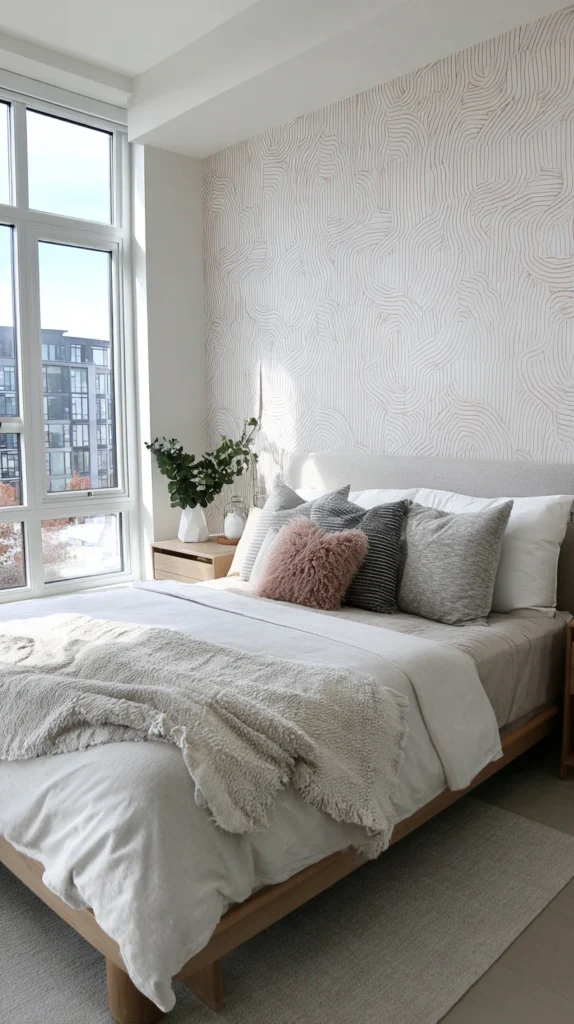
Delivering the same visual impact without any permanent commitment.
Build it:
- A peel-and-stick wallpaper in any pattern style covered elsewhere in this list, chosen specifically for its removable adhesive backing
- Applied carefully to a clean, smooth wall surface, following the manufacturer’s specific smoothing and bubble-removal technique
- Removed cleanly when desired, without damaging the underlying paint or requiring any wall repair
Why peel-and-stick wallpaper suits renters and commitment-averse homeowners particularly well:
- It delivers the same dramatic visual impact as traditional wallpaper without requiring any paste, specialized tools, or a genuinely permanent commitment to the specific pattern
- It’s fully reversible, making it compliant with most rental lease restrictions on permanent alterations
- The application process is considerably more approachable for a first-time DIY project than traditional pasted wallpaper, since mistakes can simply be peeled back and repositioned during application
Why wall surface preparation matters just as much for peel-and-stick as it does for traditional wallpaper:
A wall with existing texture, uneven paint, or minor damage can prevent peel-and-stick wallpaper from adhering properly, leading to bubbling or peeling at the edges considerably sooner than the product’s expected lifespan. Cleaning the wall thoroughly and addressing any texture or damage issues before application, even though peel-and-stick is marketed as an easy DIY solution, remains a necessary step for a genuinely successful, long-lasting installation.
Cost breakdown: Peel-and-stick wallpaper runs $25 to $60 per roll, generally comparable to or slightly less than traditional pasted wallpaper.
8. A Damask or Traditional Motif in an Updated Color Palette
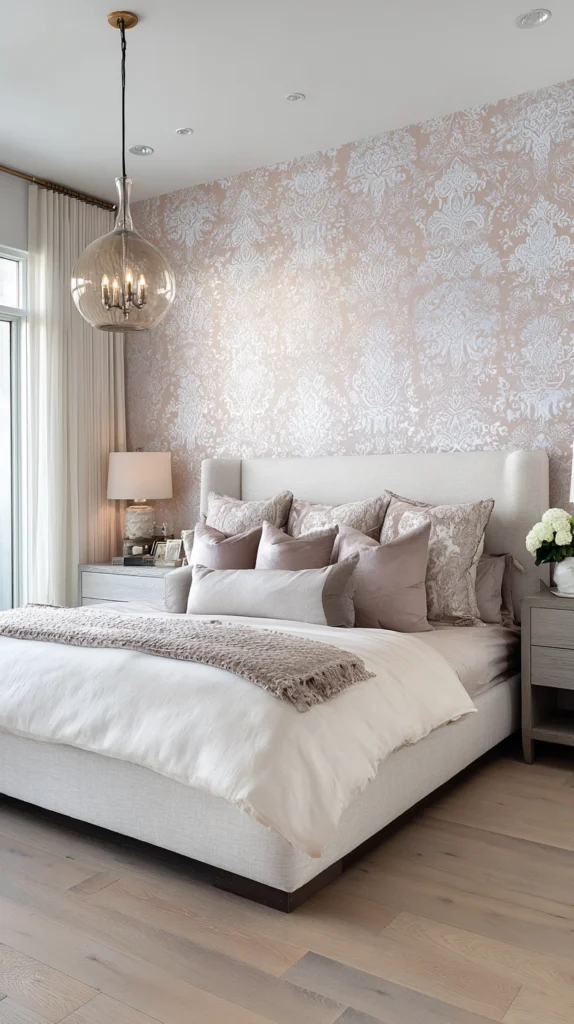
Reviving a classic pattern style with a distinctly current color approach.
Build it:
- A traditional damask or classic ornamental pattern, printed in an unexpected modern color combination, like a soft blush and warm gold rather than the pattern’s more traditional deep burgundy or navy
- Applied to the headboard wall, with the pattern’s tone-on-tone or subtly contrasting colors keeping the overall look from feeling overly ornate
- Paired with cleaner-lined, more contemporary furniture, creating an interesting contrast between the traditional pattern and the room’s otherwise current furnishings
Why an updated color palette makes a traditionally ornate pattern feel current rather than dated:
- The specific pattern shape itself carries genuine historical elegance, while a fresh, unexpected color combination keeps the overall look from reading as overly formal or old-fashioned
- It suits anyone wanting genuine pattern richness and visual detail without committing to a more literally traditional, heavily colored version of the same motif
- The contrast between an ornate pattern and simpler, more contemporary furniture creates a considered, eclectic feeling that reads as more intentional than either style alone
Why pairing this pattern with simpler furniture, rather than equally ornate pieces, produces a better result:
Combining a highly detailed damask wallpaper with equally ornate, traditional furniture can push the room’s overall look toward feeling overly busy or dated, working against the pattern’s updated color palette. Choosing clean-lined, more contemporary furniture and bedding to pair with the ornate wallpaper creates a genuine visual balance, letting the wallpaper’s pattern richness stand out as a deliberate contrast rather than one element among many competing decorative details.
Cost breakdown: Damask-style wallpaper in an updated color palette runs $40 to $95 per roll.
9. A Textured Faux Finish Mimicking Plaster or Concrete
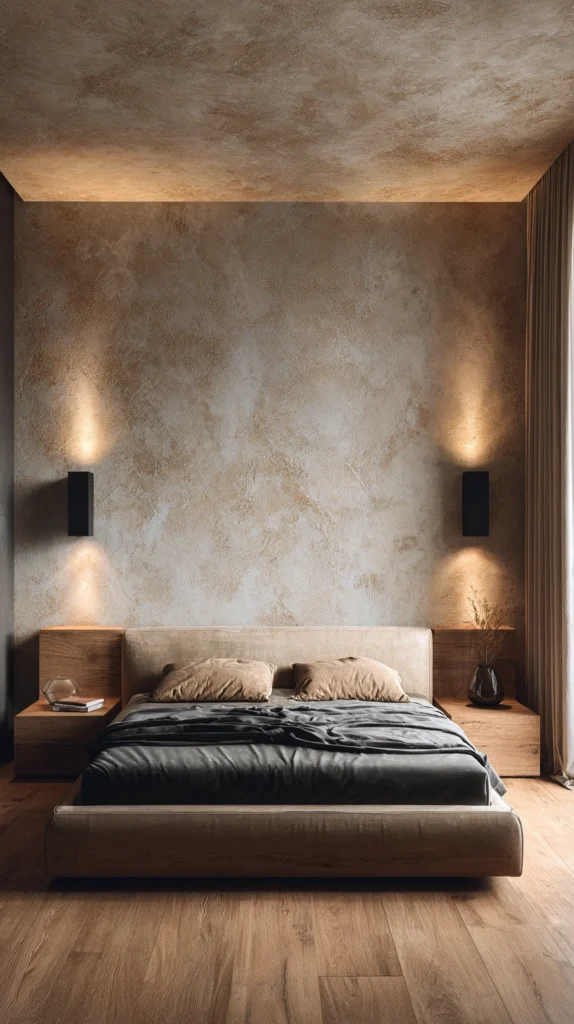
Bringing an architectural, tactile quality to the wall without any printed pattern.
Build it:
- A wallpaper specifically designed to replicate the look of Venetian plaster, limewash, or raw concrete, in a soft neutral or warm gray tone
- Applied to the headboard wall as a single, uninterrupted surface, allowing the faux texture’s subtle variation to be the wall’s primary visual interest
- Paired with simple, uncluttered styling elsewhere in the room, letting the textured wall read as a genuine architectural feature rather than competing with additional decorative elements
Why a faux plaster or concrete finish suits a bedroom seeking a more architectural, less overtly decorative feature wall:
- It delivers the increasingly popular textured plaster or concrete aesthetic without the cost, mess, or genuine structural consideration real plaster application requires
- The subtle tonal variation within the pattern itself adds depth and visual interest without any bold color or repeating printed motif
- It suits a more minimalist or organic modern bedroom aesthetic particularly well, where a busier printed pattern might feel out of place
Why this specific wallpaper style tends to photograph and read differently than most other options on this list:
Because this style mimics a raw, architectural material rather than presenting an obvious printed pattern, it can be easy to underestimate its visual impact from a small sample swatch alone, since much of its appeal comes from how the subtle texture and tonal variation reads across a full, uninterrupted wall. Viewing a larger sample, or at minimum multiple swatches placed together, gives a more accurate sense of how the finished wall will actually look once fully installed, compared to judging from a single small chip.
Cost breakdown: Faux plaster or concrete-look wallpaper runs $45 to $100 per roll.
Getting started this weekend
You don’t need to commit to a full room redesign before testing whether a feature wall works for your specific bedroom.
- Start by ordering a few samples from the styles that appeal most, taping them to the actual headboard wall and living with them for a few days
- Add the room’s lighting and furniture considerations once the specific pattern and color feel confirmed
- Save a full installation for once you’ve tested the sample against the room’s actual daylight and evening lighting conditions
Most bedroom feature walls that genuinely feel stunning rather than simply busy got there by choosing a pattern and scale specifically suited to close, extended viewing, not just whatever looked most striking in an online product photo.
Budget reality
Bedroom feature wall wallpaper spans a moderate range depending on the specific style and material chosen.
- Under $60: Peel-and-stick options, tonal geometric patterns, striped designs
- $60-150: Botanical prints, damask patterns, faux plaster finishes for a standard-sized wall
- $150-300: Textured dark wallpaper or genuine grasscloth for a larger wall
- $300+: A full mural panel set sized to a larger or more architecturally complex wall
Most of the stunning visual impact comes from choosing pattern scale and color intensity suited to close, extended viewing, not from the total amount spent per roll.
What actually makes a bedroom feature wall feel stunning rather than overwhelming
It was never really about finding the single boldest pattern available.
It’s the scale chosen specifically for how the wall gets viewed up close every night, the color kept restful even when the pattern itself carries real visual richness, the texture or mural or stripe chosen because it suits how the room actually gets used, not just how it photographs in a showroom.
Test the pattern against the room’s actual light and actual viewing distance before committing, and the wall ends up feeling like a genuine design statement rather than a decision that seemed exciting only in the store.