14 Austin Living Room Ideas That Mix Laid-Back Texas With Serious Style
Austin has always done things its own way. The city that built its identity on live music, creative independence, and an almost stubborn refusal to take itself too seriously has developed a genuinely distinctive design language.

One that blends the rawness of Hill Country architecture with the refined sensibility of a city that attracts artists, architects, and design-forward thinkers from across the country. The result is a living room aesthetic that feels simultaneously relaxed and considered, unpretentious and deeply stylish.
These fourteen ideas draw from Austin’s best interiors — spaces that feel genuinely lived in without looking accidental, and genuinely beautiful without feeling cold or overdone. Whether you are working with a bungalow in South Austin, a modern build in Mueller, or a converted property on East Sixth, these approaches translate across budgets, sizes, and architectural styles.
1. Anchor the Room With a Curved Sofa
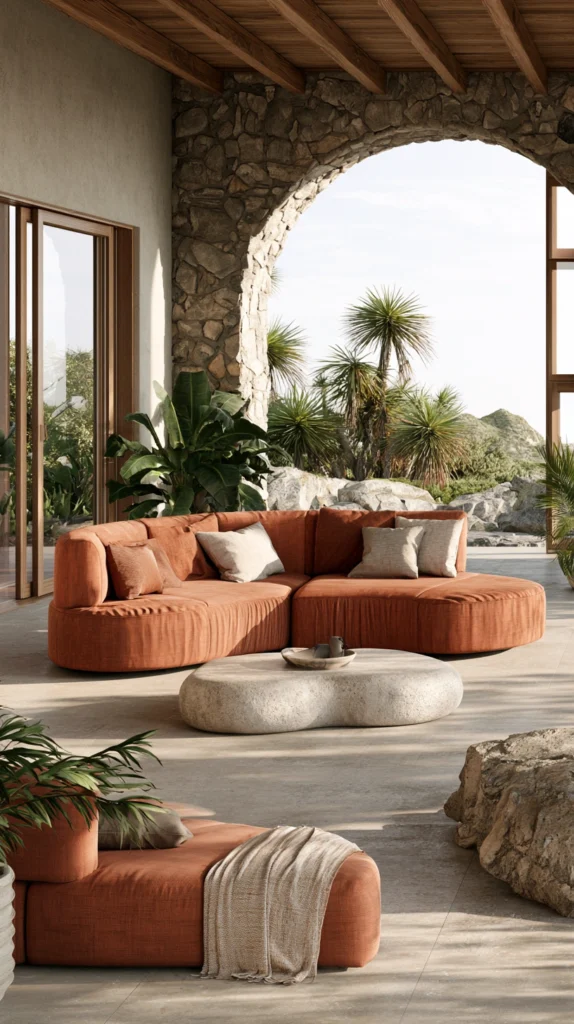
A curved or kidney-shaped sofa in warm terracotta, dusty sage, or sand immediately signals both comfort and considered design. It pulls seating away from the walls, creates a natural conversation circle, and introduces an organic softness that straight-lined furniture simply cannot achieve.
Pair it with a low, organic-shaped coffee table in travertine or mango wood to complete the gesture and ground the arrangement without stiffening it.
The curved sofa works particularly well in Austin’s open-plan layouts, where it defines a living zone without the visual rigidity of a rectangular sectional. It is the kind of furniture decision that makes a room feel designed from the moment you walk in.
2. Use Limestone as a Feature Wall or Fireplace Surround
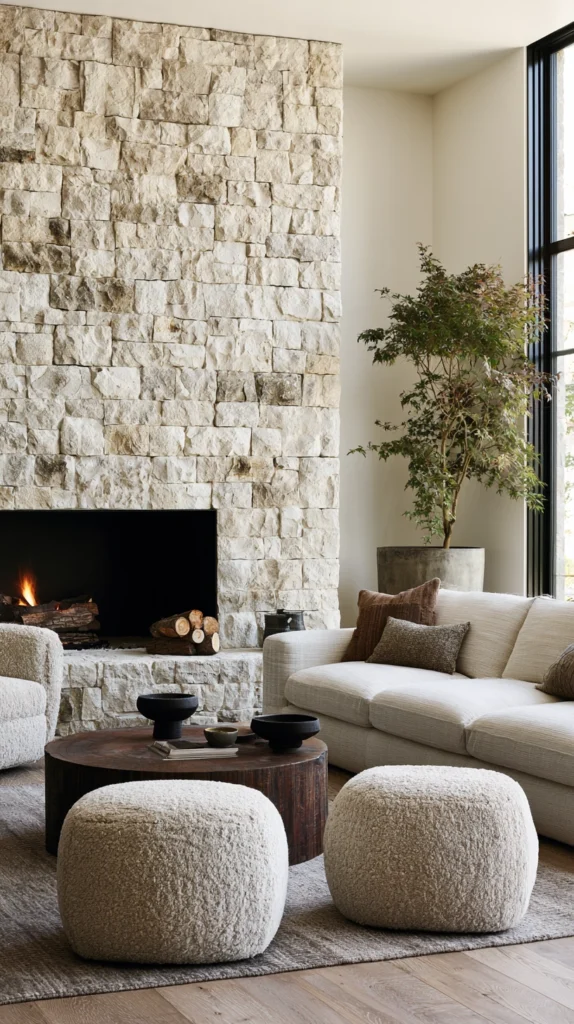
Raw Texas limestone — the same material that builds Austin’s historic bungalows, Hill Country ranch houses, and the city’s oldest civic buildings — brings an unmistakable regional identity when used as an interior surface.
As a fireplace surround or single feature wall, it adds deep texture, natural colour variation, and a material honesty that no manufactured finish can replicate. Keep surrounding walls in plain white or warm plaster so the stone reads as the clear hero of the space.
If full limestone cladding is outside the budget, a lime plaster finish in a rough hand-trowelled application reads with similar warmth and texture at a fraction of the cost. Either way, the effect roots the room in its geography.
3. Bring the Outside In With Steel-Frame Glass Doors
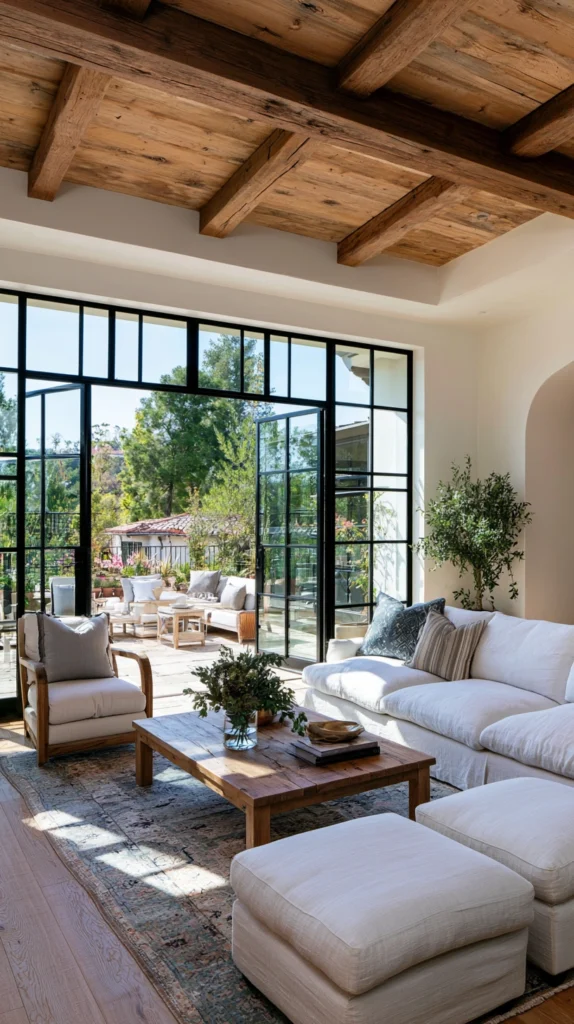
If any renovation is on the table, replacing a standard rear wall with steel-frame sliding or folding glass doors is the single highest-impact change available to an Austin living room.
The city’s climate genuinely supports indoor-outdoor living for eight or nine months of the year, and a living room that opens fully to a patio, garden, or deck takes full advantage of that gift. The steel framing reads as industrial-modern while the connection to outdoor drought-tolerant landscaping or a simple concrete terrace keeps the overall effect grounded and local.
Even without renovation, positioning furniture to face existing large windows and removing heavy window treatments captures much of the same spirit — bringing light, landscape, and the particular quality of Austin’s outdoor air into the room.
4. Build Your Palette Around Warm Neutrals, Not Grey
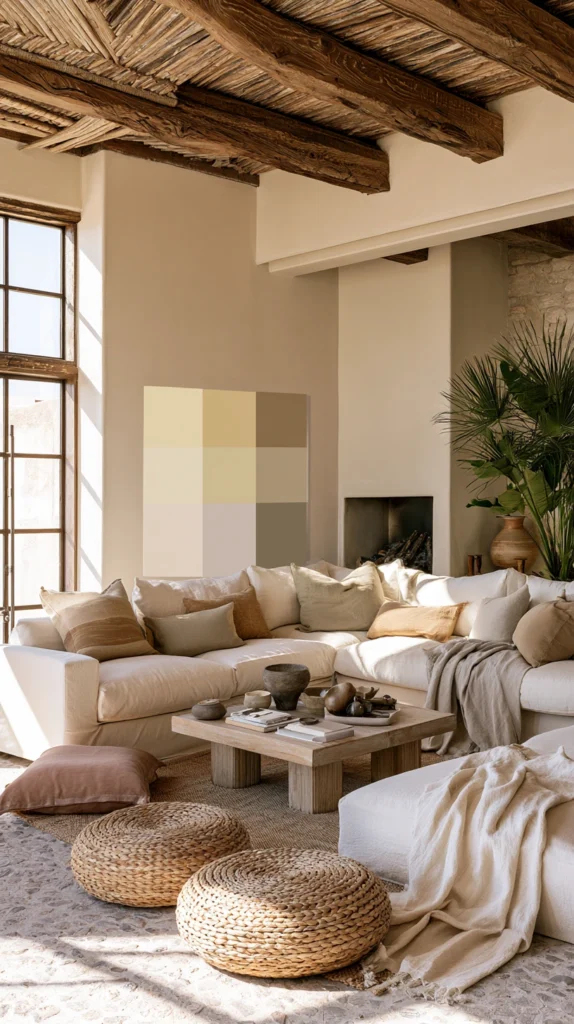
The cool grey palette that dominated interior design through the 2010s feels categorically wrong in Austin. The city’s light, its landscape, and its personality all pull toward warmth — and a living room that fights that pull will always feel slightly off, regardless of how well-executed the individual elements are.
Build the room’s base in warm whites, creamy linen tones, raw clay, and sun-bleached sand. Bring in terracotta, warm olive, or burnt sienna as depth colours rather than reaching for grey or blue-toned neutrals.
This palette also photographs exceptionally well in the warm natural light that pours through most Austin windows — a practical consideration for anyone who wants their space to look as good in reality as it does in their imagination.
5. Layer a Kilim or Oaxacan Textile Rug
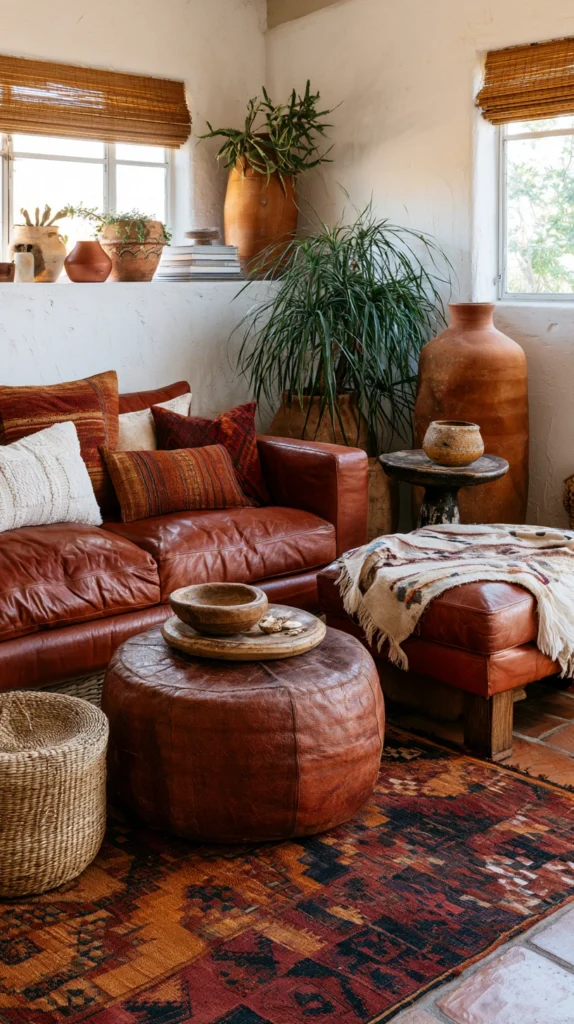
Austin’s cultural geography sits at the intersection of Texas craft traditions and deep Mexican and Central American artistic influence. A quality flat-weave kilim or handwoven Oaxacan wool rug is the single object that reflects that heritage most honestly and beautifully.
The geometric pattern and earthy palette — rust, black, cream, ochre, deep red — anchors the room without overwhelming it, and the flat weave works practically well in a high-traffic living space. Layer a natural jute or sisal underneath if the room is large enough to benefit from the added depth.
Sourcing directly from Teotitlán del Valle weavers through Etsy or specialist importers puts authentic, fairly traded pieces within reach at prices that compare favourably to mass-market alternatives.
6. Mix Vintage Finds With One Deliberate New Piece
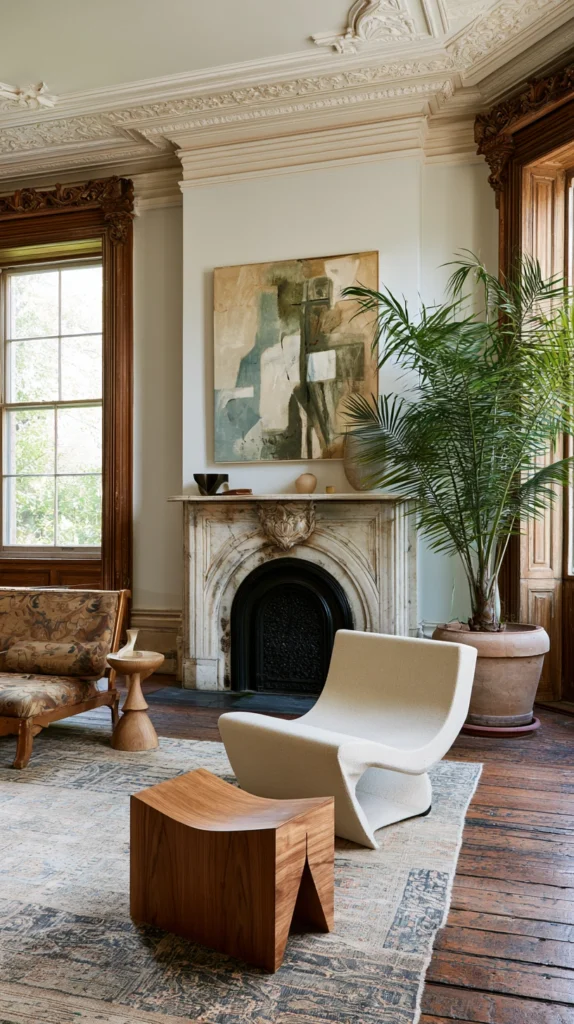
Austin’s vintage and antique market is genuinely world-class — from the legendary Round Top Antiques Fair to the South Congress shops, estate sales across Travis and Hays counties, and the independent dealers of East Austin.
A room furnished largely from these sources carries a layered, lived-in quality that nothing bought new from a single retailer can replicate. The key design decision that separates a styled vintage room from a merely thrifted one is the addition of one deliberate, high-quality new piece — a beautiful ceramic lamp, a single well-chosen designer chair, a handmade object of obvious quality — that signals the curation was entirely intentional.
Everything else can be found, loved, and repurposed. That one anchor piece is what tells a visitor that the room was designed rather than accumulated.
7. Install Simple Exposed Ceiling Beams
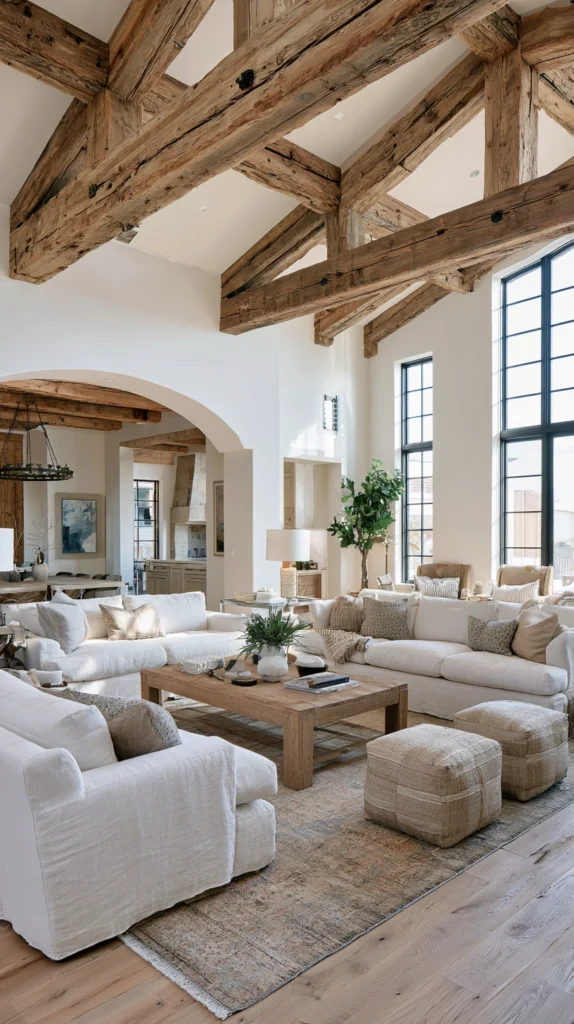
Exposed ceiling beams in Douglas fir, cedar, or reclaimed pine are one of the most effective ways to add structural warmth and honest material character to an Austin living room, even one that has none of these things naturally.
They work in the bungalow-era homes of Hyde Park and South Austin, in the newer builds of Mueller and North Loop, and in the converted commercial spaces of East Austin — adding visual weight to high ceilings and a human scale to open-plan layouts that can otherwise feel cavernous. Keep them unpainted and simply oiled or waxed to preserve the natural grain and colour variation.
For renters or those not ready to commit to structural work, box beams installed with construction adhesive offer a genuinely convincing alternative that can be removed without damage.
8. Add One Architectural Plant — Nothing More
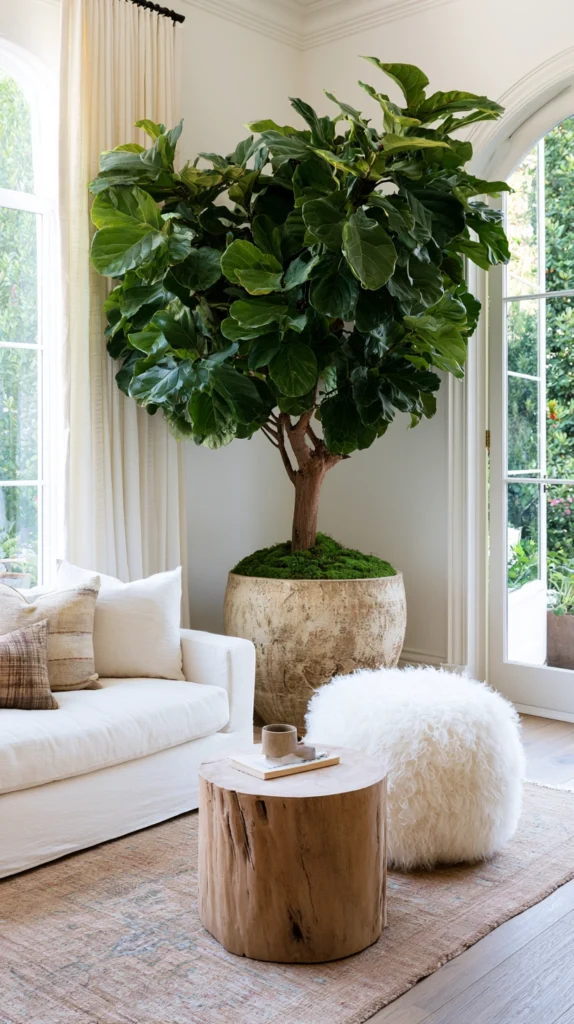
A single large, well-chosen plant does more for an Austin living room than a collection of smaller ones scattered across every surface. A tall monstera, a mature fiddle-leaf fig, or a dramatic bird of paradise placed at the room’s most visible point .
Beside a doorway, in a corner that catches morning light, or next to a console, brings organic life, scale, and the particular quality of natural vitality that no decorative object can substitute for. The key is scale and restraint: one plant of genuine statement size, in a simple ceramic or concrete pot, positioned with clear intention.
Everything else on the surface near it should be edited back to almost nothing, so the plant reads as a deliberate focal point rather than part of a crowded corner.
9. Choose Handmade Ceramics Over Decorative Objects
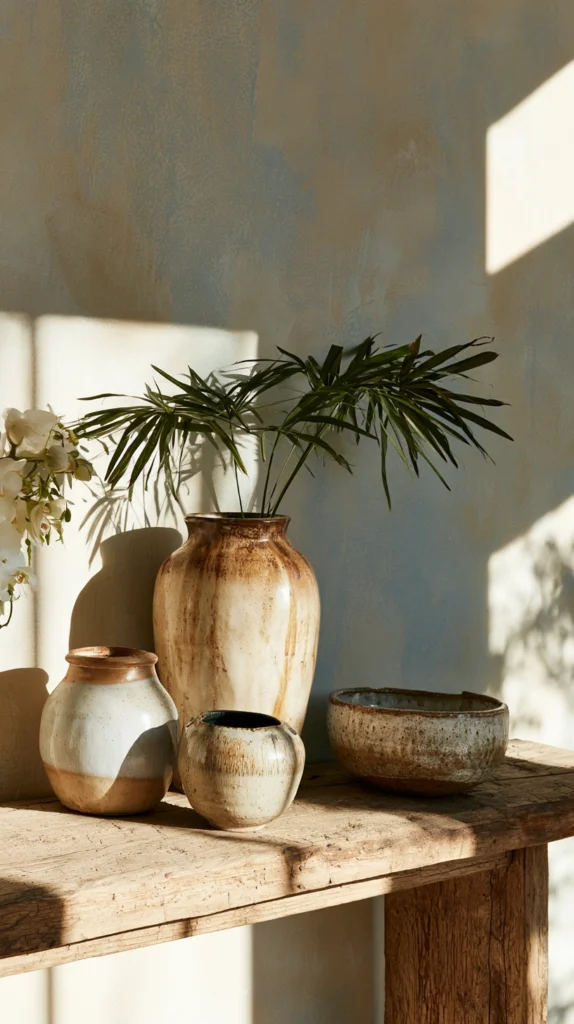
Austin has a thriving ceramics and craft community, and choosing handmade pots, vessels, and objects from local makers over mass-produced decorative pieces is a design decision that gives the room an authenticity and texture that retail objects simply do not carry.
A grouping of three or four ceramic pieces in complementary earth tones, arranged at varying heights on a console or low shelf, is genuinely enough — editing matters far more than accumulating. The slight variation in glaze, form, and finish that comes with handmade work is precisely what makes the arrangement feel curated rather than purchased as a set.
The Austin Ceramics community, local craft markets, and the city’s independent makers are all excellent starting points for sourcing pieces that are both beautiful and genuinely local.
10. Use a Painted Arch as a Focal Point
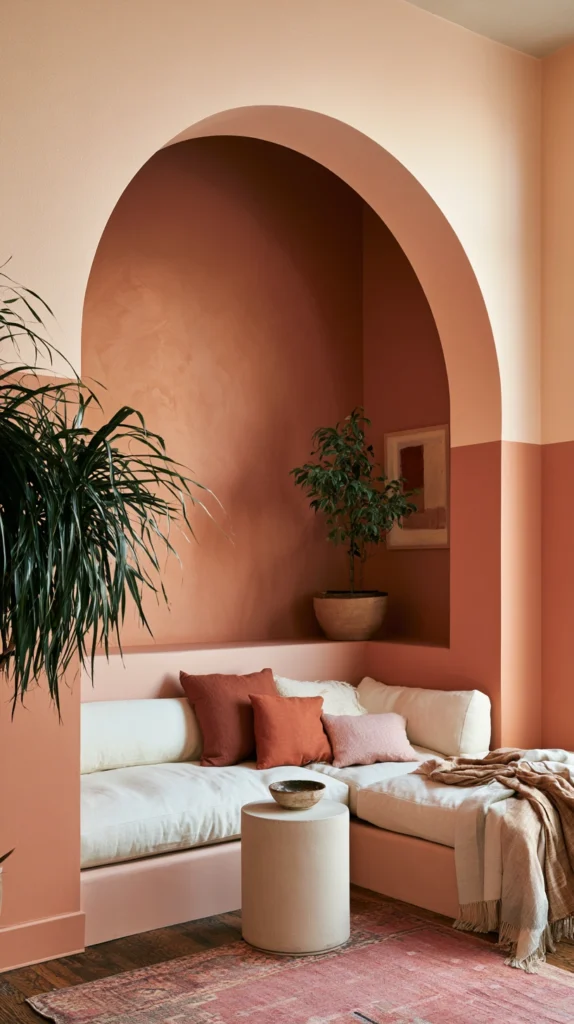
A painted arch — either framing an existing architectural opening or applied directly onto a flat wall as a painted panel — is one of the most cost-effective ways to add depth, softness, and intentional design character to a living room that has nothing interesting to say structurally.
In warm clay, dusty terracotta, or sage green, an arched panel behind the sofa or around a fireplace reads as carefully considered rather than simply decorated. It works especially well in the white-walled modern builds that dominate Austin’s newer neighbourhoods, where the architecture is clean but often lacks personality.
The technique requires only paint and a steady hand — a length of string and a pencil serve as a perfectly adequate compass for achieving a clean, symmetrical arch.
11. Go Dark on One Wall Only
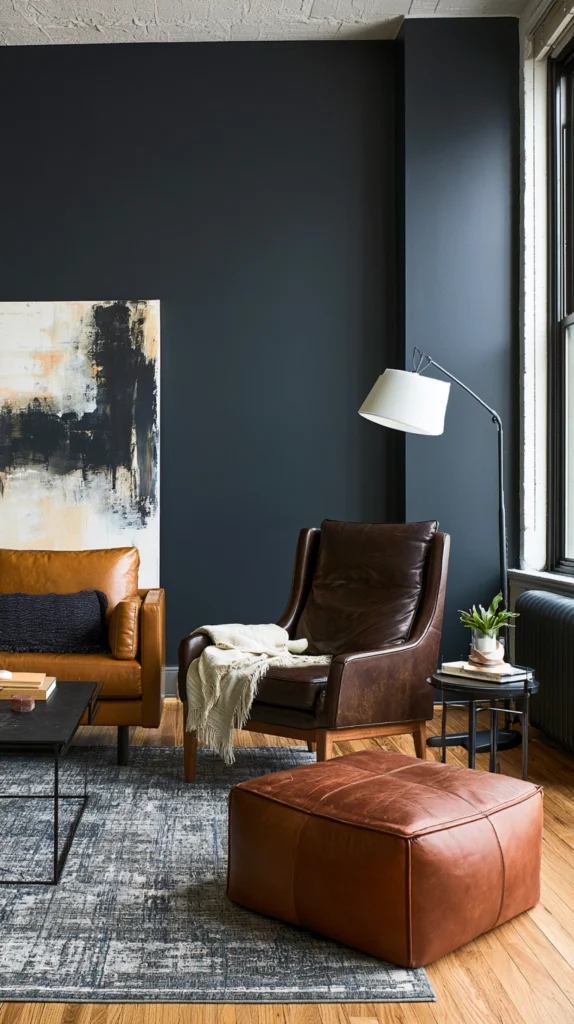
Deep, moody colour used on a single wall — a rich tobacco brown, a dark forest green, a warm charcoal — creates the sense of depth and drama that Austin’s bright, high-contrast light can sometimes flatten out of a room.
It draws the eye in, makes art read better against it, and gives pale-toned furniture a background that makes it look genuinely beautiful rather than simply neutral. The discipline is in the restraint: one wall only, and always one positioned near a natural light source so the darkness reads as intentional depth rather than a mistake.
Farrow and Ball’s Hague Blue, Railings, and Down Pipe all work particularly well alongside the warm wood tones and earthy textiles that characterise Austin interiors at their best.
12. Keep the Media Wall Honest and Uncluttered
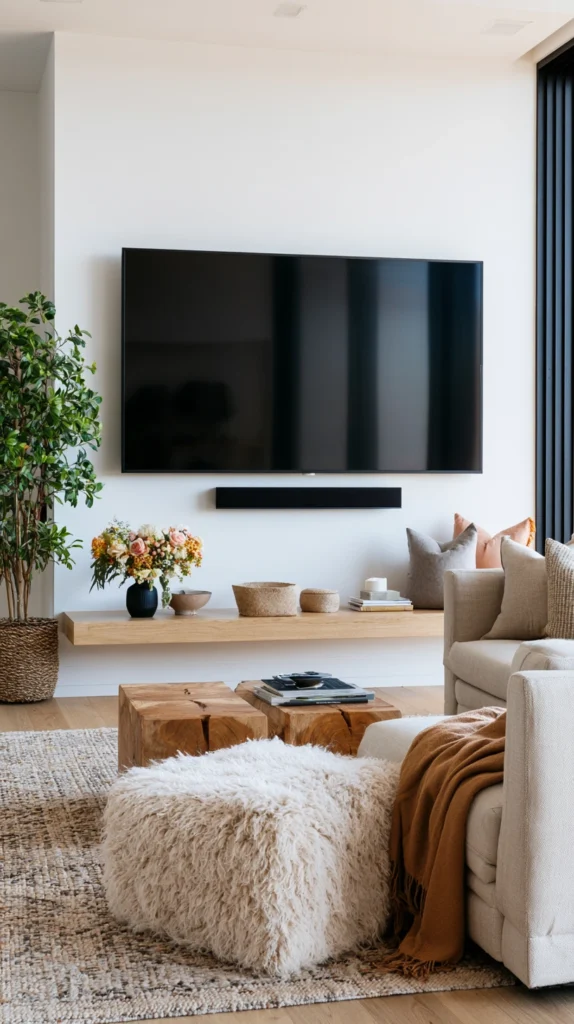
The television is not going anywhere in a real living room — and the mistake most people make is building an entire wall of cabinetry around it when a single clean floating shelf and a wall-mounted screen with properly managed cables would be more honest, more practical, and significantly more attractive.
A floating shelf in oiled walnut at comfortable seated eye-level, carrying a low-profile soundbar and nothing else, reads as designed and intentional. The space left deliberately empty around the screen is what makes it look considered rather than default.
A recessed power outlet installed directly behind the wall mount eliminates every visible cable in a single practical step and is worth the modest additional cost at installation.
13. Invest in Real Layered Lighting
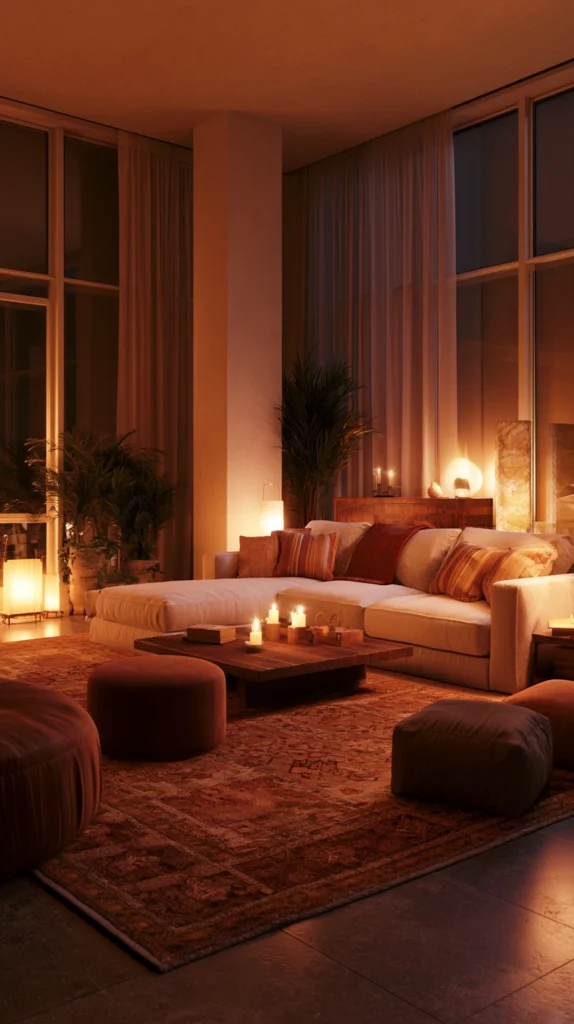
Austin evenings are genuinely one of the city’s great pleasures — the light turns golden, the air cools, the windows open — and a living room needs a lighting scheme that matches that quality of atmosphere, which a single overhead fixture cannot come close to achieving.
Three or four light sources at different heights — a floor lamp beside the reading chair, two table lamps flanking the sofa, and candles or a low pendant above the coffee table — create the warm, layered ambience that makes a room feel genuinely inviting after dark. All should sit on dimmer switches, all should use warm bulbs in the 2200K to 2700K range.
The single most impactful and affordable upgrade in this category is replacing one harsh overhead bulb with a plug-in pendant hung from a ceiling hook — an afternoon project that transforms the entire atmosphere of the room.
14. Edit Ruthlessly, Then Stop Adding Things
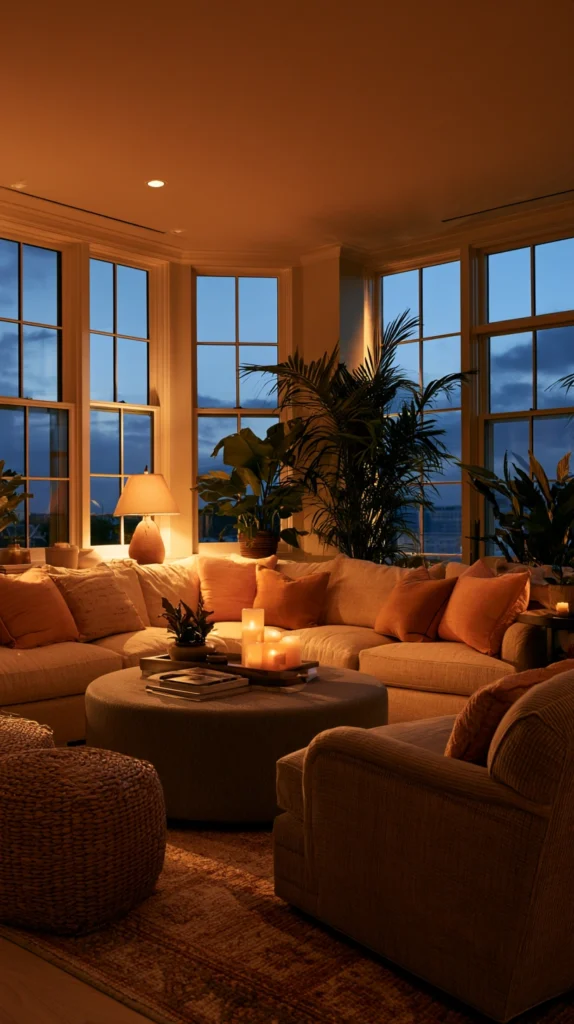
The quality that the best Austin living rooms share has nothing to do with budget or square footage. It is the clarity that comes from someone making deliberate decisions about what belongs in the room and then having the confidence to stop before adding anything more. One rug, not two layered imperfectly.
One large piece of art hung properly, not a gallery wall that has been half-finished for eight months. Furniture that fits the room rather than fills it. A corner left empty because the room genuinely does not need anything there.
The discipline to resist the impulse to keep adding — to trust that the room is finished — is the design skill that separates genuinely good living rooms from merely decorated ones. It costs nothing and makes every other decision in the room look better than it would otherwise.
Final Thoughts: Designing an Austin Living Room That Lasts
The best Austin living rooms age well because they are built on honest choices rather than trend-chasing. They use real materials that develop character over time, incorporate objects with genuine provenance and meaning, and reflect the actual personality of the people who live in them rather than an aspirational version borrowed from a showroom.
Start with the bones — palette, lighting, one strong furniture piece — and build outward slowly. Resist the pressure to finish a room quickly. The spaces that feel most authentically Austin are the ones that developed over time, absorbing the city’s creative energy, its craft culture, and its deep, unhurried confidence in its own particular way of doing things. That quality cannot be purchased in a single shopping trip. But it can absolutely be built, one considered decision at a time.