14 Warm and Intimate Yoga Studio Designs for a Deeply Personal Practice
A truly memorable yoga studio is not just a place to move the body—it is a space that feels safe, nurturing, and emotionally grounding. Warm and intimate yoga studio designs focus on comfort, softness, and human connection rather than scale or spectacle. These studios invite practitioners to slow down, breathe deeply, and feel at home on the mat.

Through thoughtful lighting, tactile materials, and intentional layouts, warmth becomes an experience rather than a visual choice. Below are 14 warm and intimate yoga studio designs that transform practice spaces into soulful sanctuaries.
1. Soft Neutral Color Palettes That Embrace Calm
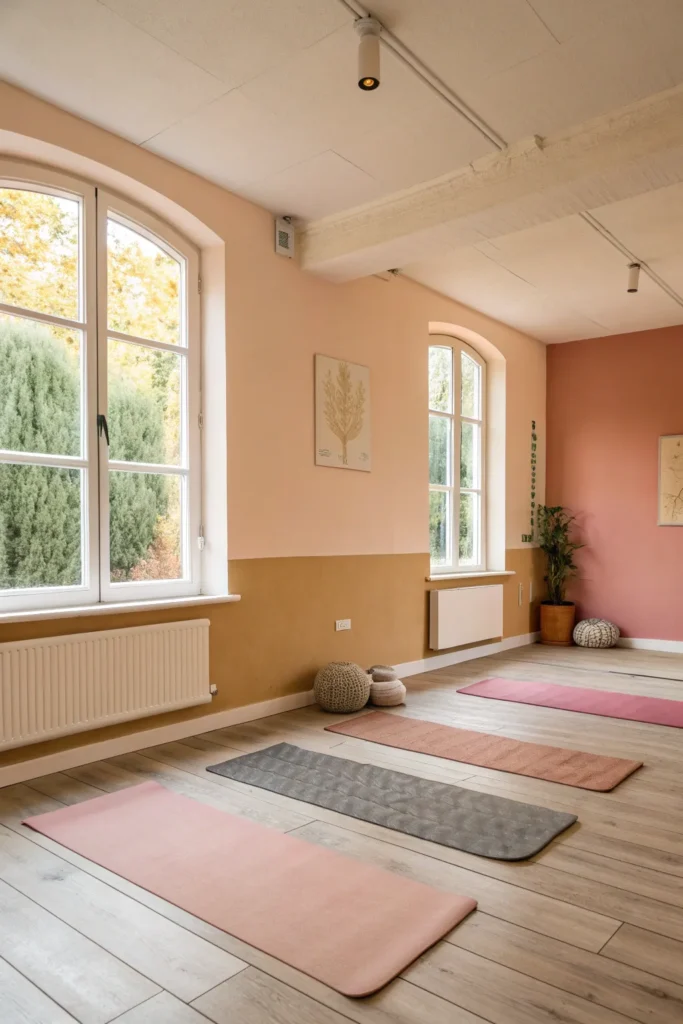
Warm yoga studios often begin with gentle, neutral color schemes that wrap the room in comfort. Shades like creamy beige, warm ivory, soft greige, muted clay, and blush-tinted taupe create a soothing backdrop that never feels stark or cold. These colors reduce visual tension and allow the nervous system to relax, making them ideal for slow flows, yin yoga, and meditation-focused sessions.
2. Ambient Lighting That Feels Like Candlelight
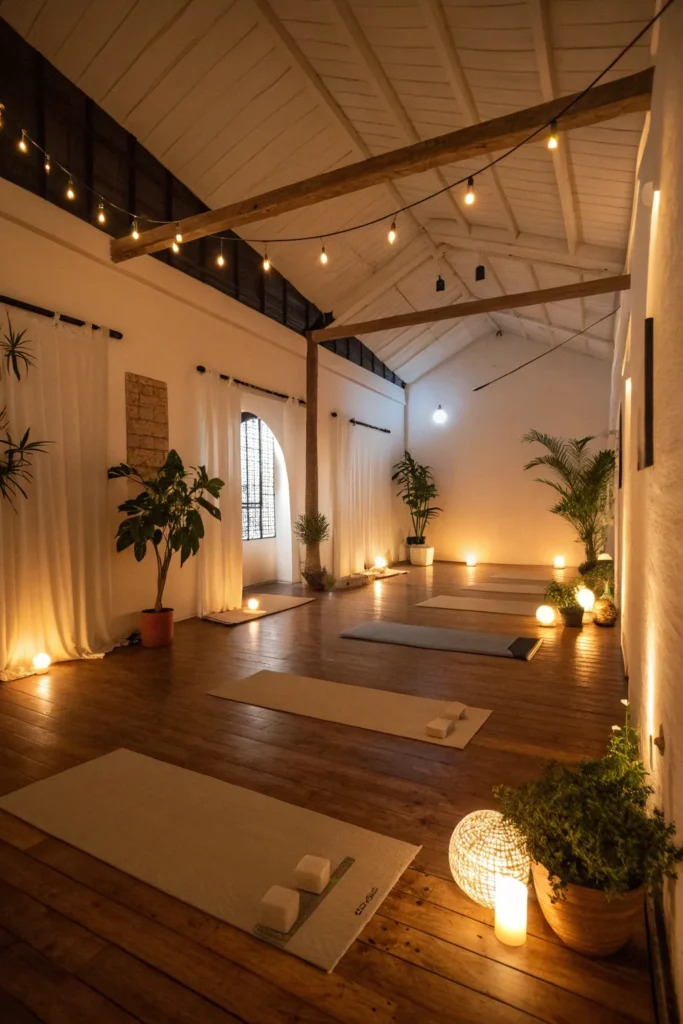
Lighting is one of the most powerful tools for creating intimacy. Warm yoga studios rely on layered, low-intensity lighting rather than bright overhead fixtures. Wall sconces, salt lamps, lantern-style pendants, and floor lamps with warm bulbs create a soft glow reminiscent of candlelight. This gentle illumination encourages inward focus and makes evening classes feel especially cozy and restorative.
3. Wooden Elements That Add Emotional Warmth
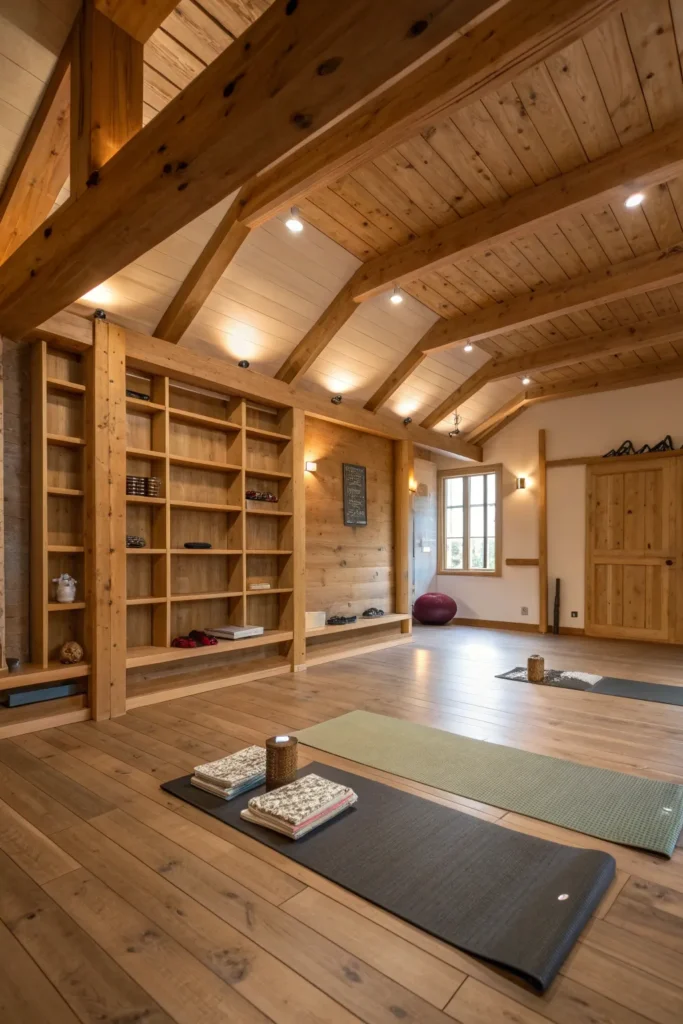
Wood brings instant warmth and familiarity to a yoga studio. Natural wood floors, ceiling beams, shelving, or accent walls introduce organic texture and a sense of grounding. Light to medium wood tones feel especially inviting and pair beautifully with neutral palettes. The presence of wood subtly connects practitioners to nature, fostering calm and stability during practice.
4. Smaller Room Layouts That Encourage Connection
Intimacy is often about scale. Smaller studios or thoughtfully zoned spaces help create a sense of closeness and community. Instead of wide-open halls, warm yoga studios embrace cozier proportions where students feel seen rather than lost. A well-planned layout ensures enough personal space while still maintaining a collective energy that enhances group practice.
5. Textured Walls for Visual and Sensory Comfort
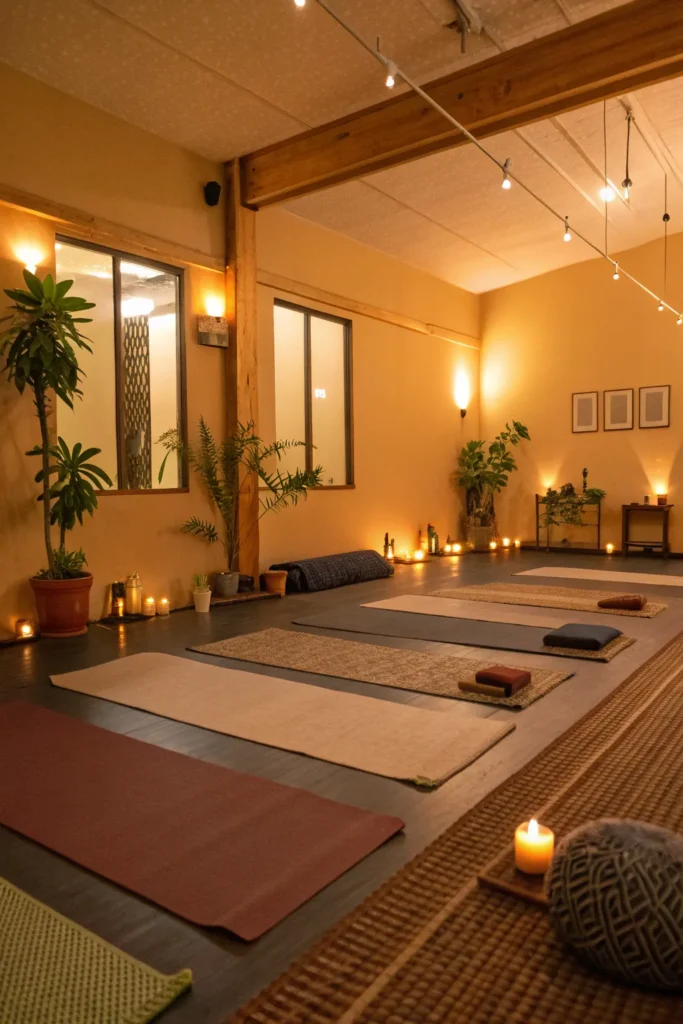
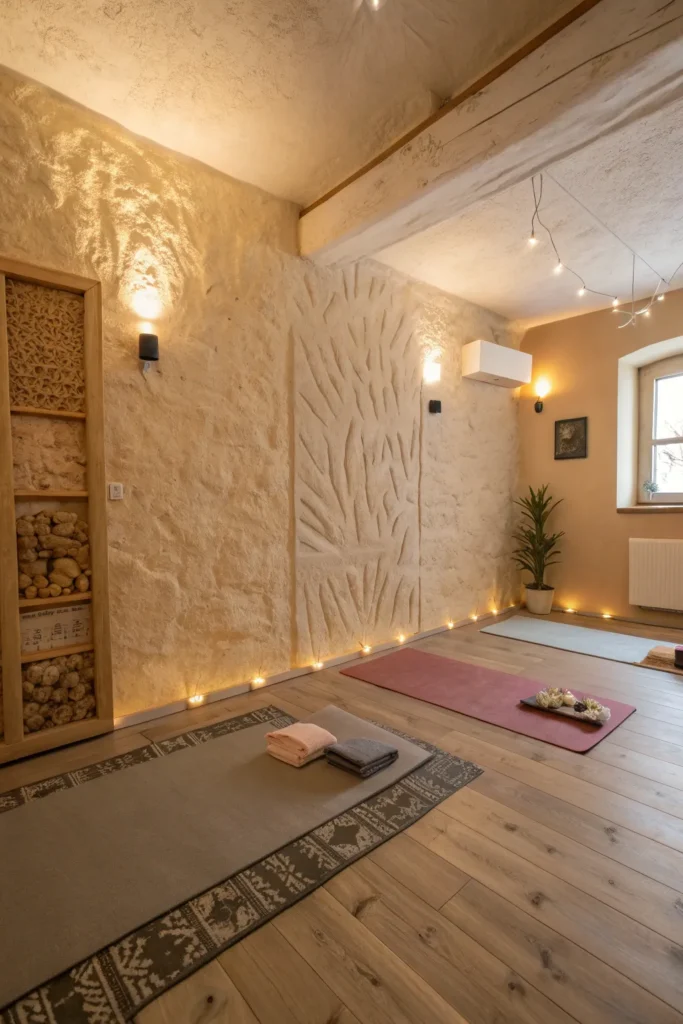
Smooth, stark walls can feel impersonal. Warm yoga studios often incorporate textured finishes such as limewash, clay plaster, or subtle fabric panels. These surfaces softly diffuse light and add visual depth without distraction. Texture brings a sense of craftsmanship and authenticity, making the space feel more human and less clinical.
6. Layered Textiles That Invite Relaxation
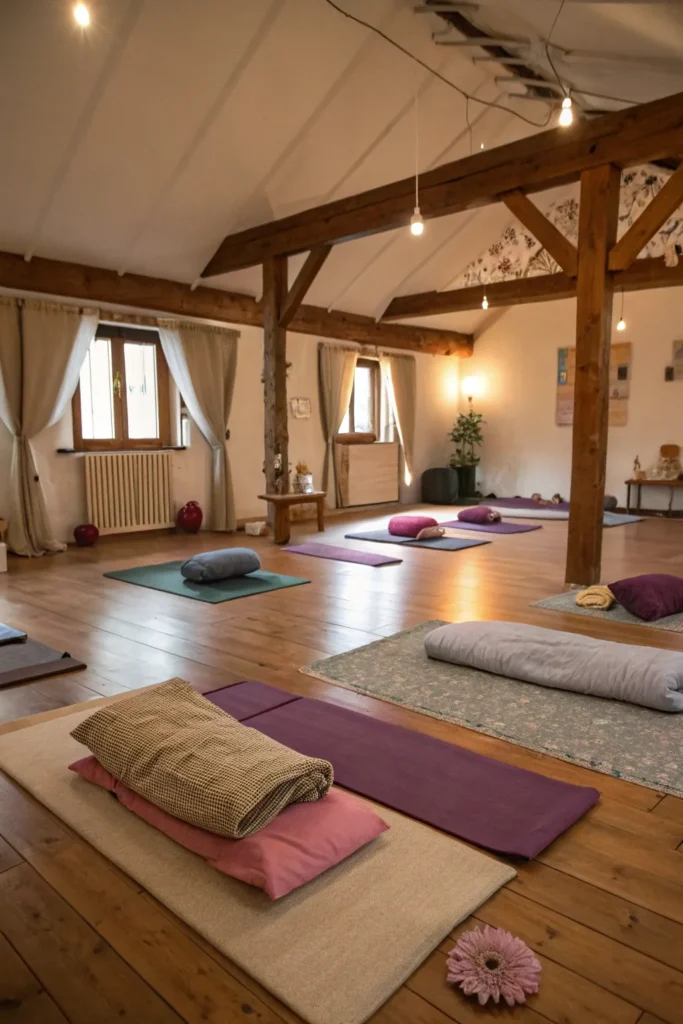
Textiles play a key role in making a yoga studio feel intimate. Linen curtains, cotton floor cushions, wool throws, and upholstered meditation benches add softness and warmth. These layers encourage students to linger before and after class, supporting moments of reflection and rest. Choosing natural fabrics enhances comfort while keeping the space breathable and calm.
7. Earthy Flooring That Feels Gentle Underfoot
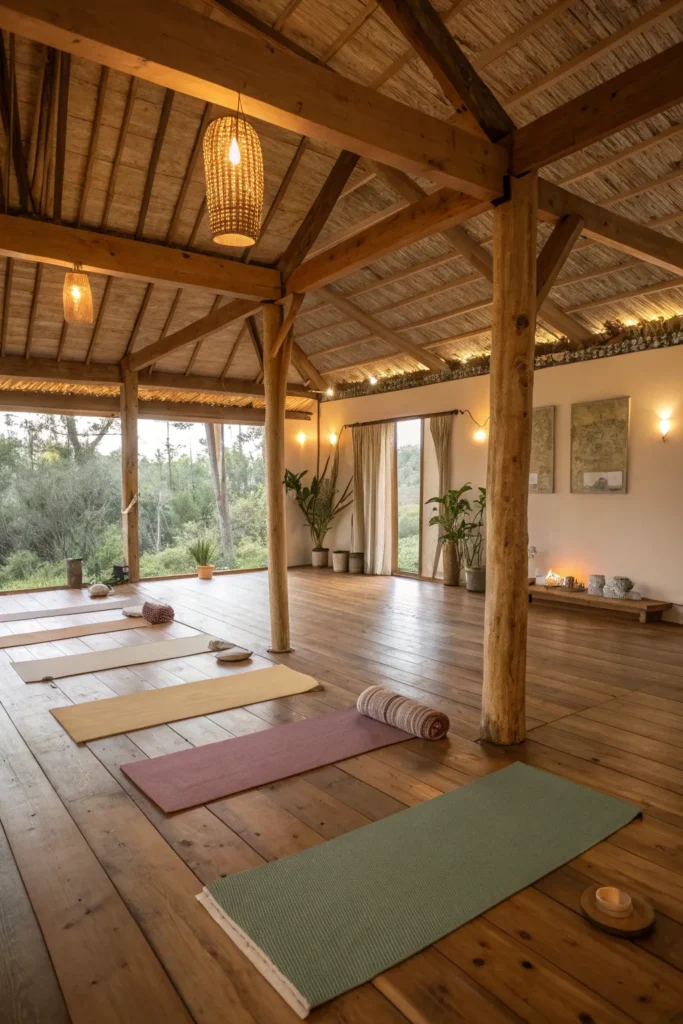
Flooring contributes both physically and emotionally to warmth. Wooden floors, cork surfaces, or padded natural-fiber mats feel softer and more inviting than cold tile or concrete. These materials absorb sound and provide subtle cushioning, enhancing comfort during floor poses and seated meditation.
8. Personal Touches That Feel Thoughtfully Curated
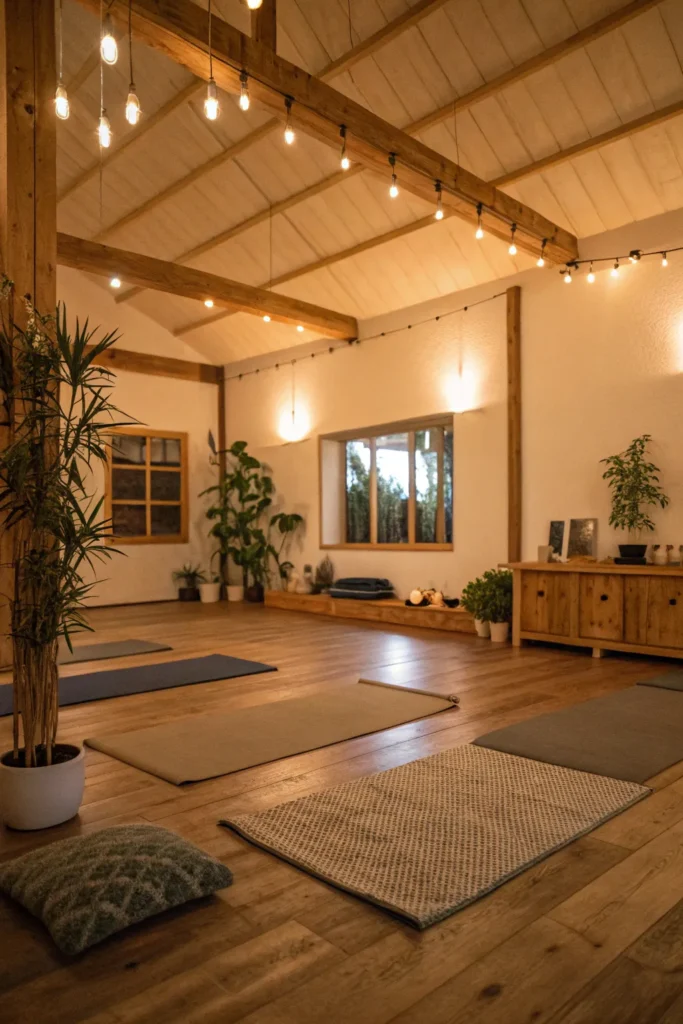
Warm yoga studios often feel personal rather than polished. Handcrafted décor, small ceramic bowls, woven baskets, or locally made art pieces add character and soul. These elements suggest care and intention, helping students feel like guests in a lovingly prepared space rather than clients in a commercial setting.
9. Soft Curtains and Drapery for Enclosure
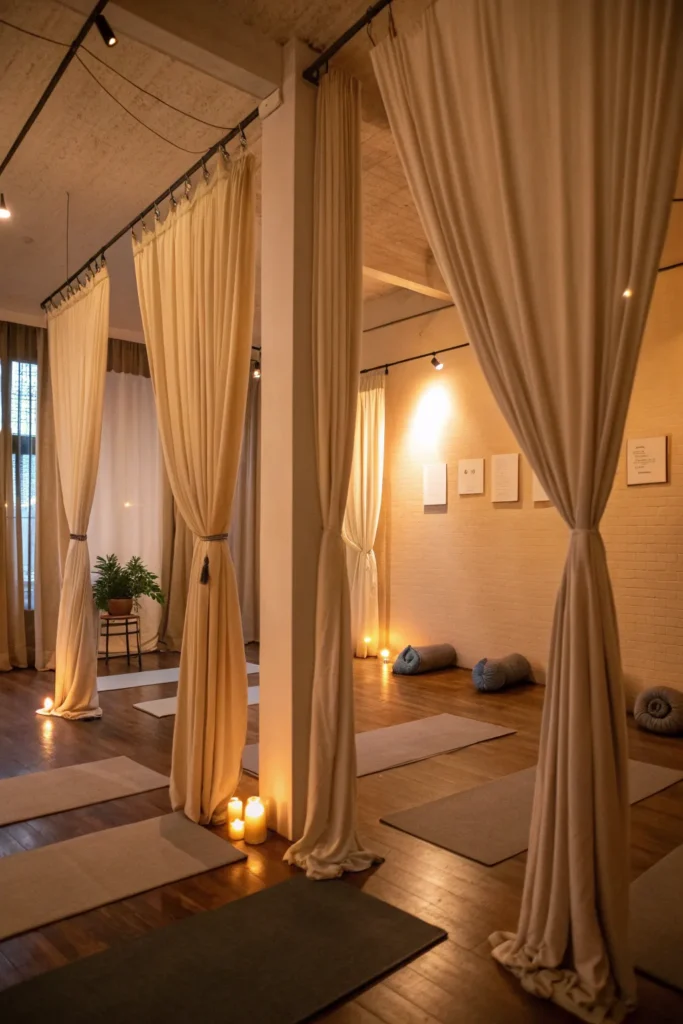
Fabric elements such as curtains or drapes instantly make a space feel more intimate. Sheer or linen curtains soften windows, reduce harsh light, and create a sense of enclosure. In larger studios, curtains can also be used to divide space subtly, offering flexibility while maintaining a cozy atmosphere.
10. Warm, Natural Scents That Soothe the Senses
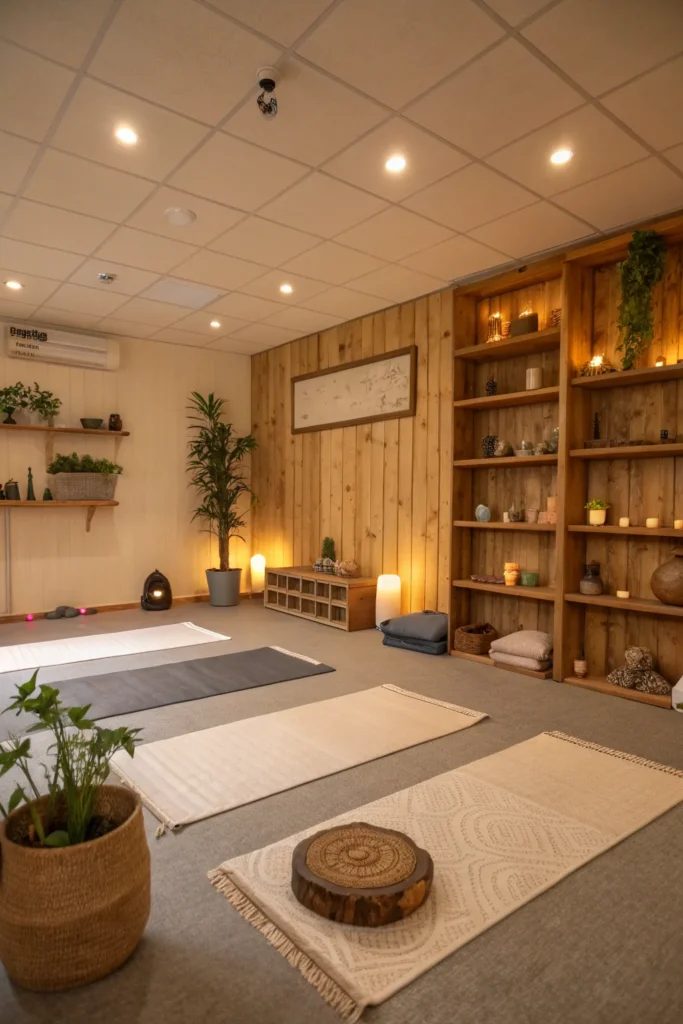
Scent is deeply connected to emotion and memory. Warm yoga studios often use subtle natural aromas like vanilla, sandalwood, cedar, or chamomile. These scents support relaxation without overwhelming the senses. When paired with gentle lighting and soft textures, scent becomes part of the studio’s emotional signature.
11. Quiet Acoustic Design for a Cocooned Feel
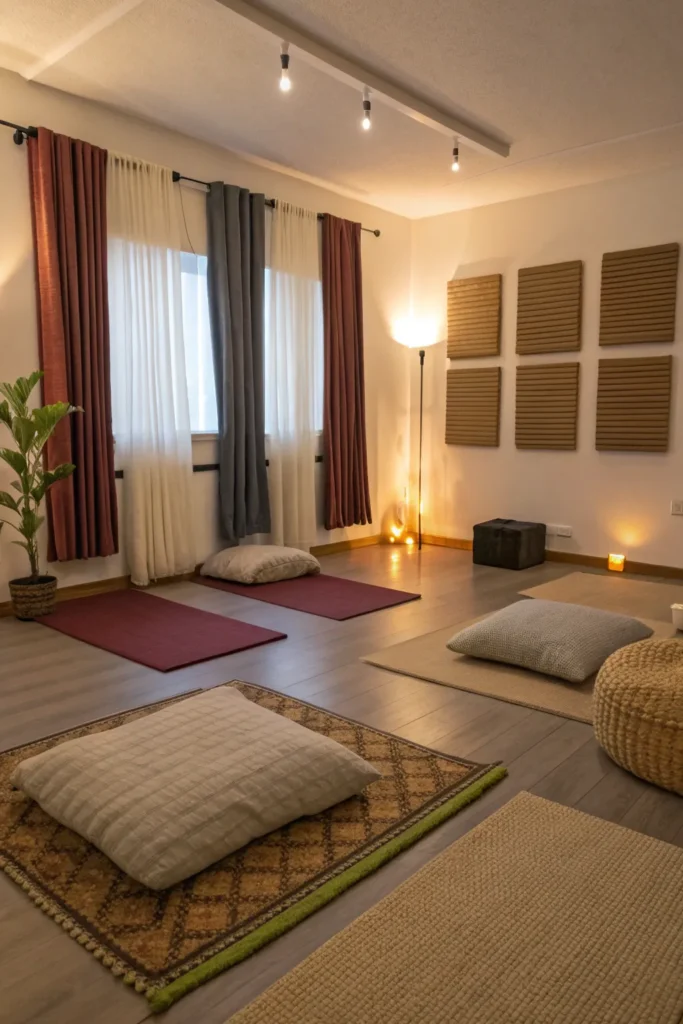
Intimate studios prioritize sound comfort. Soft furnishings, rugs, curtains, and acoustic panels help absorb echoes and external noise. This creates a cocoon-like environment where breath, movement, and spoken guidance feel close and personal. Silence becomes more profound, and sound feels intentional rather than intrusive.
12. Low Seating and Grounded Furniture Choices
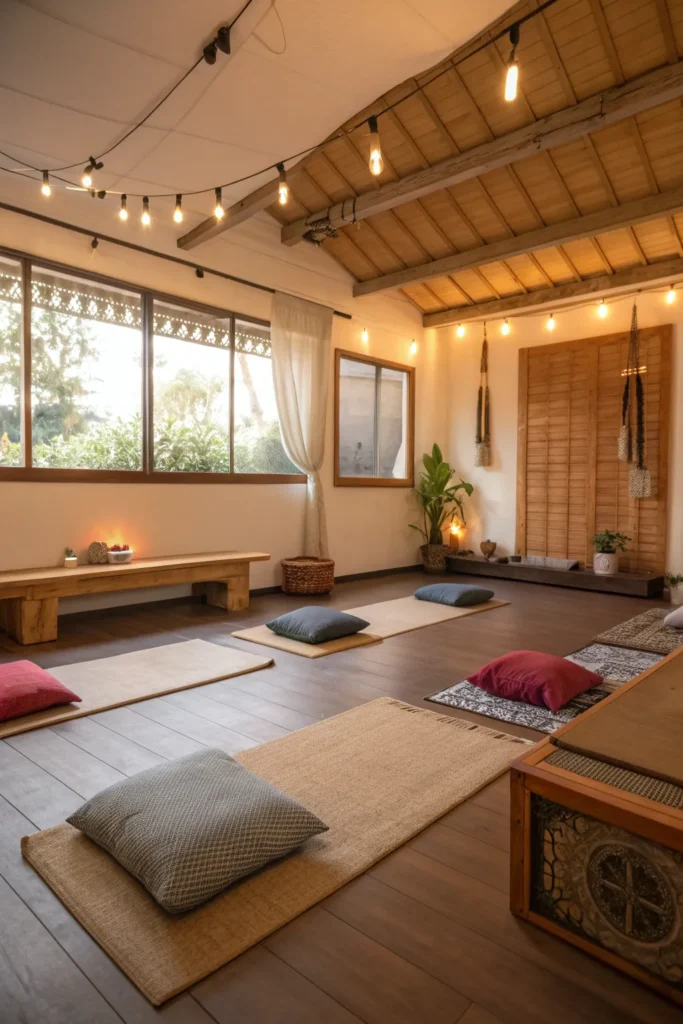
Low-profile furniture enhances feelings of safety and grounding. Floor cushions, low benches, and short shelving keep the room visually calm and physically connected to the earth. This design approach supports mindfulness by subtly encouraging slower movement and deeper presence.
13. Gentle Use of Plants for Life and Warmth
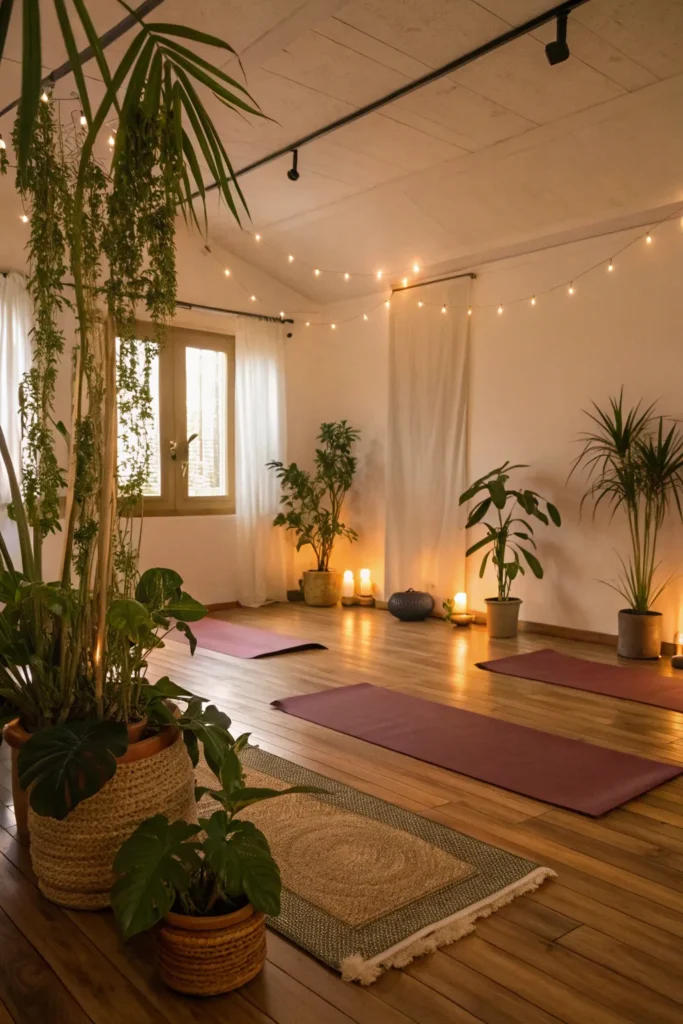
Plants bring warmth without overwhelming the space. Warm yoga studios often feature a few carefully chosen plants with soft, organic shapes. Their presence adds life, improves air quality, and reinforces a nurturing atmosphere. The key is restraint—each plant should feel intentional and easy to care for.
14. A Welcoming Entry That Sets the Emotional Tone
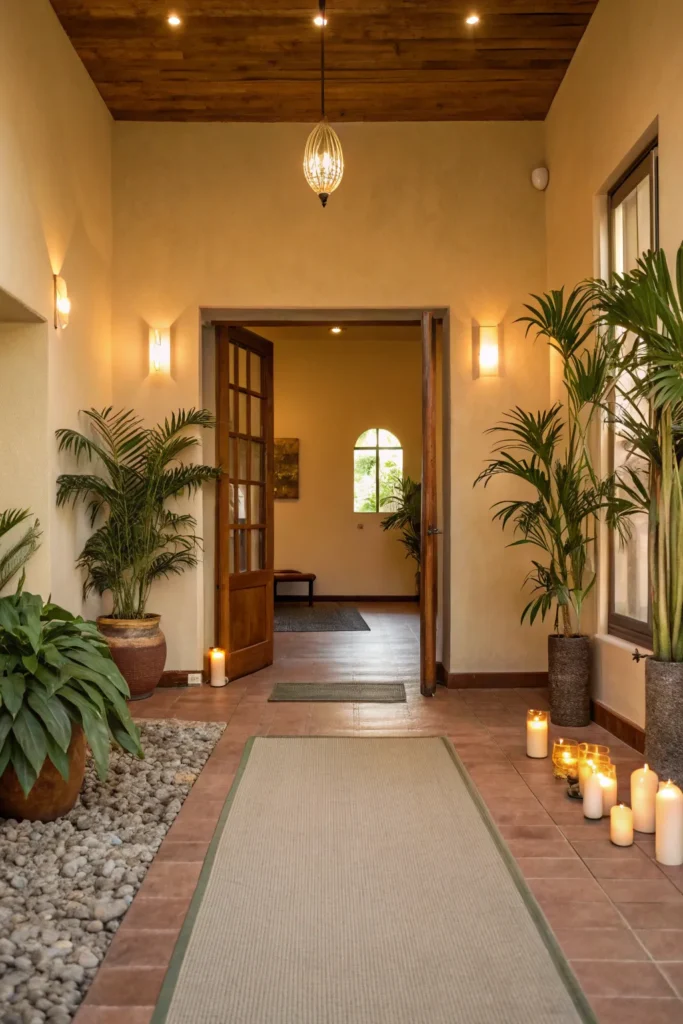
The entrance of a yoga studio shapes the entire experience. A warm and intimate studio greets students with soft lighting, natural materials, and a sense of calm from the very first step. A small bench, a woven rug, or a simple piece of art can signal that this is a place to slow down, let go, and feel supported.
Warm and intimate yoga studio designs are rooted in emotional comfort as much as visual beauty. By focusing on softness, scale, and sensory harmony, these studios create environments where practitioners feel safe to explore both movement and stillness. Whether designed for private practice or small group sessions, warmth transforms a yoga studio into a refuge—one that invites presence, connection, and genuine rest.