15 Yard and Patio String Lighting Ideas
There is a specific quality of magic that string lighting creates in the outdoor environment that no other lighting technology can replicate at any budget level. It is the quality of the suspended, distributed light source, the warm glow of multiple individual bulbs floating at varying heights within the outdoor space, that transforms a backyard or a patio from a functional outdoor area into an environment of genuine atmospheric beauty.
The Japanese lantern festival, the Provençal village square strung with lights above the summer evening tables, the Sicilian terrace whose ceiling of warm bulbs creates the outdoor room of complete Mediterranean romance, all derive their specific magic from the same lighting principle.
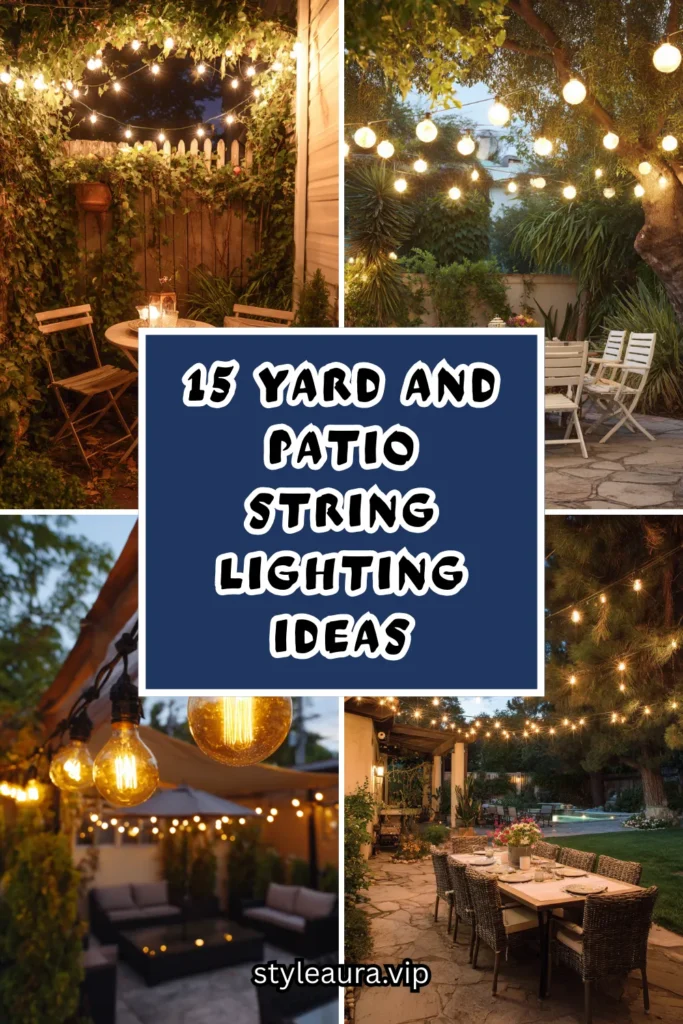
Multiple warm light sources suspended within a defined outdoor volume create an environment of inhabited warmth that the functional flood light, the security spotlight, and the recessed decking light cannot approach in terms of the specific atmospheric quality that makes outdoor spaces genuinely wonderful to occupy after dark.
String lighting’s practical qualities match its atmospheric ones. It is among the most affordable outdoor lighting technologies available. It is among the most easily installed without specialist electrical knowledge.
It is entirely reversible without structural consequence to the garden or the building it is attached to. And it is among the most versatile, applicable to every scale of outdoor space from the smallest balcony to the largest garden, and to every style of outdoor design from the most formally architectural to the most relaxed and informal.
The string lighting ideas collected here span the full range of garden and patio scales, styles, and applications, from the simple single-strand installation that transforms a small balcony to the multi-strand schemes that create the complete outdoor room of genuine atmospheric ambition. Here are fifteen yard and patio string lighting ideas that bring the specific magic of the suspended warm light source to every outdoor space.
1. The Classic Overhead Canopy
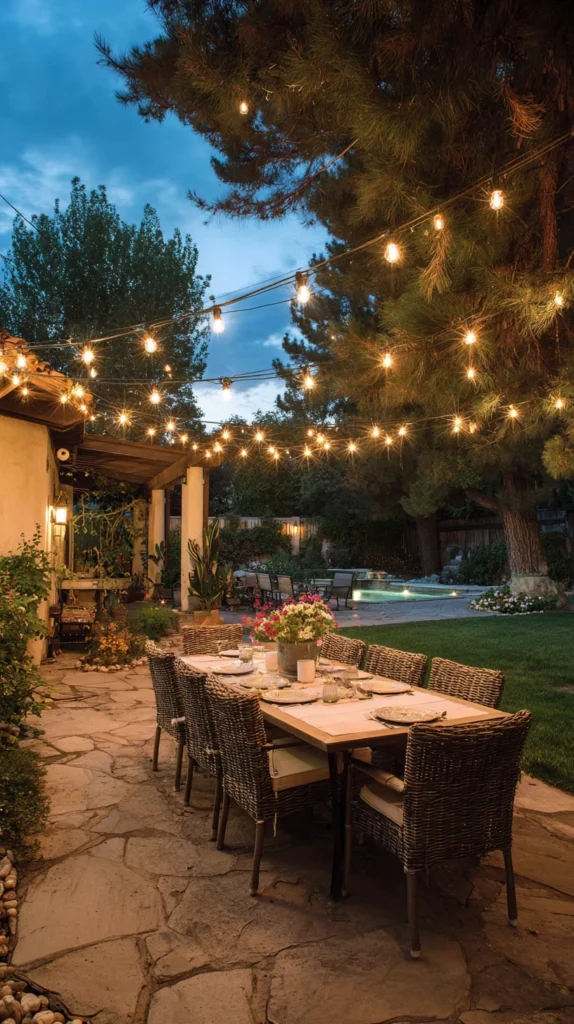
The overhead canopy of string lights, multiple parallel strands suspended horizontally above the patio or outdoor dining area at a consistent height, creates the outdoor room’s ceiling of warm light that is the most complete and most architecturally resolved string lighting installation available.
The canopy’s multiple parallel strands at consistent spacing create the impression of a luminous overhead plane whose warmth and visual density create the enclosed, intimate quality of an indoor room within the open outdoor space.
The canopy installation requires mounting points on opposite sides of the area to be covered, either fixed to the house wall and an opposite garden wall or fence, or fixed to purpose-installed timber or steel posts at the canopy’s perimeter. The mounting points should be of adequate strength for the string lights’ combined weight and the additional wind load that the outdoor environment creates on any suspended structure.
The strand spacing of the canopy determines its visual density and its light output. Strands at thirty centimeter spacing create a dense, richly lit canopy of maximum atmospheric impact. Strands at sixty centimeter spacing create a lighter, more open canopy that admits more of the night sky between the strands.
The specific spacing should be chosen for the relationship between the desired light level and the desired visual density rather than defaulting to either extreme without consideration of the specific atmospheric quality required.
The canopy’s height above the outdoor dining or seating surface should create the impression of a low, intimate ceiling rather than a distant overhead structure. A canopy height of two and a half to three meters above the patio surface creates the intimate ceiling quality of the indoor room translated outdoors. A canopy at greater height loses the intimate ceiling quality and creates a more dispersed, less architecturally resolved overhead light field.
2. The Pergola Wrap
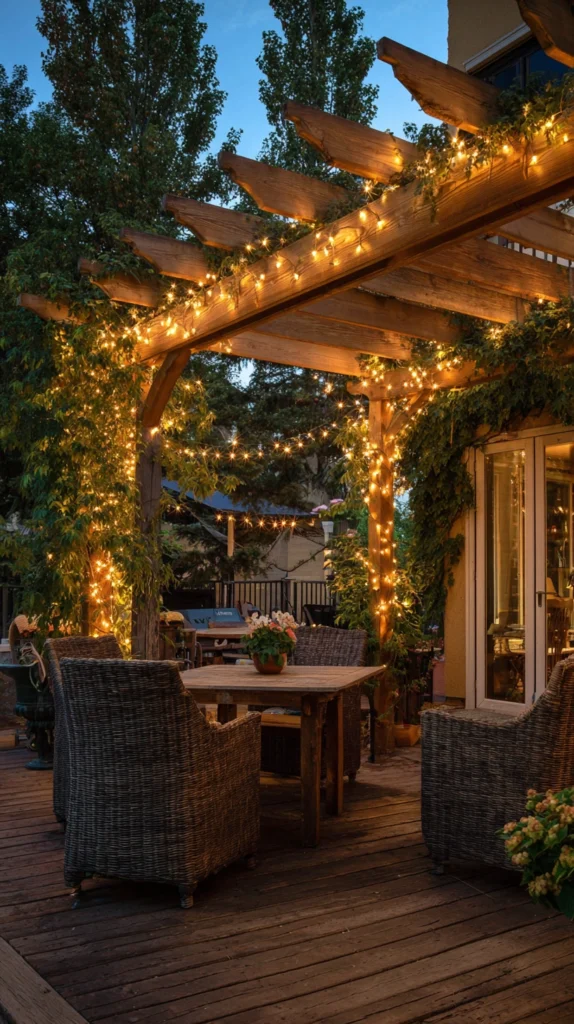
String lights wound around and woven through the structural members of an existing pergola, their strands following the pergola’s beams and rafters in a consistent pattern that covers the structure’s timber elements with warm light, creating the pergola lighting of maximum structural integration and maximum atmospheric impact. The lit pergola after dark creates an outdoor room of complete architectural quality whose warm structure defines the space with light rather than shadow.
The wrapping pattern should be consistent across all structural members of the same type. Beams wrapped in one direction, rafters in another, posts in a vertical spiral. The consistency of the wrapping pattern creates the visual order that the pergola’s multiple structural members require to read as a unified composition rather than a randomly lit collection of timber elements.
The string lights used for the pergola wrap should be of a wire color that matches the pergola’s structural material color when the lights are switched off, so that the daytime appearance of the wrapped pergola reads as clean and considered rather than visually cluttered by the visible wiring.
Green-coated wire on a green painted pergola, black wire on a dark stained pergola, and natural wire on a raw timber pergola each create the color coordination that makes the daytime wire as visually appropriate as the nighttime light.
The pergola wrap’s power supply should be routed through the pergola’s structural elements as unobtrusively as possible, either through a channel routed in the timber surface and filled after installation or through a surface-mounted cable conduit that is painted to match the timber surface and is therefore effectively invisible at the viewing distances the outdoor space creates.
3. The Zigzag Pattern Above the Dining Table
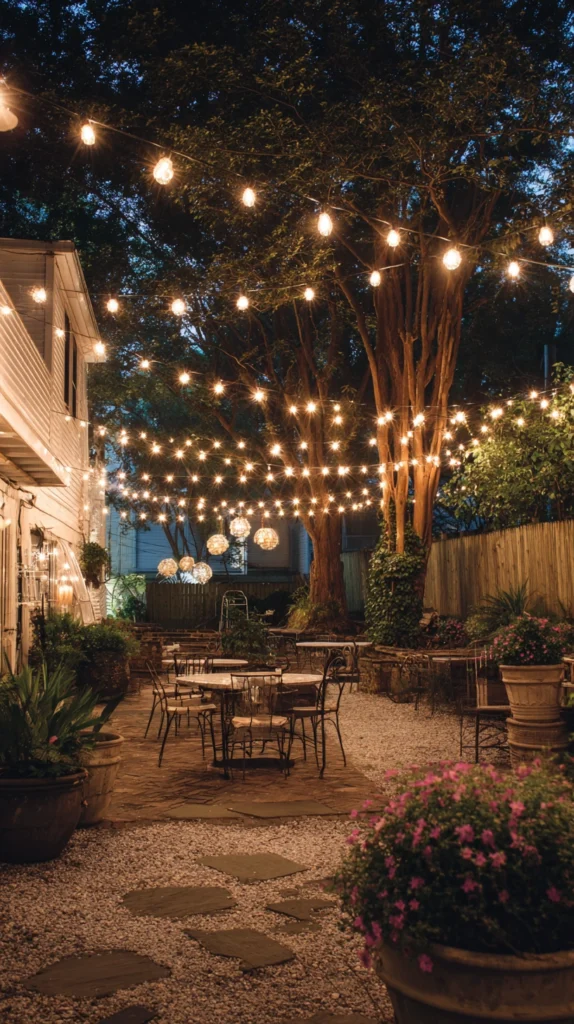
A single strand of string lights strung in a zigzag pattern between multiple mounting points above the outdoor dining table, its diagonal paths crossing and recrossing above the dining surface to create a dynamic, angular overhead light composition, creates the dining area lighting of most visual energy and most contemporary graphic quality available in the string lighting format.
The zigzag pattern’s mounting points should be arranged in a consistent geometric relationship that creates the pattern’s regularity. Mounting points at equal spacing along two parallel edges of the dining area, with the strand alternating between the left edge and the right edge at each mounting point, creates the consistent zigzag whose angular regularity is the pattern’s primary visual quality.
Inconsistent spacing between mounting points creates a zigzag of irregular angles that reads as accidental rather than intentional.
The strand’s tension between mounting points determines the zigzag pattern’s visual crispness. A slack strand creates the soft catenary curve between mounting points that softens the zigzag’s angular quality.
A taut strand creates the crisp, straight diagonal between mounting points that the geometric quality of the zigzag pattern requires for maximum graphic impact. Use a tensioning device at the strand’s termination point to create the tension level appropriate to the desired visual character.
Hang additional decorative elements from the zigzag pattern’s crossing points, small lanterns, dried flower bundles, or botanical hanging ornaments, to create the enhanced visual complexity of a string light installation that is also a decorative composition of multiple material elements. The zigzag pattern’s regular crossing points create the consistent hanging positions that the additional elements need for an organized, considered arrangement rather than a random distribution.
4. The Tree-Wrapped Statement
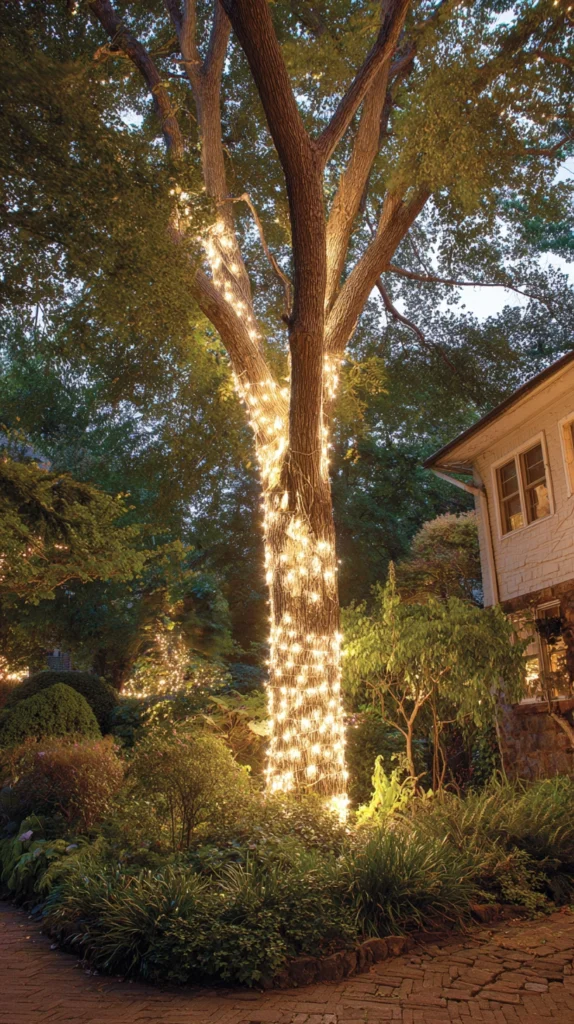
String lights wound around and through the branches of a garden tree, their strands following the tree’s branching structure from the trunk outward to the canopy’s extremities and filling the canopy’s volume with distributed warm light, create the most dramatically beautiful single-element string lighting installation available in the domestic garden. The lit tree after dark is the garden’s most powerful single focal point.
The tree wrapping should begin at the trunk and work outward along each major branch to the secondary branches and eventually to the canopy’s outer extremities.
The consistent outward progression of the wrapping creates the tree lighting whose warmth is densest at the trunk and progressively more diffuse at the canopy’s edges, replicating the natural light gradient of the tree’s structure with the artificial warmth of the string light’s glow.
The strand quantity required for the complete tree wrapping depends on the tree’s specific dimensions and the desired density of the light coverage. A large specimen tree of significant canopy diameter requires a substantially greater strand length than the online calculators typically suggest, and the purchase of additional strand length as a contingency against the underestimation of the required quantity is consistently justified by the experience of running out of lights before the canopy is adequately covered.
The power connection for the tree-wrapped string lights should be made at the tree’s base through a weatherproof outdoor socket positioned at the trunk’s base level. The cable from the outdoor socket to the nearest interior electrical point should be a buried armored cable of adequate specification for the outdoor application rather than a surface-mounted extension cable whose presence on the garden’s ground surface creates both a trip hazard and an aesthetic disruption of the garden’s ground plane.
5. The Boundary Fence Strand
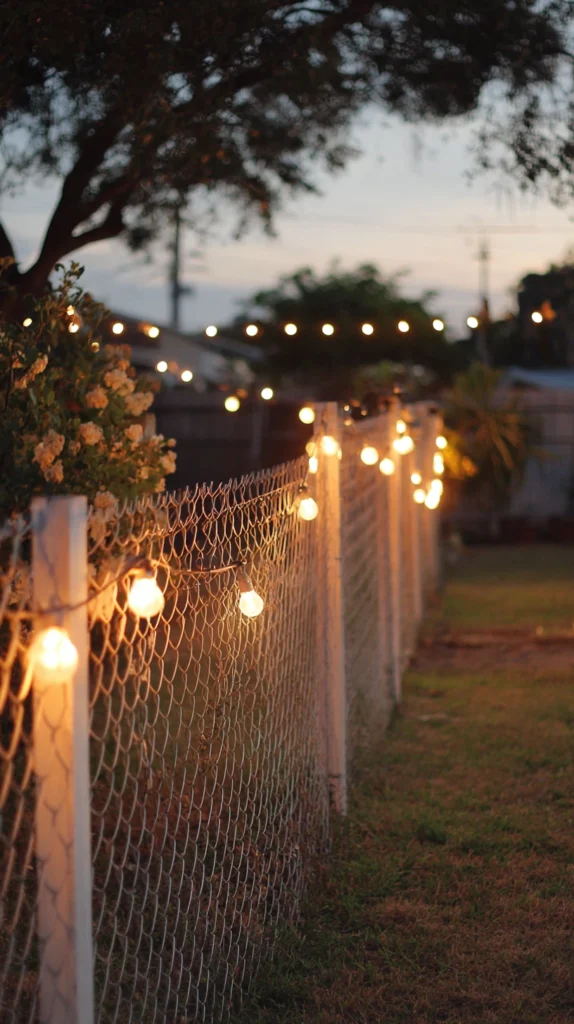
A single strand of string lights fixed along the top edge of the garden’s boundary fence, following the fence line at a consistent height and creating a warm illuminated border at the garden’s perimeter, creates the boundary lighting of most spatial definition and most practical simplicity available in the string lighting format.
The boundary strand defines the garden’s edges with light rather than darkness, creating the inhabited quality of a fully considered outdoor space rather than a garden that simply ends at its boundary fence.
The fence-mounted strand should be fixed at consistent intervals to the fence’s top rail with cable clips of weatherproof specification whose fixing does not damage the fence surface or create the visual disruption of a large or conspicuous mounting hardware.
Small clear plastic cable clips on a clear or dark wire create the virtually invisible mounting system that maintains the fence’s visual quality during the day while providing the functional support the strand requires.
The bulb style of the boundary fence strand should be chosen for the specific visual quality at the close viewing distance that the fence strand creates. Globe bulbs of ten to fifteen centimeter diameter create the boundary strand of maximum decorative presence and warmth. Edison filament bulbs create the industrial, warm quality of the vintage aesthetic. Small fairy light bulbs create the delicate, lightweight strand of minimum visual intrusion.
The power supply for the fence strand can be solar-powered in a garden where a buried cable to the fence line is not practical. A solar panel mounted at the fence’s most sun-exposed point, connected to a battery storage pack that powers the strand from dusk to dawn, creates the self-contained, cablefree fence lighting of complete installation simplicity.
The solar system’s reliability depends on the fence position’s sun exposure, and a fence in deep shade throughout the day requires a mains-connected supply rather than the solar alternative.
6. The Balcony Overhead Grid
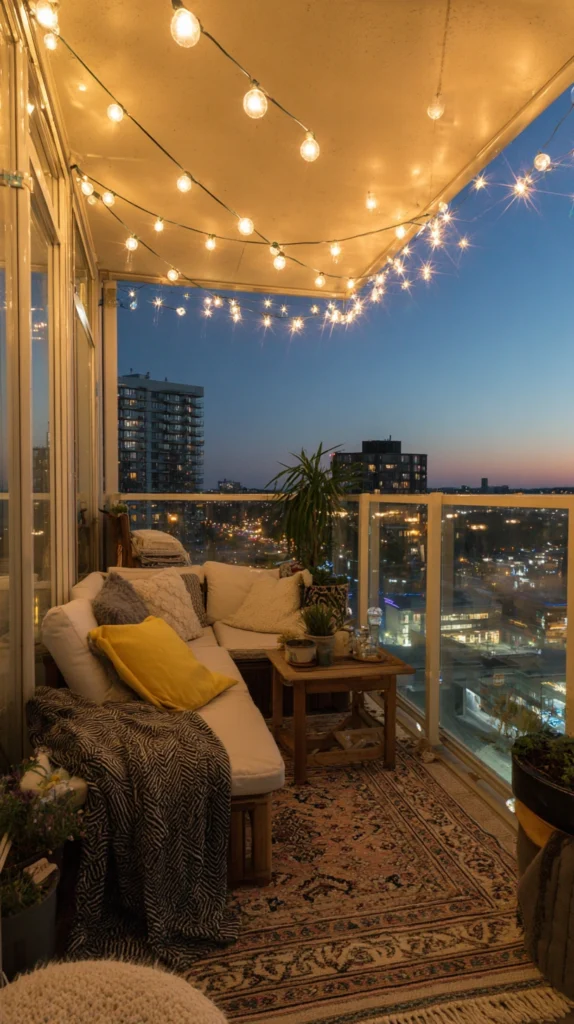
A grid of string lights installed overhead on a balcony or small terrace, its parallel strands at consistent spacing creating the complete overhead coverage of the small outdoor space’s ceiling, transforms the balcony from a purely functional outdoor area into the most intimate and most atmospherically complete outdoor room available to the apartment or townhouse whose outdoor space is limited to the balcony’s modest dimensions.
The balcony grid’s installation benefits from the structural definition of the balcony’s overhead railing on all accessible sides, whose fixing points create the mounting locations for the grid’s perimeter strands without the purpose-installed posts that the larger garden canopy installation requires.
Screw hooks of adequate gauge and weatherproof finish fixed into the balcony’s timber or concrete structure at consistent spacing create the mounting points for the grid’s crossing strands.
The balcony overhead grid’s power supply should be routed through the balcony door’s cable management system rather than through an extension cable draped over the door sill, which creates both the trip hazard of an obstruction at the door threshold and the weather protection problem of a door that cannot be fully closed.
A flat cable of minimal profile routed under the door’s weatherstripping or through a small conduit drilled through the door frame creates the clean, permanent power supply connection that the balcony grid’s year-round use requires.
The balcony grid’s visual transformation of the small outdoor space is most completely experienced when the interior lighting is dimmed or switched off, creating the condition where the balcony’s warm overhead grid is the primary light source for the adjacent interior viewed through the balcony door.
This inside-outside light relationship, the warm outdoor grid visible from the dimmed interior, creates one of the most atmospheric domestic lighting conditions available at any budget or any scale of outdoor space.
7. The Bistro-Style Patio Installation
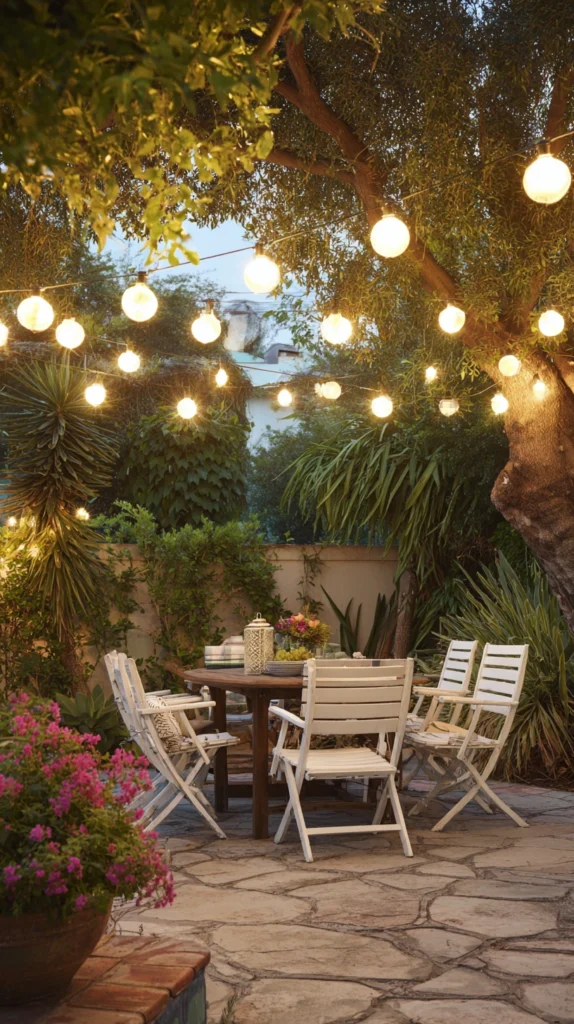
Bistro-style string lights, the large-bulb festoon lights of the French and Italian cafe terrace tradition, installed above a patio dining area in a simple two-strand or three-strand parallel configuration, create the outdoor dining atmosphere of the Mediterranean terrace whose specific warmth and casual elegance is the most widely recognized and most consistently admired outdoor lighting aesthetic in the contemporary domestic design vocabulary.
The bistro strand’s large globe bulbs, typically G40 or G50 format in a warm white or amber filament, create the warm, generous light output of the individual bulb at a scale that is visible and characterful from the dining table below.
The large bulb’s visual presence in the string lighting installation is the bistro aesthetic’s most distinctive quality, and the selection of bulbs of adequate size for the installation’s scale is the most important specification decision in the bistro patio lighting project.
The installation height of the bistro strands above the patio dining surface should be at the low end of the overhead canopy height range, two to two and a half meters, to maximize the intimate quality of the large-bulb light at the dining table below. A bistro installation at greater height loses the specific intimacy of the close overhead bulb that creates the dining atmosphere closest to the terrace restaurant experience the aesthetic references.
The bistro patio installation is most atmospherically complete when additional candlelight is provided at the dining table surface below the string lights, creating the layered warm light of the overhead bistro strands and the intimate tabletop candlelight simultaneously. The combination of the overhead suspended light and the table-level flame creates the warm, multi-source lighting environment of the finest outdoor dining experience available in the domestic setting.
8. The Pathway Marker Strand
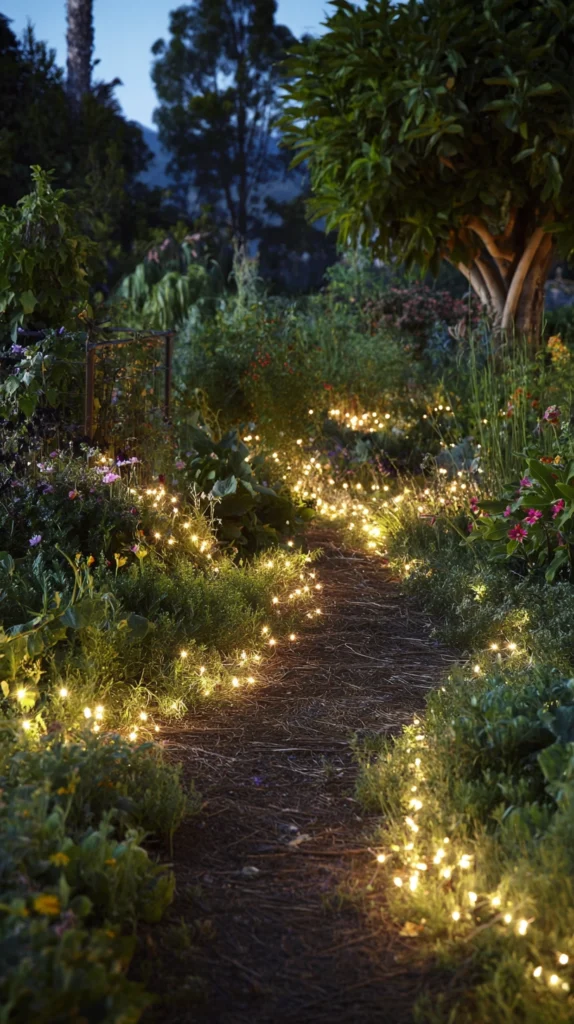
String lights strung along the garden path at low level, their strand following the path’s course between the house and the garden’s destination features, its individual bulbs casting the warm illumination of a lit path that is simultaneously practically functional and aesthetically beautiful, creates the pathway lighting of most personal and most atmospheric quality available in the domestic garden’s lighting vocabulary.
The pathway string lighting can be installed in several configurations depending on the path’s specific character. A strand fixed to low wooden stakes on one or both sides of the path at a consistent height of thirty to fifty centimeters above the path surface creates the pathway border lighting of most formal character. A strand draped loosely through the planting at the path’s edges creates the more informal, more naturalistic pathway lighting of most organic quality.
The bulb type for the pathway strand should be chosen for its light output at the low mounting height that the pathway application creates. A small, low-output fairy light bulb at thirty centimeters above the path surface provides adequate wayfinding illumination without the glare that a larger, higher-output bulb at the same low mounting height would create at the eye level of the seated garden user.
The pathway lighting’s functional requirement is wayfinding rather than area illumination, and the light output specification should reflect this more modest functional requirement.
The pathway string lighting’s power supply routing should be buried below the path surface or below the planting at the path’s edge in an armored cable of weatherproof specification, eliminating the surface cable that the pathway application would otherwise require across the walking surface.
The buried cable creates both the safety of a trip-hazard-free path and the aesthetic quality of a string lighting installation whose power supply is completely invisible from every viewpoint along the pathway.
9. The Pergola-to-Tree Cathedral
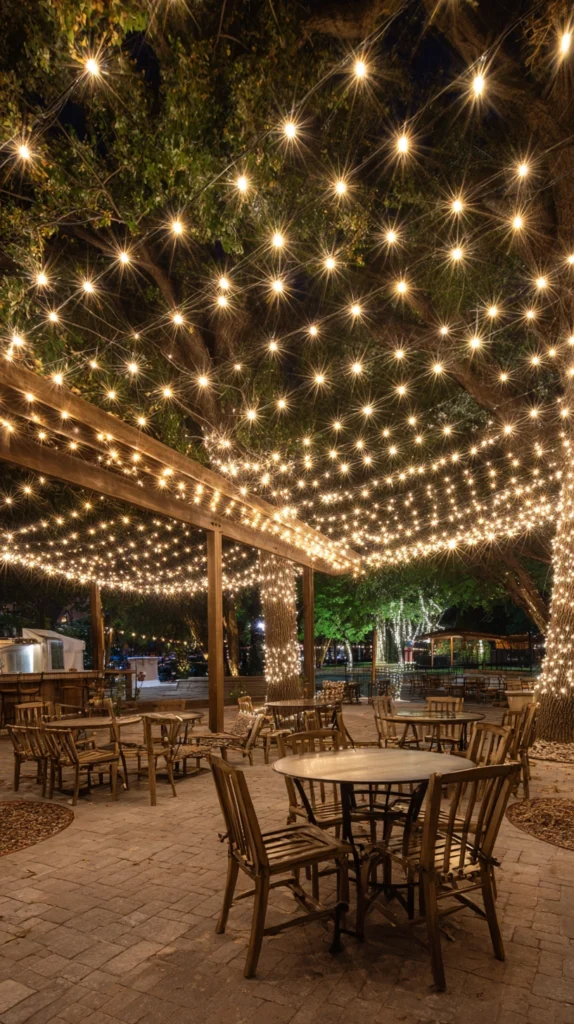
A string lighting installation that connects the patio pergola to an adjacent garden tree with multiple strands of lights suspended between the two structures at varied heights, their combined overhead coverage creating the impression of a cathedral-like vaulted space of warm light above the outdoor seating area, creates the most dramatically ambitious and most spatially generous string lighting installation available in the domestic garden.
The multiple strands between the pergola and the tree should be installed at varied heights rather than at a consistent level, with the lowest strand at the minimum headroom height of two and a half meters and the highest strands following the tree’s canopy height and the pergola’s ridge height. The varied height of the multiple strands creates the impression of a vaulted space rather than a flat canopy, with the visual depth of the height variation creating the cathedral quality of a space that rises and falls within its overhead light composition.
The connection points on the tree must be made with tree-friendly fixings that do not damage the tree’s bark or create the constriction of the tree’s growing girth that a fixed cable tie or a nail would eventually produce.
Adjustable cable ties of adequate length that can be loosened as the tree grows, or fabric-wrapped cable systems specifically designed for tree mounting, create the tree-safe fixing that the installation requires for the long-term health of the tree that is the installation’s primary structural support.
The cathedral installation’s power management requires a single, adequately specified supply circuit rather than multiple independent power supplies for each strand, which creates the individual strand failure and the multiple plug point requirement that the unified circuit eliminates.
A single timer-controlled outdoor circuit of adequate amperage for the full installation’s combined load, connected to a weatherproof distribution point within the installation area, creates the operational simplicity and the synchronized switching that the multi-strand installation requires.
10. The Entertaining Perimeter
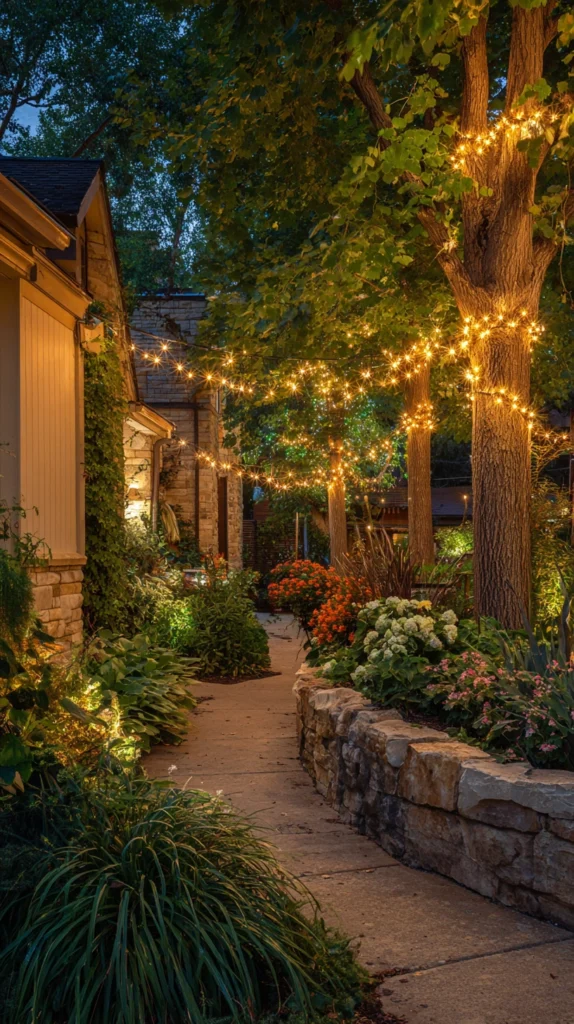
A string lighting installation that defines the full perimeter of the entertaining garden or patio, its strands following the boundary fence, the planting border, the retaining wall, and every other perimeter element of the outdoor entertaining space at a consistent height, creates the outdoor room definition of maximum spatial completeness.
The lit perimeter creates the impression of walls of warm light that enclose the entertaining space with the same spatial definition that physical walls provide to an interior room.
The perimeter installation’s height consistency is its most important visual quality. Strands that vary in height along the perimeter’s length create the visual disorder of a boundary that is not controlled by a single, consistent design intention.
A strand at a consistent height of one and a half to two meters along the full perimeter length creates the architectural quality of a defined horizontal plane at the outdoor room’s edge.
The perimeter installation’s power supply routing challenges are greater than for the overhead canopy or the tree wrap, as the perimeter’s path around the garden’s full boundary creates a cable run of considerable length whose routing must avoid the hazards of the ground-level cable while maintaining the aesthetic quality of a string lighting installation without visible power cabling.
A buried perimeter cable of weatherproof specification with surface outlets at consistent spacing provides the invisible power supply infrastructure that the perimeter installation requires.
The perimeter lighting’s relationship to the interior planting is the installation’s most nuanced design quality. Strands installed in front of dense planting at the boundary create the warm glow of backlit foliage that is one of the string lighting installation’s most beautiful incidental effects, the warm light catching the leaves of the planting from behind and creating a luminous green quality that the front-lit plant cannot achieve. Position perimeter strands with consideration of this backlit planting effect as a deliberate design feature rather than an incidental consequence of the installation’s placement.
11. The Vintage Edison Festoon
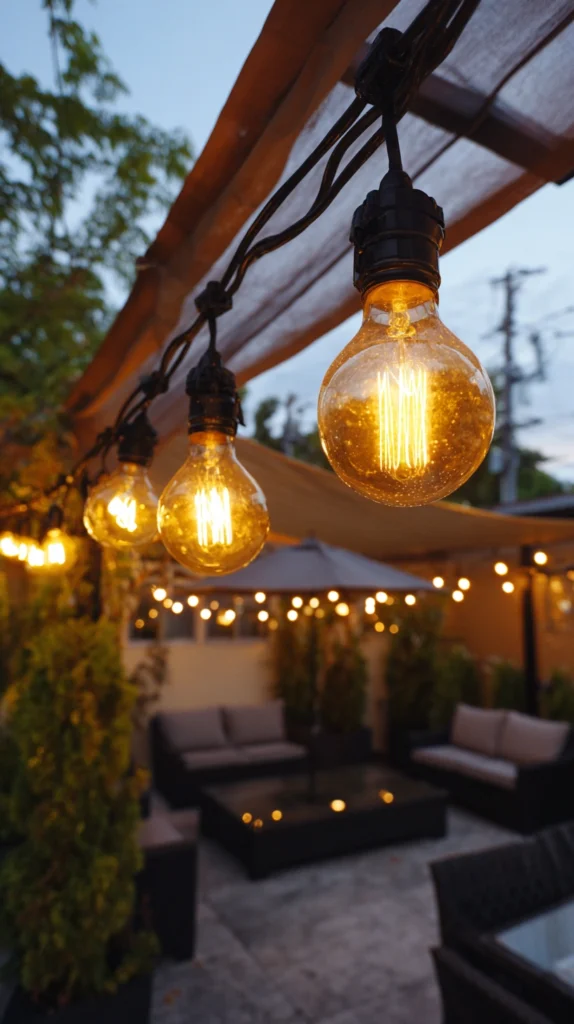
A festoon of vintage Edison-style bulbs, their visible filaments creating the specific warm amber glow of the incandescent era translated into the LED technology of the contemporary string light, suspended above the outdoor entertaining area in a simple swag or a more elaborate multi-point installation, creates the string lighting installation of most nostalgic atmospheric quality and most universal aesthetic appeal.
The Edison filament’s specific quality of visible warmth, the amber glow of the carbon filament replica or the decorative LED filament visible within the clear glass envelope, creates the light source of most atmospheric quality at the closest viewing distance of any string light bulb type.
The visible filament creates the warm point of light whose character is entirely distinct from the hidden light source of the frosted bulb.
The swag configuration of the Edison festoon, a single strand suspended between two mounting points in a generous catenary curve whose low central point creates the intimate hanging proximity of the large warm bulb to the space below, is the installation format that creates the most atmospheric and most photographically compelling outdoor lighting condition available with a single strand.
The swag’s generous curve is the outdoor string lighting installation’s most romantic and most enduring visual composition.
Choose the Edison bulb’s wattage and lumen output for the specific outdoor entertainment application’s light level requirement. The Edison festoon as the primary entertainment area light source requires adequate lumen output for the social function of outdoor dining and gathering.
The Edison festoon as a decorative supplement to other outdoor lighting requires less output and can prioritize the visual character of the filament glow over the functional output of the light level.
12. The Solar Garden Party Strand
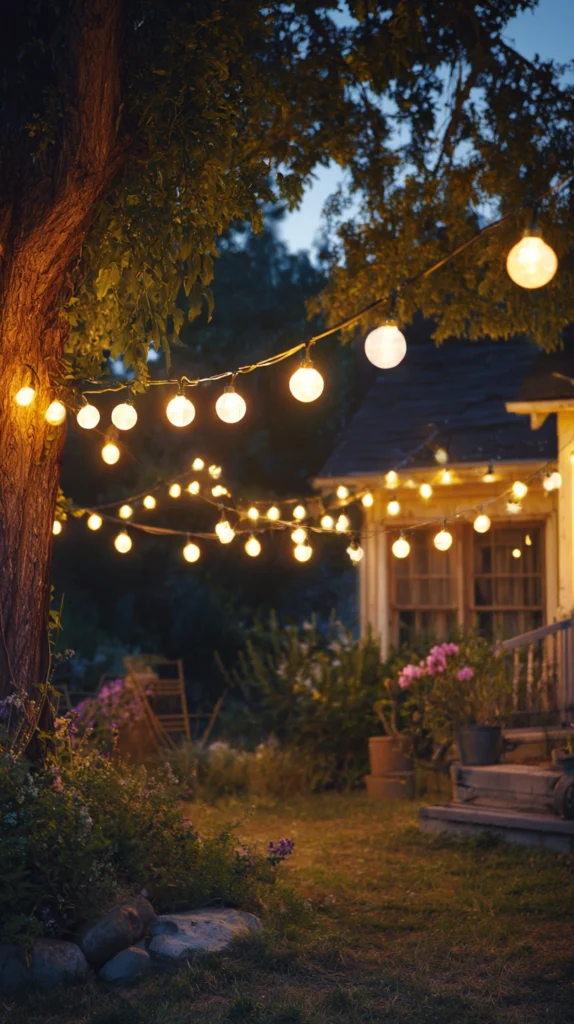
A solar-powered string lighting installation, its panel mounted at the garden’s most sun-exposed position during the day and its strand illuminating the outdoor space from dusk to dawn without any mains electrical connection, creates the most easily installed and the most practically convenient outdoor string lighting for the garden whose electrical infrastructure does not extend to the specific outdoor areas where the string lighting is most desired.
The solar system’s reliability is directly proportional to the solar panel’s daily sun exposure, and the installation planning should begin with an honest assessment of the mounting position’s actual sun exposure hours rather than the theoretical maximum that the site’s latitude and orientation suggest. A panel in partial shade for a significant portion of the day creates a battery charge that is inadequate for the full-night illumination that the system’s specification promises under full-sun conditions.
Modern solar string lighting technology has improved significantly in both the panel’s charging efficiency and the battery’s energy density, creating solar string lighting systems of adequate performance for the outdoor entertaining application in the climates where summer sun exposure is reliable.
The winter performance of the same system in the same installation is typically significantly reduced by the shorter day length and the lower sun angle, and the installation should be assessed for its winter performance if year-round use is required.
The solar string lighting’s control system, typically a simple dusk-to-dawn sensor with a manually selectable lighting mode, should be set to the mode appropriate to the installation’s primary use. A constant illumination mode provides the maximum light output at the cost of the battery runtime that the more conservative timed mode extends.
The entertaining garden installation benefits from the constant mode during events and the timed mode for the regular background illumination of the garden’s non-event nights.
13. The Holiday-Extended Year-Round Strand
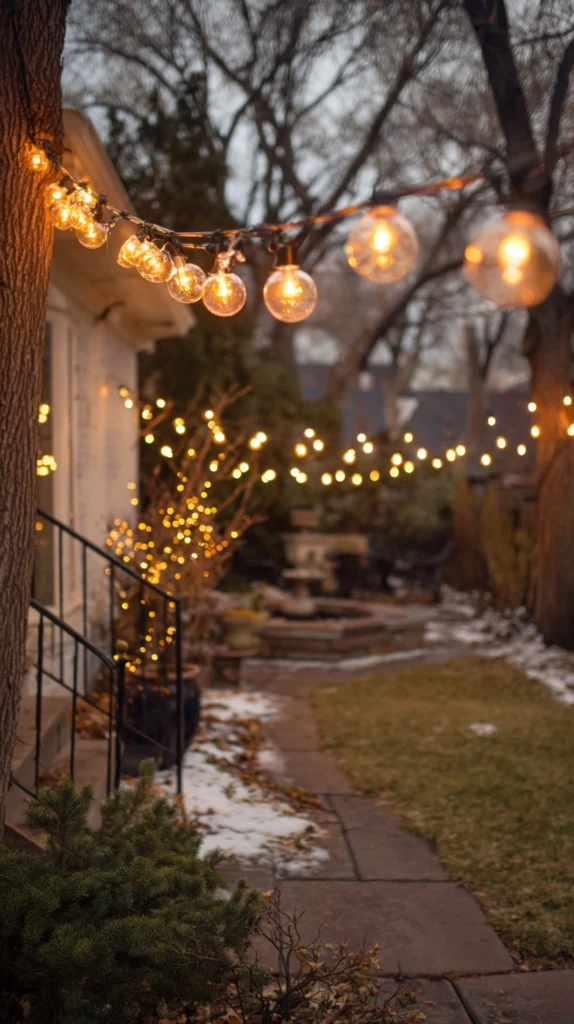
A string lighting installation originally conceived for seasonal holiday decoration, extended beyond the holiday season into a permanent year-round outdoor lighting feature, creates the most practical and most immediately achievable permanent string lighting installation available to the homeowner whose outdoor lighting budget is limited but whose desire for the warm, atmospheric quality of the string light is year-round rather than seasonal.
The transition from temporary holiday to permanent installation requires the assessment and if necessary the upgrade of the installation’s fixings, its power supply connection, and its weather protection for the year-round outdoor conditions that the temporary holiday installation’s more fragile components may not adequately withstand.
Clips designed for temporary seasonal use, extension cables with inadequate weatherproofing, and light strings with inadequate IP ratings are the three elements most frequently requiring upgrade for the permanent outdoor installation.
The permanent year-round installation’s bulb replacement strategy should be established at the time of the initial installation rather than deferred until the first bulb failures create the urgency that deferred planning always generates.
String lights with individually replaceable bulbs allow the replacement of failed individual bulbs without the replacement of the entire strand. String lights with non-replaceable integrated LED modules require the replacement of the full strand section when any individual light fails, creating the additional cost and the aesthetic disruption of the mismatched replacement strand.
The year-round string lighting installation’s contribution to the garden’s aesthetic quality extends beyond its evening atmospheric function to include the daytime visual quality of the strand itself as a garden decorating element.
A strand of warm-toned wire with amber glass globe bulbs creates a daytime garden feature of considerable warmth and charm even without illumination. A strand of clear wire with small frosted bulbs creates a virtually invisible daytime presence that asserts itself exclusively through the warm illumination of the evening hours.
14. The Intimate Seating Nook Strand
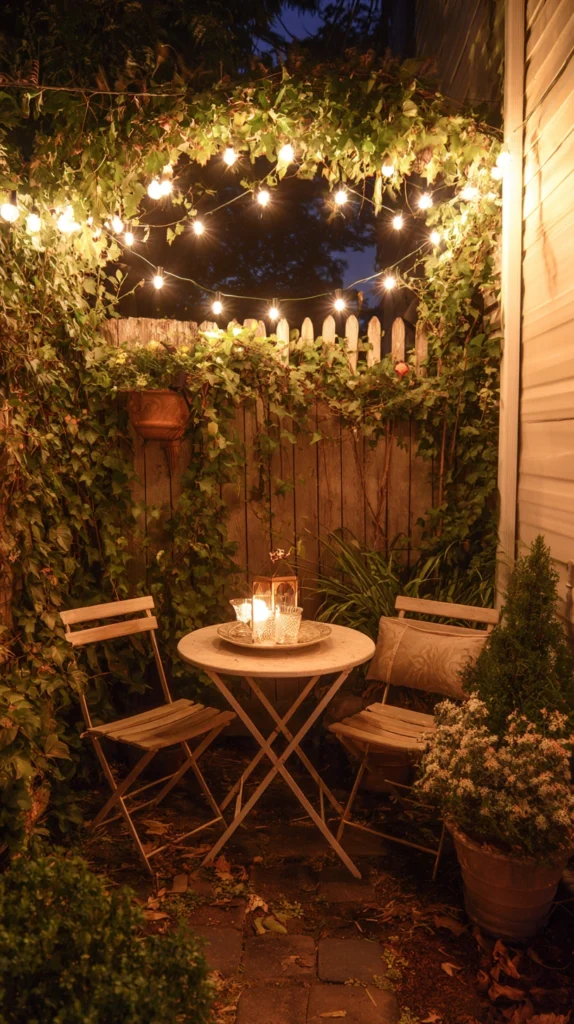
A string lighting installation specifically designed for a single intimate seating nook within the garden, its strand creating the specific pool of warm light above and around a single chair, a garden bench, or a small bistro table, creates the most personally intimate and most focused outdoor lighting installation available in the residential garden.
The nook lighting’s specific quality is its abandonment of the area-wide illumination ambition of the canopy or the perimeter installation in favor of the single, perfectly lit place.
The nook installation’s strand should be arranged to create an overhead enclosure of light above the seating position rather than a directional light source that illuminates the seating from a single angle.
A loop of string lights above the seating, attached to the surrounding planting, to a simple timber frame, or to the overhead structure of a pergola or an arch, creates the warm enclosure of a room-within-a-room quality that the focused nook installation most perfectly achieves.
The nook installation’s light level should be calibrated for the reading function if the seating nook is used for outdoor reading, requiring an adequate lumen output for the comfortable reading of text in the outdoor evening environment.
A light level that is adequate for the atmospheric quality of the outdoor evening space but insufficient for comfortable reading creates the frustration of a beautiful space that cannot serve the function for which the seating was specifically placed.
A small side table within the illuminated nook, holding a candle or a small lantern that supplements the string light overhead with the tabletop flame of the most intimate light source available, creates the layered lighting of the nook at its most complete atmospheric quality.
The combination of the warm overhead string light and the intimate tabletop flame creates the outdoor seating nook of absolute evening perfection within the simplest and most economical installation budget of any string lighting application in the residential garden.
15. Design the String Lighting System as a Whole Garden Story

The final string lighting idea is the most comprehensive and the most transformative for the homeowner whose garden currently has no cohesive outdoor lighting strategy. It is the design of the string lighting installation not as a series of individual applications in different garden areas but as a complete, unified lighting narrative that tells the story of the garden’s spaces, its destinations, and its spatial hierarchy through the consistent language of the string light.
The whole-garden string lighting narrative begins with the identification of the garden’s primary outdoor rooms, the dining area, the seating area, the fire pit zone, and any other defined outdoor spaces whose specific function benefits from its own specific lighting treatment.
Each space receives the string lighting treatment appropriate to its function and its scale, the overhead canopy for the dining area, the perimeter strand for the seating zone, the intimate nook installation for the reading corner.
The connection between the garden’s individual string-lit spaces is provided by the pathway strand that guides movement between them, its warm low-level lighting creating the lit journey between the garden’s destinations rather than the unlit darkness that separates uncoordinated individual lighting installations.
The pathway strand is the garden lighting narrative’s connective tissue, creating the experience of a garden that is fully inhabited and fully considered from its entry point to its most remote destination.
The whole-garden string lighting system’s power management, its switching, its timing, and its dimming capability, should be controlled from a single, centrally located control system that allows the entire garden’s lighting to be managed from one point rather than the individual switching of each installation’s separate power supply.
The unified control system creates the operational convenience and the lighting consistency that the whole-garden string lighting narrative requires to function as the complete, unified outdoor experience it is designed to be.