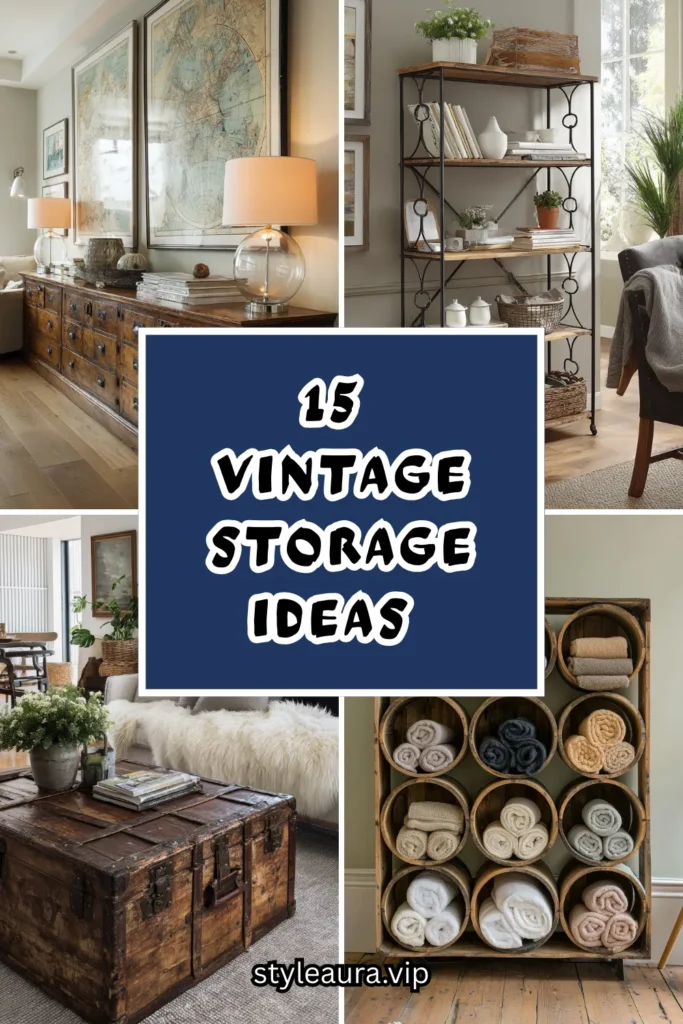
15 Vintage Storage Ideas for a Home Full of Character
Vintage storage solves a practical problem and creates a beautiful home simultaneously. While flat-pack storage units disappear into a room’s background — functional but forgettable — a genuine vintage storage piece becomes a focal point, a conversation starter, and a carrier of history that no new furniture can replicate regardless of its price point.
Old furniture was built to last — from solid timber, with joinery techniques and material thicknesses that modern flat-pack construction cannot match. A vintage oak dresser or a reclaimed timber trunk will outlast any contemporary equivalent by decades and look better with every passing year rather than worse.
Here are 15 vintage storage ideas that bring genuine character, genuine history, and genuine practical usefulness to every room in the home.
1. Vintage Wooden Dresser as Kitchen Storage
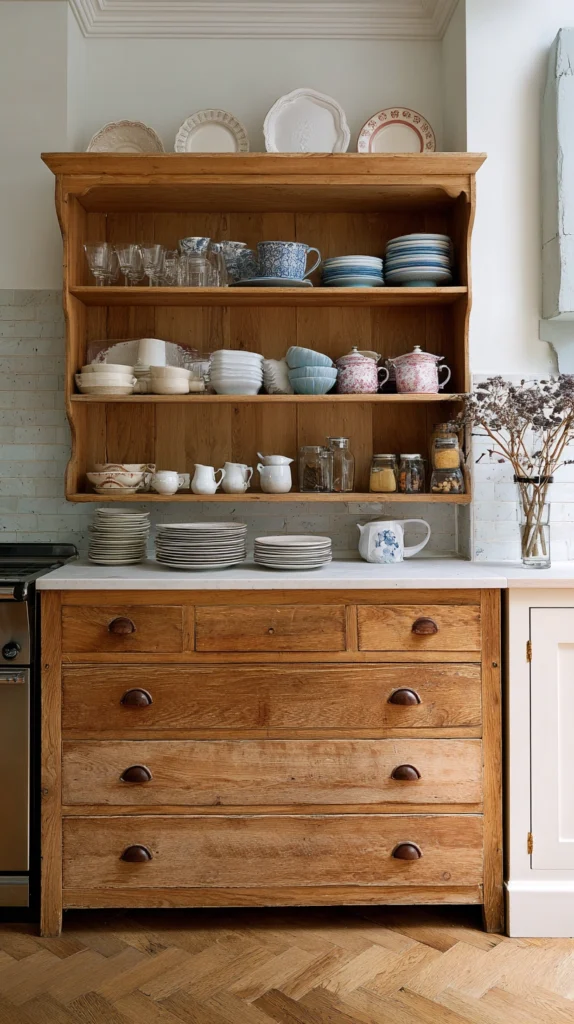
A vintage wooden dresser — the traditional two-part piece with drawers and cupboards below and open shelving with plate rails above — creates a kitchen storage feature of extraordinary warmth and practical generosity that no modern kitchen unit replicates.
Display everyday crockery and glassware on the upper shelves, store less frequently used items in the drawers below, and use the broad worktop surface at a convenient working height. Three storage functions in a single beautiful piece.
Pro Tip: Choose a dresser in a timber tone that complements rather than exactly matches existing kitchen cabinet color. An exact match creates the impression of a mismatched coordination attempt. A complementary contrast — a warm oak dresser alongside painted cabinets — creates a deliberately eclectic aesthetic that suits the vintage character of the piece far better than any attempt at uniform matching.
2. Vintage Trunk as Coffee Table Storage
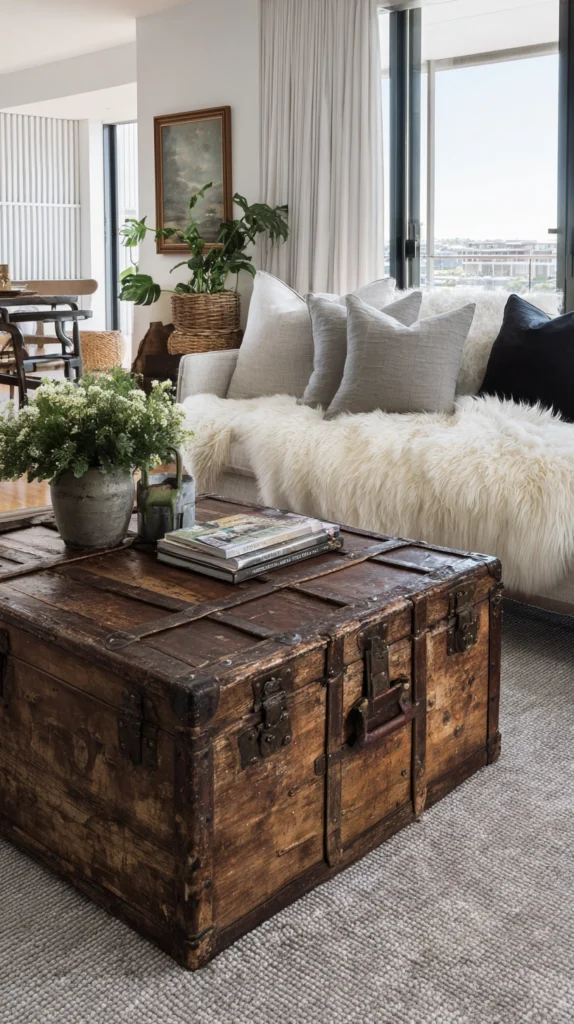
A large vintage trunk — a travel chest, a blanket box, or a military campaign chest — used as a living room coffee table creates a storage piece of considerable practical capacity and extraordinary decorative character.
The trunk surface serves as the coffee table top while the interior conceals blankets, spare cushions, board games, and all the accumulated clutter that makes living rooms feel chaotic when left on open surfaces.
Pro Tip: Fit the interior with a removable timber tray insert that sits within the trunk at a convenient depth below the lid. The tray creates a defined upper zone for frequently accessed items — remote controls, candles, coasters — while preserving the deeper interior for bulkier items like spare blankets. The tray lifts out completely for access to the trunk’s full depth when needed.
3. Antique Apothecary Cabinet for Small Item Storage
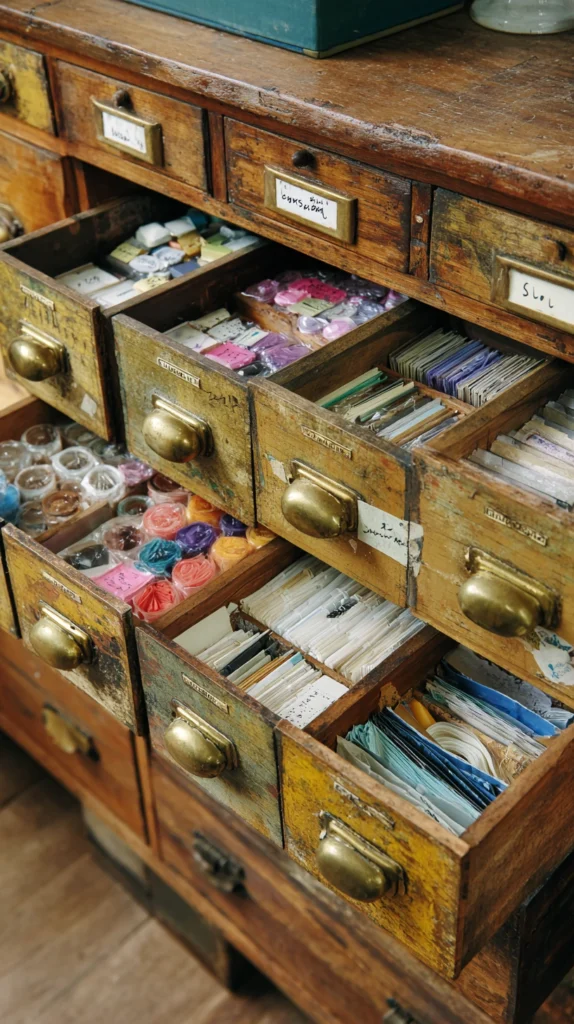
A vintage apothecary cabinet — the multi-drawer unit originally used in pharmacies to organize hundreds of small medicinal items — creates a storage feature of extraordinary organizational capacity and genuine visual spectacle.
The grid of small labeled drawers, the worn timber surfaces, and the original brass hardware creates a storage focal point of completely individual character. Use in a home office for stationery, in a craft room for thread and buttons, in a bathroom for cosmetics, or in a kitchen for seeds and dried herbs.
Pro Tip: Label each drawer with its contents using small handwritten paper labels inserted into the original brass label holders that most genuine apothecary cabinets retain. Handwritten labels in a consistent style suit the historical character of the cabinet far better than printed alternatives and the slight irregularity of handwriting reinforces the authentic, aged quality of the piece.
4. Vintage Milk Crates as Modular Shelving
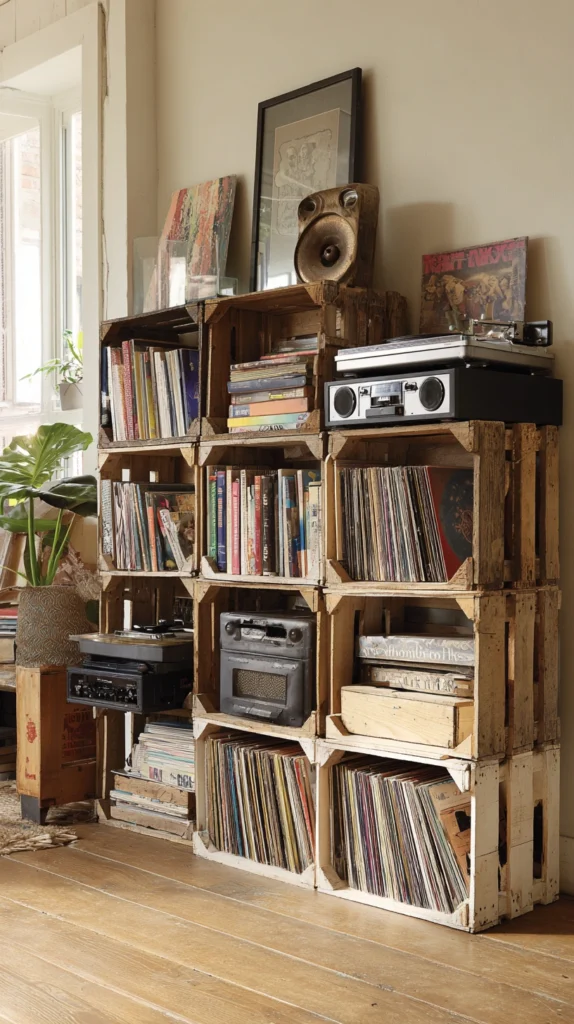
Vintage milk crates — the sturdy stackable wire or timber crates originally used by dairy companies — stacked in creative configurations create modular shelving of considerable industrial charm and genuine organizational flexibility. Stack in a grid formation as a full wall shelving unit, arranged in an L-shape as a room divider, or used individually as standalone shelf units. Each crate provides a defined compartment ideal for books, vinyl records, folded textiles, and decorative objects.
Pro Tip: Secure stacked milk crate shelving with zip ties or small bolt fixings through adjacent crate walls at each contact point. Unsecured stacked crates rely entirely on their own weight for stability — vulnerable to being knocked over by passing movement in configurations of three or more heights. Secured crates create a stable, permanent shelving unit that can be loaded generously with complete confidence.
5. Repurposed Vintage Suitcases as Bedroom Storage
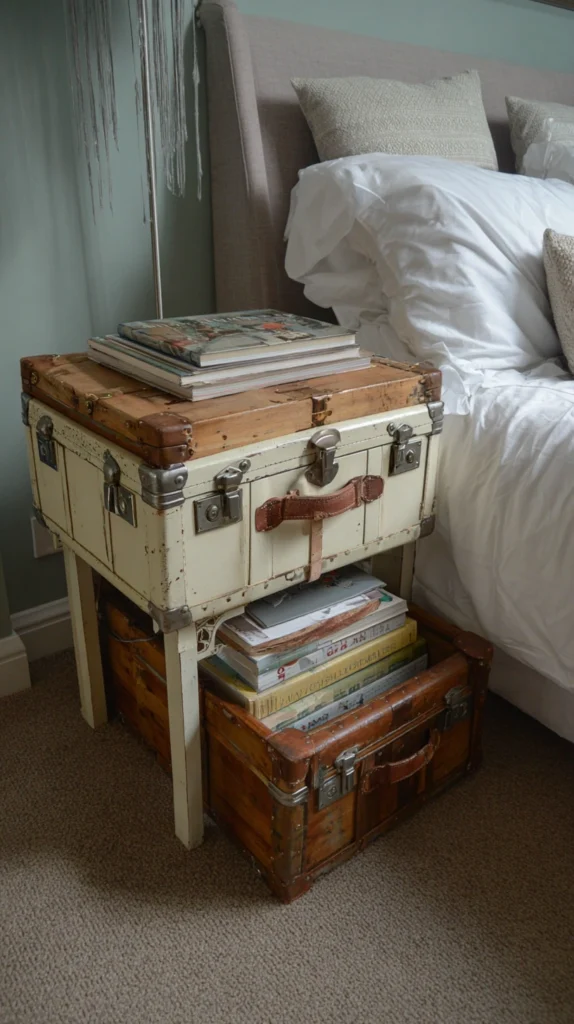
A stack of vintage suitcases — two or three cases of decreasing size stacked on top of each other — used as a bedside table creates a bedroom feature of considerable nostalgic charm and genuine practical usefulness.
The stacked suitcases provide a surface for a bedside lamp and book and hidden interior storage in every case for seasonal clothing and spare linen. Mix leather cases with fabric ones, combine different sizes and proportions, and allow the variation between individual cases to create the eclectic, collected quality that makes these displays so visually appealing.
Pro Tip: Line the interior of vintage suitcases used for clothing storage with acid-free tissue paper before placing any garments inside. Many vintage suitcases have interior linings containing adhesives or dyes that can transfer color or odor onto stored clothing over time — particularly natural fiber garments like wool and silk most susceptible to contact damage. An acid-free tissue liner creates a clean, neutral storage environment within the vintage exterior.
6. Vintage Baker’s Rack as Kitchen or Living Room Storage
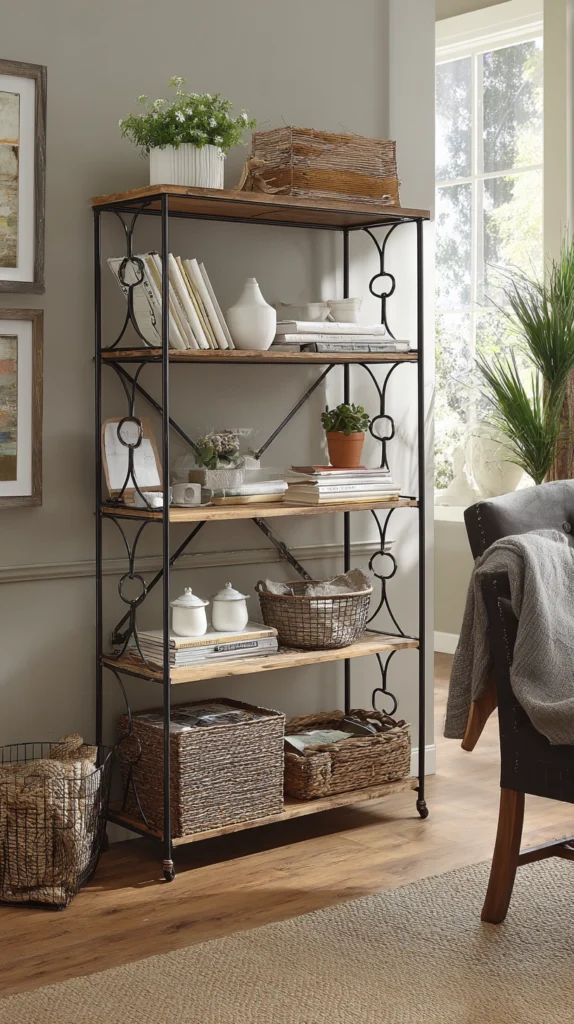
A vintage baker’s rack — the open-shelved iron or timber rack originally used in bakeries for cooling and displaying bread — creates a kitchen or living room storage display of considerable height, generous capacity, and beautiful visual character.
Use in the kitchen for cookbooks, ceramic storage jars, and cast iron cookware. Use in a living room or hallway for books, plants, and decorative objects. The height of a baker’s rack — most significantly taller than standard shelving — creates a vertical storage statement that uses ceiling height effectively.
Pro Tip: Stabilize a vintage baker’s rack against the wall with a simple anti-tip L-bracket fixing between the top of the rack and the wall stud behind it. Tall open-shelved units are inherently top-heavy when loaded with stored items and vulnerable to tipping if bumped. A simple wall fixing provides complete stability without altering the appearance of the piece.
7. Antique Wooden Crates as Display Shelving
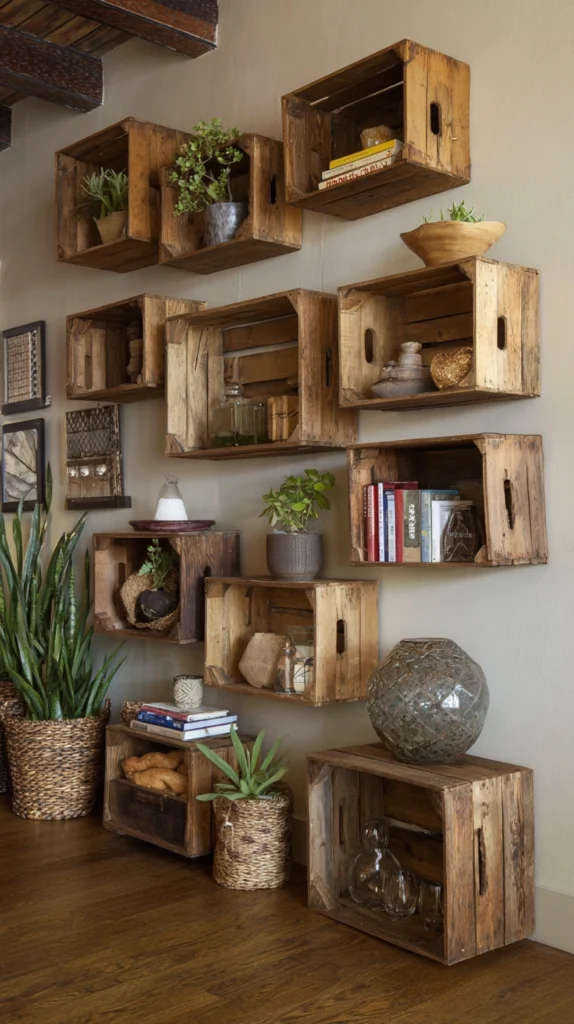
Individual antique wooden crates — fruit boxes, old wine crates, and vintage timber transport boxes — mounted on a wall in a grouped arrangement create wall-mounted display shelving of extraordinary natural character.
Mount in a deliberately irregular arrangement — some horizontal, some vertical, some at slight angles — for a display that looks genuinely organic and naturally accumulated rather than rigidly planned. The variation in crate size, timber color, and original markings between individual boxes creates a wall installation of genuine visual complexity.
Pro Tip: Fix antique wooden crates to wall studs rather than to the plasterboard surface between studs. Plasterboard fixings have minimal load capacity and will eventually fail under the sustained weight of books, ceramics, and decorative objects. Stud fixing provides the structural reliability that a permanent wall installation requires and keeps the display genuinely safe through years of daily use.
8. Vintage Haberdashery Cabinet as Bathroom Storage
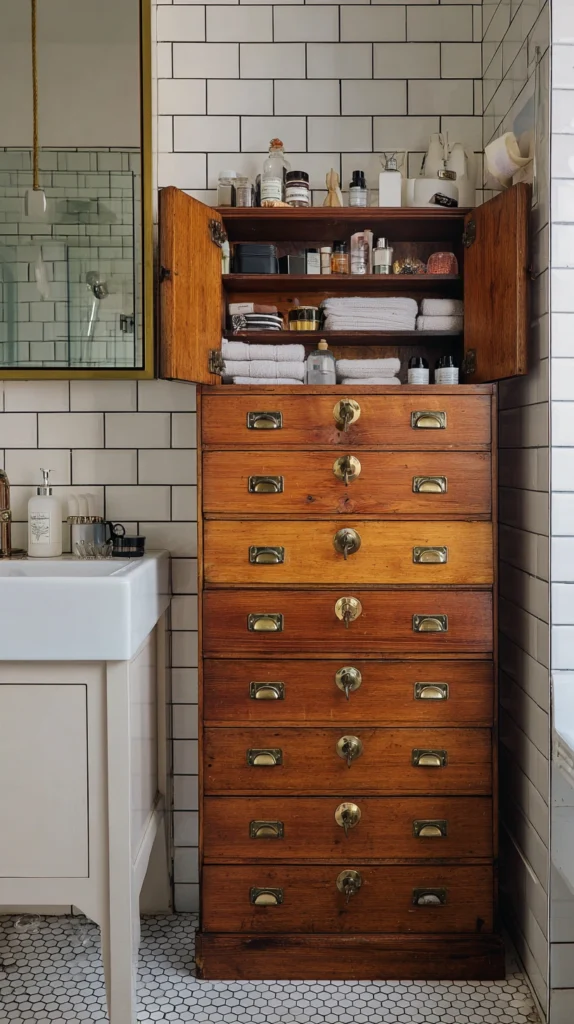
A vintage haberdashery cabinet — the multi-drawer unit originally used in fabric and sewing shops to organize buttons, threads, and ribbons — repurposed as bathroom storage creates a feature of completely unexpected charm and outstanding small-item organizational capacity.
The many small drawers accommodate the precise categorization of cosmetics, hair accessories, and small bathroom items that larger bathroom storage pieces cannot achieve. The warm timber and original brass hardware creates a bathroom focal point of considerable historical character.
Pro Tip: Apply a coat of clear furniture wax to the exterior of any vintage timber cabinet used in a bathroom environment. A single coat creates a moisture-resistant barrier that maintains the timber’s appearance and prevents the swelling, staining, and deterioration that unprotected timber develops in sustained bathroom humidity.
9. Vintage Industrial Lockers as Hallway Storage
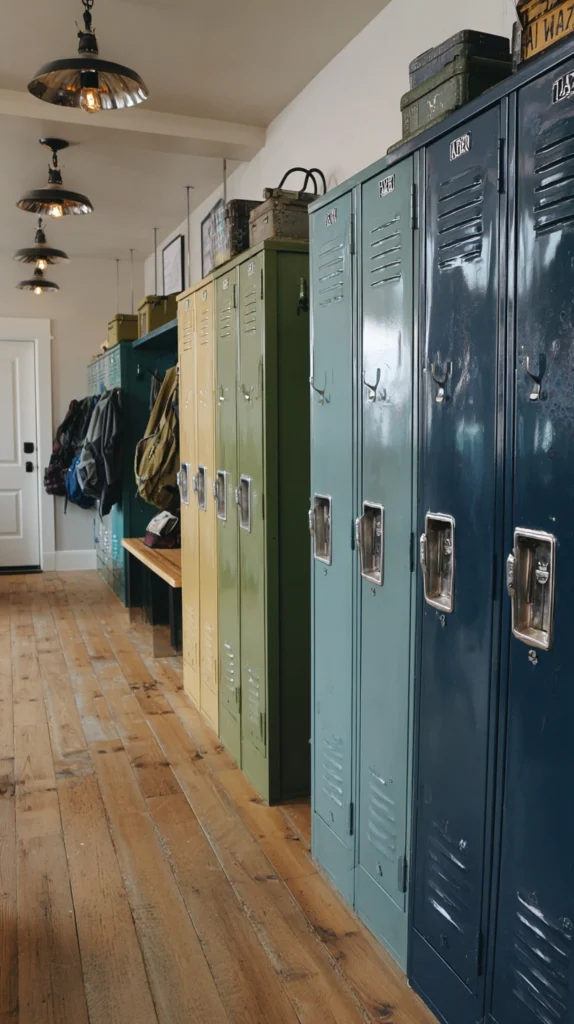
A set of vintage industrial lockers — multi-door steel units originally used in schools and factories — repurposed as hallway storage creates an entrance space of bold industrial character and generous individually designated storage capacity.
Each locker door opens to reveal a tall narrow compartment ideal for coats, bags, sports equipment, and outdoor paraphernalia. Available in original institutional colors for authentic character or repaintable in a chosen tone for a more contemporary interpretation.
Pro Tip: Install a small hook on the inside door of each locker compartment for hanging items within the door’s depth — keys, small bags, and accessories that would otherwise create clutter on the locker floor. The inside door surface is an entirely unused storage zone that a single hook transforms into genuinely useful hanging space, significantly increasing practical capacity.
10. Vintage Map Cabinet as Living Room Storage
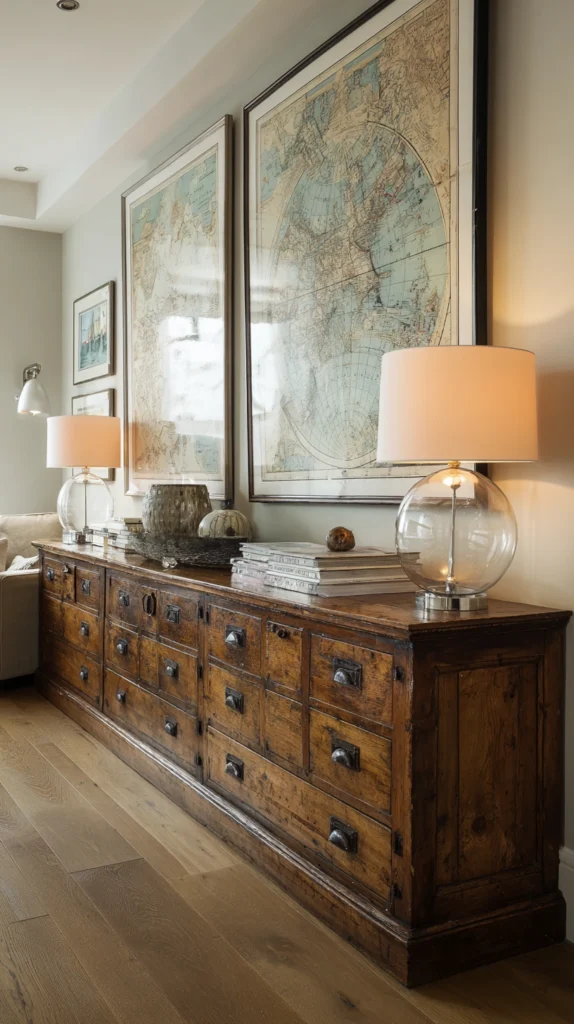
A vintage map cabinet — the wide, shallow, multi-drawer unit originally used in schools and libraries for storing large format maps and drawings — repurposed as living room storage creates a piece of extraordinary visual presence and considerable organizational usefulness.
The low wide proportions create a substantial sideboard-height piece and the multiple shallow drawers organize flat items with exceptional precision. Use the flat top surface as a display area for lamps, artwork, and decorative objects.
Pro Tip: Line the interior base of each map cabinet drawer with acid-free archival paper before storing artwork, prints, or documents. Original drawer interiors often contain residual dust and degraded lining materials that can transfer damaging compounds onto stored paper items over time. A fresh acid-free liner creates a clean, archivally appropriate storage environment within the vintage drawer.
11. Reclaimed Timber Ladder as Textile Storage
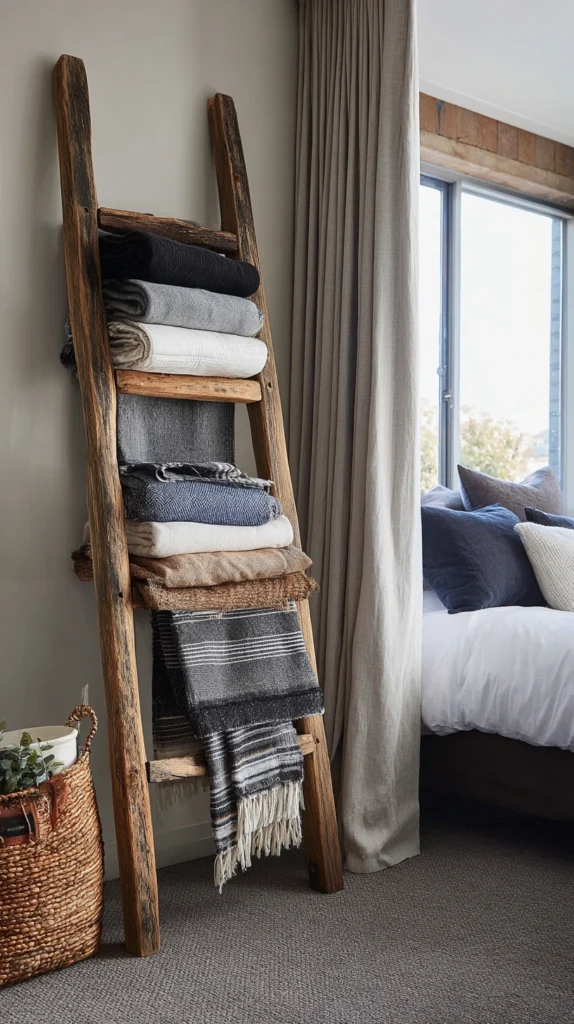
A reclaimed timber ladder — a genuine old ladder rather than a decorative reproduction — leaned against a bedroom or living room wall and used as a display structure for folded throws, blankets, and towels creates a textile storage feature of rustic simplicity and natural material warmth.
The aged timber of a genuine reclaimed ladder — the worn paint, the grain revealed by years of handling, the slight irregularity of hand-crafted rungs — creates a storage piece of authentic natural character that no reproduction can replicate.
Pro Tip: Sand the rungs of a reclaimed ladder used for textile storage to a smooth, splinter-free finish before draping any fabrics over them. Old ladder rungs frequently have rough surfaces and occasional splinters that can snag and damage delicate textiles. A thorough sanding preserves the aged character of the ladder while creating a surface genuinely safe for hanging even the most delicate fabrics.
12. Vintage Post Office Sorting Cabinet as Office Storage
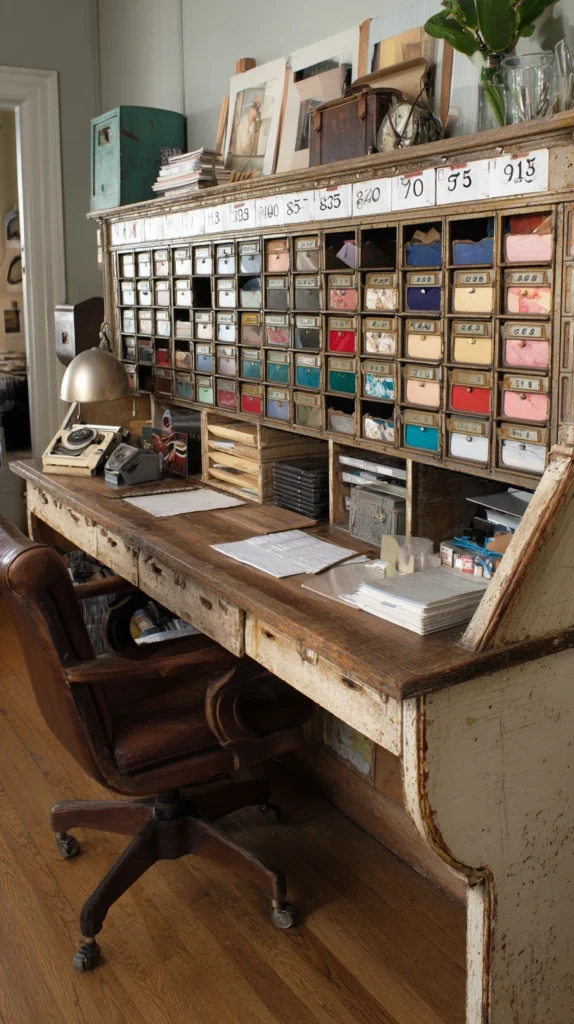
A vintage post office sorting cabinet — the multi-pigeonhole unit originally used in postal sorting rooms to organize mail by route — repurposed as a home office storage feature creates a workspace of considerable organizational precision and genuine historical character.
The individual pigeonhole compartments provide dedicated spaces for documents, stationery, correspondence, and office accessories that creates a genuinely organized desk environment from a piece of furniture of authentic working-world provenance.
Pro Tip: Assign specific categories to specific rows or columns of the sorting cabinet rather than using compartments randomly as they become available. A categorized system — correspondence in the top row, current projects in the second, reference materials in the third — creates an organizational structure that makes the cabinet genuinely useful as a daily working tool rather than simply an attractive storage object accumulating miscellaneous items.
13. Vintage Wooden Wine Rack as General Storage
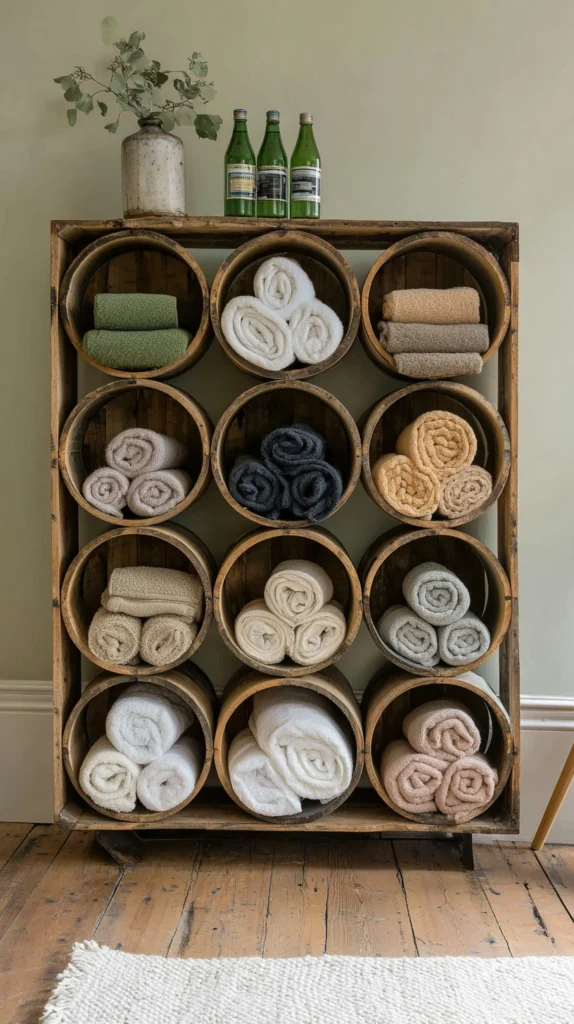
A vintage wooden wine rack repurposed as general household storage for items beyond wine creates one of the most versatile and visually interesting storage pieces available at any budget level.
The circular compartments accommodate rolled towels, blankets, yoga mats, and craft paper rolls with an elegance that purpose-built storage units rarely match. A large floor-standing vintage wine rack used in a bathroom for rolled towels creates a storage feature of warm natural character and considerable practical generosity.
Pro Tip: Check the structural integrity of any vintage timber wine rack before loading it with heavy stored items. Old wine rack construction relied on wooden dowel joints and relatively light glue bonding that deteriorates over time and can fail under loads heavier than wine bottles. Strengthen any loose joints with fresh wood glue and allow it to cure completely before loading with heavier stored items.
14. Antique Wardrobe as Living Room Storage
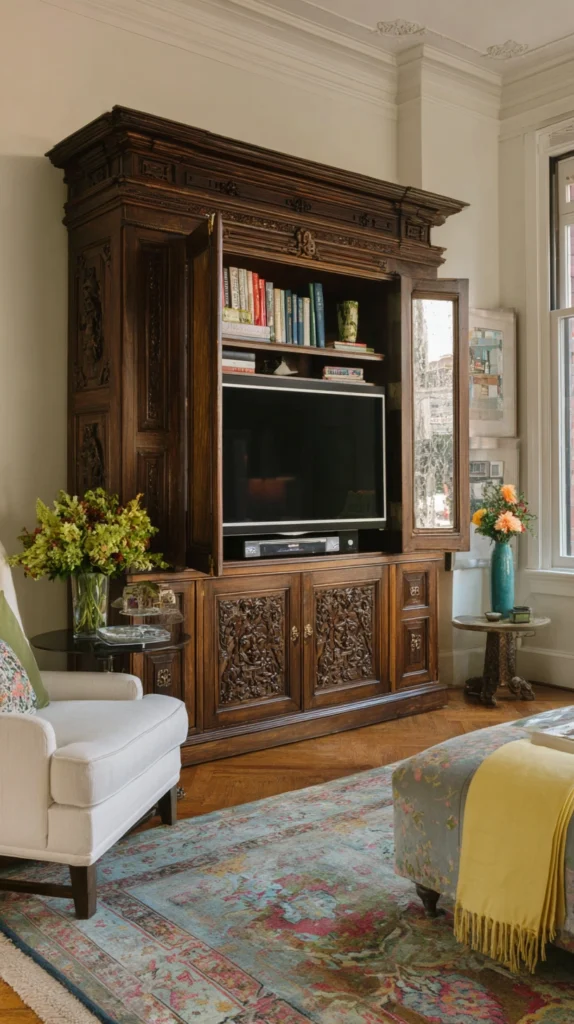
A large antique wardrobe — a genuine Victorian or Edwardian piece in solid timber with original hardware — repurposed in a living room as a media unit, bar cabinet, or general storage creates a focal feature of extraordinary scale, presence, and historical character.
Remove the internal hanging rail and fit adjustable shelves to create a completely flexible interior storage system within the beautiful original exterior. The carved panels, the original mirror, and the brass hardware create a living room focal point of considerable authority.
Pro Tip: Secure a large antique wardrobe to the wall through the back panel using substantial L-brackets fixed into wall studs. Large antique wardrobes are extremely heavy with a high centre of gravity — genuinely dangerous if tipped, particularly in homes with children. Wall securing through the back panel is invisible when the doors are closed and provides complete stability without altering the appearance of the piece.
15. Vintage Filing Cabinet as Home Office Storage
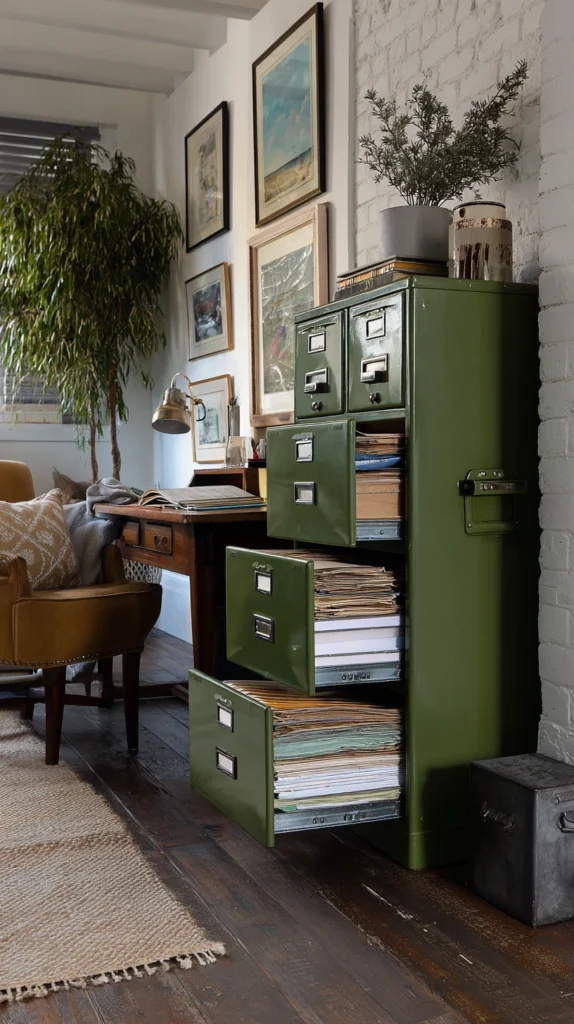
A vintage steel filing cabinet — the classic two or four-drawer office piece that was the backbone of every twentieth century office — repurposed as home office, bedroom, or kitchen storage creates a piece of utilitarian industrial beauty and outstanding practical capacity.
The deep smooth-running drawers provide generous organized storage for documents, clothing, kitchen linens, or craft materials. Repaint in a deep jewel tone — forest green, burgundy, or midnight navy — and the filing cabinet becomes a genuinely beautiful piece of furniture rather than an industrial storage object.
Pro Tip: Apply a furniture wax or clear protective topcoat over any spray-painted vintage filing cabinet surface. Bare spray paint on steel is vulnerable to chipping at drawer edges and handles contact points within weeks of daily use. A protective topcoat dramatically extends the life of the painted finish and maintains the beautiful appearance of the repainted cabinet through many years of regular use.
Old Things Deserve New Purposes
The most characterful homes are the ones that have accumulated genuinely old things alongside genuinely new ones — where a Victorian apothecary cabinet sits alongside a contemporary sofa and a stack of vintage suitcases stands beside a modern lamp.
Vintage storage pieces bring history, character, and genuine material quality into the home in a way that no new furniture can replicate. Find them, repurpose them generously, and discover what a home feels like when its storage is as interesting as everything else within it.