15 Toilet Paper Roll Crafts That Are Actually Worth Making
Toilet paper rolls are one of those materials that feel too useful to throw away and too abundant to ignore. Every household generates them constantly and most end up in the recycling bin without a second thought — which is a shame, because a cardboard tube is genuinely one of the most versatile crafting materials available in any home.

The best toilet paper roll crafts are not the ones that look like toilet paper rolls with googly eyes glued on. They are the ones that transform the humble cardboard tube into something that genuinely surprises — a piece of wall art, a functional organiser, a beautiful gift box, or a toy that captures a child’s imagination for longer than five minutes. The difference is in the ambition of the idea and the care taken in the execution.
Here are 15 toilet paper roll crafts that are genuinely worth the effort — for children, for adults, and for anyone who enjoys making something beautiful out of almost nothing.
1. Cardboard Tube Wall Art
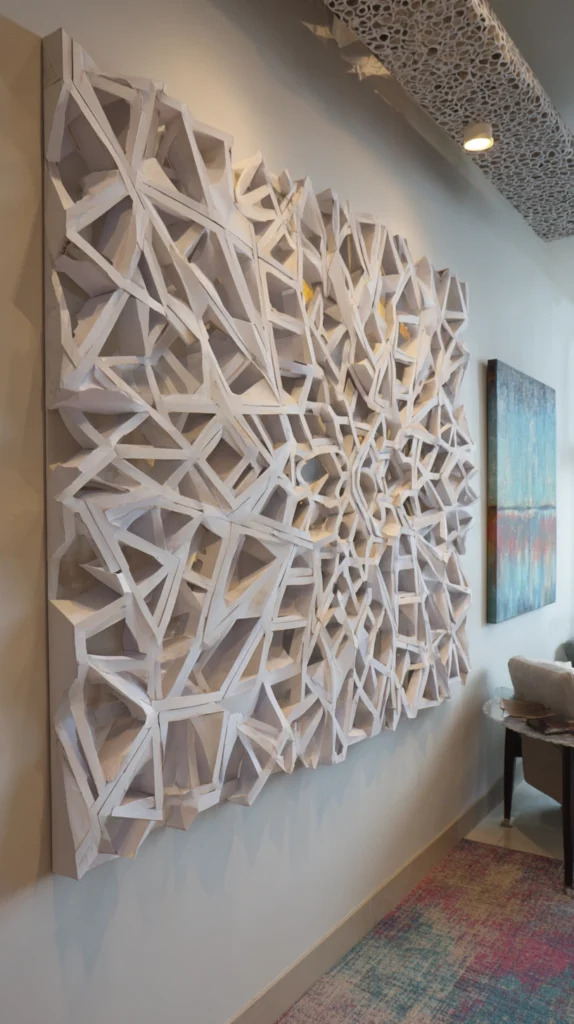
Flattened and shaped toilet paper rolls arranged into geometric or floral patterns and mounted on a canvas or backing board create wall art that looks genuinely sculptural and considered. The secret is in the variety of shapes — circles, teardrops, petal forms, hexagons — that can be created by pinching, folding, and pressing the tubes into different profiles before arranging them into a cohesive composition.
Spray paint the entire finished arrangement in a single color — metallic gold, matte white, or deep black all look stunning — and the individual tube origins become completely invisible. The finished piece looks like something from an artisan craft market rather than a rainy afternoon project made from recycling bin contents.
Pro Tip: Arrange all your shaped tube pieces into the final composition on the backing board before gluing anything permanently in place. Living with the arrangement for a few minutes — stepping back, assessing the balance of shapes and negative space — almost always reveals improvements that are impossible to see when you are focused on placing one piece at a time. Finalise the composition first, then glue everything down in sequence from the centre outward.
2. Toilet Roll Advent Calendar
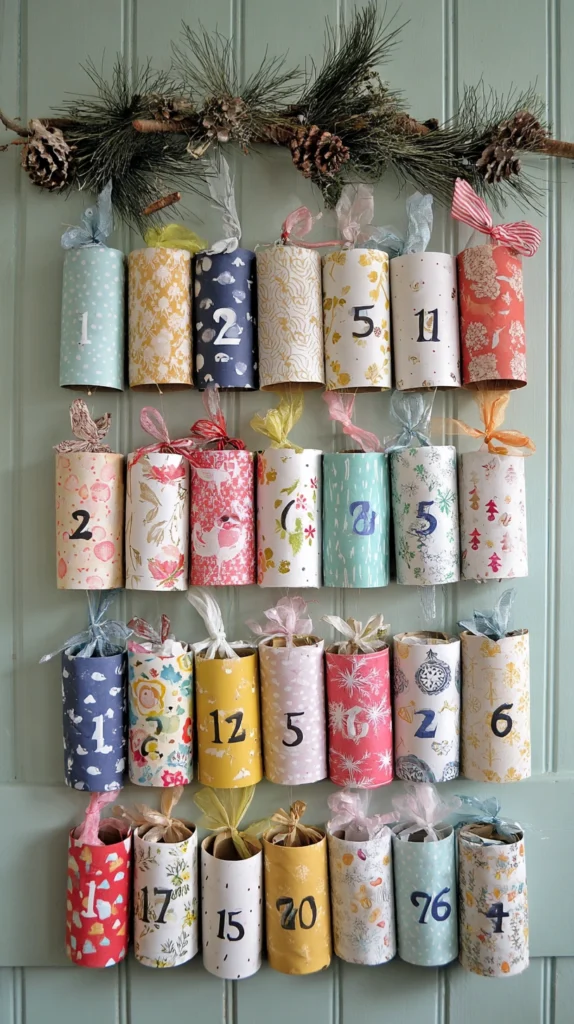
A set of 24 toilet paper rolls transformed into a countdown advent calendar is one of the most charming and affordable Christmas crafts possible. Each tube is filled with a small treat or note, the ends are twisted closed and secured with a rubber band or ribbon, and the finished tubes are arranged and displayed in a numbered grid, a Christmas tree shape, or a hanging garland across a mantelpiece or wall.
Decorate each tube individually in a different wrapping paper, paint color, or washi tape pattern for a maximalist, festive look, or keep all tubes in a consistent color scheme — red and white, kraft paper and gold, all-white with gold numbering — for a more restrained, sophisticated advent calendar that suits adult tastes as well as children’s.
Pro Tip: Reinforce the base of each toilet roll tube with a small circle of card glued inside the bottom end before filling with treats. An unreinforced tube base can give way under the weight of the contents, particularly if the treats include anything solid or heavy.
A card base insert takes thirty seconds to cut and glue and prevents the frustrating collapse of a filled and decorated tube that has to be redone from scratch.
3. Cardboard Tube Desk Organiser
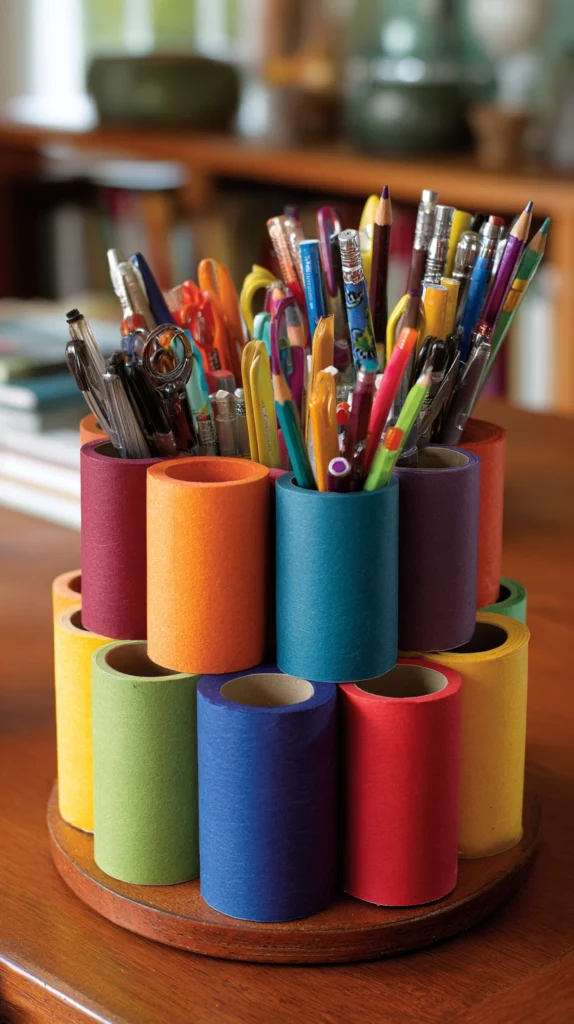
A cluster of toilet paper rolls of varying heights — some standard tubes, some cut shorter, and some made taller by joining two tubes together — grouped inside a decorative outer container creates a genuinely functional desk organiser for pens, pencils, scissors, rulers, and other stationery items that is both free to make and surprisingly attractive.
Cover each individual tube in a coordinating decorative paper, washi tape, or a coat of paint before grouping them together inside a small box or basket that holds the cluster in place. The variation in tube heights creates a tiered, organised display where different stationery items find their natural level and the overall arrangement looks considered and intentional.
Pro Tip: Seal the base of each tube in a desk organiser with a circle of card or thick paper glued firmly in place before adding it to the arrangement. An open-bottomed tube allows pens and pencils to slide partially through the base and rest at an angle rather than standing upright — defeating the purpose of the organiser entirely. Sealed bases keep every item standing vertically and the organiser functioning properly.
4. Toilet Roll Stamps for Kids
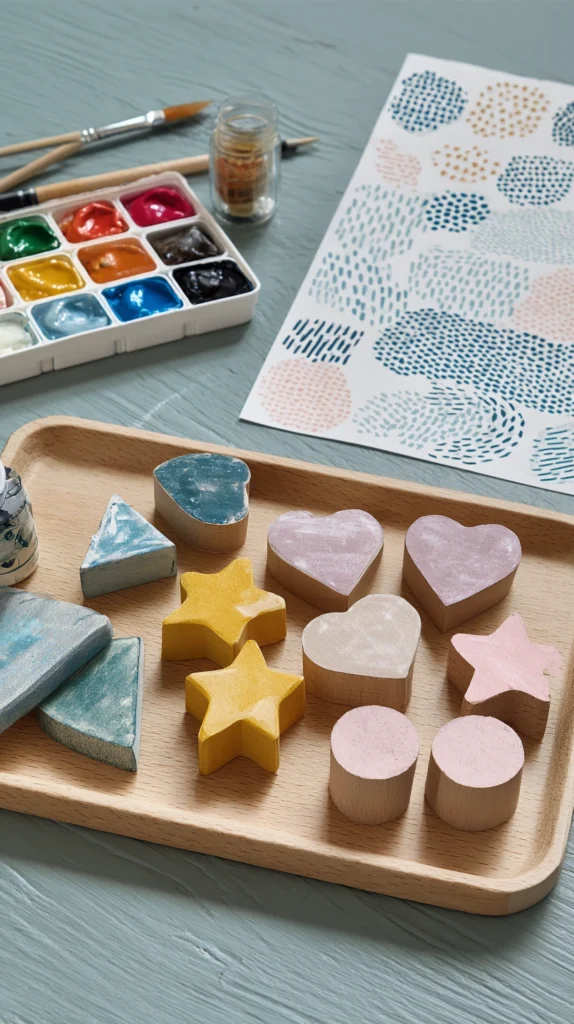
Cut toilet paper rolls into short sections and squeeze them into different shapes — triangles, squares, hearts, stars, and diamond forms — to create a set of homemade stamps that children can use with paint to create printed patterns, cards, wrapping paper, and art projects. The cardboard tube material holds its shape well enough for repeated stamping and the range of achievable forms is surprisingly diverse.
Set up a stamping station with a selection of shaped tube stamps, a palette of washable paint in small trays, and large sheets of paper, and give children complete creative freedom to explore pattern making through printing. The results are often genuinely beautiful — bold, graphic, and full of the kind of energetic pattern-making that children produce instinctively when given simple, open-ended creative tools.
Pro Tip: Dip tube stamps into a thin, even layer of paint rather than a thick pool of it for the cleanest, most defined prints. Too much paint on the stamp edge causes the print to bleed and lose the crisp definition of the shape. A thin paint layer on a flat tray — a paper plate works perfectly — that the stamp is pressed into lightly and then applied to paper produces clean, sharp-edged prints that look genuinely graphic and intentional.
5. Cardboard Tube Bird Feeders
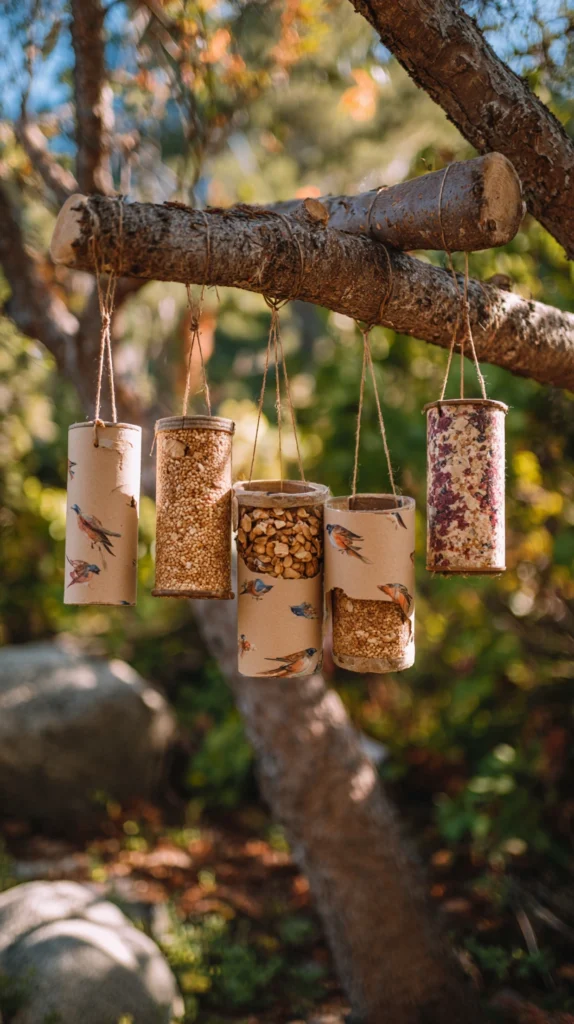
A toilet paper roll coated in peanut butter and rolled in birdseed makes one of the simplest, most effective, and most genuinely useful crafts on this entire list. Threaded onto a garden twig or a short length of dowel and hung from a garden tree or bird feeding station, a peanut butter and seed tube feeder attracts birds within hours and provides a genuine wildlife benefit alongside the crafting experience.
This is a craft that works for children as young as two with minimal adult assistance, requires no tools, dries instantly, and produces a result that delivers ongoing engagement — the excitement of watching birds visit a feeder that you made yourself is one of the best nature connection experiences available to a young child in an ordinary garden.
Pro Tip: Roll the peanut butter coated tube in birdseed on a large flat tray rather than trying to sprinkle seed onto the tube by hand. A tray allows the tube to be rolled and pressed into a generous layer of seed from all sides simultaneously, achieving much more even and complete seed coverage than the patchy result that hand sprinkling tends to produce.
Press the tube firmly into the seed with light pressure to help the seed embed into the peanut butter rather than simply sitting on the surface.
6. Toilet Roll Gift Boxes
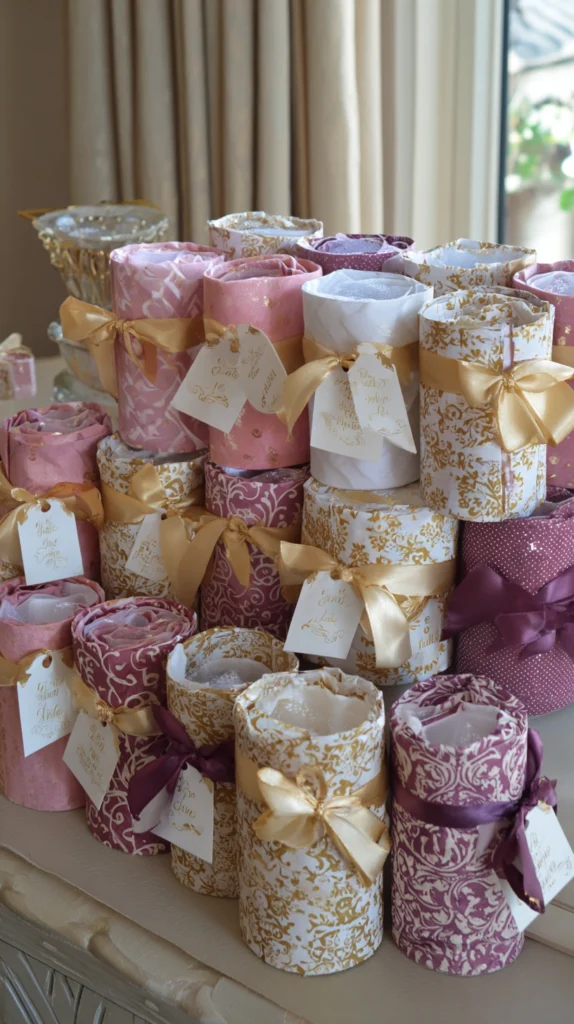
A toilet paper roll with both ends folded and tucked closed — in exactly the same way a Christmas cracker is constructed — makes a beautiful small gift box for jewellery, sweets, a folded note, or any small gift that benefits from a beautiful presentation.
Wrapped in a high-quality decorative paper, tied at both ends with ribbon, and finished with a gift tag, a toilet roll gift box is genuinely indistinguishable from a purchased cracker or small gift tube.
The format is particularly useful for gifting small items that are awkward to wrap conventionally — earrings, a gift card, a piece of folded artwork, a small amount of cash — and the cylindrical form has an elegance that a standard rectangular gift box often lacks. Make a set of matching tubes in coordinating papers for a gift that looks professionally packaged from first glance.
Pro Tip: Score the fold lines at both ends of a toilet roll gift box with a bone folder or the back of a butter knife before folding the ends closed. Scored fold lines produce crisp, clean folds that give the finished gift box a professional, sharp-edged finish. Unscored folds tend to be uneven and slightly ragged — a small detail that makes a noticeable difference to the overall quality of presentation in a gift that is meant to impress.
7. Cardboard Tube Kaleidoscope
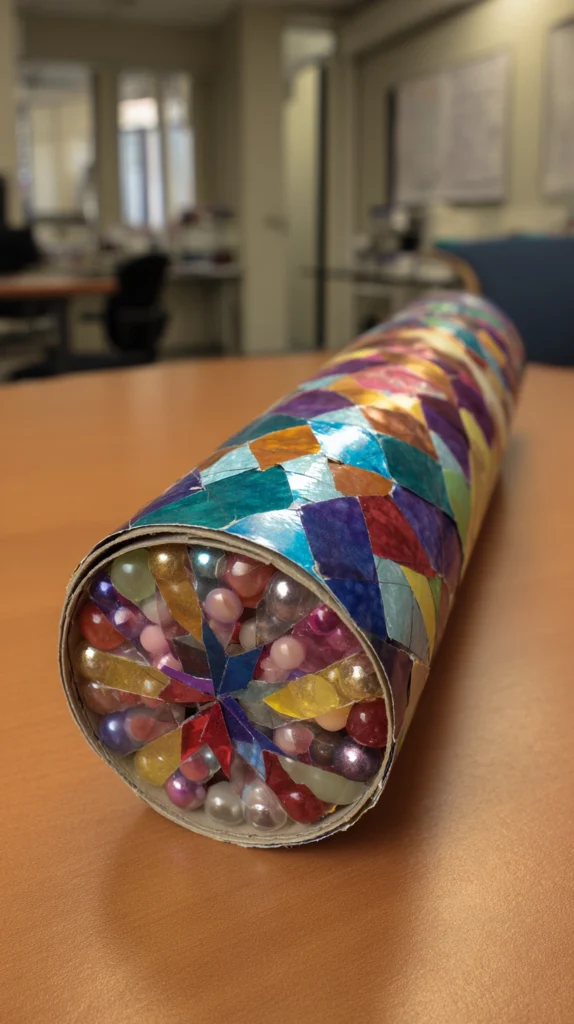
A toilet paper roll forms the perfect viewing tube for a simple homemade kaleidoscope — a craft project that produces a genuinely magical result and teaches basic principles of light reflection in the most engaging way possible.
Line the inside of the tube with a strip of reflective card or mirror card cut to fit, seal one end with a circle of translucent colored tissue paper or cellophane, and add a few small beads or sequins between the sealed end and a second layer of translucent paper to complete the kaleidoscope chamber.
Hold the open end to the eye, point the sealed end toward a light source, and rotate the tube slowly to watch the beads and sequins create the characteristic kaleidoscope patterns of shifting, symmetrical color. The result is genuinely delightful and the science behind it — the multiple reflections created by the angled mirror surfaces inside the tube — is immediately visible and understandable through direct experience.
Pro Tip: Cut the mirror card lining for a toilet roll kaleidoscope into three equal-width strips and fold them into a triangular prism before inserting into the tube. Three reflective surfaces arranged in a triangle produce the classic six-fold kaleidoscope symmetry that makes the pattern so visually satisfying. Two flat parallel reflective surfaces produce a simpler reflection effect that lacks the characteristic symmetry and complexity of a proper kaleidoscope pattern.
8. Toilet Roll Marble Run
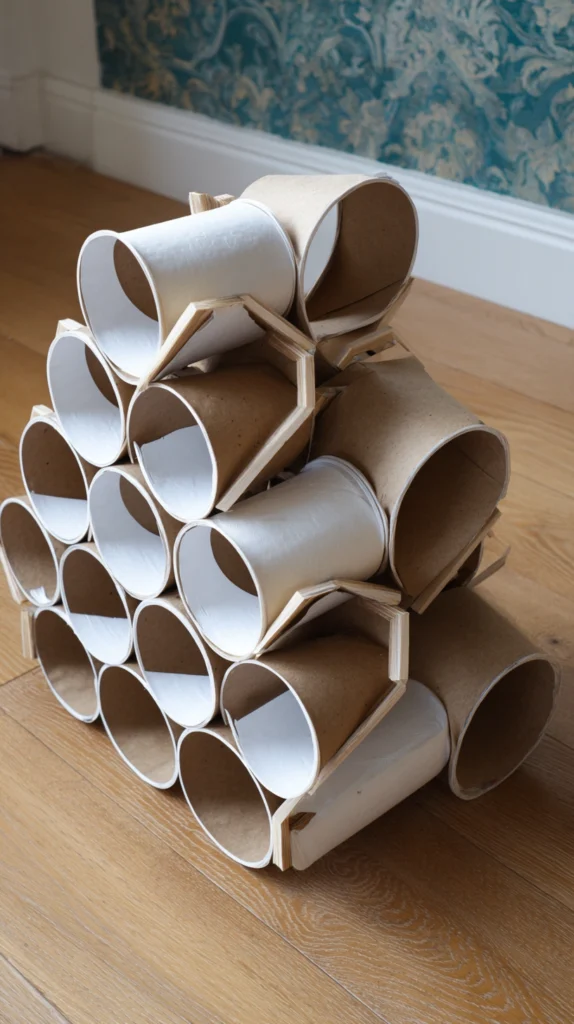
A series of toilet paper rolls cut, folded, and mounted on a wall or a large board at descending angles creates a marble run that children find endlessly engaging — the combination of construction, physics, and the satisfying sound of a marble rolling through a cardboard tube ticking every box of what makes a genuinely good children’s activity.
Cut some tubes in half lengthwise to create open channels, leave others as complete tubes for enclosed sections, and arrange them on a large piece of cardboard or directly on a wall using masking tape or low-tack adhesive so that a marble released at the top travels through the entire run and exits at the bottom. Adjust angles and connections until the run works reliably, then make it permanent.
Pro Tip: Build each section of a toilet roll marble run slightly longer than you think necessary and overlap the connections between tubes generously.
Short sections with minimal overlap between adjacent tubes create gaps that marbles fall through rather than roll across — the most common frustration in any marble run build. Generous overlaps and longer sections keep the marble on track through every transition and make the run work reliably from first attempt rather than requiring repeated adjustments.
9. Cardboard Tube Napkin Rings
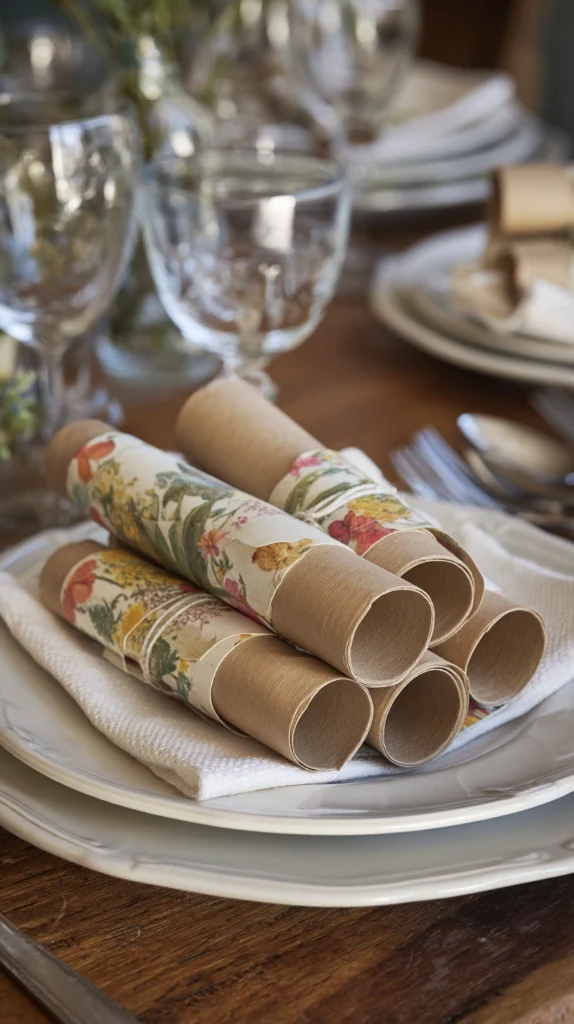
Toilet paper rolls cut into short sections — around three to four centimetres wide — and decorated with paint, decoupage paper, washi tape, or wrapped fabric create genuinely beautiful napkin rings for a dinner table setting that cost nothing to make and look completely original. A set of matching napkin rings made from decorated tube sections adds a handmade, personal quality to a table setting that no purchased alternative can replicate.
For a special occasion — a birthday dinner, a Christmas table, or a celebration meal — making a set of personalized napkin rings with each guest’s name written or printed on them adds a thoughtful, bespoke touch that guests notice and appreciate. The craft takes under an hour for a full table setting and the results consistently look more considered than the effort involved would suggest.
Pro Tip: Cut napkin ring sections from toilet paper rolls using a sharp craft knife and a cutting mat rather than scissors for the cleanest, most even cut. Scissors tend to compress and distort the circular tube cross-section as they cut, producing napkin rings with slightly uneven, oval openings. A craft knife drawn around the tube against a straight edge — or simply scored and snapped — produces a perfectly circular, clean-edged section every time.
10. Toilet Roll Seed Starters
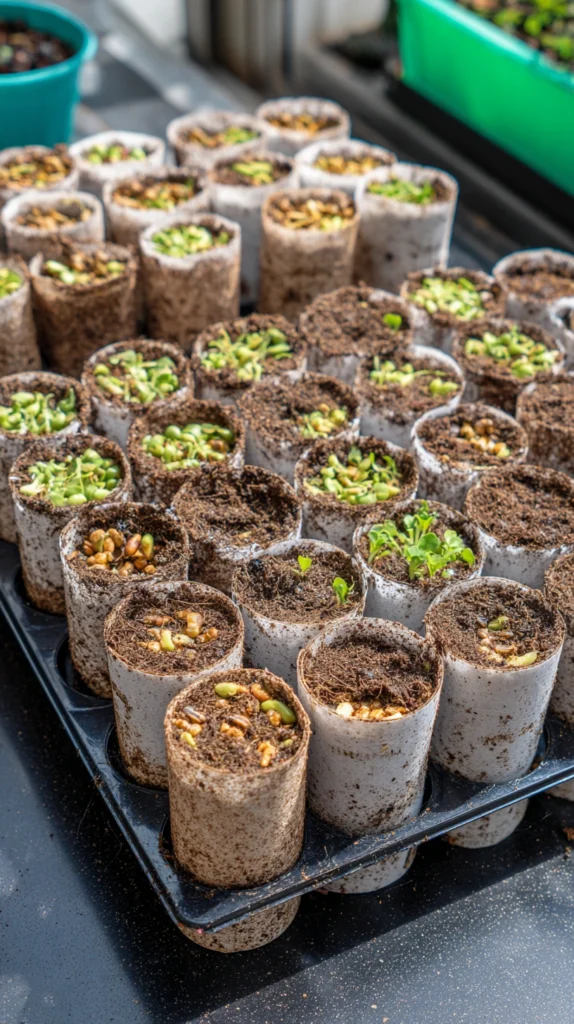
Toilet paper rolls make perfect biodegradable seed starting pots for the garden — they are the right size for most vegetable and flower seedlings, they hold their shape long enough for seeds to germinate and develop their first true leaves, and they can be planted directly into the ground when the seedling is ready without any root disturbance, as the cardboard breaks down naturally in the soil.
Stand a row of toilet roll tubes upright in a waterproof tray, fill each one with seed compost, sow your chosen seeds according to packet instructions, water gently, and place in a bright, warm position to germinate. When seedlings are ready to plant out, place the entire tube — cardboard and all — directly in the planting hole. No potting on, no root disturbance, no plastic waste.
Pro Tip: Fold the base of each toilet roll seed starter closed before filling with compost rather than leaving it open. An open base allows compost and water to fall straight through the tube before the seedling roots have developed enough to hold the compost mass together.
A simply folded closed base — four overlapping folds like the bottom of a cardboard box — holds the compost in place from the first watering and keeps the seed starter stable and upright in the growing tray.
11. Cardboard Tube Wrapping Paper Storage
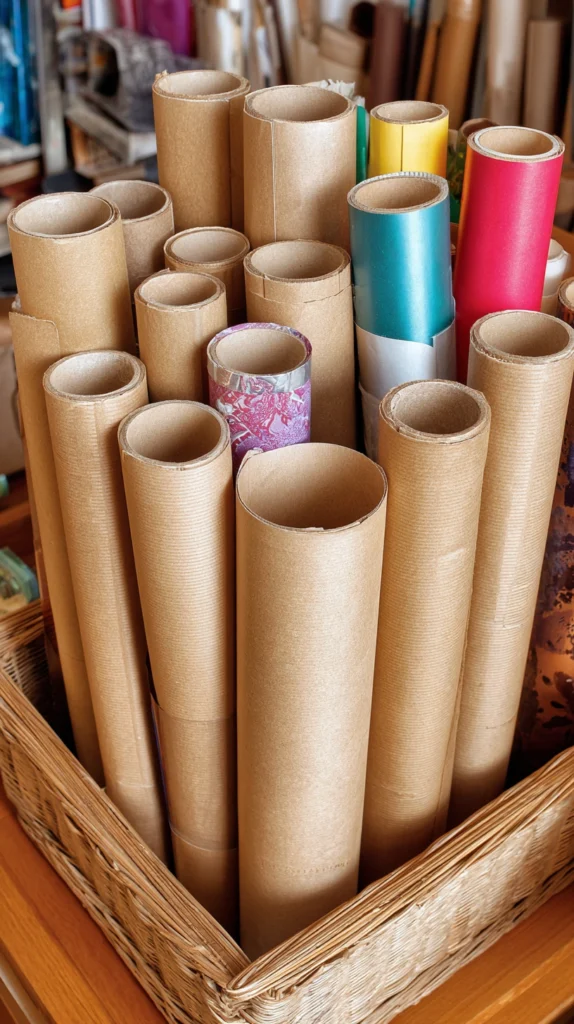
The cardboard tubes from paper towel rolls — slightly larger than toilet paper rolls but made by the same principle — make excellent storage tubes for keeping rolls of wrapping paper, ribbons, and tissue paper organised and protected in a gift wrapping storage system. Toilet paper roll tubes can be used to store shorter ribbon lengths, keeping them wound neatly and tangle-free throughout the year.
Wind ribbon lengths around toilet paper roll tubes and secure the end with a small piece of tape or a pin to keep each ribbon stored neatly on its own individual spool. Label each tube with the ribbon color and width using a permanent marker.
Store the labeled ribbon tubes upright in a box or basket and you have a ribbon organisation system that makes gift wrapping faster and considerably less frustrating than fishing through a tangled ball of mixed ribbons.
Pro Tip: Cut a small notch in one end of each ribbon storage tube to catch and hold the ribbon end securely without tape or pins. A simple V-shaped notch cut into the cardboard rim with scissors tucks the ribbon end in place firmly enough to prevent unwinding during storage but releases easily when you pull the ribbon to use it.
This tiny detail makes the ribbon storage tubes considerably more functional and satisfying to use than versions that rely on tape to secure the ribbon end.
12. Toilet Roll Binoculars for Kids
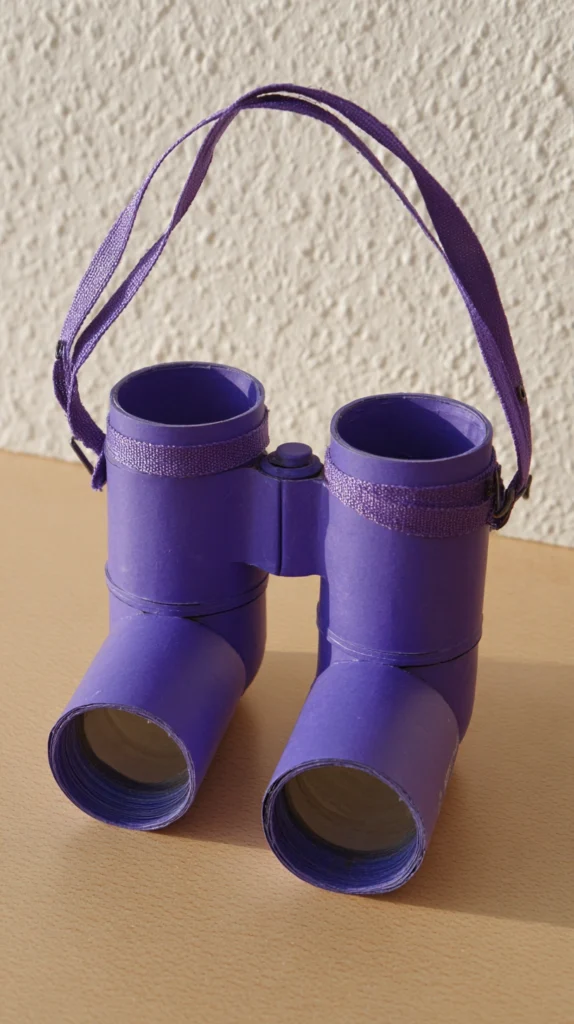
Two toilet paper rolls taped side by side and decorated with paint or stickers create a pair of pretend binoculars that children use enthusiastically in imaginative play — wildlife spotting, pirate adventures, spy games, and explorer role play all benefit immediately from a pair of binoculars, and the homemade version is just as engaging for a child’s imagination as any plastic toy alternative.
Join two tubes side by side with strong tape or a stapler, punch a small hole at the outer top edge of each tube, and thread a length of ribbon or string through both holes to create a neck strap. Paint the whole assembly in a single color — khaki green, black, or a bright primary color — and add any decorative details that suit the child’s current imaginative play theme.
Pro Tip: Reinforce the join between the two tubes of a homemade binoculars craft with a strip of wide packing tape wrapped around the full width of both tubes rather than just a few pieces of regular tape at the join point.
Children use pretend binoculars actively and enthusiastically — holding them, waving them around, dropping them — and a joint reinforced only with narrow tape will separate quickly under this kind of energetic handling. Wide packing tape creates a bond strong enough to survive genuine play use rather than just gentle handling.
13. Cardboard Tube Wind Chime
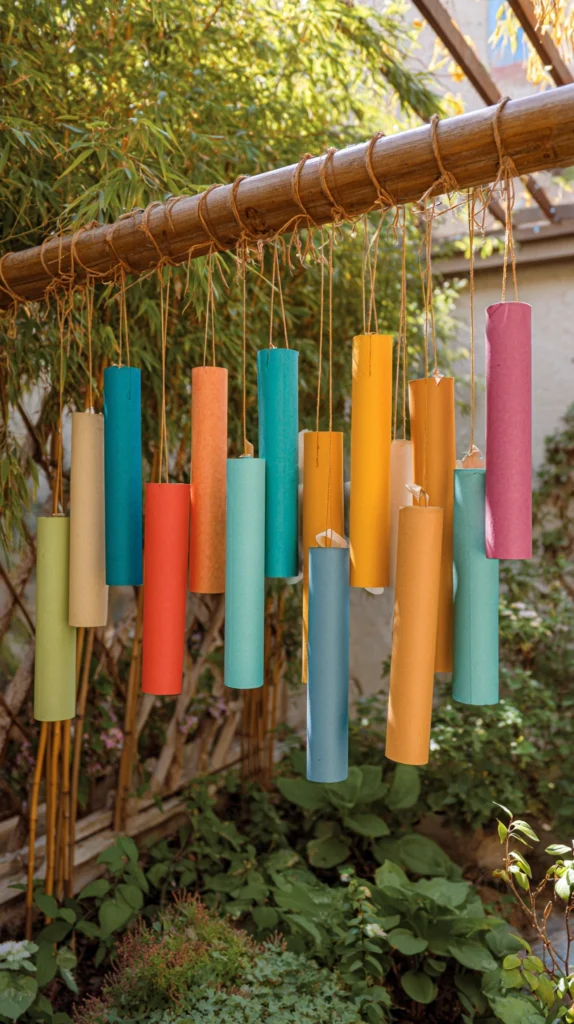
A set of toilet paper rolls of varying lengths — some standard size, some cut shorter, some extended by joining two tubes — suspended from a piece of driftwood, a garden twig, or a short length of dowel on individual strings creates a lightweight wind chime that produces a soft, papery sound in a breeze and looks genuinely charming hanging in a garden, on a porch, or beside an open window.
Paint each tube in a coordinating color palette — a range of blues and greens for a coastal feel, warm terracotta and gold tones for a Mediterranean aesthetic, or bright rainbow colors for a child’s bedroom — seal with a coat of exterior varnish if the chime will hang outdoors, and suspend from the hanging bar at slightly varying lengths so the tubes move independently and interact with each other in the wind.
Pro Tip: Weight the bottom of each tube in a cardboard wind chime with a small pebble, a button, or a short section of additional cardboard tube inserted inside the base. Unweighted cardboard tubes are so light that they barely move in anything less than a strong wind and tend to all move in the same direction simultaneously rather than independently.
A small amount of weight at the base of each tube gives it enough momentum to swing freely in a gentle breeze and creates the independent movement that makes a wind chime look and sound its best.
14. Toilet Roll Desk Calendar
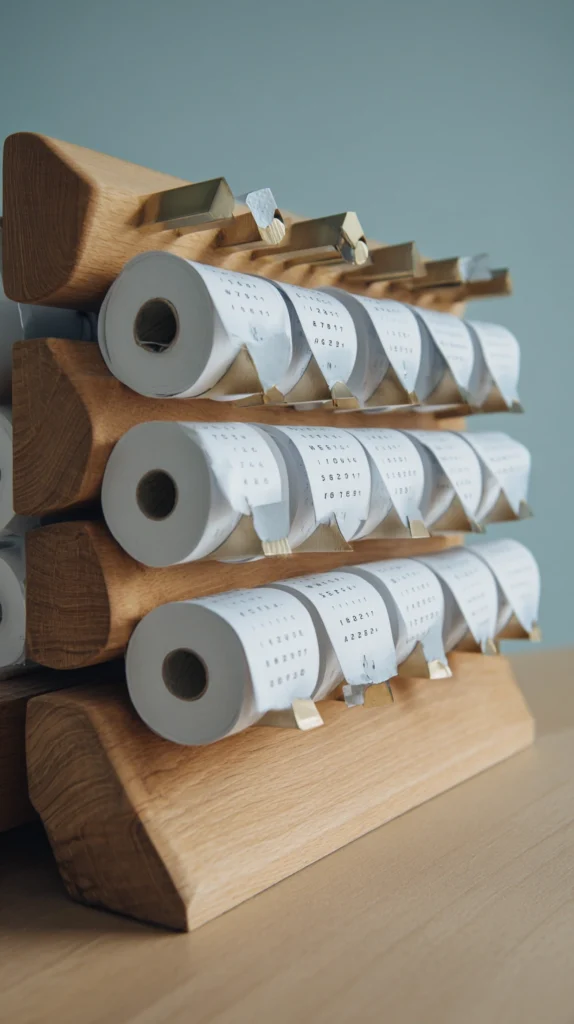
A set of two toilet paper rolls mounted side by side on a small timber base — one roll showing the day number, one showing the month — creates a perpetual desk calendar that is reset each morning by rotating the tubes to display the correct date.
Each tube has a series of small paper flags or tags attached around its circumference, each flag showing a different number or month name, with the current date visible at the front of each tube.
The construction requires two tubes, a small piece of timber or thick cardboard as a base, two short lengths of dowel as axles around which the tubes rotate freely, and a set of numbered and named paper tags attached at consistent intervals around each tube. The finished calendar is genuinely functional, completely original, and a satisfying object to use every morning.
Pro Tip: Attach the date number tags and month name tags to each calendar tube at perfectly consistent intervals — measure and mark the attachment points carefully rather than spacing them by eye.
Inconsistent spacing between tags causes the calendar to stop with a tag appearing at an angle rather than facing squarely forward, which makes the date difficult to read and gives the finished calendar an unfinished quality. Precise, even spacing makes every rotation clean and satisfying.
15. Cardboard Tube Pencil Toppers
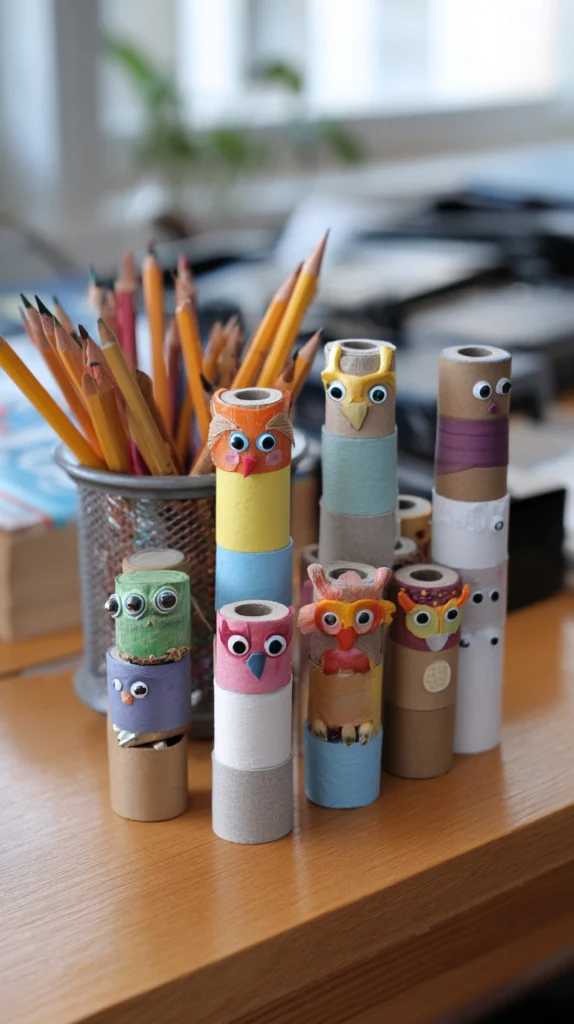
Short sections of toilet paper roll — around two centimetres wide — decorated as tiny characters, animals, or faces and slipped over the eraser end of a pencil create pencil toppers that children find genuinely delightful and that make excellent party favors, classroom gifts, or stocking fillers that cost almost nothing to produce in quantity.
Decorate each tiny tube section as a different character — a lion with a mane of frayed paper strips, a robot with foil accents, an owl with paper feather wings, a ghost with cut paper eyes — using paint, markers, paper offcuts, and craft supplies from the basic craft box.
The miniature scale makes even simple decoration look detailed and considered, and a set of six or eight different character pencil toppers grouped together makes a gift that children appreciate far more than its material cost would suggest.
Pro Tip: Size each pencil topper tube section carefully to fit snugly over a standard pencil eraser before decorating it. A tube section that is too wide slides off the pencil immediately and cannot be used as a topper — a frustrating discovery after the decoration has already been applied.
Test the fit of each cut section on an actual pencil before committing to the decoration, and trim or adjust the diameter slightly if necessary by making a small vertical cut and overlapping the edges until the fit is snug.
The Most Underrated Craft Material in Your Home
Toilet paper rolls will never be glamorous. They are the craft material that almost everyone overlooks precisely because they are so ordinary — so constantly present, so completely free, and so easy to dismiss as something not worth the effort of saving.
But the crafts on this list prove that the material is never the limiting factor. Ambition, care, and a genuinely good idea transform a cardboard tube into something beautiful, functional, and worth making — every single time.