15 Temporary Door Ideas for the Home
Temporary doors offer flexible solutions for renters, homeowners undertaking renovations, or anyone needing a quick privacy fix without permanent installation. These creative alternatives provide functionality and style while remaining completely reversible, protecting your security deposit or allowing for easy changes as your needs evolve.

Whether you’re dividing a studio apartment, creating a temporary nursery, or simply replacing a door during repairs, these fifteen ideas prove that temporary doesn’t have to mean unattractive.
Understanding Temporary Door Solutions
Before exploring specific ideas, it’s important to understand what makes a door solution truly temporary. The best temporary doors install without damaging walls, door frames, or flooring, using tension rods, adhesive hooks, or freestanding frames. They should be easy to install and remove, require minimal tools, and leave no permanent marks or holes when taken down.
1. Tension Rod Curtain Doors
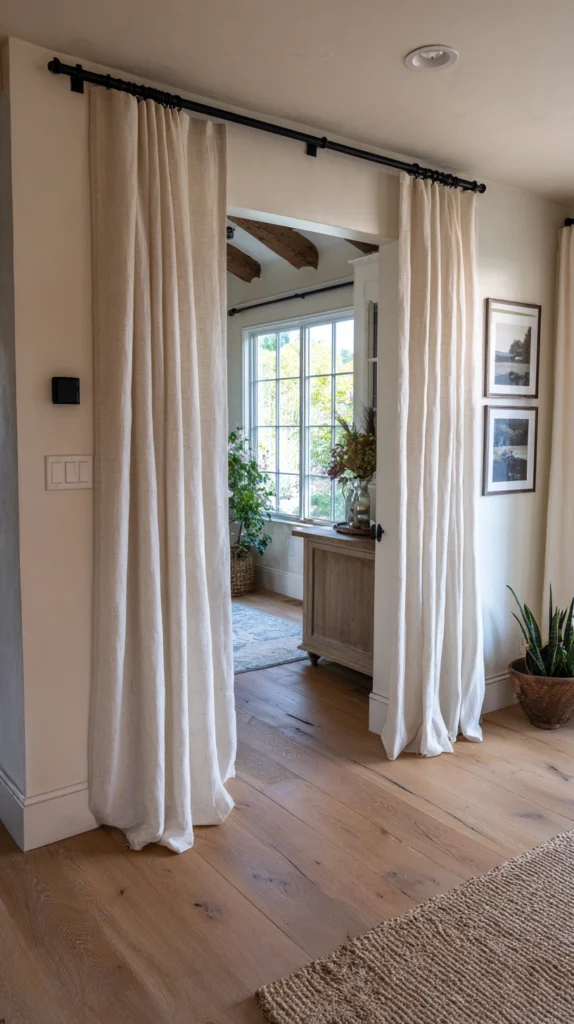
Tension rods offer the simplest temporary door solution, requiring no hardware installation whatsoever. Simply measure your doorway, purchase an adjustable tension rod that fits the width, and hang heavy curtains or drapes for instant privacy. Choose blackout curtains for bedrooms, sheer panels for airy room dividers, or thermal curtains for energy efficiency and sound dampening.
2. Freestanding Room Divider Panels
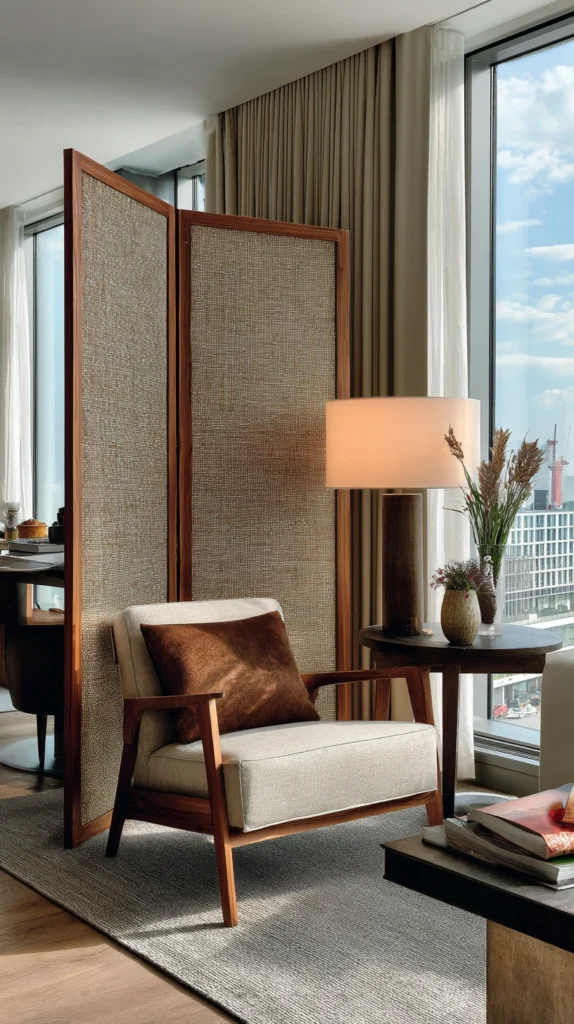
Traditional folding room dividers serve as excellent temporary door alternatives, especially for wide openings or unconventional spaces. These standalone units require no installation and can be moved, adjusted, or removed in seconds. Look for styles ranging from Japanese shoji screens to modern geometric designs, or tall panels with built-in shelving that add storage while creating division.
3. Sliding Barn Door Hardware Kit
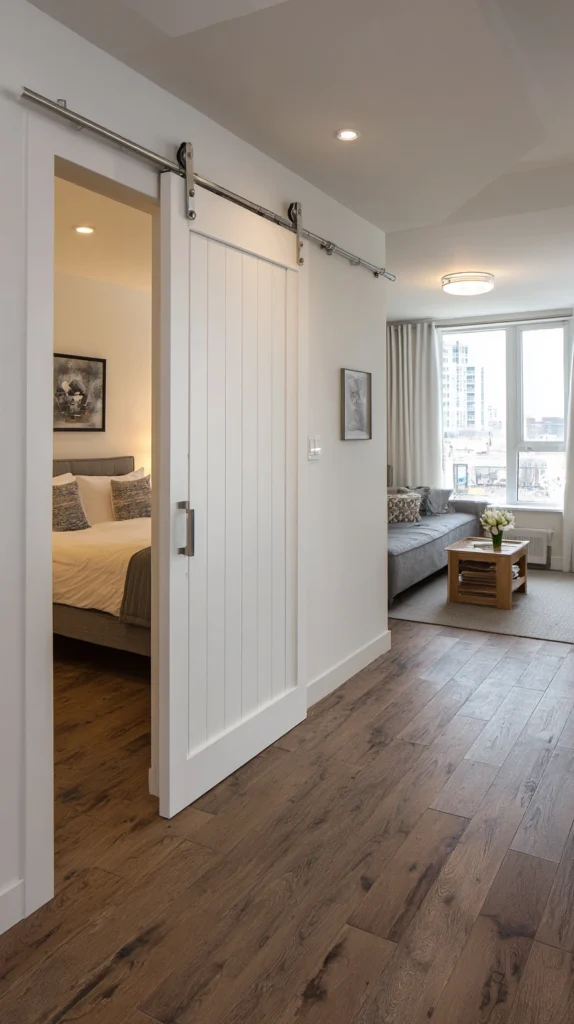
Install a temporary sliding barn door using ceiling-mounted track systems designed specifically for renters. These kits use strong adhesive or tension-based mounting that doesn’t require drilling into walls or door frames. Pair the hardware with a lightweight hollow-core door, reclaimed wood panel, or even a large framed mirror for a stylish sliding solution.
4. Magnetic Door Curtain
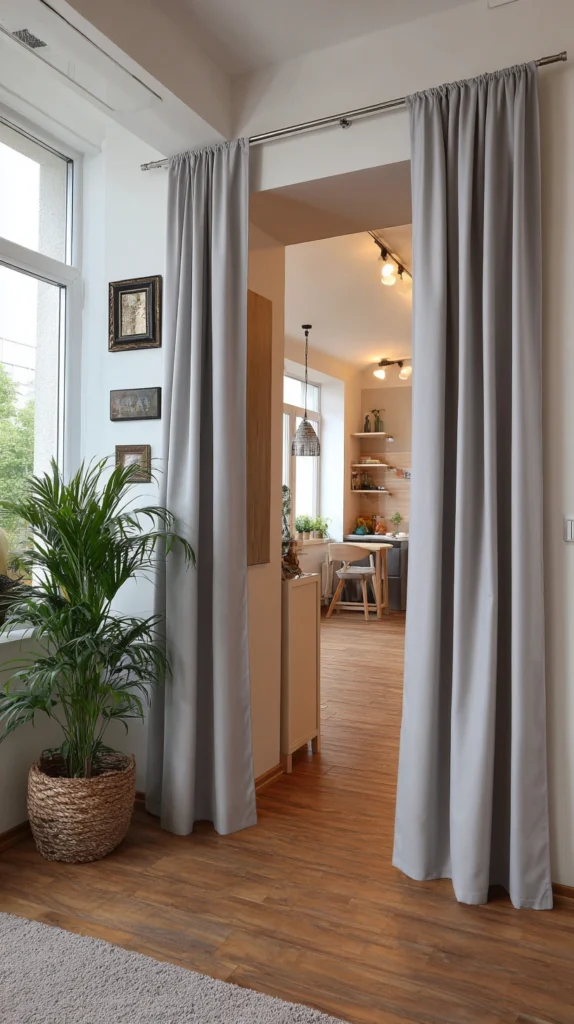
Magnetic closure curtains, often used for pet doors or RVs, work beautifully as temporary room dividers. The weighted magnets sewn into the curtain edges allow the panels to close automatically behind you while remaining easy to pass through. These work particularly well for high-traffic areas like hallways, laundry rooms, or playrooms where you need frequent access but occasional privacy.
5. Bookshelf Door Alternative
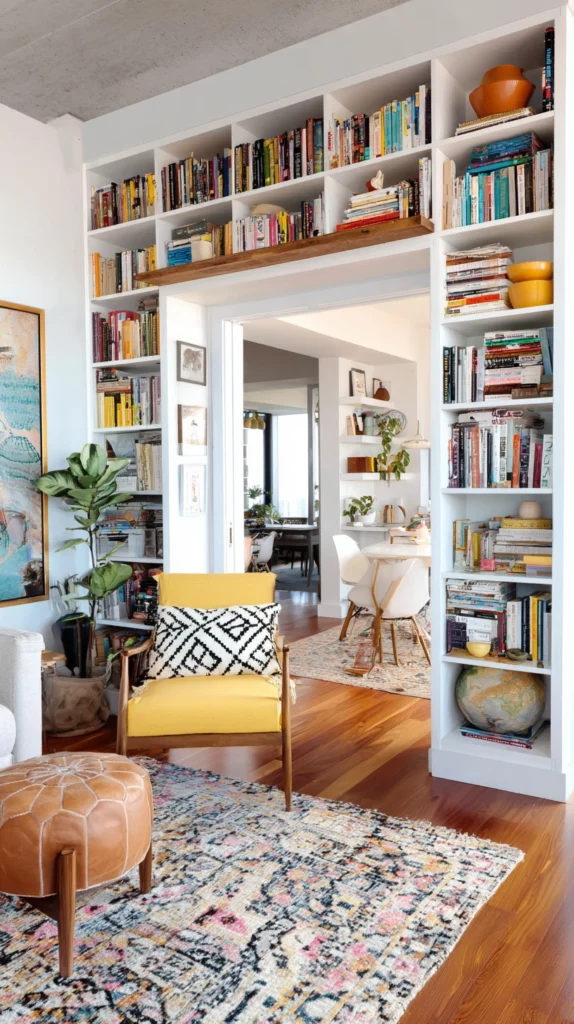
A tall, sturdy bookshelf positioned perpendicular to the wall creates a semi-permanent door alternative with bonus storage. This works especially well in studio apartments or open-plan spaces where you want to suggest room division without complete closure. Choose a unit that’s floor-to-ceiling height for maximum privacy, and load it with books, plants, and decorative objects to create visual interest.
6. Hanging Beaded Curtains
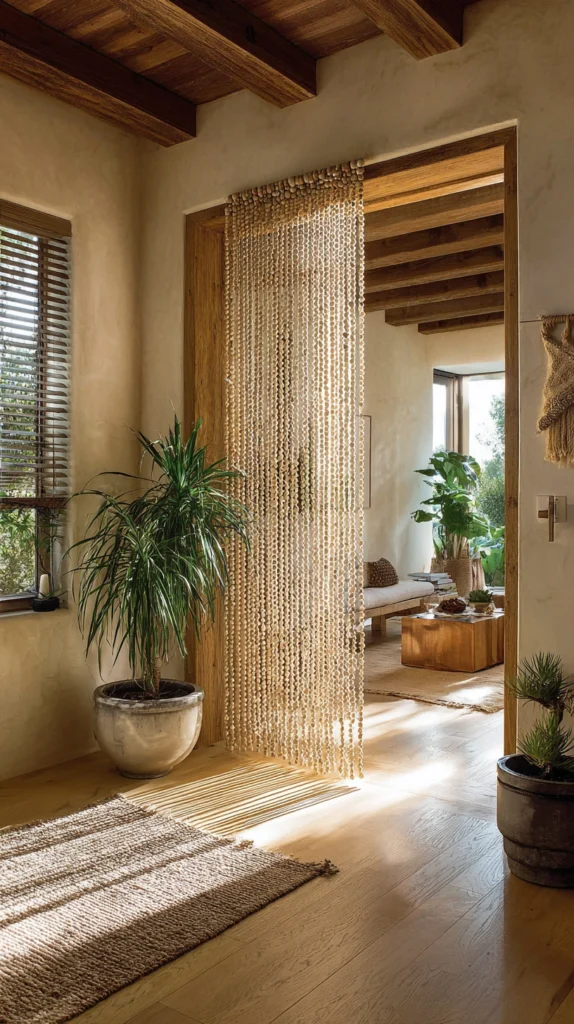
Beaded curtains offer a retro-chic temporary door solution that provides visual separation while maintaining airflow and light. Modern versions move beyond the 1970s aesthetic with wooden beads, macramé, or sleek metallic strands. Install using a tension rod or adhesive hooks, and enjoy the gentle sound and movement they create while allowing you to pass through effortlessly.
7. Command Hook and Fabric Panel
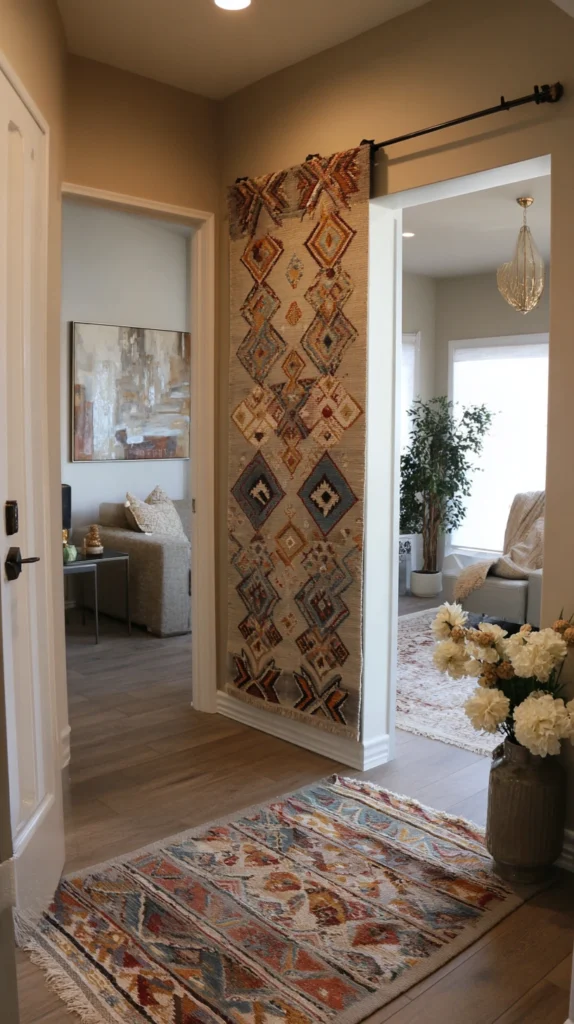
Heavy-duty Command hooks can support surprisingly substantial fabric panels when properly installed. Attach hooks to the top of your door frame, then use grommets, loops, or ties to hang heavyweight fabric, tapestries, or quilts. This approach works beautifully in bohemian or eclectic spaces and allows you to change the “door” seasonally or whenever you want a fresh look.
8. Freestanding Closet System
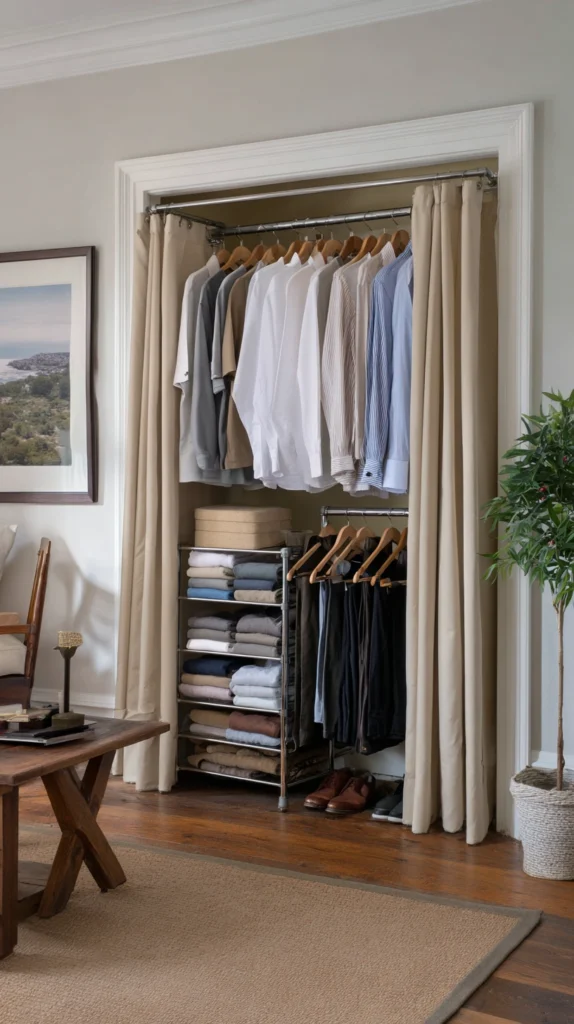
Portable wardrobe systems with integrated curtain doors solve two problems simultaneously in rental spaces. These freestanding units create instant closet space while their curtain fronts can be positioned to block doorways. Look for sturdy metal frame versions with canvas or fabric exteriors that complement your décor while providing the structural integrity to function as a room divider.
9. Expandable Accordion Doors
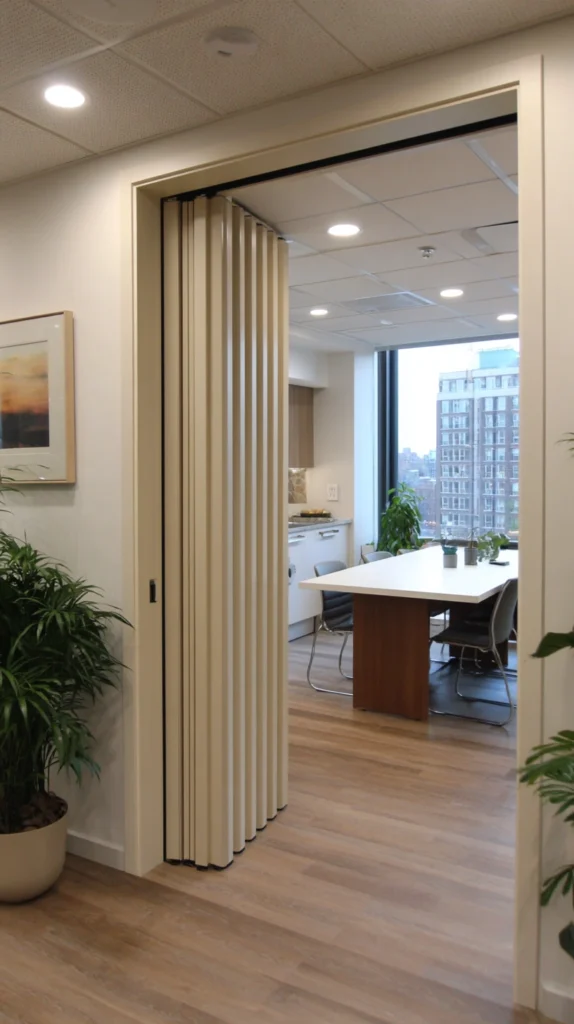
Modern accordion doors have evolved far beyond the flimsy vinyl versions of decades past. Today’s options include stylish fabric panels, contemporary vinyl in designer colors, or even wood-look finishes. Install using a temporary track system attached with strong adhesive strips, or opt for tension-mounted versions that require no hardware at all.
10. Removable French Door Panels
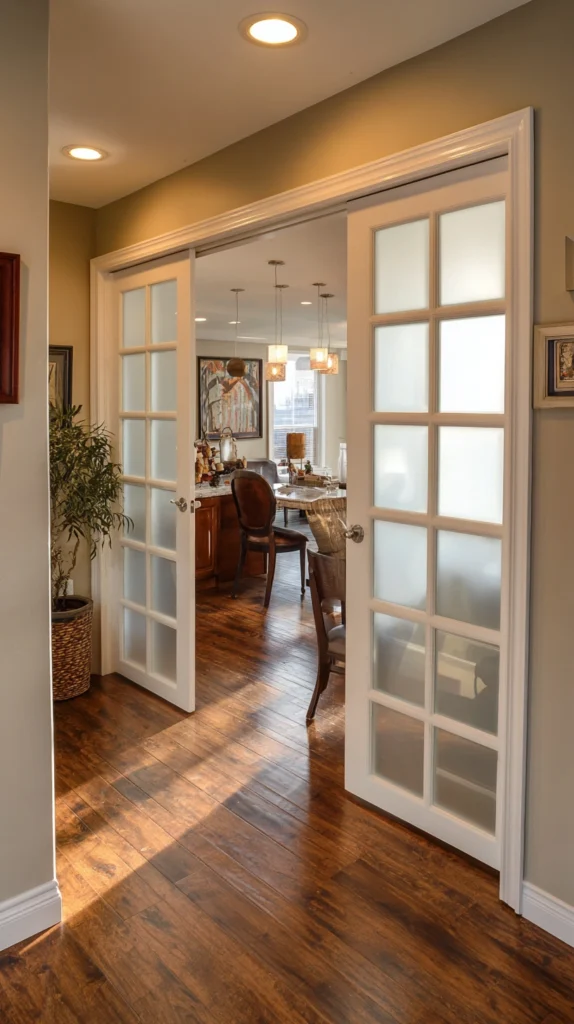
Create the illusion of French doors using freestanding frames with frosted acrylic or glass panels. These decorative screens don’t actually function as hinged doors but provide elegant separation and privacy without installation. Many versions feature lightweight frames that simply stand in the doorway, while others use adjustable tension systems to hold them in place.
11. Hanging Plant Wall Divider
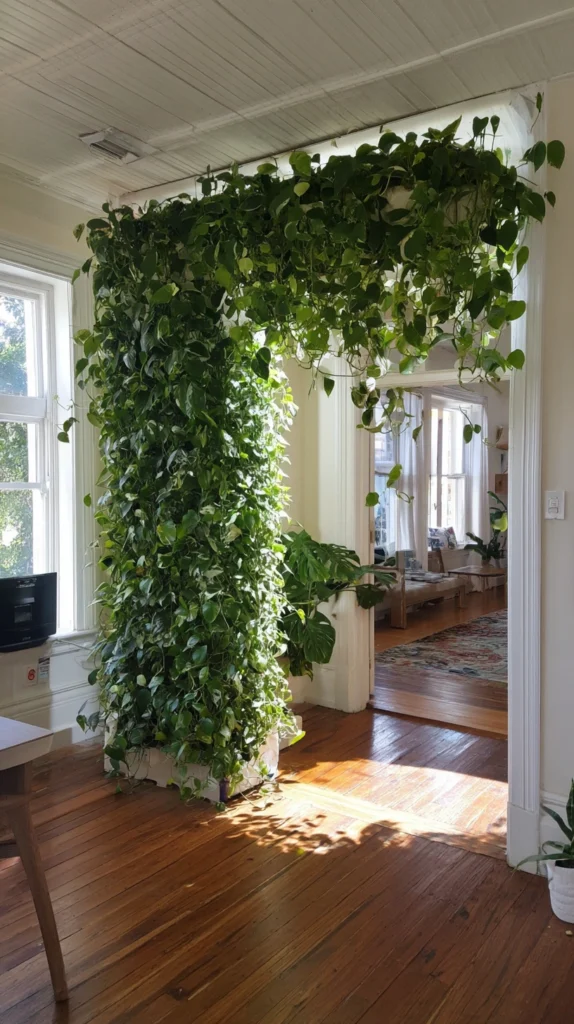
For a living, breathing temporary door alternative, create a vertical garden using a tension rod or freestanding plant stand. Hang multiple potted plants at varying heights to create a dense green curtain that provides privacy while purifying air. This works especially well in bathrooms, home offices, or creative spaces where you want an organic, Instagram-worthy solution.
12. Suspended Sheet System
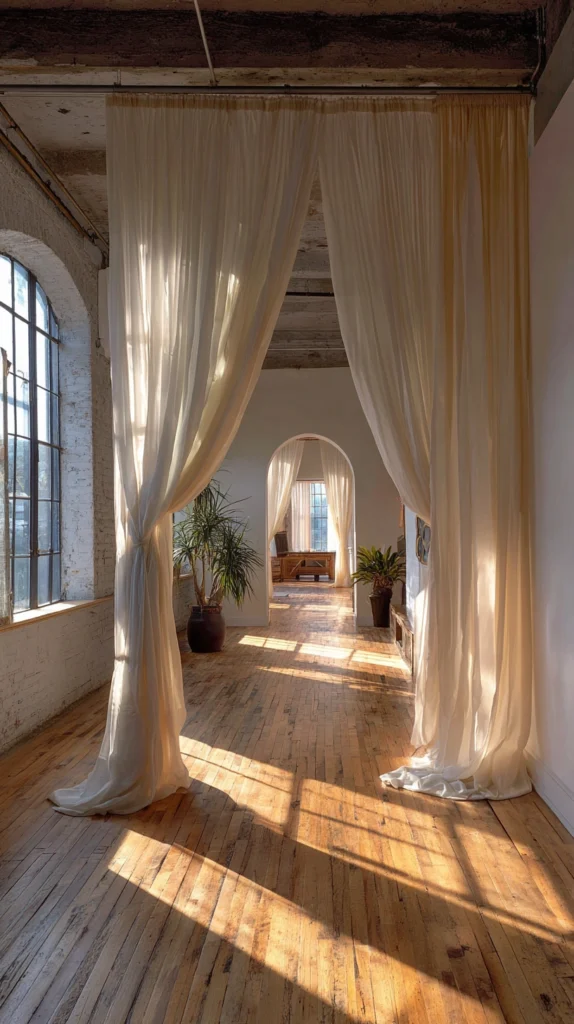
Simple bed sheets can become surprisingly effective temporary doors when properly hung and styled. Use two tension rods—one at the top of the doorway and another midway down—to create a double-hung system that prevents gaps. Choose high-quality sheets in colors that complement your space, and consider layering sheer and opaque fabrics for adjustable privacy.
13. Portable Partition Wall
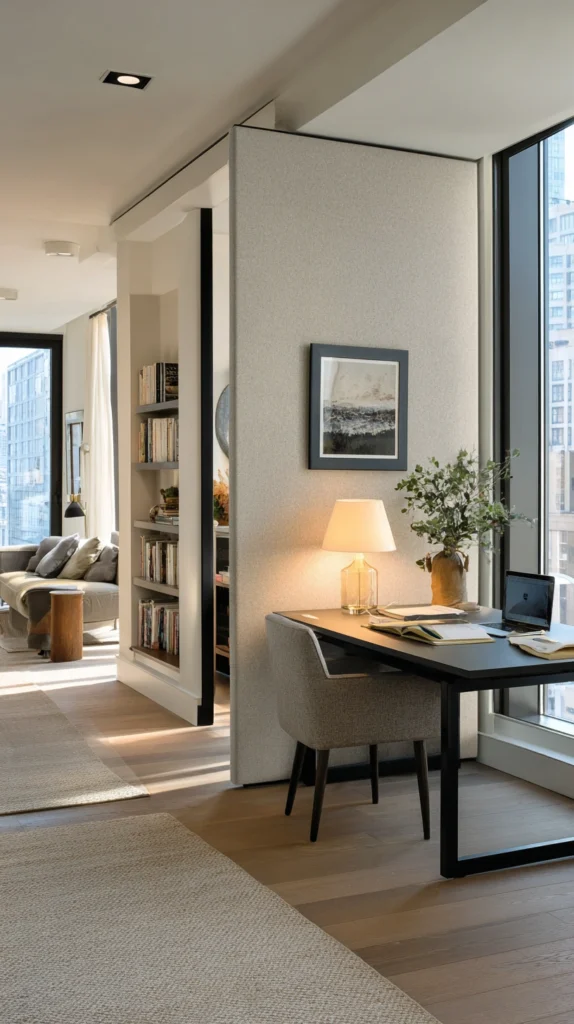
Commercial-grade portable partition walls, often used in offices or event spaces, work beautifully in residential settings. These freestanding panels on wheels can be positioned across doorways and easily moved when access is needed. Look for fabric-covered acoustic panels that provide sound dampening, or frosted acrylic versions that allow light transmission while blocking sightlines.
14. Macramé or Rope Curtain
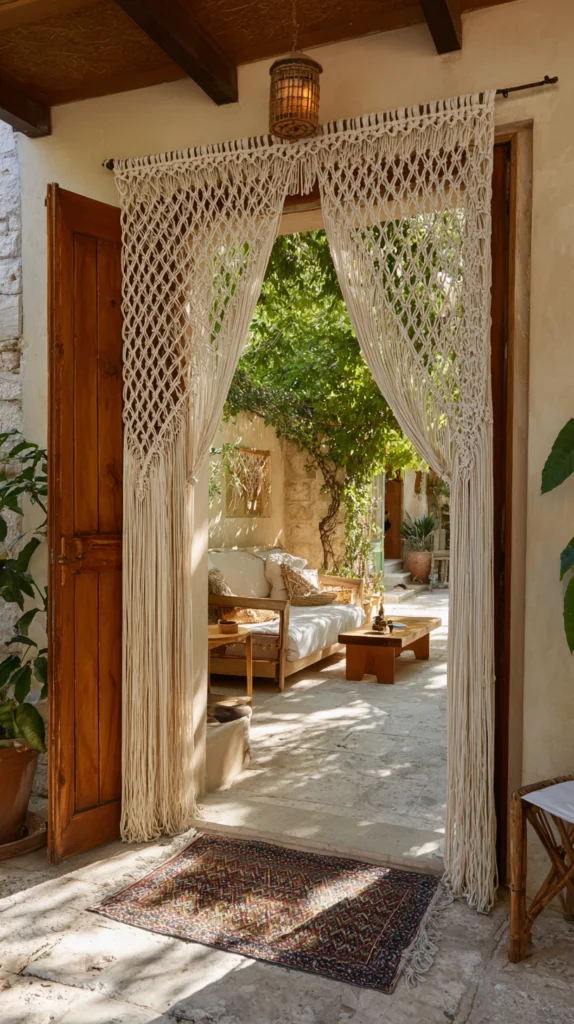
Handcrafted macramé panels or modern rope curtains create textural, bohemian temporary doors with serious style. These can be hung from tension rods or adhesive hooks and provide varying degrees of privacy depending on the density of the weave. The natural fiber aesthetic works particularly well in coastal, boho, or Scandinavian-inspired interiors while allowing airflow and diffused light.
15. Freestanding Pivot Door Frame
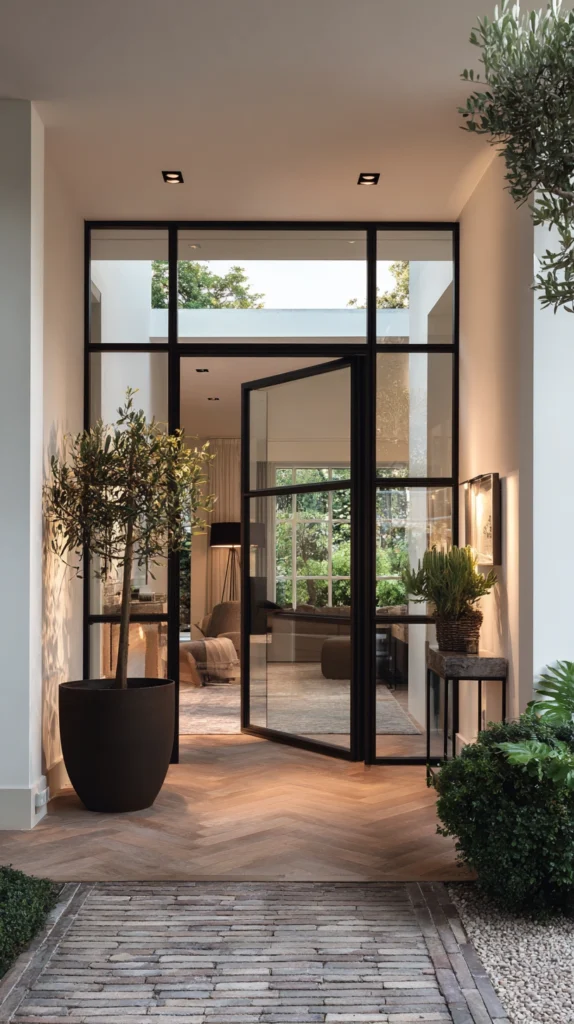
Invest in a freestanding door frame system that holds a standard door without attaching to walls or ceiling. These weighted bases support a vertical frame into which you can install any standard door, creating a true door experience without permanent installation. While pricier than other options, this solution offers authentic door functionality with the ability to lock, close completely, and provide substantial sound insulation.
Choosing the Right Temporary Door Solution
Selecting the best temporary door depends on several factors including your budget, the level of privacy needed, and aesthetic preferences. Consider whether you need complete visual privacy or just a suggestion of separation. Think about sound—fabric curtains absorb noise while hard panels may reflect it.
Weight matters too, especially for tension-mounted solutions. Lighter materials like fabric, plastic, or hollow-core doors work best for adhesive or tension installations. Heavier options like solid wood or thick glass typically require freestanding frames with weighted bases for stability.
Installation Tips for Maximum Security
Even temporary doors benefit from proper installation to ensure they stay in place and function effectively. For tension rod solutions, measure carefully and choose rods rated for the weight of your curtain or panel. Clean surfaces thoroughly before applying adhesive hooks or strips, and allow the full curing time recommended by the manufacturer before hanging weight.
Freestanding options should be positioned on level floors and away from high-traffic areas where they might be knocked over. Consider using furniture anchors or removable adhesive stabilizers if you have children or pets. For sliding systems, ensure the track is perfectly level to prevent the door from sliding open or closed on its own.
Enhancing Privacy and Functionality
Maximize the effectiveness of your temporary door by layering solutions. Combine a sheer curtain for daytime privacy with a blackout curtain for nighttime closure. Add a small rug or draft stopper at the base to block light gaps and reduce noise transmission.
For spaces requiring more security, combine a curtain system with a freestanding room divider positioned just inside the doorway. This creates a double barrier that’s much harder to see through while maintaining the temporary, removable nature of the installation. Consider adding battery-operated motion sensor lights to illuminate the doorway safely when passing through in darkness.
Decorating Around Temporary Doors
Temporary doors can be design features rather than eyesores when thoughtfully integrated into your décor. Choose fabrics and materials that complement your existing color scheme and style. Frame curtain doors with decorative molding applied with removable adhesive strips to create a more finished, intentional look.
Add embellishments like tassels, trim, or decorative rods to elevate basic curtain solutions. For freestanding dividers, personalize them with removable wallpaper, fabric panels, or artwork attached with museum putty. The goal is making the temporary door feel like a deliberate design choice rather than a makeshift solution.
Maintenance and Longevity
Proper care extends the life of temporary door solutions and keeps them looking fresh. Wash fabric curtains regularly according to care instructions, and dust or vacuum beaded curtains and macramé panels monthly. Check tension rods periodically to ensure they haven’t loosened, and tighten as needed.
Inspect adhesive hooks and strips every few months, replacing any that show signs of weakening. For freestanding options, periodically check that all joints, hinges, or wheels remain secure and functional. Store seasonal temporary doors properly when not in use—fold curtains rather than cramming them into bags, and keep solid panels flat to prevent warping.
Cost Considerations
Temporary door solutions range from incredibly budget-friendly to significant investments. Simple tension rod and curtain combinations can cost as little as twenty to fifty dollars, while freestanding door frame systems might run several hundred. Consider your timeline—if you need a solution for just a few months, opt for budget options, but if you’ll use it for years across multiple moves, investing in quality makes sense.
Factor in versatility when evaluating cost. A beautiful room divider screen might seem expensive, but if you can reposition it in different rooms or homes, the cost-per-use decreases significantly. DIY options using materials you already own or can repurpose offer the best value, though they may require more time and creativity.
Legal and Lease Considerations
Before installing any temporary door solution in a rental property, review your lease agreement carefully. While truly temporary solutions shouldn’t violate most leases, some landlords have specific restrictions on room modifications. Document the original state with photos before installation, and keep all original hardware or components to ensure complete restoration when you move out.
For homeowners, temporary doors might affect home insurance or resale value if they replace code-required doors. Ensure any temporary solution in areas like bedrooms or bathrooms doesn’t violate local building codes, particularly regarding egress and fire safety. When in doubt, consult with your landlord, HOA, or local building department to ensure compliance.
Making It Work Long-Term
Temporary doors can successfully function for months or even years with the right approach and maintenance. Regular inspections catch small issues before they become major problems. Rotate fabric panels seasonally to prevent uneven fading from sunlight exposure.
Consider the psychological impact too. Living with temporary solutions long-term works best when they’re aesthetically pleasing and function smoothly. If you find yourself frustrated daily by a flimsy curtain that won’t stay closed, upgrade to a better solution. Your home should support your wellbeing, and even temporary fixtures deserve to work properly and look good.
Conclusion
Temporary doors prove that flexible, removable solutions don’t require sacrificing style, privacy, or functionality. From elegant fabric panels to freestanding partition systems, these fifteen ideas offer something for every aesthetic, budget, and practical need.
The key is matching the solution to your specific situation—considering installation requirements, visual impact, and how long you’ll need the temporary door.
Whether you’re a renter protecting your deposit, a homeowner in transition, or simply someone who values flexibility in home design, temporary doors open up possibilities. They allow you to adapt spaces as needs change, experiment with room layouts without commitment, and create privacy wherever and whenever you need it. With thoughtful selection and proper installation, your temporary door can be as beautiful and functional as any permanent fixture.