15 Stylish Patio Flooring Ideas for a Sleek, Modern Space
The floor of your patio is the foundation upon which everything else is built. It sets the tone for the furniture you choose, the plants you arrange, and the overall atmosphere you create.
Yet patio flooring is one of the most overlooked elements of outdoor design, with many homeowners defaulting to basic concrete or standard brick simply because they are unaware of how many better options exist.

The right patio floor does not just provide a surface to walk on — it defines the entire character of the outdoor space and creates a seamless visual connection between your home and garden. Here are fifteen stylish patio flooring ideas that deliver both good looks and lasting practicality.
1. Large Format Porcelain Tiles
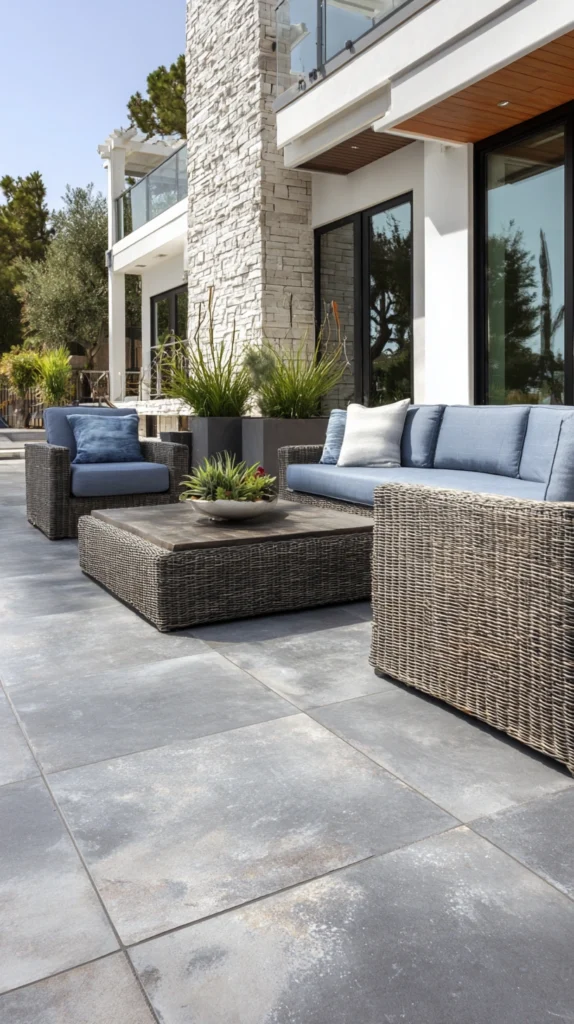
If there is one material that has genuinely transformed modern patio design over the past decade, it is large format porcelain tile. Available in slabs as generous as 120 by 60 centimetres or larger, these tiles create an expansive, uninterrupted surface with minimal grout lines that gives any patio an immediately sleek and contemporary feel.
Porcelain is frost-resistant, virtually impervious to staining, and requires almost no maintenance beyond an occasional sweep and rinse. It is also available in finishes that convincingly replicate natural stone, concrete, timber, and marble, meaning you can achieve the look of premium materials at a fraction of the cost and with significantly greater durability.
2. Composite Decking Boards

Composite decking has matured considerably from its early iterations and today represents one of the most practical and visually appealing choices for a modern patio floor. Made from a blend of recycled wood fibre and plastic polymers, composite boards resist fading, splintering, warping, and insect damage far better than natural timber.
They require no sanding, staining, or sealing, and they feel warm and comfortable underfoot in a way that stone and tile cannot match. Contemporary composite decking is available in a wide range of realistic timber tones from pale ash to deep charcoal, and the surface textures have become sophisticated enough that the difference from real wood is barely detectable.
3. Concrete Pavers with Wide Joints

The Industrial Aesthetic Done Beautifully
Concrete pavers laid with deliberately wide joints filled with gravel, ground cover plants, or decomposed granite create a patio floor that feels modern, textured, and connected to the natural landscape. The wide joints soften what could otherwise be an overly hard, austere surface and introduce an organic quality that suits contemporary gardens with naturalistic planting.
Concrete pavers themselves come in an enormous range of finishes — smooth, brushed, exposed aggregate, and sandblasted — and in shapes from standard rectangular to irregular flagstone profiles. The combination of industrial material and organic detailing is one of the most satisfying visual contrasts available in patio design.
4. Natural Limestone Paving
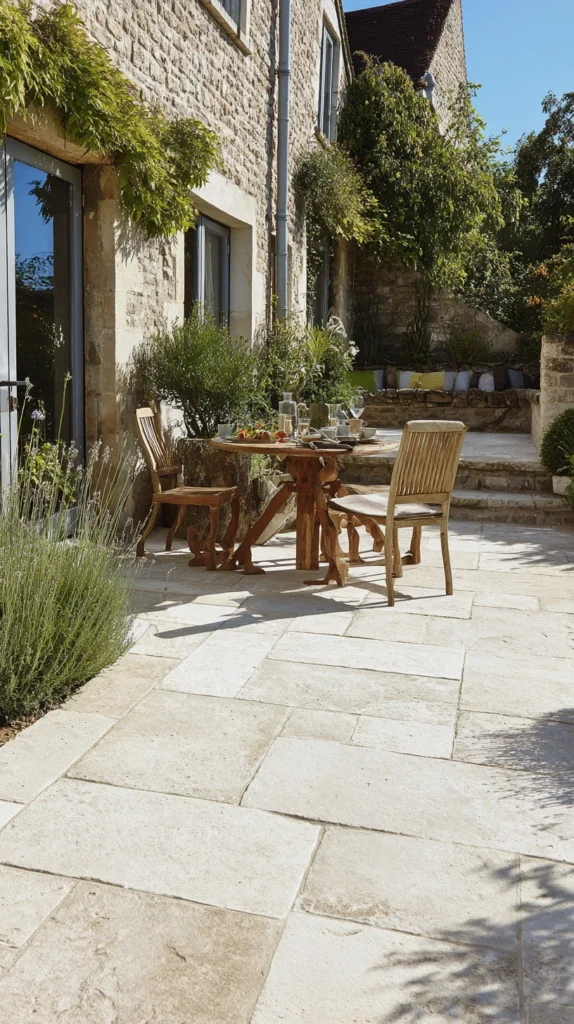
Few natural materials age as gracefully as limestone. Its soft, chalky surface tones ranging from creamy white to warm honey and pale grey make it one of the most versatile patio flooring options available, sitting comfortably within both contemporary and traditional settings.
Limestone develops a gentle patina over time that many homeowners find more attractive than the original surface. It is worth noting that limestone requires sealing to prevent staining and should be chosen in a textured or brushed finish for outdoor use to ensure adequate slip resistance. When properly maintained, a limestone patio is genuinely one of the most beautiful outdoor floors possible.
5. Timber Decking in Hardwood

When Only the Real Thing Will Do
Natural hardwood decking carries a warmth, depth, and character that no composite or synthetic material has yet fully replicated. Species such as teak, ipe, cumaru, and garapa are naturally dense, oily, and highly resistant to weathering, insects, and decay, making them well-suited to outdoor use without the intensive maintenance that softer woods require.
Left to weather naturally, most hardwoods develop a beautiful silver-grey patina. Treated with decking oil annually, they retain their rich original tones. The grain patterns, natural colour variation, and tactile quality of real hardwood underfoot make it worth the additional cost and care for homeowners who want their patio to feel genuinely luxurious.
6. Poured Concrete with Surface Finishing

A seamlessly poured concrete slab, far from being a plain or utilitarian choice, can be finished in ways that make it one of the most striking patio flooring options available. Polished concrete with a smooth, reflective surface brings an almost architectural quality to an outdoor space.
Exposed aggregate concrete, where the top layer is washed away to reveal the stones within, adds texture and visual interest while improving slip resistance. Broom-finished concrete creates a subtle linear texture that catches light beautifully. Concrete can also be tinted, stained, or given decorative scored patterns after pouring, opening up a wide range of aesthetic possibilities from a single, monolithic material.
7. Slate Paving

Slate’s deep, layered tones of charcoal, blue-grey, green, and purple make it one of the most visually distinctive natural stone options for patio flooring. Its naturally cleaved surface provides excellent grip underfoot, making it a practical choice for outdoor use in wet climates.
Slate pavers have an earthy, slightly raw quality that works particularly well in gardens with bold architectural planting and in settings where the home itself uses dark or natural material finishes.
Like limestone, slate benefits from periodic sealing to maintain its colour and prevent water absorption. When wet, its colours deepen and intensify, making it one of the few patio materials that actually looks better in the rain.
8. Travertine Tiles

Travertine is a form of limestone with a distinctively pitted, textured surface and warm tones ranging from ivory and cream to walnut and gold. Its natural holes and variations give it a handmade, artisanal quality that feels simultaneously ancient and modern.
For outdoor use, travertine is best chosen in a filled and honed or brushed finish rather than polished, which can become slippery when wet. It stays relatively cool underfoot even in direct summer sun, making it an excellent choice for patios in hot climates. Travertine pairs beautifully with rendered walls, terracotta planters, and Mediterranean-style planting, creating an outdoor space that feels sun-soaked and unhurried.
9. Porcelain Wood-Effect Planks

The Best of Both Worlds
For homeowners who love the look of timber decking but want the zero-maintenance practicality of porcelain, wood-effect porcelain planks are the answer. These tiles are manufactured to replicate the grain, knot patterns, and colour variation of real timber with remarkable accuracy, and they are laid in the same linear plank format as actual decking boards.
The result reads as a timber deck from any distance while offering all the frost resistance, stain resistance, and durability of porcelain. They are also significantly more fire-resistant than real timber, an important consideration for patios that incorporate outdoor cooking or fire features.
10. Gravel and Stepping Stones

A patio floor does not need to be a solid, uninterrupted surface to be stylish or functional. A loose gravel base with large stepping stones or concrete pavers set into it creates a patio floor that is permeable, low-cost, and genuinely attractive. The contrast between the solid geometry of the pavers and the fine, loose texture of the gravel is visually interesting and the combination suits modern minimalist garden designs extremely well. Gravel patios also drain perfectly, eliminating puddles after rain, and the sound of footsteps on gravel adds a sensory dimension that hard surfaces cannot provide. Choose angular gravel in a consistent size and tone for the most refined result.
11. Basalt Paving
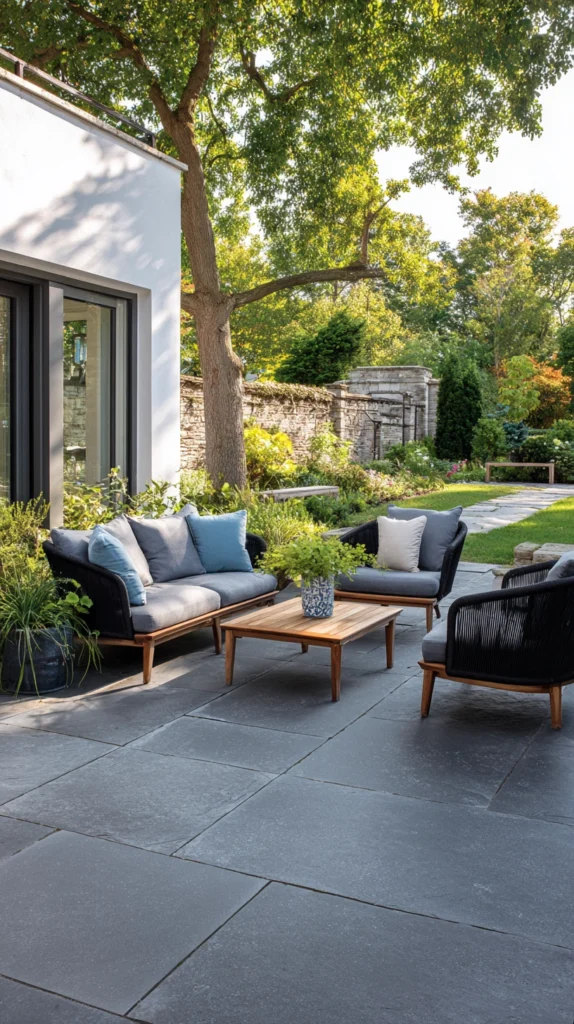
Basalt is a volcanic stone with a dense, fine-grained surface in deep grey and near-black tones that gives it a sophisticated, contemporary edge that few other natural stones can match. It is exceptionally hard and durable, highly resistant to weathering, and maintains its colour and surface quality over many years with minimal maintenance.
Basalt pavers cut into large rectangular formats and laid in a simple grid or running bond pattern create a patio floor of quiet, confident elegance. The dark tones work particularly well in modern gardens where the planting palette is restrained and the architecture of the home leans toward dark metal, concrete, and glass.
12. Rubber Pavers for Functional Spaces
Practicality Without Sacrificing Style
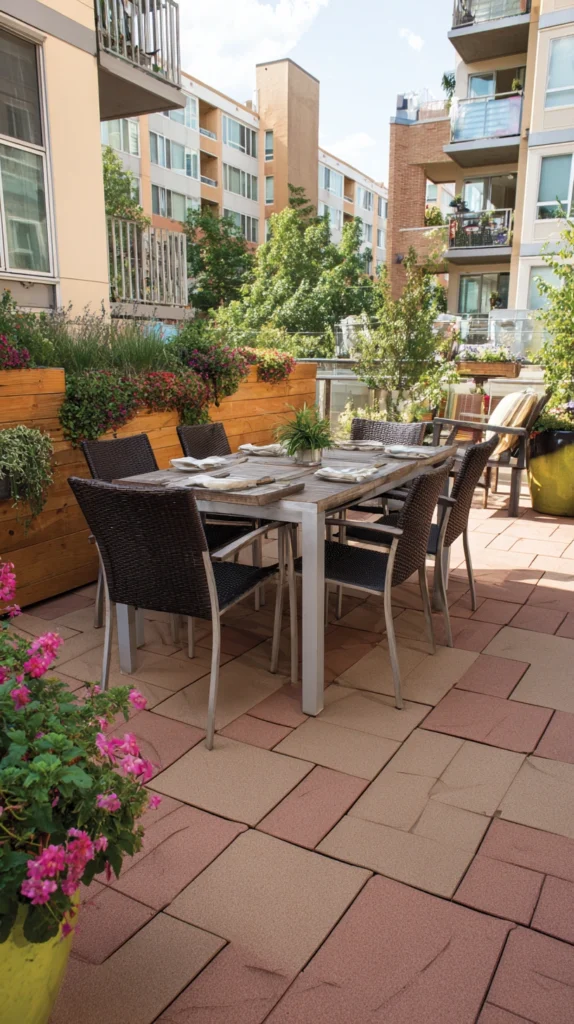
For patios that double as children’s play areas, outdoor gyms, or pool surrounds, rubber pavers offer a level of comfort, safety, and slip resistance that hard materials simply cannot match.
Modern rubber pavers have moved well beyond the utilitarian black mats of the past and are available in geometric tile formats, interlocking patterns, and a range of earthy tones that integrate naturally into a garden setting.
They absorb impact, resist water, and are comfortable to stand on for long periods. In zones where function genuinely takes priority over aesthetics, rubber pavers are the intelligent, honest choice.
13. Ceramic Mosaic Tiles

Small ceramic mosaic tiles used across an entire patio floor create a surface that is detailed, characterful, and unlike anything achievable with larger format materials. Whether laid in a simple single-colour grid, a geometric two-tone pattern, or a fully custom pictorial design, mosaic tilework brings a handcrafted, artisanal quality to outdoor flooring that feels genuinely special.
This approach works best on smaller patios where the scale of the mosaic pattern can be fully appreciated rather than lost across a large expanse. Mediterranean, Moroccan, and Spanish-inspired outdoor spaces benefit enormously from the colour and pattern that ceramic mosaic flooring introduces.
14. Sandstone Paving
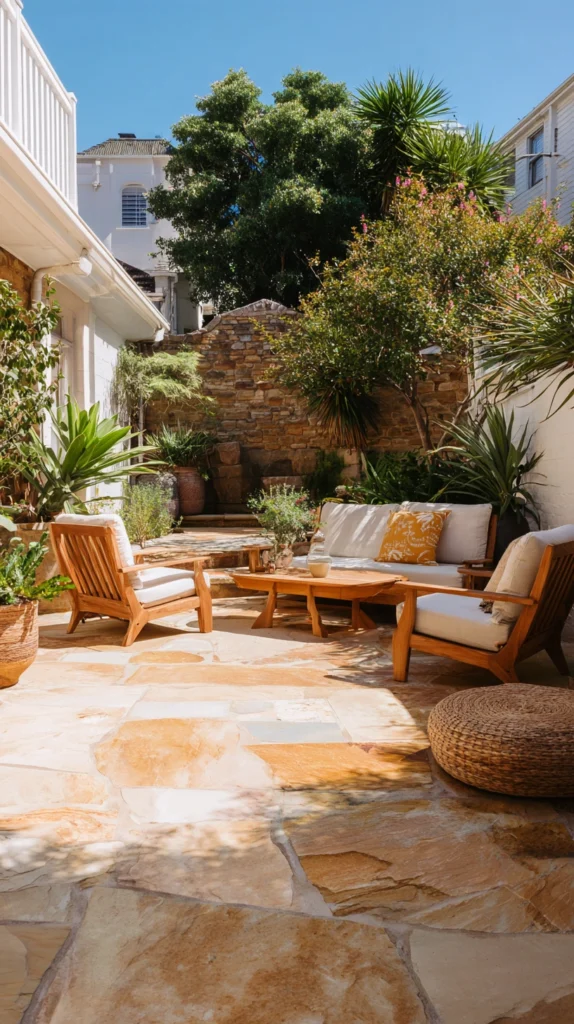
Sandstone is one of the most widely used natural paving materials in the world, and for good reason. Its warm tones spanning golden yellow, burnt orange, pink, and buff cream make it one of the most welcoming and visually warm natural stone options available.
It is relatively easy to cut and lay, widely available, and reasonably priced compared to premium stones like granite or basalt. Sandstone does require sealing to prevent staining and water absorption, and it should be chosen in a textured finish for safe outdoor use. At its best, a well-laid sandstone patio glows in afternoon sunlight in a way that feels genuinely inviting.
15. Mixed Material Patio Floors
Designing With Contrast and Intention
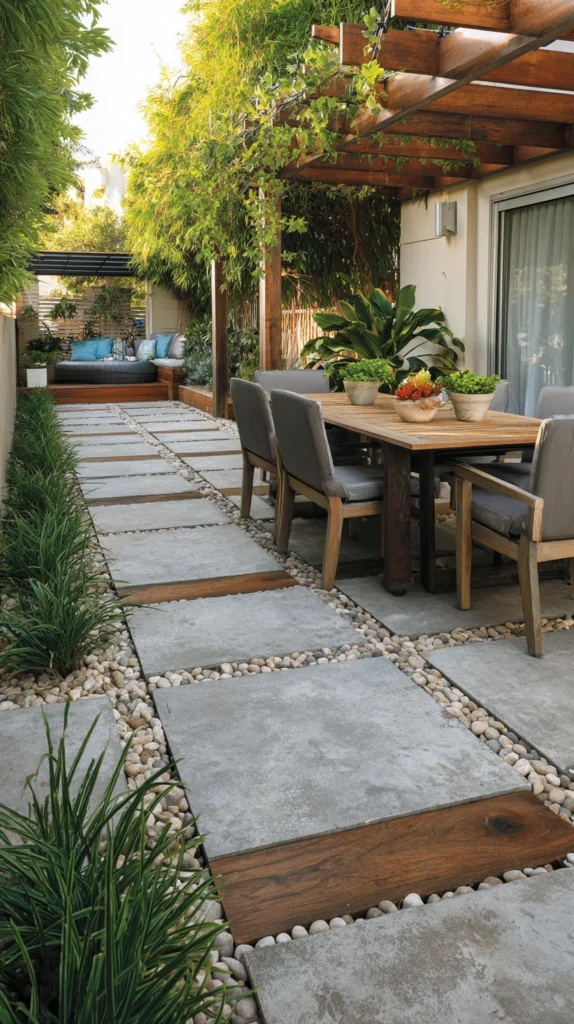
Some of the most striking modern patio floors are not defined by a single material but by the thoughtful combination of two or more. Timber decking inset with strips of stainless steel. Concrete pavers alternating with bands of pebbles.
Large format porcelain tiles edged with a border of contrasting natural stone. Mixing materials allows you to define zones within a larger patio — a dining area distinguished from a lounge area, a transition from covered to open space — while adding visual complexity and interest that a single material across the entire floor cannot achieve.
The key is restraint; limit your palette to two or three materials and ensure they share at least one common tone or quality to hold the composition together.
Choosing the Right Floor for Your Patio
The best patio flooring choice is always the one that balances the aesthetic you want with the climate you live in, the maintenance you are willing to commit to, and the budget you have available.
Consider how the floor will relate to your interior flooring — particularly if your patio opens directly from a living or dining room — as visual continuity between inside and outside dramatically increases the perceived size of both spaces.
Choose materials with appropriate slip ratings for your climate, and always consider drainage before committing to a layout. A patio floor that is both beautiful and genuinely functional is one of the most rewarding investments you can make in your home.