15 Stylish Backyard Shade Ideas to Stay Cool in the Heat
The backyard that works in theory but not in practice is one of the most common and most frustrating outcomes of outdoor design.
A beautiful terrace, a well-chosen furniture arrangement, a garden planted with care and maintained with love — all of it rendered unusable for the six or eight hours of the day when the sun is at its most intense, when the paving radiates heat from below and the sky delivers it from above, and when the idea of sitting outside feels less like a pleasure and more like an endurance test.
Shade is not an optional comfort upgrade for a backyard — it is the foundational condition that makes outdoor living genuinely possible in warm climates, and in most temperate ones too during the increasingly intense summers that changing weather patterns are delivering.

The good news is that the options available for creating shade in a backyard have expanded dramatically in both quality and aesthetic range, and the best solutions now function simultaneously as design statements that enhance the visual character of the outdoor space and as practical shelter that extends its usable hours from a narrow window of comfortable morning and evening use into a genuine all-day outdoor living environment. Here are fifteen ideas that combine both qualities with style.
1. The Sail Shade — Clean Lines and Maximum Flexibility
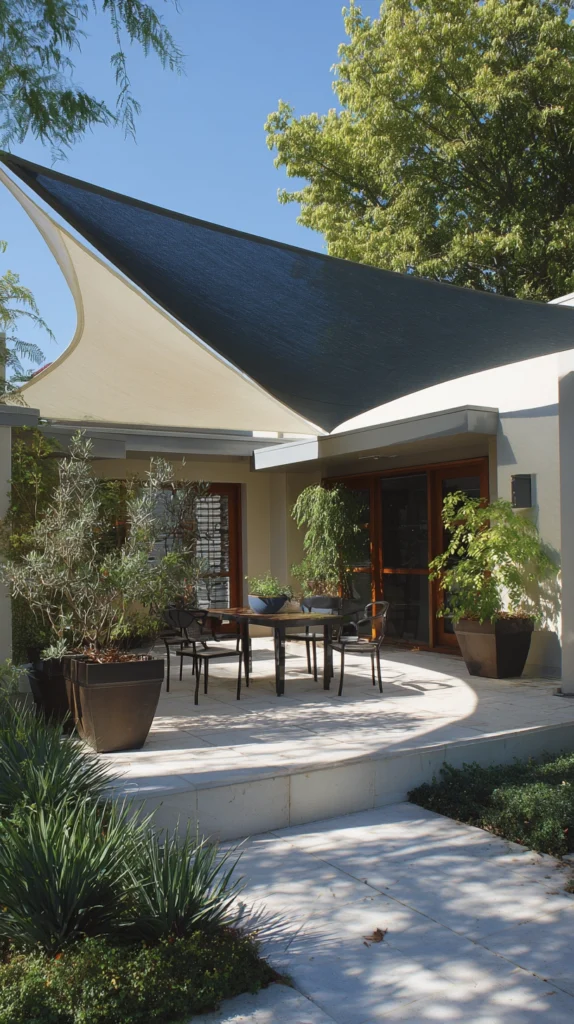
The sail shade — a tensioned fabric panel anchored at three or four points to posts, walls, or existing structures — has become one of the defining elements of contemporary backyard design, and its popularity reflects the fact that it delivers an unusually high ratio of shade coverage to visual elegance at a price point that most backyard budgets can accommodate.
The triangular sail is the most common configuration, but square and rectangular versions are available and often preferable for larger areas where full coverage is the priority. The fabric is typically a high-density polyethylene weave that blocks between 90 and 98 percent of UV radiation while allowing air to circulate freely beneath it, which means that the shade it creates is genuinely cool rather than the trapped, humid warmth that impermeable covers sometimes produce.
For maximum visual impact, choose a sail in a muted, sophisticated color — charcoal, warm white, deep terracotta, or olive — and install it at an angle rather than horizontally to allow rainwater to run off and to create the dramatic geometric silhouette that makes sail shades so photographically compelling.
2. The Pergola — Architecture That Earns Its Place

The pergola occupies a unique position in backyard shade provision because it is the only purely structural solution that is also genuinely architectural — a built element with columns, beams, and overhead structure that gives the outdoor space a sense of enclosure, definition, and permanence that fabric and plant-based solutions can approach but not fully replicate.
A pergola’s shade provision depends entirely on what covers its overhead structure: left bare, it provides only the dappled shade of its beams and offers minimal UV protection; fitted with adjustable louvered panels, it becomes a fully controllable shade system; covered with shade cloth or polycarbonate, it provides consistent protection; draped with climbing plants, it creates the most beautiful shade available in any backyard.
The pergola’s real value, however, goes beyond shade — it creates a room that happens to be outside, complete with the psychological enclosure and sense of defined destination that makes a space feel genuinely inhabited rather than simply furnished.
3. A Louvered Pergola for Total Climate Control
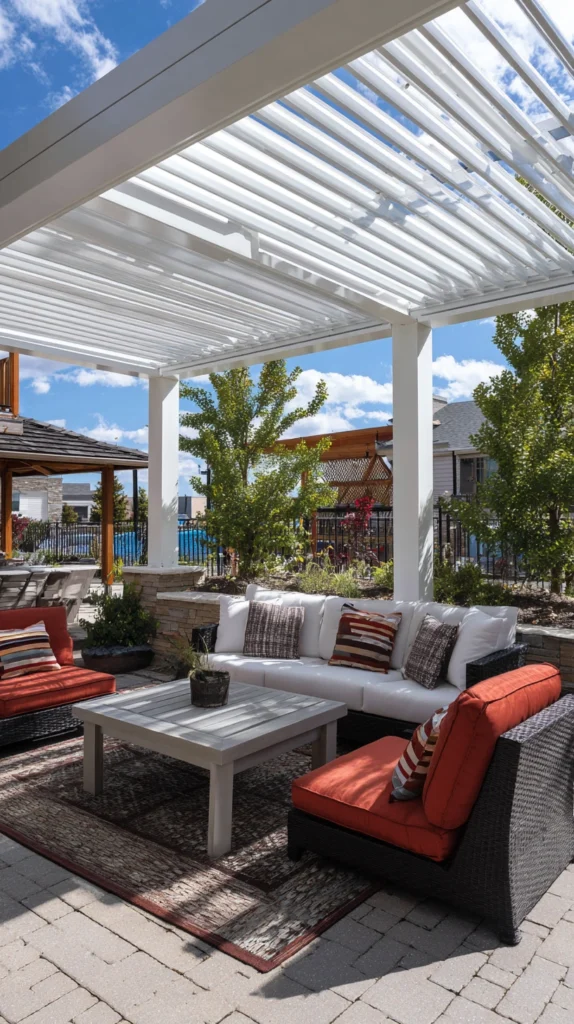
The louvered pergola — a pergola structure whose roof consists of motorized or manually adjustable aluminum slats that can be opened to allow sun and breeze through, angled to filter light, or closed to provide complete weather protection — represents the current pinnacle of backyard shade technology and the closest approximation of a genuine outdoor room available in the residential market. When the louvres are fully open, the structure feels like a conventional open pergola. When angled at forty-five degrees, they provide dappled shade while maintaining airflow.
When fully closed, they create a rain-proof, sun-proof ceiling that transforms the space beneath into a genuinely weather-independent outdoor living environment. The investment required is significant — louvered pergolas are among the more expensive backyard additions available — but the daily quality-of-life improvement they deliver in climates where heat, rain, or both are regular features of the outdoor experience is consistent and substantial.
4. A Shade Sail Layered System for Complex Coverage
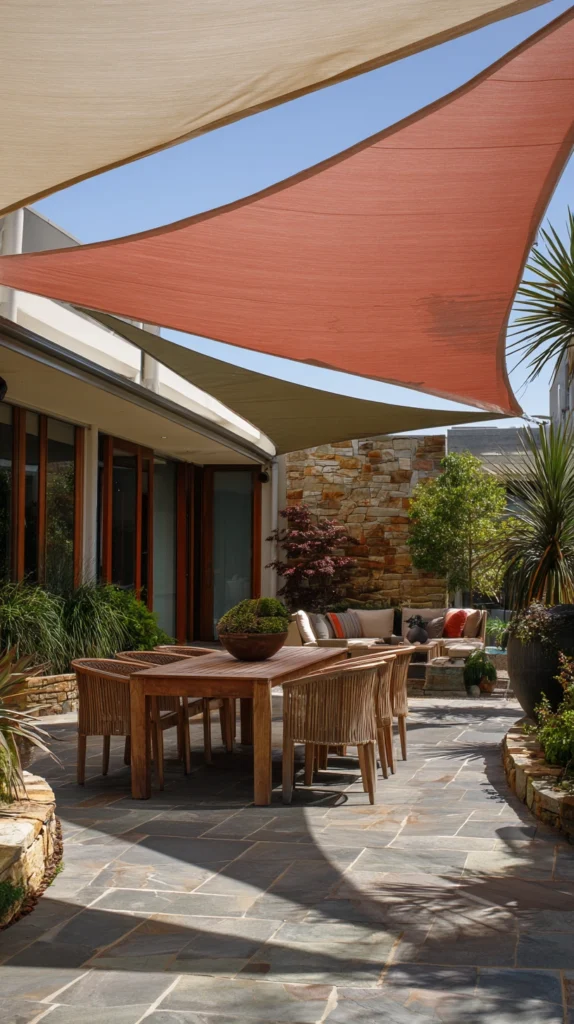
A single sail shade is versatile and effective, but a layered system of multiple sail shades at different heights, orientations, and angles creates something considerably more interesting — a dynamic overhead composition that provides overlapping coverage, creates visual depth and movement in the outdoor space, and allows the specific quality of shade to be tuned through the combination and positioning of the individual panels.
Two triangular sails overlapping at different heights create a zone of deep shade at their intersection and lighter, filtered shade at their individual extremes.
Three sails in complementary colors and different sizes create a visual composition that functions as much as outdoor art as outdoor shelter. The layered sail system is particularly effective over large terrace areas where a single sail of sufficient size would be unwieldy and where the visual weight of a single large panel would dominate the outdoor space in a way that several smaller ones distributed across it does not.
5. A Lush Vine-Covered Arbor
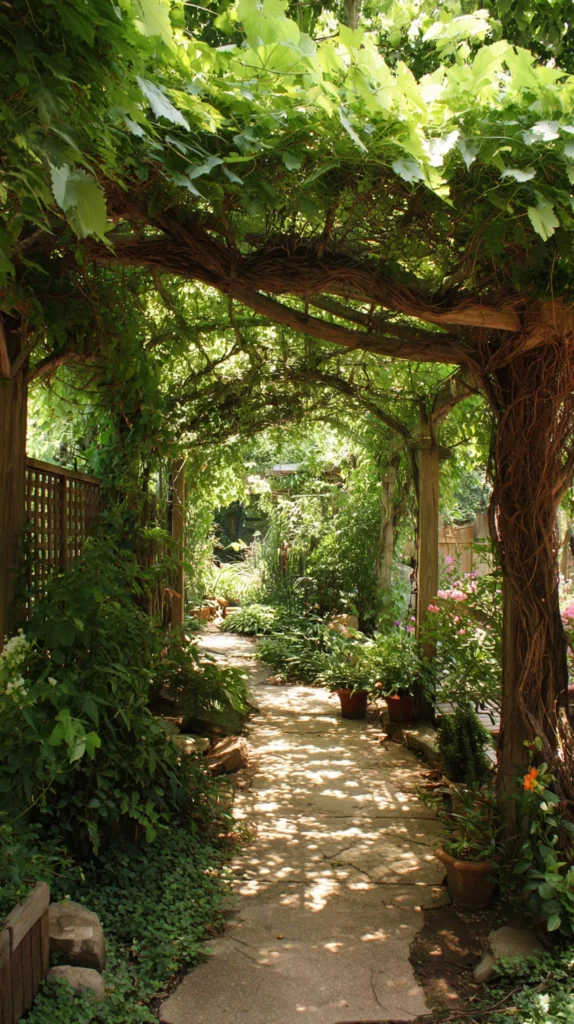
The vine-covered arbor — a simple timber or metal framework through which a climbing plant grows to create a living ceiling of leaves, flowers, and fragrance — is the backyard shade solution that improves most dramatically over time. In its first season it is a structure with a few tentative stems. In its third or fourth season it is a dense, green, animate canopy that provides genuine shade, extraordinary beauty, and a quality of sensory experience — the filtered green light, the fragrance, the sound of bees working the flowers, the movement of the canopy in any breeze — that no manufactured shade solution can come close to replicating.
Wisteria, grapevines, jasmine, climbing roses, and kiwi all perform magnificently on arbor structures given sufficient sun and appropriate pruning, and each brings its own seasonal performance — the spring blossom of wisteria, the summer fruit of the vine, the autumn color of the leaves — to what is already the most beautiful form of backyard shade available.
6. A Market Umbrella in an Oversized Statement Format

The patio umbrella has historically been one of the most practical and least aesthetically interesting backyard shade solutions, a compromise between the cost and permanence of structural options and the genuine shade coverage that outdoor living requires.
The oversized market umbrella — three to five meters in diameter, in a quality fabric on a weighted or ground-mounted pole — addresses the aesthetic shortcoming of conventional patio umbrellas by providing a scale of coverage and visual presence that changes the character of an outdoor space rather than simply accessorizing it.
In a quality faded canvas or solution-dyed acrylic fabric — terracotta, warm white, deep ochre, or dusty sage — a large market umbrella positioned over a dining or lounge arrangement creates a generous pool of shade that functions almost as a room by defining the space beneath it with its diameter. Choose a model with a tiltable pole for flexible sun tracking and a weighted base sufficient to keep it stable in a moderate wind.
7. A Living Green Wall for Radiated Heat Reduction
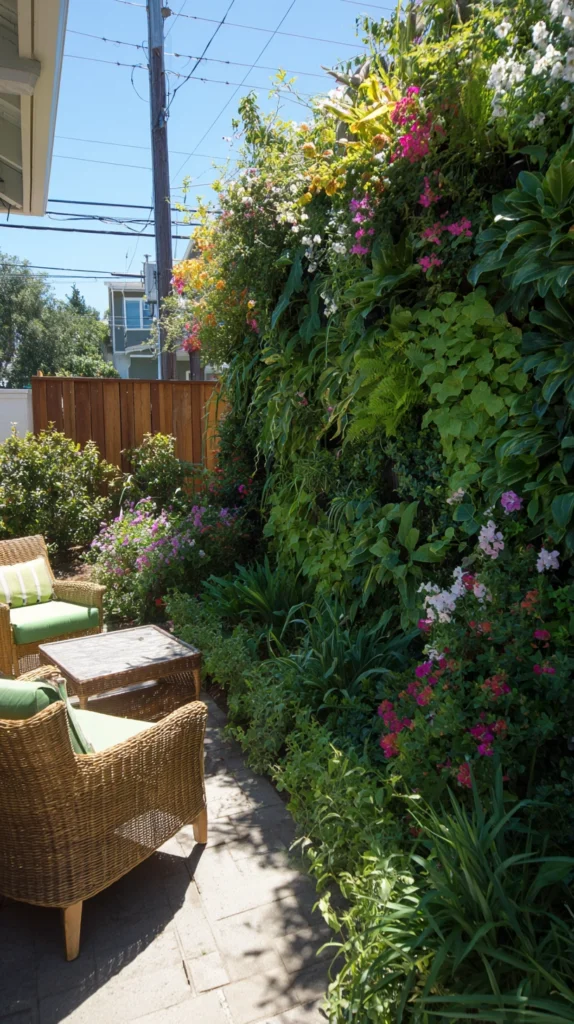
The backyard that bakes in afternoon heat is often suffering not only from direct solar radiation but from the heat radiated back from hard surfaces — paving, rendered walls, fences — that have spent the morning absorbing solar energy and spending the afternoon releasing it.
A living green wall planted on the sun-facing boundary of the outdoor space addresses this stored heat problem alongside the direct shade problem by replacing a heat-radiating hard surface with a heat-absorbing, moisture-releasing plant surface that keeps the surrounding air temperature measurably lower than exposed masonry would.
A green wall system — modular panels containing irrigation channels and growing medium — planted with hardy outdoor species creates a vertical garden that functions simultaneously as a privacy screen, a thermal buffer, a visual backdrop for the outdoor space, and a habitat for beneficial insects. The investment in a properly installed and irrigated green wall system is recouped over time in the reduced ambient temperature of the outdoor space it faces.
8. A Bamboo or Reed Overhead Canopy
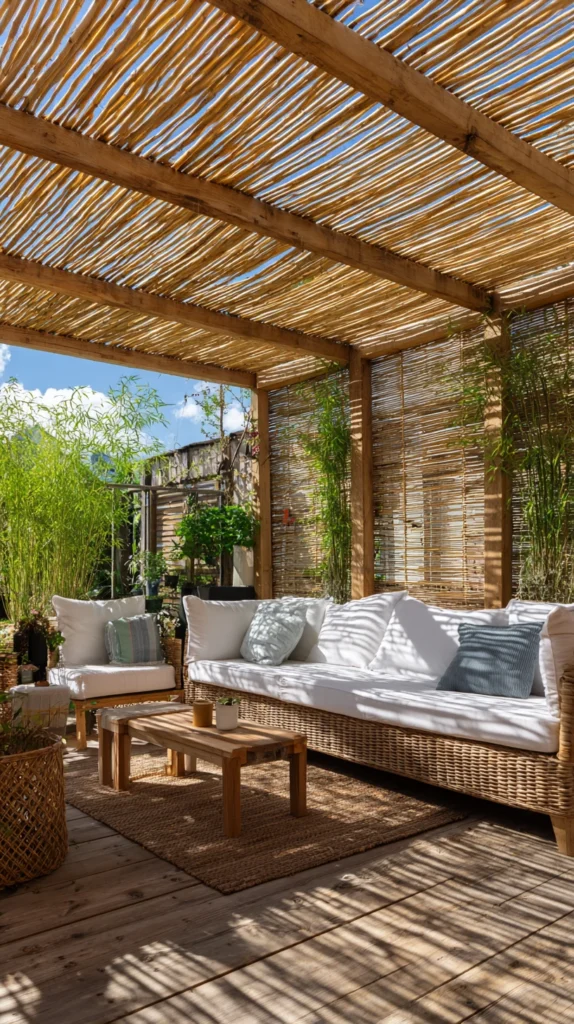
Bamboo and reed overhead canopies — panels of natural material laid across a pergola or arbor framework to create a permeable roof — bring warmth, texture, and a distinctly natural quality to outdoor shade provision that synthetic and metallic materials cannot replicate.
The bamboo panel allows a proportion of light and air through its structure while blocking the direct sun exposure that makes outdoor sitting uncomfortable, creating the dappled, shifting light effect of a woodland canopy that has a deeply pleasant quality quite distinct from the flat shade of opaque coverings.
These materials are the natural choice for garden styles that draw on Asian, Mediterranean, and relaxed tropical influences, and they look particularly beautiful when the light is angled — early morning or late afternoon sun coming through a bamboo overhead canopy creates extraordinary patterns of shadow on the surfaces below. Replace panels when they become brittle and gray, typically after three to five seasons, to maintain the warmth of their color and the integrity of their structure.
9. A Shade Tree Strategically Planted for Long-Term Investment
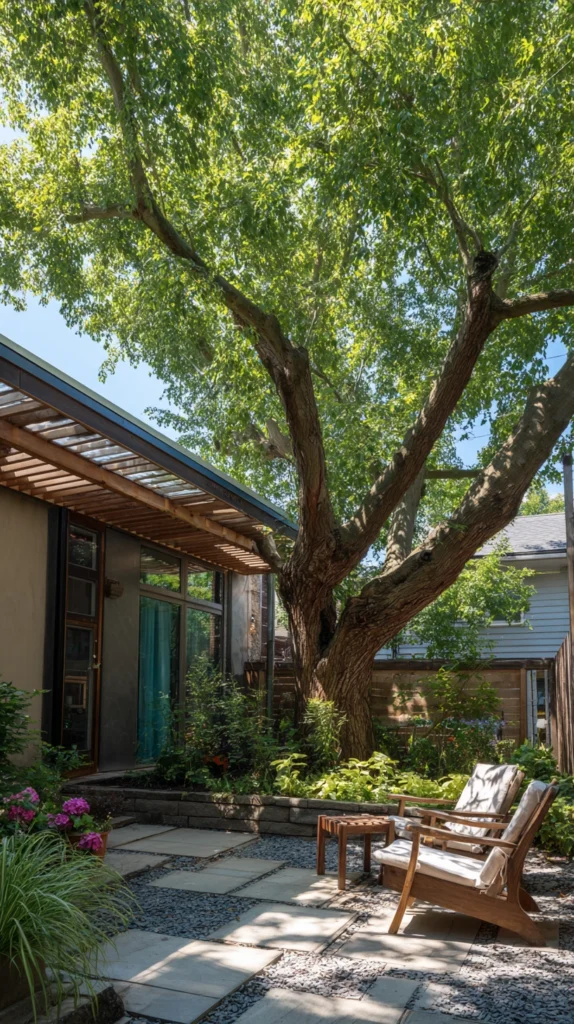
The most permanent, the most beautiful, and in the long run the most practically effective backyard shade solution is a well-chosen, well-positioned shade tree.
A mature deciduous tree positioned to shade the primary outdoor living area through the hottest part of the summer afternoon, while losing its leaves in autumn to allow winter sun to penetrate to the house and garden below, provides what no manufactured shade structure can — a living, growing, ecologically valuable element that improves every year of its existence and will eventually be the most significant feature of the garden. The investment is primarily in patience.
A fast-growing shade tree species — honey locust, gleditsia, catalpa, or a large ornamental pear — will provide meaningful shade within five to seven years of planting, and significant shade within ten. The decision about which tree and where to plant it should be made with professional advice and genuine long-term thinking, because the consequences of a poorly chosen or badly positioned tree are harder to reverse than virtually any other garden decision.
10. A Tensile Fabric Structure for Modern Drama

The tensile fabric structure — a custom or semi-custom shade installation in which high-tensile fabric panels are stretched between anchor points in dramatic curves and angles that bear no relation to the rectangular geometry of conventional pergolas and shade sails — represents the most architecturally ambitious residential shade option available and produces results that can genuinely transform a backyard into a space with the atmospheric quality of a professionally designed outdoor venue.
Tensile fabric structures are the shade solutions visible over the outdoor terraces of the best hotels, restaurants, and public spaces, and the residential versions now available through specialist suppliers bring this quality of design to private gardens at prices that have become significantly more accessible.
The fabric undulates between its anchor points in forms that respond to wind and light with a dynamism that rigid structures cannot achieve, and the shadows these structures cast on surfaces below are among the most beautiful effects available in outdoor design.
11. A Retractable Awning for Flexibility Without Compromise

The motorized retractable awning — a fabric panel on a spring-loaded or motorized arm system that extends to cover a terrace or patio and retracts fully when not needed — offers the flexibility of a temporary shade solution with the convenience of a permanent one, and its ability to disappear completely when the sky is overcast or the evening air is cool makes it uniquely suited to climates where the desire for shade and the desire for open sky alternate throughout the day and season.
Modern retractable awnings are available in arm extensions of up to six meters and in fabric widths that allow complete coverage of substantial terrace areas, and the motorized versions with wind and sun sensors that deploy and retract automatically represent a level of convenience that makes shade provision entirely effortless.
The aesthetic quality of contemporary awning fabrics — the range of colors, patterns, and material textures available — has improved dramatically, and a well-chosen awning in a quality fabric suits even architecturally ambitious outdoor spaces.
12. A Shade House Structure for Garden Rooms
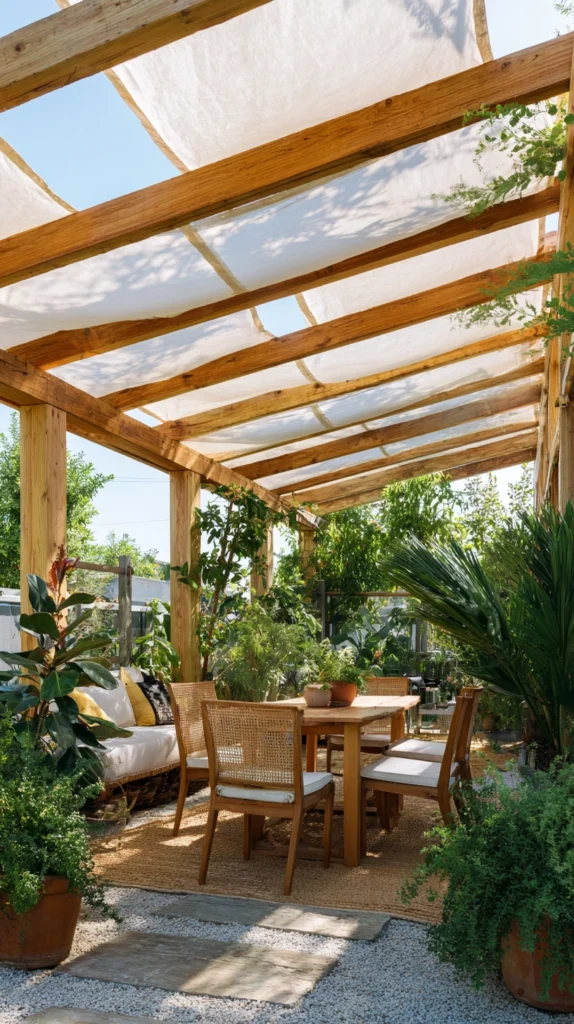
The shade house — a freestanding structure with an open framework supporting overhead shade cloth — is familiar primarily from horticultural contexts, where it is used to protect plants that require filtered light, but its residential application as a garden room structure produces an outdoor space with a quality of light that is genuinely distinctive and deeply pleasant.
A shade house structure built as a backyard relaxation zone, with the overhead shade cloth providing consistent UV protection while allowing airflow and diffused light, creates a sheltered outdoor environment with the cool, green quality of a greenhouse without the heat trap that glass creates.
Line the interior with comfortable seating, plant the perimeter with climbing or container plants, and add outdoor lighting for evening use, and the shade house becomes one of the most useful and most enjoyable structures a backyard of any size can contain.
13. A Shade Pavilion with Outdoor Curtains

A shade pavilion — a four-posted structure with a solid or shade-cloth roof and outdoor curtains on each of its sides — is the backyard shade solution that comes closest to creating a genuine outdoor room, because the curtains allow each side of the structure to be opened, partially closed, or fully closed in response to the position of the sun, the direction of the wind, and the desired degree of privacy and enclosure at any given moment. In the morning, when the sun comes from the east, the eastern curtain is drawn while the other three remain open.
In the afternoon, the western curtain provides protection from the setting sun. In the evening, all curtains drawn create an intimate, lantern-lit pavilion that is completely enclosed and completely magical. Choose curtain fabrics in natural linen or outdoor canvas — undyed or in soft, faded tones — that age gracefully and maintain their elegance as they weather.
14. Climbing Plants on Freestanding Trellis Panels
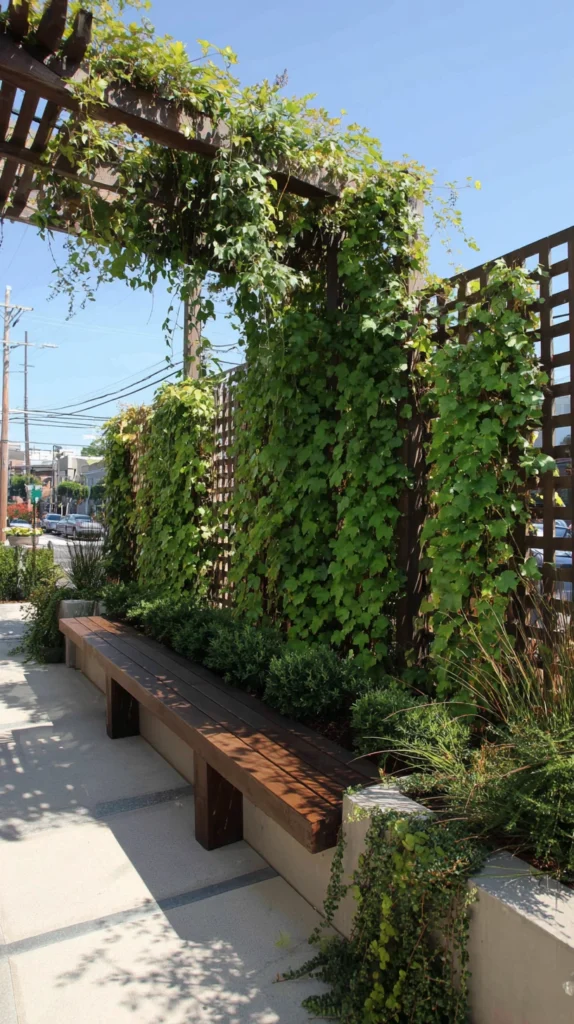
Where the primary heat problem in a backyard comes not from overhead sun but from the solar radiation of a sun-baked boundary wall or fence, freestanding trellis panels positioned at a distance from the boundary and planted with dense climbing plants create a living buffer zone between the heat source and the outdoor living area that reduces the radiated temperature of the space significantly while adding a layer of visual beauty and privacy to the garden.
The trellis panels should be spaced far enough from the boundary to allow air circulation between the planting and the wall — which prevents the heat from being trapped — and positioned specifically to intercept the afternoon sun’s angle rather than simply at the garden’s perimeter.
This approach works best as part of a broader shade strategy that addresses overhead sun separately, but as a solution to the radiated heat of sun-facing walls and fences it is both effective and extraordinarily beautiful in its execution.
15. A Dedicated Shade Garden Planting Scheme

The final and most holistically minded approach to backyard shade is not the addition of a structure at all, but the creation of a planting scheme so dense, so tall, and so strategically positioned that the garden itself generates its own microclimate — a shaded, cool, moist environment created by the collective transpiration and canopy of a generous and well-considered planting.
A backyard planted with a combination of tall shrubs, ornamental trees, large-leaved perennials, and ground cover plants that together create a layered canopy of different heights and densities will be measurably cooler on a hot afternoon than the same space without them, because plants release water vapor through their leaves in a process — transpiration — that cools the surrounding air in the same way that perspiration cools the human body.
This approach requires the most time of any on this list to deliver its full effect, but it produces the most beautiful, the most ecologically valuable, and ultimately the most profoundly cooling outdoor environment available to any backyard of sufficient size and sun.