15 Stunning Yet Functional Backyard Herb Garden Ideas
A herb garden is one of the most rewarding additions you can make to any backyard. It delivers fresh ingredients steps from your kitchen, fills the air with fragrance, attracts pollinators, and adds genuine beauty to your outdoor space — all simultaneously.

The challenge most people face is creating a herb garden that looks as intentional and stylish as the rest of their garden rather than a haphazard collection of pots shoved into a corner.
The good news is that herbs are among the most design-friendly plants available, with varied textures, colours, and growth habits that lend themselves to almost any aesthetic. Here are fifteen herb garden ideas that are as beautiful to look at as they are useful to cook with.
1. Raised Timber Bed Herb Garden

The raised timber bed is the most popular format for backyard herb growing, and it earns that popularity honestly. By elevating the growing surface, you improve drainage, warm the soil faster in spring, and create a defined, contained space that looks tidy and intentional at all times. Cedar and hardwood are the best timber choices for raised beds owing to their natural resistance to rot and decay.
A single large rectangular raised bed divided internally into sections by low timber dividers allows you to organise herbs by type or usage — culinary herbs in one section, medicinal in another, fragrant in a third. The structure itself becomes a design feature in the garden, particularly when finished with clean, mitered corners and a smooth capped edge that doubles as a narrow seat.
2. Vertical Wall Herb Garden

When ground space is limited, the wall becomes your growing surface. A vertical herb garden mounted on a fence, exterior wall, or freestanding frame brings greenery to eye level and transforms a flat surface into a living, fragrant installation. Purpose-built vertical planters with individual pockets, stacked horizontal troughs, or a grid of wall-mounted terracotta pots all achieve the same basic effect with different aesthetic results.
The key consideration with vertical herb growing is watering — elevated pots and pockets dry out faster than ground-level containers, so a drip irrigation system or at minimum a consistent hand-watering routine is essential. Basil, thyme, oregano, chives, and mint all perform well in vertical configurations.
3. Formal Parterre Herb Garden
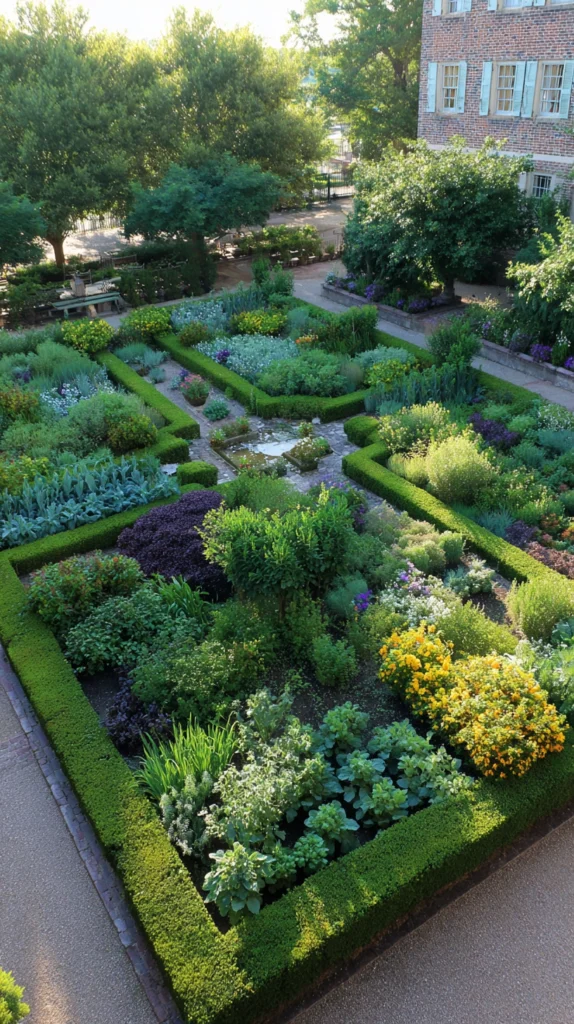
Structure and Symmetry as Design Tools
The parterre herb garden draws directly from the formal kitchen gardens of European manor houses and châteaux, using low hedging — traditionally clipped box or santolina — to create a geometric framework of compartments within which herbs are planted in organized groups. The structure of the parterre remains visually interesting even in winter when many herbs die back, because the clipped hedging holds the design together year-round.
This approach suits homes with classical or traditional architecture and works particularly well when viewed from above, such as from an upstairs window or a raised terrace. The formality of the structure contrasts beautifully with the relaxed, billowing growth habit of the herbs within each compartment.
4. Repurposed Ladder Shelf Herb Garden
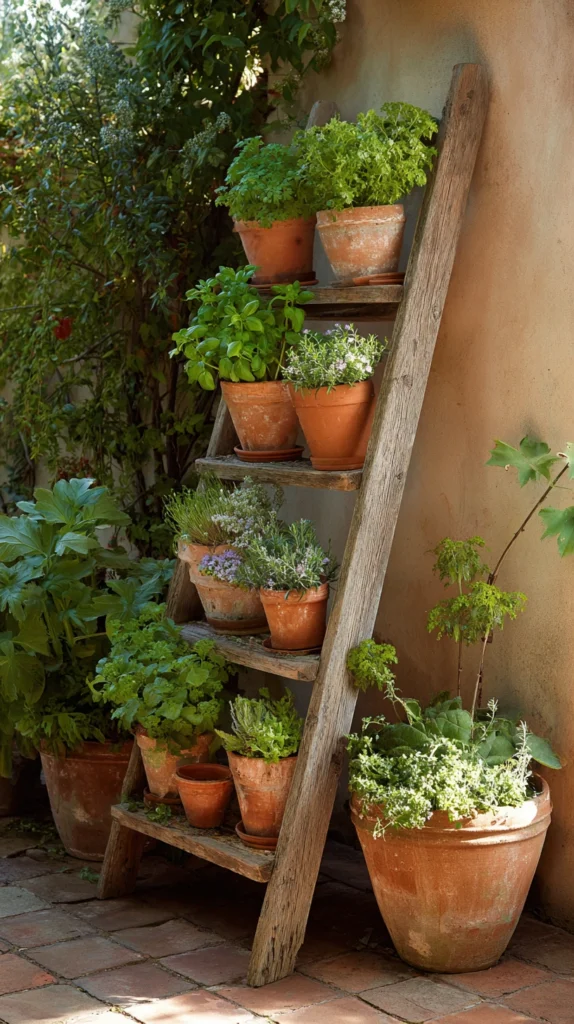
A vintage wooden ladder or a purpose-built ladder-style shelf unit provides a compact, vertical growing structure that suits smaller backyards and courtyard gardens perfectly. Each rung or shelf level accommodates a row of terracotta or ceramic pots, creating a tiered display that is both practical and visually appealing.
The ladder format puts every herb at a different height, creating a natural sense of depth and layering that a flat row of pots on a single surface cannot achieve. Leaned against a wall or fence, a ladder herb garden occupies minimal footprint while delivering significant growing capacity and a distinctly charming aesthetic that suits both rustic and contemporary settings.
5. Herb Spiral

The herb spiral is one of the most ingenious small-space growing structures ever devised, and it happens to look spectacular in a garden. Built from stacked stone, brick, or timber in a spiralling raised form that ascends from ground level to a height of roughly a metre at its centre, the spiral creates multiple distinct microclimates within a single compact structure.
The top of the spiral is drier and warmer, ideal for Mediterranean herbs like rosemary, thyme, and oregano. The lower, shadier sections retain more moisture, suiting mint, chives, and parsley. The spiral form is visually arresting from every angle and becomes an instant focal point in any backyard, rewarding both the gardener and the garden designer simultaneously.
6. Raised Steel Planter Herb Beds

Industrial Elegance Meets Kitchen Garden
Corten steel or powder-coated steel raised planters bring a contemporary, architectural edge to the backyard herb garden that timber and stone cannot quite match. The clean, precise lines of a steel planter suit modern homes with metal-framed windows, concrete surfaces, and minimalist landscaping.
Corten steel develops its characteristic warm rust patina over time, softening its industrial origins and integrating naturally into the garden landscape. These planters are available in bespoke sizes and configurations, allowing you to create a herb garden layout that is precisely tailored to your available space. A series of matching steel planters arranged in a linear or grid formation creates a herb garden with a confident, gallery-like quality.
7. Windowsill Extension Herb Boxes
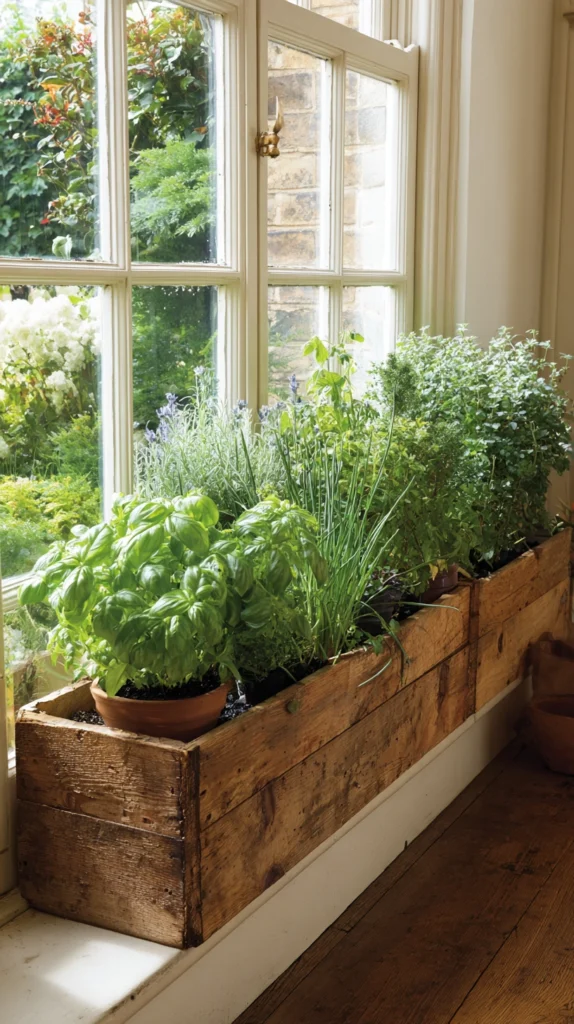
For homes where the backyard transitions directly from a kitchen or dining room, window box herb planters mounted just outside the kitchen window create an almost theatrical connection between cooking and growing. The herbs are literally within arm’s reach of the stovetop, making the experience of cooking with fresh herbs genuinely effortless.
Long, narrow timber or metal window boxes fitted with drainage holes and filled with a quality potting mix can support four to six different herb varieties simultaneously. This approach works particularly well with casement or sash windows that open outward, allowing you to snip herbs directly into the kitchen without stepping outside at all.
8. Gravel Garden Herb Planting

Mediterranean herbs — rosemary, thyme, lavender, sage, and oregano — thrive in conditions that replicate their native environment: poor, well-drained soil, full sun, and minimal irrigation. A gravel garden that mimics these conditions not only grows these herbs beautifully but creates a visually striking, low-maintenance garden style in the process.
A layer of gravel mulch over free-draining soil planted with sweeping drifts of these herbs creates a garden that looks naturalistic and effortless while being genuinely productive. The gravel reflects heat upward around the plants, enhancing the Mediterranean microclimate, and virtually eliminates weeding. In summer, a well-planted gravel herb garden is fragrant, bee-covered, and beautiful.
9. Potager Style Mixed Herb and Vegetable Garden

Growing Beauty and Food Together
The French potager is a kitchen garden tradition that treats vegetables, herbs, and edible flowers as equal contributors to both the harvest and the visual composition of the garden. Rather than segregating herbs into their own dedicated bed, the potager integrates them throughout the growing space, using their varied forms and foliage colours as design elements. Bronze fennel adds feathery height and a rich copper tone.
Purple basil provides a deep colour contrast against green vegetables. Chives produce attractive purple flower heads that are both edible and ornamental. The result is a kitchen garden that looks abundant and deliberately designed rather than purely utilitarian.
10. Pallet Herb Garden

A single wooden pallet, standing upright and mounted against a wall or fence, provides an instant vertical herb garden that costs almost nothing to create. The gaps between the slats are lined with landscape fabric, filled with compost, and planted with low-growing herbs that quickly establish and spill attractively through the openings. Thyme, oregano, chives, and compact basil varieties all perform well in this configuration.
The rustic character of the raw timber pallet suits cottage gardens and relaxed, informal outdoor spaces. With a coat of exterior paint in a bold colour — deep green, charcoal, or terracotta — a pallet herb garden becomes a genuine design statement rather than a merely improvised solution.
11. Dedicated Herb Pathway

Rather than confining herbs to beds and containers, a herb pathway plants them directly between and alongside paving stones, creating a fragrant walkway that releases scent every time it is walked upon. Creeping thyme, chamomile, and Corsican mint are all robust enough to handle light foot traffic and produce a beautiful, low carpet of foliage and flowers between paving stones.
The herbs soften the hard edges of the pathway, creating a transition between the structured and the natural that feels genuinely enchanting. A herb pathway leading from a garden gate to a back door or from a patio to a seating area transforms a purely functional route into one of the most sensory experiences your garden can offer.
12. Tiered Terracotta Pot Display

Celebrating the Beauty of the Classic Container
Terracotta pots have been used to grow herbs for centuries, and their warm, earthy tones remain one of the most naturally beautiful backdrops for plant growth available. A curated display of terracotta pots in varying sizes grouped together on a patio, step, or gravel surface creates a herb garden that feels relaxed, Mediterranean, and full of character.
The key to making a grouped pot display look designed rather than accidental is varying the heights deliberately — use pot risers, upturned pots, or small wooden crates to lift some containers while others remain at ground level. This layering creates depth and ensures that every plant is visible and accessible.
13. Built-In Herb Garden Adjacent to Outdoor Kitchen

For backyards that incorporate an outdoor kitchen or barbecue area, a built-in herb planting bed integrated directly into the kitchen structure itself is one of the most practical and visually cohesive design solutions available.
Imagine reaching directly from the grill to a planted bed of rosemary, thyme, and sage built into the countertop surround or the base of the outdoor kitchen unit. The herb garden becomes a functional component of the cooking setup rather than a separate garden feature, and the planting softens the hard surfaces of the outdoor kitchen structure beautifully. This integration also ensures herbs are always growing where they are most likely to be used.
14. Hanging Basket Herb Garden

Hanging baskets filled with trailing and compact herbs bring greenery to eye level and above, making use of vertical space that would otherwise be empty. Grouped clusters of hanging baskets at varying heights on a pergola, along a fence line, or beneath a covered patio create an immersive, garden-within-a-garden effect that feels lush and abundant even in a small space.
Trailing rosemary, cascading thyme, and compact parsley all perform well in hanging configurations. Lined with coir and filled with a free-draining compost mix, hanging herb baskets dry out quickly in warm weather so daily watering during summer is important, but the visual reward more than justifies the routine.
15. Illuminated Herb Garden with Integrated Lighting

Making Your Herb Garden a Nighttime Feature
A herb garden that disappears after dark is a missed opportunity. Integrating low-level LED path lights, recessed ground spotlights, or solar stake lights within and around your herb garden extends its visual presence into the evening and transforms it into a genuine nighttime garden feature. Uplighting placed at the base of tall, structural herbs like fennel or rosemary bushes creates dramatic silhouettes after dark.
Path lights running alongside a herb border guide movement through the garden while casting soft pools of warm light across the planting. The combination of fragrance, texture, and gentle illumination makes an evening garden visit feel genuinely restorative, turning your herb garden from a purely daytime resource into a space that rewards attention at every hour.
Designing Your Herb Garden with Intention
The most successful herb gardens are those where the design is considered before the first plant goes in the ground. Think about which herbs you actually cook with most regularly and prioritise those. Consider the sunlight patterns across your backyard and locate your herb garden in the spot that receives the most direct sun, as most culinary herbs demand at least six hours of full sun daily to thrive.
Group herbs with similar water requirements together to make irrigation simpler and more effective. And finally, choose a format and aesthetic that feels coherent with the rest of your garden rather than treating the herb garden as a separate, isolated project. When the herb garden feels like a natural extension of the overall garden design, it elevates everything around it.