15 Stone Fireplace Ideas for a Timeless Warm Home
A stone fireplace is one of the most enduring and most genuinely beautiful architectural features available in any home. Stone and fire have been partners in domestic architecture for as long as human beings have built structures to live within — the two elements belonging to each other in a way that is simultaneously practical and deeply symbolic.
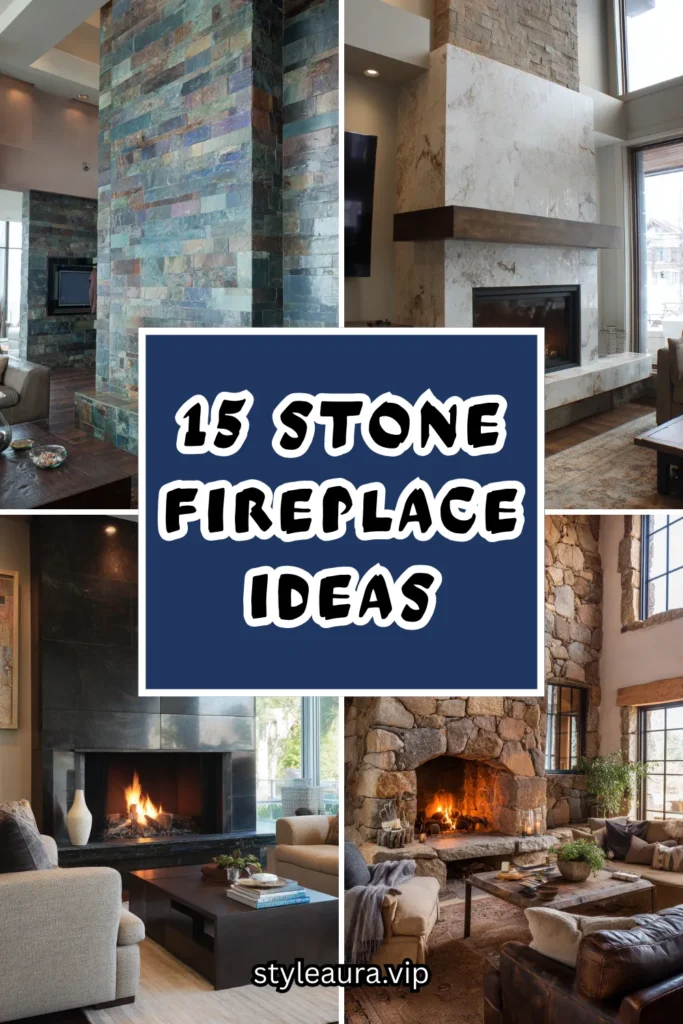
A stone fireplace creates not just a heat source and a focal point but a quality of permanence, of material authenticity, and of connection to the natural world that no other fireplace material can replicate.
The range of stone available — from rough irregular fieldstone through beautifully coursed limestone and slate to polished marble and carved sandstone — means there is a stone fireplace aesthetic for every interior style and every personal preference. Each stone carries its own geological history, its own particular color and texture, and its own completely individual character.
Here are 15 stone fireplace ideas that create a timeless warm home.
1. Stacked Fieldstone Floor-to-Ceiling
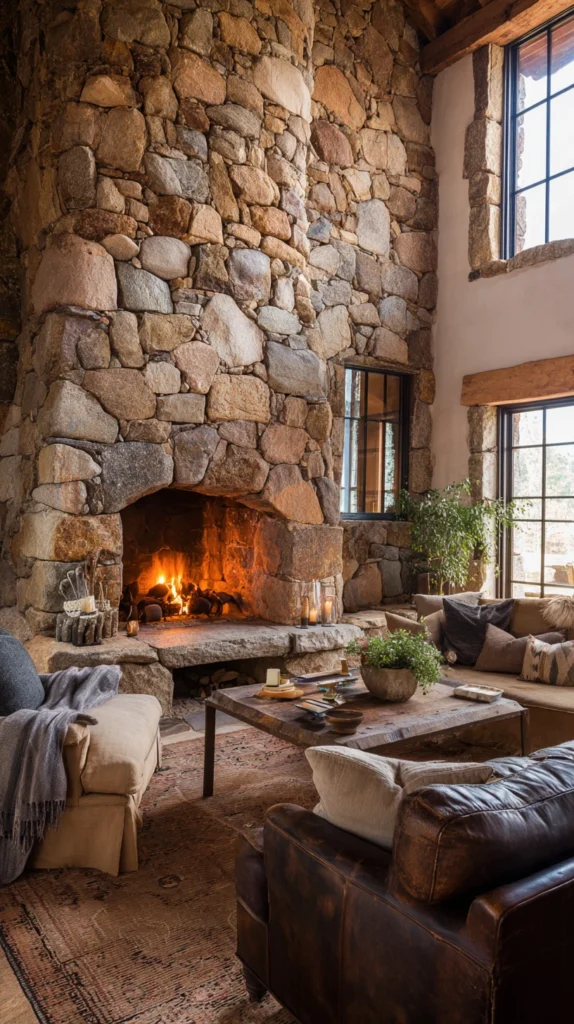
A floor-to-ceiling fireplace constructed from stacked fieldstone — rough irregular stones laid in the dry-stone walling tradition — creates the most primally beautiful and most genuinely ancient-feeling fireplace available.
The rough varied surface of stacked fieldstone carries the full character of the natural landscape — no two stones identical, no two surfaces the same, the geological variety of color, texture, and form creating a fireplace wall of extraordinary natural complexity and genuine permanent beauty.
Pro Tip: Choose fieldstone in tones that complement the wider room palette rather than using whatever is most easily available.
Warm honey and buff fieldstone suits warm earthy interior palettes. Cool grey and blue-grey fieldstone suits contemporary and coastal aesthetics. The stone color sets the entire thermal temperature of the room — a warm-toned stone creates a warmer room regardless of the fire burning within it.
2. Smooth Limestone Surround
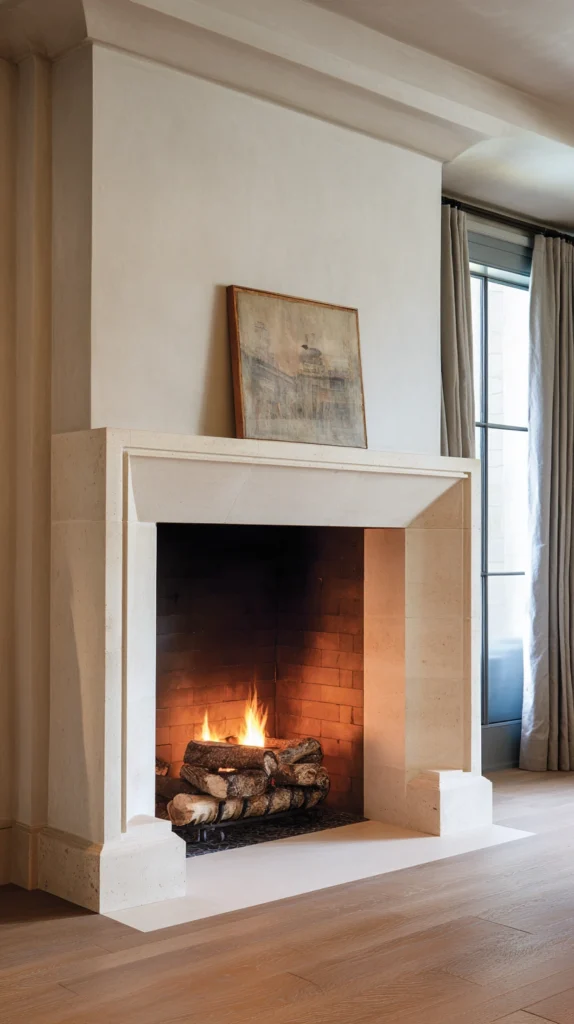
A smooth limestone fireplace surround — cut and finished to a consistent profile with tight precise joints — creates a fireplace of quiet classical elegance and considerable architectural refinement. Limestone in its smooth cut form has a quality of warm luminous stillness that rough stone lacks — the surface appearing almost to generate its own soft light from within the pale fine-grained material. Against warm white walls with traditional furniture a smooth limestone fireplace creates a living room of genuine classical beauty.
Pro Tip: Seal smooth limestone fireplace surrounds with a penetrating stone impregnator before first use and reapply annually.
Limestone is relatively porous and readily absorbs soot, ash, and the oils from hands that come into contact with the mantel surface — creating permanent staining that is extremely difficult to remove. A penetrating impregnator seals the stone from within without altering its natural appearance.
3. Slate Feature Wall Fireplace
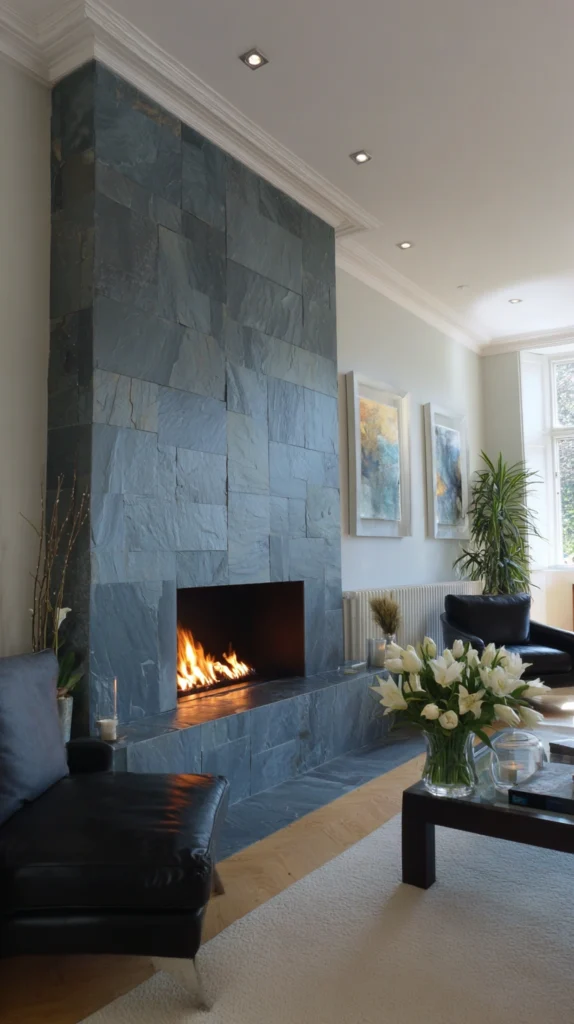
A slate fireplace — either a cut slate surround or a full slate feature wall surrounding the fire opening — creates a fireplace of cool contemporary drama and extraordinary material depth. The dark blue-grey of natural slate, its characteristic layered cleavage planes, and the subtle metallic reflections within the stone create a surface of considerable visual complexity and genuine geological beauty.
A slate fireplace in a contemporary living room with concrete floors and minimal accessories creates a room of maximum design confidence.
Pro Tip: Use riven slate — the naturally split slightly irregular surface created by cleaving the stone along its natural planes — rather than machine-cut smooth slate. Riven slate surfaces catch light differently at different angles — the slight variations in surface angle creating a living shifting quality of light reflection that machine-cut smooth slate entirely lacks.
4. Rustic River Rock Fireplace
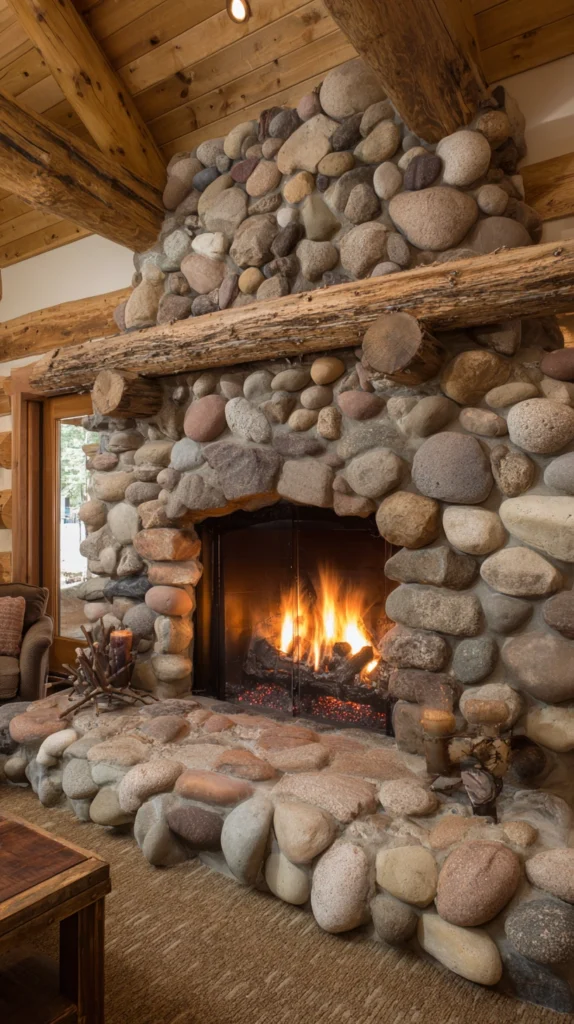
A fireplace constructed from smooth rounded river rocks — naturally water-worn stones in warm earth tones of tan, brown, rust, and grey — creates a fireplace of extraordinary tactile and visual warmth that feels genuinely connected to the natural landscape.
River rock fireplaces suit cabin, lodge, and rustic country house aesthetics most naturally — the combination of smooth rounded stones and a generous timber mantel creating a fireplace of genuine timeless rustic warmth.
Pro Tip: Vary the size of river rocks throughout the construction rather than using rocks of uniform size. A river rock fireplace built from rocks of consistent size looks assembled rather than gathered — losing the natural variety that makes a genuine river rock collection so visually rich. Mixing large statement rocks with medium and small infill rocks creates the natural variation in scale that makes the installation look authentically natural.
5. White Marble Classical Surround
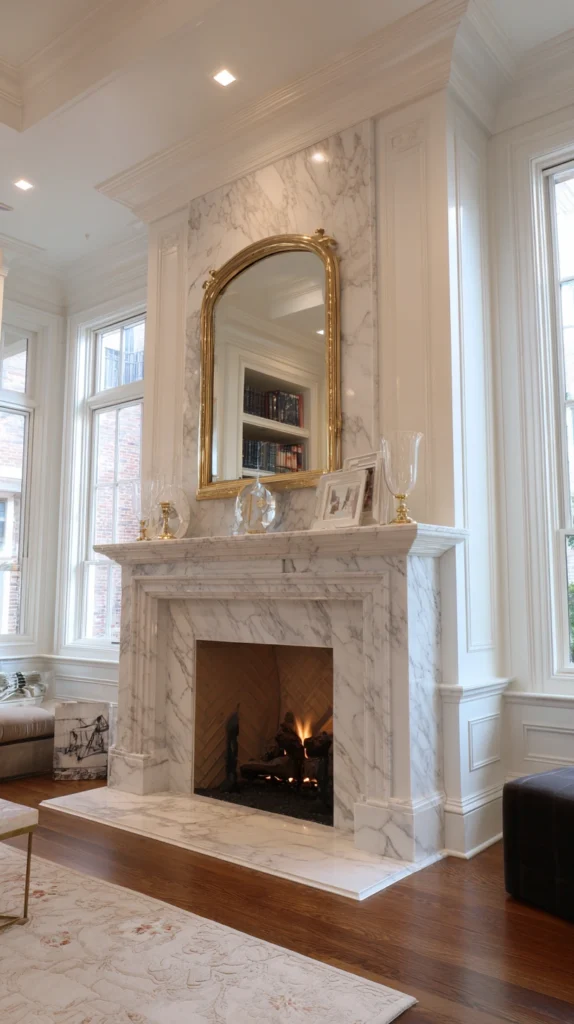
A white marble fireplace surround — in the classical tradition with a generous mantel shelf, elegant pilasters, and a rectangular fire opening — creates a fireplace of maximum formal elegance and genuine historical beauty. White marble carries the accumulated weight of centuries of the finest European interior architecture and its use in a fireplace surround creates an immediate connection to that tradition of considered crafted domestic beauty. Against pale walls with traditional furniture a white marble fireplace creates a living room of genuine historical character.
Pro Tip: Choose marble with a warm rather than cool veining for a surround that maintains warmth and genuine beauty in the context of a room lit by firelight. Cool blue-grey veined marble against firelight can appear slightly cold and grey — losing the luminous warmth that makes white marble so specifically beautiful in the classical fireplace surround application.
6. Horizontal Stacked Slate
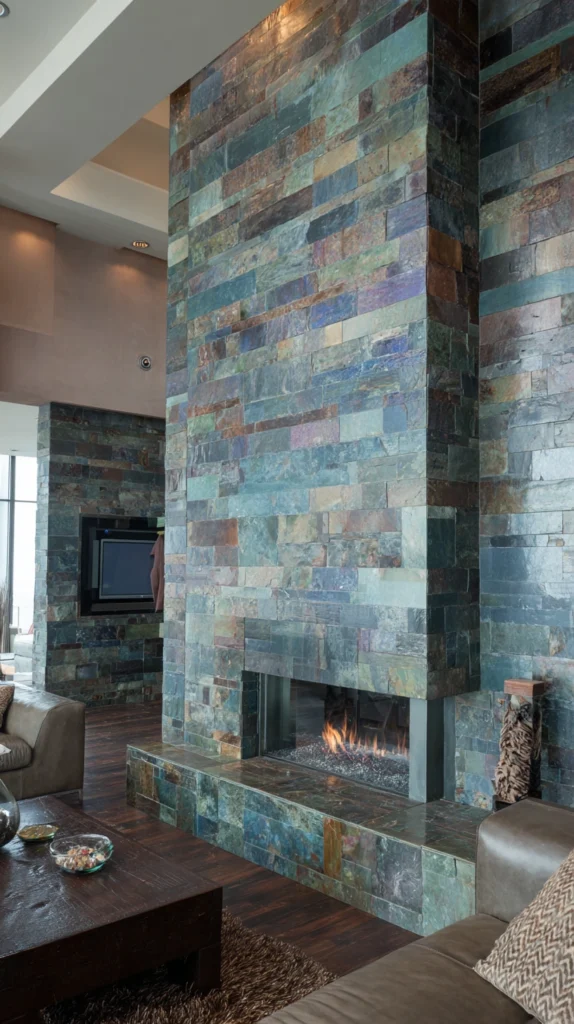
A fireplace constructed from slate laid in precise horizontal courses — cut to consistent lengths with perfectly level tightly consistent joints — creates a fireplace of considerable contemporary design confidence and genuine material richness.
The horizontal emphasis of the coursed slate references the layered geological formation of the stone itself and creates a surface of strong clean graphic character. The horizontal banding of precisely coursed slate suits contemporary and transitional interior aesthetics with complete natural ease.
Pro Tip: Maintain perfectly consistent joint widths throughout a horizontally coursed slate fireplace — even a small variation in joint width across the full height is immediately visible and undermines the clean designed character that horizontal slate coursing depends on for its aesthetic impact. Use purpose-made tile spacers throughout the installation to guarantee consistent joint widths from the first course to the last.
7. Sandstone Carved Mantel
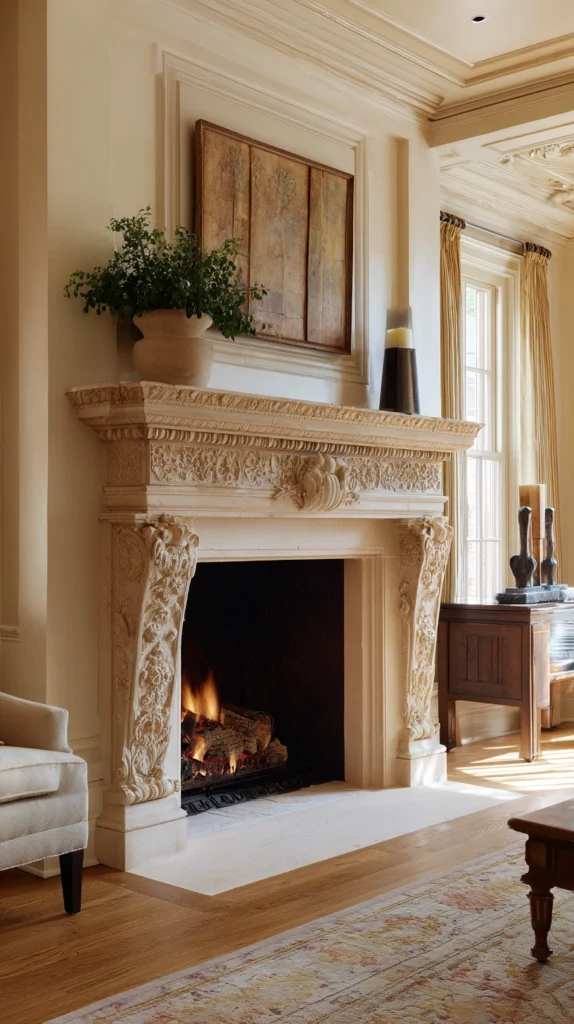
A carved sandstone fireplace mantel — in warm buff or honey-toned sandstone carved into a classical or contemporary profile with a broad generous mantel shelf — creates a fireplace of considerable warmth and genuine craft quality.
The warmth of sandstone — its particular quality of warm sun-baked color — creates a fireplace surrounded by extraordinary natural warmth that suits both traditional and contemporary interior aesthetics. The carved quality communicates craft and intention in a way that uncrafted materials cannot.
Pro Tip: Seal carved sandstone fireplace mantels with a breathable masonry sealant that protects the surface from dust and soot absorption without creating the plastic-looking surface film that non-breathable sealants leave on porous stone. A breathable sealant penetrates the sandstone and seals it from within — protecting the surface while preserving the natural matte quality of the carved stone.
8. Cobblestone and Mortar Fireplace
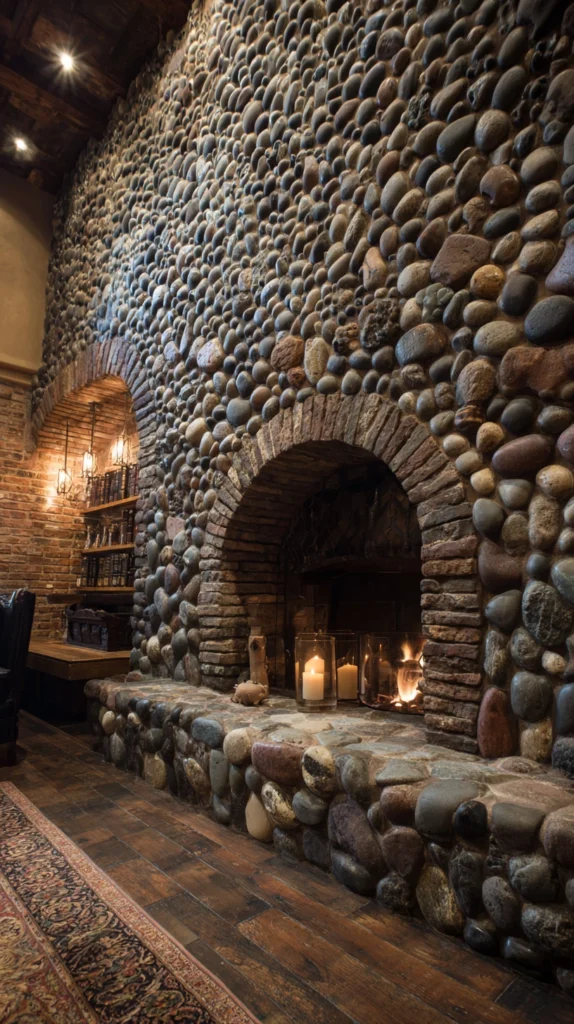
A fireplace constructed from small rounded cobblestones set in a generous mortar bed creates a fireplace of considerable tactile richness and genuine historic character. The combination of rounded cobblestone forms and textured mortar background creates a surface of remarkable visual complexity — the play of light across hundreds of curved stone surfaces simultaneously creating a shifting living quality of reflected light that flat stone surfaces entirely lack.
Pro Tip: Use a slightly recessed mortar joint rather than a flush or proud mortar joint for a cobblestone fireplace that reveals the full three-dimensional character of the individual stones. A proud mortar joint fills the gaps between cobblestones and reduces the visual definition between them — flattening the surface and losing the sculptural quality that makes a cobblestone fireplace so genuinely visually rich.
9. Granite Fireplace Surround
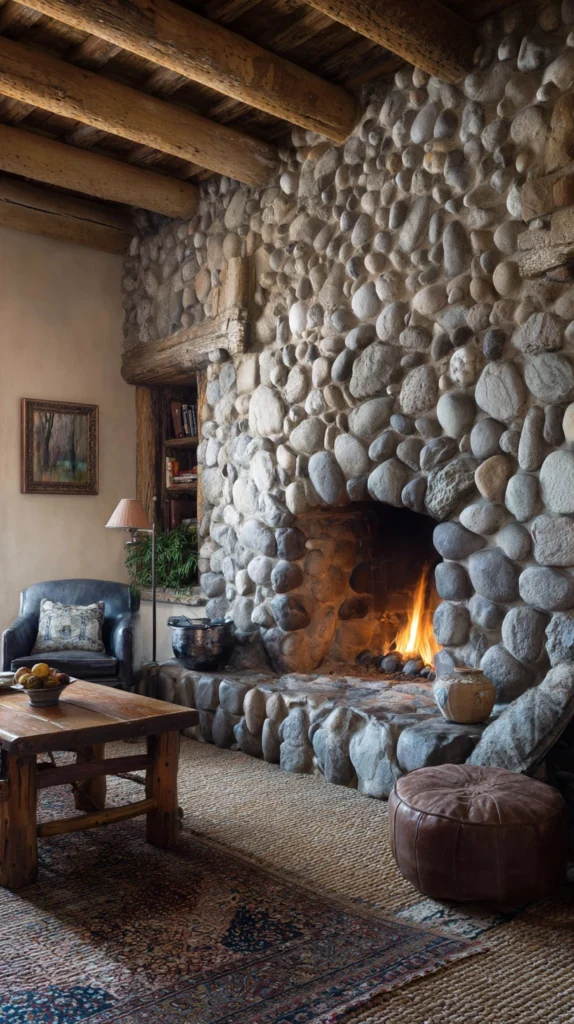
A granite fireplace surround — in polished, honed, or flamed-textured granite in warm grey, black, or the extraordinary variety of colors available in this most geological of all stones — creates a fireplace of maximum material durability and considerable visual presence.
Granite is the hardest, densest and most durable of all commonly used fireplace stones — virtually impervious to heat, staining, and physical damage — making it the most practically suitable of all stone fireplace materials for a fireplace in active daily use.
Pro Tip: Choose granite in a honed rather than polished finish for a family home where the mantel surface receives regular handling.
Polished granite shows every fingerprint, every dust particle, and every surface mark with considerable clarity — creating a maintenance requirement of constant wiping. Honed granite has a slightly textured matte surface that absorbs minor surface marks without revealing them and requires significantly less maintenance to maintain a beautiful appearance.
10. Reclaimed Stone Fireplace
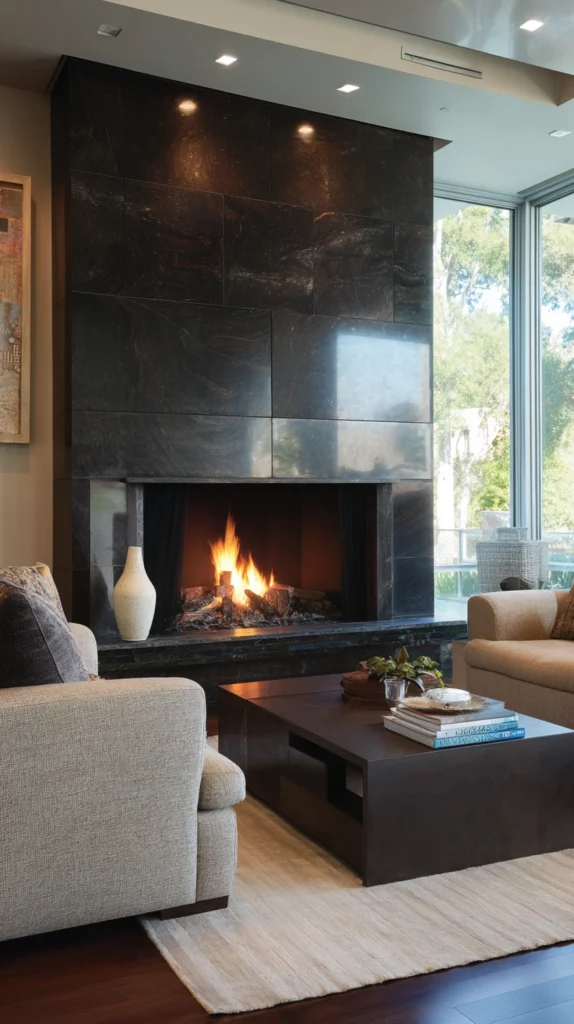
A fireplace constructed from reclaimed stone — old building stone, reclaimed flagstone, or salvaged architectural stone from demolished buildings — creates a fireplace of extraordinary historical character and completely individual material identity.
Each piece of reclaimed stone carries the evidence of its previous life — the tool marks, the weathered surfaces, the worn edges, and the patina of age that new stone construction cannot replicate regardless of how carefully it is detailed or how skillfully it is installed.
Pro Tip: Source reclaimed stone from a single consistent source — a single demolished building or a single architectural salvage dealer — for a fireplace that has genuine visual consistency.
Reclaimed stone from multiple sources of different ages, quarries, and weathering histories creates a visually fragmented fireplace that looks assembled rather than authentically whole. Consistent sourcing creates a fireplace of genuine material unity and authentic historical character.
11. Herringbone Brick and Stone Combination
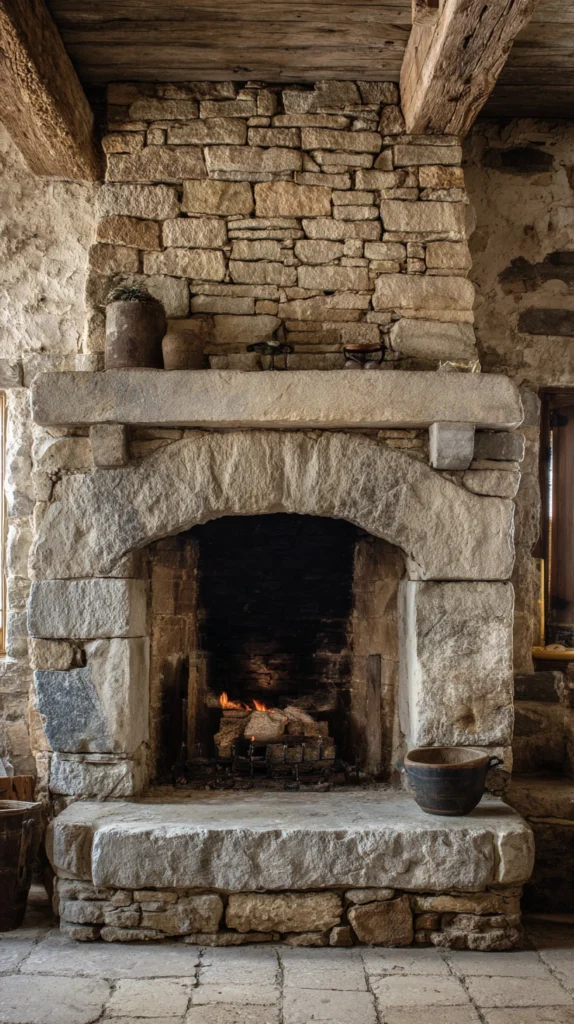
A fireplace that combines natural stone for the surround and mantel with a herringbone pattern brick lining within the fire opening creates a fireplace of considerable visual interest and genuine material warmth.
The herringbone brick lining — the bricks laid at 45 degrees in the classic diagonal pattern — creates a fireback of considerable decorative quality and genuine fire-reflecting thermal mass. The combination of the stone exterior surround and the patterned brick interior creates a fireplace with two distinct material characters of complete natural complementarity.
Pro Tip: Use traditional hand-made bricks rather than machine-made bricks for the herringbone fireback lining. Hand-made bricks have slight variations in color, texture, and form that create a herringbone pattern of genuine visual richness — the pattern reading as a beautiful complex surface rather than a mechanical repetition of identical units that machine-made alternatives inevitably produce.
12. Travertine Fireplace Surround
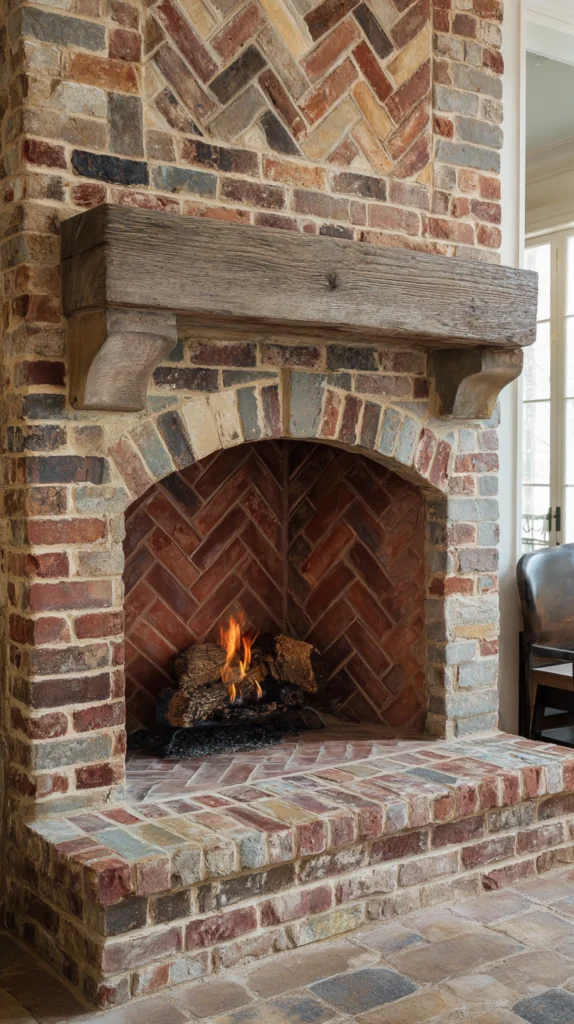
A travertine fireplace surround — the warm slightly pitted honey-toned stone with its characteristic natural voids and cross-cut patterning — creates a fireplace of considerable Mediterranean warmth and genuine natural material beauty.
Travertine has a quality of warm sun-soaked antiquity that few other stones match — its characteristic color range of warm cream, honey, and amber creating a fireplace that glows with natural warmth alongside any fire burning within it.
Pro Tip: Choose filled travertine rather than unfilled for a fireplace surround application. Unfilled travertine — with its natural voids left open — creates a surface that collects soot, ash, and dust in the voids that is extremely difficult to clean effectively around the fireplace.
Filled travertine creates a smooth continuous surface that is significantly easier to maintain in a clean and beautiful condition in the smoke environment surrounding an active fireplace.
13. Dry Stack Stone Fireplace
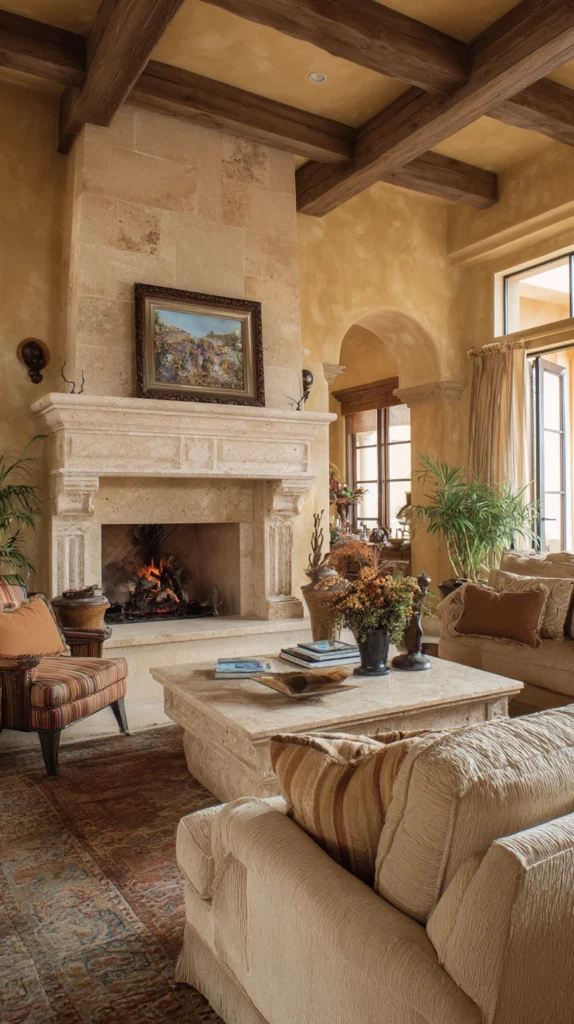
A dry stack stone fireplace — stone laid without visible mortar joints, the stones fitted tightly together so that any mortar is completely hidden within the wall — creates a fireplace of extraordinary visual precision and considerable contemporary design quality.
The absence of visible mortar joints creates a stone surface of complete uninterrupted material presence — the stone appearing as a solid continuous surface rather than individual units held together by visible mortar.
Pro Tip: Use stone of consistent thickness for a dry stack fireplace installation. Varying stone thicknesses create irregular horizontal lines across the fireplace face that undermine the clean precise appearance that dry stack stone depends on for its specific aesthetic quality. Consistent thickness stone in a dry stack installation creates the clean level horizontal lines that make a dry stack fireplace look genuinely designed and genuinely beautiful.
14. Mixed Stone Mosaic Fireplace
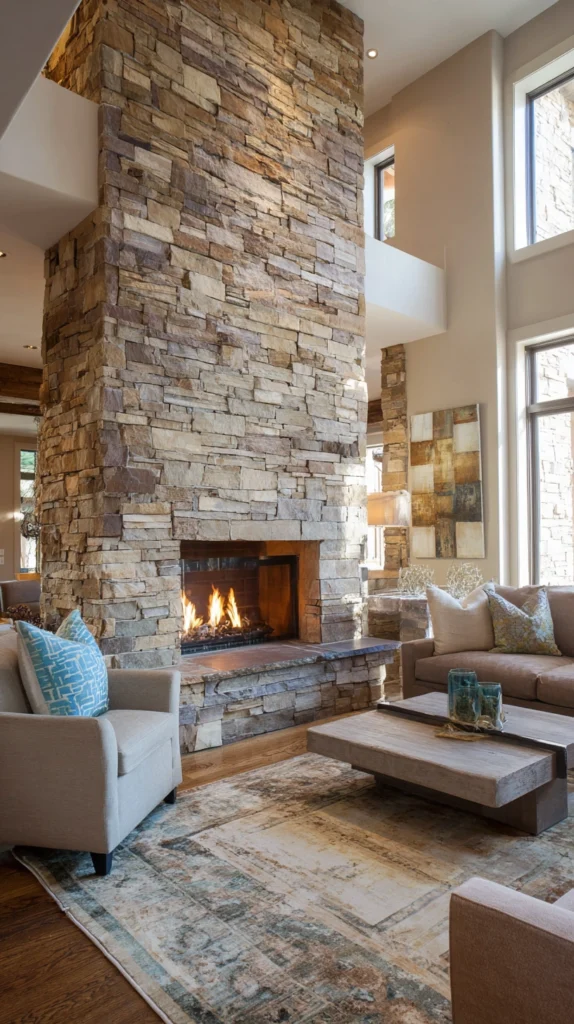
A fireplace covered in a mixed stone mosaic — small pieces of varied stone types, colors, and textures arranged in a pattern and grouted to create a continuous richly textured surface — creates a fireplace of extraordinary visual complexity and completely individual artistic character.
The mosaic fireplace is the most explicitly artistic of all stone fireplace formats — treating the fireplace surround as a canvas for a genuinely creative compositional exercise in natural stone materials.
Pro Tip: Limit the stone palette of a mixed stone mosaic fireplace to three or four complementary stone types and colors rather than using every available stone variety simultaneously.
A mosaic built from too many different stones in too many different colors loses the compositional coherence that makes a mosaic beautiful and becomes simply a random accumulation of stone pieces without visual resolution or artistic quality.
15. Quartz and Stone Feature Fireplace
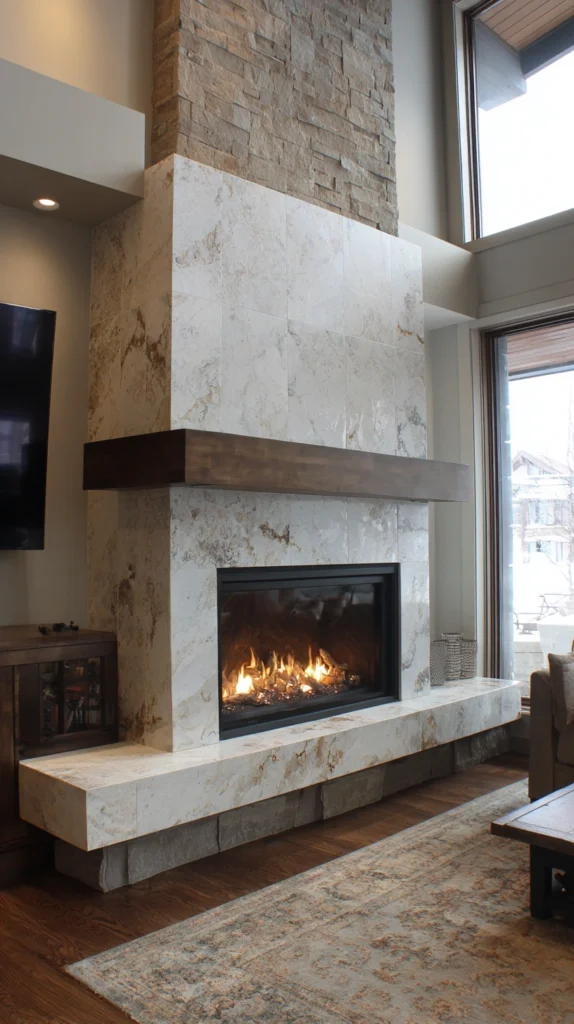
A fireplace surround incorporating engineered quartz alongside natural stone elements — quartz panels for the primary surround surface with natural stone accents at the hearth, the mantel, or the feature wall above — creates a fireplace of considerable contemporary elegance that combines the precision and consistency of engineered material with the authentic warmth and character of natural stone.
The quartz provides a consistent, durable, low-maintenance primary surface. The natural stone provides the organic warmth and material authenticity that engineered materials alone cannot deliver.
Pro Tip: Choose engineered quartz in a warm tone — those tending toward cream, gold, or warm grey rather than cool white or blue-grey — for a fireplace surround that maintains warmth in the context of firelight. Cool-toned engineered quartz alongside firelight can appear cold and slightly clinical — losing the warmth that makes a fireplace the most naturally inviting feature in any room.
Stone and Fire Belong Together
The stone fireplace is not a design trend — it is an architectural permanent. Stone and fire have been the center of the home since the beginning of domestic architecture and the quality of warmth, permanence, and material beauty that a stone fireplace brings to any home is as genuine and as irreplaceable today as it has always been.
Choose the stone that speaks most directly to the home you want to create. Install it with the care and the precision that natural stone deserves. And discover that a room with a genuinely beautiful stone fireplace in it is a room that feels fundamentally more settled, more warm, and more completely and authentically itself.