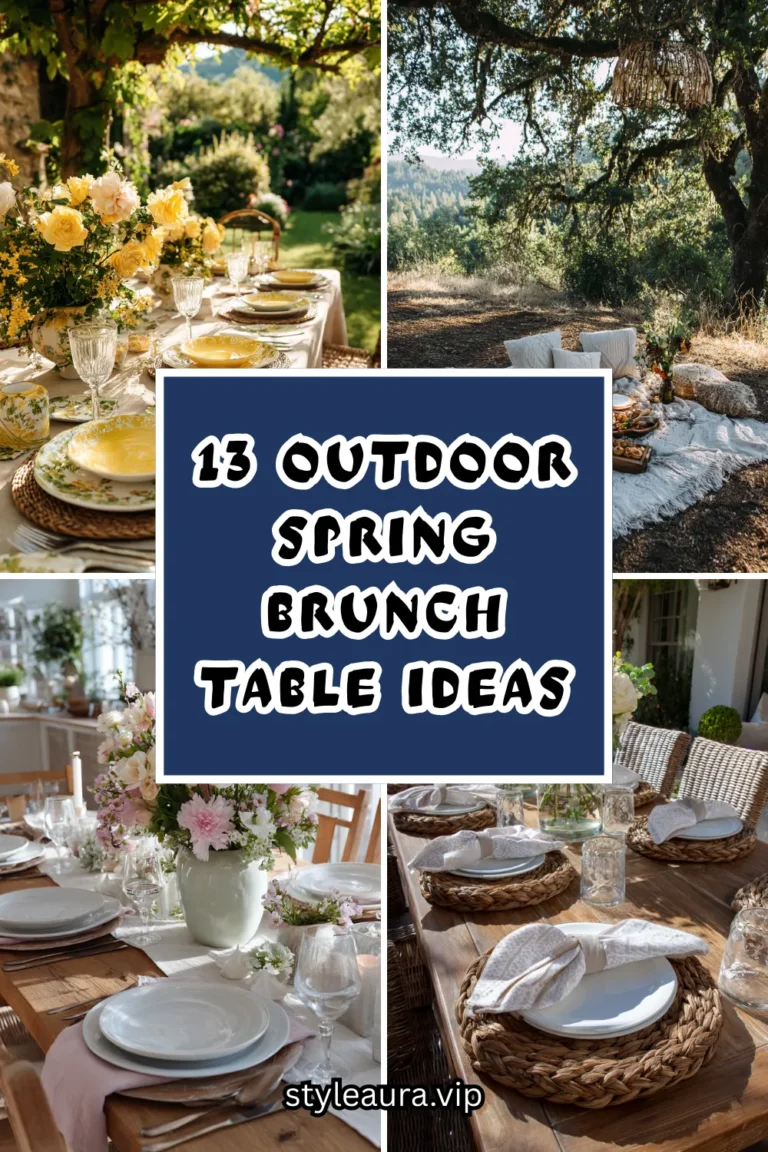
15 Spring Window Box Ideas for Curb Appeal
Let Your Windows Do the Talking This Spring
There is something undeniably charming about a home with beautifully planted window boxes. They sit at the intersection of architecture and nature, softening hard edges, adding color at eye level, and giving even the most modest home a storybook quality that is hard to achieve any other way. Window boxes are one of the most impactful and cost-effective curb appeal investments you can make, and spring is absolutely the best time to plant them.
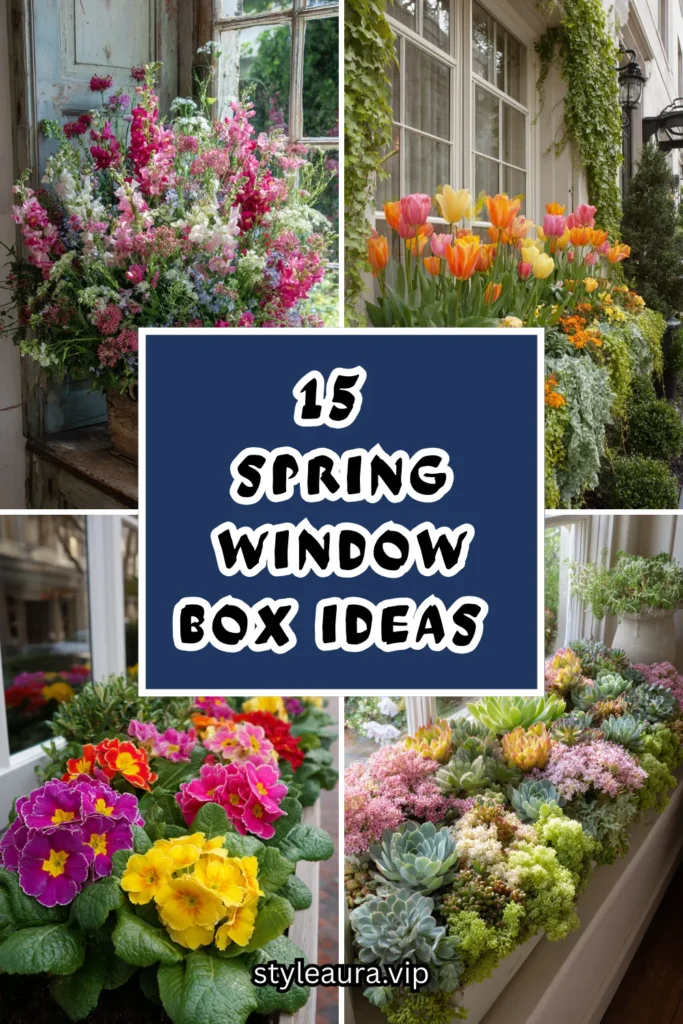
The season offers an incredible range of flowers, foliage, and trailing plants that thrive in the mild temperatures and generous light of early spring. Whether your home is a Victorian cottage, a modern townhouse, or a simple ranch-style bungalow, the right window box planting can elevate its exterior dramatically. Here are 15 spring window box ideas that will make your home the most beautiful one on the block.
1. Classic Tulips and Trailing Ivy
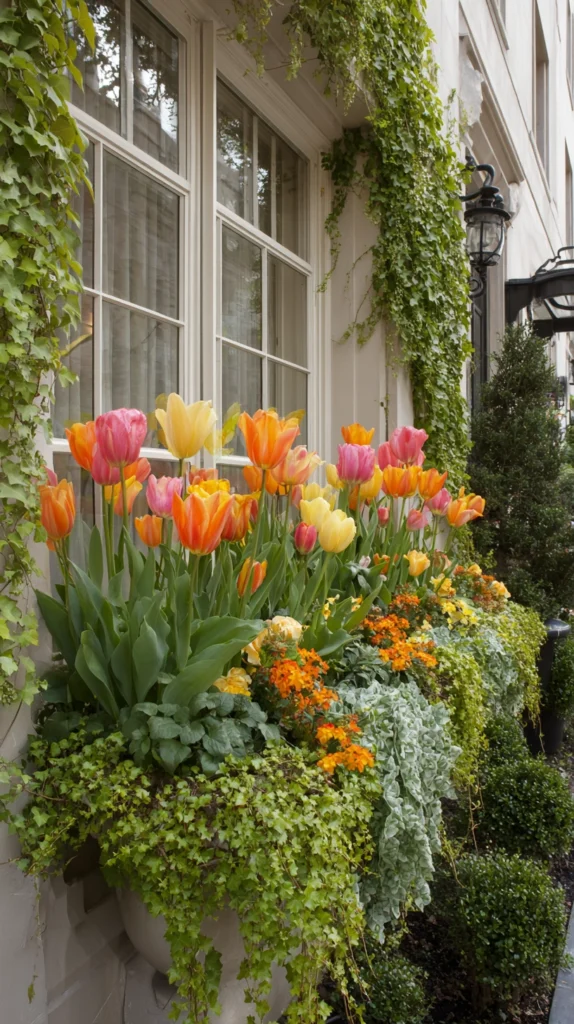
There are few combinations more quintessentially spring than tulips paired with cascading ivy. Plant a row of tulip bulbs in the back of your window box in a single color — deep red, soft pink, bright yellow, or pure white — and fill the front with trailing English ivy that spills gracefully over the edge.
The contrast between the upright, structured tulip stems and the loose, flowing ivy creates a beautifully balanced composition. This combination works in virtually any window box style, from rustic wooden boxes to painted metal ones, and it requires very little maintenance once planted. As the tulips fade later in the season, the ivy continues to look lush and full.
2. A Pastel Pansy Parade
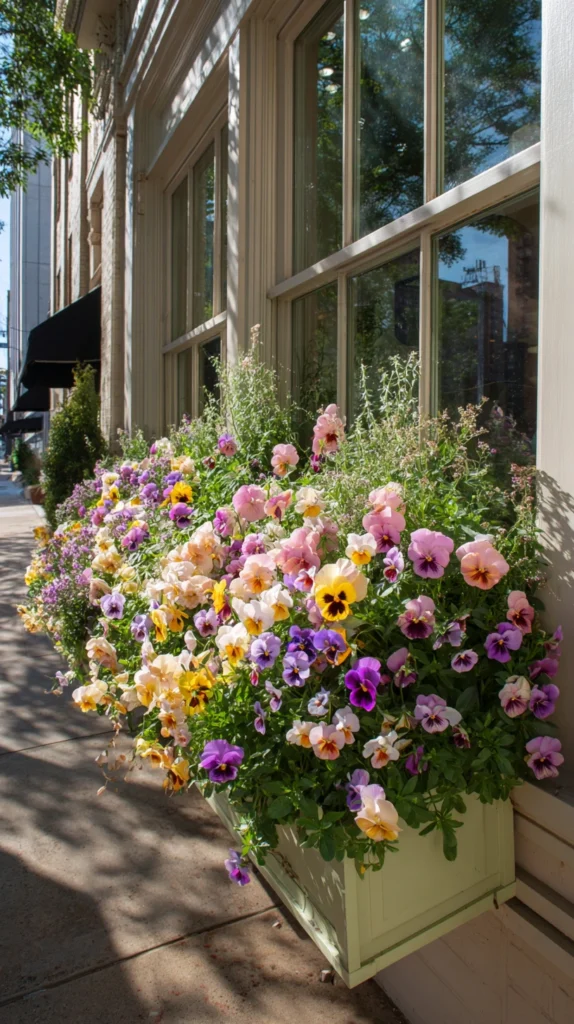
Pansies are among the hardiest and most cheerful spring flowers available, and they are perfectly suited to window box life. They tolerate cool temperatures better than almost any other flowering plant, which makes them ideal for early spring planting when nights are still chilly. For maximum visual impact, choose a mix of pastel pansies in lavender, pale yellow, soft pink, cream, and white rather than a single color.
The multi-toned effect creates a flowing, watercolor quality that looks stunning from the street. Pansies are also very affordable, widely available, and long-blooming, making them one of the best value spring window box plants you can buy.
3. Herb Garden Window Box
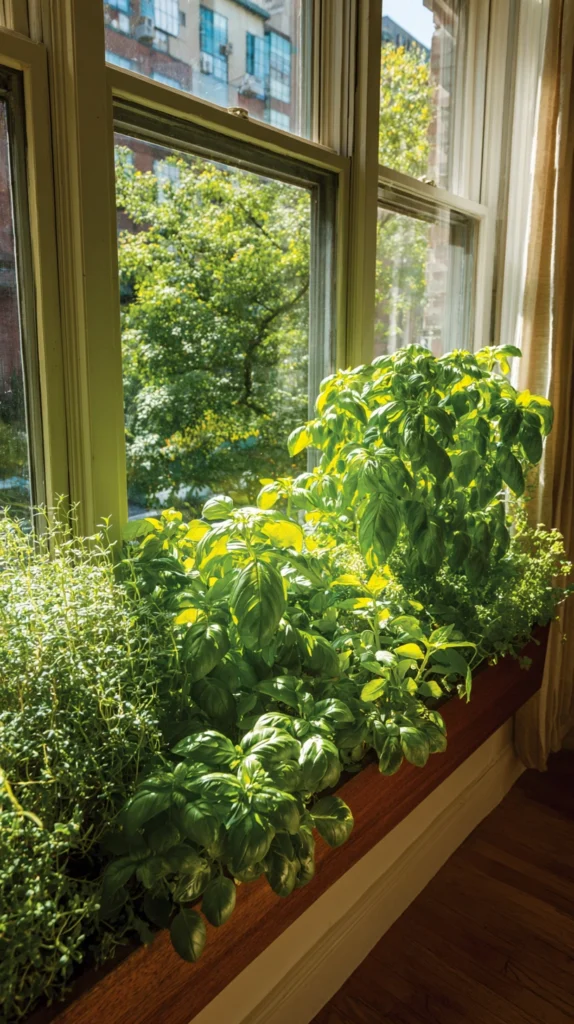
Window boxes are not exclusively for flowers. A window box planted entirely with culinary herbs is both beautiful and deeply practical. Plant a combination of upright herbs like rosemary, basil, and chives alongside softer, mounding herbs like thyme and oregano, and finish with a trailing herb like creeping thyme or prostrate rosemary to spill over the front edge.
The varying shades of green, the different leaf textures, and the wonderful fragrance that drifts through open windows make a herb window box a genuinely multi-sensory experience. It also means your kitchen is just a reach away from fresh ingredients all spring and summer long.
4. Daffodils and Blue Muscari
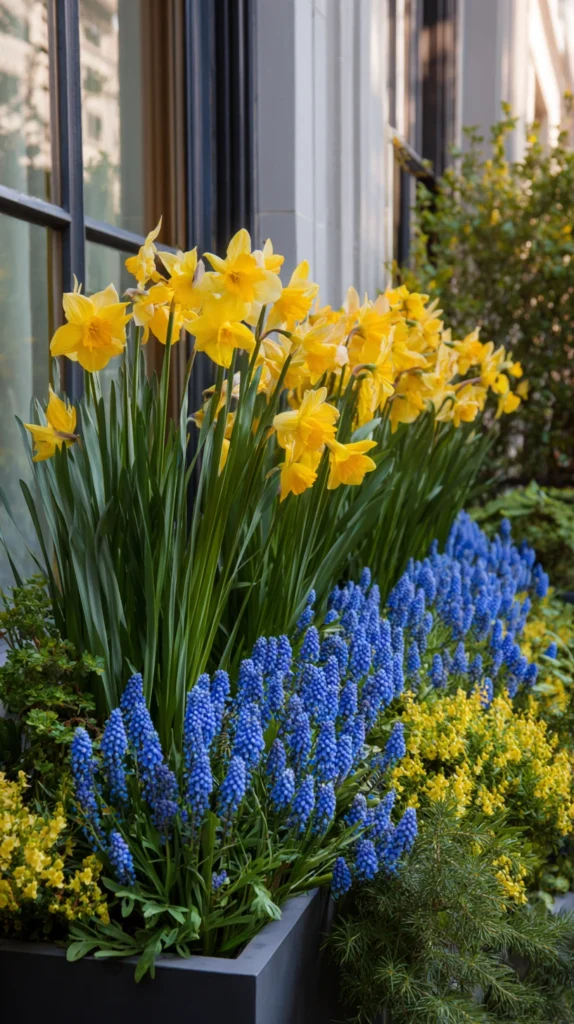
This classic spring color combination — golden yellow and electric blue — is one of the most visually striking pairings you can plant in a window box. Daffodils bring height and that unmistakable spring energy, while grape hyacinths, also known as muscari, fill in around their bases with dense clusters of tiny blue-purple flowers.
Together they create a window box that looks like a miniature spring meadow. Both plants grow from bulbs, which means you can plant them in autumn for a guaranteed spring show, or purchase potted specimens in spring from garden centers and transplant them directly into your box for instant impact.
5. Monochromatic White Window Box
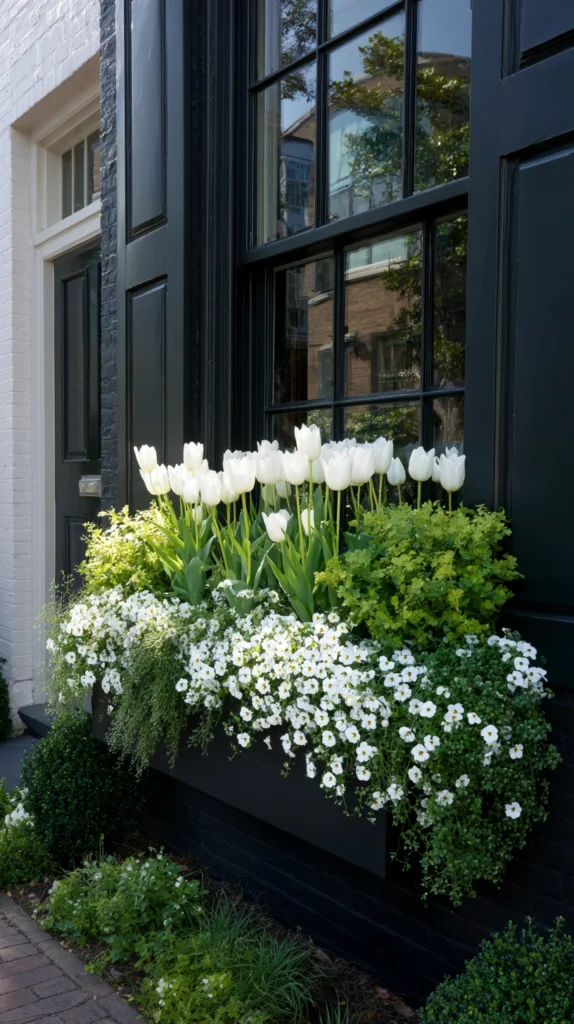
For a more sophisticated, elegant approach to spring window box planting, consider going entirely monochromatic with white. White tulips, white pansies, white alyssum, and white bacopa planted together create a window box of remarkable refinement and beauty.
The all-white palette works particularly well on homes with dark or bold exterior colors — navy, charcoal, forest green, or deep red — where the contrast creates a striking, high-impact visual effect. White flowers also photograph beautifully and have the added benefit of glowing softly in the evening light, making your home look welcoming and beautiful long after the sun goes down.
6. Wildflower Cottage Style
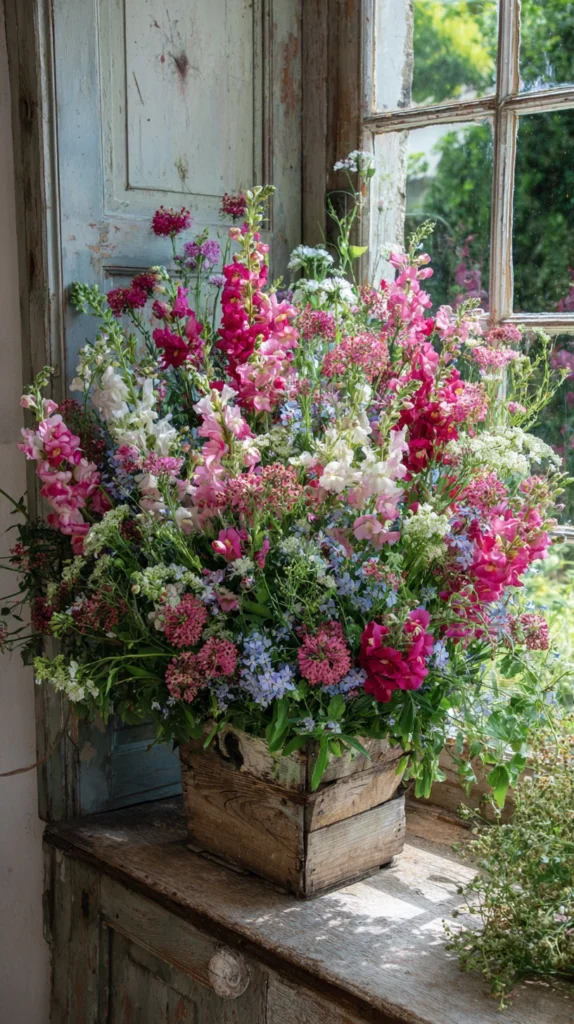
If you love the relaxed, romantic aesthetic of an English cottage garden, bring that feeling to your window boxes with a loose, seemingly effortless planting of mixed wildflowers and cottage garden favorites. Combine snapdragons, sweet William, nemesia, lobularia, and trailing lobelia in a riot of mixed colors — pinks, purples, oranges, and whites all tumbling together without strict organization.
The key to achieving a convincing cottage style is to resist the urge to be too neat or uniform. Let things spill and sprawl and intermingle freely. The result is a window box that looks as though it simply grew that way, wild and abundant and completely charming.
7. Spring Succulent and Sedum Display
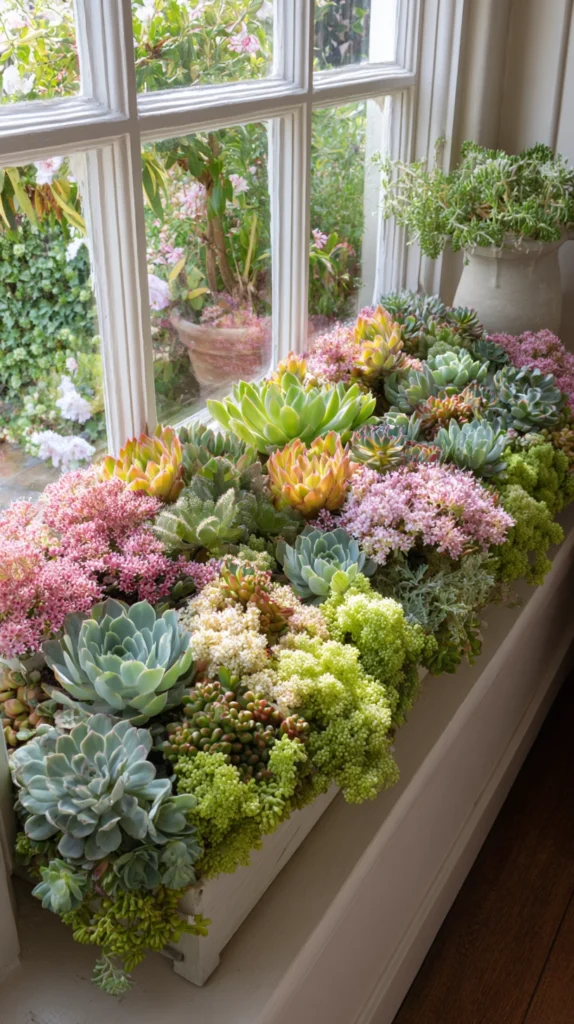
For homeowners in drier climates or those who prefer low-maintenance window boxes, a spring planting of succulents and sedums is a beautiful and practical solution. Rosette-forming succulents like echeveria and sempervivum come in a remarkable range of colors — from silvery blue-green to deep burgundy to soft lavender — and their geometric shapes create a window box that looks almost architectural in its precision and beauty. Mix in some trailing sedum for movement and a few small flowering succulents for color. This type of window box requires very little watering and virtually no deadheading, making it ideal for busy households.
8. Bright Ranunculus and Sweet Alyssum
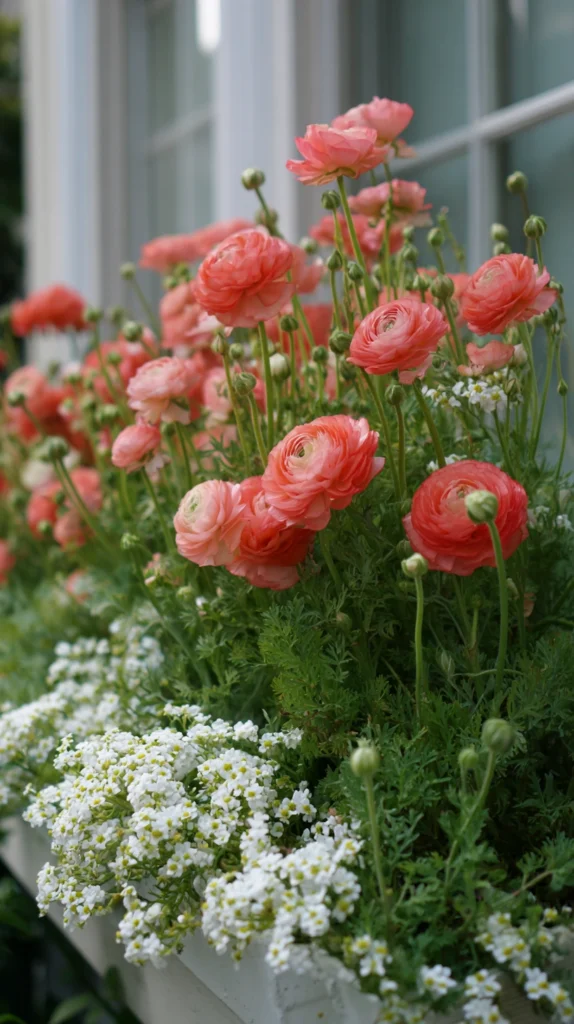
Ranunculus are among the most spectacular spring flowers available, with their tightly layered petals and extraordinary range of colors. Paired with the delicate, honey-scented clusters of sweet alyssum tumbling over the front of the box, they create a window display of genuine floral extravagance.
Plant ranunculus in a bold single color — coral, hot pink, bright orange, or deep crimson — and let the white or pale lavender alyssum provide a soft, frothy contrast beneath them. The scent that rises from the alyssum on a warm spring morning is an added bonus that will make opening your windows an absolute pleasure.
9. Fern and Flower Combination
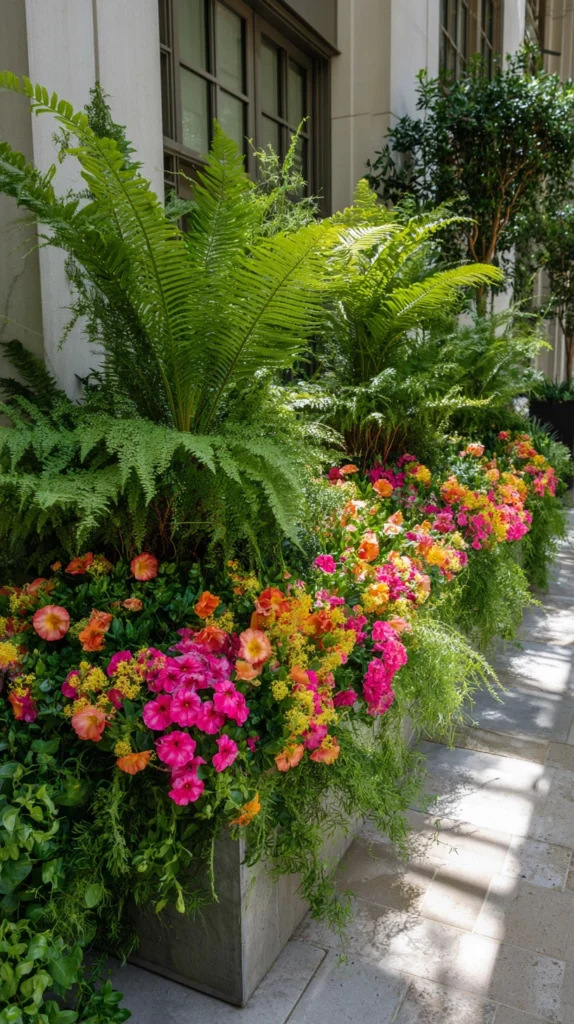
Not every window box needs to be dominated by flowers. Ferns bring a lush, verdant quality to window boxes that flowers alone cannot achieve, and they thrive in the cool, moist conditions of early spring. Combine a central planting of soft shield ferns or Boston ferns with colorful impatiens or primroses tucked in around their bases, and finish with a trailing fuchsia or bacopa along the front edge.
The contrast between the feathery, architectural fern fronds and the delicate flowers creates a window box that feels rich, layered, and deeply connected to the natural world. This combination works especially well on north-facing windows where direct sunlight is limited.
10. Lavender and Dusty Miller
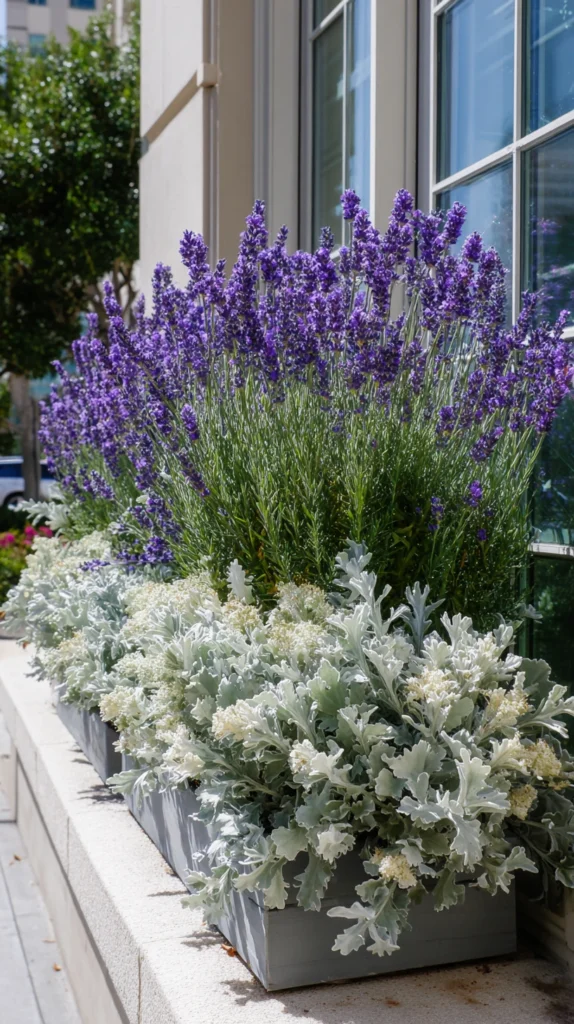
Lavender planted in a window box is a sensory experience unlike any other. The silvery-purple flower spikes rising above the gray-green foliage are visually beautiful, but it is the fragrance — that unmistakable, deeply calming scent — that truly sets this planting apart.
Pair lavender with dusty miller, whose silver-gray foliage echoes the cool tones of the lavender leaves, and you have a window box that feels elegant, Mediterranean, and completely distinctive. Add a few trailing silver or purple verbena to soften the edges and you have a combination that will draw compliments from every passerby all season long.
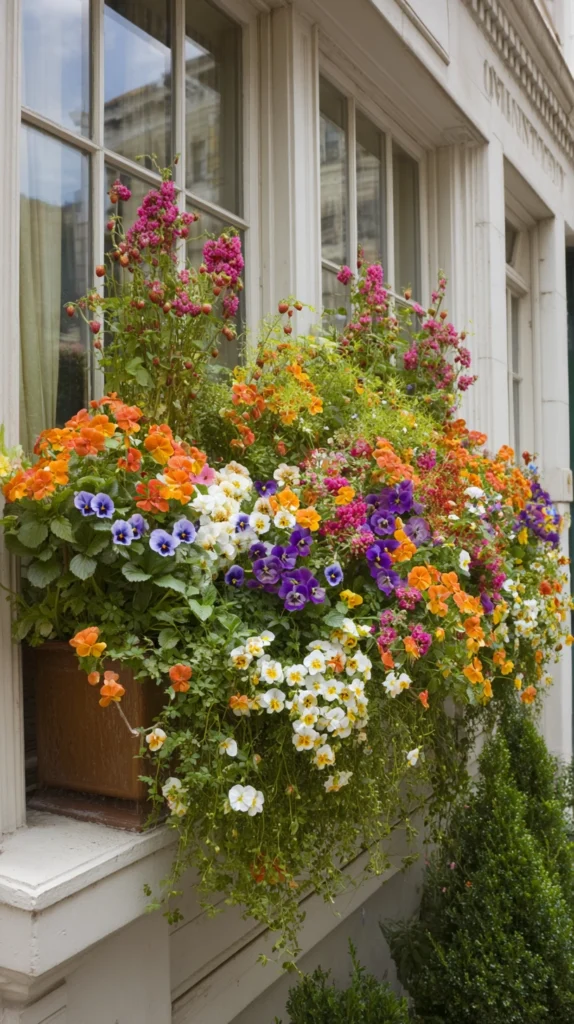
11. Colorful Primrose Planting
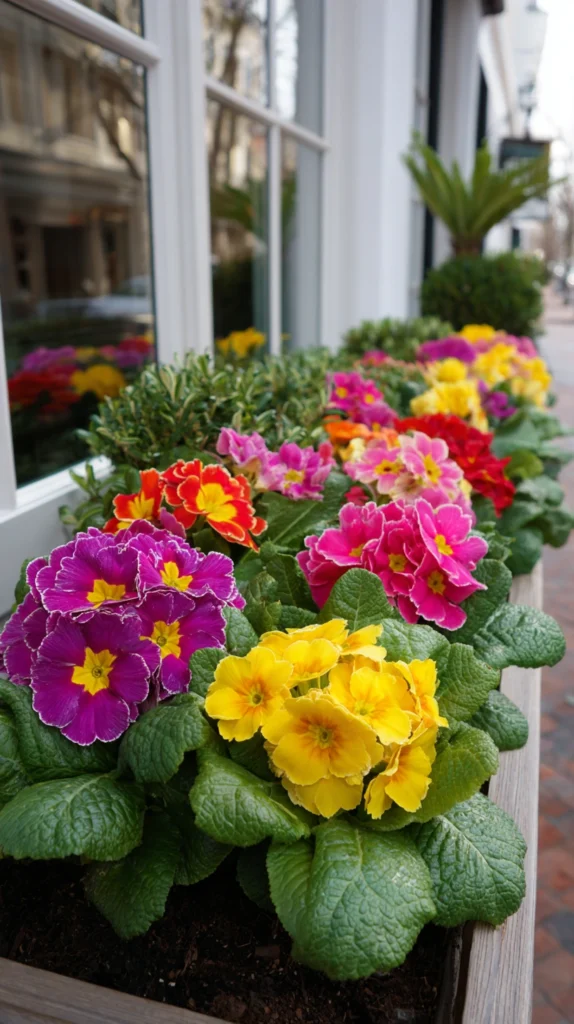
Primroses are one of the earliest and most reliably cheerful spring flowers available, and they come in an extraordinary range of colors including red, yellow, orange, pink, purple, and white. A window box packed with mixed primroses in jewel-bright colors is one of the most eye-catching curb appeal statements you can make in early spring.
They are very affordable, widely available at garden centers from late winter onwards, and they thrive in the cool temperatures of the season. As spring progresses and temperatures rise, you can replace them with summer-ready plants, but for those first exuberant weeks of the season, primroses are unbeatable.
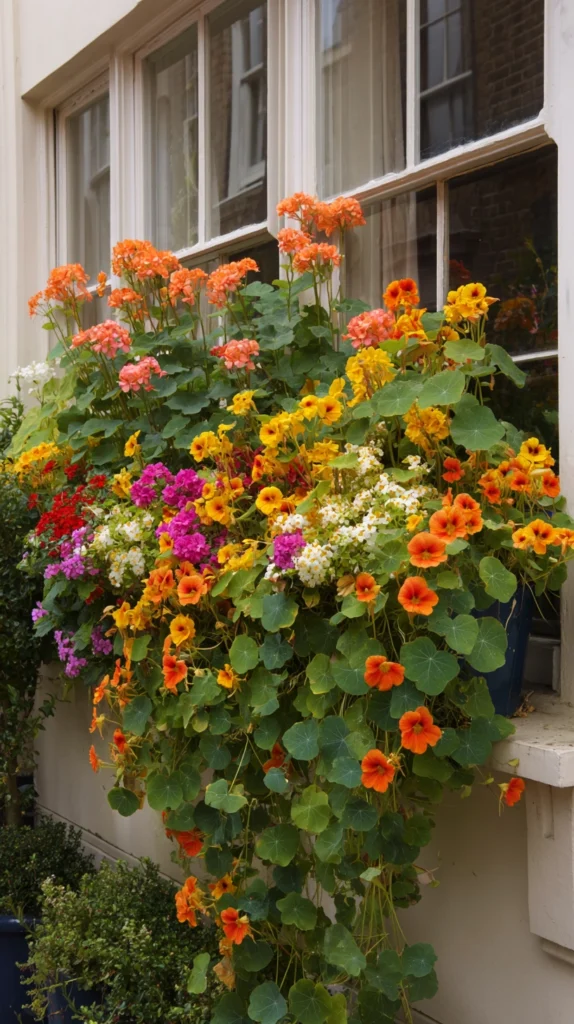
12. Trailing Nasturtiums and Geraniums
Nasturtiums are one of the great unsung heroes of the spring window box world. They grow quickly, bloom prolifically, come in warm shades of orange, yellow, and red, and their round, lily-pad-like leaves are beautiful in their own right.
Paired with classic spring geraniums — whose upright flower clusters in pink, red, salmon, or white provide a strong vertical element — nasturtiums create a window box that feels abundant, joyful, and brimming with seasonal energy. Both plants are easy to grow and very affordable, and nasturtiums have the added bonus of being entirely edible, making them a lovely addition to spring salads.
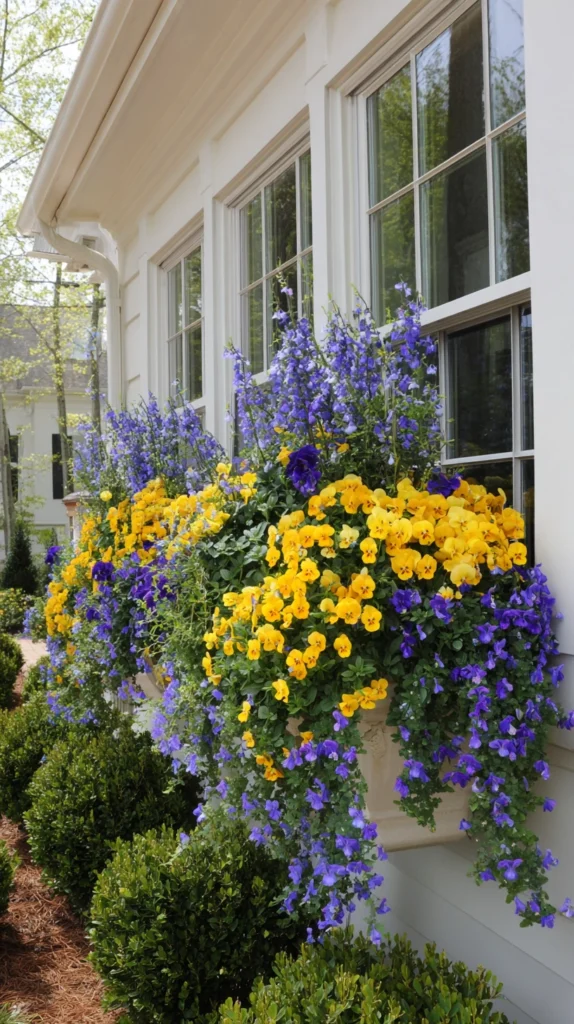
13. Blue and Yellow Spring Combination
Blue and yellow is one of nature’s most beloved color pairings, and it translates beautifully to spring window box planting. Combine bright yellow pansies or primroses with blue lobelia, blue salvia, or forget-me-nots for a window box that feels sunny, cheerful, and unmistakably spring.
This color combination works particularly well on white, gray, or cream-colored homes where it stands out with clarity and confidence. It is also a combination that photographs exceptionally well, meaning your home will look stunning in every springtime photo taken from the street.
14. Strawberry and Flower Mix
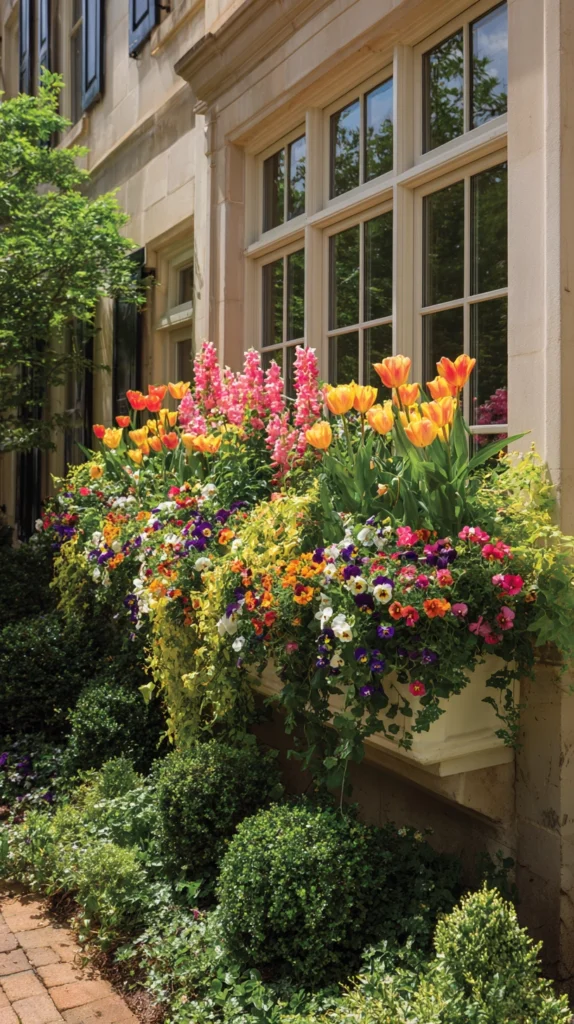
A window box that combines ornamental strawberry plants with spring flowers is a delightful and unexpected choice that always generates interest and conversation. Ornamental strawberries produce small white flowers and, later in the season, tiny red fruits that are as decorative as they are delicious.
Plant them alongside pansies, violas, and trailing alyssum for a window box that blends the practical and the beautiful in perfect proportion. The strawberries trail naturally over the edge of the box, creating a lush, cascading effect that adds movement and charm to your home’s exterior.
15. The Thriller, Filler, Spiller Formula
The most reliable and universally applicable approach to window box planting is the classic thriller, filler, spiller formula, and spring offers the perfect plants for each role. Choose a tall, dramatic thriller for the back of the box — a snapdragon, a tall tulip, or an ornamental grass. Select a mounding, bushy filler for the middle — pansies, primroses, or sweet William work beautifully.
Then choose a trailing spiller for the front — lobelia, alyssum, ivy, or trailing nasturtium. When these three elements are combined thoughtfully, with attention to color harmony and contrasting textures, the result is a window box that looks professionally designed, abundantly full, and completely beautiful from the moment it is planted.
The Window Box as a Seasonal Statement
A well-planted window box does something remarkable — it makes the whole house feel loved. It signals to neighbors, guests, and passersby that someone inside cares about beauty, about the seasons, about the small daily pleasures of living in a home that reflects the natural world. Spring is short and its particular quality of light, color, and fragrance is fleeting.
Planting a window box is one of the simplest and most rewarding ways to slow down and truly inhabit the season. Choose the combination that speaks to you, get your hands in the soil, and let your windows tell the world that spring has arrived and is very much welcome here.