15 Cozy Spring Fire Pit Ideas for Backyard Evenings
There is a particular kind of evening that only a fire pit can produce. Not the evening of the indoor fireplace, which is beautiful in its own right but constrained by walls and ceilings and the glass of a front window between the fire and the open sky.
The fire pit evening is something else — the open air, the darkness gathering at the garden’s edges, the specific quality of wood smoke that travels differently in the outdoor cold than any interior fragrance, and the ancient, irresistible magnetism of a flame that has been gathering people around it for as long as people have existed. Spring is the fire pit’s best season.
The air is cool enough to make the heat genuinely welcome, the evenings have extended enough that dusk arrives at a civilized hour rather than mid-afternoon, and the combination of new spring foliage in the surrounding garden and the warm amber light of a fire creates a sensory environment that is among the most beautiful that domestic life can offer.
The fire pit does not need to be elaborate to deliver this experience — it needs to be well-chosen, well-positioned, and surrounded by the right conditions to make the experience around it as comfortable and as beautiful as the fire itself. Here are fifteen ideas for getting every element right.
1. Choose the Right Fire Pit Style for Your Space
The fire pit market has expanded dramatically in both variety and quality over the past decade, and the first decision — which type of fire pit suits the space, the aesthetic, and the practical requirements of your specific backyard — is the one that determines whether every subsequent investment in chairs, cushions, and atmosphere pays off or is undermined by a fire element that does not suit its context.
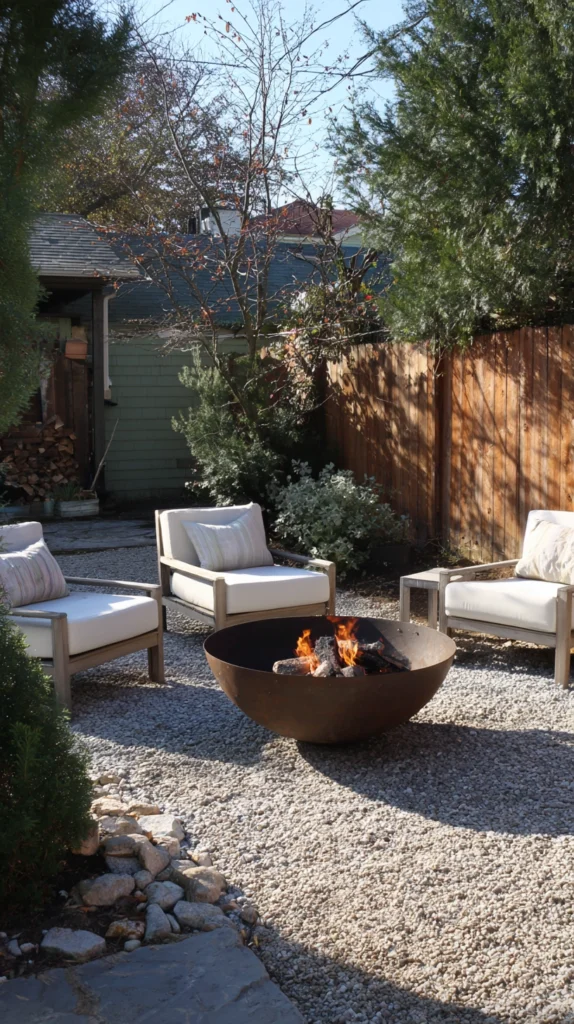
A sunken in-ground fire pit built from stacked stone or cast concrete suits a garden with formal landscape architecture and the space to create a proper seating circle at grade level. A raised bowl fire pit in Corten steel, cast iron, or powder-coated aluminum suits a contemporary terrace or timber deck where a sunken element is not practical.
A fire table — a coffee table or dining height table with an integrated gas fire element — suits the entertaining patio where the combination of social surface and heat source in a single piece of furniture is genuinely convenient.
A chiminea — the traditional clay or cast iron freestanding fire vessel with a vertical chimney — suits smaller spaces and the homeowner who wants the crackling, atmospheric quality of a wood fire with slightly more directional heat output than an open bowl.
2. Position for Smoke Management and Sociability
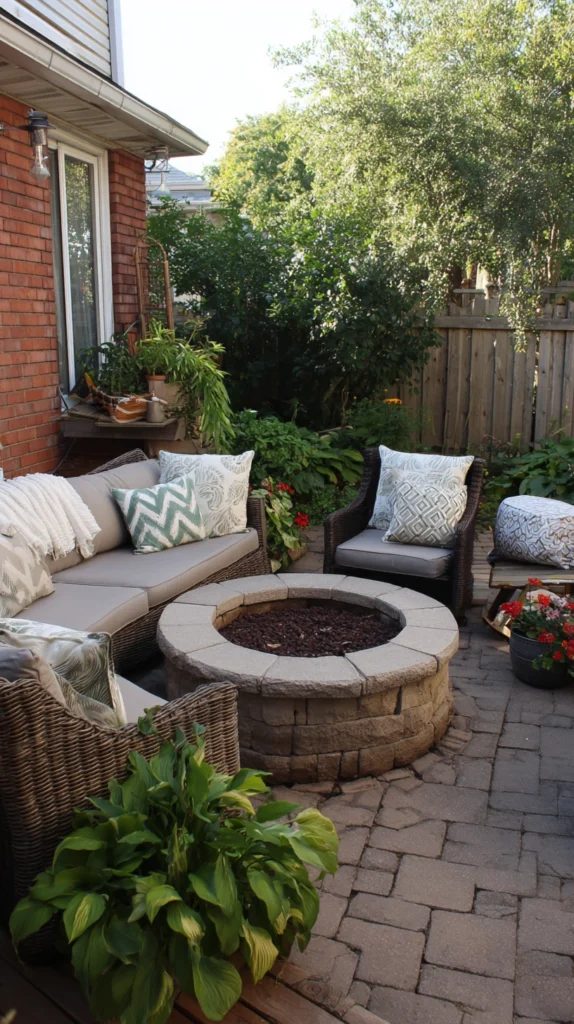
The two positioning considerations for a backyard fire pit are in some tension with each other — the position that is most socially connected to the house may not be the position that keeps smoke away from the seating area, and the position that best manages smoke may create a fire that feels isolated from the garden’s primary gathering zone.
The smoke management principle is straightforward: prevailing winds carry smoke in a consistent direction, and the fire should be positioned so that the prevailing wind carries smoke away from the seating area and away from the house.
The sociability principle is equally straightforward: the fire should be close enough to the house that moving between the fire and the kitchen, bathroom, or indoor gathering space does not feel like a significant journey, and positioned so that the fire is visible from the house’s main entertaining rooms during the approach and through the evening.
In most gardens, the right position is a compromise — close enough to feel connected, far enough from any structure and any prevailing wind direction for safe and comfortable operation.
3. Create a Proper Seating Circle
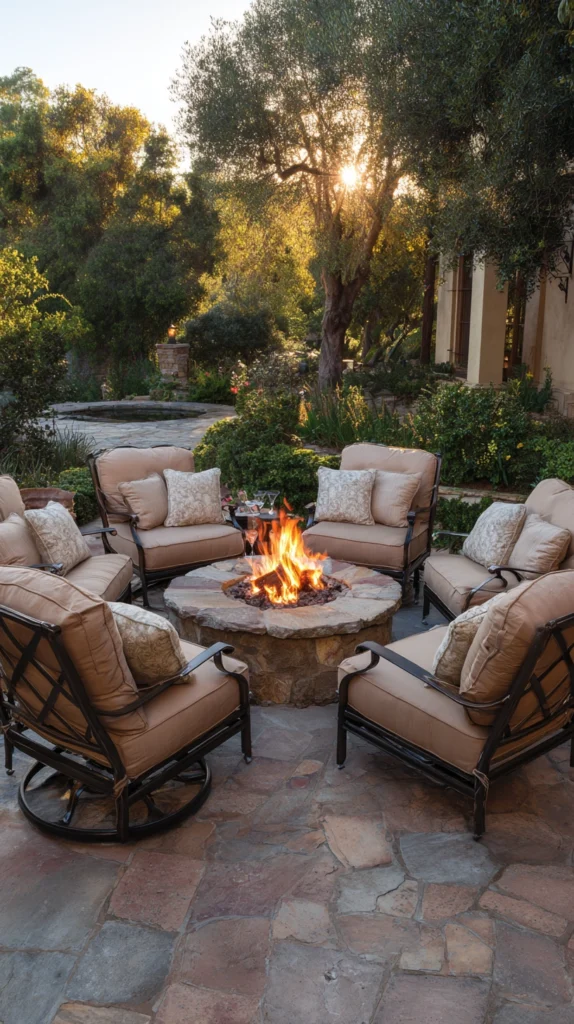
The seating arrangement around a fire pit is the element that most determines whether the fire pit experience fulfills its social potential or falls short of it. The ideal fire pit seating circle positions every seat at the same distance from the fire — equidistant, facing inward, at a height that allows comfortable viewing of the flames at or slightly above eye level for seated guests.
The distance from fire to seat should be calibrated to the fire pit’s heat output: a large wood-burning pit with a generous fire radiates enough heat that seats at one and a half to two meters are comfortable on a cool spring evening; a smaller gas fire table can accommodate seating at one meter without discomfort.
Chairs should be low enough that the fire’s flames are at a comfortable viewing angle without tilting the head upward, which means that deep, low outdoor lounge chairs suit wood-burning pits better than upright dining chairs. All seats should face each other as well as the fire — the social dynamic of the fire pit circle depends on everyone being able to see everyone else without turning away from the flames.
4. Add Deep Outdoor Cushions for Extended Comfort
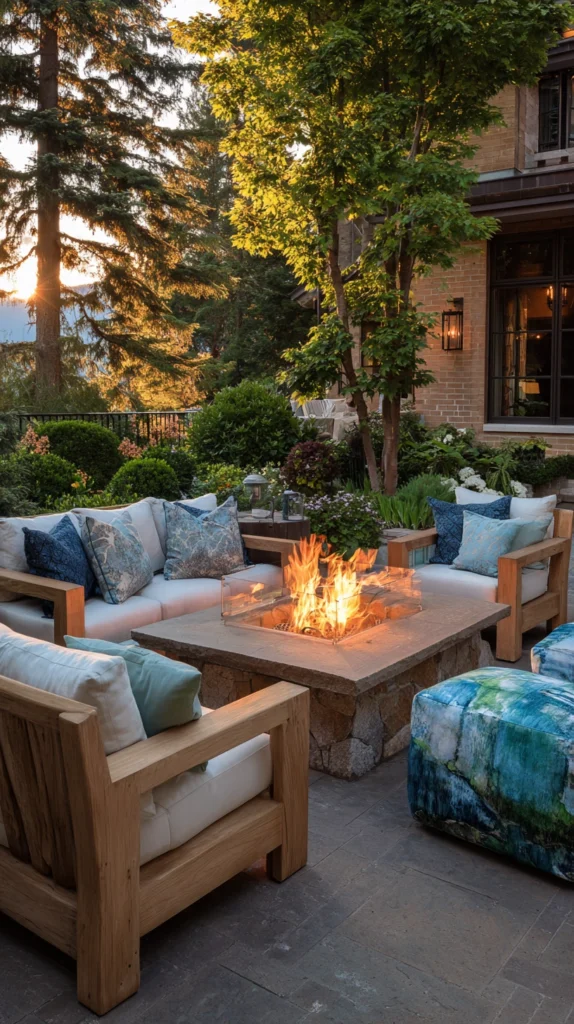
A fire pit gathering that ends at nine because everyone has become uncomfortable in their chairs has missed the point entirely.
The chairs surrounding a fire pit should be as comfortable as the best interior seating — deeply cushioned, properly supportive, wide enough to sit sideways with legs folded if the mood takes it — because the whole purpose of the arrangement is to make sitting around a fire for three or four hours not only possible but genuinely pleasurable without any part of the body requesting that the activity end.
Deep-filled outdoor cushions in a weather-resistant performance fabric — solution-dyed acrylic in a color that suits the garden’s palette — transform even a simple metal or timber chair into a piece of furniture comfortable enough for an entire spring evening.
Add back cushions of sufficient depth that lumbar support is maintained through an extended sitting period, and the fire pit circle becomes a genuinely comfortable social environment rather than one that requires periodic standing to relieve the discomfort of inadequate seating.
5. Build a Dedicated Firewood Storage Area
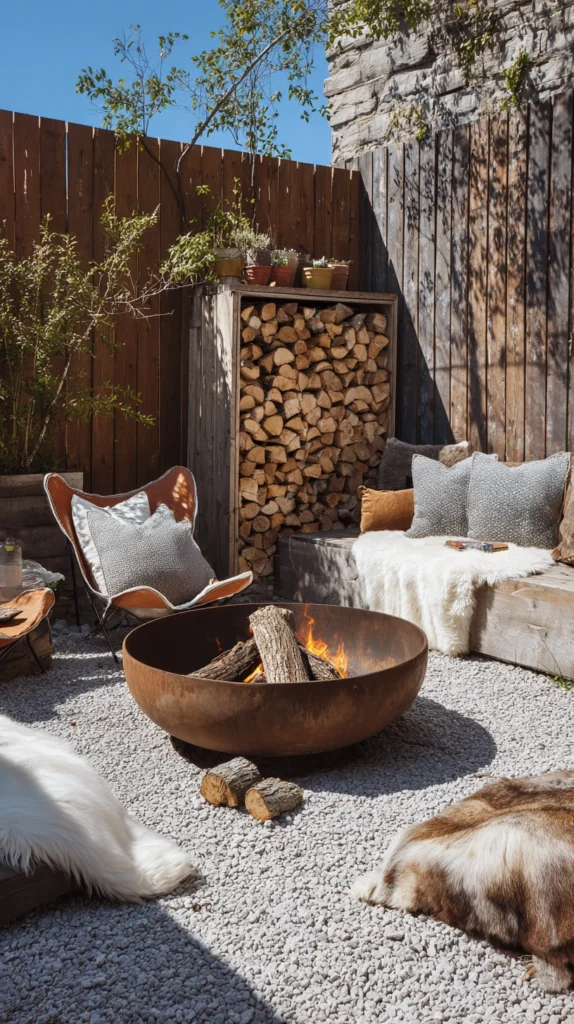
The practical management of a wood-burning fire pit begins with the organization of the firewood supply, and a dedicated firewood storage area positioned close to the fire pit — accessible without leaving the seating circle entirely — is one of those small infrastructure investments that transforms the fire pit experience from slightly awkward to completely smooth.
A simple log store — a slatted timber structure with a covered roof to keep the wood dry, positioned at the edge of the fire pit seating zone — holds enough seasoned wood for multiple evenings and keeps it organized, dry, and available without requiring a trip to a distant woodshed every time the fire needs attention.
The log store can also serve as a side table surface, a shelf for fire lighting tools, and a visual element of the fire pit zone’s overall composition — a well-made wooden log store, stacked with neat rows of seasoned timber, is a genuinely attractive feature in a backyard, particularly when illuminated from the side by the fire’s light on a spring evening.
6. Use a Fire Pit Grate or Cooking Grill for Dual Function
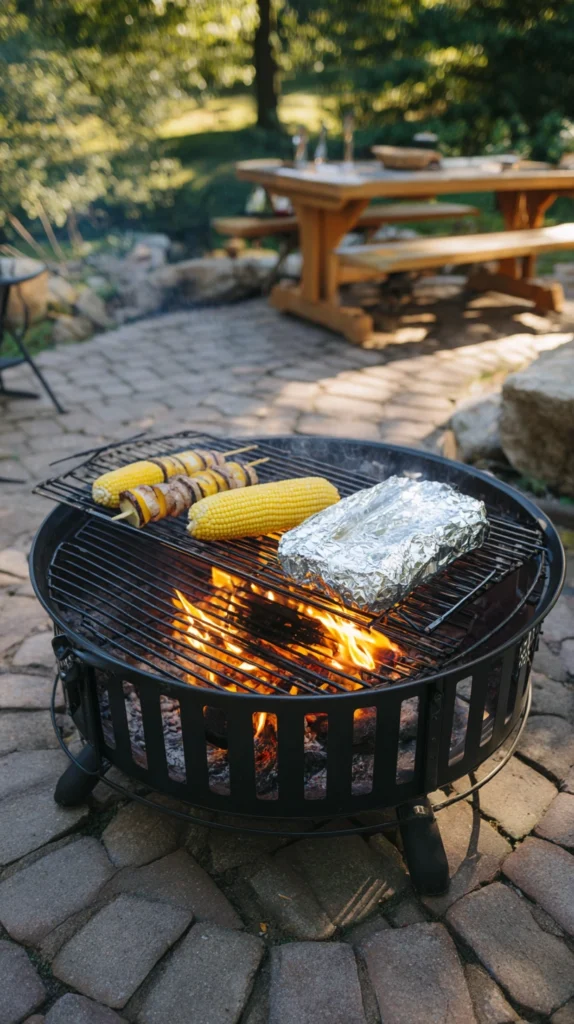
A fire pit equipped with a cooking grate — a simple iron grille that sits over the burning fire — extends the fire pit’s function from purely atmospheric to genuinely productive, allowing the fire to serve as a cooking surface for the simple, sociable outdoor cooking that spring gatherings are perfectly suited to. Corn cobs wrapped in foil laid at the fire’s edge.
Sausages on long metal skewers held over the flames. Flatbreads cooked directly on the grate for thirty seconds a side, blistered and smoky and served with whatever is available from the kitchen.
Marshmallows on sticks held into the fire’s edge and eaten immediately, the outside charred and the inside molten. This kind of cooking is entirely informal and entirely delicious, and the participation it generates — everyone gathered around the fire with their skewer or their corn cob, everyone involved in the process — creates a quality of communal engagement that the best food gatherings around a table cannot always replicate.
7. Install Perimeter Path Lighting for Safety
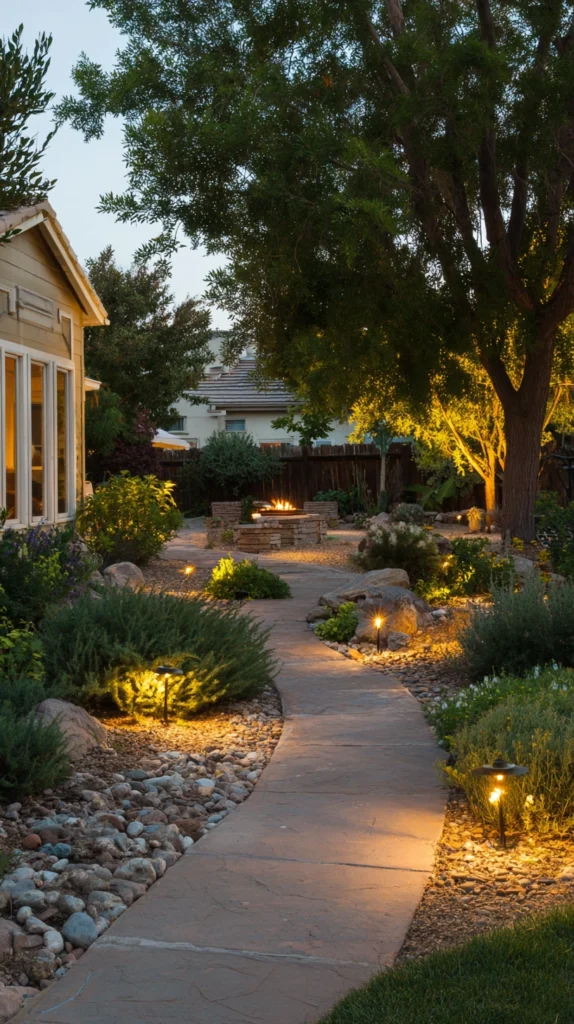
The fire pit gathering that continues after dark needs more than the fire’s own light for safe navigation of the garden paths, steps, and transitions between the fire zone and the house.
Low-voltage path lighting or solar-powered stake lights positioned along the route between the house and the fire pit, and at any level changes or steps in the garden, serve the practical function of illuminating these transitions for guests who are moving between the two spaces in darkness without interrupting the fire-lit atmosphere of the seating zone itself.
The light level of perimeter path lighting should be low — just sufficient to reveal the path clearly without washing out the warm amber of the fire’s illumination or introducing the harsh quality of utility lighting into what should be an intimate, atmospheric environment. Warm-toned solar stake lights in a simple, minimal design are the most practical and most aesthetically appropriate choice for this function.
8. Provide a Throws and Blankets Station
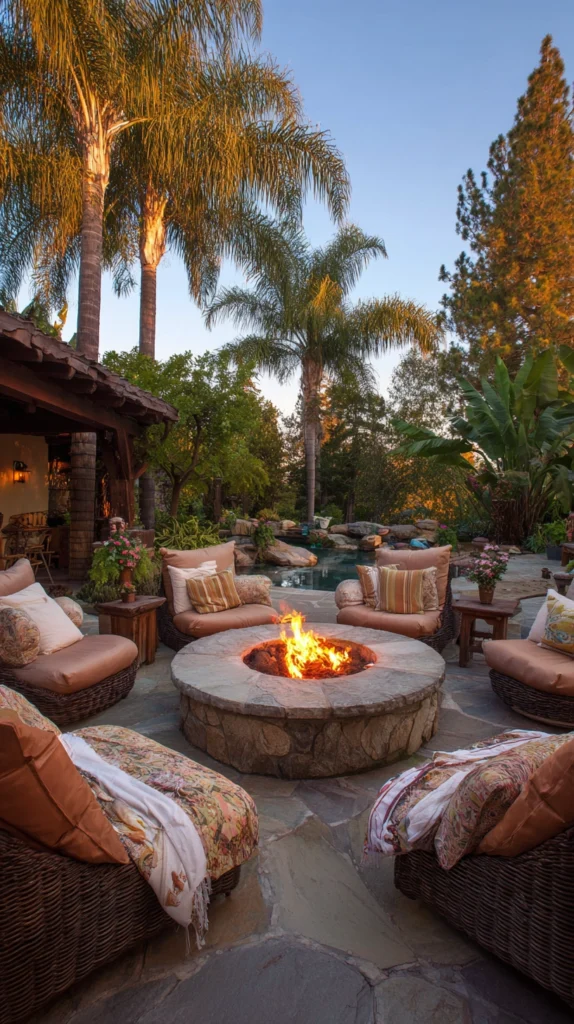
A basket or outdoor storage chest positioned at the edge of the fire pit seating zone, stocked with enough throws and blankets for every guest at the gathering, is one of the simplest and most thoughtful additions available to the spring fire pit setup.
Spring evenings can drop in temperature faster and more significantly than the afternoon’s warmth suggests, and the guest who is cold but too polite to suggest moving inside will endure diminishing enjoyment for the entire remainder of the evening while everyone else remains unaware of their discomfort.
A visible, accessible throws station removes the social awkwardness of this situation entirely — guests help themselves when they need to without any interruption to the gathering’s flow, and the visual abundance of a generously stocked basket of throws communicates a quality of hospitality that is both genuinely warm and immediately felt.
Choose throws in a mixture of weights — a lighter cotton knit for the mildest evenings, a warmer wool or fleece option for the coolest — and wash them together at the season’s end.
9. Create a S’mores and Snack Station Nearby
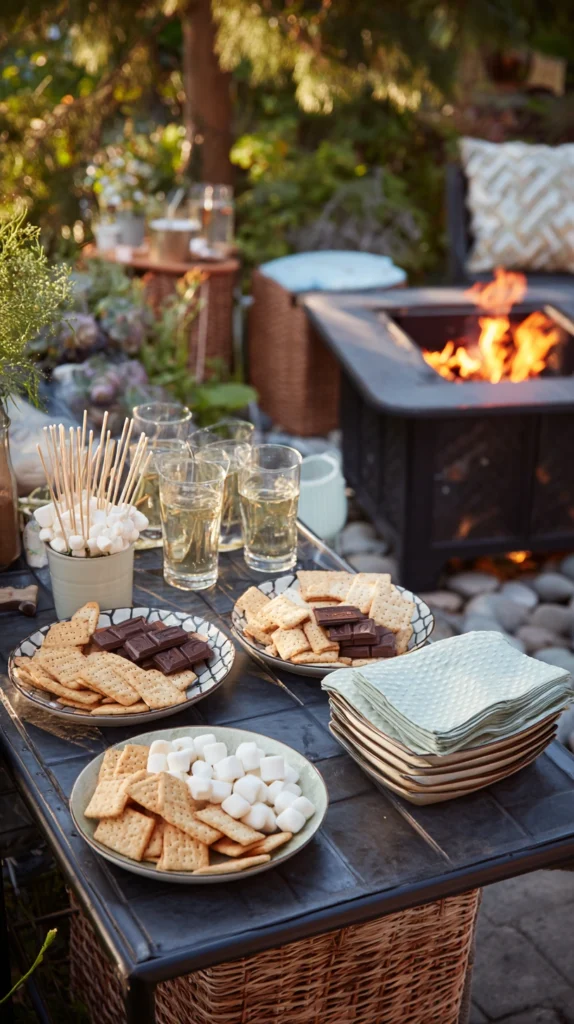
The food and drink station that serves a fire pit gathering should be positioned close enough to the seating circle that guests can access it without leaving the social atmosphere of the fire, but not so close that it interrupts the clean seating arrangement around the flames.
A small side table or outdoor cart at the seating circle’s edge — holding the materials for s’mores, a bowl of seasoned nuts, a plate of simple cheese and crackers, and whatever drinks the evening calls for — creates a self-service refreshment station that sustains the gathering through its natural ebb and flow without requiring the host to leave the circle for the kitchen at regular intervals.
The s’mores station in particular — good dark chocolate, proper marshmallows, graham crackers or their equivalent, and a collection of long toasting skewers — creates a participatory focus for the gathering that sustains conversation and generates the particular kind of communal pleasure that shared informal food always produces.
10. Add Ambient Sound for Atmosphere
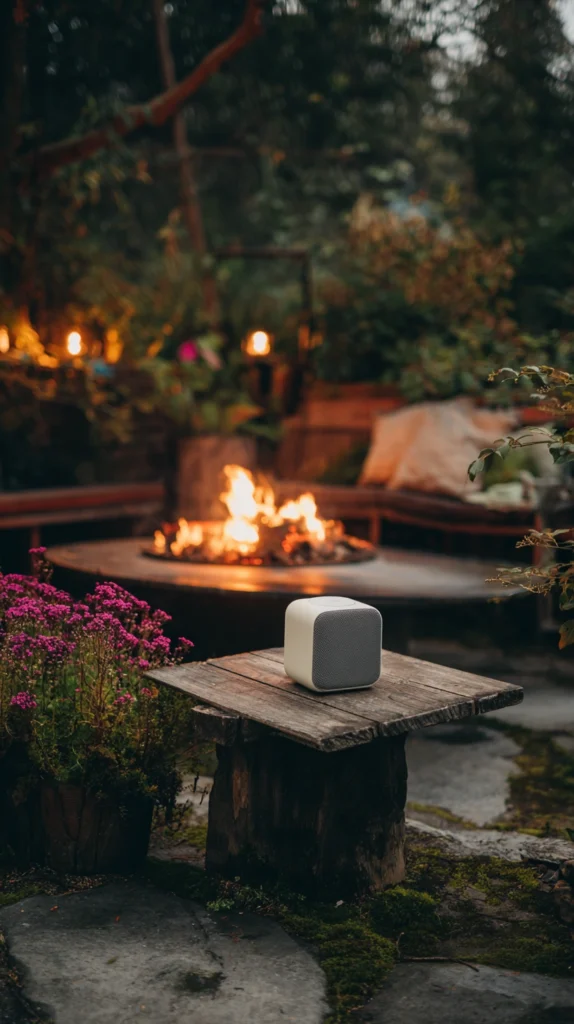
A fire pit gathering benefits from music in the same way that any social gathering does — the right music at the right volume provides an acoustic atmosphere that fills the silences between conversations without dominating them, and that signals to arriving guests the emotional register of the evening before the first word has been spoken.
A compact outdoor Bluetooth speaker — weatherproofed to IP67 standards, capable of sufficient volume to be audible over the sound of a wood fire without distorting, and sized modestly enough to be positioned on a log store or side table without becoming a focal point — is one of the fire pit zone’s most valuable accessories.
The playlist for a spring fire pit evening should be warmer and more acoustic than the summer equivalent — the cool air and the fire’s intimacy calls for something slightly slower and more organic than the high-energy options that suit a summer afternoon gathering — but the choice is ultimately personal, and the fire pit’s particular magic transforms almost any soundtrack into something that sounds better than it would elsewhere.
11. Incorporate Spring Planting Around the Fire Zone
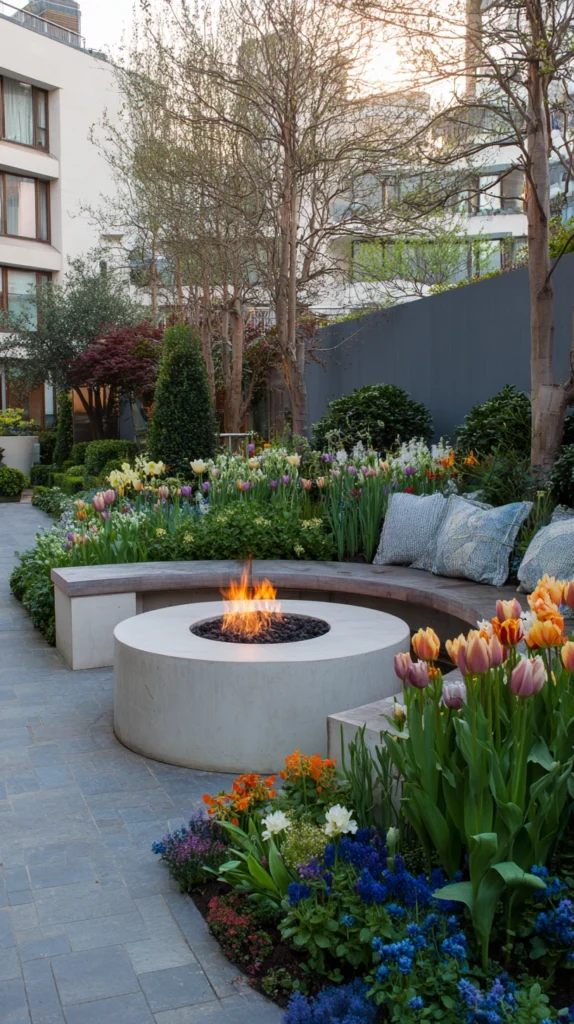
The fire pit zone that is surrounded by spring planting — containers of tulips and narcissus around the seating circle’s perimeter, flowering shrubs in the background, perhaps a climber beginning its spring ascent on a nearby fence or wall — is a different and considerably more beautiful environment than one that sits in an unplanted section of hard paving.
The planting does not need to be elaborate or expensive; it needs only to be present and seasonal, providing the visual evidence that the fire pit is set within a living garden rather than simply placed on a hard surface.
The juxtaposition of the fire’s warmth and light against the spring planting in the surrounding darkness — the petals of a nearby tulip catching the fire’s amber glow, the outline of a fruit tree in early blossom visible against the darkening sky — is one of the most specifically spring pleasures available to the backyard fire pit enthusiast, and it is available to anyone willing to plant a few containers before the season begins.
12. Use Natural Materials in the Fire Pit Zone’s Design
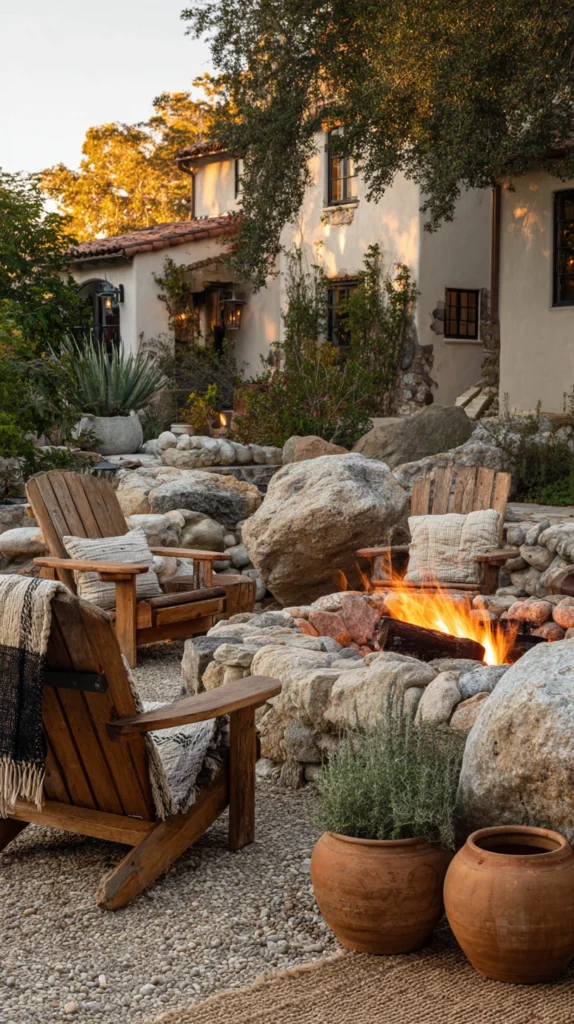
A fire pit zone designed with natural materials — the stone of a dry-stacked surround, the timber of a handmade log store, the terracotta of surrounding planters, the wool of the throws in the blanket basket — has a material warmth and authenticity that manufactured and synthetic alternatives cannot approach, and the fire’s light interacts with natural materials in a way that makes their surfaces more beautiful than they are in daylight.
The warm amber of fire light on rough stone creates a texture that flat-fronted manufactured materials do not possess. The grain of the timber log store becomes visible in the fire’s directional illumination. The clay of a terracotta pot glows in the fire’s reflected warmth with a quality that no other material quite replicates.
Designing the fire pit zone with natural materials is a decision that pays its dividends most fully in the evening, when the fire is lit and the interaction between the flames and the surfaces around them creates the specific beauty that fire pit evenings at their best always deliver.
13. Build a Fire Pit Shelter for Weather Flexibility
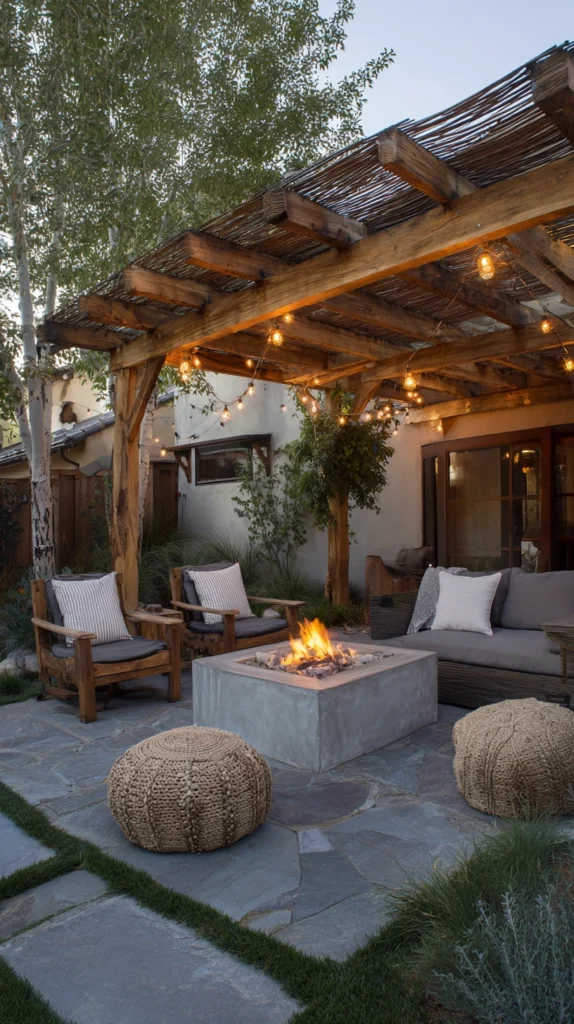
A simple shelter structure over the fire pit zone — a sail shade, a timber pergola with a polycarbonate roof panel, or a simple canvas awning — extends the fire pit season at both ends by providing protection from light rain and heavy dew that would otherwise make spring fire pit evenings conditional on perfect weather conditions.
The shelter does not need to be elaborate or permanent — a simple timber frame supporting a polycarbonate sheet over the seating zone, open on all sides for airflow and smoke management, provides the rain protection that makes a fire pit genuinely usable on the cool, occasionally showery evenings that characterize early spring in most climates.
Ensure the shelter has sufficient clearance above the fire pit for safe smoke dispersal — a minimum of two to three meters between the fire and the lowest point of any overhead cover — and that the structure is sufficiently anchored to remain stable in the wind that will accompany any spring weather system.
14. Add a Low Coffee Table to the Seating Circle
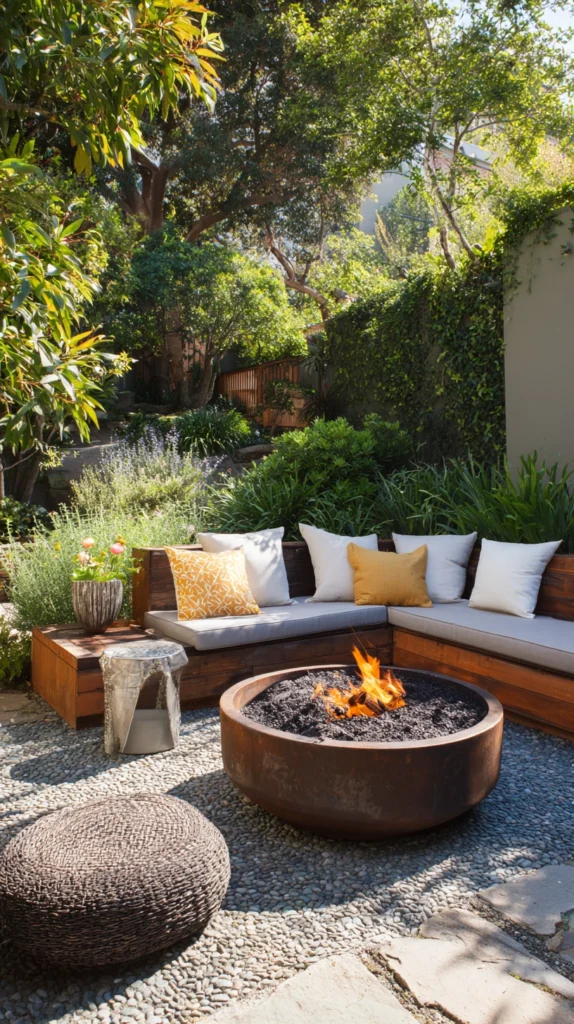
A low coffee table positioned at the center of the fire pit seating circle — or at the seating zone’s edge where it does not obstruct the view of or access to the fire itself — provides the practical horizontal surface that a gathering around a fire consistently needs: a place for glasses, for the s’mores station, for a small lantern, for the long skewers between toasting sessions, and for whatever small objects accumulate around any social gathering over the course of an evening.
The table should be heat-rated for outdoor use and flame-resistant, as embers occasionally escape from wood-burning fire pits and a table surface that cannot tolerate a brief ember contact becomes a source of anxiety rather than utility.
A low table in powder-coated steel, Corten metal, stone, or concrete suits the fire pit zone’s material language better than timber alternatives for this reason, and provides a surface that ages as gracefully as any of the other natural materials in the surrounding zone.
15. Create a Post-Fire Wind-Down Ritual
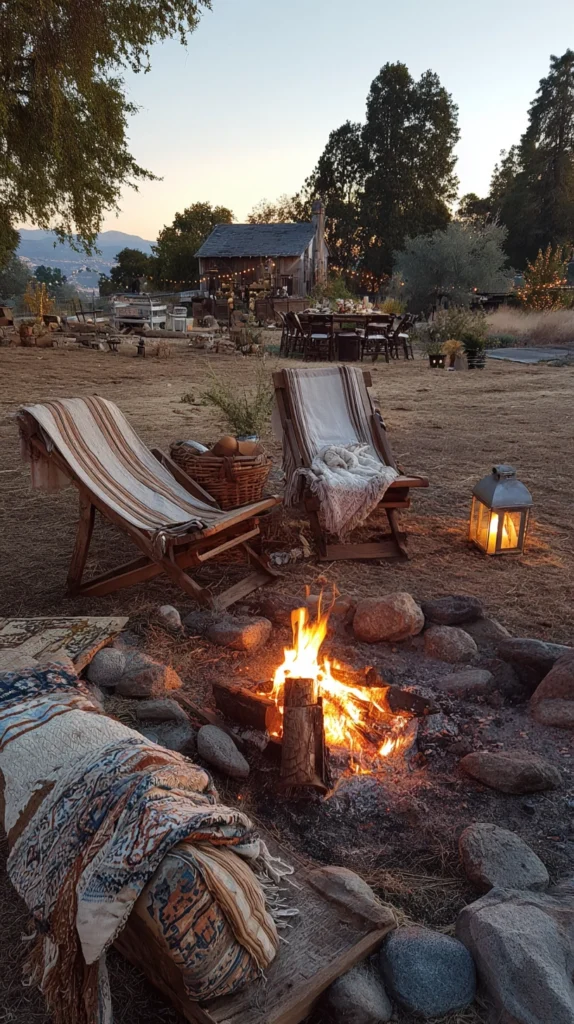
The final spring fire pit idea is not a design concept or a product recommendation but a practice — the deliberate creation of a post-fire wind-down ritual that acknowledges the end of the evening’s fire without simply extinguishing the moment along with the flames.
As the fire burns down to embers in the final hour of the gathering, reduce the seating circle slightly — chairs drawn a little closer, the conversation naturally becoming quieter and more intimate — and let the warmth and light of the embers provide the atmosphere for the gathering’s most reflective and most memorable phase.
The dying fire has its own particular beauty — the deep orange glow of the embers, the occasional flicker of a last flame, the gradual cooling of the air around the circle — and the gathering that remains present to this final phase rather than dispersing at the moment the active fire is extinguished is the gathering that its participants remember most warmly when the season has moved on and the evenings have grown too warm for the fire pit to be strictly necessary.
The ritual of the dying fire is the spring fire pit at its most specifically seasonal, and it is worth designing the whole evening to arrive at it well.