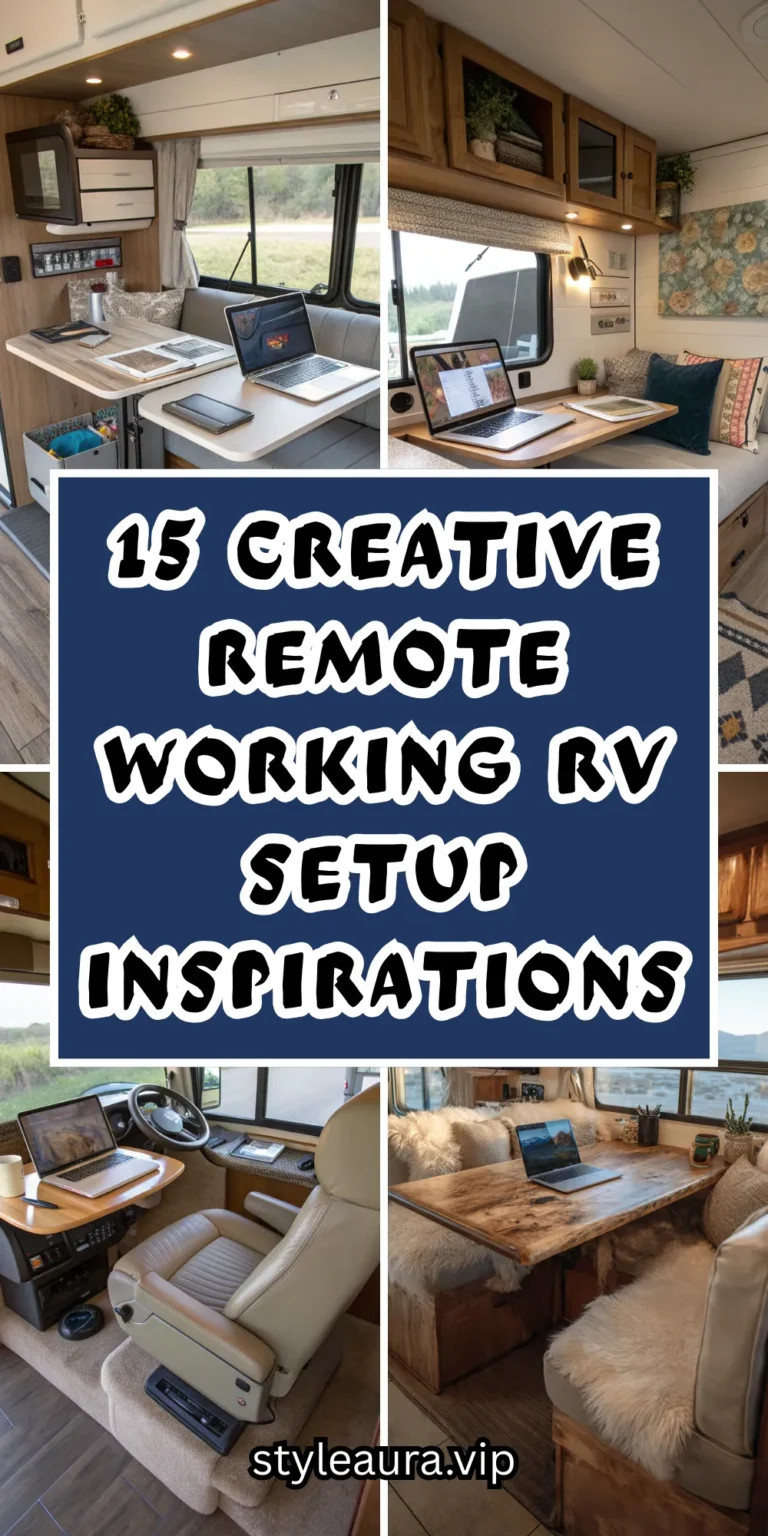
15 Smart RV Setup Strategies for Remote Work
Working remotely from an RV offers freedom, flexibility, and the chance to design a lifestyle that blends productivity with adventure. However, successful remote work on the road requires thoughtful planning and intentional setup choices.
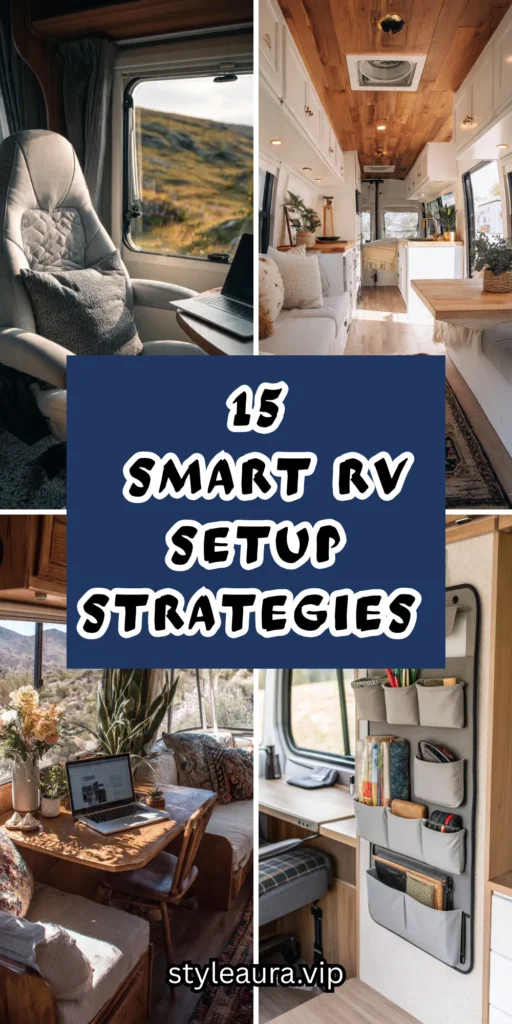
From connectivity and power to comfort and organization, the way you design your RV workspace can directly affect your efficiency and well-being. Below are fifteen smart RV setup strategies explained in detail to help you create a reliable, comfortable, and productive remote work environment wherever the road takes you.
1. Designate a Dedicated Work Zone
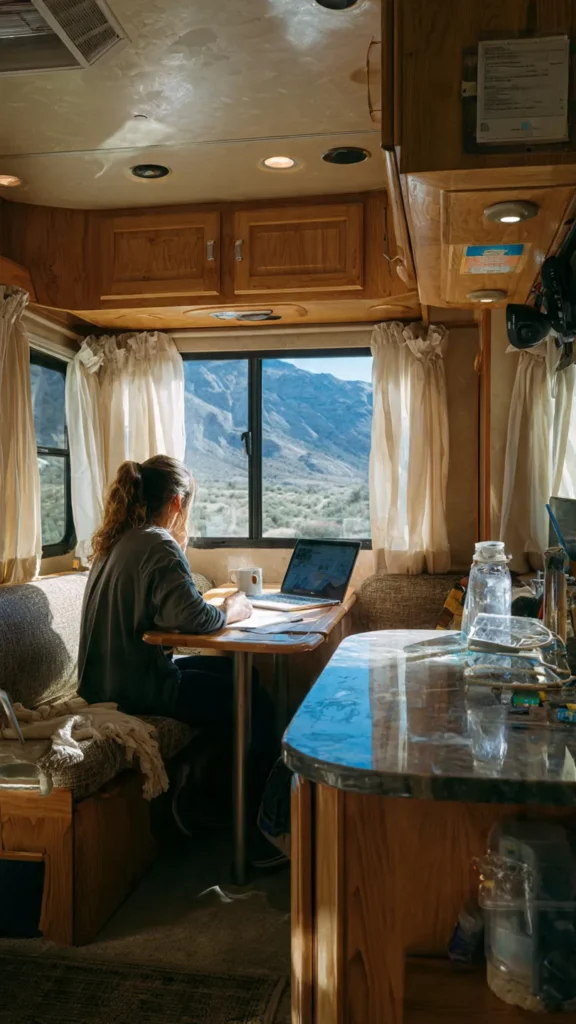
One of the most important strategies for remote work in an RV is creating a dedicated workspace. Even in a small RV, having a specific area reserved for work helps establish boundaries between professional and personal life. This could be a dinette converted into a desk, a fold-down table, or a compact workstation near a window. A consistent work zone improves focus and helps your brain associate that space with productivity rather than relaxation.
2. Prioritize Reliable Internet Connectivity
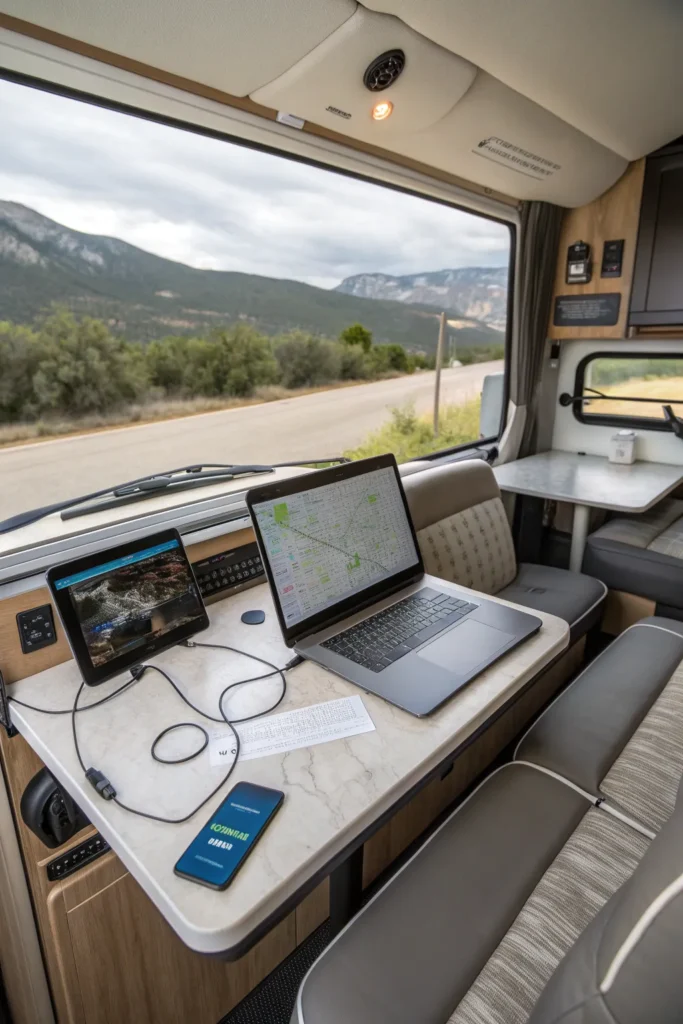
Internet access is the backbone of remote work. Investing in multiple connectivity options ensures you stay online in different locations. Many remote workers rely on mobile hotspots, signal boosters, or multiple data plans to avoid disruptions. Planning your travel routes around coverage availability also helps maintain consistent productivity. A strong and stable connection reduces stress and allows you to work confidently from remote destinations.
3. Optimize Power Management for Work Needs

Remote work requires dependable power for laptops, monitors, and other devices. Understanding your RV’s power system is essential. Solar panels, upgraded batteries, and efficient energy usage help ensure you can work without interruptions. Managing power wisely allows you to stay productive even when camping off-grid, giving you more freedom in choosing work locations.
4. Choose Ergonomic Seating Solutions
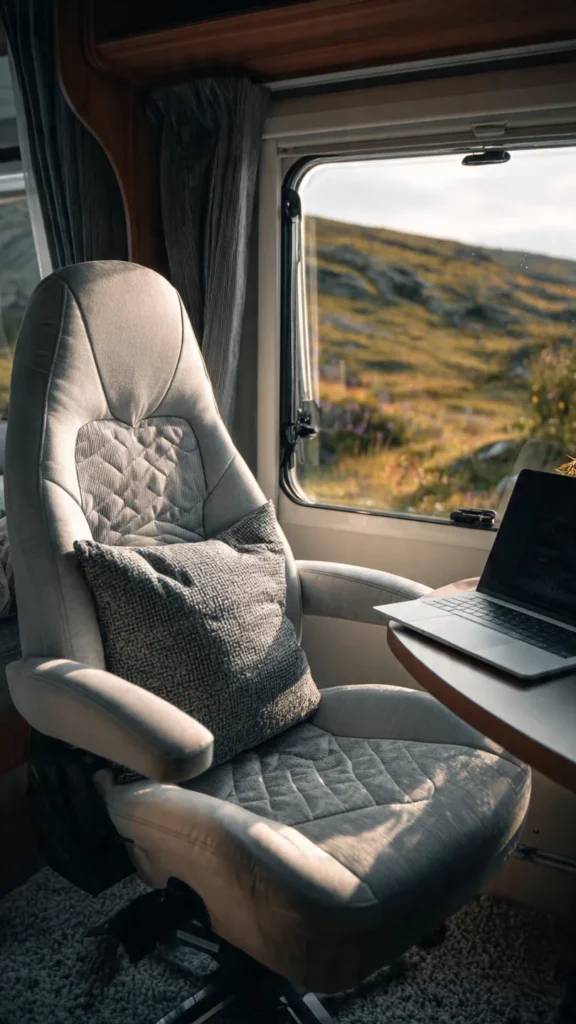
Comfort directly affects productivity, especially during long work hours. Standard RV seating is often not designed for extended desk work, so investing in an ergonomic chair or supportive cushion can make a significant difference. Proper posture reduces fatigue and discomfort, allowing you to work longer without strain. Even small adjustments, like lumbar support or footrests, can greatly improve your daily work experience.
5. Maximize Natural Light for Focus
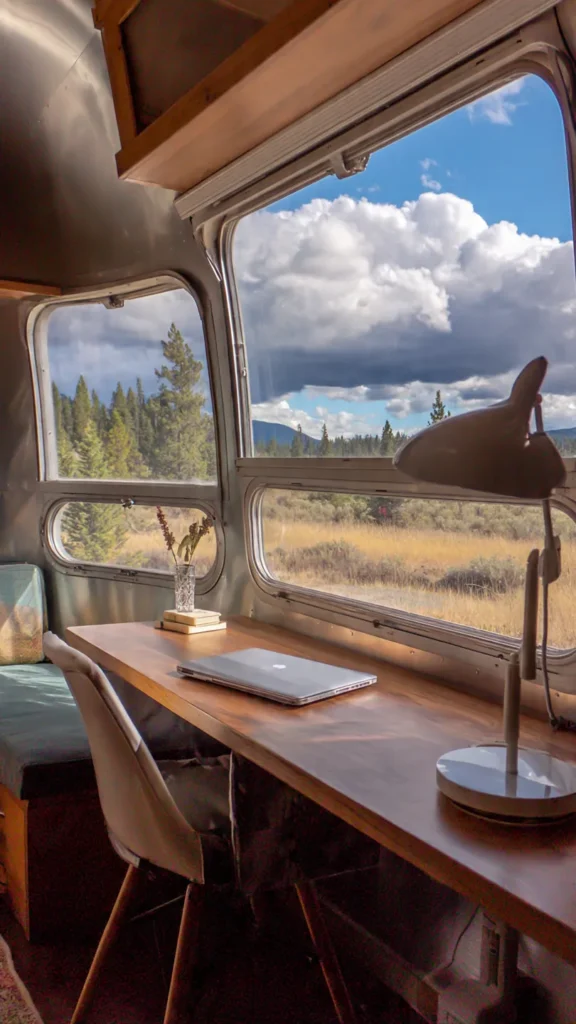
Natural light plays a key role in maintaining energy and concentration. Positioning your workspace near a window helps reduce eye strain and improves mood. Daylight also creates a more pleasant working environment compared to artificial lighting alone. When natural light is limited, adjustable task lighting ensures your workspace remains functional without causing glare or shadows.
6. Use Smart Storage to Reduce Clutter
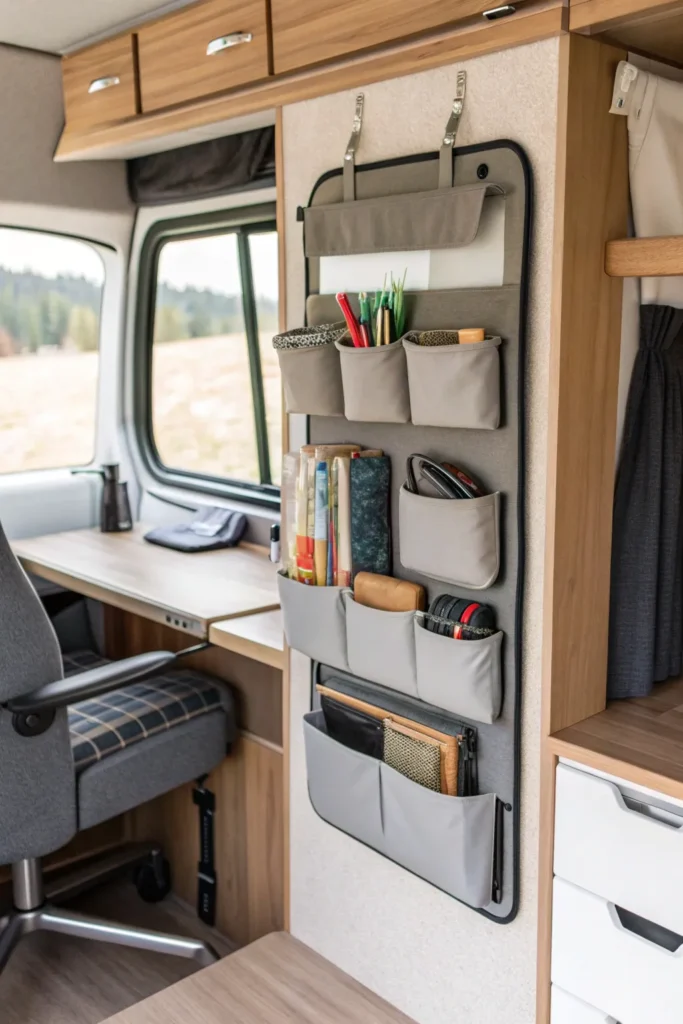
Limited space makes organization essential in an RV. Smart storage solutions help keep your workspace tidy and distraction-free. Wall-mounted organizers, drawer dividers, and foldable storage containers allow you to store work supplies efficiently. A clutter-free environment promotes focus and reduces the mental load of constantly managing small spaces.
7. Invest in Compact and Multi-Use Equipment
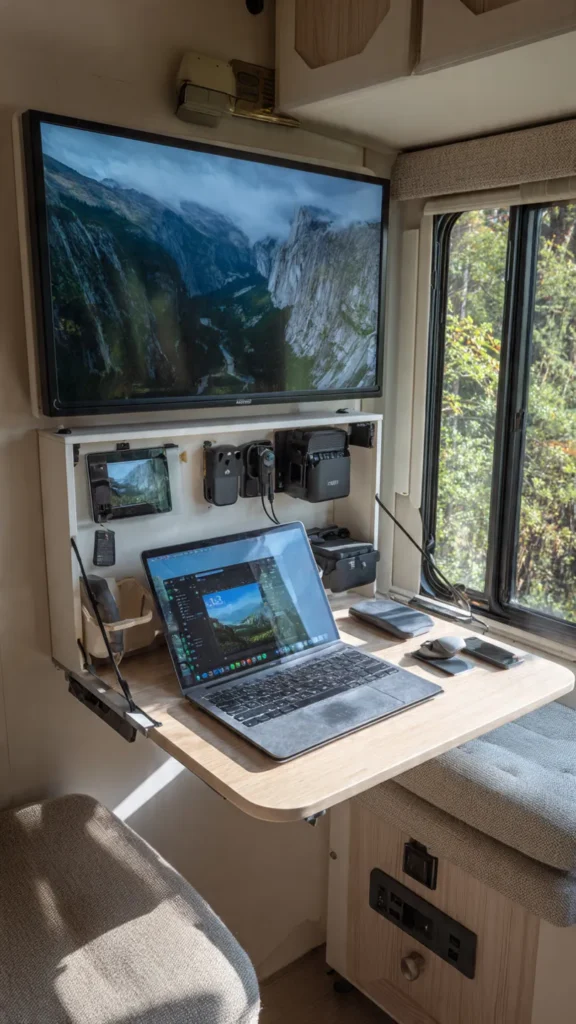
Choosing compact and multi-use equipment saves space and increases efficiency. Foldable desks, portable monitors, and wireless accessories reduce clutter while maintaining functionality. Devices that serve multiple purposes help streamline your setup and make transitions between work and leisure smoother. This approach ensures your RV remains livable while still supporting professional needs.
8. Manage Noise for Better Concentration
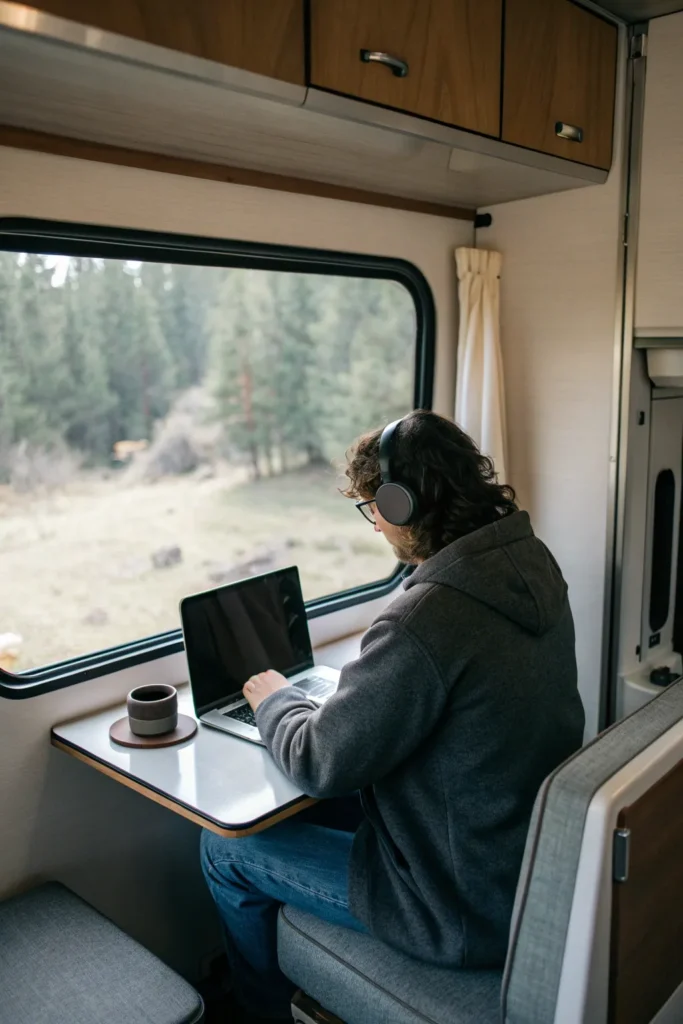
Noise can be a challenge when working from an RV, especially in busy campgrounds or urban areas. Noise-canceling headphones or sound-dampening materials help create a quieter work environment. Being mindful of your surroundings and choosing calmer locations when possible also improves concentration. Managing noise effectively allows you to stay focused during meetings and deep work sessions.
9. Plan for Climate Comfort While Working
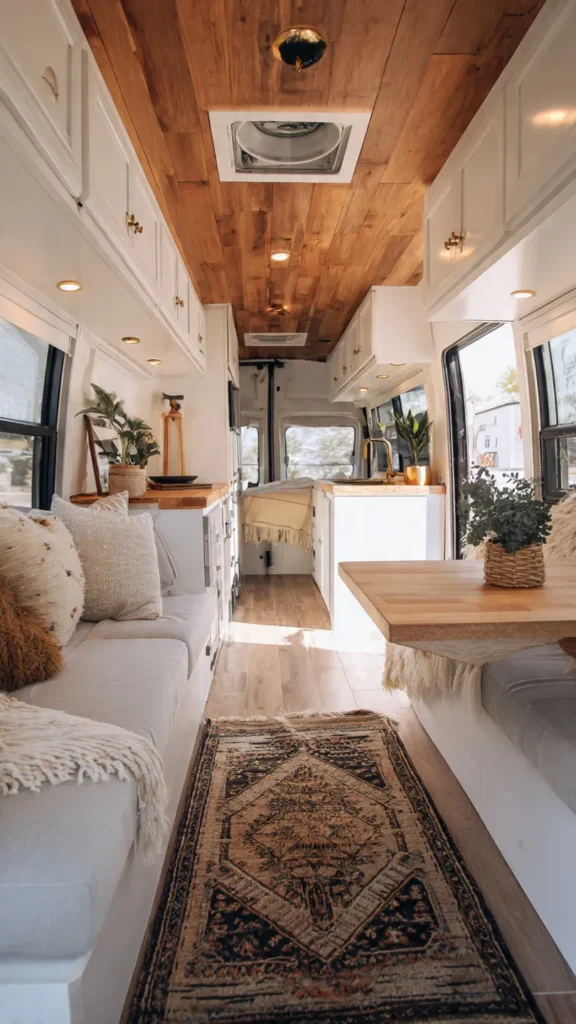
Temperature control plays a crucial role in productivity. Working in an environment that is too hot or too cold can quickly become uncomfortable and distracting. Using fans, insulation, or efficient heating solutions helps maintain a comfortable workspace. Planning your travel around weather conditions also ensures a more pleasant work routine throughout the year.
10. Establish a Daily Work Routine
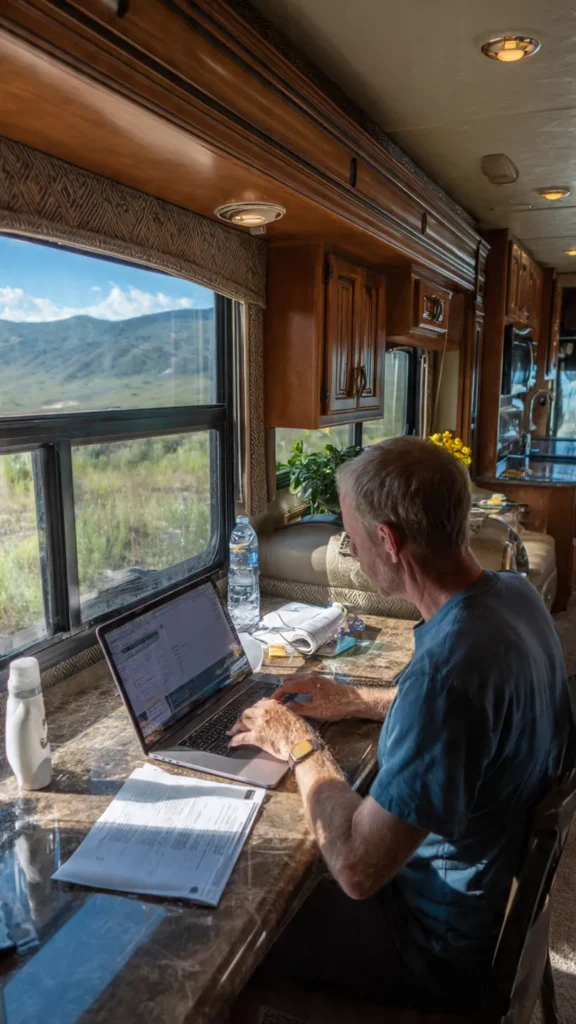
Remote work in an RV offers flexibility, but structure remains important. Establishing a consistent work routine helps maintain productivity and balance. Setting regular work hours, scheduling breaks, and planning tasks ahead of time create a sense of normalcy. A routine ensures work does not spill into personal time and helps you enjoy the freedom of RV living without sacrificing performance.
11. Prepare for Video Calls and Meetings
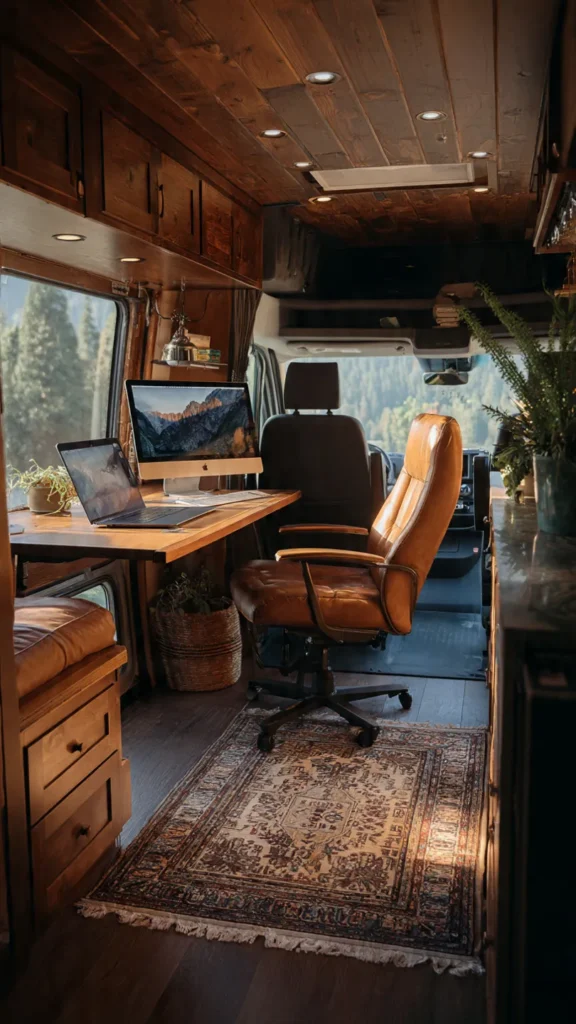
Professional communication is essential for remote work. Preparing your RV workspace for video calls ensures you present yourself clearly and confidently. Choosing a neutral background, ensuring proper lighting, and minimizing noise help create a professional impression. Being meeting-ready reduces stress and allows you to participate fully without worrying about your environment.
12. Back Up Your Work and Data
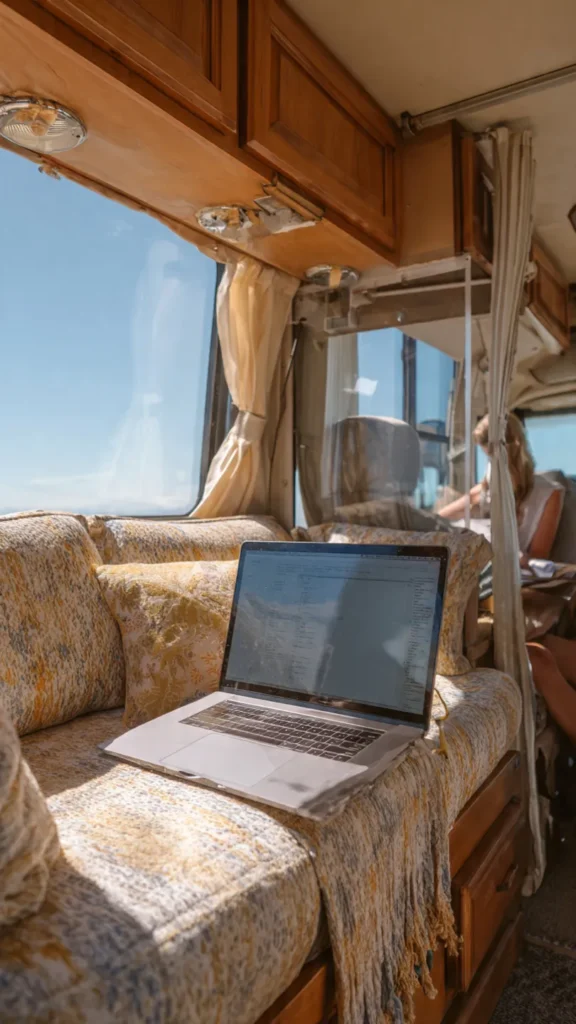
Data security is especially important when working on the road. Regularly backing up files protects you from unexpected technical issues. Cloud storage, external drives, or automatic backup systems ensure your work remains safe. This strategy provides peace of mind and allows you to focus on your tasks rather than potential data loss.
13. Balance Work and Outdoor Living
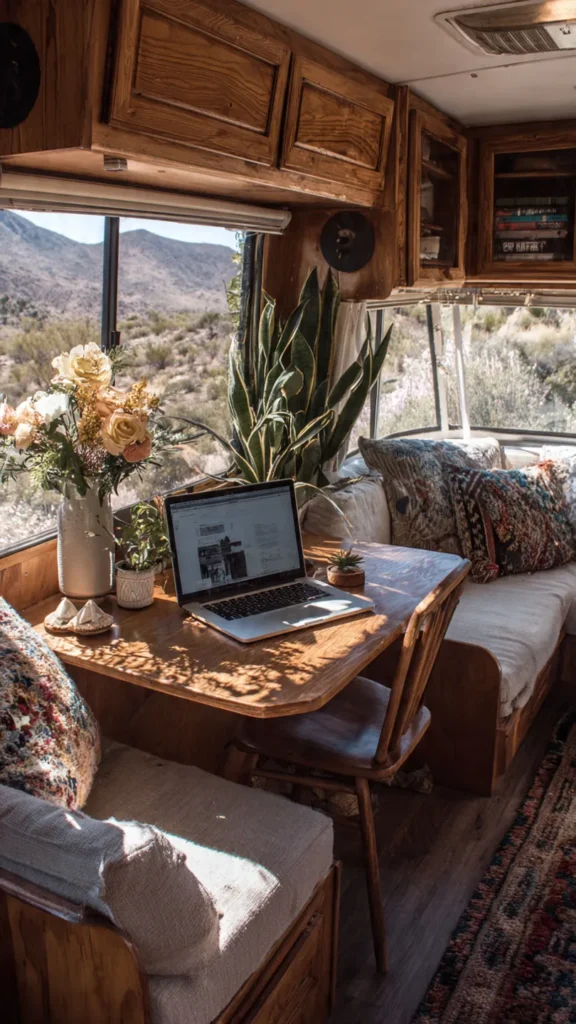
One of the biggest advantages of RV remote work is access to nature. Designing your schedule to include outdoor time helps maintain motivation and prevents burnout. Taking breaks outside, working with views when possible, and separating work hours from exploration time create a healthier balance. This approach allows you to enjoy the RV lifestyle while staying productive.
14. Adapt Your Setup as Your Needs Change
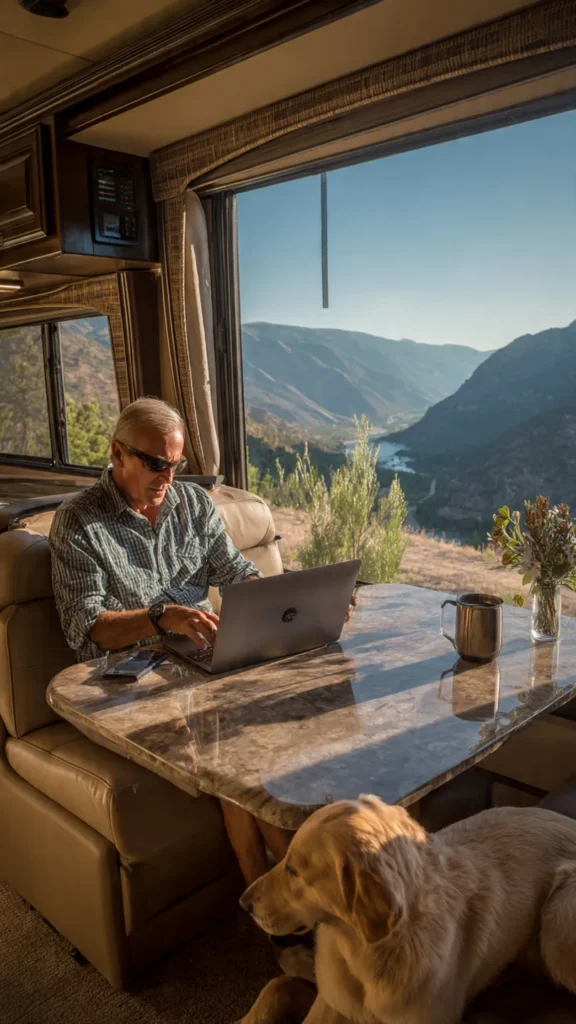
Flexibility is key to long-term success with RV remote work. As your job requirements evolve, your setup should adapt accordingly. Regularly evaluating what works and what does not helps you refine your workspace. Making small adjustments over time ensures your RV continues to support your professional goals without compromising comfort.
15. Create a Mindset for Mobile Productivity

Beyond physical setup, mindset plays a major role in remote work success. Embracing adaptability, patience, and problem-solving helps you navigate challenges unique to working on the road. Accepting that not every day will be perfect allows you to stay focused on long-term goals. A positive and flexible mindset turns your RV into a reliable workspace rather than a limitation.
Remote work from an RV is a rewarding experience when supported by smart setup strategies. By prioritizing connectivity, comfort, organization, and balance, you can create a workspace that supports productivity without sacrificing freedom. These fifteen strategies show that with thoughtful planning, an RV can become not just a vehicle for travel, but a fully functional and inspiring remote work environment that moves with you wherever life leads.