15 Small Kitchen Design and Decor Ideas
The small kitchen is one of the most challenging and most rewarding design problems a home can present. Every decision matters more when space is limited, and every poorly chosen appliance or wasted corner compounds into a kitchen that frustrates rather than functions. But the inverse is equally true. Every well-chosen cabinet and thoughtful material decision compounds into a kitchen that feels not just adequate but genuinely extraordinary.
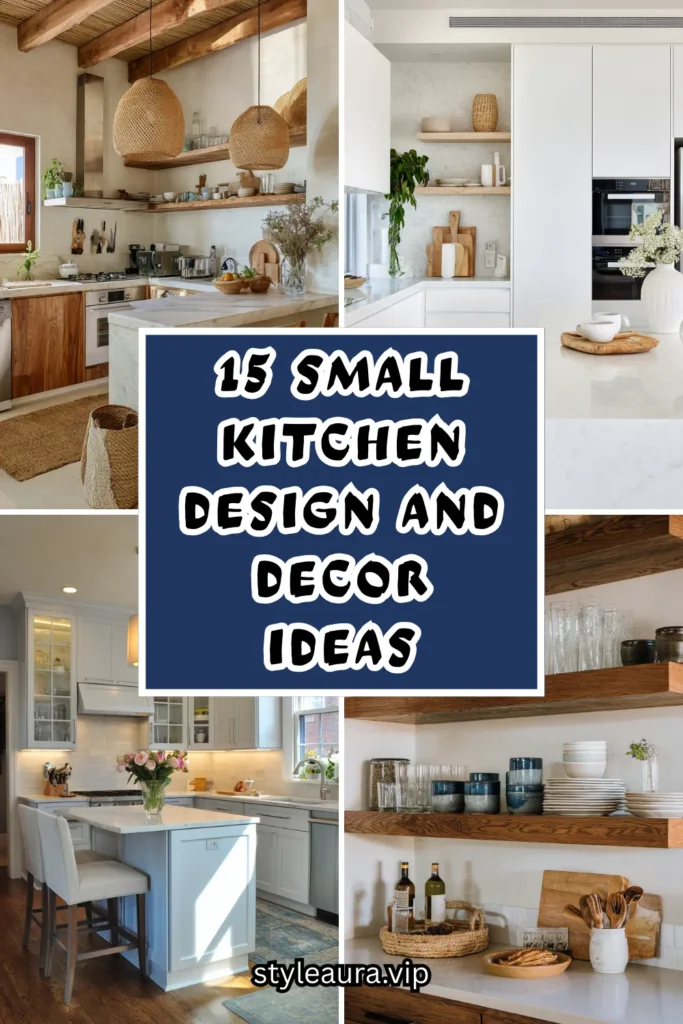
Small does not have to mean compromised. With the right design thinking and the right decor choices, a small kitchen can be one of the most efficient, beautiful, and characterful rooms in the home. Here are 15 modern and practical ideas to make every centimeter count.
1. Choose a Light, Unified Color Palette
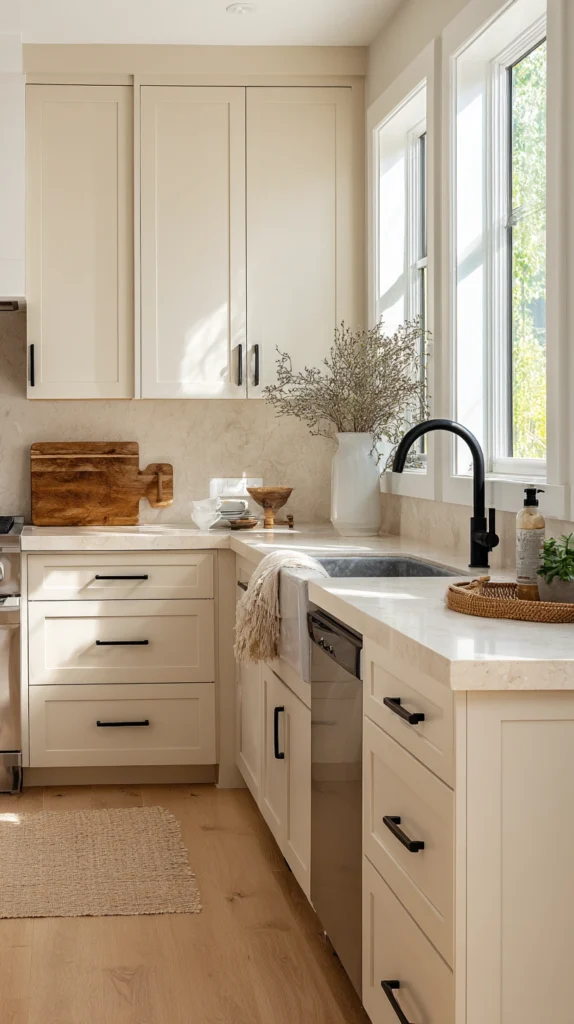
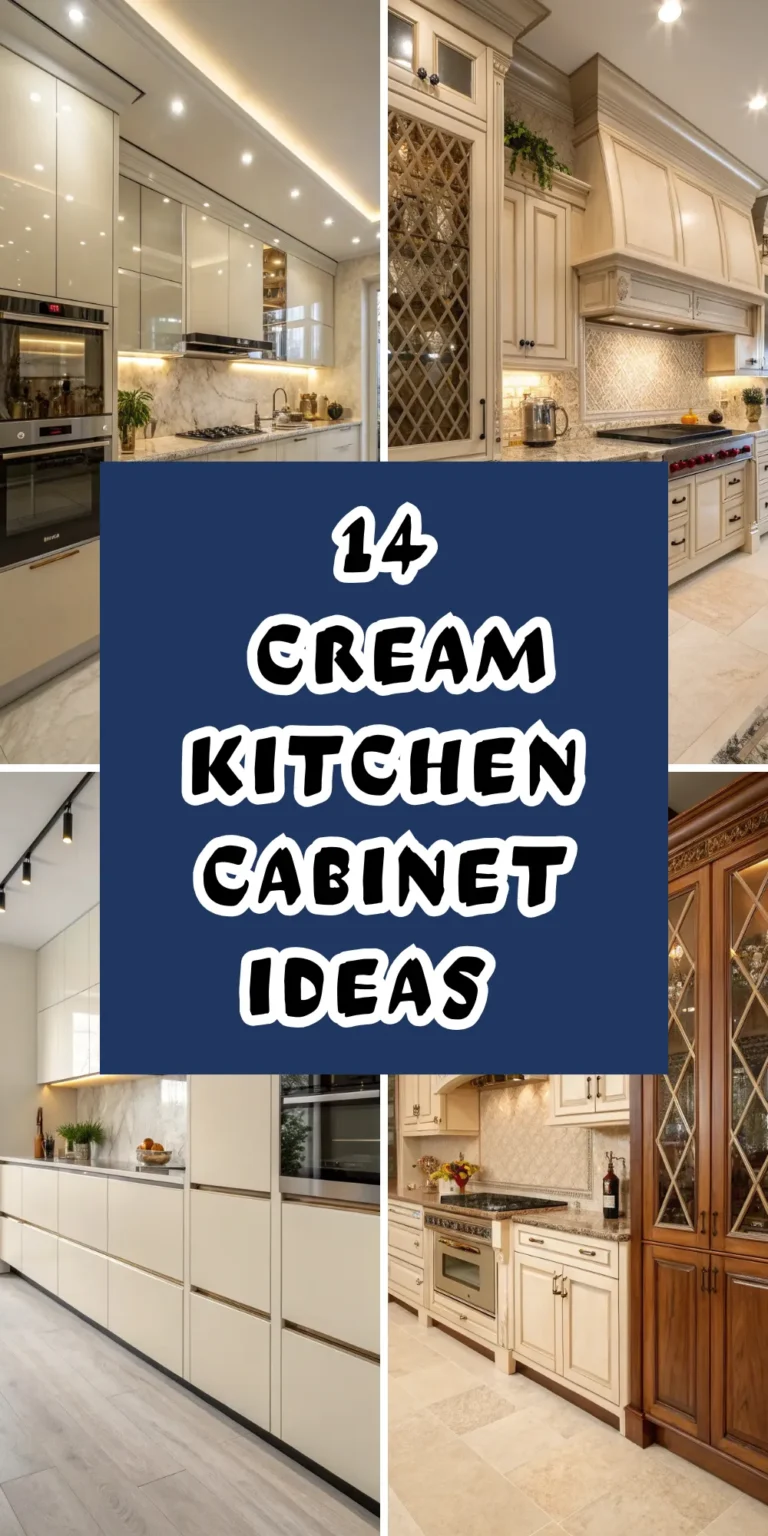
Color is the single most powerful tool available in a small kitchen, and the way it is used determines whether the room feels expansive or constricted. A light, unified color palette where walls, cabinetry, and countertops share a close tonal relationship removes the visual interruptions that make small spaces feel choppy. Warm whites, soft creams, pale greiges, and light sage greens all work beautifully as the primary tone.
The key word is unified. A warm cream wall against warm cream cabinets against a slightly deeper stone countertop creates one cohesive, expansive visual field. Add contrast through smaller elements like a darker grout, a matte black tap, or a wooden shelf rather than through large surfaces that divide the room visually.
2. Take Cabinetry All the Way to the Ceiling
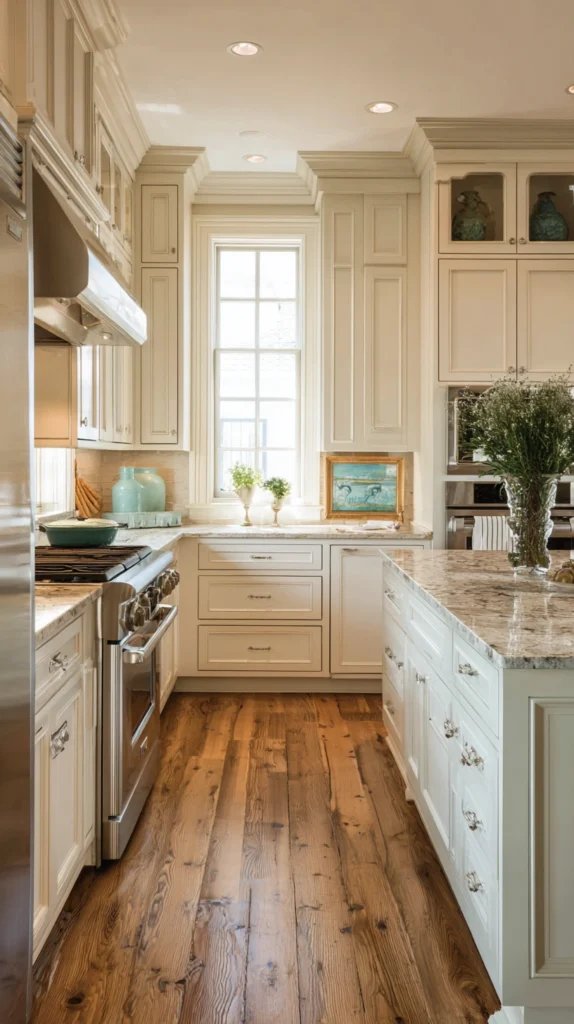
One of the most common small kitchen design mistakes is leaving a gap between the top of the wall cabinets and the ceiling. This gap serves no practical purpose, collects dust, and visually caps the room at a lower height than the ceiling actually sits. Taking cabinetry all the way to the ceiling eliminates this dead zone, dramatically increases storage, and draws the eye upward in a way that makes the room feel taller.
Use the upper cabinets closest to the ceiling for items accessed infrequently such as seasonal bakeware, large serving platters, and spare appliances. If the ceiling height is genuinely excessive, use the top cabinets for display rather than closed storage. The uninterrupted vertical line from floor to ceiling is one of the most impactful visual tricks a small kitchen can employ.
3. Install Open Shelving Strategically
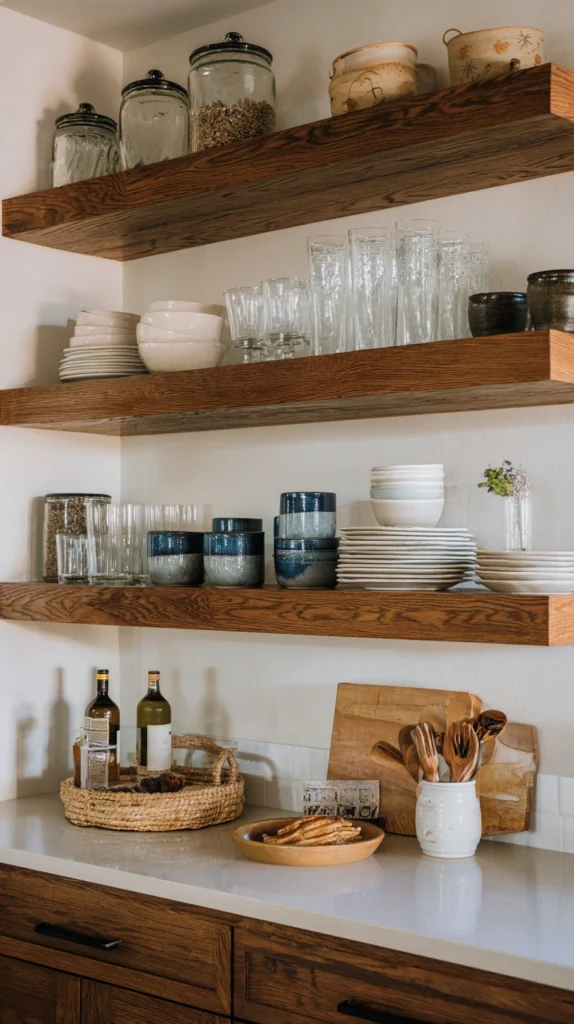
Open shelving in a small kitchen is a tool that requires discipline to use well but rewards that discipline with both additional storage and genuine visual warmth. A run of open shelves replacing one section of upper wall cabinets makes the kitchen feel more open and less boxed in. The key is curation. open shelves that are crowded or poorly organized make a small kitchen look smaller than closed cabinets would.
Keep open shelving to one or two walls rather than replacing all upper cabinets entirely. Display a cohesive collection of ceramics, glassware, and pantry staples in coordinating containers. Natural wood shelving in a warm tone adds organic warmth to a kitchen of painted cabinetry while bringing genuine personality to the space.
4. Use a Galley Layout for Maximum Efficiency
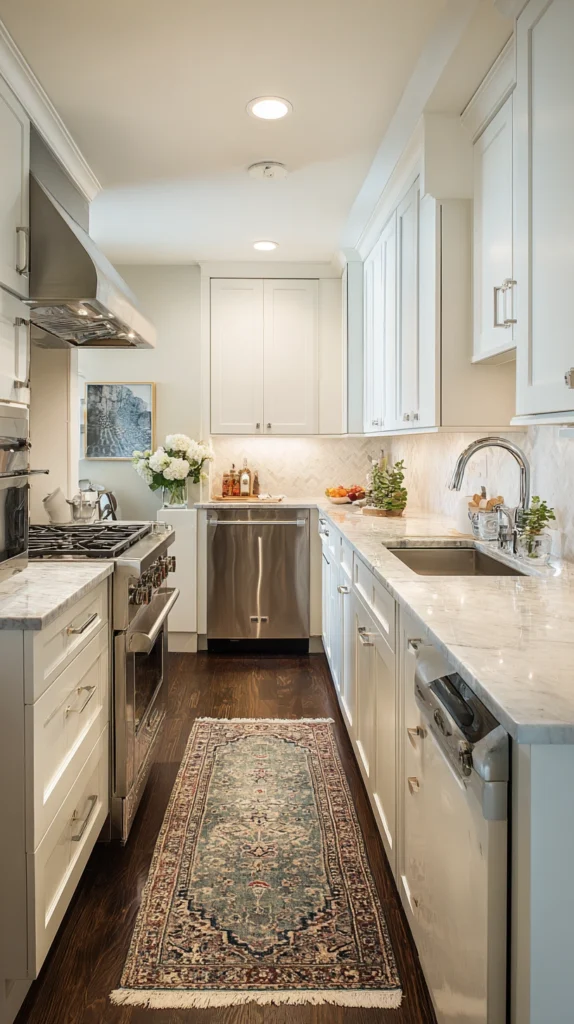
The galley kitchen is widely considered the most efficient kitchen layout ever devised, and it is particularly powerful in small rectangular spaces. Every step in a galley kitchen keeps the cook within reach of multiple work zones simultaneously, compressing the workflow triangle into its most functional form. If your small kitchen is already a galley layout, resist the temptation to open it up by removing one run of cabinetry in the name of creating more space.
The storage and worktop you would lose is almost never worth the openness you gain. Instead, focus on making the galley work harder with better lighting, smarter storage, and a more considered use of wall space. A well-optimized galley kitchen outperforms a poorly organized open kitchen at every level of daily use.
5. Choose Handleless Cabinetry for a Seamless Look
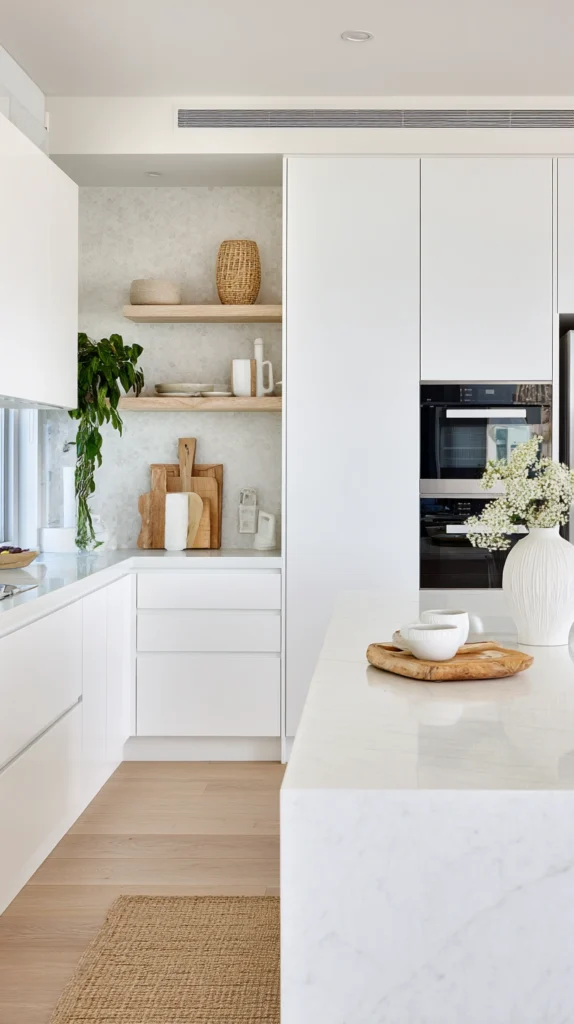
Cabinet handles and pulls are practical necessities in most kitchens, but in a small kitchen they represent a significant source of visual noise. Dozens of handles across multiple cabinet doors and drawers create a repetitive interruption that makes the space feel busier and more cluttered than it actually is. Handleless cabinetry using push-to-open mechanisms or J-pull recessed channels removes this visual interruption entirely.
The result is a cleaner, more seamless surface that reads as calmer and more spacious than a handled equivalent. Handleless cabinetry also eliminates the practical inconvenience of handles catching on clothing in a narrow kitchen with limited clearance. Choose a push-to-open mechanism with a soft-close damper for a satisfying, silent, and thoroughly modern opening action.
6. Maximize Every Corner with Smart Storage Solutions
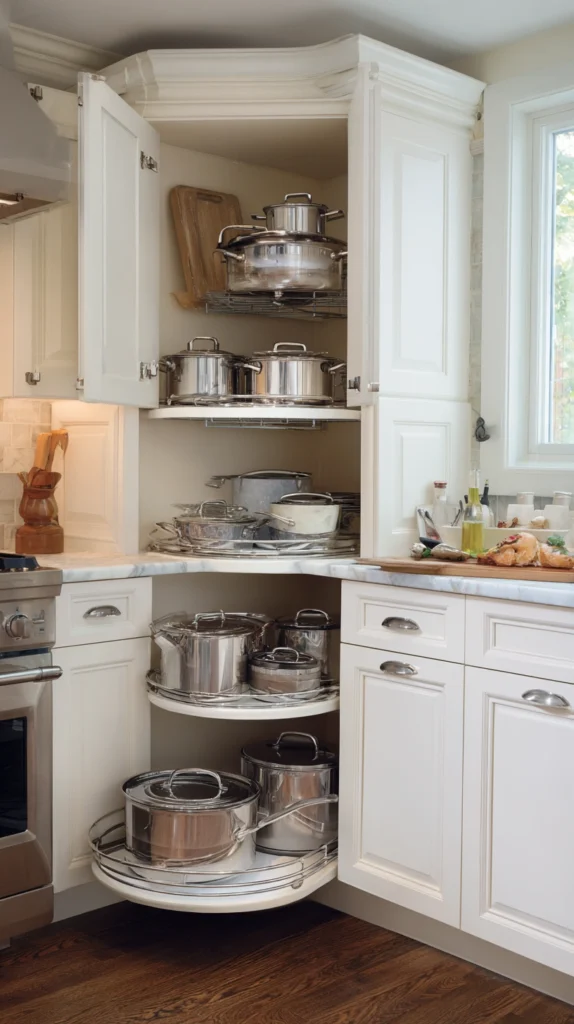
Corners are the most notoriously wasted spaces in any kitchen layout, and in a small kitchen that waste is particularly costly. A standard corner cabinet with a single shelf and a door that opens onto an inaccessible dark void represents a design failure that modern storage solutions have entirely solved. Carousel corner units, Le Mans systems, and magic corner pull-outs make every inch of corner storage accessible and genuinely usable.
For a kitchen renovation, specify the corner solution before finalizing the cabinet layout so surrounding cabinets integrate with it properly. For an existing kitchen, a set of rotating turntable inserts placed on existing shelves dramatically improves corner accessibility at minimal cost. In a small kitchen, solving the corner problem alone can add the equivalent of an entire additional cabinet worth of usable storage.
7. Bring in a Kitchen Island on Wheels
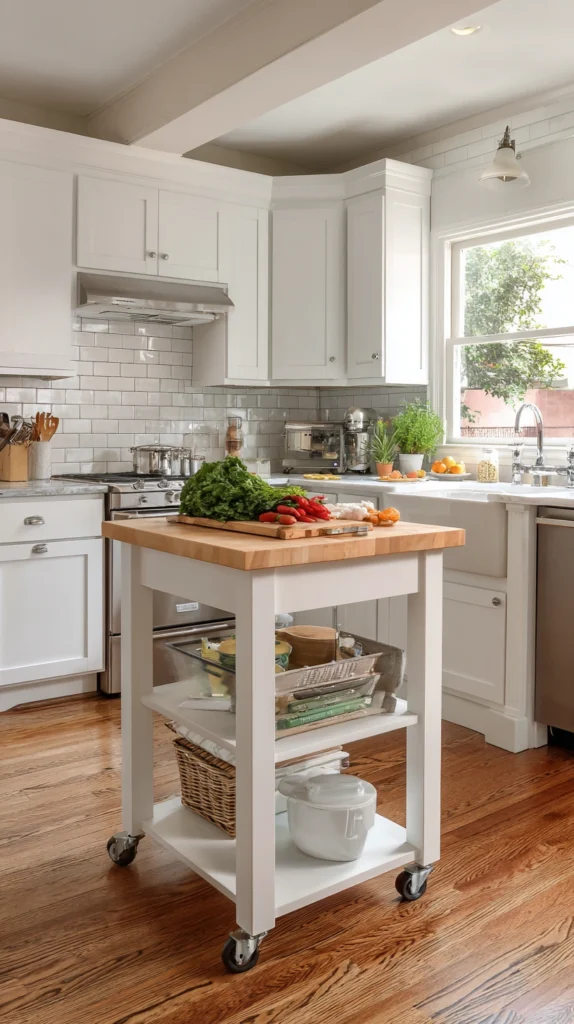
A fixed kitchen island is a luxury that small kitchens rarely have the floor space to accommodate. A kitchen island on casters offers the same benefits of additional worktop and storage in a format that can be moved and tucked away when the kitchen needs to function as a thoroughfare. Choose an island with drawers or shelves below the worktop surface to maximize its storage contribution to the room.
A butcher block top adds warmth and a second worktop material that contrasts pleasantly with a stone or laminate main counter. Keep the island proportional to the kitchen so it adds functionality without blocking the primary workflow paths. When not in use as a preparation surface, a wheeled island can serve as a dining surface, a drinks station, or a temporary home for a displaced countertop appliance.
8. Install a Mirrored or Glass Splashback
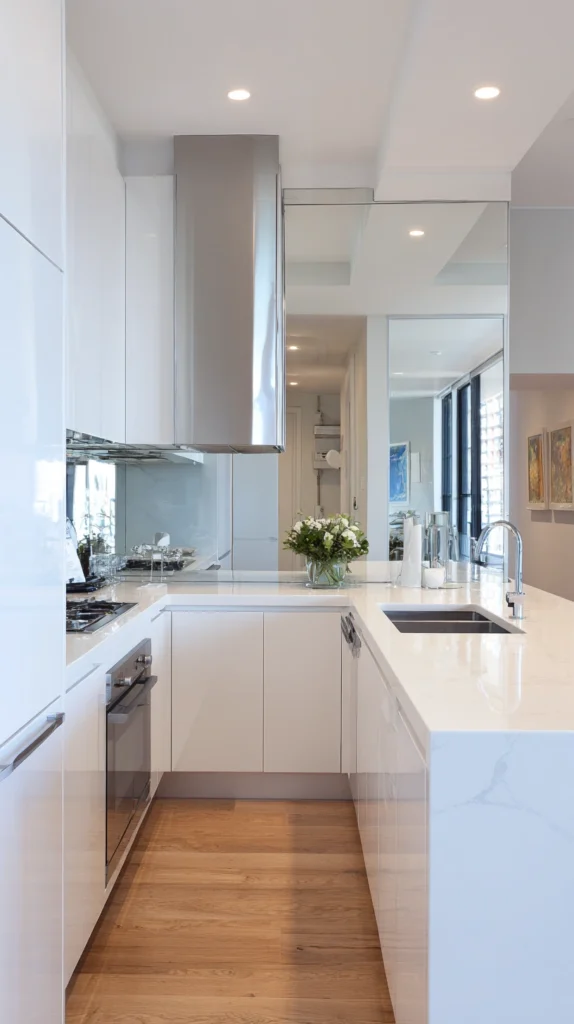
A splashback is a practical requirement in any kitchen, but in a small kitchen it is also a significant design opportunity. A mirrored splashback reflects the room back at itself, doubling the apparent depth of the kitchen and bringing light into areas that would otherwise sit in shadow. The effect is particularly powerful in a galley kitchen where a mirrored splashback on one wall reflects the opposite run of cabinets and makes the corridor feel twice as wide.
Glass splashbacks in a color that coordinates with the cabinetry create a seamless, easy-to-clean surface with far less visual interruption than a tiled alternative. For a small kitchen where every visual decision contributes to the sense of space, the unbroken surface of a glass or mirrored splashback is almost always preferable to a tiled grid of grout lines. This single material choice can transform how large a small kitchen feels without changing a single cabinet or layout decision.
9. Invest in Multi-Functional Appliances
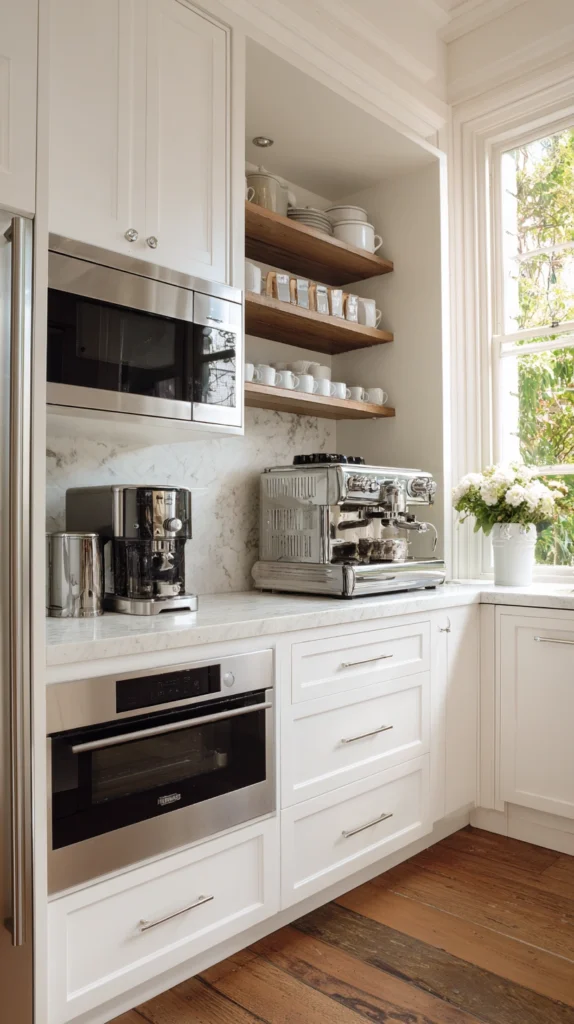
Every appliance that sits on a small kitchen countertop occupies worktop real estate that is genuinely precious. A separate toaster, kettle, coffee machine, blender, and food processor can consume the entire countertop of a small kitchen before a single ingredient has been placed on it. Investing in multi-functional appliances that combine several functions into a single footprint returns that real estate to the cook immediately.
A combination microwave and convection oven mounted under a wall cabinet frees the countertop from a standalone microwave entirely. A bean-to-cup coffee machine replaces a separate grinder and filter machine in one compact footprint. The investment in higher-quality multi-functional appliances is almost always recovered in the quality of life improvement that a less cluttered, more functional small kitchen delivers every single day.
10. Use Lighting Layers to Make the Kitchen Feel Larger
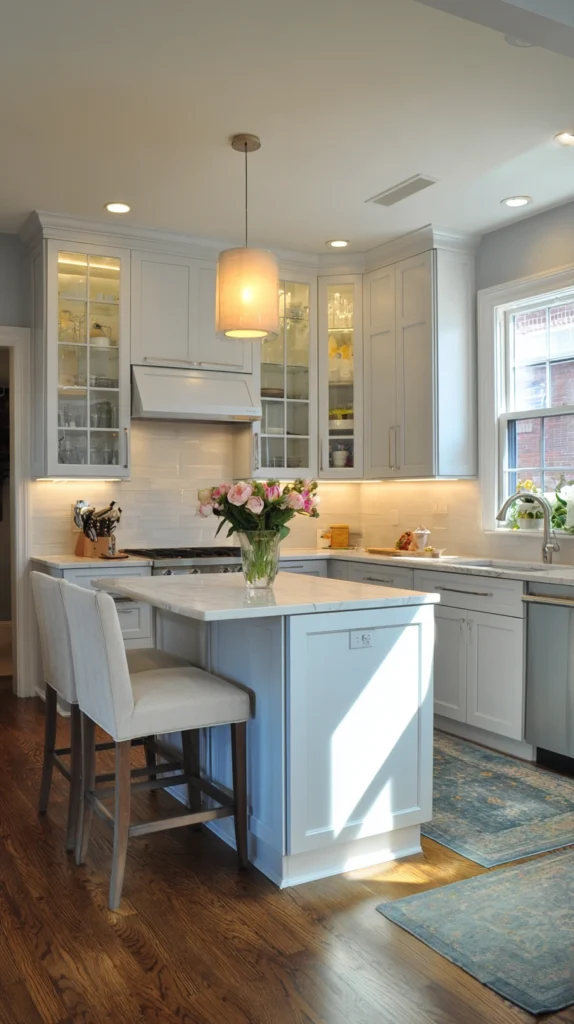
A single overhead light source is never sufficient in a small kitchen and a layered lighting approach makes the room feel larger, safer to work in, and significantly more beautiful. Under-cabinet LED strip lighting illuminates the countertop directly, eliminates shadows cast by upper cabinets, and adds a warm glow that makes the kitchen feel inviting rather than clinical. Interior cabinet lighting behind glass-fronted upper doors creates a lantern effect that adds depth and warmth to the room in the evening.
A statement pendant light above a kitchen island or dining area adds a human, decorative dimension to what is otherwise a purely functional lighting scheme. Choose warm-toned LEDs throughout as cool white light makes even beautiful materials look flat and unwelcoming. Good lighting in a small kitchen costs relatively little to install and delivers one of the highest returns of any single design investment.
11. Add Personality with a Printed Tile Splashback
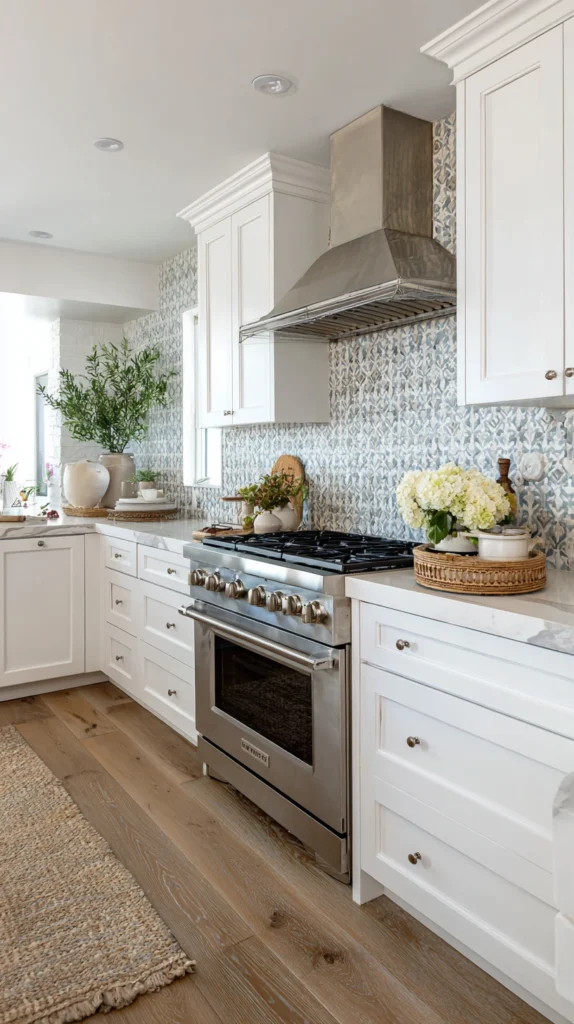
In a small kitchen where decorative expression is limited by scale, a printed or patterned tile splashback is one of the most powerful ways to introduce personality without overwhelming the space.
Encaustic cement tiles in a geometric pattern, hand-painted azulejo tiles, or simple metro tiles in an unexpected color transform the splashback zone from a practical surface into a genuine design statement. The key in a small kitchen is restraint. limit the patterned tile to the splashback area alone and keep everything surrounding it calm and unified.
A patterned splashback works particularly well when it draws a color from the kitchen’s existing palette and amplifies it rather than introducing something foreign. If the kitchen is predominantly white with warm wood accents, a terracotta geometric splashback connects to the wood tone and adds vibrancy without disrupting the palette. The splashback becomes the kitchen’s focal point, the detail that makes the whole room feel considered and intentional.
12. Hang a Pot Rack to Free Cabinet Space
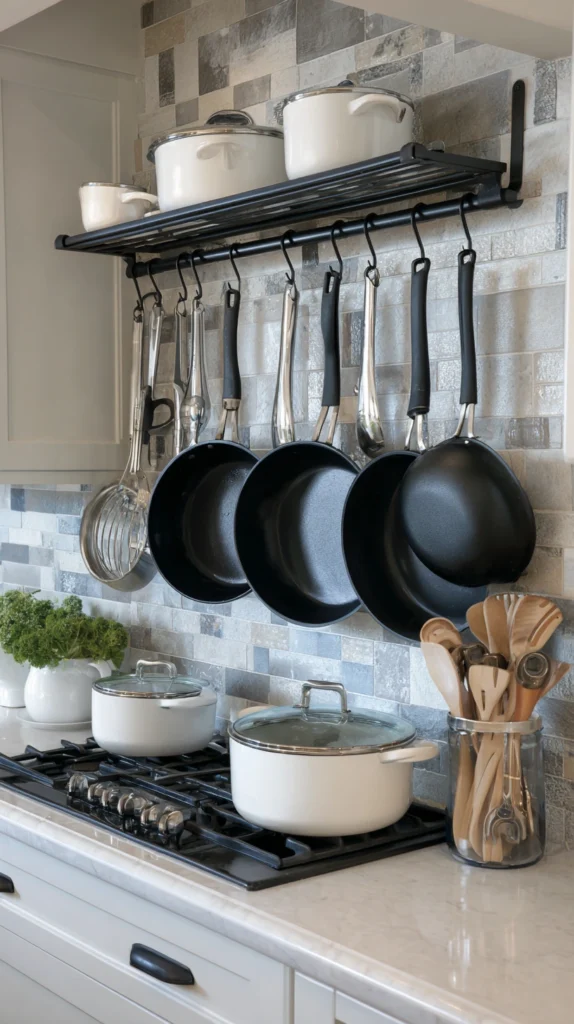
A ceiling-mounted or wall-mounted pot rack is one of the most practically effective storage additions a small kitchen can incorporate. It frees an entire cabinet’s worth of space previously occupied by pots, pans, and lids and relocates it to otherwise unused vertical space above or beside the cooking zone. Pots become visible, accessible, and retrievable without the clattering avalanche of a badly organized pan cabinet.
Choose a pot rack in a finish that coordinates with your kitchen hardware. Matte black suits modern and industrial kitchens, brushed brass works beautifully in warm traditional spaces, and stainless steel is clean and timeless in a contemporary setting. Ensure ceiling fixings go into solid joists or structural supports as a fully loaded pot rack is considerably heavier than it appears when empty.
13. Introduce Natural Materials for Warmth
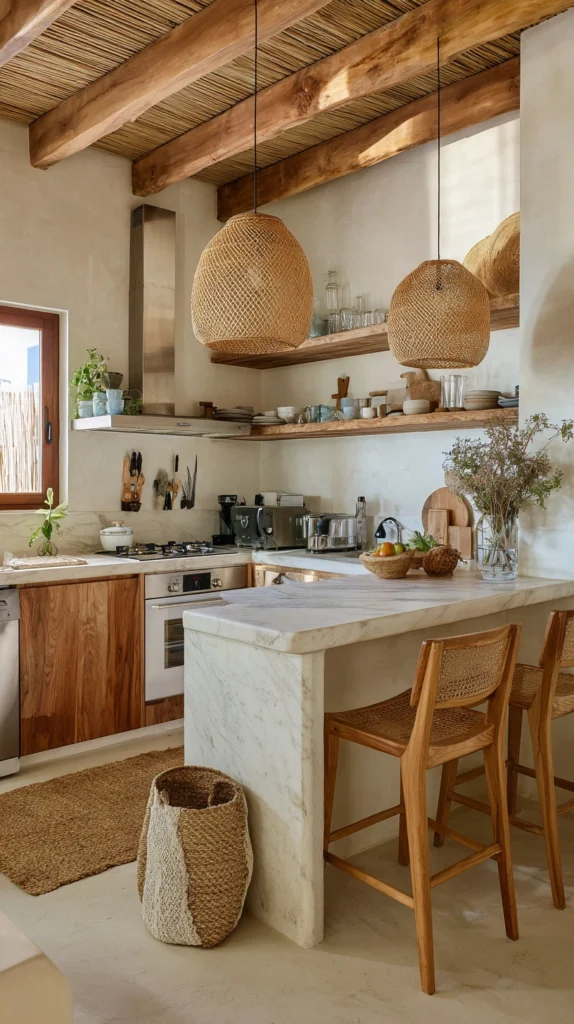
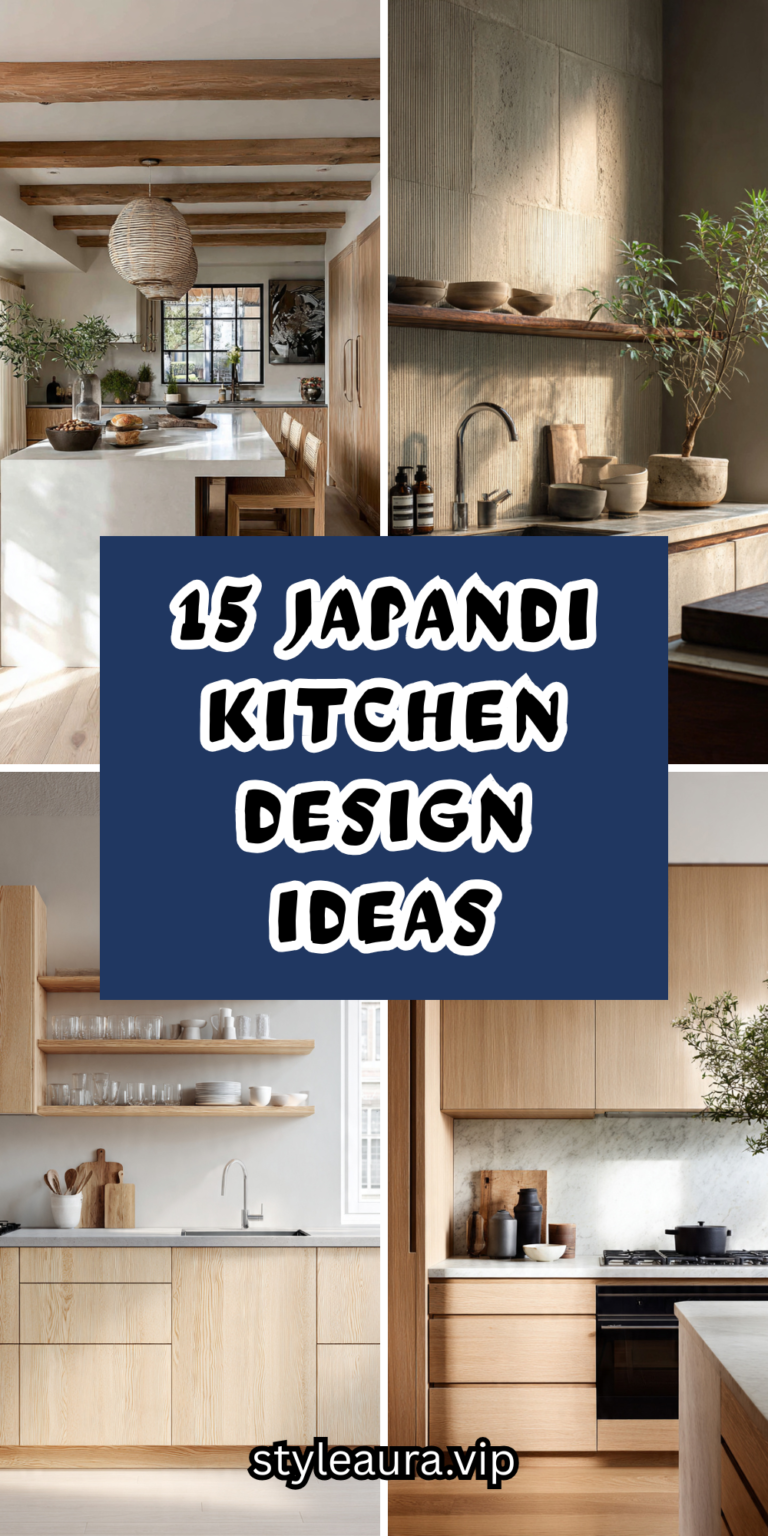
A small kitchen decorated entirely in hard, cold materials can feel clinical and unwelcoming regardless of how well it is organized and lit. Introducing natural materials softens the kitchen and makes it feel more human and inviting without compromising its efficiency.
A wooden floating shelf, a rattan pendant light, a linen roman blind, or a jute runner all introduce organic warmth into a kitchen that might otherwise feel more like a laboratory than a room.
Natural materials also add texture, and texture is one of the most important tools in a small room where color must be used with restraint. A kitchen with smooth cabinetry, a rough natural stone countertop, a brushed plaster wall, and a warm wooden shelf has visual depth and tactile interest that makes it feel generous and layered. This sense of layering makes a small kitchen feel significantly more substantial than its square footage alone would suggest.
14. Create a Dedicated Coffee or Breakfast Station
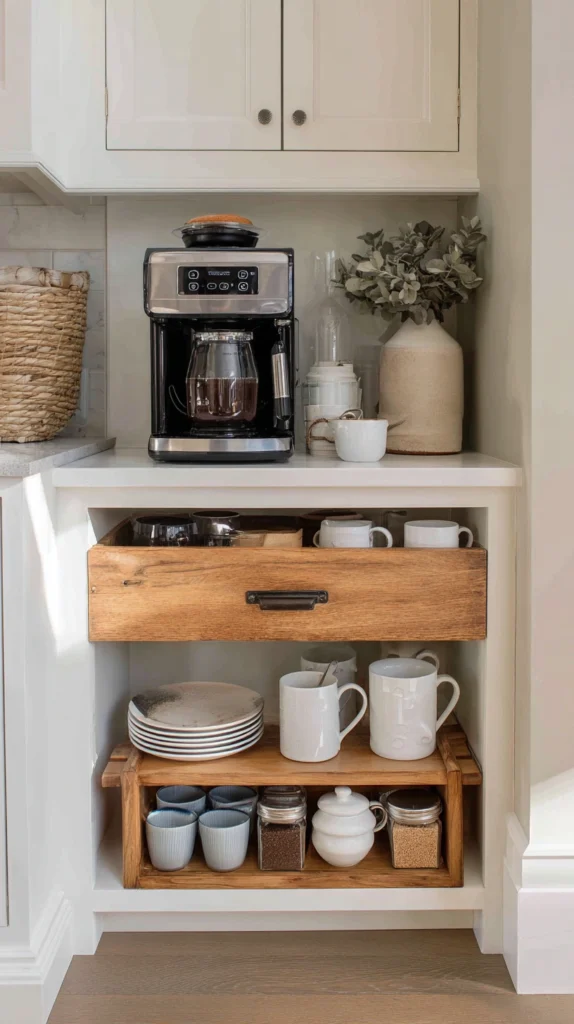
Designating a specific zone within the small kitchen as a coffee or breakfast station brings organizational logic to the room and makes the morning routine significantly more efficient.
A single section of countertop with the coffee machine, a small shelf above for mugs and supplies, and a drawer below for breakfast accessories consolidates an entire daily ritual into one contained, coherent area. This prevents coffee equipment and breakfast items from spreading across the entire kitchen and leaving no clear prep space for cooking.
Style the breakfast station as a considered vignette with a small plant, a ceramic mug collection on the shelf above, and a wooden tray corralling the coffee machine into a neat footprint. The station becomes both a functional zone and a decorative moment within the kitchen. Even the smallest kitchen can have areas of genuine personality and intention when each zone is designed with this kind of focused care.
15. Keep Surfaces Clear and Edited at All Times
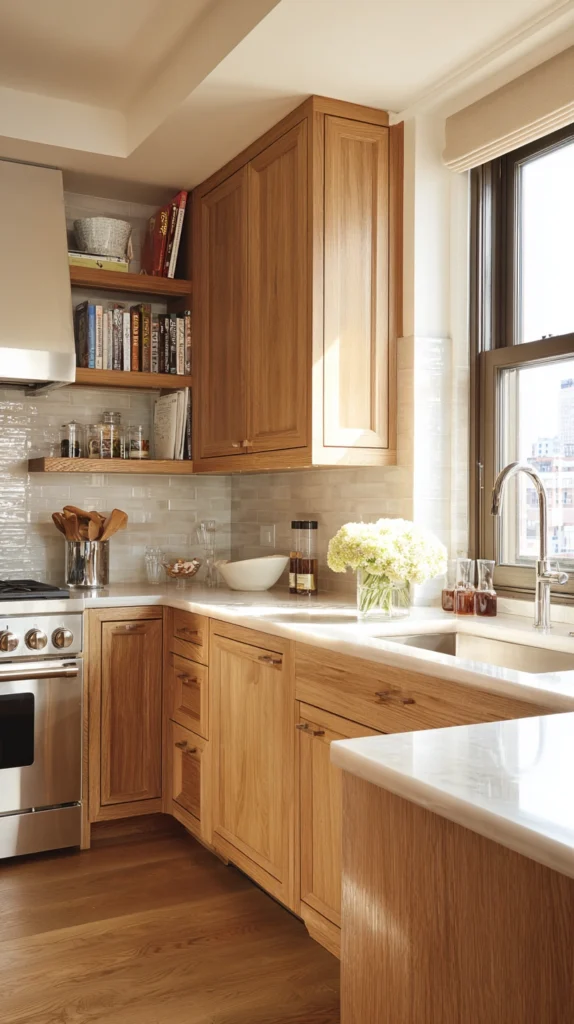
The final and most important small kitchen design principle is not about a specific product or material. It is about discipline. the ongoing commitment to keeping countertop surfaces as clear as possible so the kitchen always has room to function and always looks more spacious than its square footage suggests. Every appliance on the countertop should justify its position by being used daily, and everything used less frequently should live inside a cabinet or dedicated storage zone.
A clear countertop in a small kitchen has the same visual effect as a made bed in a small bedroom. It makes the entire room feel larger, calmer, and more controlled than it actually is. Invest in good internal cabinet organization so that putting things away is effortless rather than a puzzle to be solved.
A small kitchen with clear surfaces, good lighting, and considered storage is not a compromised kitchen. It is a kitchen that has been thought about carefully, and the difference is felt every single time you walk into the room.
Designing Small with Ambition
A small kitchen designed with ambition and intelligence outperforms a large kitchen designed carelessly every single time. The constraints of limited space force decisions that larger kitchens never have to make, and those decisions when made well result in a room that is tighter, smarter, and more satisfying to cook in. Small is not a limitation. it is an invitation to think more carefully, design more deliberately, and end up with something genuinely better.